Why onboarding is your most underrated HR lever
Most organizations spend significant budget finding the right candidate, only to lose them within the first 90 days - not because of a bad hire, but because of a broken onboarding process. Onboarding is the bridge between recruitment and retention, between a job offer and genuine employee engagement. Get it right, and you create loyal, productive team members. Get it wrong, and you restart the clock on an expensive hiring cycle.
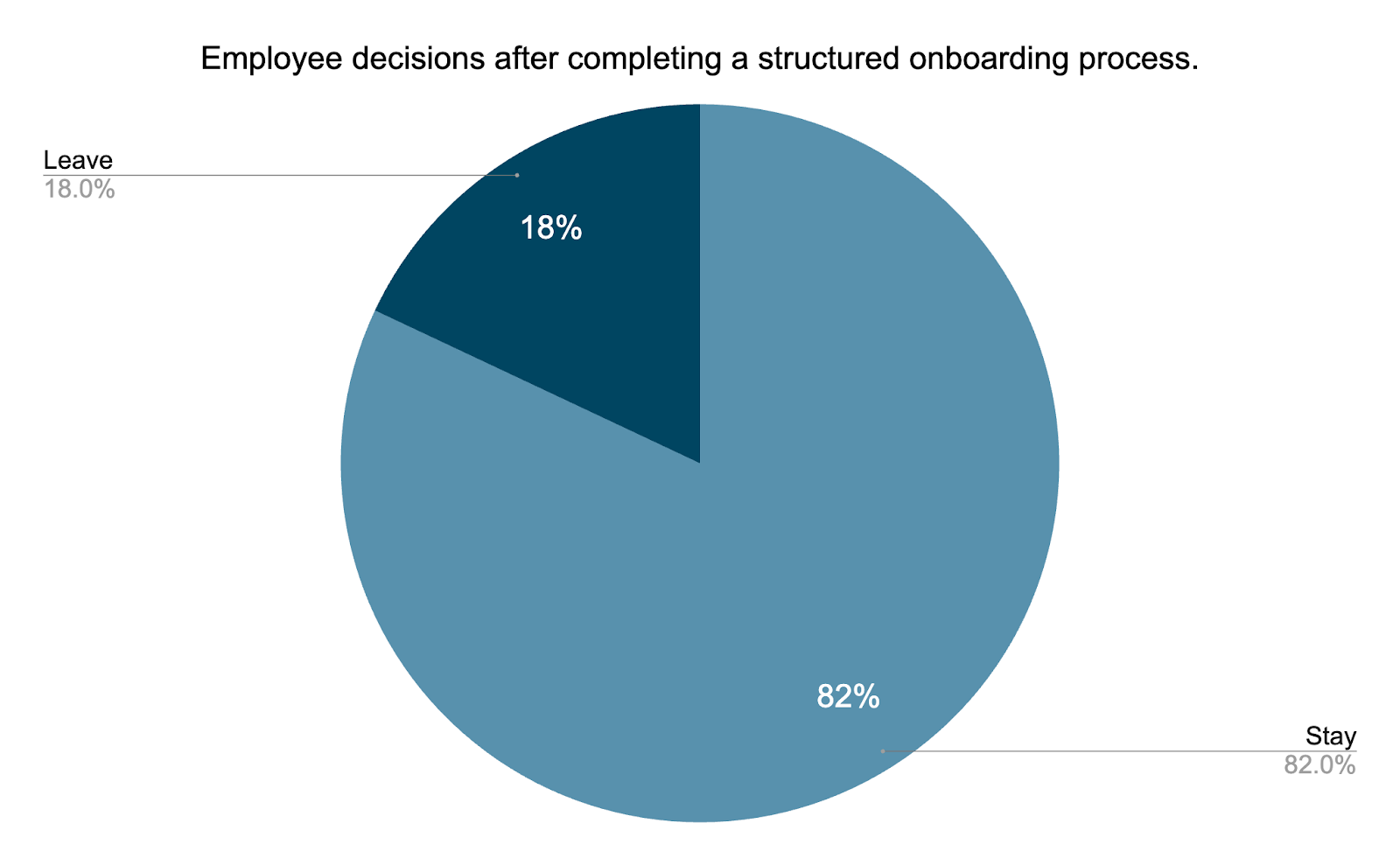
data source: Brandon Hall Group
Yet despite this, the majority of companies treat onboarding as a checklist of administrative tasks - paperwork, a laptop handoff, a quick tour - rather than a deliberate, structured integration experience. This guide is designed to change that. It lays out the complete employee onboarding journey across five critical phases, with actionable tasks at each stage, so your HR team has a repeatable, high-impact process it can execute for every new hire, every time.
Master your HR team tasks effortlessly with Lark
Step 1: Pre-boarding - start before day one
Pre-boarding is the period between the moment an offer is accepted and the employee's official first day. This window is often wasted by HR teams, yet it is one of the most psychologically significant phases of the entire onboarding journey. New hires are anxious, curious, and highly impressionable. The messages - or absence of messages - they receive in this period directly shape their expectations and initial loyalty.
What to do during pre-boarding:
- Send a personal welcome email from the hiring manager within 48 hours of offer acceptance, not from a no-reply HR inbox. Reference specific details - the role, the team, something personal from the interview.
- Dispatch all HR paperwork digitally: employment contracts, tax forms, direct deposit setup, benefits enrollment, and any relevant NDAs or policy acknowledgments, especially when you need to efficiently. Use a dedicated onboarding platform to track completion status.
- Coordinate IT provisioning before Day 1. Laptop, software licenses, email address, access credentials, and any hardware accessories should be ready and waiting. Nothing kills momentum on a first day like a new hire spending four hours waiting for a computer login. For HR teams, this setup also works better when onboarding details sit in a rather than scattered spreadsheets.
- Prepare the physical or virtual workspace: desk assignment, team channel invitations, calendar access, and a brief org chart so the new hire knows who they will be working with.
- Share a "Day 1 logistics" note: where to go (or log in), start time, parking, dress code, who to ask for upon arrival, and what to expect for the first morning.
- Assign a peer buddy before the start date and make a warm introduction over email. This one step disproportionately reduces first-week anxiety.
For HR teams looking to standardize this process, Lark offers a ready-made that covers every pre-boarding touchpoint in a collaborative, shareable format - ideal for distributed HR teams coordinating across time zones.
"If a new employee does not feel welcome or is not given direction on their first day, it is an indicator their colleagues, manager, and company have not invested the time to set them up for success. The employee, already feeling disengaged, may decide immediately it is time to start looking for a new job. A strong onboarding program makes that much of a difference in an employee's desire to stay."
- Eric Mochnacz, Director of Operations, (strategic HR consulting)
This insight captures something most onboarding guides miss: the decision to stay or leave is often made before the end of Day 1. Pre-boarding is your earliest opportunity to make the right impression - and it costs almost nothing to do it well.
Step 2: First-day orientation - set the tone, not just the agenda
Day One is not the time to overwhelm a new hire with policy manuals and compliance videos. It is, first and foremost, a human moment. HR teams that treat the first day as an administrative processing event consistently see lower engagement scores at the 30-day mark. The goal is to make the new hire feel seen, situated, and excited - everything else can wait until Day Two.
First-day orientation priorities:
- Begin with a warm, in-person (or video) welcome from the direct manager - not just HR. Managers who are present on Day 1 create a measurably stronger sense of belonging.
- Walk through the company's mission, values, and culture. Not as a slide deck recitation, but as a conversation. Share stories about where the values show up in real decisions.
- Cover immediate practical needs: where the bathroom is, how to expense lunch, how Slack channels are organized, and where to log time. These "stupid questions" loom large in new-hire anxiety.
- Make a formal introduction to the immediate team. A team lunch, coffee chat, or virtual meeting goes a long way toward breaking down the social barrier.
- Reserve 30 minutes for the manager to do a role-clarity conversation: what success looks like in 30, 60, and 90 days. This is not a performance review - it is simply a shared understanding of the job.
- End the day with a brief check-in: "How did it go? What questions do you have that you were too nervous to ask?" This signals psychological safety from the start.
Step 3: Role clarity and the 30-60-90 day framework
One of the most persistent and damaging gaps in onboarding is the absence of structured role expectations after the first week. New hires are left to infer what "doing well" looks like by observing colleagues or waiting for feedback that never comes. The 30-60-90 day plan solves this directly: it creates a shared map between the employee, the manager, and HR.
At its core, the 30-60-90 plan divides the ramp-up period into three distinct phases:
- Days 1–30 (Learn): The new hire focuses entirely on absorbing - understanding the product, the team dynamics, the tools, and the culture. They attend meetings, shadow colleagues, and ask questions.
- Days 31–60 (Contribute): The employee begins taking on independent work, small deliverables, and collaborative projects. Feedback sessions increase in frequency.
- Days 61–90 (Own): The employee takes ownership of a defined scope of work, demonstrates competency in core responsibilities, and participates in a formal 90-day review.
"When we first started scaling our team from twelve to sixty people in under eighteen months, we made every classic onboarding mistake: we assumed smart people could figure it out, that culture was self-explanatory, that the job spec was sufficient. It was not. The one change that made the biggest difference was not better documentation - it was requiring every manager to sit down with every new hire on Day 3 and co-create a written list of what success looks like by the end of the first month. Simple. Cheap. Transformative. New hires stopped guessing and started delivering."
- Ambikesh Sharma, CEO, (Academic Writing EdTech)
This experience mirrors what HR research consistently finds: the single most reliable predictor of new-hire success in the first 90 days is the clarity of role expectations, not the sophistication of the onboarding portal. Role clarity is a conversation, not a document.
Structuring the 30-60-90 day plan
The plan should be co-created between the manager and the new hire in the first week. HR provides the framework; the manager fills in the role-specific content. At minimum, each 30-day interval should define: key priorities, target deliverables, relationships to build, and one measurable success metric.
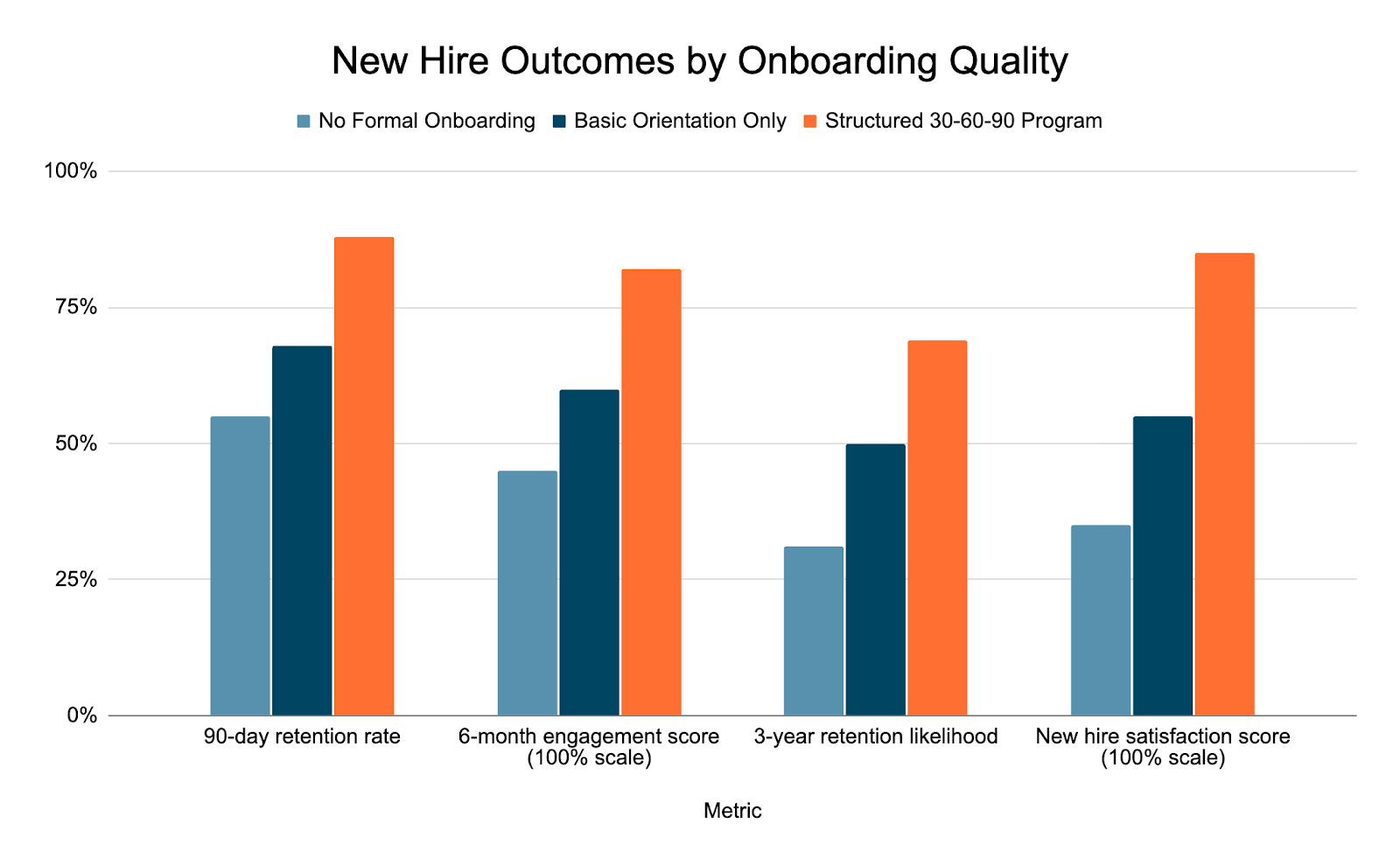
Data sources: Brandon Hall Group (2015), Gallup (2023), Jobvite (2022).
Implement effortless HR project management today
Step 4: Cultural integration and relationship building
Employees who feel socially connected to their team are dramatically less likely to leave in the first year. Yet cultural integration is often treated as a "nice to have" rather than a structured component of onboarding. The reality is that belonging is not an accident - it is the result of deliberate, repeated touchpoints between the new hire and their colleagues.
HR teams can structure cultural integration without making it feel forced. The key is creating recurring, low-stakes opportunities for the new hire to build relationships across the organization.
Cultural integration actions by week:
- Week 1: Peer buddy introduction and first 1:1 coffee or virtual chat. Team channel orientation. Introduction at next team standup.
- Week 2: "Coffee roulette" - a 20-minute informal meeting with a randomly assigned colleague from another team. Simple and effective.
- Week 3: Assign the new hire to present a brief "what I've learned so far" summary to the team. It accelerates assimilation and builds confidence simultaneously.
- Month 2: Invite the new hire to a cross-functional meeting relevant to their role, even as an observer. Exposure to how other teams operate accelerates time-to-productivity.
- Month 3: Facilitate a 360 check-in - not a performance review, but a structured conversation with three or four colleagues to gather candid integration feedback.
Step 5: Feedback loops, check-ins, and the 90-day review
Onboarding does not end on Day 30 or even Day 60. Most organizations that struggle with early attrition make the same mistake: they do a thorough first week, then assume the employee is "settled" and withdraw the structured support. By Day 45, many new hires feel invisible - no longer new enough to receive the warmth of onboarding, but not yet embedded enough to feel truly part of the team.
Scheduled check-ins are the antidote to this drift. They create a predictable rhythm of feedback and accountability that benefits both the employee and the organization.
"We analyzed two years of exit interview data from employees who left within six months of joining. In over seventy percent of cases, there was a specific moment - usually somewhere between week five and week eight - where the employee felt the organization had "forgotten" them. Onboarding had officially ended, the manager had moved on, and nobody was checking in. The fix was brutally simple: mandatory 45-day manager touchpoints added to our HR calendar as non-negotiable, auto-generated tasks. Early voluntary attrition dropped by thirty-four percent in the following year."
- Anush Gasparian, Director of Human Resources, (Lead Distribution Platform)
The lesson is structural: good intentions are not a substitute for a system. If check-ins are optional, they will be skipped during busy periods - which is exactly when new hires are most vulnerable. Embed them in your HR calendar as hard commitments.
Recommended check-in cadence:
Step 6: Compliance and documentation - don't let the paperwork sink you
Compliance documentation is the least exciting aspect of onboarding, but it is the most legally consequential. Missing a signed policy acknowledgment, an incomplete I-9, or an overdue benefits election can create real liability - and in a fast-growing team, these gaps accumulate quickly if there is no systematic process in place.
The key principle here is parallelization: compliance tasks should happen in parallel with the cultural and role-clarity work, not before it. Nothing deflates a first-day experience faster than spending the first three hours signing PDFs. Move as much paperwork as possible to pre-boarding.
For HR teams managing compliance across multiple hires or locations, Lark's centralizes all documentation in a single, auditable workspace - making it straightforward to verify completion status and flag gaps before they become compliance issues.
Essential compliance checklist for every new hire:
- Employment eligibility verification (I-9 in the US, equivalent in other jurisdictions)
- Signed employment contract and any applicable addenda
- Tax withholding forms (W-4 in the US or local equivalent)
- Benefits enrollment confirmation within election window
- Direct deposit authorization and payroll setup
- Signed acknowledgment of employee handbook and code of conduct
- IT security policy and acceptable use agreement
- Confidentiality, IP ownership, and non-disclosure agreements as applicable
- Role-specific compliance training (e.g., HIPAA, data privacy, safety certifications)
Get the modern tool to manage candidate profiles
Introducing Lark: The ideal project management tool for HR teams
Lark is an all-in-one collaboration and productivity platform designed to streamline communication, project management, and workflow automation within organizations. It combines messaging, video meetings, cloud-native documents and sheets, calendar, email, wiki, approval workflows, goal tracking, and automation tools into a unified workspace. This makes Lark an excellent for HR teams seeking to enhance team collaboration, manage tasks efficiently, and maintain seamless communication.
For HR teams, Lark offers specialized features that support their unique needs:
Lark Base: Acts as a centralized database where HR teams can store and manage employee information, recruitment data, and other important project data. It allows for easy customization and collaboration, ensuring that all team members have access to up-to-date records.
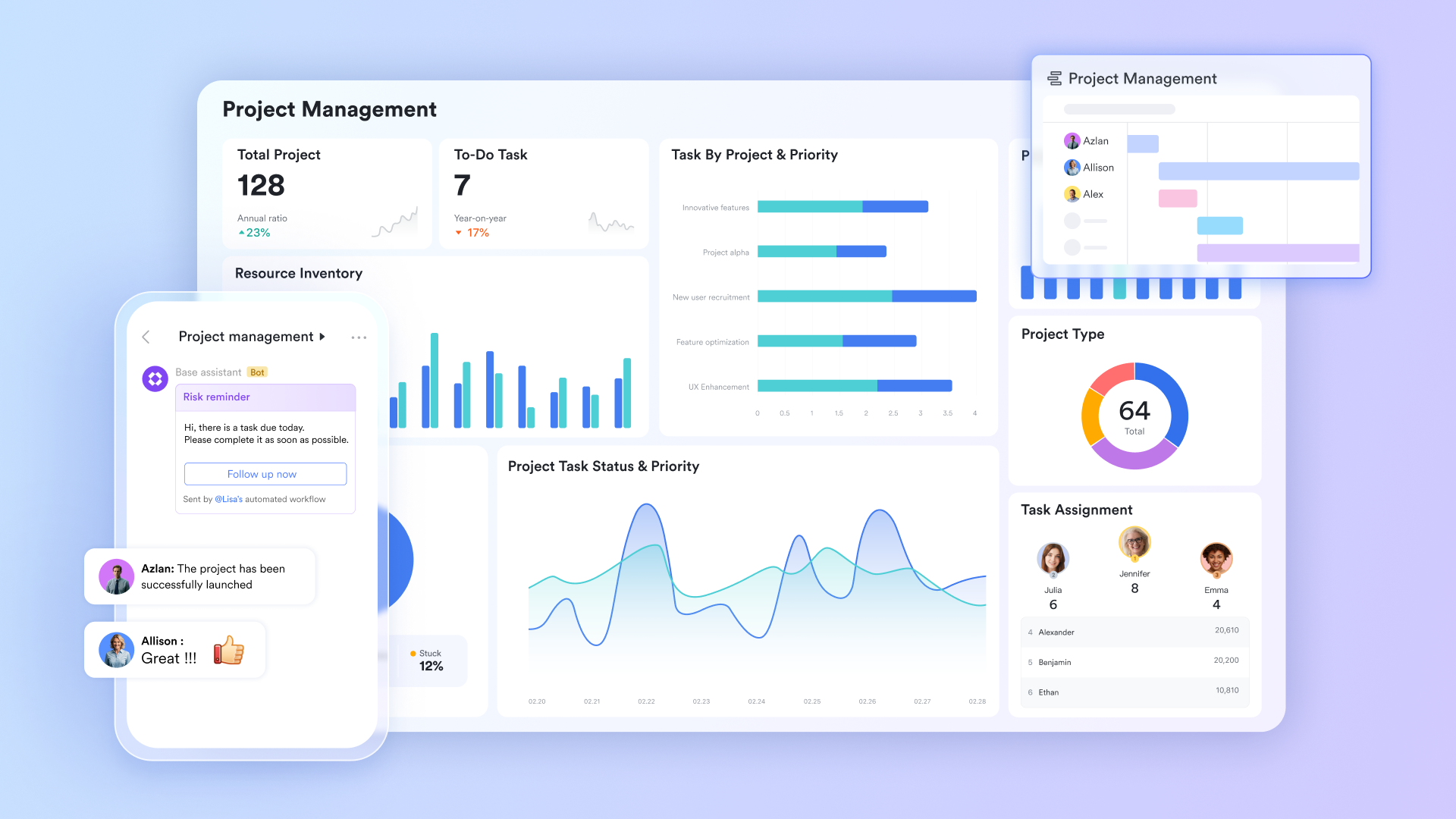
Lark Docs: Provides cloud-native document creation and real-time collaboration. HR professionals can draft policies, onboarding documents, and training materials while enabling multiple users to edit simultaneously, reducing training time and improving document accuracy.
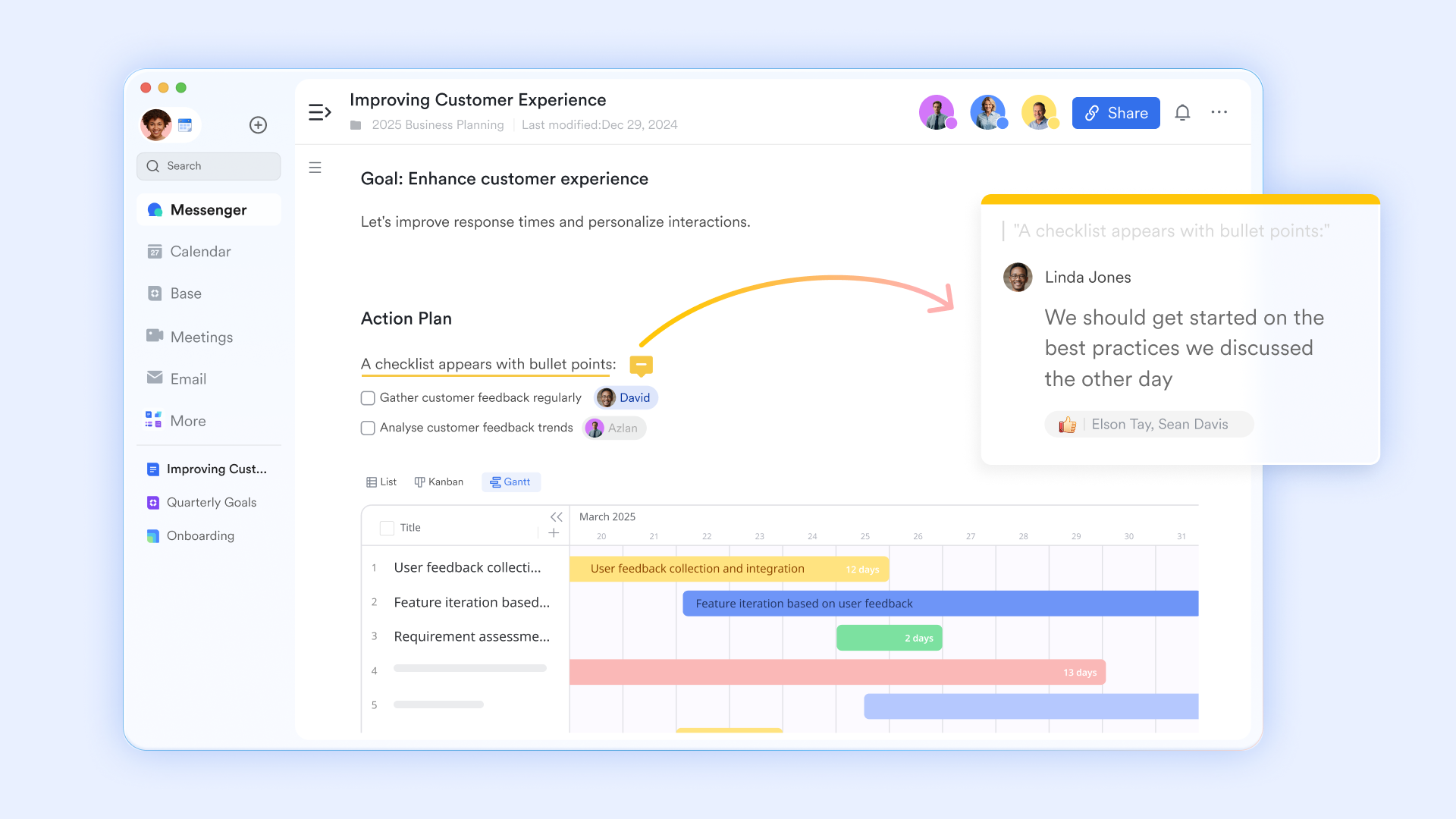
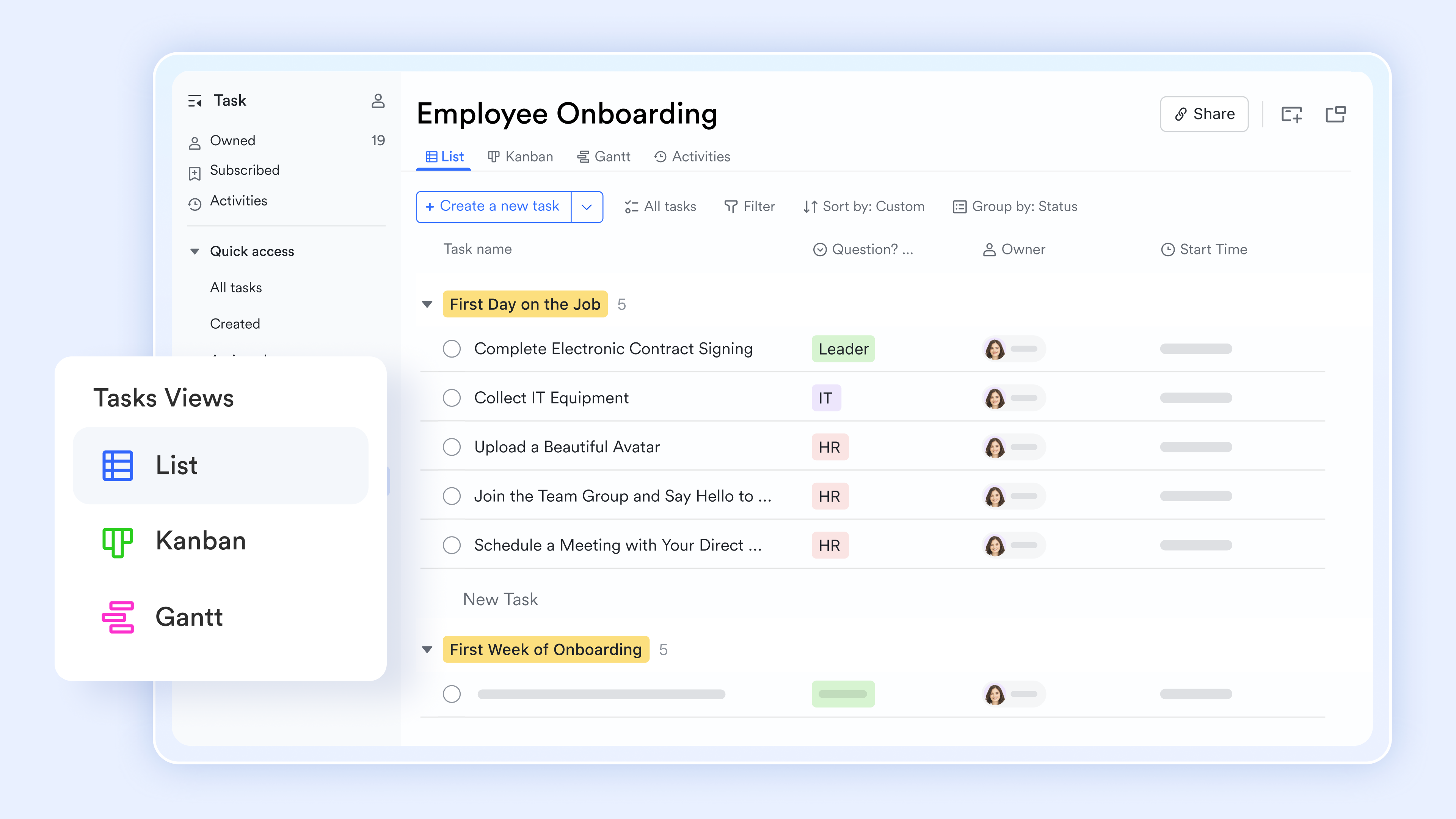
Lark Tasks: A powerful task management tool that helps HR teams assign, track, and complete tasks such as recruitment follow-ups, employee evaluations, and compliance checks. It supports setting due dates and task assignments, ensuring accountability and timely completion.
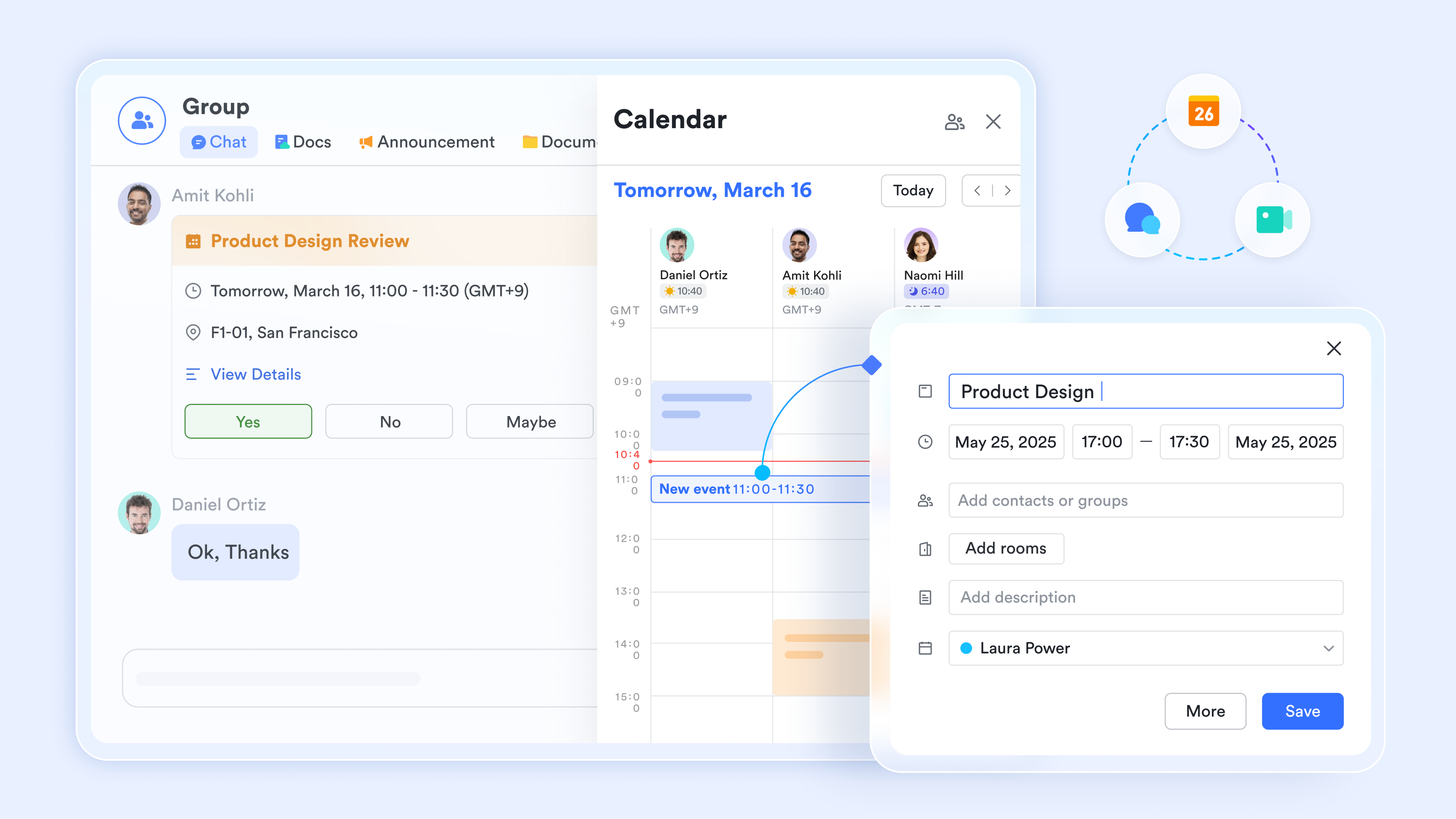
Lark Calendar: Integrates scheduling and event management, allowing HR teams to plan interviews, training sessions, and team meetings efficiently. It syncs with other Lark tools to provide reminders and visibility into team capacity.
Lark Meetings: Facilitates high-quality video conferencing for remote or hybrid HR teams to conduct interviews, performance reviews, and strategy sessions with ease, supporting real-time communication and decision-making.
Together, these Lark functions components empower HR teams to manage projects and tasks effectively, enhance team collaboration, and maintain organized workflows, making Lark a comprehensive project management software tailored for human resources.
:
- Starter plan: that includes 11 powerful tools for up to 20 users. It also comes with 100GB of storage space, 1000 automation runs, AI translations, and more. No credit card needed.
- Pro plan: (billed annually) for up to 500 users. It includes everything in Starter plus group calling for up to 500 attendees, 15TB of storage space, 50,000 automation runs, and more.
- Enterprise plan: for custom pricing. Supports unlimited users and includes even more automation runs and advanced security, compliance, and management features.
For small teams with simple communication needs

18 months message history
1000 Base automation runs/month
2000 rows per table in Base
Most POPULAR
For companies with comprehensive collaboration and management needs
Unlimited message history
500-participant video meetings
50k Base automation runs/month
20k rows per table in Base
For large companies with advanced security and organizational management needs
Get a personalized demo and pricing
Unlimited message history
500-participant video meetings
15 TB storage + 30 GB storage/user
500k Base automation runs/month
50k Base automation runs/month
Most POPULAR
For companies with comprehensive collaboration and management needs
Unlimited message history
500-participant video meetings
50k Base automation runs/month
20k rows per table in Base
Conclusion
The most effective onboarding programs are not the most elaborate - they are the most consistent. A simple, well-executed process that every manager follows will outperform a sophisticated program that varies by team or is only applied to certain roles. The goal is systematization: removing the dependency on any individual HR team member's memory or initiative.
To get there, HR teams should focus on three operational foundations. First, a single source of truth: one document or platform where every onboarding task lives, with assigned owners and due dates. Second, automate reminders: check-ins, document deadlines, and training milestones should trigger automatically rather than relying on manual follow-up. Third, continuous improvement: a brief monthly review of onboarding satisfaction scores and 90-day retention data, used to identify and fix the weakest steps in the process.
Onboarding is ultimately an act of organizational generosity. It says to a new hire: we thought about you before you arrived, we planned for your success, and we will invest in your integration for longer than feels strictly necessary. That message - communicated not through a welcome poster but through the consistent execution of every step on this checklist - is what separates organizations with strong cultures from those that perpetually wonder why their new hires leave.
FAQs
Why is an employee onboarding checklist important for HR teams?
An employee onboarding checklist ensures a smooth and consistent onboarding process. It helps HR teams cover all essential steps, from paperwork to training, improving new hires' experience and accelerating their productivity.
What are the key steps included in an effective onboarding checklist?
Key steps typically include completing employment paperwork, setting up workstations and accounts, introducing company policies and culture, scheduling training sessions, and assigning mentors or buddies to support new employees.
How can HR teams customize the onboarding checklist for different roles?
HR teams can tailor the checklist by adding role-specific tasks such as specialized training, introductions to relevant departments, or access to particular software and tools needed for the job, ensuring relevance and efficiency.
How does a structured onboarding checklist benefit employee retention?
A structured onboarding checklist helps new employees feel welcomed and prepared, reducing first-day anxiety and confusion. This positive experience fosters engagement and loyalty, which can lead to higher retention rates.
Related reading