Modern organizations face growing pressure to attract, develop, and retain skilled employees in an increasingly competitive labor market. A talent management system enables companies to manage the entire employee lifecycle through structured, data-driven workflows. Without a centralized talent management platform, HR teams often struggle with fragmented tools, inconsistent evaluations, and limited visibility into workforce performance.
As talent strategies evolve, modern talent management system software now integrates recruitment, performance management, learning, analytics, and collaboration into a single, connected environment. Let's take a close look at these solutions and find out the best one that suits your needs.
Key takeaways: 5 best talent management system software
In this article, we evaluate 10 leading talent management systems to help you find the right fit for your team. To simplify your search, we've shortlisted the top 5 standout performers below:
1. Lark: All-in-one talent management and collaboration platform
2. Cornerstone: Enterprise learning and performance management platform
3. SAP SuccessFactors: Global core HR and talent management suite
4. Workday: Finance and HR analytics-driven workforce platform
5. BambooHR: Simple HR management software for small businesses
Overview of the best talent management software solutions
This overview compares leading talent management software solutions based on HR focus, scalability, and pricing models. Understanding these differences helps organizations select the best talent management system for their structure and growth plans.
Information source: Official vendor sites
Update time: 2026-01-20
Note: Pricing and plan details reflect publicly available data as of the update date and may vary based on region, billing cycle, and number of agents.
Build scalable talent workflows with the top pick
What is a talent management system?
A talent management system is a digital platform that helps organizations attract, develop, evaluate, and retain employees throughout their lifecycle. It centralizes , performance tracking, learning programs, and succession planning. By replacing fragmented HR processes, a talent management suite improves visibility and consistency. This is especially critical for growing organizations managing distributed teams.
Modern talent management system software integrates automation, analytics, and collaboration into everyday HR workflows. Instead of reactive , companies gain proactive insights into skills, performance, and engagement. As talent strategies become more data-driven, the talent management system becomes a strategic business tool rather than an administrative one.
6 core features of a modern talent management system
Modern talent management software solutions combine automation, analytics, and employee experience features. These core capabilities enable scalable, consistent people management across organizations.
- AI recruitment screening: AI recruitment screening analyzes large volumes of applications to identify skill alignment quickly and consistently. Talent acquisition management software reduces recruiter workload while accelerating time to hire.
- Performance goal tracking: Performance and talent management tools track goals and progress continuously instead of relying on annual reviews. This gives employees clarity and managers real-time insight into performance trends.
- Learning management: Learning management systems connect training, certifications, and skill development in one place, often supported by resources like to standardize recognition. Personalized learning paths support continuous growth and workforce readiness.
- Succession planning: Succession planning visualizes talent pipelines and prepares future leaders proactively. Talent management systems reduce leadership risk by identifying gaps early.
- : Transforms employee data into insights on performance, engagement, and attrition risk. Data-driven visibility helps leaders make informed decisions.
- Engagement surveys: Engagement surveys collect ongoing employee feedback across teams and time periods. Talent management tools surface trends early to improve retention and morale.
Talent management vs traditional HR software
Talent and traditional HR software serve different purposes in modern organizations. While both support people's operations, their scope, depth, and strategic impact vary significantly.
Explore the efficient solution to managing talents
11 best talent management systems
Modern organizations need talent management systems that go beyond hiring to support onboarding, performance, engagement, and workforce insights. The following tools help HR teams streamline talent workflows while improving visibility, collaboration, and decision-making across the employee lifecycle.
1. Lark: All-in-one talent management and collaboration platform
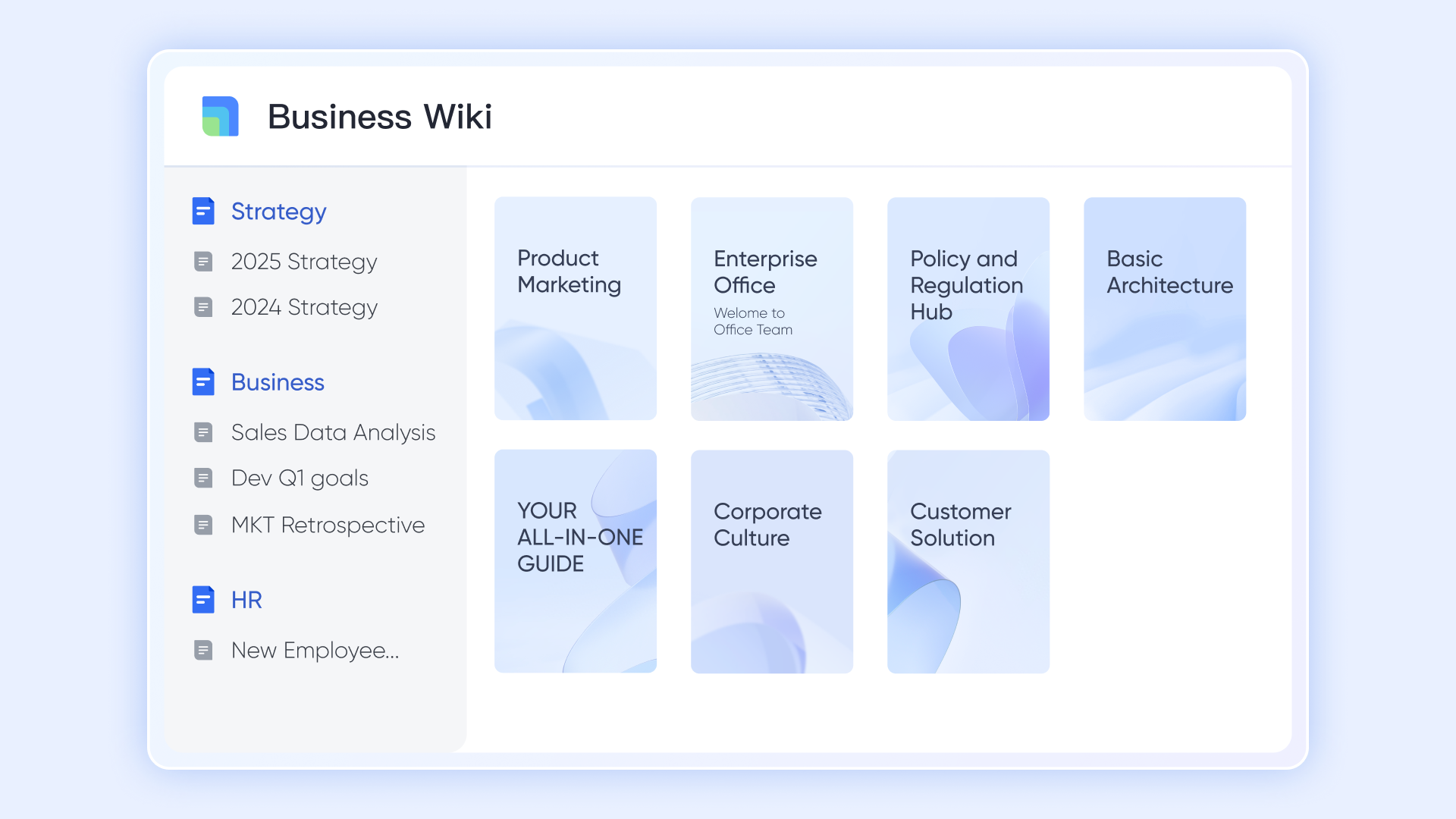
combines talent management tools with collaboration, automation, and documentation in one workspace. It supports onboarding, performance tracking, approvals, and workforce dashboards. Instead of isolated , teams manage talent workflows where work actually happens. This makes Lark particularly effective for growing and distributed organizations.
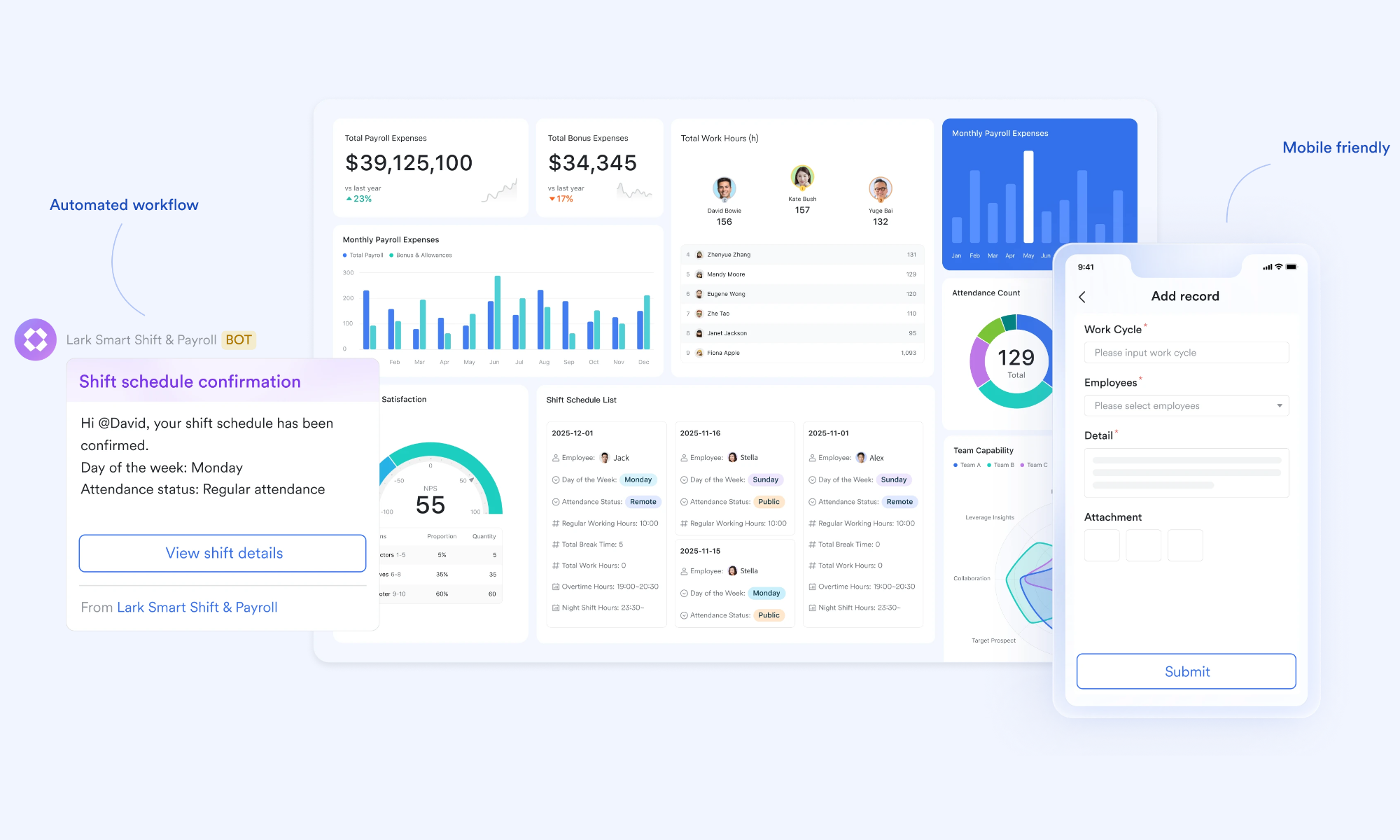
Centralise talent management hub
serves as a centralized talent hub, acting as a single source of truth where candidate CVs are automatically parsed into structured records for easy filtering by skills and status. With the , hiring managers can visually track the recruitment pipeline by dragging and dropping candidates through stages such as "Screening" and "Offer Sent."
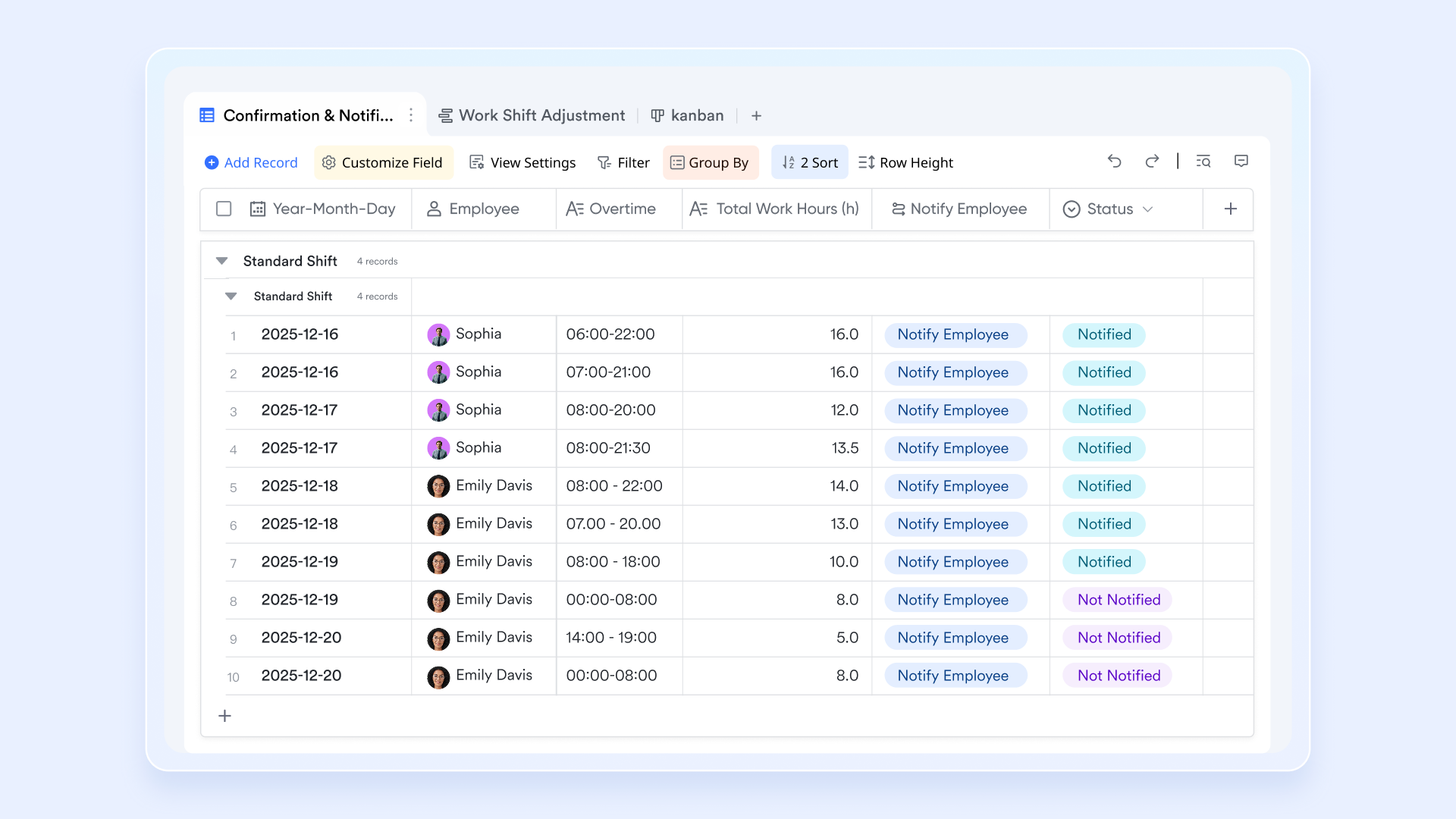
AI-driven shortcuts for data management
Lark AI field shortcuts eliminate the need for manual data entry, streamlining talent management with intelligent automation. For example, by using "Smart Extraction," you can instantly pull candidate details directly from CVs into structured records. Additionally, the "Summary" and "Categorization" shortcuts allow recruiters to generate concise resume snapshots and automatically tag applicants, reducing manual efforts. 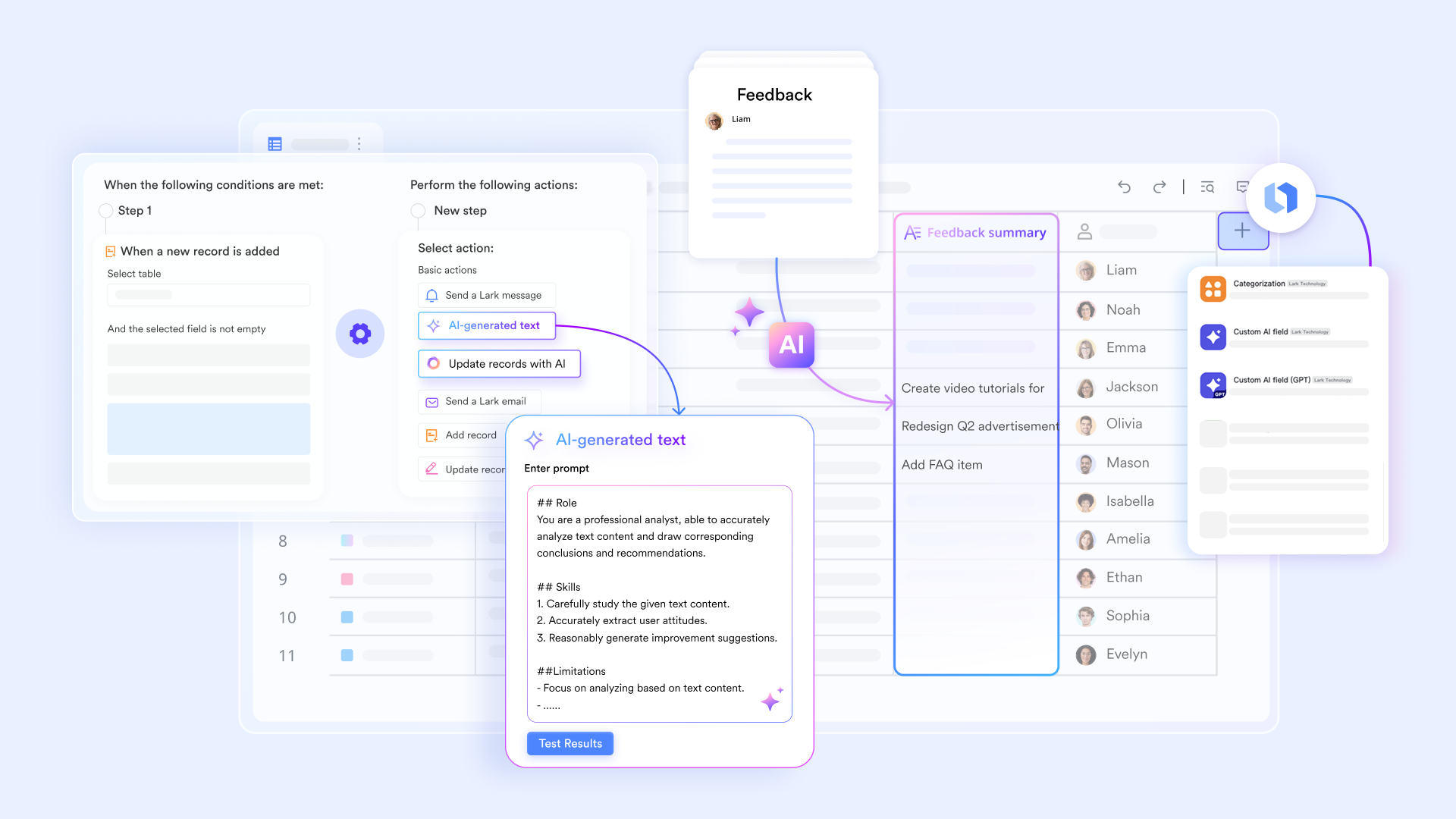
Real-time workforce analytics dashboards
Lark provides HR leaders with immediate visibility into organizational health through native dashboards that aggregate data directly from . These visual reports track critical metrics such as headcount trends, hiring progress, and employee satisfaction survey results. Because these dashboards update automatically as records change, leadership can make data-driven decisions about talent strategy and resource allocation. 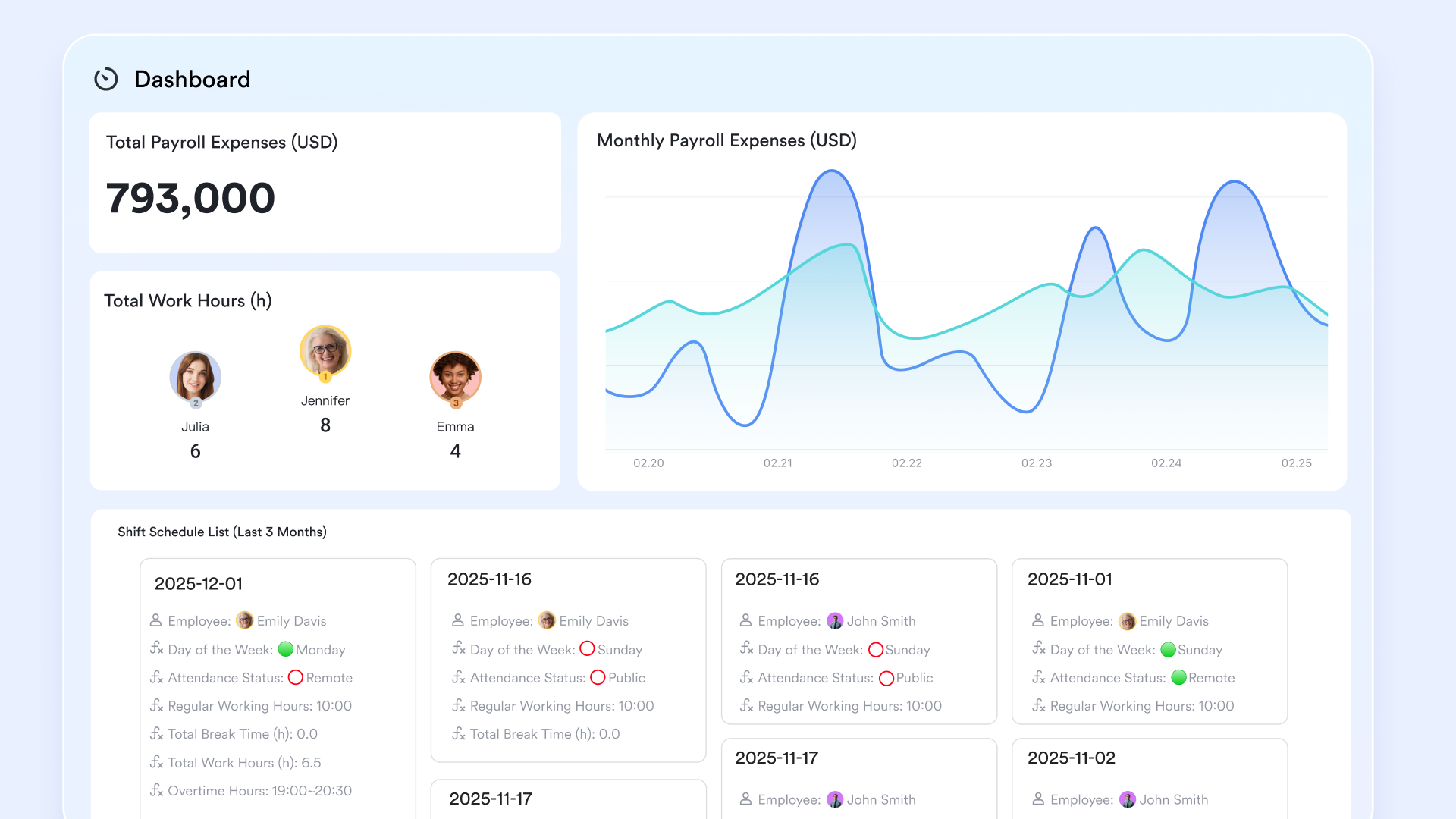
Personalized automated onboarding
New hire experiences are transformed through automated onboarding workflows that trigger the moment a contract is signed. HR teams can set up scheduled messages, team introductions, and access links to training materials within . By using automated checklists in Base, organizations ensure that every stakeholder—from IT to department leads—is notified to complete necessary setup tasks, ensuring a seamless Day 1 for every employee.
Pros:
- Centralizes hiring, onboarding, reviews, approvals, and dashboards in one workspace
- Automates HR workflows to save time and ensure consistency
- Supports remote, hybrid, and fast-growing teams
- Provides real-time visibility into workforce metrics
Cons:
- Teams may require short onboarding, with step-by-step guidance available through the Lark Help Center to speed up adoption.
:
- Starter plan: Free forever plan that includes 11 powerful tools for up to 20 users. It also comes with 100GB of storage, 1000 automation runs, AI translations, and more.
- Basic plan: $6/user/month (billed annually) for up to 500 users. It includes everything in Starter plus group calling for up to 500 attendees, 5TB of storage, 1000 automation runs, and more. For more details, please .
- Pro plan: $12/user/month (billed annually) for up to 500 users. It includes everything in Basic plus group calling for up to 500 attendees, 15TB of storage, 50,000 automation runs, and more.
- Enterprise plan: for custom pricing. Supports unlimited users and includes even more automation runs and advanced security, compliance, and management features.
For small teams with simple communication needs

18 months message history
1000 Base automation runs/month
2000 rows per table in Base
Most POPULAR
For companies with comprehensive collaboration and management needs
Unlimited message history
500-participant video meetings
50k Base automation runs/month
20k rows per table in Base
For large companies with advanced security and organizational management needs
Get a personalized demo and pricing
Unlimited message history
500-participant video meetings
15 TB storage + 30 GB storage/user
500k Base automation runs/month
50k Base automation runs/month
Most POPULAR
For companies with comprehensive collaboration and management needs
Unlimited message history
500-participant video meetings
50k Base automation runs/month
20k rows per table in Base
2. Cornerstone: Enterprise learning and performance management platform
Cornerstone is designed for large enterprises that need structured learning, performance, and skills development at scale. It focuses heavily on workforce upskilling, compliance training, and long-term talent growth. Organizations with complex hierarchies and global teams often choose Cornerstone for its depth and governance.
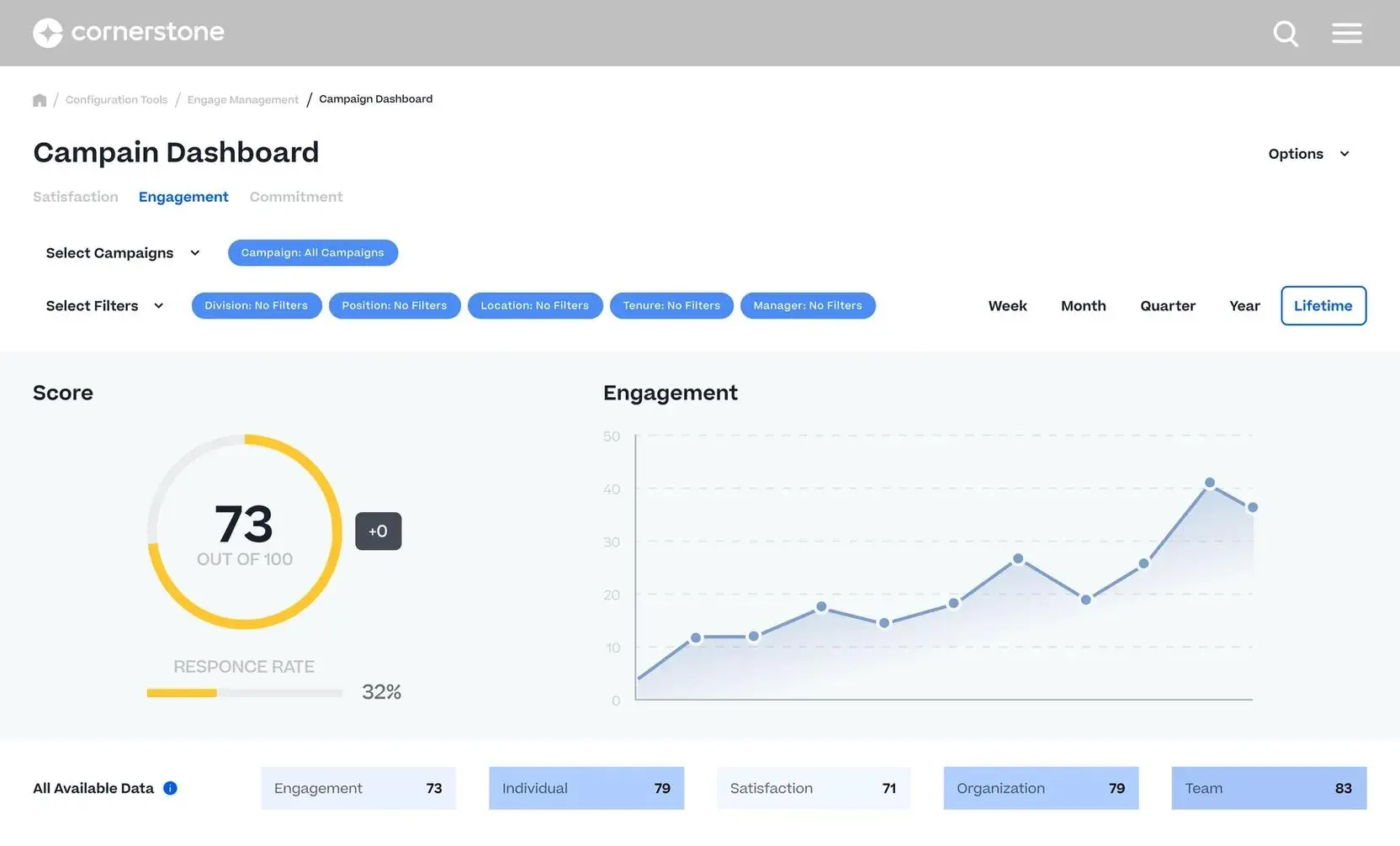
Image source: cornerstoneondemand.com
Key features:
- Enterprise learning and certification programs
- Performance management and reviews
- Skills and competency mapping
- Succession planning tools
Pros:
- Excellent for structured enterprise learning
- Handles complex org hierarchies
- Trusted by large global companies
Cons:
- Complex UI for some users
- High cost for full features
Pricing:
3. SAP SuccessFactors: Global core HR and talent management suite
SAP SuccessFactors is a comprehensive HR and talent management suite built for global organizations. It covers core HR, talent development, and workforce planning within the SAP ecosystem. Companies with complex compliance and international requirements often choose this platform.
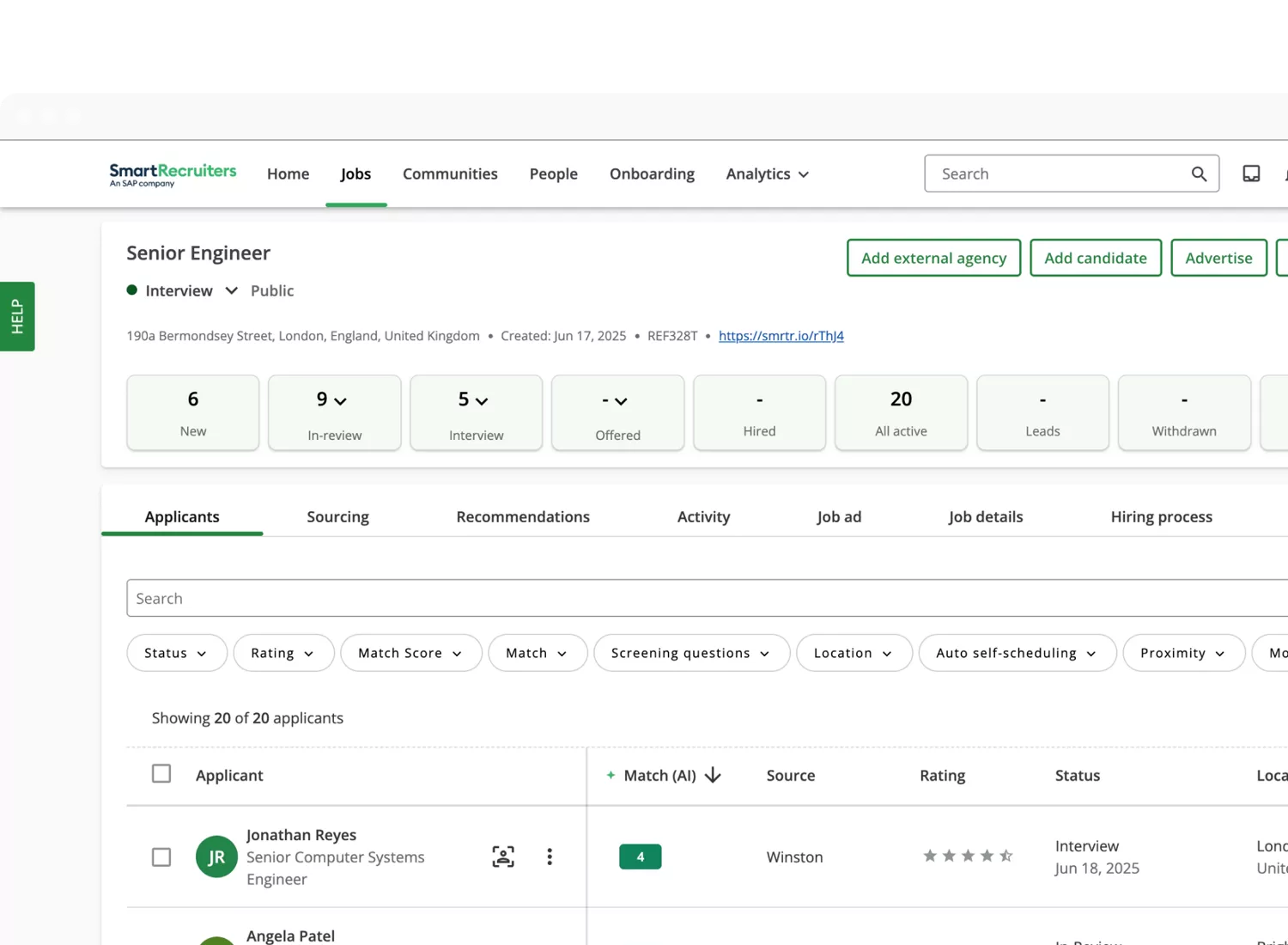
Image source: sap.com
Key features:
- Core HR and global employee data
- Performance and compensation tools
- Learning and compliance modules
- Workforce analytics and planning
Pros:
- Strong compliance support
- Deep SAP ecosystem integration
- Scales for large workforces
- Comprehensive HR and talent suite
Cons:
Pricing:
4. Workday: Finance and HR analytics-driven workforce platform
Workday combines HR and finance into a single, analytics-driven platform. It is designed for organizations that rely heavily on workforce data to guide strategic decisions. Large enterprises value Workday for its reporting depth and unified data model.
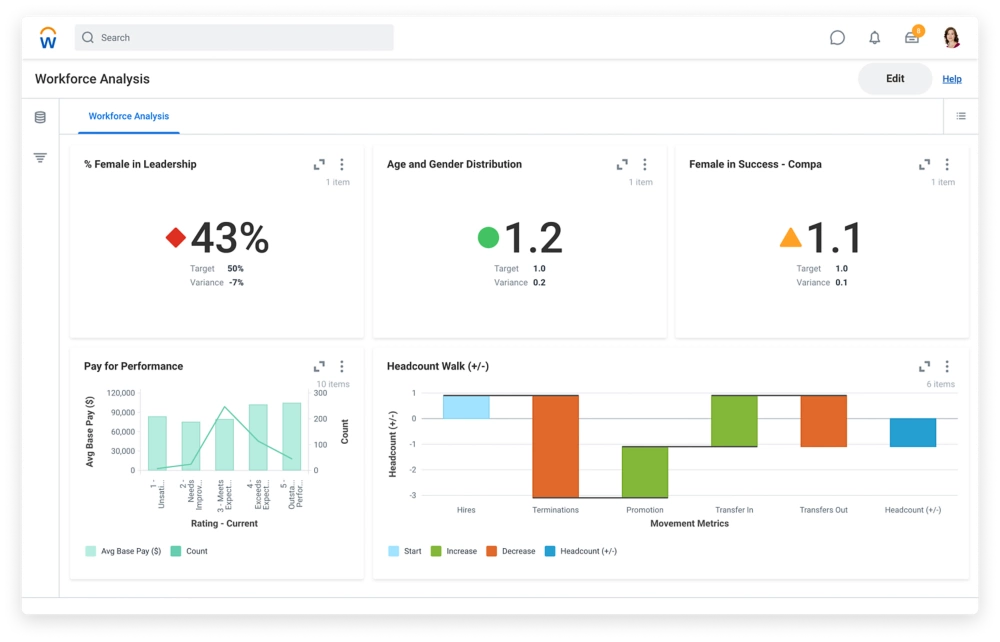
Image source: workday.com
Key features:
- Unified HR and finance platform
- Real-time workforce analytics
- Talent and performance tools
- Continuous business planning
Pros:
- Powerful analytics capabilities
- Enterprise-grade security
- Excellent for large organizations
Cons:
- Expensive implementation
- Not suited for smaller teams
Pricing:
5. BambooHR: Simple HR management software for small businesses
BambooHR is built for small and mid-sized businesses that want simple, organized HR processes. It focuses on usability and clarity rather than deep enterprise complexity. Teams often adopt BambooHR to replace spreadsheets and manual HR tracking.
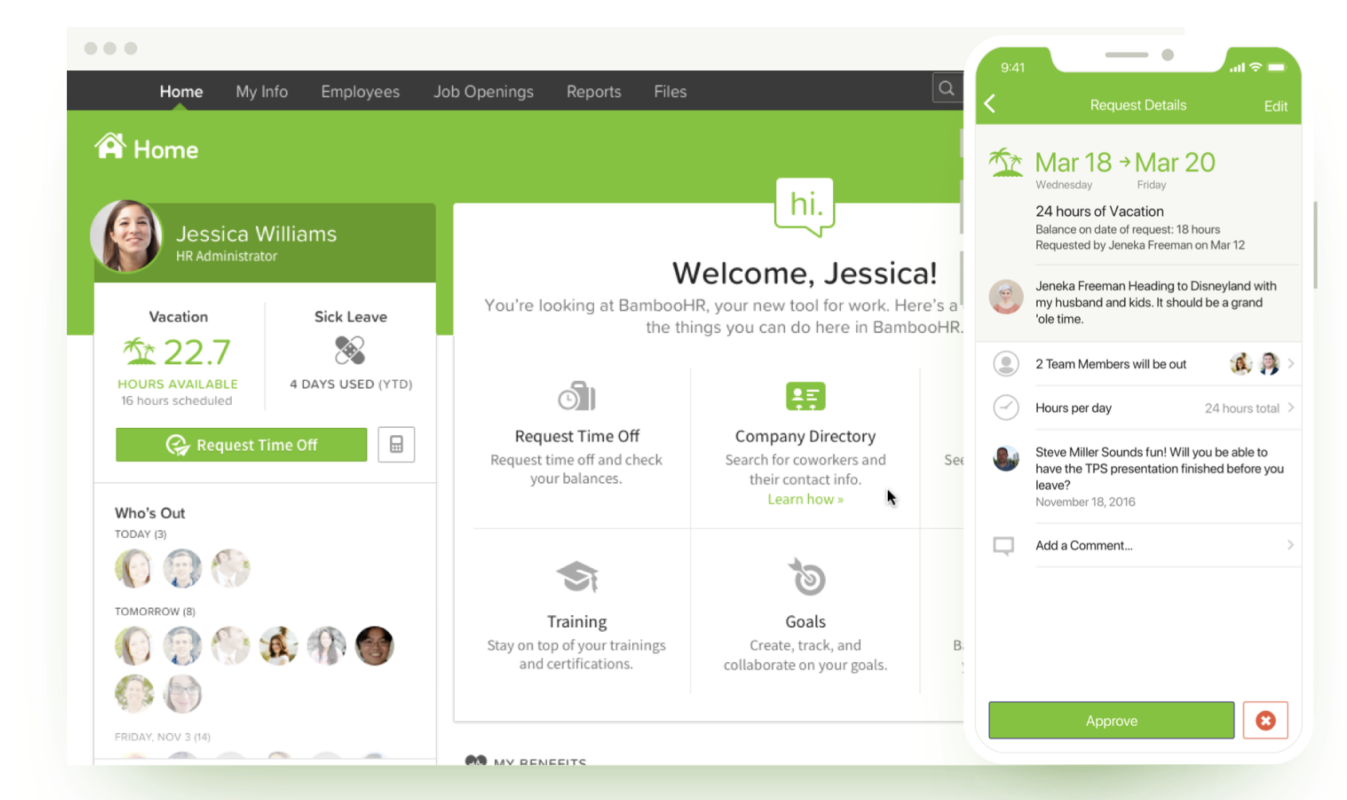
Image source: bamboohr.com
Key features:
- Centralized employee records
- Time-off and attendance tracking
- Performance review support
Pros:
- Strong employee self-service
Cons:
- Limited advanced analytics
Pricing:
6. Playroll: Best for compliance management for international talent
, onboard, and manage talent across borders through a compliant Employer of Record (EOR) model; without the need to set up local entities. It centralizes key talent management workflows like onboarding, employment administration, and ongoing employee lifecycle support.
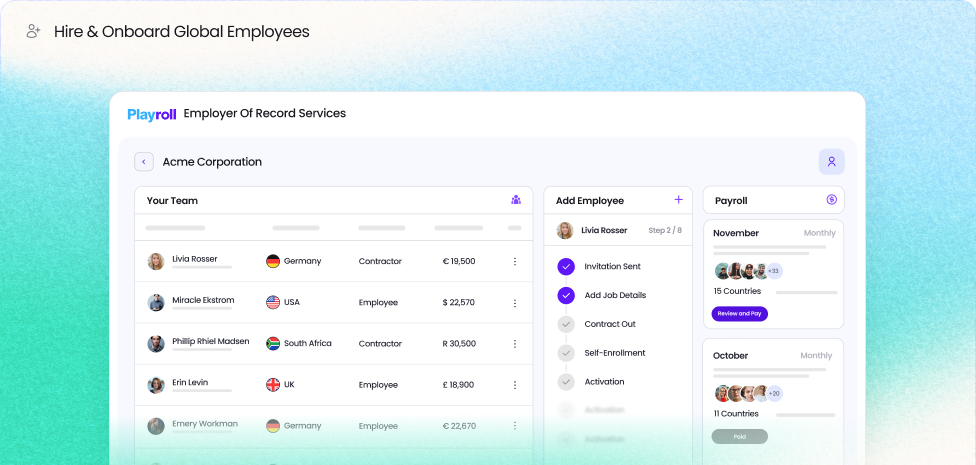
Image source: playroll.com
Key features:
- Employer of Record employment
- International onboarding workflows
- Centralized employee management
- Payroll coordination/support for global teams
Pros:
- Enables global hiring without entities
- Simplifies onboarding and management
- Reduces compliance and admin burden
- Centralized workforce platform
Cons:
- Pricing varies by country
- Not needed with existing entities
- Limited advanced HR features
Pricing:
7. Zoho People: Affordable cloud-based HR automation system
Zoho People is a budget-friendly HR automation tool for growing teams. It focuses on streamlining HR operations without enterprise-level complexity. Organizations already using Zoho products often choose it for ecosystem integration.
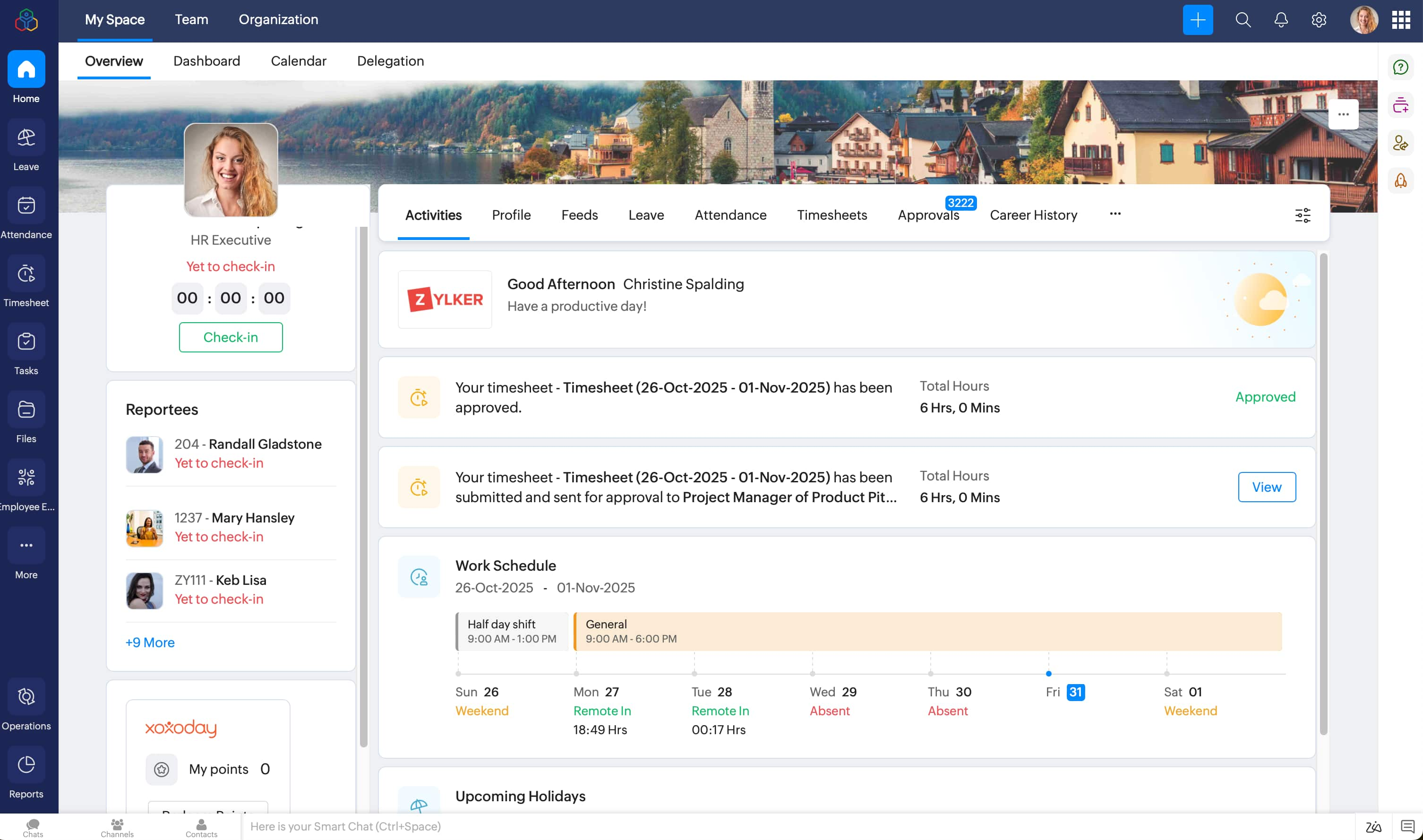
Image source: zoho.com
Key features:
- Onboarding and lifecycle management
- Performance and goal tracking
- Automated attendance and leave
Pros:
- Strong automation features
- Good integration with Zoho apps
Cons:
- Advanced features in higher tiers
Pricing:
- Free plan: $0/user/month (5 users)
- Essential plan: $1.25/user/month
- Professional plan: $2.50/user/month
- Premium plan: $3.50/user/month
- Enterprise plan: $5/user/month
8. ADP Workforce Now: Payroll and compliance management solution
ADP Workforce Now is best known for payroll accuracy and compliance reliability. It extends into HR and talent modules for organizations prioritizing regulatory confidence. Many companies adopt ADP for its long-standing payroll expertise.
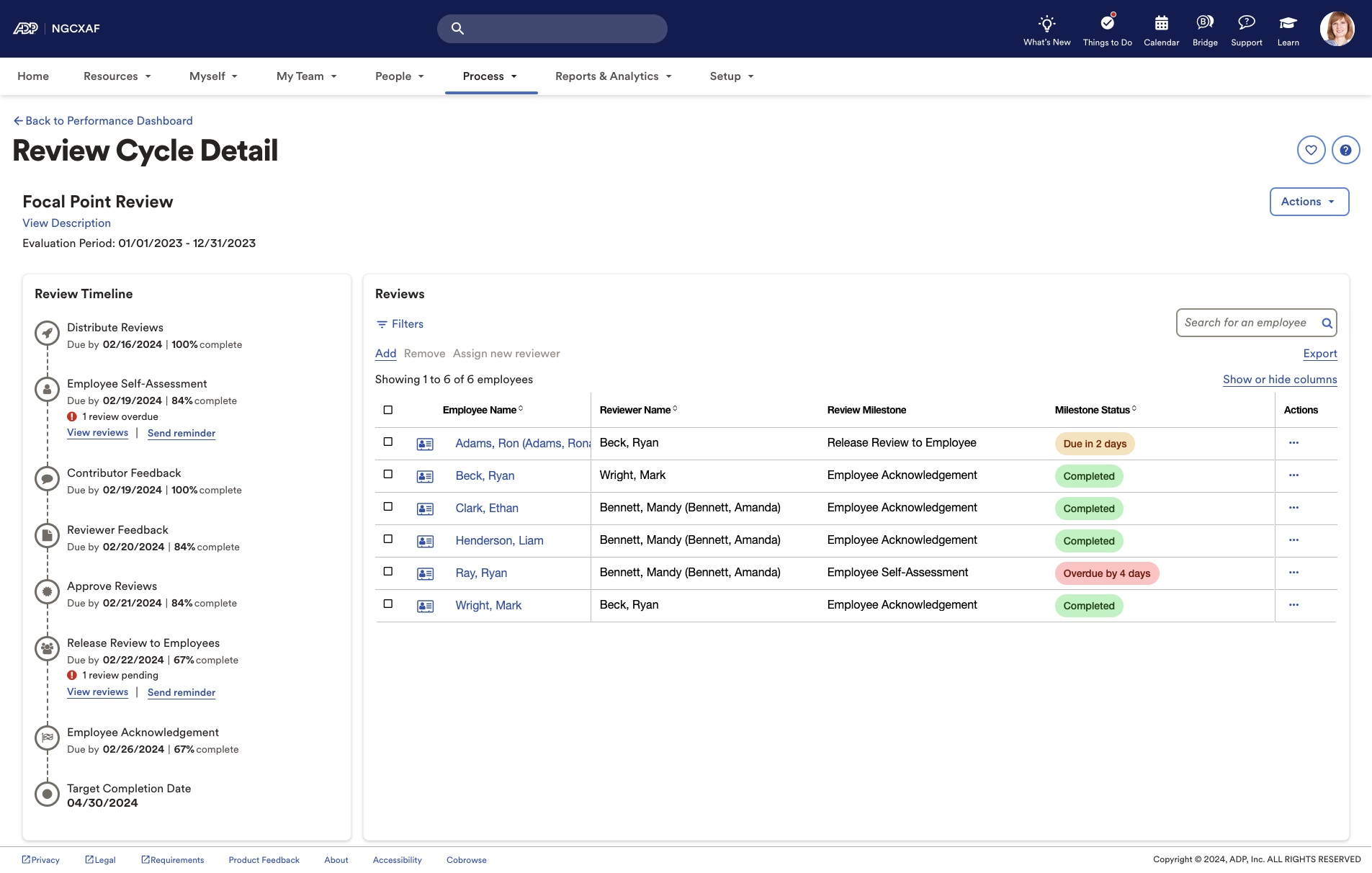
Image source: adp.com
Key features:
- Payroll and tax compliance
- HR and basic talent modules
- Compliance and reporting tools
Pros:
- Reliable payroll accuracy
Cons:
- Limited workflow flexibility
Pricing:
- Select plan: Custom pricing
- Plus plan: Custom pricing
- Premium plan: Custom pricing
9. Gusto: Payroll and HR software for startups
Gusto is designed for startups and small teams needing simple payroll and HR tools. It emphasizes ease of use and fast onboarding. Many early-stage companies choose Gusto to get payroll running quickly.
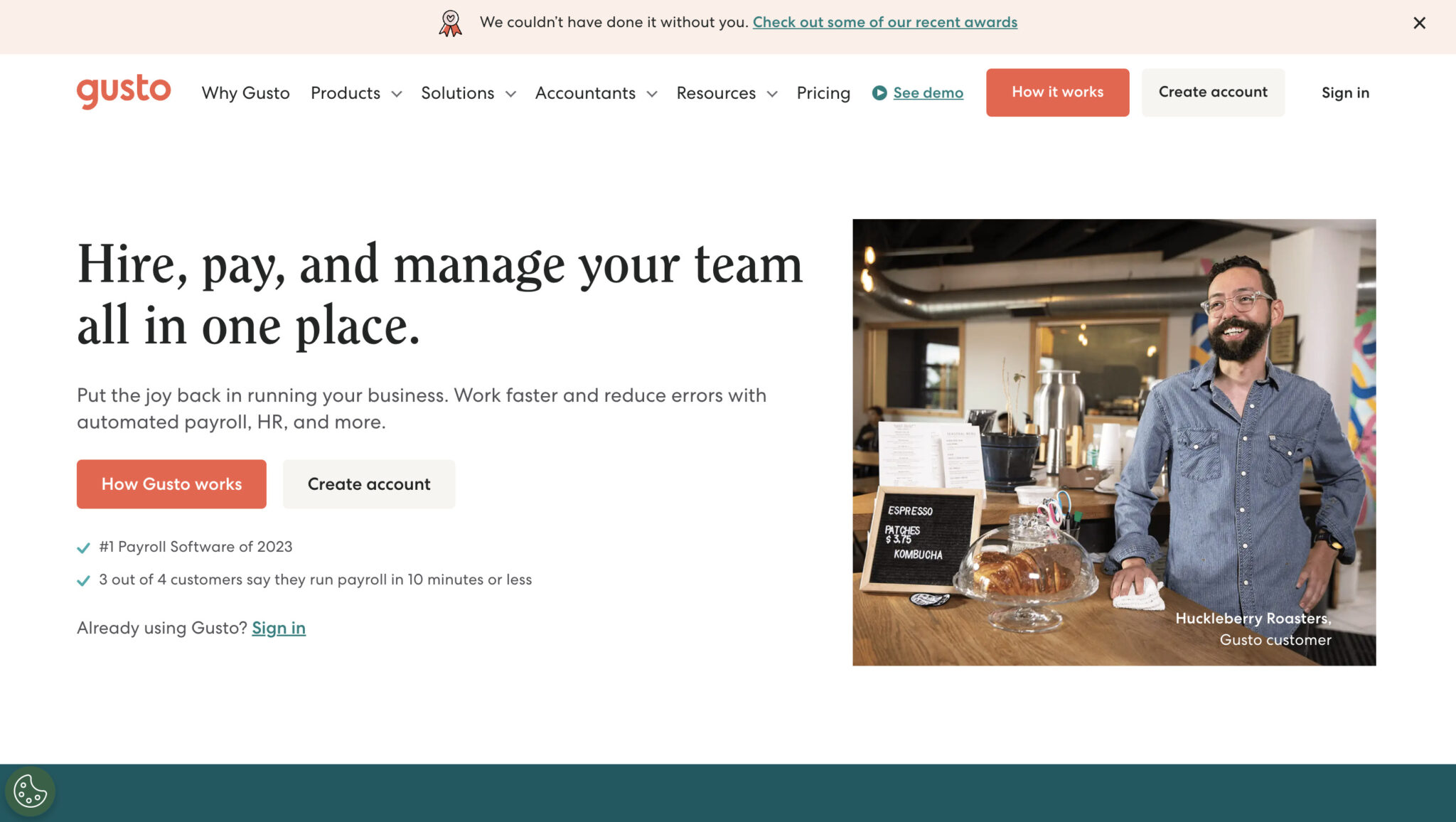
Image source: gusto.com
Key features:
Pros:
Cons:
- Limited talent management tools
- Not ideal for larger orgs
Pricing:
- Simple plan: $49/month/person
- Plus plan: $80/month/person
- Premium plan: $180/month/person
- Solo plan: $49/month/person
10. Paycor: HR and payroll platform for growing teams
Paycor targets mid-sized organizations transitioning from basic payroll to broader HR systems. It balances HR, payroll, and talent features on one platform. Growing companies often adopt Paycor as they formalize people's processes.
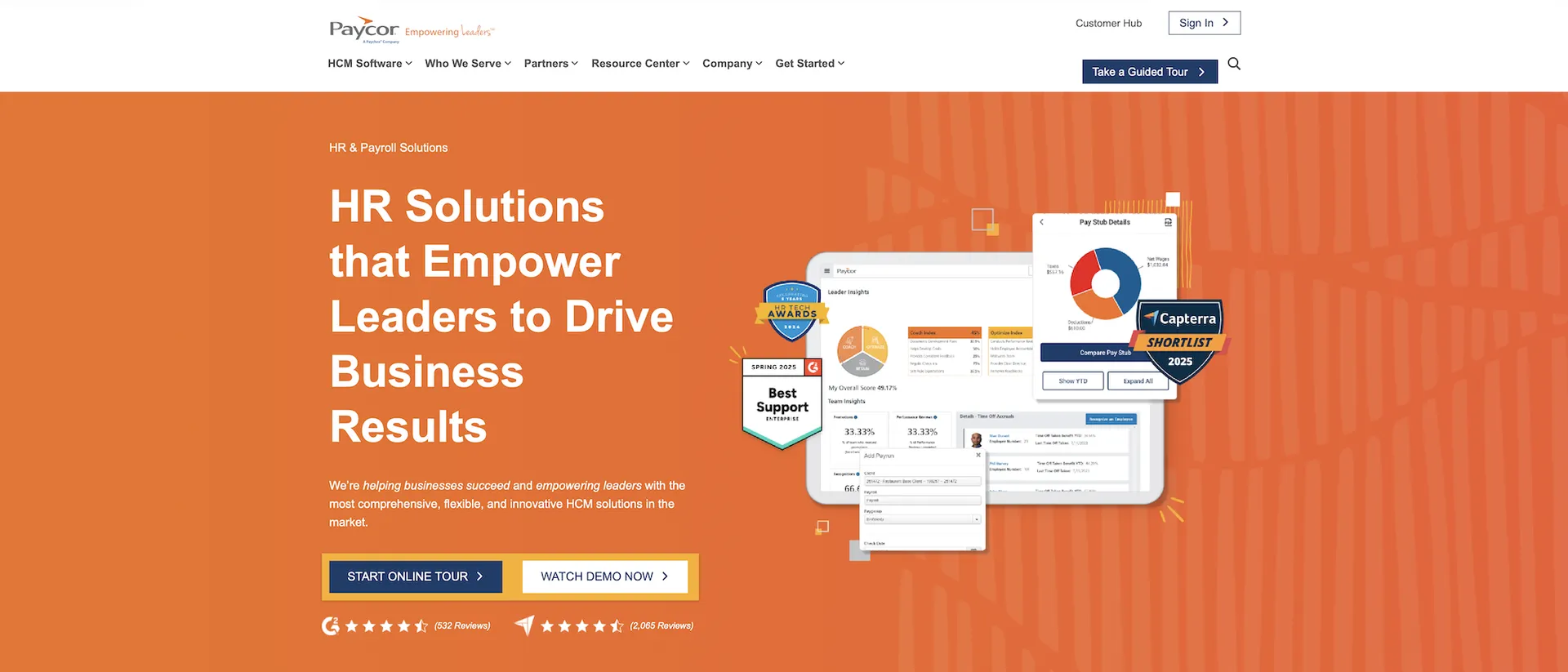
Image source: paycor.com
Key features:
- Payroll and tax automation
- Talent management support
Pros:
- Tailored for mid-sized firms
- Balanced HR + payroll mix
- Industry-specific options
Cons:
- Interface inconsistencies
Pricing:
11. Namely: Employee engagement and HR management platform
Namely focuses on employee experience and engagement for mid-sized companies. It blends HR administration with performance and engagement tools. Organizations often choose, namely, to improve culture and HR visibility.
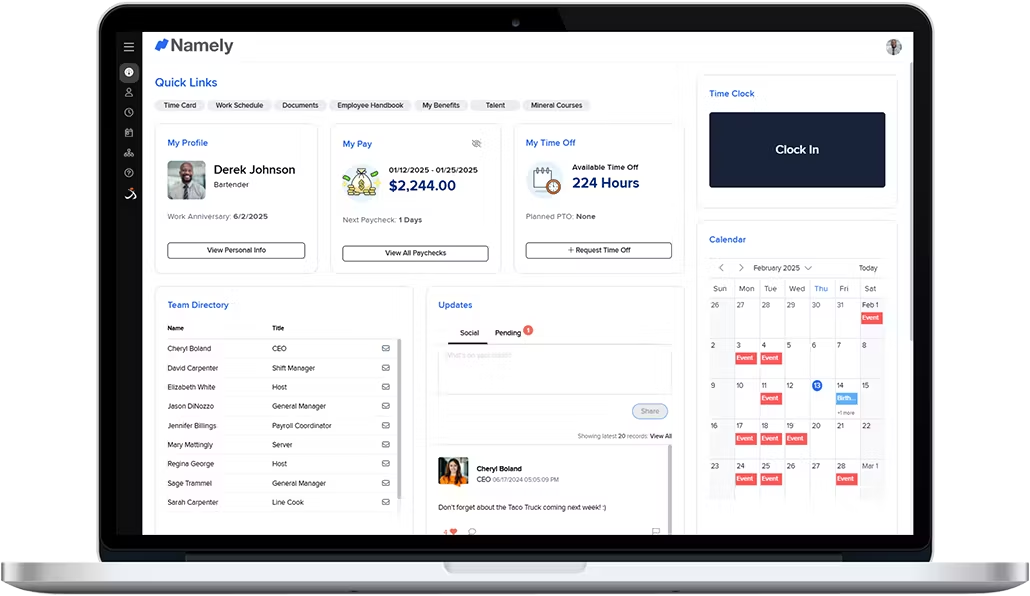
Image source: namely.com
Key features:
Pros:
Cons:
- Limited enterprise scalability
- Add-on costs increase pricing
Pricing:
- Custom pricing; it requests a call
Different uses of talent management systems
Talent management systems adapt to different company sizes by standardizing HR workflows while remaining flexible enough to support startups, growing teams, and large regulated enterprises.
Startups: Startups use talent management systems to streamline hiring, onboarding, and early performance tracking with minimal overhead. Online talent management systems help small teams centralize and reduce manual HR work. This allows founders to focus on growth while building scalable people processes from day one.
Mid-sized firms: Mid-sized firms rely on talent management software solutions to manage growing teams, internal mobility, and . As headcount increases, a talent management platform helps standardize workflows across departments. This improves visibility into skills, engagement, and development needs.
Enterprises: Enterprises use enterprise-grade talent management systems to manage large, distributed workforces and complex organizational structures. Advanced workforce analytics, compliance controls, and succession planning are critical at this scale. These systems support a consistent talent strategy across regions and business units.
Remote-first teams: Remote-first teams depend on cloud-based talent management applications to manage hiring, performance, and engagement across locations. Digital onboarding, continuous feedback, and goal tracking become essential in the absence of physical offices. Talent management tools ensure alignment and visibility in fully distributed environments.
Why talent management systems matter in 2026
Workforce expectations and organizational structures are changing rapidly. Talent management systems now support strategic rather than simple record keeping. In 2026, companies rely on talent management tools to remain competitive, compliant, and adaptable.
- Skills-based hiring: Skills-based hiring prioritizes real capabilities over credentials, improving hiring accuracy and workforce diversity. Talent management systems enable structured skill mapping and objective assessments at scale.
- Hybrid workforce tracking: Hybrid teams need unified visibility across locations, schedules, and performance data. An online talent management system centralizes this information to ensure fairness and accountability.
- Internal mobility: Internal mobility depends on clear insight into employee skills, goals, and performance history. Talent management platforms help surface internal candidates, boosting retention and reducing hiring costs.
- Data-driven promotions: Data-driven promotions rely on measurable performance and documented growth. Talent performance management systems reduce bias by standardizing evaluations and promotion decisions.
- Compliance automation: streamlines policy tracking, documentation, and audit readiness. Talent management system software reduces manual effort while supporting regulatory requirements across regions.
Conclusion
A talent management system is a strategic foundation for building, developing, and retaining a strong workforce. When implemented effectively, it helps organizations move beyond basic HR administration toward structured onboarding, continuous , learning, and data-driven people decisions. By aligning talent processes with business goals, companies gain better visibility into skills, potential, and workforce readiness.
As work environments become more dynamic and distributed, organizations increasingly benefit from platforms that combine talent workflows with collaboration and automation. Integrated systems make it easier to manage talent where work actually happens, improving adoption and consistency across teams. Over time, solutions like support this shift by helping organizations connect people, processes, and insights into one unified workspace.
Turn talent strategy into daily execution
FAQs
How much does a talent management system cost?
A talent management system typically costs $3 to $10 per user per month for small teams, $10 to $25 for mid-sized organizations, and $25 above for enterprise solutions, depending on features and scale. For people having a low budget, Lark offers a free plan and low-cost paid options, making it accessible for teams starting out or scaling their talent workflows.
What are the 4 pillars of talent management?
The four pillars of talent management are recruitment, , learning and development, and retention. Together, they ensure employees are hired effectively, supported in growth, and aligned with business goals. Integrated platforms like Lark help manage these pillars through connected workflows and shared visibility.
How long does it take to implement a talent management system?
Implementation timelines vary based on company size, data complexity, and system scope, typically ranging from a few weeks to several months. platforms generally deploy faster with less technical setup. Flexible tools such as Lark allow teams to roll out talent workflows gradually without major disruption.
Can talent systems replace HR managers?
Talent management systems do not replace but enhance their effectiveness. Automation handles repetitive tasks while HR focuses on strategy, culture, and employee development. Platforms like Lark support this balance by combining automation with collaborative decision-making.
What data should HR teams track first?
HR teams should start with core data such as employee profiles, performance goals, engagement feedback, and turnover trends. Tracking these metrics builds a foundation for workforce planning and development. Over time, centralized systems like Lark make it easier to connect this data to daily execution and insights.
Related reading