Managing people is no longer just about attendance and salaries. Modern HR teams handle compliance, performance, benefits, remote work policies, and employee engagement all at once. That is where the right hr payroll software makes a real difference. A reliable system does more than process salaries. It automates tax calculations, ensures statutory compliance, tracks leave, and integrates with accounting and HR tools. Choosing the best HR payroll software can save hours of manual work and reduce costly errors. In this guide, you will discover the 15 best HR payroll software solutions designed to support growing and forward-thinking HR teams.
Key takeaways: 5 solutions for cloud-based HR and payroll
Modern teams need flexible, cloud-first tools that simplify HR operations and . Here are five reliable platforms built to support growing businesses.
1. Lark: An all-in-one collaboration platform with robust HR and features.
2. Gusto: A user-friendly payroll and benefits solution built for small to mid-sized businesses.
3. Rippling: Combines HR, payroll, IT, and device management into one unified cloud system.
4. Deel: Simplifies global payroll, contractor payments, and compliance across multiple countries.
5. BambooHR: A popular HR platform offering payroll, employee data management, and performance tracking tools.
Snapshot: The top 5 systems offer HR and payroll capabilities
Here's a quick look at HR and payroll systems that streamline both people management and in one place. These tools help HR teams automate routine tasks and keep data aligned across functions.
Information source: Official vendor sites
Update time: 2026-02-21
Note: Pricing and plan details reflect publicly available data as of the update date and may vary based on region, billing cycle, and number of agents.
Build scalable HR payroll workflows with the top tool
What is HR payroll software?
is a digital solution that combines employee management and salary processing into one unified system. It helps businesses handle core HR tasks such as attendance, leave tracking, employee records, and performance data, while also managing payroll calculations, tax deductions, and compliance requirements.
Modern reduces manual work, minimizes errors, and ensures employees are paid accurately and on time. It also generates payslips, maintains statutory reports, and integrates with accounting or time-tracking tools.
Choosing the best HR payroll software depends on your company size, compliance needs, and whether you require cloud access, automation, or global payroll capabilities.
What to look for in the best HR software with payroll features
When choosing HR software with payroll, focus on capabilities that improve accuracy, compliance, and efficiency for your team.
- Multi-country payroll capabilities: If your business operates in more than one country, you need software that handles multiple tax laws, currencies, and statutory requirements without manual intervention.
- Role-based access for HR teams: This lets you assign permissions based on job responsibilities, so sensitive payroll data is visible only to authorized users and your team stays secure.
- Custom payroll cycles: Not every company follows the same pay schedule. Look for systems that let you define weekly, biweekly, or monthly cycles to match your payroll process.
- Audit trails for salary adjustments: Audit logs track who changed what and when. This creates accountability and helps resolve discrepancies during reviews or .
- Employee lifecycle visibility: Good software shows an employee's journey from to exit. This unified view helps HR make informed decisions about pay, promotions, and performance.
Explore the efficient solution to managing payroll
Top 15 tools used for HR payroll and business processes
Choosing the right software can transform how your business manages people and pays. The right tool not only automates payroll but also streamlines HR tasks like onboarding, , benefits administration, and compliance reporting. In this list of top solutions, you'll find platforms suited for small teams, growing companies, and global operations.
1. Lark: All-in-one collaboration platform supporting HR workflows
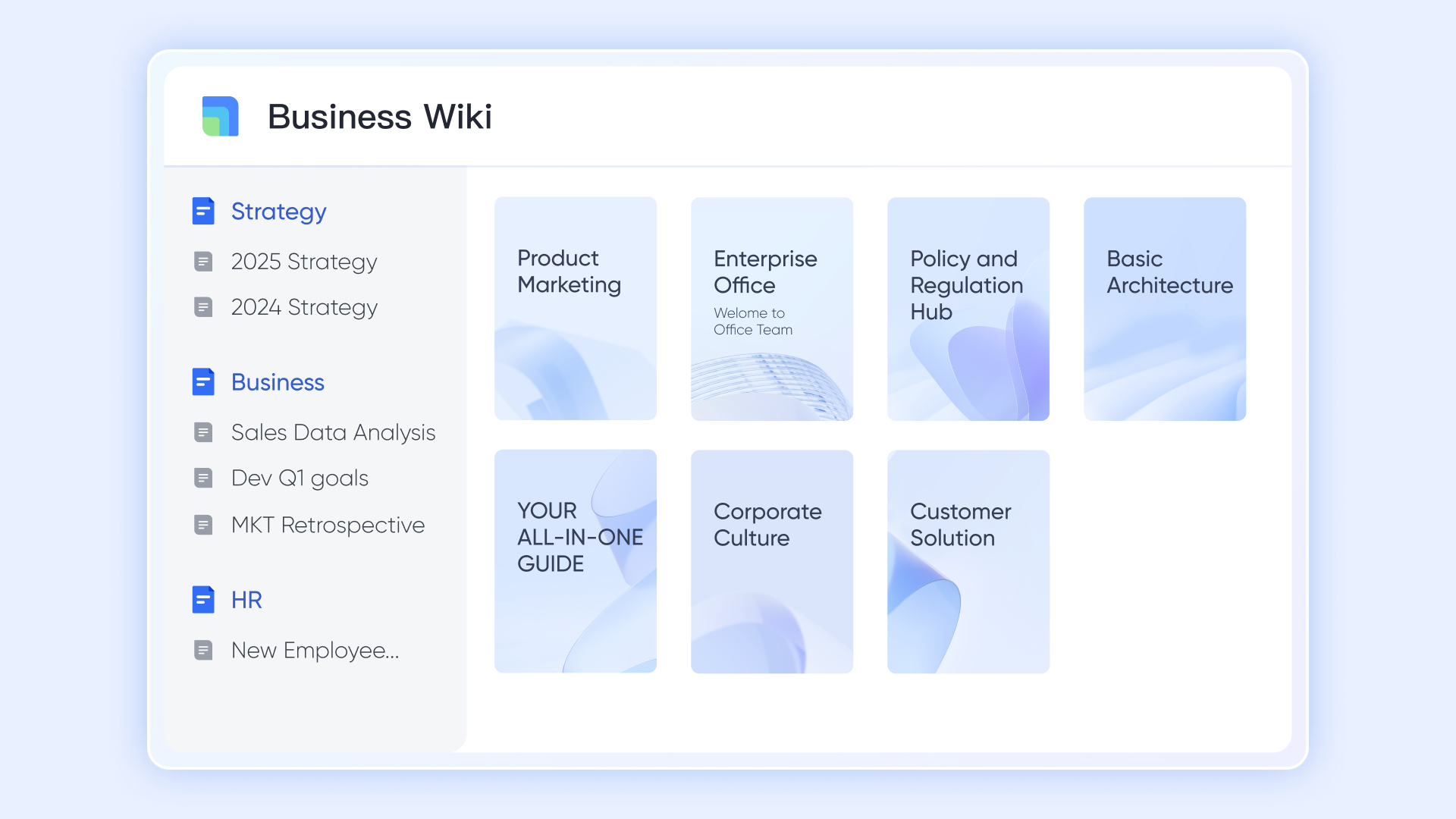
As a collaboration platform, brings together collaboration, automation, and documentation in a single workspace where teams plan, communicate, and execute work. It supports structured workflows such as onboarding, approvals, , and operational reporting, all within the same environment that teams use every day. With tool sprawl, organizations can manage people-related and operational workflows alongside ongoing projects and communication.
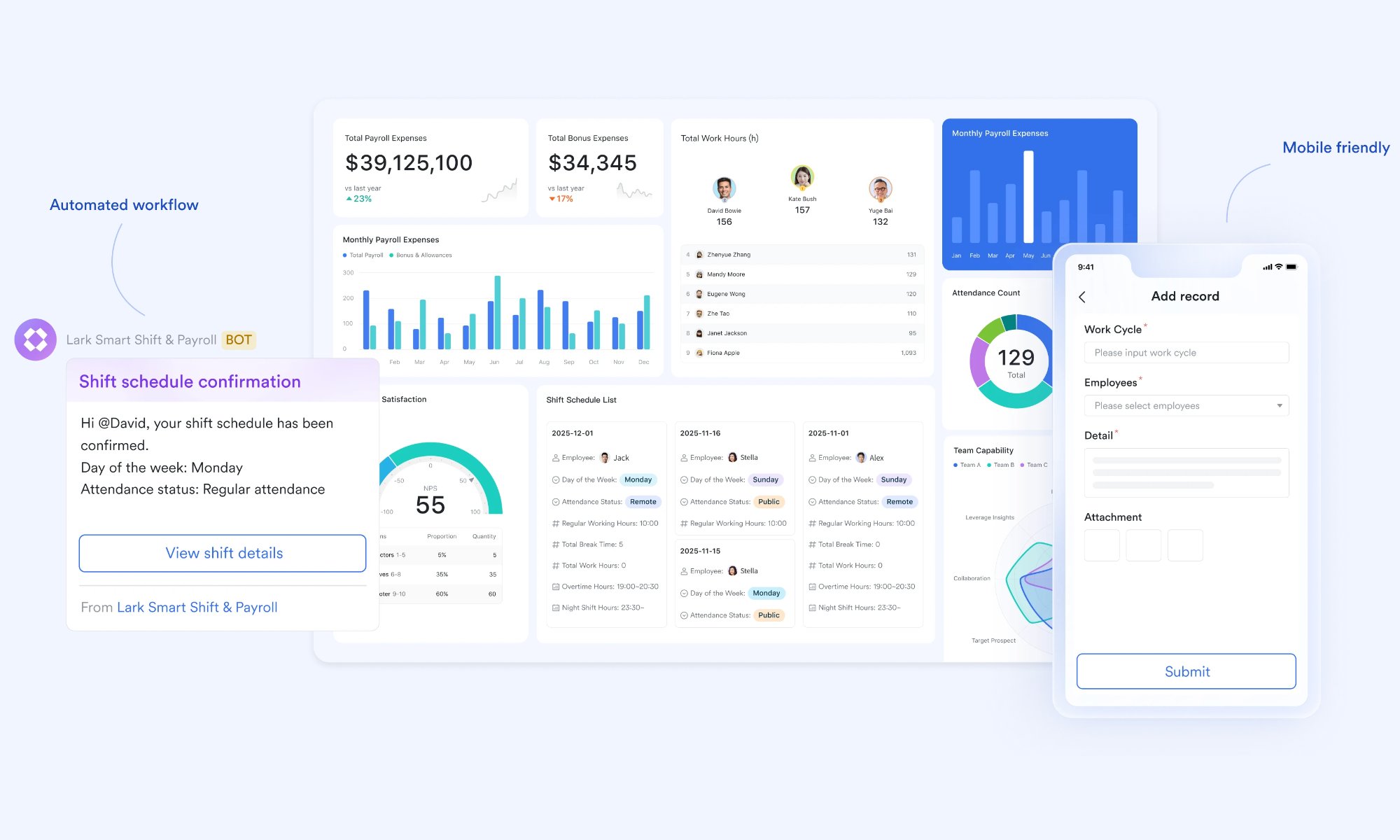
Centralise talent management hub
serves as a centralized talent hub, acting as a single source of truth where candidate CVs are automatically parsed into structured records for easy filtering by skills and status. With the , hiring managers can visually track the recruitment pipeline by dragging and dropping candidates through stages such as "Screening" and "Offer Sent."
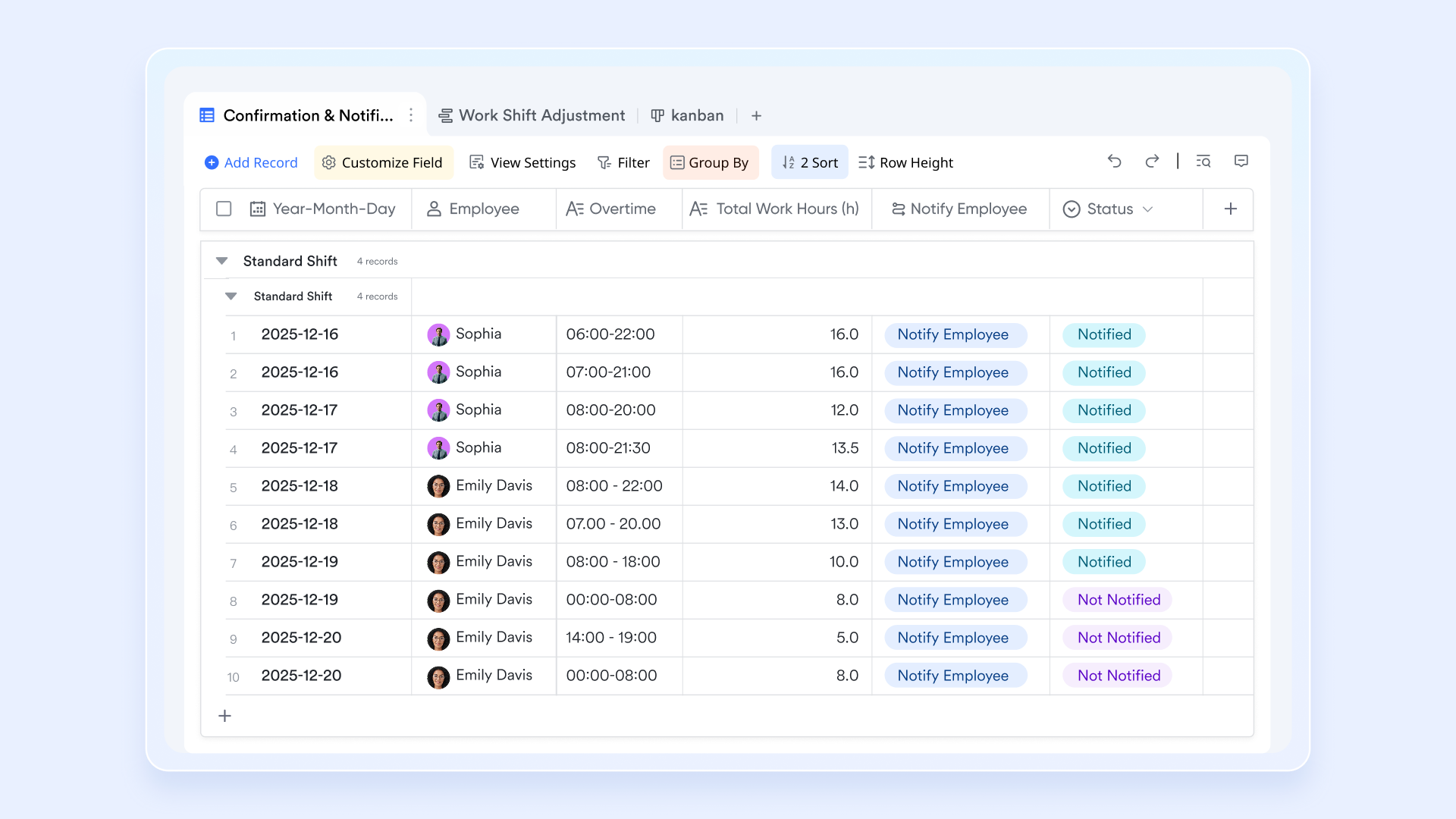
AI-driven shortcuts for data management
Lark AI field shortcuts eliminate the need for manual data entry, streamlining talent management with intelligent automation. For example, by using "Smart Extraction," you can instantly pull candidate details directly from CVs into structured records. Additionally, the "Summary" and "Categorization" shortcuts allow recruiters to generate concise resume snapshots and automatically tag applicants, reducing manual efforts. 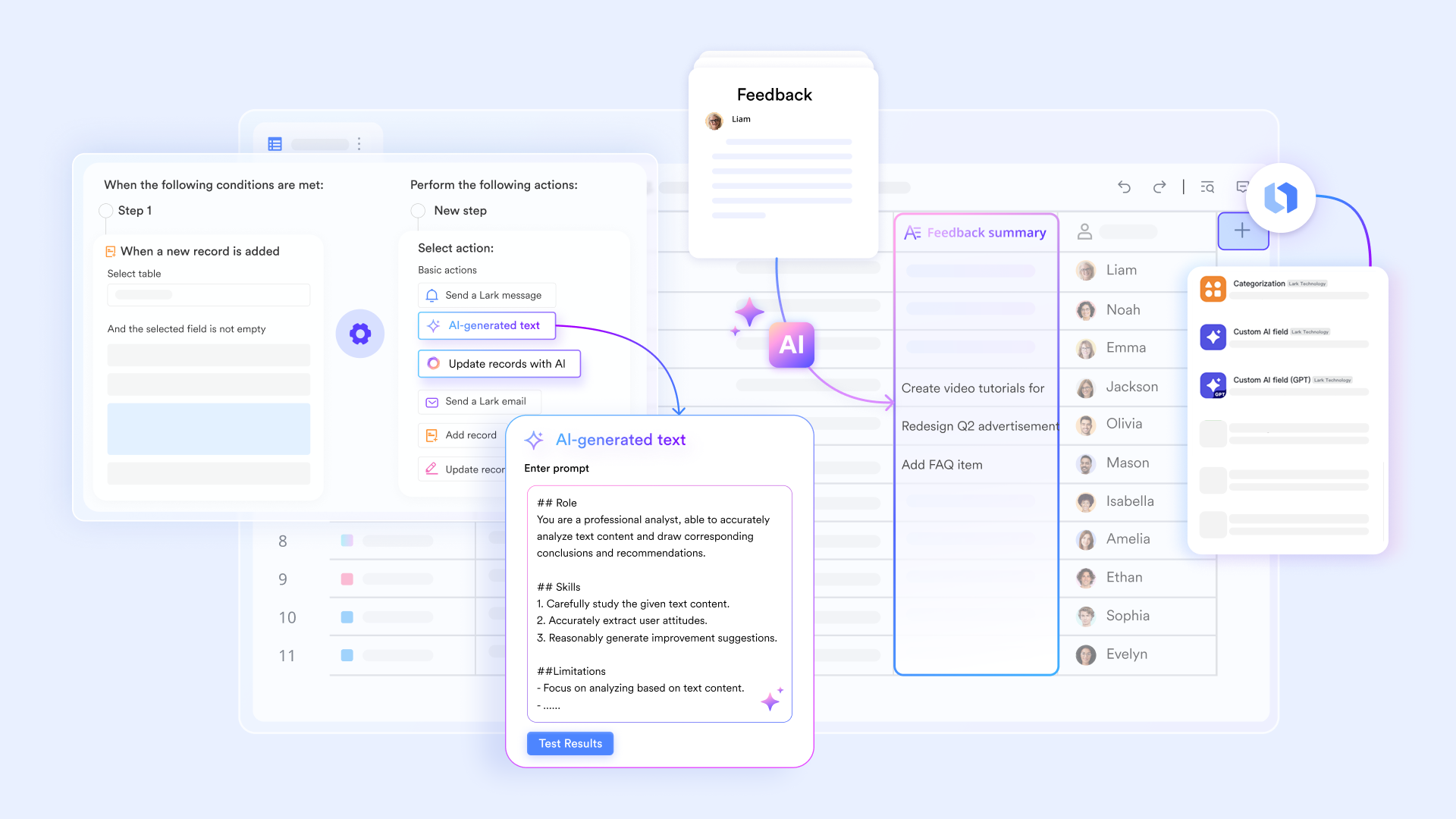
Real-time dashboards for workforce analytics
Lark provides HR leaders with immediate visibility into organizational health through native dashboards that aggregate data directly from . These visual reports track critical metrics, including headcount trends, hiring progress, and employee satisfaction survey results. Because these dashboards update automatically as records change, leadership can make data-driven decisions about talent strategy and resource allocation. 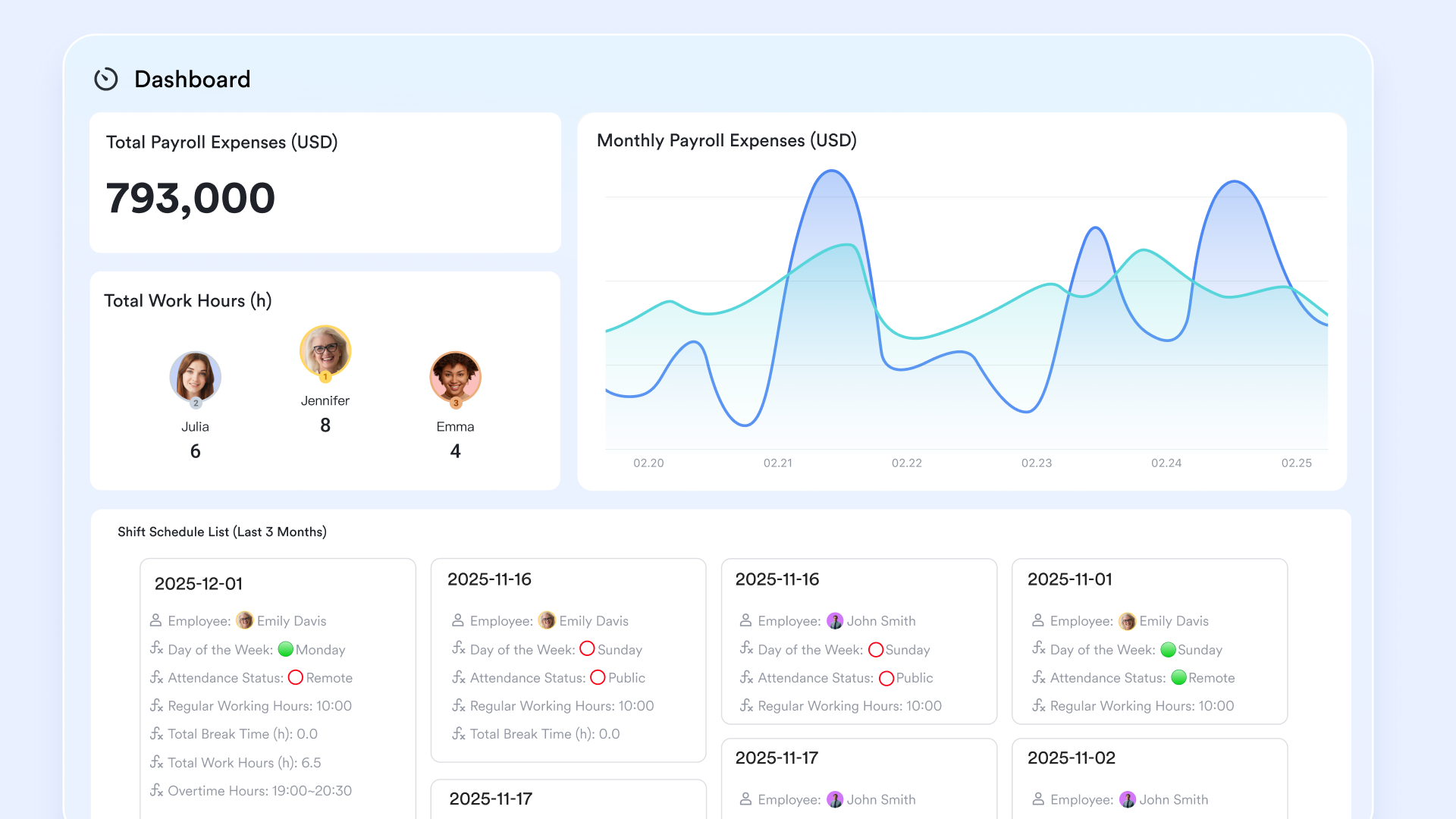
Personalized automated onboarding
New-hire experiences are transformed through automated onboarding workflows that trigger immediately upon contract signing. HR teams can set up scheduled messages, team introductions, and access links to training materials within . By using automated checklists in Base, organizations ensure that every stakeholder—from IT to department leads—is notified to complete necessary setup tasks, ensuring a seamless Day 1 for every employee.
Pros:
- Centralizes hiring, onboarding, reviews, approvals, and dashboards in one workspace
- Automates HR workflows to save time and ensure consistency
- Supports remote, hybrid, and fast-growing teams
- Provides real-time visibility into workforce metrics
Cons:
- Teams may require a short onboarding process, with step-by-step guidance available through the Lark Help Center to speed up adoption.
:
- Starter plan: Free forever plan that includes 11 powerful tools for up to 20 users. It also comes with 100GB of storage, 1000 automation runs, AI translations, and more.
- Basic plan: $6/user/month (billed annually) for up to 500 users. It includes everything in Starter plus group calling for up to 500 attendees, 5TB of storage, 1000 automation runs, and more. For more details, please .
- Pro plan: $12/user/month (billed annually) for up to 500 users. It includes everything in Basic plus group calling for up to 500 attendees, 15TB of storage, 50,000 automation runs, and more.
- Enterprise plan: for custom pricing. Supports unlimited users and includes even more automation runs and advanced security, compliance, and management features.
For small teams with simple communication needs

18 months message history
1000 Base automation runs/month
2000 rows per table in Base
Most POPULAR
For companies with comprehensive collaboration and management needs
Unlimited message history
500-participant video meetings
50k Base automation runs/month
20k rows per table in Base
For large companies with advanced security and organizational management needs
Get a personalized demo and pricing
Unlimited message history
500-participant video meetings
15 TB storage + 30 GB storage/user
500k Base automation runs/month
50k Base automation runs/month
Most POPULAR
For companies with comprehensive collaboration and management needs
Unlimited message history
500-participant video meetings
50k Base automation runs/month
20k rows per table in Base
2. Gusto: Payroll and benefits software for small HR teams
Gusto is widely recognized as one of the best payroll software for HR departments, especially for small to mid-sized teams. It combines easy-to-use payroll processing with benefits administration, tax filing, and compliance support in a single platform. With intuitive dashboards and automated workflows, Gusto helps HR teams run accurate payroll, manage employee benefits, and stay on top of regulatory requirements without heavy manual effort. It's a solid choice for growing businesses that need reliable payroll and HR features without complex setup or technical overhead.
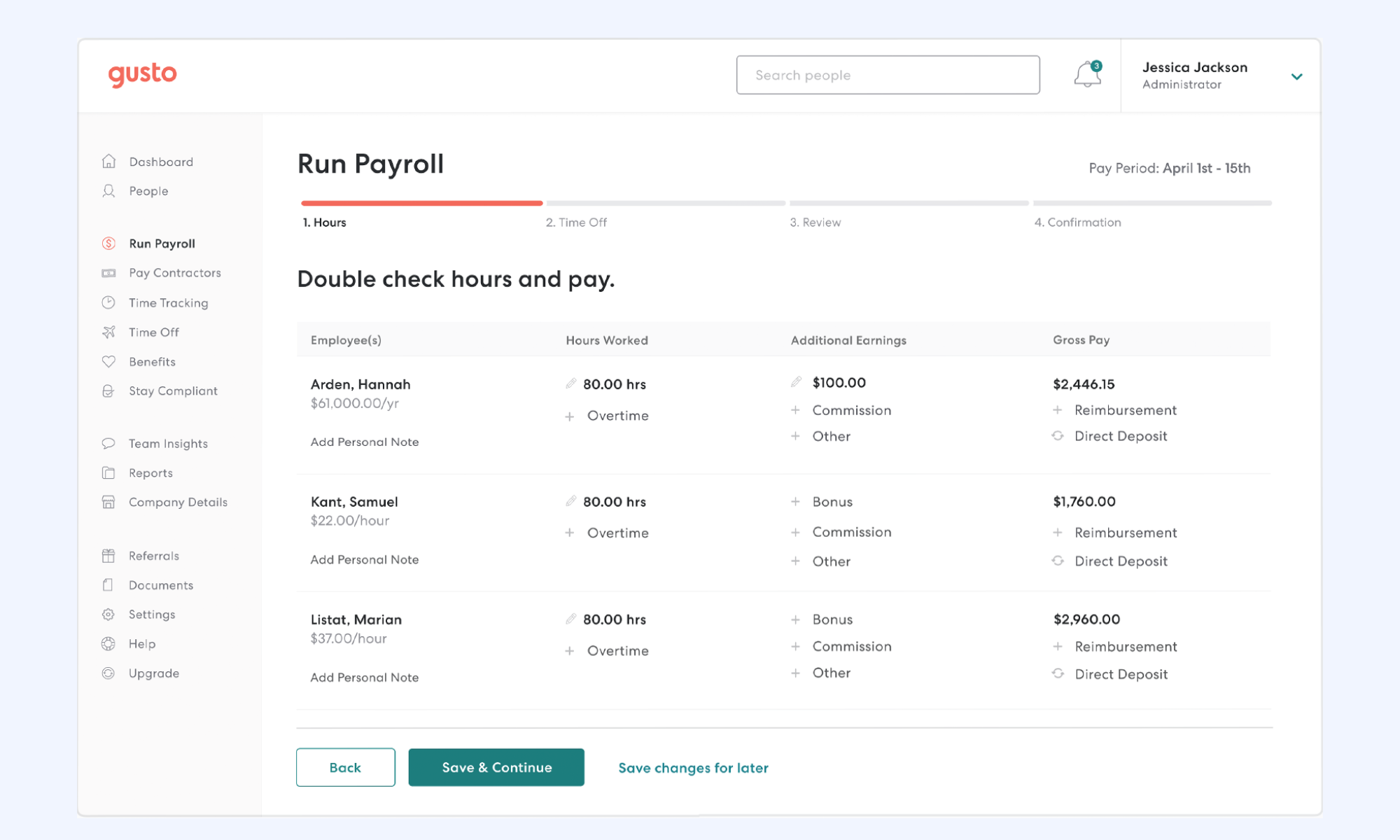
Image source: gusto.com
Key features:
Pros:
Cons:
- Limited talent management tools
- Not ideal for larger orgs
Pricing:
- Simple: $49/month/person
- Premium: $180/month/person
3. Rippling: Unified HR software with payroll features
Rippling is a cloud-based HR and payroll software platform that brings HR, payroll, IT, workforce operations, and together in one system. It helps HR teams manage employee data, benefits, time tracking, and payroll from a centralized dashboard. With automated workflows and integration across tools, Rippling reduces manual entry and keeps everything synchronized. Its cloud-based design means updates and compliance changes happen automatically, and teams can access key information from anywhere. This makes Rippling a strong option for companies looking for unified HR and payroll capabilities.
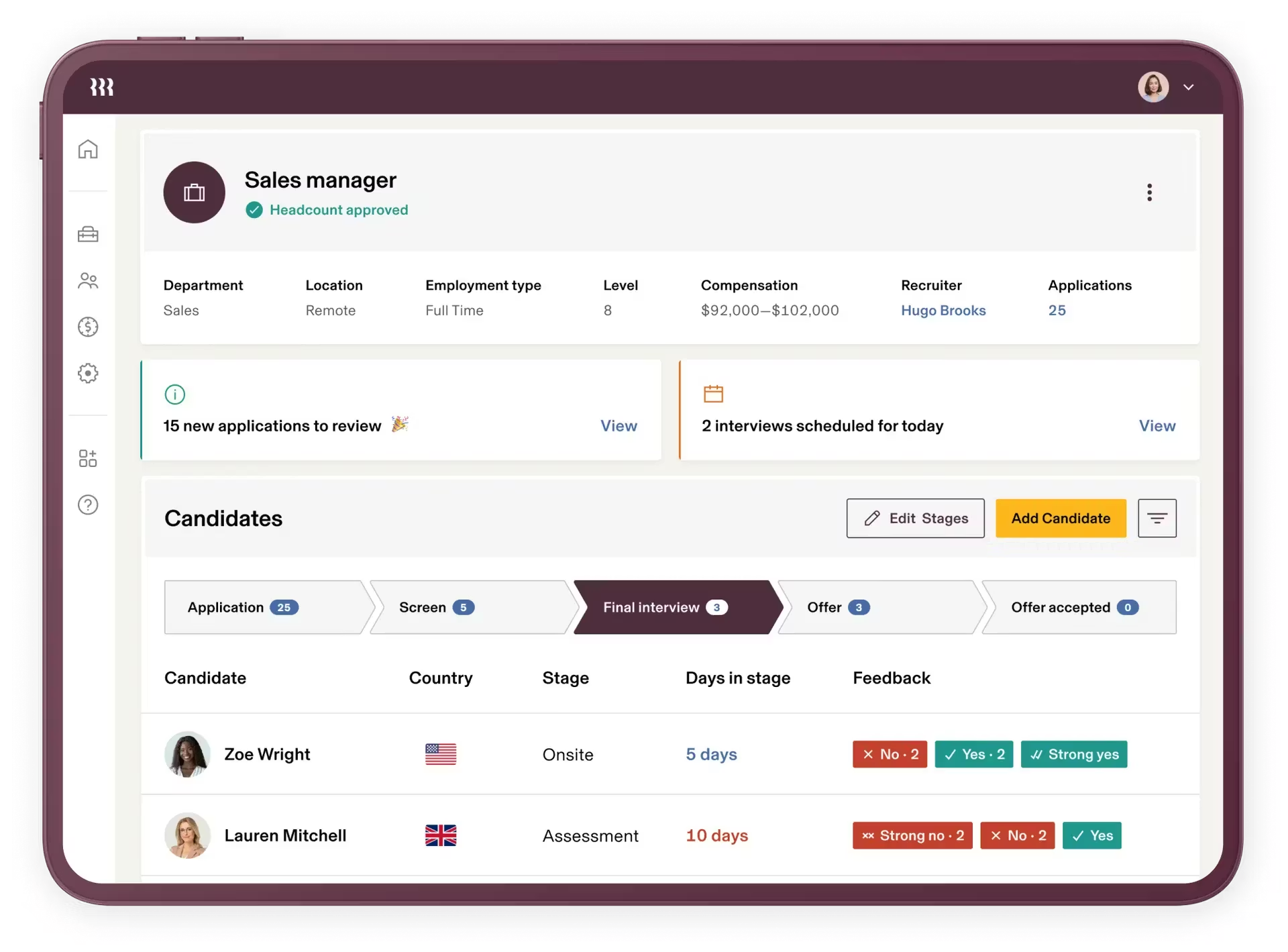
Image source: rippling.com
Key features:
- Advanced analytics and reporting
- Candidate experience tools
- Extensive integrations marketplace
Pros:
- Enterprise-grade scalability
- Flexible hiring workflows
Cons:
- High cost for smaller teams
- Requires training for users
Pricing:
4. Deel: International payroll software for global teams
Deel is a leading international payroll platform designed to help global teams hire, manage, and pay employees across borders with ease. Recognized as one of the best HR and payroll software solutions, it simplifies compliance, contracts, and payments, enabling businesses to scale globally while staying legally secure and operationally efficient.
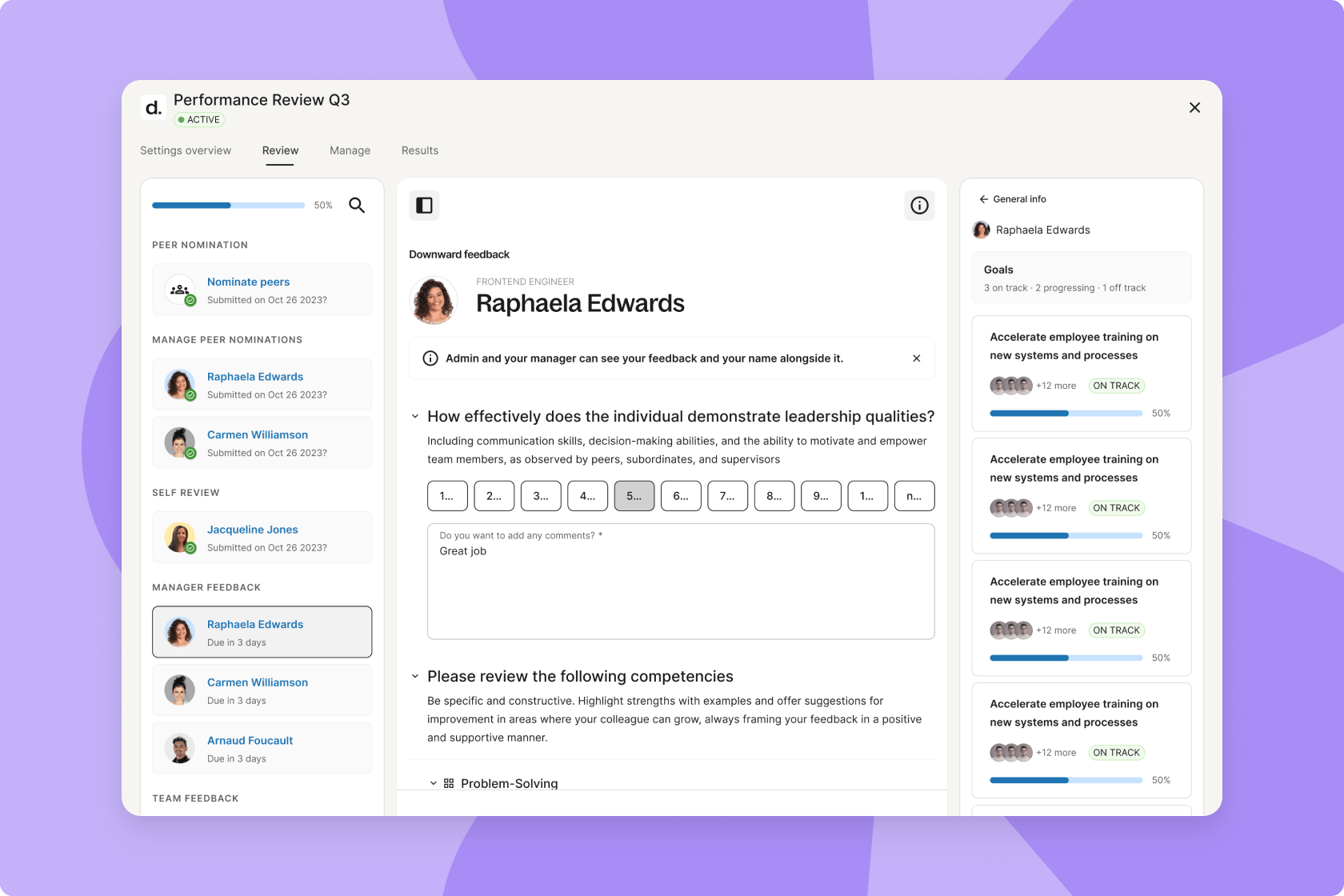
Image source: deel.com
Key features:
- Multi-location hiring management
- Candidate tracking workflows
- Background check integrations
- Hiring performance reports
Pros:
- Strong multi-location support
- Suitable for high-turnover roles
- Consistent hiring processes
- Industry-specific features
Cons:
- Limited flexibility outside target industries
- Reporting customization is limited
Pricing:
- Standard: $599/employee/month
- Enterprise: $899/employee/month
- Hire US PEO Employees: $125/employee/month
5. BambooHR: HR and payroll software for employee lifecycle management
BambooHR is a comprehensive HR and payroll solution designed to manage the entire employee lifecycle—from hiring and onboarding to performance tracking and offboarding. It centralizes employee data, automates workflows, and simplifies payroll processing. With user-friendly tools and insightful reporting, BambooHR helps businesses improve efficiency, enhance employee experience, and maintain compliance as they grow.
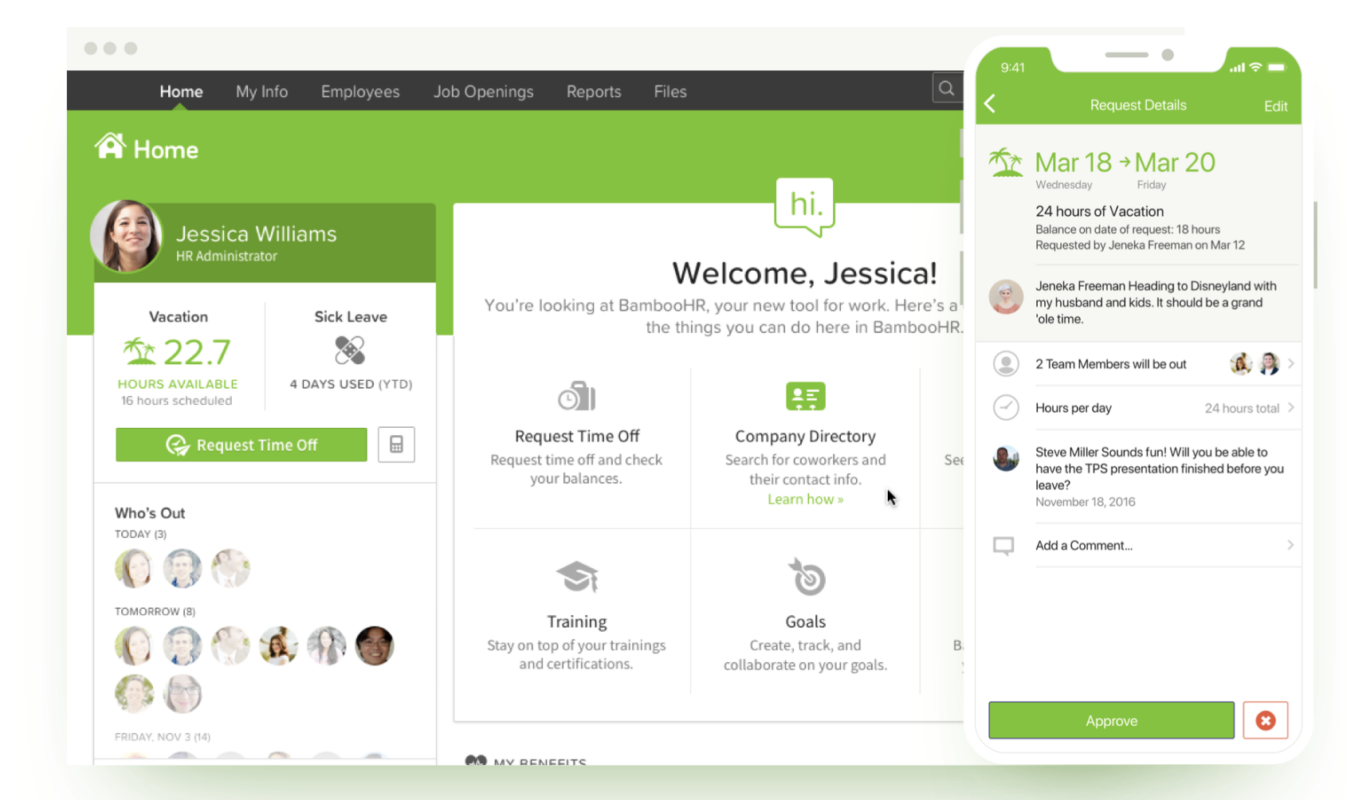
Image source: bamboohr.com
Key features:
- Centralized employee records
- Time-off and attendance tracking
- Performance review support
Pros:
- Strong employee self-service
Cons:
- Limited advanced analytics
Pricing:
6. ADP Workforce Now: Enterprise payroll software for HR departments
ADP Workforce Now is a robust enterprise payroll and HR solution built to support growing and large organizations. It streamlines payroll processing, benefits administration, talent management, and compliance within a unified platform. With advanced reporting and analytics, HR departments gain real-time workforce insights for better decision-making. For companies wondering which HR software is best for global payroll, ADP Workforce Now stands out with its scalable infrastructure, multi-country payroll capabilities, and strong regulatory support.
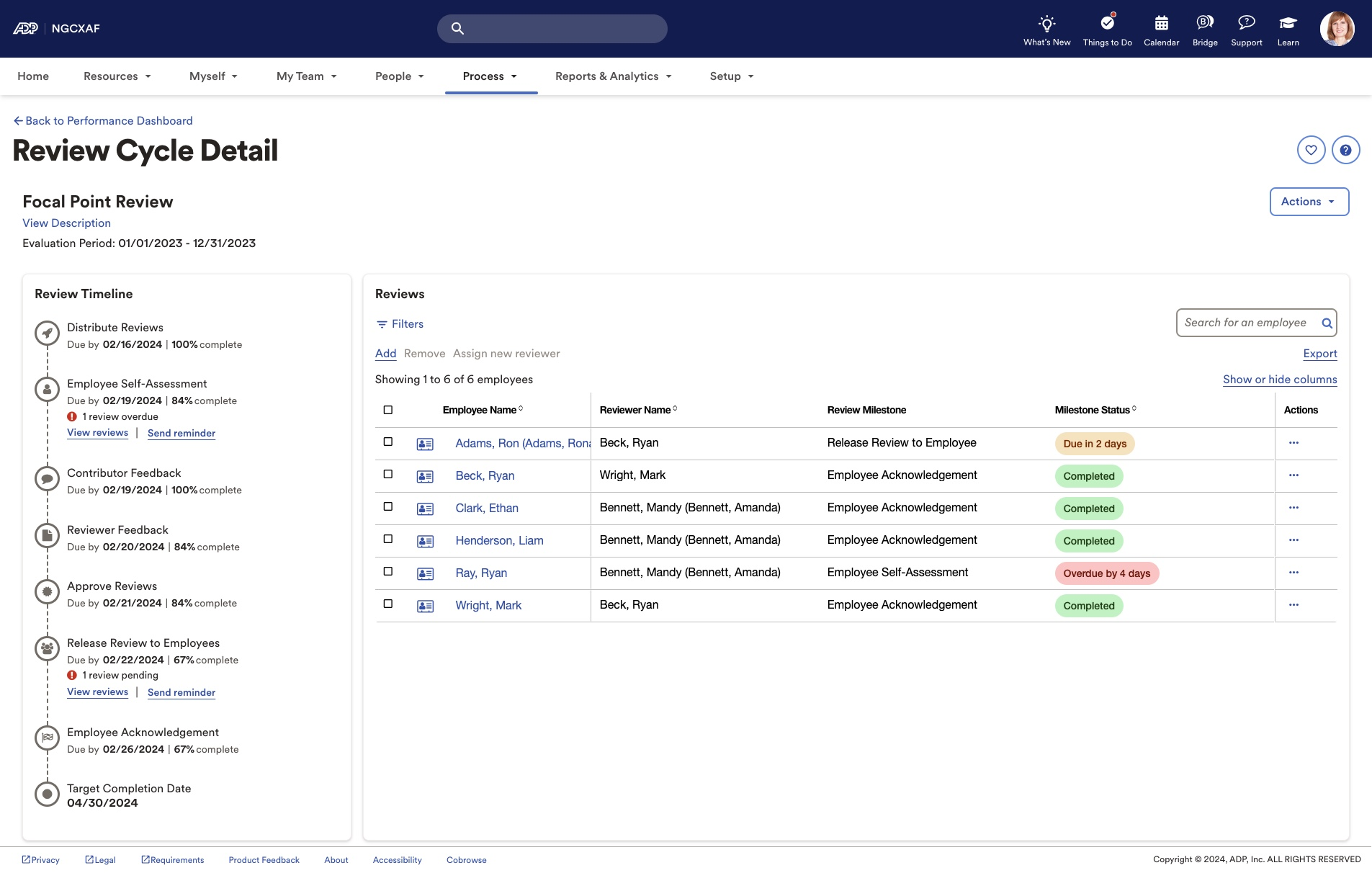
Image source: adp.com
Key features:
- Payroll and tax compliance
- HR and basic talent modules
- Compliance and reporting tools
Pros:
- Reliable payroll accuracy
Cons:
- Limited workflow flexibility
Pricing:
7. Paychex Flex: Payroll platform for compliance-focused HR teams
Paychex Flex is a flexible payroll and HR solution designed for businesses that prioritize accuracy and regulatory compliance. It simplifies payroll processing, tax filing, benefits administration, and employee management within a single cloud-based system. With built-in compliance tools and expert support, Paychex Flex helps HR teams reduce risks, stay updated with labor laws, and manage workforce operations efficiently.
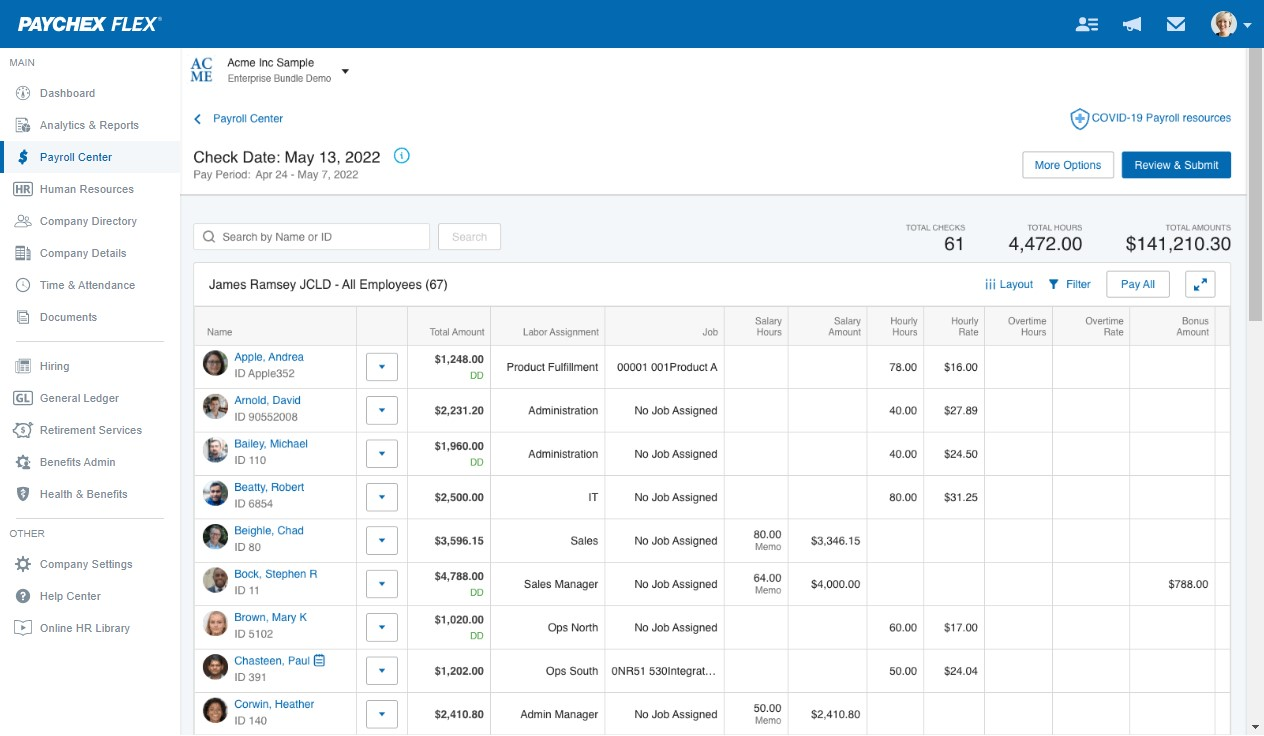
Image source: paychex.com
Key features:
- Job posting to multiple boards
- Resume screening and scoring
- Interview scheduling tools
- Candidate pipeline tracking
Pros:
- Strong job board integrations
- Suitable for small teams
Cons:
- Limited advanced analytics
- Less customization for workflows
- Can become costly as hiring scales
Pricing:
8. Zenefits: HR payroll software for growing businesses
Zenefits is an all-in-one HR and payroll platform designed to support growing businesses with streamlined workforce management. It automates payroll processing, benefits administration, onboarding, and time tracking within a unified system. With user-friendly dashboards and compliance tools, Zenefits helps companies reduce manual tasks, improve accuracy, and scale their HR operations efficiently.
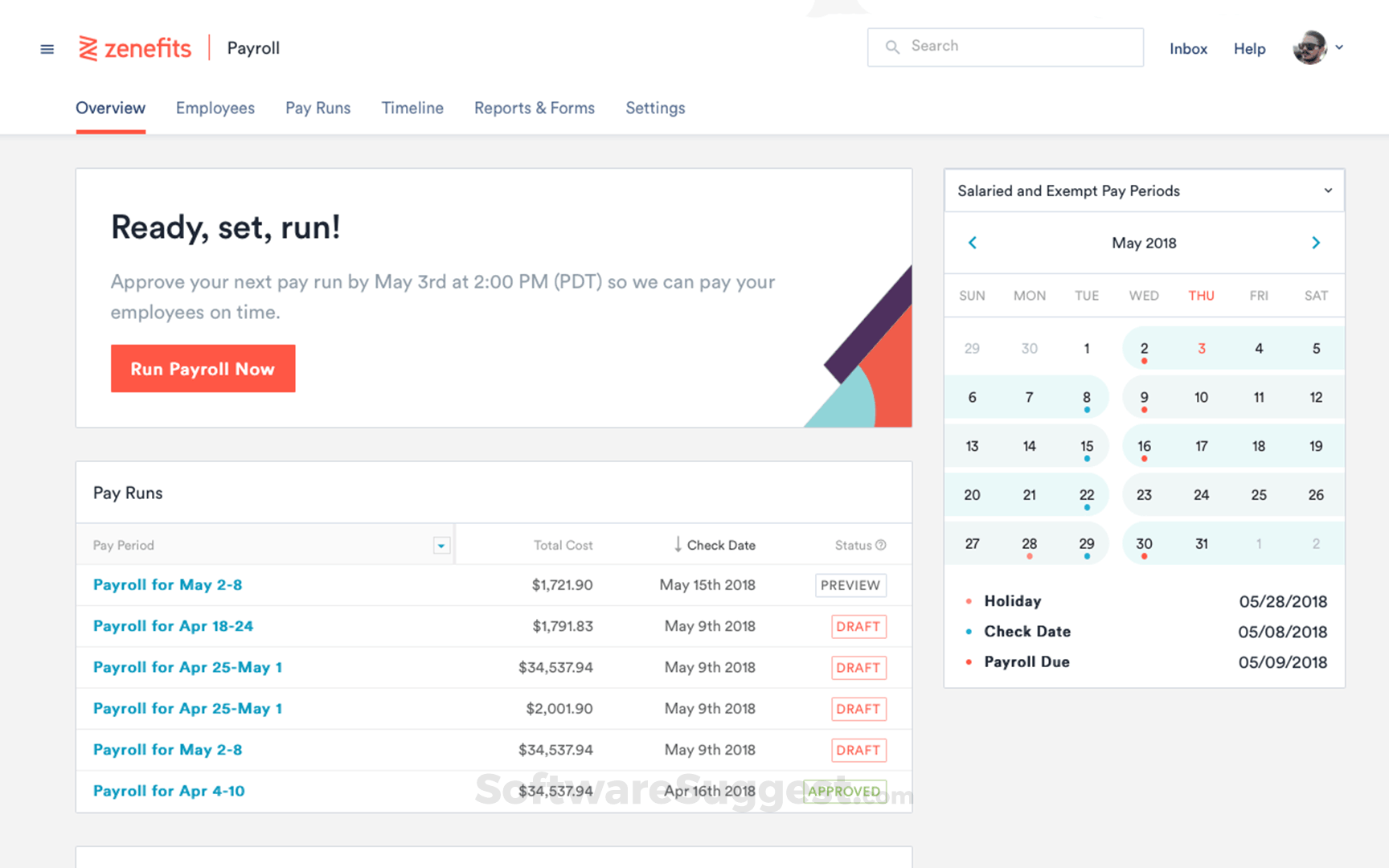
Image source: zenefits.com
Key features:
- Candidate relationship management
- Pipeline and stage tracking
- Email and communication tools
- Analytics and sourcing insights
Pros:
- Strong focus on candidate engagement
- Clean and intuitive interface
- Good sourcing visibility
- Suitable for growth-stage teams
Cons:
- Limited customization for complex workflows
- Reporting depth varies by plan
- Less suited for very large enterprises
Pricing:
9. Papaya Global: Global payroll solution for distributed teams
Papaya Global is a comprehensive global payroll and workforce management platform built for distributed teams operating across multiple countries. It automates cross-border payroll, ensures local compliance, and consolidates workforce data into a single dashboard. With strong analytics, payment automation, and multi-currency support, Papaya Global enables businesses to manage international employees and contractors efficiently while minimizing compliance risks.
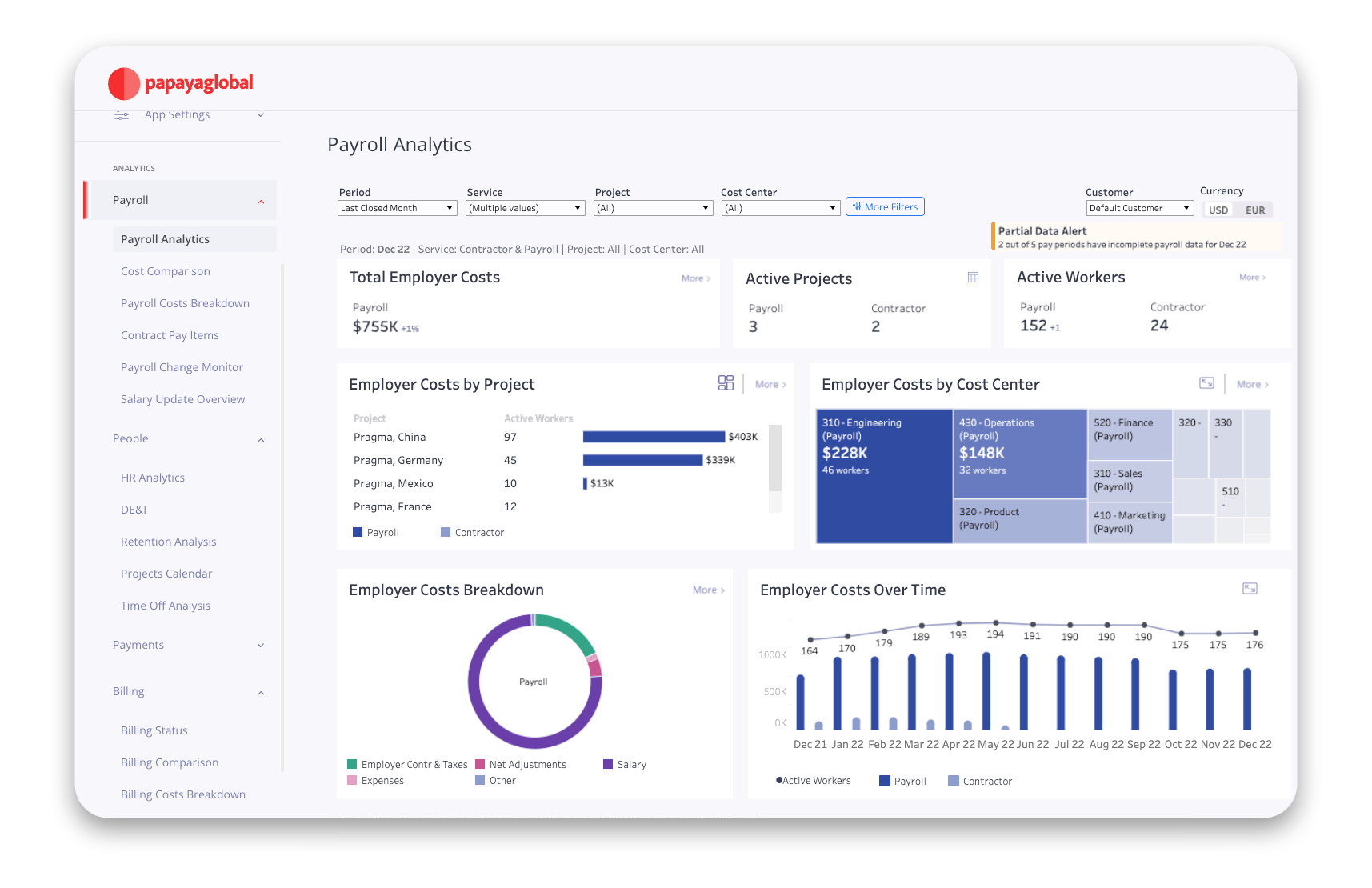
Image source: papayaglobal.com
Key features:
- Structured hiring pipelines and interview kits
- Customizable scorecards and feedback collection
- Reporting and hiring analytics
- Integrations with HR and recruiting tools
Pros:
- Strong structure for consistent hiring
- Excellent interview standardization
- Scales well for larger teams
- Robust reporting capabilities
Cons:
- Complex setup for smaller teams
- Higher cost compared to SMB tools
- Less flexibility in workflows
Pricing:
- Employer of record (EOR): $499/employee/month
- Hire & pay contractors compliantly: $295/employee/month
- Manage and pay your contractors: $5/contractor/month
- Simplify payroll & payments worldwide: $29/employee/month
10. Square Payroll: Payroll solution for hourly workforce HR
Square Payroll is a streamlined payroll platform designed specifically for businesses with hourly employees. It automates wage calculations, tax filings, and direct deposits while seamlessly integrating with time-tracking systems. Ideal for small to mid-sized teams, Square Payroll simplifies compliance, reduces manual errors, and helps HR teams efficiently manage shifts, overtime, and contractor payments.
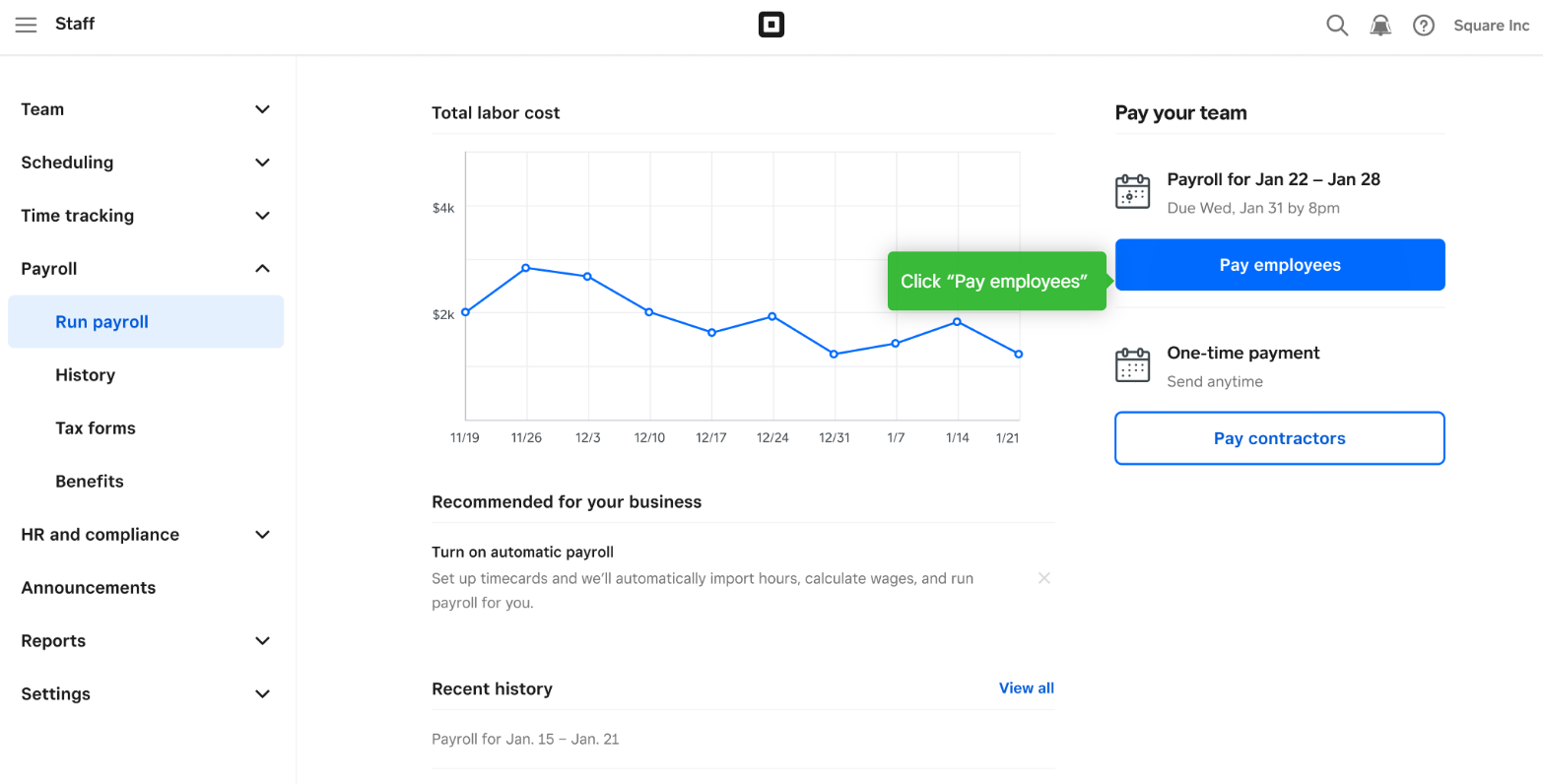
Image source: squarepayroll.com
Key features:
- Enterprise learning and certification programs
- Performance management and reviews
- Skills and competency mapping
- Succession planning tools
Pros:
- Excellent for structured enterprise learning
- Handles complex org hierarchies
- Trusted by large global companies
Cons:
- Complex UI for some users
- High cost for full features
Pricing:
- Full-service payroll: $35 per month
- Contractor-only payroll: $6 per month
11. TriNet: HR payroll software for managed HR services
TriNet provides comprehensive HR payroll software combined with managed HR services, making it ideal for businesses seeking expert support. It handles payroll processing, benefits administration, risk mitigation, and compliance management through a co-employment model. With industry-specific solutions and dedicated HR guidance, TriNet helps companies streamline operations, reduce administrative burden, and focus on strategic growth.
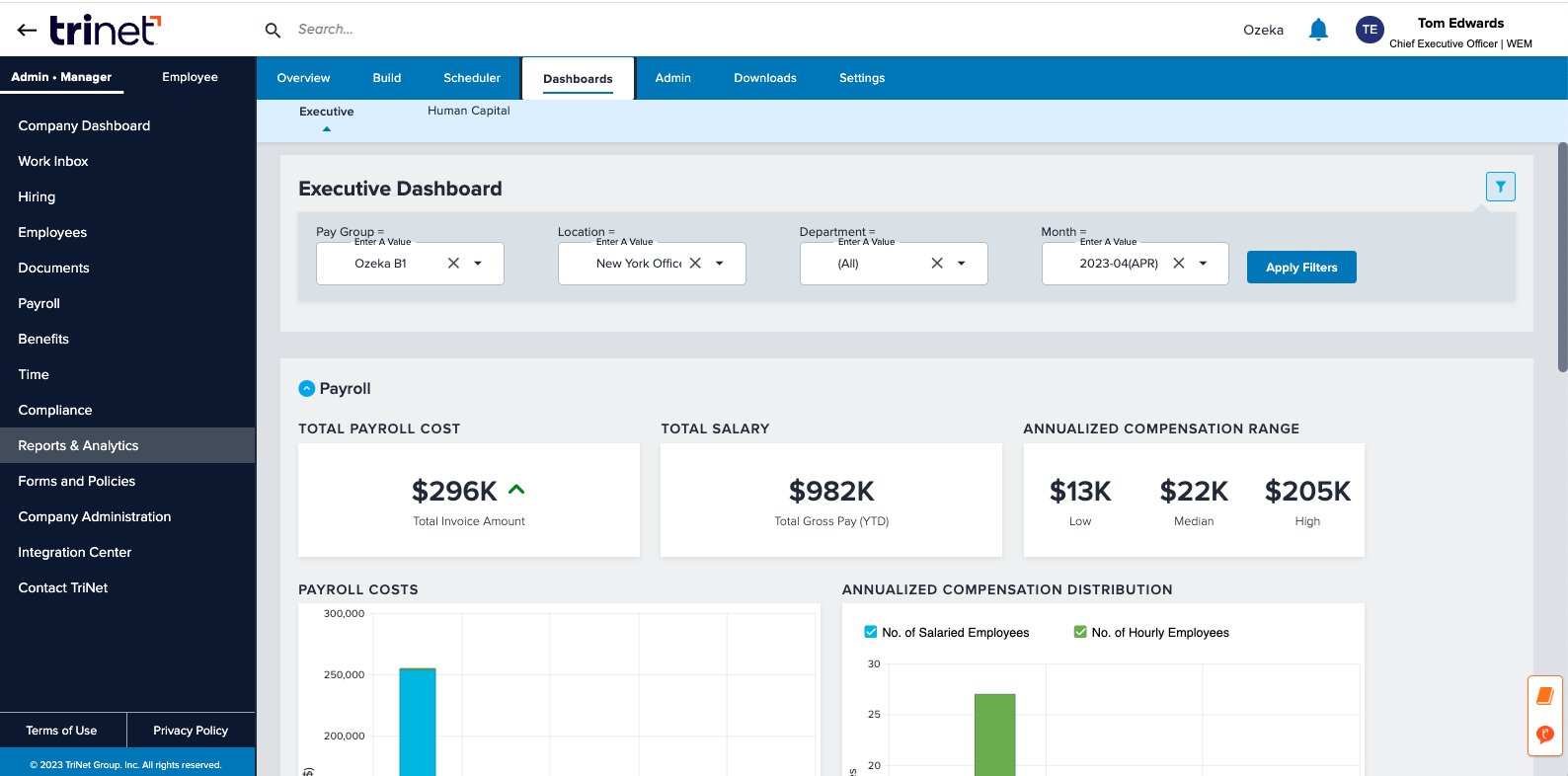
Image source: trinet.com
Key features:
- Core HR and global employee data
- Performance and compensation tools
- Learning and compliance modules
- Workforce analytics and planning
Pros:
- Strong compliance support
- Deep SAP ecosystem integration
- Scales for large workforces
- Comprehensive HR and talent suite
Cons:
Pricing:
12. OnPay: Cloud-based HR and payroll software for SMBs
OnPay is a cloud-based HR and payroll solution built specifically for small and medium-sized businesses. It automates payroll processing, tax filings, benefits administration, and employee onboarding within a simple, user-friendly platform. With transparent pricing and compliance support, OnPay helps SMBs reduce manual work, improve accuracy, and manage their workforce efficiently from anywhere.
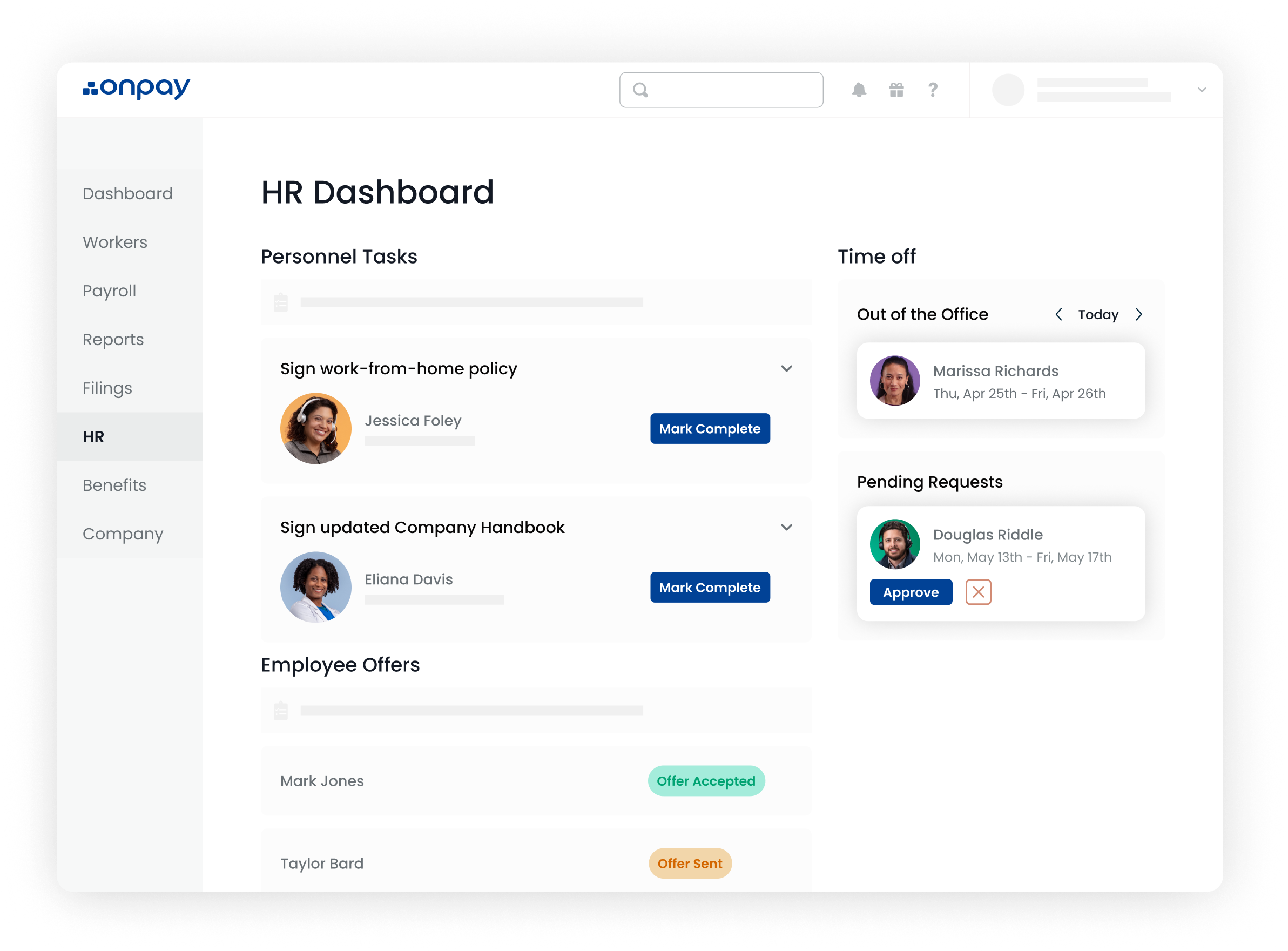
Image source: onpay.com
Key features:
- Onboarding and lifecycle management
- Performance and goal tracking
- Automated attendance and leave
Pros:
- Strong automation features
- Good integration with Zoho apps
Cons:
- Advanced features in higher tiers
Pricing:
- Payroll Essentials: $49 per month
13. Namely: HR platform with payroll for mid-sized teams
Namely is an all-in-one HR platform designed specifically for mid-sized organizations seeking integrated payroll and workforce management. It combines payroll processing, benefits administration, talent management, and compliance tools in a single, intuitive system. With customizable workflows and robust reporting features, Namely helps HR teams streamline operations, enhance employee engagement, and maintain regulatory compliance as they scale.
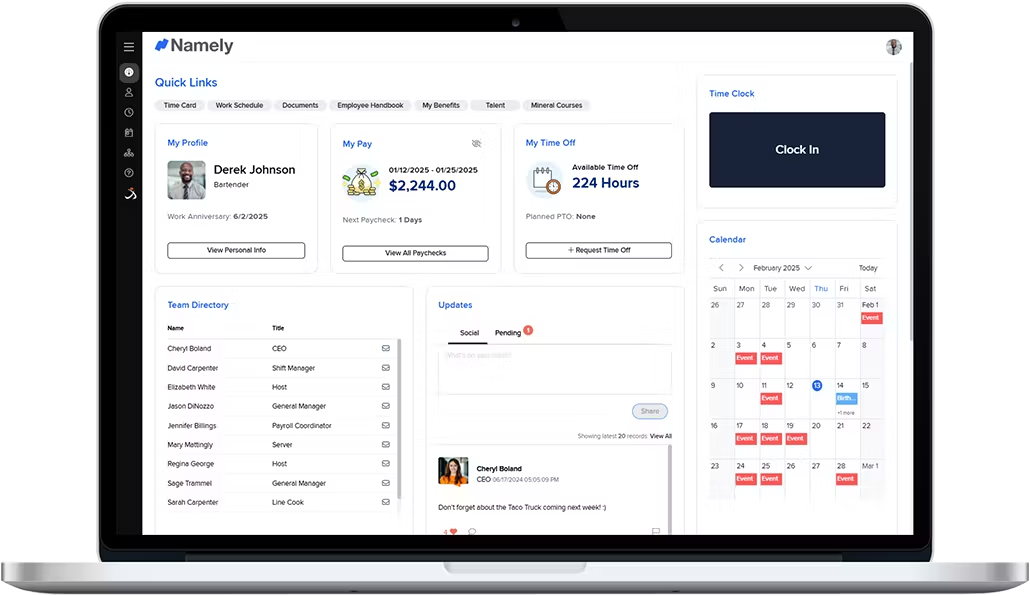
Image source: namely.com
Key features:
Pros:
Cons:
- Limited enterprise scalability
- Add-on costs increase pricing
Pricing:
14. Workday HCM: HR payroll solution for enterprise workforce
Workday HCM is a powerful enterprise-grade HR and payroll solution built for large, complex organizations. It unifies human capital management, payroll, workforce planning, and analytics within a single cloud platform. With real-time data insights, global compliance support, and scalable architecture, Workday HCM enables enterprises to streamline HR operations, improve decision-making, and manage a diverse workforce efficiently.
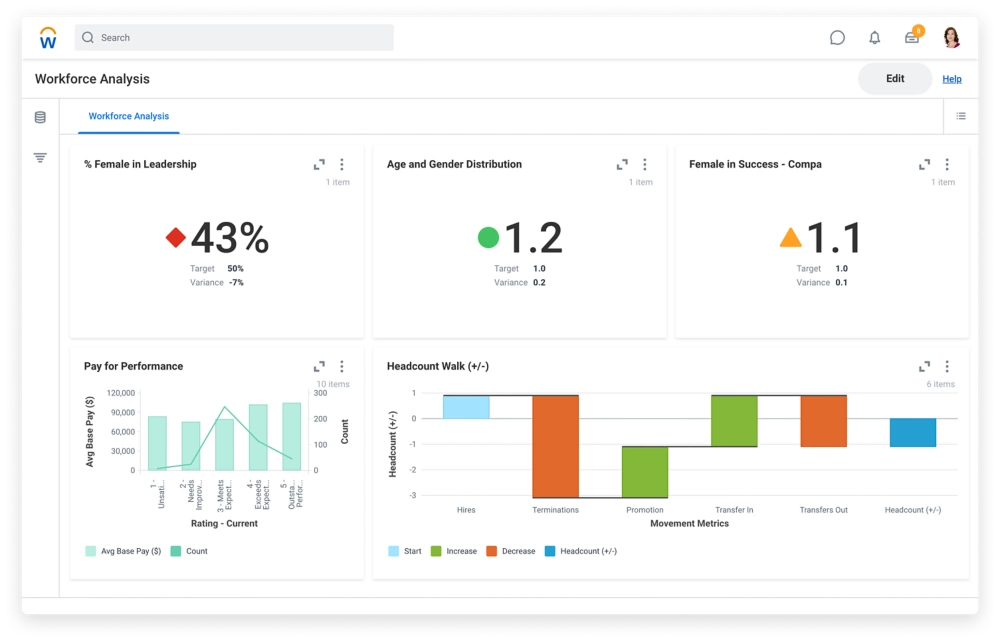
Image source: workday.com
Key features:
- Unified HR and finance platform
- Real-time workforce analytics
- Talent and performance tools
- Continuous business planning
Pros:
- Powerful analytics capabilities
- Enterprise-grade security
- Excellent for large organizations
Cons:
- Expensive implementation
- Not suited for smaller teams
Pricing:
15. Paycor: Payroll software for HR data management
Paycor is a comprehensive payroll and HR platform designed to centralize and manage workforce data efficiently. It automates payroll processing, tax compliance, time tracking, and benefits administration while providing robust analytics and reporting tools. With real-time insights and secure data management, Paycor empowers HR teams to make informed decisions, reduce administrative workload, and maintain compliance with evolving regulations.
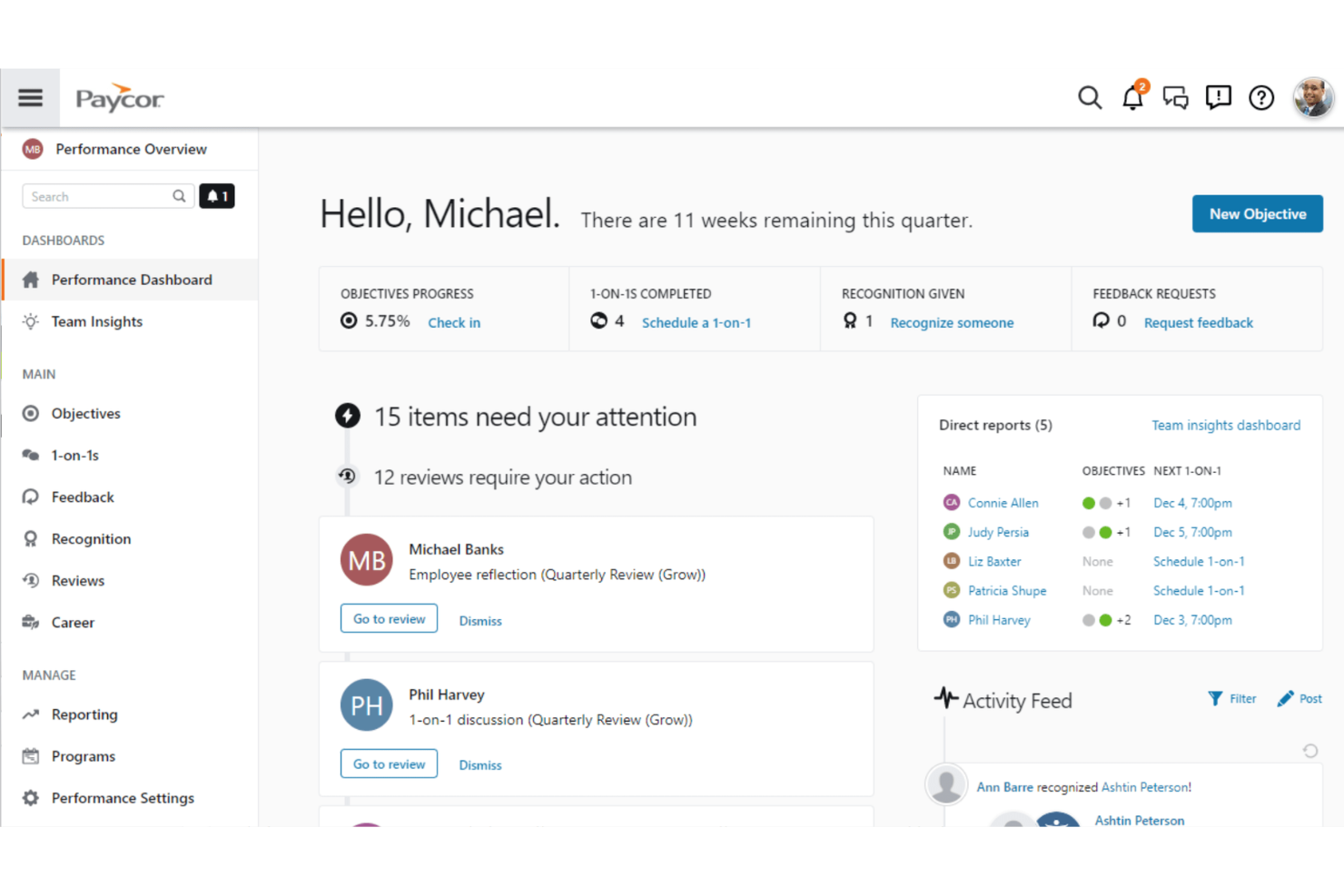
Image source: paycor.com
Key features:
- Payroll and tax automation
- Talent management support
Pros:
- Tailored for mid-sized firms
- Balanced HR + payroll mix
- Industry-specific options
Cons:
- Interface inconsistencies
Pricing:
ROI benchmarks delivered by the best hr payroll software
Investing in the best HR software with payroll features delivers real value beyond basic automation. The right system improves accuracy, speeds up processes, and provides insights that help HR and finance teams make better decisions. Here are some benchmarks that many organizations see after implementing the best payroll software for HR departments or a unified HR and payroll software solution like HR payroll software.
- Time saved on payroll processing: Top HR payroll systems automate data collection, tax calculations, and pay runs, cutting hours from each payroll cycle. Instead of manually gathering timesheets and entering numbers, teams can rely on automated workflows and integrations that reduce administrative effort. This means payroll can be completed faster and more consistently, freeing HR to focus on strategic work.
- Reduction in manual calculation errors: Manual often lead to mistakes in tax withholdings, overtime pay, or benefits deductions. The best HR payroll software applies rules consistently and checks for discrepancies before processing. This dramatically reduces the number of errors, thereby reducing costly rework, compliance issues, and employee disputes over incorrect pay.
- Faster employee onboarding timelines: When HR and payroll systems are connected, new hire data flows smoothly from onboarding into payroll setup. This eliminates duplication of effort and reduces delays in getting new employees paid correctly. Faster onboarding also boosts the overall employee experience and allows staff to start contributing sooner.
- Improved compliance audit readiness: Complying with tax laws, labor regulations, and reporting requirements is critical. Efficient HR and payroll software centralizes record-keeping and generates audit-ready documentation automatically. This means HR teams spend less time preparing for audits and have more confidence that reports are accurate and complete when needed.
- Workforce cost visibility through reporting: Advanced in HR and payroll software give a clear view of payroll expenses, benefits costs, and workforce trends. Better reporting helps HR leaders and finance teams spot budgeting issues, forecast labor costs, and make informed staffing decisions. This visibility drives more accurate planning and supports financial transparency across the organization.
Conclusion
Choosing the best HR payroll software is no longer just about processing on time. It is about improving accuracy, strengthening compliance, and giving HR teams the tools they need to work smarter. The best HR software with payroll features helps automate repetitive tasks, reduce errors, and provide real-time visibility into workforce costs and performance.
Solutions like demonstrate how modern platforms can integrate collaboration, automation, and payroll into a single connected system. By investing in the best HR payroll software, businesses can streamline operations, improve employee experience, and build a more efficient, future-ready HR function.
Automate the payroll of candidates with Lark today
FAQs
Which HR software is best for global payroll?
The best option for global payroll is software that supports multi-country compliance, multiple currencies, and local tax regulations. Platforms that offer built-in compliance updates and contractor management features are ideal for companies with international teams. The right choice depends on your company's size, location, and payroll complexity.
How does cloud-based HR and payroll software improve compliance?
Cloud-based systems automatically update tax rules and labor law requirements, reducing the risk of outdated calculations. They also maintain centralized, audit-ready records and detailed logs of payroll changes. This makes it easier for HR teams to meet statutory deadlines and respond quickly during audits.
Is payroll automation necessary for small HR teams?
Yes, even small HR teams benefit from payroll automation. It reduces manual calculations, minimizes errors, and saves valuable time. Automation allows small teams to focus on employee engagement and strategic tasks instead of repetitive administrative work.
What payroll features should HR departments prioritize?
HR departments should look for automated tax calculations, customizable payroll cycles, compliance reporting, role-based access controls, and detailed reporting dashboards. Integration with attendance and accounting systems is also important to ensure accurate and seamless payroll processing.
Related reading