














Organizational Project Management: The Ultimate Guide

Fecilia Clarke
Solutions Marketing Specialist
Sep 18, 2026
Fecilia Clarke
Sep 18, 2026

16 min read


Are you striving to ensure that every project your organization undertakes directly contributes to its strategic goals? In today’s dynamic business environment, aligning project initiatives with overall business strategy is more critical than ever. This is where organizational project management (OPM) comes into play, bridging the gap between project execution and strategic vision.
In this comprehensive guide, I'll introduce you to the core principles of OPM, exploring why it is essential for modern organizations. I’ll walk you through its key components, provide a step-by-step guide to implementation, and show how tools like Lark can transform your approach to project management, driving enhanced alignment and success. Let's dive in and unlock the potential of OPM together.

What is organizational project management?
Organizational project management (OPM) is a strategic approach that aligns project execution with an organization's overall goals and objectives. In today’s fast-paced business environment, where change is constant, the ability to effectively manage projects while ensuring that they are aligned with strategic initiatives is crucial. OPM integrates traditional project management practices with overarching organizational strategy to create a cohesive framework that boosts project success rates significantly.
By focusing on the alignment between projects and business objectives, OPM provides a structured methodology to evaluate, prioritize, and execute projects. This strategic alignment enhances resource management, improves stakeholder engagement, and ultimately leads to better organizational effectiveness. It not only helps in identifying types of projects that contribute positively but also streamlines the process of managing resources across multiple projects.
Why is organizational project management essential?
Integrating organizational project management into your organizational structure is no longer optional – it's a necessity. By ensuring that projects are not merely managed effectively but are intricately linked to strategic outcomes, OPM becomes a cornerstone for sustainable success. Its importance lies in fostering informed decisions, thereby enabling portfolio managers and project managers to prioritize initiatives that best align with the organization's overarching strategic goals.
- Optimal resource utilization: OPM enhances efficiency by promoting the optimal use of resources, thus minimizing duplication and confusion. When project managers utilize standardized methodologies and reporting structures, workflows become smoother and more streamlined.
- Strategic guidance from a pmo: A strategic project management office (PMO) supports this efficiency by providing guidelines that organizations can follow, leading to clearer strategic alignment across all projects.
- Data-driven decision making: OPM fosters better decision-making through data analytics and insights, ensuring organizations select projects that offer the highest value and align with key business objectives.
- Enhanced stakeholder satisfaction: The strategic nature of OPM improves stakeholder satisfaction by aligning expectations with project outcomes, making project lifecycles more collaborative.
- Clear contribution to objectives: Stakeholders are more likely to be engaged throughout the project lifecycle when there is a clear understanding of how projects contribute to business objectives, leading to a more collaborative environment.
Key components of organizational project management
Understanding the essential components of organizational project management is crucial for implementation. These components create a solid foundation upon which to build effective project management practices.
Project portfolio management: The backbone of OPM
Project portfolio management (PPM) is fundamental in OPM. It involves the centralized management of various projects to align them with strategic organizational goals. PPM allows organizations to prioritize projects based on their potential value and resource availability. By implementing PPM, teams can ensure that they are working on the most impactful initiatives while managing risks effectively. This enhances the organization's capabilities to stay focused on strategic plans while aligning their execution with wider objectives.
Program management: Coordination across projects
Program management focuses on managing related projects collectively to achieve greater outcomes than when managed individually. This approach enhances resource efficiency and operational synergy. Through effective program management, organizations can maximize value by ensuring that all related projects are coordinated harmoniously, contributing to the larger organizational objectives. Project managers within this framework play a critical role in guiding teams through the different phases of development, ensuring the right resources are allocated and that progress is tracked closely.
Project management office (PMO): Establishing standards and governance
A project management office (PMO) is critical in establishing governance and standards for project management within an organization. The PMO provides the necessary frameworks, best practices, and tools to ensure consistent project execution. It serves as a center of excellence, promoting the maturity of project management processes and facilitating training and development for project managers. By implementing solid portfolio management practices, the PMO can assist in balancing the competing demands of new projects with existing commitments.
Benefits management: Realizing project value
Benefits Management involves measuring and tracking the value delivered by projects after their completion. This component is essential to ensure that the anticipated benefits are realized and that lessons learned are applied to future projects. Through effective benefits management, organizations can improve their project selection processes and refine their strategic alignment over time. In this context, identifying people responsible for assessing outcomes is key to fostering a culture of continuous improvement.
How Lark enhances organizational project management
Using advanced tools like Lark can significantly simplify organizational project management. Lark offers a comprehensive suite of features designed to enhance collaboration, communication, and project tracking across teams.
Lark Base: Your centralized project management hub
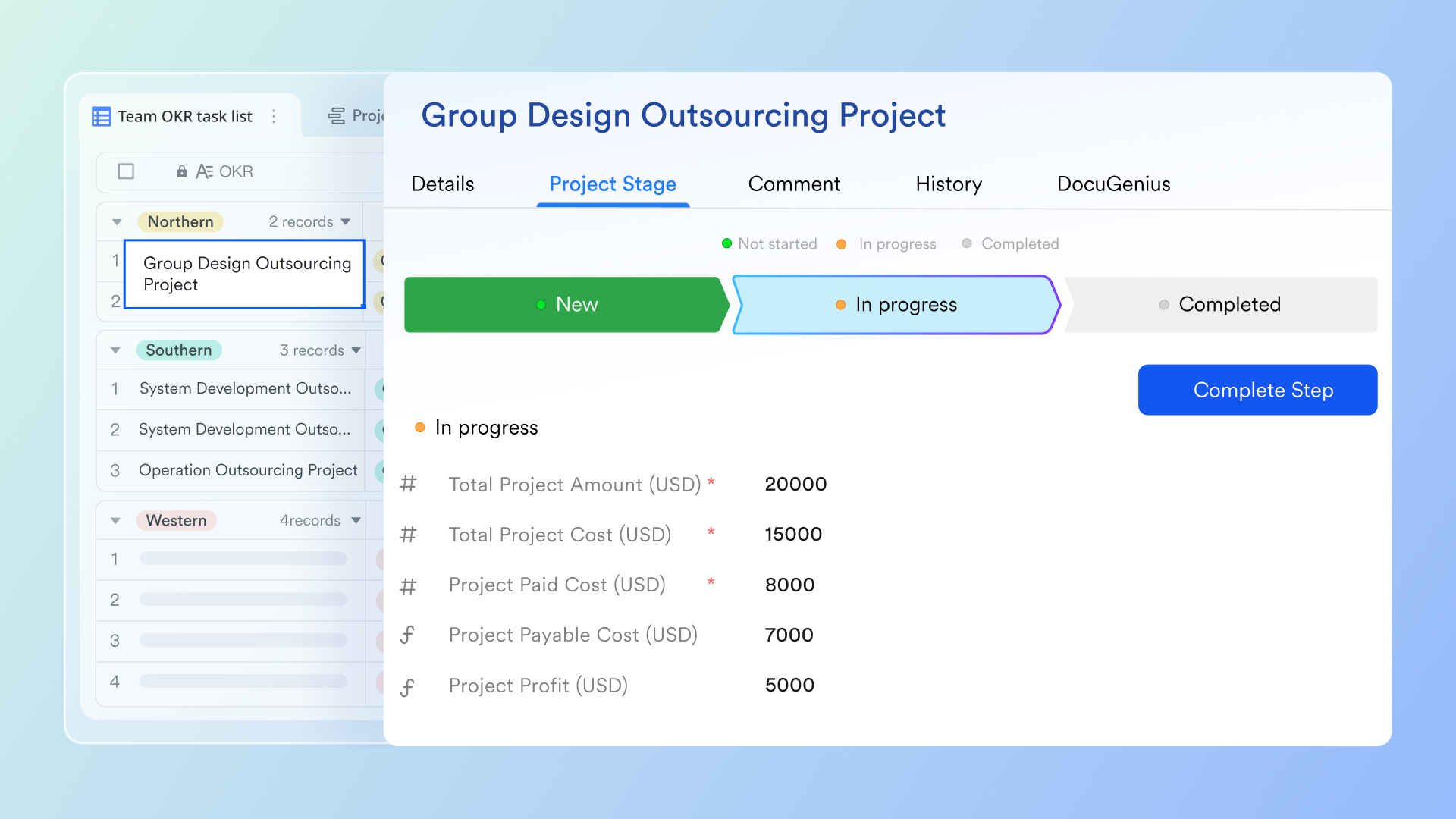
Lark Base revolutionizes how teams manage project data and workflows by providing a centralized, customizable platform. Teams can build custom workflows tailored to their specific project needs, effectively managing information, tracking progress, and automating repetitive tasks. With its intuitive interface, Lark Base allows teams to visualize project data in multiple formats, such as Kanban boards and Gantt charts, enhancing decision-making and providing a clear overview of project status. This level of customization makes Lark Base a versatile tool for supporting various OPM activities.
Lark Messenger: Real-time communication at our fingertips
With Lark Messenger, teams can communicate in real time, ensuring that crucial updates and decisions are shared immediately. This streamlined communication helps minimize misunderstandings and promotes faster response times, ultimately leading to more agile project management practices. Everyone involved in a specific project can stay informed about any developments or concerns that arise, fostering a sense of teamwork.

Lark Docs: Collaborative documentation for clarity
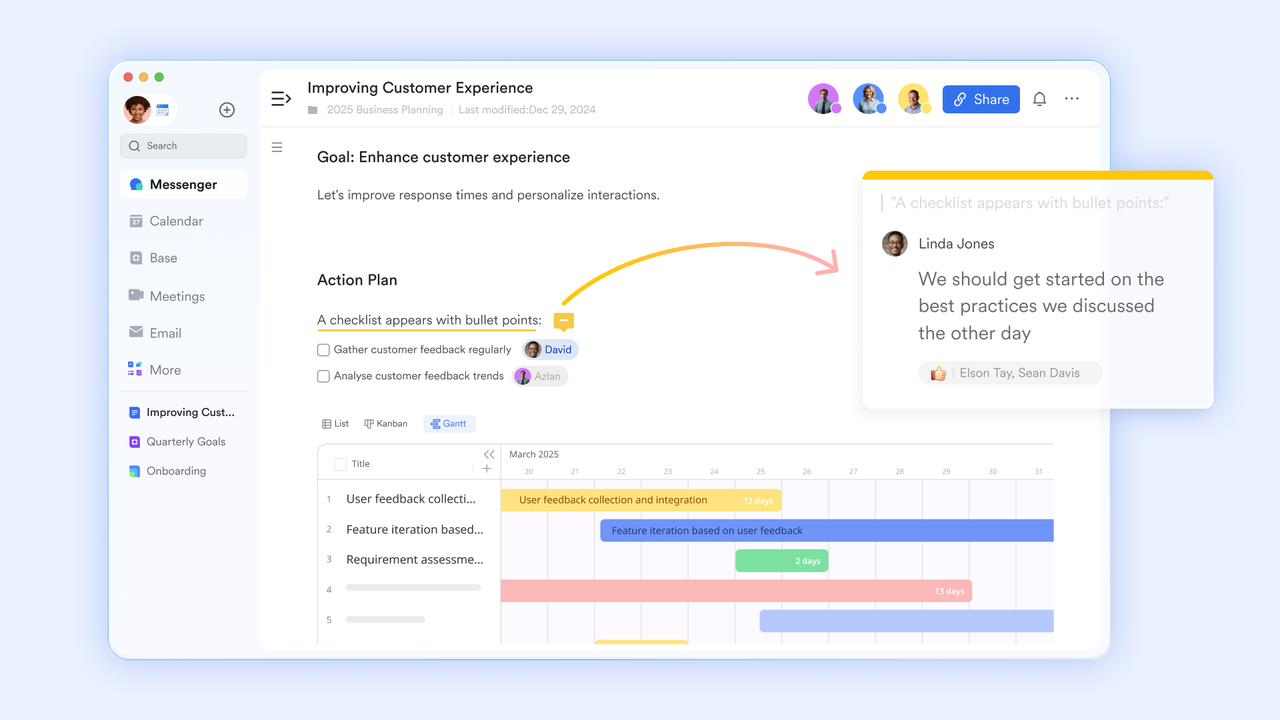
Lark Docs enables teams to work together on project documents without the hassle of version control issues. Real-time editing allows for a more transparent collaboration process, ensuring all team members contribute effectively and are on the same page concerning project details and requirements. This collaborative approach reduces the likelihood of errors and enhances the overall quality of outputs from project teams.
Lark Meetings: Streamlining project discussions
Lark Meetings facilitates high-quality video conferencing, allowing teams to discuss project updates and challenges in real-time, regardless of their locations. This functionality ensures that communication remains clear and effective, fostering collaboration and engagement during project discussions. Regular meetings can serve as check-ins for progress, allowing teams to identify risks early and manage them accordingly.

Lark OKR: Linking projects to strategic goals
Lark’s OKR feature helps organizations align project objectives with strategic goals. By utilizing this feature, organizations can ensure that every project undertaken contributes meaningfully to broader business objectives, ultimately enhancing the value of project outcomes. This connection between projects and organizational strategy empowers project managers to achieve better alignment and prioritize the right projects.
A step-by-step guide to implementing organizational project management
Implementing organizational project management can seem daunting, but with a structured approach, it can be achieved seamlessly. Here is a step-by-step guide that outlines the essential actions for successful implementation.
- Assess your current project management practices
Start by evaluating the existing project management practices within the organization. This assessment should include identifying strengths, weaknesses, opportunities, and threats. Understanding the current landscape is crucial to determining where improvements can be made. Assessing the organization’s capabilities allows for a deeper analysis of how effective current resource management practices are.
- Define your organizational strategic goals
Clearly outline the strategic goals and objectives that the organization aims to achieve. This will serve as a guide for aligning projects with these goals. Leaders should ensure that these goals reflect the core values and long-term vision of the organization. Engaging key stakeholders in this process can also foster a sense of ownership, driving better participation in project success.
- Establish a project management office
Creating a PMO can help formalize the project management processes within the organization. The PMO will be responsible for setting standards, providing guidance, and serving as the central hub for project-related information. This office plays a vital role in ensuring that consistent project management practices are observed across all levels of the organization.
- Develop a project portfolio management process
Implementing a standardized process for project portfolio management is essential. This process should encompass project selection, prioritization, and evaluation based on their alignment with strategic objectives. A well-defined PPM process helps minimize risks and maximizes resource utilization. It allows organizations to better allocate resources to ensure that they invest in the right projects at the right time.
- Standardize project management methodologies
Adopting standardized project management methodologies ensures consistency across all projects. These methodologies should align with the organization’s strategic goals and provide clear guidelines for project execution, monitoring, and reporting. Leveraging established frameworks such as Agile and Scrum can significantly enhance project management effectiveness, providing structure and clarity to teams during the improvement phase.
- Measure and monitor project performance
Establish key performance indicators (KPIs) that will enable the organization to track project performance. Regular monitoring of these KPIs allows for timely interventions and adjustments, ensuring that projects remain on track to achieve their intended outcomes. With tools available through a PMO, organizations can derive output from projects effectively while maintaining a clear view of progress.
- Embrace continuous improvement
Implementing a culture of continuous improvement is essential to adapt to changing market dynamics and organizational needs. Regularly review project outcomes, processes, and methodologies to identify areas for improvement. Encourage feedback from team members and stakeholders to enhance future project initiatives. This creates an environment that is focused on effective processes, ultimately leading to better performance.
Overcoming challenges in organizational project management with Lark
Implementing OPM is not without its challenges. It's essential to recognize these potential hurdles and develop strategies to overcome them effectively.
Addressing resistance to change
Change can often be met with resistance from team members who may be accustomed to existing practices. To address this, organizations should focus on effective change management strategies. Clear communication about the benefits of OPM and involving team members in the change process can foster acceptance. Providing support and resources for any transition can further ease the process of adapting to new methodologies.
Lark helps facilitate this by providing a transparent communication channel via Lark Messenger, ensuring everyone stays informed about the benefits and updates. Lark Docs also enables collaborative documentation of new methodologies, allowing teams to actively participate in shaping new processes, thus reducing resistance and fostering a sense of ownership. Host training sessions using Lark Meetings to address concerns and provide real-time support.
Gaining executive support
Securing buy-in from organizational leaders is crucial for the successful implementation of OPM. Providing data-driven insights on the potential benefits of OPM can help convince executives of its value. Engaging leaders as champions of OPM initiatives can further facilitate cultural acceptance and drive organizational alignment toward strategic goals.
Lark facilitates this by offering customizable reports and dashboards in Lark Base, allowing you to visually present project progress and strategic alignment to executives. Use Lark Meetings to conduct executive briefings, sharing key performance indicators and highlighting the positive impact of OPM on the organization’s strategic objectives.
Unifying data across systems
Data silos hinder effective project management and decision-making. Organizations should integrate systems and tools to ensure accessible data across all teams. Lark excels here by providing a built-in centralized hub for project-related information, making it easier to track progress and results. Using Lark Base, teams can consolidate all the project data in one place, allowing teams to access real-time data to make informed decisions. This enhances transparency and fosters greater collaboration across departments.
Providing adequate training
To ensure that all team members can effectively utilize new project management practices and project management tools, organizations should invest in comprehensive training programs. Whether through workshops, online courses, or mentorship, providing sufficient training is essential for fostering a culture of project success. Training should cover not only technical skills but also project management methodologies to align teams.
Lark facilitates this by providing a platform to create and share training materials using Lark Docs and host training sessions using Lark Meetings. Create and disseminate training modules directly within Lark, ensuring everyone has access to the resources they need to succeed. Utilize Lark's screen-sharing feature during training sessions for hands-on demonstrations of new processes and tools.
Future trends influencing organizational project management
As the business landscape evolves, so too do the trends that influence organizational project management. Staying informed of these trends allows organizations to adapt and thrive in a competitive environment.
The rise of AI and automation
The incorporation of AI and automation is transforming the way projects are managed. By automating repetitive tasks, organizations can enhance efficiency and free up team members for more strategic activities. AI tools can also provide data analytics insights that enable better decision-making, ultimately improving project outputs.
Embracing agile and hybrid approaches
The shift toward Agile methodologies has changed how projects are executed, emphasizing flexibility, collaboration, and responsiveness to change. Many organizations are now adopting hybrid approaches that blend traditional project management with Agile techniques, allowing for greater adaptability. This combination enables portfolio managers to allocate resources more effectively and adjust to new developments or challenges.
The importance of data analytics
Data analytics is increasingly becoming a cornerstone of effective project management. Organizations can leverage data to assess project performance, optimize resource allocation, and make informed decisions. Embracing data-driven methodologies will enable organizations to enhance their project outcomes significantly. Deploying analytics tools can help in identifying projects that best align with organizational strategies and thus allow for better prioritization.
Conclusion
Organizational project management is an essential framework that enables organizations to align their projects with strategic objectives efficiently. By understanding its components and implementing effective strategies, businesses can enhance efficiency, decision-making, and stakeholder engagement.
Leveraging tools like Lark can substantially streamline the implementation of OPM, providing teams with the resources they need to manage projects effectively and achieve their desired outcomes. As businesses embrace the future of work, incorporating OPM will ensure that they remain competitive and successful in an ever-evolving landscape.
The journey toward optimizing project management through OPM is not just about processes; it’s about creating a culture that values strategic alignment and collaborative success. Let's embark on this journey toward enhanced project management together and unlock the potential for greater organizational success. Embracing OPM not only supports business objectives but also creates a competitive advantage, driving performance and aligning every project with the organization's strategic vision.
FAQs
What is the difference between PMO and OPM?
A Project Management Office (PMO) is a department standardizing project-related practices within an organization. Organizational Project Management (OPM) is a strategic framework aligning project execution with organizational goals. A PMO implements OPM principles, focusing on processes and methodologies, while OPM is the broader philosophy ensuring project portfolios contribute to strategic objectives.
What is the difference between organizational management and project management?
Organizational management focuses on the overall structure, strategy, and long-term goals of an entire organization. Project management, conversely, concentrates on the planning, execution, and completion of specific, temporary endeavors. Organizational management sets the strategic direction, while project management ensures specific initiatives align with and achieve those goals.
What are the four types of organizational structures in project management?
The four types are functional, projectized, matrix (strong, weak, balanced). Functional structures group specialists by function; projectized dedicate resources to projects. Matrix structures blend both, allowing resource sharing. Strong matrix favors project managers; weak favors functional managers; balanced shares power, impacting resource control and project manager authority.
What are the 5 C's of project management?
While there isn't a universally recognized "5 C's" specifically in project management, common interpretations include:
- Communication: Effective information sharing.
- Collaboration: Teamwork toward goals.
- Coordination: Organizing resources effectively.
- Control: Monitoring progress and managing risks.
- Commitment: Dedication to project success.
Related reading
Table of contents
Start using Lark today

Manage all your work in one place
Boost team efficiency by 10x
Save up to 70% on software costs
Table of contents
Start using Lark today
Manage all your work in one place
Boost team efficiency by 10x
Save up to 70% on software costs
Keep reading








2026 Lark Technologies Pte. Ltd.
Headquartered in Singapore with offices worldwide.






Explore: