














Pipedrive vs Monday: Sales CRM or Work Management CRM?

Ryan Tanner
Product Marketing Specialist
Sep 18, 2026
Ryan Tanner
Sep 18, 2026

12 min read


The right CRM can make or break how teams manage sales and client relationships. With so many options available, choosing between Pipedrive—a sales-first CRM—and Monday—a project management tool turned CRM—often comes down to your team's priorities. Both platforms serve different needs, from managing pipelines to coordinating broader work.
However, many growing teams find themselves needing more than just sales or project management. They also need real-time collaboration, automation, and flexible workflows. This is where modern tools step in, combining CRM-style tracking with built-in communication and project execution. In this guide, we'll compare Pipedrive vs Monday while showing how Lark offers a collaboration-first alternative for agile businesses.

Why compare Pipedrive vs Monday?
When businesses search for a CRM, they often find themselves deciding between tools with very different origins. Pipedrive was built from the ground up as a pure sales CRM, designed to help sales teams manage pipelines, deals, and forecasts with minimal complexity. Its DNA is rooted in sales-first functionality, making it ideal for teams that want a straightforward approach.
Monday, on the other hand, began as a project management platform and later expanded into CRM capabilities. This means it brings flexibility and cross-team workflows, but its sales features are sometimes less mature compared to tools purpose-built for CRM. Monday appeals to organizations that want one platform to manage both projects and client relationships.
Because these platforms started with different goals, their strengths and weaknesses vary. Comparing Pipedrive vs Monday helps businesses identify whether they need a focused sales tool, a versatile work management system, or something more unified like Lark.
Pipedrive overview (sales-first CRM)
Pipedrive was designed with one goal in mind: helping sales teams close more deals efficiently. Unlike all-in-one platforms, it focuses heavily on sales pipelines and activity management, making it straightforward for reps to stay on top of their targets.
- Visual sales pipelines: Pipedrive uses Kanban-style boards where deals move stage by stage, giving teams a clear overview of progress.
- Activity tracking: Calls, emails, meetings, and follow-ups can be logged and scheduled so that no opportunity is overlooked.
- Sales automation: Automate repetitive actions like sending emails, moving deals between stages, or creating tasks after specific triggers.
- Reporting and insights: Dashboards highlight conversion rates, revenue forecasts, and team performance metrics.
- Lead management: Capture and qualify leads directly into the pipeline from forms or email.
- Mobile CRM: Sales reps on the road can update pipelines, log calls, and view client info from their phones.
This sales-first design makes Pipedrive appealing to small and mid-sized teams focused solely on managing pipelines and closing deals.
Monday overview (work management CRM)
Unlike Pipedrive, which was built exclusively as a sales CRM, Monday started as a project management tool and later expanded into CRM functionality. This background gives it strengths in cross-team collaboration and workflow flexibility, though it sometimes feels less natural for pure sales use.
- Customizable boards: Teams can build visual boards for leads, projects, campaigns, or tasks, adapting them to different workflows beyond sales.
- CRM add-ons: Monday now includes deal pipelines, contact records, and activity tracking modules, allowing teams to manage client relationships alongside other work.
- Cross-department workflows: Sales, marketing, and operations teams can work together on the same platform without switching tools.
- Automation and integrations: Automate reminders, status changes, or handoffs, and connect Monday with email, Slack, or marketing apps.
- Reporting dashboards: Create customizable dashboards to track revenue, project progress, and team performance.
- Flexibility at scale: Its modular design lets agencies or growing teams expand usage into areas like HR, finance, or product launches.
This versatility makes Monday a strong choice for businesses that want CRM plus project management in one platform, though it requires setup effort to fully leverage.
Pipedrive vs Monday: Where they differ most
At their core, Pipedrive and Monday come from two very different starting points. Pipedrive is unapologetically sales-focused, designed to streamline pipelines, track deals, and improve forecasting. Its simplicity works well for sales reps, but it doesn't stretch far beyond sales. In contrast, Monday began as a project management platform, which means it naturally supports cross-functional collaboration and flexible workflows, but its CRM features often feel like add-ons rather than the primary focus.
Ease of use is another big differentiator. Pipedrive is intuitive out of the box—sales teams can get started with little training. Monday, while more versatile, often requires setup time and customization before it fits neatly into a team's workflow. For businesses that want quick adoption, this difference can be significant.
Customization and collaboration further highlight the gap. Monday's boards and automations make it adaptable to diverse workflows, but collaboration still depends on integrations with chat or document tools. Pipedrive offers limited customization beyond pipelines and leans heavily on third-party apps for team communication.
This is where Lark stands out: instead of choosing between sales-first or project-first, Lark combines both. With Lark Base for CRM-style tracking, Messenger and Meetings for communication, Docs & Wiki for shared content, and Approvals for streamlined sign-offs, Lark natively unites CRM workflows and team collaboration in a single platform.
Pros and cons: Pipedrive vs Monday CRM
Pipedrive vs Monday: Pricing considerations
Pipedrive: affordable entry-level but costs rise with add-ons.
- Essential plan: $14/user/month (billed annually). Includes pipeline management, deal tracking, customizable fields, and basic automations.
- Advanced plan: $29/user/month. Adds full email sync, templates, workflow automation, and smart contact data.
- Professional plan: $59/user/month. Includes team management, revenue forecasts, advanced reporting, and document management.
- Enterprise plan: $79/user/month. Provides unlimited customization, enhanced security, phone support, and higher usage limits.
Monday: starts cheap but customizations + CRM add-ons increase cost.
- Basic CRM: $12/seat/month (billed annually). Includes unlimited boards, pipelines, and contacts with customizable columns.
- Standard CRM: $17/seat/month. Adds timeline/calendar views, automations (250 actions/month), and integrations (250 actions/month).
- Pro CRM: $28/seat/month. Offers advanced automations (25,000/month), integrations, time tracking, and sales analytics dashboards.
- Enterprise CRM: Custom pricing. Designed for large organizations with enterprise-grade security, compliance, advanced reporting, and support.
Lark offers a different advantage: instead of charging separately for collaboration and CRM-style workflows, it bundles everything—Base, Messenger, Meetings, Docs, Calendar, Approvals, and more—into one platform. With a free plan available and paid tiers starting at $12/user/month, Lark delivers a lower total cost of ownership compared to managing separate tools or add-ons.
Tired of tool switching? Try Lark's all-in-one CRM approach
Most CRM platforms force teams to juggle multiple add-ons or integrations for sales tracking, client communication, and reporting. Lark eliminates that complexity by bringing CRM workflows and collaboration tools together in a single platform. From pipeline tracking to client calls and contract approvals, everything happens seamlessly in one workspace—saving time, reducing costs, and improving team alignment.
Where Lark fits
Both Pipedrive and Monday CRM bring strengths but also gaps—either too sales-focused or too complex. Lark bridges the difference by offering CRM-style tracking (Base), automation (Approvals), and built-in collaboration (Messenger, Meetings, Docs, Wiki) in a single platform—reducing tool switching and lowering overall costs.
Lark Base: pipeline, client tracking, and dashboards
Lark Base acts like a flexible CRM system where travel agencies, sales teams, or service firms can build custom databases for clients, deals, and bookings. You can switch between Kanban, table, or calendar views to track deals at every stage. A sales rep, for instance, can move a client from "Inquiry" to "Proposal Sent," triggering a follow-up reminder automatically.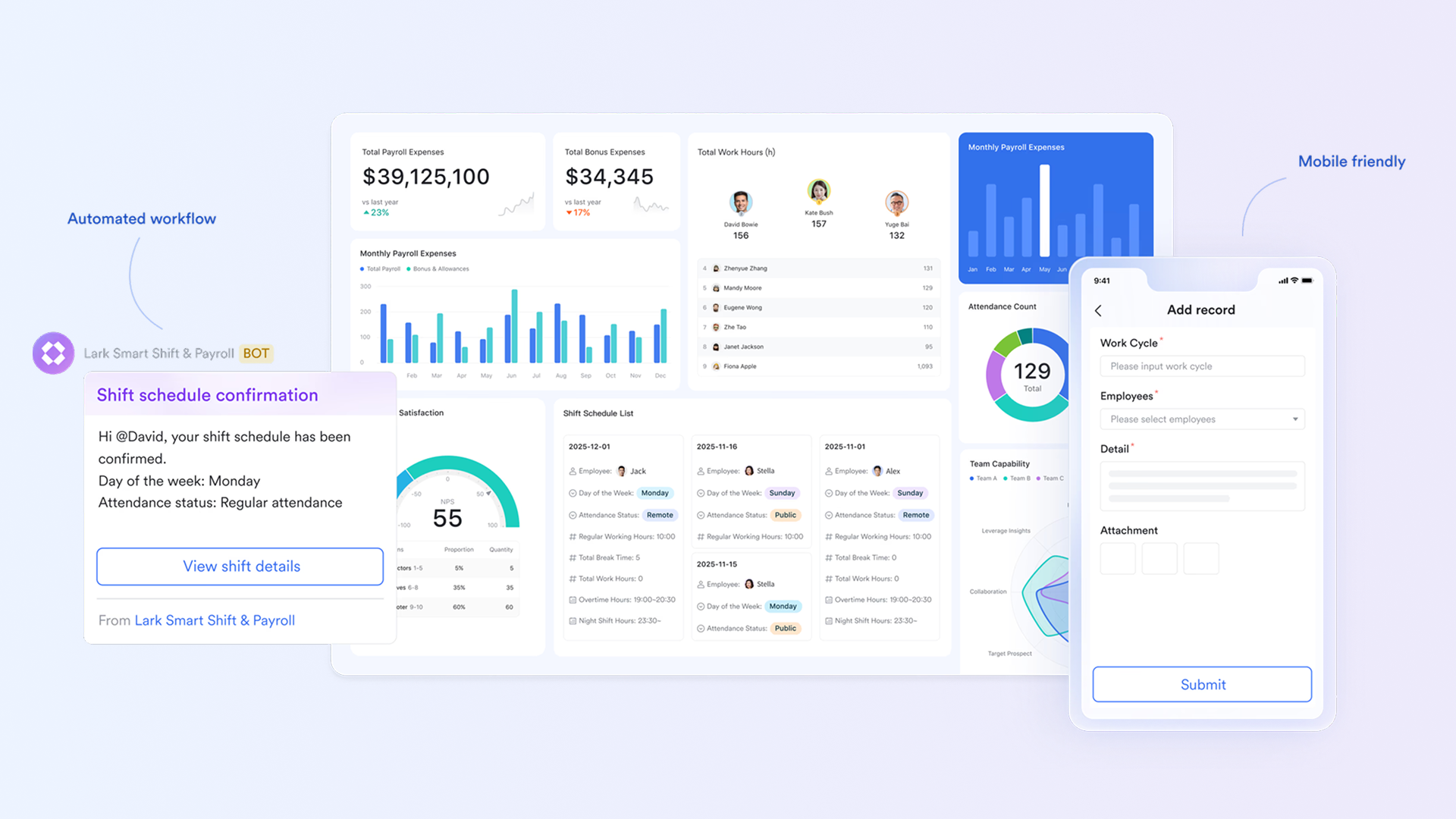
On top of that, Base comes with built-in dashboards to track KPIs in real time—such as revenue, win rates, or deal cycle length. For example, managers can instantly see how many deals are stuck in negotiation or which sales reps are ahead of target. This combination of pipeline tracking + real-time reporting makes Base a complete hub for visibility and action.
Lark Approval: deal and contract sign-offs
Approvals in sales can be slow—discounts, refunds, or contract negotiations often stall because they sit in someone's inbox. With Lark Approval, you can create structured approval workflows for sales discounts, partnership agreements, or client contracts. For instance, when a rep requests a 10% discount, the request routes instantly to a manager for review, who can approve it in a single click within Messenger. This speeds up deal closures and keeps records transparent.
Lark Messenger & Lark Meetings: client calls, team syncs
CRM tools often lack built-in communication, forcing teams to switch to Slack or Zoom. Lark solves this with Lark Messenger and Lark Meetings built directly into the platform. Teams can create dedicated deal chats, schedule follow-ups with clients, or jump into video calls directly from Messenger. A sales manager, for instance, can pin deal updates in a team chat so everyone sees progress in real time—no need to chase updates across emails and tools.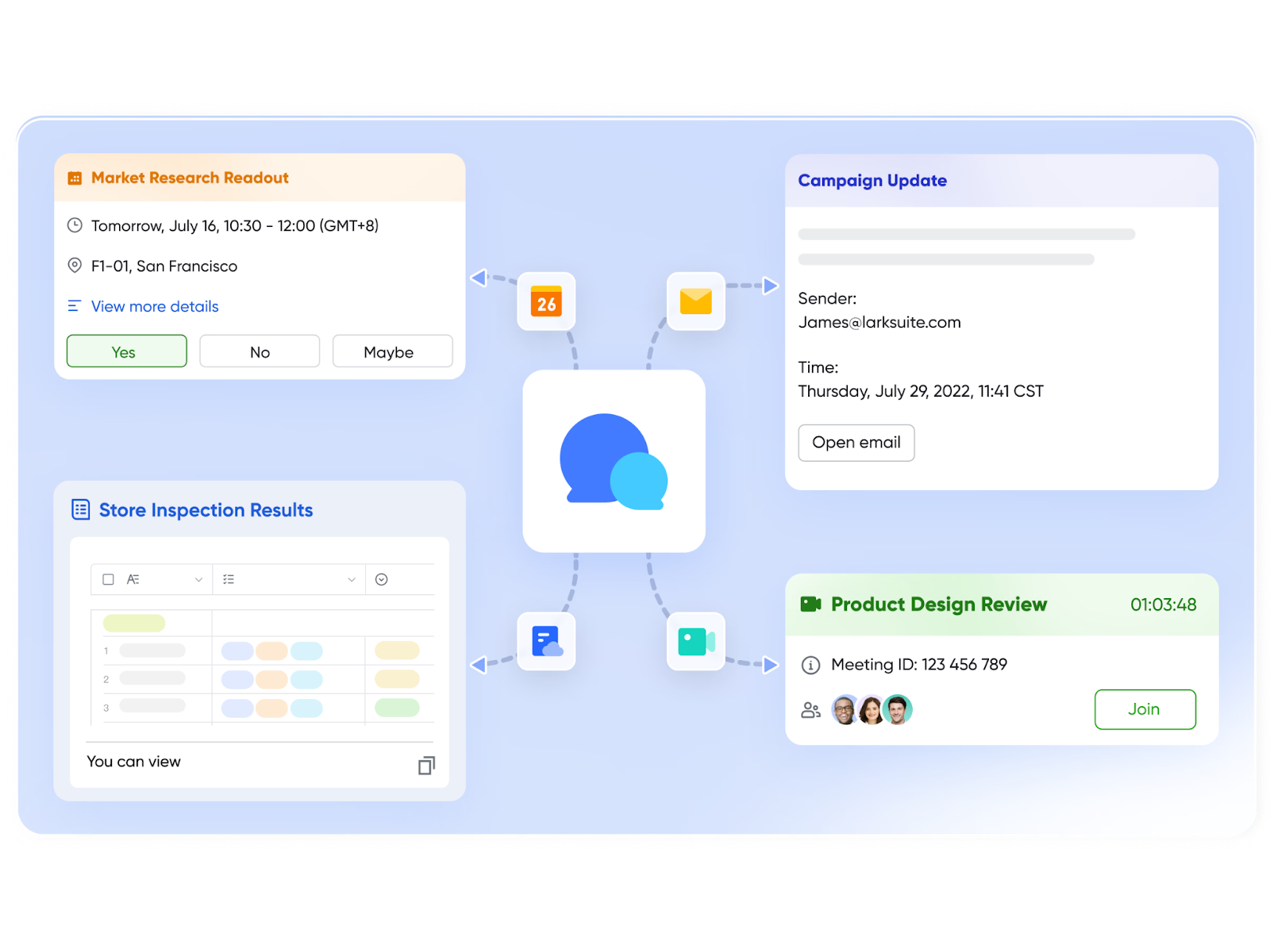
Lark Docs & Lark Wiki: proposals, playbooks, case notes
Sales and travel agencies generate a lot of content—proposals, itineraries, onboarding playbooks, and meeting notes. Lark Docs and Lark Wiki allow teams to co-edit these documents in real time, add comments, and embed live data from Base. For example, a travel agency can draft a client's custom itinerary in Docs, link it directly to their booking data in Base, and store it in Wiki for future reuse. This keeps knowledge centralized and easy to find.
Lark Pricing:
- Starter plan: Free forever plan that includes 11 powerful tools for up to 20 users. It also comes with 100GB of storage, 1000 automation runs, AI translations, and more.
- Pro plan: $12/user/month (billed annually) for up to 500 users. It includes everything in Starter plus group calling for up to 500 attendees, 15TB of storage, 50,000 automation runs, and more.
- Enterprise plan: Contact sales for custom pricing. Supports unlimited users and includes even more automation runs and advanced data security, compliance, and management features.
Which should you choose: Pipedrive, Monday, or Lark?
When deciding between Pipedrive vs Monday, the best choice depends on your business needs. If your team is purely sales-focused, Pipedrive is a strong option—it's simple, intuitive, and helps small sales teams manage pipelines effectively without extra distractions. On the other hand, if your organization needs a blend of CRM and project management, Monday shines with its customizable boards and cross-team workflows, making it suitable for marketing or operations-heavy teams.
But if your business wants to go beyond sales tracking and avoid juggling multiple tools, Lark is the standout option. It combines CRM-style client tracking with collaboration tools like chat, meetings, docs, and approvals—all in one unified workspace. This makes Lark ideal for growing teams that value efficiency, automation, and seamless communication alongside sales management.
Conclusion
Choosing the right CRM can make or break your team's efficiency. Pipedrive is excellent for small, sales-driven teams that want clean pipelines and straightforward automation. Monday, on the other hand, works better for organizations needing CRM plus project management flexibility, though it can get complex and costly as teams grow. Both tools serve different niches, but they share a common limitation—needing extra integrations for collaboration and communication.
This is where Lark sets itself apart. It doesn't just manage deals and pipelines—it unifies sales tracking, team communication, task management, document sharing, and approvals in one seamless platform. That means fewer tool switches, lower costs, and faster execution across teams. For businesses that want CRM + collaboration + automation in one place, Lark is the smarter choice.
FAQs
Is Pipedrive or Monday better for startups?
For startups, Pipedrive works well if the main focus is building a sales pipeline and tracking deals. Monday can be a better fit if the team also needs project management alongside CRM. With Lark Base, startups get both pipeline tracking and task management in one platform, without needing to choose between sales-only or project-first tools.
Which is easier to implement: Pipedrive or Monday?
Pipedrive is generally quicker to set up because it's sales-focused, while Monday requires more customization depending on workflows. Lark offers ready-to-use CRM and project templates, making setup fast while still leaving room for customization as teams grow.
Can Pipedrive or Monday integrate with email tools?
Yes. Both platforms support integrations with Gmail, Outlook, and other email systems for syncing conversations and tracking interactions. With Lark Messenger & Lark Mail, communication happens inside the same workspace—no external integrations required.
What reporting features do Pipedrive and Monday offer?
Pipedrive provides detailed sales reports and forecasting dashboards. Monday offers customizable dashboards for tasks and projects, but advanced analytics may require add-ons. Lark Dashboards in Base deliver real-time insights into sales KPIs, client activity, and team performance—built-in, no extra add-ons needed.
Which platform is more affordable in the long run?
Pipedrive's pricing grows with add-ons, while Monday's cost increases as CRM and advanced features are unlocked. Both can get expensive at scale. Lark includes CRM-style tracking, communication, docs, meetings, and workflows in its free plan, with the Pro plan at just $12/user/month, keeping the total cost of ownership low.
Who should consider switching from Pipedrive or Monday to Lark?
Teams tired of juggling multiple tools, paying for add-ons, or struggling with collaboration should consider switching. Lark's all-in-one suite—Base, Messenger, Docs, Meetings, Calendar, and Approvals—makes it ideal for businesses wanting CRM + collaboration + automation in a single platform.
Related reading
Table of contents
Start using Lark today

Manage all your work in one place
Boost team efficiency by 10x
Save up to 70% on software costs
Table of contents
Start using Lark today
Manage all your work in one place
Boost team efficiency by 10x
Save up to 70% on software costs
Keep reading


Lark recognized in 2023 Gartner® Collaborative Content Workspaces and Meeting Solutions reports
Lark, the global superapp for productivity, is delighted to announce it receives recognition in the Gartner's 2023 Innovation Insight for Collaborative Content Workspaces and Market Guide for Meeting Solutions.





2026 Lark Technologies Pte. Ltd.
Headquartered in Singapore with offices worldwide.






Explore: