Ambiguity is the silent killer of high-performing teams, often manifesting as missed deadlines or redundant efforts. To combat this, leaders turn to the RACI matrix to clarify exactly who is doing what. This framework serves as a visual map for project roles, ensuring that every task has a clear owner and a supporting cast. In this guide, you will discover the foundational mechanics of the matrix, explore practical use cases across different industries, and learn how to implement these roles within a modern digital workspace to keep your collaborative projects moving at peak velocity without any confusion.
Key takeaways
1. The RACI matrix eliminates "too many cooks in the kitchen" by assigning one Accountable person per task.
2. Distinguishing between "Responsible" (doing) and "Accountable" (owning) is the most critical step.
3. Over-assigning "Consulted" roles is a common trap that leads to decision paralysis.
4. Dynamic tools like Lark transform static matrices into living, .
Definition of the RACI matrix
RACI matrix, an acronym for Responsible, Accountable, Consulted, and Informed, is a responsibility assignment chart used to map out every task, milestone, or key decision involved in completing a project. Think of it as the DNA of your project plan; it articulates the relationship between and team members.
Historically, RACI matrix definitions have focused on , but in today’s agile world, the definition of the RACI matrix has evolved. It is no longer just a static spreadsheet; it is a strategic alignment tool. Whether you are launching a new software feature or managing a retail supply chain, the matrix ensures that communication flows to the right people at the right time.
What are the 4 core roles of RACI?
To truly master the RACI matrix, you need to look beyond the basic definitions and understand how these roles interact in a high-stakes environment. Misinterpreting the boundary between "doing" and "owning" is usually where begin to slip.
Here is a deeper dive into the nuances of the four core roles:
Responsible (R): The tactical executioners
These are the people "on the ground" getting their hands dirty. The responsible role is about the execution of the task.
- The operational reality: While you can have multiple people marked as 'R', having too many can lead to "Social Loafing," where individuals work less hard because they assume others will pick up the slack.
- In practice: If the task is "Write blog post," the responsible parties might be the copywriter and the graphic designer.
Accountable (A): The final decision maker
This is the most critical role in the RACI matrix. The accountable person is the one who "approves" the work. They don't necessarily do the work, but they are the ones who get the credit for success or the blame for failure.
- The golden rule: The "Accountable" person is the only one with the authority to say the task is officially "Done."
- In practice: For the "Write blog post" task, the accountable person is the Marketing Manager. If the post has a typo, it is the manager’s responsibility, even if they didn't write the words.
Consulted (C): The strategic advisors
These individuals provide the expertise or data needed to complete the task successfully. The relationship here is active and two-way.
- The crucial distinction: You "Consult" people before the task is finished. If you are asking for their opinion after the work is done, you are treating them as "Informed," not "Consulted."
- In practice: Before writing that blog post, you might consult the Product Engineer to ensure the technical specs are accurate.
Informed (I): The stakeholders
The informed role is about visibility, not permission. These are people whose work might be affected by the outcome of the task, but they have no say in how it is done.
- The communication boundary: This is a . You are telling them "this is happening" or "this is done." Do not let the "Informed" crowd drag you into unnecessary meetings; their role is to simply stay in the loop.
- In practice: Once the blog post is live, the sales team is informed so they can share it with leads.
How to create a RACI matrix step-by-step
Building a RACI matrix shouldn't be a bureaucratic hurdle; it is a strategic exercise in improving . To move from a messy project to a clear roadmap, follow these five essential steps:
Step 1: Identify every task and deliverable
Before assigning names, you need to know exactly what needs to be done. Break the project down into its core phases and list the specific deliverables, milestones, and high-impact decisions required to reach the finish line.
The strategy: Keep the list high-level enough to be manageable but detailed enough to identify hand-offs. Avoid listing every single email sent; focus on outcomes like "Drafting the Proposal" or "Final System Deployment."
Step 2: Define roles over individuals
Instead of using people's names, list job titles or project functions (e.g., "Content Lead," "QA Engineer," or "Stakeholder"). This ensures the matrix remains functional even if there are staffing changes during the
The strategy: Using roles makes the matrix a reusable template for future projects and helps in scaling organisational structures without having to rewrite your documentation every month.
Step 3: Map the R, A, C, and I assignments
Now, fill in the grid. For every task, determine who is doing the work (R), who owns the outcome (A), who provides expert input (C), and who just needs to be kept in the loop (I).
The strategy: This is where you enforce the "one accountable per task" rule. If you find a row without an 'A' or a row with three 'A's, you have identified a future bottleneck that needs to be resolved immediately.
Step 4: Audit for role overload
Look at the matrix vertically to see the distribution of work for each role. If one person is "Responsible" for 90% of the tasks, they are a single point of failure. Conversely, if someone is only "Informed" on everything, you might be involving them in too many unnecessary threads.
The strategy: Aim for a balanced distribution of 'R' and 'A' roles to ensure effective project execution and prevent team burnout.
Step 5: Socialize and validate the Matrix
A RACI chart is only useful if everyone agrees to it. Share the draft with all stakeholders and hold a brief meeting to confirm that everyone understands their level of involvement and authority.
The strategy: Getting "buy-in" at this stage prevents the "I didn't know that was my job" excuse later in the project, which is vital for building team trust.
Transform your project steps into an automated powerhouse
RACI matrix examples by use case
While the definition of the RACI matrix remains constant, its application shifts depending on the specific goals of your department. Whether you are shipping code or managing a global supply chain, the framework must adapt to the unique pressures of the industry.
Here are the applied in different use cases:
Project management
In a or product launch context, the matrix is used to navigate the transition from ideation to deployment. Here, the "Accountable" role often shifts from the Product Manager during the design phase to the Engineering Lead during the build phase.
- Task: API documentation – Responsible: Technical Writer | Accountable: Engineering Lead | Consulted: Developer | Informed: Product Manager.
- Task: Final UX sign-off – Responsible: Designer | Accountable: Product Manager | Consulted: QA Lead | Informed: Marketing.
Cross-functional teams
Cross-functional projects like a website rebrand often suffer from "too many cooks." The matrix acts as a filter, distinguishing those who have a vote (Consulted) from those who simply need to know the launch date (Informed).
- Task: Brand voice guidelines – Responsible: Content Strategist | Accountable: Creative Director | Consulted: CEO, Sales Lead | Informed: HR, Customer Support.
- Task: Social media Ad spend – Responsible: Performance Marketer | Accountable: Marketing Director | Consulted: Finance | Informed: Creative Team.
Process improvement
When a team is auditing , such as an optimising daily operations initiative, the matrix helps identify "Consultation Bloat." If a simple process change requires ten people to be "Consulted," the matrix makes this inefficiency visible so the "Accountable" leader can trim the list and speed up execution.
- Task: New employee onboarding flow – Responsible: HR Specialist | Accountable: HR Director | Consulted: IT Manager, Department Heads | Informed: Legal.
- Task: Expense reporting policy update – Responsible: Accountant | Accountable: CFO | Consulted: Operations Manager | Informed: All Employees.
Equip your team with a tool to master their focus.
Modern choice: How Lark streamlines your RACI workflow easily
A static RACI matrix buried in a spreadsheet often becomes "shelfware," a document everyone agrees on during kickoff but ignores once the actual work begins. To prevent accountability from fading, the matrix must be embedded directly into the environment where your team communicates and executes. transforms the definition of the RACI matrix from a theoretical plan into a functional, automated engine that drives project momentum. As a comprehensive platform, it provides channels and solutions for , collaboration, and overall management.
Role-based permission control
Mirror your matrix exactly by utilizing advanced field-level permissions in . You can configure your project tracker so that only the user assigned the "Accountable" (A) role has the authority to click "Approve" or move a task to "Final." Meanwhile, those marked as "Responsible" (R) maintain full edit access to "Work-in-Progress" fields, ensuring structural integrity throughout the . 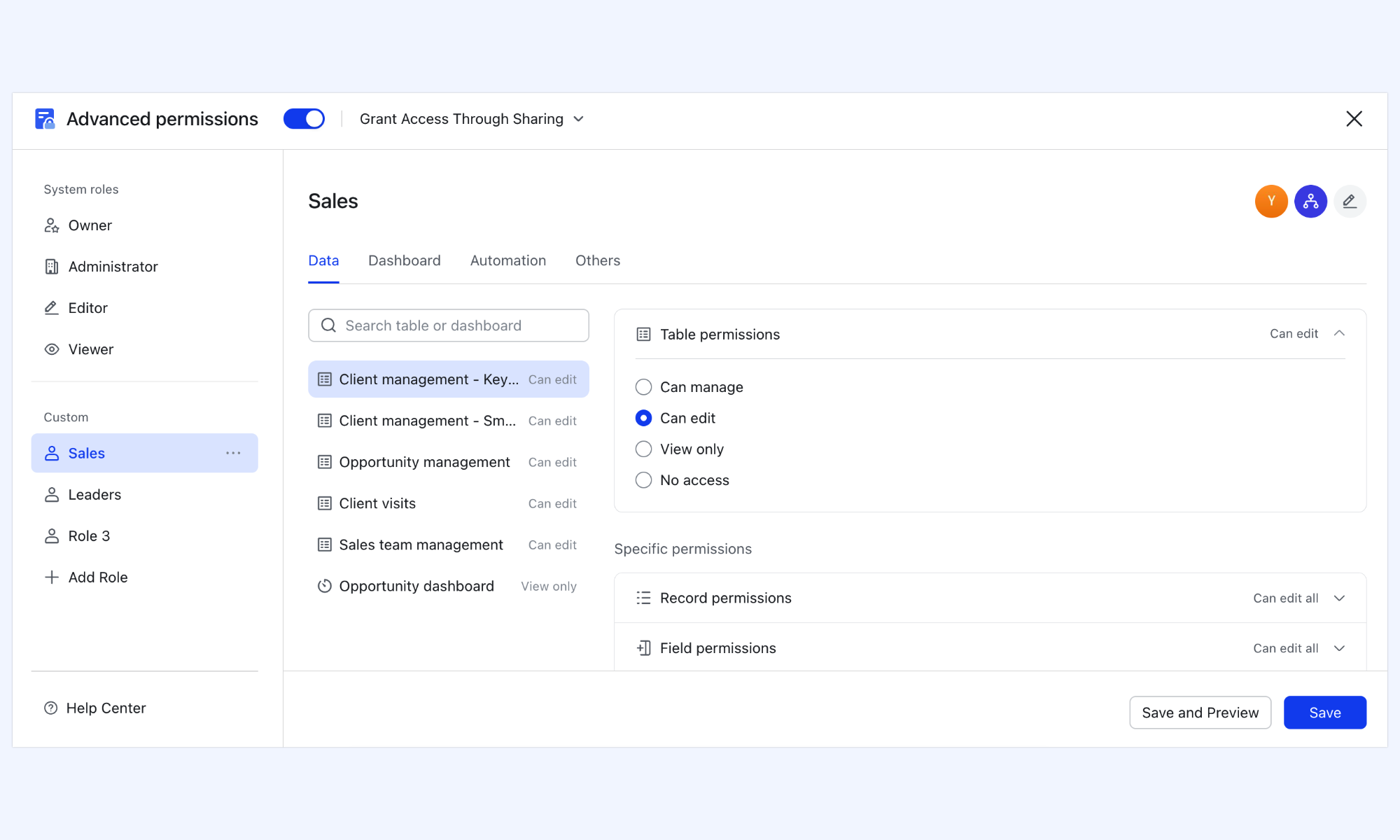
Strategic announcement pins
Manage the "Informed" (I) role without drowning stakeholders in granular daily chatter in . By using the announcement function in a , the project lead can broadcast high-level milestones or status changes. These updates stay pinned at the top of the conversation, allowing observers to get the "big picture" at a glance without needing to read every technical message. 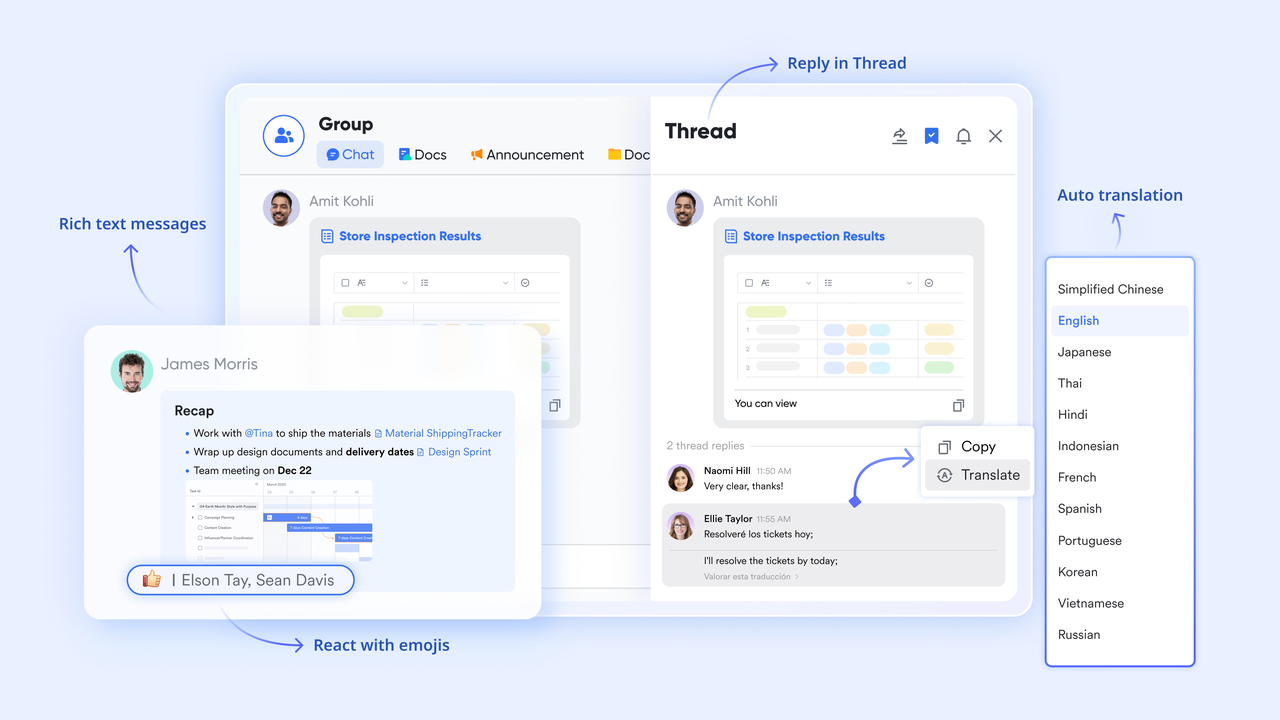
Asynchronous expert consultation
Avoid "Consultation Bloat" by letting your advisors skip the live meeting. Instead of requiring a "Consulted" (C) expert to sit through full sync, provide them with a transcript. They can quickly scan the AI-generated summary, identify relevant sections, and leave targeted comments on their own schedule, keeping the project moving without wasting their specialized time.

Automated hand-off dependencies
In any RACI matrix, the transition from "Responsible" execution to "Accountable" review is a major friction point. Lark Tasks eliminates this by allowing you to set parent-child dependencies. Once the "Responsible" party marks their action item as complete, the system automatically triggers a notification for the "Accountable" owner to begin their review, ensuring a seamless, automated hand-off. 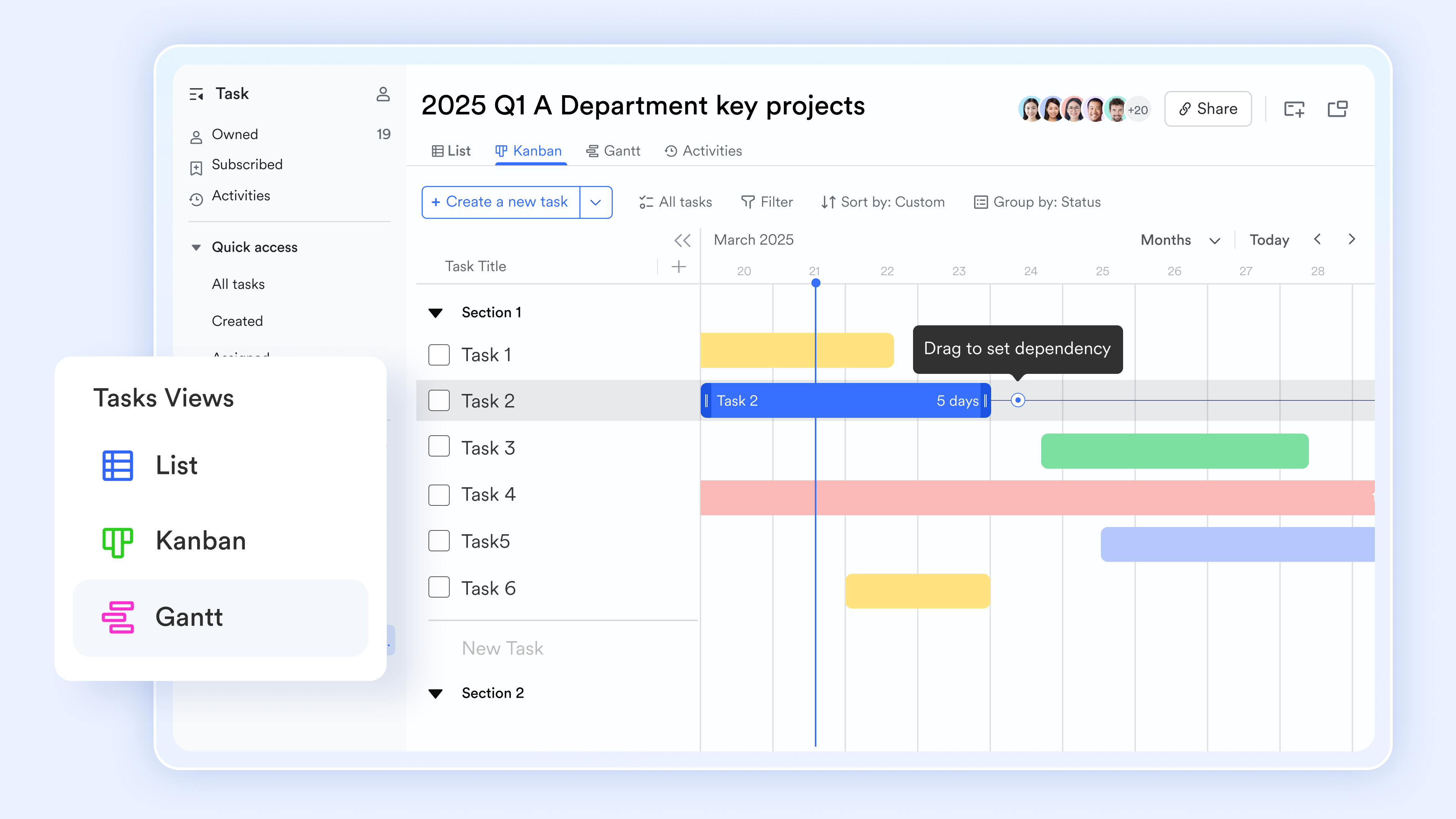
Capacity-aware focus blocking
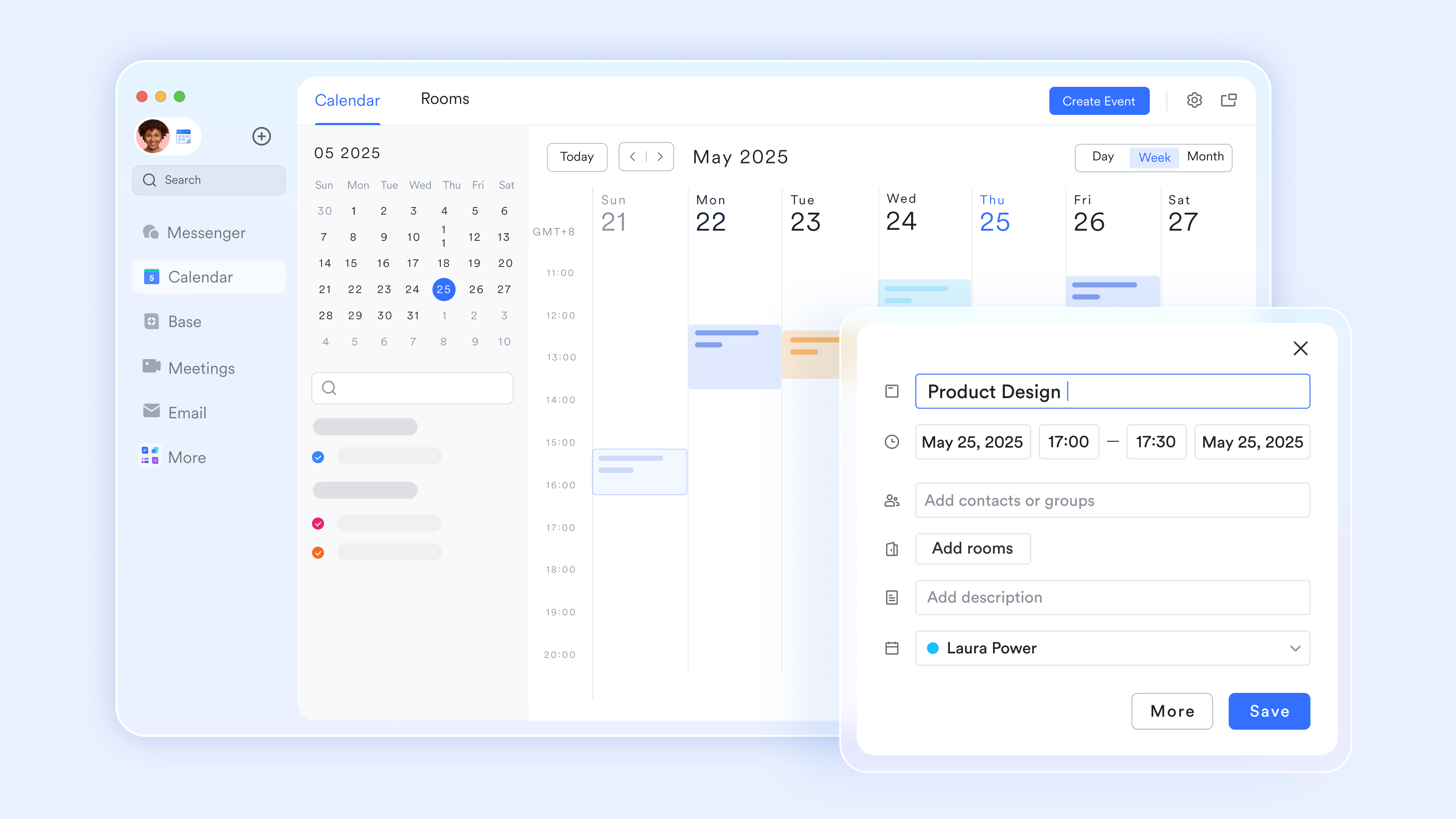
True accountability requires the physical time to execute. Use to visualize the bandwidth of your "Responsible" team members. If the matrix identifies a person as the primary "doer" for multiple critical tasks, you can proactively block "Focus Time" on their schedule. This prevents meeting invites from encroaching on the deep work needed to hit their RACI-assigned milestones.
:
- Starter plan: Free forever plan that includes 11 powerful tools for up to 20 users. It also comes with 100GB of storage, 1000 automation runs, AI translations, and more.
- Pro plan: $12/user/month (billed annually) for up to 500 users. It includes everything in Starter plus group calling for up to 500 attendees, 15TB of storage, 50,000 automation runs, and more.
- Enterprise plan: for custom pricing. Supports unlimited users and includes even more automation runs and advanced security, compliance, and management features.
For small teams with simple communication needs

18 months message history
1000 Base automation runs/month
2000 rows per table in Base
Most POPULAR
For companies with comprehensive collaboration and management needs
Unlimited message history
500-participant video meetings
50k Base automation runs/month
20k rows per table in Base
For large companies with advanced security and organizational management needs
Get a personalized demo and pricing
Unlimited message history
500-participant video meetings
15 TB storage + 30 GB storage/user
500k Base automation runs/month
50k Base automation runs/month
Most POPULAR
For companies with comprehensive collaboration and management needs
Unlimited message history
500-participant video meetings
50k Base automation runs/month
20k rows per table in Base
RACI matrix best practices
To ensure your RACI matrix actually helps your team instead of adding more paperwork, you need to follow a few common-sense rules. These practices keep the chart useful and ensure everyone knows exactly what is expected of them.
- Stick to one "Accountable" person: This is the most important rule. For every task, there should be only one person who is officially the "owner." If you have two or more people in charge of the same thing, it’s easy for balls to get dropped because everyone assumes the other person is handling it.
- Keep it simple: Don't try to list every tiny step of a project. If the matrix becomes too big and complicated, people will stop looking at it. Focus on the big milestones and important decisions that actually need a clear owner to succeed.
- Focus on authority, not just titles: Sometimes, a junior team member is the best person to be "Accountable" for a specific technical task. Assign roles based on who actually has the power and knowledge to make the decision, rather than just picking the person with the fanciest job title.
- Use it as a living document: A RACI matrix shouldn't be something you make once and then hide in a folder. Review it during your weekly meetings. If someone leaves the team or a change, update the roles immediately so there is no confusion.
- Check for workload balance: Look at your chart vertically to see how much you’ve given to each person. If one team member has an "R" (Responsible) for every single task, they are going to burn out. Use the matrix to spread the work more fairly across the team.
- Get everyone to agree early: Before you start the work, show the matrix to the whole team. Make sure the people you labelled as "Consulted" actually have time to give advice, and ensure the "Responsible" people feel they have what they need to get the job done.
Common mistakes teams make with RACI matrices
Even with the best intentions, teams often fall into traps that turn a RACI matrix into a source of friction rather than clarity. Recognizing these mistakes early is essential for maintaining project speed and ensuring your digital tools are working for you, not against you.
- Assigning multiple accountables: When two people are "Accountable," no one is. This leads to stalled decisions as both parties wait for the other to take the lead. You can prevent this by setting a "Single Select" member field for the Accountable column, technically enforcing that only one owner can be assigned per task.
- Treating RACI as static documentation: Many teams create a matrix at kickoff and never look at it again. As projects evolve, roles shift; a static chart becomes outdated quickly. By embedding your RACI directly into a document in the matrix remains a living document that is always one click away in your project group chat.
- Using RACI without team alignment: Imposing a matrix on a team without their input is a recipe for missed deadlines. If a person doesn't agree they are "Responsible," the work won't get done. Use the Comments feature in Lark to allow team members to "tag" themselves and confirm their roles before the project goes live.
- Confusing involvement with ownership: Being "Responsible" (doing the work) is often mistaken for having the final say. This creates quality control issues when "doers" bypass the "Accountable" owner. workflows can automate this boundary, ensuring that a task cannot be marked "Complete" until the designated Accountable person gives the digital thumbs-up.
Conclusion
A RACI matrix provides a simple but powerful way to remove confusion from . By clearly defining who is responsible, accountable, consulted, and informed, teams reduce delays, avoid duplicated work, and make decisions faster. The real value of a RACI matrix is not just documentation, but shared understanding. When everyone knows their role and authority, projects move forward with confidence instead of constant clarification.
However, a matrix only delivers results when it stays visible, updated, and connected to daily work. Digital workspaces like help turn responsibility mapping into active execution by aligning roles with tasks, approvals, communication, and timelines. This approach keeps accountability clear even as projects evolve. Whether you are managing a short-term initiative or ongoing operations, a well-maintained RACI matrix builds trust, improves focus, and creates a culture where ownership is clear and progress is consistent.
Drive seamless project accountability with Lark today.
FAQs
Can a RACI matrix be used for ongoing operations, not just projects?
Yes, it is highly effective for clarifying recurring processes like or content publishing to ensure operational transparency. You can even build these operational roles into a Lark Base template, so the assignments remain consistent every month.
How detailed should a RACI matrix be for small teams?
For small teams, keep it focused only on major deliverables to avoid the administrative overhead of tracking minor emails. Using Lark Messenger pinned tabs allows you to keep a simplified chart accessible without over-complicating your team's agile daily workflow.
Is it okay for one person to appear multiple times as responsible?
It is common for one person to handle multiple tasks, but you must monitor their individual productivity levels to prevent burnout. Lark Calendar can help you visualize this by showing if a team member is double-booked across too many "Responsible" assignments.
How often should a RACI matrix be reviewed or updated?
Review your matrix at every major project milestone or whenever there is a shift in team composition to maintain building team trust. Since Lark Docs are live, you can make these updates in real-time during a meeting, so everyone sees the changes immediately.
What should you do if stakeholders disagree on accountability?
If disagree, escalate the conflict to the project sponsor immediately to resolve the bottleneck. You can use Lark Minutes to record the discussion and the final decision, ensuring there is a clear historical record of who was eventually named the sole owner.
Related reading