














RACI Matrix Examples: Define Roles & Improve Accountability

Ryan Tanner
Product Marketing Specialist
Sep 18, 2026
Ryan Tanner
Sep 18, 2026

22 min read


In any project—whether launching a website, developing a product, or managing an internal initiative—clarity about roles determines success. A RACI matrix helps teams define responsibilities, eliminate overlap, and improve collaboration by mapping who is Responsible, Accountable, Consulted, and Informed.
In this guide, we'll explain what a RACI matrix is, share practical RACI matrix examples, and outline rules, best practices, and common mistakes. We'll also show how Lark makes it easier to document, share, and maintain your RACI for smooth, transparent project management.

What is a RACI matrix?
A RACI matrix is a widely used project management tool that defines roles and responsibilities across teams. It helps clarify who does what, ensures accountability, and prevents role confusion in complex projects. By creating a clear structure of responsibility, the RACI matrix examples help teams stay aligned and efficient. Each letter in RACI—Responsible, Accountable, Consulted, and Informed—represents a unique role essential for smooth collaboration and successful project execution.
- R – Responsible: This person or group is directly responsible for completing the assigned task or deliverable. They are the "doers" who carry out the work outlined in the RACI responsibility matrix examples. Every task must have at least one responsible role to ensure ownership and steady progress throughout the project.
- A – Accountable: The Accountable individual owns the outcome and ensures that the work is completed to standard. They make final decisions and are answerable for results in the RACI matrix project management examples. To maintain clarity, each task should have only one Accountable person to avoid overlapping authority.
- C – Consulted: Consulted stakeholders provide insights, advice, or specialized feedback that guides the responsible team. Their two-way communication helps refine deliverables in project management RACI chart setups. They play a crucial role in improving quality and decision-making without taking direct ownership of the task.
- I – Informed: Informed parties are those who need updates on progress and outcomes but are not directly involved in execution. They ensure transparency and alignment within the RACI matrix definition and examples framework. Communication here is one-way, keeping everyone aware of developments without adding extra approvals or feedback loops.
RACI rules and best practices
A RACI matrix works best when teams follow clear rules and consistent practices. Setting boundaries for who is Responsible, Accountable, Consulted, or Informed ensures balanced workloads and avoids confusion. Applying these principles makes your RACI matrix examples more effective in driving ownership and clarity. Below are the essential rules, best practices, and common mistakes to keep in mind when using the RACI framework in project management.
Core rules
- Every task must have at least one Responsible: Each activity in your RACI matrix project management examples should clearly identify who is doing the work. Without a responsible person, tasks risk delays or miscommunication. Assigning ownership helps maintain steady progress and accountability.
- Only one Accountable per task: In the project management RACI chart, having a single Accountable person ensures clear decision-making and eliminates overlaps in authority. When multiple people share accountability, confusion about final approval often arises. One clear owner streamlines direction and outcomes.
- Avoid assigning one person to too many roles: When an individual appears too often across your RACI responsibility matrix examples, it may indicate resource overload. Balancing responsibilities ensures fair distribution of work. It also prevents delays caused by conflicting priorities.
Best practices
- Build your RACI early in the project planning phase: Creating your RACI matrix template example at the start of planning sets clear expectations from day one. Early alignment helps prevent role conflicts later. It also ensures the team begins with a shared understanding of responsibilities.
- Keep it simple & focus on key deliverables: An effective RACI matrix definition and examples document should emphasize major tasks. Simplicity improves readability and usability. Avoid overwhelming the matrix with unnecessary details or minor activities.
- Review and update regularly as roles evolve: Your RACI matrix examples should evolve as the project progresses. Regular updates ensure relevance and accuracy. Revisiting the matrix during major milestones maintains team alignment.
Use clear communication when consulting or informing: When applying the project management RACI chart, define how consulted and informed roles communicate. Clear expectations prevent miscommunication or redundant updates. Consistent communication keeps everyone aligned and informed.
Common mistakes
- Confusing "consulted" and "informed": One common mistake in RACI matrix project management examples is mixing up these roles. "consulted" involves two-way collaboration, while "informed" is one-way communication. Clarifying this difference avoids confusion and ensures proper engagement.
- Multiple people owning accountability: Each task in your RACI matrix examples should have only one accountable role. Shared accountability often leads to unclear ownership and delays. A single owner ensures responsibility and decisive leadership.
- Overly detailed or complex matrices: A cluttered RACI responsibility matrix example reduces effectiveness. Keeping the matrix concise and easy to follow improves comprehension. Simplicity encourages consistent use and faster decision-making.
RACI matrix examples
A RACI matrix can be applied to a variety of projects, from technical launches to marketing campaigns or internal initiatives. Using clear examples helps teams understand how responsibilities are assigned and how accountability flows. By mapping tasks against roles, you can prevent confusion and ensure smooth project execution.
The following RACI matrix examples illustrate how different projects can benefit from structured responsibility assignment.
Example 1: Simple RACI matrix for a website launch
A company is launching a new website with design, development, and marketing teams involved. The goal is to deliver the site on schedule while keeping all stakeholders informed.
- Project Manager (A): Accountable for overall project delivery, ensuring milestones are met and quality standards maintained.
- Designer (R): Responsible for creating visual assets and layouts. Focuses on the user interface and design quality.
- Developer (R): Responsible for coding and implementing designs. Ensures the website functions correctly.
- Marketing (C): Consulted to provide input on content and branding. Guides messaging strategy for the launch.
- All team members (I): Informed about updates, deadlines, and key decisions. Keeps everyone aligned on project progress.
Example 2: Product development project
A tech company is creating a mobile app with features requiring input from Product, Engineering, Design, QA, and Marketing teams. The goal is to deliver a high-quality product on schedule while keeping all stakeholders aligned.
- Product Manager (A) – Accountable for the overall success of the app. Oversees progress and makes final decisions on features and priorities.
- Engineer (R) – Responsible for developing and implementing the app features. Ensures technical requirements are met and the product functions correctly.
- Designer (R) – Responsible for designing the app interface and user experience. Focuses on usability and visual consistency.
- QA (R/C) – Responsible for testing the app and ensuring it meets quality standards. Consulted for feedback on defects or required improvements.
- Marketing (C) – Consulted on launch strategy and messaging. Prepares campaigns and materials to promote the app effectively.
Example 3: Marketing campaign RACI matrix
A brand is running a multi-channel campaign for a new product, with teams handling content creation, performance analysis, design, and approvals. The goal is to execute the campaign efficiently while keeping roles clear.
- Marketing Lead (A) – Accountable for the overall campaign success. Oversees strategy, approvals, and ensures all deliverables meet goals.
- Copywriter (R) – Responsible for creating written content for ads, emails, and social media. Ensures messaging is clear, engaging, and aligned with the brand.
- Designer (R) – Responsible for producing visual assets and graphics. Focuses on creativity, aesthetics, and user engagement.
- Analyst (C/R) – Consulted for campaign insights and analytics. Responsible for tracking performance and providing recommendations to optimize results.
- Manager (I/C) – Informed or consulted on major milestones and strategic decisions. Keeps the team aligned with broader business objectives.
Example 4: Internal operations or HR project
An organization is implementing an onboarding program for new employees, including IT setup, training sessions, and mentorship assignments. The goal is to streamline onboarding while making roles and responsibilities clear.
Task | HR Manager | Team Lead | IT | New Hire |
Prepare onboarding plan | A | C | I | I |
Set up workstation | I | I | A/R | I |
Conduct orientation | C | A/R | I | I |
Complete training | I | C | I | A/R |
Collect feedback | A | C | I | R |
- HR Manager (A) – Accountable for the entire onboarding program. Ensures all activities are completed on time and meet quality standards.
- Team Lead (R/C) – Responsible for guiding new hires through role-specific tasks. Consulted to provide feedback and ensure alignment with team expectations.
- IT (R) – Responsible for setting up devices, accounts, and software access. Ensures new hires have all technical resources ready for use.
- New Hire (I/R) – Informed about schedules and expectations. Responsible for completing training and providing feedback on onboarding experience.
Explain takeaways from the examples
Across all these RACI matrix examples, the model consistently provides clarity, structure, and accountability for every project. Each team member understands their responsibilities, who to consult for input, and who needs to be kept informed, reducing confusion and preventing overlap. Whether it's a website launch, product development, marketing campaign, or internal HR project, clearly defined roles help streamline execution and decision-making.
When combined with a shared workspace that supports task ownership and documentation, teams can easily maintain, update, and access their RACI assignments. This visibility ensures projects stay on track and collaboration remains efficient throughout the workflow.
Why RACI matters in project management
A RACI matrix is a vital tool in project management because it clearly defines roles and responsibilities, ensuring teams work efficiently and avoid miscommunication. By mapping who is Responsible, Accountable, Consulted, and Informed, it provides structure for any project, from technical builds to creative campaigns. This clarity is especially important in cross-functional teams, where overlapping duties can create confusion. Below are key reasons why using a RACI matrix matters in project management.
- Prevents confusion and overlapping work: A RACI matrix clearly assigns each task to the right person or team. This prevents multiple people from doing the same work or leaving tasks incomplete. Teams can focus on their responsibilities without duplication or missed deadlines.
- Clarifies ownership, especially in cross-functional projects: In projects involving multiple departments, like a marketing campaign, the RACI matrix defines who owns each part of the work. This ensures decisions are made by the accountable person. Everyone knows their role, reducing conflicts or delays.
- Builds accountability and decision-making flow: By identifying who is accountable for each task, a RACI matrix ensures that decisions are made promptly. It creates a clear chain of responsibility for approvals and outcomes. Teams can act confidently, knowing who holds ultimate authority.
- Helps new members understand their scope quickly: When onboarding new team members, the RACI matrix provides a clear map of roles and expectations. They can see what tasks they are Responsible for and who to consult. This accelerates integration and reduces the learning curve.
Example: a marketing campaign with content, design, and analytics teams
In a campaign, content creators are Responsible for messaging, designers for visuals, and analysts for performance tracking. The Marketing Manager is Accountable, while leadership and stakeholders are Consulted or informed. This prevents confusion and ensures smooth execution across teams.
Practice on your own: Use Lark to bring RACI to life
A RACI matrix is most effective when it is not just created but actively maintained and integrated into daily workflows. Lark provides a suite of project management tools that help teams bring their RACI charts to life by visualizing roles, assigning clear ownership, tracking tasks, and communicating updates in real time. With Lark, teams can ensure accountability, reduce confusion, and improve collaboration across departments.
From project planning to execution and review, each Lark component supports structured responsibility management, making RACI an actionable part of your project management process.
Lark Base: Visualize roles in dashboards
Lark Base is a versatile tool for visualizing team roles and project responsibilities in structured tables or dashboards. It allows teams to map each task against RACI roles—Responsible, Accountable, Consulted, and Informed—providing a clear overview of who owns what. This visual approach helps identify overlaps, gaps, or overloaded team members, making cross-functional coordination more efficient. Teams can filter tasks by role, priority, or project phase, ensuring that everyone understands their responsibilities at a glance. Updates are reflected in real time, so changes in assignments or priorities are visible to all stakeholders immediately.
Example: During a product launch, the design, development, QA, and marketing teams use Lark Base to see all tasks and their assigned roles. Designers know which elements they're Responsible for, developers can see dependencies, and marketing knows who to consult for approvals.

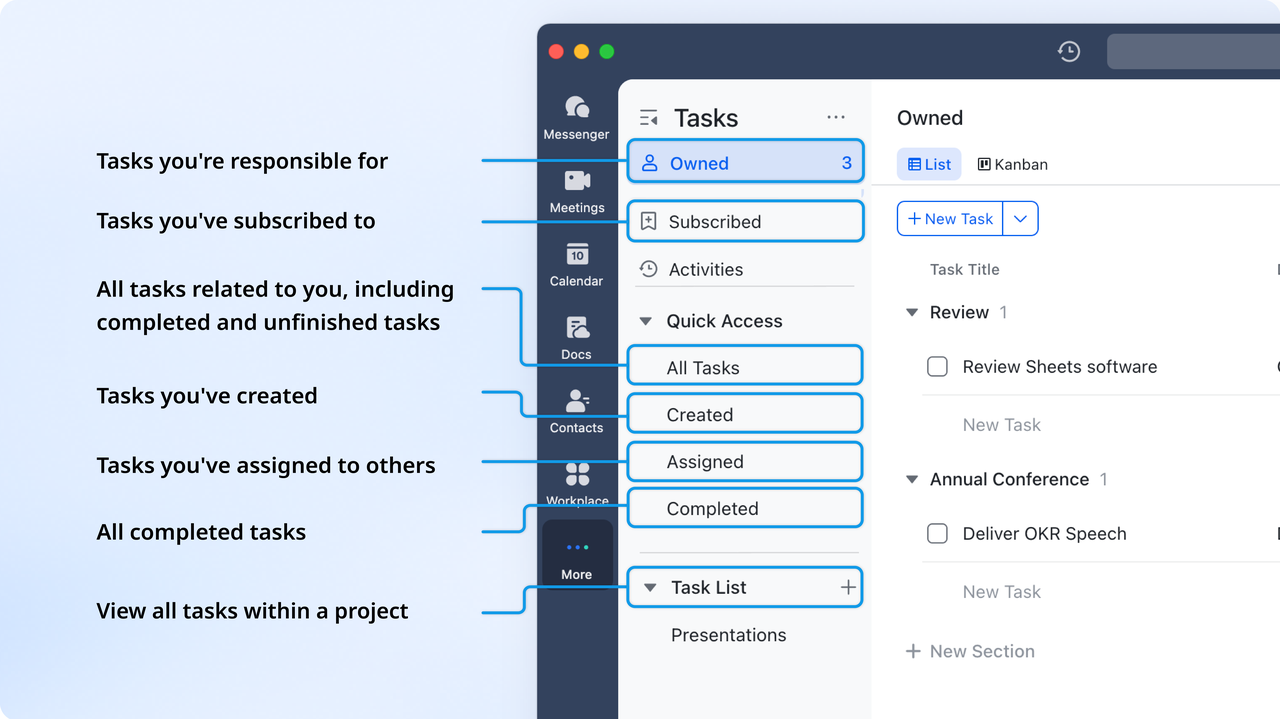
Lark Tasks: Keep ownership clear
Lark Tasks allows teams to assign tasks with clear ownership for Responsible ("R") and Accountable ("A") roles. Each task can include deadlines, priorities, and dependencies, ensuring that responsibilities are transparent and progress can be tracked. Members receive notifications for upcoming or overdue tasks, reducing the risk of missed deadlines. By assigning ownership directly to tasks, Lark Tasks ensures that team members know exactly what they are responsible for and who holds accountability. This makes it easier to manage complex projects, track task completion, and adjust responsibilities dynamically as priorities shift.
Example: A marketing campaign requires content creation, design, and performance analysis. The copywriter is responsible for drafting emails, the designer for creating visuals, and the marketing manager is accountable for final approval. Using Lark Tasks, each member can track progress, view deadlines, and stay aware of dependencies, ensuring the campaign is executed on time and roles remain clear.
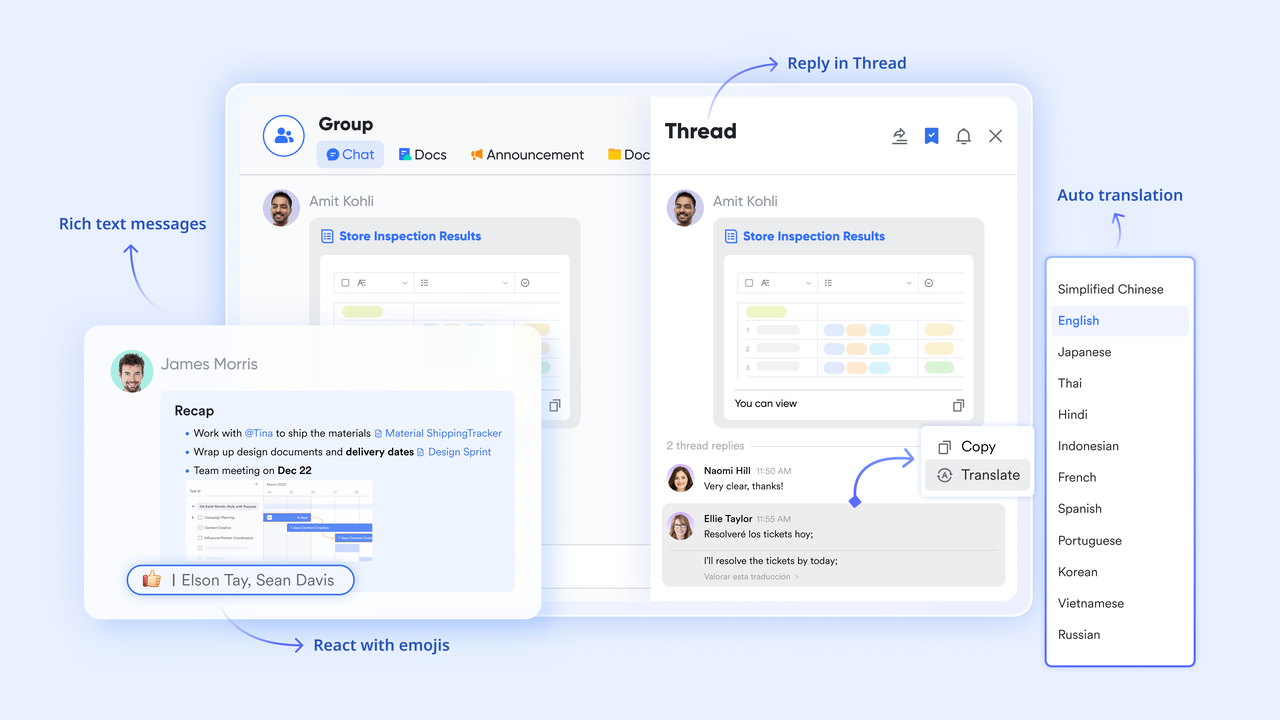
Lark Messenger: Consult stakeholders continuously
Lark Messenger facilitates real-time communication for Consulted ("C") and Informed ("I") roles. Teams can ask questions, provide feedback, and share updates instantly without relying on long email chains or delayed responses. Dedicated channels or threads can be set up for specific tasks, projects, or departments, ensuring that all relevant stakeholders receive updates and can contribute input efficiently. Messenger also supports multimedia messages, file sharing, and tagging specific team members, making consultation and information sharing precise and actionable. By keeping communication tied directly to tasks and roles, Lark Messenger ensures that RACI responsibilities are executed effectively.
Example: During a software development sprint, a developer has a question about a feature and uses Lark Messenger to consult the Product Manager (C). QA is immediately informed of any changes in requirements (I), ensuring updates are tracked and responsibilities remain clear.
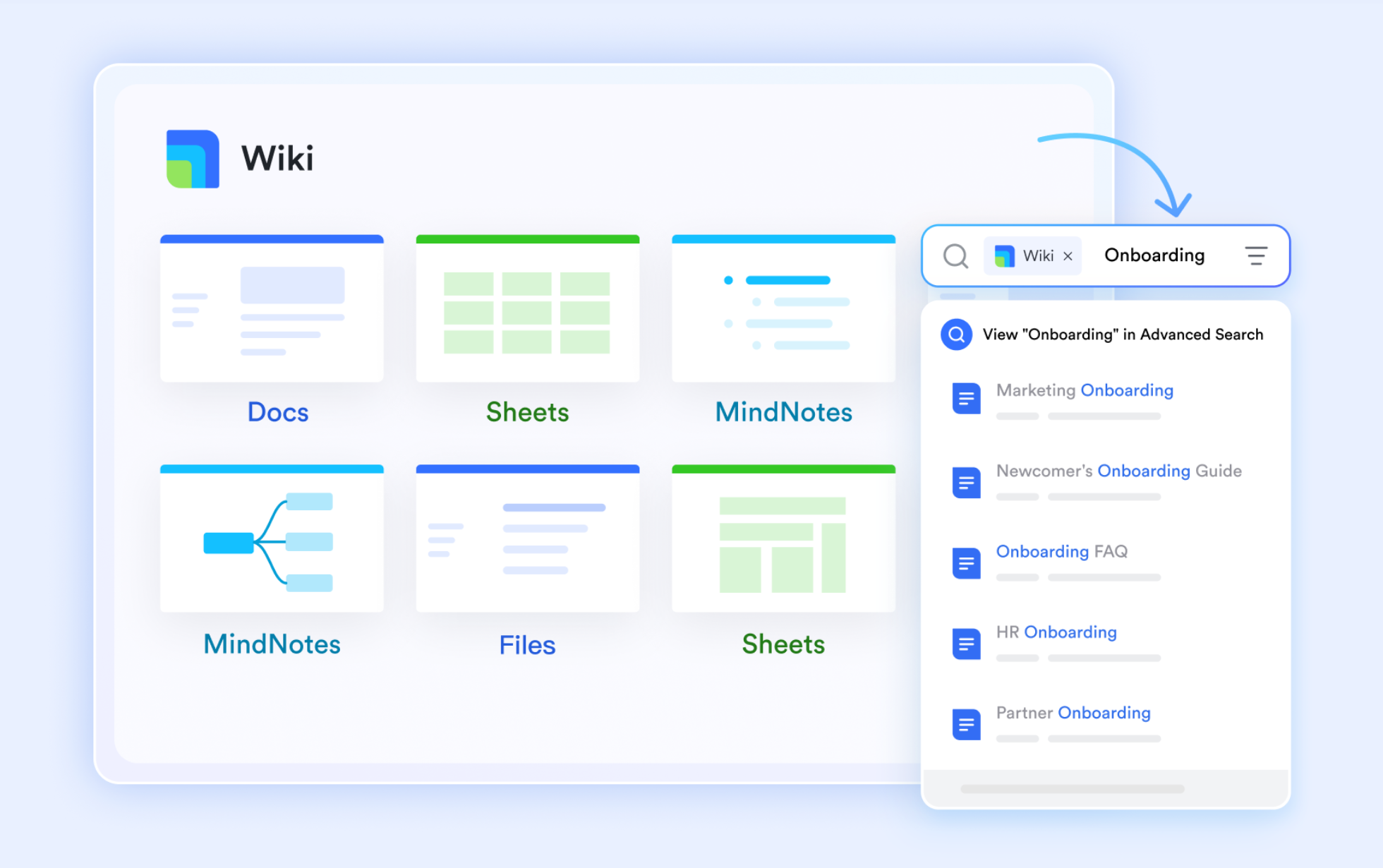
Lark Docs & Wiki: Centralize and document your RACI chart
Lark Docs & Lark Wiki provide a centralized space to document the RACI matrix, making it easily accessible to all team members. Teams can create detailed tables, embed links, attach files, and update responsibilities in real time, ensuring the RACI chart is always current. This centralized documentation serves as a reference for new team members, keeps historical records, and enables collaboration across departments. By linking tasks, roles, and deadlines, Docs & Wiki creates a living, interactive RACI framework that teams can consult anytime, reducing confusion and reinforcing accountability.
Example: A new hire joins a cross-functional project. Using Lark Docs, they can view the RACI matrix to understand their responsibilities, see who to consult for guidance, and track who needs updates. This accelerates onboarding, ensures clarity, and keeps the team aligned on project objectives.
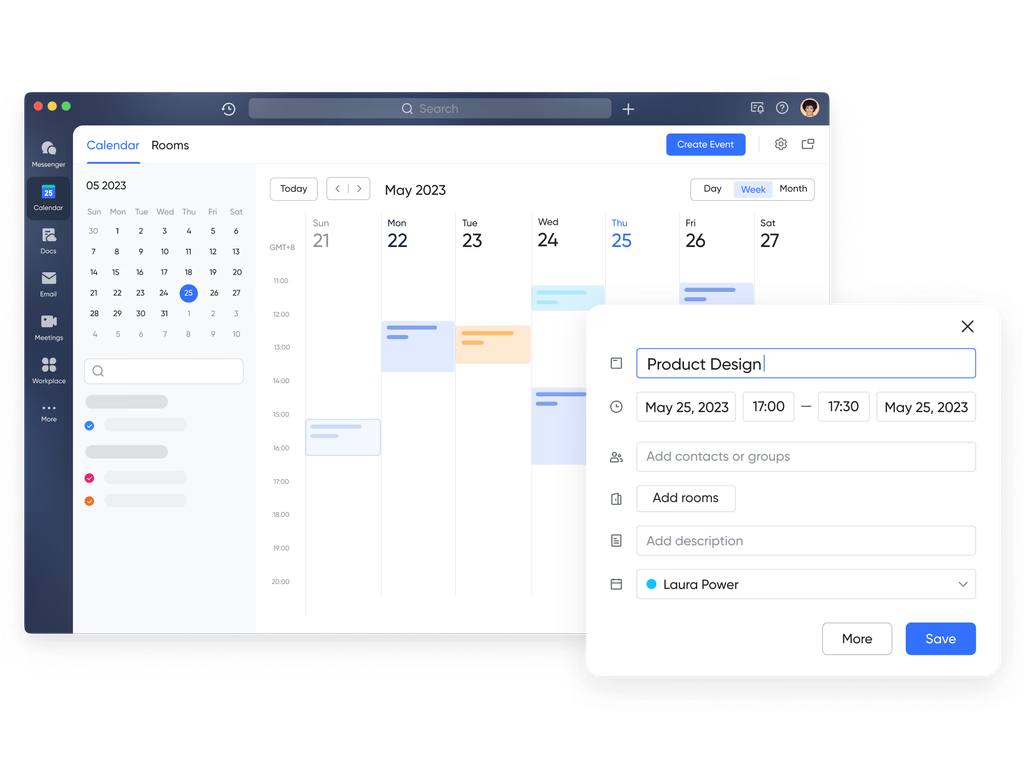
Lark Calendar: Align deadlines, deliverables, and accountability checkpoints
Lark Calendar combines deadlines, milestones, and accountability checkpoints directly with the RACI matrix. Teams can schedule requests to Responsible and Accountable members via Lark Approval for each milestone, making dependencies and timelines clear. Notifications and reminders ensure tasks are completed on schedule, while visual timelines provide an overview of the project's flow. Lark Calendar helps teams coordinate across departments, manage workload balance, and identify potential bottlenecks before they impact delivery. It also allows stakeholders to quickly see key dates for review, approval, or delivery, keeping the project aligned and on track.
Example: For a product launch, the Calendar shows design deadlines, content reviews, QA testing, and launch dates. Responsible owners and Accountable leads can track tasks, while Consulted and Informed members are aware of deadlines. This ensures everyone knows their role in timing, reducing delays and ensuring smooth execution.
Lark Meetings: Review RACI updates in recurring syncs
Lark Meetings enables teams to review RACI updates in real time during recurring syncs. Teams can discuss completed tasks, address bottlenecks, and confirm accountability. By reviewing the RACI chart together, Responsible, Accountable, Consulted, and Informed members can clarify responsibilities, adjust priorities, and align on next steps. This turns RACI from a static chart into an active management tool. Meetings can also be recorded and documented in Lark Docs, ensuring follow-ups are tracked and accountability is maintained across teams.
Example: During a weekly product release sync, the project manager reviews which tasks have been completed by developers (R), checks approvals from accountable leads, and ensures that consulted and informed members receive updates. This ensures alignment, accelerates decision-making, and keeps the project on schedule.
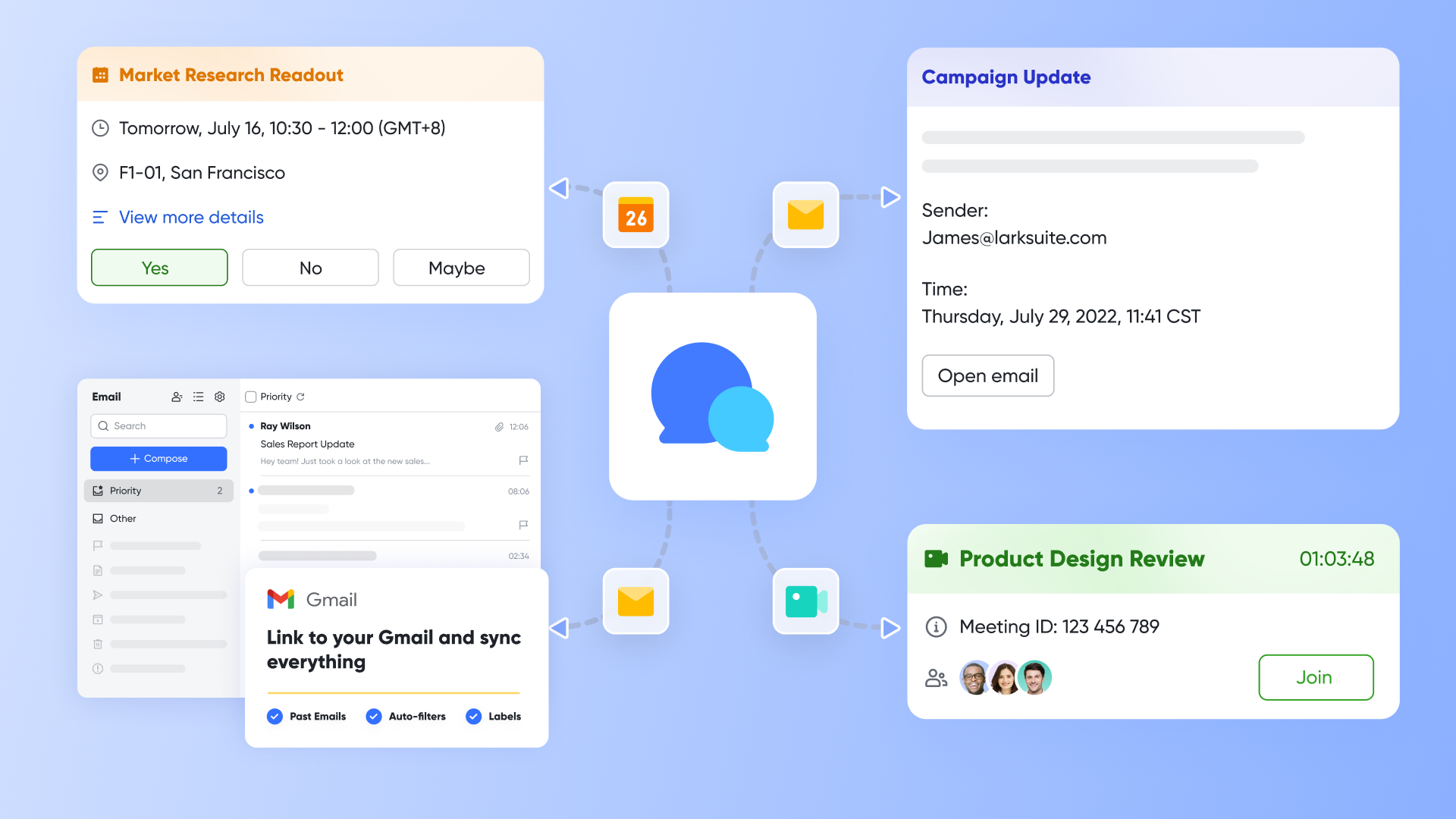
- Starter plan: Free forever plan that includes 11 powerful tools for up to 20 users. It also comes with 100GB of storage, 1000 automation runs, AI translations, and more.
- Pro plan: $12/user/month (billed annually) for up to 500 users. It includes everything in Starter plus group calling for up to 500 attendees, 15TB of storage, 50,000 automation runs, and more.
- Enterprise plan: Contact sales for custom pricing. Supports unlimited users and includes even more automation runs and advanced security, compliance, and management features.
How to create and manage a RACI matrix
Creating and managing a RACI matrix is essential for ensuring clarity, accountability, and smooth collaboration in any project. It helps teams understand who is responsible for executing tasks, who owns decisions, who provides input, and who needs updates. A well-maintained RACI matrix reduces confusion, prevents overlap, and improves project efficiency.
The following step-by-step guide outlines how to build and manage a RACI matrix effectively, ensuring all stakeholders are aligned and responsibilities are clear throughout the project lifecycle.
- List all project tasks and milestones: Start by identifying every task, activity, and key milestone in the project. This creates a complete picture of what needs to be done. Including all tasks ensures that no responsibility is overlooked or forgotten.
- Identify key stakeholders: Determine who will be involved in each task or decision. Include team members who will be Responsible, Accountable, Consulted, or Informed. Accurate stakeholder identification prevents gaps or overlaps in roles.
- Assign R/A/C/I for each task: Map each task to the appropriate roles using the RACI framework. Clearly assign who is Responsible, Accountable, Consulted, and Informed. This step ensures ownership is defined and everyone knows their responsibilities.
- Review with the team to confirm alignment: Share the draft RACI matrix with the team for feedback. Confirm that everyone understands their roles and agrees with the assignments. Team review ensures clarity and prevents misunderstandings later.
- Store and share your matrix in Lark Docs or Lark Wiki for easy reference: Centralize the RACI matrix in a shared workspace accessible to all stakeholders. Lark Docs or Wiki allows team members to view, comment, and refer to it anytime. This ensures ongoing transparency and easy reference.
- Keep updating as project dynamics shift: Regularly revise the RACI matrix as tasks, responsibilities, or team members change. Updating ensures the chart remains accurate and actionable. Dynamic maintenance keeps accountability clear throughout the project.
Conclusion
RACI matrices are a powerful tool for creating clarity, structure, and accountability in any project. By defining who is Responsible, Accountable, Consulted, and Informed for each task, teams can prevent confusion, reduce overlap, and ensure smoother execution across departments. Integrating this framework with Lark further enhances its effectiveness, providing real-time visibility, centralized documentation, task tracking, and seamless communication.
Teams can easily visualize responsibilities, coordinate deadlines, and keep stakeholders informed, making the RACI matrix a living, actionable tool rather than a static chart. For any upcoming project—whether it's a product launch, marketing campaign, or internal initiative—mapping your RACI using Lark's features can significantly improve collaboration, accountability, and overall project success.
FAQs
Can one person be both Responsible and Accountable?
Lark allows flexibility in assigning roles, so one person can be both Responsible and Accountable for a task when appropriate. This usually happens in smaller teams or when the task is singular and requires direct oversight. However, it's best to limit this to avoid overloading one individual. Clear documentation in Lark ensures responsibilities are tracked and visible to the entire team.
How frequently should the RACI matrix be updated?
A RACI matrix should be updated whenever project tasks, team members, or responsibilities change. Regular reviews—such as at major milestones or during weekly syncs—help keep the matrix accurate. This ensures clarity and prevents confusion as project dynamics evolve.
What's the difference between "Consulted" and "Informed"?
"Consulted" refers to team members whose input or advice is actively sought before completing a task. "Informed" refers to those who need updates about progress or decisions but are not directly involved. Maintaining this distinction ensures communication is efficient and roles are respected.
What are some RACI matrix alternatives?
Alternatives include ARCI (adds a "Support" role), DACI (Driver, Approver, Contributor, Informed), and RAPID (Recommend, Agree, Perform, Input, Decide). Each framework offers a slightly different approach to defining roles and accountability. Teams can choose based on project complexity and collaboration style.
How can Lark help implement a RACI matrix?
Lark centralizes task assignment, role visualization, and communication, making it easy to create, share, and maintain a RACI matrix. Teams can track progress, consult stakeholders, and update responsibilities in real time. This ensures accountability is visible and collaboration remains seamless throughout the project.
Related reading
Table of contents
Start using Lark today

Manage all your work in one place
Boost team efficiency by 10x
Save up to 70% on software costs
Table of contents
Start using Lark today
Manage all your work in one place
Boost team efficiency by 10x
Save up to 70% on software costs
Keep reading







2026 Lark Technologies Pte. Ltd.
Headquartered in Singapore with offices worldwide.






Explore: