














SaaS Customer Success Strategies: Metrics, Insights, and Best Practices

Ryan Tanner
Product Marketing Specialist
Sep 18, 2026
Ryan Tanner
Sep 18, 2026

14 min read


In today's competitive SaaS landscape, customer success has become a critical growth driver—not just a reactive support function. It focuses on helping customers achieve their desired outcomes and maximizing the value they get from your product. A SaaS customer success manager oversees onboarding, engagement, and renewals, ensuring customers not only use the product but succeed with it over time.
In this guide, we'll explore effective SaaS customer success strategies, key metrics to track, and best practices, highlighting how Lark can empower teams with real-time insights, streamlined workflows, and tools to drive adoption, retention, and long-term loyalty.

What is SaaS customer success?
Definition of customer success in SaaS
In the SaaS context, customer success is a proactive business function dedicated to ensuring customers achieve their desired outcomes through your product. Unlike traditional support, it's focused on delivering measurable value from day one, helping customers adopt features effectively, and driving long-term satisfaction and retention.
Customer support vs. customer success
While customer support is reactive—resolving issues as they arise—customer success is proactive. It anticipates challenges, monitors engagement, and guides users toward achieving meaningful results. This approach ensures that customers not only use the product but also derive tangible benefits over time.
Why proactive customer success drives retention and revenue
Proactive customer success reduces churn, strengthens loyalty, and increases upsell opportunities. By identifying risks early and supporting customers through onboarding, engagement, and renewal, SaaS companies can maximize retention and revenue. Platforms like Lark provide real-time dashboards, task automation, and communication tools that enable teams to monitor customer health, act quickly on insights, and drive measurable outcomes.

Image source: unsplash.com
Key metrics to track SaaS customer success
Tracking the right metrics is essential for effective SaaS customer success. They help teams identify risks, measure engagement, and make data-driven decisions to improve retention and growth.
- Customer churn rate: Customer churn rate measures the percentage of customers who stop using your product during a specific period. High churn signals dissatisfaction or low adoption, making it a critical metric for retention. Monitoring churn helps teams take proactive measures to reduce cancellations and improve customer outcomes.
- Net promoter score (NPS): NPS gauges customer loyalty by asking how likely users are to recommend your product. It provides insights into satisfaction levels and identifies promoters and detractors. Regular NPS tracking helps SaaS teams refine engagement strategies and enhance customer experience.
- Customer lifetime value (CLV): CLV calculates the total revenue a customer is expected to generate over their relationship with your business. Higher CLV reflects stronger adoption and long-term engagement. Understanding CLV allows teams to prioritize high-value accounts and optimize success strategies.
- Product usage metrics: Tracking logins, feature adoption, and session frequency reveals how actively customers are using the product. Low engagement may indicate onboarding gaps or unmet needs. Monitoring usage patterns helps teams intervene early to increase product adoption.
- Onboarding success rate: This metric measures how effectively new customers reach their first value milestone. A strong onboarding process reduces early churn and sets the foundation for long-term satisfaction. Tracking completion and feedback ensures continual improvement of onboarding programs.
How Lark can help
Lark Base dashboards consolidate all these metrics in real time, giving teams a unified view of customer health. From churn trends to NPS and product adoption, Lark enables proactive decision-making, automated tracking, and actionable insights to drive measurable SaaS customer success.
Practice with a reliable tool: Try Lark to achieve full success
Lark customer success tools help SaaS teams streamline workflows, track engagement, and drive measurable results from every account. By centralizing onboarding, customer interactions, and feedback, Lark provides full visibility into adoption and retention metrics.
Teams can act proactively on insights, reduce churn, and ensure customers achieve their desired outcomes. With all your customer success data and campaign performance on one platform, Lark empowers teams to make informed decisions, optimize strategies, and deliver consistent value throughout the customer journey.
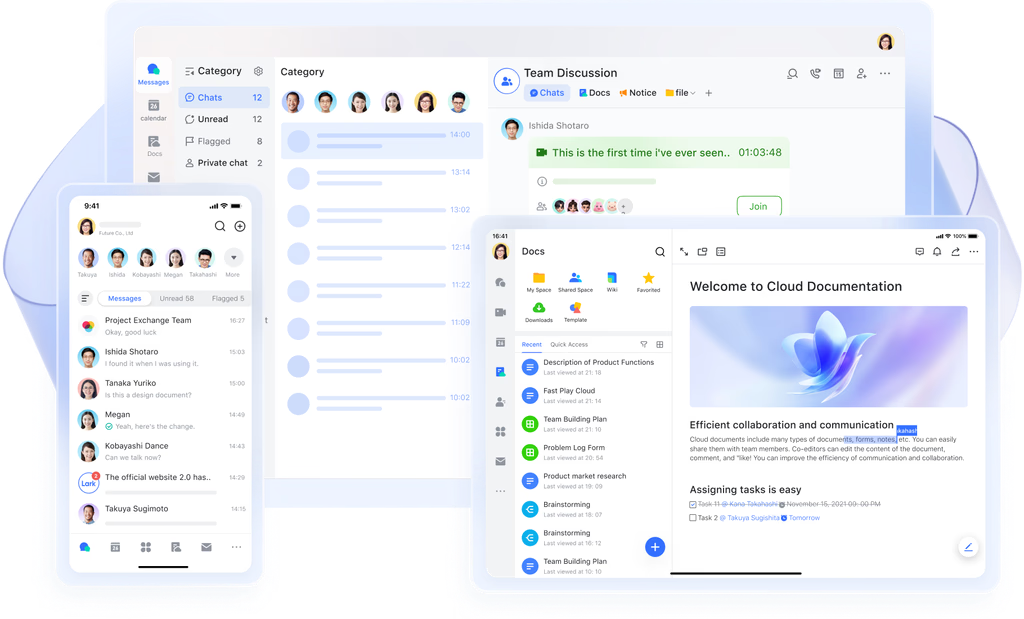
See every customer at a glance with Lark Base
Lark Base lets customer success teams track every client, subscription, and engagement detail in a live, collaborative database. Add onboarding progress, health scores, renewal dates, feature adoption metrics, and notes on interactions. Attach files, link related records, and create custom fields for segmentation.
Benefits: Eliminates scattered spreadsheets, centralizes customer data, and gives instant visibility into account health and engagement.
Real-world example: A SaaS team logs each client's onboarding steps, feature usage, and support interactions. Managers and success teams access updates in real time, reducing miscommunication and improving retention.
Additional features: Automated reminders, recurring check-ins, customer segmentation, adoption tracking, contract management, and dynamic dashboards.
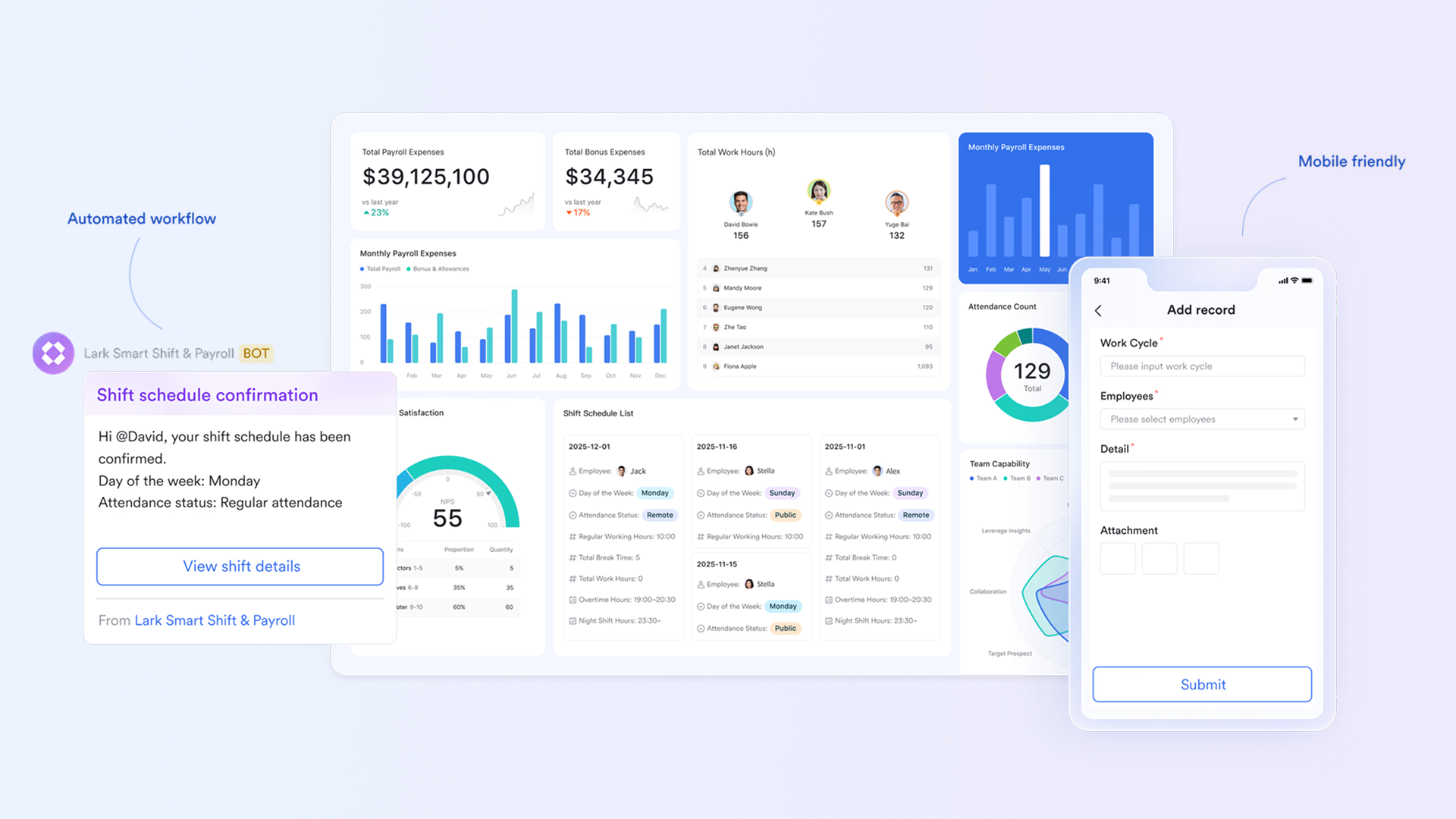
Turn plans into action and track success one task at a time with Lark Tasks
Lark Tasks allows teams to assign and track every step of the customer journey. Schedule onboarding tasks, follow-ups, renewal reminders, and personalized engagements with deadlines and priority levels. Recurring tasks reduce manual work while ensuring nothing is overlooked.
Benefits: Keeps teams accountable, ensures timely follow-ups, and streamlines customer success workflows.
Real-world example: A success manager assigns post-onboarding check-ins and training reminders. Team members update task completion, and managers monitor progress, improving adoption rates and engagement.
Additional features: Task linking to Lark Base records, automated notifications, priority tagging, progress tracking, and reporting dashboards.
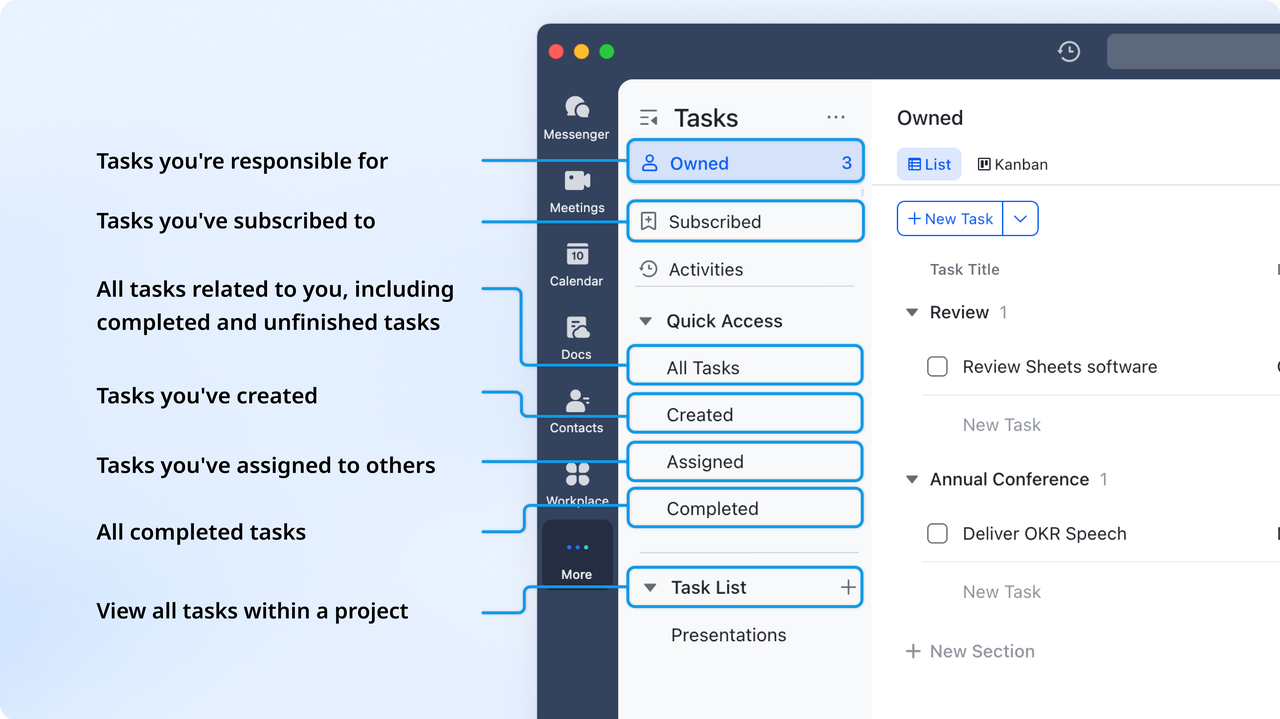
Uncover insights into every conversation with Lark Messenger
Lark Messenger centralizes communication between teams and customers. Threaded chats, file sharing, and tagging ensure conversations remain organized, while internal channels align customer success, product, and sales teams.
Benefits: Reduces lost information, improves response times, and enables proactive engagement.
Real-world example: A client shares feature feedback in Messenger. The success team logs the update in Lark Base, notifies product teams, and addresses concerns before they impact satisfaction.
Additional features: Chat search, client-specific channels, reactions, and linking messages to tasks or forms for contextual follow-ups.
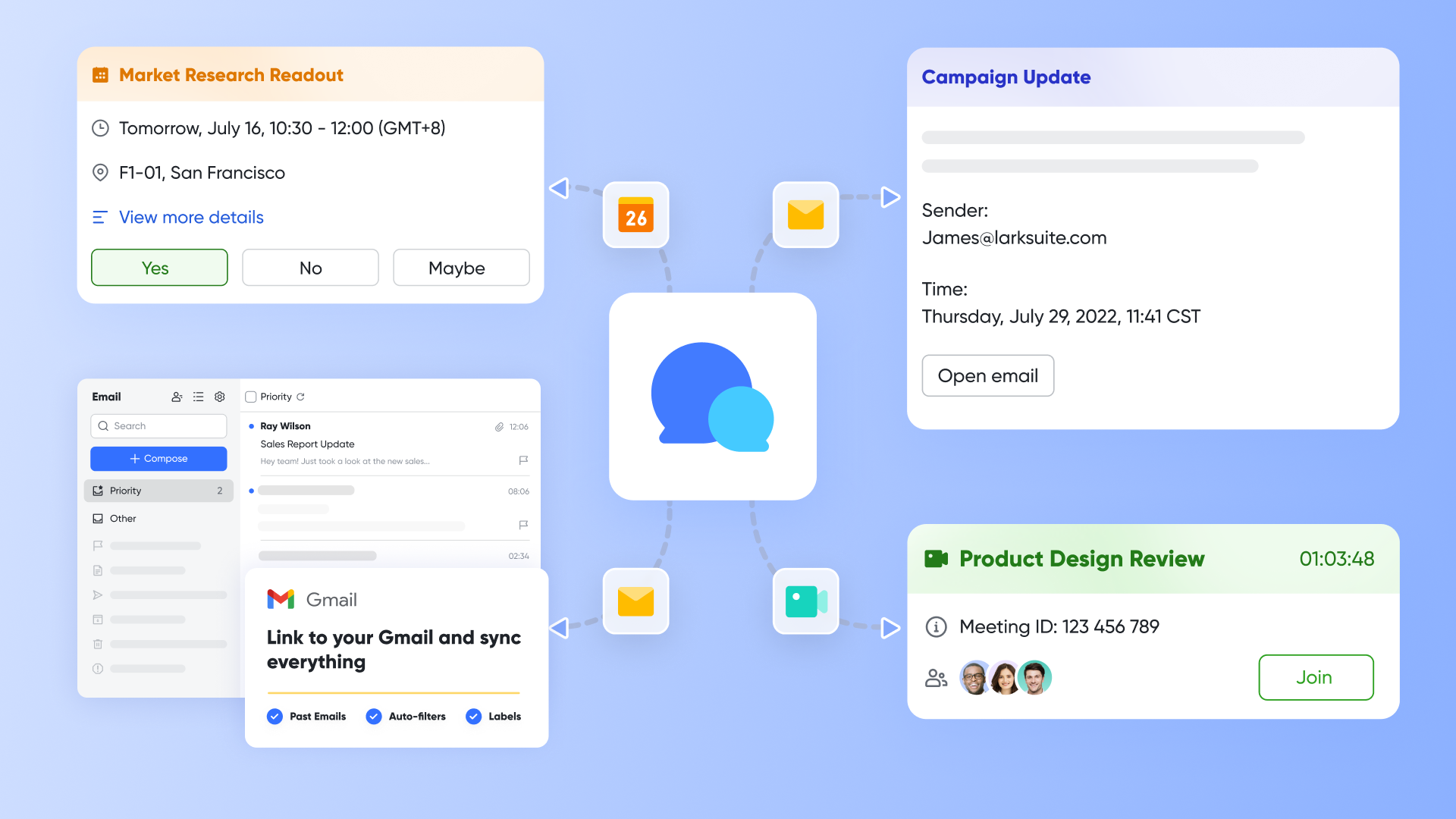
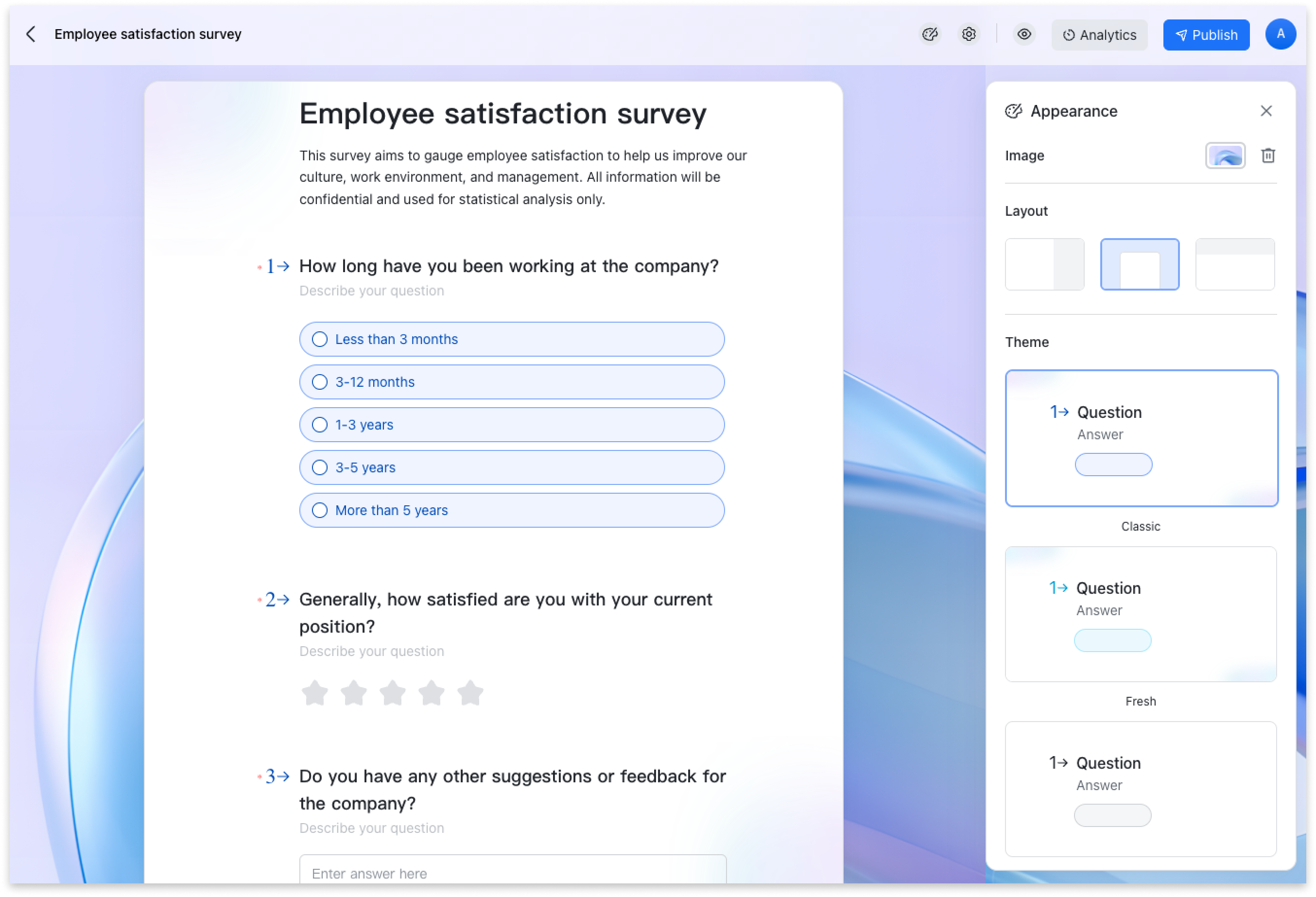
Capture customer feedback instantly and analyze it smartly with Lark Forms
Lark Forms helps teams collect NPS scores, onboarding feedback, and surveys with conditional logic and automated routing. Responses are compiled into sheets for immediate analysis.
Benefits: Ensures actionable insights, improves customer understanding, and supports data-driven decisions.
Real-world example: A SaaS team sends post-onboarding surveys. Results feed into Lark Sheets, highlighting satisfied clients for upsells and identifying at-risk accounts for proactive intervention.
Additional features: Templates, automated reminders, conditional logic, and direct linking to Lark Base.
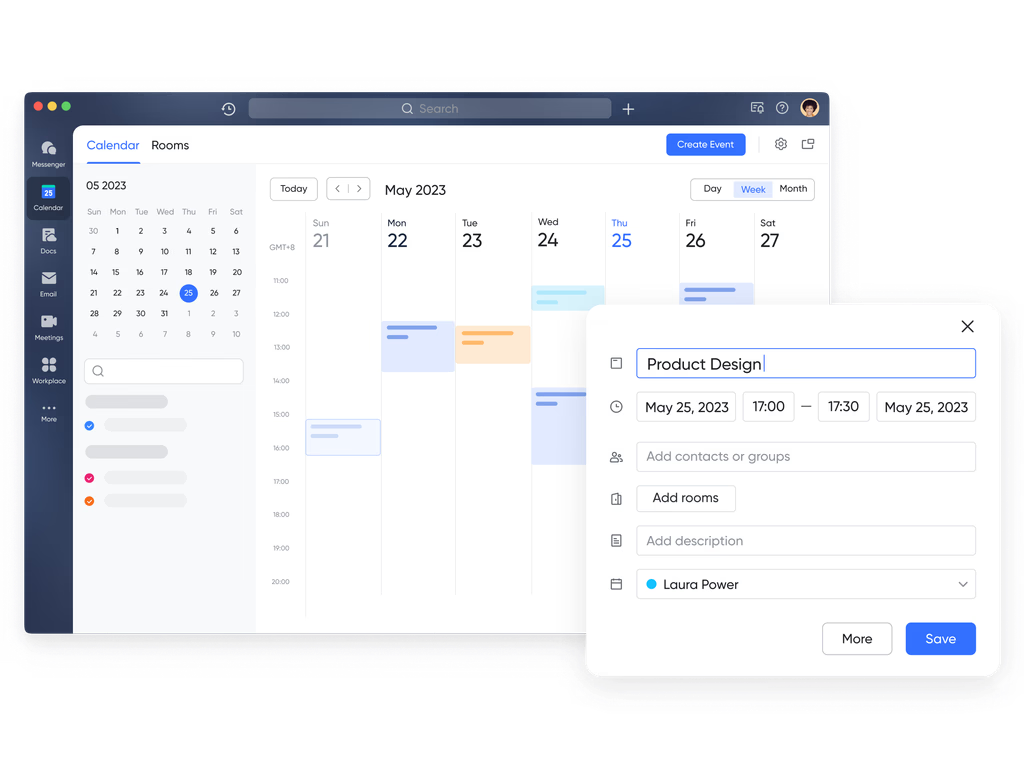
Schedule smarter and reach customers at the right time with Lark Calendar
Lark Calendar streamlines meetings, check-ins, onboarding sessions, and renewal discussions. Automatic time zone detection, availability sharing, and reminders minimize scheduling conflicts.
Benefits: Ensures timely customer engagement and improves overall communication efficiency.
Real-world example: Success managers schedule weekly client check-ins. Calendar reminders notify both the team and clients, while tasks are automatically created for follow-ups.
Additional features: Shared team calendars, recurring events, client-specific scheduling, and analytics to measure meeting effectiveness.
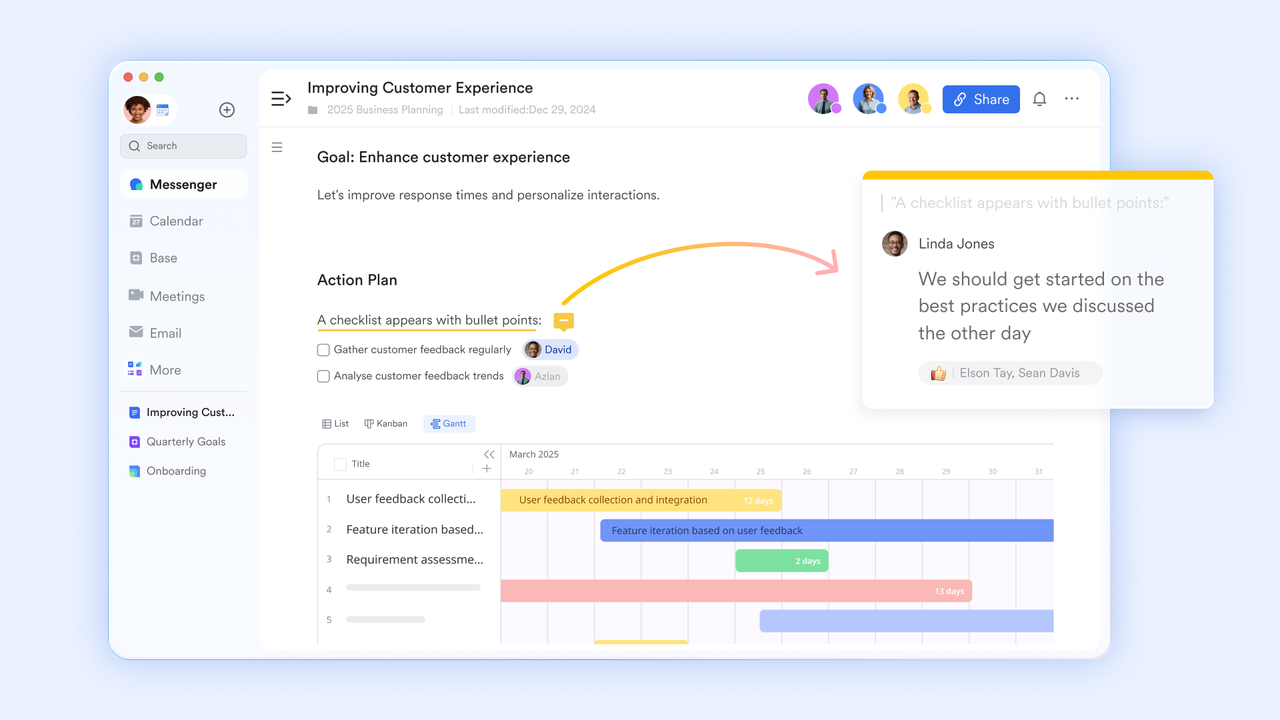
Turn docs into decisions and unlock hidden insights with Lark Docs
Lark Docs allows collaborative document creation, editing, and sharing. Create onboarding guides, training manuals, and customer success playbooks accessible to all relevant teams.
Benefits: Centralizes knowledge, improves team alignment, and maintains consistent communication with clients.
Real-world example: A success team develops onboarding documentation in Lark Docs. Updates are visible instantly to all teams, improving consistency and adoption rates.
Additional features: Commenting, version history, access controls, dynamic linking to Lark Base and tasks, and collaborative dashboards for decision-making.
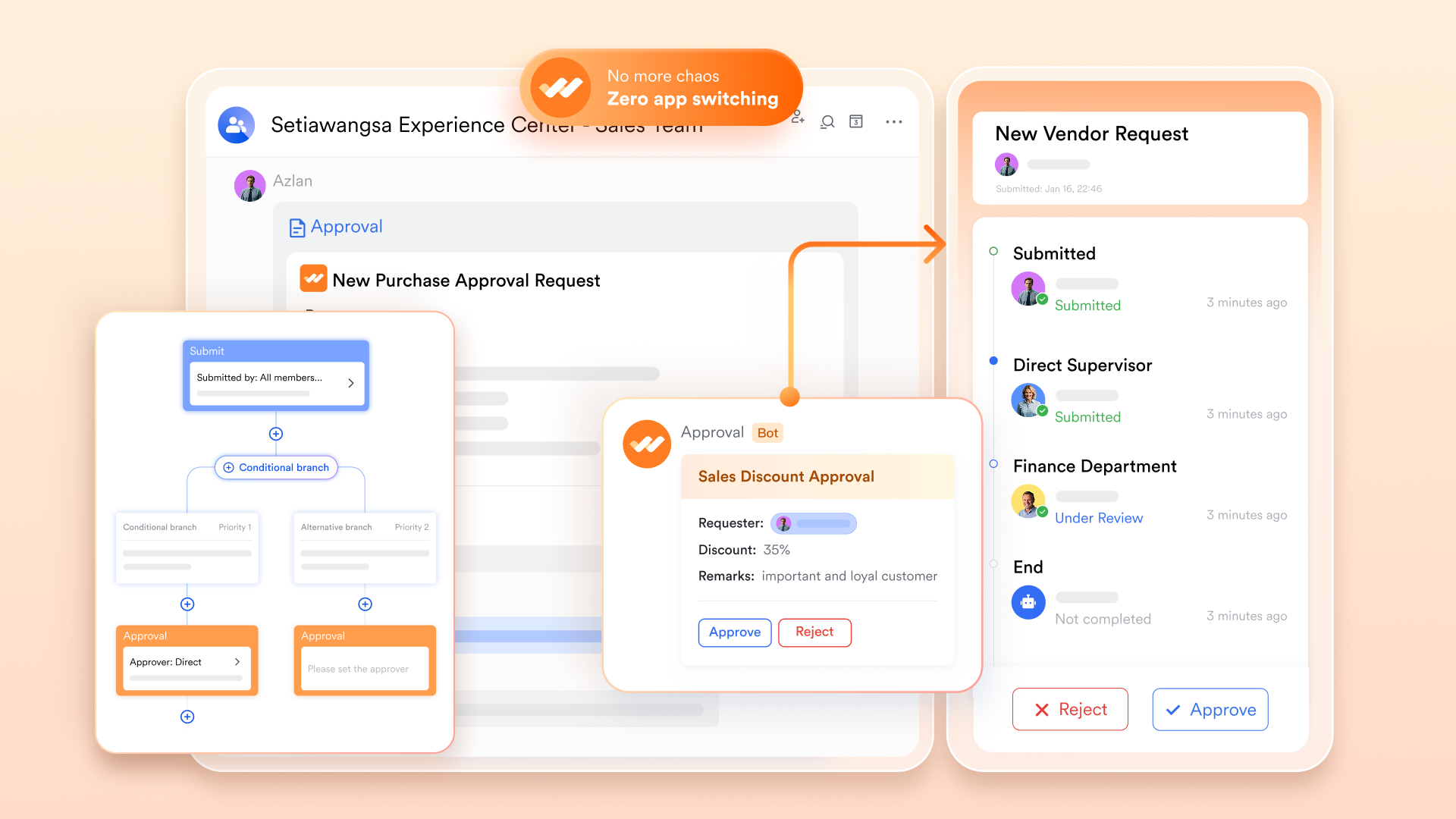
Faster decisions and better metrics with streamlined workflows with Lark Approval
With Lark Approval, you can easily set up an automated approval for renewals, discounts, escalations, and internal processes. Approval paths, notifications, and tracking reduce bottlenecks and improve accountability.
Benefits: Speeds up decisions, ensures transparency, and frees teams for high-value tasks.
Real-world example: A successful manager submits a discount approval for renewal. The request routes automatically to the manager, and the decision is logged into the client's record.
Additional features: Multi-step approvals, automated reminders, conditional paths, and tracking dashboards.
Visualize success and track every metric that matters with Lark Sheets
Lark Sheets offers real-time spreadsheets to track churn, adoption, NPS, CLV, and other KPIs. Teams can filter, sort, and visualize data for actionable insights.
Benefits: Enables data-driven decisions, simplifies reporting, and tracks performance across the customer journey.
Real-world example: A SaaS company monitors churn trends in Lark Sheets. Alerts flag inactive accounts for targeted outreach, reducing churn and improving adoption.
Additional features: Pivot tables, conditional formatting, charts, automated updates from Base and Forms, and customizable KPI tracking.
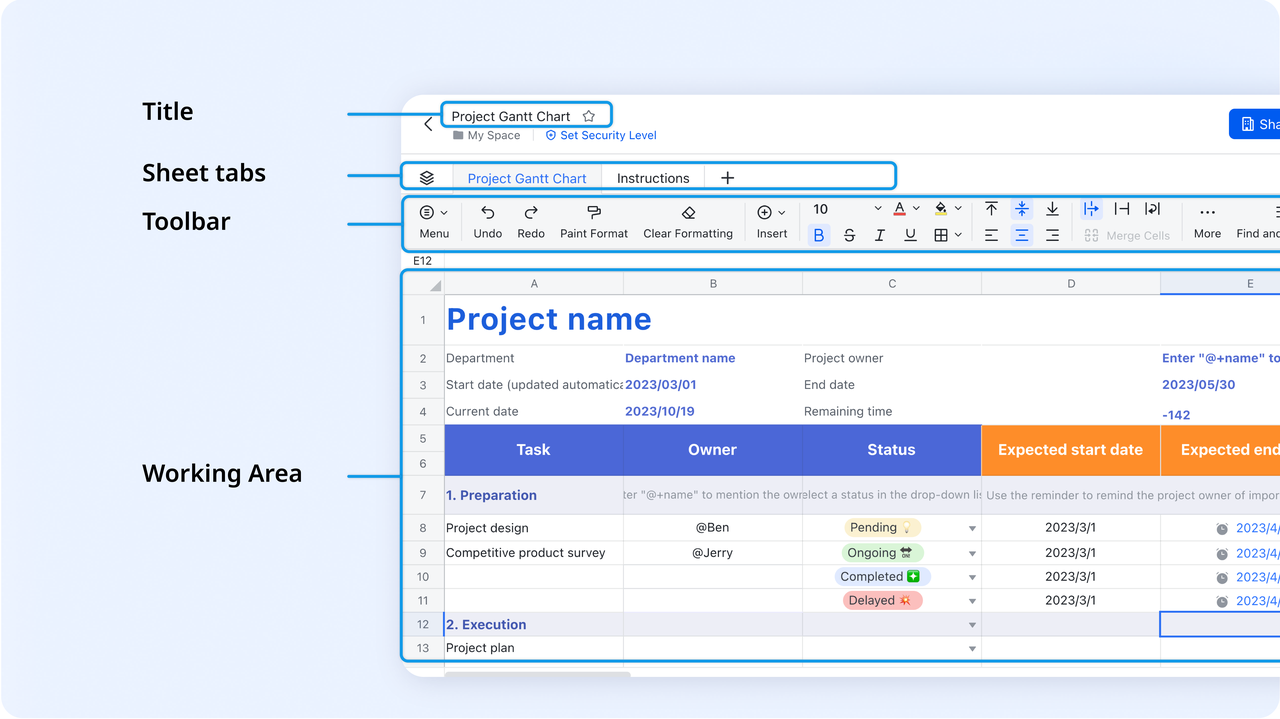
Align teams to customer success goals and drive results with Lark OKR
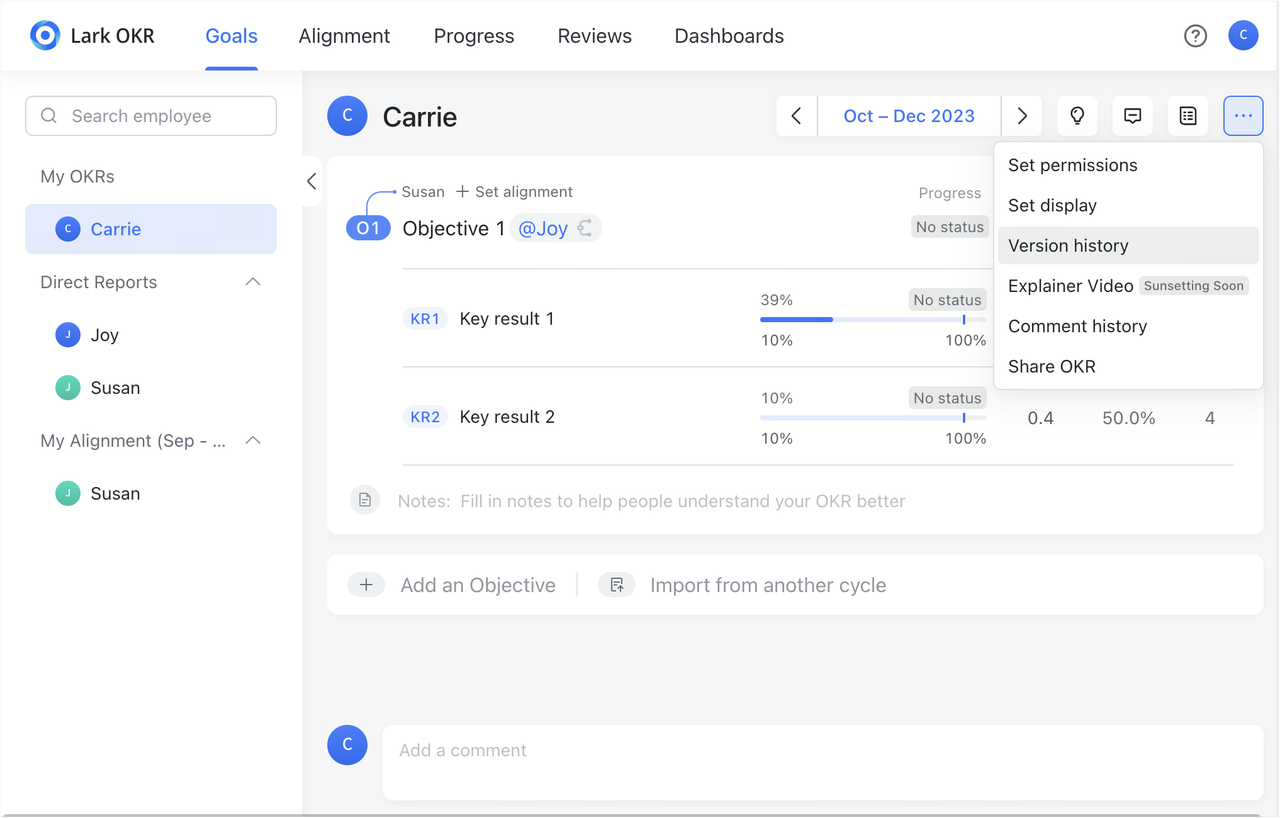
Lark OKR helps teams define, track, and align objectives and key results across success, product, and sales teams. Progress is visible in real time to keep everyone focused on high-impact initiatives.
Benefits: Improves goal alignment, accountability, and performance measurement across teams.
Real-world example: A SaaS company sets an OKR to reduce churn by 10% in a quarter. Lark OKR tracks progress, links tasks, and highlights teams contributing to the goal.
Additional features: Progress dashboards, goal linking, automated notifications, performance tracking.
- Starter plan: Free forever plan that includes 11 powerful tools for up to 20 users. It also comes with 100GB of storage, 1000 automation runs, AI translations, and more.
- Pro plan: $12/user/month (billed annually) for up to 500 users. It includes everything in Starter plus group calling for up to 500 attendees, 15TB of storage, 50,000 automation runs, and more.
- Enterprise plan: Contact sales for custom pricing. Supports unlimited users and includes even more automation runs and advanced security, compliance, and management features.
Customer success strategies for SaaS
Effective SaaS customer success strategies focus on proactive engagement, data-driven insights, and continuous improvement. Implementing the right approach ensures customers achieve their goals while driving retention and revenue growth.
- Onboarding and training programs: Structured onboarding and training help customers reach their first value milestone quickly. Clear guidance, tutorials, and interactive sessions improve adoption and reduce early churn. Using Lark tasks to assign follow-ups ensures every customer progresses smoothly.
- Personalized customer engagement: Tailoring communication through emails, check-ins, and usage tips strengthens the customer relationship. Personalized outreach based on engagement data increases satisfaction and loyalty. Lark Messenger allows teams to maintain consistent, proactive communication at scale.
- Proactive support and health scoring: Monitoring customer activity and engagement identifies potential risks before they escalate. Health scoring enables teams to focus on at-risk accounts and prevent churn. Lark dashboards provide real-time visibility into customer health for timely intervention.
- Feedback loops and continuous improvement: Regularly collecting surveys, NPS scores, and feature requests ensures customer needs are heard. Insights from feedback guide product enhancements and service improvements. With Lark forms and Lark sheets, teams can analyze responses and take immediate action.
How Lark enables these strategies
Lark centralizes communication, automates task assignments, and tracks customer health in real time. By combining messaging, dashboards, and forms, teams can implement proactive strategies efficiently and measure the impact of their customer success initiatives.
Best practices for SaaS customer success
Implementing best practices ensures your SaaS customer success efforts are consistent, measurable, and effective. These approaches help teams maintain high engagement, reduce churn, and maximize long-term value.
- Schedule regular check-ins: Consistent communication keeps customers engaged and allows teams to address concerns early. Check-ins help uncover adoption gaps and provide opportunities for guidance. Lark calendar and messenger make scheduling and managing these sessions seamless.
- Make data-driven decisions: Leverage metrics such as churn rate, NPS, and product usage to guide strategy. Data-driven insights help prioritize actions and optimize customer engagement. Lark sheets and dashboards provide real-time visibility into key metrics for informed decisions.
- Align product and customer success teams: Collaboration between product and success teams ensures customer feedback informs product development. Shared insights improve feature adoption and overall satisfaction. Lark Docs and Messenger facilitate cross-team communication and documentation.
- Continuously measure and iterate: Regularly review success strategies and refine approaches based on outcomes. Iteration ensures processes remain relevant and effective. Lark dashboards and tasks enable tracking progress, adjusting plans, and documenting improvements.
Conclusion
Lark empowers SaaS teams to manage every aspect of customer success in one unified platform. From onboarding to engagement, feedback collection, and health tracking, Lark provides real-time insights and automation to drive measurable results.
Effective SaaS customer success requires a proactive, data-driven approach that focuses on helping customers achieve their desired outcomes. By implementing structured onboarding, personalized engagement, proactive support, and continuous improvement, teams can reduce churn, increase adoption, and strengthen long-term loyalty. Investing in these strategies with the right tools ensures sustainable growth and maximizes customer lifetime value.
FAQs
How can SaaS companies predict customer churn before it happens?
By analyzing usage patterns, engagement metrics, and support interactions, SaaS teams can identify warning signs of churn. Lark Sheets dashboards combined with Lark Base tracking can highlight inactive accounts or declining product adoption to take proactive measures.
Can Lark help teams collaborate across multiple departments for customer success?
Yes. Lark Messenger and Meetings allow seamless communication between customer success, sales, product, and support teams. This ensures everyone is aligned on account of health, customer feedback, and action plans.
How do you measure the ROI of customer success initiatives?
ROI can be measured by tracking metrics like churn reduction, increased customer lifetime value, upsell revenue, and NPS improvements. Lark Sheets and Dashboards allow teams to visualize these metrics in real-time for accurate ROI analysis.
What role does automation play in improving SaaS customer success?
Automation streamlines repetitive tasks like onboarding reminders, follow-ups, and feedback collection. Using Lark Tasks, Forms, and Approvals, teams can automate workflows while freeing up time to focus on high-impact activities like strategy and relationship building.
How can SaaS companies use Lark to improve onboarding for new customers?
Lark Base tracks onboarding progress, Lark Tasks assigns follow-up actions automatically, and Forms collect feedback on training effectiveness. By analyzing this data in Lark Sheets, teams can continuously refine onboarding processes to improve adoption and reduce churn.
Related reading
Table of contents
Start using Lark today

Manage all your work in one place
Boost team efficiency by 10x
Save up to 70% on software costs
Table of contents
Start using Lark today
Manage all your work in one place
Boost team efficiency by 10x
Save up to 70% on software costs
Keep reading









2026 Lark Technologies Pte. Ltd.
Headquartered in Singapore with offices worldwide.






Explore: