














Sales Velocity: Definition, Formula, and Strategies to Drive Faster Growth

Ryan Tanner
Product Marketing Specialist
Sep 18, 2026
Ryan Tanner
Sep 18, 2026

14 min read


Sales velocity is one of the most powerful metrics for understanding the pace at which revenue flows through your pipeline. While many organizations focus on closing more deals, the real driver of predictable and scalable revenue is how quickly your sales pipeline moves—not just how full it is. Whether you're operating a high velocity sales model or managing longer enterprise cycles, improving sales velocity allows teams to shorten deal timelines, enhance forecasting accuracy, and identify bottlenecks across the sales process.
This guide breaks down the sales velocity formula, why it matters, key influencing factors, and how Lark helps teams accelerate revenue growth with connected workflows.

What is sales velocity?
Sales velocity is a metric that measures how quickly revenue moves through your sales pipeline. Instead of only tracking how many deals you close, sales velocity focuses on the speed and efficiency of your sales process. It takes into account four variables: the number of opportunities, average deal value, win rate, and the length of the sales cycle.
By using the sales velocity formula, teams can understand how long it takes to convert qualified leads into revenue and where bottlenecks may occur. Whether you're managing high velocity sales teams or traditional pipeline-driven models, improving sales velocity helps increase revenue without needing more leads or headcount. It is commonly used in CRM setups, including frameworks like salesforce high velocity sales, and applies to multiple industries—from SaaS to retail to velocity auto sales environments. Simply put, higher sales velocity means faster deal movement, better forecasting, and more predictable growth.
The sales velocity formula
The sales velocity formula shows how quickly your team converts opportunities into revenue. It brings together four core variables—number of opportunities, average deal value, win rate, and sales cycle length. By calculating them together, you get a clear picture of how efficiently your pipeline is moving. This helps teams identify where deals slow down and what changes can accelerate growth.

Image source: wiki.com
- Number of opportunities: This refers to the total number of qualified deals currently in your sales pipeline. More opportunities mean more chances to generate revenue, provided they are properly nurtured. Tracking this helps teams understand their potential pipeline velocity and identify gaps in lead generation or qualification.
- Average deal value: This is the typical revenue that a deal contributes once closed. Higher-value deals naturally boost overall sales velocity by increasing revenue per transaction. Understanding average deal size helps sales teams prioritize high-impact opportunities and optimize their efforts for maximum returns.
- Win rate: Win rate measures the percentage of deals successfully closed out of the total opportunities pursued. A higher win rate indicates effective sales strategies and strong lead targeting. Monitoring activities on this metric allows teams to identify strengths, weaknesses, and areas for improvement in closing deals.
- Sales cycle length: This represents the average time it takes to close a deal from initial contact to final agreement. Shorter sales cycles accelerate revenue recognition and improve overall sales velocity. Analyzing cycle length helps teams identify bottlenecks and streamline the sales process for faster conversions.
Why sales velocity matters
Sales velocity is a critical metric for businesses aiming to grow revenue efficiently. By measuring how quickly deals move through the pipeline, teams can make smarter decisions and optimize resources. High-velocity sales strategies allow companies to predict revenue, prioritize opportunities, and deliver customer satisfaction. Understanding why sales velocity matters helps organizations focus on speed, efficiency, and sustainable growth.
- Predictable revenue forecasting: Tracking sales velocity provides a clearer view of expected cash flow and revenue growth. With this data, businesses can make informed financial decisions and allocate resources effectively. Accurate forecasting reduces uncertainty and helps teams plan with confidence.
- Pipeline efficiency: Sales velocity highlights inefficiencies in the sales process or underperforming team members. By identifying bottlenecks, businesses can streamline workflows and ensure deals move faster. Optimized pipelines lead to higher conversion rates and reduced delays.
- Strategic prioritization: High-velocity sales data allows teams to focus on deals that offer the greatest value and fastest turnaround. Prioritizing the right opportunities ensures resources are used effectively. This approach maximizes revenue while minimizing wasted effort.
- Customer experience improvement: Faster deal cycles often translate to smoother and more responsive client interactions. When prospects receive timely communication and quick resolutions, satisfaction increases. A positive experience strengthens relationships and encourages repeat business.
- Cross-department alignment: Sales velocity fosters collaboration between marketing, sales, and operations teams. Coordinated efforts ensure quality leads are generated, nurtured, and closed efficiently. This alignment reduces friction and accelerates revenue growth across the organization.
Key factors influencing sales velocity
Sales velocity is shaped by several internal and external factors that determine how quickly deals move through the pipeline. Understanding these key drivers allows businesses to optimize their sales strategy for faster growth. By focusing on quality leads, streamlined processes, and effective tools, teams can accelerate conversions. Identifying and enhancing these factors ensures sustained high-velocity sales performance.
- Lead quality: High-quality leads are more likely to convert, moving faster through the sales funnel. Focusing on prospects with genuine interest and purchasing intent reduces wasted effort. Strong lead qualification directly improves sales velocity by increasing the likelihood of closing deals quickly.
- Sales process efficiency: Simplified and well-defined workflows help eliminate bottlenecks in the sales cycle. When teams know the steps and have clear guidelines, deals progress faster. Efficient processes reduce delays, enabling faster decision-making and smoother deal closures.
- Sales enablement tools: Tools like CRM systems, automation software, and training resources empower sales teams to work smarter. These tools provide insights, streamline repetitive tasks, and enhance productivity. Leveraging enablement technology accelerates performance and contributes to higher sales velocity.
- Deal size optimization: Identifying upsell or cross-sell opportunities within the same cycle increases revenue per deal. Proper deal structuring ensures teams prioritize high-value opportunities without extending the sales cycle. Optimized deal sizes directly enhance overall sales velocity.
- Follow-up timing: Quick and consistent communication is critical for maintaining momentum in the sales process. Timely follow-ups reduce the risk of deals stalling and keep prospects engaged. Properly timed interactions accelerate decision-making and improve closure rates.
Common challenges in maintaining sales velocity
Even with the best strategies, maintaining high sales velocity can be challenging for many teams. Bottlenecks, inefficiencies, and misaligned processes often slow deal progression. Recognizing the common obstacles helps organizations address gaps and sustain growth. Overcoming these challenges ensures faster conversions and more predictable revenue.
- Disconnected data between CRM and communication tools: When sales data is scattered across multiple platforms, teams lose visibility into the pipeline. Misalignment between CRM systems and communication tools can lead to missed follow-ups or duplicate efforts. Centralizing data ensures that every team member has access to accurate, real-time information, improving sales velocity.
- Manual deal updates slowing reporting: Updating deals manually consumes valuable time and increases the likelihood of errors. Slow reporting delays decision-making and obscures the true state of the pipeline. Automating deal tracking helps maintain accurate, up-to-date insights that accelerate the sales process.
- Poor visibility into sales performance metrics: Without clear metrics, teams struggle to identify bottlenecks or areas for improvement. Lack of transparency can result in underperforming reps or delayed decisions. Real-time visibility into performance metrics allows teams to act quickly and keep the pipeline moving efficiently.
- Inconsistent lead qualification: Not all leads are equally valuable, and inconsistent qualification can waste time on low-potential prospects. Poor lead scoring slows down deal progression and lowers overall sales velocity. Standardized qualification processes help focus efforts on high-converting opportunities.
- Limited automation across deal stages: Manual tasks across multiple stages of the sales process create delays and reduce efficiency. Without automation, follow-ups, notifications, and status updates may be inconsistent. Implementing automated workflows ensures smooth handoffs and faster deal closures.
To overcome these challenges, businesses need a connected system that brings together sales data, automation, and collaboration in one place—and that's where Lark helps teams move deals faster.
Lark: Unified workspace for tracking and accelerating sales velocity
Lark provides a connected workspace where teams can monitor every stage of their sales cycle, automate repetitive tasks, and analyze deal performance in real time. Using Lark Base and Lark Sheets, sales teams can streamline data management, collaboration, and reporting—all of which directly contribute to improving sales velocity by reducing bottlenecks and decision lag.
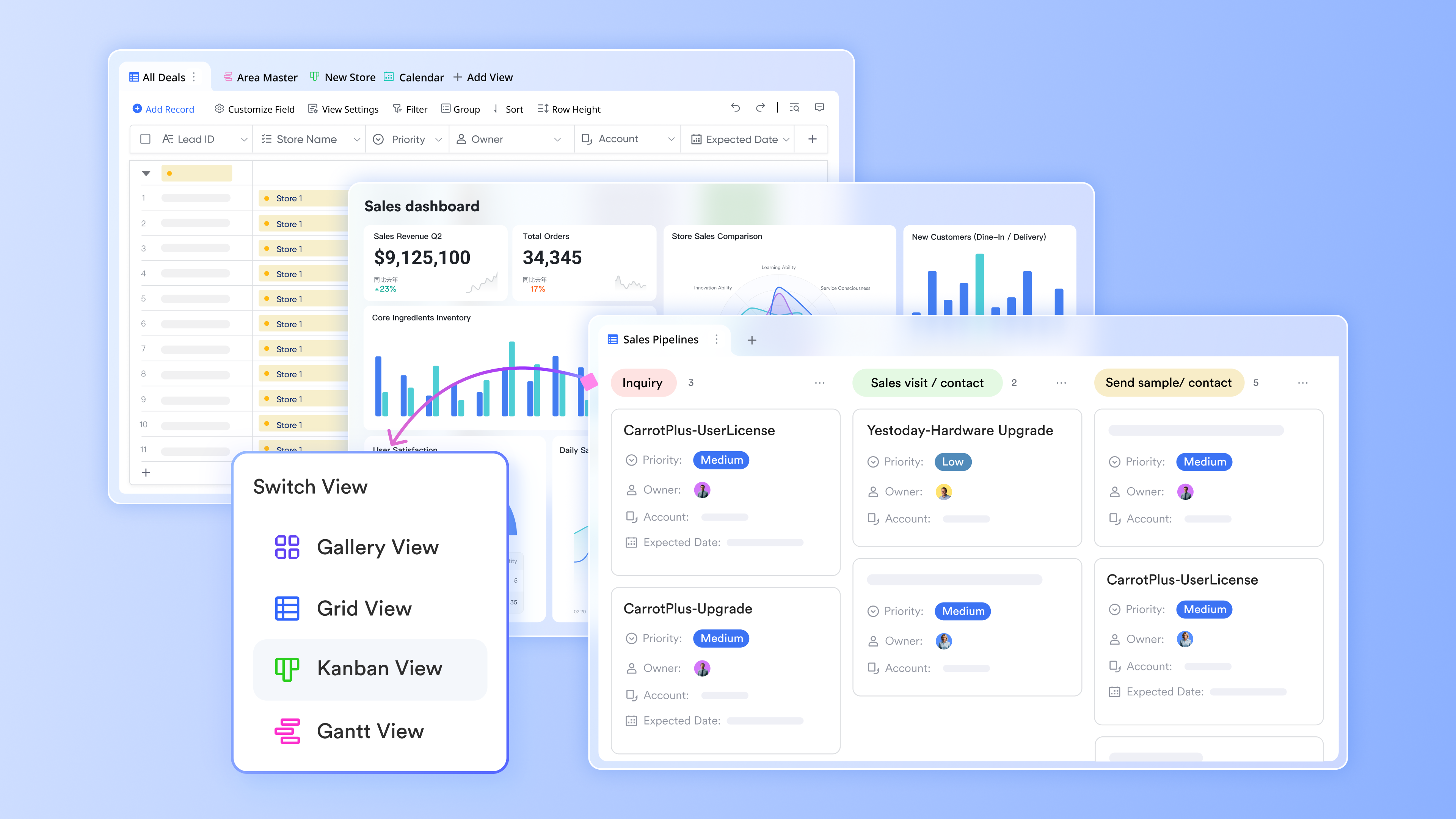
Track every customer interaction with Lark Base
Lark Base acts as a live sales pipeline that allows teams to organize and visualize customer journeys from the first contact to contract completion. Each customer or deal is represented as a record with dedicated columns for key details such as status, deal value, assigned representative, and expected close date.Teams can view this information in Grid or Kanban board—the Grid view provides structured visibility for detailed data entry and filtering, while the Kanban view gives a stage-by-stage visual of progress, such as Contacted → In Progress → Negotiation → Contract Review → Closed Won.
This level of organization eliminates the confusion of scattered spreadsheets or disconnected CRMs, allowing every team member to see exactly where each opportunity stands. As a result, sales teams can move faster through the funnel, keeping deals active and predictable—a key driver of higher sales velocity.
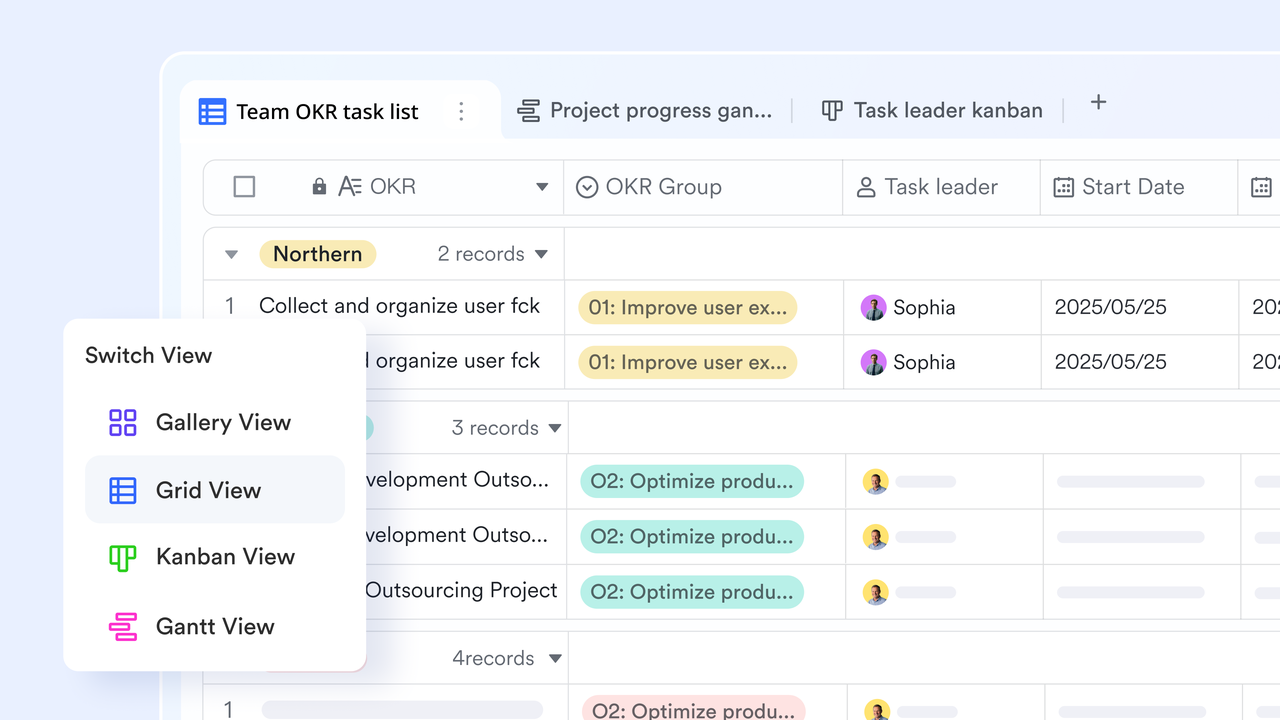
Use automation to streamline updates and collaboration
Speed is essential in high-performing sales teams, and Lark Base's automations is built to keep communication instant and consistent. Teams can create rules that automatically trigger notifications when a customer's status changes—for instance, when a deal moves from Negotiation to Contract Review, the assigned account manager and finance team receive instant alerts in Lark Messenger.
These automated notifications ensure that follow-ups happen promptly and approvals or next steps are not delayed. Automation can also handle repetitive actions like assigning leads, updating follow-up dates, or flagging inactive deals. This reduces manual workload, minimizes human error, and maintains a faster deal momentum across departments. In practice, this means no deal stalls because of oversight—every stakeholder knows exactly when to act, which directly accelerates the overall sales cycle.
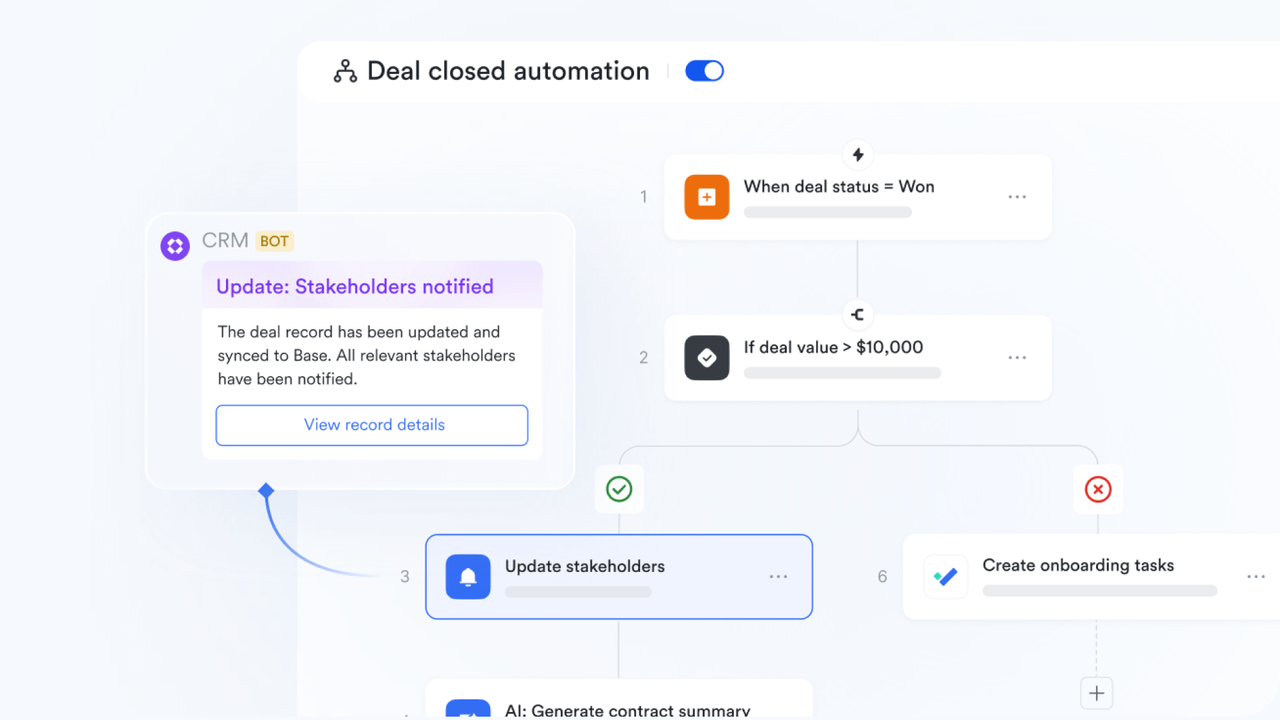
Visualize performance with interactive dashboards
Lark enables teams to build custom dashboards within Base to analyze performance and monitor sales velocity metrics in real time. Managers can create visual summaries showing deals closed per month, average sales cycle duration, revenue by region, and win rate percentage.
For frontline sales reps, dashboards can display personalized progress charts showing individual achievements against targets. This transparency helps each salesperson understand how their actions impact team-wide performance and where improvements are needed.
Dashboards can also include ranking blocks, metric counters, and cumulative growth charts, turning raw data into actionable insights. By centralizing reporting inside the same workspace, managers no longer rely on manual exports or multiple systems to review performance—they can make faster, data-backed decisions that keep pipelines healthy and efficient.
Enhance forecasting and planning with Lark Sheets
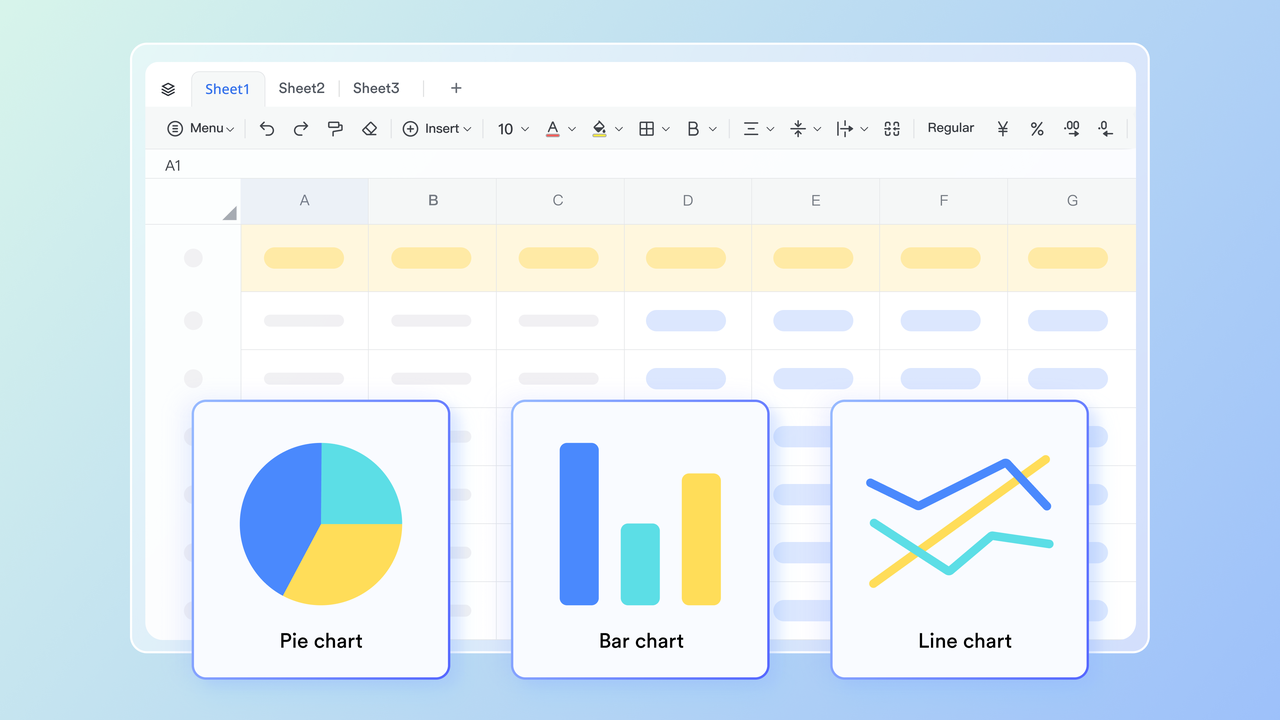
For advanced analysis, Lark Sheets complements Base by providing dynamic spreadsheet functions that sync directly with your deal data. Sales leaders can use formulas to calculate average deal sizes, conversion ratios, and projected revenue growth—all updated automatically as Base records change.
Sheets can also serve as a forecasting tool by combining historical data with live deal pipelines, helping managers estimate monthly or quarterly sales velocity more accurately. Unlike traditional spreadsheets, Lark Sheets supports real-time co-editing and permission control, so multiple team members can contribute to forecasting and planning simultaneously without version conflicts.
- Starter plan: Free forever plan that includes 11 powerful tools for up to 20 users. It also comes with 100GB of storage, 1000 automation runs, AI translations, and more.
- Pro plan: $12/user/month (billed annually) for up to 500 users. It includes everything in Starter plus group calling for up to 500 attendees, 15TB of storage, 50,000 automation runs, and more.
- Enterprise plan: Contact sales for custom pricing. Supports unlimited users and includes even more automation runs and advanced security, compliance, and management features.
Sales velocity templates to get started
Getting started with improving sales velocity is easier with ready-to-use templates. These tools help teams organize CRM and pipelines, track deals, and measure key metrics efficiently. Templates provide a structured framework for consistent follow-ups, forecasting, and reporting. By leveraging them, sales teams can accelerate performance and maintain high-velocity sales practices from day one.
Sales tracker
The sales tracker template helps teams monitor every opportunity in one organized workspace. It allows tracking of deal stages, values, assigned reps, and expected close dates. With real-time updates and visual views like Grid or Kanban board, teams can spot bottlenecks quickly. This template streamlines pipeline management, keeping deals on track and accelerating sales velocity.
Sales management system
The sales management system template provides a comprehensive framework for managing your entire sales pipeline. It centralizes lead information, deal status, and team assignments in one place. With built-in tracking and reporting features, managers can monitor performance and forecast revenue effectively. This system ensures smoother workflows and business process, faster decision-making, and improved overall sales velocity.
Sales lead management
The sales lead management template helps teams capture, organize, and prioritize all leads efficiently. It tracks lead sources, qualification status, and follow-up activities in real time. With automated notifications and structured workflows, no opportunity falls through the cracks. This template ensures faster engagement, better conversion rates, and higher sales velocity.
Conclusion
Understanding and improving sales velocity is essential for businesses aiming to grow revenue efficiently and predictably. By tracking the number of opportunities, average deal value, win rate, and sales cycle length, teams gain insights that drive smarter decision-making and faster deal closures. Key factors like lead quality, process efficiency, and timely follow-ups further influence how quickly opportunities convert, while challenges such as disconnected data or limited automation can slow progress.
Implementing structured workflows, leveraging templates, and consistently measuring performance ensures sustained high-velocity sales. Lark provides a unified workspace where teams can track every stage of the sales pipeline, automate repetitive tasks, and visualize performance through interactive dashboards. By centralizing data, communication, and collaboration, Lark accelerates deal momentum, enhances forecasting, and empowers teams to close deals faster.
FAQs
What's a good sales velocity benchmark?
Lark helps teams understand that sales velocity benchmarks vary by industry, deal size, and sales cycle length. Tracking the number of opportunities, average deal value, win rate, and cycle duration provides a clear picture of performance. High-velocity sales teams typically close deals faster than the industry average while maintaining consistent revenue growth. Regularly measuring these metrics ensures teams stay on track and identify areas for improvement.
How often should sales velocity be measured?
Sales velocity should be measured regularly—ideally weekly or monthly—to capture trends and adjust strategies quickly. Frequent measurement helps teams identify bottlenecks, such as slow deal progression or low win rates. Continuous tracking enables data-driven decisions and faster response to market changes. This ensures sales performance remains agile and aligned with revenue goals.
How can automation improve sales velocity?
Automation reduces manual work, speeds up follow-ups, and ensures that deal updates happen in real time. Tasks like lead assignment, status notifications, and reporting can be automated, minimizing human error. Faster communication and consistent workflows help reps focus on closing deals, accelerating overall pipeline velocity.
Can Lark help track and optimize sales velocity across teams?
Lark provides a connected workspace where sales, marketing, and operations collaborate seamlessly. With Lark Base and Sheets, teams can monitor pipelines, analyze performance metrics, and forecast revenue. Centralized data, automation, and dashboards allow for real-time insights, ensuring opportunities move faster through the funnel.
Related reading
Table of contents
Start using Lark today

Manage all your work in one place
Boost team efficiency by 10x
Save up to 70% on software costs
Table of contents
Start using Lark today
Manage all your work in one place
Boost team efficiency by 10x
Save up to 70% on software costs
Keep reading









2026 Lark Technologies Pte. Ltd.
Headquartered in Singapore with offices worldwide.






Explore: