














Unlocking the Potential of Automation in IT: A Strategic Guide

Fecilia Clarke
Solutions Marketing Specialist
Sep 18, 2026
Fecilia Clarke
Sep 18, 2026

12 min read


Are you struggling to manage increasingly complex IT infrastructures effectively? In light of these pressing issues, automation in IT has become a crucial business strategy that extends far beyond mere technological implementation. As modern organizations confront these formidable challenges, automation technologies have emerged as a powerful solution, enabling businesses to achieve significant improvements in their operations.
This blog will be your comprehensive guide to understanding the transformative power of IT automation. We'll dive deep into the strategic landscape of technological innovation, exploring everything from cutting-edge automation technologies and implementation strategies to comparative analyses of top automation platforms. Prepare to unlock the full potential of your IT infrastructure and learn how intelligent automation tools like Lark can turn technological challenges into opportunities for unprecedented organizational growth and efficiency!

Understanding automation in IT
Defining IT automation
Automation in IT represents a sophisticated approach to managing technological ecosystems through intelligent, technology-driven solutions. At its core, automation involves leveraging multiple technologies to transform how organizations handle complex processes and essential tasks within their IT infrastructure.
Modern automation technologies go beyond simple task execution, creating intelligent automation frameworks that enable businesses to reimagine their operational strategies. By implementing automation tools, organizations can significantly reduce human intervention while enhancing overall system performance and reliability.
Core principles of effective IT automation
Robotic Process Automation (RPA) and Business Process Automation emphasize creating scalable, repeatable technological frameworks that:
- Standardize individual tasks: By creating uniform workflow templates, organizations can ensure consistent performance across different operational scenarios and teams. This approach minimizes variability and establishes clear, predictable execution standards for complex business processes.
- Implement consistent execution protocols: Developing standardized operational guidelines that automatically enforce best practices and compliance requirements across different technological systems and departmental boundaries. These protocols create a reliable framework for seamless task completion.
- Optimize resource allocation: Intelligently distribute computational and human resources based on real-time organizational needs, ensuring maximum efficiency and minimal waste. Advanced algorithms continuously analyze and reallocate resources to match dynamic business requirements.
- Enable strategic projects: Freeing organizational talent from repetitive manual tasks, allowing skilled professionals to focus on high-value innovation, strategic planning, and transformative business initiatives. Automation becomes a catalyst for meaningful technological and strategic advancement.
Key domains of IT automation
IT automation revolutionizes organizational capabilities by systematically addressing key technological domains, enabling unprecedented levels of efficiency, reliability, and strategic innovation.
Infrastructure management
Modern infrastructure automation transcends traditional management approaches, leveraging intelligent orchestration and predictive maintenance technologies. Organizations can now:
- Implement dynamic resource allocation
- Enable self-healing technological ecosystems
- Optimize computational infrastructure performance
- Reduce manual intervention through automated monitoring
Network configuration
Software-defined networking represents a paradigm shift in technological configuration, allowing organizations to automate complex networking operations and infrastructure management—an area increasingly covered in specialized training programs, such as a network automation course. Software-defined networking allows:
- Automated network topology optimization
- Real-time traffic management
- Predictive bandwidth allocation
Security and compliance
Automation transforms cybersecurity from reactive to proactive frameworks:
- Continuous vulnerability scanning
- Automated threat detection
- Intelligent access management
- Compliance workflow enforcement
Service desk and support
Intelligent automation revolutionizes customer and internal support:
- Predictive issue resolution
- Automated knowledge base generation
- Intelligent escalation mechanisms
Cloud resource management
Cloud automation enables unprecedented technological scalability:
- Multi-cloud orchestration
- Automated resource provisioning
- Cost optimization algorithms
- Intelligent workload distribution
These domains demonstrate how strategic automation transforms technological infrastructure from rigid, manual systems into adaptive, intelligent ecosystems that drive organizational innovation and efficiency.
Key benefits of IT automation
Operational efficiency gains
Automation platforms provide organizations with unprecedented capabilities to streamline technological operations. By automating repeatable tasks, businesses can:
- Accelerate deployment automation: Rapidly implement new technological solutions with minimal manual intervention. Reducing time-to-market for critical infrastructure updates.
- Reduce operational complexity: Simplify intricate workflow automation processes across multiple technological domains. Streamlining organizational technological ecosystems.
- Enhance service automation: Create intelligent, responsive automated systems that adapt to changing business requirements. Improving overall service delivery efficiency.
- Implement intelligent automation strategies: Develop sophisticated automation technologies that learn and optimize performance. Transforming operational capabilities dynamically.
Cost reduction strategies
Configuration management tools and automation software enable organizations to:
- Minimize manual labor expenses: Significantly reduce human resource costs associated with repetitive technological tasks. Redirecting workforce toward strategic initiatives.
- Optimize resource utilization: Intelligently allocate infrastructure components based on real-time organizational needs. Maximizing computational efficiency.
- Standardize infrastructure automation: Create consistent, reproducible technological management protocols. Ensuring uniform performance across systems.
- Reduce technological overhead: Eliminate unnecessary technological redundancies and inefficiencies. Streamlining organizational IT infrastructure.
Risk mitigation and compliance
Automated cybersecurity processes and machine learning algorithms help organizations:
- Implement proactive security measures: Continuously monitor and anticipate potential technological vulnerabilities. Preventing security breaches preemptively.
- Ensure consistent operating system migration: Standardize complex system transition processes. Minimizing potential disruptions during upgrades. Solutions like VeePN help maintain secure remote connections during these transitions, ensuring encrypted access across distributed environments.
- Monitor complex tasks: Provide comprehensive, real-time surveillance of critical technological processes. Detecting anomalies instantly.
- Maintain regulatory compliance: Automatically track and document adherence to complex regulatory requirements. Ensuring consistent governance standards.
Top 8 automation tools in IT at a glance
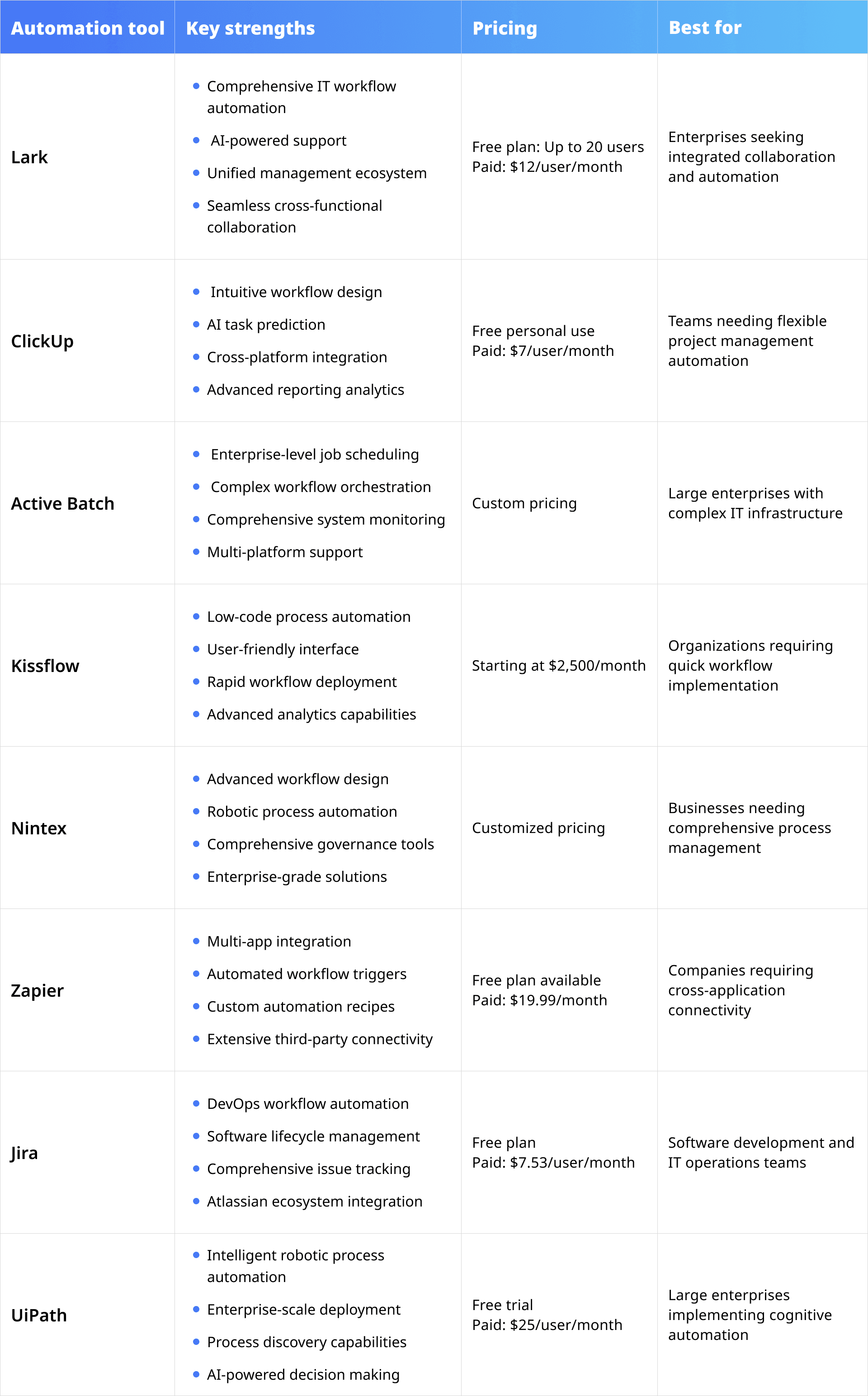
Automation tool recommendations in IT
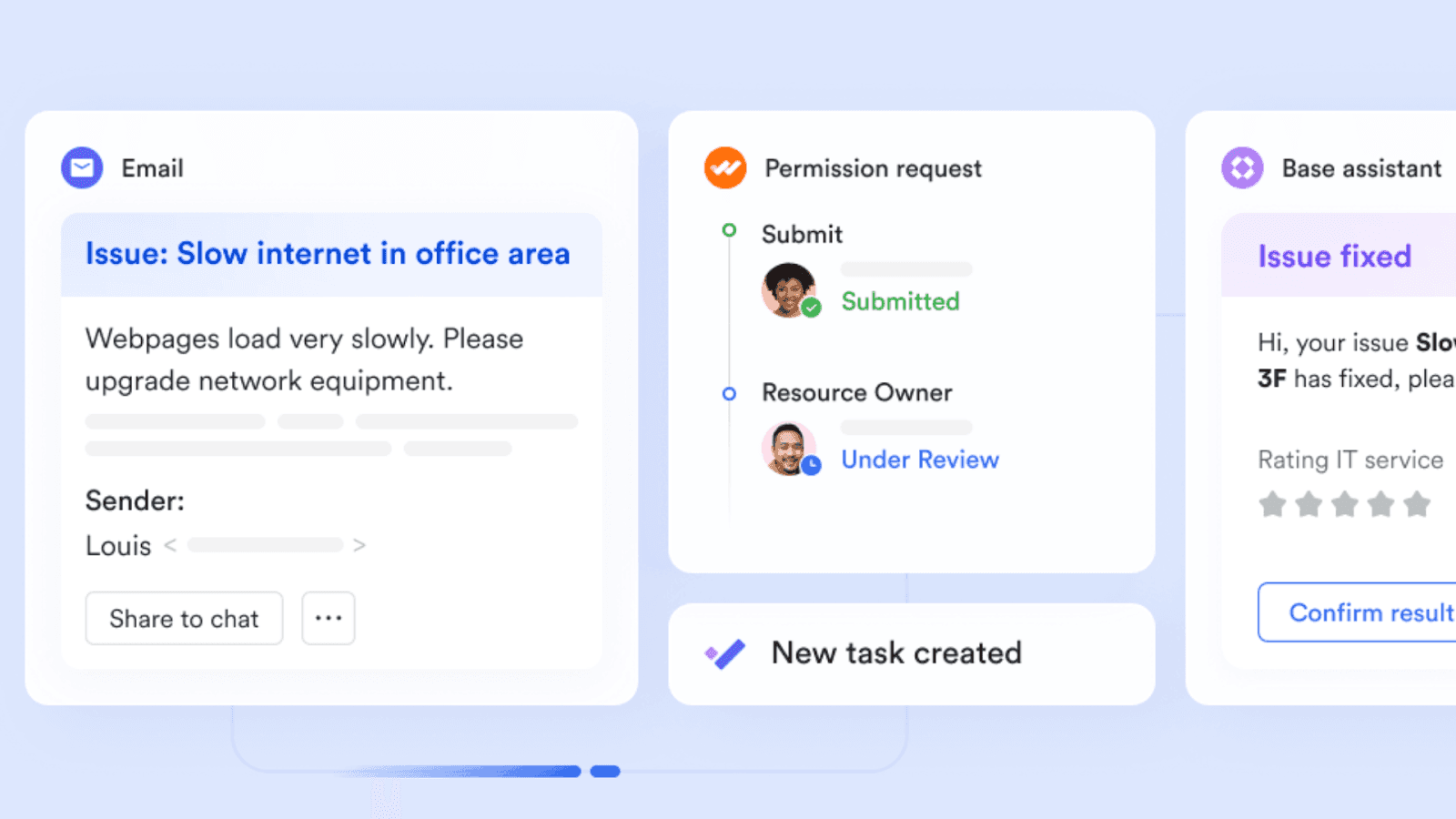
1. Lark: Empowering IT management through intelligent workflow and seamless collaboration
 Overview
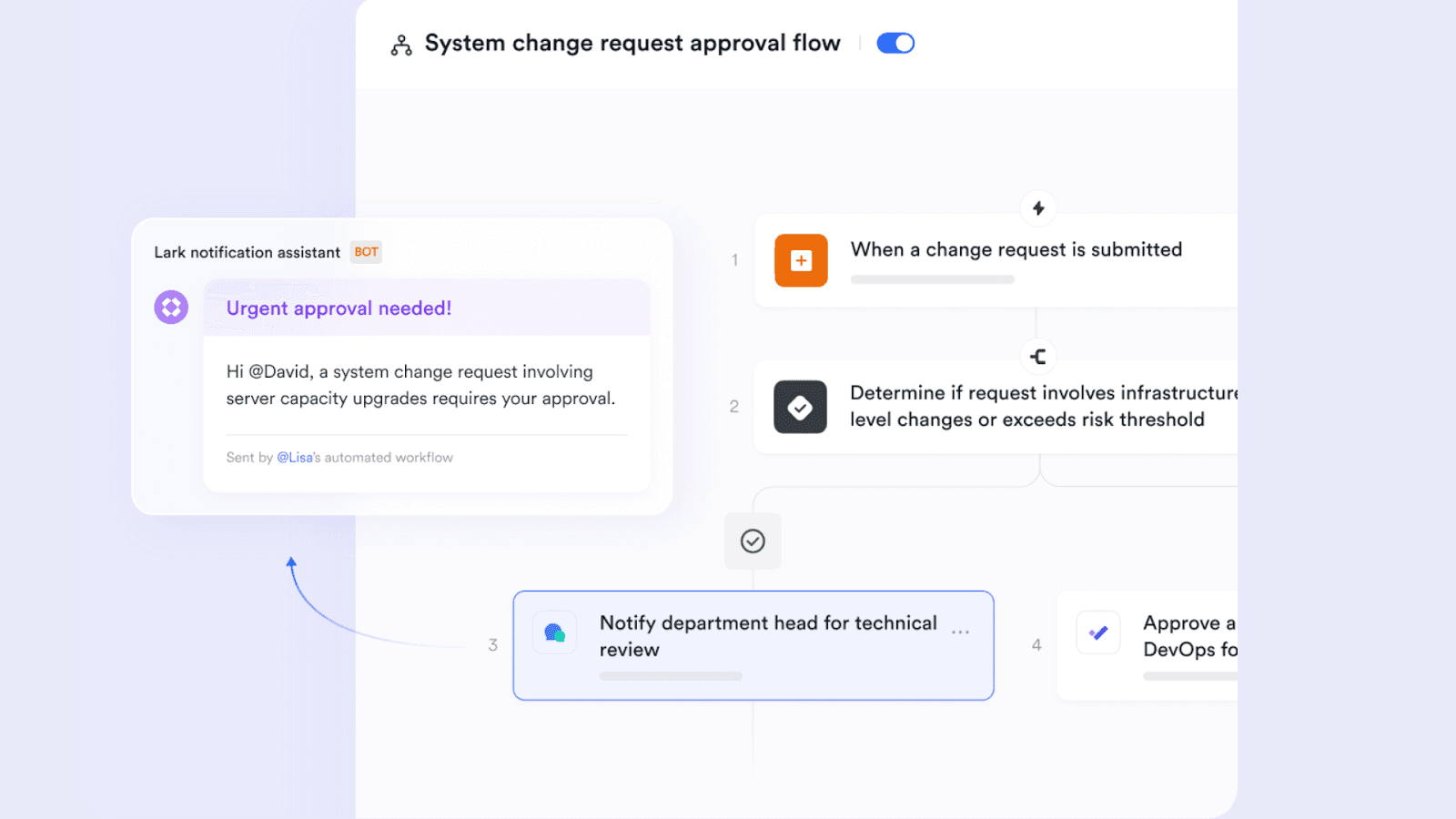
OverviewLark is a comprehensive digital workplace platform designed specifically to transform IT management through intelligent collaboration, seamless communication, and advanced workflow automation.
Key IT management features
Design, launch, and optimize complex IT workflows without coding expertise. Create comprehensive operational processes spanning incident management, resource allocation, and service requests. For example, Lark could automate the process of ticket assignment, categorizing the requests based on urgency, issue type and team ownership.
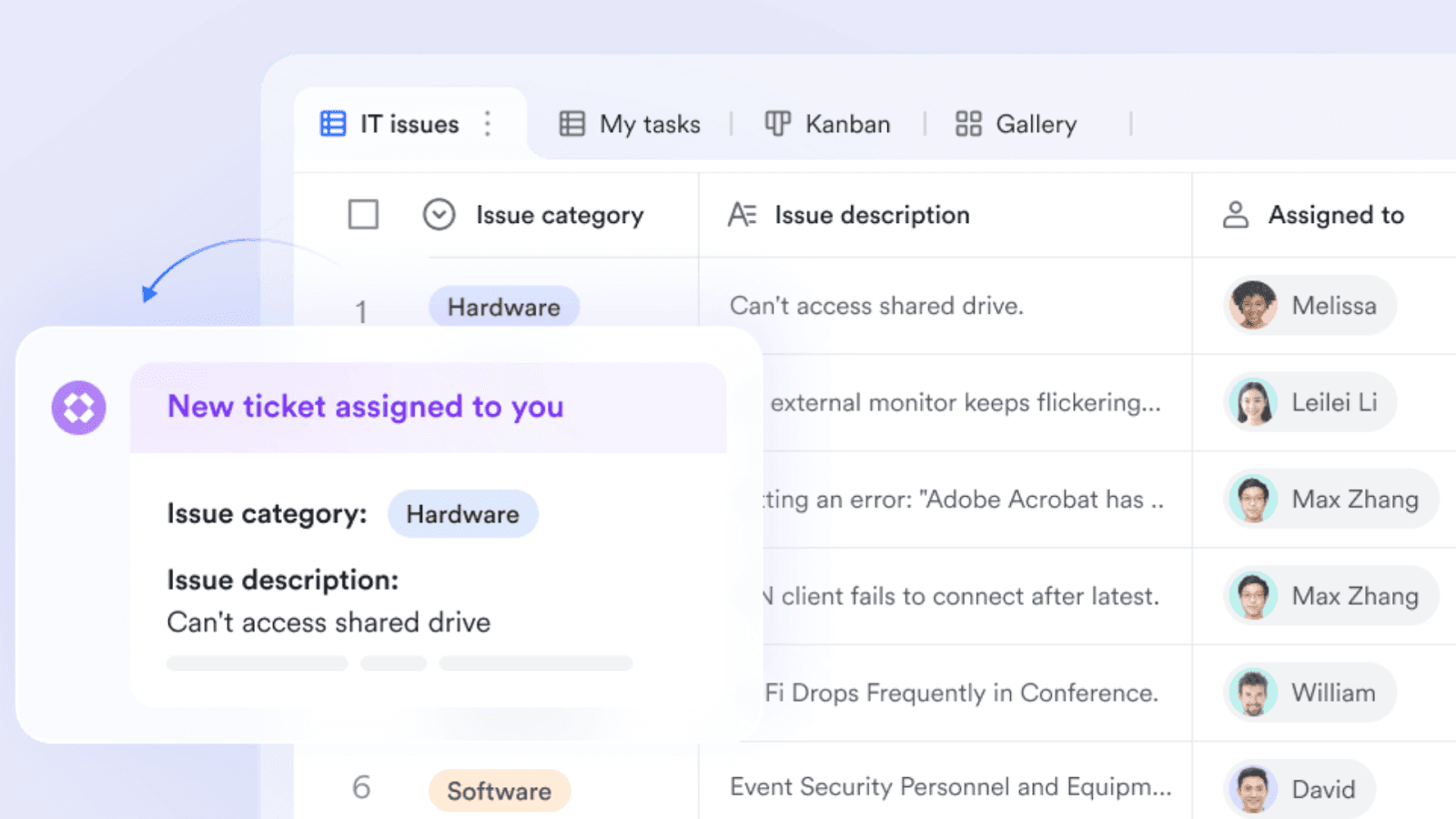
Leverage advanced artificial intelligence to transform IT support and management. Utilize AI-driven ticket routing, automatic meeting summarization, and intelligent helpdesk assistance that learns from historical data, continuously improving problem resolution strategies and providing context-aware support recommendations.
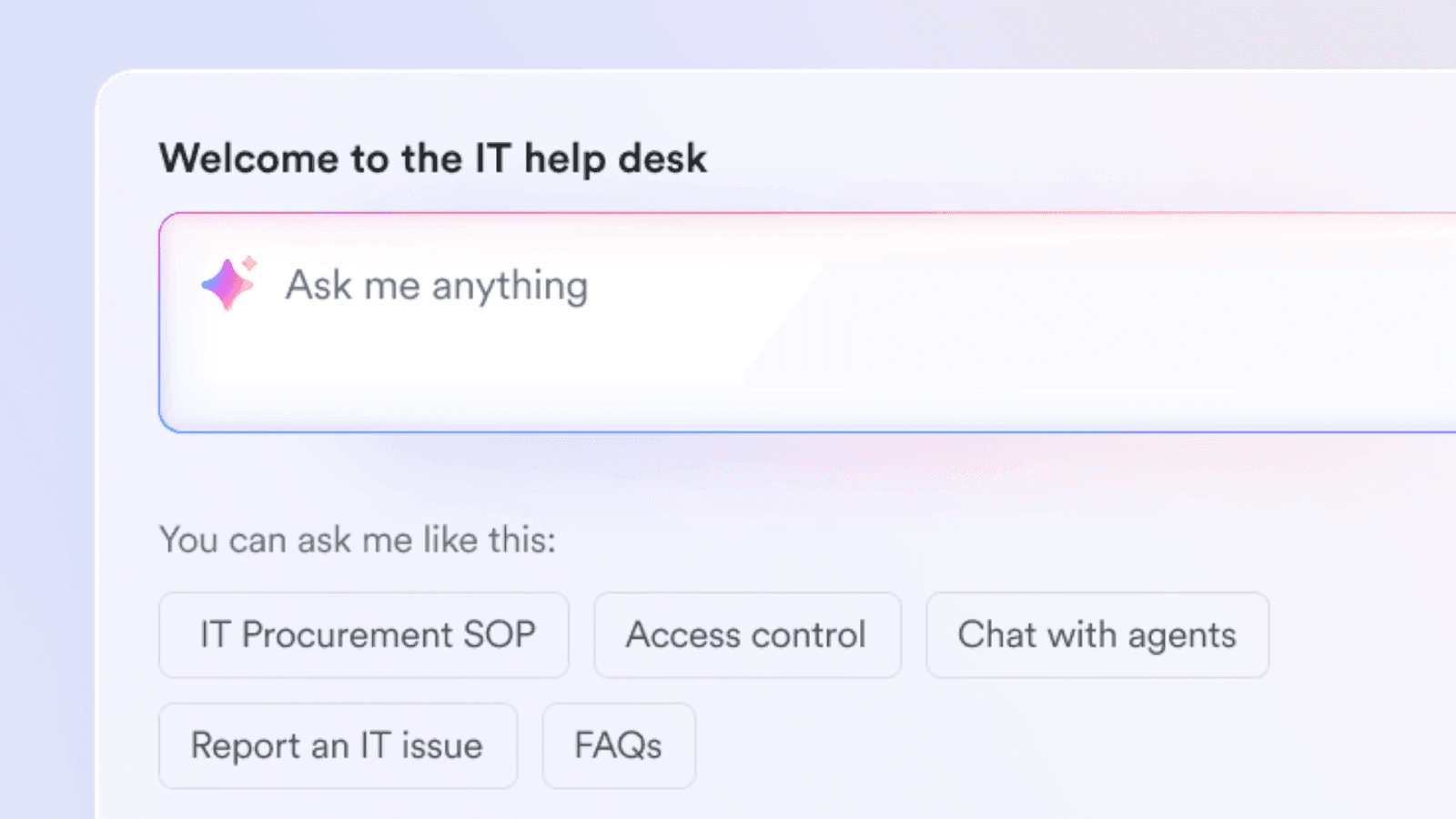
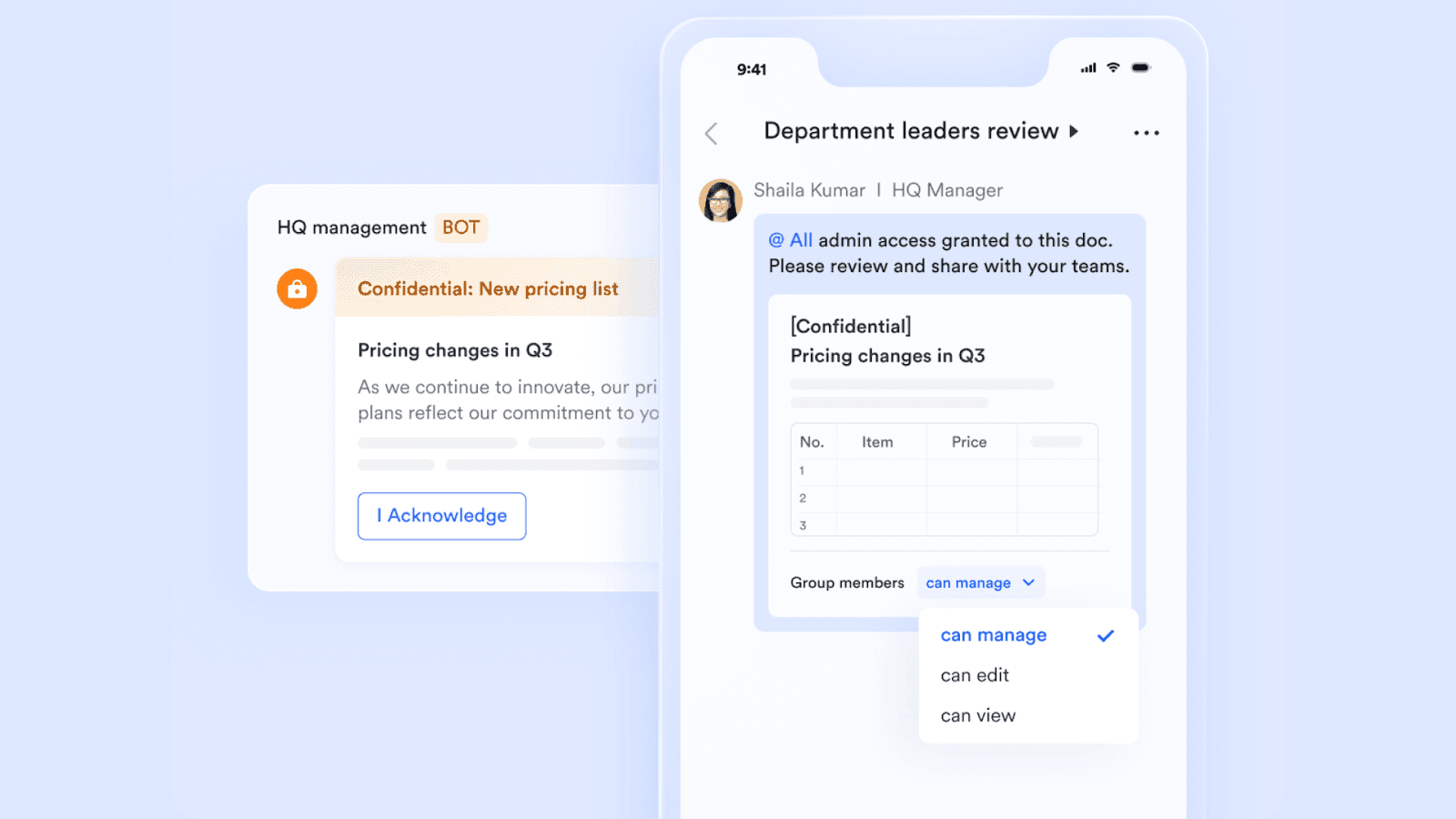
Implement robust security protocols across your entire IT infrastructure. Develop granular access controls, secure communication channels, and integrated compliance frameworks that protect enterprise data, ensure regulatory adherence, and provide comprehensive audit trails for organizational governance.
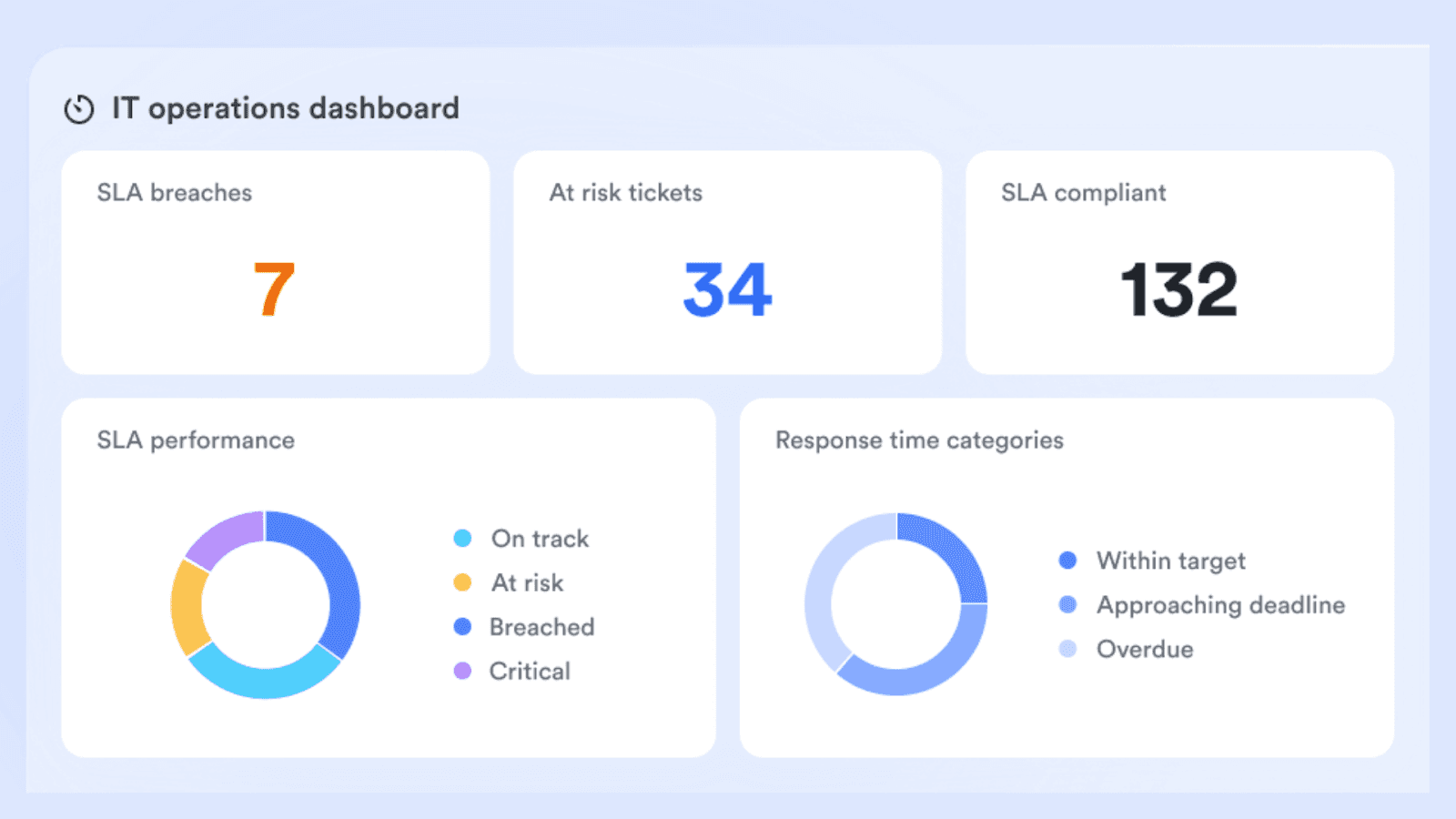
Visualize and analyze critical operational metrics with an advanced monitoring platform. Track SLA adherence, analyze backlog trends, and measure response times through interactive, real-time dashboards that transform raw data into actionable insights, enabling continuous operational improvement and strategic decision-making.
Accelerate operational excellence with pre-configured workflow blueprints and customizable process frameworks. Access industry-leading templates that provide immediate implementation strategies and flexible configuration options tailored to diverse technological environments.
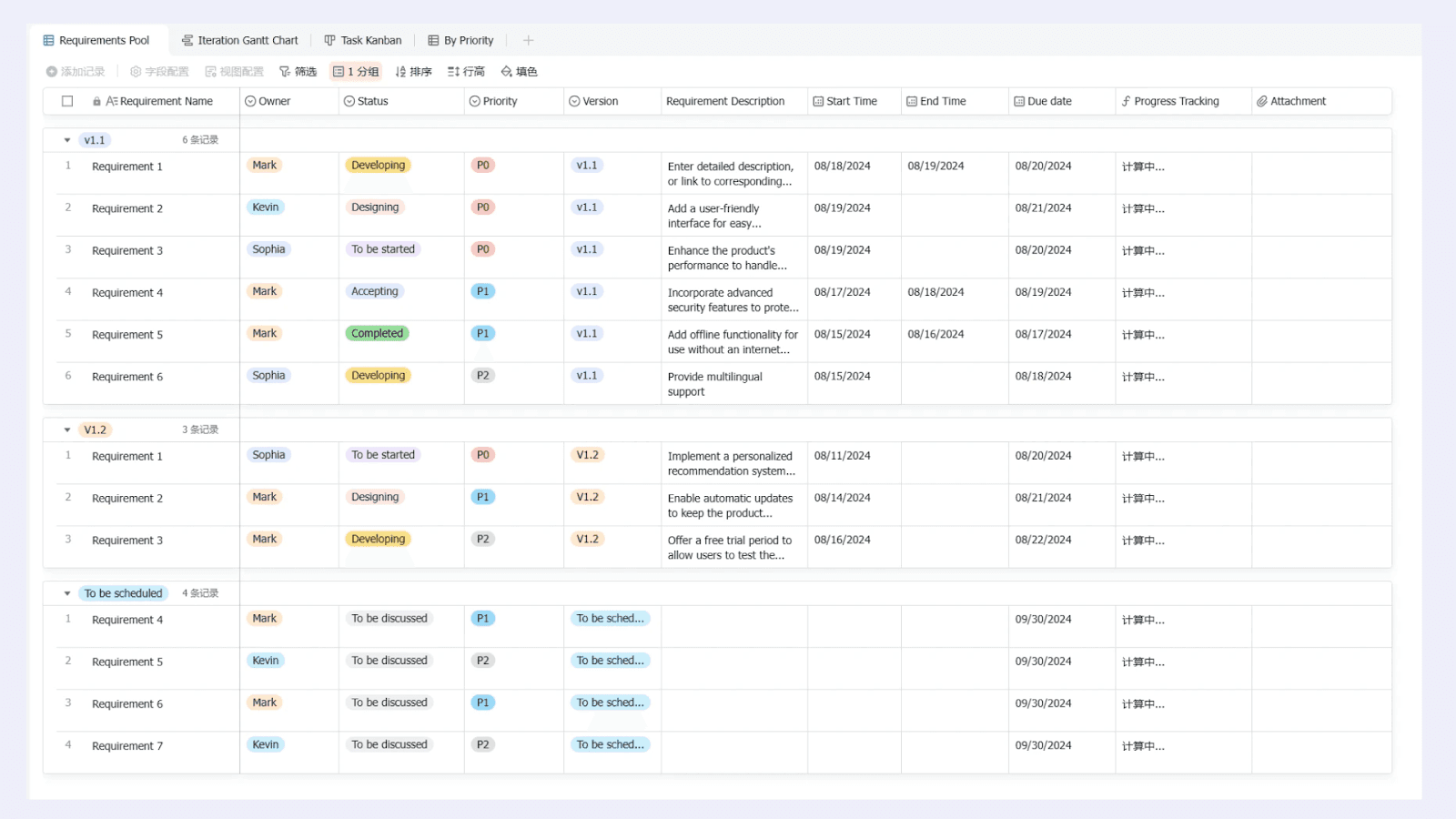
Consolidate fragmented functions like meetings, an automated approval process, emails, and database editing into an all-in-one platform. Eliminate software sprawl by creating a centralized workspace that connects communication, operational management, and collaborative tools, ensuring seamless cross-functional interactions and simplified technological governance.
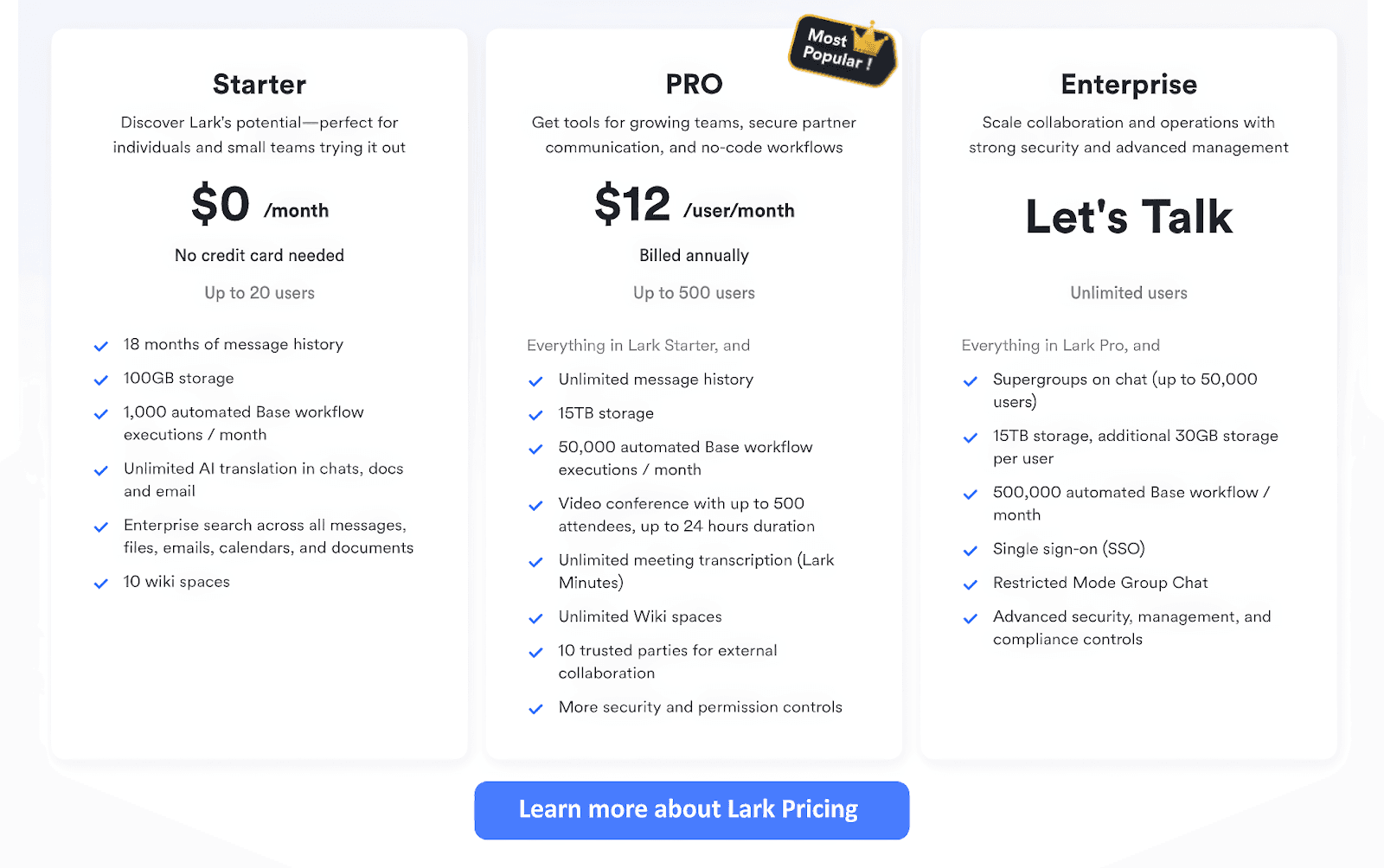
- Free plan: Includes 11 powerful products, supporting up to 20 users, 100 GB storage, 1,000 automation runs and unlimited AI translation in chats, docs and email.
- Paid plans: Starts at $12/user/month, supporting up to 500 users. Includes unlimited message history, 50,000 automated Base workflow executions per month.
- Enterprise plan: custom pricing.
2. ClickUp automation: Empowering IT management with adaptive workflow intelligence
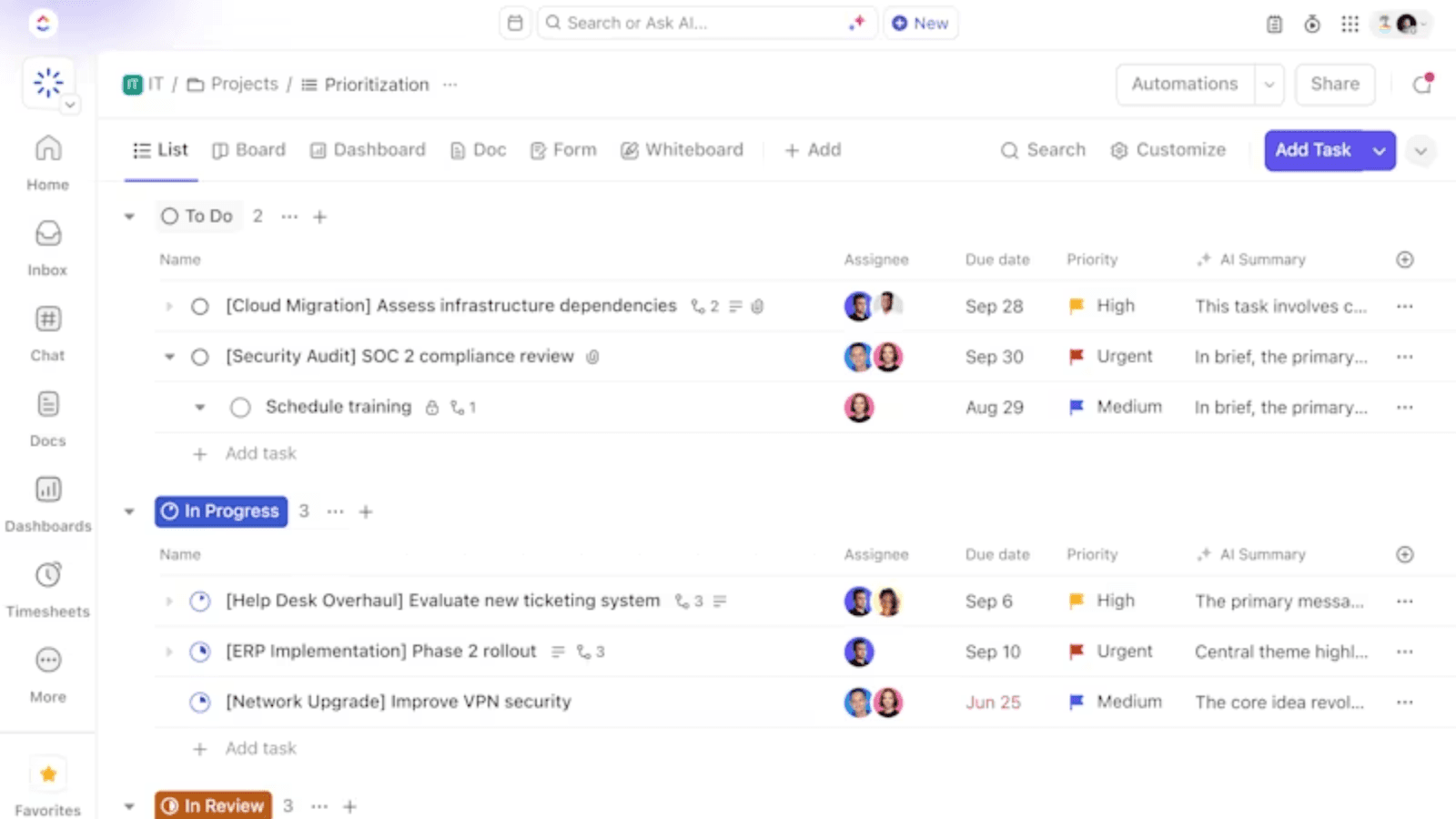 Image source: clickup.com
Image source: clickup.comOverview
A powerful business process automation platform that transforms project management through intelligent task tracking, workflow optimization, and comprehensive collaboration features.
Key IT management features
- Intuitive drag-and-drop workflow designer for complex process mapping
- AI-powered task prediction and intelligent project resource allocation
- Seamless cross-platform integration with real-time collaboration capabilities
- Advanced reporting and performance tracking with predictive analytics
Pricing
Free for personal use with limited features. Paid plans start at $7/user/month, offering a feature-rich alternative that aligns with entry-level ClickUp pricing tiers while providing more integrated tools.
3. Active Batch: Orchestrating enterprise complexity through precision job scheduling
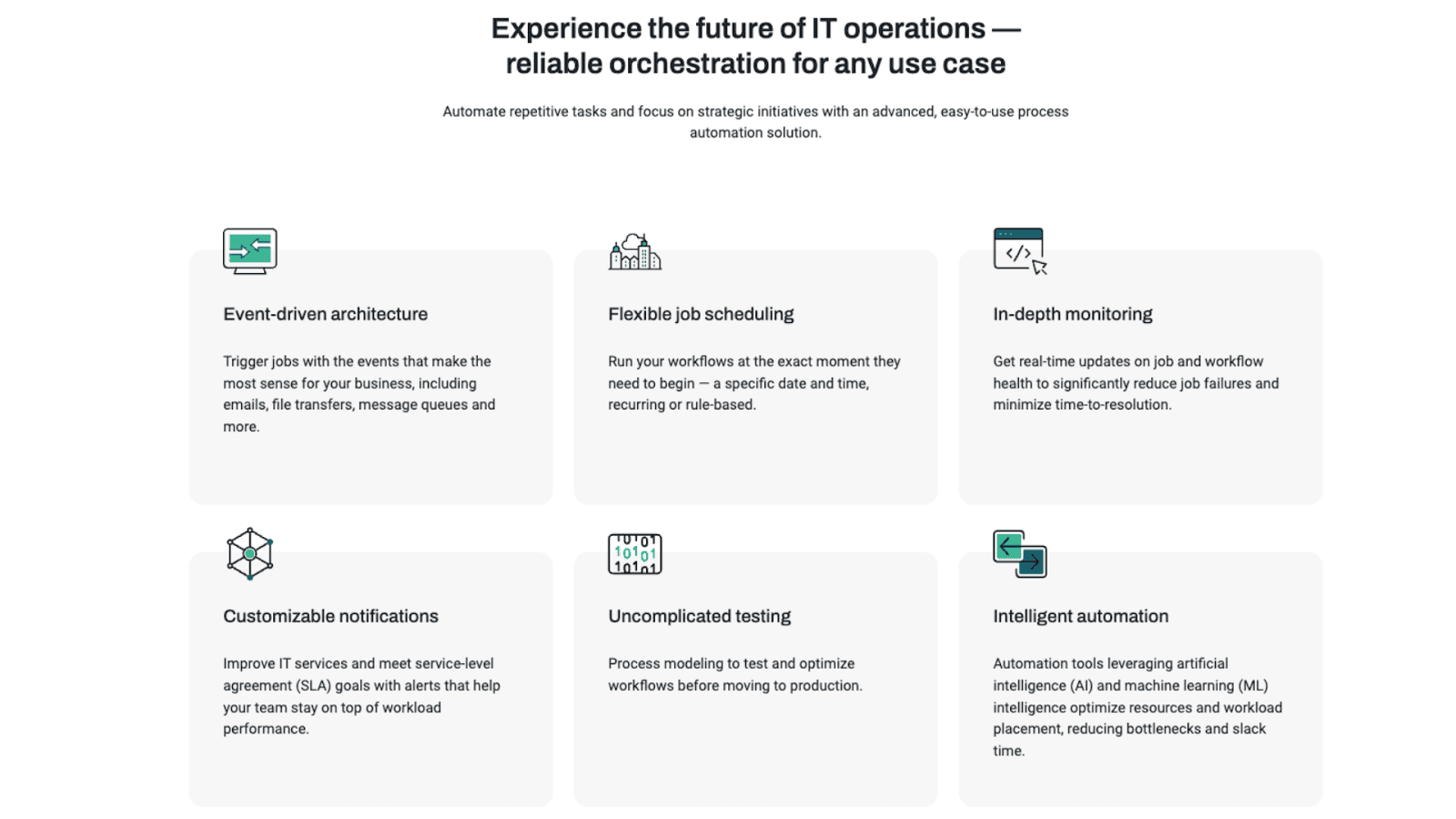 Image source: advsyscon.com
Image source: advsyscon.comOverview
A sophisticated IT automation tool designed for complex enterprise environments, enabling comprehensive job scheduling, workflow orchestration, and cross-system task management.
Key IT management features
- Advanced enterprise-level job scheduling capabilities
- Complex workflow dependencies and trigger management
- Comprehensive system monitoring and alerting
- Multi-platform integration support
Pricing
Custom pricing based on IT teams’ needs.
4. Kissflow: Democratizing process automation with intuitive low-code strategies
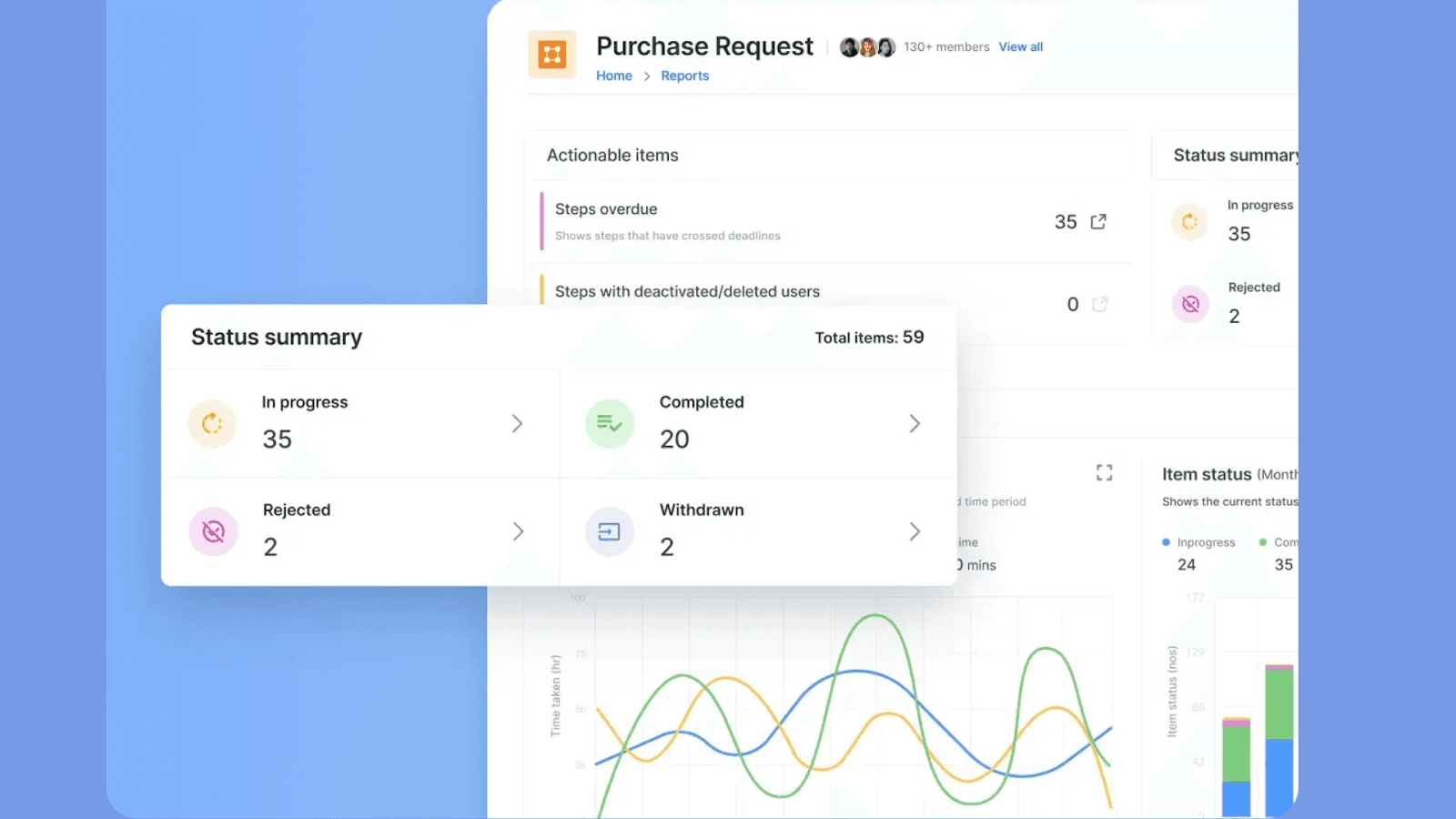 Image source: kissflow.com
Image source: kissflow.comOverview
A user-friendly process automation solution that empowers organizations to create custom workflows without extensive coding knowledge, focusing on flexibility and rapid deployment.
Key IT management features
- Drag-and-drop workflow design interface
- No-code process automation capabilities
- Advanced analytics and reporting
- Seamless enterprise integration
Pricing
Paid plans start at $2500/month.
5. Nintex: Bridging processes with advanced robotic workflow capabilities
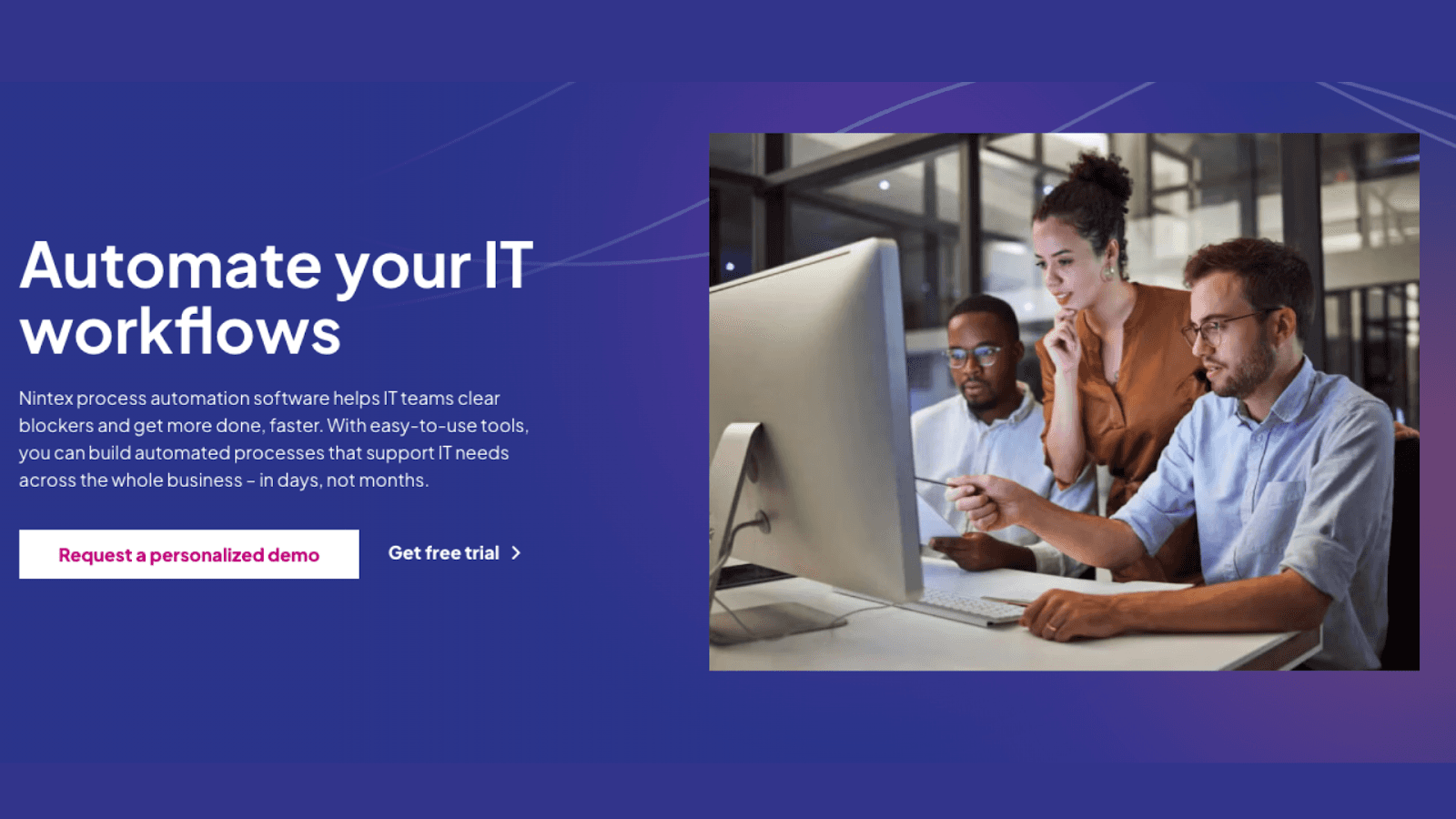 Image source: nintex.com
Image source: nintex.comOverview
A specialized automation platform focusing on comprehensive business process management, offering advanced workflow design, robotic process automation, and enterprise-grade solutions.
Key IT management features
- Advanced workflow design and modeling
- Robotic process automation capabilities
- Comprehensive compliance and governance tools
- Cross-platform integration support
Pricing
Pricing plans vary based on different needs.
6. Zapier: Connecting technological ecosystems through seamless integration
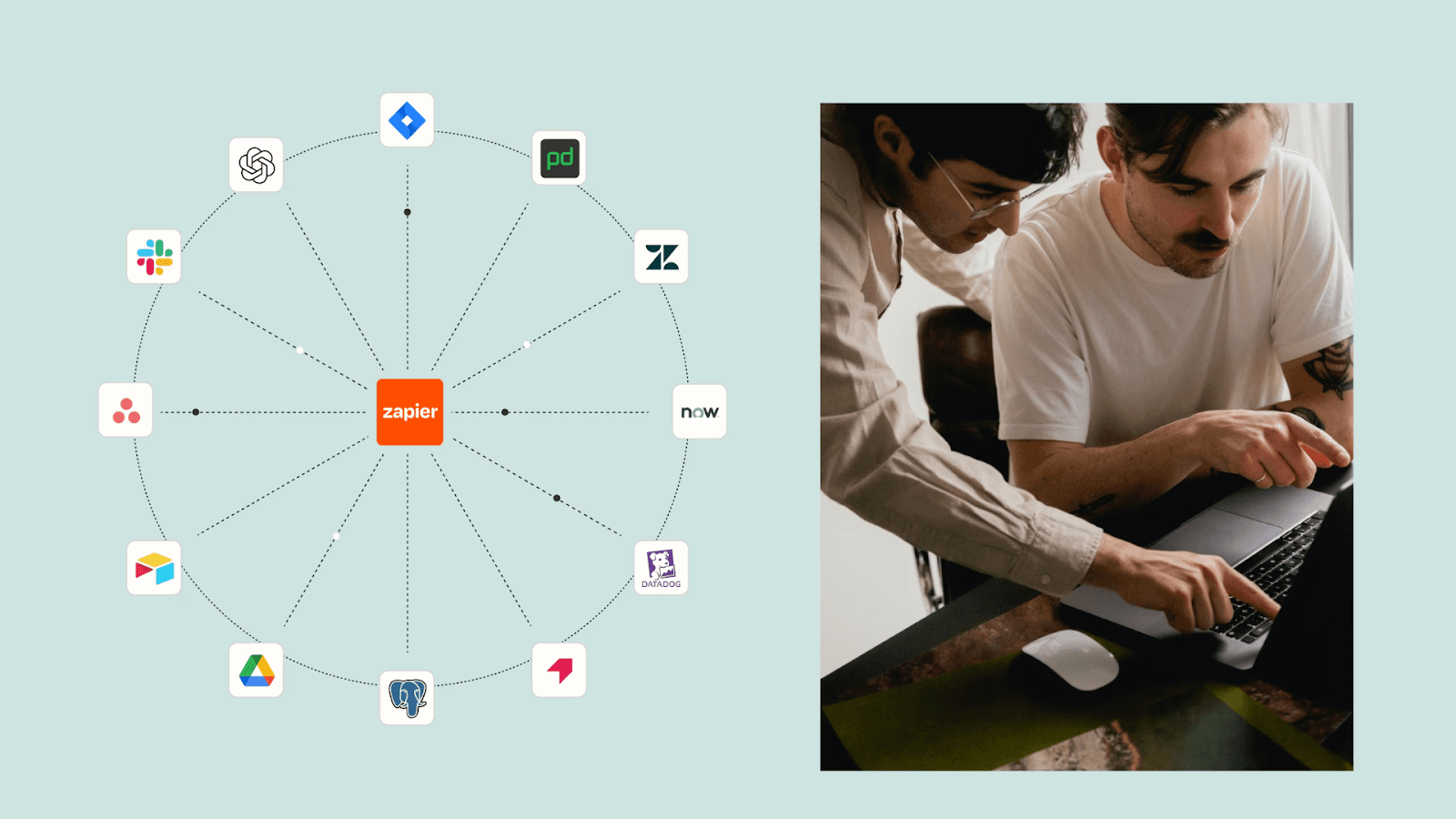 Image source: zapier.com
Image source: zapier.comOverview
A revolutionary workflow automation tool that connects multiple applications, enabling seamless data transfer and task synchronization across diverse technological ecosystems.
Key IT management features
- Multi-application integration support
- Automated workflow triggers
- Custom automation recipe creation
- Extensive third-party app connectivity
Pricing
With a free plan. Paid plans start at $19.99/month.
7. Jira IT Automation: Streamlining DevOps workflows with integrated technological orchestration
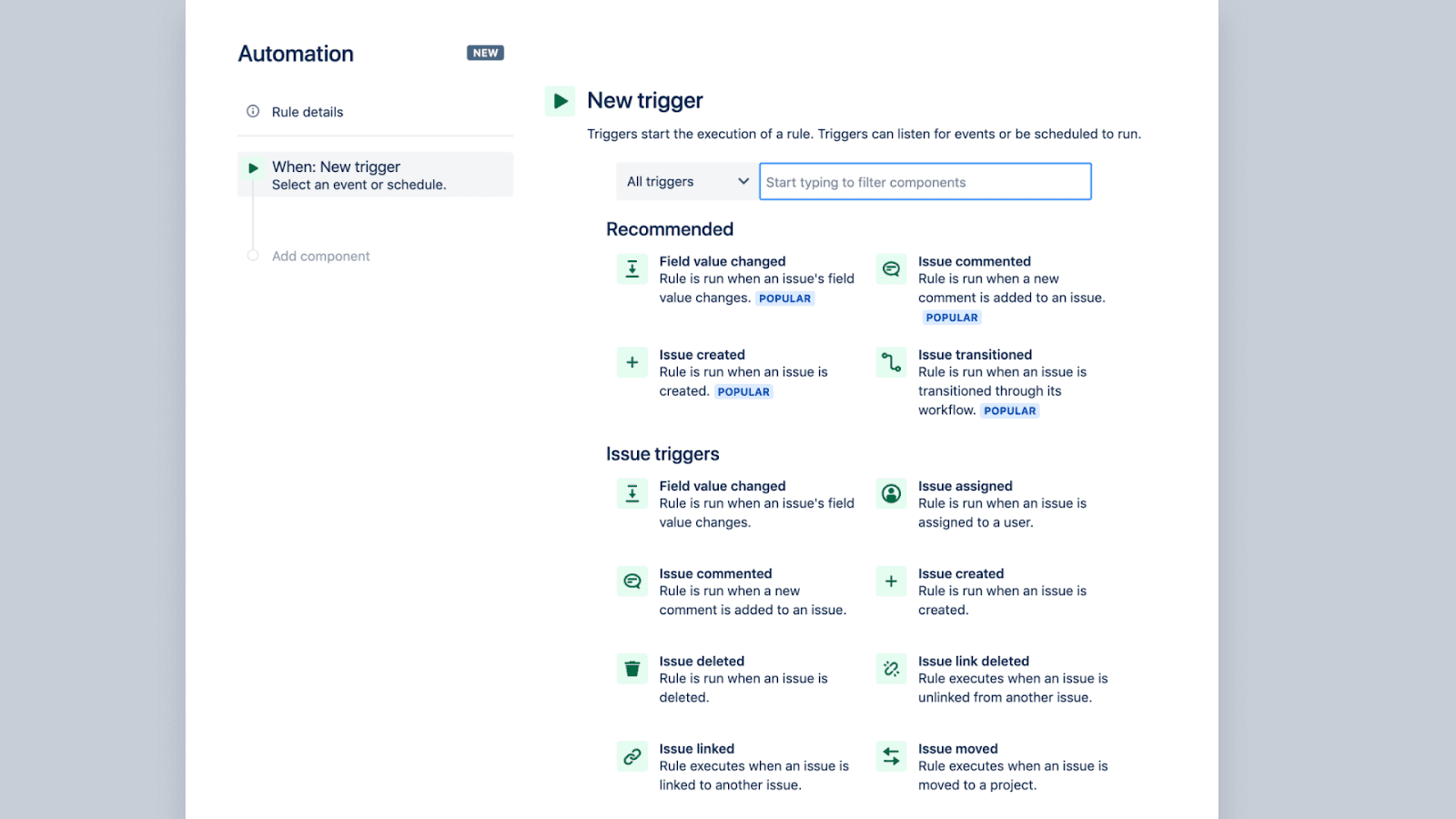 Image source: atlassian.com
Image source: atlassian.comOverview
A comprehensive IT automation platform specifically designed for software development and IT operations, offering advanced workflow management and integration capabilities.
Key IT management features
- Advanced DevOps workflow automation
- Seamless software development lifecycle management
- Comprehensive issue tracking and resolution
- Integration with Atlassian ecosystem
Pricing
With a free plan. Paid plans start at $7.53/user/month.
8. UiPath: Revolutionizing enterprise automation with intelligent robotic solutions
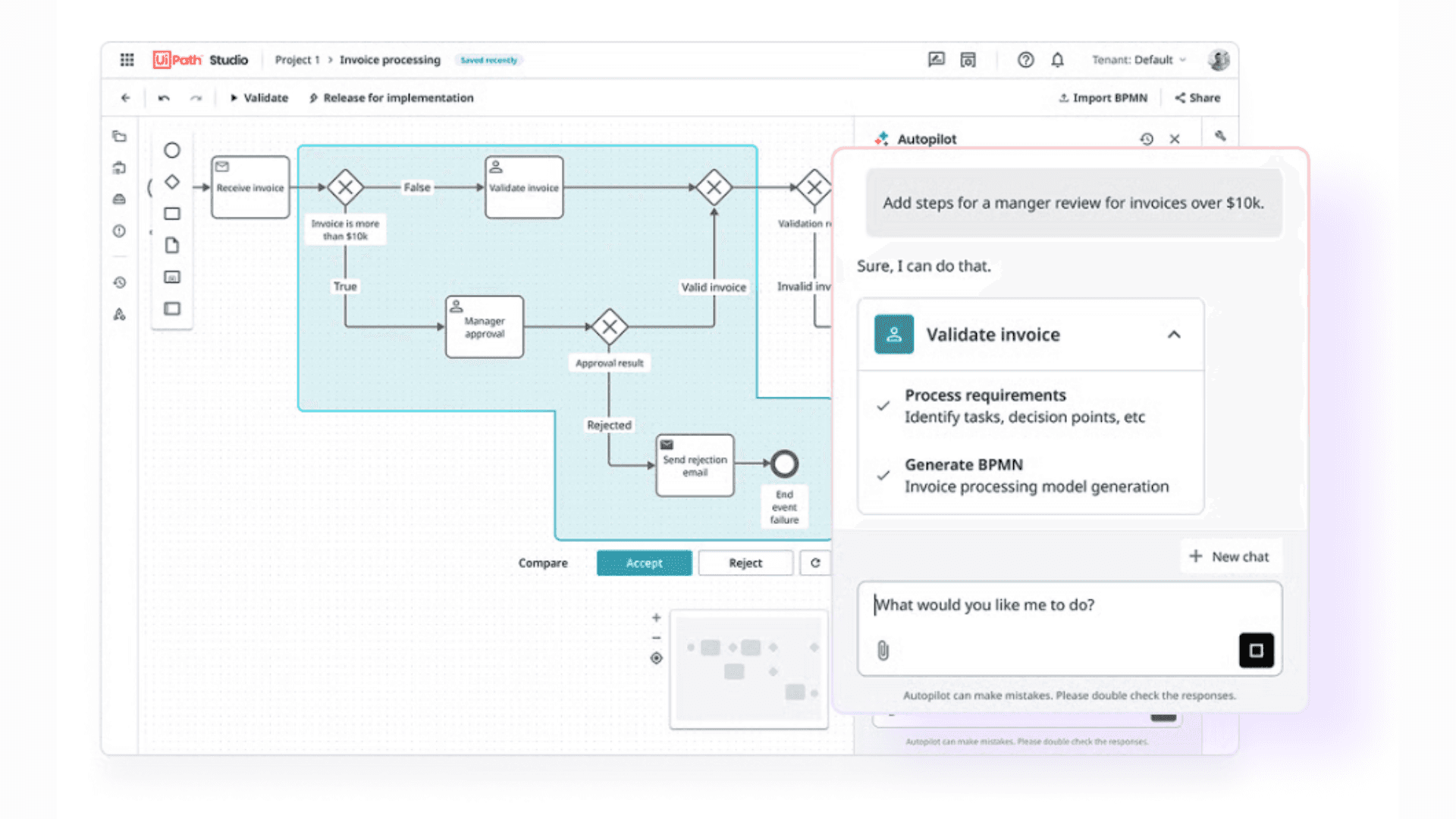 Image source: uipath.com
Image source: uipath.comOverview
UiPath is a leader in enterprise Robotic Process Automation (RPA), offering a comprehensive intelligent automation platform that transforms how organizations approach digital workforce optimization.
Key IT management features
- Advanced robotic process automation with cognitive intelligence
- Enterprise-scale deployment of intelligent software robots
- Comprehensive process discovery and optimization capabilities
- AI-powered decision-making and predictive workflow analysis
Pricing
With a free trial. Paid plans start at $25/user/month.
Challenges in implementing IT automation
Technical integration complexities
Organizations face significant hurdles when attempting to create seamless automation technologies, including:
- Connecting multiple automated tasks: Developing sophisticated integration frameworks that enable smooth communication between disparate technological systems and platforms.
- Ensuring compatibility across different systems: Addressing intricate technical challenges of creating universal automation solutions that work across diverse technological ecosystems.
- Managing increasingly complex technological landscapes: Navigating the growing complexity of interconnected digital infrastructure while maintaining system reliability and performance.
Organizational resistance and cultural barriers
Implementing IT automation confronts deep-rooted organizational challenges:
- Overcoming traditional working methodologies: Transforming entrenched organizational practices that resist technological innovation and process reengineering.
- Building a culture of technological adaptability: Developing organizational mindsets that embrace continuous learning and technological transformation.
Strategic implementation challenges
Successful automation strategies require comprehensive approaches:
- Comprehensive process assessment: Conducting in-depth analysis of existing workflows to identify optimal automation opportunities and potential limitations.
- Incremental and strategic deployment: Implementing automation platforms through carefully planned, phased approaches that minimize disruption and maximize organizational learning.
- Continuous monitoring and optimization: Developing adaptive frameworks that allow ongoing evaluation and refinement of automated processes.
- Alignment with broader business objectives: Ensuring automation initiatives directly support strategic organizational goals and value creation.
Critical implementation barriers
Additional significant challenges include:
- Skills and expertise gaps: Addressing the shortage of specialized personnel capable of designing, implementing, and maintaining advanced automation solutions.
- ROI measurement difficulties: Developing robust methodologies for quantifying both tangible and intangible benefits of IT automation investments.
- Process optimization complexities: Identifying and refining existing processes before automation to prevent amplifying inherent inefficiencies.
- Scalability limitations: Overcoming technical and organizational constraints that prevent widespread automation adoption.
Future trends in IT automation
Emerging technologies reshaping technological landscapes
The next generation of IT automation is poised to revolutionize organizational capabilities through groundbreaking technological innovations. Artificial Intelligence and machine learning are no longer peripheral technologies but central drivers of transformative digital strategies.
Quantum computing represents a paradigm shift in computational capabilities, promising unprecedented processing power that will dramatically enhance automation potential. These advanced systems will enable complex problem-solving at scales previously unimaginable, powering quantum image classification so organizations can tackle intricate visual tasks with remarkable precision and speed.
Edge computing is emerging as a critical trend, bringing computational intelligence closer to data sources. This approach reduces latency, enhances real-time decision-making, and creates more resilient, distributed technological ecosystems. Organizations can now process critical information at the point of generation, enabling faster, more responsive automated systems.
Predictive automation: The next frontier
Predictive automation transcends traditional reactive approaches, introducing proactive technological intelligence. Advanced algorithms will:
- Anticipate potential system failures before they occur
- Predict maintenance requirements with unprecedented accuracy
- Generate adaptive workflow recommendations
- Optimize resource allocation in real-time
- Create self-healing technological infrastructures
Machine learning models will become increasingly sophisticated, developing nuanced understanding of organizational patterns and developing predictive capabilities that mirror human intuition. These systems will not merely execute tasks but comprehend complex contextual relationships.
Lark's unique approach to IT automation
Integrated workflow solutions
Lark distinguishes itself through a holistic approach to technological integration. The platform doesn't just automate processes; it creates intelligent, interconnected ecosystems that adapt and evolve.
Key differentiators include:
- Seamless cross-platform integration
- Intuitive no-code automation interfaces
- Comprehensive workflow visualization
- Adaptive learning capabilities
- Granular customization options
Democratizing automation
By removing technical barriers, Lark empowers non-technical team members to design and implement sophisticated automation workflows. This approach transforms automation from a specialized technical domain into an accessible organizational capability.
Features enabling democratization:
- Drag-and-drop workflow designers
- Pre-built automation templates
- Contextual guidance systems
- Comprehensive training resources
- Community-driven innovation platforms
Security and compliance focus
Enterprise-grade security remains a cornerstone of Lark's automation strategy. The platform provides:
- Advanced encryption protocols
- Role-based access controls
- Comprehensive audit trails
- Real-time compliance monitoring
- Data governance frameworks
Conclusion
IT automation emerges as a critical strategic imperative, transcending traditional technological boundaries. Workload automation and advanced AI-driven machine learning algorithms are reshaping organizational capabilities, enabling unprecedented levels of operational efficiency and innovation.
The future belongs to organizations that view automation not as a technological add-on, but as a fundamental reimagining of operational potential. Businesses must cultivate a mindset of continuous innovation, embracing technologies that blur the lines between human creativity and machine intelligence.
Lark stands at the forefront of this technological revolution, offering a comprehensive platform that democratizes automation, enhances organizational agility, and unlocks human potential. By providing intuitive, powerful tools that transform complex technological challenges into streamlined, intelligent workflows, Lark invites forward-thinking organizations to join the next wave of digital transformation.
Are you ready to reimagine your technological capabilities? Discover how Lark can elevate your organization's potential through intelligent, adaptive automation.
FAQs
What are the 4 types of automation?
The four types of automation are: fixed automation, programmable automation, flexible automation, and integrated automation, each offering unique approaches to technological process optimization.
What is an example of IT automation?
Automated server provisioning, where cloud resources are dynamically allocated, configured, and managed without manual intervention, represents a typical IT automation implementation.
Is an automation engineer an IT job?
Yes, an automation engineer is a specialized IT professional who designs, develops, and implements technological solutions to streamline complex organizational processes and workflows.
What are the 4 stages of process automation?
The four stages include process identification, design and mapping, implementation of automation technologies, and continuous monitoring and optimization of automated workflows.
Related reading
Table of contents
Start using Lark today

Manage all your work in one place
Boost team efficiency by 10x
Save up to 70% on software costs
Table of contents
Start using Lark today
Manage all your work in one place
Boost team efficiency by 10x
Save up to 70% on software costs
Keep reading







2026 Lark Technologies Pte. Ltd.
Headquartered in Singapore with offices worldwide.






Explore: