














360 degree customer view: A practical guide for modern teams

Jennifer Taylor
Product Demand Generation Specialist
Sep 18, 2026
Jennifer Taylor
Sep 18, 2026

18 min read


Missed handoffs happen when teams work in silos: sales arrives uninformed, marketing targets poorly, support escalates without context. Customers expect one company. Meeting that bar requires a unified, 360-degree view of customer data and interactions. This guide clarifies the 360 degree customer view definition, turns the 360 degree view of the customer meaning into actions, and outlines a lean customer 360 degree view data model. You'll also see how a modern all‑in‑one workspace—chat, docs, databases, automation—helps you build and operationalize this view so every touchpoint feels consistent, relevant, and trustworthy.
What a 360 degree customer view really means
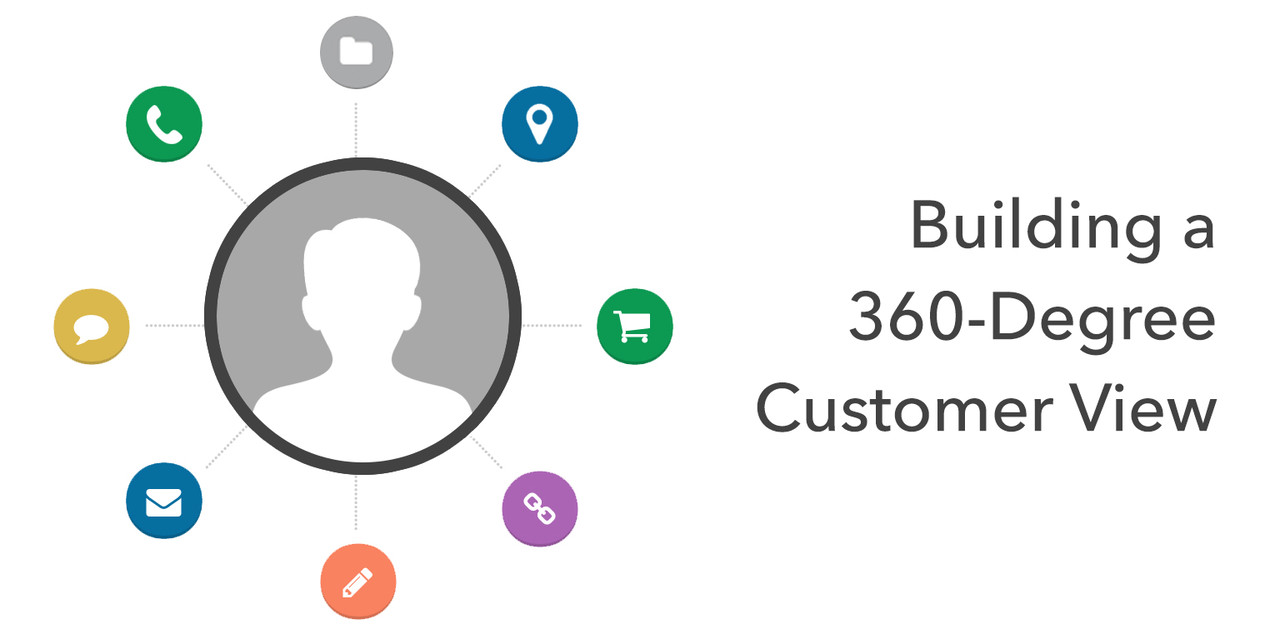
Image source: Linkedin.com
- Definition and essentials
- A 360 degree customer view is a living profile that unifies who the customer is, what they've done, what they've bought, and the outcomes that matter across channels. Keep a clearly 360 degree customer view definition concisely so everyone shares the same language, and aim for a pragmatically 360-degree customer view reliably that teams can use, not just admire. Start with a concretely 360 degree customer view data model correctly built around people, accounts, interactions, transactions, and outcomes, focusing first on fields that drive action (lifecycle, last activity, health, ARR/MRR, owner, top recent events).
- Myths and the right approach
- You don't need a CDP or data lake to begin. Launch a deliberately 360 degree view of customer effectively that powers one or two high‑value plays, then iterate with governance and automation. Treat it as an operating model that improves weekly; teams that sustain a thoughtfully customer 360 degree view operationally see faster handoffs, fewer surprises, and clearer priorities.
- Make it visible where work happens
- Embed the profile in an all‑in‑one workspace—chat, docs, calendar, meetings, tasks, approvals—backed by a no‑code database, automations, and flexible views. Permissions should present a carefully 360-degree view of the customer appropriately by role while protecting sensitive data. For frontline speed, surface a promptly 360 degree view of the customer instantly in chat with owner, next step, and deep links; the practically 360 degree view of customer meaning simply is a shared, evolving profile that turns signals into decisions.

Why a 360 degree customer view matters now
A true 360 degree customer view is no longer a "nice to have"—it's the operating system for modern revenue teams. When your 360 degree customer view definition is clear and encoded in a usable customer 360 degree view data model, every team works from the same reality, and every metric ties back to events rather than opinion. The payoff shows up in pipeline velocity, predictability, and loyalty.
Top outcomes and KPIs
A rigorous, pragmatic 360‑degree customer view turns fragmented signals into coordinated action. Here's what consistently improves when the model is implemented well:
- Faster, cleaner pipeline: Earlier intent detection, better qualification, fewer slipped deals.
- Forecast accuracy: Reduced forecast bias through event‑based health and stage progression.
- Predictable expansion: Clearer paths to upsell/cross‑sell based on adoption depth.
- Onboarding to value: Improved activation, higher feature adoption, shorter time‑to‑value.
- Retention and support: Lower churn, higher CSAT/NPS, faster response and resolution.
Anchor performance to event‑based KPIs that your data model can trace to a customer identity ID and timeline:
- Growth and revenue: NRR/GRR, renewal likelihood, expansion rate, win rate, pipeline velocity.
- Product outcomes: Activation rate, time‑to‑value, feature adoption depth, usage frequency.
- Customer experience: CSAT/NPS, first‑response time, MTTR, backlog aging, SLA attainment.
- Operational quality: Data freshness, duplicate rate, alert‑to‑action time, playbook completion.
An all‑in‑one workspace helps convert signals into motion without losing context: automations assign owners, open tasks with due dates, request approvals for lifecycle changes, and log outcomes back to the same profile. In practice, sales sees intent sooner, success sees risk before it spikes, and support closes loops faster—so the 360 degree view of the customer meaning becomes shared, actionable context.
The changing customer journey
Today's journey is nonlinear and privacy‑constrained. Interactions span product, chat, email, meetings, and community; third‑party data is shrinking; and expectations for relevance are rising. A clearly documented 360 degree customer view definition keeps teams aligned on what to collect and why, while respecting consent and regional policy.
Key design principles that make a deliberately 360 degree view of customer effective without re‑architecting your stack:
- Identity first: Unify events to a durable customer identity ID using deterministic keys (user ID, verified email, domain), with governed merges/splits.
- Minimum viable profile: Define the few fields that matter across teams—lifecycle, health score, ARR/MRR, last activity, intent, risk reasons—and expand only with purpose.
- Progressive enrichment: Start with core signals, then layer product usage, support sentiment, and engagement scores as reliability improves.
- Consent and governance: Track consent purpose, residency, and retention; document survivorship rules so your customer 360 degree view data model stays compliant and consistent.
- Latency tiers: Real‑time for critical triggers (payment failure, VIP escalation), hourly/daily for enrichment and rescoring.
- Team‑specific views: Flexible views present the same source of truth in the right format for each role.
- Feedback loops: Every playbook outcome writes back to the record to improve scoring and forecasts.
No‑code databases, lightweight automations, and flexible views ensure the right fields show up where decisions are made. In an all‑in‑one workspace, a carefully maintained 360 degree view of the customer appears directly in the flow of work—reducing swivel‑chair effort and amplifying accountability.
The cost of partial views
Partial views create expensive blind spots. Without a responsible, transparent 360‑degree view of the customer, teams chase anecdotes, miss churn risk, over‑message key accounts, and under‑invest in healthy segments. Leaders often misinterpret the 360 degree view of the customer meaning when they treat it as a static dashboard instead of a living profile that drives action.
Common failure modes—and how to fix them:
- Duplicate or split identities: Deterministic matching, governed merges, and an identity audit report.
- Vanity metrics that don't move revenue: Migrate to event‑based KPIs tied to your customer 360 degree view data model.
- Siloed execution across tools: Orchestrate alerts, tasks, and approvals from the same profile record in an all‑in‑one workspace.
- Unclear ownership and handoffs: Define record owners and RACI; auto‑assign next steps on lifecycle or health changes.
- Weak governance and data drift: Field‑level permissions, validation, dedupe, anomaly monitoring, and a clear audit trail.
- Noisy, low‑trust notifications: Deduplicate alerts, apply quiet hours and escalation rules, and always include context plus a next step.
A collaborative platform with no‑code automation and role‑based permissions closes the loop—surface the signal, assign the task, and record the outcome—so momentum isn't lost between systems. The result is a tighter revenue engine: higher NRR, healthier pipeline velocity, clearer expansion pathways, and continuous learning captured where work happens.
In summary, the practically 360 degree view of customer meaning is a shared, evolving profile—anchored by a unique identity, enriched with static and dynamic data, and embedded in daily work. By defining a precise 360 degree customer view definition, implementing a lean customer 360 degree view data model, and connecting signals to owned actions, you turn insight into impact. Any modern, all‑in‑one workspace can accelerate this journey—tools like Lark are examples—but the methodology is tool‑agnostic and focused on measurable outcomes.
How can you operate a 360 degree customer view
A 360‑degree customer view starts with a clear 360 degree customer view definition: one unified profile—contacts, interactions, purchases, tickets, preferences, feedback—anchored by a unique customer identity ID. Make it operational with a customer 360 degree view data model and disciplined execution:
- Model the core entities and relationships, including accounts, people, interactions, transactions, and outcomes. Document ownership, freshness, and lineage for every field.
- Resolve identities deterministically (user ID, verified email, domain) with governed merges/splits to keep profiles trusted and deduplicated.
- Integrate data from CRM, product analytics, billing, support, and marketing. Normalize events so the 360 degree view of the customer meaning is consistent across tools.
- Create role‑based views and playbooks, such as pipeline+health for sales, adoption+risk for success, SLA+timeline for support, segments+consent for marketing.
- Convert signals into actions where work happens. To be specific, tasks, approvals, alerts, and meeting prep tied back to the same record—not scattered sheets.
- Measure event‑based KPIs over vanity metrics, including activation, time‑to‑value, feature adoption, NRR/GRR, win rate, CSAT/NPS, first‑response time, MTTR, data freshness, duplicate rate, alert‑to‑action time.
- Close the loop with reviews, quality checks, and change management so your customer 360 degree view stays simple, usable, and current.
You can implement this on any modern stack. If you prefer an all‑in‑one workspace, a platform like Lark—combining chat, docs, calendar, tasks, approvals, and a no‑code database—can make operationalizing the model faster.
Unifying people, content, and context in one workspace
Seamlessly connect the systems you already use—CRM, product analytics, billing, support, and marketing—so key fields sync into Base and flow back out where needed. Operate where the data lives so teams act on the same context.
- Create a "Customer Hub" with channels by segment/region and pinned live profile views. Keep the 360 degree customer view definition visible in every thread.
- Embed live fields in docs for QBRs and plans: health trend, ARR/MRR, last activity, top events. Use standard templates to align on the customer 360 degree view data model.
- Enrich calendar invites for renewals/EBRs with live fields and links to the unified profile, so no one hunts for sources.
- Turn comments into actions via inline tasks; require lightweight approvals for sensitive changes (lifecycle, executive sponsor).
- Store playbooks beside the profile—churn response, expansion motion, incident comms—so the 360 degree view of the customer meaning translates into repeatable steps.
- Use quick filters (VIP, at‑risk, renewal in 60 days) and saved views per role to reduce tab‑hopping.
- During calls, share the live profile view and capture decisions in the same doc to update the record in real time.
If you're using Lark, these patterns map directly to Messenger channels, Docs, Calendar, Tasks/Approvals, and Base views embedded in one place.
Flexible customer profiles with a no‑code database
Use a no‑code database as the data core for your customer 360.
- Link tables such as Core Customer Info, Contacts, Sales Opportunities, Service Records, Interactions, Transactions, and Outcomes so every touchpoint rolls up to one account/person.
- Offer multi‑view visualization—table, kanban, gallery, calendar—so each team gets the slice they need.
- Add lightweight automations: when health drops or a ticket hits a keyword, create a follow‑up task, notify the owner with a profile card, and attach the right doc template.
- Tie every field to an action to keep the customer 360 degree view data model lean and operational.
Lark Base is one example that provides these linked records, automations, and views while staying approachable for business users.
Integrations and automations
Make data flow both ways so context stays fresh and actionable.
- Connect CRM, product analytics, billing, support, and marketing systems; normalize and enrich to compute activation dates, adoption milestones, and propensity scores.
- Use real‑time webhooks for urgent triggers (payment failure, VIP escalation, usage drop) and batch jobs for enrichment and weekly rescoring.
- Post compact cards into chat with deep links to the unified record to keep the customer 360 degree view definition front and center.
- Track outcomes on each workflow to prove impact and refine thresholds over time.
In‑flow insights with smart notifications
Deliver context with a next step—reduce noise, speed up action.
- Post rich customer cards showing last activity, health trend, ARR, renewal date, lifecycle, usage deltas, and top events, with buttons like schedule meeting, assign task, open record, acknowledge.
- Route alerts to the owning pod and thread updates under the account channel to preserve history and accountability.
- Major incident such as auto‑create a meeting, prefill the agenda doc with 360‑degree fields, attach latest tickets/logs, assign prep tasks, and post an SLA countdown.
- High‑value usage drop such as combining signals into a single deduplicated alert tied to the same customer identity ID.
- Apply quiet hours, rate limits, and escalation rules to keep signals helpful and scarce.
- Renewal in 90 days with low adoption, such as trigger a success plan—checklist,the champion map, training invites, progress dashboard.
Every notification should resolve back to the same customer 360 degree view data model to reinforce shared, immediate context.
Collaboration and governance
- Apply role‑based and field‑level access; require approvals for merges and lifecycle changes.
- Document identity resolution, survivorship, and split rules so the 360 degree customer view definition stays consistent.
- Run validation, dedupe, and anomaly alerts; maintain an audit trail visible to ops.
- Let teams @mention colleagues, assign tasks, and comment on records so interactions enrich the profile without violating least‑privilege or regional compliance.
Repeatable playbooks and templates
- Standardize QBRs with live fields (ARR/MRR, adoption, support trends) and embedded dashboards.
- Ship onboarding checklists that adapt to usage signals and customer stage.
- Define a renewal‑risk play linking triggers to owned next steps and measurable outcomes.
- Maintain a lightweight playbook registry—owners, triggers, metrics, linked views—so new teammates deliver quality on day one.
- Design lifecycle campaigns that react to product and support signals, turning a 360‑degree view of the customer into timely outreach with shared context.
In short, the practically 360 degree view of customer meaning is a shared, evolving profile—anchored by a unique identity, enriched with static and dynamic data, and embedded in daily work—that drives timely, owned actions. An all‑in‑one platform like Lark can help assemble this end‑to‑end—capture every interaction, relate it to the right profile, surface it in context, and close the loop with tasks and approvals—so your customer 360 degree view moves from idea to measurable impact.
Lark templates: Build 360-degree customer view faster
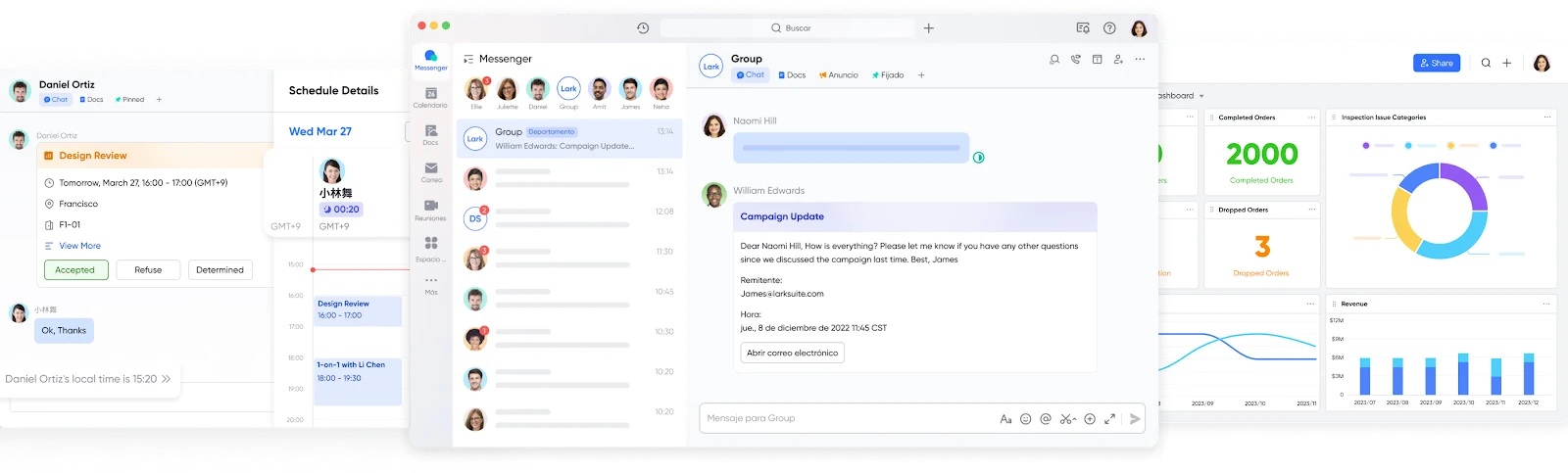
You don't need to start from a blank canvas. Lark's ready-to-use templates give you a fast path to an operational customer 360 degree view. Begin with a lightweight structure that mirrors your customer 360 degree view data model—Accounts, People, Interactions, Transactions, Outcomes—and adapt fields so they power day-one actions. Choose templates like Sales CRM - Professional Edition, Basic CRM, Base CRM, Client Success, Customer Review Analysis, Daily Sales Report, Contract Management, and User Feedback AI Analysis to keep your 360 degree customer view definition practical and the 360 degree view of the customer meaning actionable.
Marketing
Use Expo Lead Collection, User Feedback Collection, Customer Service Survey, Customer Satisfaction Form and Analysis, Customer Review Analysis, and Membership Management to plan lifecycle campaigns from live signals (activation, adoption, risk). Build segments from product and support activity, attach assets, tasks, and owners, and surface summaries in docs and chat so outreach is timely and aligned to a clearly 360 degree view of customer meaning.
Sales and expansion
Track opportunities alongside health, usage, and renewal signals with Sales CRM - Professional Edition, Basic CRM, or Base CRM. Pair with Sales Lead Management, Sales Tracker - Lead Analysis and Follow-up, Daily Sales Report, National Sales Data Dashboard, Contract Management, Product Quotation, and Order Form. Roll up indicators like seat utilization and executive engagement so alerts, briefs, and meetings pull from one record—your customer 360 degree view—rather than scattered sheets.
Success, support, and QBRs
Standardize renewals, escalations, and QBRs with Client Success, Client Visit Tracking Report, Customer & Contract Management, Customer Service Survey, and User Feedback AI Analysis. Keep a compact account brief—ARR/MRR, lifecycle, health trend, top events—embedded in notes and agendas. With one record powering notifications, tasks, and approvals, your 360-degree customer view stays trusted during the moments that matter and reinforces the customer 360 degree view data model across teams.
Why this helps you ship quickly
- Real starting points: Lark includes project tracking and broader project management templates you can repurpose for customer workstreams, so your team can launch in hours rather than weeks
- Scalable structure: A multi-project approach maps naturally to portfolios, regions, or segments as your 360-degree customer view grows across teams and geographies.
- Clear outcomes: Tie every field to an action—owner assignments, SLA timers, or next-best steps—so the 360-degree customer view isn't just informative, it's decisive.
How to adapt templates in minutes
- Rename and relabel fields to match your 360 degree customer view data model (for example, "Project" to "Account," "Task" to "Playbook step," "Status" to "Lifecycle").
- Add linked records for People and Interactions so recent activity and key stakeholders are always one click away.
- Create views for "At-risk renewals," "Active escalations," or "High expansion likelihood," then pin them to team channels for visibility.
- Wire lightweight automations: when health drops or a renewal nears, post a compact card to chat showing last activity, health trend, ARR/MRR, lifecycle stage, and top signals—everything else stays a click away in the profile.
Conclusion
The real unlock isn't the schema diagram—it's how smoothly context flows through your daily work. When chat, docs, calendar, meetings, tasks, and approvals live beside a no‑code database with automations and views, a 360 profile stops being abstract and starts driving outcomes. Lark, one of the best Google Workspace alternatives, exemplifies this pattern: profile signals become compact cards in chat, tasks route with owners and SLAs, docs pull live fields into agendas, meetings start with context, and approvals update sensitive fields—all in one place. That's how a pragmatically 360-degree customer view reliably becomes your team's default way of working.
If you're starting now:
- Define your MVP fields and owners in a shared no‑code database (e.g., Lark Base).
- Connect two sources (product usage, billing) and ship one high‑value alert plus one playbook.
- Embed profile views in docs and meeting agendas; auto‑create tasks from triggers with approvals for sensitive changes.
- Review metrics weekly (activation, time‑to‑value, alert‑to‑action), then iterate.
Keep the north star simple: We maintain a deliberately 360 degree view of customer effectively so every handoff is contextual, every message is relevant, and every decision is informed.
FAQs
What is a 360-degree customer view?
A single, living profile unifying identity, interactions, purchases, support, and outcomes across tools. It's the 360 degree customer view definition: one trusted record teams use to decide and act.
What is a 360-degree view?
A consolidated perspective of a customer across channels and time; the 360 degree view of the customer meaning is simply shared context that updates and drives timely actions.
How do you describe a 360-degree view?
One evolving, actionable profile—not a dashboard. It travels into chat, docs, meetings, and tasks so owners always have context and next steps.
How to build a customer 360 view?
Start with an MVP customer 360 degree view data model (Accounts, People, Interactions, Transactions, Outcomes), add identity resolution, and wire automations. A collaborative suite like Lark helps you implement quickly.
How is a Customer 360 different from a CRM?
A CRM logs sales activity; a 360-degree customer view unifies data across systems and channels, then powers actions in chat, docs, meetings, and tasks.
Related reading
Table of contents
Start using Lark today

Manage all your work in one place
Boost team efficiency by 10x
Save up to 70% on software costs
Table of contents
Start using Lark today
Manage all your work in one place
Boost team efficiency by 10x
Save up to 70% on software costs
Keep reading









2026 Lark Technologies Pte. Ltd.
Headquartered in Singapore with offices worldwide.






Explore: