














The Ultimate Customer Onboarding Guide: Boost Retention and Efficiency

Matthew Sia
Product Marketing Manager
Sep 18, 2026
Matthew Sia
Sep 18, 2026

15 min read


A new customer signature marks a beginning, a moment of shared potential. This pivotal transition from sales prospect to active user sets the trajectory for the entire customer relationship. An effective customer onboarding process is the cornerstone of this journey, designed to transform initial excitement into long-term success. This critical period, the first real test of a brand's promise, is where customer onboarding makes its impact.
Customer onboarding is the structured process of integrating a new customer into a service. The primary goal is to guide users to their first meaningful success, achieving what is known as Time to First Value as quickly as possible. A positive experience builds a foundation of trust, while a negative one can jeopardize the entire relationship before it truly begins. This guide provides an actionable strategy for building an onboarding process that not only retains customers but also turns them into advocates.

What is customer onboarding?
At its core, customer onboarding is the series of actions that help new customers become successful with a product or service. It transcends simple account setup or a basic product tour. Effective onboarding is a strategic journey designed to demonstrate value quickly and consistently.
The central objective is to minimize the Time to First Value. When a customer realizes tangible benefit from a product early on, their likelihood of long term adoption increases significantly. A good onboarding experience is proactive, clear, and focused on customer goals. A bad experience is reactive, confusing, and leaves the customer to figure out value on their own.
Why a strong onboarding process is your secret weapon
A well-executed onboarding process directly influences key business metrics, serving as a powerful tool for sustainable growth and operational stability.
- Reducing customer churn
Customers who struggle to understand product value often discontinue their subscriptions. A structured onboarding process directly addresses this risk by ensuring customers achieve meaningful success quickly. This early validation significantly decreases the likelihood of early-stage cancellations.
- Increasing customer lifetime value
Successfully onboarded customers naturally progress toward expanded product usage and premium plan upgrades. Their positive experiences transform them into organic brand advocates, generating valuable word-of-mouth referrals that strengthen the company's market position.
- Improving internal operational efficiency
Beyond customer-facing benefits, onboarding optimization creates substantial internal advantages. Streamlined processes minimize cross-departmental friction, eliminate redundant communications, and automate manual handoffs. This operational clarity enables teams to manage increasing customer volumes without corresponding overhead expansion.
5 key stages of a profitable onboarding journey
A successful customer onboarding process unfolds through five distinct stages, each building upon the last to guide customers from initial excitement to sustained product adoption. Mastering this journey requires both strategic planning and consistent execution at every phase.
- Stage 1: The pre-onboarding handoff (Sales to CS)
The foundation for a successful onboarding is laid before the customer's first official day. A structured internal handoff from the Sales to the Customer Success team is critical. This transition must transfer all relevant customer context, including documented pain points, discussed goals, and specific expectations. Utilizing a shared platform to centralize this information prevents data loss and ensures the onboarding team can begin the relationship with strong, personalized context.
- Stage 2: The warm welcome and goal setting
The initial communication sets the tone for the entire partnership. A prompt, personalized welcome message confirms the customer's decision and builds immediate goodwill. More importantly, this stage is dedicated to establishing clear, mutual success goals. Collaboratively defining what achievement looks like within the first 30, 60, and 90 days creates a shared vision and a measurable roadmap, aligning both parties on the desired outcomes from the very start.
- Stage 3: The guided product tour and training
With goals established, the focus shifts to practical product education. This involves guiding users through key features that are directly relevant to their specific objectives, rather than providing a generic overview of all functionalities. Training should be contextual and action-oriented, demonstrating how to complete tasks that lead directly to the customer's defined goals. This approach makes learning immediately applicable and accelerates the path to first value.
- Stage 4: Proactive support and check-ins
During the initial learning period, proactive engagement is essential for maintaining momentum. Instead of waiting for issues to arise, scheduled check-ins should be used to answer questions, gather early feedback, and verify that the journey is on track. This proactive outreach demonstrates a deep commitment to the customer's success and helps identify potential hurdles before they escalate into major problems, fostering a sense of supported partnership.
- Stage 5: The handoff to long-term success
A formal transition marks the completion of the intensive onboarding period and the beginning of the long-term relationship. A structured handoff from the onboarding specialist to the permanent Customer Success Manager ensures continuity. This process should include a summary of key achievements, insights into the customer's engagement style, and a clear list of any outstanding action items. A proper introduction solidifies the transition and maintains the relationship's positive momentum.
Using Lark as your onboarding command center
A modern approach to customer onboarding moves beyond simply adding another tool to the stack. The goal is to replace operational chaos with a single, collaborative hub. A platform like Lark functions as an onboarding command center, uniting the necessary components for a seamless experience.
Core of information management & collaboration
- Lark Base: The command center for customer onboarding
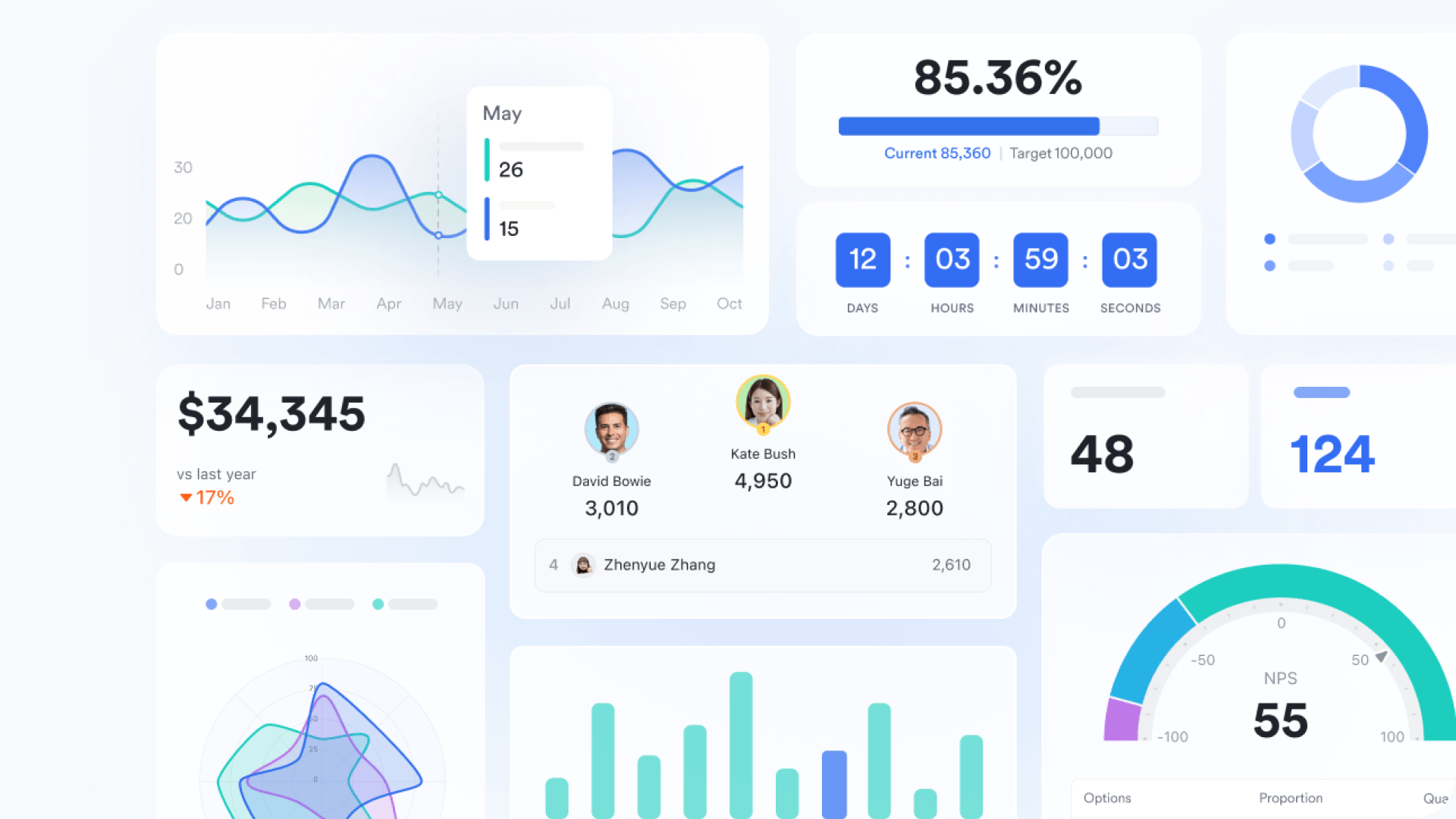
Lark Base enables the onboarding team to create a unified view for each new customer, centrally storing critical data such as contracts, requirement documents, and configuration details. Through multidimensional tables and dashboards, managers can monitor the onboarding progress of all customers in real time—for instance, identifying which clients are stuck at a particular stage—enabling precise management.
- Lark Docs: Dynamic onboarding guides
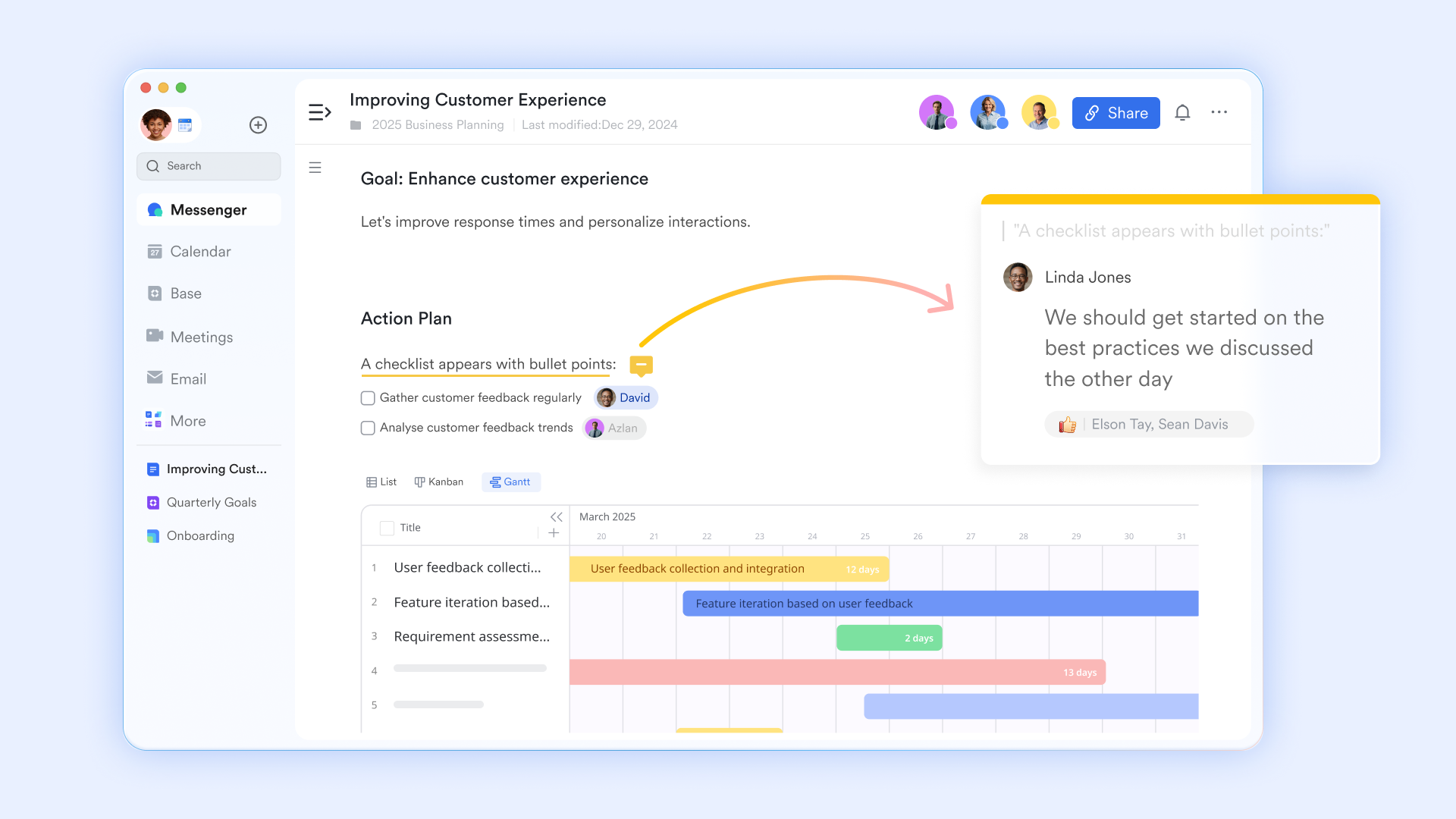
You can use Lark Docs to create interactive onboarding guides or project plans. Unlike static files, team members can collaborate and comment in real time within the same document, ensuring information is always up to date. Moreover, documents can be linked to customer records in Base or specific tasks in Tasks, seamlessly integrating planning with execution.
- Lark Tasks: Ensuring every step is executed
Break down complex onboarding processes into specific, assignable tasks. Assign owners and deadlines for each task, and the system will automatically send reminders and track progress. This effectively avoids accountability ambiguity like “I thought they did it,” ensuring the onboarding process is standardized and free of oversights.
Communication & coordination features
- Lark Messenger: Breaking down information silos
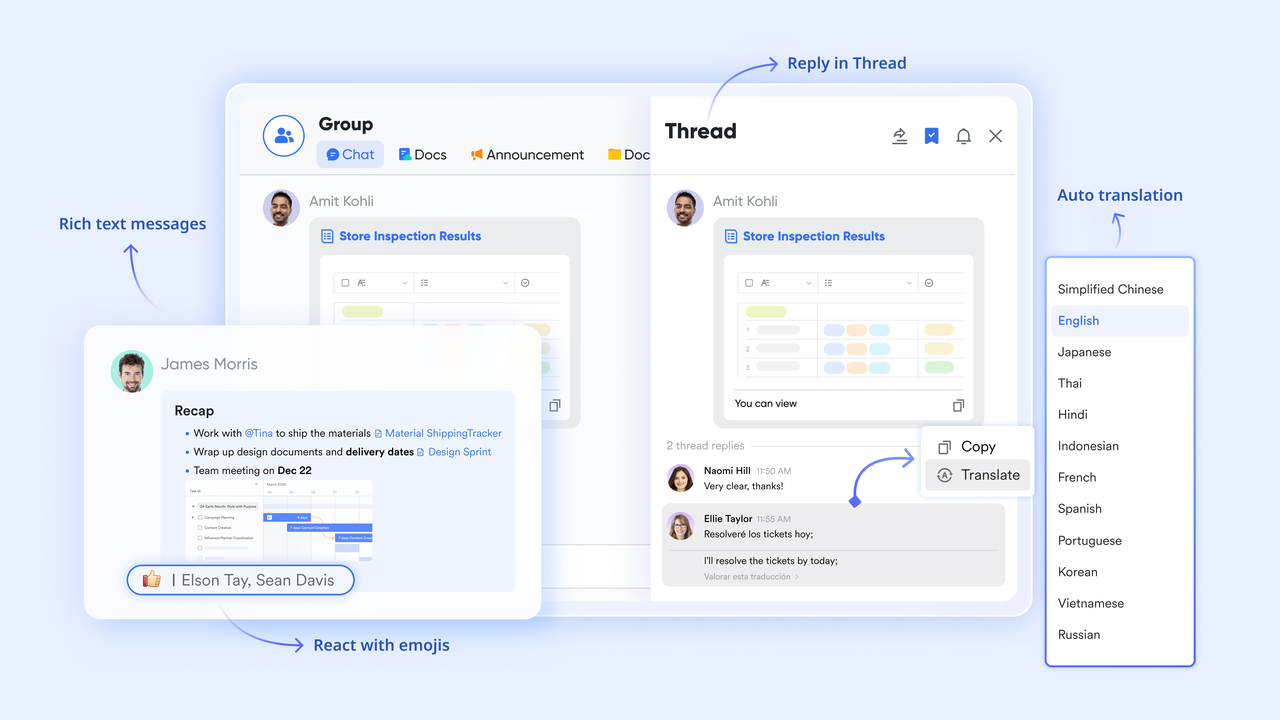
Create dedicated group chats for each new customer or onboarding project, involving relevant internal members (e.g., sales, technical support) and even client representatives. All discussions, files, and questions related to the customer are centralized in the same context, eliminating the hassle of switching between emails and multiple chat apps to find information. This contextualizes communication and significantly boosts resolution efficiency.
- Lark Meetings: Efficient key milestone syncs
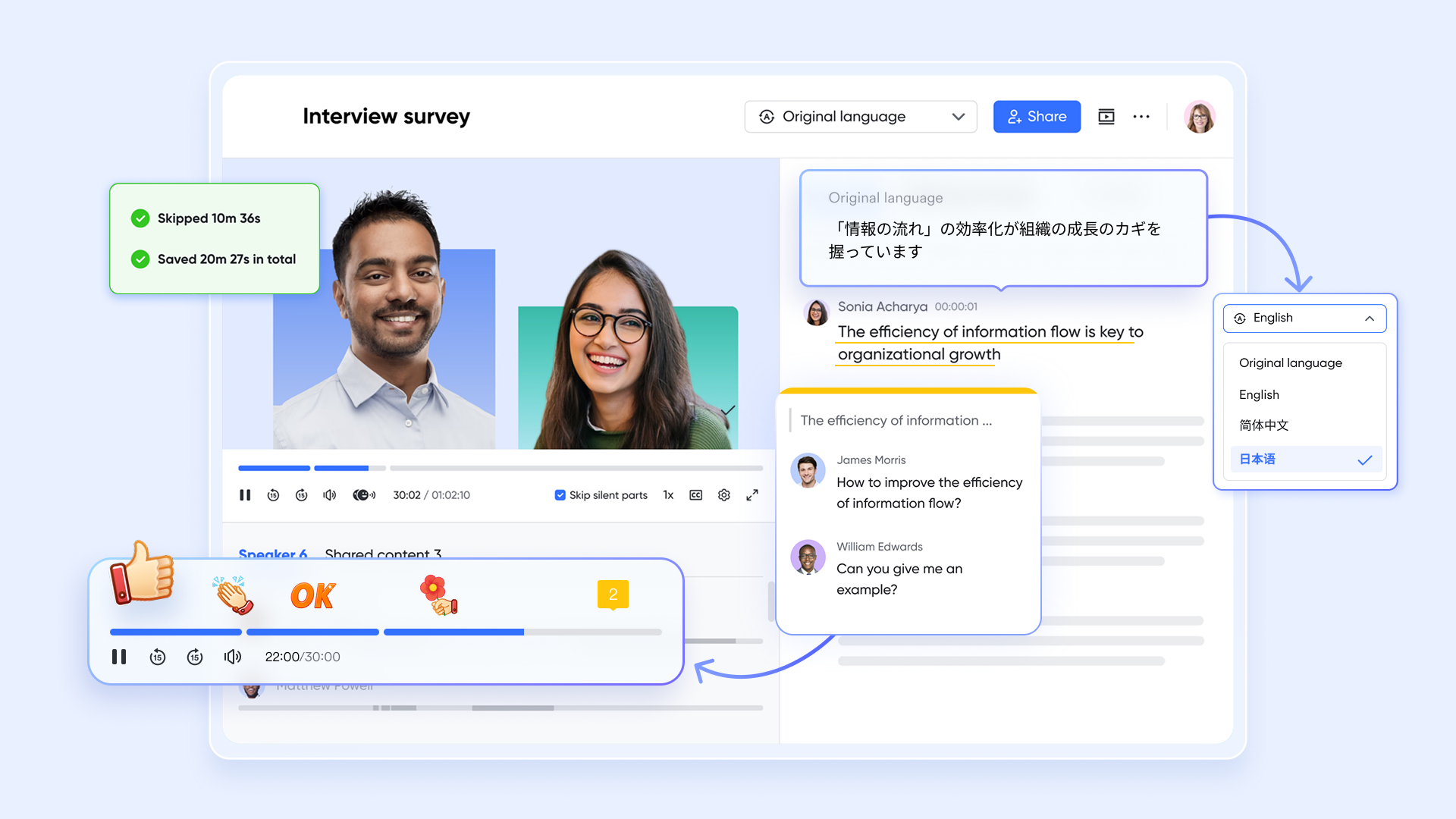
Use it to schedule and conduct kickoff meetings, training sessions, and retrospectives during the onboarding process. When scheduling a meeting, you can directly attach the customer materials to the calendar event, making it easy for participants to prepare in advance. After the meeting, records can be seamlessly synced to group chats.
- Lark Calendar: Managing onboarding timelines with a global view
Visualize all key milestones in the onboarding process—such as training dates and expected launch timelines—on a shared calendar. This is especially important for teams managing multiple parallel onboarding projects, as it allows for quick identification of resource conflicts. Additionally, its automatic time zone conversion feature is essential for teams serving global clients, preventing missed appointments due to time zone misunderstandings.
Process automation & knowledge retention
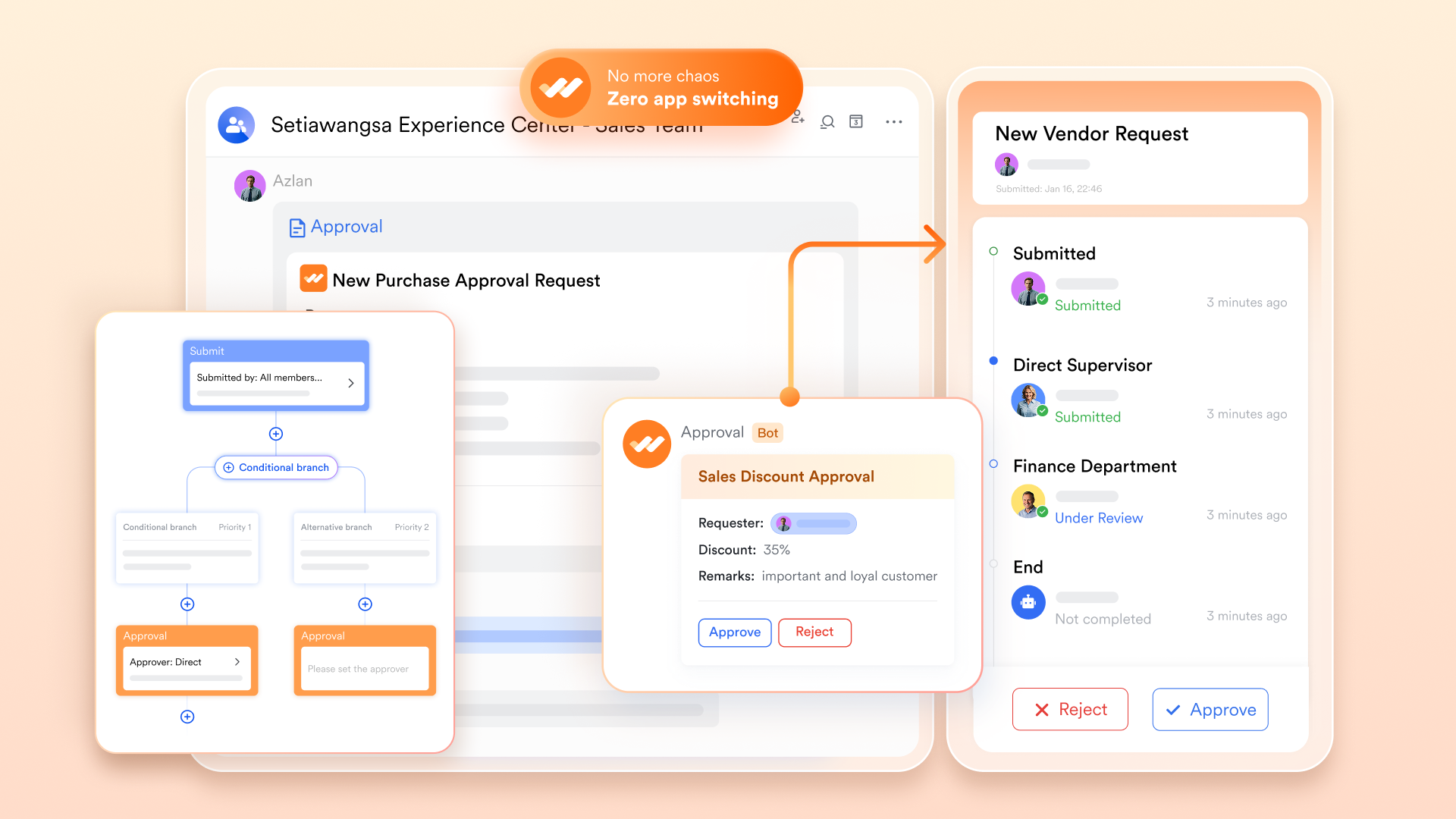
- Lark Approval: Accelerating internal decision-making
During onboarding, processes like discount approvals or additional resource requests can be digitized and automated with Lark Approval. Once a request is submitted, the system automatically routes it to the approver based on predefined workflows and sends reminders. This significantly reduces onboarding delays caused by slow internal processes.
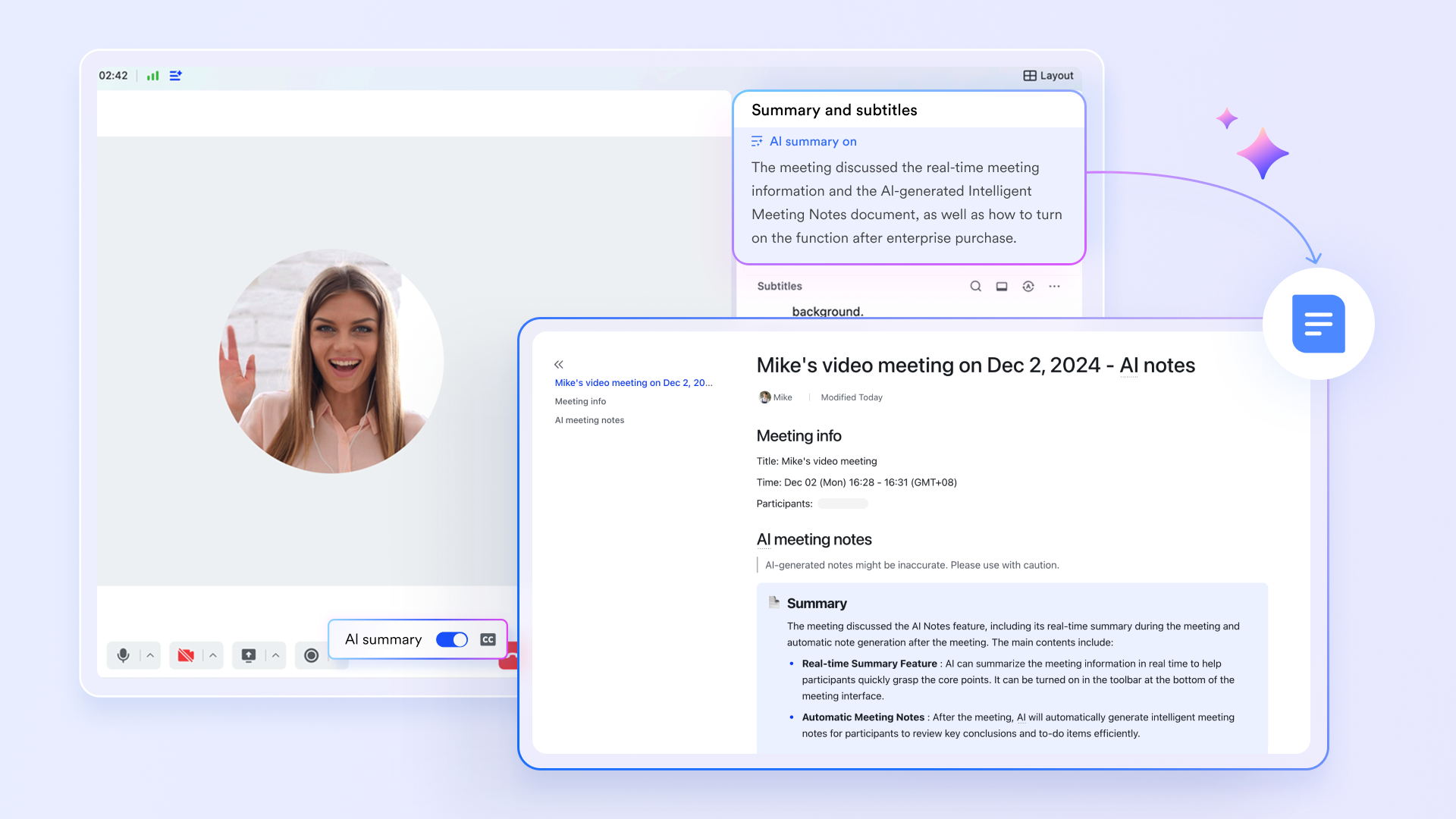
- Lark AI Meeting Notes: Extracting value from meetings
During onboarding communication meetings, this feature automatically generates minutes, accurately capturing customer needs and commitments. More importantly, it identifies and creates action items which are assigned to relevant personnel, ensuring that follow-up discussions are never forgotten.
- Lark Wiki: Building a reusable onboarding knowledge base
Compile and publish proven best practices, frequently asked questions, and standard operating procedures (SOPs) in Lark Wiki. This serves as a continuous learning and self-service knowledge hub for the entire team, enabling new members to get up to speed quickly and ensuring consistent, scalable onboarding service quality.
Common customer onboarding challenges
Even with a defined process, several common challenges can hinder onboarding success.
- Internal misalignment and information silos
When sales, customer success, and support teams use disconnected systems, information becomes trapped. A customer may have to repeat their requirements to different contacts. Solving this requires creating a single source of truth for customer data and facilitating better communication channels between internal teams.
- Slow Time to First Value (TTFV)
A lengthy timeline to initial value is a primary driver of early churn. This often occurs when the onboarding process is not goal oriented or is overly complex. Simplifying the initial steps, focusing on a single "quick win," and eliminating unnecessary setup tasks can dramatically accelerate TTFV.
- Poor communication and lack of visibility
Customers can become frustrated when they do not know what to expect next or who to contact for help. A lack of visibility into the onboarding process's progress creates anxiety. Establishing a clear communication schedule and providing customers with a shared view of the onboarding plan and its status can build trust and manage expectations.
- Scaling the process without losing quality
A process that works for ten new customers per month may break under a hundred. Scaling effectively requires documentation, automation of repetitive tasks, and the right tooling. The goal is to maintain a personalized experience without relying on entirely manual, one off efforts for every new client.
Lark can help you directly address these common hurdles by providing a unified workspace that breaks down internal silos, automates workflows, and offers full visibility into the entire customer journey, turning onboarding challenges into scalable successes.
Customer onboarding best practices
While the core principles of effective onboarding are timeless, their strategic application continues to evolve. Mastering these practices transforms a standard procedure into a competitive advantage.
- Personalize the experience from day one
A generic, one-size-fits-all approach fails to make customers feel valued. Effective personalization begins by leveraging insights gathered during the sales cycle. Onboarding communications should reference specific customer goals, challenges, and discussed use cases. Customizing welcome materials, initial training sessions, and success milestones to align with the customer's unique business objectives demonstrates a deep understanding of their needs and accelerates relevance.
- Automate repetitive tasks, not relationships
Automation is a powerful tool for scaling efficiency, but it should be applied strategically. The goal is to automate administrative overhead—such as scheduling emails, sending reminder notifications, or provisioning accounts—to free up human resources for high-value interactions. The strategic partnership itself, including goal-setting conversations, solution-oriented check-ins, and complex problem-solving, must be guided by genuine human interaction. This balance ensures scalability without sacrificing the personal touch that builds trust.
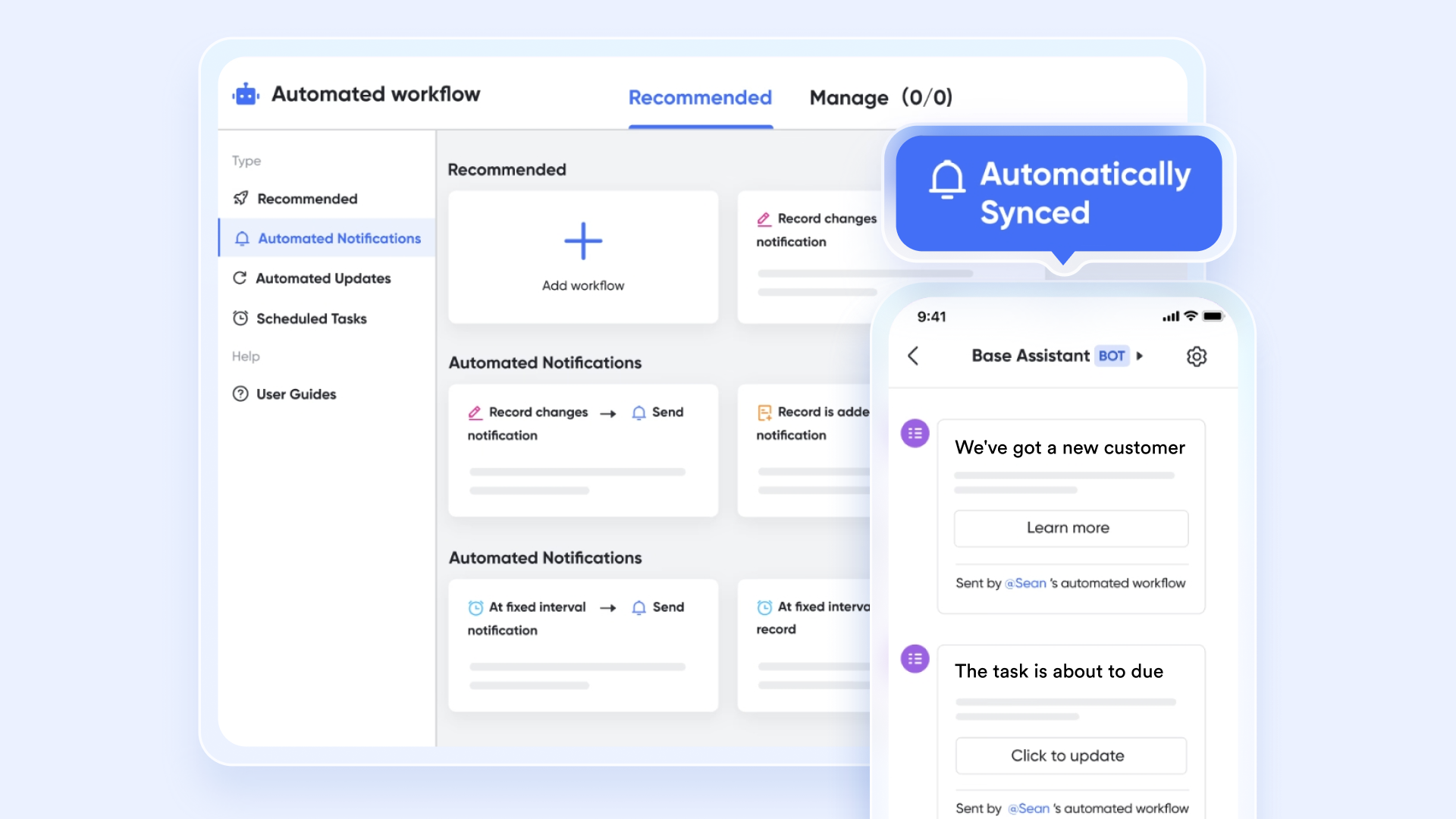
- Set clear expectations and celebrate wins
Uncertainty is a primary source of customer anxiety during onboarding. Clearly outlining the process timeline, key milestones, and respective responsibilities for both the vendor and the customer creates a sense of structure and security. Furthermore, proactively acknowledging and celebrating the achievement of these milestones is crucial. Recognizing progress, whether through a simple congratulatory message or a scheduled check-in, reinforces positive behavior, builds momentum, and strengthens the collaborative partnership.
- Collect and act on feedback early
Waiting until the end of the onboarding process to solicit feedback misses critical opportunities for improvement and relationship-building. Integrating feedback mechanisms at key stages—after the initial setup, following a training session, or during a mid-point check-in—provides real-time insights into the customer's experience. More importantly, acting on this feedback by making visible adjustments demonstrates a commitment to partnership and shows the customer that their opinion directly shapes their journey, fostering greater loyalty and engagement.
Implementing these best practices is significantly streamlined with Lark. Its unified ecosystem supports personalized onboarding at scale, automates administrative tasks to free up time for genuine connection, and provides the shared documents and communication channels necessary to set clear expectations and incorporate feedback seamlessly.
How to measure your onboarding success
Tracking key metrics provides essential insights into onboarding effectiveness and reveals opportunities for improvement. Several indicators offer valuable perspectives on the process.
- Time to First Value (TTFV) measures the average duration for a new customer to achieve their primary initial goal. A shorter TTFV generally correlates with higher long-term retention.
- Onboarding completion rate indicates the percentage of customers who finish all essential steps in the defined process. A low rate may suggest unnecessary complexity or lack of clear guidance.
- Initial engagement score aggregates early product usage data, such as login frequency and adoption of core features. This metric serves as a leading indicator of future customer health.
- Early-stage churn rate tracks cancellations occurring during or immediately after the onboarding period. A high rate often signals fundamental issues in the initial customer experience that require immediate attention.
Conclusion
A strategic customer onboarding process transcends operational necessity to become a genuine growth engine, directly strengthening customer retention, increasing lifetime value, and enhancing internal efficiency. The transition from a fragmented tool stack to a unified platform is fundamental to scaling this critical function effectively.
For businesses ready to transform their onboarding from a cost center into a driver of sustainable growth, Lark provides the ideal foundation. Its all-in-one environment is specifically designed to create seamless customer journeys and empower collaborative internal teams. Discover how a unified approach can streamline your entire onboarding experience.
FAQs
What is a customer onboarding process?
A customer onboarding process is the structured journey that guides new users from initial sign-up to achieving their first meaningful value with a product or service. It encompasses everything from welcome communications and training to goal setting and ongoing support. The primary objective is to build product adoption and establish a strong foundation for a long-term customer relationship.
What are the 5 stages of the onboarding process?
The five key stages are: 1) The pre-onboarding handoff from Sales to Customer Success, 2) The warm welcome and mutual goal-setting phase, 3) A guided, contextual product tour and training, 4) A period of proactive support and scheduled check-ins, and 5) A formal handoff to the long-term Customer Success Manager to ensure continuity and ongoing growth.
What is a customer onboarding job?
A customer onboarding job, such as a specialist or manager, focuses on guiding new clients through the initial setup and training phases. This role is responsible for ensuring a smooth transition from sales, managing the implementation project, and helping customers achieve their first critical business outcomes. The ultimate goal is to build a strong foundation that maximizes customer satisfaction and reduces early-stage churn.
What are the 5 C's of onboarding?
The 5 C's provide a framework for an effective onboarding experience: Clarity (setting clear expectations), Connection (building a personal relationship), Confidence (empowering the user), Competence (ensuring product mastery), and Consistency (delivering a reliable and standardized process). Together, these principles help create a seamless and positive customer journey.
Related reading
Table of contents
Start using Lark today

Manage all your work in one place
Boost team efficiency by 10x
Save up to 70% on software costs
Table of contents
Start using Lark today
Manage all your work in one place
Boost team efficiency by 10x
Save up to 70% on software costs
Keep reading









2026 Lark Technologies Pte. Ltd.
Headquartered in Singapore with offices worldwide.






Explore: