Modern projects move fast, span multiple teams, and operate under constant pressure to deliver more with less. In this environment, relying on intuition or static plans is risky. This is where project controls come in. They provide the discipline, systems, and visibility needed to keep cost, schedule, scope, and performance aligned with business objectives—before minor issues become major failures.
This guide breaks down what project controls are, what they include, how they differ from project management, key roles involved, best-practice processes, and why platforms like Lark are increasingly used to manage project controls in real time.
See how structured controls improve project outcomes
What are project controls?
Project controls are the processes, tools, and techniques used to plan, monitor, and regulate a against approved baselines for cost, schedule, scope, and quality. Their primary purpose is to provide early visibility into deviations so corrective actions can be taken before issues escalate into delays or cost overruns.
Project controls rely on objective, data-driven measurements rather than subjective status updates. They include budgeting and cost tracking, and progress measurement, risk and change management, performance forecasting, and structured reporting. By comparing planned values with actual results, project controls help teams understand not only where a project stands today, but where it is likely to finish.
Applied across industries such as construction, engineering, IT, and infrastructure, project controls support informed decision-making, improve accountability, and increase stakeholder confidence. When used consistently, they shift project execution from reactive problem-solving to predictable and controlled delivery.
What is included in project controls?
Project controls consist of multiple coordinated functions that help teams plan work, measure progress, and respond to deviations early. Together, they create a structured system for maintaining predictability and control across projects.
- Cost control and budgeting: This area focuses on estimating costs, setting approved budgets, and tracking actual expenditure over time. A project control engineer typically monitors cost variances and supports forecasts to prevent overruns.
- Schedule planning and progress tracking: Schedules define task sequences, durations, and dependencies, while real execution against the plan. Adequate construction project controls rely on accurate schedule updates to identify delays early.
- Risk and change control: Risk control identifies uncertainties and assesses their potential impact on cost and timelines. Change control ensures scope adjustments are reviewed systematically before approval, supported by structured project control software.
- Forecasting and performance measurement: like earned value compare planned work with completed work and actual costs. This allows teams to forecast outcomes with greater confidence and transparency.
- Reporting and decision support: Reporting consolidates project data into clear insights for managers and stakeholders. Well-designed reports support timely decisions by highlighting trends, exceptions, and performance gaps.
Why project controls are critical for project success
Project controls play a crucial role in ensuring projects remain predictable, transparent, and aligned with business objectives. By continuously measuring performance, they help organizations act early rather than react late.
- Early warning signals for delays and cost overruns: Project controls highlight schedule slippages and cost variances before they become unmanageable. This proactive monitoring creates demand for specialized project control jobs focused on early intervention.
- Better decision-making using real-time data: Timely, accurate data allows teams to evaluate options based on facts rather than assumptions. A project control specialist translates performance data into insights that support informed decisions.
- Accountability and stakeholder confidence: Clear baselines, tracking, and reporting establish responsibility across teams and vendors. Oversight from a project control manager helps maintain governance and builds trust with stakeholders.
- Long-term organizational learning: Historical project data reveals patterns, risks, and performance benchmarks over time. These insights and improve maturity across the project portfolio.
Distinctions of common notions: Project controls vs project management
Project controls and project management are closely connected but serve different purposes within a project. Understanding the distinction helps teams apply the proper focus at the right level.
- Strategic leadership vs. operational control: provides strategic direction by defining objectives, priorities, and delivery approaches. Project controls focus on operational control by measuring performance against approved plans.
- Who owns decisions vs. who monitors performance: Project managers are responsible for making decisions and directing teams toward project goals. monitor cost, schedule, and progress data to inform those decisions objectively.
- How both functions work together in real projects: Project managers rely on control data to understand risks and trends before acting. When aligned, management sets direction while controls ensure execution stays within agreed boundaries.
Key roles in project controls
Project controls rely on clearly defined roles that translate project data into reliable insight and effective oversight. Each role supports a different level of analysis, coordination, and decision-making.
Project control engineer
This role focuses on the technical foundations of project controls, including schedules, cost tracking, and progress measurement. Project control engineers maintain baseline data, update performance metrics, and ensure the accuracy of information. Their work supports reliable forecasting and variance analysis.
Project controls specialist
Project controls specialists bridge technical data and management insight through cross-functional analysis. They consolidate cost, schedule, and risk information into reports and forecasts. Their role is critical in explaining trends and implications to project teams and stakeholders.
Project control manager
The project control manager provides governance and ensures consistent control standards across projects. They oversee control processes, at a portfolio level, and support executive decision-making. This role ensures alignment between project delivery and organizational objectives.
Project controls process step by step
Project controls follow a structured, repeatable process that turns plans into measurable performance and timely action. Each step builds on the previous one to maintain control throughout the project lifecycle.
- Establish baselines: Approved baselines define what success looks like for the project. They provide a fixed reference point against which all future performance is measured.
- Track actual performance: Teams regularly capture actual progress, costs, and resource usage. Accurate data collection ensures reflects real project conditions.
- Analyze variances and trends: Actual results are compared with baseline plans to identify deviations. Trend analysis helps determine whether issues are isolated or likely to worsen over time.
- Forecast outcomes: Using current performance data, teams estimate final cost and schedule results. Forecasts allow stakeholders to understand likely outcomes before the project is complete.
- Implement corrective actions: When deviations are identified, corrective measures are planned and executed. These actions aim to realign the project with approved objectives and limits.
Project control software: What should you look for
Project control software supports consistent monitoring, analysis, and coordination across complex projects. Choosing the right platform ensures data stays accurate, accessible, and actionable for all stakeholders.
- Real-time visibility across teams: The software should provide live updates on progress, costs, and risks from multiple teams. Real-time visibility reduces reporting delays and supports faster response to emerging issues.
- Cost, schedule, and resource integration: Effective connect cost data, schedules, and in a single system. This integration enables accurate variance analysis and reliable forecasting.
- Collaboration and approval workflows: help manage reviews, approvals, and change requests systematically. This ensures decisions are documented, and controls are applied consistently.
- Reporting and executive dashboards: The platform should convert detailed data into clear, high-level views for leadership. Dashboards highlight trends, exceptions, and key performance indicators for informed decisions.
As projects grow more complex, traditional project control methods often struggle to keep pace with real-time execution—static reports, disconnected tools, and manual coordination slow visibility and response times. Teams need controls that operate continuously, not retrospectively, and adapt as conditions change. This shift is driving organizations toward collaboration-first platforms like Lark, where control, execution, and communication happen in one system.
Why Lark is a preferred platform for modern project controls
Modern project controls require more than static plans and status updates. Teams need live visibility, clear ownership, and systems that adapt as scope, timelines, and dependencies change. brings planning, execution, communication, and reporting into a single workspace, making it easier to control projects in real time rather than react after issues surface.
Structured project data with dynamic scheduling
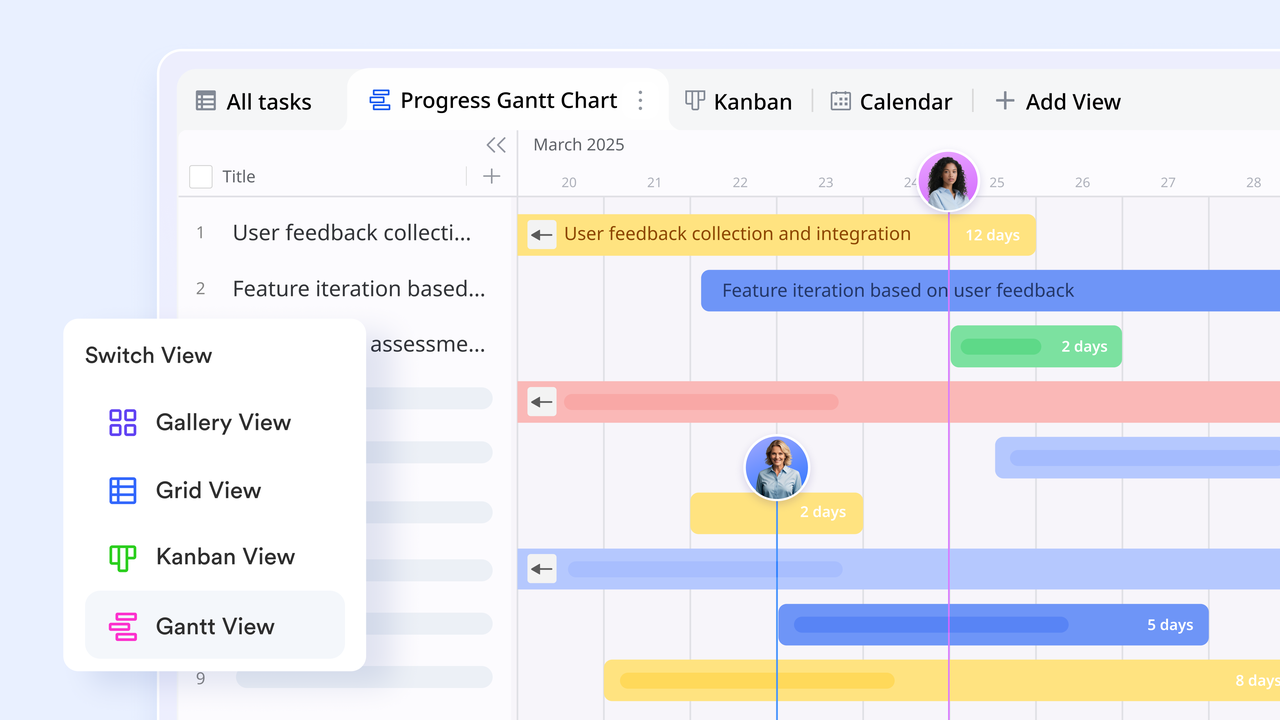
allows teams to define project work using structured records instead of free-form spreadsheets. Each task or milestone can include start and end dates, dependencies, owners, priorities, and status fields. The automatically visualizes these relationships, showing how tasks flow over time and how delays affect downstream activities. When dates or dependencies change, the Gantt chart updates instantly, helping project managers maintain schedule control without rebuilding timelines.
Clear ownership and execution tracking
Lark Tasks translates project plans into executable work with clear accountability. Each task has an owner, deadline, priority, and , with support for subtasks and dependencies. Tasks can be linked back to Base records, ensuring execution aligns with the master project structure. Managers gain visibility into who is responsible for what and whether execution is on track, without chasing updates across tools. 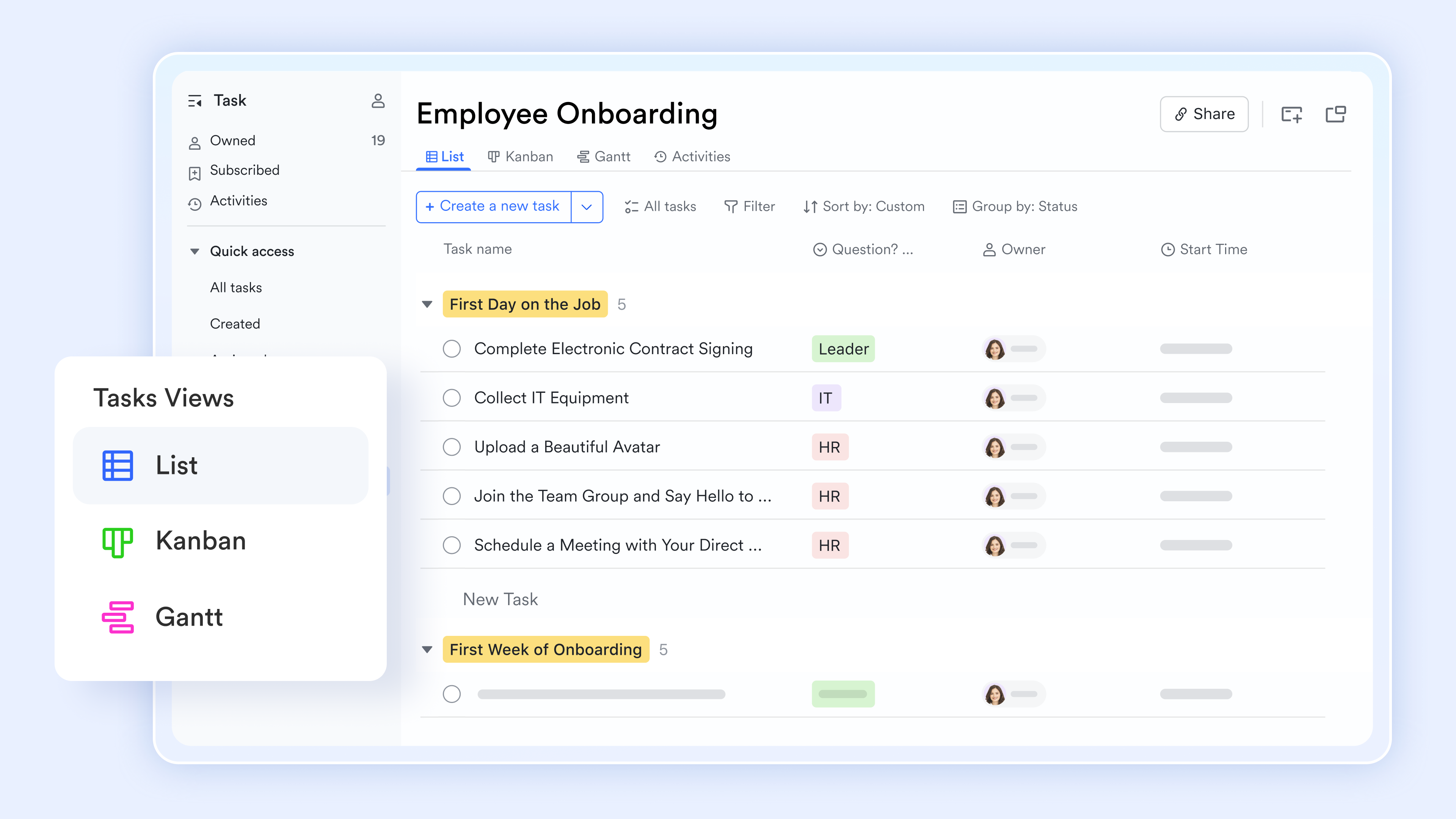
Real-time project health monitoring
Lark Base dashboards convert live project data into actionable visibility. Teams can adherence, task completion rates, overdue items, workload balance, and risk indicators in one view. Because dashboards pull directly from active records, they update continuously as work progresses. This replaces static weekly reports with always-current oversight, enabling faster decisions and early intervention when issues arise. 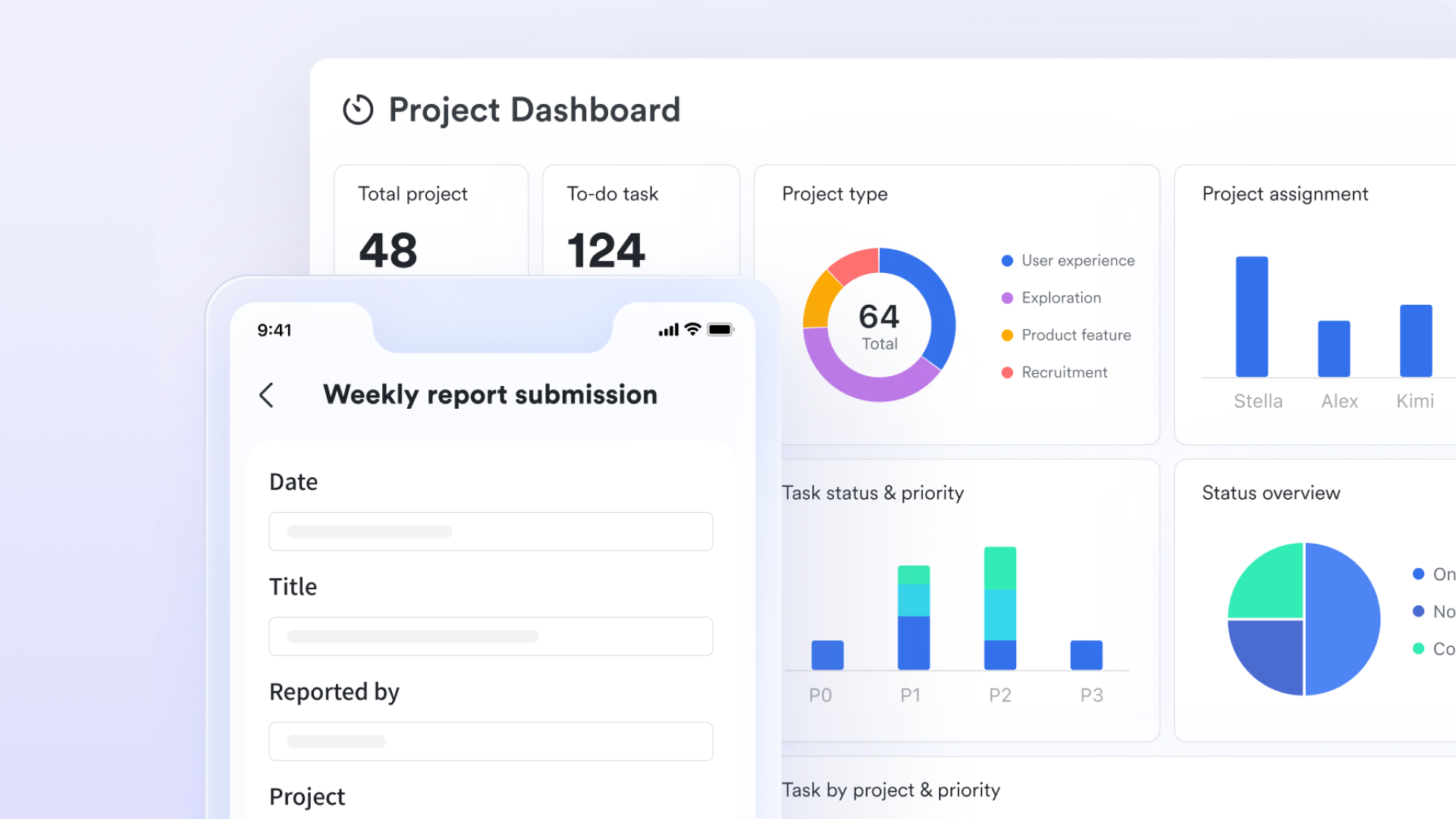
Automated governance and control workflows
Lark Base workflows enforce project controls through automation rather than manual policing. Teams can define rules such as creating events, generating tasks, and sending them to stakeholders, or notifying stakeholders when key conditions are met. Workflows respond immediately to data changes, ensuring reviews, handoffs, and controls are consistent. This reduces reliance on individual follow-ups while maintaining governance across complex projects. 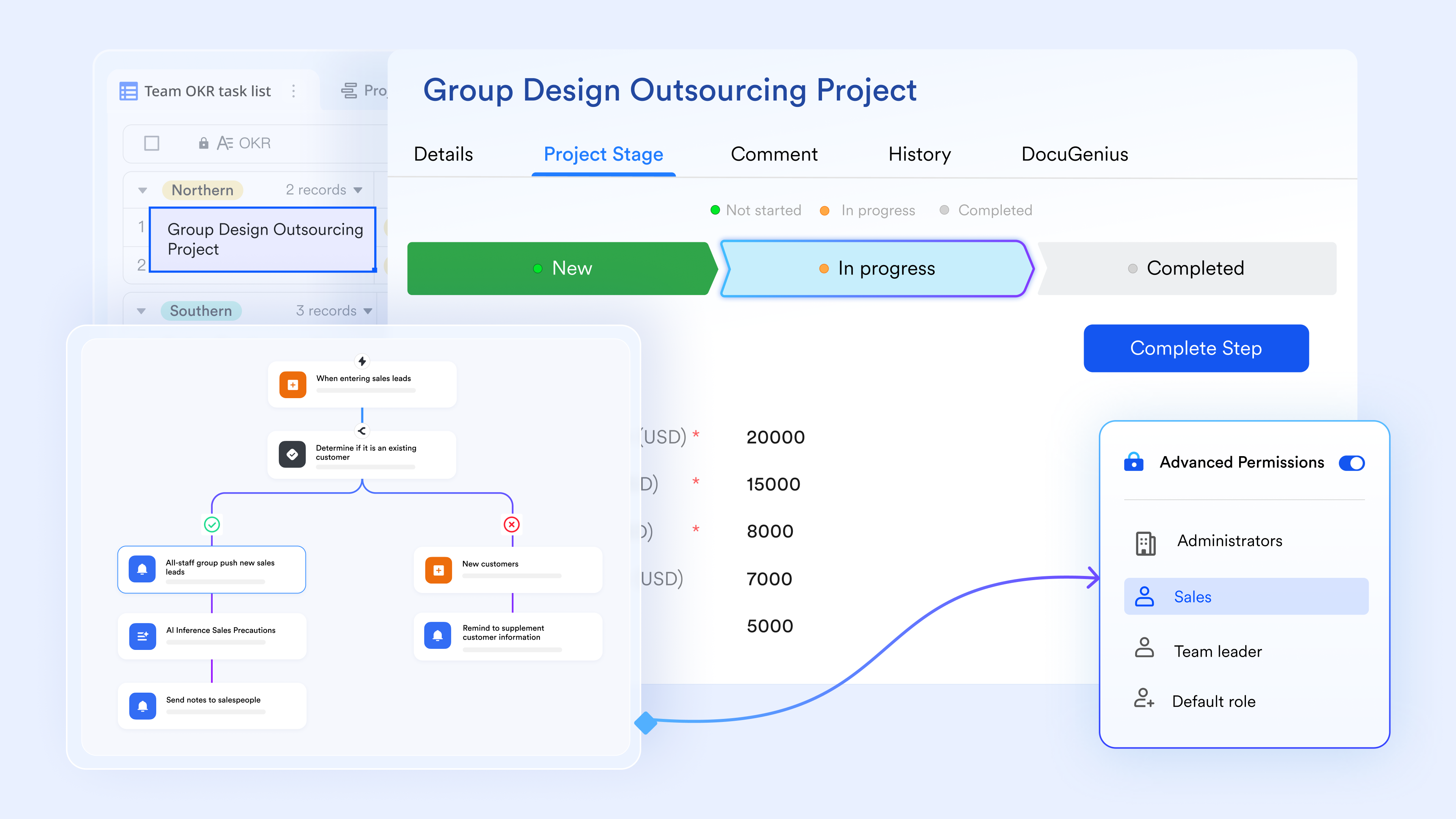
Contextual coordination tied to project data
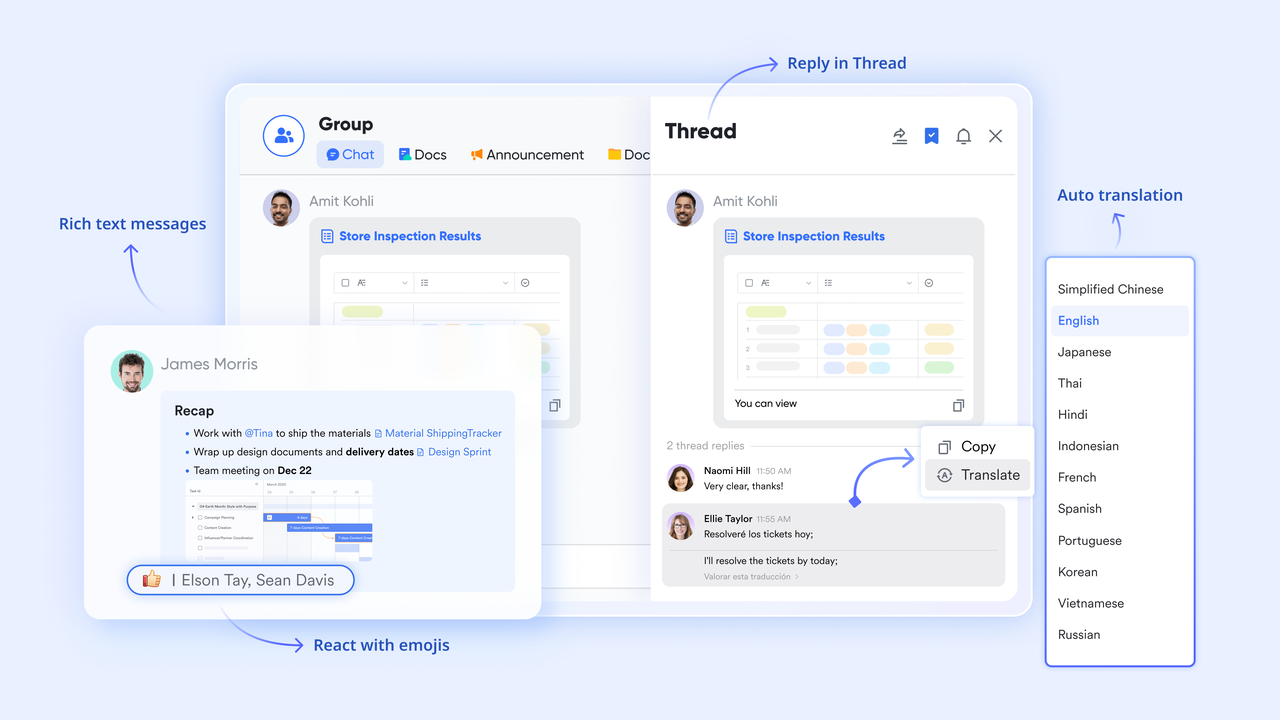
keeps communication connected to project execution. Teams can discuss specific tasks, Base records, or documents directly within chat, preserving context for decisions and updates. Messages can be turned into tasks, and @mentions ensure the right people are notified instantly. This eliminates fragmented communication and ensures coordination that supports project controls rather than undermining them.
Living project documentation with built-in accountability
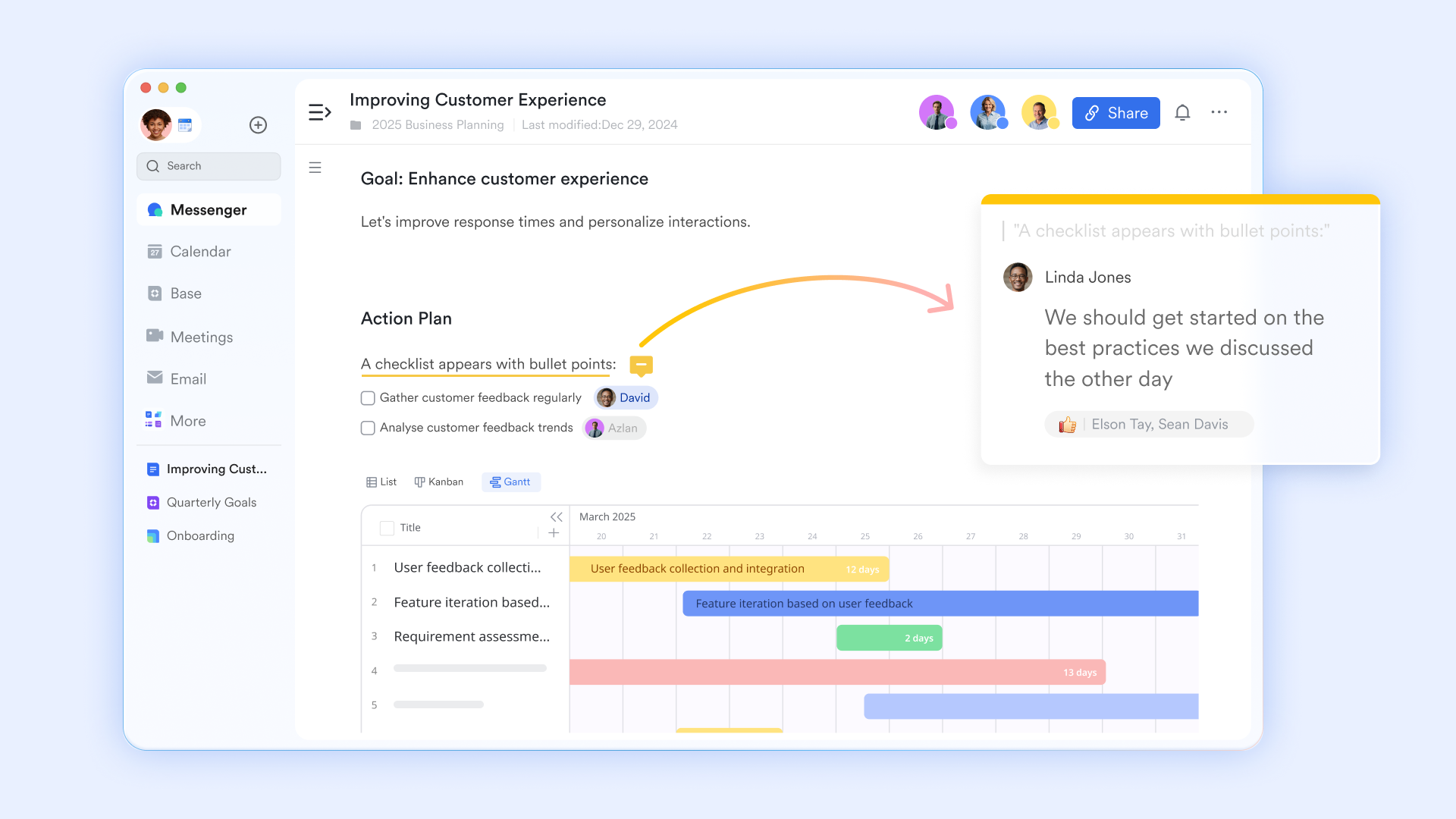
supports for plans, risk logs, meeting notes, and control reports. Teams can @mention individuals to assign responsibility and create task lists directly inside documents for follow-up actions. Because docs stay connected to project data and tasks, documentation evolves alongside execution rather than becoming outdated reference material.
:
- Starter plan: Free forever plan that includes 11 powerful tools for up to 20 users. It also comes with 100GB of storage, 1000 automation runs, AI translations, and more.
- Pro plan: $12/user/month (billed annually) for up to 500 users. It includes everything in Starter plus group calling for up to 500 attendees, 15TB of storage, 50,000 automation runs, and more.
- Enterprise plan: for custom pricing. Supports unlimited users and includes even more automation runs and advanced security, compliance, and management features.
For small teams with simple communication needs

18 months message history
1000 Base automation runs/month
2000 rows per table in Base
Most POPULAR
For companies with comprehensive collaboration and management needs
Unlimited message history
500-participant video meetings
50k Base automation runs/month
20k rows per table in Base
For large companies with advanced security and organizational management needs
Get a personalized demo and pricing
Unlimited message history
500-participant video meetings
15 TB storage + 30 GB storage/user
500k Base automation runs/month
50k Base automation runs/month
Most POPULAR
For companies with comprehensive collaboration and management needs
Unlimited message history
500-participant video meetings
50k Base automation runs/month
20k rows per table in Base
Common challenges in project controls
Project controls often face practical challenges that limit their effectiveness if not addressed early. These issues usually stem from people, processes, or fragmented technology rather than methodology itself.
Poor data quality and late reporting: Inaccurate or delayed data undermines trust in project control outputs. When updates arrive too late, teams lose the ability to act before issues escalate.
Solution: Use analysis tools, such as Lark's real-time dashboards and , to ensure that progress data is captured as it happens
Tool overload and disconnected systems: Using multiple unconnected tools creates duplicated effort and inconsistent data. This fragmentation makes it harder to maintain a single source of truth.
Solution: Try an all-in-one platform, like Lark, to avoid tool sprawl. By consolidating chat, video, and document collaboration into a single space, they can serve as a single source of truth, with data moving seamlessly from a conversation into a project tracker.
Resistance from project teams: Project teams may see controls as administrative overhead rather than support. Lack of understanding or ownership can reduce data accuracy and adoption.
Solution: Using to make data entry part of the natural workflow. Assigning tasks directly from a meeting or chat ensures team members feel supported rather than policed.
Conclusion
Project controls provide the structure and visibility needed to deliver projects predictably in today's complex environments. By integrating cost control, scheduling, , forecasting, and reporting, they help teams detect issues early, make informed decisions, and maintain accountability throughout the project lifecycle. Clear roles, consistent processes, and reliable data turn project execution from reactive problem-solving into controlled delivery aligned with business objectives.
However, the effectiveness of project controls increasingly depends on the tools used to support them. Disconnected systems, manual reporting, and delayed updates limit their value. Modern projects require platforms that combine planning, execution, collaboration, and oversight in one place. enables teams to manage project data, workflows, communication, and reporting within a unified workspace, reducing friction and improving real-time control.
If your organization is looking to strengthen project controls while simplifying how teams work, exploring Lark can be a practical next step toward more transparent and reliable project delivery.
Monitor data performance and control projects in real time
FAQs
Is project control in construction projects necessary?
Yes, construction projects involve complex schedules, budgets, and dependencies that require continuous monitoring. Project control construction helps identify delays, cost overruns, and risks early. Platforms like Lark support and coordination across construction teams.
Can project controls work without specialized software?
Project controls can operate with manual tools, but effectiveness declines as complexity increases. Many firms adopt frameworks similar to Aegis Project Controls to improve structure and consistency. Using Lark reduces manual effort by centralizing data and workflows.
How early should project controls be introduced in a project?
Project controls should begin during planning, before execution starts. Early controls improve forecasting accuracy and clarify roles, which also influences expectations around project controls specialist salary and responsibilities. Lark helps establish baselines from day one.
Do agile or hybrid projects still need project controls?
Yes, agile projects still require visibility into cost, progress, and risks, even if plans evolve. Confusion sometimes arises from unrelated terms, such as Project Zomboid controls, but professional project controls remain essential. Lark adapts controls to .
What is the biggest mistake organizations make with project controls?
The most common mistake is relying on fragmented tools and delayed reporting. This weakens decision-making and trust in data, especially without construction project control software. Lark reduces this risk through real-time project oversight.
Related reading