














Project Management Priority Matrix: Understand it in Minutes

Ryan Tanner
Product Marketing Specialist
Sep 18, 2026
Ryan Tanner
Sep 18, 2026

14 min read


Managing multiple projects, deadlines, and stakeholders often leaves teams struggling to decide what deserves immediate action. Without a structured approach, even high-performing teams risk wasting time on low-impact tasks or missing critical deadlines. A project management priority matrix helps bring order to this chaos by offering a clear, visual way to identify what truly matters. It empowers teams to make smarter, faster, and more strategic decisions about where to invest their time and effort. In this guide, we'll explore what a priority matrix is, how to use it effectively, and how Lark, helps teams bring this framework to life effortlessly.

What is a project management priority matrix?
A project management priority matrix is a structured decision-making tool that helps teams organize tasks based on importance, urgency, or effort. By visualizing work in a grid format—often with axes like "impact vs. effort" or "urgent vs. important"—teams can clearly identify where to focus their energy. It reduces ambiguity, supports transparent discussions, and ensures resources are allocated where they deliver the most value. Originating from frameworks such as the Eisenhower Matrix, it has evolved into a core project management technique for improving productivity, decision quality, and overall team alignment.
Why teams need a priority matrix in project management
In fast-moving projects, teams often juggle competing tasks, shifting priorities, and tight deadlines. Without a clear method to evaluate what truly matters, it's easy to lose focus or misallocate resources. A priority matrix brings order and perspective—helping project managers make decisions that align with business goals and maximize impact. Here's why it's a crucial tool for every project team:
- Clarity and focus in project execution: A priority matrix gives every team member a shared understanding of what needs to be done first. It eliminates guesswork, reduces confusion, and keeps everyone aligned on high-value tasks that drive measurable outcomes.
- Optimized use of time and resources: By mapping tasks based on importance and urgency, teams can allocate their efforts more efficiently. This ensures that both manpower and time are invested, where they'll make the most difference—minimizing burnout and waste.
- Improved collaboration and accountability: When priorities are visualized, teams can collaborate more effectively, delegate clearly, and hold each other accountable. Everyone knows who owns what and why certain tasks take precedence.
- Better strategic alignment with company goals: The matrix connects daily execution with organizational objectives. It ensures that each action supports a broader goal, creating cohesion between strategic vision and on-ground work.
- Seamless visibility with Lark: With shared dashboards in Lark Base, teams can view, update, and manage their priorities together in real time. This not only maintains alignment but also enables instant visibility for managers, keeping projects on track from planning to delivery.
Types of project management priority matrices
Different projects demand different approaches to prioritization. A single framework doesn't fit every scenario—which is why project managers often rely on multiple types of priority matrices to suit their needs. Whether the goal is improving time management, balancing impact and effort, or identifying high-value tasks, these models provide clarity and structure. Below are the most common and effective ones used in modern project management.
Eisenhower matrix (urgent–important matrix)
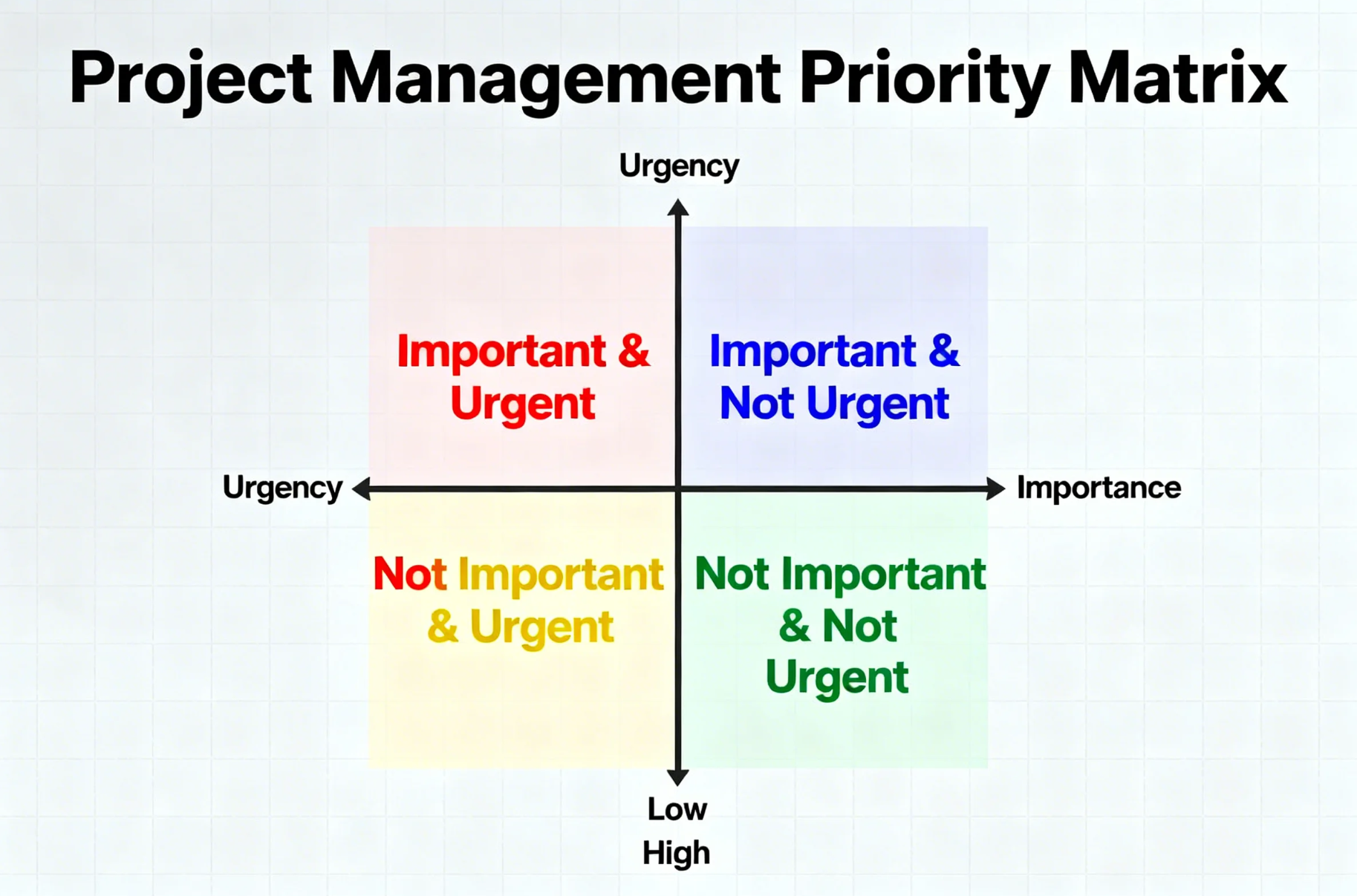
One of the most widely used frameworks, the Eisenhower Matrix categorizes tasks based on urgency and importance, helping teams focus on what truly matters. It divides work into four quadrants that simplify daily decision-making and eliminate distractions.
- Urgent and important: Do immediately
These tasks are critical for project success and must be tackled right away—such as deadline-sensitive deliverables, risk mitigation, or client escalations.
- Important but not urgent: Schedule for later
Long-term strategic activities, like planning, documentation, or training, fall here. Scheduling them ensures progress without disrupting immediate priorities.
- Urgent but not important: Delegate to others
These tasks require prompt action but don't demand your direct attention—such as administrative approvals or minor support requests. Delegation saves valuable time.
- Neither urgent nor important: Eliminate or defer
Tasks in this quadrant add little value and can safely be removed or postponed, helping teams stay focused on high-impact objectives.
Action priority matrix (impact–effort matrix)
The Action Priority Matrix helps teams strike the right balance between impact and effort, ensuring maximum return on time invested. It's perfect for identifying which initiatives deserve energy and which can wait.
- Quick wins – High impact, low effort
These are your best opportunities—tasks that create strong results with minimal input, such as automating reports or sending follow-up emails.
- Major projects – High impact, high effort
These require more planning and coordination but deliver significant outcomes—like launching a new feature or executing a major campaign.
- Fill-ins – Low impact, low effort
Smaller, low-priority tasks that can be done when time allows—such as formatting documents or updating non-critical assets.
- Thankless tasks – Low impact, high effort
These activities consume time without meaningful results, like unnecessary reporting or redundant reviews. Identifying and reducing them boosts efficiency.
Value vs. risk matrix
The value vs. effort matrix evaluates each task or initiative based on how much value it brings compared to how much effort it requires. It's often used in product roadmapping and project planning to guide smarter resource allocation.
- High value, low effort – Prioritize immediately
These are low-hanging fruits that deliver strong returns quickly—like implementing small UI fixes that improve user experience.
- High value, high effort – Plan strategically
These projects justify heavy investment but need careful scheduling—for instance, infrastructure upgrades or major process automation.
- Low value, low effort – Optional tasks
These can be kept as backups or low-priority fillers; they don't add major value but can be completed without disrupting main priorities.
- Low value, high effort – Avoid or automate
These are clear inefficiencies; tasks here should be automated, outsourced, or eliminated entirely to save time and cost.
Custom criteria matrix
The custom criteria matrix is a flexible, data-driven prioritization model that helps teams evaluate tasks, ideas, or projects based on multiple weighted factors. Unlike standard matrices that rely on urgency or impact, this approach assigns numeric scores and weights to custom criteria—such as cost, effort, benefit, complexity, or risk—providing a transparent, quantifiable way to make decisions.
- Weighted scoring for objectivity
Each project or task is evaluated across multiple criteria, with each factor given a specific weight based on its importance. The final score reflects a balanced, data-backed priority ranking.
- Cross-department adaptability
Marketing, operations, and IT teams can all define their own criteria—for instance, marketing may weigh ROI higher, while IT prioritizes technical feasibility. This makes the matrix highly adaptable across functions.
- Visual and automated tracking
A digital version, like the one built in Lark Base, automatically calculates weighted totals, sorts tasks by priority, and updates dynamically when any value changes. This ensures decisions stay accurate and current.
- Enhanced transparency and collaboration
With each option scored and visible to the team, discussions become data-driven rather than opinion-based. Teams can instantly see why a project ranks higher, fostering alignment and accountability.
- Integrates seamlessly with Lark Base
In Lark Base, users can easily create weighted fields, assign scores, and automate ranking updates. This transforms manual evaluations into a dynamic, data-driven system that evolves with project needs.
Using Lark to build and manage your priority matrix
Building a project management priority matrix is simple when all your project management tools work together. Lark's unified workspace lets teams create, analyze, and act on priorities dynamically—so decisions aren't stuck in static spreadsheets but evolve with your projects.
Let's see how a product team uses Lark to design and manage its project priority matrix from start to finish.
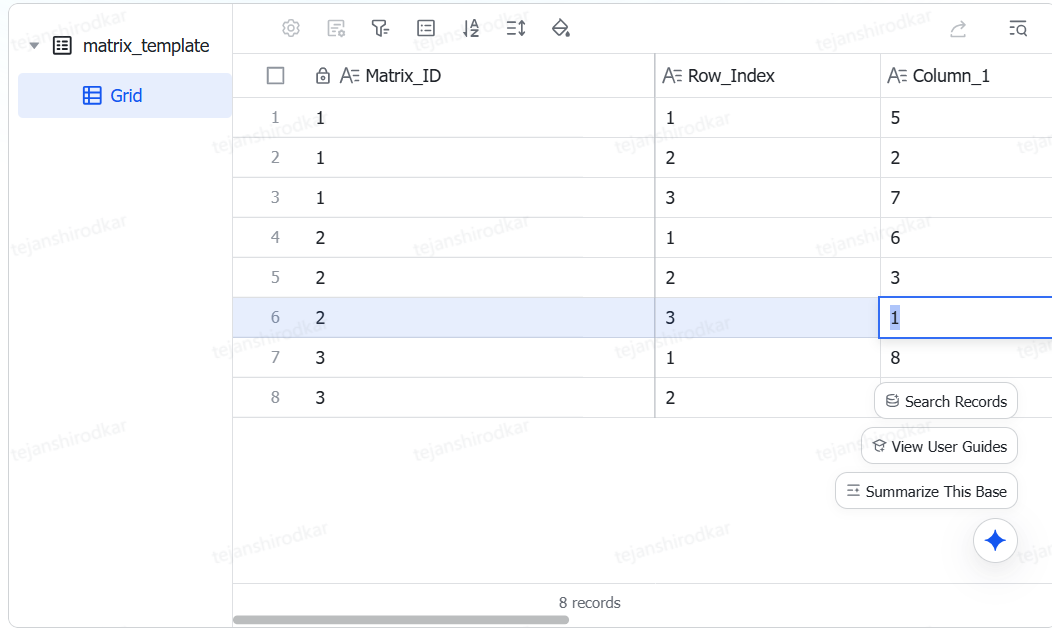
Step 1: Create your dynamic matrix in Lark Base
The product team starts in Lark Base, where they list all ongoing initiatives—new feature ideas, bug fixes, and improvements.
They add columns for impact, effort, urgency, and business value. Using filters and calculated fields, the Base automatically scores each project and color-codes them by priority level.
- When a project's "effort" score increases, its priority is recalculated instantly.
- When a task reaches "high priority," Lark sends a Messenger alert to the product owner.
This way, the team's priority matrix updates itself, ensuring every decision reflects the most recent data.
Step 2: Turn priorities into action with Lark Tasks
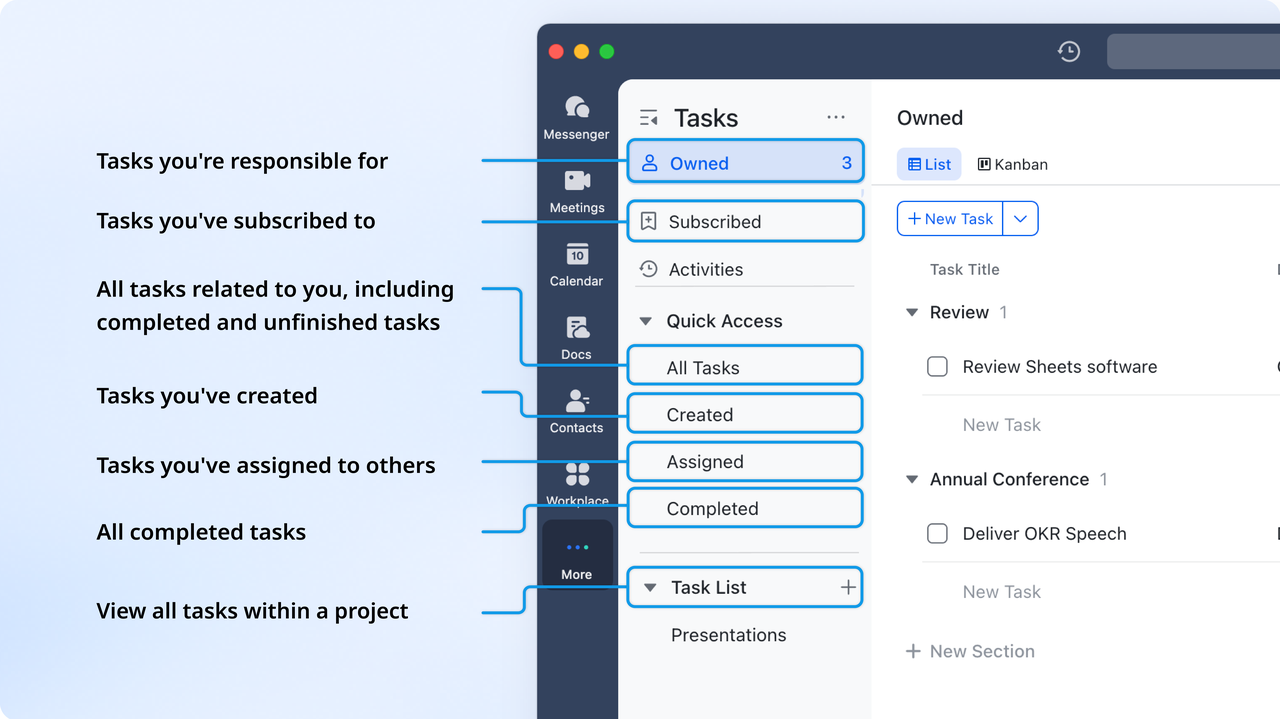
Each task is assigned an owner, deadline, and priority label (High, Medium, Low).
Lark Tasks displays the workload visually through list, board, and timeline views, helping everyone see what's urgent versus what can wait. Task lists can be synced with Base for joint analysis and progress tracking, allowing teams to reference project-level data in a consolidated workspace.
Step 3: Add scoring logic with Lark Sheets
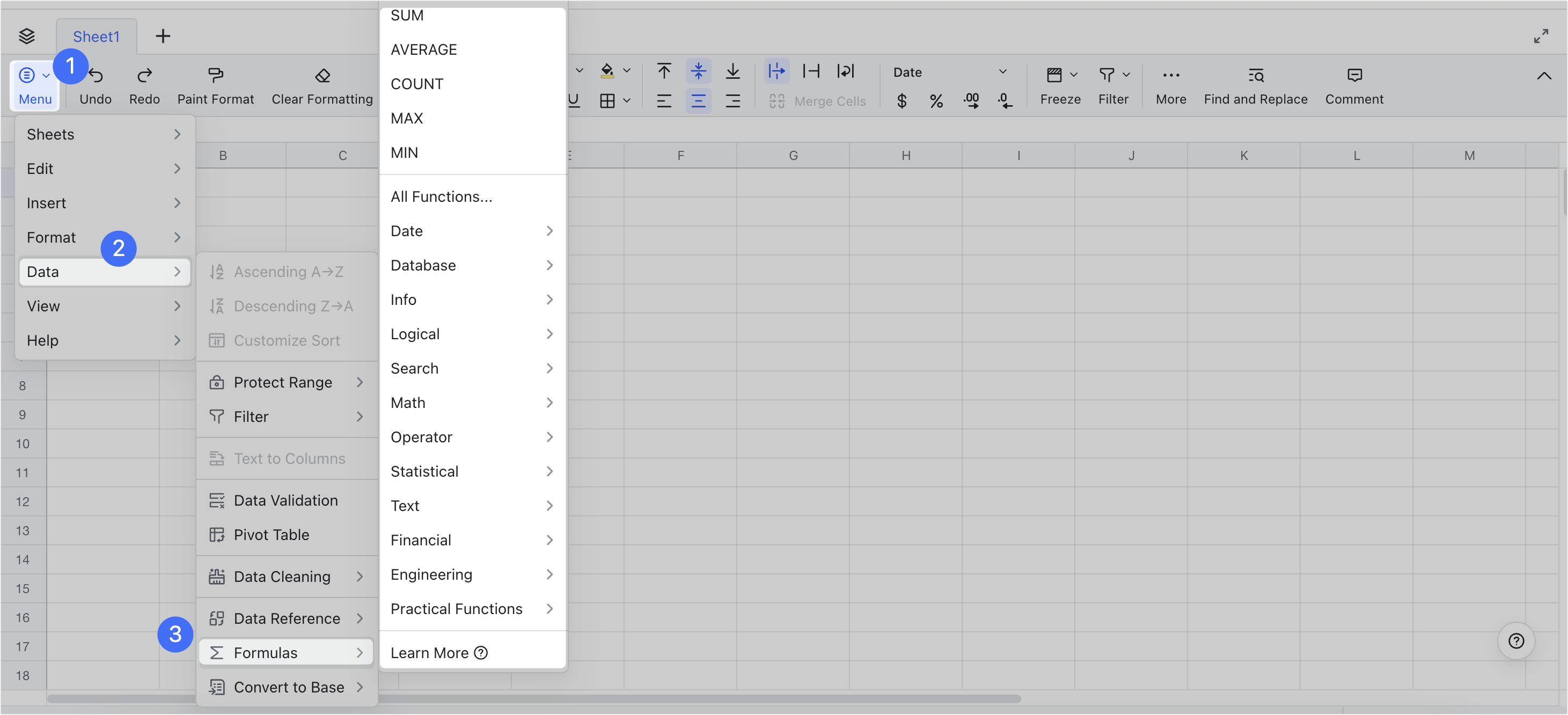
They apply formulas that multiply weighted values for impact and effort, giving each project an objective score.
This turns subjective debate ("what feels important") into measurable data—perfect for sprint planning and executive reviews. The scores feed back into Lark Base, updating project rankings automatically.
Step 4: Collaborate instantly in Lark Messenger
When priorities change—say, a high-impact feature suddenly becomes urgent—the team discusses it in Lark Messenger.
Instead of sharing screenshots or external links, they post direct task or Base record links in chat.
This keeps every conversation contextual and actionable: one click opens the project record, showing its full history, data, and current priority. Urgent decisions happen fast, without long email threads or disconnected tools.

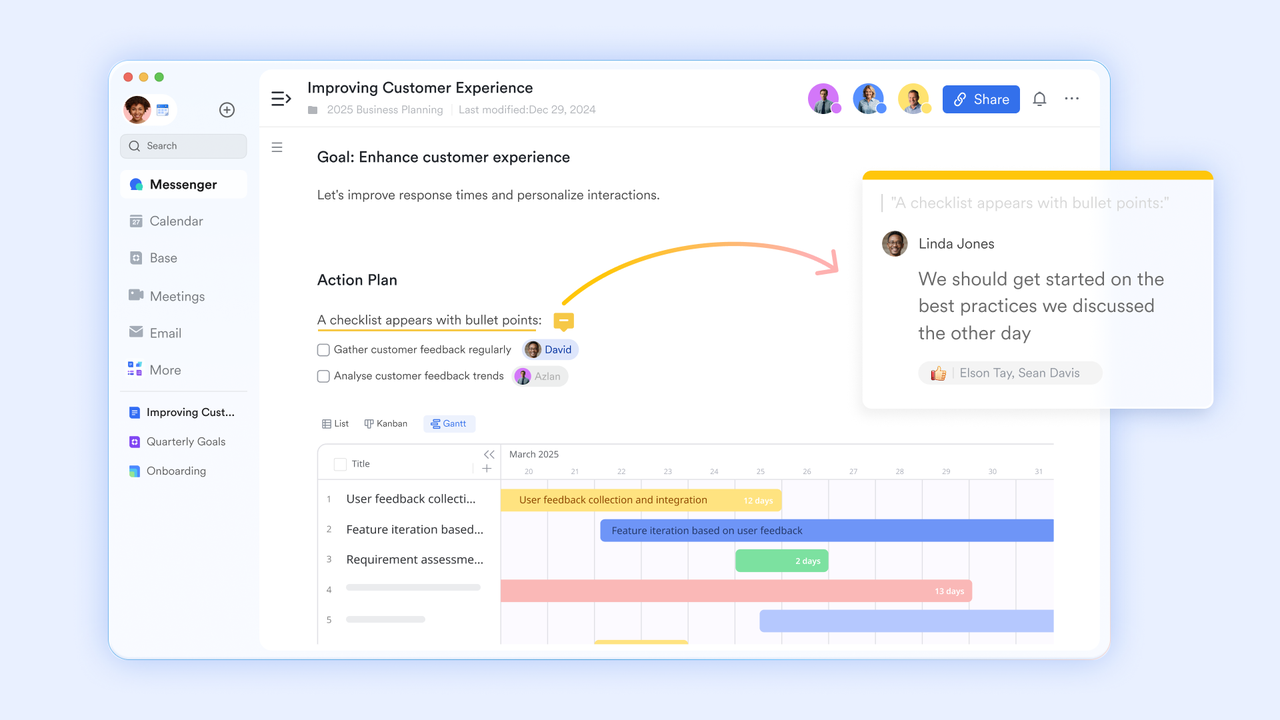
Step 5: Capture decisions and share updates in Lark Docs
They embed the priority matrix view from Base and include notes on why certain projects ranked higher.
Docs become a single source of truth for all stakeholders—especially useful during retrospectives or leadership updates. Anyone reviewing the document can comment inline, suggest changes, or add context from their own projects.
Step 6: Monitor progress visually in the Lark Base Dashboard
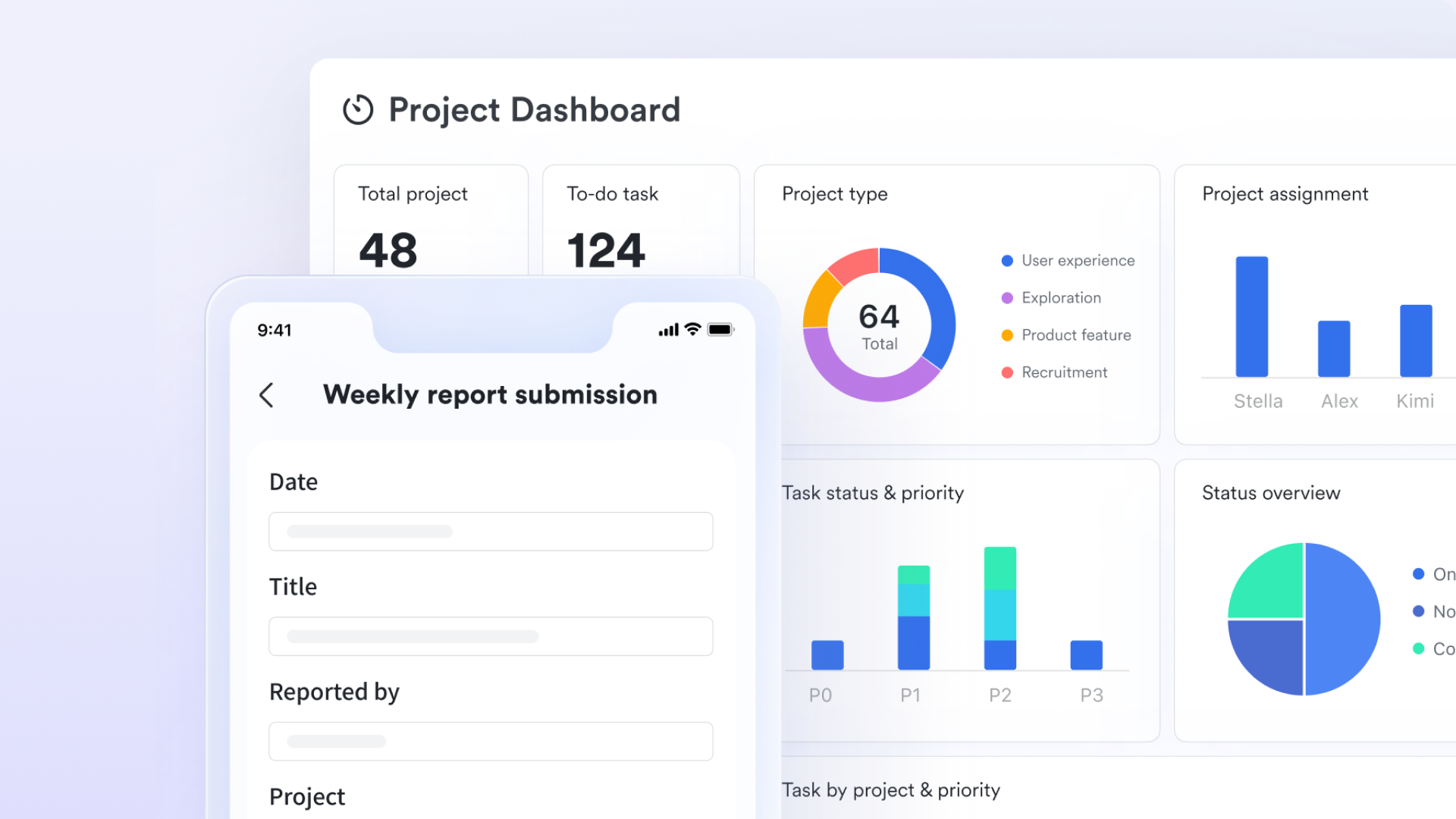
Finally, using Lark Base Dashboards, the team visualizes project priorities and workloads in real time, pulling live data from Lark Sheets for accurate and up-to-date reporting.
Each quadrant of the matrix shows which projects are in progress, pending, or delayed. Because dashboards auto-refresh, leadership can instantly see where effort is going and whether it aligns with the company's goals.
- Starter plan: Free forever plan that includes 11 powerful tools for up to 20 users. It also comes with 100GB of storage, 1000 automation runs, AI translations, and more.
- Pro plan: $12/user/month (billed annually) for up to 500 users. It includes everything in Starter plus group calling for up to 500 attendees, 15TB of storage, 50,000 automation runs, and more.
- Enterprise plan: Contact sales for custom pricing. Supports unlimited users and includes even more automation runs and advanced security, compliance, and management features.
Conclusion
A project management priority matrix helps teams cut through the noise by offering a clear, structured way to decide what deserves attention first. It turns intuition-driven choices into measurable, data-informed priorities, keeping projects aligned with business goals. From startups to enterprise teams, using such frameworks leads to better planning, faster execution, and more confident decision-making.
Modern platforms like Lark make this process even smoother by combining task tracking, collaboration, and automation within one workspace—ensuring your team not only prioritizes effectively but also executes seamlessly.
FAQs
What's the difference between a priority matrix and a task list?
A task list captures what needs to be done, while a priority matrix helps define what matters most. The matrix adds context—ranking tasks based on urgency, impact, or strategic value. This ensures effort goes toward outcomes that drive progress. Platforms like Lark elevate this by linking tasks to goals, helping teams visualize how each activity contributes to broader objectives.
Can a priority matrix improve cross-functional collaboration?
Absolutely. By providing a shared view of priorities, the matrix removes silos and ensures every team works toward common goals. Marketing, product, and operations can all align on what needs immediate attention versus long-term focus. In Lark, teams can co-edit matrices in real time, tag departments, and track dependencies seamlessly across projects.
How does a priority matrix support data-driven decision-making?
Unlike subjective discussions, a priority matrix quantifies decisions using clear criteria—like ROI, effort, and risk. It encourages evidence-based planning, reducing bias and emotional decision-making. With Lark Base, teams can assign numeric weights, automate scoring, and visualize results instantly, transforming data into actionable project insights.
What common mistakes should teams avoid when using a priority matrix?
Teams often overcomplicate their matrices with too many criteria or fail to review them regularly. Another pitfall is treating the matrix as static rather than a living tool. Regular calibration ensures it reflects real-world changes. Tools like Lark make this easier by enabling automated updates and visual dashboards that evolve as priorities shift.
How can small teams get started with a priority matrix?
Start simple—choose two or three key criteria (like urgency, value, and effort) and map them in a visual grid. As the team grows, you can expand to more complex weighted models. Lark provides ready-to-use templates and customization options, helping even small teams adopt structured prioritization without needing specialized tools.
Related reading
Table of contents
Start using Lark today

Manage all your work in one place
Boost team efficiency by 10x
Save up to 70% on software costs
Table of contents
Start using Lark today
Manage all your work in one place
Boost team efficiency by 10x
Save up to 70% on software costs
Keep reading







2026 Lark Technologies Pte. Ltd.
Headquartered in Singapore with offices worldwide.






Explore: