Planning resources accurately is one of the hardest parts of project management. Teams often know what needs to be delivered, but struggle to define who, what, and how much is actually required to complete the work. This is where a resource breakdown structure becomes essential. A well-defined resource breakdown structure helps project managers move from assumptions to clarity.
In this guide, you will learn what a resource breakdown structure is, how it works in project environments, and how it supports planning, budgeting, and accountability. You will also see practical resource breakdown structure examples, templates, and use cases across industries. Toward the end, we introduce how platforms like Lark help teams manage a resource breakdown structure more effectively as projects scale.
What is a resource breakdown structure?
A resource breakdown structure is a hierarchical framework that organizes all resources required to complete a project. Instead of listing tasks, it categorizes resources by type, role, or function. This distinction is important because a resource breakdown structure focuses on capacity and availability rather than activities.
In resource breakdown structure project management, the structure typically sits alongside the. While the WBS defines what work will be done, the RBS defines what resources are needed to do it. A resource breakdown structure example may include people, equipment, budgets, and external services broken into logical levels. In contexts, the resource breakdown structure PMP concept emphasizes visibility and control over project inputs.
Build structured resource plans from day one
What problem does a resource breakdown structure solve?
Many project issues originate from poor resource visibility rather than poor planning. A resource breakdown structure addresses this gap by making resource needs explicit and measurable.
- Lack of clarity on who or what is actually required: Without an RBS, teams rely on assumptions about staffing, tools, or vendors. A resource breakdown structure in forces teams to identify all required resource categories early. This prevents last-minute scrambling when gaps appear. Clear resource definition improves planning confidence. Stakeholders gain a shared understanding of project needs.
- Over-allocation and under-utilization of resources: Projects often fail because the same resources are assigned to multiple initiatives unknowingly. A resource breakdown structure example highlights where capacity is stretched or unused. This helps managers rebalance workloads. It also protects teams from burnout and delays. Utilization becomes intentional rather than accidental.
- Budget overruns caused by missing resource categories: Hidden costs frequently come from overlooked resources such as licenses, contractors, or shared services. A resource breakdown structure template ensures these categories are captured early. Budget forecasts become more accurate. Financial surprises are reduced. This is especially important in resource breakdown structure PMP scenarios.
Types of resources included in a resource breakdown structure
A strong RBS accounts for more than just people. It includes all inputs required to deliver outcomes.
- Human resources roles, skills, and teams: Human resources are often the largest cost driver in projects. A resource breakdown structure samples groups of people by role, skill set, or department. This makes it easier to assign ownership and estimate effort. Capacity planning becomes more realistic. Skill gaps are identified earlier.
- Physical resources such as equipment and facilities: Projects often depend on shared equipment, tools, or physical spaces. A resource breakdown structure example includes these assets explicitly. This avoids scheduling conflicts. Teams can plan usage windows more effectively. Physical constraints are factored into timelines.
- Financial resources, including budgets and cost categories: Budgets should be broken down by category, not just total cost. A resource breakdown structure template helps define cost centers clearly. This supports better . Financial accountability improves. Stakeholders understand where money is allocated.
- External resources such as : Contractors, consultants, and service providers are critical resources. A resource breakdown structure PMP model includes them as separate categories. This clarifies dependencies. Vendor risks are easier to manage. Contract scope stays aligned with project needs.
Optimize your projects with precedent examples
Resource breakdown structure in project management
In practice, a resource breakdown structure is not a static document. It evolves throughout the project lifecycle.
- Where RBS fits in the : The RBS is usually created during project planning. It informs scheduling, budgeting, and staffing decisions. As execution begins, it becomes a reference point. Updates are made as scope changes. This keeps planning aligned with reality.
- How RBS supports scheduling, budgeting, and forecasting: A resource breakdown structure project management approach connects resources directly to . Schedules reflect real capacity. Budgets reflect actual resource needs. Forecasts become more reliable. This alignment reduces rework.
- Using RBS to improve accountability and ownership: When resources are clearly defined, ownership becomes clearer. Teams know who is responsible for what capacity. Escalations are easier. Accountability improves across departments. This is a core benefit highlighted in resource breakdown structure examples.
How to create a resource breakdown structure step by step
Step 1: Define project scope boundaries
Start by clarifying what is included and excluded. This prevents unnecessary resource categories. Scope clarity ensures focus. It also limits cost creep. The RBS should reflect the approved scope only.
Step 2: Identify all resource categories
List people, tools, budgets, and external services. Use past projects as references. A sample resource breakdown structure often helps here. Ensure no category is overlooked. This step sets the foundation.
Step 3: Break resources into logical sub-levels
Group resources by role, function, or type. Avoid over-engineering. A resource breakdown structure example should remain usable. Logical grouping improves readability. Teams should understand it at a glance.
Step 4: Align resources with deliverables and timelines
Map resource categories to milestones. This reveals capacity constraints. Scheduling becomes realistic. Conflicts surface early. Planning quality improves significantly.
Step 5: Validate RBS with
Review the structure with project owners and team leads. Adjust based on feedback. Validation prevents assumptions. Buy-in increases adoption. The RBS becomes a shared planning asset.
Turn planning steps into execution workflows
Meet Lark: Create and manage your resource breakdown structure easily
Creating and managing a resource breakdown structure becomes faster and more transparent when teams work inside an all-in-one workspace like . By bringing documents, tasks, calendars, and structured data into a single environment, Lark helps project managers define resource categories, assign ownership, and track utilization in real time. Instead of juggling spreadsheets and disconnected files, teams maintain a centralized RBS that evolves alongside the project. This leads to clearer visibility into resource allocation, stronger accountability, and better control across every .
Documenting resource categories, roles, and allocation rules
provides a collaborative space for defining the foundation of a resource breakdown structure. Teams can document resource hierarchies, role definitions, skill requirements, and allocation assumptions before translating them into structured data in . With multiple built-in templates and boards, project managers can build RBS reference documents, resource dictionaries, and allocation guidelines using tables, checklists, diagrams, and embedded visuals. Inline comments and @mentions keep discussions tied to specific resource groups, while version history ensures changes to capacity, roles, or constraints remain traceable over time. 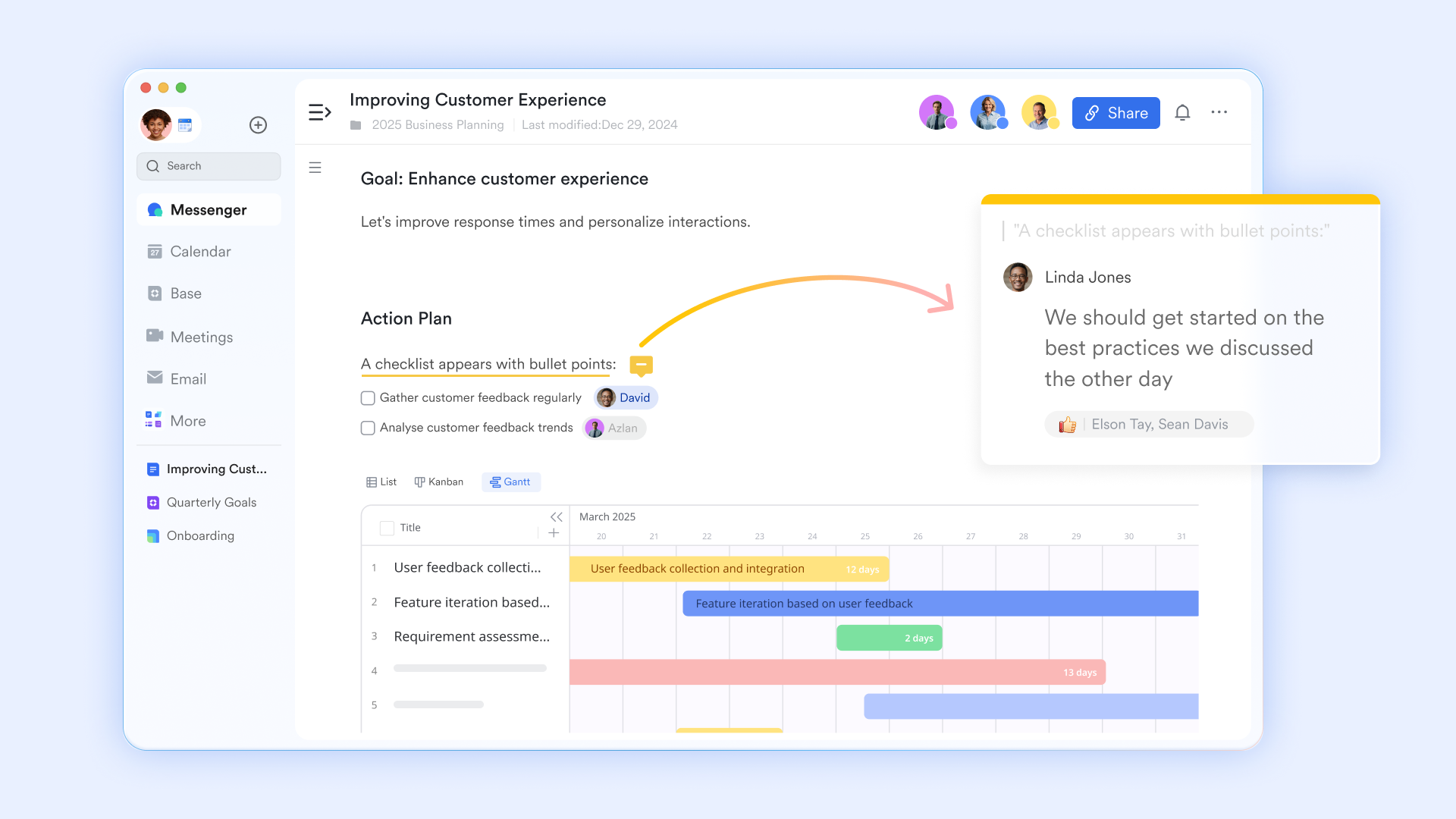
Structuring RBS elements into organized resource data
serves as the core system for building and maintaining a resource breakdown structure. Teams can organize resources into structured tables covering departments, roles, individuals, equipment, or cost centers. Each resource record can include fields for availability, skills, rates, capacity, assignment status, and project linkage. Multiple views, such as Grid, Kanban, Gallery, and Timeline, help teams understand how high-level resource groups break down into usable capacity. Linked records preserve relationships between projects, teams, and individual resources, keeping the RBS clean and scalable as demand changes. 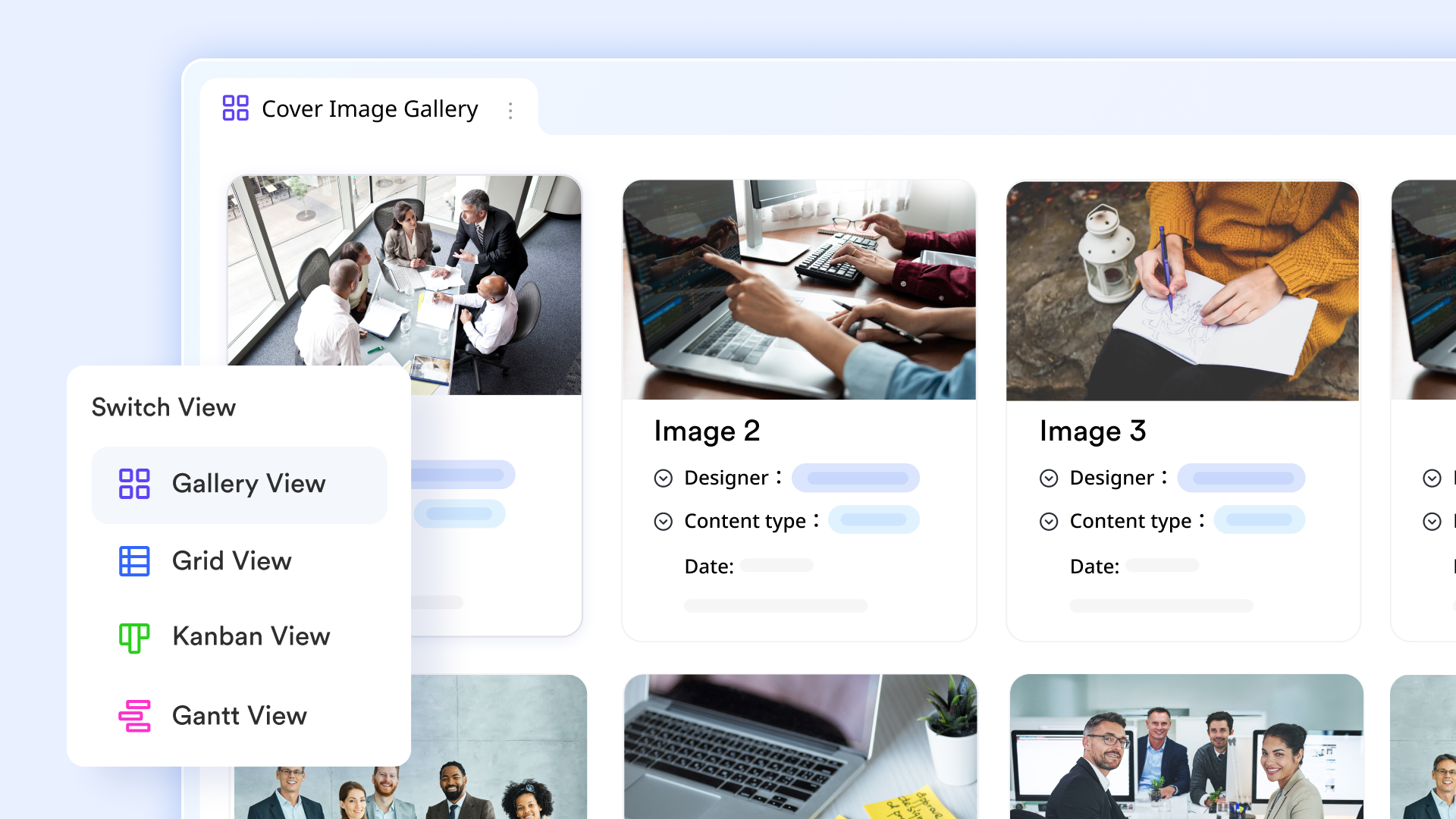
Automating resource allocation and status updates
Lark Base workflow simplifies RBS management by reducing manual coordination around resource changes. Automated workflows can update availability when a resource is assigned, notify managers when capacity thresholds are reached, or adjust status fields based on project progress. Conditional logic ensures workflows respond differently depending on resource type, workload, or priority. This automation helps teams avoid over-allocation, missed approvals, and last-minute conflicts while keeping resource data accurate and up to date. 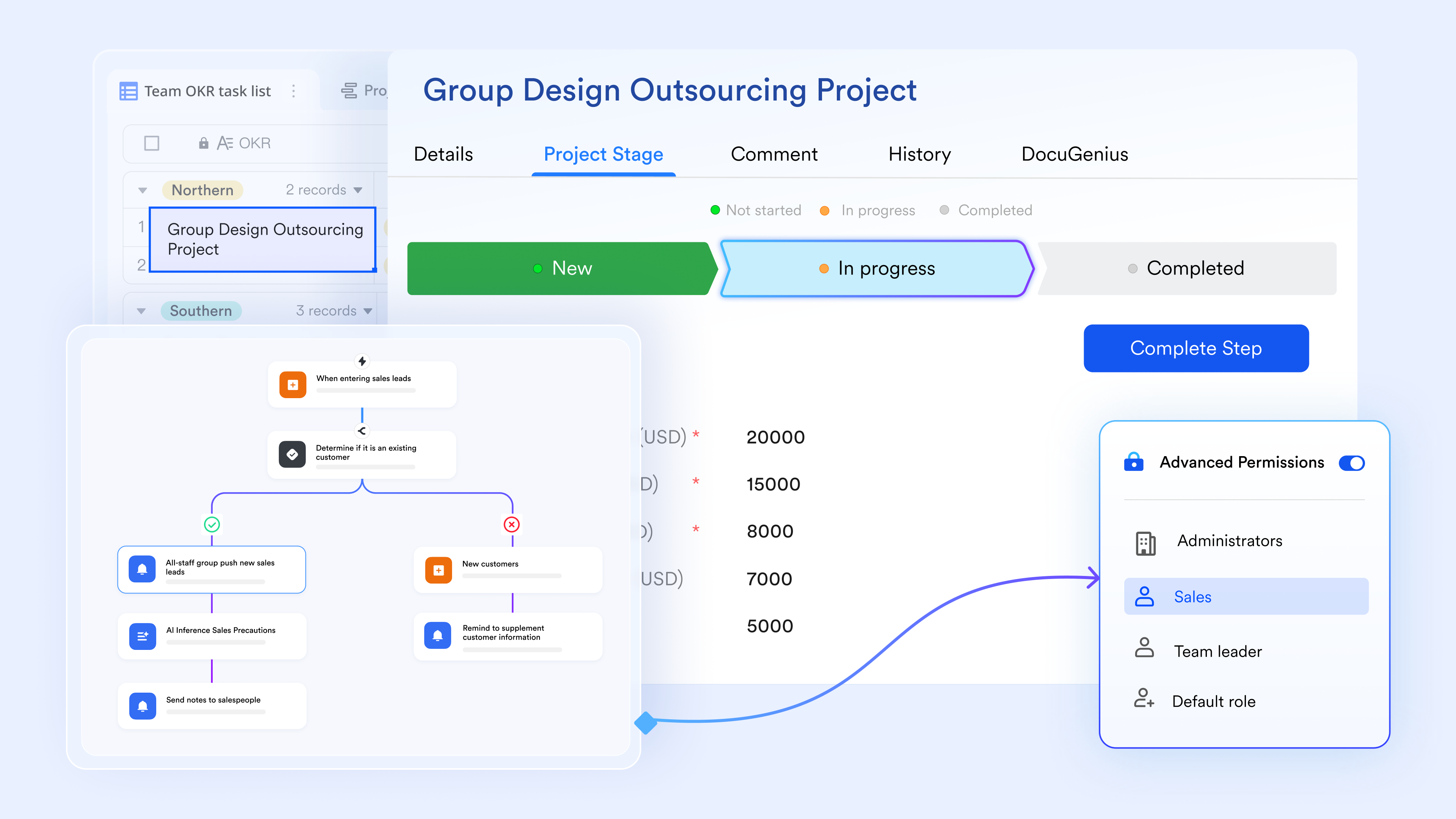
Visualizing resource usage and capacity insights
Lark dashboards turn RBS data into clear visual insights that support smarter decision-making. Teams can track resource utilization, available capacity, allocation by role or department, and workload distribution across projects. Dashboard components refresh automatically as base records change, removing the need for manual reports. With real-time visibility, project managers can quickly identify bottlenecks, underused resources, or capacity risks and adjust plans before issues escalate. 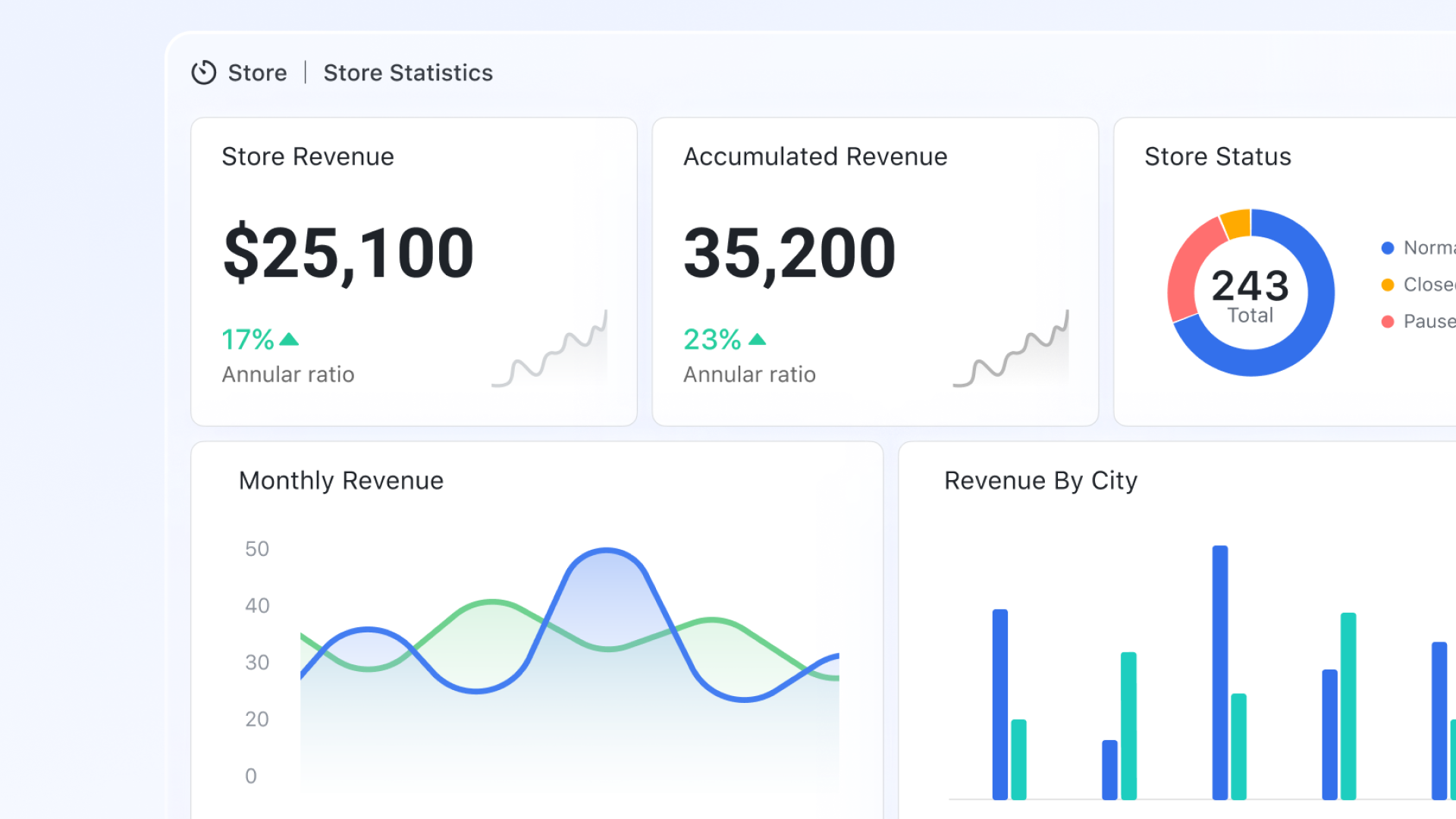
Assigning and tracking resource-driven work
Lark Tasks connects the resource breakdown structure directly to day-to-day execution. Once resources are defined in Base, work can be assigned with clear owners, deadlines, and priorities. Tasks and subtasks can reflect resource constraints, dependencies, and sequencing, ensuring assignments align with actual capacity. Context stays intact by linking tasks back to resource records, helping teams understand not just what needs to be done, but who has the right availability and skills to do it. 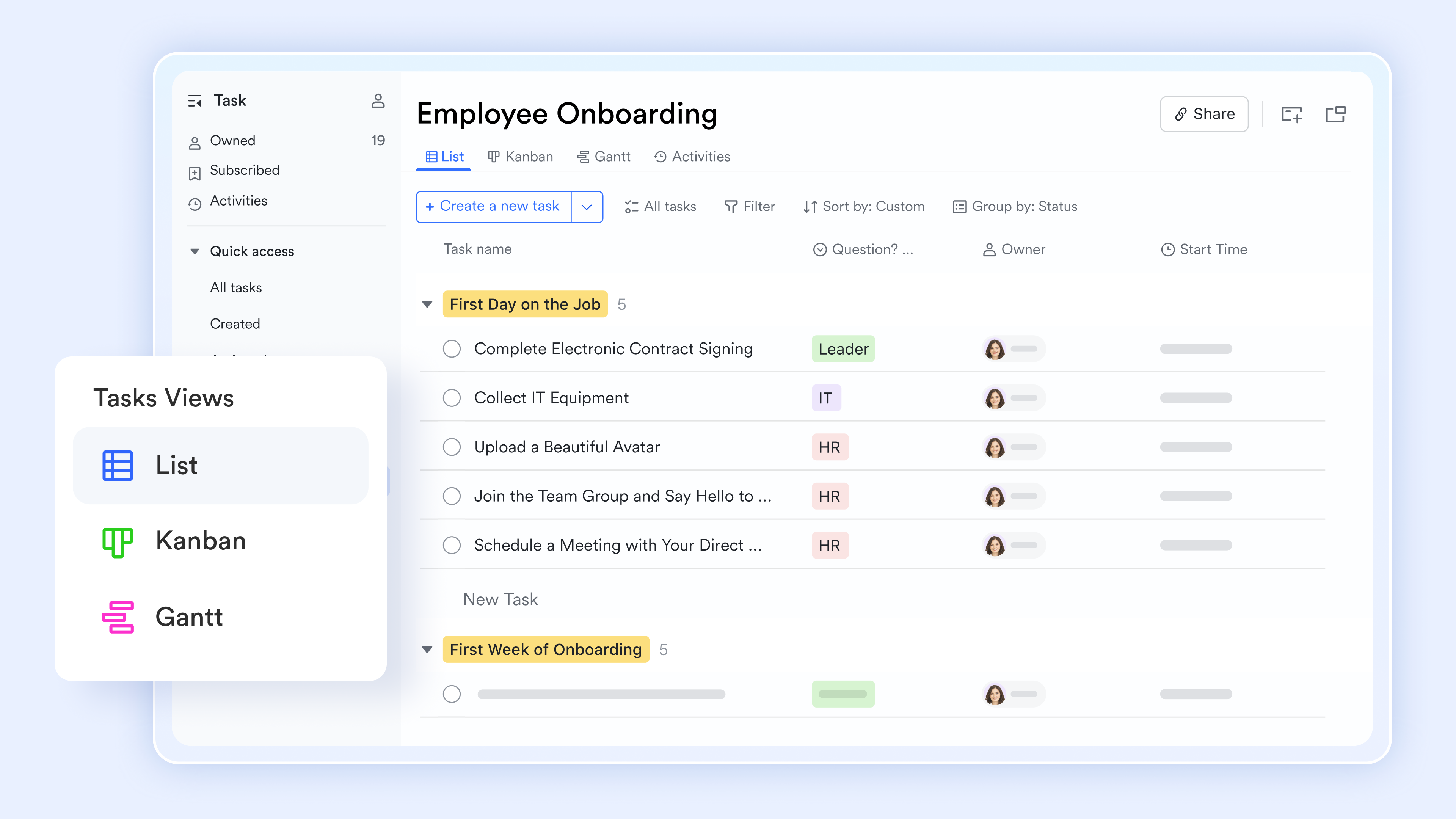
Aligning resource schedules across teams
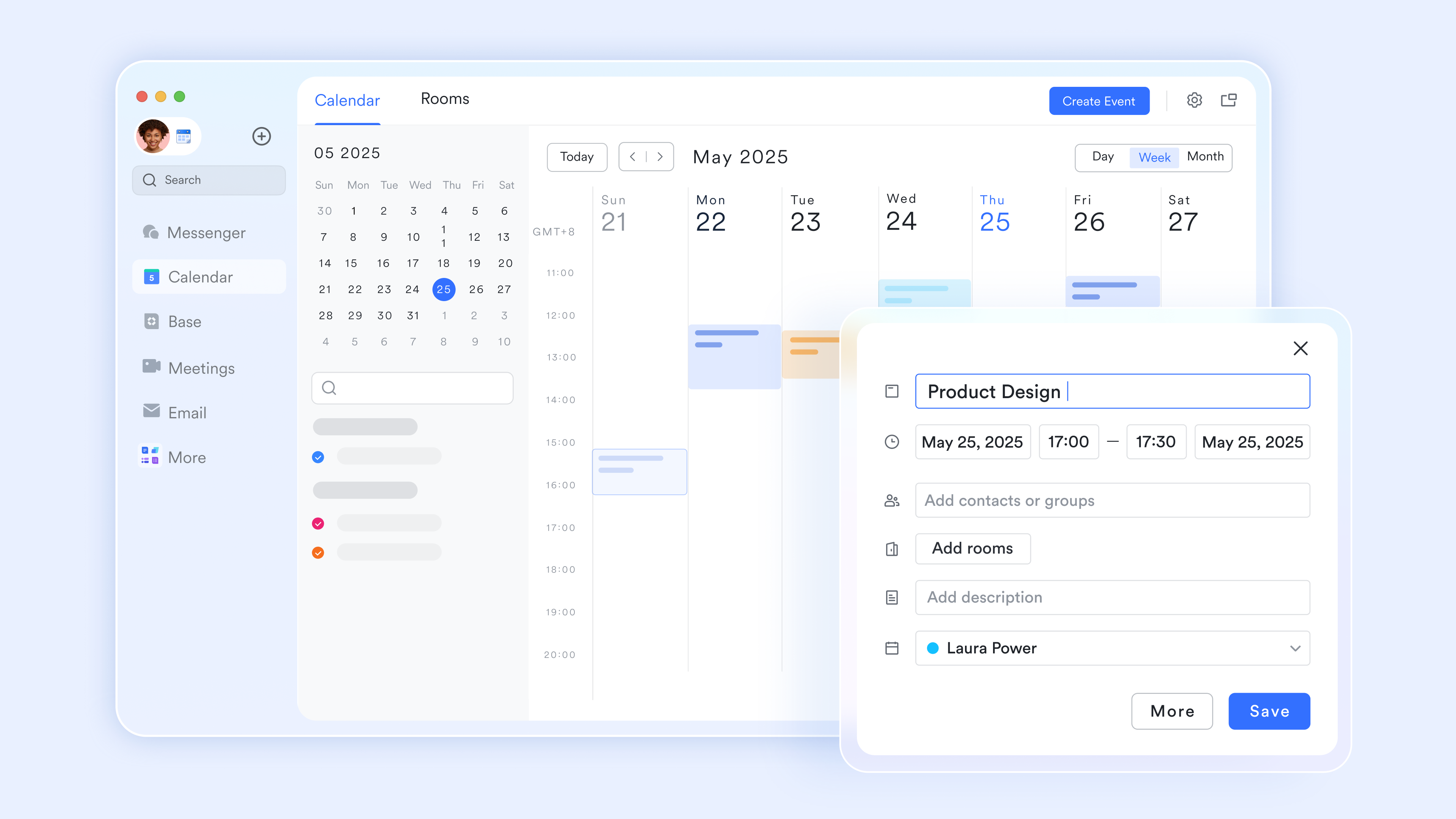
transforms the resource breakdown structure into a shared scheduling view that teams can rely on. Resource assignments, key milestones, and availability windows can be reflected directly on shared calendars, making conflicts easy to spot. Events can connect to tasks or Base records via automation, ensuring every scheduled activity ties back to a defined resource. Color-coded views help distinguish teams, roles, or project streams, enabling better coordination and smoother resource planning across departments.
:
- Starter plan: Free forever plan that includes 11 powerful tools for up to 20 users. It also comes with 100GB of storage, 1000 automation runs, AI translations, and more.
- Pro plan: $12/user/month (billed annually) for up to 500 users. It includes everything in Starter plus group calling for up to 500 attendees, 15TB of storage, 50,000 automation runs, and more.
- Enterprise plan: for custom pricing. Supports unlimited users and includes even more automation runs and advanced security, compliance, and management features.
For small teams with simple communication needs

18 months message history
1000 Base automation runs/month
2000 rows per table in Base
Most POPULAR
For companies with comprehensive collaboration and management needs
Unlimited message history
500-participant video meetings
50k Base automation runs/month
20k rows per table in Base
For large companies with advanced security and organizational management needs
Get a personalized demo and pricing
Unlimited message history
500-participant video meetings
15 TB storage + 30 GB storage/user
500k Base automation runs/month
50k Base automation runs/month
Most POPULAR
For companies with comprehensive collaboration and management needs
Unlimited message history
500-participant video meetings
50k Base automation runs/month
20k rows per table in Base
Bonus: Ready-to-use resource management templates
Resource planning template
This resource planning template is designed to help teams identify and organize resources at the very beginning of a project. It provides a clear structure for defining roles, capacity, and availability before work starts. Teams can group resources by function or skill and document allocation assumptions in one place. This reduces guesswork during scheduling and budgeting. It works well as a starting point for teams creating their first resource breakdown structure template. As projects grow, the template can be expanded without losing clarity.
Technology budget forecast template
This template focuses on the financial side of resource planning by breaking down technology-related costs into clear categories. It helps teams forecast spending on tools, licenses, infrastructure, and services more accurately. By mapping costs to resource groups, budget visibility improves early in the project lifecycle. This makes it easier to align financial planning with a resource breakdown structure in project management. Teams can track planned versus actual spend as the project progresses. It is especially useful for IT-heavy or digital projects.
IT resource allocation plan
The IT resource allocation plan template helps technical teams manage shared infrastructure, specialists, and system dependencies. It allows teams to map engineers, tools, and environments against multiple projects. Capacity planning becomes clearer, especially when resources are in high demand. Dependencies between systems and teams are easier to visualize. This makes it a strong resource breakdown structure example for IT projects. It also helps reduce conflicts caused by overlapping assignments.
Marketing content calendar
This template supports resource planning for marketing teams by aligning people, timelines, and content deliverables. It helps teams understand creative capacity across campaigns and channels. Roles such as writers, designers, and reviewers are clearly visible. Ownership and deadlines are easy to track. As a resource breakdown structure project management tool, it helps prevent overloading creative teams. It works well for both short campaigns and long-term planning.
Common mistakes when building a resource breakdown structure
Even experienced teams make mistakes when creating a resource breakdown structure, especially when projects move quickly. These mistakes often reduce clarity and limit the usefulness of the structure during execution. Many issues arise from treating the RBS as a checklist rather than a planning tool. Others come from failing to account for shared or evolving resources. Understanding these common pitfalls helps teams build a more effective and realistic resource breakdown structure.
- Treating the RBS like a task list: Some teams confuse the resource breakdown structure with a . They begin listing activities instead of resources. These shifts focus away from capacity and availability. As a result, resource planning becomes inaccurate. The RBS should describe inputs, not actions.
- Missing shared or indirect resources: Shared , support teams, and overhead resources are often overlooked. These resources may not belong to a single project but still impact delivery. Ignoring them creates hidden constraints. Capacity conflicts surface later in execution. Including indirect resources improves planning accuracy.
- Over-engineering the structure: Teams sometimes add too many levels and categories to the RBS. This makes the structure hard to maintain and understand. Over-complexity discourages regular use. Planning slows down instead of improving. A simple and logical structure is usually more effective.
- Failing to update the RBS during execution: Many teams treat the RBS as a . As the scope or timelines change, the structure is not revised. This leads to outdated assumptions about capacity. Decisions are made on inaccurate data. Regular updates keep the RBS relevant.
When to revisit and revise your resource breakdown structure
A resource breakdown structure should be reviewed at key moments throughout the . Changes in scope, team composition, or budget can all affect resource needs. Teams that revisit the RBS regularly maintain better alignment between planning and reality. These reviews help prevent surprises and last-minute reallocations. Knowing when to revise the structure is just as important as building it correctly.
- Changes in scope or delivery timelines: When project scope expands or contracts, resource needs shift immediately. New deliverables may require additional skills or tools. Timeline changes can also affect capacity assumptions. Revisiting the RBS ensures resources remain aligned. This prevents delays and overload.
- Team size and skill changes: Hiring, attrition, or role changes directly impact available capacity. Skills that were once available may no longer be present. New team members may add capabilities. Updating the RBS reflects these changes accurately. Planning stays realistic and achievable.
- Budget adjustments and vendor shifts: Budget cuts or increases often change . Vendor changes can introduce new dependencies or constraints. Costs may shift between categories. Revising the RBS keeps financial and resource planning aligned. This supports better decision-making.
Upgrade resource management with smart workflows
Conclusion
A resource breakdown structure brings clarity to one of the most complex parts of project management. By defining resources clearly, teams improve planning accuracy, budgeting, and accountability. Strong resource breakdown structure examples show how visibility prevents delays and overruns. In practice, the RBS must remain flexible as projects evolve.
This is where modern platforms matter. Instead of managing static documents, teams increasingly rely on connected workspaces like . By combining structured data, documentation,, and scheduling, Lark helps teams manage resource breakdowns and project management more effectively. The right structure and the right tools together enable teams to plan with confidence and execute with control.
FAQs
What is the resource breakdown structure table?
A table organizes all project resources into clear categories and sublevels. It helps teams track roles, capacity, and costs in one view. The table supports planning and forecasting throughout the project lifecycle. Many teams later manage this table inside collaborative platforms like Lark to keep it updated and visible.
Can a resource breakdown structure be reused across projects?
Yes, a resource breakdown structure can often be reused as a baseline for similar projects. Core resource categories usually remain consistent, with adjustments made for scope and scale. Reusing an RBS saves planning time and improves consistency. Tools like Lark make it easier to duplicate and adapt structures across projects.
Is a resource breakdown structure required for small projects?
Small projects may not need a complex resource breakdown structure, but a simplified version is still valuable. Even basic resource visibility helps prevent over-allocation and missed requirements. A lightweight RBS improves clarity without adding overhead. Teams often manage this simply within Lark as projects grow.
Who is responsible for maintaining the resource breakdown structure?
Project managers are typically responsible for maintaining the resource breakdown structure. Team leads and finance partners may contribute updates related to capacity or costs. Clear ownership keeps the structure accurate. like Lark support shared updates while maintaining accountability.
How often should a resource breakdown structure be updated?
The resource breakdown structure should be reviewed at key project milestones or when changes occur. Scope shifts, staffing changes, or budget updates should trigger revisions. Regular reviews prevent outdated assumptions. Using Lark helps teams keep the structure current without manual follow-ups.
Related reading





























