The phases of project management provide a structured path for guiding a project from initial idea to final delivery. When teams understand these phases clearly, they can plan better, reduce risk, and keep work aligned across every department involved. Whether you follow a simple 4-phase model or the more widely used 5-phase project management life cycle, the goal is the same: bring clarity, accountability, and predictability to complex work.
In this guide, we break down the most common phase models, explain why teams often struggle to manage them, and outline practical workflows and tools that support each stage effectively.
Run end-to-end project workflows smarter
What are the phases of project management?
The phases of represent a structured framework that guides a project from concept to completion. These phases help teams organize work, allocate resources, and maintain clarity at every step. While many organizations rely on the widely adopted 5 phases of project management, initiation, planning, execution, monitoring and controlling, and closing, others use variations such as the 4 phases of project management, six phases of project management, or industry-specific models like the phases of construction project management.
Regardless of the model, the goal remains the same: create a predictable project management life cycle that supports decision-making, improves communication, and ensures consistent delivery. Each phase builds on the previous one, helping teams define scope, manage risks, coordinate tasks, and . When applied effectively, these various phases of project management life cycle help organizations reduce uncertainty, prevent delays, and deliver outcomes with greater accuracy and accountability.
The 5 phases of project management (most common model)
The most widely used framework across industries is the 5 phases of project management. This model, recognized globally and aligned with the PMBOK project management life cycle, organizes work into logical stages that guide teams from project initiation through delivery and closure. Below is an in-depth look at each phase.
Phase 1: Initiation
The initiation phase determines why the project should exist and whether it's worth pursuing. This phase lays the foundation for clarity, alignment, and feasibility before detailed planning begins.
Key objectives
- Define the problem or opportunity
- Establish project goals and expected outcomes
- Identify stakeholders and their interests
- Outline high-level scope, assumptions, and constraints
- Assess feasibility, ROI, and risks
- Create foundational documents (project charter, business case, preliminary scope statement)
Why this phase matters
An intense initiation phase prevents misunderstandings, scope creep, and conflicting priorities later in the project management life cycle. It sets the direction for all planning and execution activities.
Phase 2: Planning
Planning is the most extensive phase and often determines a project's long-term success. Teams translate the charter into a detailed roadmap, creating structures that guide execution, communication, and resource allocation.
Key objectives
- Break down goals into tasks, milestones, and deliverables
- Map workflows using like Gantt charts, Kanban boards, or
- Build schedules with dependencies and deadlines
- Allocate budgets, resources, and team roles
- Create , scope management, and change management plans
- Define KPIs, quality standards, and acceptance criteria
- Establish communication channels and reporting cadence
Why this phase matters
Effective planning turns ambiguity into a step-by-step plan. This is where models like the five phases of project management help teams reduce uncertainty and avoid last-minute chaos.
Phase 3: Execution
Execution is where real work happens. Teams begin carrying out tasks, collaborating across departments, and producing deliverables as specified in the plan.
Key objectives
- Complete assigned tasks and activities
- Coordinate cross-functional work
- Share updates, communicate changes, and resolve issues
- Manage resources and ensure labor, tools, and materials are available
- Maintain documentation and status updates
- Support team collaboration and decision-making
Why this phase matters
Clear ownership, strong communication, and steady progress tracking are essential. Poor coordination during execution is one of the most common reasons projects fall behind schedule.
Phase 4: Monitoring and Controlling
This phase runs concurrently with execution. While the team works, project managers track progress, manage risks, and ensure alignment with the plan.
Key objectives
- Track metrics, KPIs, and
- Compare progress against the baseline plan
- Identify delays, bottlenecks, or scope changes
- Approve or reject change requests
- Conduct quality checks and ensure deliverables meet expectations
- Update risk registers and mitigation plans
- Generate reports for leadership and stakeholders
Why this phase matters
Strong monitoring prevents minor issues from becoming larger setbacks. In industries such as construction, engineering, and procurement, the phases of place particular emphasis on rigorous oversight and compliance.
Phase 5: Closing
The closing phase formally wraps up the project, verifies that all deliverables have been completed, and captures knowledge for future efforts.
Key objectives
- Finalize deliverables and obtain stakeholder sign-off
- Conduct project retrospectives and lessons learned
- Close contracts, budgets, and procurement activities
- Archive documents, assets, and communication records
- Transfer knowledge into SOPs or organizational repositories
- Celebrate team contributions and formally dissolve the project team
Why this phase matters
Proper closing prevents future teams from reinventing the wheel. It ensures continuity, supports audits, and improves the effectiveness of future projects following any model.
Why teams struggle with managing project phases
Even with a clear understanding of the phases of project management, many teams struggle to maintain consistency throughout the . These common challenges often create delays, misalignment, and unnecessary rework.
- Poor scope clarity: When the scope isn't clearly defined during the early phases, teams struggle with shifting requirements, vague expectations, and unplanned deliverables. This leads to scope creep and misaligned outputs. Without a shared understanding of boundaries, decision-making becomes inconsistent.
- Disconnected tools: Using separate tools for tasks, documents, communication, and reporting scatters information across different platforms. Teams lose visibility into status and ownership, making coordination harder. As a result, progress slows, and accountability weakens.
- Weak change management: Untracked or informal change requests cause confusion, rework, and inconsistent outcomes. When approval processes aren't defined, teams make assumptions that derail timelines. Structured change control is essential for keeping the project on course.
- Lack of : Delayed communication, mainly via email, slows decision-making and increases the risk of errors. Teams miss essential updates that impact dependencies and deadlines. Real-time channels keep everyone aligned during active phases of execution.
- Manual reporting delays: When reporting relies on manual spreadsheets or outdated data, leaders cannot see real-time progress. This slows escalation and prevents proactive problem-solving. provides accurate insights across every phase of the project.
Maintain consistency and flexibility in projects
Meet your tool: Use Lark to support every phase of project management
smoothly requires connected workflows, , and real-time visibility, areas where many teams struggle. In this guide, we break down how brings structure across every phase of project management, from planning to execution. By unifying chat, docs, tasks, and , Lark helps teams stay aligned without juggling multiple tools. The result is faster decisions, fewer handoff delays, and projects that move forward with clarity and accountability.
Initiation: Documentation setup and stakeholder alignment
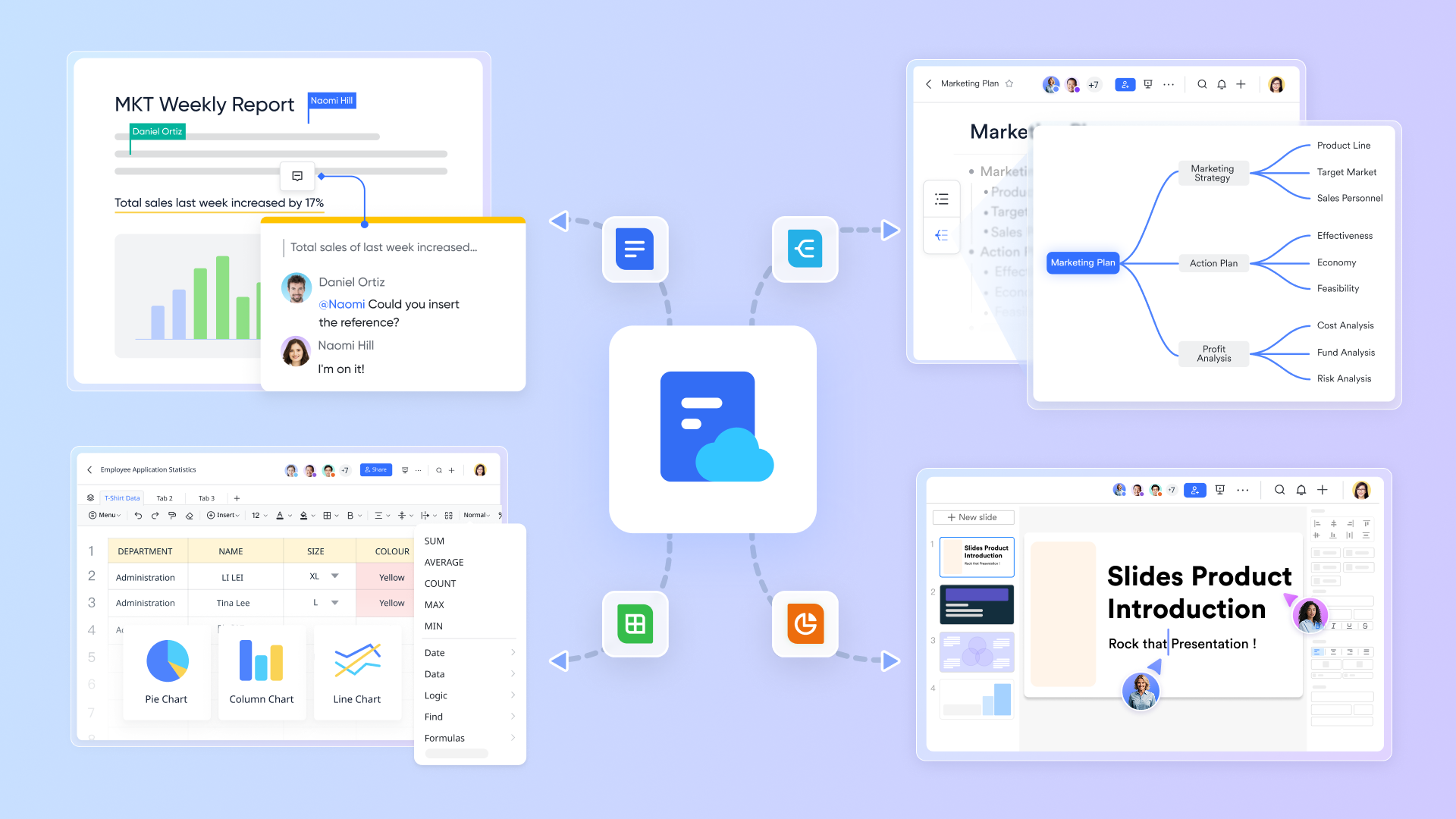
enables teams to draft project charters, scope statements, business cases, and stakeholder maps collaboratively in one shared space. , comments, mentions, and version history keep stakeholder input transparent and organized. To further streamline project completion, users can integrate a project management sheet or a directly into the document, while seamless sharing supports joint discussions and progress monitoring. Additionally, the platform enhances workflow by allowing users to create task lists and tag team members, automatically sending reminders to ensure all items are promptly checked off.
Planning: Workflow visualization and database-driven scheduling
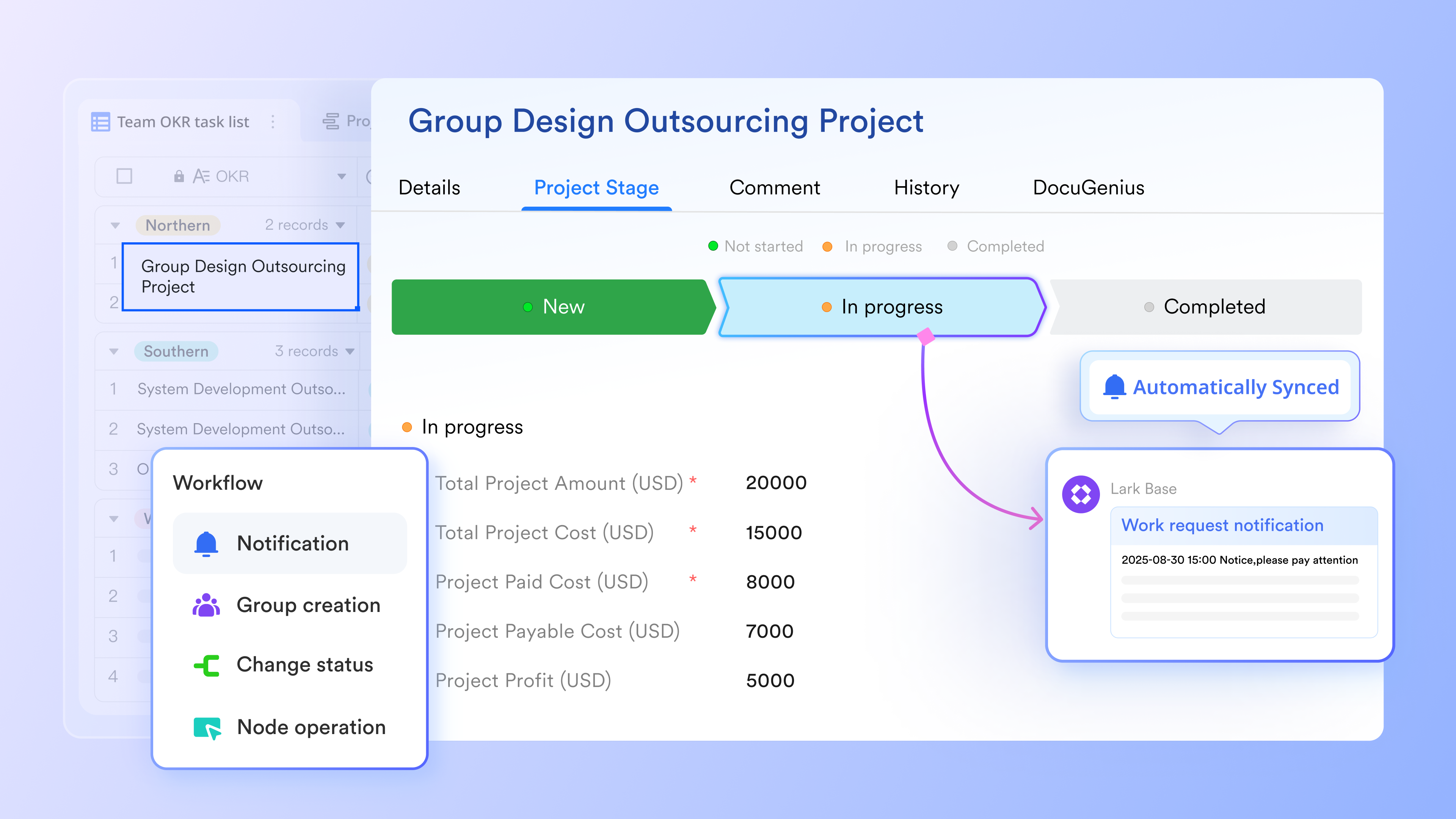
structures project plans into visual workflows using tables, , timelines, and forms. Teams can map project phases, define dependencies, assign owners, and manage deadlines from customizable databases tailored to different project types. It's embedded route approvals, update statuses, trigger reminders, and enforce stage-gate rules, ensuring that planning milestones move forward without manual chasing.
Execution: Task ownership and real-time team messaging
Lark Tasks converts plans into actionable assignments with clear owners, deadlines, priority labels, and subtasks. and visibility into progress help teams stay accountable across departments. Lark Tasks and Lark Messenger can be well linked, such as users being able to create tasks directly from chat records, and bots in groups can remind users of task progress and completion. 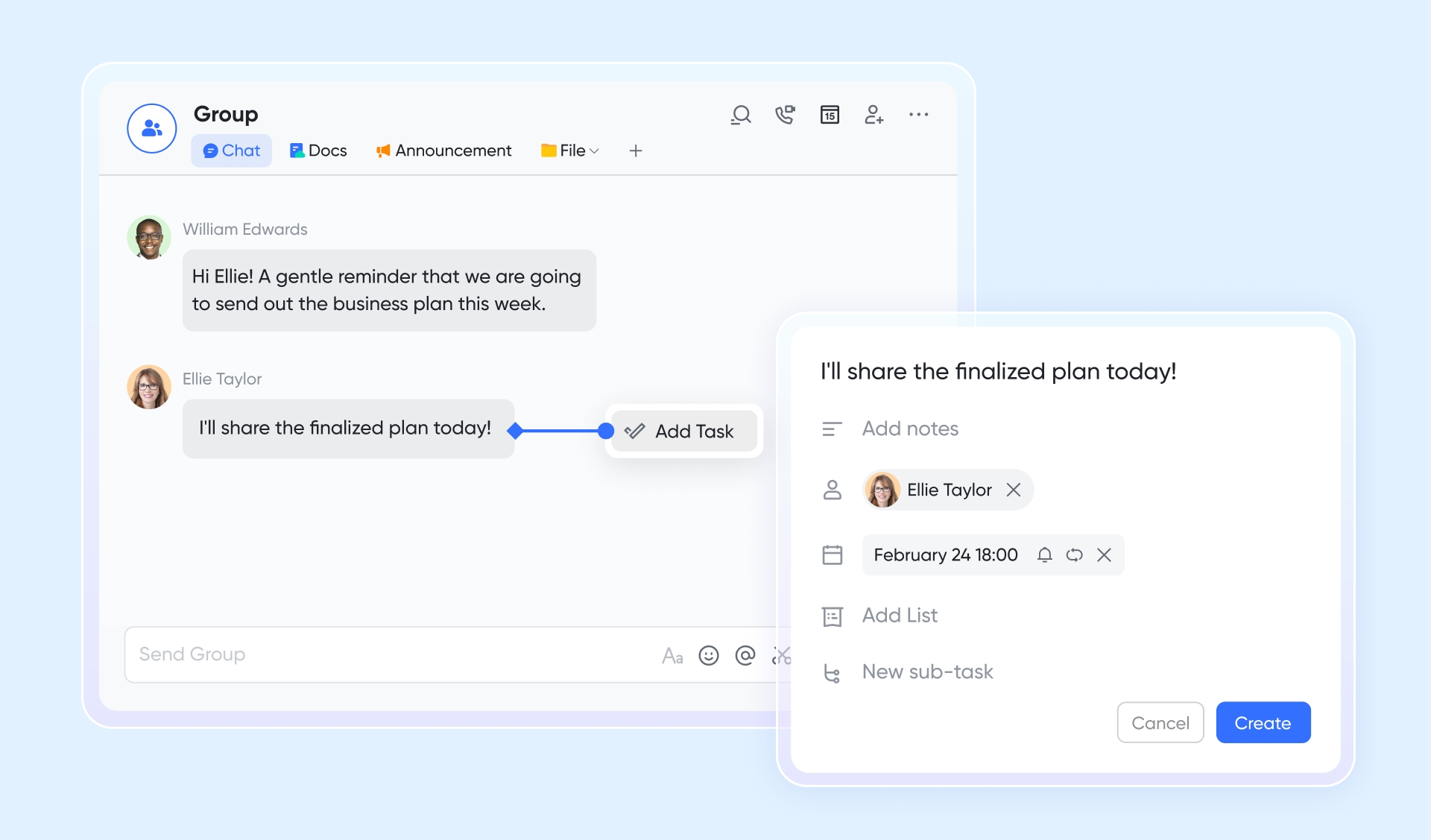
Monitoring: Progress tracking and dashboards
Lark Base provides through customizable views and filtered lists across teams, milestones, or project phases. Managers monitor completion rates, overdue work, workload distribution, and blockers using real-time dashboards built directly from operational data. Because updates sync instantly across records, leadership gains live visibility without needing separate reporting tools or manual spreadsheet consolidation. 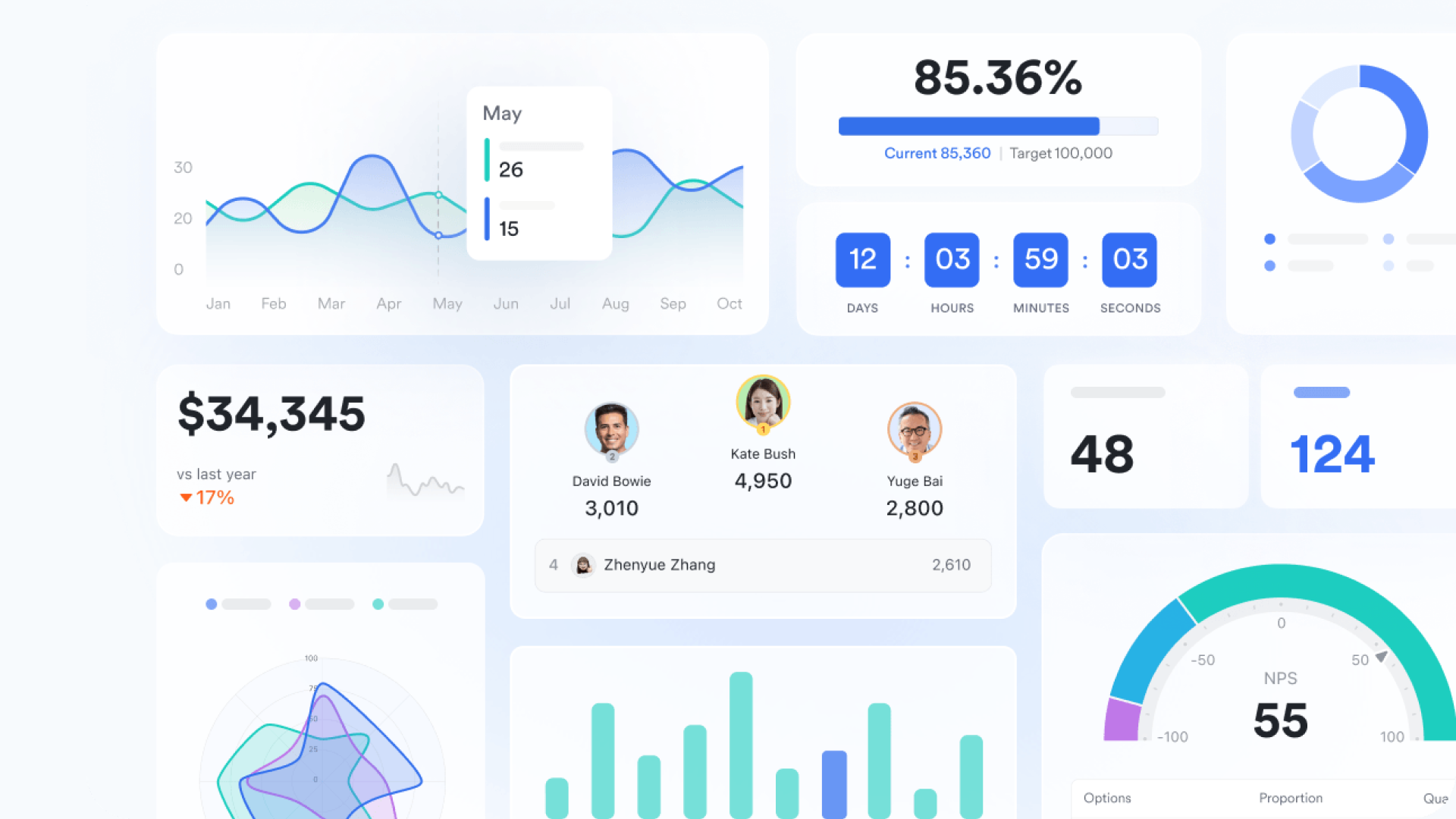
Closing: Knowledge storage and reporting
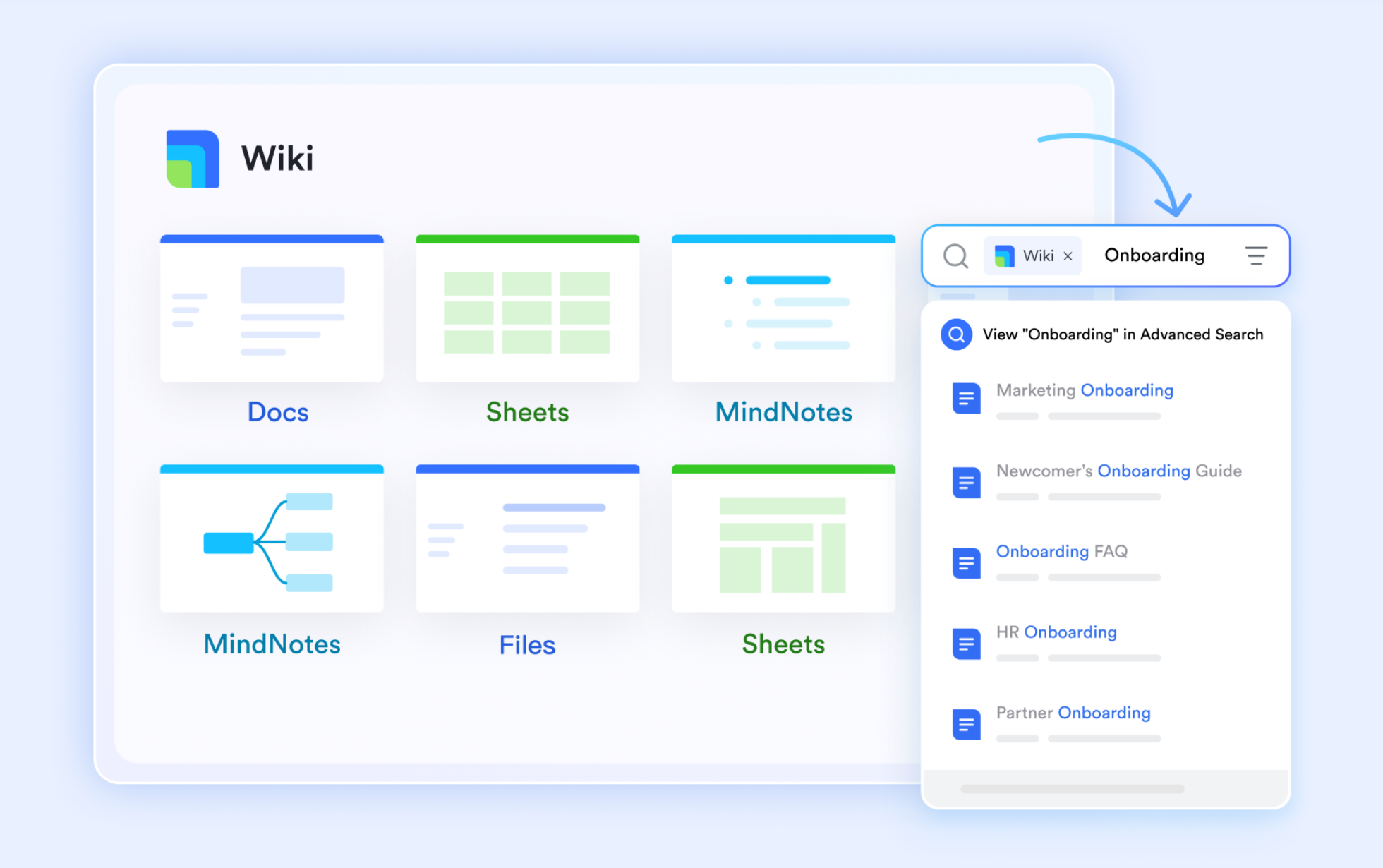
Lark Docs and centralize final deliverables, post-project reports, SOP updates, and retrospective notes into searchable knowledge libraries. Teams can package lessons learned, templates, and outcome summaries into structured spaces that support onboarding, audits, and future . This preserved knowledge ensures continuous improvement and prevents teams from restarting projects without institutional reference.
:
- Starter plan: Free forever plan that includes 11 powerful tools for up to 20 users. It also comes with 100GB of storage, 1000 automation runs, AI translations, and more.
- Pro plan: $12/user/month (billed annually) for up to 500 users. It includes everything in Starter plus group calling for up to 500 attendees, 15TB of storage, 50,000 automation runs, and more.
- Enterprise plan: for custom pricing. Supports unlimited users and includes even more automation runs and advanced security, compliance, and management features.
For small teams with simple communication needs

18 months message history
1000 Base automation runs/month
2000 rows per table in Base
Most POPULAR
For companies with comprehensive collaboration and management needs
Unlimited message history
500-participant video meetings
50k Base automation runs/month
20k rows per table in Base
For large companies with advanced security and organizational management needs
Get a personalized demo and pricing
Unlimited message history
500-participant video meetings
15 TB storage + 30 GB storage/user
500k Base automation runs/month
50k Base automation runs/month
Most POPULAR
For companies with comprehensive collaboration and management needs
Unlimited message history
500-participant video meetings
50k Base automation runs/month
20k rows per table in Base
Conclusion
Understanding the phases of project management gives teams a clear roadmap for moving from idea to delivery with structure, alignment, and confidence. Whether you use a 4-, 5-, or 6-phase model, the goal remains the same: define scope, plan effectively, execute smoothly, monitor progress, and close with proper documentation and learning. By applying phase-gate reviews, strong communication habits, and consistent change management, teams can reduce risk and avoid unnecessary delays. And when you're ready to support these workflows with modern, unified tools, platforms like help streamline every phase of the project management life cycle.
Support your projects with streamlined workflows
FAQs
What are the phases of project management?
The provide a structured path from initiation to closing. Common in many industries, they help standardize tasks, improve communication, and guide decision-making. When followed consistently, these phases strengthen alignment and reduce risk across teams. Overall, the phases of project management life cycle help ensure predictable and successful project outcomes.
Are there always 5 phases of project management?
Not necessarily. Some teams adopt the 4 phases of project management, especially in streamlined or smaller projects. This condensed model focuses on clarity and speed. However, organizations may choose different structures depending on project scale, methodology, or industry needs. While formats vary, the goal remains consistent: provide direction and maintain alignment from beginning to end.
Which phase is the most important?
No single phase dominates, because the phases of project management are designed to work together as a connected framework. Initiation often feels most crucial since it defines scope and objectives, but planning, execution, monitoring, and closing each carry equal weight. Strong balance ensures progress stays controlled, risks are minimized, and all stakeholders remain aligned throughout delivery.
What are the phases of construction project management?
The phases of usually include planning, design, procurement, execution, monitoring, and turnover. In many cases, teams also reference the six phases of project procurement management process, which focus heavily on contractor selection, materials sourcing, and compliance workflows. These structured phases ensure that planning, cost control, and safety standards remain consistent from blueprint to final handover.
What is the project management life cycle?
The project management life cycle describes how projects evolve from concept to completion. Some teams use the five phases of project management, while others expand to the six phases of project management depending on complexity. Regardless of model, the various phases of project management life cycle create predictable workflows, improve communication, and support consistent delivery across all project types.
Related reading