


10 Best Supply Chain Planning Platforms Built for Modern Businesses
Aug 5, 2026
Aug 5, 2026

12 min read


Modern supply chains are becoming more complex as businesses expand across regions, manage multiple suppliers, and respond to fluctuating customer demand. Organizations must balance inventory, forecasting, and operational efficiency while maintaining visibility across every stage of the supply chain. This growing complexity makes digital planning tools essential for accurate decision-making and coordination.
A supply chain planning tool helps businesses improve forecasting accuracy, optimize inventory levels, and streamline operational workflows. Many organizations are also exploring intelligent supply chain strategies supported by demand planning AI and advanced demand planning tools. As teams collaborate across functions, platforms that integrate planning, communication, and workflow coordination are gaining importance. Solutions like Lark show how supply chain planning can evolve into collaborative and connected workflows.
Key takeaways: 5 best platforms for supply chain planning
Many businesses evaluate effectiveness and performance metrics for supply chain planning tools when selecting solutions. Here are the shortlisted tools:
1. Lark: Collaborative platform combining workflow automation and planning coordination
2. Kinaxis: Real-time concurrent planning platform for agile supply chain management.
3. o9 Solutions: AI-driven platform supporting intelligent supply chain decision making.
4. SAP IBP: Integrated enterprise platform connecting supply planning with ERP systems.
5. Oracle SCM: Cloud-based system offering predictive analytics and demand planning tools
Overview of the 5 best platforms for supply chain planning
The right platform should support both operational visibility and intelligent supply chain strategies. This comparison highlights leading tools used across different business sizes and industries.
Information source: Official vendor sites
Update time: 2026-03-24
Note: Pricing and plan details reflect publicly available data as of the update date and may vary based on region, billing cycle, and number of agents.

What are supply chain planning solutions?
Supply chain planning solutions are digital platforms that help organizations manage forecasting, inventory, procurement, and distribution processes. These tools support supply planning by aligning demand forecasts with production and logistics strategies.
A modern supply chain planning tool integrates demand planning AI, data analytics, and automation to improve decision-making. Businesses use these platforms to analyze historical data, predict demand trends, and optimize inventory management. These solutions also improve collaboration across teams, ensuring that procurement, operations, and sales remain aligned. As supply chains become more dynamic, organizations increasingly rely on intelligent supply chain platforms to maintain agility and responsiveness.
How supply chain planning platforms support modern teams
Supply chain planning platforms play a critical role in helping organizations manage complexity and improve operational efficiency. These tools enable teams to coordinate activities, track performance, and respond to marketing agencies. They support demand planning tools that help businesses forecast customer demand accurately. By aligning demand with supply, organizations can reduce stockouts and excess inventory.
These platforms also provide effectiveness and performance metrics for supply chain planning tools to measure efficiency. Teams can track key indicators such as forecast accuracy, inventory turnover, and order fulfillment rates. Additionally, team collaboration allows us to communicate and coordinate workflows in real time. This ensures that supply chain decisions are informed, timely, and aligned with business goals.
Top 10 platforms for intelligent supply chain planning
Intelligent supply chain planning platforms help organizations forecast demand, optimize inventory, and improve operational efficiency using data-driven insights. These tools enable businesses to make faster, more accurate decisions across procurement, production, and logistics.
1. Lark: All-in-one platform for collaborative supply chain planning
Lark is a unified platform that enables teams to manage supply chain planning workflows, data, and communication in one environment. It supports intelligent supply chain operations by combining structured database management, automation, and real-time collaboration. Organizations use Lark to improve supply planning processes, track inventory, and coordinate procurement workflows.
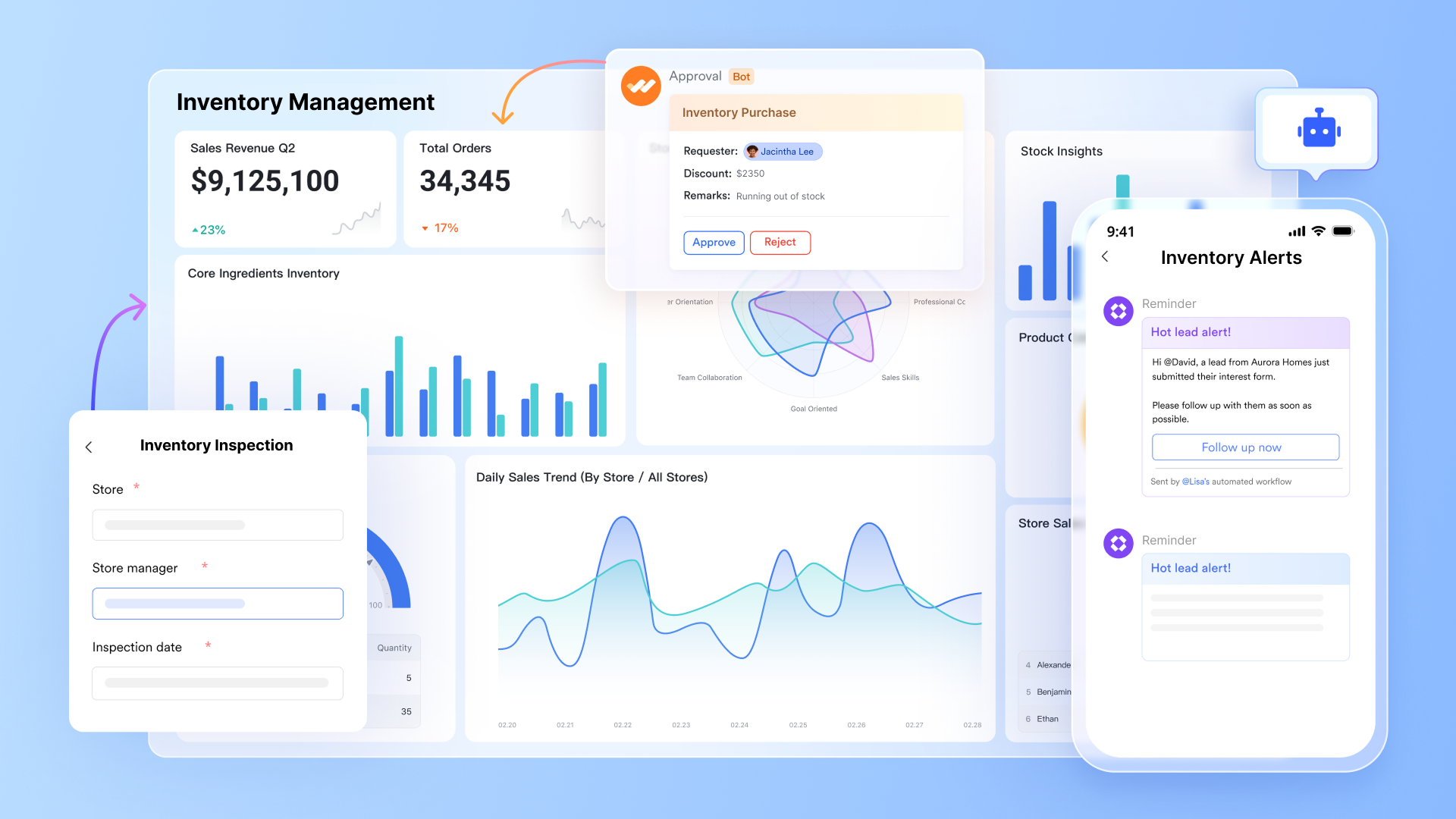
A live supply chain operations database
Lark Base records suppliers, purchase orders, inventory levels, lead times, and shipment status in a structured database, with formula fields that auto-calculate reorder points, stock coverage days, and supplier performance scores. Every field update is reflected across the procurement, warehouse, and operations teams simultaneously, with a full change history stored automatically.
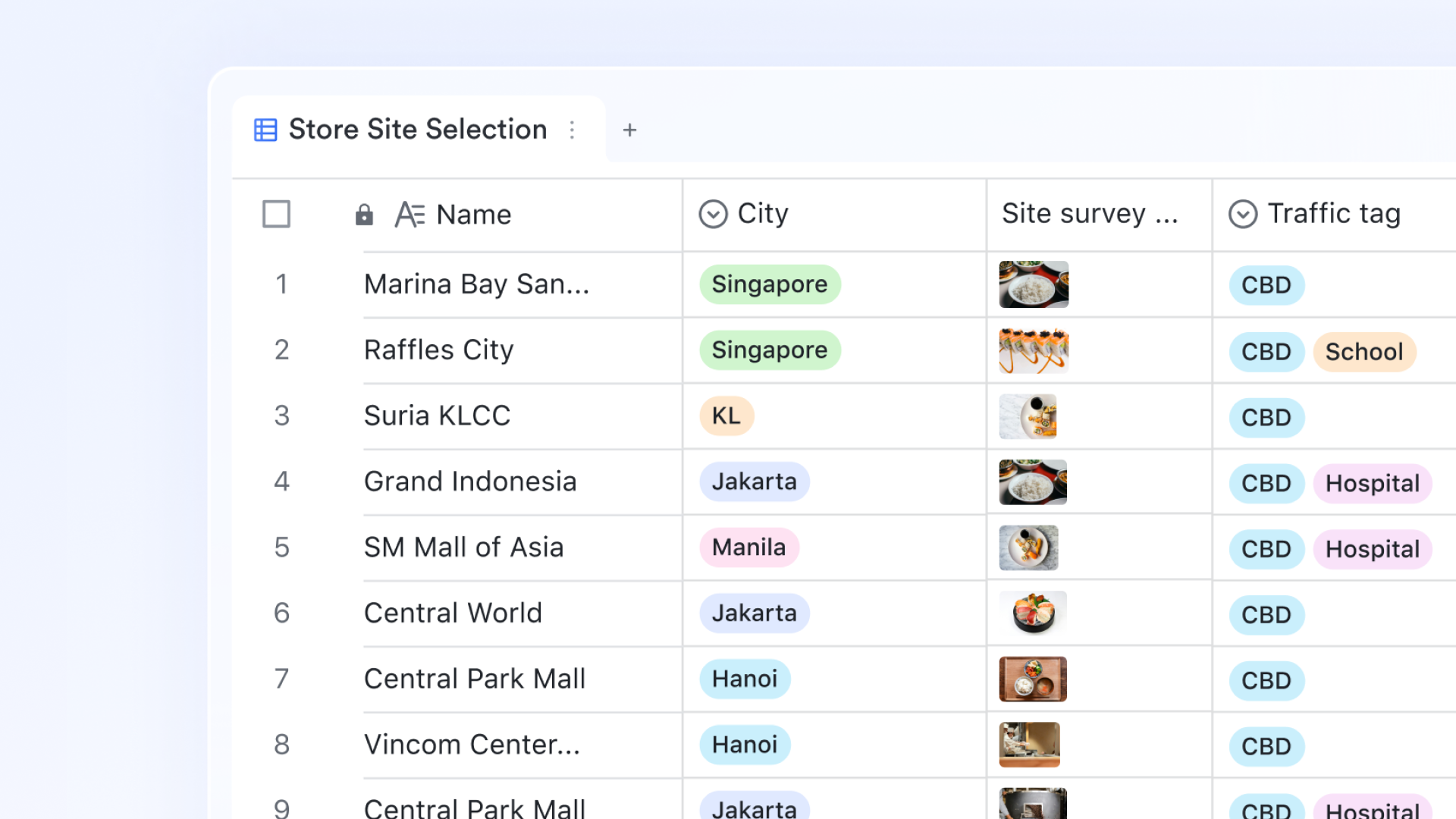
Supply chain visibility across Gantt, dashboard, and grid from one dataset
Lark Base renders the supply chain operations table in multiple formats from a single dataset: From one dataset, you can instantly generate a Gantt view for logistics scheduling and a grid view for procurement management. Supplement your operations with custom dashboards that automate your most critical reporting—including SKU-level stock coverage, supplier on-time rates, and overdue shipment alerts—ensuring your team stays ahead of every bottleneck.
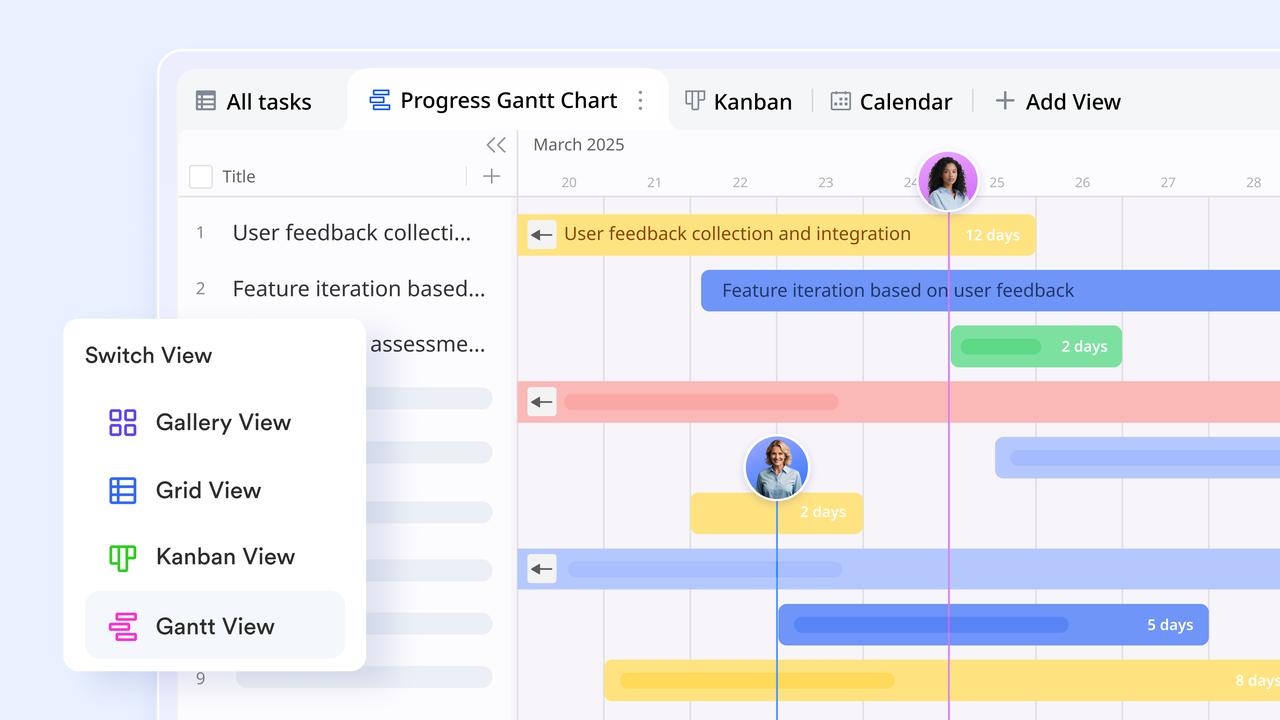
Supply chain alerts triggered by stock and order thresholds
Lark Base automation fires Lark Messenger receives notifications when inventory drops below reorder level, when a purchase order passes its expected delivery date without a status update, or when a supplier performance score falls below a defined threshold. Each alert includes the specific record and a direct link, reaching the responsible team member without manual monitoring.
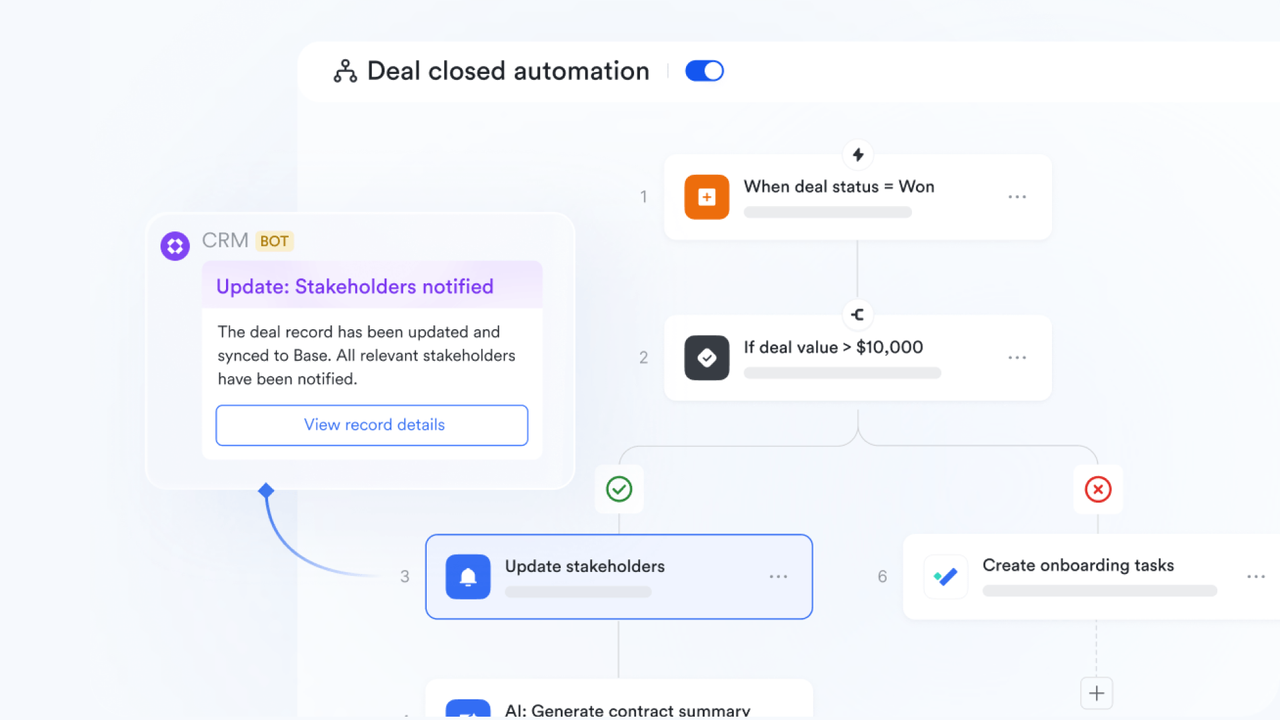
Purchase order and supplier onboarding workflows without email chains
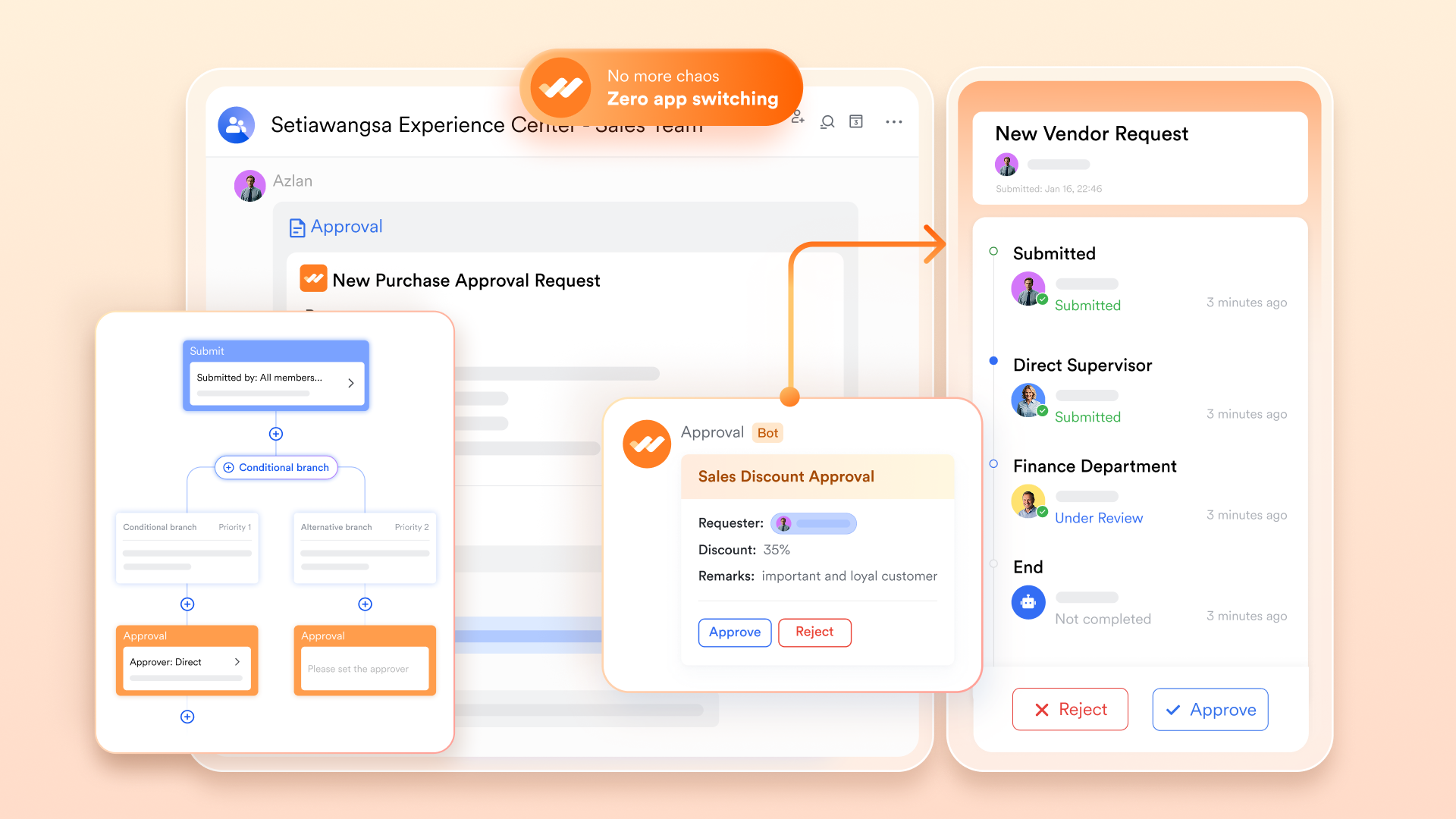
Lark Approval configures multi-step approval flows for purchase orders, supplier contracts, emergency procurement requests, and budget exceptions, with conditional routing based on order value and category. Each request routes automatically through procurement, finance, and operations sign-off sequences. Every approval decision is timestamped and stored as a traceable audit record against the originating Lark Base record.
Pros:
- Unified workspace connects supply chain data, workflows, and communication.
- No code tools simplify supply planning and operational coordination.
- Automation reduces manual monitoring and improves efficiency.
- Real-time collaboration improves visibility across supply chain teams.
Cons:
- Some advanced configurations may require guidance from the Lark Help Center.
- Starter plan: Free forever plan that includes 11 powerful tools for up to 20 users. It also comes with 100GB of storage, 1000 automation runs, AI translations, and more.
- Basic plan: $6/user/month (billed annually) for up to 500 users. It includes everything in Starter plus group calling for up to 500 attendees, 5TB of storage, 1000 automation runs, and more. For more details, please contact sales.
- Pro plan: $12/user/month (billed annually) for up to 500 users. It includes everything in Basic plus group calling for up to 500 attendees, 15TB of storage, 50,000 automation runs, and more.
- Enterprise plan: Contact sales for custom pricing. Supports unlimited users and includes even more automation runs and advanced security, compliance, and management features.

Starter
Pro
Enterprise
Starter
For small teams with simple communication needs
$0
/ user / month
20 users max
18 months message history
1-on-1 video meetings
100 GB storage
Lark Docs & Mail
1000 Base automation runs/month
2000 rows per table in Base
Pro
For companies with comprehensive collaboration and management needs
$12
/ user / month
500 users max
Unlimited message history
500-participant video meetings
15 TB storage
Lark Docs & Mail
50k Base automation runs/month
20k rows per table in Base
Enterprise
For large companies with advanced security and organizational management needs
Get a personalized demo and pricing
Unlimited users
Unlimited message history
500-participant video meetings
15 TB storage + 30 GB storage/user
Lark Docs & Mail
500k Base automation runs/month
50k Base automation runs/month
Single sign-on (SSO)
Pro
For companies with comprehensive collaboration and management needs
$12
/ user / month
500 users max
Unlimited message history
500-participant video meetings
15 TB storage
Lark Docs & Mail
50k Base automation runs/month
20k rows per table in Base
2. Kinaxis: Real-time platform for agile and concurrent supply chain planning
Kinaxis is a cloud-based supply chain planning platform designed for real-time visibility and rapid decision-making. It focuses on concurrent planning, allowing teams to manage demand, supply, and inventory simultaneously. Organizations use Kinaxis to respond quickly to disruptions and maintain operational agility. Its strong analytics and simulation capabilities make it suitable for complex enterprise environments.
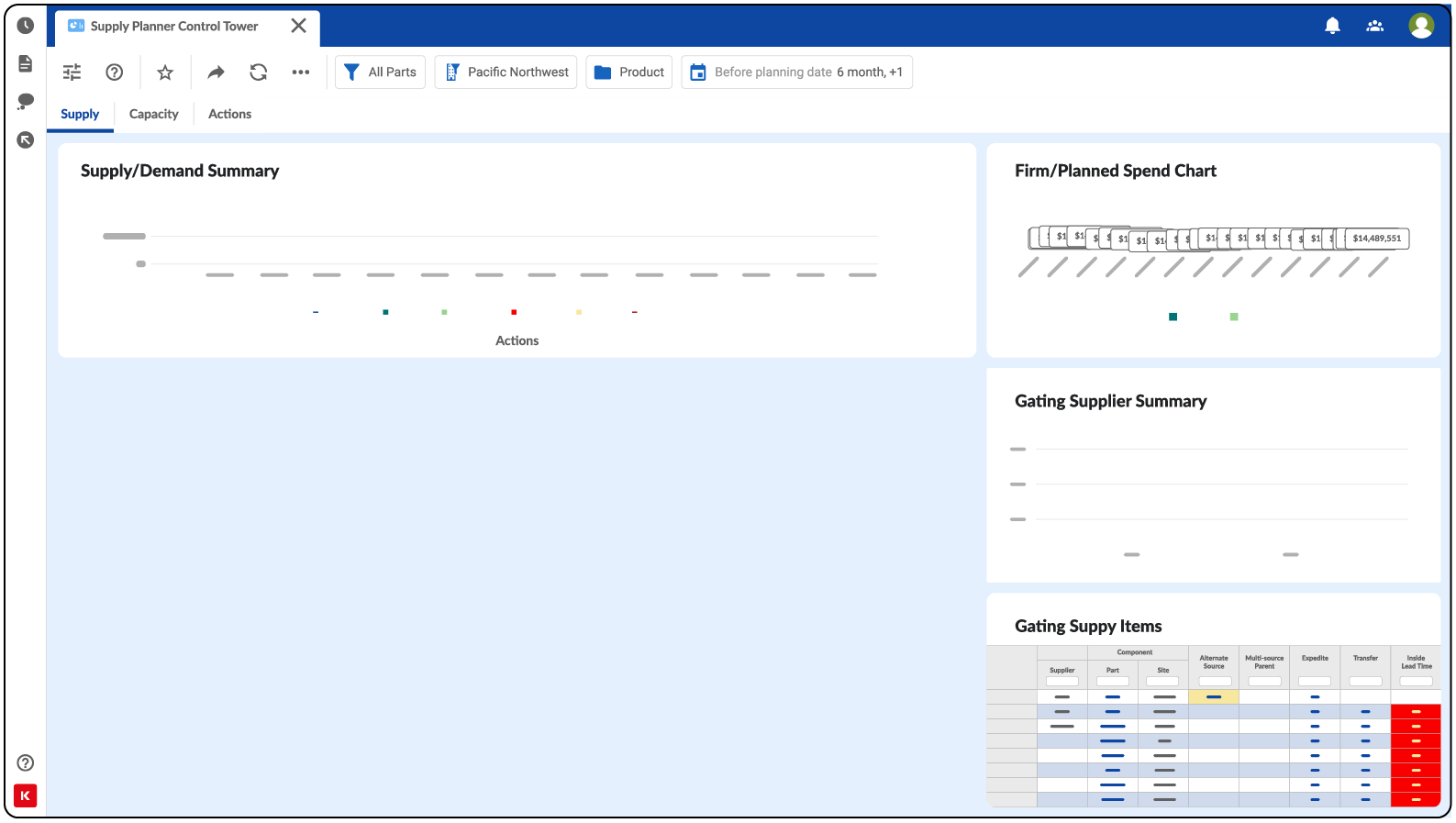
Image source: kinaxis.com
Key features:
- Concurrent supply and demand planning enables real-time decision making across operations.
- Scenario simulation tools help businesses evaluate risks and plan alternatives.
- Real-time analytics dashboards provide visibility into supply chain performance.
- Demand planning AI improves forecasting accuracy and responsiveness.
Pros:
- Real-time planning improves agility during disruptions.
- Strong scenario modeling supports strategic decision-making.
- Scalable platform suitable for enterprise supply chains.
- High-quality customer support compared to competitors.
Cons:
- Implementation can be complex for new users.
- Pricing is not publicly disclosed.
- May require training for advanced features.
Pricing:
- Custom pricing
3. o9 Solutions: AI-powered platform for end-to-end supply chain decision-making
o9 Solutions is an advanced supply chain planning platform that uses AI and knowledge graph technology to model complex supply networks. It enables organizations to create a digital twin of their supply chain for better decision-making. Businesses use o9 to improve forecasting, optimize inventory, and align supply chain operations.
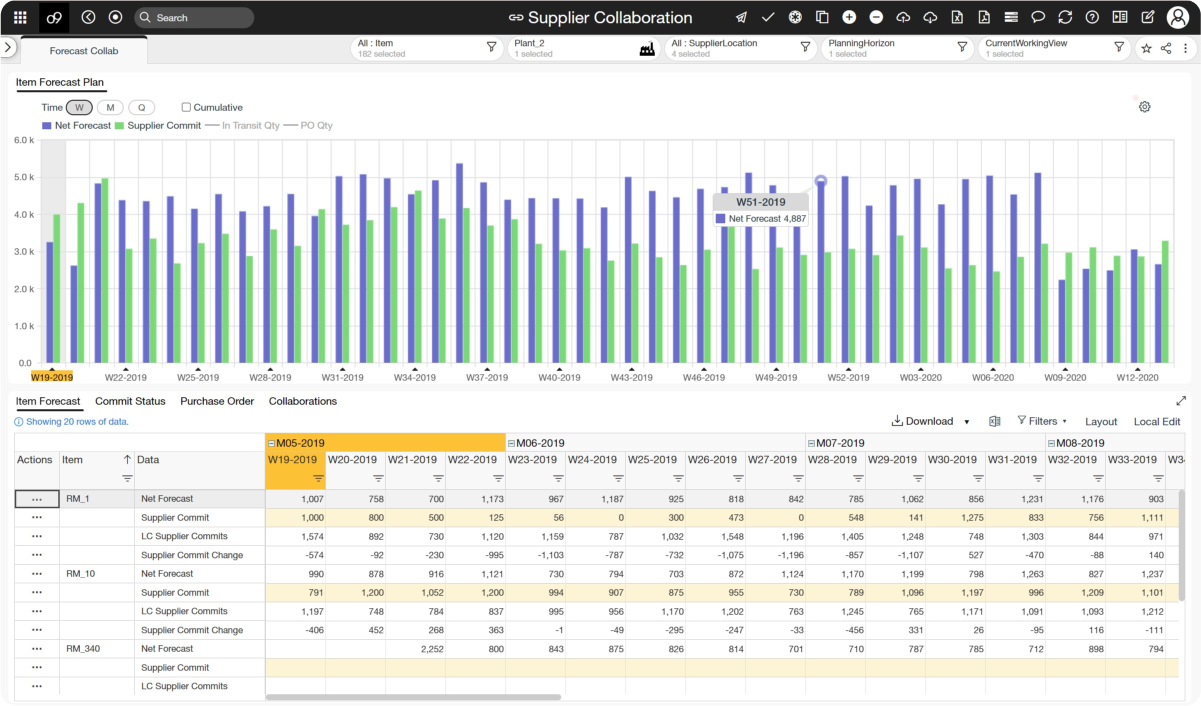
Image source: o9solutions.com
Key features:
- AI-driven demand planning tools improve forecast accuracy.
- Digital twin modeling connects products, suppliers, and customers.
- Integrated planning supports end-to-end supply chain coordination.
- Advanced analytics dashboards provide real-time insights.
Pros:
- Strong AI capabilities for intelligent supply chain planning.
- End-to-end visibility across supply chain operations.
- Flexible platforms support complex enterprise workflows.
- High user ratings compared to competitors.
Cons:
- Setting up can be complex for organizations.
- Requires technical expertise for optimization.
- Pricing is not publicly available.
Pricing:
- Custom pricing upon requesting a demo
4. SAP IBP: Enterprise-grade platform for integrated supply chain planning
SAP Integrated Business Planning is a comprehensive solution that connects demand, supply, and inventory planning within one system. It integrates closely with ERP systems to provide end-to-end visibility. Many enterprises use SAP IBP to align supply chain strategies with business operations and improve forecasting accuracy.
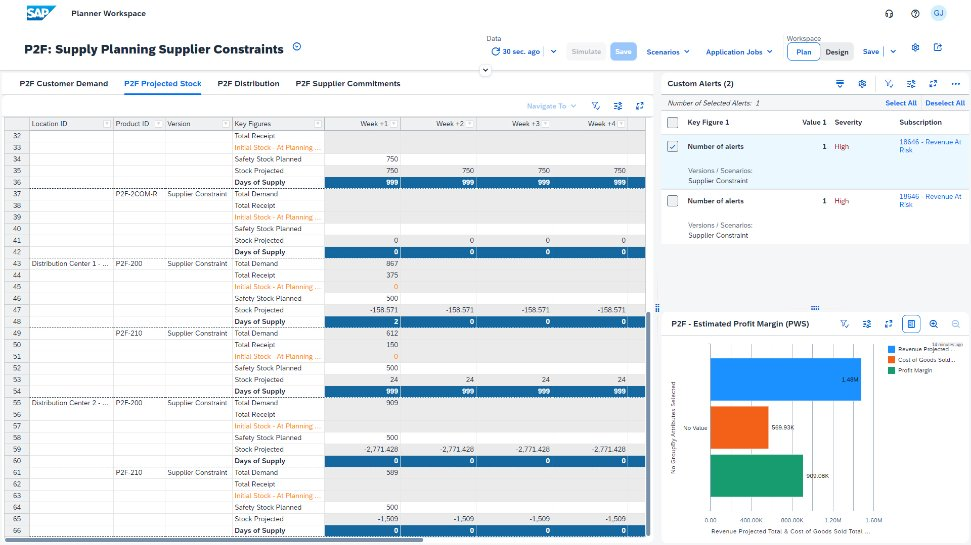
Image source: sap.com
Key features:
- End-to-end supply planning integrates demand, inventory, and production workflows.
- Advanced analytics enable "what-if" scenario planning.
- Real-time data synchronization improves decision-making.
- Forecasting tools enhance demand planning accuracy.
Pros:
- Strong integration with enterprise ERP systems.
- Advanced analytics and forecasting capabilities.
- Reliable platform for large-scale operations.
- High user satisfaction across enterprise environments.
Cons:
- Implementation requires significant resources.
- Learning curve for new users.
- Pricing is not publicly disclosed.
Pricing:
- Subscription-based enterprise pricing; demo available
5. Oracle SCM: Cloud-based platform for unified supply chain planning and execution
Oracle SCM is a cloud-based platform that helps organizations manage supply chain planning and execution within a unified environment. It offers predictive analytics, automation, and AI-driven insights to improve operational efficiency. Businesses use Oracle SCM to manage global supply chains and optimize inventory and logistics processes.
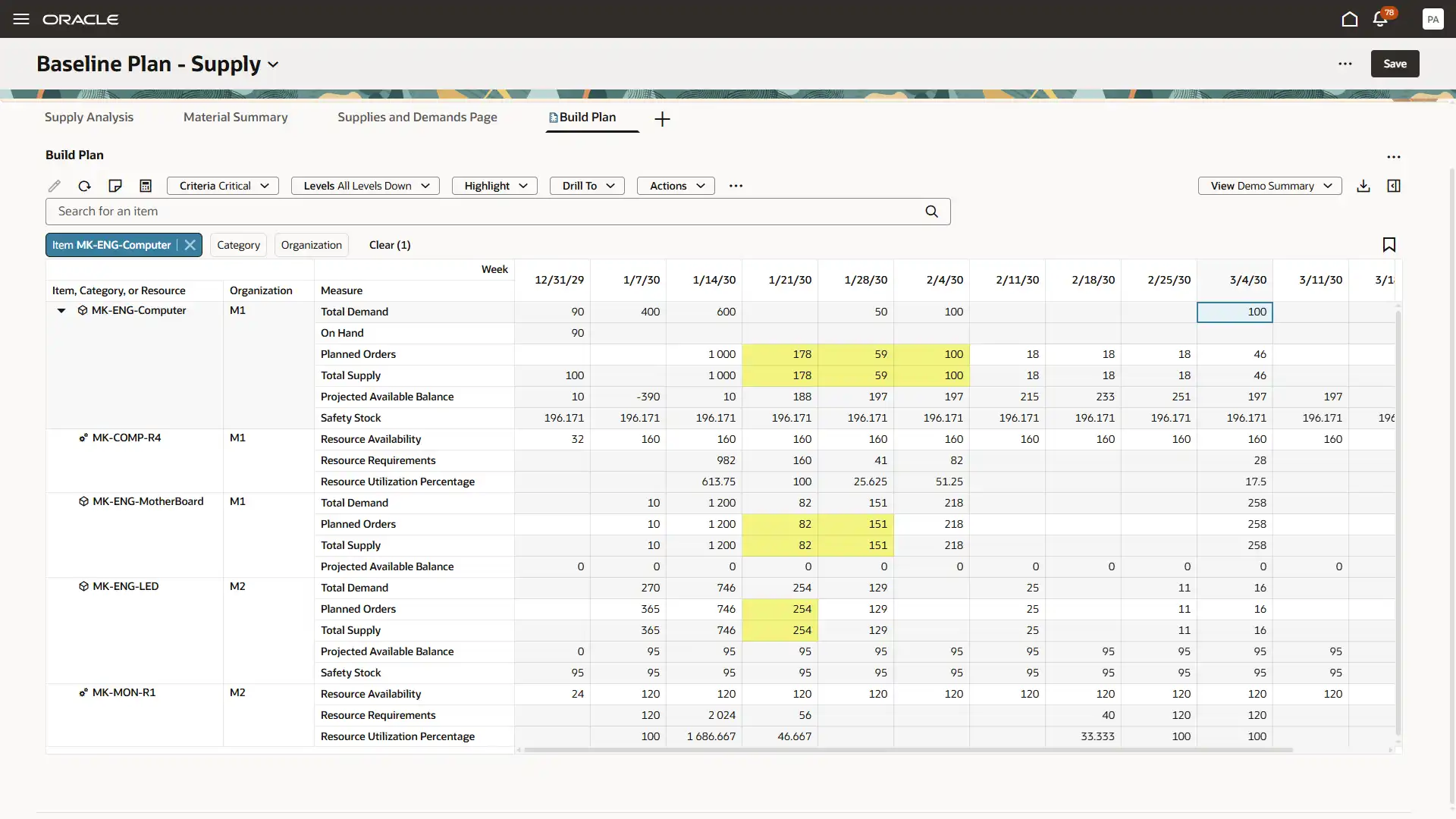
Image source: oracle.com
Key features:
- Cloud-based infrastructure supports scalable global operations.
- Predictive analytics improve demand forecasting and planning.
- Integrated supply chain workflows connect planning and execution.
- AI-powered insights support decision-making and automation.
Pros:
- Strong cloud capabilities for enterprise scalability.
- Embedded AI improves forecasting and optimization.
- End-to-end supply chain visibility.
- Easier implementation compared to some enterprise tools.
Cons:
- The interface may require improvement for usability.
- Pricing not publicly available.
- Advanced customization may require expertise.
Pricing:
- Custom enterprise pricing
6. Blue Yonder: Intelligent platform for demand forecasting and supply chain
Blue Yonder is an AI-driven supply chain planning platform focused on improving forecasting accuracy and operational efficiency. It helps organizations manage demand, inventory, and supply planning through advanced analytics. Businesses use Blue Yonder to optimize supply chain performance and respond to changing market conditions. Its intelligent capabilities make it suitable for retail and enterprise environments.
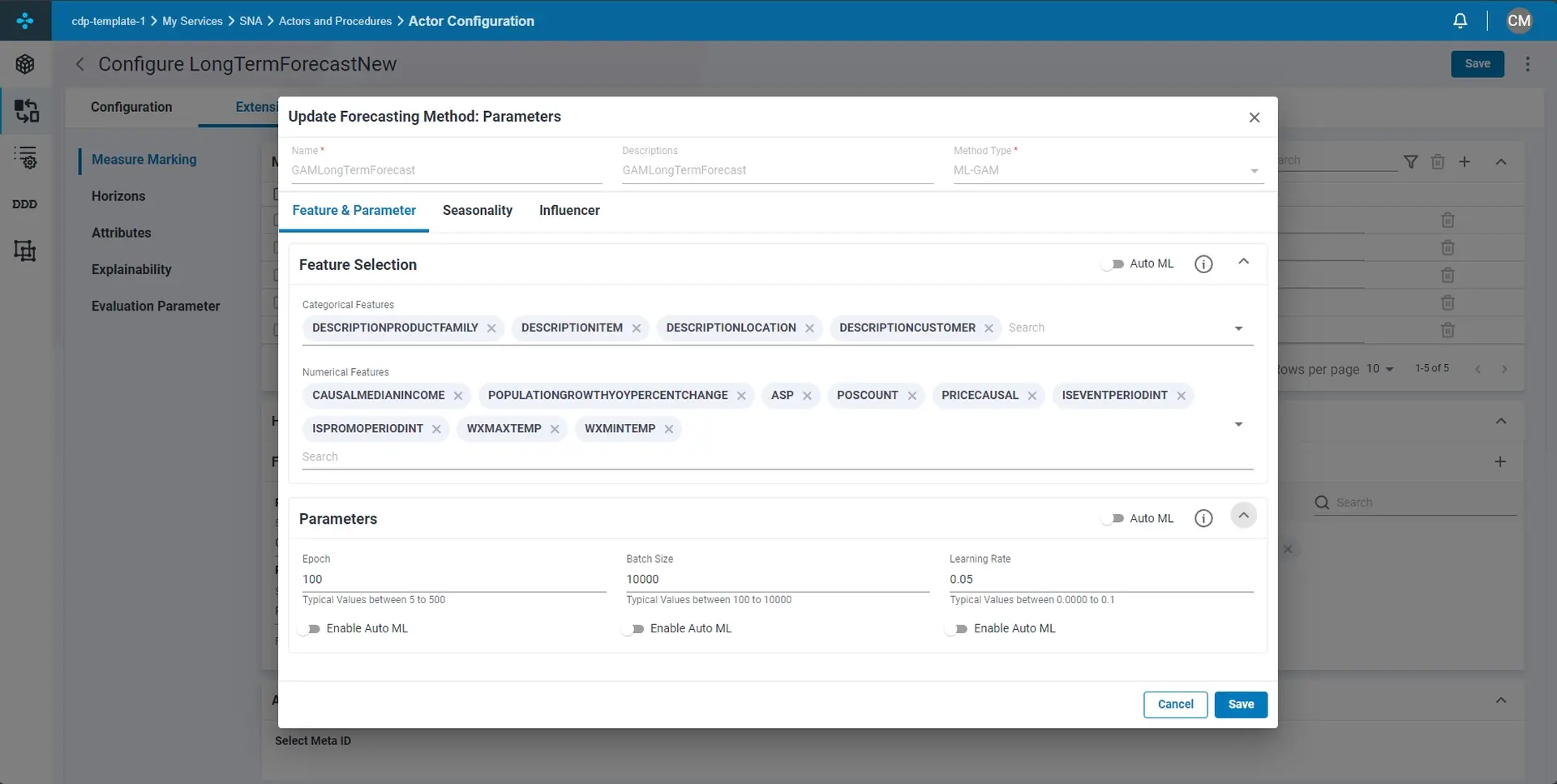
Image source: blueyonder.com
Key features:
- Demand planning AI improves forecasting accuracy and reduces errors.
- Inventory optimization tools balance stock levels and availability.
- Real-time analytics dashboards provide operational visibility.
- Supply chain automation supports faster decision-making.
Pros:
- Strong AI capabilities for forecasting and planning.
- Improves inventory efficiency and reduces waste.
- Scalable platform for enterprise operations.
- Real-time insights enhance supply chain visibility.
Cons:
- Implementation may require technical expertise.
- Higher cost for advanced features.
- Setup can be time-consuming.
Pricing:
- Custom enterprise pricing
7. Anaplan: Connected platform for cross-functional supply chain planning
Anaplan is a connected planning platform that enables organizations to align supply chain operations with finance, sales, and operations teams. It helps businesses create unified planning models that improve coordination and decision-making. Many companies use Anaplan to support supply planning and demand forecasting across departments.
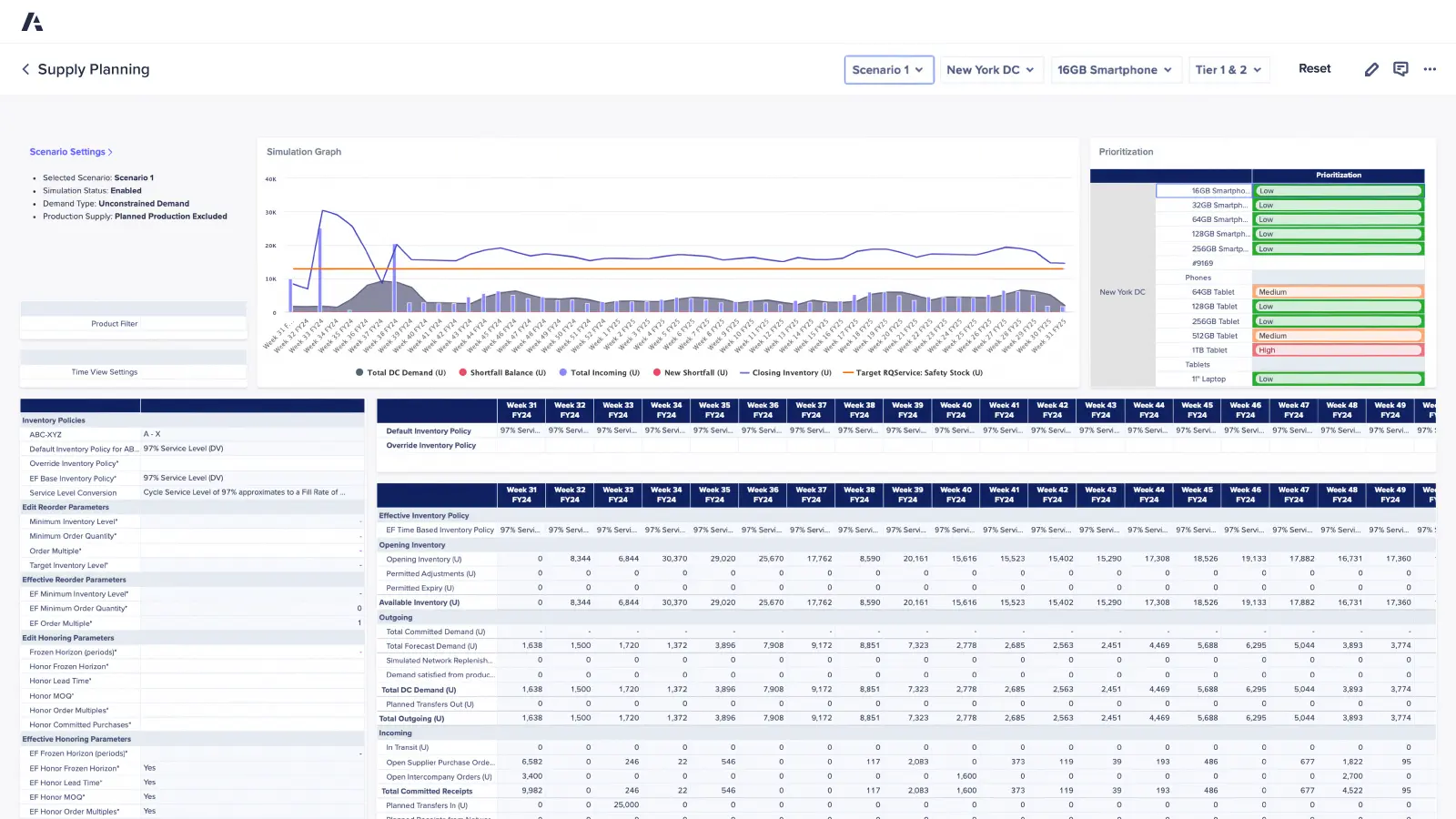
Image source: anaplan.com
Key features:
- Connected planning links supply chains with finance and operations.
- Scenario modeling tools support forecasting and risk analysis.
- Real-time data updates improve planning accuracy.
- Demand planning tools help manage inventory and supply alignment.
Pros:
- Strong cross-functional collaboration capabilities.
- Flexible planning models for various business needs.
- Scalable for growing organizations.
- Improves visibility across departments.
Cons:
- Requires setup and configuration effort.
- Learning curve for new users.
- Pricing may be high for smaller teams.
Pricing:
- Custom pricing based on usage
8. OMP: Advanced platform for complex supply chain planning and optimization
OMP is a specialized supply chain planning platform designed for organizations with complex operations. It focuses on optimization and advanced planning capabilities to improve efficiency. Businesses use OMP to manage large-scale supply planning processes and optimize production, logistics, and inventory.
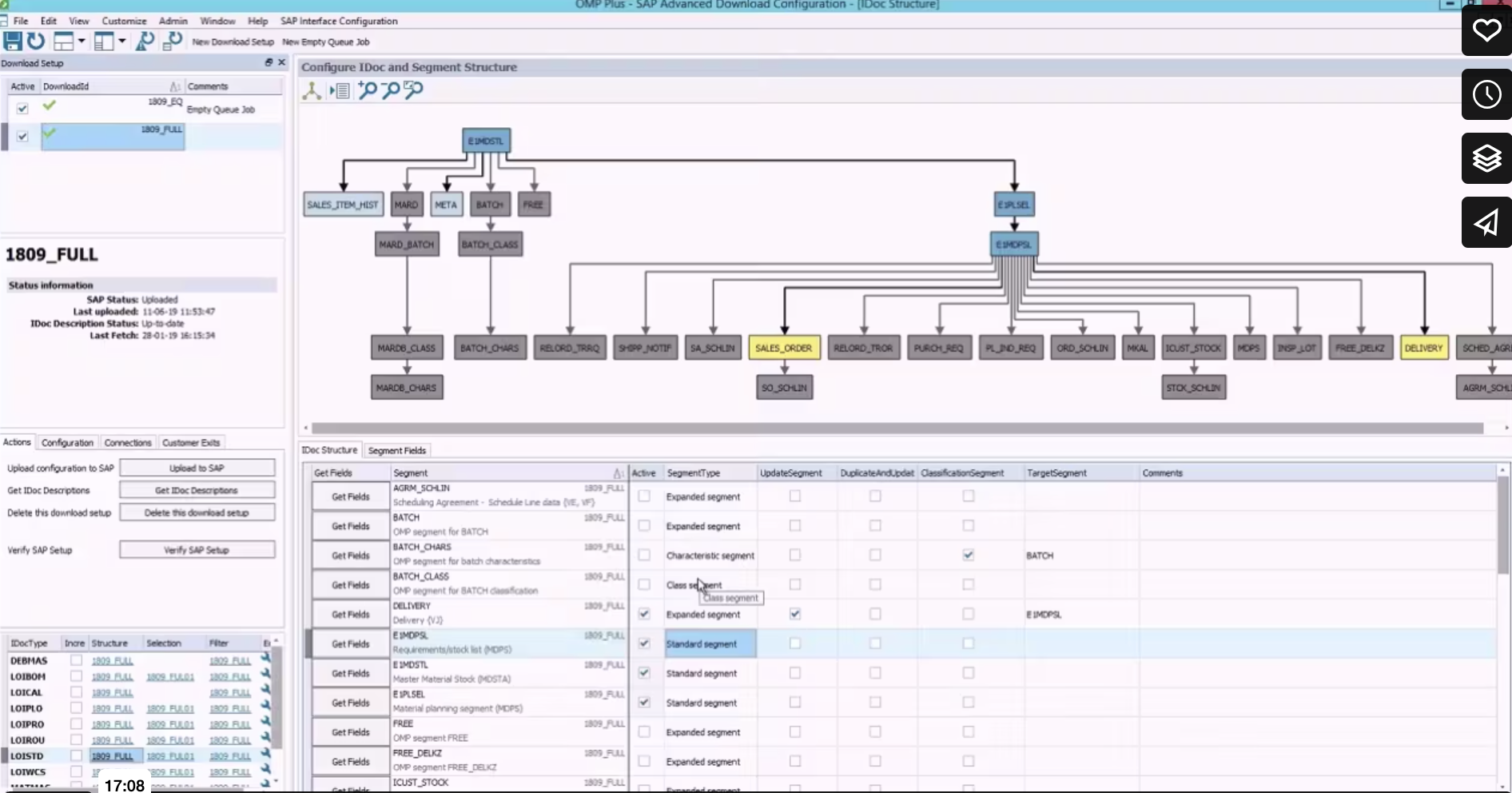
Image source: omp.com
Key features:
- Advanced optimization algorithms improve planning efficiency.
- Supply planning and scheduling tools manage production workflows.
- Scenario analysis supports strategic decision-making.
- Real-time data integration enhances operational visibility.
Pros:
- Strong optimization capabilities for complex supply chains.
- Supports large-scale enterprise operations.
- Improves planning accuracy and efficiency.
- Suitable for global supply chain networks.
Cons:
- Complex interface for new users.
- Requires technical expertise for implementation.
- Higher cost for enterprise deployment.
Pricing:
- Custom enterprise pricing
9. RELEX: Retail-focused platform for demand forecasting and inventory planning
RELEX is a supply chain planning platform tailored for retail and consumer goods businesses. It helps organizations manage demand forecasting, inventory planning, and store operations. Retailers use RELEX to improve product availability while reducing excess inventory. Its focus on retail planning software makes it highly effective for retail environments.
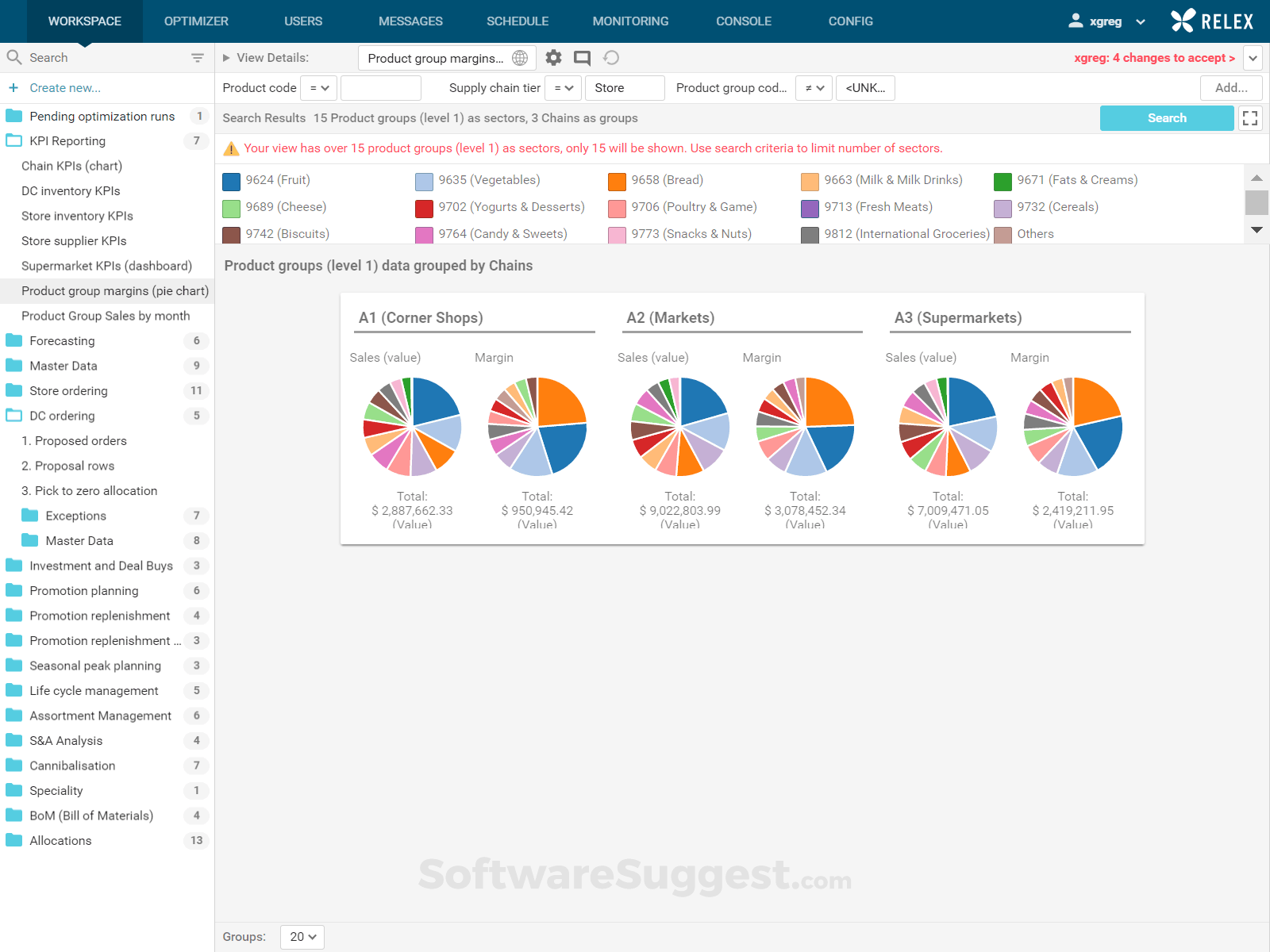
Image source: relexsolutions.com
Key features:
- Demand forecasting tools improve retail planning accuracy.
- Inventory optimization ensures efficient stock management.
- Real-time analytics dashboards track performance metrics.
- Automation tools support replenishment and supply planning.
Pros:
- Strong retail-specific planning capabilities.
- Improves product availability and reduces stockouts.
- Enhances inventory efficiency across stores.
- Scalable for large retail operations.
Cons:
- Limited use outside retail industries.
- Implementation may require configuration.
- Pricing varies based on scale.
Pricing:
- Custom pricing for retail businesses
10. ToolsGroup SO99+: Service-driven platform for demand planning
ToolsGroup SO99+ is a supply chain planning platform focused on service level optimization and demand forecasting. It helps organizations balance inventory levels with customer service goals. Businesses use this platform to improve forecast accuracy and optimize supply chain performance.
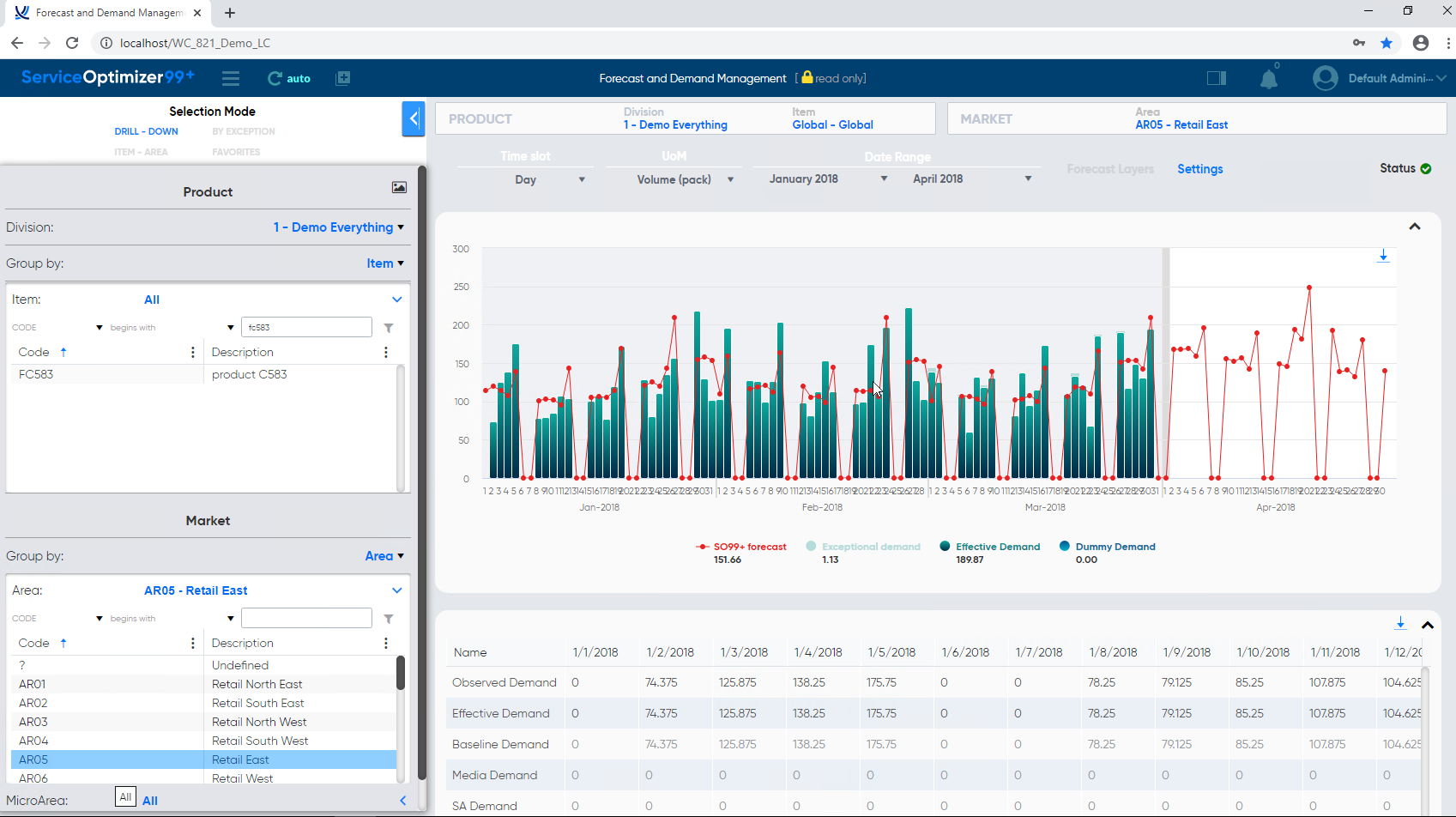
Image source: toolsgroup.com
Key features:
- Demand planning AI improves forecasting precision.
- Service level optimization tools balance supply and demand.
- Inventory optimization reduces excess stock and shortages.
- Analytics dashboards provide performance insights.
Pros:
- Strong focus on service-driven supply chain planning.
- Improves forecasting accuracy and inventory balance.
- Scalable for enterprise environments.
- Supports advanced demand planning tools.
Cons:
- Complex configuration for advanced features.
- Requires expertise for implementation.
- Premium pricing for enterprise users.
Pricing:
- Custom enterprise pricing
What to look for in a supply chain planning tool
Choosing the right supply chain planning tool requires evaluating features that improve forecasting, visibility, and efficiency. Organizations often use effectiveness and performance metrics for supply chain planning tools to guide decisions. The right platform should support intelligent supply chain strategies and scalable operations.
- Forecast accuracy with demand planning tools: Demand planning tools help businesses analyze historical data and predict future demand trends. Accurate forecasting reduces stockouts and excess inventory.
- Real-time visibility across supply chain operations: A supply chain planning tool should provide real-time insights into inventory and workflows. Visibility helps teams monitor operations and respond quickly to disruptions.
- Automation for supply planning processes: Automation streamlines repetitive tasks such as inventory updates and approvals. A strong platform should support automated workflows within supply planning operations.
- Integration with business systems and data sources: Integration allows the supply chain planning tool to connect with ERP and other systems. Integrated platforms reduce data silos and improve accuracy. Businesses benefit from unified planning and reporting.
- Performance tracking using supply chain planning tool metrics: Supply chain planning tool performance metrics help organizations monitor key indicators. Tracking software enables continuous improvement. This ensures better operational efficiency.
Emerging trends in intelligent supply chain planning tools
Supply chain planning is evolving rapidly with advancements in technology, data analytics, and automation. Organizations are adopting intelligent supply chain solutions to improve agility and responsiveness. Modern platforms integrate AI, real-time data, and collaboration tools to enhance planning processes. Understanding these trends helps businesses stay competitive and future-ready.
- Adoption of demand planning AI for predictive forecasting: Demand planning AI is transforming how organizations forecast demand. AI models analyze large datasets to identify patterns and predict future trends. This improves accuracy compared to traditional forecasting methods. Businesses can respond faster to market changes using AI-driven insights.
- Growth of intelligent supply chain platforms: Intelligent supply chain platforms combine analytics, automation, and collaboration into one system. These platforms enable end-to-end visibility and coordination across operations. Businesses use them to improve efficiency and decision-making. Integrated systems reduce complexity in supply chain management.
- Real-time collaboration across supply chain teams: Modern supply chain tools include collaboration features that connect teams in real time. Communication tools help align procurement, operations, and sales teams. Real-time updates ensure faster decision-making. This improves coordination across distributed teams.
- Automation in supply planning workflows: Automation is becoming a key feature in supply chain planning platforms. Automated workflows streamline approvals, inventory updates, and order processing. This reduces manual errors and improves efficiency. Automation also supports scalable supply chain operations.
- Advanced analytics for supply chain performance optimization: Advanced analytics tools provide deeper insights into supply chain performance. Businesses use analytics to monitor trends and optimize operations. These tools support data-driven decision making. Improved analytics help organizations enhance efficiency and reduce costs.
Conclusion
Supply chain planning has become a critical function for modern organizations aiming to maintain efficiency and responsiveness in dynamic markets. A reliable supply chain planning tool enables businesses to improve forecasting, optimize inventory, and streamline operations across departments.
As supply chains grow more complex, businesses are increasingly adopting intelligent supply chain platforms that integrate automation, analytics, and collaboration. Solutions like Lark demonstrate how supply chain planning can evolve beyond traditional systems into collaborative environments where teams manage data, workflows, and communication in one place. By choosing the right platform, organizations can build resilient, efficient, and future-ready supply chains.
FAQs
What are supply chain planning tools?
Supply chain planning tools help businesses manage forecasting, inventory, and logistics operations. They support demand planning tools and supply planning processes to improve efficiency. Many modern platforms also include collaboration features, with tools like Lark combining planning with workflow management.
What are the 5 C's of SCM?
The 5 C's of supply chain management include companies, customers, competitors, collaborators, and climate. These elements help organizations analyze their supply chain environment. Platforms like Lark help teams collaborate across these areas more effectively.
What are the 7 C's of SCM?
The 7 C's include customer, cost, communication, coordination, collaboration, capacity, and control. These principles guide supply chain strategy and execution. Tools such as Lark support these areas by integrating workflows and communication.
Does SAP have a planning tool?
Yes, SAP offers SAP IBP, a comprehensive supply chain planning solution. It supports forecasting, inventory management, and supply planning processes. Organizations may also explore collaborative platforms like Lark to enhance coordination alongside planning tools.
Related reading
Table of contents
Start using Lark today

Manage all your work in one place
Boost team efficiency by 10x
Save up to 70% on software costs
Table of contents
Start using Lark today
Manage all your work in one place
Boost team efficiency by 10x
Save up to 70% on software costs
Keep reading








2026 Lark Technologies Pte. Ltd.
Headquartered in Singapore with offices worldwide.






Explore: