In the dynamic landscape of modern business, strategic planning is not just an advantage—it is a necessity. Organizations frequently grapple with optimizing their most valuable assets: their people, their skills, and their time. Ensuring the right resources are available at the right moment can be the difference between a project's resounding success and its frustrating delays. This is where resource forecasting plays a pivotal role. It is an essential practice that empowers leaders to anticipate future needs, make informed decisions, and pave the way for sustainable growth. This comprehensive guide will illuminate the principles of resource forecasting, explore its profound benefits, and provide actionable insights to help your organization thrive.
What is resource forecasting?
Resource forecasting is the strategic practice of estimating your organization's future demand for and supply of resources, primarily focusing on human capital—your team's skills, time, and availability. It involves looking ahead to predict what personnel and capabilities will be required for upcoming projects, , and strategic initiatives. By comparing your current team's capacity with projected needs, you can proactively identify potential shortages or surpluses.
Think of it as two interconnected parts: Resource planning and forecasting. Forecasting is the forward-looking prediction of needs, while planning is the subsequent action of allocating, recruiting, or training to meet those needs. For example, effective human resource forecasting empowers talent teams to anticipate hiring needs long before they become urgent, ensuring the right expertise is in place. The ultimate goal of resource demand forecasting is to enable proactive, strategic decisions that foster long-term organizational health and operational efficiency, shifting from reactive problem-solving to proactive anticipation.
Benefits of resource forecasting
Embracing robust resource forecasting offers substantial advantages across your organization. Implementing a well-structured resource forecasting tool or system can genuinely transform your operations. Here's how:
- Optimized resource utilization: Ensures your team's skills and time are allocated efficiently, preventing both under- and over-utilization. With effective resource forecasting tools, you balance workloads, , and ensure efficient .
- Improved project success rates: Predict resource availability accurately to confidently commit to . This foresight helps you avoid bottlenecks, skill gaps, and delays, leading to consistent, high-quality project outcomes.
- Enhanced team morale and retention: By distributing work equitably and preventing burnout, effective human resource forecasting boosts job satisfaction. When workloads are manageable and skills valued, employee loyalty increases, reducing costly turnover.
- Smarter strategic decision making: Gain data-driven insights to inform critical business decisions, such as expansion or new product launches. Understanding future resource demand forecasting guides long-term talent acquisition and resource investments.
- and increased profitability: Minimize expensive overtime and avoid the need for last-minute external hiring. Efficient resource allocation directly impacts your budget, improving your bottom line.
Unlock your team's full potential today
Resource forecasting techniques in project management
Effective resource forecasting in project management utilizes various techniques, crucial for accurate resource planning and forecasting. Choosing the right method, or a combination, boosts accuracy and project success.
- Bottom-up forecasting: This detailed approach estimates resource needs for individual tasks, then aggregates them for a comprehensive project forecast. It's precise for well-defined projects, drawing input from the team members involved.
- Top-down forecasting: A quicker, high-level method where senior managers or project leaders use experience and historical data to estimate overall resource requirements. Ideal for initial planning when details are still emerging.
- Analogous forecasting: This technique leverages historical data from similar past projects to predict current resource needs. It's fast and effective if you have good records of comparable past efforts.
- Parametric forecasting: Uses statistical relationships between historical data and project variables. For example, if X hours per feature point is a consistent pattern, you can apply this to new projects based on their feature count.
- Three-point estimating: Accounts for uncertainty by using optimistic, pessimistic, and for resources or time. These are combined to provide a more realistic, risk-adjusted forecast for complex or uncertain projects.
Integrating these methods with capacity planning ensures forecasted demand aligns with available resources. Resource forecasting tools and techniques often incorporate these approaches to identify potential gaps or surpluses proactively.
Factors that affect resource forecasting
Creating an accurate resource forecast is a nuanced process, influenced by a variety of internal and external elements. Understanding these factors is vital for refining your resource planning and forecasting and ensuring realistic predictions.
- and its potential for change: "Scope creep" can significantly alter initial resource requirements. Regular communication and change management are essential to keep forecasts aligned with evolving project needs.
- : This includes current workloads, planned vacations, sick leave, and unforeseen absences. For human resource forecasting, understanding realistic working hours and any limits on specialized equipment or licenses is key.
- Skill sets and proficiency levels: The specific expertise needed for a project directly impacts resource demand. Scarce skills may necessitate training, external hires, or adjusted timelines. An up-to-date skills inventory is invaluable.
- : Many projects rely on inputs from others. Delays in one area can create a ripple effect, impacting resource needs and timelines for subsequent projects. Your resource demand forecasting must account for these connections.
- External market conditions: Changes in the market, economic fluctuations, or new regulations can influence project priorities and resource needs. In fields like solar energy forecasting and resource assessment, external variables such as weather are central to predictions.
- Quality and availability of historical data: Reliable data on past project performance—including actual time spent and resources used—is fundamental. Without it, forecasts rely more on assumptions than evidence, impacting the efficacy of your resource forecasting tools.
How to build an accurate resource forecast
Building an accurate resource forecast is a continuous and iterative process, not a static, one-time exercise. It requires meticulous data gathering, thoughtful analysis, and proactive planning. The goal is to create a dynamic picture of your team's future, allowing you to make informed decisions that benefit both your projects and your people. Let's walk through the key steps involved.
Define your project pipeline and strategic initiatives
Before you can forecast, you need to know what's on the horizon. This involves gathering a clear understanding of all upcoming projects, , and internal strategic initiatives. Work closely with sales, business development, and executive leadership to map out the next few weeks, months, or even years, depending on your business cycle. For each identified project or initiative, you should aim to define:
- Its estimated start and end dates.
- The high-level objectives.
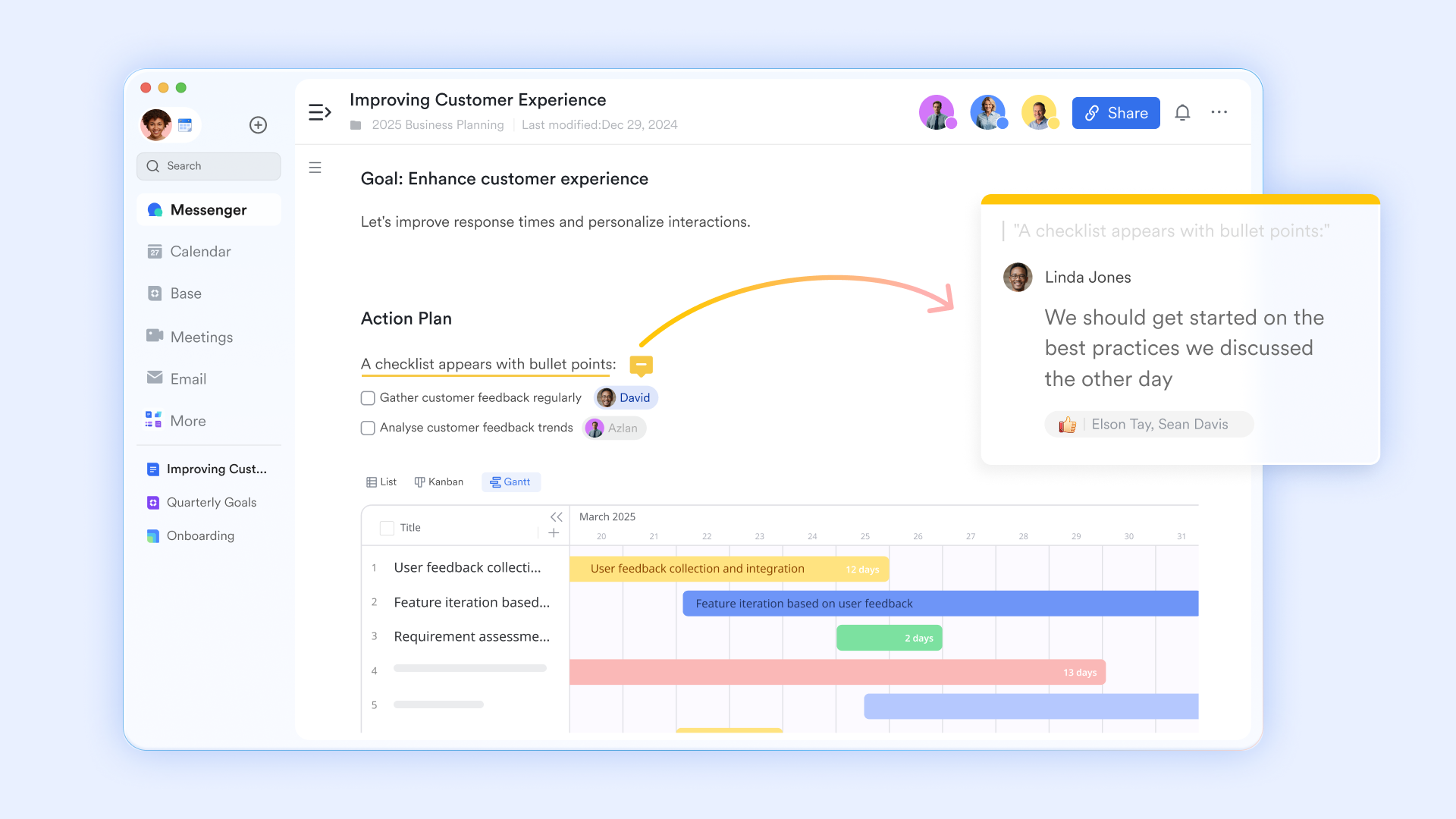
This initial overview forms the foundation for your resource demand forecasting. Having this pipeline clearly articulated, perhaps within a shared document on a like , ensures everyone is working from the same understanding of future work.
Break down projects into resource requirements
Once you have your project pipeline, the next step is to translate each project or initiative into specific resource needs. This means identifying:
- Required roles: Project Manager, Developer, Designer, Marketing Specialist, etc.
- Specific skill sets: What technical proficiencies, languages, or soft skills are essential?
- Estimated effort: How many hours or full-time equivalents (FTEs) will each role or skill set require over the project's duration?
- Timeline: When specifically will these resources be needed during the ?
This is where bottom-up forecasting techniques can be highly effective. Engage your project managers and team leads; they have the most accurate insights into the effort involved in different tasks. , perhaps in a shared spreadsheet or a dedicated project management module within your resource forecasting software, allows for granular planning.
Assess your current resource capacity and availability
This crucial step involves understanding what resources you currently have at your disposal. You need a comprehensive view of:
- Your team members: Who are they, what are their roles, and what are their primary skills?
- Current workload: What projects are they currently assigned to, and what percentage of their time is allocated?
- Future availability: Account for planned time off, training, holidays, and any administrative duties that reduce their project-specific capacity.
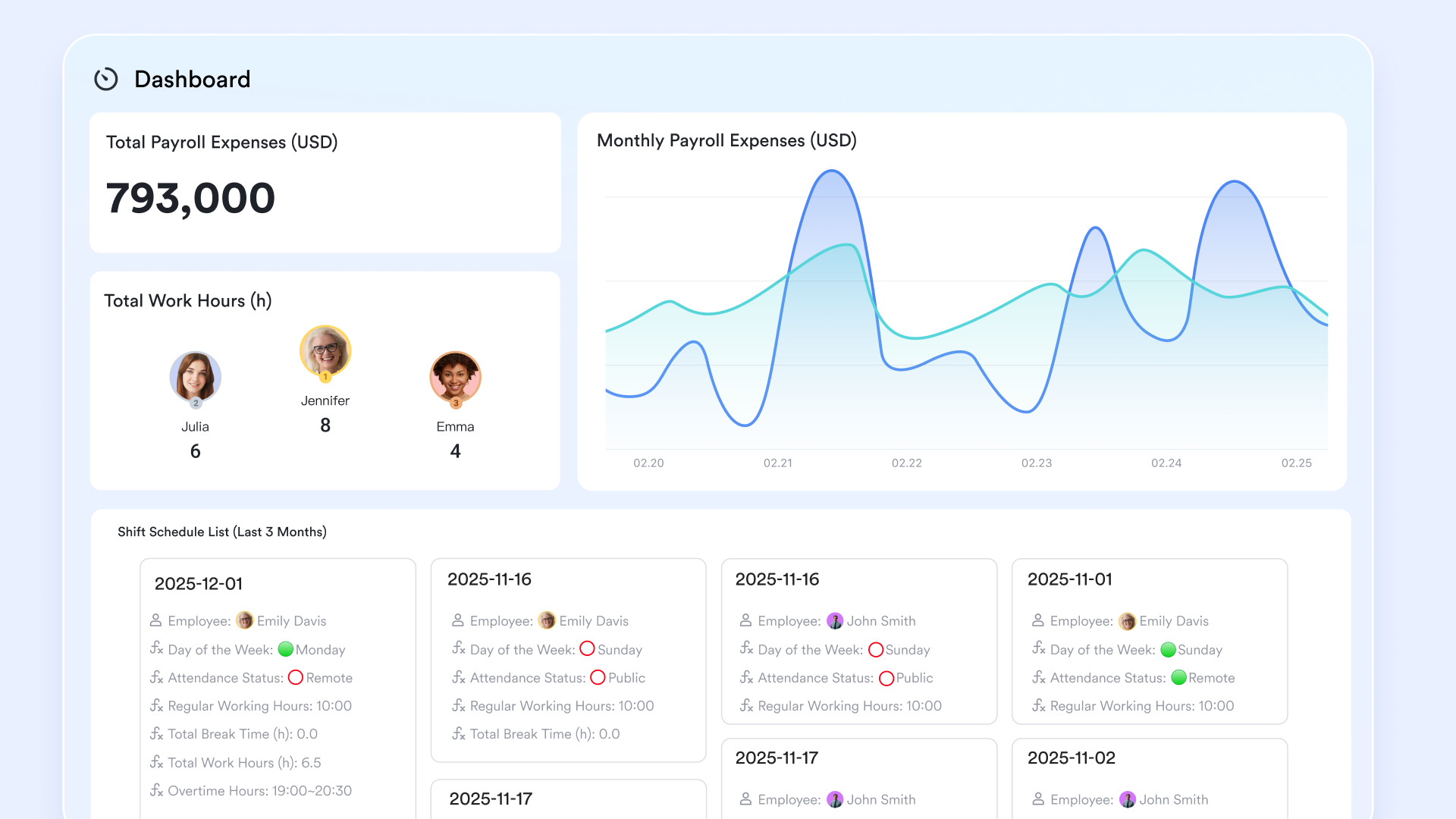
Using a centralized platform where can be easily accessed and reviewed by project managers, for example, within Lark's unified environment, can streamline this assessment significantly. It ensures that when you're looking for a specific skill, you know exactly who in your team possesses it and when they might be available.
Compare demand against supply to identify gaps and surpluses
This is where the actual forecasting happens. You overlay your projected resource demand (from step 2) onto your assessed resource capacity (from step 3).
- Gaps: Where do you foresee needing more of a particular role, skill, or general capacity than you currently have? These are potential bottlenecks.
- Surpluses: Where do you predict having more capacity than demand? This might indicate opportunities for cross-training, professional development, or taking on additional projects.
This comparison provides a clear visual of your future resource landscape. Many resource forecasting tools that graphically represent these gaps and surpluses, making them easy to identify and analyze.
Develop strategies to address identified gaps and surpluses
Once you've identified potential imbalances, it's time to strategize.
For gaps:
- Recruit: Plan for new hires (permanent or temporary).
- Train/Upskill: Invest in developing existing team members' skills.
- Reallocate: Shift resources from lower-priority projects.
- Outsource/Contract: Bring in external help for specific needs.
- Adjust timelines: Push back project start dates if resources won't be available.
For surpluses:
- Cross-train: Develop new skills within your team.
- Professional development: Utilize down-time for learning.
- Proactive sales: Target projects that match available capacity.
- Internal projects: Assign team members to internal initiatives that add value.
Continuously monitor, adjust, and refine
An accurate resource forecast is never truly "finished." Project requirements change, team members join or leave, and new opportunities arise.
- Regular reviews: Schedule consistent check-ins (e.g., weekly, bi-weekly) to compare your forecast against actual resource utilization.
- Flexibility: Be prepared to adjust your forecast in response to new information or unforeseen circumstances.
- : Encourage feedback from project managers and team members on the accuracy of estimates and the effectiveness of allocations.
This continuous refinement ensures your forecast remains relevant and reliable. Over time, your historical data will improve, leading to even more precise resource forecasting tools and techniques for your organization. By treating resource forecasting as a living document and standardizing it in your , you build a more resilient and efficient operational model.
Simplify your forecasting process with a powerful tool
How modern resource forecasting software helps businesses
In today's complex work environments, attempting to manage resource planning and forecasting solely with spreadsheets and fragmented communication can quickly become overwhelming. This is where modern resource forecasting software steps in, transforming a challenging task into a streamlined, strategic advantage. , designed for , offers powerful functionalities that empower businesses to build more accurate forecasts and manage their teams with greater foresight.
Achieving a unified view of your team's capacity
One of the greatest hurdles in resource forecasting is fragmented data. Information about who is working on what, their current availability, and their specific skills often resides in disparate systems – HR databases, individual spreadsheets, , or even informal notes.
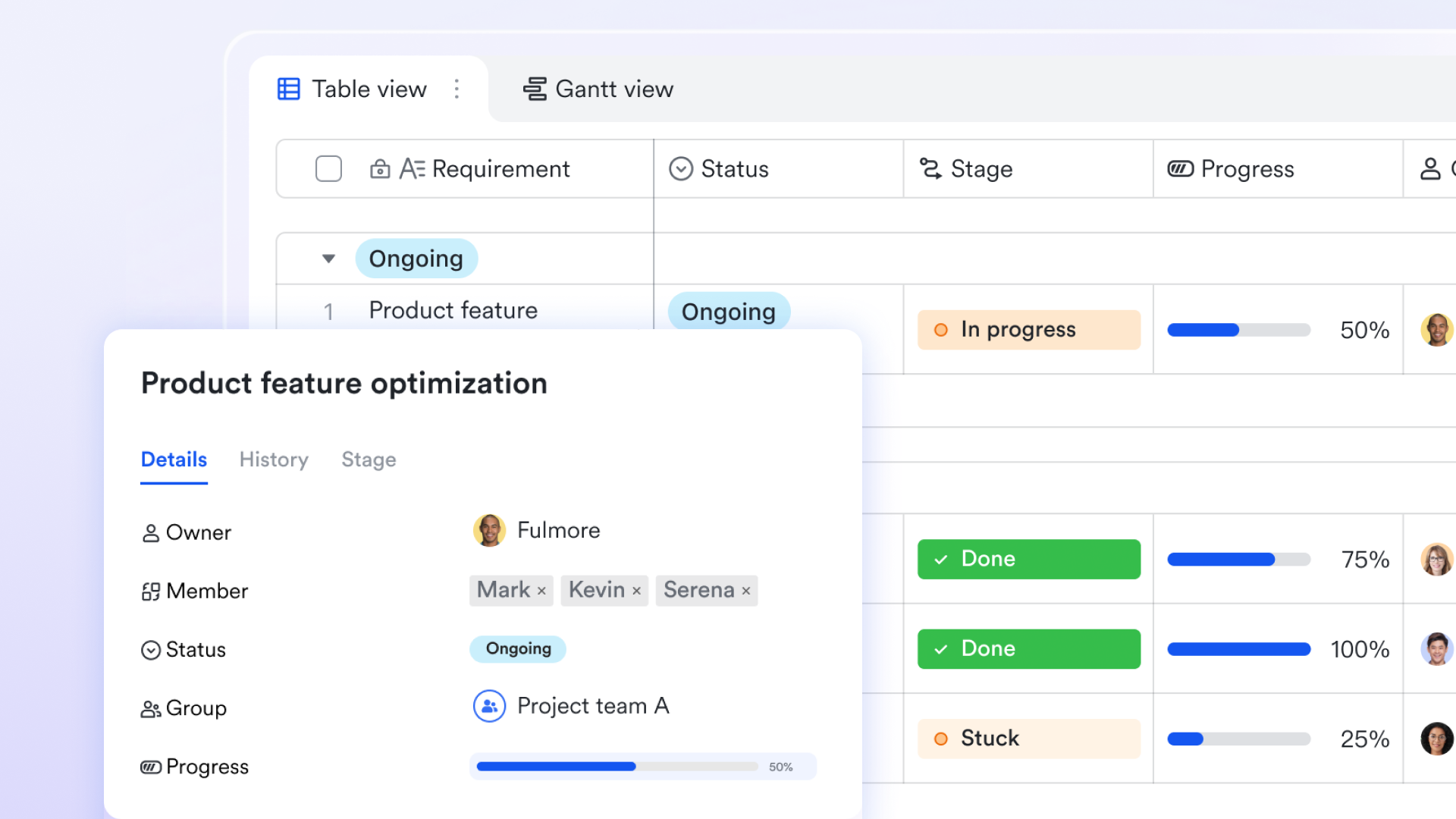
Modern software addresses this by serving as a central hub. For instance, provides a place where team schedules, project assignments, and even basic HR data can coexist. This eliminates the need to constantly cross-reference multiple sources, offering a single, up-to-date source of truth. You gain a comprehensive, holistic overview of your entire workforce, making it far easier to understand your team's true capacity at any given moment.
Enabling dynamic planning and rapid adjustments
Resource forecasting is not a static exercise; it requires constant adaptation. Project scopes shift, new opportunities emerge, and team availability changes unexpectedly. Traditional methods often struggle to keep pace with these dynamics.
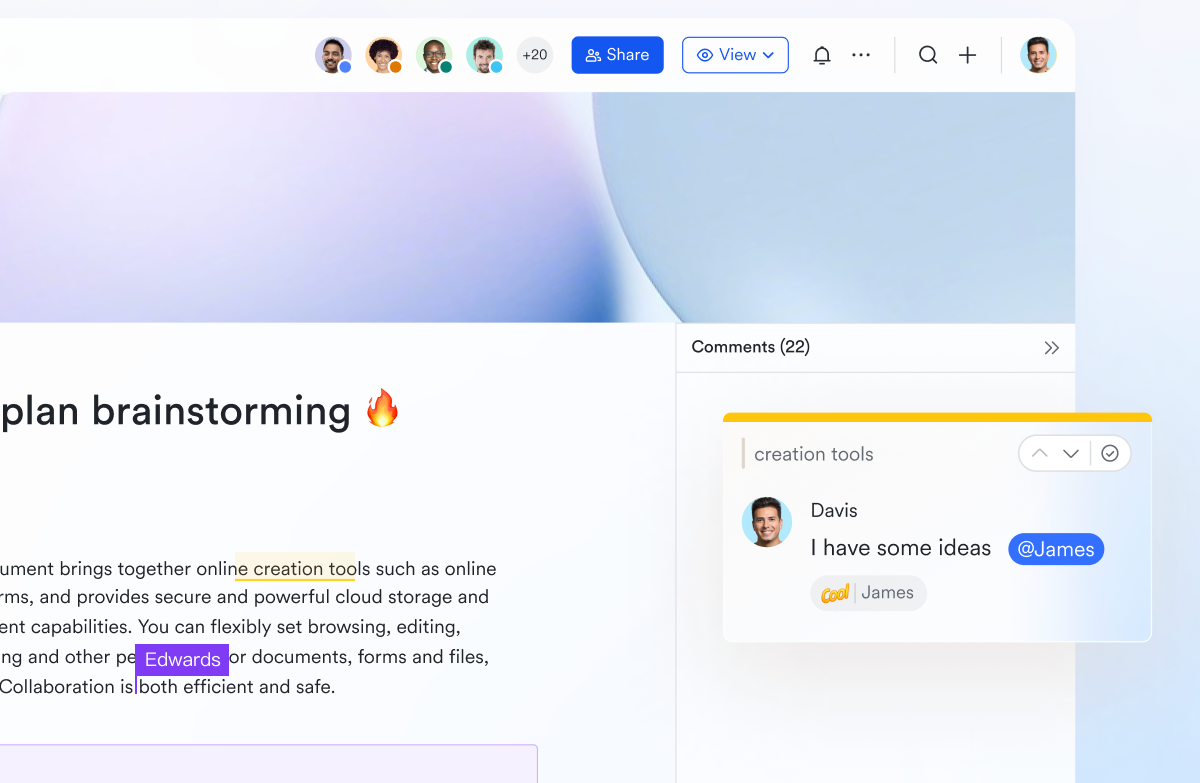
Modern software, however, excels in facilitating dynamic planning. Imagine your resource demand forecasting models built directly within collaborative documents or smart spreadsheets. Tools like allow for real-time co-editing and instant updates. If a project timeline is extended or a new priority arises, changes can be made immediately. This agility ensures that your forecast remains current and responsive, allowing you to make rapid, informed adjustments to resource allocations without delay.
Streamlining collaborative decision-making
Resource forecasting often involves collaboration across multiple departments and with various stakeholders – project managers, team leads, HR, and senior leadership. Getting everyone on the same page and facilitating efficient decision-making can be a significant challenge.
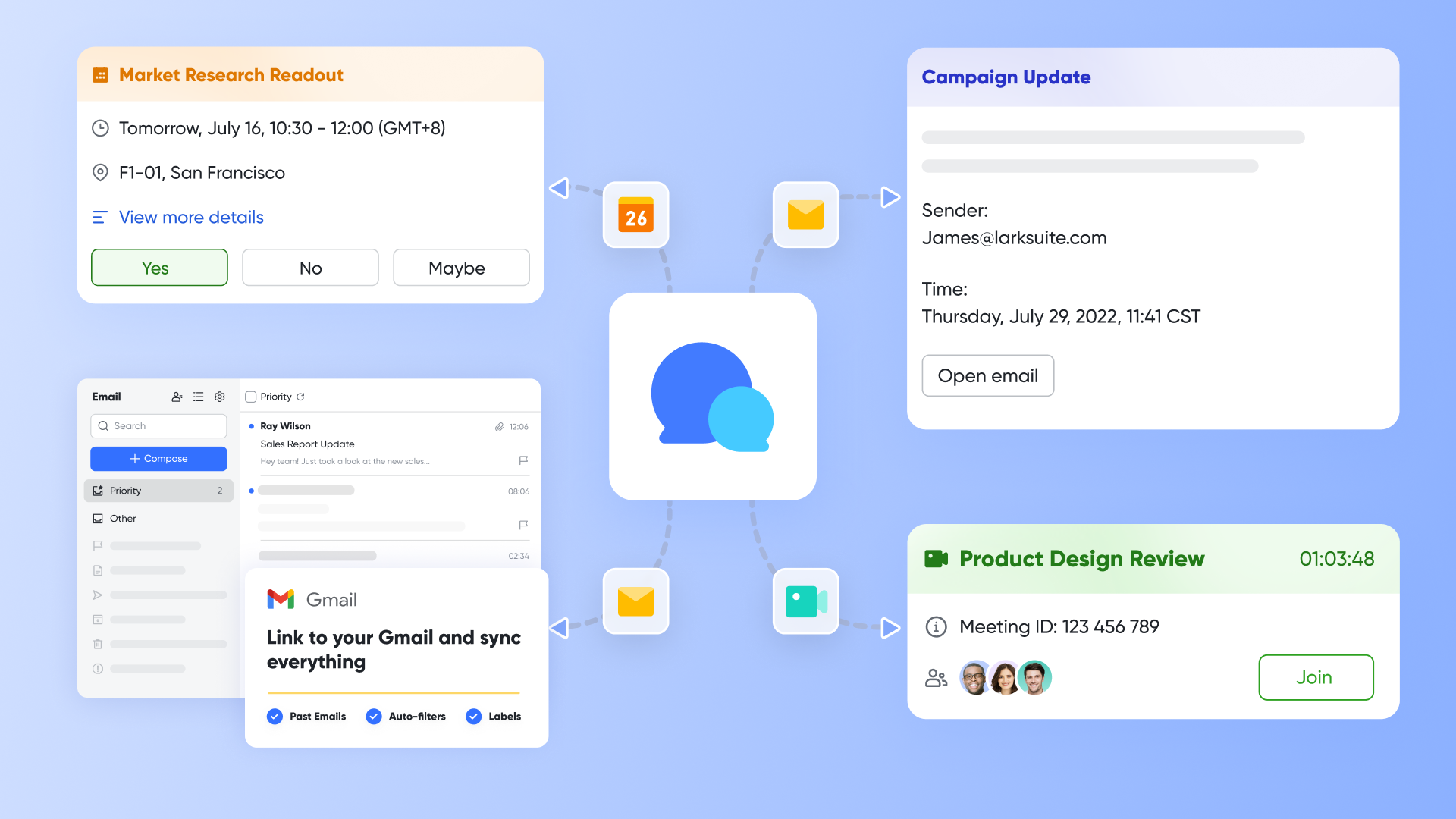
Lark addresses this by embedding communication directly into the planning process. Discussions about , potential conflicts, or proposed solutions can happen directly alongside the forecast itself, through comments, , and . This eliminates endless email chains and ensures context is always preserved. Decisions are made faster, recorded transparently, and accessible to everyone involved, leading to stronger alignment and commitment to resource planning and forecasting strategy.
Gaining real-time insight into project progress and resource needs
For a resource forecast to remain accurate, it needs to reflect the reality of ongoing projects. What seemed like a full allocation at the start might change if a project finishes early or encounters unexpected delays.
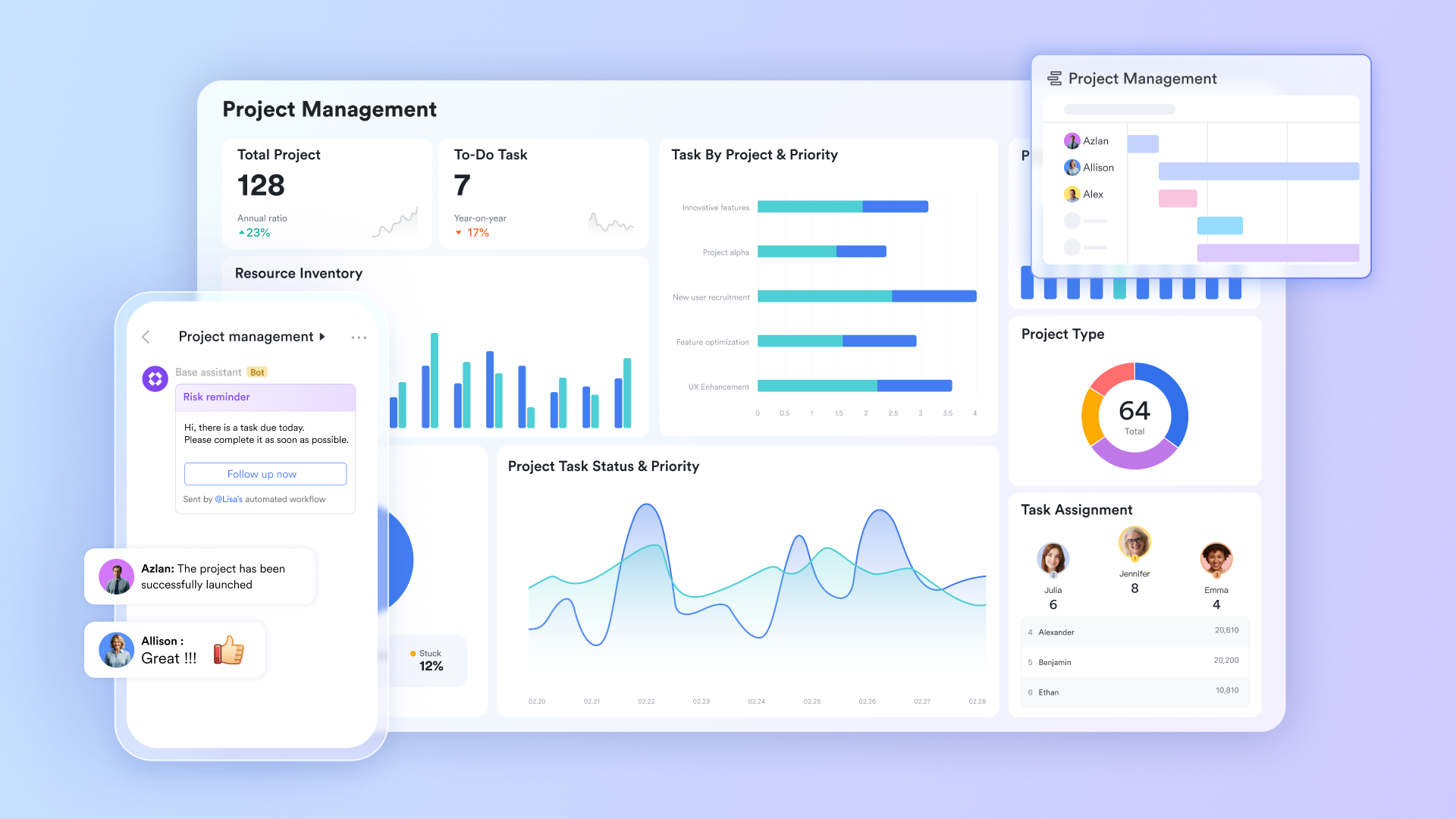
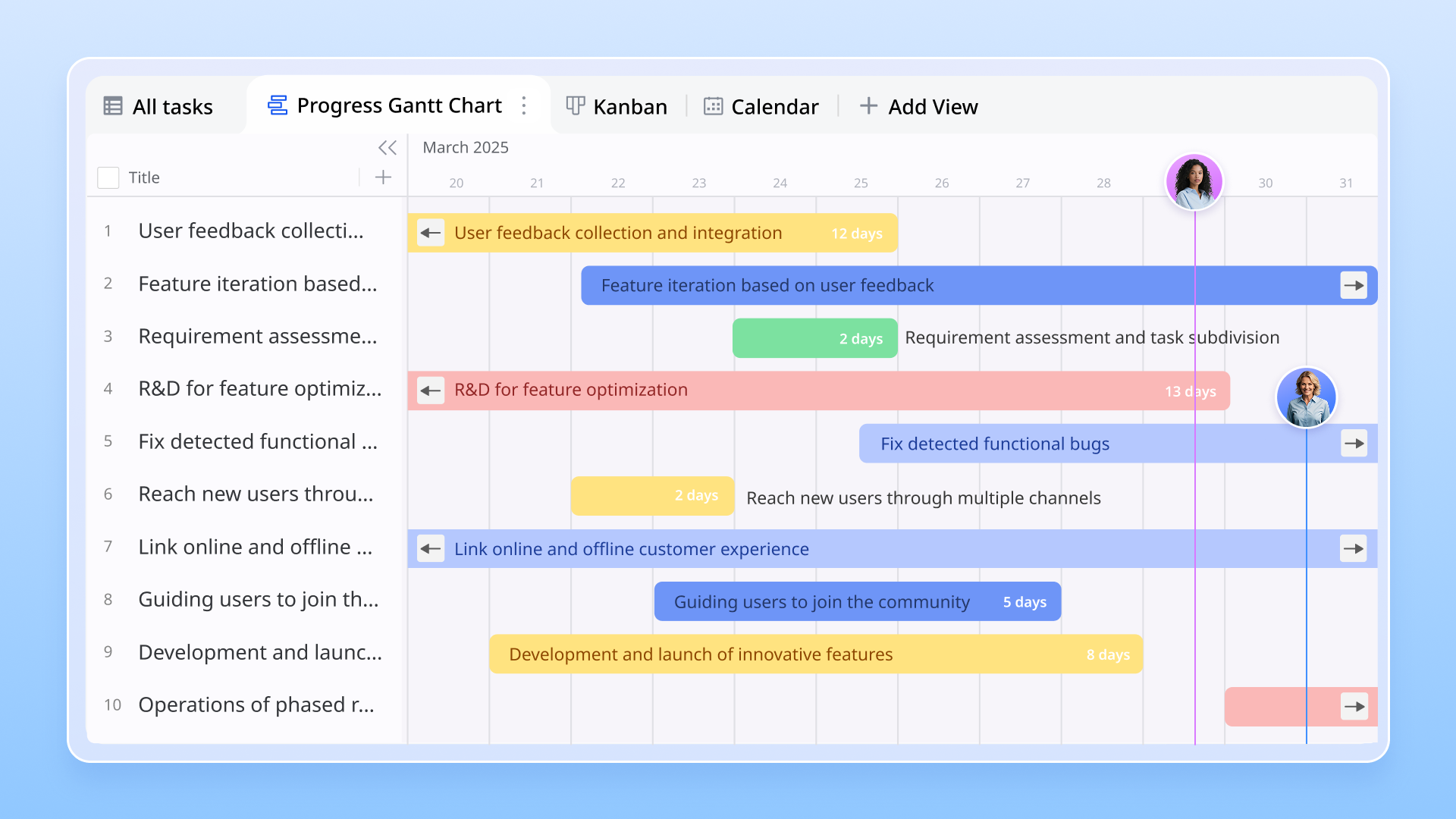
supports project tracking functionalities, providing real-time visibility into project progress. Different views of Base, such as Gallery views, Gantt views, and calendar views, can make everyone clear of the project progress and resource needs.
for Lark:
- Starter plan: Free forever plan that includes 11 powerful tools for up to 20 users. It also comes with 100GB of storage, 1000 automation runs, AI translations, and more.
- Pro plan: $12/user/month (billed annually) for up to 500 users. It includes everything in Starter plus group calling for up to 500 attendees, 15TB of storage, 50,000 automation runs, and more.
- Enterprise plan: for custom pricing. Supports unlimited users and includes even more automation runs and advanced security, compliance, and management features.
For small teams with simple communication needs

18 months message history
1000 Base automation runs/month
2000 rows per table in Base
Most POPULAR
For companies with comprehensive collaboration and management needs
Unlimited message history
500-participant video meetings
50k Base automation runs/month
20k rows per table in Base
For large companies with advanced security and organizational management needs
Get a personalized demo and pricing
Unlimited message history
500-participant video meetings
15 TB storage + 30 GB storage/user
500k Base automation runs/month
50k Base automation runs/month
Most POPULAR
For companies with comprehensive collaboration and management needs
Unlimited message history
500-participant video meetings
50k Base automation runs/month
20k rows per table in Base
What are the challenges of resource forecasting?
While the benefits of accurate resource forecasting are clear, the path is not without obstacles. Organizations often face a range of challenges that can complicate efforts to predict future resource needs and availability. Understanding these common pitfalls strengthens your resource planning and forecasting.
- Inherent project uncertainty: Projects rarely unfold as planned. , evolving requirements, and unforeseen hurdles directly impact effort estimates, quickly making initial forecasts obsolete. This dynamic nature demands constant revision.
- Poor data quality and availability: Many organizations lack comprehensive historical data on past project performance, actual effort, or resource utilization. Without this, forecasts rely on guesswork or outdated information, hindering accurate resource demand forecasting.
- Resource conflicts and dependencies: In complex environments, resources often work on . Delays or changes in one area can create intricate ripple effects across others, making conflict resolution and accurate allocation challenging, especially for critical shared resources.
- Human factors and resistance to change: Overly optimistic/pessimistic estimates, inaccurate time tracking, or resistance to new processes from team members can skew predictions. Overcoming this requires cultural shifts and clear communication.
Resource forecasting best practices
To navigate the complexities and challenges of resource forecasting effectively, adopt these essential best practices. They will enhance accuracy and foster a more efficient and resilient project management environment.
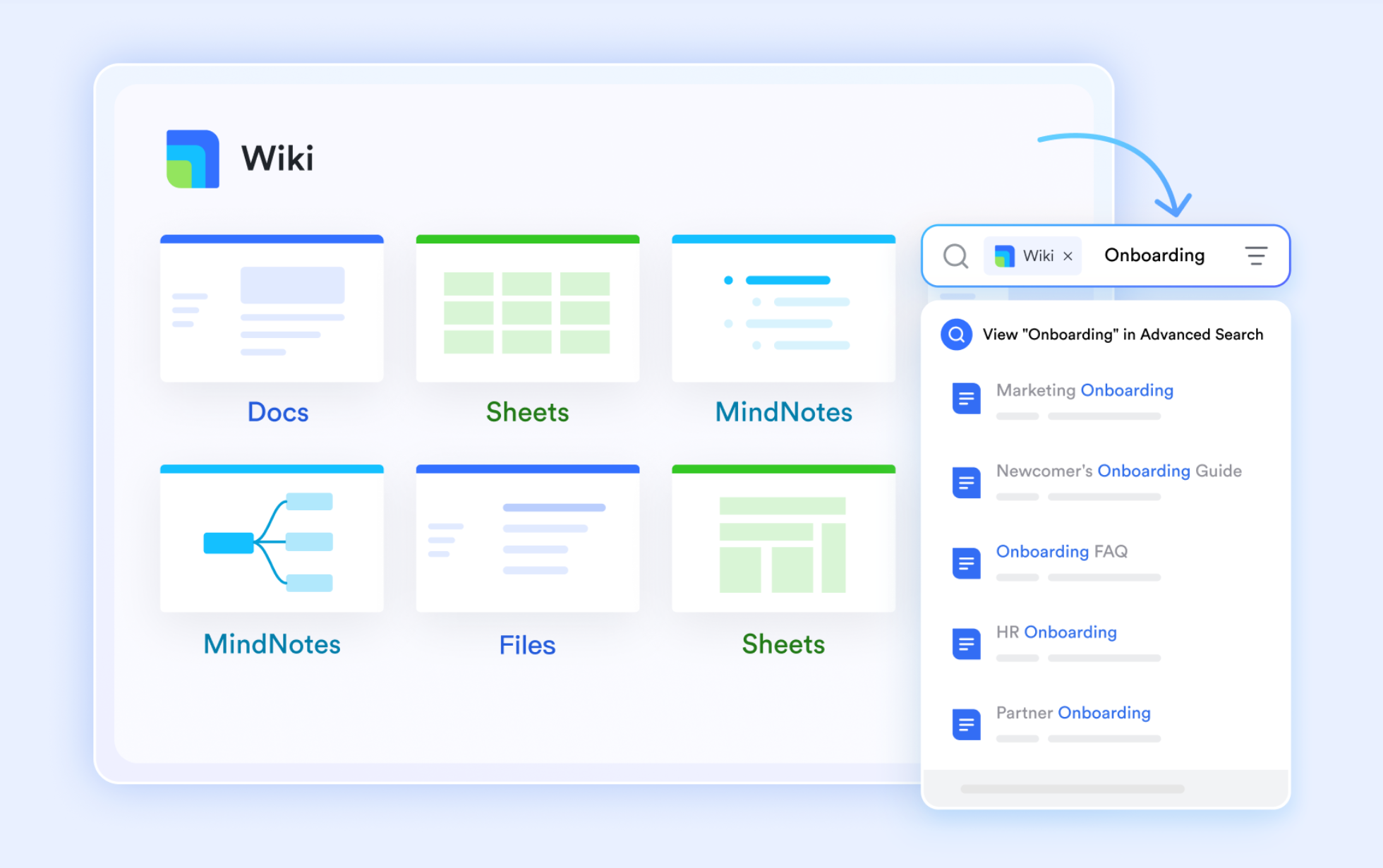
- Centralize your resource data: Break down data silos. Consolidate all team information (skills, availability, assignments, time off, historical performance) into a single, accessible source. This holistic view is fundamental for accurate human resource forecasting, and dedicated resource forecasting software can greatly assist.
- early and often: Don't forecast in isolation. Engage project managers, team leads, department heads, and sales teams. Their input is crucial for understanding pipelines, estimating effort, and identifying conflicts, ensuring buy-in and realistic resource planning and forecasting.
- : Not all projects are equal. Clearly defining priorities allows effective allocation of scarce resources to vital initiatives, even if it means deprioritizing others. This guides your resource demand forecasting.
- Adopt a rolling forecast approach: Resource forecasting is continuous. Implement regular (e.g., weekly, monthly) reviews and updates. This allows quick adaptation to changes in scope, priorities, or availability, maintaining forecast relevance and accuracy.
By consistently applying these best practices, your organization can move from reactive firefighting to proactive, strategic resource management, ensuring that your most valuable assets are always optimally utilized.
Easily apply these best practices with Lark
Resource management and ways to calculate what's needed for a project
Resource management is the overarching process of strategically planning, allocating, scheduling, and tracking the resources (people, equipment, and budget) needed to complete a project. It ensures the right resources are available at the right time for project success. While resource forecasting predicts future needs, resource management focuses on fulfilling those needs efficiently throughout the project lifecycle.
- Break down the project into tasks: Detail all work into granular tasks using a .
- Estimate effort per task: For each task, estimate the total person-hours or person-days required. Consult with performers or use historical data.
- Identify required skills/roles per task: Determine the specific skills or roles needed for each task (e.g., Python Developer, UI Designer).
- Sum effort by skill/role: Aggregate the estimated effort across all tasks for each required skill or role to get the total project demand for each resource type.
- Factor in project duration and dependencies: Consider when each resource is needed during the project timeline.
- Account for non-project activities: Remember to include time for meetings, admin, training, holidays, etc., which reduce project-specific capacity.
This methodical approach provides a clear picture of precisely what resources are needed, when, and for how long, facilitating effective resource management and successful project delivery.
Conclusion
Effective resource forecasting is a strategic imperative for sustained success and efficiency—not just logistics. Proactively aligning future resource needs with available talent delivers key benefits: optimized projects, higher team morale, smarter decisions, and stronger profits. We've covered core techniques, factors, and accuracy hurdles; best practices and modern software turn these challenges into opportunities.
In today's fast pace, anticipating demands and managing key assets precisely sets thriving businesses apart. Robust resource planning builds a resilient, adaptable organization. Equip teams with tools like for seamless collaboration, making insightful forecasting a core business strength.
Elevate your resource strategy with a collaborative tool
FAQs
What are the 5 steps of forecasting?
The typical steps involve: 1) defining the forecast's purpose and scope, 2) gathering relevant historical and current data (easily shared via collaborative platforms like Lark), 3) analyzing this data to identify patterns, 4) making predictions based on chosen methods, and 5) continuously monitoring and adjusting the forecast against actual outcomes.
What are the four types of forecasting?
Common types include: Qualitative forecasting, relying on expert opinions and subjective insights; Quantitative forecasting, using mathematical models and historical data; Time Series forecasting, analyzing past trends over time to predict the future; and Causal forecasting, identifying cause-and-effect relationships between variables. Lark can support both qualitative discussions and data collection for quantitative analysis.
How to forecast resource needs?
To forecast resource needs, you typically: 1) define your project pipeline and identify specific resource demands (roles, skills, effort), 2) assess your current team's capacity and availability, 3) compare demand against supply to identify gaps or surpluses, and 4) develop strategies to address these imbalances. Centralizing this planning in a collaborative tool like Lark streamlines the entire process.
What is human resource forecasting?
Human resource forecasting is the process of predicting an organization's future human capital needs—both the number of employees required and the specific skills they'll need—to meet strategic objectives. It involves analyzing future demand (e.g., project pipelines) against internal supply (e.g., current staff skills, projected attrition), which can be effectively managed and tracked using integrated platforms like Lark.
Related reading