Perhaps you are running a growing company, and the chaos of using disparate spreadsheets is starting to slow you down. You need a comprehensive solution to manage your operations, so you stumble upon Zoho One. Perhaps you are tired of the hidden costs of customization, or maybe you are frustrated by Zoho's customer support response times. You are looking for Zoho One alternatives not because you want less power, but because you want better cohesion. You are searching for a single platform that actually unifies your work rather than just bundling it.
In this comprehensive guide, we will analyze why businesses move away from Zoho One, what criteria you should prioritize in a modern workspace, and review the top alternatives available in the market today.
Key takeaways: Top 5 Zoho One alternatives at a glance
1. Lark: The unified superapp for modern teams
2. HubSpot CRM: The specialist CRM alternative
3. Microsoft 365 (Dynamics): The enterprise standard
4. Monday.com: The workflow OS alternative
5. ClickUp: The unified powerhouse for productivity
Explore the best Zoho One alternative
What is Zoho One?
One is marketed as a comprehensive "Operating System for Business." Launched by Zoho Corporation, it represents a massive bundle of over 45 integrated cloud applications designed to run an entire organization under a single license. The suite covers virtually every business function imaginable, from customer relationship management (Zoho CRM) and finance (Zoho Books) to HR (Zoho People) and marketing automation.
The core appeal of Zoho One lies in its aggressive pricing model—a flat monthly fee that grants access to every enterprise-level tool in their ecosystem. For many small businesses, this sounds like the perfect integrated solution to digitalize operations overnight without managing dozens of different vendor contracts. However, it is important to distinguish that Zoho One is technically a "suite" of separate applications loosely tied together, rather than a single, unified codebase. While it offers breadth, this architecture is often the source of the complexity and integration challenges that lead growing teams to look for alternatives.
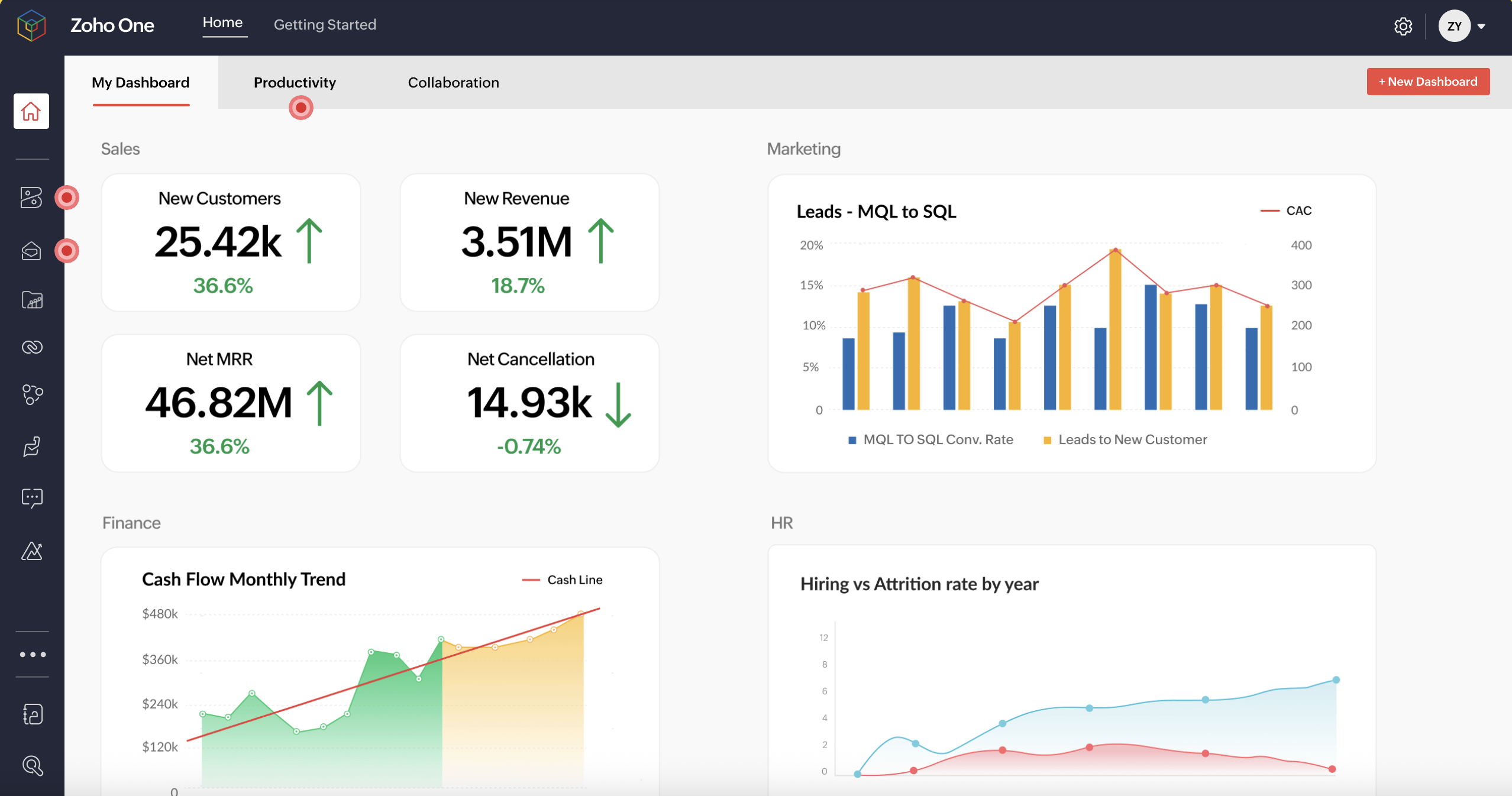
Image source: zoho.com
Why businesses look for Zoho One alternatives
Understanding the specific pain points of Zoho One users is crucial to finding the right replacement. Based on extensive user feedback from software review platforms and community discussions, the frustration usually stems from three core issues: the integration mirage, interface inconsistency, and hidden complexity.
The integration mirage
The primary selling point of Zoho One is that it is an "operating system for business." The implication is seamless data flow. However, Zoho has grown largely through acquisition and rapid development of separate tools. Consequently, the backend architecture often resembles a patchwork quilt rather than a single woven fabric.
Users frequently find that data in does not sync perfectly with Zoho Books, or that Zoho Projects requires a clumsy workaround to talk to Zoho People. You end up needing to use integration middleware just to connect apps that are supposedly part of the same suite. This defeats the purpose of an all-in-one solution. When you have to play IT technician to make your finance tool talk to your sales tool, you are losing valuable time that could be spent on important tasks.
User interface inconsistency
Because the apps were developed at different times by different teams, the user experience (UX) can vary wildly from one module to another. The Zoho CRM might look relatively modern, while a niche tool within the suite might look like it hasn't been updated in a decade.
For your employees, this inconsistency is a friction point. It increases cognitive load because they have to learn different navigation patterns for different tasks. This lack of a user-friendly interface leads to lower adoption rates. If your team hates using the software because the interface is counter-intuitive, it doesn't matter how many productivity tools it includes; they won't use it effectively.
The hidden cost of implementation
Zoho One is famous for its low sticker price. But for many small businesses, this is just the entry fee. The software is highly customizable, which sounds good until you realize it requires customization to be usable.
Businesses often find themselves hiring dedicated developers to write scripts to build basic workflows. Suddenly, that cheap monthly subscription is compounded by thousands of dollars in and ongoing maintenance. True Zoho One alternatives should offer "plug-and-play" usability that respects your budget and your time. A cost effective solution shouldn't require a computer science degree to set up.
Solve all the problems with a new superapp
What to look for in a business management platform
When evaluating Zoho One alternatives, resist the urge to simply look for another bundle of 50 apps. Instead, look for a modern architecture that solves the problems of fragmentation. Here are the criteria that matter most for agile teams.
True unification
Integration is when two apps talk to each other via an API. Unification is when features exist within the same codebase. The future of productivity is the —a one platform ecosystem where messaging, documents, video calls, and databases live together. When you choose a unified platform, you eliminate data silos and the lag time of switching between tabs. This is the definition of a truly comprehensive solution.
Low-code flexibility
Every business has unique processes. In the past, you needed a rigid ERP or expensive developers to build custom tools. Today, you should look for platforms that offer a "low-code" database. This allows your operations manager or HR lead to build a custom tracker—be it for sales pipeline tracking, inventory, or hiring—that looks like a spreadsheet but acts like a powerful app. You need custom fields and customizable dashboards without writing code.
A mobile-first experience
Zoho offers a separate app for almost every function: a CRM app, a Mail app, a Chat app, a Projects app, etc. This clutters your phone and makes mobile work difficult. The best modern zoho alternatives consolidate these functions into a single , allowing your field teams and remote workers to access everything they need from one icon on their home screen.
Top 8 Zoho One alternatives
We have curated this list based on different business needs, ranging from unified collaboration tools to specialized CRM-heavy suites. These are the best Zoho alternatives to consider this year.
1. Lark: The unified superapp for modern teams
Overview
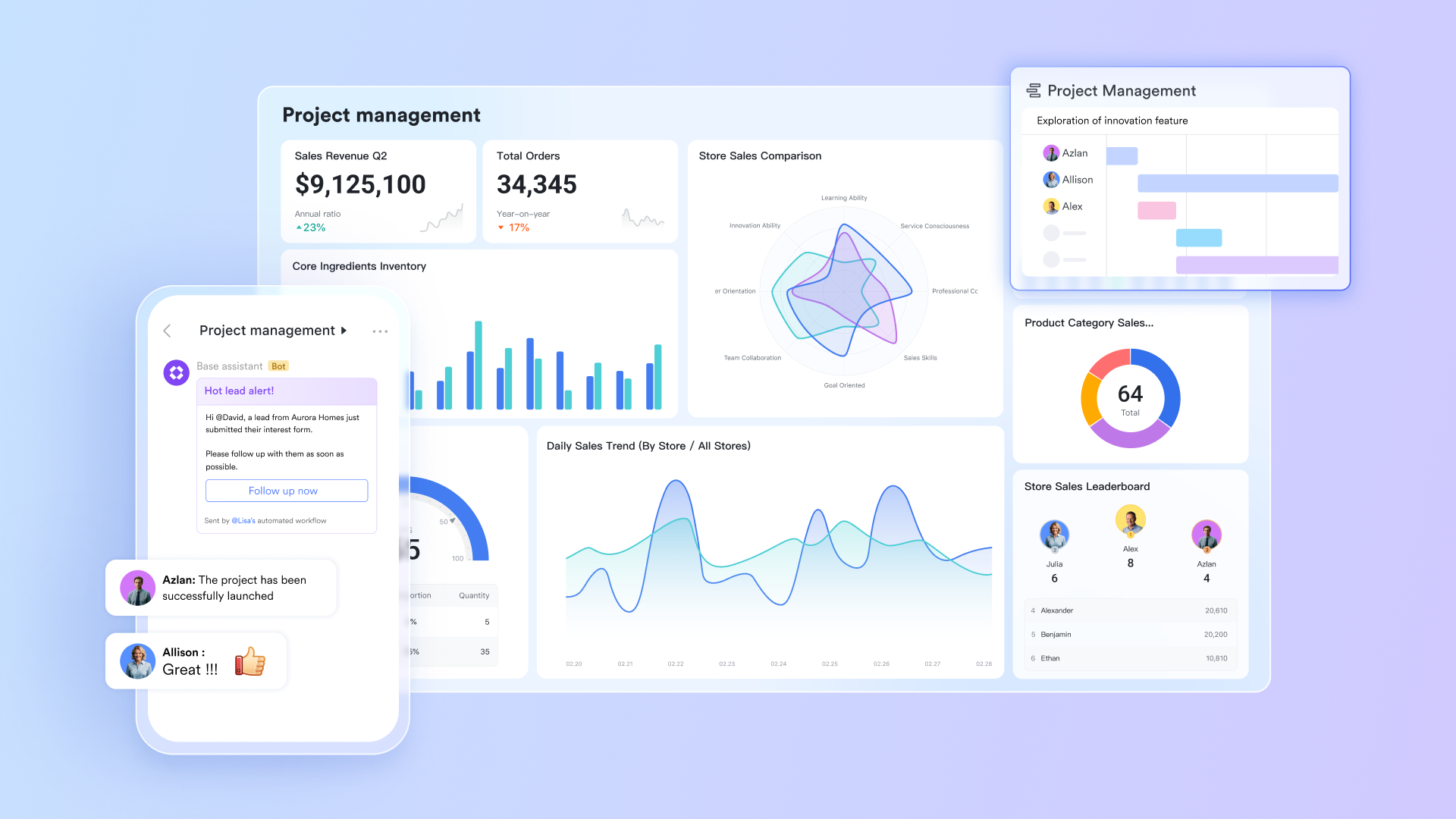
takes a fundamentally different approach than Zoho. Instead of acquiring separate apps and trying to glue them together, Lark was built from the ground up as a superapp. It combines , , , , , and into a single platform. For businesses tired of the "tab fatigue" and disconnection in Zoho One, Lark offers a refreshing, cohesive experience. It is designed to be the operating system for your work, where communication and action happen in the same window.
Key features
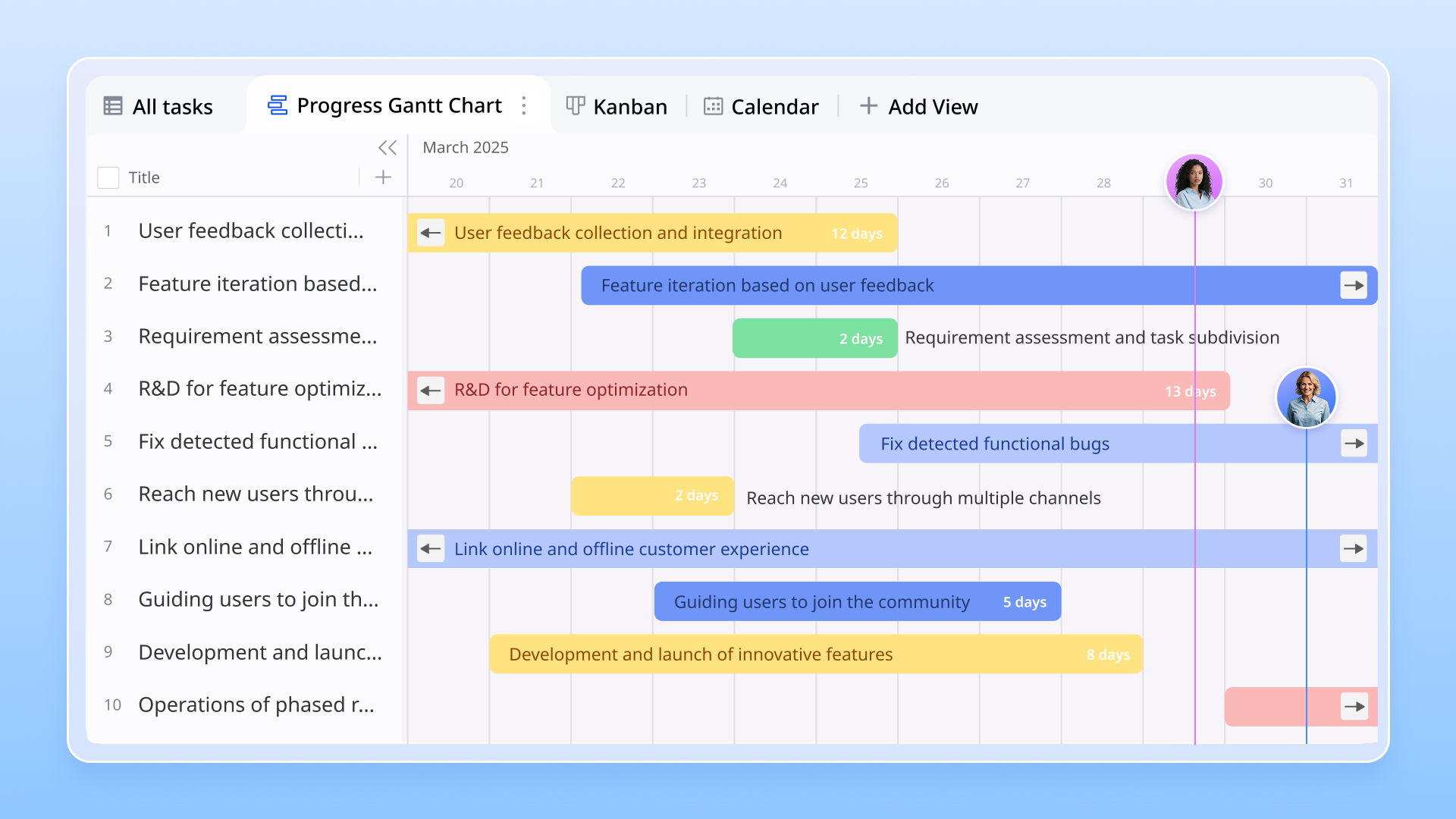
This is the ultimate flexible engine for your business. You can create business systems, organize projects, , conduct and without writing a single line of code. It allows you to build tools that fit your exact needs—whether it is a , project management platform, frontline operations tracker, or a bug tracking tool. You can track progress in real time and adapt processes instantly as your business evolves.
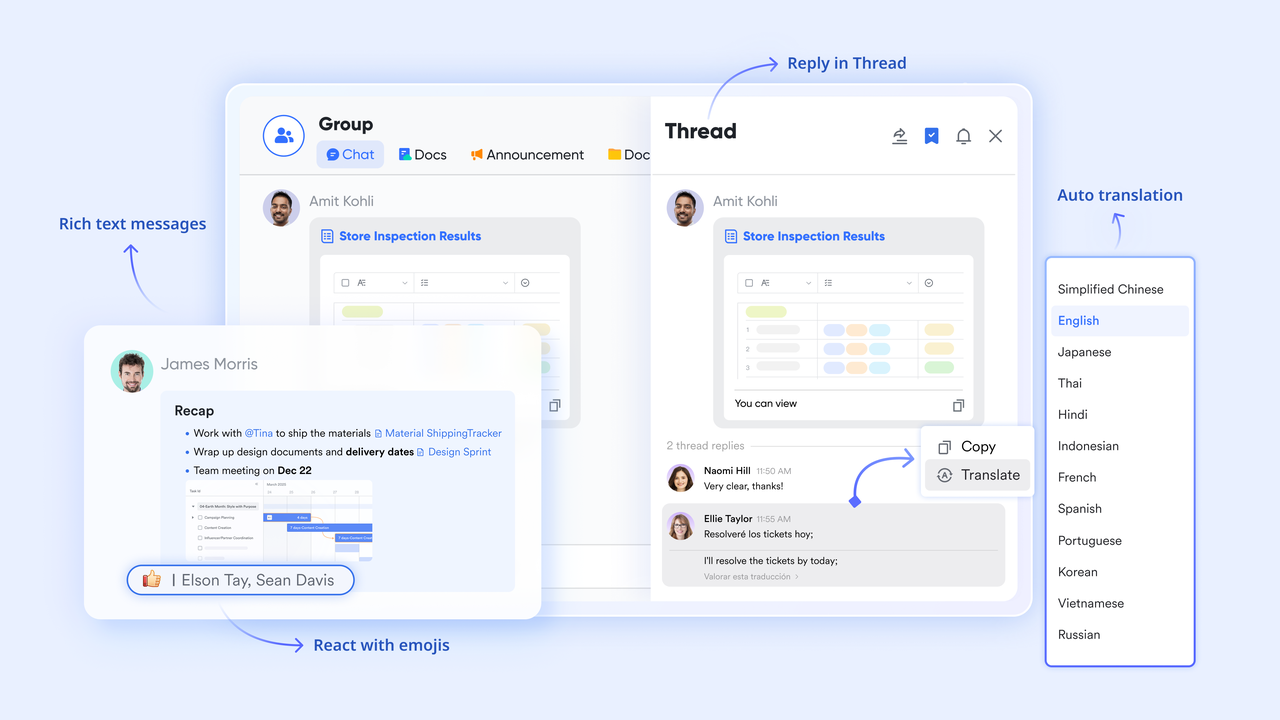
More than just a chat tool, this is your command center. You can chat privately or in groups, @mention colleagues to get attention, send files, and even add custom bots to automate notifications. With features like scheduled messages for different time zones and built-in translation, it keeps global teams aligned and ensures important communication never gets lost.
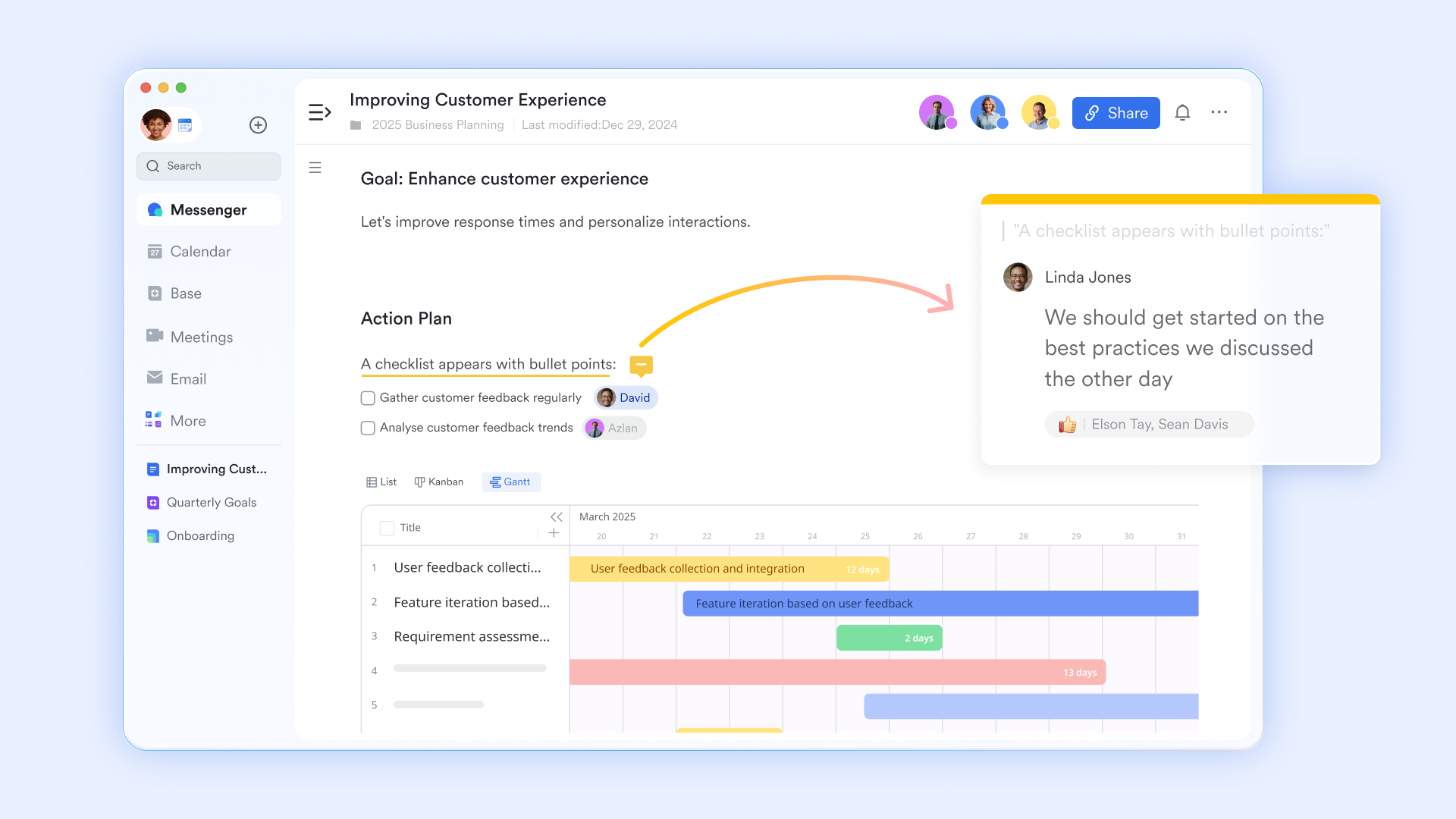
Say goodbye to version control issues. Lark Docs allows you to in real time by co-editing documents, adding comments, and @mentioning teammates to assign action items. Everything updates seamlessly, ensuring your team collaboration remains fluid and everyone stays on the same page without sending attachments back and forth.
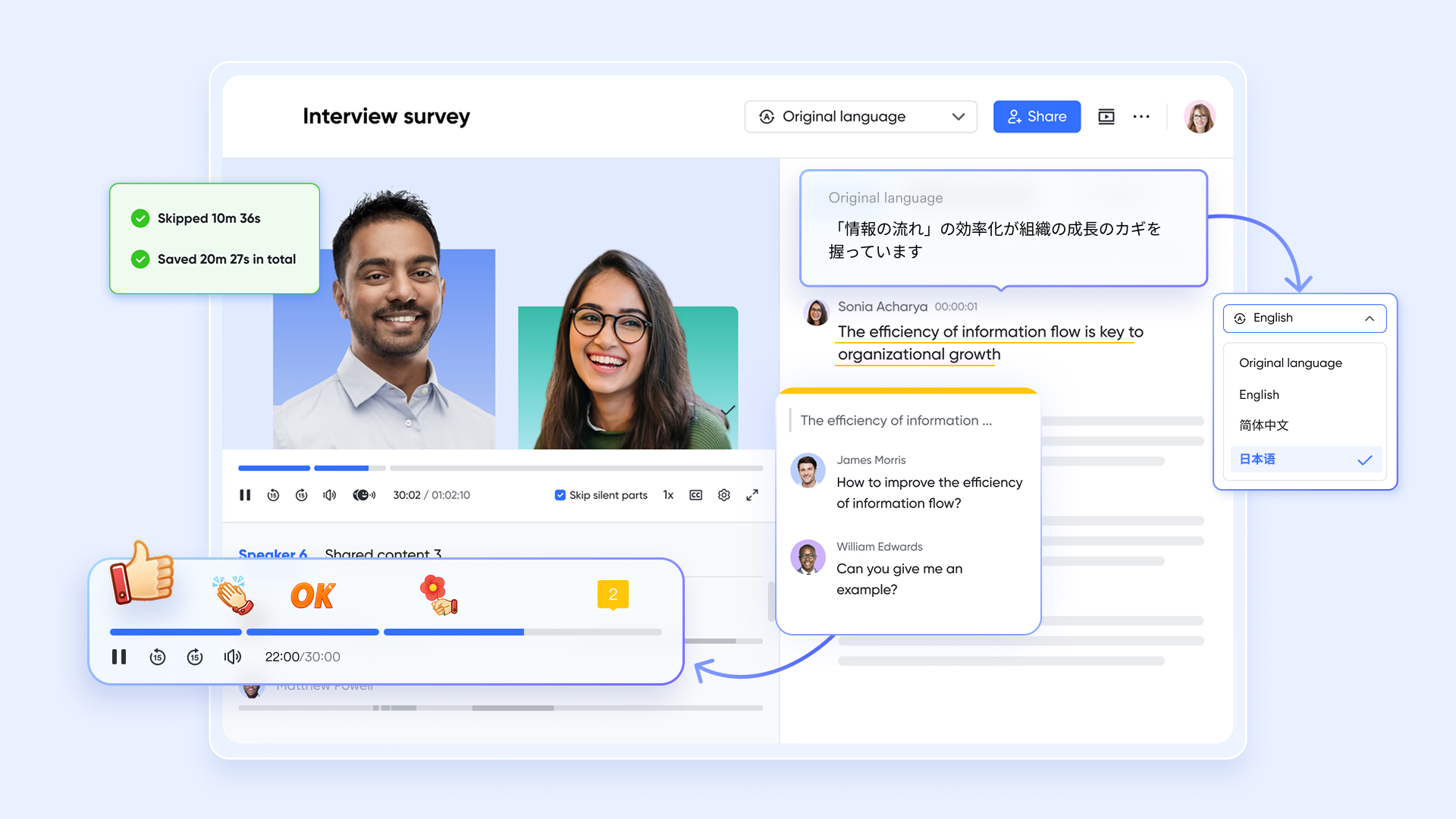
Transform how you meet with built-in audio and video calls. You can share your screen or documents directly within the call and collaborate on an interactive whiteboard. Plus, the AI-powered real-time translation feature makes global communication effortless, breaking down language barriers during client calls or team syncs.
Stop toggling between tabs to find a meeting slot. Lark Calendar lets you plan and schedule meetings with ease by viewing your colleagues' availability right alongside your chat and docs. Any changes sync instantly with all attendees, ensuring your team productivity isn't wasted on scheduling logistics.
- Starter plan: Free forever plan with 11 powerful tools for up to 20 users, 100GB storage, 1,000 automation runs, AI translations, and more. No credit card needed.
- Basic plan: $6/user/month (billed annually) for up to 500 users. Includes everything in Starter plus unlimited message history, 5TB storage, 1,000 automation runs, and more. Some users may need to to purchase.
- Pro plan: $12/user/month (billed annually) for up to 500 users. Includes everything in Basic plus group calling for up to 500 attendees, 15TB storage, 50,000 automation runs, and more.
- Enterprise plan: for custom pricing. Supports unlimited users and includes advanced automation, security, compliance, and management features.
For small teams with simple communication needs

18 months message history
1000 Base automation runs/month
2000 rows per table in Base
Most POPULAR
For companies with comprehensive collaboration and management needs
Unlimited message history
500-participant video meetings
50k Base automation runs/month
20k rows per table in Base
For large companies with advanced security and organizational management needs
Get a personalized demo and pricing
Unlimited message history
500-participant video meetings
15 TB storage + 30 GB storage/user
500k Base automation runs/month
50k Base automation runs/month
Most POPULAR
For companies with comprehensive collaboration and management needs
Unlimited message history
500-participant video meetings
50k Base automation runs/month
20k rows per table in Base
2. HubSpot CRM: The specialist CRM alternative
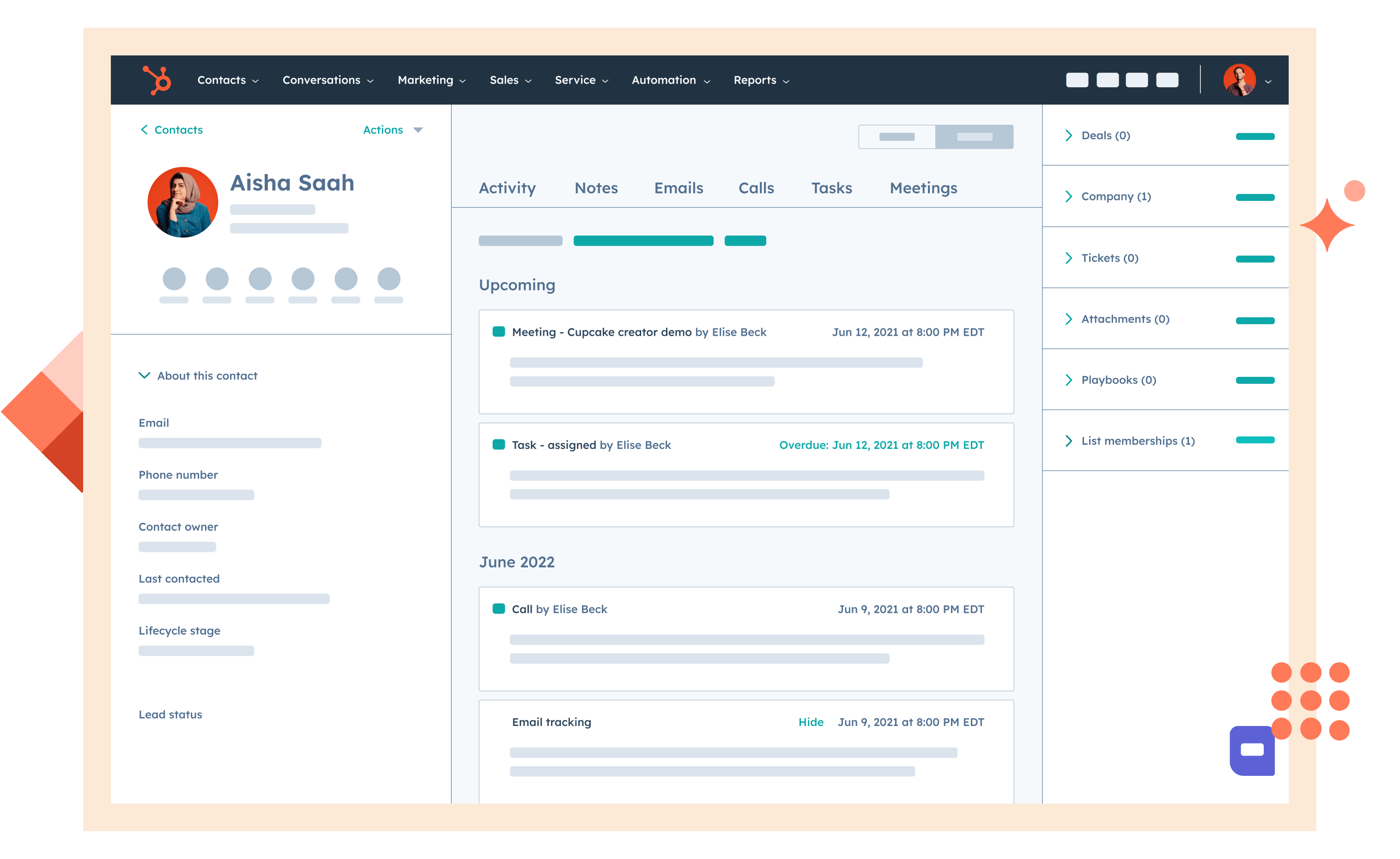
Image source: hubspot.com
Overview
If your primary reason for using Zoho One was the CRM and marketing automation, and you are willing to pay for quality, HubSpot CRM is the gold standard. It is not an ERP, so it lacks things like HR and Inventory, but for "Front Office" operations (Sales, Marketing, Service), it is vastly superior in usability.
Key features
- Marketing automation: Industry-leading automation for email marketing, landing pages, and lead nurturing. It allows you to automate workflows that handle repetitive tasks like sending follow-up emails.
- Smart CRM: A clean, intuitive interface that sales teams actually enjoy using. It offers excellent lead scoring and customer engagement tracking.
- Service hub: A robust ticketing system for customer support that ties directly into the CRM history, ensuring you never lose context on client management.
Pricing
HubSpot offers a free plan, but costs escalate quickly. The "Starter" bundles are affordable, but unlocking the advanced automation features found in Zoho One can cost significantly more with HubSpot’s Professional and Enterprise tiers.
3. Microsoft 365 (Dynamics): The enterprise standard
Overview
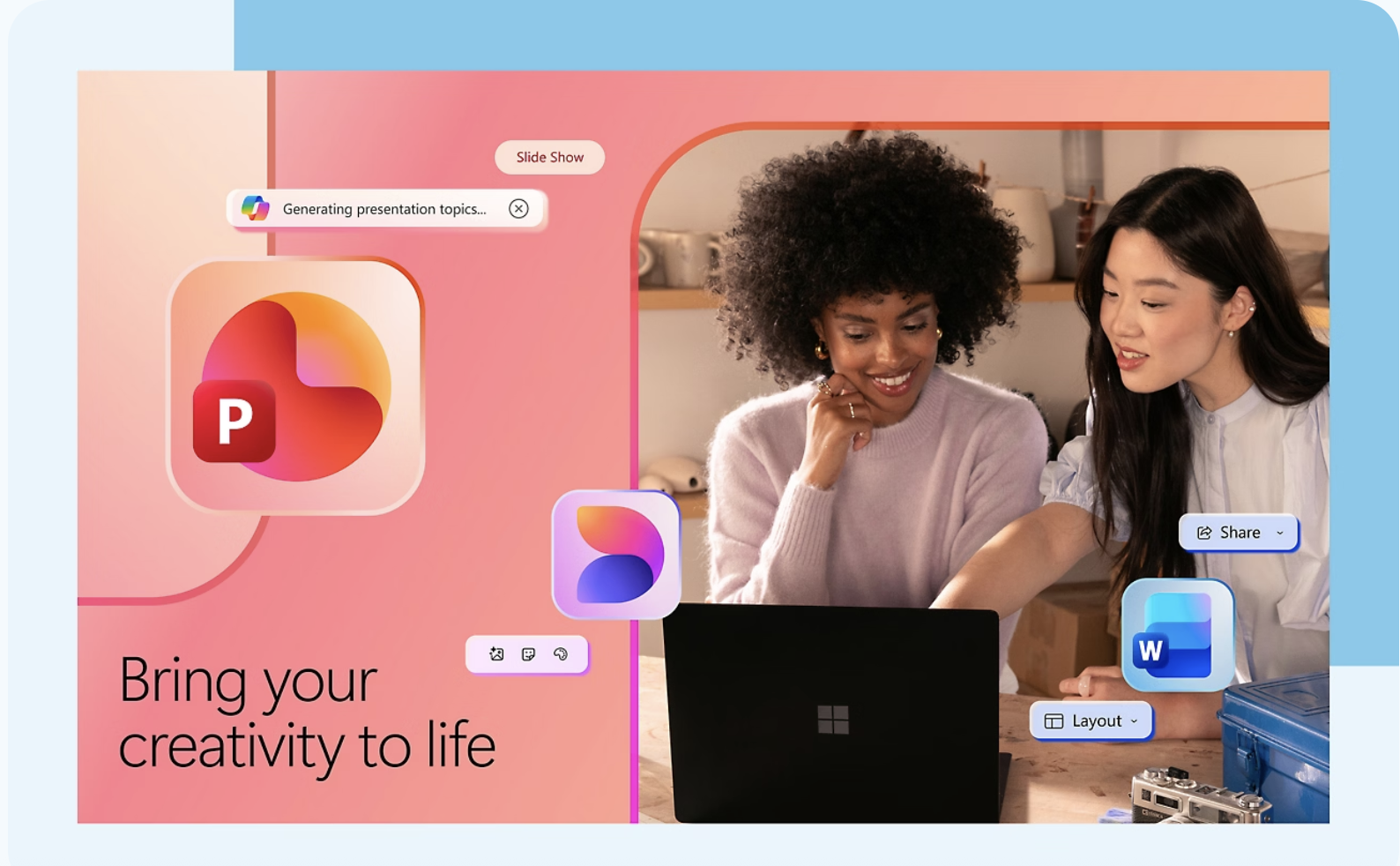
For many businesses, the "alternative" is simply going back to the industry standard. Microsoft 365 (formerly Office 365) combined with Dynamics 365 covers the entire scope of Zoho One. It is the safe choice for larger organizations that need strict compliance, widespread familiarity, and robust collaboration tools.
Key features
- Deep integration: Microsoft Teams, Outlook, Excel, and Word work together natively.
- Dynamics 365: A powerful, albeit complex, ERP and CRM solution that can handle enterprise-scale data and sales.
- Power platform: Power Apps and Power Automate offer low-code capabilities similar to Zoho Creator but with the backing of the Microsoft ecosystem.
Pricing
Microsoft 365 Business licenses are standard, but adding Dynamics 365 creates a much higher price point than Zoho One.
4. Monday.com: The workflow OS alternative
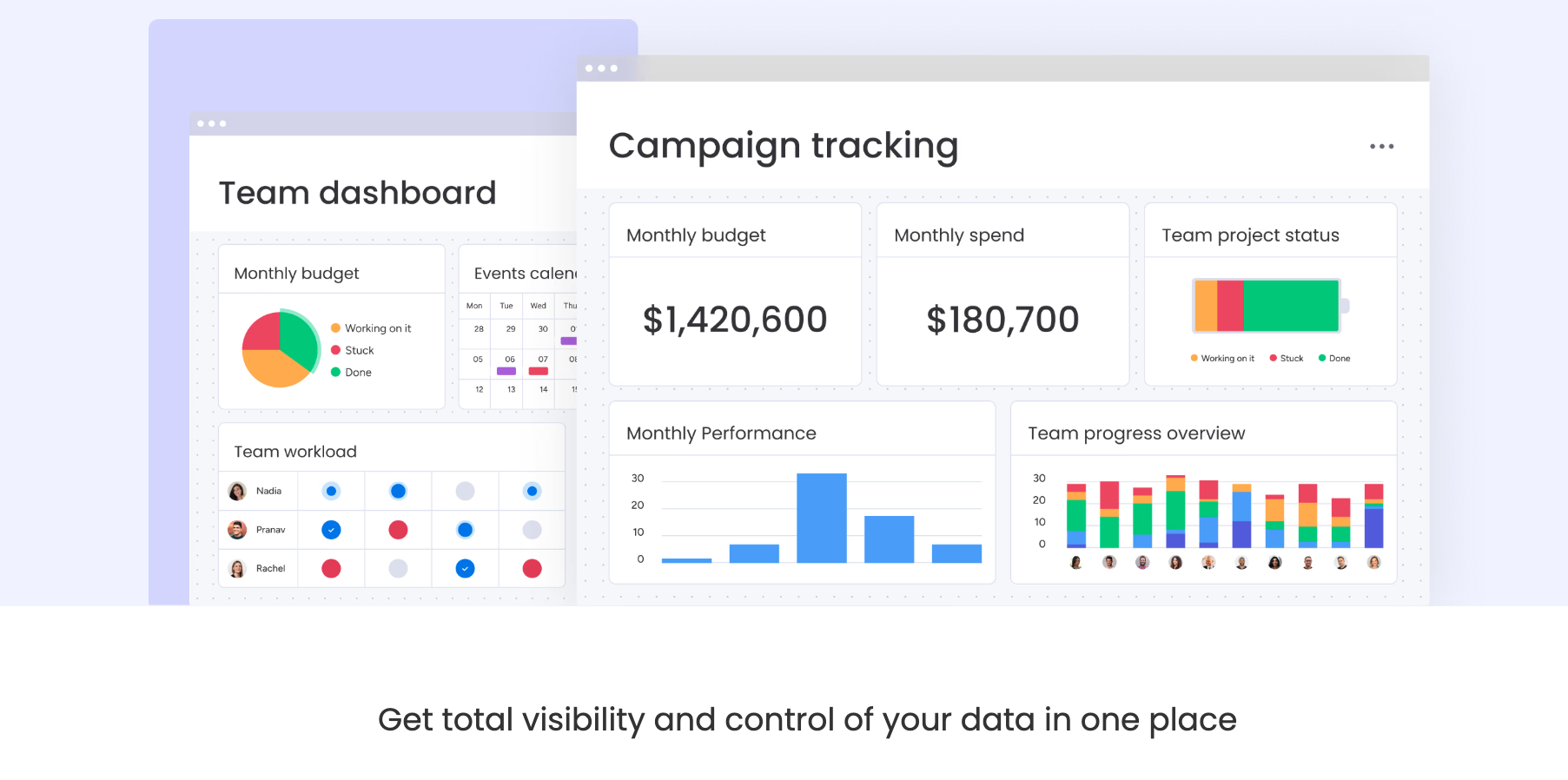
Image source: monday.com
Overview
If you find Zoho's interface clunky, Monday.com is the antidote. It positions itself as a "Work OS." While it started as a project management platform, it has evolved into a platform where you can run CRM, software development, and creative workflows visually. It is famous for its highly intuitive platform.
Key features
- Visual dashboards: Extremely colorful, intuitive, and easy-to-read status boards.
- Automations: "If this, then that" recipes that are easy for non-technical users to set up to automate workflows.
- Gantt & Kanban: Best-in-class visualizations for project tracking and viewing project progress.
Pricing
With a free plan for 2 users. Paid plans start at $9/user/month.
5. ClickUp: The unified powerhouse for productivity
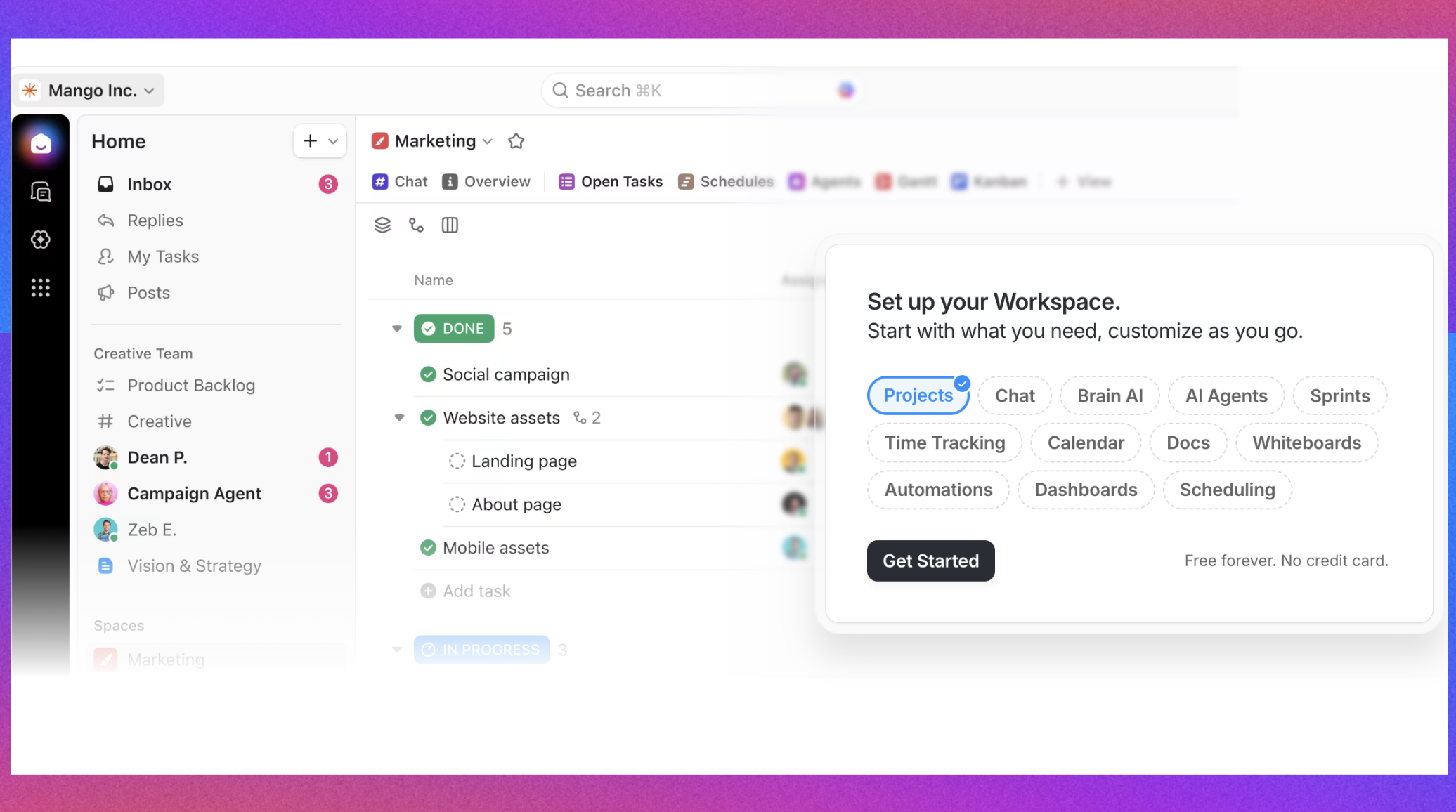
Image source: clickup.com
Overview
ClickUp’s marketing slogan literally is "One app to replace them all." It focuses heavily on productivity: Tasks, Docs, Whiteboards, and Goals. It is less of an ERP (no accounting or HR) but a powerhouse for project execution and team collaboration.
Key features
- Custom views: You can view the same data as a List, Board, Calendar, Box, or Table. This flexibility helps organize tasks exactly how you want.
- Docs: Integrated document editing that rivals Google Docs, linked directly to important tasks.
- Whiteboards: Visual collaboration spaces for brainstorming.
Pricing
With a free plan for limited features. Paid plans start at $7/user/month.
Want to learn more about pricing? Check out our blog: guide.
6. Salesforce: The heavy-hitter CRM
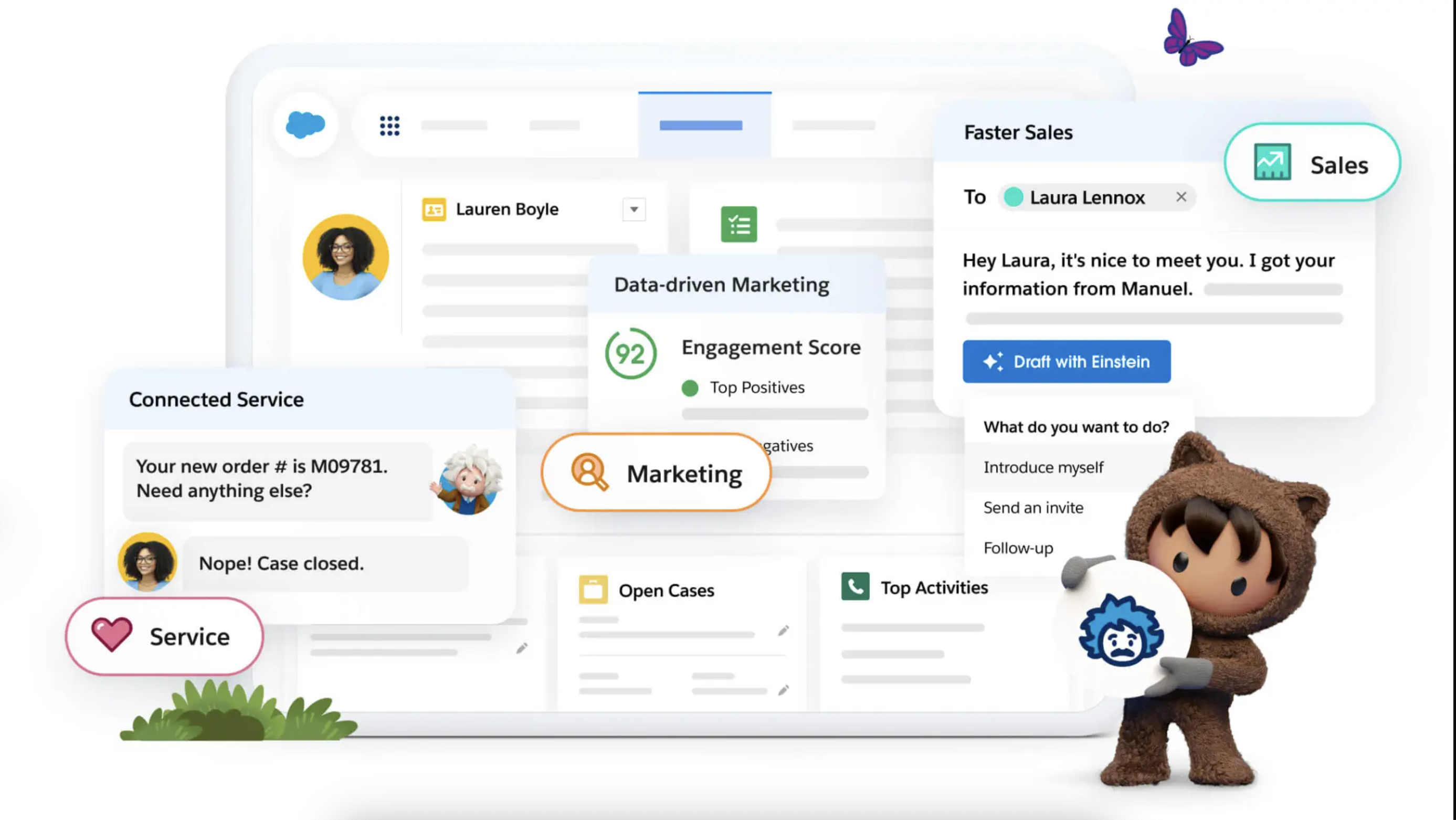
Image source: salesforce.com
Overview
If your business is outgrowing Zoho CRM because of complexity or data volume limits, Salesforce is the logical next step. It is not an all-in-one solution in the same sense, but its AppExchange ecosystem allows you to plug in any other tool you need.
Key features
- Customization: There is almost nothing you cannot build in Salesforce if you have the budget. It handles complex sales pipeline requirements with ease.
- AI (Einstein): Advanced predictive analytics and lead scoring for sales pipelines.
- Ecosystem: Thousands of pre-built integrations with every other software on the planet.
Pricing
It is the most expensive option on this list. You pay for the power, the brand, and the reliability. Paid plans start high and go higher.
7. Google Workspace: The cloud collaboration standard
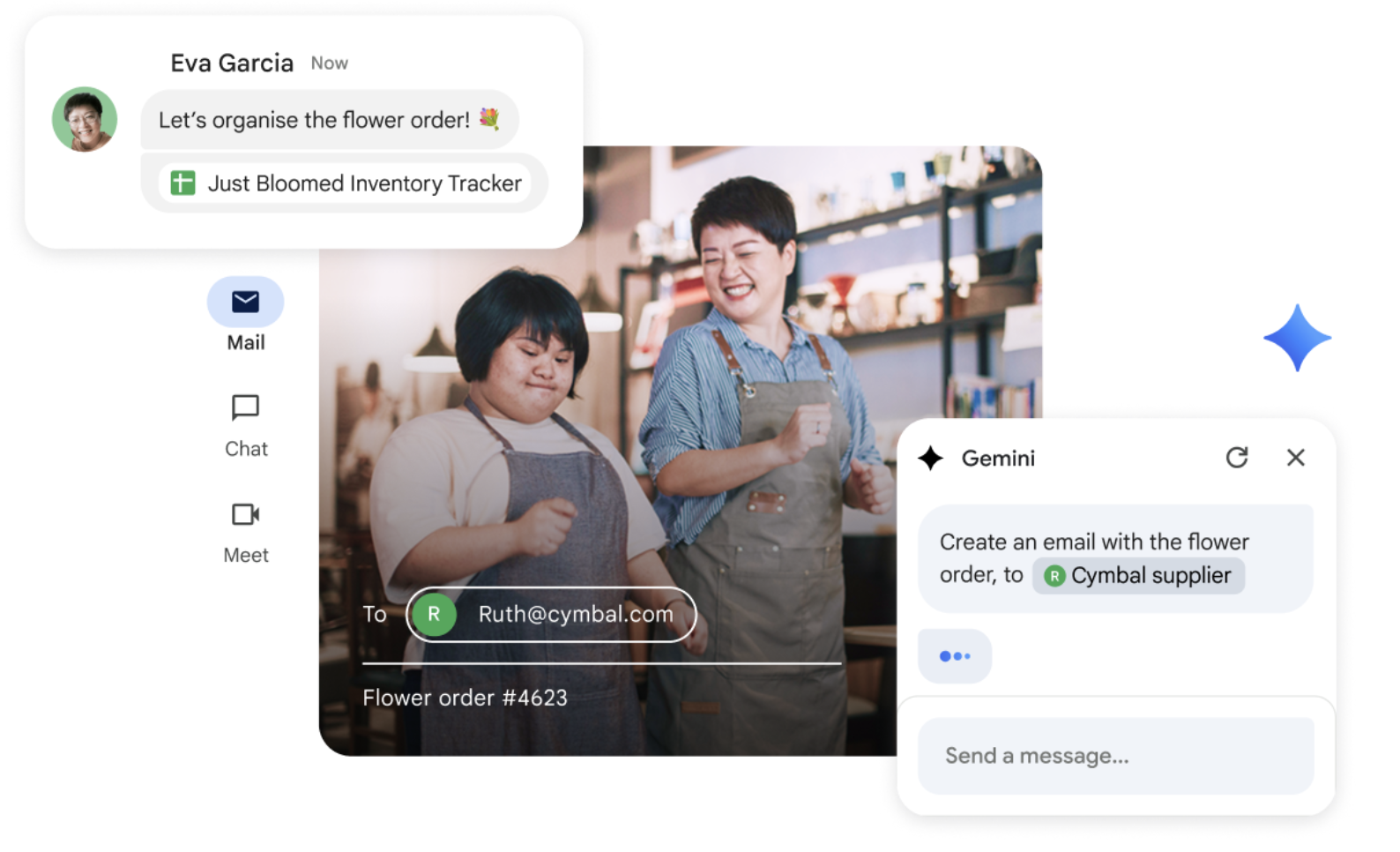
Image source: workspace.google.com
Overview
Sometimes, you don't need a complex ERP; you just need rock-solid email and document systems. Many small businesses successfully run on Google Workspace paired with a specialized accounting tool (like QuickBooks) and a CRM.
Key features
- Real-time collaboration: Google Docs and Sheets set the standard for co-editing.
- Gmail: The most familiar email interface in the world.
- Google meet: Simple, browser-based video conferencing that works well for small teams.
Pricing
Without free plan. Paid plans start at $9.40/user/month.
For more information, you can refer to and .
8. Scoro: The agency-focused alternative
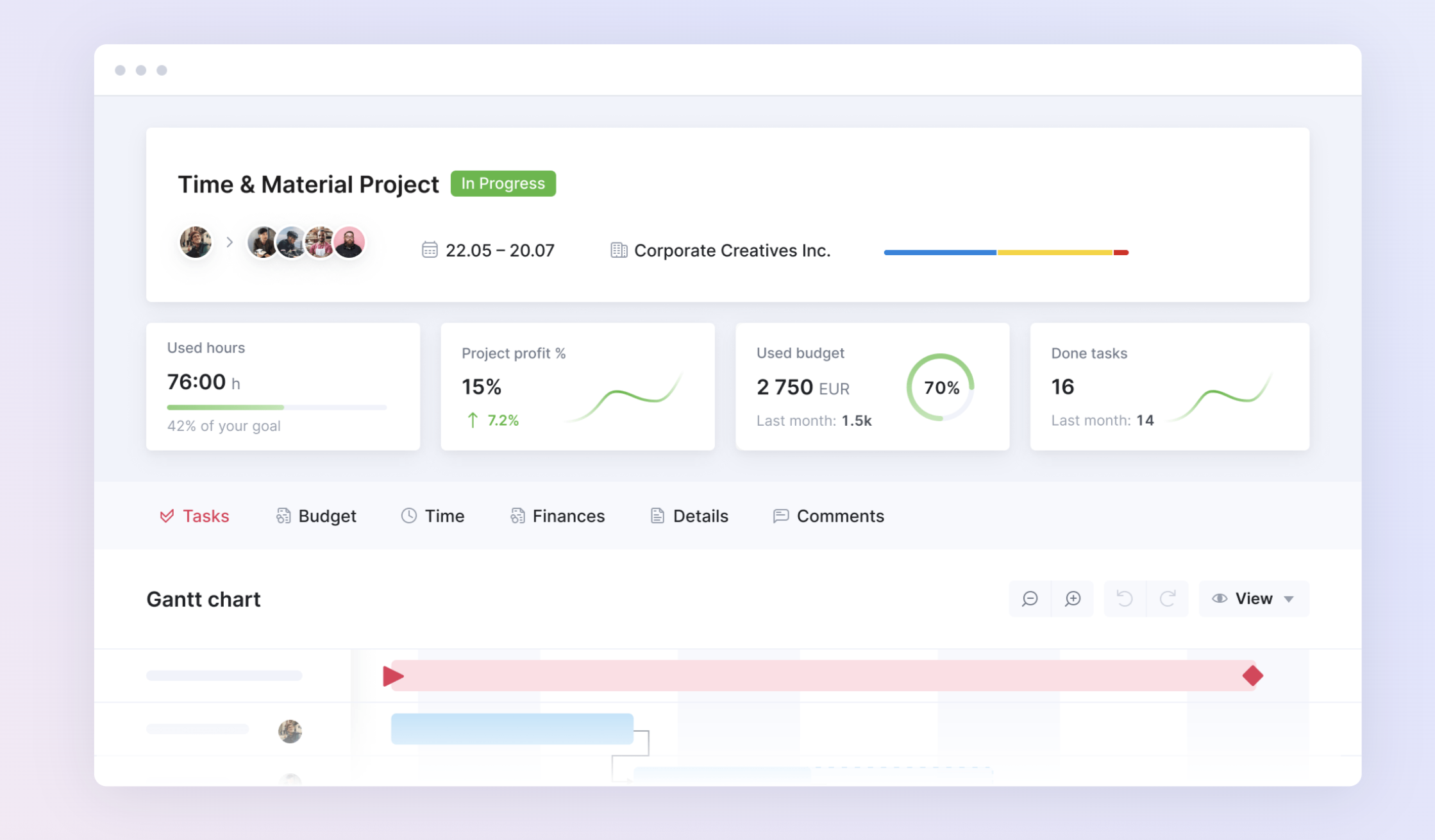
Image source: scoro.com
Overview
Scoro is a niche player designed specifically for professional service businesses, agencies, and consultancies. Unlike Zoho One, which tries to serve everyone, Scoro connects time tracking, billing, and project management into one tight workflow.
Key features
- Utilization reporting: detailed insights into how much of your team's time is billable.
- Quoting to billing: Convert a quote into a project and then into an invoice seamlessly.
- KPI dashboards: Real-time view of agency profitability and project progress.
Pricing
Without free plan. Paid plans start at $19.9/user/month.
Conclusion
Zoho One changed the market by proving that businesses want an integrated suite, not just isolated tools. However, as the market evolves, the definition of "integrated" has changed. You no longer have to settle for a bundle of disjointed apps just to get a good price. The platform offers available today are far more sophisticated.
The best Zoho alternatives are those that reduce friction. They are platforms that understand that your chat, your documents, and your business data are all part of the same workflow. When you compare one zoho application against a unified superapp, the difference in daily friction is palpable.
If you are ready to stop fighting with integrations and start working in a truly unified environment, it is time to experience the difference of a superapp. Try today and see how much faster your team can move when everything they need is finally in one place.
Use a super app to stop fighting with integrations
FAQs
What are the disadvantages of Zoho One?
The main disadvantages include "suite fatigue," where the 45+ apps do not perfectly integrate, leading to frustrating data silos. Users often cite inconsistent user interfaces across different modules and a steep learning curve that requires expensive third-party implementation partners. Additionally, customer support can be slow for non-premium tiers, creating bottlenecks when technical glitches occur during critical operations.
What's better than Zoho?
"Better" depends on your specific needs. For unified collaboration and a seamless mobile-first experience, Lark is superior because it combines chat, docs, and databases in a single superapp. For pure marketing automation, HubSpot offers better usability and polish. For large-scale ERP needs, Microsoft Dynamics or Odoo are often better suited for handling complex manufacturing or compliance requirements.
Is Zoho a Chinese company?
No, Zoho is not a Chinese company. It is an Indian multinational technology company. Its global headquarters are located in Chennai, India, and its US headquarters are in Del Valle, Texas. Zoho was founded in 1996 by Sridhar Vembu and Tony Thomas and has since grown into a major global SaaS provider with offices in multiple countries.
What is the difference between Zoho One and Zoho CRM?
Zoho CRM is a single standalone product designed specifically for sales management and customer tracking. Zoho One is a comprehensive suite (often called an operating system) that includes Zoho CRM plus over 40 other applications for finance, HR, marketing, and project management. Essentially, Zoho CRM is just one slice of the pie, whereas Zoho One is the entire bakery.
Related reading