














Quote Management Software: Complete Guide and 5 Best Tools

Cecilia Lane
Go-to-Market Associate
Sep 18, 2026
Cecilia Lane
Sep 18, 2026

18 min read


In today's competitive business environment, we see manual quoting processes represent a significant drain on productivity and profitability. Companies across industries face consistent challenges with time-consuming quote creation, pricing inconsistencies, and delayed response times that directly impact revenue generation.
Modern quote management systems go beyond simple automation, providing intelligent tools that maintain brand consistency, ensure pricing accuracy, and accelerate sales cycles. Whether evaluating specialized construction quote management software or comprehensive sales quote management platforms, businesses now have access to solutions that integrate seamlessly with existing workflows while delivering measurable improvements in efficiency and customer satisfaction. In my experience working with sales teams, this guide explores what quote management software is and guides you through the 5 best quote management software, helping decision-making process. Here is the list:
- Lark: All-in-one workspace platform
- PandaDoc: Professional document automation
- Proposify: Sales proposal software
- QuoteWerks: Comprehensive quoting solution
- Zoho Quote: CRM-integrated quoting
What is quote management and why does it matter?
Defining modern quote management solutions
- From manual processes to digital efficiency
Quote management software represents a fundamental evolution from traditional manual processes to sophisticated digital solutions that streamline the entire quotation lifecycle. These platforms serve as centralized systems for creating, sending, tracking, and managing price proposals, offering capabilities that extend far beyond basic template functionality. The best quote management software solutions incorporate intelligent features such as automated calculations, customizable approval workflows, electronic signature integration, and real-time collaboration tools that enable teams to work efficiently regardless of location.
- Seamless business ecosystem integration
Modern systems distinguish themselves through their ability to integrate with existing business ecosystems, connecting seamlessly with CRM platforms, accounting software, inventory management systems, and project management tools. For businesses considering online quote management software, the market offers both cloud-based solutions that provide accessibility from any device and on-premise options for organizations with specific security requirements. The flexibility of these systems allows companies to maintain their unique business processes while benefiting from standardized, efficient quoting practices.
The real cost of manual quoting processes
- The true cost of manual processes
Manual quotation methods create hidden expenses that impact both revenue and customer relationships. Sales teams spend hours instead of minutes on each proposal, while inconsistent formats and pricing approaches create customer confusion and damage brand perception.
- Financial risks and errors
Calculation errors from manual data entry frequently lead to pricing mistakes that reduce profit margins or cause customer dissatisfaction. Delayed responses in competitive markets often result in lost opportunities to faster competitors.
- Missing analytical insights
Manual systems lack analytical capabilities to track quote performance effectively, leaving businesses without visibility into conversion rates or pricing effectiveness. This data gap prevents informed decisions about sales strategies and pricing models.
Key benefits of implementing quote management software
Time savings and productivity boost
- Immediate time savings and efficiency
Quote management systems deliver substantial time savings by automating repetitive tasks like data entry and calculations, reducing quote creation from hours to minutes. This allows sales teams to focus on revenue-generating customer engagement instead of administrative work, while reducing approval bottlenecks and improving response times.
- Mobile accessibility for field teams
Mobile features enable creating, sending, and tracking quotes from any location using smartphones or tablets. This proves invaluable for field representatives and remote workers who need to provide quotes during customer visits or off-site meetings.
- Automated follow-up and performance insights
Automated follow-up systems ensure timely attention to opportunities with reminder notifications that prevent quotes from being overlooked. Managers gain enhanced visibility through dashboard analytics providing real-time insights into conversion rates and sales effectiveness.
Improved accuracy and consistency
- Automated accuracy and consistency
Quote management software eliminates calculation errors through automated pricing engines that apply correct formulas, taxes, and discounts consistently. This protects profit margins while standardized templates ensure professional branding and effective value communication across all proposals.
- Compliance and version control
Version control mechanisms maintain complete audit trails of changes and approvals, ensuring compliance with internal policies and regulatory requirements. This proves particularly valuable for industries with complex compliance needs or multi-phase projects requiring detailed documentation.
- Historical data for strategic insights
The system maintains historical records of all quotes—including unconverted ones—creating a valuable knowledge base for analyzing pricing strategies and identifying trends. This historical perspective helps organizations refine pricing models and improve competitive positioning.
Enhanced sales performance and revenue growth
- Enhanced conversion and competitive advantage
Quote management software significantly boosts conversion rates through faster response times that capitalize on high prospect interest. This responsiveness becomes a key differentiator in competitive bidding, while professional automated quotes enhance credibility and justify premium pricing.
- Data-driven sales optimization
Advanced analytics track comprehensive performance metrics by product, representative, and customer segment, providing valuable strategic insights. This data-driven approach enables continuous refinement of pricing strategies and optimization of resource allocation across market segments.
- Flexible negotiation capabilities
The ability to quickly generate alternative quotes with different configurations enhances sales flexibility during negotiations. Representatives can effectively respond to customer objections or budget constraints with tailored pricing options.
The 5 best quote management tools 2026
1. Lark: All-in-one workspace platform
Lark revolutionizes quote management by integrating specialized functionality within its comprehensive productivity suite, offering a superior alternative to traditional standalone quote management software. Unlike isolated solutions that require complex integrations, Lark provides native connectivity between all business functions through its unified platform.
Key Features:
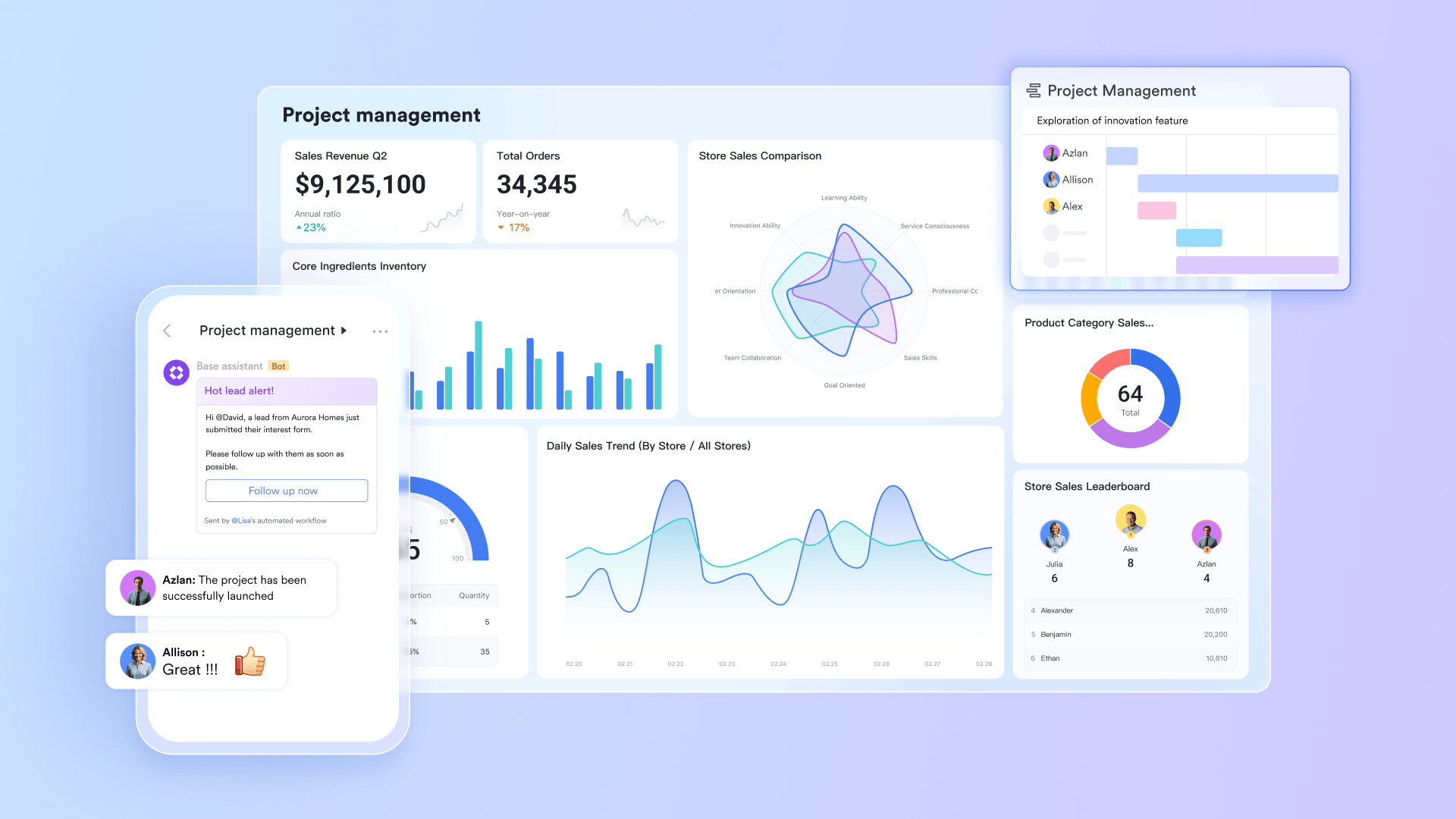
- Lark Base: Lark Base revolutionizes quote management with its intelligent database and visual dashboard capabilities, enabling real-time data visualization, automated calculations, and collaborative pricing strategies through interactive charts and analytics.
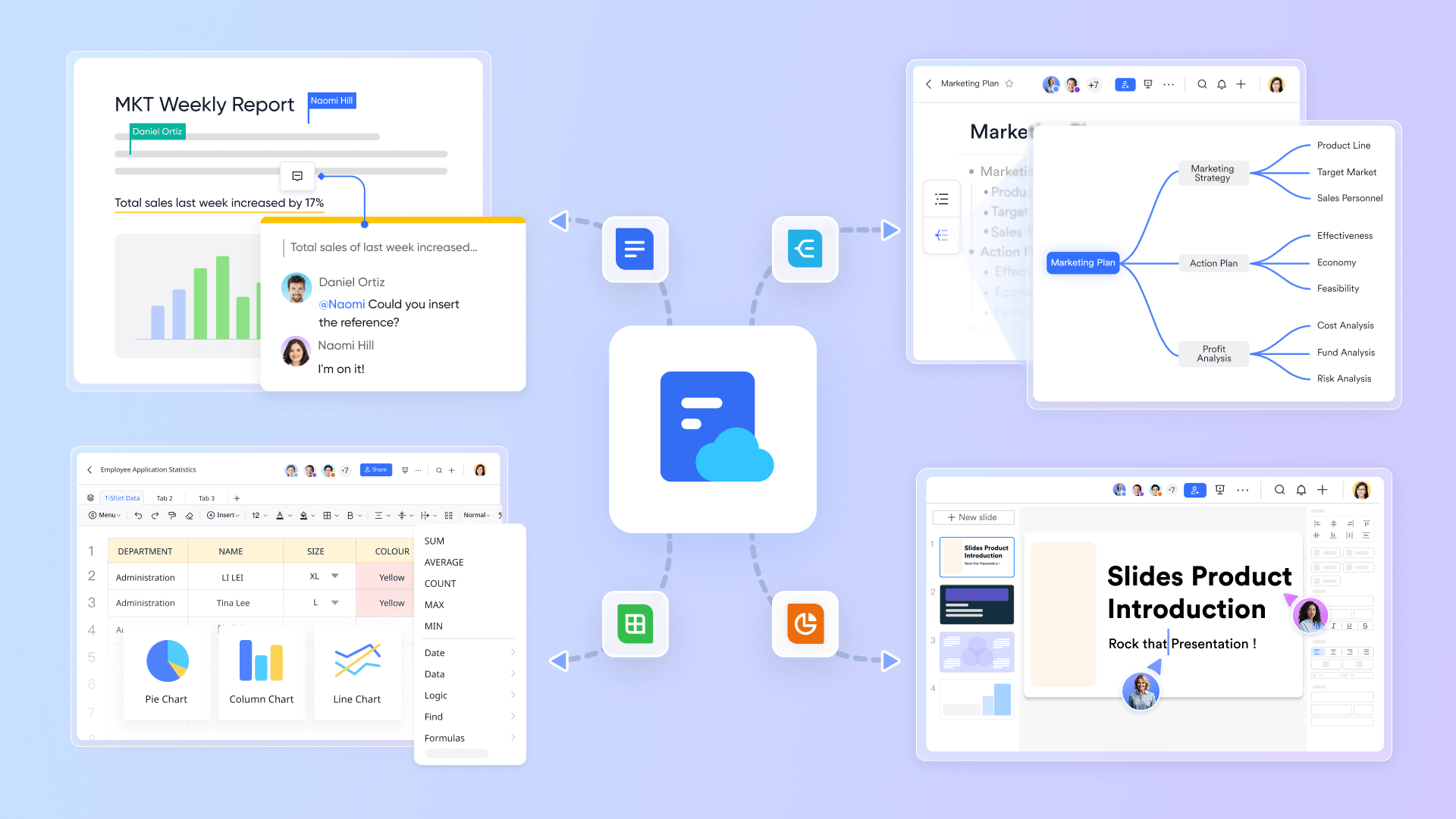
- Lark Docs & Lark Wiki: Lark Docs enables professional quote creation with real-time collaboration and sharing, while Lark Wiki centralizes product knowledge and pricing policies, ensuring consistent, accurate quoting across sales teams.
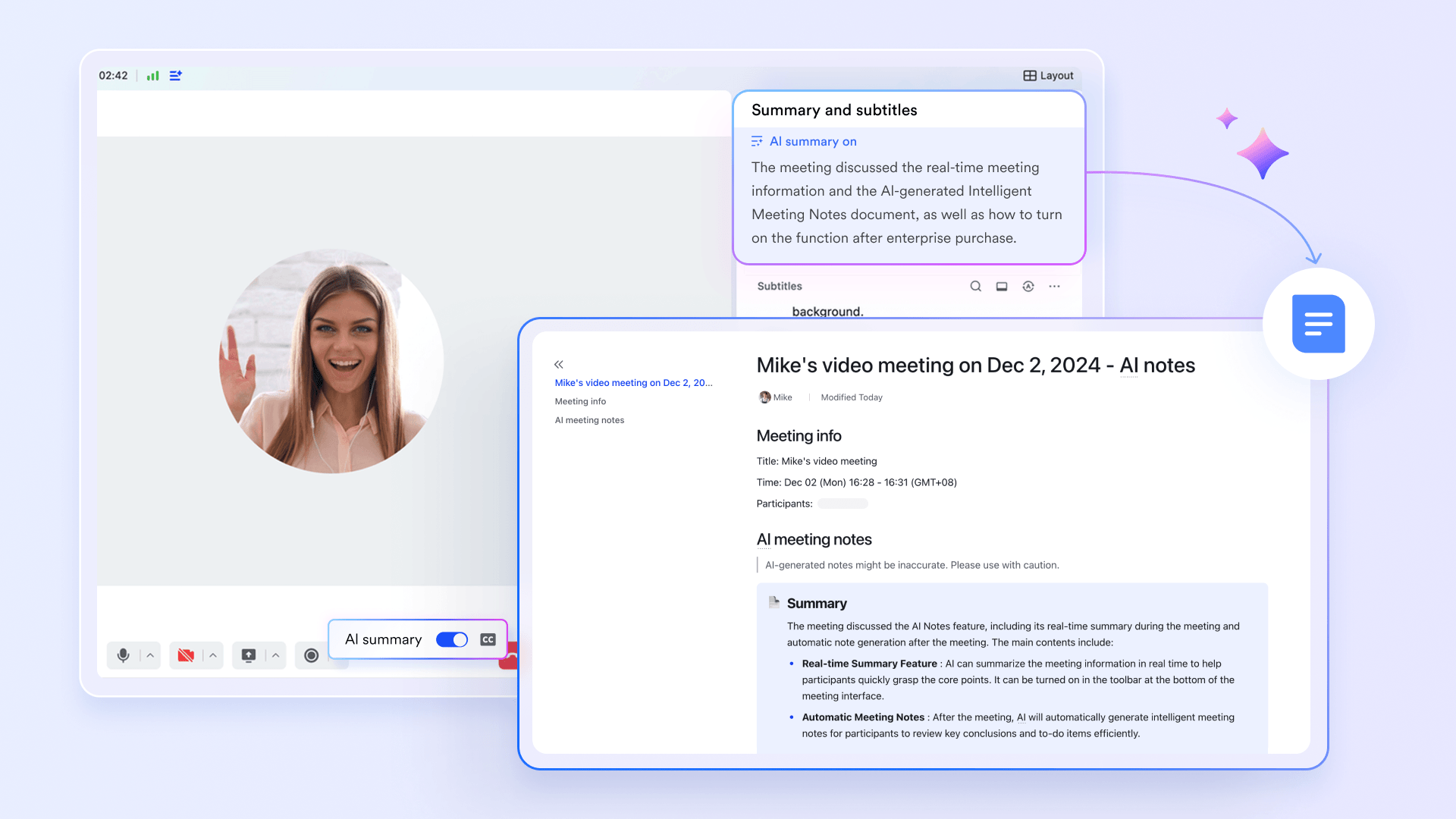
- Lark Meetings and Lark AI Meeting Notes: Lark Meetings enable real-time client discussions and quote presentations with integrated video conferencing, while AI Meeting Notes automatically capture key requirements, pricing discussions, and action items for accurate quote follow-up.
- Lark Approval: Lark Approval streamlines quote management with automated approval workflows, ensuring proper authorization for discounts, special pricing, and contract terms while maintaining complete audit trails and compliance documentation.
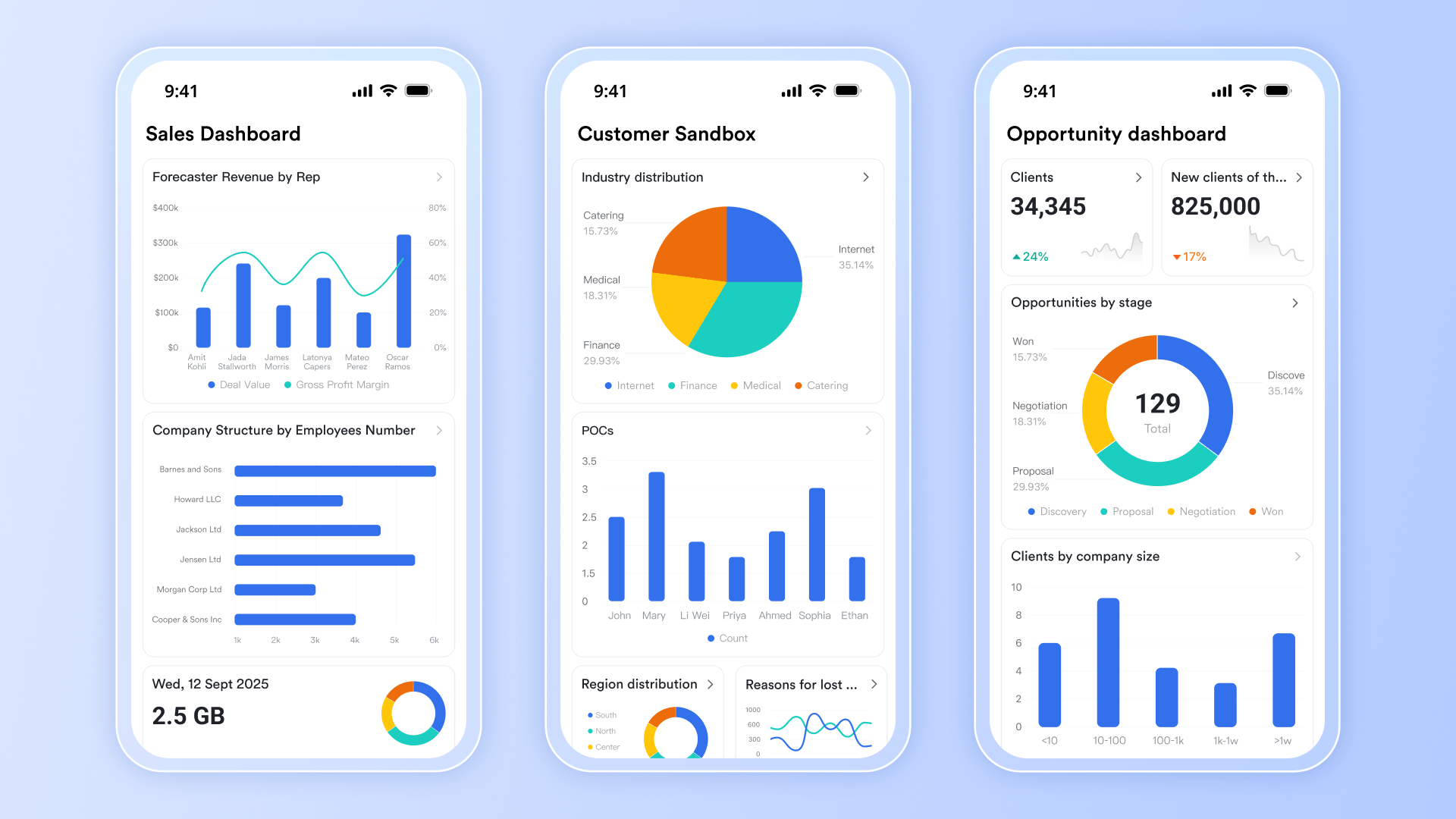
- Lark's mobile version: Lark's mobile version revolutionizes quote management by enabling sales teams to create, edit, approve, and send professional quotes from anywhere, ensuring real-time collaboration and instant client responsiveness while on the go.
Pros:
- Seamless integration across all business functions
- Real-time collaboration capabilities
- Mobile-first design with offline functionality
- Built-in AI for intelligent pricing optimization
- No additional costs
Cons:
- Lark offers the widest variety of advanced features among team communication software. However, you may need to visit Lark's YouTube channel and the Lark Help Center to fully master all the features.
- Starter plan: Free forever plan that includes 11 powerful tools for up to 20 users. It also comes with 100GB of storage, 1000 automation runs, AI translations, and more.
- Pro plan: $12/user/month (billed annually) for up to 500 users. It includes everything in Starter plus a group calling for up to 500 attendees, 15TB of storage, 50,000 automation runs, and more.
- Enterprise plan: Contact sales for custom pricing. Supports unlimited users and includes even more automation runs and advanced security, compliance, and management features.
2. PandaDoc: Professional document automation
Specialized document automation platform focused on creating, tracking, and managing quotes, proposals, and contracts.
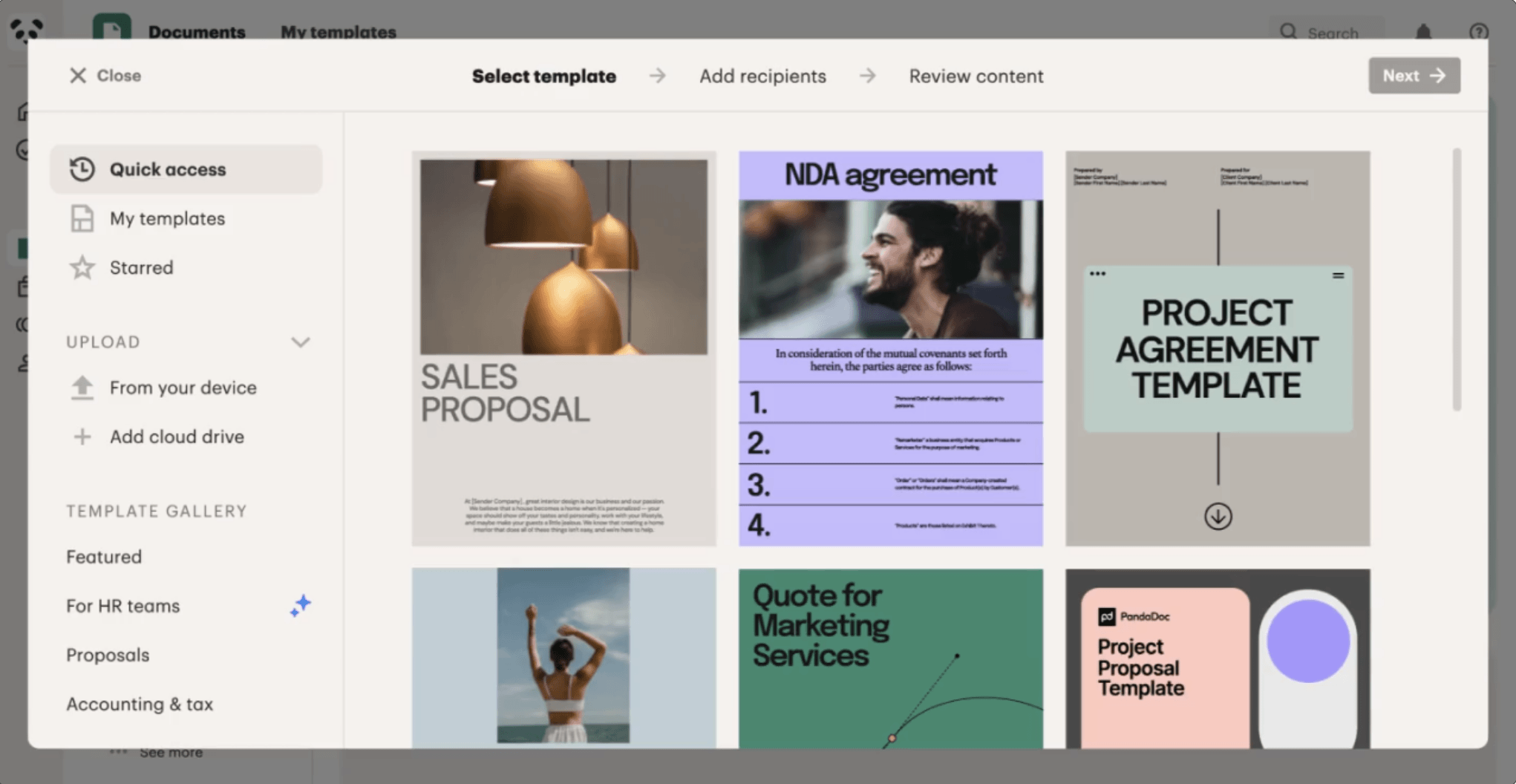 Image source: pandadoc.com
Image source: pandadoc.comKey Features:
- Drag-and-drop document builder with extensive template library
- Electronic signatures and approval workflows
- Real-time document tracking and analytics
- CRM integrations (Salesforce, HubSpot, Pipedrive)
- Content library and reusable blocks
Pros:
- Excellent document creation and customization
- Strong electronic signature capabilities
- Detailed analytics and tracking
Cons:
- Primarily document-focused rather than full workspace
- Limited project management capabilities
- Can become expensive with add-ons
Pricing:
- Starter: $19/user/month;
- Business: $49/user/month;
- Enterprise: Custom pricing
3. Proposify: Sales proposal software
One-sentence summary: Cloud-based proposal software designed specifically for sales teams to create, send, and track professional quotes.
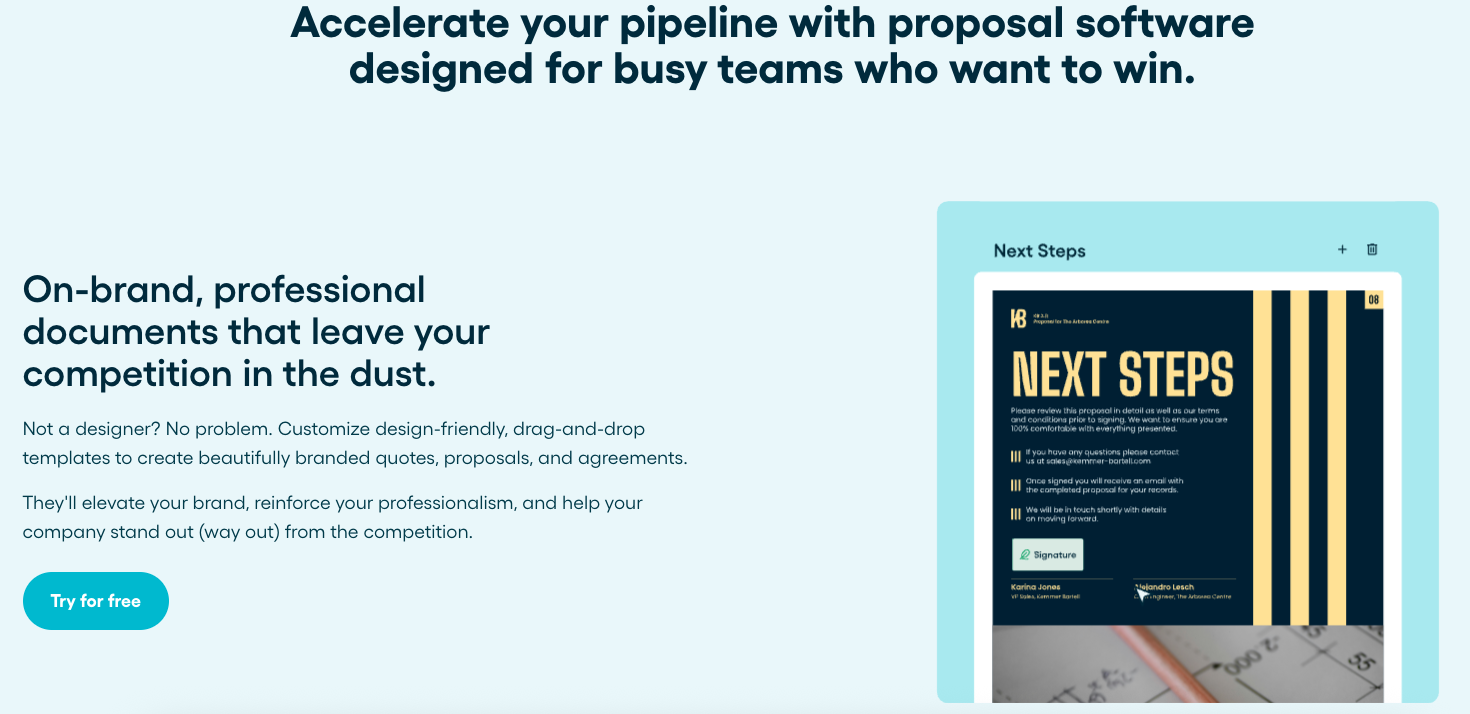 Image source: proposify.com
Key Features:
- Customizable proposal templates and branding
- Content management system for reusable sections
- Electronic signatures and document tracking
- Analytics and performance reporting
- Team collaboration and approval workflows
Pros:
- Sales-focused feature set
- Good template customization options
- Solid analytics and reporting
Cons:
- Limited beyond proposal management
- Basic integration capabilities
- Mobile experience could be improved
Pricing:
- Basic: $29/user/month
- Team: $49/user/month
- Business: $69/user/month
4. QuoteWerks: Comprehensive quoting solution
Dedicated quoting solution with strong integration capabilities for distributors, manufacturers, and service businesses.
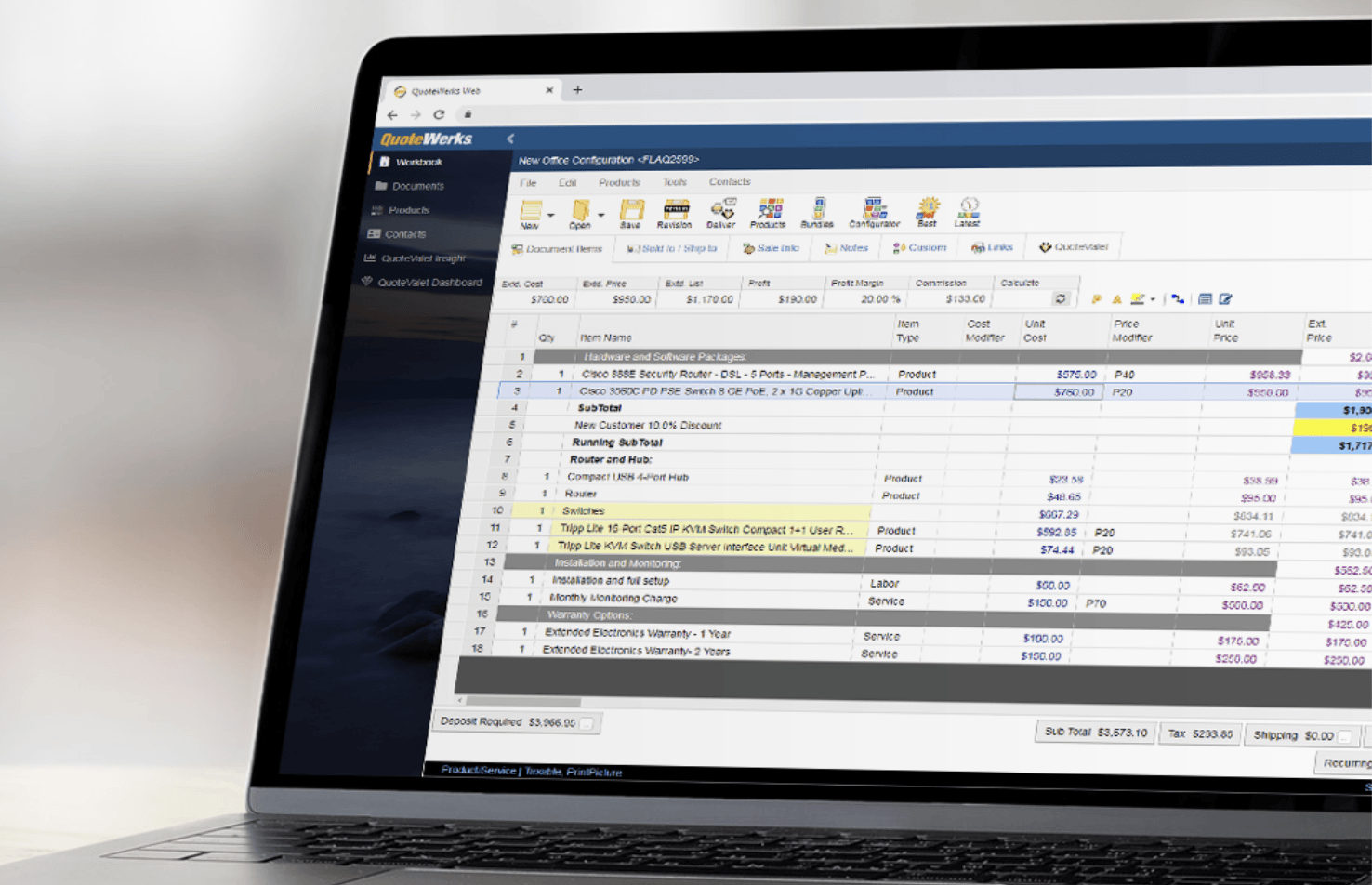 Image source: quotewerks.com
Image source: quotewerks.comKey Features:
- Advanced product catalog management
- Complex pricing rules and calculations
- CRM and accounting software integrations
- Inventory management integration
- Mobile quoting capabilities
Pros:
- Excellent for complex product configurations
- Strong integration with business systems
- Good for manufacturing and distribution
- Comprehensive pricing engine
Cons:
- Less modern UI/UX
- Steeper learning curve
- Limited collaboration features
Pricing:
- Essential: $50/user/month
- Balanced: $78/user/month
- Pinnacle: $102/user/month
5. Qwilr: Interactive quote and proposal management
A premium quote and proposal tool that transforms static documents into interactive, web-based experiences, helping businesses impress clients and close deals faster.
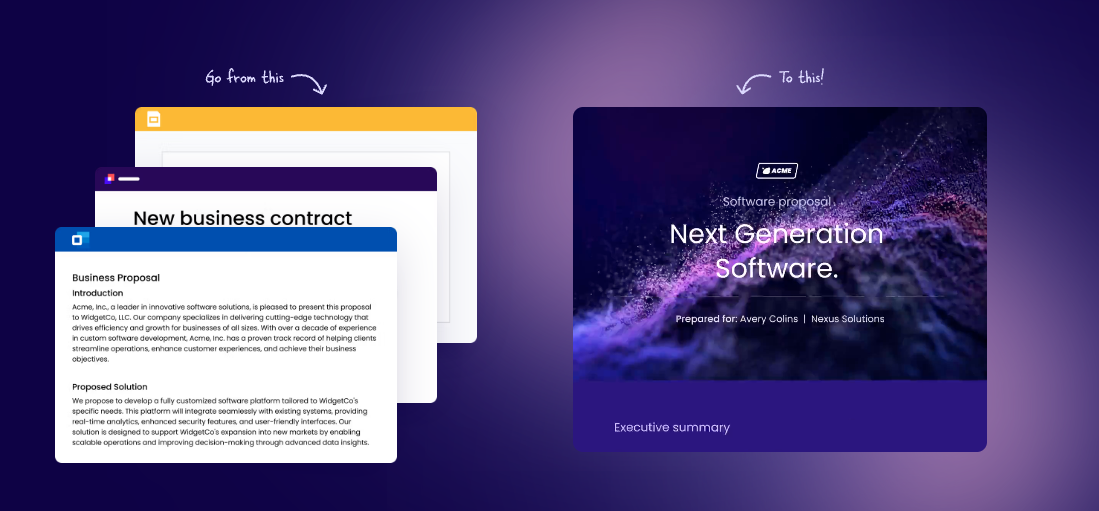 Image source: qwilr.com
Key Features:
- Interactive, web-based quote and proposal templates
- Built-in e-signatures and payment collection
- Real-time quote tracking and engagement analytics
- CRM integrations with HubSpot, Salesforce, and Zoho
- Brand customization to maintain visual identity
Pros:
- Highly engaging, client-facing presentation style
- Strong CRM and payment gateway integrations
- Detailed analytics showing client engagement behavior
Cons:
- Higher pricing compared to basic quote tools
- Internet connection required for document viewing
- Limited offline editing options
Pricing:
- Business Plan: From $35/user/month
- Enterprise Plan: From $59/user/month (10 user min)

Must-have features in quote management software
Core functionality for every business
Essential features that form the foundation of effective quote management:
- Drag-and-drop editor simplicity: Intuitive interfaces that enable users of all technical levels to create professional quotes quickly without design expertise
- Template library and customization: Pre-designed formats for different products, services, and customer segments with easy customization options
- Electronic signature capabilities: Integrated digital signing that accelerates approval processes and maintains legal compliance
- Mobile responsiveness: Full functionality across all devices ensuring consistent experience on desktops, tablets, and smartphones
Advanced features for growing enterprises
Scalable capabilities for complex business environments:
- Approval workflows and collaboration tools: Multi-level review processes with customizable rules based on deal size, customer type, or product category
- CRM and accounting software integrations: Seamless data synchronization with existing systems to eliminate duplicate entry and ensure accuracy
- Real-time analytics and reporting: Comprehensive dashboards tracking conversion rates, response times, and pricing effectiveness across segments
- Custom pricing rules and discounts: Automated application of complex pricing strategies while maintaining governance and control
Security and compliance considerations
Critical protection measures for modern business operations:
- Data protection requirements: Advanced encryption, role-based access controls, and compliance with GDPR, CCPA, and industry standards
- Industry-specific compliance needs: Specialized features for healthcare (HIPAA), financial services (FINRA), and government contracting requirements
- Backup and recovery capabilities: Automated backup systems with geographic redundancy and tested disaster recovery procedures
How to choose the right quote management software
Evaluating your business needs and budget
Key considerations for informed decision-making:
- Team size and growth projections: Assessment of current requirements and future scalability needs over 3-5 year horizon
- Industry-specific requirements: Identification of specialized functionality needed for construction, manufacturing, or professional services
- Integration needs with existing systems: Evaluation of technical compatibility with current CRM, accounting, and ERP platforms
- Budget considerations: Analysis of total cost of ownership including implementation, training, and ongoing support expenses
Trial periods and vendor evaluations
Practical testing and assessment strategies:
- Testing usability and feature fit: Hands-on evaluation with actual team members replicating complex real-world scenarios
- Assessing customer support quality: Review of response times, support channels, and technical expertise during pre-sales interactions
- Security and compliance verification: Thorough examination of vendor certifications and data protection measures
- Vendor stability and roadmap: Evaluation of financial health, product development commitment, and long-term partnership potential
Implementation support and onboarding
Ensuring successful deployment and adoption:
- Vendor implementation assistance: Dedicated project management, technical configuration, and data migration support
- Training resources availability: Comprehensive materials and delivery methods for different user roles and skill levels
- Community and support networks: Access to user groups, knowledge bases, and forums for ongoing learning and troubleshooting
- Customer success approach: Regular business reviews, proactive guidance, and continuous improvement partnership
Comparing top quote management software solutions
Enterprise-grade platforms
The enterprise segment of the quote management software market caters to organizations requiring robust, scalable solutions with extensive integration capabilities.
Key characteristics of enterprise solutions:
- Scalability and feature depth: Handles high-volume quoting across multiple departments with advanced workflow automation and sophisticated pricing engines. These systems support complex product configurations and multi-currency pricing while maintaining performance under heavy usage loads.
- Integration capabilities: Extensive API connections with CRM systems, ERP software, and accounting platforms for seamless data synchronization. Pre-built connectors ensure real-time data flow between sales, operations, and finance departments without manual intervention.
- Enterprise pricing structures: Subscription-based models with tiered pricing based on user count, feature access, and quote volume. Custom enterprise agreements often include dedicated support, implementation services, and premium SLAs tailored to organizational requirements.
Small business focused solutions
Small business quote management software prioritizes accessibility and ease of use while maintaining professional capabilities.
Essential attributes for small businesses:
- Ease of use and quick setup: Intuitive interfaces with drag-and-drop editors and pre-designed templates for immediate productivity. Small teams can typically become operational within hours rather than days, requiring minimal training or technical expertise.
- Affordable pricing tiers: Budget-friendly options with transparent pricing models and scalable plans that grow with business needs. Many solutions offer free tiers or low-cost entry points that include essential features without long-term commitments.
- Essential feature sets: Mobile responsiveness, electronic signatures, and basic reporting without overwhelming complexity. These core capabilities provide immediate value while maintaining simplicity that doesn't require dedicated IT resources.
Industry-specific specialized tools
Specialized quote management software addresses unique industry requirements beyond generic solutions.
Industry-focused capabilities:
- Construction and contracting: Materials pricing, labor calculations, equipment costs, and subcontractor management for project-based quoting. These solutions understand construction-specific requirements like bid management, change orders, and compliance documentation for regulatory standards.
- IT services and MSPs: Recurring revenue models, service level agreements, and integration with remote monitoring tools. Specialized features include automated service catalog pricing, contract term management, and integration with PSA and RMM platforms for comprehensive service delivery.
- Creative agencies and freelancers: Design-focused templates, portfolio integration, and client collaboration features that emphasize visual presentation. These tools support creative project workflows with mood boards, asset management, and client approval processes tailored to creative industries.
Future trends in quote management technology
AI and machine learning advancements
Artificial intelligence is transforming quote management software from basic automation to intelligent assistance.
Key AI applications:
- Predictive pricing optimization: Machine learning analysis of historical data and market conditions for optimal pricing strategies. AI algorithms can identify pricing patterns that maximize win rates while maintaining profitability, adjusting recommendations based on real-time market changes.
- Content generation and personalization: Natural language processing for tailored quote content based on customer segments and past interactions. AI can automatically generate compelling value propositions and customize messaging to match specific industry terminology and customer preferences.
- Intelligent template suggestions: Automated recommendations of effective templates based on deal characteristics and historical performance. Machine learning analyzes successful quote patterns to suggest optimal structures, sections, and visual layouts that have proven effective for similar scenarios.
The evolving workplace: mobile and remote capabilities
Critical mobile and remote features:
- Mobile-first design requirements: Full functionality on smartphones with touch-optimized interfaces for field sales teams. Native mobile apps must provide complete feature parity with desktop versions, including quote creation, editing, and sending capabilities from any location.
- Offline functionality needs: Robust offline capabilities with automatic synchronization for unreliable connectivity environments. Field teams should be able to work uninterrupted in areas with poor internet access, with changes syncing seamlessly when connectivity is restored.
- Real-time collaboration features: Version control, commenting systems, and integrated communication tools for distributed teams. These capabilities enable simultaneous multi-user editing, change tracking, and instant messaging within the quoting workflow to support remote collaboration.
Conclusion
The quote management software market continues to evolve, offering solutions that range from enterprise-grade platforms with extensive integration capabilities to specialized tools tailored for specific industries. As businesses increasingly prioritize efficiency and accuracy in their sales processes, the best quote management software combines robust functionality with user-friendly design. Future trends point toward greater AI integration, enhanced mobile capabilities, and improved collaboration features that support modern distributed workforces. Platforms like Lark demonstrate how unified workspace environments can seamlessly incorporate quote management within broader business ecosystems, providing connected experiences that streamline the entire sales process while maintaining specialized functionality. The right solution ultimately depends on organizational size, industry requirements, and specific workflow needs.
FAQs
What is the most important feature to look for in quote management software?
The most critical feature is seamless integration with your existing CRM and accounting systems, as this eliminates data silos and ensures consistency across business functions.
How much does quote management software typically cost?
Pricing varies significantly based on features and scale, ranging from free basic plans for small businesses to enterprise subscriptions costing hundreds per user monthly.
Can quote management software help improve sales conversion rates?
Yes, professional quoting tools with automated follow-ups, approval workflows, and analytics can significantly reduce response times and increase win rates.
Is mobile accessibility important for quote management software?
Absolutely, mobile capabilities are essential for field sales teams who need to create, send, and track quotes while meeting with clients onsite.
Related Reading
Table of contents
Start using Lark today

Manage all your work in one place
Boost team efficiency by 10x
Save up to 70% on software costs
Table of contents
Start using Lark today
Manage all your work in one place
Boost team efficiency by 10x
Save up to 70% on software costs
Keep reading








2026 Lark Technologies Pte. Ltd.
Headquartered in Singapore with offices worldwide.






Explore: