Modern product teams operate in environments defined by constant change, shifting customer expectations, and rapid technological evolution. Traditional long-term planning methods often struggle to keep pace with this reality. This is where the agile product roadmap becomes essential, offering a flexible and outcome-driven way to align strategy with execution. Instead of locking teams into rigid timelines, an agile product roadmap focuses on direction, priorities, and learning over time.
An Agile product roadmap helps teams communicate what they are building, why it matters, and how priorities may evolve. For growing organizations, especially cross-functional teams, it acts as a shared narrative rather than a fixed promise. Many modern collaboration platforms, including Lark, are designed to support this adaptive way of working by combining planning, documentation, and collaboration in one workspace.
Build agile roadmaps for your products with clarity
What is a product roadmap in Agile
Understanding what a product roadmap is in agile starts with recognizing its purpose as a strategic communication tool rather than a delivery schedule. In agile environments, the roadmap outlines the product vision, key outcomes, and major themes without committing to fixed dates or detailed feature lists. Maintaining a clear vision of agile product roadmaps is crucial to ensure alignment with long-term goals and stakeholder expectations. This allows teams to respond quickly to feedback and market changes.
An agile product roadmap approach emphasizes goals and problems to solve rather than predefined solutions. Product managers use it to align stakeholders around shared priorities while leaving room for iteration. Agile methodologies such as Scrum and Kanban support this flexibility, cross-functional collaboration, and continuous improvement. The roadmap evolves continuously as teams learn from user data, , and experimentation, making it a living artifact rather than a .
Unlike traditional roadmaps, agile roadmaps encourage transparency and collaboration across engineering, design, marketing, and leadership. They provide enough clarity to guide decision-making while avoiding the false certainty that can derail agile execution. The roadmap also helps teams visualize and align the product's direction throughout development, ensuring everyone stays focused on strategic goals.
4 types of Agile roadmaps
Different teams and organizations adopt different types of agile roadmaps depending on their context and maturity.
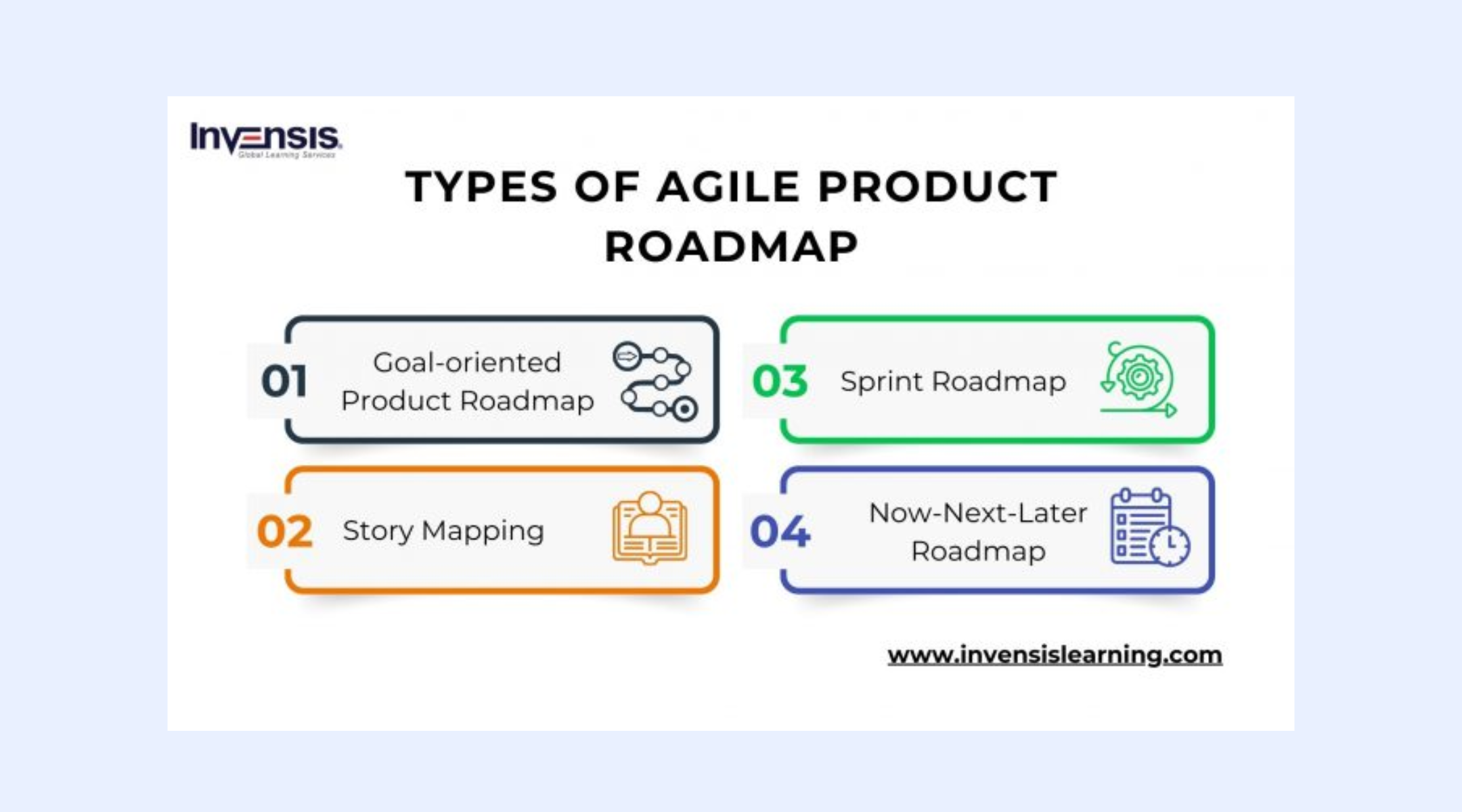
Image source: invensislearning.com
- Goal-oriented product roadmap: this strategy prioritizes high-level business targets and desired outcomes over specific features, ensuring that every development effort directly supports the product's success and company objectives.
- Story mapping: this visual exercise plots user stories across two axes—sequence of activity and importance—to build a cohesive narrative of the user journey and ensure the team addresses the complete end-to-end experience.
- Sprint roadmap: this tactical plan defines the specific tasks and objectives for a short, time-boxed iteration, providing the team with a shared focus for delivering incremental updates every one to four weeks.
- Now-next-later roadmap: this layout organizes work into current, upcoming, and future buckets, offering a transparent view of the product's direction while allowing for flexibility as new information emerges.
How to build an agile product roadmap
Building an agile product roadmap is a structured yet flexible process that balances strategic direction with adaptability. Instead of defining everything up front, the goal is to create a roadmap that evolves through learning, feedback, and collaboration:
Step 1: Define the product vision and strategic direction
The first step is to clearly articulate the product vision and the long-term direction it supports. This involves understanding the problem space, target users, and how the product contributes to broader business goals. Without this foundation, becomes a collection of disconnected initiatives rather than a coherent plan.
Step 2: Gather inputs from users and stakeholders
An agile product roadmap should be informed by real data, not assumptions. Product leaders gather insights from user research, customer feedback, analytics, and internal stakeholders such as engineering, sales, and support teams.
Step 3: Identify and prioritize strategic goals
Once inputs are collected, teams translate insights into clear strategic goals. These goals describe the outcomes the product aims to achieve, such as improving retention, reducing friction, or expanding into new markets. Prioritization at this stage is critical, as not all goals can be pursued at once.
Step 4: Group work into product themes
After setting goals, teams organize related work into product themes. Themes represent broad problem areas or opportunity spaces rather than specific features.
Step 5: Define key initiatives under each theme
Key initiatives are the major efforts that support each product theme. They describe what the team intends to explore or deliver at a high level, without locking into a detailed scope. Keeping initiatives lightweight allows teams to refine requirements during sprint planning.
Step 6: Set success metrics for outcomes
An agile product roadmap should be outcome-driven, which makes success metrics essential. Teams define how progress and impact will be measured, using metrics such as engagement, conversion, performance, or adoption.
Step 7: Organize initiatives using flexible time horizons
Instead of fixed dates, agile roadmaps use flexible time horizons such as now, next, and later. This communicates priority without creating false certainty around . Time horizons make it easier to respond to change while still offering directional guidance.
Step 8: Review, communicate, and refine continuously
The final step is ongoing rather than one-time. Teams regularly review the roadmap to incorporate new insights, feedback, and market changes. With collaborative tools like Lark, teams can update roadmaps in real time and keep everyone aligned.
Align teams with flexible roadmaps
Agile product roadmap template: What to include
An agile product roadmap template provides a structured yet flexible foundation for planning product direction over time. Instead of locking teams into fixed timelines, it helps communicate priorities, outcomes, and strategic intent in a way that supports continuous learning and improvement. By clearly defining what should be included, teams can maintain alignment while still adapting quickly to change.
- Strategic goals: Strategic goals define the long-term outcomes your product is expected to achieve and how it supports overall business objectives. They act as a north star for the roadmap, guiding prioritization and trade-off decisions across teams. Well-defined strategic goals ensure that every initiative on the roadmap contributes measurable value, rather than just isolated feature delivery. They also help stakeholders understand why certain priorities matter more than others.
- Product themes: Product themes group related initiatives under high-level problem areas or opportunity spaces. They make the roadmap easier to understand by shifting the conversation from individual features to broader value areas. Themes provide flexibility, allowing teams to adjust solutions while staying aligned with strategic direction. This approach supports agile planning by keeping the roadmap focused on outcomes instead of outputs.
- Key initiatives: Key initiatives represent the major efforts or bodies of work that support each product theme. They are intentionally high-level and avoid detailed task breakdowns, which are better handled during . By focusing on initiatives rather than granular features, teams preserve adaptability as requirements evolve. Initiatives also help stakeholders without micromanaging execution.
- Success metrics: Success metrics define how the impact of roadmap initiatives will be measured over time. These metrics often include user engagement, conversion rates, performance improvements, or operational efficiency indicators. Clear success metrics ensure the roadmap remains outcome-driven and aligned with real business value. They also create feedback loops that inform future prioritization decisions.
- Review cadence: Review cadence establishes how often the roadmap is evaluated and adjusted based on new insights. Regular reviews encourage continuous improvement and prevent the roadmap from becoming outdated or irrelevant. This cadence supports agile principles by reinforcing inspection and adaptation. Consistent reviews also keep stakeholders engaged and aligned as priorities evolve.
Ready-to-use roadmap templates
Ready-to-use roadmap templates allow teams to move quickly from high-level planning to meaningful execution without spending time building structures from scratch. Instead of debating formats or layouts, teams can concentrate on defining priorities, aligning stakeholders, and driving outcomes. These templates are designed to support agile ways of working, offering enough structure to guide decisions while remaining flexible as plans evolve.
Web3 roadmap template
The Web3 roadmap template is tailored for teams working in emerging and highly uncertain technology spaces. It supports experimentation, research, and phased delivery where requirements and outcomes may not be fully defined upfront. By focusing on stages and learning milestones rather than fixed deliverables, it encourages adaptive planning.
Feature roadmap and timeline for product strategists
This template is designed for product strategists who need to show how features evolve in support of broader product goals. It helps teams understand the relationship between feature development, user needs, and long-term strategy. The timeline view encourages thoughtful prioritization and supports meaningful discussions around trade-offs and sequencing.
Strategic roadmap template
The strategic roadmap template is built for long-term planning and executive-level communication. It connects high-level strategic objectives with major initiatives across multiple time horizons, providing clarity without excessive detail. Leaders can use it to articulate direction and priorities while giving teams flexibility in how goals are achieved.
Technology implementation roadmap for project managers
This template is designed to support large-scale technology implementations that involve multiple phases and stakeholders. It helps teams clearly track stages such as planning, development, testing, deployment, and adoption. Visualizing progress across these reduces coordination risks and improves accountability.
Innovation roadmap template for strategic planners
The innovation roadmap template focuses on guiding ideas from exploration through experimentation to scaling. It helps teams balance short-term improvements with longer-term innovation investments. By mapping initiatives across stages, it supports informed decision-making about where to invest time and resources.
Action time: Try Lark to turn Agile product roadmapping into action
Agile requires more than static plans and disconnected tools. Teams need a collaborative environment where ideas, workflows, data, and documentation stay aligned as priorities evolve. Unlike traditional that operate in silos, is designed to support this way of working by bringing planning, execution, and communication into a single platform. Its features help product teams visualize roadmaps clearly, adapt workflows easily, and maintain a shared source of truth across every stage of the .
Rich media documentation in Lark Docs
serves as the ultimate repository for Product Requirement Documents (PRDs) and roadmap context. Unlike traditional text editors, it allows you to embed interactive bases, MindNotes for brainstorming, and even Figma prototypes directly into the document. This means a developer can read a user story and interact with the live roadmap schedule or a technical diagram without ever switching tabs. By consolidating various mediums—from video walkthroughs to real-time Sheets—Lark Docs ensures that the "Why" behind the roadmap is as clear as the "What." 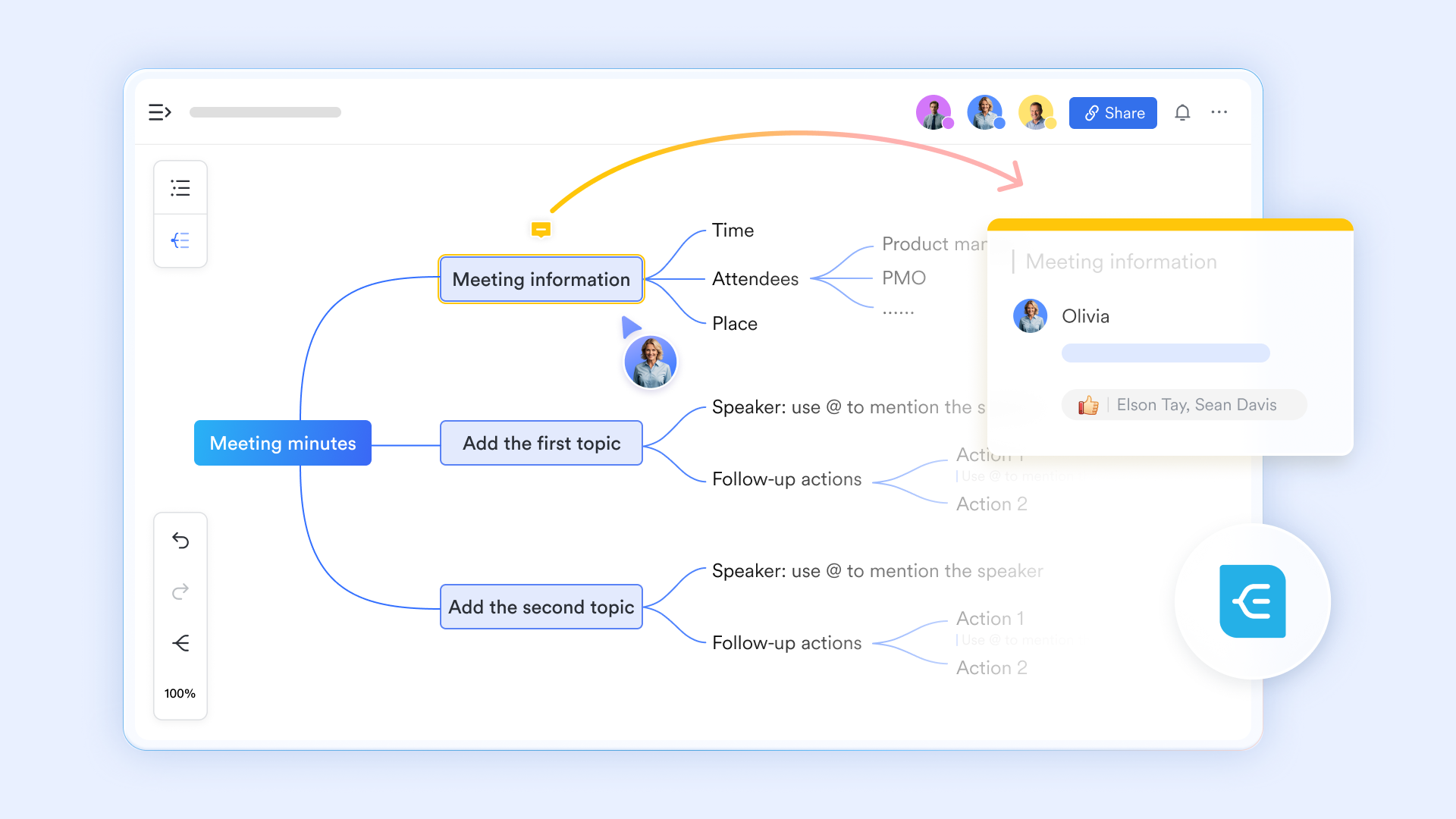
Seamless collaboration via node-based workflows
Lark allows teams to visualize complex product roadmaps by breaking them down into interconnected nodes and flows. By using the flow fields in Lark Base, product managers can map out the entire lifecycle of a feature, from initial ideation to final QA. This visualization highlights dependencies—such as a front-end task being "blocked" by back-end API development—ensuring that developers understand exactly where they sit in the pipeline. With an automated role in base, the system can instantly ping a designer the moment a product requirement is approved, keeping the focus on active tasks rather than manual handovers. 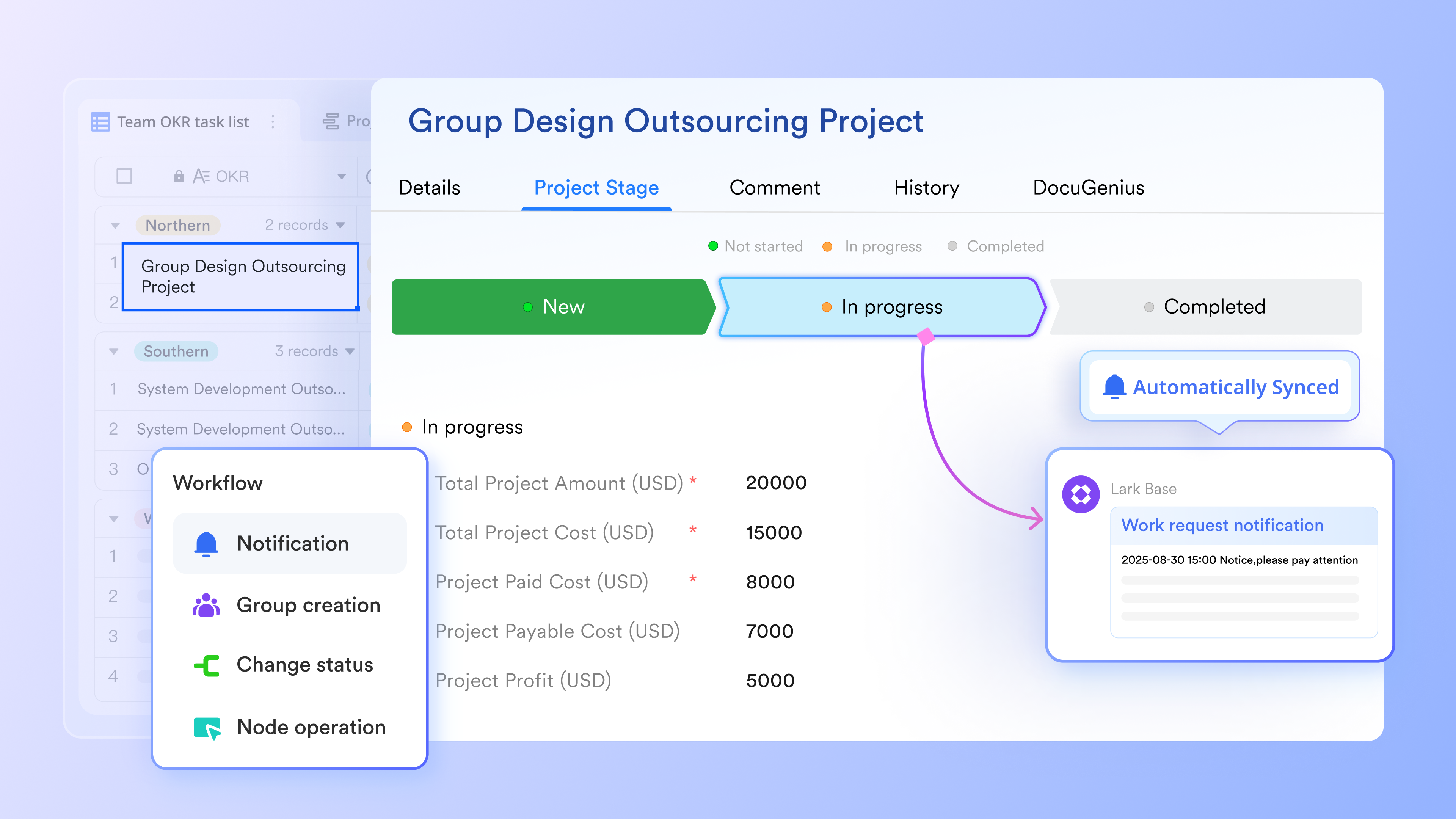
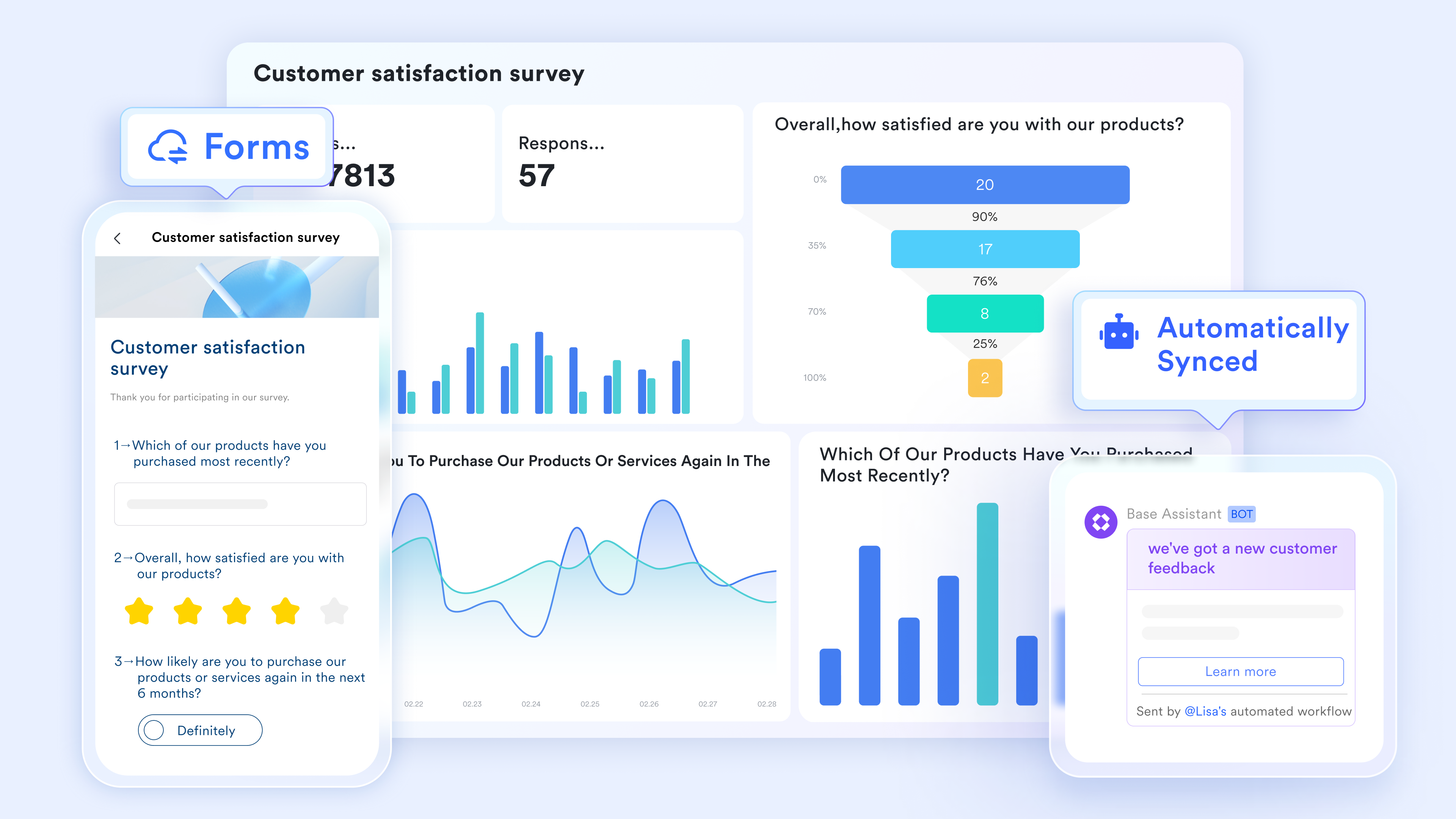
Flexible configuration of workflows and forms
Agile thrives on iteration, and enable teams to standardize the submission process for new roadmap ideas. You can configure "Product Request Forms" with conditional logic, ensuring that only necessary data (like user impact or technical debt) is collected based on the request type. These workflows are highly adaptable as your Agile process evolves from Scrum to Kanban. You can modify the underlying field permissions and status stages without breaking existing data. This flexibility ensures the tool grows with the team's maturity rather than forcing the team into a rigid, pre-defined structure.
A robust ecosystem deeply connected with your base
The interconnection between and other products in the Lark ecosystem ensures that no roadmap data exists in a vacuum: By automatically syncing data from Lark Sheets, you can leverage Base's advanced views, dashboards, and automation capabilities to enhance your spreadsheets. Approval data in is also kept current through hourly automatic updates or manual syncing, ensuring your workflows remain accurate. To keep stakeholders informed, Lark Base dashboards visualize this data in real time and can be automatically distributed to the right people according to specific user permissions. 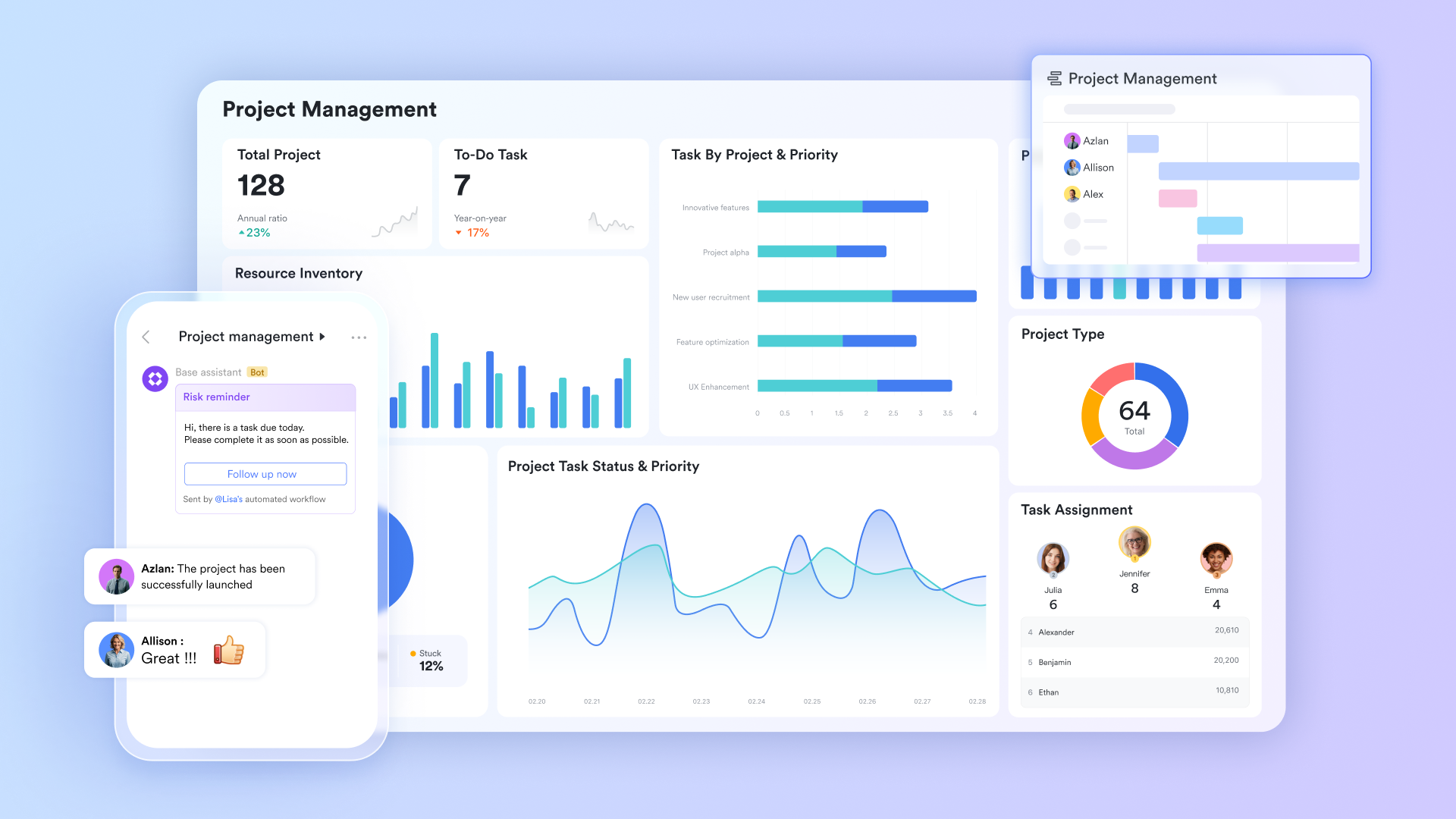
A real-time communication center fosters collaboration
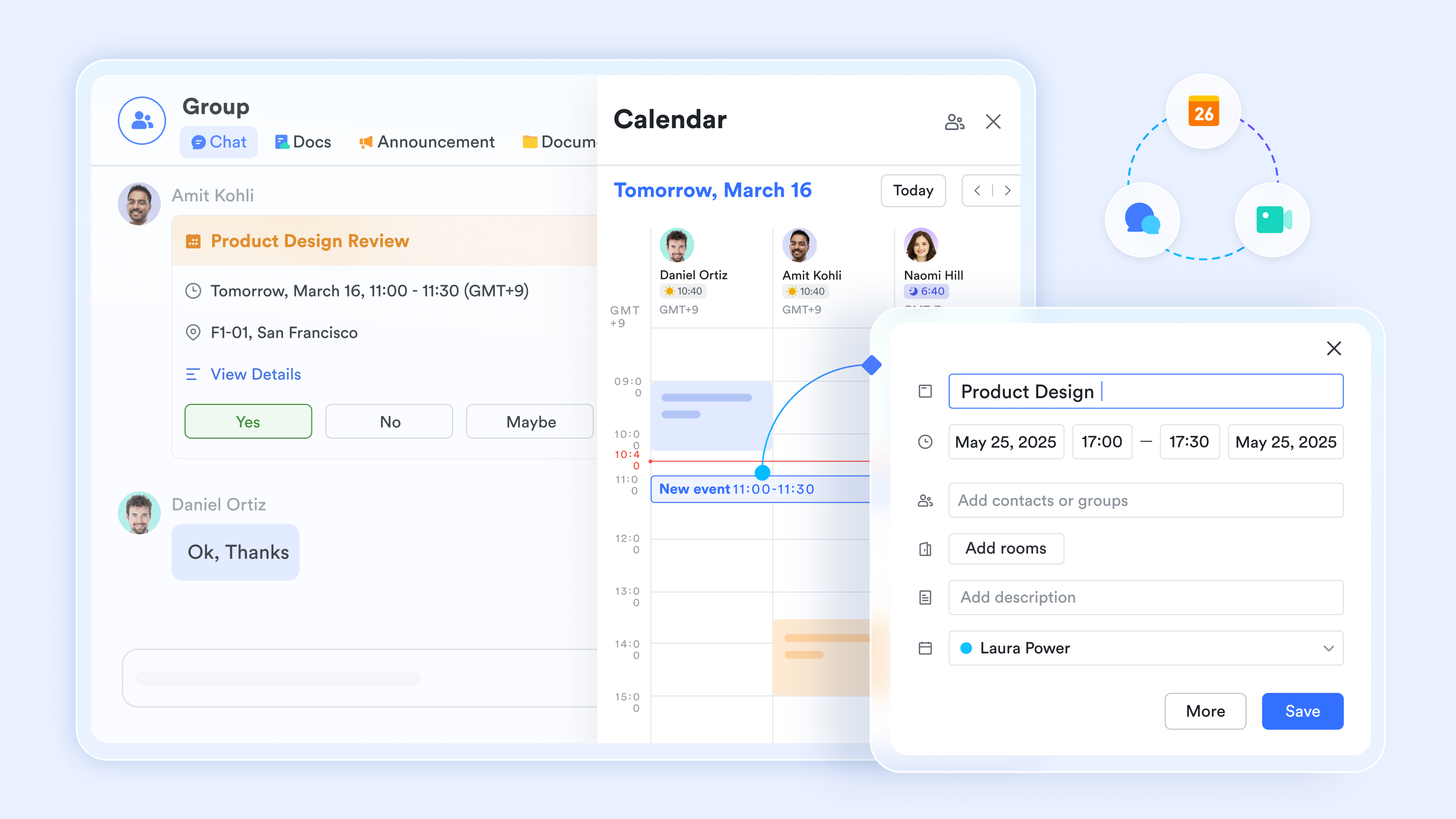
Lark streamlines roadmap communication by connecting Messenger, Meetings, and Calendar into a unified workflow. acts as the alert hub, using pinned announcements to host the "source of truth" and allowing teams to instantly convert chat discussions into roadmap tasks. During , the feature enables stakeholders to co-edit the roadmap doc live within the video call, ensuring immediate alignment rather than passive viewing. Finally, synchronizes strategy with execution by attaching roadmap docs directly to invites and setting automated milestone reminders that trigger in chat.
:
- Starter plan: Free forever plan that includes 11 powerful tools for up to 20 users. It also comes with 100GB of storage, 1000 automation runs, AI translations, and more.
- Pro plan: $12/user/month (billed annually) for up to 500 users. It includes everything in Starter plus group calling for up to 500 attendees, 15TB of storage, 50,000 automation runs, and more.
- Enterprise plan: for custom pricing. Supports unlimited users and includes even more automation runs and advanced security, compliance, and management features.
For small teams with simple communication needs

18 months message history
1000 Base automation runs/month
2000 rows per table in Base
Most POPULAR
For companies with comprehensive collaboration and management needs
Unlimited message history
500-participant video meetings
50k Base automation runs/month
20k rows per table in Base
For large companies with advanced security and organizational management needs
Get a personalized demo and pricing
Unlimited message history
500-participant video meetings
15 TB storage + 30 GB storage/user
500k Base automation runs/month
50k Base automation runs/month
Most POPULAR
For companies with comprehensive collaboration and management needs
Unlimited message history
500-participant video meetings
50k Base automation runs/month
20k rows per table in Base
Common mistakes in Agile product roadmapping
Even well-intentioned agile product roadmaps can fail if they are created or used incorrectly. missteps often lead to misalignment, unrealistic expectations, and reduced flexibility over time. Understanding these common mistakes helps teams protect the roadmap's purpose as a strategic, adaptable guide rather than a rigid plan.
- Treating the roadmap as a fixed commitment: Presenting the agile product roadmap as a promise rather than a guide reduces flexibility. Locked timelines and scope make it harder to respond to feedback and changing priorities. This often leads to pressure to deliver planned work even when it no longer creates value.
- Adding too much detail to the roadmap: Including task-level or sprint-level details turns the roadmap into a backlog. This reduces clarity and shifts focus away from strategy and outcomes. A roadmap should communicate direction, not execution specifics.
- Focusing on features instead of outcomes: Feature-heavy roadmaps overlook user and business impact. Teams may deliver work that looks complete but fails to solve real problems. Outcome-focused roadmaps keep value and learning at the center of planning.
- Creating the roadmap in isolation: Roadmaps built without cross-functional input often miss dependencies and risks. This leads to misalignment between product, engineering, and stakeholders. Collaboration improves accuracy and shared ownership.
- Failing to review and update regularly: An agile must evolve with new insights. Infrequent reviews cause plans to become outdated and misleading. Regular updates ensure the roadmap stays relevant and trustworthy.
- Poor stakeholder communication: Unclear communication can cause stakeholders to treat timeframes as fixed deadlines. This creates unrealistic expectations and frustration. Clear context helps everyone understand the roadmap's intent and flexibility.
Benefits of an Agile roadmap
An agile product roadmap delivers clarity without sacrificing flexibility, which is one of its most valuable benefits. Teams gain a shared understanding of where the product is headed while remaining open to change based on new insights:
- Delivers clarity and flexibility by providing a shared product direction while remaining open to change based on new insights.
- Focuses on high-level goals to ensure teams stay aligned with strategic objectives rather than just feature delivery.
- Reduces wasted effort and prevents misaligned priorities by maintaining a balance between strategy and execution.
- Utilizes visual tracking through project dashboard templates to maintain real-time oversight and organization.
- Improves stakeholder communication by translating complex strategies into accessible themes for non-technical audiences.
- Builds trust and manages expectations by providing transparency into changing priorities and reducing pressure for unrealistic deadlines.
- Supports better decision-making by framing priorities around customer impact, business value, and measurable outcomes.
- Facilitates easier trade-offs by allowing teams to adapt plans effectively as market conditions evolve.
Conclusion
An agile product roadmap provides product teams with clarity of direction without sacrificing adaptability. Focusing on strategic goals, product themes, and outcomes rather than rigid timelines helps teams respond effectively to changing customer needs and market conditions. Throughout this blog, we explored how agile roadmaps improve alignment, enhance collaboration, and support continuous learning when used correctly. For a deeper dive into these principles, you can read more about and how they drive iterative success. When paired with regular reviews and clear communication, an agile product roadmap becomes a living guide that connects strategy with execution across the organization.
As products scale and teams grow more cross-functional, the tools used to manage roadmaps matter just as much as the mindset behind them. Platforms like support agile roadmapping by consolidating workflows, documentation, and real-time collaboration into one platform. With the right approach and supportive tools, teams can turn roadmaps into shared, adaptable assets that drive long-term product success.
Plan smarter with agile clarity
FAQs
Who creates a product roadmap in agile?
In agile environments, the product roadmap is primarily owned by the , who is responsible for aligning product direction with business goals and user needs. However, it is not created in isolation. Engineering, design, sales, marketing, and leadership all contribute insights to ensure feasibility, value, and alignment. Collaborative platforms like Lark make it easier for these teams to participate, share feedback, and stay aligned around a single roadmap.
What are the 5 phases of agile project management?
The five commonly recognized phases are concept, inception, iteration, release, and maintenance. These phases reflect a continuous cycle rather than a linear path, with learning and feedback shaping each stage. Agile teams revisit earlier phases as priorities evolve or new insights emerge. Tools such as Lark support this cyclical approach by enabling teams to update roadmaps, track progress, and collaborate across phases in real time.
What are the 4 pillars of agile?
The four pillars of agile focus on individuals and interactions, working solutions, customer collaboration, and responding to change. These principles guide teams to prioritize communication, value delivery, and adaptability over rigid processes. An agile product roadmap reflects these pillars by remaining flexible and outcome-driven. With Lark, teams can better support these principles through shared workspaces, flexible workflows, and transparent communication.
How often should an agile product roadmap be updated?
An agile product roadmap should be reviewed and updated regularly, most commonly on a monthly or quarterly basis. The frequency depends on , product maturity, and team dynamics. Regular updates ensure the roadmap reflects current priorities and learnings rather than outdated assumptions. Platforms like Lark make these updates easier by allowing teams to adjust roadmaps collaboratively and instantly share changes with stakeholders.
What makes an agile product roadmap different from a traditional road map?
An agile product roadmap differs from a traditional roadmap by prioritizing flexibility and outcomes over fixed timelines and detailed feature commitments. Instead of acting as a delivery promise, it functions as a living guide that evolves with user feedback, market changes, and continuous learning. Traditional roadmaps are typically static and schedule-driven, whereas agile roadmaps focus on and product themes. Tools like Lark support this adaptive approach by making it easier for teams to update roadmaps collaboratively and keep everyone aligned as priorities change.
Related reading