Budgeting control is the integrated practice of setting financial targets, tracking actual performance against those targets, and taking corrective action to keep spending and revenue within acceptable bounds. It connects the planning nature of budgeting with the enforcement mechanisms of financial control, forming a continuous cycle that modern organizations depend on for stability and growth.
While budgeting creates the financial plan, control ensures adherence to it. A budget without control becomes a static document; control without a budget lacks direction. Together, they form a budget control system that guides resource allocation and decision making throughout the fiscal year.
This guide covers core elements, detailed steps, and popular techniques of budgeting and cost control. Whether you lead a finance team, manage projects, or oversee operations in a growing business, these principles will help you build more accurate budgets and maintain financial discipline across your organization.
What is budgeting control, and why does it matter now
Budgeting control is the ongoing process of setting budgets, monitoring actual performance against those budgets, and implementing necessary adjustments over a defined period. For fiscal year 2025 and beyond, this process repeats through cycles of planning, execution, tracking, and revision—ensuring that financial goals remain achievable despite changing conditions.
The relationship between budgeting and financial control is straightforward: budgeting establishes financial targets (revenue goals, cost ceilings, capital budget limits), while financial control ensures that actual spending, approvals, and reporting align with those targets. Without control mechanisms, budgets remain aspirational rather than operational.
Budgeting and are inseparable in practice. Control mechanisms such as approval thresholds, variance reporting, and authorization workflows transform a static budget document into a living management tool. Flexible budgeting approaches and continuous feedback loops become especially valuable in volatile business environments where conditions shift rapidly.
Consider the contrast between different budget types:
- Strategic budgets: Cover multi-year horizons (3–5 years), aligned with long-term market expansion, R&D investment, or organizational transformation, with high-level KPIs and trigger-based adjustments.
- Annual operating budgets: Fix revenue, cost, and cash flow targets for the coming fiscal year with frequent variance tracking and expense authorization.
- : Provide granular estimates for specific initiatives with fixed timelines, requiring tight resource management and scope control.
In SaaS or project-driven businesses, poor budgeting control quickly manifests as cash flow strains, delayed product launches, and missed growth opportunities. Research indicates that a significant majority of software projects exceed their initial budgets, often by substantial margins—making robust control processes essential rather than optional.
Core elements of budgeting and control
Effective budgeting control rests on several interconnected elements that span the entire budget cycle. Each element serves a distinct purpose while contributing to overall financial management.
- Budget formulation: Organizations set revenue, cost, and capital expenditure budgets for a specific period, involving finance teams, department heads, and executives who propose inputs and reconcile them with strategic priorities.
- Execution and authorization: Spending is authorized against approved budgets through purchase orders, expense claims, and project approvals with defined approval limits—ensuring that only sanctioned expenditures proceed.
- : Monthly or quarterly budget vs. actual reviews, dashboards, and variance reports allow leadership and budget managers to identify discrepancies before they escalate.
- Corrective action and revision: Teams adjust spending, re-phase projects, or formally revise budgets when market conditions, exchange rates, or demand forecasts change unexpectedly.
- Feedback and learning: Post-period reviews analyze what assumptions proved incorrect and what systemic issues caused variances, feeding insights into the next budgeting process for improved forecasting accuracy.
Common principles of budgetary control
Before diving into the mechanical steps of tracking expenses, it is crucial to establish the foundational rules that govern a healthy financial culture. Based on industry best practices, effective budgetary control relies on several core principles:
- Define clear, aligned goals: Budgets should never exist in a vacuum. Every financial limit or allocation must tie back directly to specific, measurable business objectives, such as expanding into a new region or improving customer retention.
- Keep the budget realistic: A budget built entirely on "best-case scenarios" is destined to fail. Budgets must be grounded in accurate historical data while reserving a realistic contingency fund for unexpected market shifts or supply chain disruptions.
- Maintain flexibility: While control implies discipline, it should not mean paralysis. Market conditions change rapidly, and your budget must remain flexible enough to adapt. A rigid budget can stifle an organization's ability to seize sudden opportunities.
- : Managing a budget is a team effort, not just the finance department's responsibility. Department heads must clearly understand how their spending impacts the broader organization. Open dialogue ensures everyone takes ownership of their financial performance.
- Act promptly on variances: Monitoring data is only useful if it leads to swift action. When an overspend is detected, the corrective measure must be taken immediately to prevent the variance from snowballing.
Advantages of budgeting and budgetary control
Implementing a rigorous system for tracking and managing expenses might sound restrictive, but it actually provides organisations with the freedom to invest confidently. The advantages of budgeting and budgetary control extend far beyond the finance department.
- Financial and cash flow stability: By actively tracking expenses, companies can identify potential cash flow shortages before they become crises. If revenue drops unexpectedly in Q2, a robust budgetary control system allows leadership to immediately identify non-essential expenditures that can be paused, ensuring the company maintains healthy liquidity.
- Improved operational efficiency and profitability: Budgeting and cost control force department heads to evaluate the ROI of their activities. When resources are capped, teams naturally look for more efficient ways to operate. This eliminates wasteful spending—such as redundant software subscriptions or underutilized vendor contracts—directly impacting the bottom line.
- Enhancing cross-departmental communication and accountability: One of the most overlooked benefits of budgeting control is its impact on team alignment. When financial targets are transparent, it breaks down silos. Marketing, sales, and product development must communicate to ensure their shared initiatives fit within the overarching financial plan. Instead of pointing fingers when funds run dry, teams take shared ownership of their financial performance.
Experience better budget control today
Budgeting and cost control in project management
While overall corporate budgeting looks at the macro health of an organization, applying budgeting and cost control in project management requires a micro-level focus. Projects are temporary endeavors with strict timelines and deliverables. Consequently, a budgetary control project framework must be agile enough to handle day-to-day changes while keeping the final baseline intact.
The biggest threat to project budgets is usually ""—when a client or internal stakeholder requests additional features or changes that weren't in the original plan. Without a tight control system, project managers often say "yes" to these requests to be helpful, inadvertently bleeding the project's profit margin dry.
To prevent this, financial milestones must be tied directly to . This means you aren't just tracking the calendar; you are tracking the "burn rate" of your funds against the actual percentage of work completed.
The 5-step budgeting control process
Effective budgeting control doesn't happen by accident, nor is it a once-a-year event. It requires a repeatable, structured lifecycle that integrates seamlessly into your company's daily operations. Whether you are a mid-sized agency or a global enterprise, the process generally follows these five detailed steps:
Assessing and setting the budget
The process begins long before a single dollar is spent. Leadership and department heads collaborate to assess all projected revenue sources and establish the overall financial boundaries. This involves setting distinct budgets:
Operating budgets: For day-to-day operational expenses like payroll, utilities, and software subscriptions.
Capital budgets: For long-term investments like new machinery, server infrastructure, or facility expansions.
Cash flow budgets: To ensure the company has enough liquid cash to meet obligations on time.
The goal here is precision. Rather than working in isolated silos, modern teams often build these initial models in a shared, cloud-native workplace like . This allows finance to lay out the framework while department heads input their specific resource needs simultaneously, eliminating version-control chaos and fostering the principle of open communication.
Implementing and allocating funds
Once the overarching budgets are approved, funds are categorized and allocated to specific "responsibility centers." This is where the budget shifts from an abstract idea to an actionable constraint. Department managers are officially designated as budget owners. For this step to work, spending limits and approval hierarchies must be clearly defined so that everyone knows the rules of engagement before making purchase requests.
Continuous monitoring and variance analysis
This step is the heartbeat of budgetary control. As the fiscal period progresses, actual spending must be consistently tracked and compared against the planned allocations. You are looking for "variances"—the differences between what you planned to spend and what you actually spent.
If the marketing team budgeted $10,000 for an event but spent $12,000, that is a $2,000 negative variance. The critical task here is analysis: investigating why the variance occurred. Was it due to a sudden spike in vendor prices, or was it simply poor planning?
Taking corrective actions (hard vs. soft controls)
Once a variance is identified, the organization must apply controls to prevent financial instability. This is where pre-established policies are enforced:
Soft controls: These act as early warning systems. For example, when a department utilizes 85% of its quarterly budget, a manager receives an automated alert. The transaction is still processing, but the manager is prompted to slow down spending. Specialized financial management platforms like can also help businesses improve real-time budget tracking and control. BILL gives finance teams greater visibility into spending, invoices, and approvals, making it easier to monitor expenses, identify potential variances, and keep spending aligned with approved budgets.
Hard controls: These are absolute hard stops. If a newly requested purchase order pushes a project over its budget limit, the system automatically blocks it.
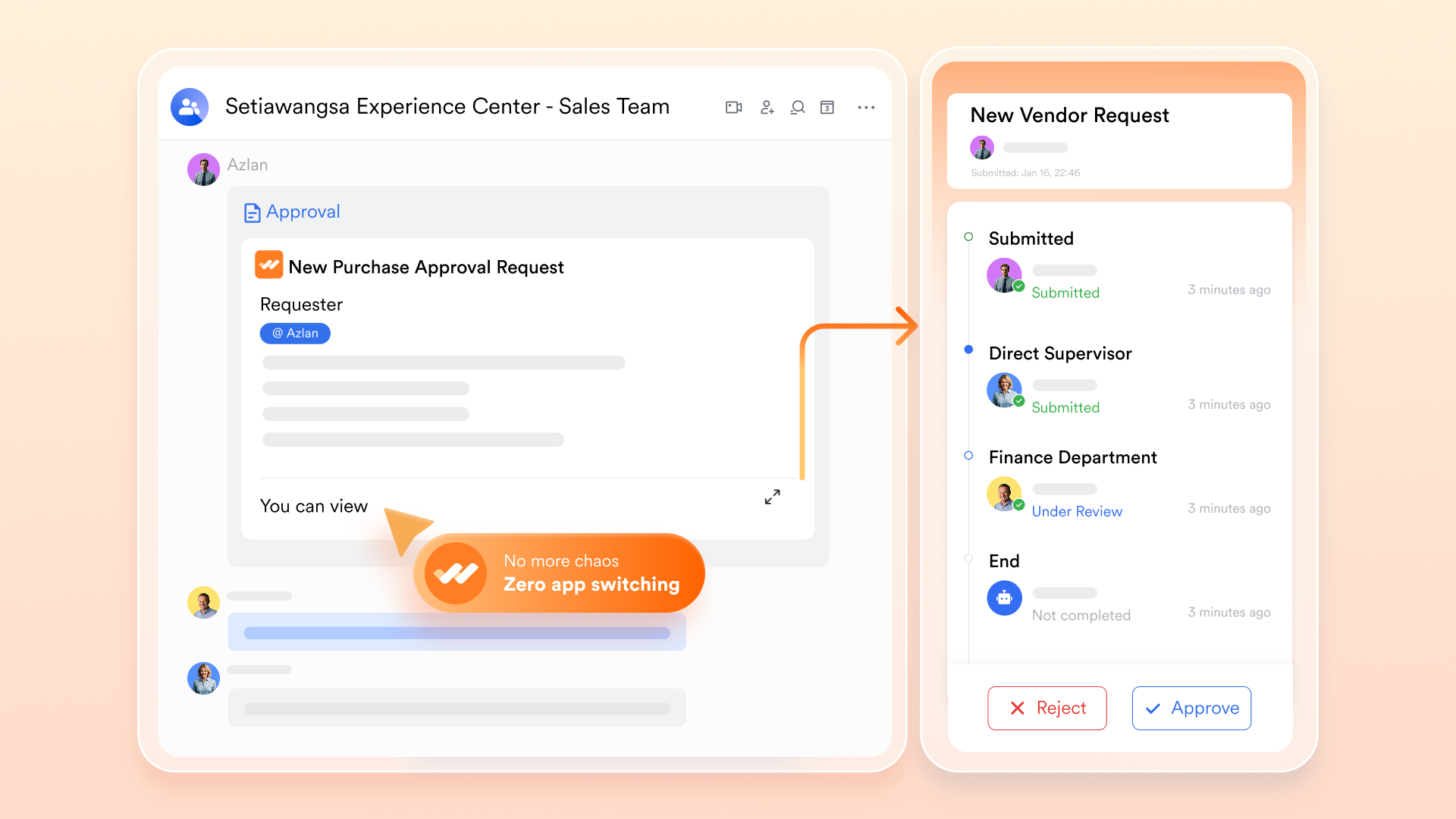
To keep operations moving swiftly despite these controls, teams can route requests through automated approval workflows. For instance, using a unified workspace like , an employee can submit an over-budget expense request that instantly pings the CFO via chat for a quick, context-rich review, rather than letting the request languish in an email inbox for days.
Reviewing, reporting, and adapting
The final step is to close the feedback loop. At the end of a reporting period (typically monthly or quarterly), finance teams generate performance reports for stakeholders. This step involves reviewing the effectiveness of the control process itself. Did the hard controls block too many necessary purchases and stall projects? Were the soft controls ignored? Based on this review, leadership adjusts the budget for the upcoming period, ensuring the financial plan remains aligned with the dynamic realities of the business.
Put this process into action with Lark now
Use Lark: Bringing structure and automation to budgeting control
Effective budgeting control requires more than just setting annual targets—it needs systems that track every expense in real time, enforce approval rules automatically, and give stakeholders visibility into their spending. transforms budgeting from a static spreadsheet exercise into a dynamic, automated process that keeps everyone aligned and accountable.
Build a single source of truth for budget data
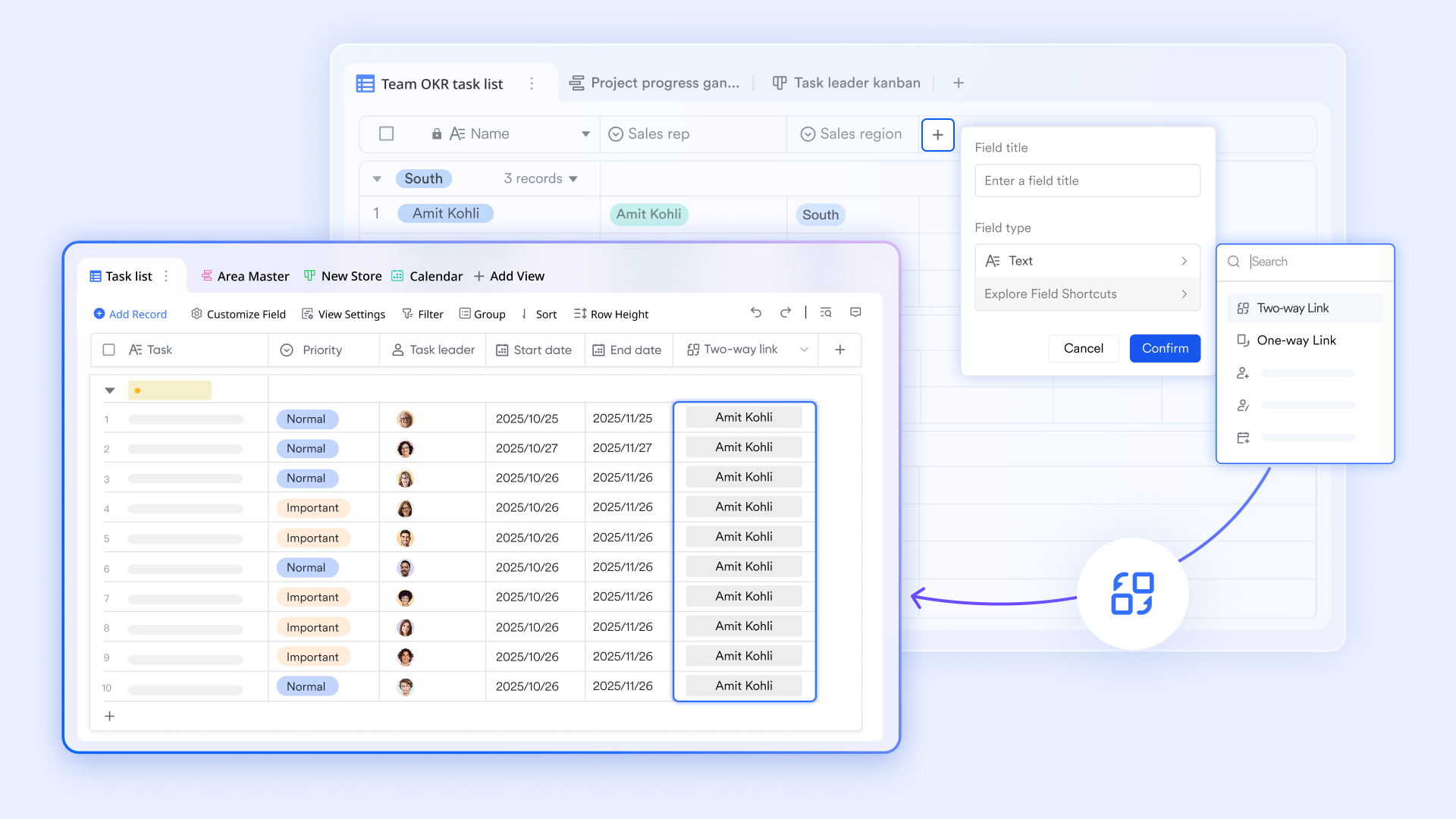
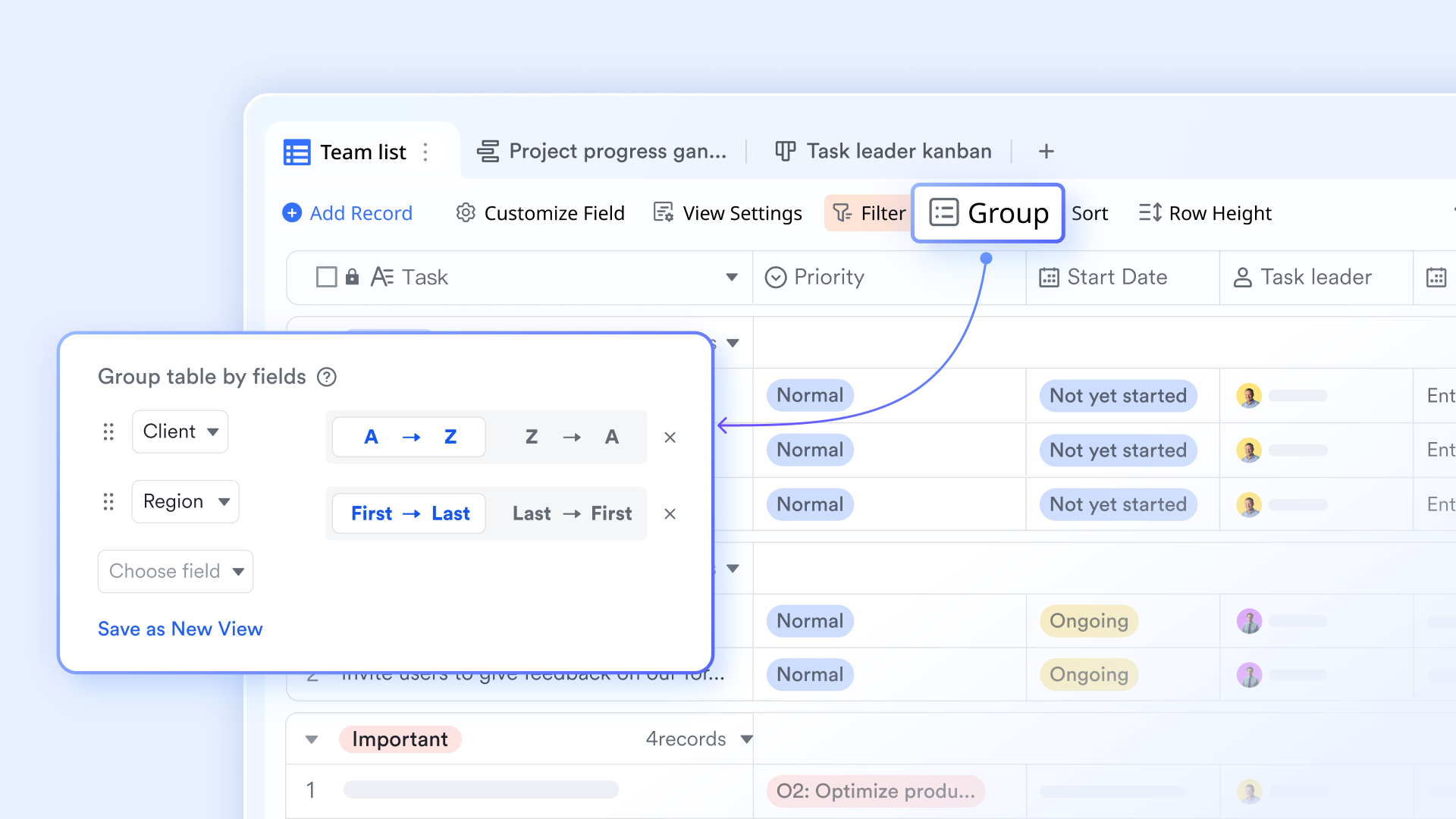
The first step in budget control is making sure all data is clearly recorded and tracked. Traditional methods often scatter budget information across multiple Excel files and emails, making reconciliation time-consuming. provides a structured database where you can create a "master annual budget table." Set up records for each department or project, and customize fields to track budget categories, total amounts, amounts used, and more. All expense and reimbursement requests can link back to this master table through relation fields. When a new expense is recorded, the system automatically updates the used amount for the corresponding budget—no manual calculation needed. Everyone sees the same real-time data, eliminating version confusion completely.
Let budget rules run automatically with approval flows
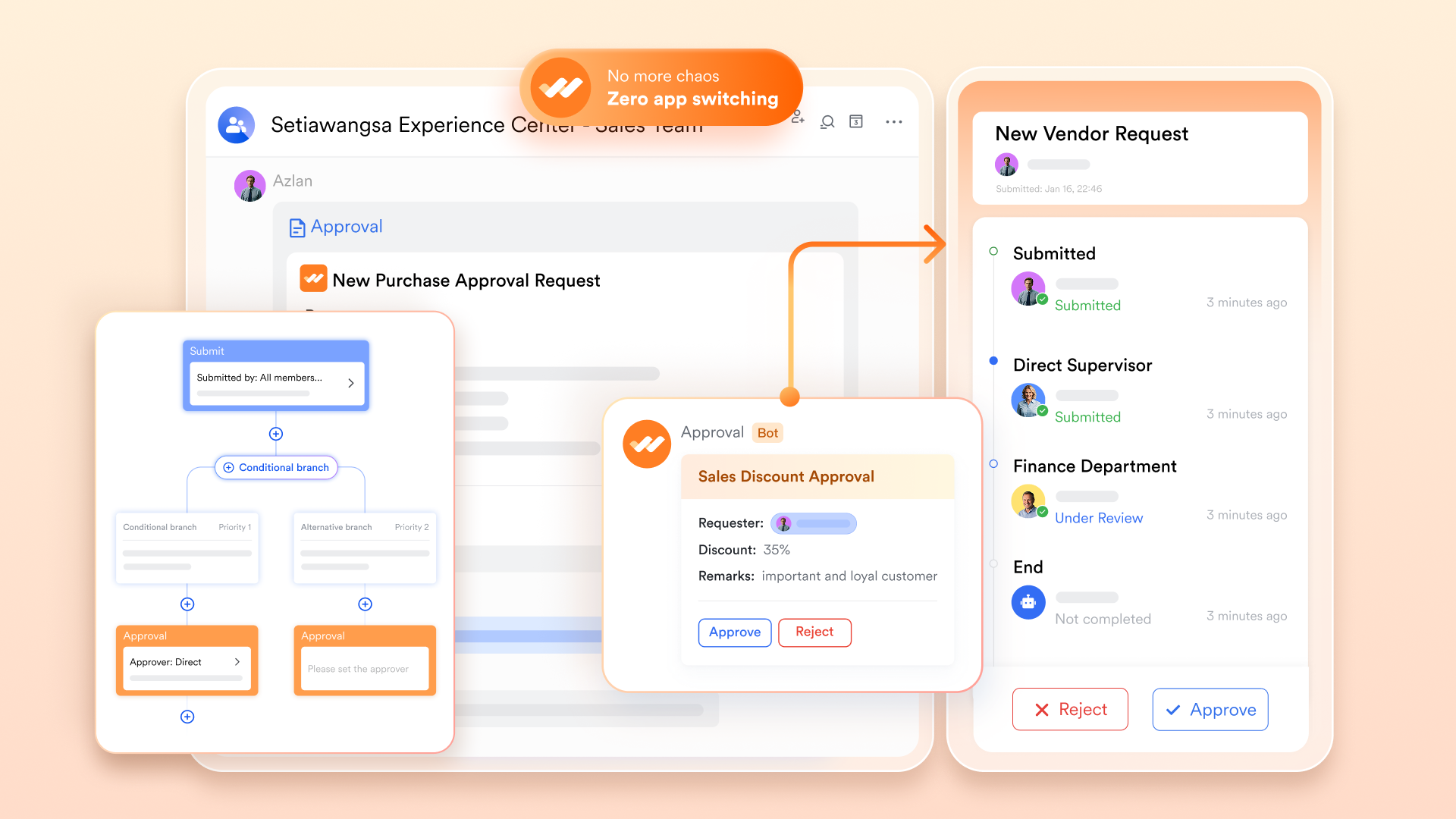
Budget control often breaks down during expense approval—requests get stuck, approvers don't know remaining balances, or overspending gets approved anyway. offers customizable approval flows that enforce your budget rules automatically. Set up conditional branches: when a request amount exceeds the remaining budget, it triggers a special approval path; when it's within budget, it follows the regular flow. Approvers can view complete budget details directly in and approve with one click. Every action is recorded, creating an auditable trail of budget execution.
Visualize budget status with real-time dashboards
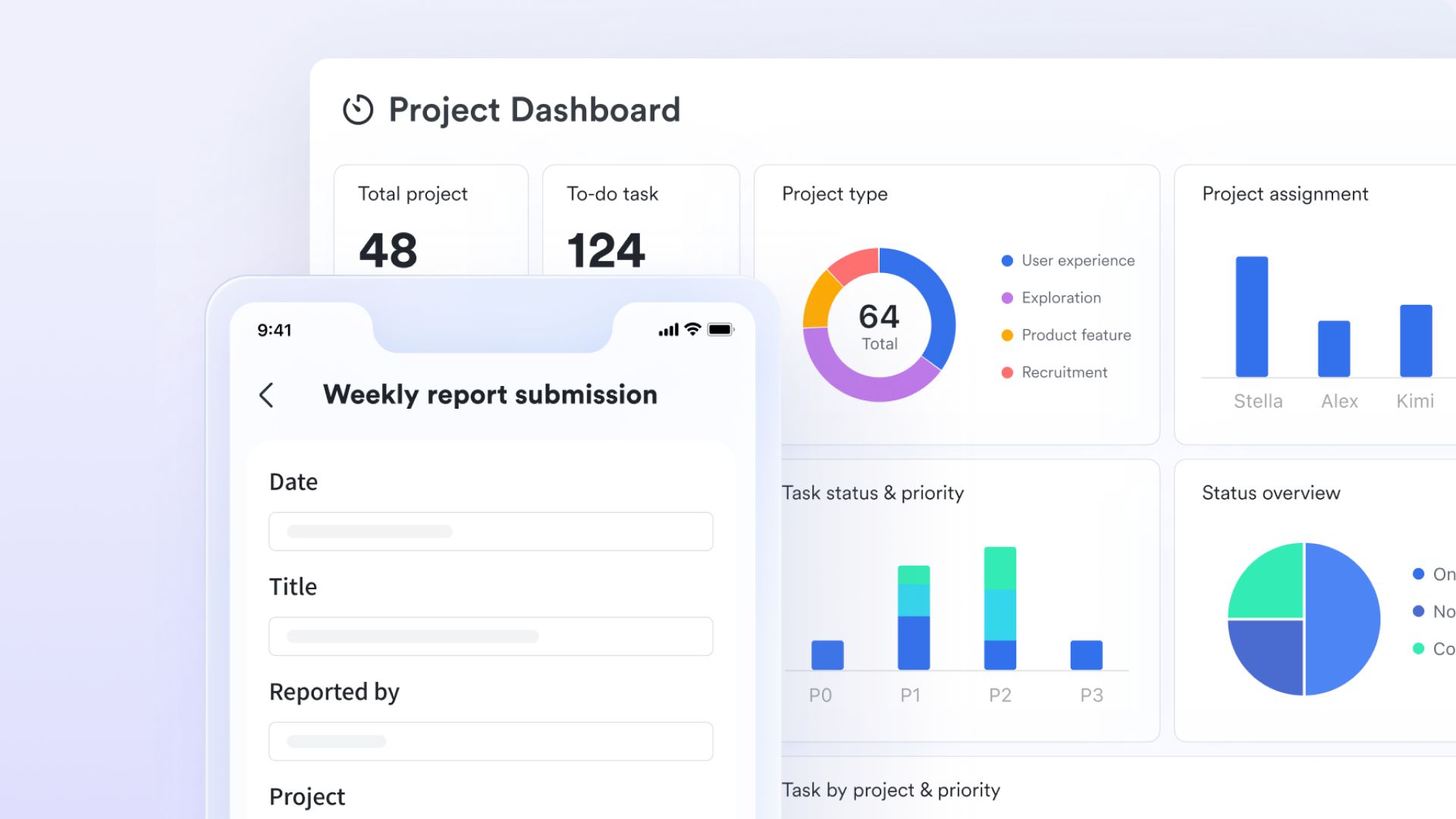
Budget control needs real-time monitoring during execution, not just reporting after the fact. Lark Base's dashboard feature turns scattered budget data into clear visual charts—pie charts showing budget distribution across departments, bar charts comparing project spending rates, and line charts tracking monthly expense trends. These charts update automatically as new expenses are recorded. make budget status instantly understandable, turning numbers into a shared business language for the whole team.
Let department heads check the budget status through self-service
When department heads constantly ask finance, "How much budget is left?" it creates communication bottlenecks and delays decisions. Create a department-facing query page with "Department" as the search condition. When a head selects their department, the page shows real-time totals: budget allocated, amount used, remaining balance, and recent expense details. Share the link, and they can open it anytime in to get quick answers and make timely business decisions.
for Lark:
- Starter plan: Free forever plan that includes 11 powerful tools for up to 20 users. It also comes with 100GB of storage, 1000 automation runs, AI translations, and more.
- Pro plan: $12/user/month (billed annually) for up to 500 users. It includes everything in Starter plus group calling for up to 500 attendees, 15TB of storage, 50,000 automation runs, and more.
- Enterprise plan: for custom pricing. Supports unlimited users and includes even more automation runs and advanced security, compliance, and management features.
For small teams with simple communication needs

18 months message history
1000 Base automation runs/month
2000 rows per table in Base
Most POPULAR
For companies with comprehensive collaboration and management needs
Unlimited message history
500-participant video meetings
50k Base automation runs/month
20k rows per table in Base
For large companies with advanced security and organizational management needs
Get a personalized demo and pricing
Unlimited message history
500-participant video meetings
15 TB storage + 30 GB storage/user
500k Base automation runs/month
50k Base automation runs/month
Most POPULAR
For companies with comprehensive collaboration and management needs
Unlimited message history
500-participant video meetings
50k Base automation runs/month
20k rows per table in Base
Popular techniques for effective budgeting and control
There is no one-size-fits-all approach to managing corporate finances. Depending on your industry and company culture, you might employ one or a combination of the following methodologies:
- : Instead of basing this year's budget on last year's spending, ZBB requires managers to build their budget from exactly zero every single period. Every expense—from software licenses to travel—must be justified by demonstrating its necessity and expected ROI. While incredibly effective at cutting bloated legacy costs, it is a highly time-consuming process.
- Incremental budgeting: This is the traditional, widely used method. You take the previous period's actual spending and add or subtract a percentage to account for inflation, growth, or expected cuts. It is simple and fast, but it often bakes in past inefficiencies, as departments will race to spend their remaining budget at year-end just to ensure they don't get a cut the following year.
- Flexible budgeting: Unlike a static budget, a flexible budget adjusts based on actual revenue or activity levels. If your manufacturing plant produces 10% more units than expected, the flexible budget automatically increases the allowable raw material costs by 10%. This is highly practical for operations with high variable costs.
Apply these techniques with Lark
Common challenges and how to overcome them
Even the most thoughtfully designed budgeting control systems can fail if execution falters. Recognizing the hurdles early is the best way to maintain momentum.
- Data silos and inaccurate reporting: When the sales team tracks travel expenses in one app, HR manages hiring budgets in a spreadsheet, and finance uses a completely separate accounting tool, chaos ensues. By the time finance compiles the data, the information is outdated, making proactive control impossible. Overcoming this requires consolidating financial planning into a single source of truth or ensuring seamless integrations between platforms.
- Resistance to change and lack of literacy: Department heads often view budgetary controls as a lack of trust from leadership, leading to resentment or "creative accounting" to hide expenses. The solution here is and cost control training. When you train non-financial managers on how to read a P&L statement and how adhering to budgets actually guarantees them future resources, you transform them from adversaries into financial partners.
- The risk of stifling innovation: If controls are too rigid, employees become afraid to spend money on experimentation. If a brilliant marketing opportunity arises but wasn't budgeted for six months ago, a hyper-rigid system will block it. Organizations must build contingency funds into their budgets and establish rapid, simple processes for requesting budget reallocations when strong, data-backed opportunities present themselves.
Best practices and training for effective budgeting and cost control
While the principles and processes provide a framework, the true success of budgeting control lies in its practical application and the continuous development of financial literacy within an organization. Adopting specific best practices and investing in effective budgeting and cost control training are paramount.
Cultivating a culture of financial acumen
- Foster transparency: Share budget statuses and financial reports with relevant teams regularly. When employees understand the "why" behind financial decisions, they are more likely to comply and contribute positively. Avoid making budget figures mysterious; use accessible language and visual aids to demystify financial data.
- Empower departmental ownership: Rather than simply imposing budgets, involve department heads in the budget creation process. When they help build their own budget, they take greater ownership of its success and are more motivated to manage it effectively.
- : Don't wait until the end of the quarter to discover significant budget variances. Implement monthly or even weekly reporting on key spending areas. These reports should be concise, highlight actionable insights, and be easily digestible by non-financial managers.
Investing in training and development
A significant barrier to effective budgeting control is often a lack of understanding among non-finance personnel. Training can bridge this gap:
- Foundational financial literacy: Offer workshops on basic financial concepts like reading a profit & loss statement, understanding balance sheets, and . These sessions should be tailored to various roles, explaining how their daily actions impact the company's financials.
- Tool-specific training: Ensure all users are proficient in the tools used for budgeting, expense tracking, and reporting. If your organization leverages a unified workspace like Lark, train teams on how to effectively use its Base for collaborative budget planning, for expense requests, and Dashboards for tracking key financial OKRs.
- Continuous learning: Financial regulations, market conditions, and business strategies evolve. Provide ongoing training and refresher courses to keep the team's financial knowledge current. This could involve internal webinars, external certifications, or creating a shared with financial guidelines and FAQs.
By proactively embedding these practices and ensuring comprehensive training, organizations can transform budgeting control from a perceived burden into a powerful strategic advantage, empowering every team member to contribute to financial health and sustainable growth.
Conclusion
Robust budgeting control, budgeting and financial control, and budgeting as an internal control are not just administrative necessities—they are foundations for sustainable growth. Organizations that treat budgeting and cost control as ongoing, collaborative processes make better, faster decisions and manage risk more effectively. The efficient use of financial resources, combined with clear financial goals and reallocating resources when needed, positions teams for success even in uncertain conditions.
If you are looking to streamline budget discussions, document sharing, approvals, and review meetings in one unified platform, consider exploring as your collaboration hub. Combining sound financial discipline with modern collaboration tools helps your organization navigate uncertainty confidently and achieve its budgeted goals in the next period and beyond.
Simplify your budgeting process today
FAQs
What are the five principles of budgetary control?
The five key principles are: participation (involving relevant people in budget setting), comprehensiveness (covering the entire organization), standards (basing budgets on established performance benchmarks), flexibility (allowing for changing circumstances), and feedback (continuously monitoring actual performance against the budget). Following these principles helps ensure your budget system drives accountability and informed decision-making.
What is the 70/20/10 rule money?
The 70/20/10 rule is a simple personal finance guideline for managing your after-tax income. It suggests allocating 70% for monthly living expenses and daily spending (like rent, bills, and groceries), 20% for savings and investments (such as an emergency fund or retirement accounts), and the remaining 10% for additional debt payments or charitable donations. It's designed to create a balanced and sustainable financial plan.
What are the four components of a budgetary control system?
An effective system typically rests on four key organizational components: budget centers (responsible units for preparing budgets), a budget committee (senior members coordinating the process), a budget officer (overseeing daily administration), and a budget manual (documenting procedures and responsibilities). A modern platform like Lark helps operationalize these components by providing a central workspace where committees can collaborate in real time, officers can track submissions, and manuals can be accessed instantly by every budget center.
What are the main budgetary control techniques?
Key techniques include variance analysis (comparing actual results to the budget to identify differences), flexible budgeting (adjusting the budget based on actual activity levels), and regular performance reporting. More advanced methods include zero-based budgeting (ZBB), where every expense must be justified for each new period, and program budgeting, which links resources to specific outcomes. These techniques help managers understand performance and take corrective action.
Related reading