














What Are Deliverables in Project Management: A Detailed Guide

Ryan Tanner
Product Marketing Specialist
Sep 18, 2026
Ryan Tanner
Sep 18, 2026

22 min read


In project management, understanding what are project deliverables in project management is essential for turning project goals into tangible outcomes. Deliverables are measurable outputs produced during a project, such as reports, prototypes, or completed products. Clearly defining deliverables helps teams track progress, allocate responsibility, and meet objectives efficiently.
Tools like Lark can help teams organise and monitor deliverables, providing a central place to document progress and maintain clarity across stakeholders. By distinguishing deliverables from objectives and milestones, project managers can plan systematically and ensure alignment at every stage of a project.

What are deliverables in project management?
In project management, deliverables are the tangible outputs or results that a team produces to achieve specific project objectives. Understanding what project deliverables are in project management helps ensure clarity on what needs to be completed and delivered to stakeholders.
Deliverables can be internal, external, or process-related, and range from reports, prototypes, and presentations to final products. Knowing what key deliverables are in project management and how they differ from objectives or milestones allows teams to track progress effectively. Clear deliverables improve accountability, communication, and project alignment, providing measurable checkpoints throughout the project lifecycle.
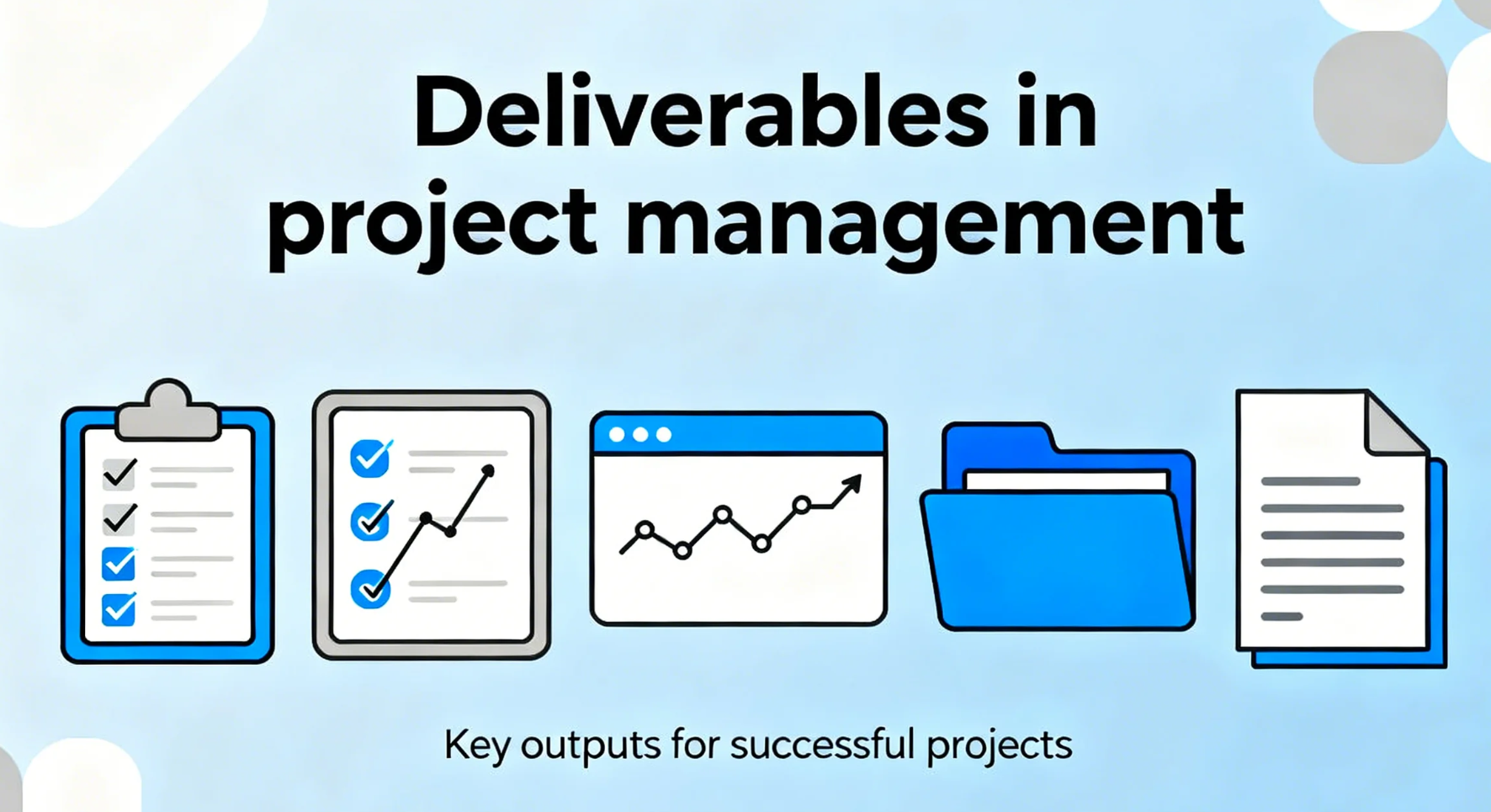
Image source: unsplash.com
Why project deliverables matter
Understanding what project deliverables are in project management is not just about listing outputs—it's about why they are critical to project success. Properly defined deliverables ensure that teams stay accountable, aligned, and able to track progress while keeping stakeholders informed. They provide structure and clarity, helping projects meet objectives efficiently and maintain quality standards throughout their lifecycle.
- Accountability: Clearly defined deliverables keep responsibilities visible. Each team member knows what they own and what is expected, reducing confusion and ensuring ownership of outputs.
- Alignment: Deliverables help ensure everyone works toward the same outcome. When deliverables are agreed upon, the team's efforts are coordinated, and objectives are more likely to be met.
- Progress tracking: Deliverables provide measurable checkpoints for evaluating success. By monitoring the completion of each deliverable, project managers can assess timelines, adjust resources, and stay on schedule.
- Stakeholder communication: Well-defined deliverables clarify expectations and timelines for stakeholders. They serve as concrete references for updates, reviews, and approvals throughout the project.
- Quality control: Deliverables enable structured review and sign-off. By setting standards and acceptance criteria for each output, teams maintain consistency, reduce errors, and ensure high-quality results.
Types of project deliverables
Project deliverables come in many forms, depending on who they are for and what stage the project is in. Recognizing the different types of deliverables helps teams organize work efficiently, measure progress accurately, and ensure that all project objectives are met. By categorizing deliverables, project managers can assign ownership, monitor quality, and maintain clarity throughout the project lifecycle.
Break down deliverables into categories:
Internal deliverables
These are outputs intended for internal use within the organization. They help teams monitor progress, analyze data, or prepare for client-facing outputs. Internal deliverables often guide decision-making and ensure project alignment before external delivery.
Examples: internal reports, test result summaries, design drafts, and prototype iterations.
External deliverables
These are outputs delivered to clients, stakeholders, or external partners. They demonstrate the project's progress or completion and are often subject to approval. External deliverables communicate tangible results and build stakeholder confidence.
Examples: include product demos, final presentations, client reports, or deployed software modules.
Process deliverables
These are intermediate outputs created during project execution that facilitate workflow and project management. Process deliverables are crucial for maintaining structure and ensuring smooth execution throughout the project lifecycle.
Examples: project plans, risk logs, sprint boards, test plans, and workflow diagrams.
Final deliverables
These are the ultimate outputs representing the completion of the project. They fulfill the main objectives and are usually handed over for final approval or launch. Final deliverables signify project success and closure.
Examples: a fully developed website, a published report, a completed app, or a delivered product batch.
Milestone deliverables
These are key outputs that mark significant progress within a project timeline. They act as checkpoints to measure performance and ensure the project remains on track. Milestone deliverables help teams celebrate achievements and validate project direction.
Examples: a completed prototype, QA approval of a module, finalized design documentation, or completion of a development sprint.
Deliverables vs. objectives vs. milestones
In project management, it's common to confuse deliverables, objectives, and milestones, but each plays a distinct role in achieving project success. Understanding the differences helps teams plan, track, and measure progress more effectively, ensuring projects stay aligned with goals.
- Deliverables: These are the tangible outputs or results that a project produces. Deliverables can be physical, digital, or procedural, and are the items handed over to stakeholders for review or approval. Examples include a design mockup, a completed report, a prototype, or a deployed software feature. In essence, deliverables answer the question: "What are we producing?".
- Objectives: Objectives represent the goals or purpose behind the deliverables. They define why a deliverable exists and what it aims to achieve. For instance, if a deliverable is a new user interface design, the corresponding objective might be to improve user experience, increase engagement, or reduce errors. Objectives guide decision-making and ensure deliverables are meaningful and aligned with overall project goals.
- Milestones: Milestones are specific checkpoints or markers used to measure progress along a project timeline. They indicate the completion of critical phases or deliverables but are not outputs themselves. Examples include "Prototype completed," "QA testing approved," or "Beta version launched." Milestones help teams monitor whether the project is on schedule and identify potential delays early.
Example: In Lark, teams can visualize the relationships between deliverables, objectives, and milestones. Lark Base's Gantt View allows project managers to track each deliverable's completion status, set dependencies, and align them with milestones. This ensures that objectives are being met while providing transparency for the entire team and stakeholders, improving accountability and overall project execution.
Managing project deliverables in Lark
Effectively managing project deliverables requires clear ownership, transparent documentation, and seamless communication across teams. Lark helps unify these aspects by providing a centralized workspace where every deliverable can be tracked, assigned, and documented. Teams can visualize progress using dashboards, assign tasks with clear responsibilities, and collaborate on documents in real time.
By connecting planning, execution, and review on one platform, Lark reduces miscommunication, ensures accountability, and allows project managers to monitor dependencies and completion status. This approach streamlines workflows while keeping all stakeholders aligned and informed throughout the project lifecycle.
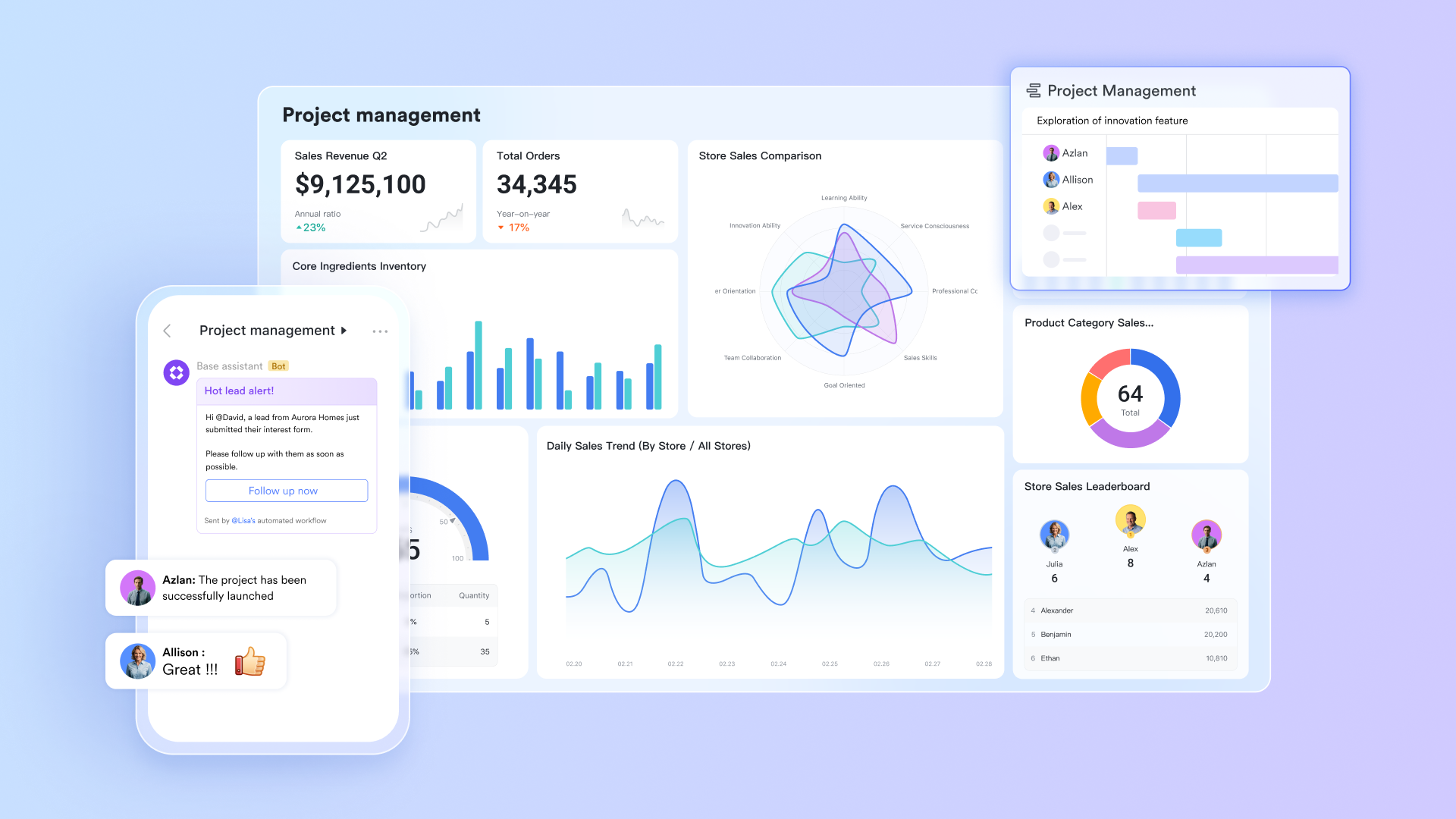
Lark Base: Visual deliverable tracking and dashboards
Lark Base provides a powerful visual workspace for tracking project deliverables across every stage. Teams can organize tasks and outputs using Kanban boards, tables, or Gantt views, making it easy to see progress at a glance. Each deliverable can include detailed fields such as owners, deadlines, dependencies, and progress status, ensuring accountability and clarity for the entire team.
Example: A design team at a tech company managing a website redesign can track mockups, feedback rounds, and revisions visually in Base. Each stage of the design process—wireframe approval, UI mockup completion, and final design sign-off—is represented clearly, so no step is overlooked. Similarly, a marketing team launching a campaign can monitor content creation, approvals, and scheduling, ensuring deadlines are met. By centralizing deliverable tracking, Lark Base helps teams stay organized, align stakeholders, and maintain transparency throughout the project lifecycle.

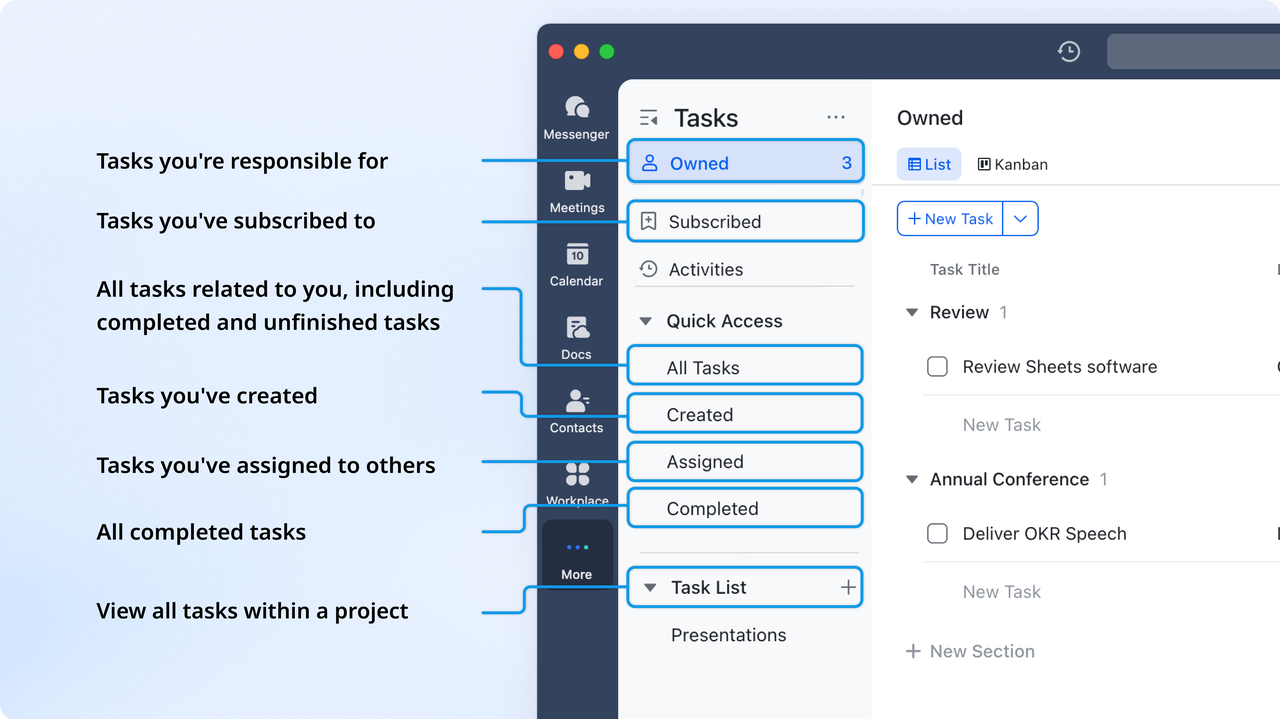
Lark Tasks: Assign ownership and accountability
Lark Tasks transforms project deliverables into actionable tasks, making it easy to assign responsibility and track completion. Each deliverable can be linked to a specific owner with clear due dates, ensuring accountability across the team. Tasks can also include priority levels, checklists, and dependencies, giving team members a structured view of what needs to be done and when.
Example: A marketing team launching a new campaign can assign the "Launch Report" deliverable to the content lead, with subtasks for drafting, reviewing, and finalizing the report. Automated reminders notify the owner and collaborators of approaching deadlines or overdue tasks, preventing bottlenecks. Similarly, a product team can break down development deliverables into smaller tasks—coding, testing, and documentation—and assign them to individual engineers. Lark Tasks also provides filters for overdue items or blockers, helping managers identify issues early and maintain smooth project progress.
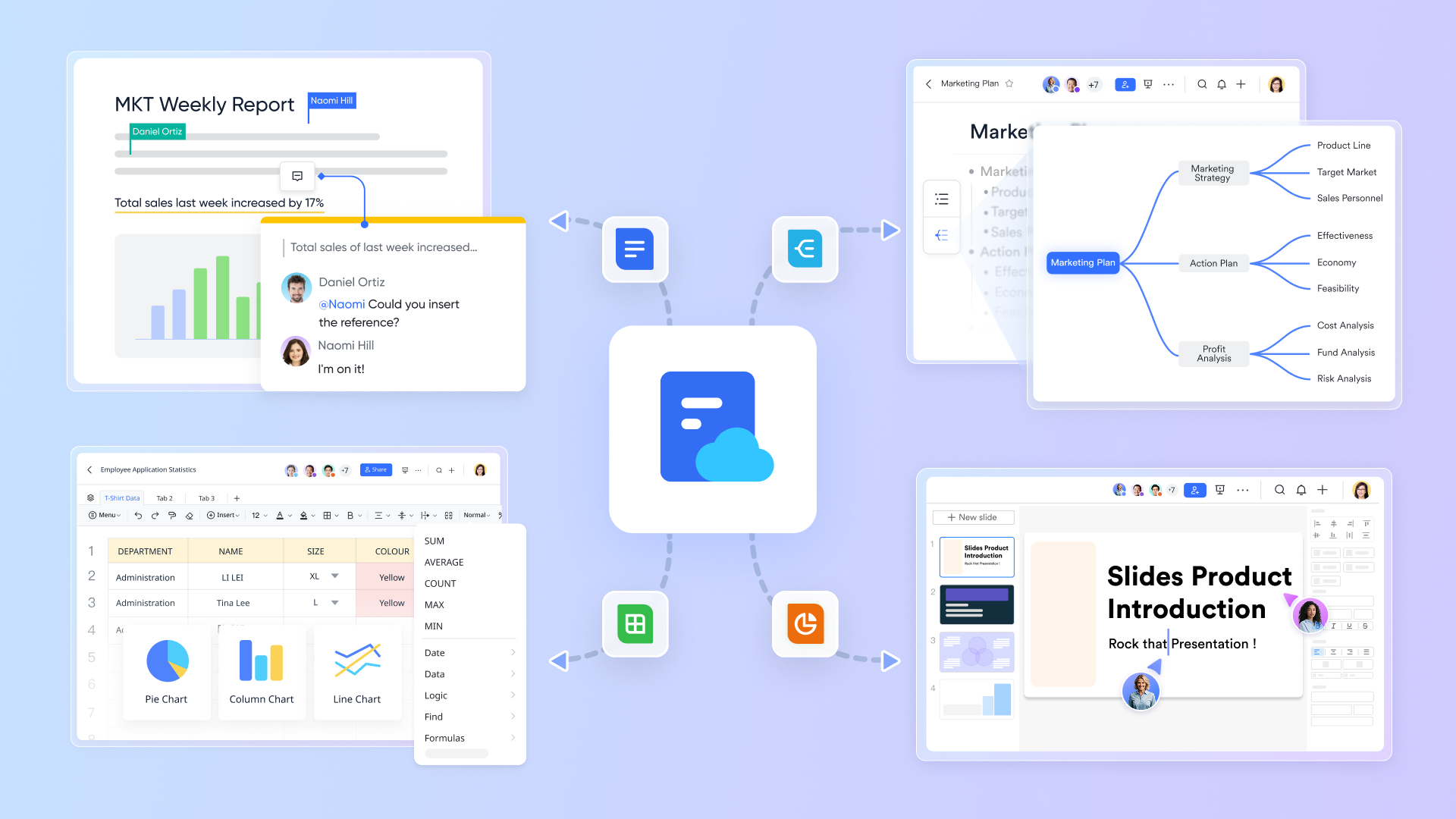
Lark Docs: Create and collaborate on deliverables
Lark Docs enables teams to draft, review, and manage project deliverables collaboratively in real time. Each document can be co-edited by multiple contributors, allowing seamless collaboration across departments and locations. Checklists and comments ensure that every deliverable meets quality standards before moving to the next stage. Version history allows teams to track changes, revert updates if necessary, and maintain a complete record of document evolution.
Example: A product team working on a roadmap can co-edit the document with input from project managers, engineers, and designers simultaneously. Comments and checklists guide revisions, while embedded approvals allow stakeholders to validate sections directly within the document. Similarly, a marketing team in an F&B company preparing a campaign brief can collaborate with designers and writers in Lark Docs, ensuring every asset is reviewed and finalized on time. By centralizing creation and collaboration, Lark Docs keeps teams aligned and deliverables on track.
Lark Approval: Manage sign-offs efficiently
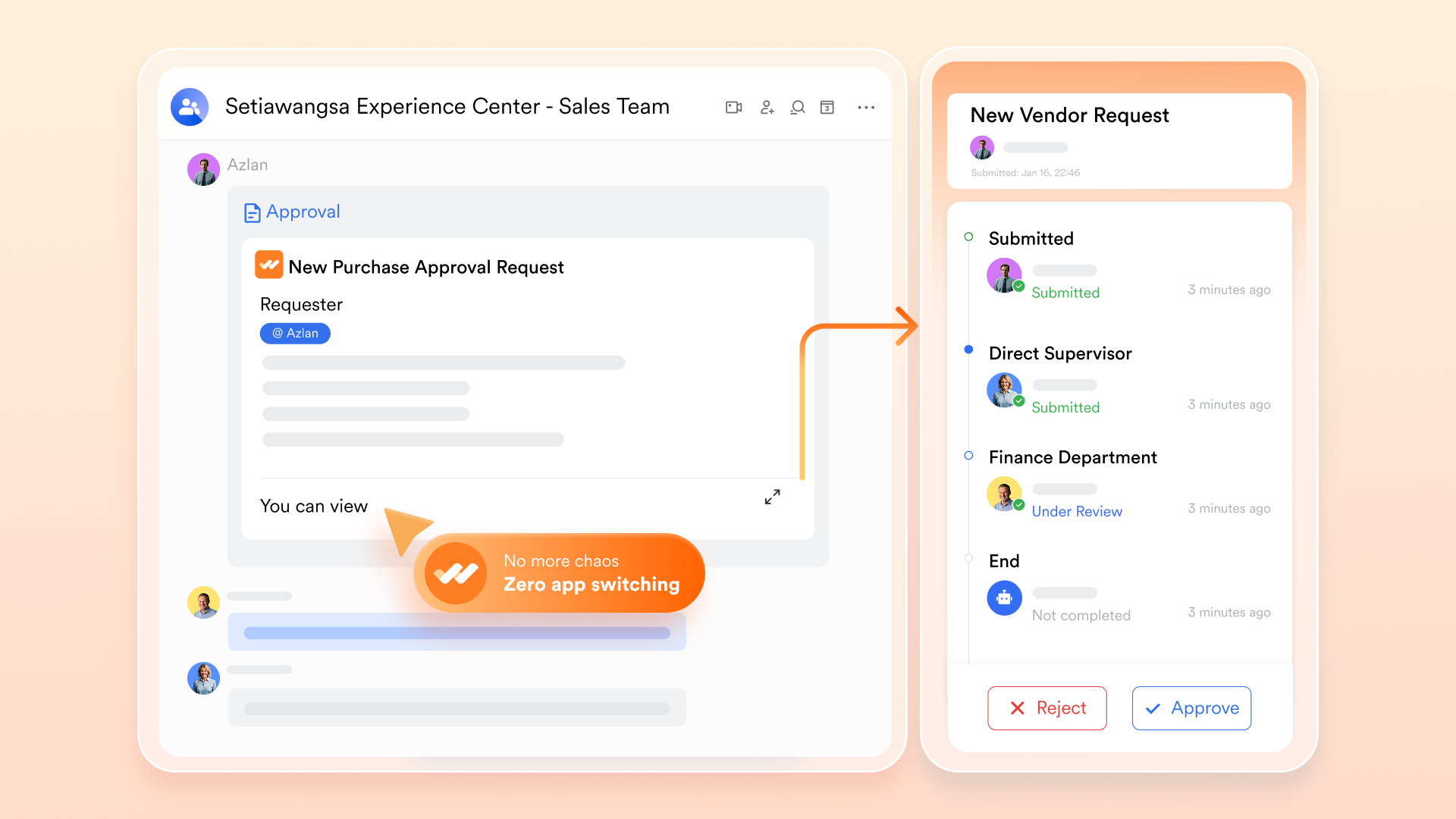
Lark Approval streamlines the process of validating project deliverables by routing them to the right stakeholders for review and automatically recording their decisions. This ensures that approvals are transparent, documented, and easy to track, reducing delays and miscommunication. Teams can define multiple approval stages, set deadlines, and attach supporting materials directly within the workflow, keeping everything centralized.
Example: A software development team completing a new feature can route the final test report through Lark Approval to QA leads, product managers, and senior engineers. Each stakeholder can review, comment, and approve directly within the platform, ensuring the feature meets quality standards before release. Similarly, a marketing team finalizing an advertising campaign can submit the campaign plan for approval by the creative director and compliance officer, with automated reminders and status tracking. By managing sign-offs efficiently, Lark Approval maintains accountability and accelerates project timelines.
Lark Sheets: Analyze project progress and performance
Lark Sheets provides teams with powerful analytics tools to monitor project deliverables and overall performance. Customizable dashboards allow project managers to track delivery rates, identify bottlenecks, monitor overdue milestones, and visualize dependencies across tasks. By analyzing data in real time, teams can make informed decisions, reallocate resources, and adjust timelines to maintain project momentum.
Example: A product team can use Lark Sheets to monitor the completion rate of software development sprints, spotting any lagging tasks that may delay the release schedule. Similarly, an event management team can track task completion for vendor coordination, logistics planning, and content approvals, quickly identifying areas that need attention. Lark Sheets also enables filtering by team member, department, or project stage, providing insights into productivity and workflow efficiency. By consolidating metrics in one place, Lark Sheets ensures transparency, accountability, and informed decision-making for all project stakeholders.
Act step by step: How to define deliverables in a project
Defining deliverables effectively is a cornerstone of successful project management. Knowing what project deliverables are in project management ensures clarity, accountability, and measurable progress throughout the project lifecycle. A structured approach allows teams to break down objectives into tangible outputs while keeping ownership, quality, and timelines visible.
By following a step-by-step process, project managers can align resources, track performance, and reduce ambiguity at every stage.
- Identify project goals: Start by clarifying what success looks like for the project. Understand the objectives and desired outcomes to ensure that each deliverable contributes meaningfully. Clear goals provide a foundation for planning and prioritizing tasks.
- Break down tasks: Transform high-level goals into actionable outputs by breaking them into smaller, manageable tasks. Each task should link directly to a deliverable, making it easier to assign, track, and measure. This decomposition also prevents scope creep and keeps teams focused.
- Assign owners: Designate responsibility for each deliverable to specific team members or groups. Assigning ownership ensures accountability, clarifies roles, and prevents duplication of effort. Tools like Lark Tasks can help visualize assignments and monitor progress.
- Set measurable criteria: Define standards for completion, including timelines, quality metrics, and KPIs. Measurable criteria make deliverables objective and reviewable, enabling teams to assess whether outputs meet expectations.
- Document everything: Record all deliverables, tasks, owners, and timelines in a central repository. Using project management tools like Lark Docs or Lark Base ensures that information is accessible, transparent, and easily updated. Documentation supports communication and collaboration.
- Review and approve: Establish checkpoints for validation and approval before moving to the next phase. Lark Approval or similar workflows can streamline sign-offs, ensuring that deliverables meet quality standards and stakeholder expectations.
Practice in reality: How teams use Lark to deliver projects faster
Imagine a software team working on a new feature release. The project involves multiple stages, including designing the feature, coding, testing, and documenting the process. Coordinating all tasks, ensuring accountability, and keeping stakeholders informed can be challenging without a clear system. Lark provides an integrated workspace that streamlines each step, making it easier for teams to deliver efficiently.
- Documentation: The team starts by defining the scope, acceptance criteria, and detailed specifications for the new feature. Lark Docs allows real-time collaboration, so product managers, designers, and engineers can co-edit and refine the deliverables together.
- Project management: All project deliverables, such as design mockups, code modules, QA results, and documentation, are tracked visually. Teams can monitor progress through Kanban, table, or Gantt views, ensuring that no stage is missed.
- Tasks management: Each deliverable is converted into actionable tasks with assigned owners and deadlines. Team members receive notifications, while managers can track responsibilities and progress effortlessly.
- Approvals: Completed deliverables are routed for stakeholder validation. Approvals are recorded automatically, ensuring quality standards are met before moving to the next phase.
- Data analysis: Progress and performance metrics are consolidated into dashboards. Project managers can review completion rates, spot bottlenecks, and assess team velocity weekly, allowing data-driven decisions.
Outcome: Using Lark, the team achieves aligned stakeholders, transparent timelines, and zero missed deliverables. Collaboration is seamless, accountability is clear, and the feature is delivered on schedule with all quality standards met.
Benefits of managing deliverables in Lark
Managing project deliverables effectively is crucial for team alignment, accountability, and timely execution. Lark provides a centralized workspace where teams can plan, track, and collaborate on every deliverable. By combining documentation, task assignment, approvals, and analytics, Lark simplifies complex workflows. This ensures that projects are executed efficiently while keeping stakeholders informed and teams focused.
- Clear accountability and ownership tracking: Lark allows each deliverable to be assigned to specific team members, with due dates and responsibilities visible to all. This reduces confusion and ensures that everyone knows who is responsible for each task. Clear ownership improves task completion and overall project reliability.
- Live visibility into progress and milestones: Teams can monitor progress in real time using visual dashboards at Lark Base. Milestones, dependencies, and completion status are easy to track, allowing managers to spot bottlenecks and make timely adjustments. Transparency keeps projects on schedule.
- Centralized documentation and version history: Lark Docs stores all deliverables, updates, and revisions in one place. Teams can collaborate, comment, and track changes without losing context or creating duplicate files. Centralized documentation ensures consistency and easy access for everyone.
- Automated notifications for approvals and deadlines: Lark Approval and Tasks send automatic reminders for upcoming deadlines or required sign-offs. This reduces manual follow-ups, prevents delays, and ensures deliverables move smoothly through each stage. Automation keeps workflows efficient.
- Flexible templates for different industries and teams: Lark supports multiple templates and views to fit various project types and team structures. Whether for software development, marketing campaigns, or event planning, teams can customize tracking and reporting. Flexibility allows teams to work in a way that suits their needs.
Conclusion
Project deliverables are the backbone of effective project management, providing clarity on what needs to be done, who is responsible, and the timelines for completion. Clearly defined deliverables ensure accountability, alignment, and measurable progress, helping teams achieve their objectives efficiently. By understanding what project deliverables are in project management and distinguishing them from objectives and milestones, teams can structure workflows, track progress, and maintain quality throughout the project lifecycle.
Lark enhances this process by unifying task management, documentation, approvals, and analytics in a single workspace. Teams can collaborate in real time using Lark Docs, assign and track tasks in Lark Tasks and Base, and monitor performance with Lark Sheets, ensuring transparency, efficiency, and successful project delivery across every stage.
FAQs
What are deliverables in project management?
Lark helps teams define and track project deliverables, which are tangible outputs produced to meet project objectives. Deliverables can include reports, prototypes, presentations, or final products. They are measurable, assignable, and form the foundation for progress tracking. Clear deliverables ensure accountability and alignment across the project team.
What's the difference between deliverables and milestones?
Deliverables are tangible outputs produced during a project, while milestones are checkpoints that mark significant progress. Milestones track whether a project is on schedule, but they are not outputs themselves. Understanding the difference helps teams plan and monitor projects more effectively.
How can I track project deliverables effectively?
Deliverables can be tracked using centralized tools like dashboards, task assignments, and progress boards. Regular updates, status checks, and visual tracking help teams spot delays or bottlenecks. Monitoring deliverables ensures projects stay aligned with goals and timelines.
What are examples of deliverables in agile projects?
In agile projects, deliverables can include working software, sprint backlogs, prototypes, test reports, and documentation. Each deliverable is tied to a sprint or iteration, allowing teams to demonstrate progress incrementally. Agile deliverables focus on functional outputs rather than only final products.
How does Lark help manage deliverables and approvals?
Lark centralizes all deliverables in one workspace, enabling teams to assign tasks, collaborate on documents, and track progress visually. Lark Approval automates review and sign-off processes, ensuring accountability and timely validation. This keeps projects on track while maintaining transparency for all stakeholders.
Related reading
Table of contents
Start using Lark today

Manage all your work in one place
Boost team efficiency by 10x
Save up to 70% on software costs
Table of contents
Start using Lark today
Manage all your work in one place
Boost team efficiency by 10x
Save up to 70% on software costs
Keep reading







2026 Lark Technologies Pte. Ltd.
Headquartered in Singapore with offices worldwide.






Explore: