


Build Your Own CRM: A Practical Guide in 2026

Matthew Sia
Product Marketing Manager
Aug 5, 2026
Matthew Sia
Aug 5, 2026

22 min read


Choosing a CRM path often means balancing control, speed, and risk. Some teams want the freedom to design every object, rule, and integration; others need reliable guardrails and faster time‑to‑value. This guide is pragmatic rather than ideological: whether you lean toward the depth of building your own CRM or prefer a configurable platform, the aim is a system that matches real workflows, keeps data trustworthy, and scales without surprise costs. For teams determined to build their own CRM, we highlight where bespoke control pays off and where guardrails prevent hidden costs.
What follows connects strategy to execution. You'll see the concrete benefits of a custom-fit approach, a focused sequence for building, and a compact metric set to evaluate adoption, quality, and revenue impact. We also highlight common pitfalls and offer a practical comparison between fully custom builds and customizable platforms. This guidance is useful whether you intend to build your own CRM on a greenfield stack or or need practical guidance on how to build your own CRM system.
What is a custom CRM
A custom CRM is a customer relationship management system tailored to a specific business model, sales motion, and collaboration rhythm. Instead of forcing teams to operate inside generic objects and workflows, it shapes data structures, stages, automations, and permissions around real world steps. The emphasis is on process fit, data ownership, and reliable execution. A custom CRM aligns the database, the user interface, and the analytics layer so records, conversations, and decisions stay in sync. It can start small as a focused build your own CRM initiative and expand as requirements evolve, without committing to features that add complexity but not value. When you build your own CRM system, you retain control over privacy, security, and portability—and you decide when to extend the model as your playbooks mature.
A strong custom CRM functions as a living system rather than a static project. The data model mirrors the organization's language and hierarchy, with validation rules that protect data quality from day one. Pipeline stages map to real milestones with clear exit criteria, while automations encode playbooks that keep momentum, reduce manual effort, and surface risk early. Permissions enforce least privilege for sensitive information, and audit trails support accountability and compliance. Reporting is designed backward from decisions, so dashboards show leading indicators, operational gaps, and outcomes that matter to each role. As you evolve, think about the foundation to build your own CRM database that grows coherently instead of a patchwork of one-off fields.
Benefits of a custom CRM
A custom CRM aligns the system with the way work actually happens. Objects, fields, and stages mirror real conversations and milestones. Automation takes away repetitive steps and reduces missed follow ups. Reporting focuses on decisions that matter instead of vanity charts. A build your own CRM path makes these gains possible without committing to features that add complexity but not value.
- Process fit and adoption: Stages, exit criteria, and fields reflect the language and steps used in daily work. Records are easier to update because the system guides the same actions performed in calls, emails, and meetings. Better fit reduces side spreadsheets and scattered notes, which improves data quality and trust in dashboards.
- Data control and compliance readiness: Control over schema, retention, and permissions protects sensitive information and supports privacy obligations. Field level controls, audit trails, and transparent data flows create a foundation for security reviews and incident response. Clean exports and documented mappings keep portability intact if the stack changes later.
- Integration and automation on clear rules: Connections to email, calendar, chat, billing, support, and product analytics follow explicit ownership and sync rules. Idempotent writes, retries, and conflict handling protect data integrity. Automation turns playbooks into consistent execution with routing, reminders, dedup checks, and hygiene routines that keep momentum high.
- Cost alignment and long term efficiency: Investment focuses on essential capabilities first, then expands where impact is proven. Low code configuration covers most needs, while targeted engineering solves the few hard parts that create advantage. This balance reduces shelfware, limits maintenance creep, and keeps total cost of ownership under control.
Steps to build your own CRM
Building a winning custom CRM doesn't require a massive upfront effort—success lies in starting narrow, delivering value quickly, and iterating in short cycles. This step-by-step guide balances clarity, data quality, and safe change, working equally well for low-code stacks and customizable platforms. Best of all, it helps you avoid premature complexity. It's a practical blueprint for how to build your own CRM, and when to extend toward a full build your own CRM platform as needs expand.
1. Define scope and governance
Kick things off by locking in your Minimum Viable Product (MVP) scope—no need to build everything at once. Typical core outcomes include inbound lead capture, a simple pipeline, automatic activity logging, and a manager dashboard that answers your team's most critical questions.
Define clear success metrics, non-goals, and a tight timeline to keep scope creep in check. Assign named roles (product owner, admin, security contact) to eliminate decision bottlenecks, and use weekly check-ins plus a shared backlog to keep choices transparent. A lightweight communication plan—think update notes, a pilot feedback channel, and office hours—builds confidence and shortens feedback loops to build your own CRM with predictable cadence.
2. Design the data model and permissions
You don't need a complex data model to start strong. Begin with four core objects—accounts, contacts, deals, and activities—to lay a reliable foundation. Use plain-language field names, standardize picklist values, and leverage formulas for derived data (like weighted amounts or renewal windows). Think of this as the start of your build your own CRM database, designed to scale cleanly rather than accrete one-off fields.
Map relationships with a simple diagram to eliminate ambiguity around data ownership and visibility. Use the principle of least privilege: assign access based on roles, add field-level protection for sensitive data, and create role-specific default views. This keeps data secure while cutting down on noise for users. Wrap it up with a short data dictionary that clarifies each field's purpose and acceptable values.
3. Map the pipeline and service expectations
Pipeline stages work best when grounded in concrete evidence, not gut feelings. For each stage, write a one-sentence purpose, clear exit criteria, and the specific actions or artifacts needed to move forward.
Set service expectations to define response times for new leads and follow-ups—add timers to flag stuck tasks before they linger. Create standardized codes for lost-deal and stall reasons to turn setbacks into learnings (no blame required!) and target coaching where friction actually happens. Share a short “stage definitions” sheet with your pilot team to align understanding and keep data updates consistent.
4. Implement core automation and data hygiene
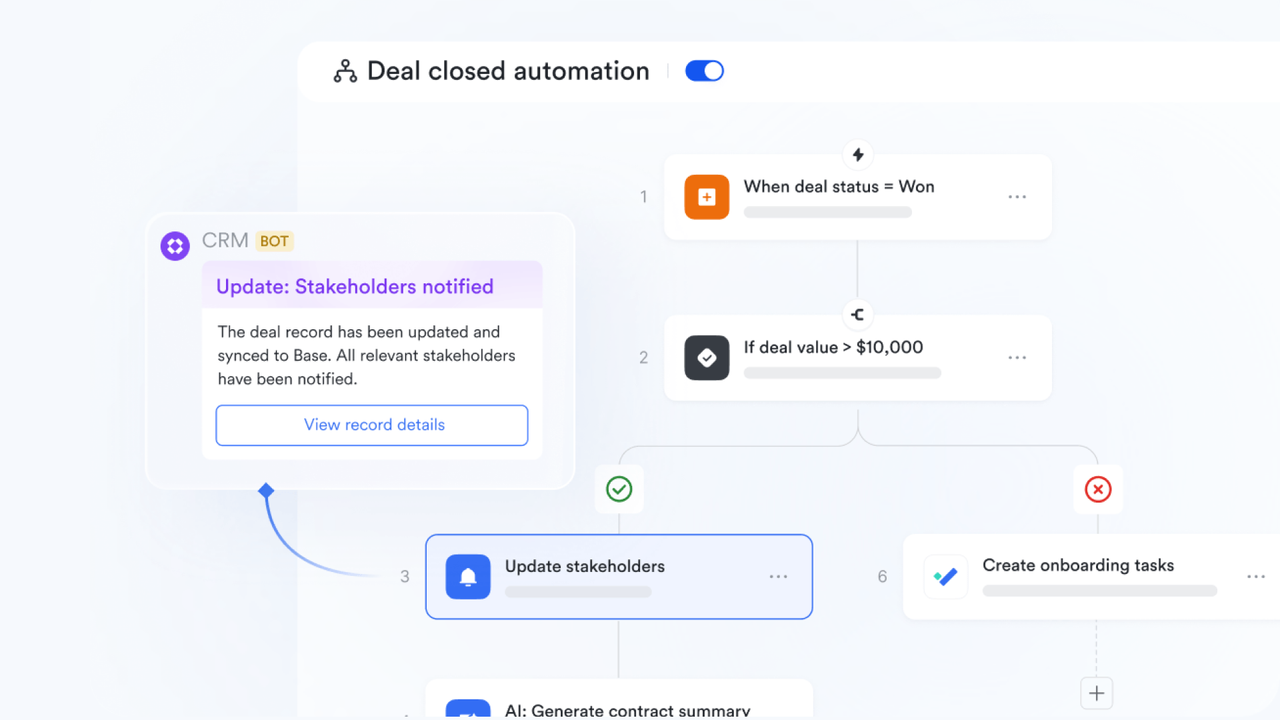
Automation turns your team's playbooks into repeatable, error-free workflows. Set up lead routing to assign ownership by territory or round-robin. Trigger checklists, tasks, and reminders when deals move stages—so momentum doesn't depend on someone's memory.
Add data hygiene rules to catch missing fields, inconsistent picklist values, and duplicates (use email, domain, or fuzzy matching). Write flows for readability, test them with sample records, and label each rule with a description, owner, and expected outcome. Simple logs or run histories will help you trace failures and fix issues fast.
5. Integrate essentials and define sync rules
Focus early integrations on high-impact tools: email, calendar, and chat—all the tools your team uses daily to collaborate and track activities. Add other systems (billing, support, product analytics) in phases, and create a mapping document for every shared field. Even if you try to build your own CRM free on free tiers at first, set explicit ownership, idempotent writes, and retries so that later scaling doesn't break data integrity.
For each data point, choose a single source of truth, define update rules, and use idempotent writes to prevent duplicates. Add retry logic for temporary errors, and set up alerts to notify a small team channel if syncs fail. Test everything in a sandbox or test environment first to avoid surprises when you go live.
6. Build decision-ready dashboards and test with a pilot
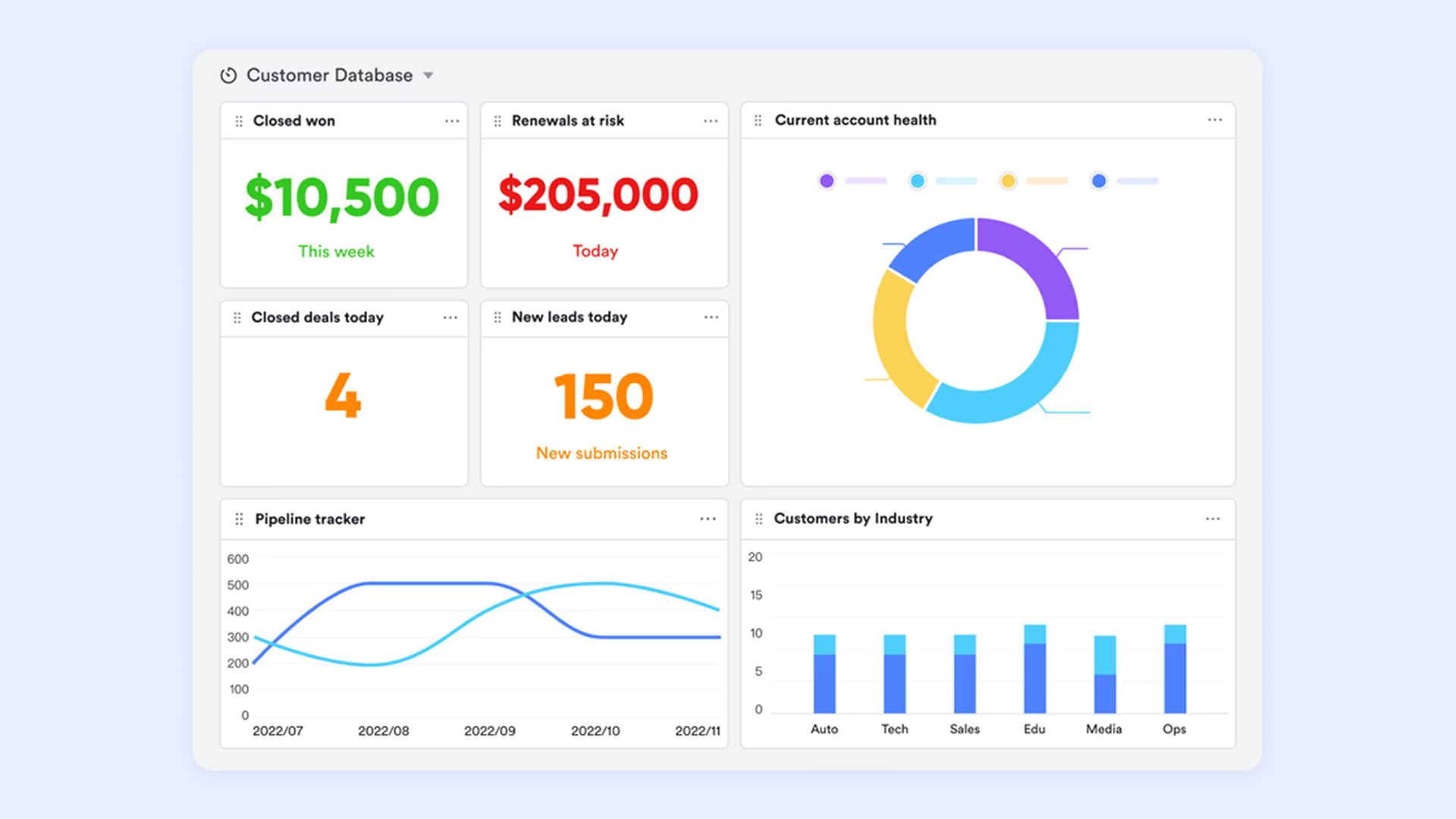
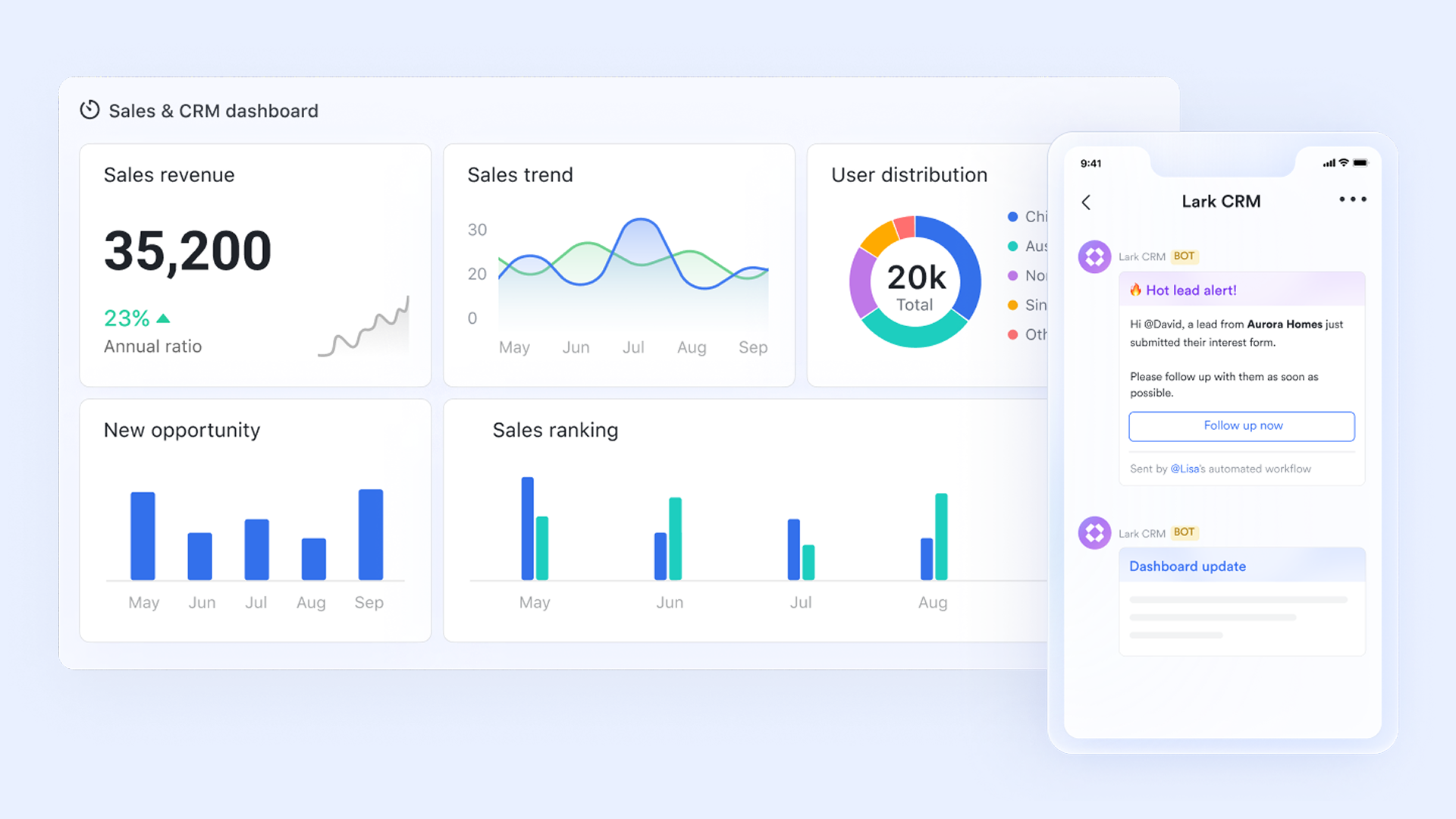
Dashboards should be built backward from the decisions your team needs to make. Give reps a homepage that highlights tasks, meetings, and deals missing next steps. Managers need views of pipeline by stage, forecast confidence, deal velocity, and activity coverage. Executives get a high-level view of trends and risk signals.
Keep the experience simple: use consistent data definitions, let users drill down to raw records, and save common filters. Test with a small pilot group during their daily work—have them stress-test permissions, flows, and reports. Collect feedback in one place, and bundle changes into short release cycles to avoid disrupting users.
7. Migrate, launch, and operate with discipline
Start data migration by cleaning and profiling your source data. Do a small test import to validate counts and relationships—then consider a short parallel run (using both old and new systems) to build trust before full cutover.
Keep launch materials simple: quick-start guides, brief training, and a dedicated support window. After launch, run weekly checks on adoption, data quality, and integration health; document releases; and iterate based on observed patterns. Some teams prototype how to build your own CRM in excel or conduct a limited build your own CRM in access trial for smaller datasets—useful for learning, but long-term reliability and permissions typically call for a production-grade platform.
Metrics to evaluate your CRM
Measurement turns a CRM into a continuous improvement system. The goal is to confirm adoption, spot friction early, and link daily activity to revenue outcomes. A compact, consistent metric set works best. Reviews on a steady cadence keep action aligned with findings and prevent dashboard sprawl.
- Adoption and data quality: Active usage by role and fill rates for key fields show whether the system fits daily work. Duplicate rates, validation errors, and hygiene task closure reveal the state of data trust. Strong adoption with clean records enables every other metric to mean something.
- Pipeline movement and conversion: Conversion between stages, average age per stage, and overall cycle time highlight bottlenecks. These signals guide coaching, stage definitions, and checklist updates. Better movement with lower stall rates usually follows clear exit criteria and simple next step prompts.
- Forecast accuracy and coverage: Variance between forecast and actual outcomes, along with coverage against targets, indicates whether leaders can rely on the numbers. Improvements here often come from cleaner stage definitions, consistent probability rules, and timely updates to next steps and risk flags.
- Operational reliability: Automation success rates, integration error trends, and time to recover reflect system health. Logging, alerts, and simple run histories reduce blind spots. Stable operations prevent hidden data drift and ensure that dashboards reflect reality.
- Cost and efficiency: Time to first value, routine admin effort, and spend per seat or per integration track whether investment matches outcomes. Clear views on cost drivers support decisions about where to simplify, where to automate, and where targeted engineering will yield lasting efficiency.
Challenges of building your own custom CRM
Teams that choose to build your own CRM gain control but assume ownership risk. Building a custom CRM brings strong alignment to real workflows, but the path is rarely linear. Risks tend to surface after an MVP ships, when adoption meets edge cases, integrations handle real load, and change requests accelerate. Without clear guardrails, the stack can drift toward hidden logic, rising maintenance, and data inconsistencies that erode trust. The themes below group the most common pitfalls so planning, ownership, and guardrails can be set early.
- Scope control and prioritization: Demand typically grows faster than capacity once early value appears. Clear non-goals, a short decision cadence, and a visible backlog help keep attention on outcomes that move the needle, rather than on features that add complexity without improving execution.
- Total cost of ownership: Initial build effort often masks recurring costs in admin time, refactors, upgrades, and security reviews. A lightweight governance rhythm, testable automations, and a modest release process reduce rework and keep operating costs predictable as the system evolves.
- Security, privacy, and compliance: Customer data requires least-privilege access, field-level protections, auditability, and a tested backup/restore path. Consistent handling of tokens, integration scopes, and incident response steps avoids gaps that only appear during audits or after a production issue.
- Integration complexity and data integrity: Bi-directional syncs demand explicit mapping, conflict rules, idempotent writes, and retry logic. Without health dashboards and alerts, minor errors can compound into silent data drift, undermining reporting, forecasting, and downstream workflows.
- Performance and scale under real load: Chatty automations, unindexed queries, and large rollups slow down as records grow. Monitoring run times, rate-limit incidents, and queue backlogs—plus a habit of simplifying or batching heavy jobs—prevents user-visible lag and keeps SLAs intact.
- Change management and continuity: Adoption stalls when views overwhelm, training is thin, or documentation lags behind changes. Champions, short guides, and a predictable release cadence maintain confidence, while clear ownership prevents knowledge loss when admins or developers rotate out.

Build a custom CRM vs. use a customizable CRM
Choosing between building a custom CRM and using a customizable one is one of the most impactful decisions for teams looking to align their customer management tools with business needs. It boils down to a tradeoff: full control and tailored precision (with the work of ownership) versus speed, reliability, and lower operational overhead (with guardrails for consistency). Below, we break down what each path entails, how to compare them, and why one often makes more sense as a starting point. While you can build your own CRM software or even build your own custom CRM software from scratch, many organizations achieve faster, safer outcomes by starting with a configurable base and extending from there. If you intend to create your own custom-build CRM software, plan explicit scope, strong governance, and a migration path from prototypes to production.
What building a custom CRM involves
Building a custom CRM centers on control. The team defines the schema, designs views, writes automations, and assembles integrations. This path enables precise process fit and specialized objects, but it also introduces steady ownership duties: monitoring, refactoring, access reviews, and performance tuning. Success depends on tight scope, strong admin discipline, and clear documentation so the system remains understandable as it evolves, especially if your goal is to build your own CRM platform over time.
What a customizable CRM offers
A customizable CRM provides mature primitives—objects, pipelines, permissions, and reporting—along with visual builders and an ecosystem of integrations. Guardrails for access control, auditing, and uptime are available from day one, which shortens time to value and reduces risk during early scaling. Configuration becomes the main lever, while targeted extensions handle edge cases. This approach favors reliability and predictable maintenance over full freedom.
How to compare paths
The choice turns on process uniqueness, timeline, risk tolerance, and available skills. Highly differentiated workflows or strict data residency needs can justify a deeper build, especially when engineering support is on hand. For many teams, the immediate priority is dependable execution, clean data, and fast iteration on common motions. In that context, a platform with strong guardrails and proven connectors often delivers results faster and with less operational burden.
Why customizable CRM software is often the better starting point
When speed, governance, and integration reliability matter most, customizable platforms tend to outperform hand-rolled stacks. The baseline is stable, security features arrive ready to use, and marketplace connectors cover typical needs without bespoke code. Custom logic can still be added where differentiation pays off, but the foundation remains simple to manage. For most organizations, especially in early and mid stages, customizable CRM software is better. Tools like Lark can definitely help you save a lot of energy and time.
How Lark stands out as a customizable CRM software
Lark, as a highly customizable CRM software, excels by seamlessly integrating multiple functional modules, building a customer-centric collaborative platform for businesses. It's also a practical way to build your own CRM on a governed foundation—avoiding fragile prototypes while keeping the flexibility to extend.
Build a flexible customer data hub
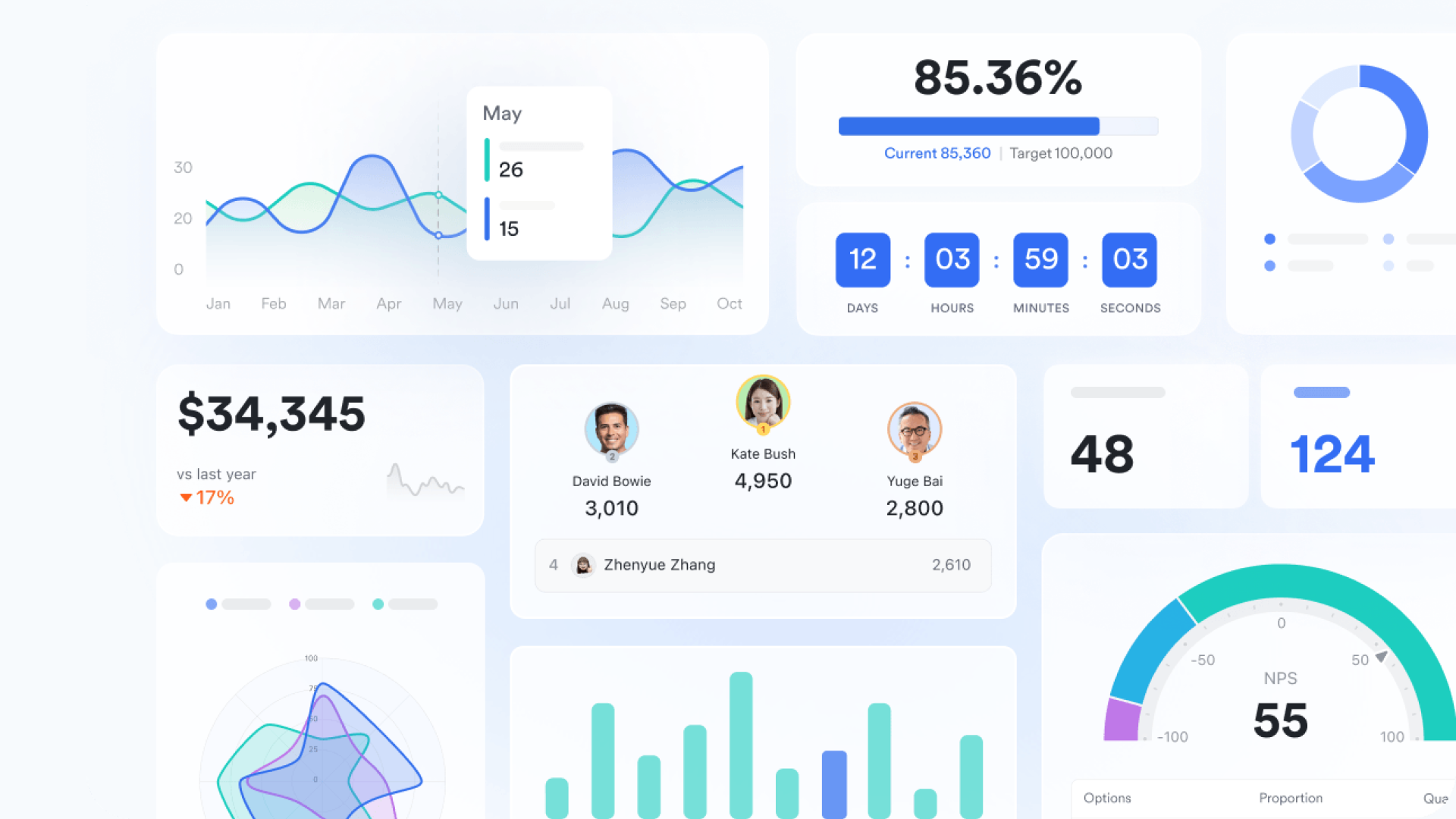
Traditional CRM software often comes with fixed data fields and processes. The core value of Lark Base is that it allows businesses to tailor-make their customer information database according to their unique workflows. Without any coding, you can create a database with various tables like "Contacts," "Opportunities," and "Contracts," defining custom fields for each—such as a client's industry, project stage, or personalized tags.
More importantly, Lark Base supports multiple views for the same set of data. The sales team can use the Kanban view to visually drag and drop opportunity cards, managing the sales pipeline. Management can use the Gantt chart view to track key project milestones and progress. Meanwhile, the service team can use the Calendar view to get an overview of all customer appointments and follow-ups. This flexibility ensures every department accesses and understands customer information in the most efficient way.
Place customer communication at the heart of workflows
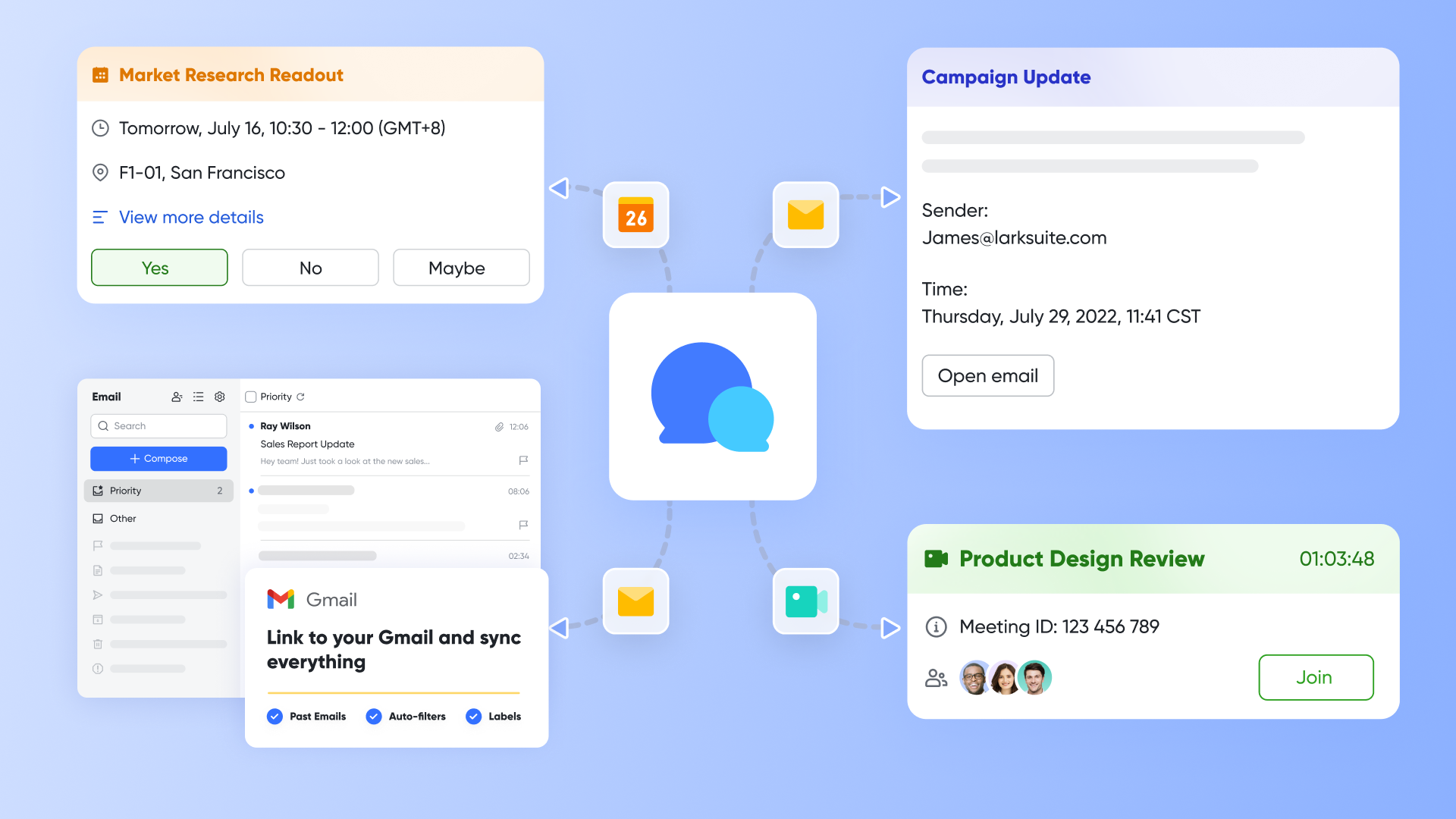
Within the Lark ecosystem, customer communication is no longer an isolated activity. With Lark Messenger, you can create dedicated group chats for important customers or projects. Sales, support, and technical staff can discuss matters centrally, with all relevant files and chat histories automatically saved and linked, ensuring information integrity and traceability.
When a conversation needs to become a formal meeting, Lark Meetings provides a seamless experience. You can launch high-definition video calls directly from a chat for product demos or solution discussions. After the meeting, Lark AI Meeting Notes automatically generates meeting summaries and action items. These key insights can be added with one click to the corresponding customer record in Base, forming a complete interaction history. Furthermore, Lark Mail serves as a stable communication channel, and important email threads can also be linked to customer profiles, building a unified view of all customer correspondence.
Drive automated sales processes and efficient collaboration
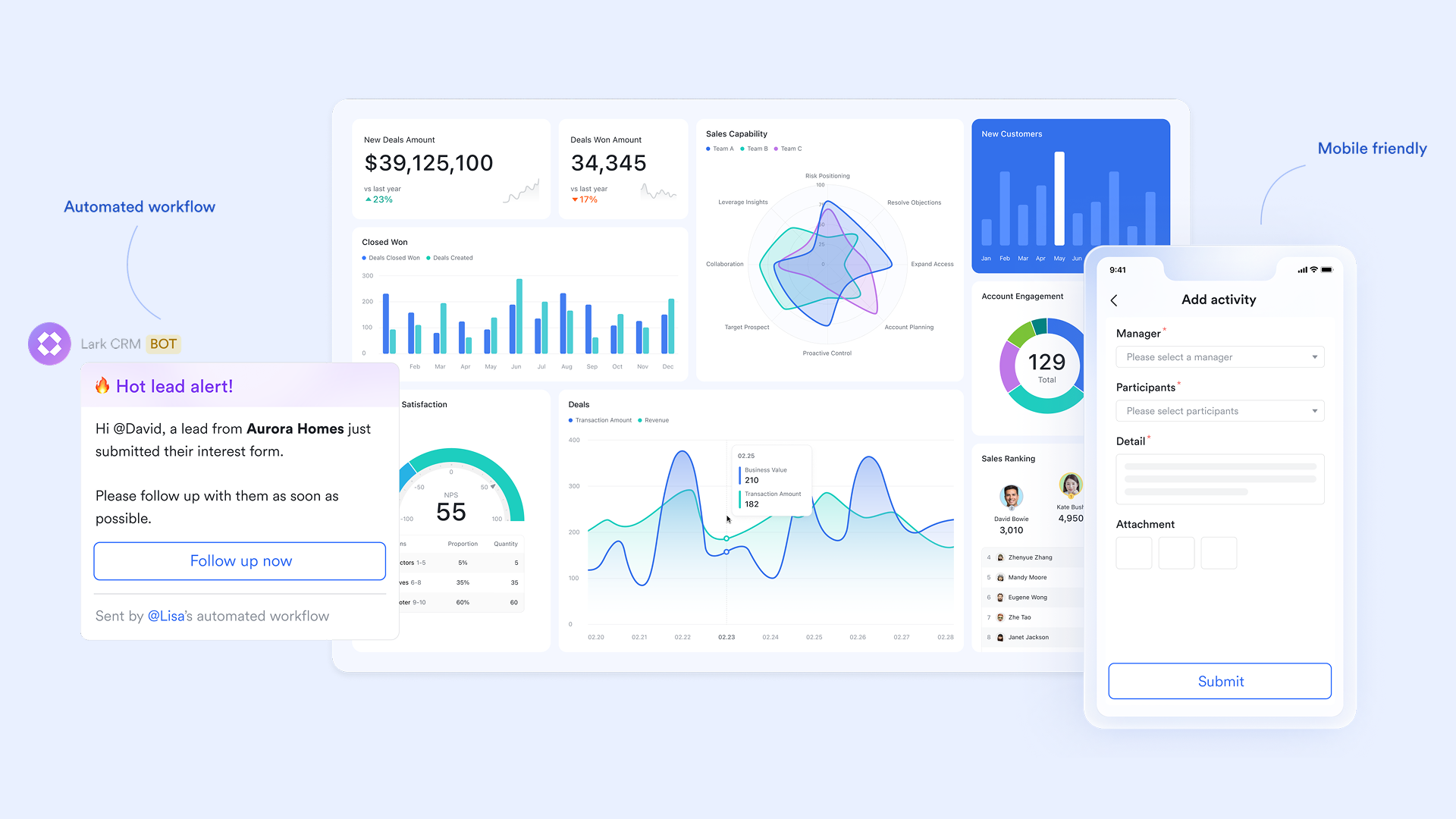
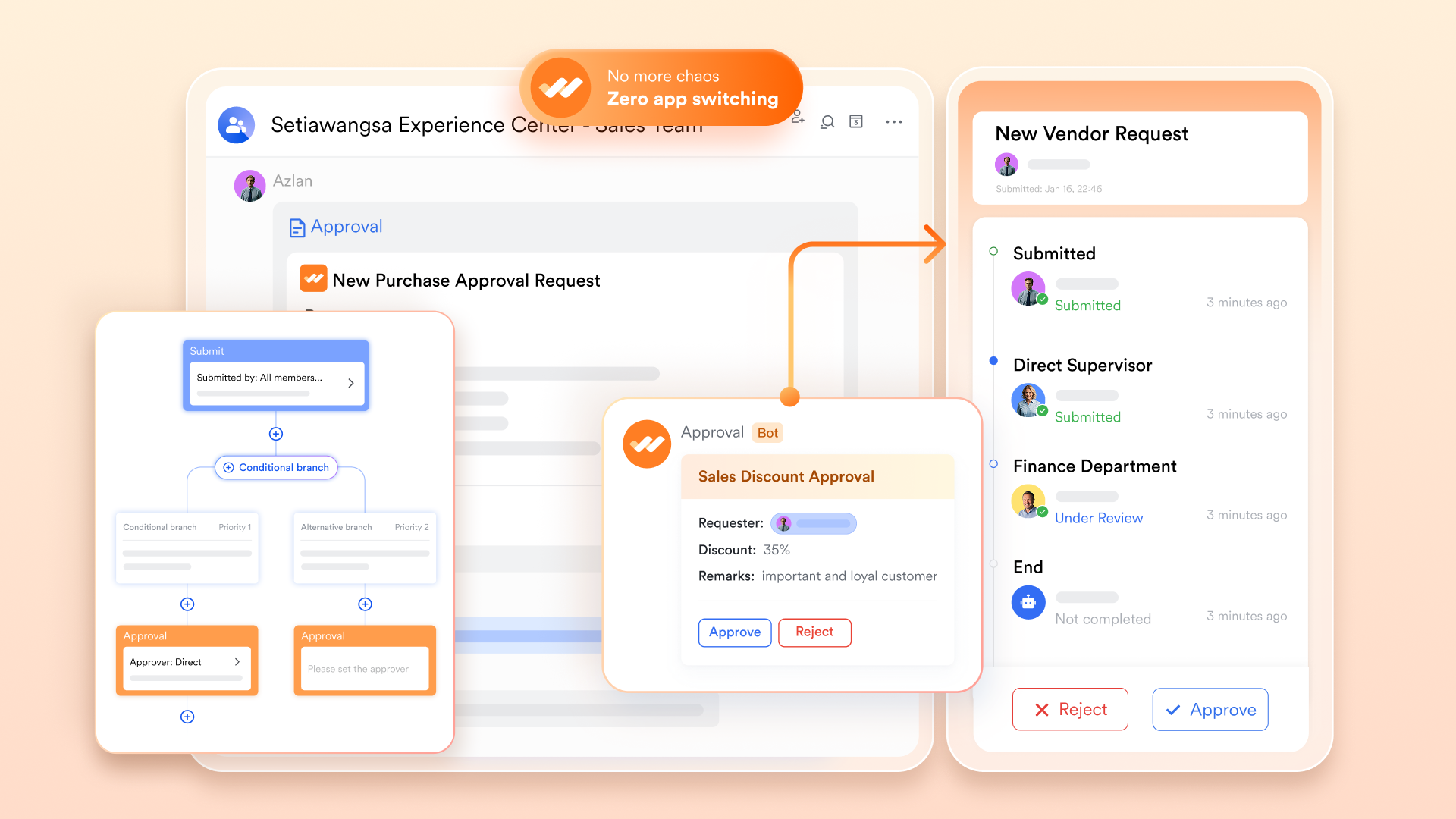
Lark frees teams from repetitive tasks through automation. Using Lark Approval, you can pre-set workflows for sales discounts, contract approvals, and more. When a salesperson submits a request in the CRM, the system automatically routes the approval to the right person based on predefined rules and tracks progress in real-time, significantly speeding up decision-making.
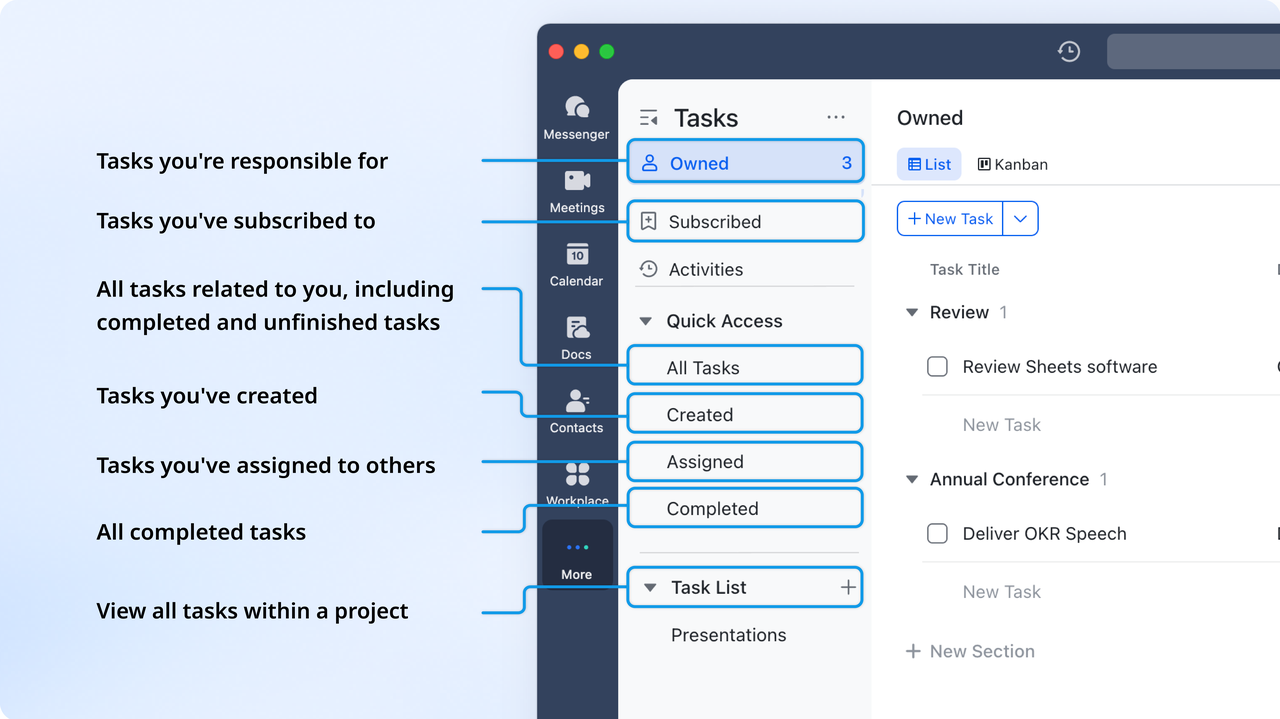
Lark Tasks ensures no step in the sales process is missed. When an opportunity reaches a specific stage, you can set a follow-up task for yourself, and Lark Tasks will send you a reminder before the deadline. Additionally, documents like sales proposals and contract templates created in Lark Docs support real-time collaborative editing by team members. They can be shared with clients via a link, ensuring information consistency and delivery efficiency.
Centralize knowledge assets and align team goals
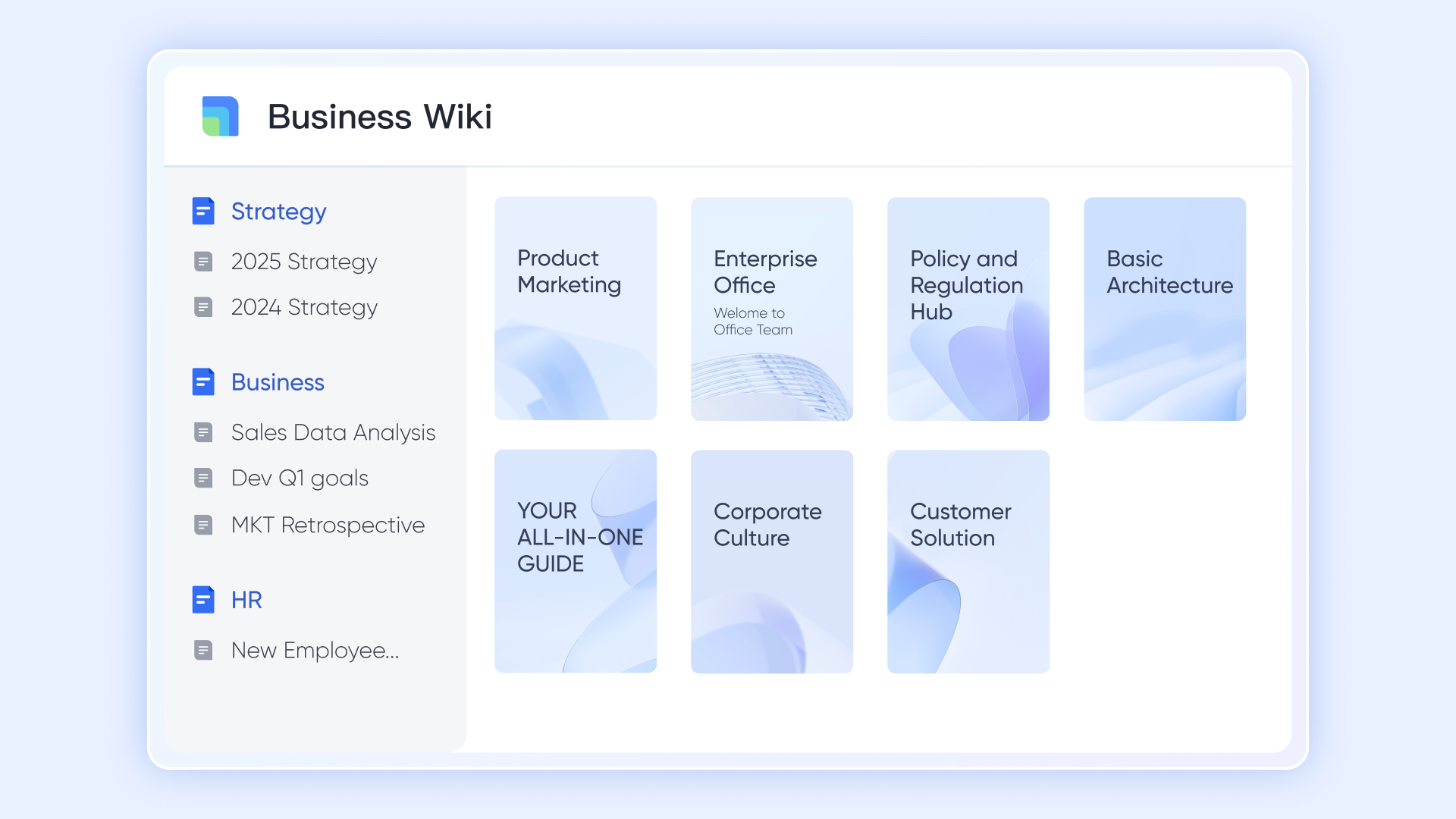
Lark Wiki acts as your company's central knowledge base, a place to accumulate product information, standard scripts, competitor analyses, and service manuals. This ensures that everyone, from new hires to cross-departmental colleagues, can quickly access accurate, consistent information when interacting with customers, enhancing service professionalism and response speed.
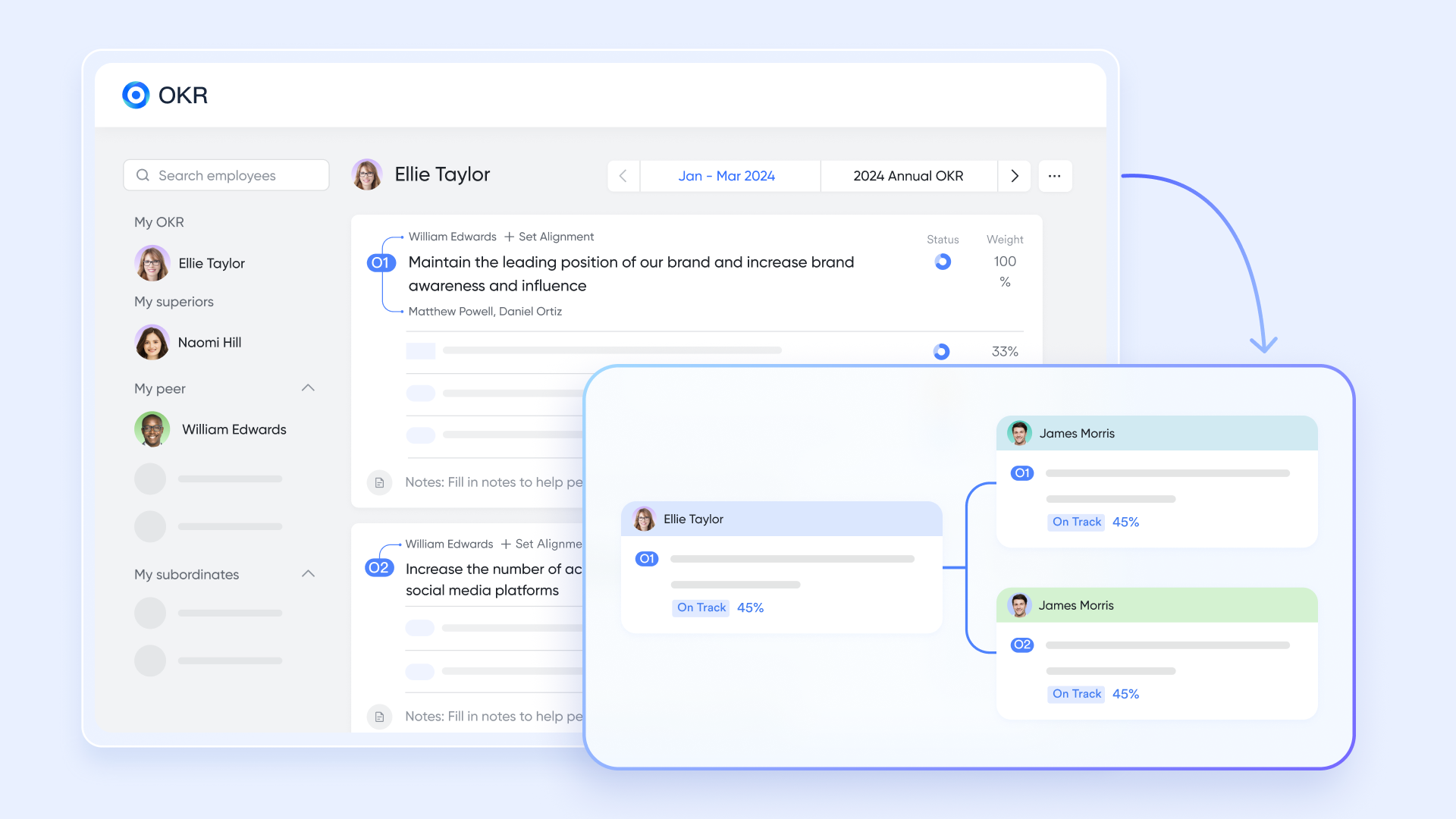
On a strategic level, the Lark OKR feature helps teams align customer relationship management goals with the company's overall direction. For instance, you can set an Objective like "Increase customer satisfaction by 10% this quarter" with Key Results such as "Complete 200 customer check-ins." This makes it clear how each team member's efforts contribute to shared customer success metrics.
Pricing:
- Free plan: Includes 11 powerful products, supporting up to 20 users, 100 GB storage, 1,000 automation runs and unlimited AI translation in chats, docs and email.
- Basic plan: $6/user/month (billed annually) for up to 500 users. Includes everything in Starter plus unlimited message history, 5TB storage, 1,000 automation runs, and more. Some users may need to contact sales to purchase.
- Pro plans: $12/user/month, supporting up to 500 users. Includes unlimited message history, 50,000 automated Base workflow executions per month.
- Enterprise plan: Contact sales for custom pricing. Supports unlimited users and includes even more automation runs and advanced security, compliance, and management features.
Conclusion
Constructing a custom CRM represents a fundamental shift from adapting to outdated software to designing a system that actively supports business growth. Lark transforms this vision into practical reality by integrating powerful tools like Base, Messenger, and Calendar into a single, adaptable workspace. This approach eliminates common friction points between data, communication, and execution—creating a CRM that evolves alongside your business. Experience how Lark's customizable platform can transform your customer management—explore our software today to begin building your ideal CRM solution.
FAQs
Can ChatGPT make a CRM?
No, ChatGPT cannot build a full-functioning CRM system by itself. However, it can be a powerful assistant in the process. It can help generate code snippets, design database schemas, create user interface mockups, and draft documentation. The actual development and integration still require human oversight and specialized software tools.
What are the 7 C's of CRM?
The 7 C's provide a framework for a successful CRM strategy: Customer (centric data), Culture (company-wide adoption), Process (optimized workflows), Content (relevant communications), Consistency (unified experience), Communication (personalized engagement), and Compliance (adhering to data regulations). This holistic approach ensures the technology serves both business and customer needs effectively.
Can I create my own CRM with Excel?
Yes, you can create a basic CRM using Excel or Google Sheets. It's a low-cost solution for tracking contacts, deals, and activities through customized columns and filters. However, this method lacks automation, robust reporting, and scalability, quickly becoming error-prone and inefficient as your business and team grow.
For more Google Workspace's information, you can refer to Google Workspace Pricing and Google Workspace alternatives.
What are the 4 types of CRM?
The four primary types are Operational (automating sales, marketing, and service processes), Analytical (analyzing customer data for insights), Collaborative (sharing customer information across departments), and Strategic (focusing on long-term customer lifecycle management). Many modern platforms blend these types to provide a comprehensive 360-degree customer view.
Related reading
Table of contents
Start using Lark today

Manage all your work in one place
Boost team efficiency by 10x
Save up to 70% on software costs
Table of contents
Start using Lark today
Manage all your work in one place
Boost team efficiency by 10x
Save up to 70% on software costs
Keep reading









2026 Lark Technologies Pte. Ltd.
Headquartered in Singapore with offices worldwide.






Explore: