














12 Free Business Proposal Templates for 2026

Ben Guan
Senior Content Manager
Nov 3, 2026
Ben Guan
Nov 3, 2026

9 min read
Add to preferred sources


When it comes to business, presentation matters. Talented teams often lose deals they should have won, simply because the design of their business proposal failed to impress. Meanwhile, their competitors show up with polished, professional documents that leave a good impression. A great business proposal template can help.
In this guide, I'll walk you through everything you need to know about business proposal templates: what they are, why they matter, which sections to include, and how to customize them for each client.
What is a business proposal template?
A business proposal template is a reusable, structured document that helps you pitch services, projects, or products without starting from scratch every single time. It is a proposal blueprint that already includes the core sections and formatting, so you only need to swap in client details and project specifics.
When I build a proposal template, I want it to do three things: save me time, make my company look professional, and give the client everything they need to say yes.
- Templates typically come in formats like PDF, Word, Google Docs, online flip books, or other browser-based SaaS proposal tools
- A good template already includes key sections like cover page, executive summary, scope, pricing, and terms
- You customize the placeholder text for each client rather than rebuilding the document from a blank page
- Most templates are ready to use within minutes once you've set up your master version
- The structure stays consistent while the content gets tailored to each specific deal
The real value here is consistency. Every proposal you send carries the same professional design elements, logical flow, and brand voice.

Best free business proposal templates for different use cases
I've picked templates for business proposals from different platforms to ensure you can work with the tools you already prefer. I've also selected options tailored to specific industries and common scenarios, so you can find the perfect fit and launch your proposal immediately.
Lark Docs: Multimedia Project Proposal
This dynamic, general-purpose template allows teams to integrate various media types directly into their proposals to enhance engagement. The structure helps define project purposes and plan workflows, making the document suitable for any initiative where attaching visual or auditory elements strengthens the pitch.
Lark Base: Construction Proposal
Construction managers can utilize this grid-based format to organize complex project details, including location, estimated costs, and completion dates. The layout allows for tracking multiple proposals simultaneously, ensuring essential data like project names and client information remains accessible at a glance.
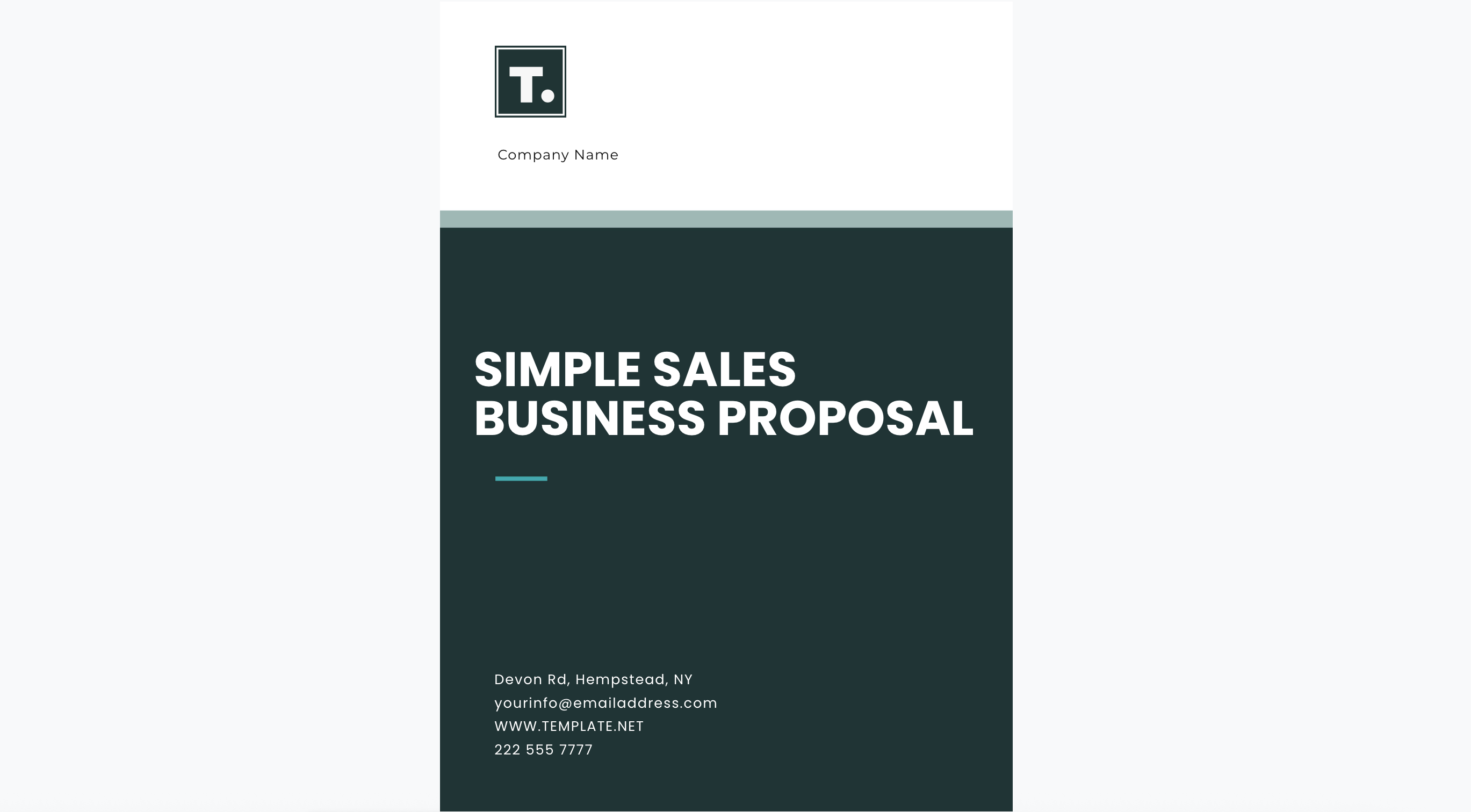
Google Docs: Sales business proposal
This clean, professional template includes dedicated sections to outline business objectives, sales strategies, budgets, and implementation plans. Sales teams can utilize the structured layout to organize pitches, ensuring potential clients receive a clear roadmap of the proposed value and execution strategy.
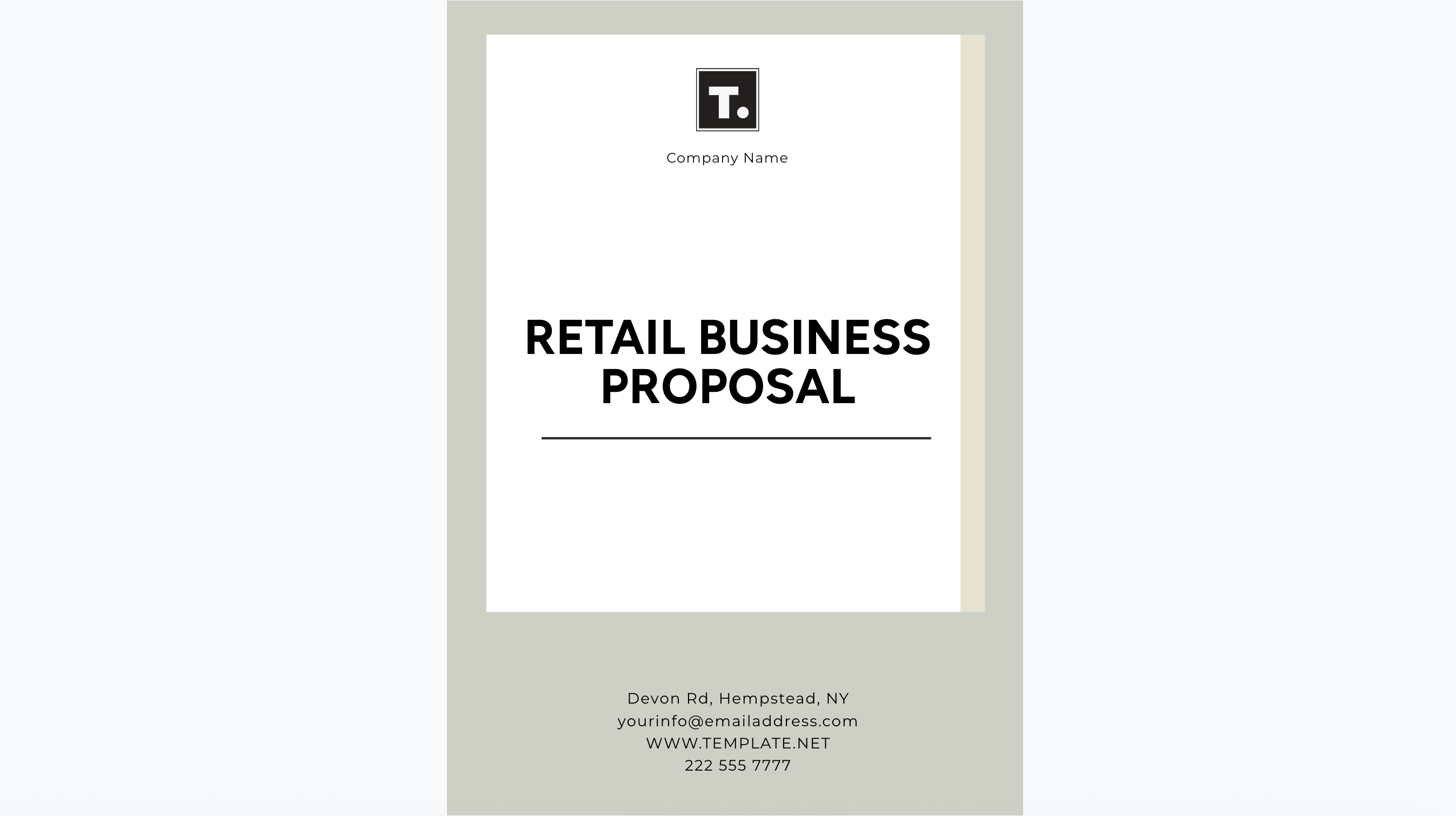
Google Docs: Retail business proposal
Tailored specifically for the retail sector, this comprehensive template includes sections for market and competitive analysis, marketing strategies, operational plans, and financial projections. The format allows retail businesses to present a thorough and strategic overview of their operations to potential partners or investors.
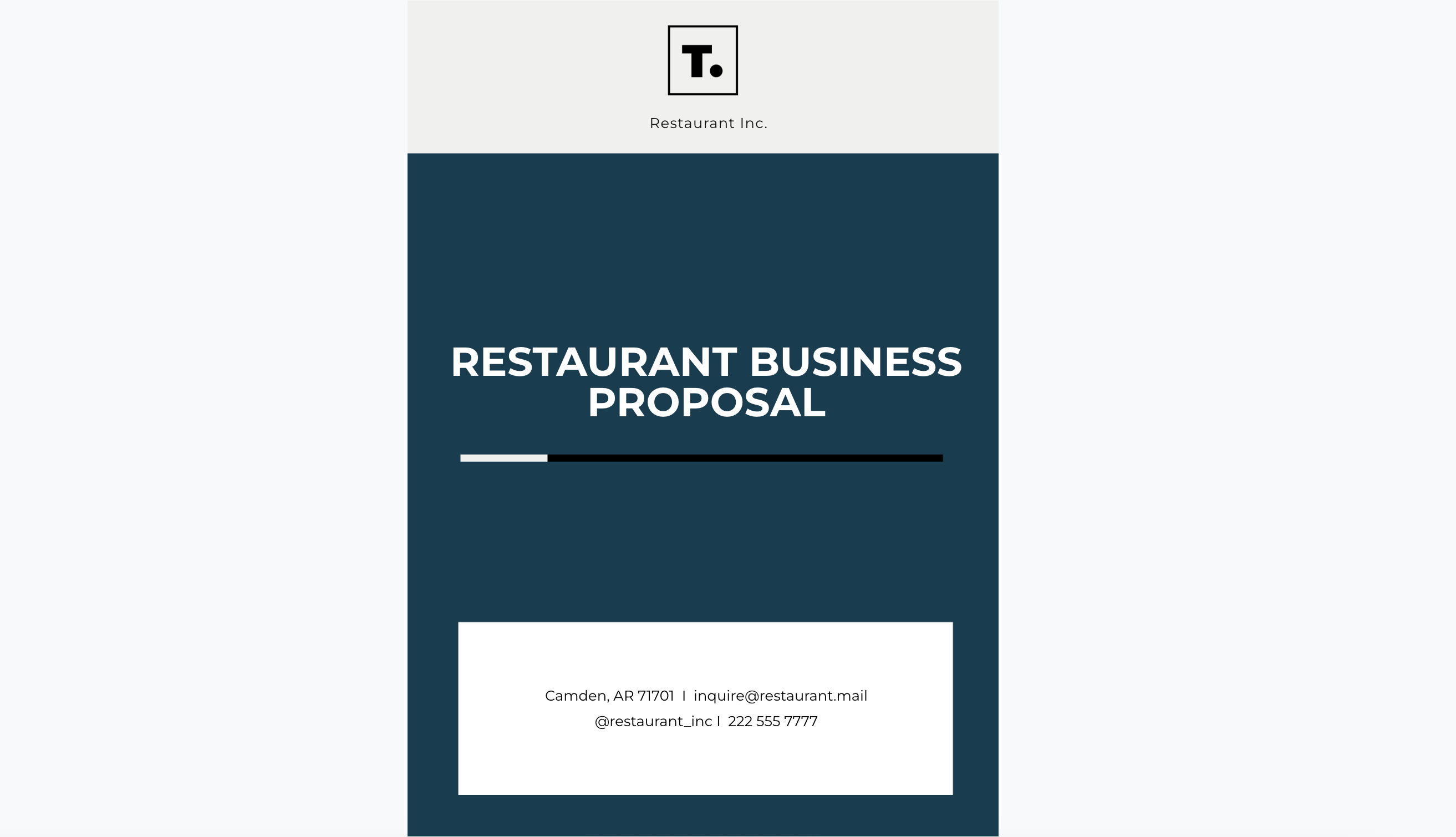
Google Docs: Restaurant business proposal
This comprehensive business proposal template is designed for restaurant owners to secure funding or partnerships, rather than simply presenting a concept. It covers essential elements like business vision, mission, and objectives, along with dedicated sections for market analysis, marketing strategy, operational plans, and financial planning.
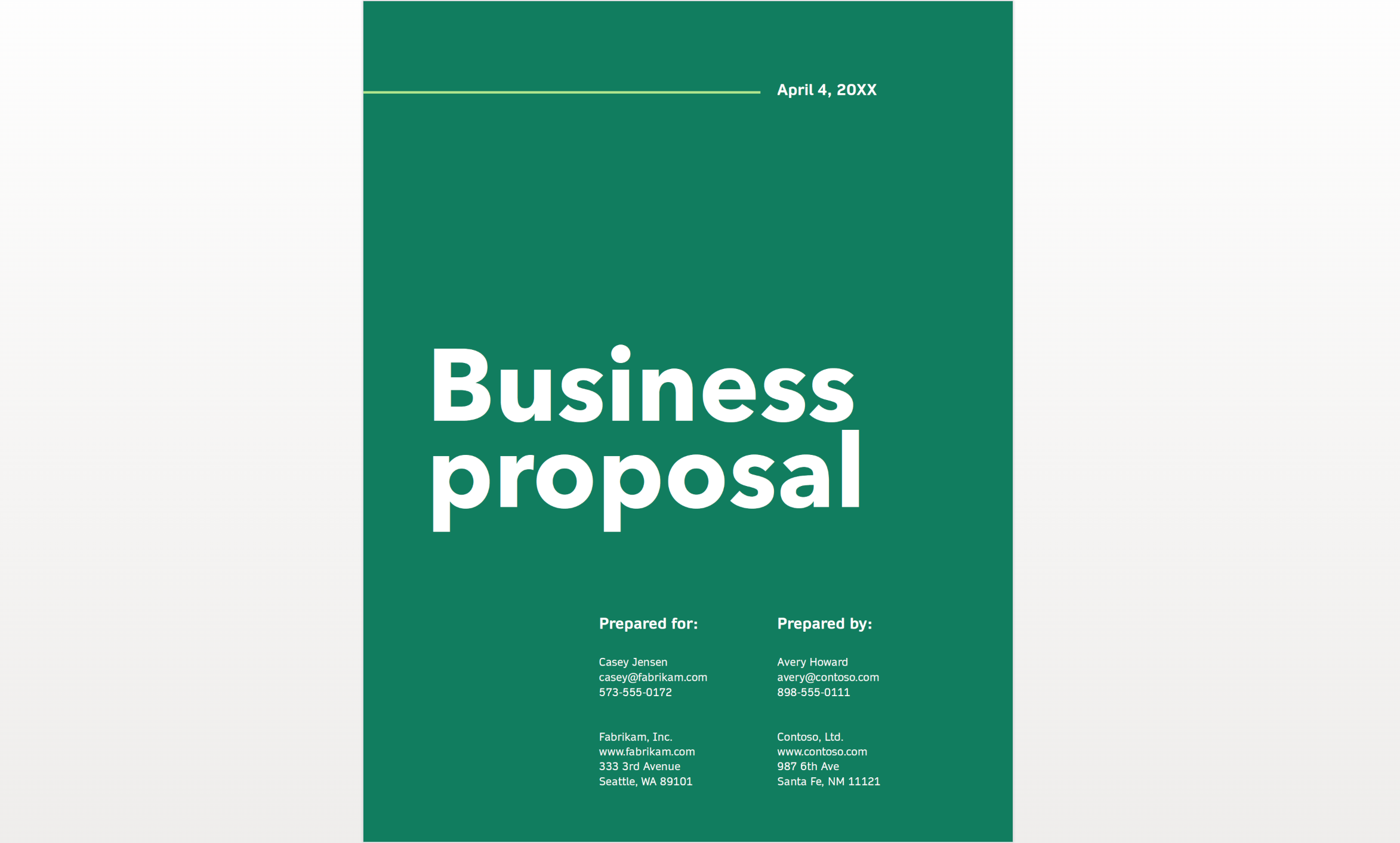
Microsoft Word: General-purpose business proposal
This Microsoft Word template helps businesses address key challenges using a structured layout that includes Summary, Problem Statement, and Solution sections. It also features dedicated areas for Market Opportunity and Financial Summary to effectively showcase scalable models and projected results.
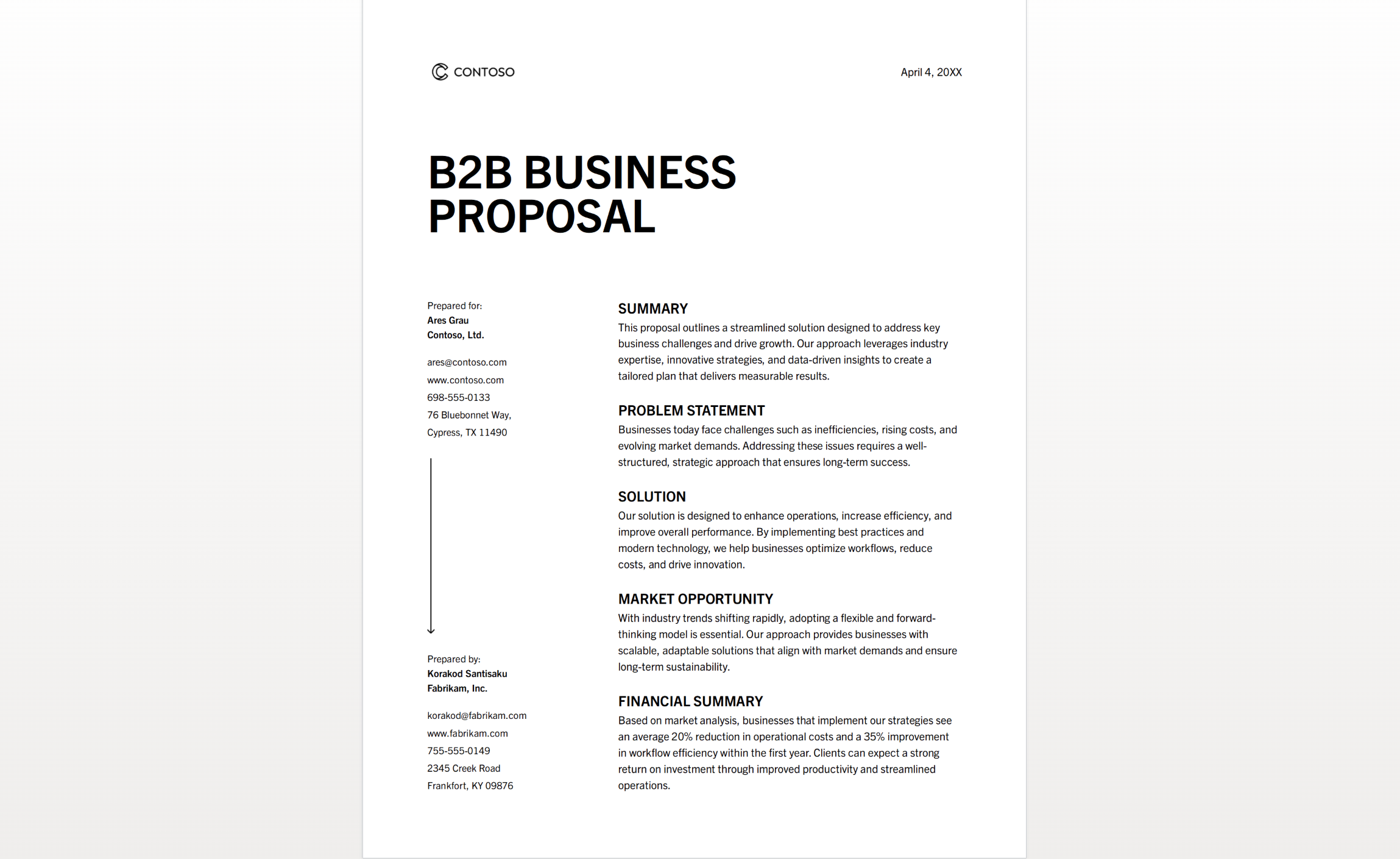
Microsoft Word: B2B basic business proposal
This Microsoft Word template is structured specifically for B2B interactions, featuring five sections: Summary, Problem Statement, Solution, Market Opportunity, and Financial Summary. The layout organizes contact information in a dedicated sidebar while allowing the main content to focus on solving inefficiencies and presenting financial benefits, such as operational cost reductions.
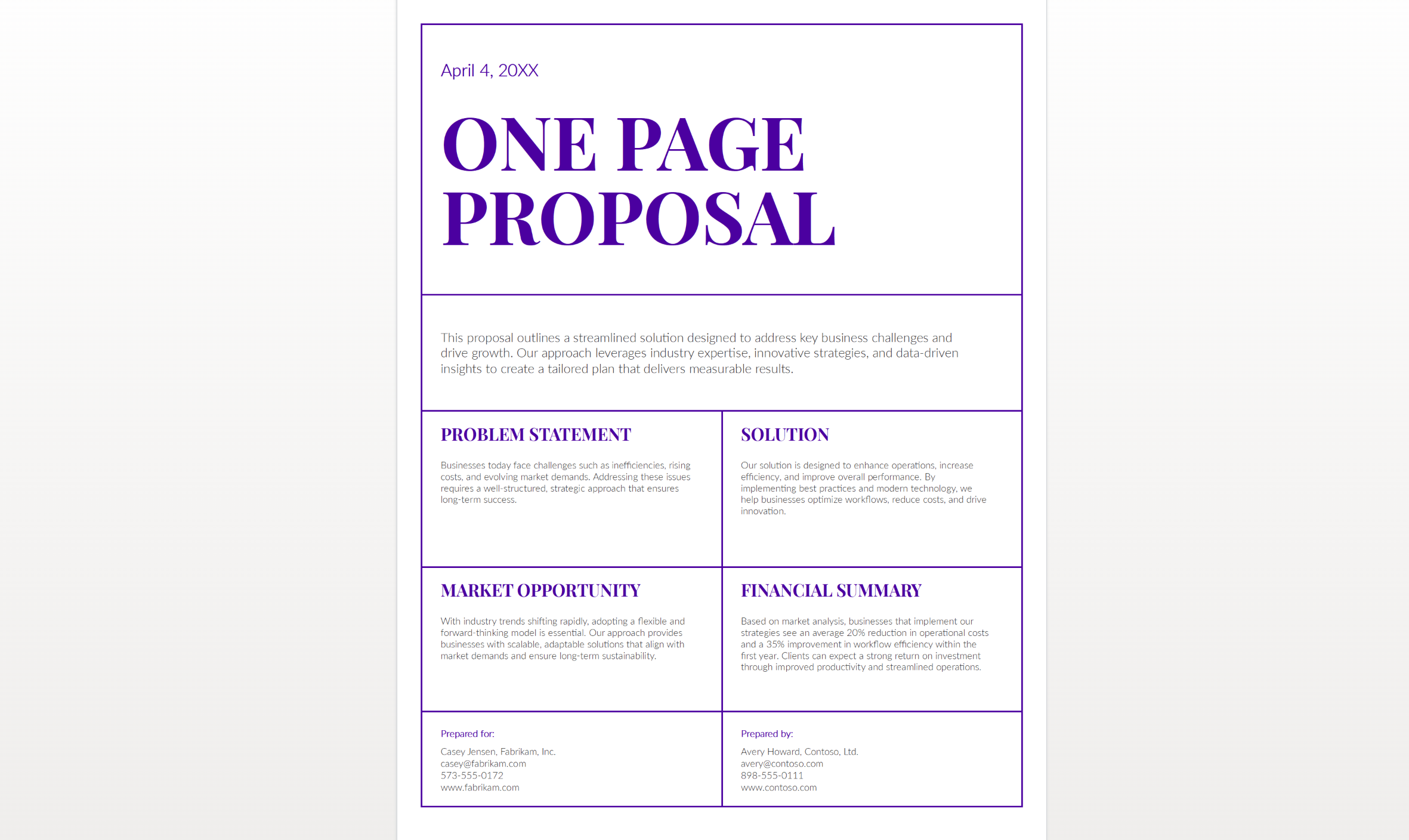
Microsoft Word: One-pager business proposal
Designed for maximum efficiency, this template fits key strategic elements—Problem Statement, Solution, Market Opportunity, and Financial Summary—onto a single page using a clear grid layout. The benefit of this condensed format is that it allows decision-makers to instantly grasp the core value proposition and ROI without the friction of navigating a multi-page document.
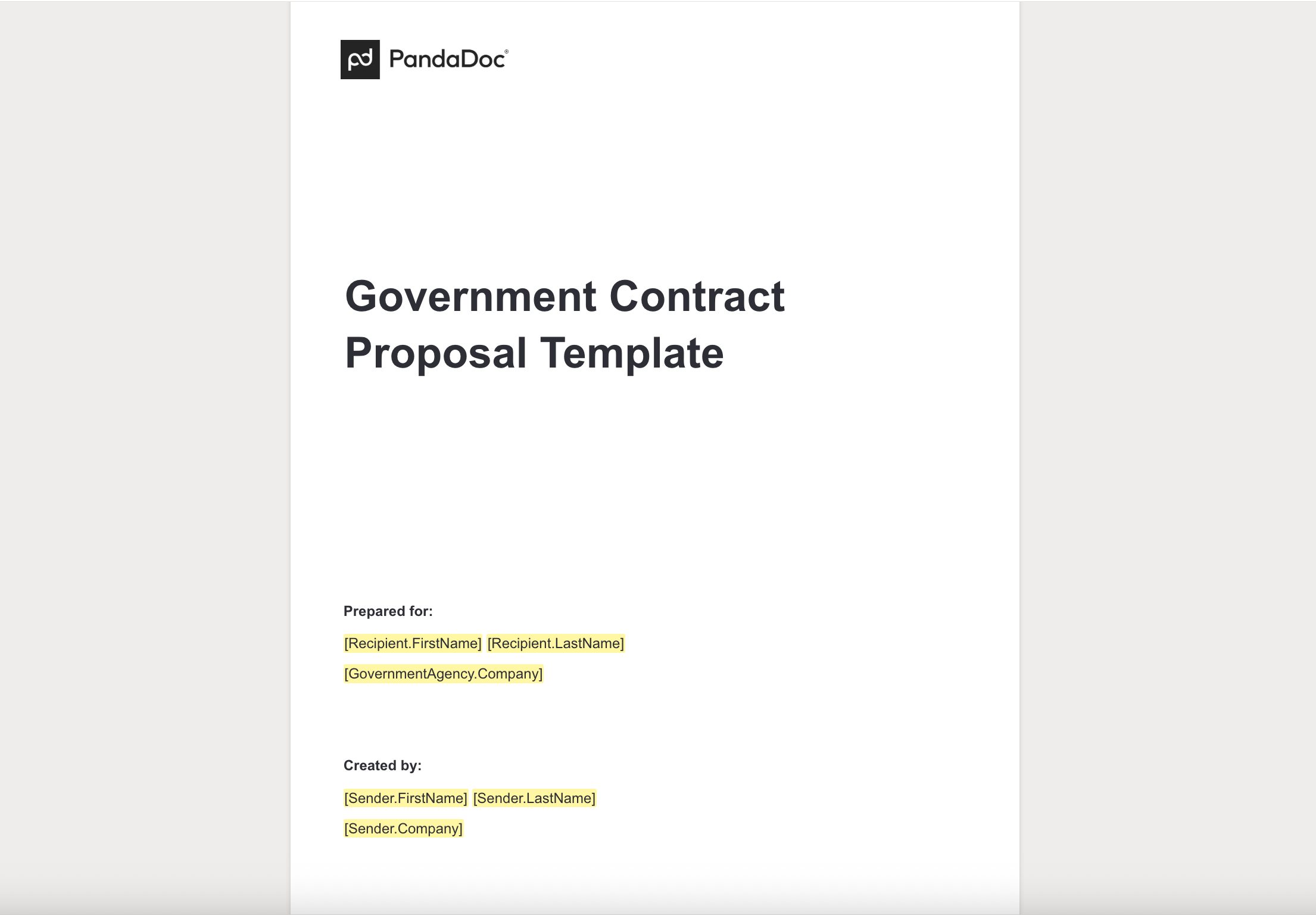
PandaDoc: Government contract proposal
Hosted on PandaDoc, this template is designed to meet the rigorous standards of government bids, featuring detailed sections for company background and project overviews. It supports a thorough proposal structure by including dedicated components for the scope of work, key objectives, project methodology, and timeline.
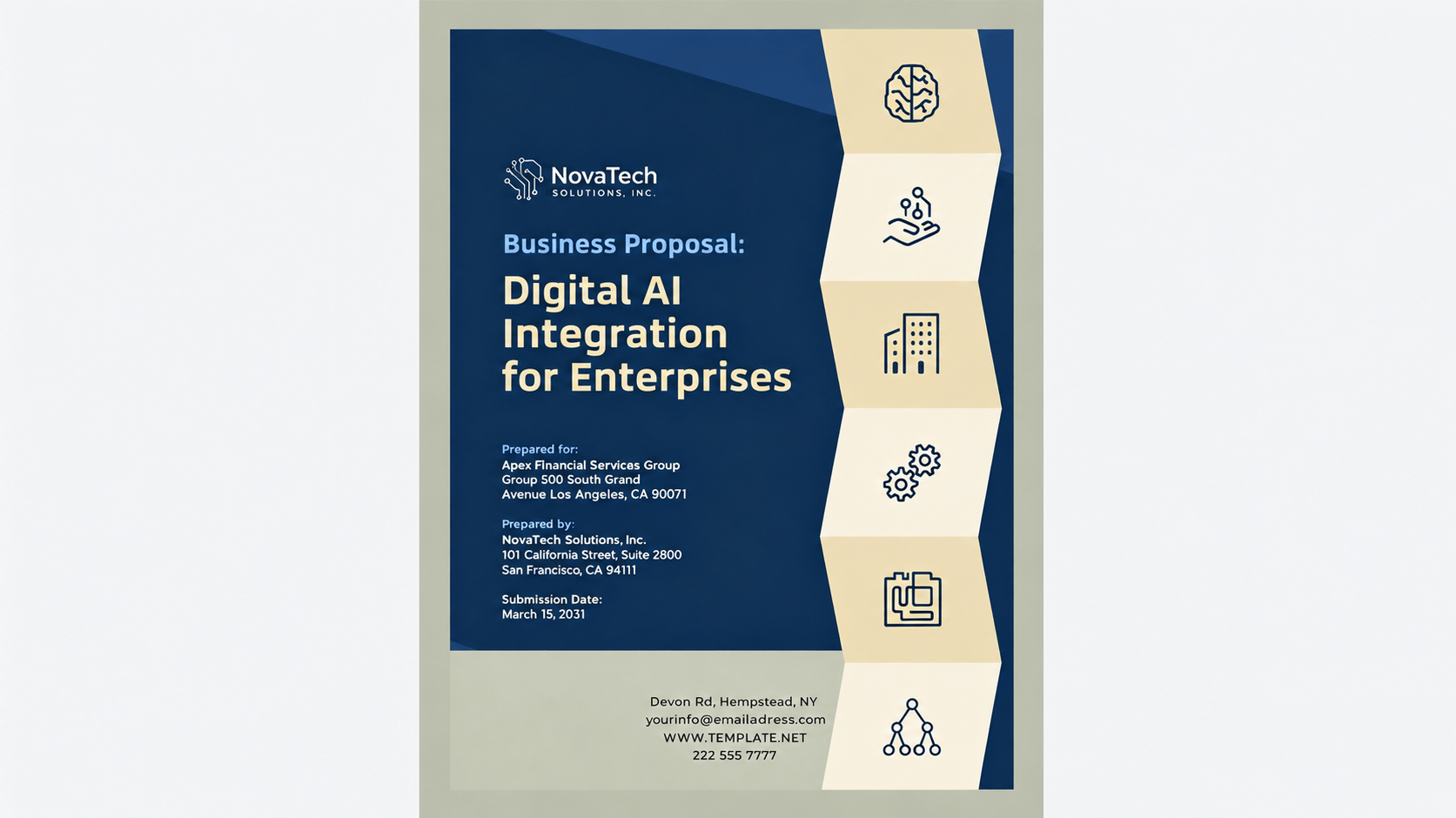
Venngage: Enterprise business proposal
This enterprise business proposal template by Venngage is designed for consultants, technology providers, software companies, and agencies proposing AI adoption and digital transformation initiatives. It includes dedicated sections for an executive summary, business background, problem statement, project objectives, methodology, scope of work, timeline, and next steps to communicate both the proposed solution and its business value. Clear sectioning, visual emphasis, and organized content blocks make it easy to present technical information in an accessible, professional format. You can customize the content, branding, colors, and graphics to fit enterprise AI projects, automation initiatives, or technology modernization proposals.
Canva: Marketing business proposal
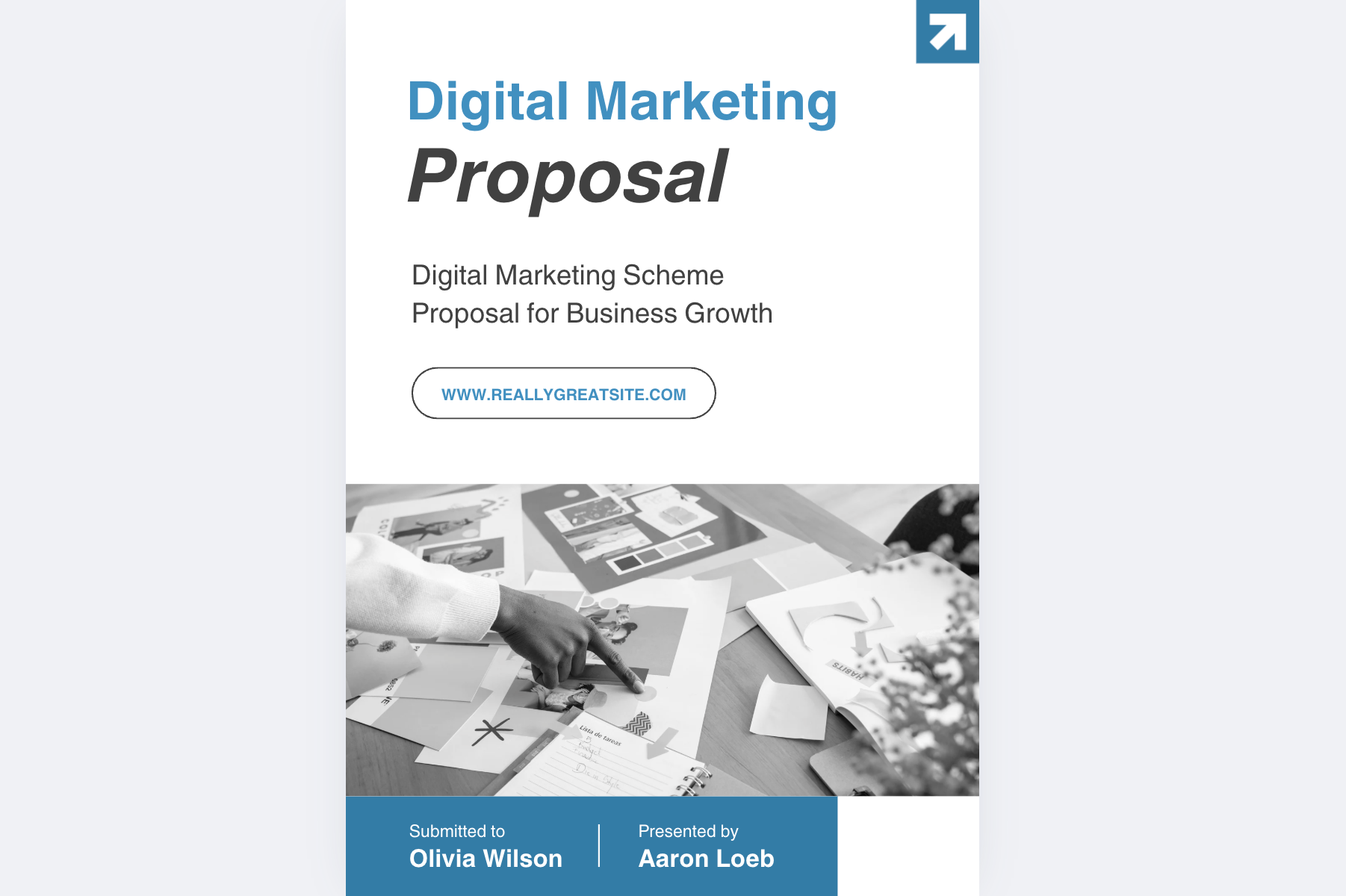
This visually engaging, multipage Canva template offers comprehensive coverage for digital marketing campaigns. Different marketing priorities are covered in sections that emphasize deliverables, reporting cadence, and ROI projections, allowing agencies to present a detailed and persuasive growth strategy.
Canva: Startup proposal
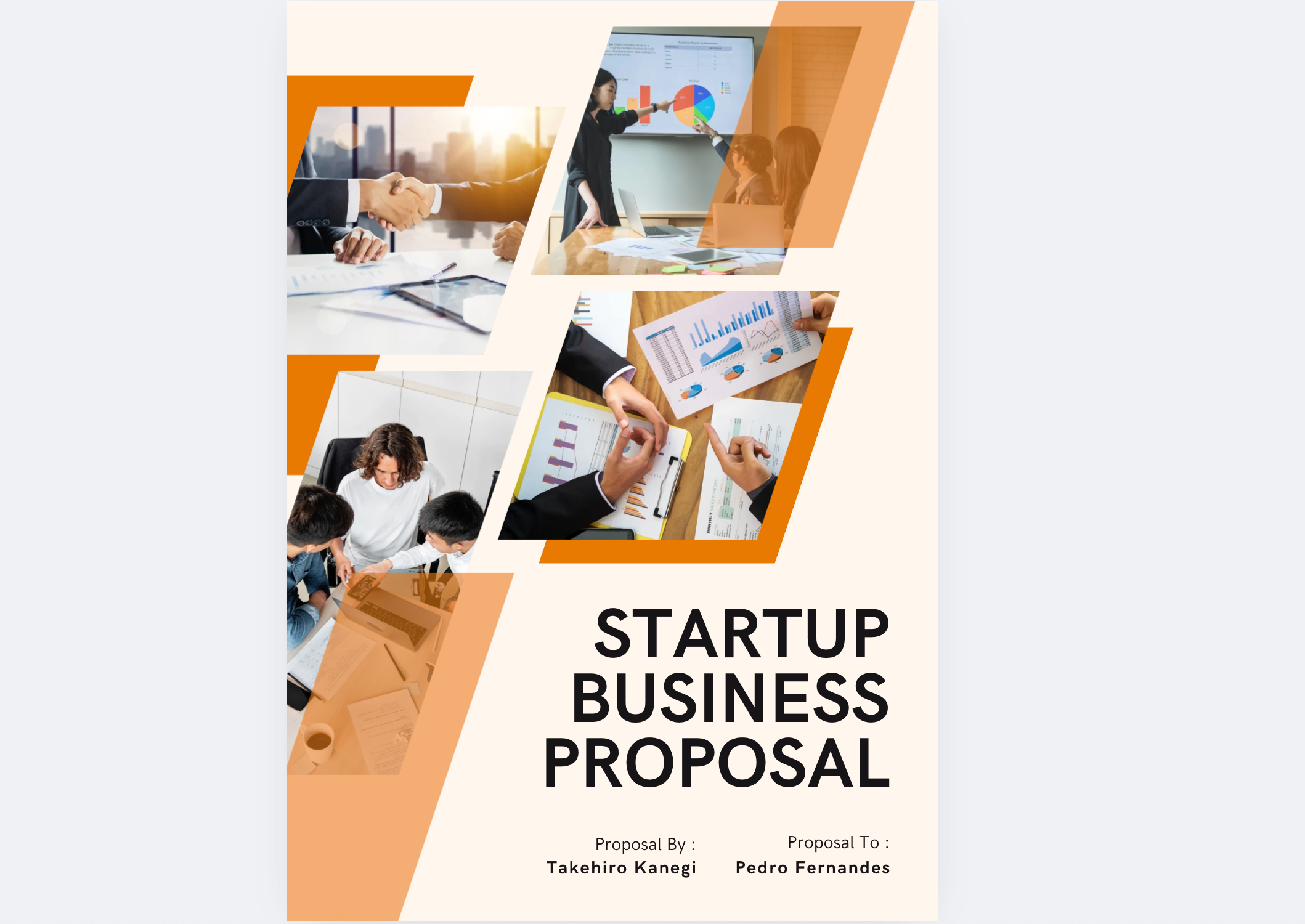
Startups looking for a high-impact presentation will appreciate the dynamic visuals and modern style of this Canva template, which provides a strong aesthetic baseline with preset themes and images. This design purposefully leaves the content structure open, giving founders the freedom to craft the remaining sections entirely around their specific business goals.
Create compelling business proposals with Lark
A strong template may give you the structure you need, but the platform you use to build and deliver that proposal can determine how efficiently your team operates. Lark stands out as the ideal workspace for business proposals because it bridges the gap between internal strategy and external presentation.
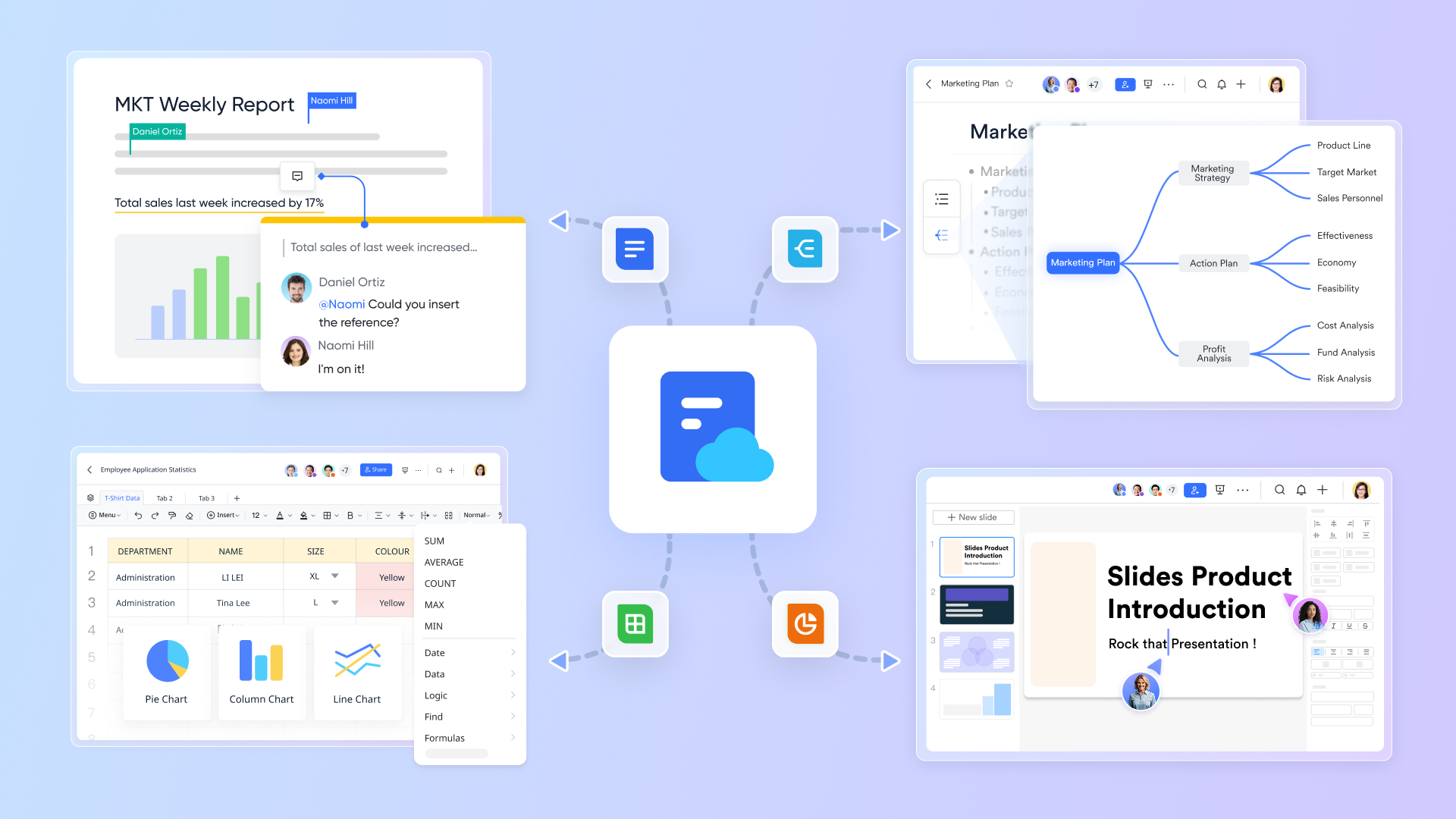
Toggling between a word processor for drafting, spreadsheets for data, and email for internal feedback creates friction. Lark brings these elements together in one unified superapp. Here is how Lark streamlines the proposal process:
- Real-time co-creation: Proposals often require input from sales, product, and legal teams, and Lark Docs allows multiple stakeholders to edit simultaneously and finalize content without version control issues.
- Multimedia proposals: Move beyond static text by embedding files, images, and even videos directly into your proposal to make your pitch more engaging for potential clients.
- Visualize data with Base: Embed Lark Base tables directly into your proposal document to present product catalogs, project deliverables, or resource lists in a clean, structured format that is easy to manage.
- Seamless communication: Collaborate effectively with your teammates to create the perfect proposal by discussing specific sections via Lark Messenger or hopping on a quick video call to align on strategy without leaving the document.
- Vast template library: Access a wide range of free, professional templates tailored to various industries and business needs to help you professionalize your pitch immediately.
Best of all, Lark offers a free plan that includes access to this full suite of collaboration tools, so you can hit the ground running.
Why business proposal templates matter for winning deals
Here's the truth about proposals: the faster you can respond with something professional, the more likely you are to win the deal. Clients are often evaluating multiple vendors at once, and the team that shows up organized and prepared creates an immediate advantage.
Business proposals are important documents and decision-makers expect them to be polished. You're trying to convince them to grant you money or resources after all, so there is little room for error. Templates help you deliver that level of quality without burning hours on formatting and structure every time you pitch.
Why templates directly impact your close rates:
- They reduce admin time dramatically. What used to take 3-4 hours now takes 30 minutes because you're editing instead of creating something new from scratch.
- Every proposal carries the same core messaging, pricing logic, and branding, which matters when multiple reps work the same sales playbook.
- Templates make it easier to respond to RFPs on tight deadlines, especially in industries like IT services, construction, and marketing where submission dates are strict.
When you streamline the proposal process, you free up time to focus on what actually matters: understanding the client's problem and crafting a solution that fits their specific needs.
Essential sections to include in a business proposal template
Most winning proposals share a similar structure, regardless of whether they're for a website redesign, SaaS implementation, or consulting engagement. Here's what every downloadable or cloud-based proposal template should include:
- Cover page: Include the client name, project title, your company logo, contact details, and proposal date (e.g., "Website Redesign Proposal for Acme Corp – January 2026"). This is your first impression—make it clean and professional.
- Table of contents: For longer proposals spanning 5-15 pages, a simple outline helps decision-makers navigate to the sections they care about most.
- Executive summary: Capture the client's problem, desired outcome, and your high-level solution in one page. This is often the only section some stakeholders read, so make it compelling.
- Problem/opportunity statement: Restate the client's situation using their own language, based on discovery notes or RFP requirements. Show them you understand what they're dealing with.
- Proposed solution or approach: Outline your methodology, phases, and tools. Be specific about how you'll solve their problem—not just what you'll deliver.
- Scope of work and deliverables: Clearly list what's included and what's excluded. This section prevents scope creep and sets expectations upfront.
- Timeline and milestones: Lay this out in a simple table format with dates (e.g., "Phase 1 – Discovery: Feb 3–14, 2026"). Clients want to know when things will happen.
- Pricing and packages: Present options like "Essential," "Growth," and "Enterprise" with notes on payment schedule (e.g., 40/40/20 milestones). Make it easy to compare.
- About us/company overview: Include a condensed story, team snapshot, and differentiators relevant to that industry. Keep it brief—this isn't the star of the show.
- Case studies and testimonials: Include at least one project of similar size or vertical with concrete metrics (e.g., "increased MQLs by 37% in 2023"). Social proof builds trust.
- Terms, conditions, and legal section: Cover payment terms, IP ownership, confidentiality, and cancellation clauses. Don't skip this.
- Signature and acceptance page: Include space for e-signature or physical signing with names, titles, and dates. Make it easy for them to sign and move forward.
Types of business proposal templates
While the core structure stays similar across industries, different teams rely on tailored proposal templates that speak to their specific context. Here's a breakdown of common template types:
- Sales and marketing proposal templates: Designed for agencies pitching SEO retainers, paid ads management, content marketing, or brand campaigns. These emphasize deliverables, reporting cadence, and ROI projections.
- SaaS implementation and onboarding proposals: Built for CRM rollouts, data migrations, or marketing automation setups. They typically include training schedules, integration requirements, and success metrics.
- Consulting proposal templates: Ideal for strategy projects, audits, or workshops—like a 6-week discovery engagement. These focus heavily on methodology, expert qualifications, and expected outcomes.
- Project proposal templates: Used for internal initiatives, like launching a new product line or upgrading infrastructure in Q3 2026. These need clear business cases and stakeholder alignment.
- Construction and trade proposals: Cover remodeling, commercial builds, or maintenance contracts with detailed specs, compliance notes, and required deposits. Very document-heavy.
- Research or academic project proposals: Used in universities, accelerators, or grant applications with fixed review dates. These follow strict formatting requirements.
Each type shares a backbone—summary, scope, timeline, pricing—but uses different language, visuals, and attachments depending on the audience.
Best practices for saving, sharing, and tracking proposals
How you store and send proposals is just as important as how you write them, especially for teams closing multiple deals per month.
- Standardize file naming conventions (e.g., "ClientName_Project_Proposal_2026-02-10.pdf") to make search easier
- Store templates and final proposals in a shared, access-controlled location (e.g., Google Drive, SharePoint, or a proposal platform) with clear folder structure
- Use trackable links or embedded analytics from a SaaS proposal tool or CRM to see when prospects open, view, and forward proposals
- Send proposals with a short, personalized message summarizing next steps and suggesting a meeting date for review
- Always save a final, signed copy in a dedicated "Executed contracts" folder or system of record (e.g., CRM or CLM platform) with date and owner
- Use the share button or link-sharing features in your tools rather than attaching large files when possible
- Set up filters in your proposal platform to quickly browse open vs. won vs. lost proposals for reporting
These operational details might seem minor, but they prevent lost documents, version confusion, and missed follow-ups.
Common mistakes to avoid with business proposal templates
Templates are powerful, but a few recurring errors can cost you deals or slow approvals. I've seen all of these happen—sometimes in my own work.
- Forgetting to update client details: Old names, past dates, or previous project references left over from an earlier proposal instantly undermine your credibility
- Overloading with jargon: Too much internal language or product features instead of focusing on outcomes and client value makes proposals feel generic
- Confusing pricing tables: Too many options or unclear inclusions lead to decision paralysis—keep it to 2-3 packages maximum
- Ignoring mobile readability: Many proposals get viewed on tablets and phones; test how your PDF looks on smaller screens
- Letting templates go stale: Case studies from 2021, outdated logos, or old pricing that doesn't match current offerings make you look disorganized
- Skipping the review step: One typo in a client name or pricing figure can tank the whole effort
- Not accounting for the recipient's context: A perfect proposal for one industry might completely miss the mark for another
Set a regular review cadence to keep templates aligned with current pricing, positioning, and legal language. Add it to your calendar so it actually happens.
FAQs on business proposal templates
How to write a business proposal template?
Start by outlining the core sections every proposal needs, such as an executive summary, scope of work, timeline, and pricing. Once you have the structure, draft standard text for the recurring parts (like company bio and terms) and use clear placeholders for client-specific details, ensuring the design aligns with your brand identity.
Can I get business proposal templates for free?
Yes, many platforms offer free templates to help you get started without any cost. Lark, for example, provides a vast library of templates that are completely free to use and easy to customize for any industry and use case.
Can I download free business proposal templates?
Yes, you can find downloadable templates in formats across the web. If you use Lark, you can access and edit templates directly within the platform or export them as needed, giving you flexibility in how you share and present your work.
Related
Table of contents
Start using Lark today

Manage all your work in one place
Boost team efficiency by 10x
Save up to 70% on software costs
Table of contents
Start using Lark today
Manage all your work in one place
Boost team efficiency by 10x
Save up to 70% on software costs
Keep reading








2026 Lark Technologies Pte. Ltd.
Headquartered in Singapore with offices worldwide.






Explore: