














Customer Segmentation: Definition, Types & Top Tools

Ryan Tanner
Product Marketing Specialist
Sep 18, 2026
Ryan Tanner
Sep 18, 2026

23 min read


Understanding your customers deeply is the foundation of every successful business strategy. Customer segmentation empowers companies to divide their customer base into smaller, more meaningful groups, helping teams deliver personalized experiences, improve marketing ROI, and increase satisfaction.
From retail to SaaS, segmentation transforms scattered data into strategic clarity, guiding how businesses communicate, sell, and serve. Growing organizations that rely on modern collaboration platforms, which combine communication, analytics, and task management, bring segmentation insights to life. This guide will step close to the notion of customer segmentation and lead you to an innovative CRM today.
1. Lark: Unified workspace for collaborative customer segmentation
2. HubSpot: CRM for marketing and segmentation
3. Salesforce Marketing Cloud: Enterprise-level customer segmentation
4. Qualtrics: Experience management and customer segmentation
5. Optimove: Predictive segmentation and AI customer analytics
6. Zendesk: Support-centric customer segmentation
7. Contentsquare: Behavioral segmentation for digital experience

What is customer segmentation?
Customer segmentation is the process of dividing your customer base into distinct groups based on shared characteristics such as demographics, behavior, geography, or value. These segments help businesses understand who their customers are, what they want, and how they interact with the brand.
In essence, customer segmentation analysis turns complex data into actionable insights. It supports marketing strategies, improves targeting precision, and builds stronger relationships by allowing brands to treat each segment differently.
A customer segmentation model may include demographic segmentation for age and income, behavioral segmentation for purchase habits, or value-based segmentation for lifetime worth.
When executed effectively, segmentation fuels growth by helping organizations focus on their most profitable and loyal customers, optimizing every touchpoint across marketing, sales, and customer service.
Types of customer segmentation (with examples)
There's no single way to categorize customers. Different industries use segmentation models that best fit their audience and goals. The following are the most common types, each offering unique perspectives on customer needs.
- Demographic segmentation: This method divides customers based on measurable characteristics like age, gender, income, education, or occupation. It's one of the simplest and most widely used forms of segmentation because demographic data is easy to collect and analyze. Businesses use these insights to tailor products, pricing, and marketing campaigns to the right audience groups. For example, a fashion retailer targets "Young Professionals" aged 25–34 with modern office wear promotions that align with their lifestyle and income level.
- Geographic segmentation: Geographic segmentation focuses on where customers live, including region, country, city, or even climate. It helps brands adapt their offerings and messages to match local preferences, culture, and environment. This approach is especially valuable for global or multi-region businesses aiming for location-specific relevance. For instance, a beverage company promotes cold drinks in tropical regions and hot beverages in colder areas to suit seasonal demand patterns.
- Behavioral segmentation: This approach classifies customers by their actions, including purchase frequency, product usage, engagement level, and brand loyalty. It allows companies to identify high-value and at-risk customers for targeted marketing and retention. Behavioral data provides actionable insights into why and how people buy, enabling personalized offers and experiences. For example, an online marketplace identifies frequent shoppers and creates exclusive loyalty programs to reward repeat purchases.
- Psychographic segmentation: Psychographic segmentation goes beyond surface-level data to understand customer lifestyles, interests, values, and personality traits. It reveals the emotional drivers behind purchasing decisions, helping brands connect more deeply with their audience. This type of segmentation is ideal for positioning products based on shared beliefs or aspirations. For example, a wellness brand designs campaigns for "Mindful Consumers" who prioritize sustainability and holistic living.
- Firmographic segmentation (for B2B): Firmographic segmentation applies demographic-like criteria to organizations rather than individuals. Businesses are grouped by factors such as company size, revenue, industry, and structure. This helps B2B marketers craft tailored outreach strategies, pricing models, and product packages for different business categories. For example, a SaaS provider offers scalable pricing tiers and support options separately for startups, SMEs, and large enterprises.
- Technographic segmentation: Technographic segmentation categorizes customers based on the technology, software, or devices they use. It's increasingly relevant in digital and SaaS industries where user experience depends on tech preferences. Understanding device usage and tech adoption helps brands personalize communication and optimize usability. For instance, a streaming platform adjusts its UI and content recommendations for mobile-first users versus desktop subscribers.
- Value-based segmentation: Value-based segmentation groups customers by their economic impact—such as lifetime value, purchase frequency, or profitability. This helps businesses prioritize their most valuable customers and allocate resources strategically. High-value customers often receive premium services, loyalty perks, or early access to offers. For example, a travel brand provides exclusive rewards and elite benefits to its top-spending customers, ensuring long-term retention.
Take a glance at the 7 best customer segmentation tools
7 best customer segmentation tools
Customer segmentation software plays a critical role in helping teams organize, analyze, and act on customer insights. These tools turn raw data into clear audience clusters, helping marketers' campaigns, product teams design better experiences, and leadership teams make smarter decisions. Below are the 7 top customer segmentation tools businesses rely on today, complete with examples and actionable CTAs.
1. Lark: Unified workspace for collaborative customer segmentation
Customer segmentation isn't just about analyzing data, it's about aligning teams around insights that actually drive business decisions. Lark provides a unified workspace where marketing, sales, analytics, and product teams can collaborate seamlessly to collect, interpret, and act on segmentation data. Instead of juggling multiple tools, teams use Lark's connected features Base, Sheets, Messenger, Tasks, and Docs to turn customer insights into coordinated action.
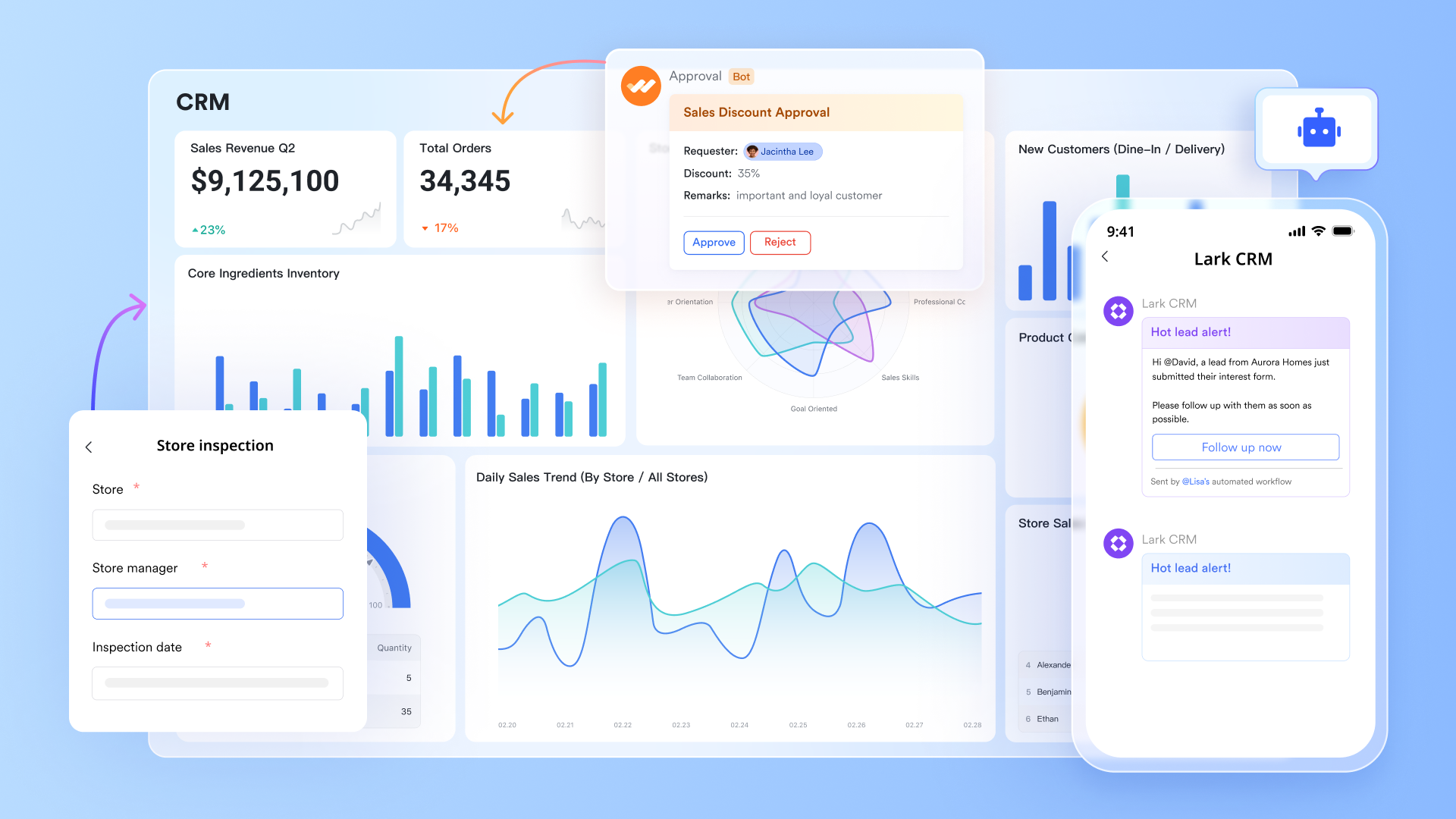
- Lark Base: Centralized customer database and segmentation dashboard
Lark Base serves as the foundation for segmentation by acting as a live, customizable customer database. Teams can store customer profiles, purchase histories, behavioral data, and survey responses in a single structured workspace.
Each record can include custom fields such as region, lifetime value, purchase frequency, engagement score, or churn risk. You can view this data as tables, Kanban boards, or dashboards, allowing both analysts and marketers to explore segments visually. Also, automation rules enhance efficiency for example, when a customer's engagement score drops, Base can automatically tag them as "At-Risk" and notify the account manager via Messenger.
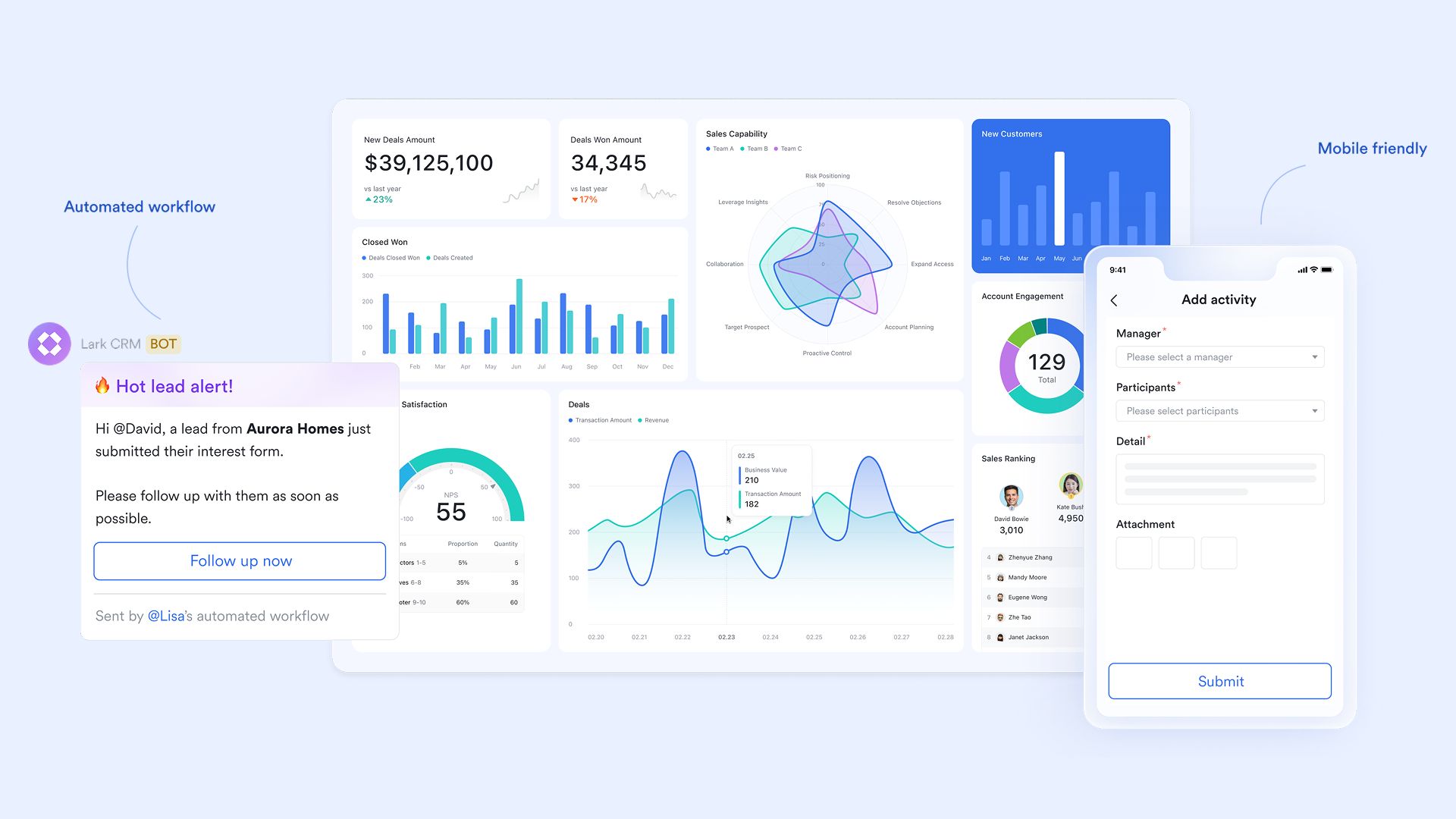
- Lark Messenger: Instant alignment between data and action
Segmentation insights are only valuable if they reach the right people at the right time. Lark Messenger ensures instant communication between teams analyzing customer data and those executing campaigns or follow-ups.
Each conversation thread can include links to Base records or be converted to Lark Tasks so that stakeholders can jump directly into the data context or the overall project process. Teams can also set up dedicated group chat like "High-Value Customer Alerts" or "Churn Risk Discussions", where automation posts updates from Base whenever a customer moves segments.
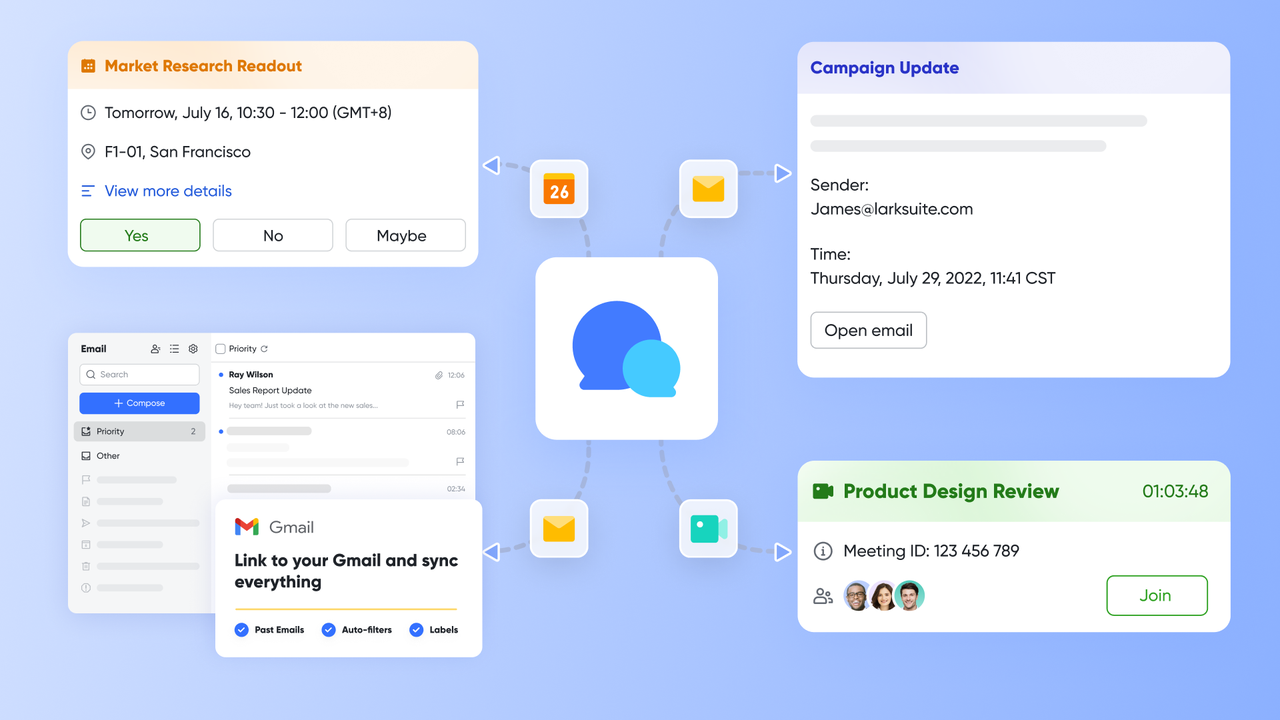
- Lark Docs: Collaborative reporting and strategy documentation
Lark Docs lets teams capture qualitative insights like persona profiles, campaign outcomes, or segment definitions in shared, living documents. Marketing, analytics, and leadership can share documents, co-edit, comment, or co-author segmentation reports or campaign briefs, embedding live Sheets charts or Base views directly inside Lark Docs. Docs serve as a "single source of truth" for customer intelligence: one place to store definitions, rationale, and learnings so that future campaigns build on past insights.
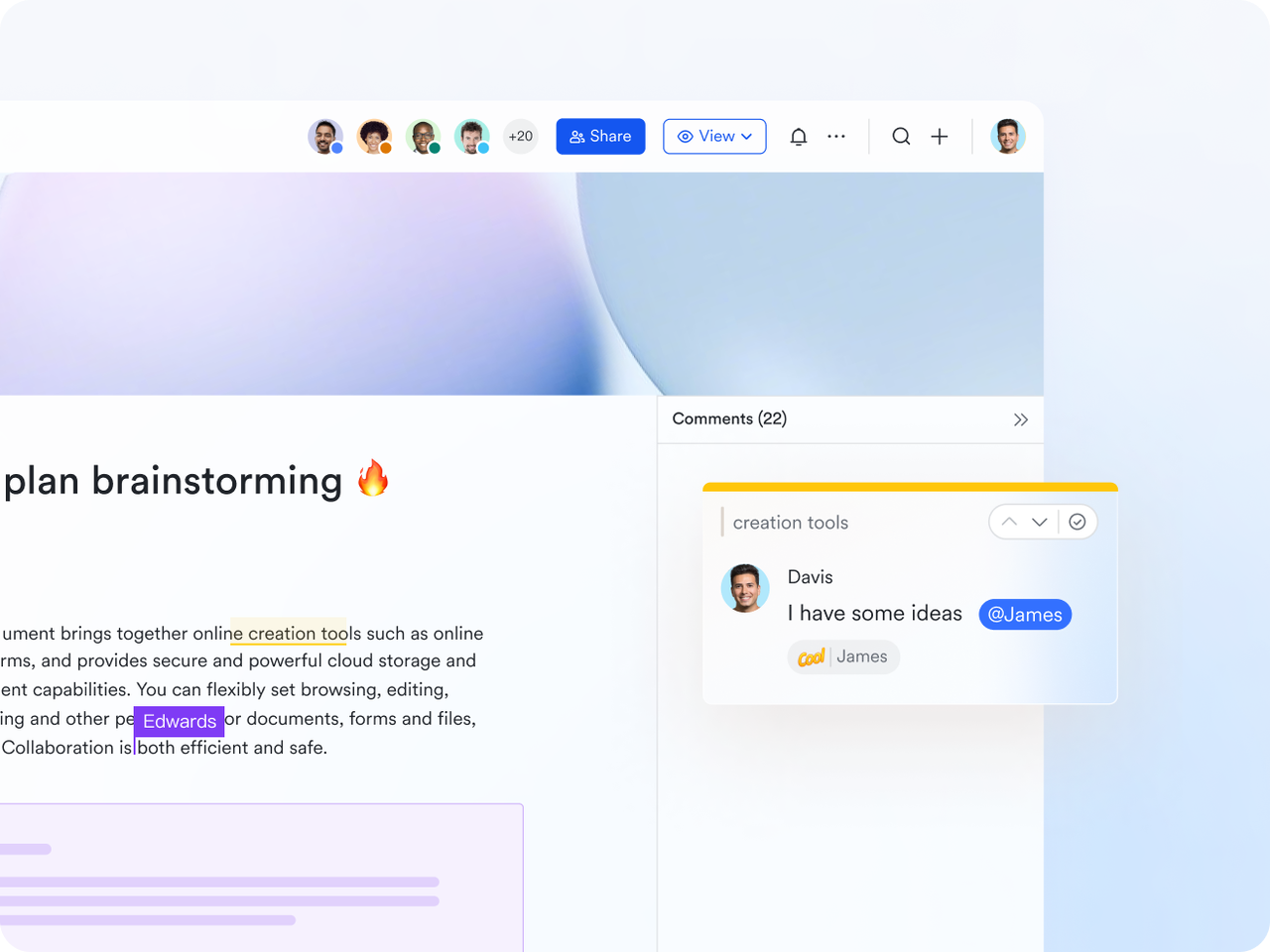
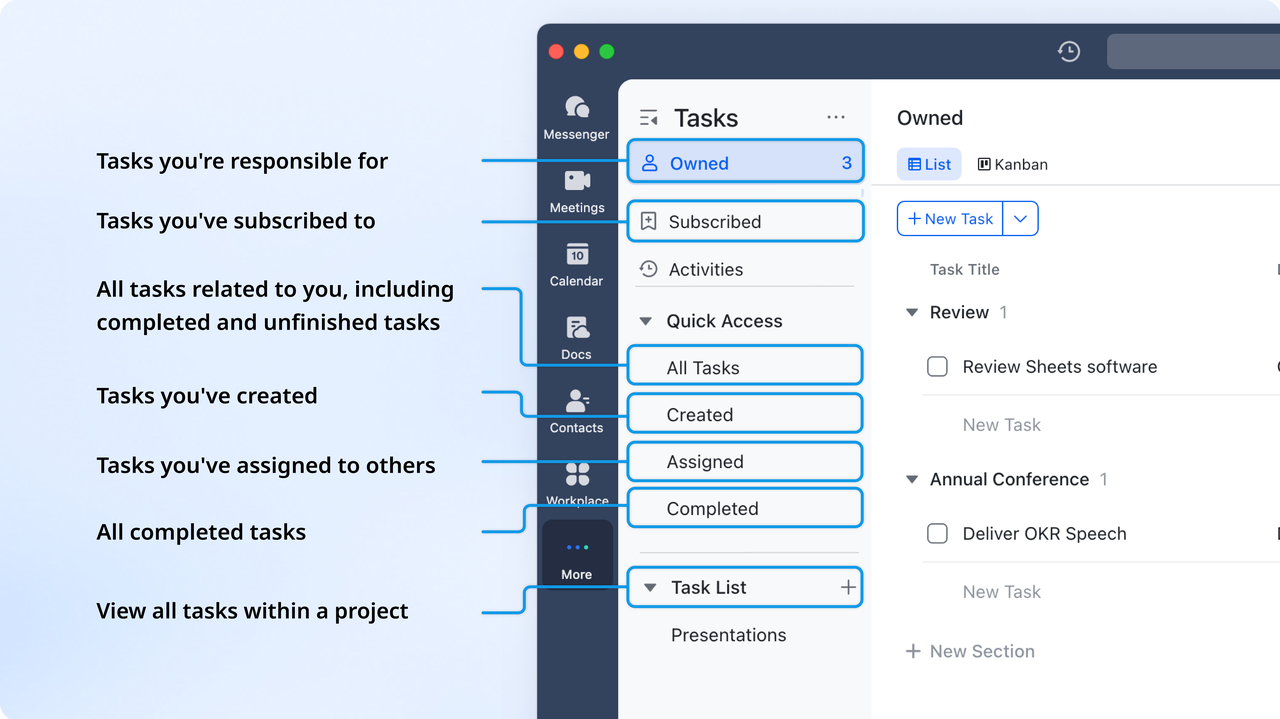
- Lark Tasks: From insights to execution
Every insight needs an owner. Lark Tasks transforms segmentation findings into concrete next steps by assigning actions with deadlines and priorities. Teams can create task boards for each customer segment, such as "Reactivation Campaign for Dormant Users" or "VIP Loyalty Offers," and track progress in Kanban or List views. Every stakeholder (task owner, follower, and creator) will get notifications and further the tasks without anyone getting astray.
Pros:
- Unified collaboration and workflow platform: Combines communication, data management, automation, and reporting in one workspace.
- Real-time funnel visibility: Lark Base and Dashboards give teams instant insights into lead progression and conversion metrics.
- Automation at every stage: Trigger tasks, messages, and automated approvals automatically as funnel data changes.
- Cross-functional alignment: Marketing, sales, and operations collaborate seamlessly through integrated Docs, Sheets, and Messenger.
- Scalable and cost-efficient: The free Starter plan supports up to 20 users with automation and AI features, ideal for SMBs and growing teams.
Cons:
- Requires time for advanced customization: Building complex automation in Base may need guidance and time, which its Help Center can provide.
- Starter plan: Free forever plan that includes 11 powerful tools for up to 20 users. It also comes with 100GB of storage, 1000 automation runs, AI translations, and more.
- Pro plan: $12/user/month (billed annually) for up to 500 users. It includes everything in Starter plus group calling for up to 500 attendees, 15TB of storage, 50,000 automation runs, and more.
- Enterprise plan: Contact sales for custom pricing. Supports unlimited users and includes even more automation runs and advanced security, compliance, and management features.
2. HubSpot: CRM for marketing and segmentation
HubSpot is a comprehensive crm software designed for growing businesses that value simplicity and automation. It allows teams to create dynamic customer segments, manage relationships, and execute marketing campaigns from one place. HubSpot's automation workflows make it easy to target customers based on behavior, lifecycle stage, or engagement level. With real-time insights and an intuitive dashboard, it's an excellent choice for SMBs seeking smarter, faster marketing execution.
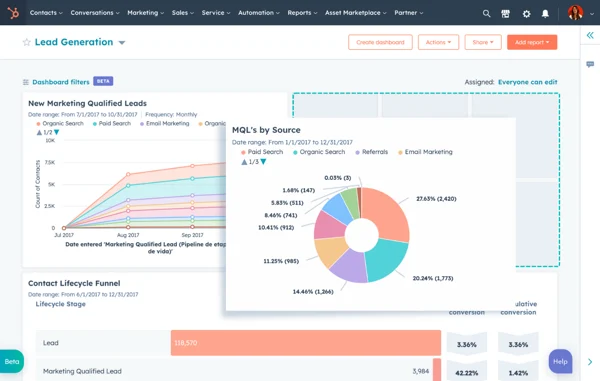
Image source: hubspot.com
Key features:
- Smart lists: Automatically update based on customer behavior, lifecycle stage, or engagement.
- Visual workflows: Automate personalized customer journeys using intuitive drag-and-drop triggers.
- Segmentation tools: Categorize contacts by demographics, purchase history, and campaign response.
- Analytics dashboard: Delivers real-time metrics for campaign performance and audience growth.
- Integrations: Connects seamlessly with email, ad, and social platforms for unified execution.
Pros:
- Easy to set up and use for marketing and sales teams.
- Real-time segmentation updates improve campaign accuracy.
- Offers seamless CRM and automation integration.
- Supports a wide range of third-party app integrations.
Cons:
- Can become costly with larger contact lists.
- Limited customization options in lower-tier plans.
Pricing:
- Free CRM
- Starter: $15–20/user/month
- Pro: From ~US $890/month
3. Salesforce marketing cloud: Enterprise-level customer segmentation
Salesforce Marketing Cloud is built for large organizations managing complex customer journeys across multiple touchpoints. It uses AI-driven insights through Einstein Analytics to predict behavior and personalize communication. Its strength lies in consolidating marketing, sales, and service data to deliver 360-degree customer visibility. For enterprises that need precision targeting and scalability, Salesforce remains the industry benchmark in segmentation intelligence.
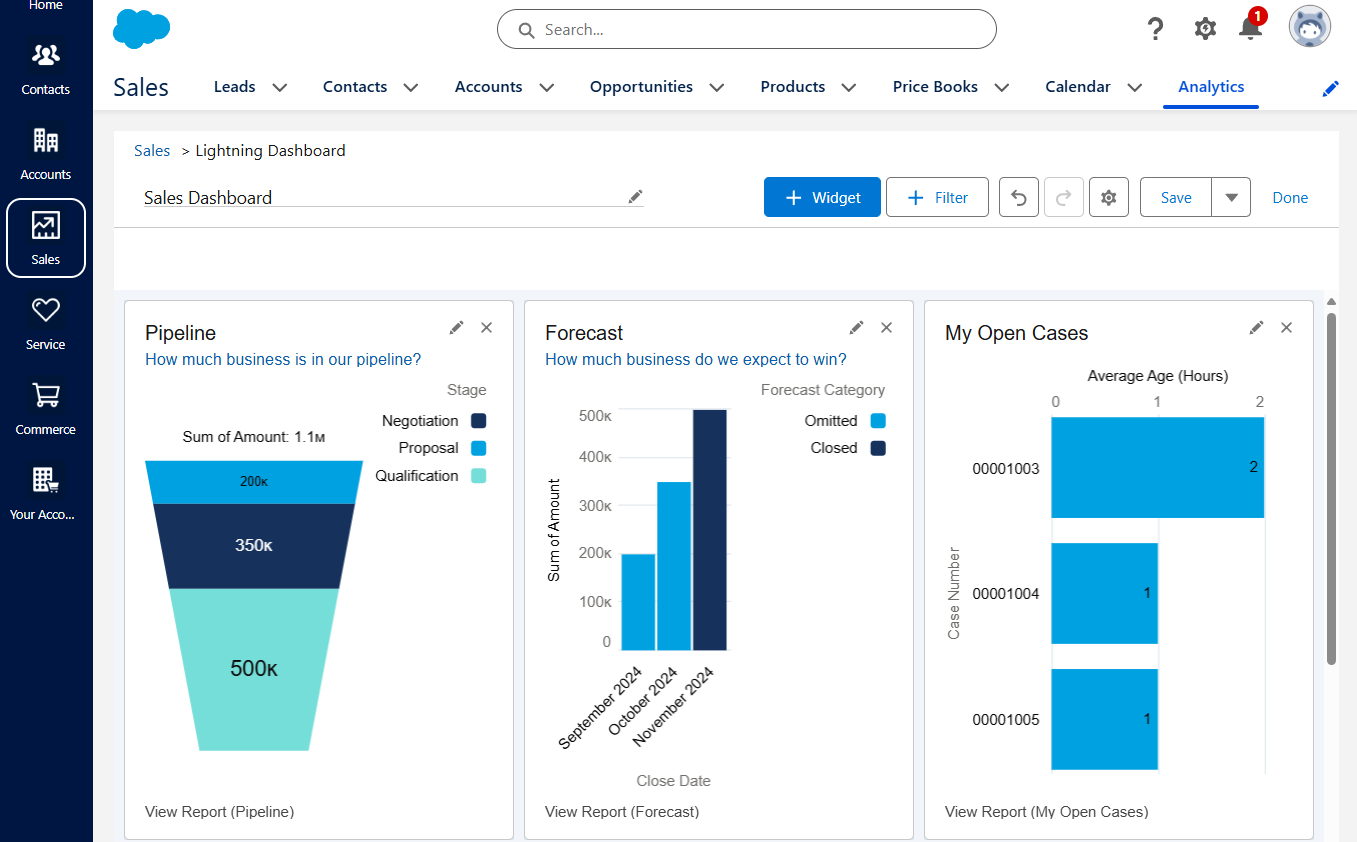
Image source: salesforce.com
Key features:
- Einstein Analytics: Provides AI-driven insights to predict behavior and enhance personalization.
- Unified profiles: Merges marketing, sales, and service data into a 360-degree customer view.
- Multi-channel campaigns: Automates messaging across email, SMS, ads, and social touchpoints.
- Journey automation: Streamlines complex customer flows through intelligent workflows.
- Performance dashboards: Tracks engagement, conversions, and overall marketing ROI.
Pros:
- Highly scalable and customizable for enterprise needs.
- Robust AI for predictive and behavioral insights.
- Integrates seamlessly with Salesforce CRM ecosystem.
- Strong data governance and compliance framework.
Cons:
- Requires advanced setup and technical training.
- Pricing is high for smaller businesses.
Pricing:
- Starter Suite: $25/user/month
- Marketing Cloud Growth: From $1,250/month
- Advanced: $3,250+/month
4. Qualtrics: Experience management and customer segmentation
Qualtrics is an advanced experience management platform that helps businesses understand customer perceptions, emotions, and motivations. It combines survey, behavioral, and sentiment data to form rich psychographic segments. With visual dashboards and real-time reporting, Qualtrics allows teams to translate feedback into action. It's ideal for organizations focused on CX optimization and strategic customer research.
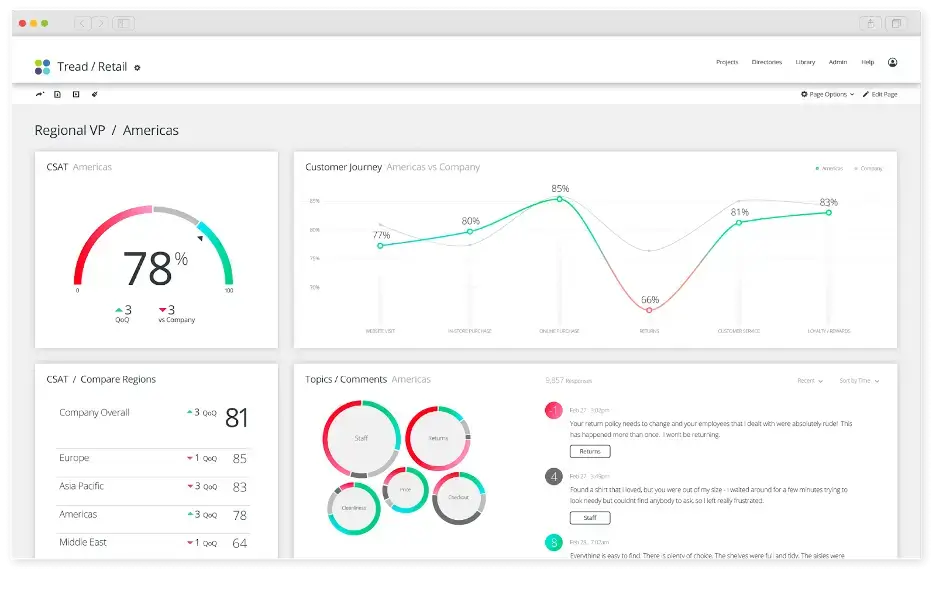
Image source: qualtrics.com
Key features:
- Survey analytics: Gathers customer feedback to create precise psychographic segments.
- Sentiment analysis: Interprets emotions and opinions to guide experience strategies.
- Journey mapping: Visualizes every stage of the customer experience for optimization.
- CRM integration: Combines behavioral and survey data for unified insights.
- Real-time alerts: Notifies teams instantly about feedback requiring immediate attention.
Pros:
- Excellent for customer experience (CX) and brand insights.
- Supports highly customizable data collection.
- Delivers real-time segmentation analytics.
- Enables deep attitudinal and behavioral analysis.
Cons:
- Complex for beginners without analytics background.
- Premium plans required for full functionality.
Pricing:
- Piad plans from $1,500/month
5. Optimove: Predictive segmentation and AI customer analytics
Optimove uses machine learning to help businesses predict customer behavior and automate engagement strategies. It focuses on micro-segmentation and predictive modeling, enabling brands to personalize experiences based on customer intent. With AI-powered recommendations and campaign automation, Optimove is ideal for marketers who want to go beyond traditional segmentation into predictive retention and proactive personalization.
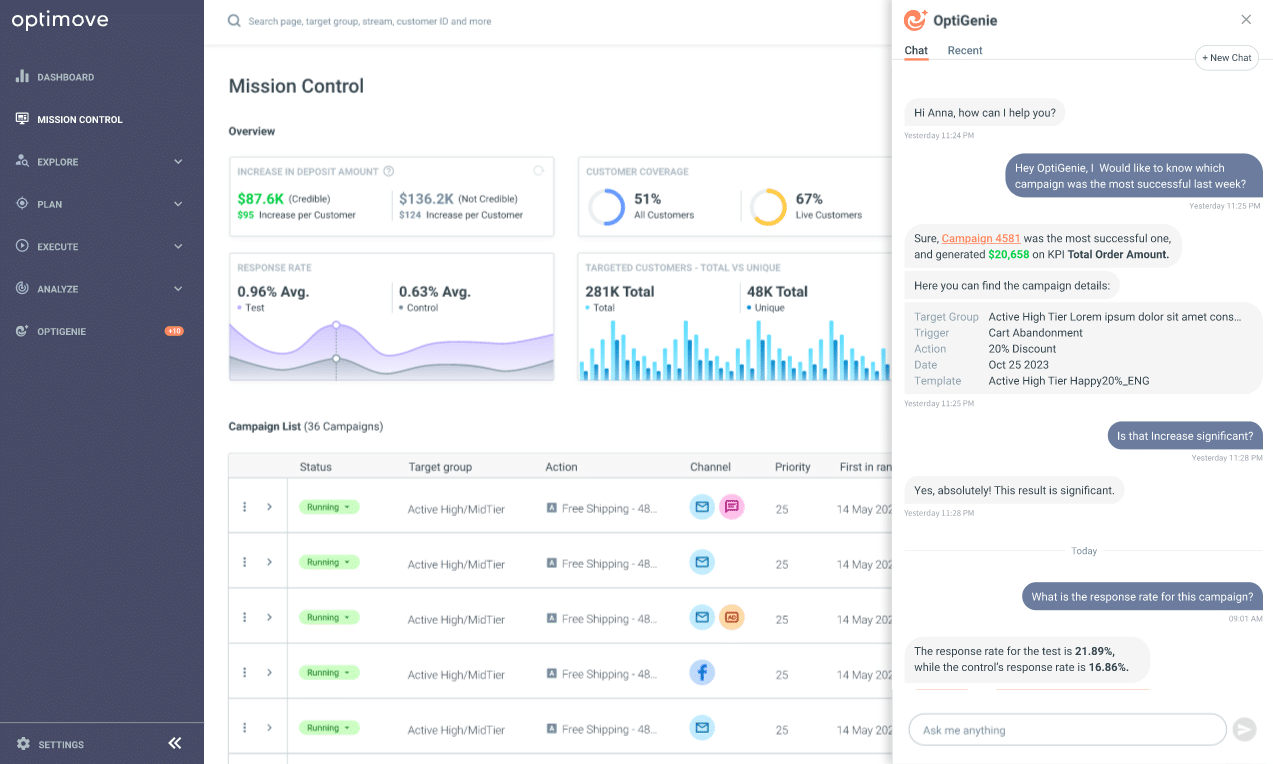
Image source: optimove.com
Key features:
- Predictive modeling: Uses AI to forecast churn, engagement, and lifetime value.
- Micro-segmentation: Builds highly targeted customer groups for precision marketing.
- AI recommendations: Suggests optimal actions for personalized outreach and retention.
- Automated campaigns: Executes behavior-based marketing workflows automatically.
- Analytics dashboard: Monitors performance metrics and conversion trends in real time.
Pros:
- Strong predictive modeling capabilities.
- Increases retention with proactive customer triggers.
- Delivers granular insights into user behavior.
- Streamlines multi-channel marketing workflows.
Cons:
- Data-intensive tool requiring quality input data.
- Higher cost tier for smaller teams.
Pricing:
- Contact sales for custom pricing
6. Zendesk: Support-centric customer segmentation
Zendesk is a support-driven platform that enhances customer service through smart segmentation and automation. It allows teams to prioritize tickets, personalize interactions, and automate responses based on customer type or issue urgency. With built-in analytics and AI chatbots, Zendesk helps service teams create seamless, efficient support experiences that build customer trust and loyalty
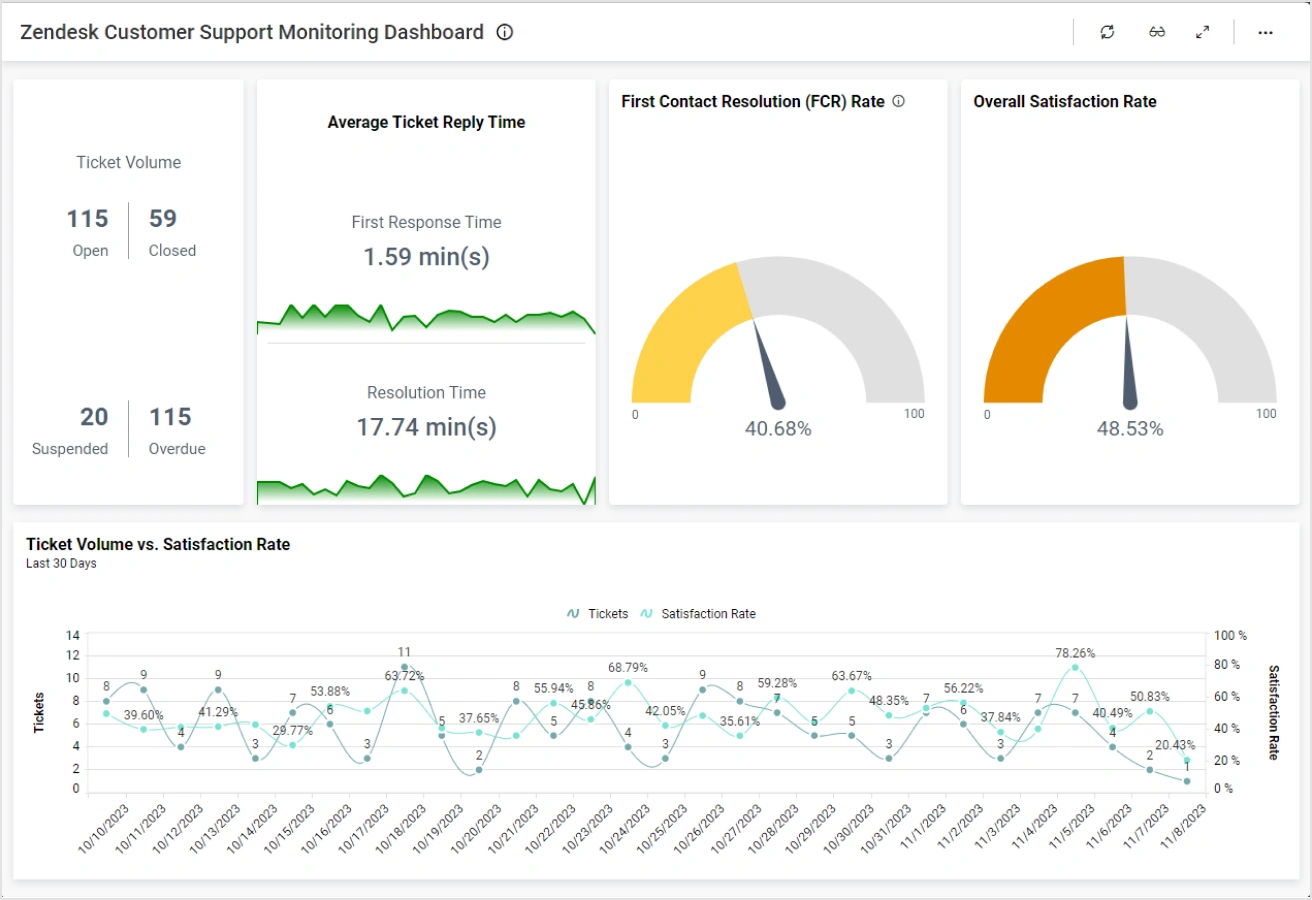
Image source: zendesk.com
Key features:
- AI chatbots: Provide instant, automated, and personalized support responses.
- Priority tagging: Highlights high-value or urgent accounts for faster resolution.
- Sentiment tracking: Analyzes message tone to improve service interaction quality.
- Performance dashboards: Offer visibility into ticket handling and team productivity.
- CRM integration: Syncs customer data with ongoing support cases for contextual service
Pros:
- Boosts efficiency for support and service teams.
- User-friendly interface for quick adoption.
- Improves CSAT and response time metrics.
- Strong automation capabilities for ticket routing.
Cons:
- Analytics features are limited in entry plans.
- Not designed for marketing segmentation.
Pricing:
- Suite Team: $55/agent/month
- Growth: $89/agent/month
7. Contentsquare: Behavioral segmentation for digital experience
Contentsquare focuses on analyzing digital user behavior to improve website and app performance. It enables teams to understand engagement patterns, drop-offs, and navigation paths across platforms. By offering session replays, heatmaps, and AI-driven analytics, it helps businesses optimize UX, reduce friction, and improve conversion rates. For marketing and UX teams, Contentsquare provides a clear lens into user intent and interaction quality.
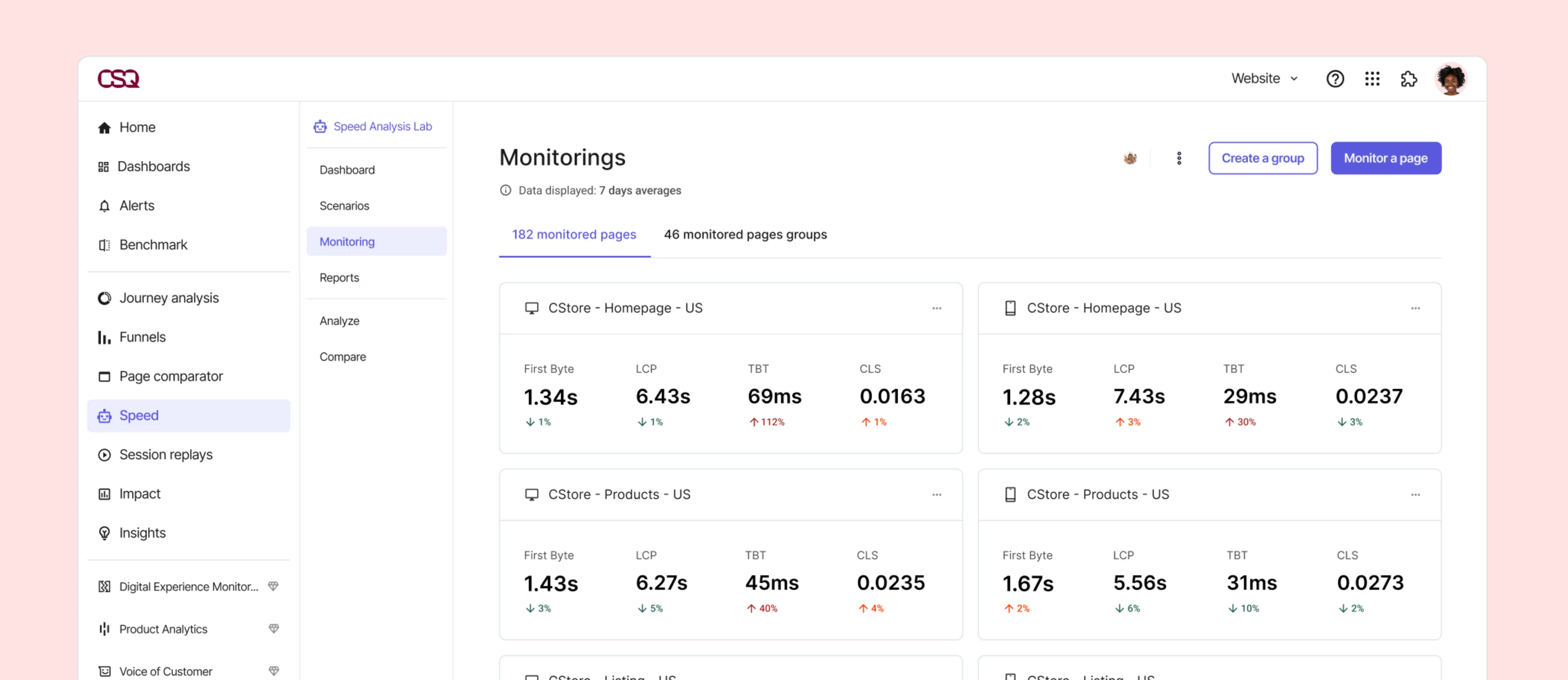
Image source: contentsquare.com
Key features:
- Session replays: Show exactly how users interact with websites and apps.
- Heatmaps: Visualize clicks, scrolls, and hover activity to understand engagement.
- Conversion path analysis: Detects where users drop off and identifies optimization points.
- AI-driven optimization: Uses predictive analytics to improve user experience and retention.
- Data visualization tools: Integrates with analytics systems for deeper performance insights.
Pros:
- Excellent for understanding customer journey behavior.
- Improves digital experience through visual insights.
- Supports optimization across multiple platforms.
- Enhances campaign targeting through behavioral data.
Cons:
- Limited demographic segmentation capability.
- Pricing suited more for mid-to-large enterprises.
Pricing:
- Contact sales for enterprise custom pricing
Steps to conduct customer segmentation analysis
Executing a successful segmentation strategy requires clear objectives, reliable data, and the right tools. Below are key steps to ensure your segmentation delivers actionable results.
- Define objectives: Before starting segmentation, establish clear goals for what you want to achieve. Are you trying to improve lead acquisition, customer retention, or campaign personalization? Defining measurable outcomes keeps your segmentation process focused and relevant. Objectives should tie directly to business results like higher conversion rates, lower churn, or better customer lifetime value.
- Collect data: Gather comprehensive data from multiple sources such as CRM systems, website analytics, surveys, purchase histories, and customer feedback. Combining quantitative and qualitative data provides a holistic view of your audience. The accuracy, completeness, and freshness of this data directly influences segmentation quality. Strong data foundations help reveal meaningful patterns rather than assumptions.
- Choose segmentation variables: Identify which factors best describe and differentiate your customers. These can include demographic traits (age, gender), behavioral signals (purchase frequency), psychographic traits (interests, values), or predictive indicators (churn likelihood). The right mix of variables ensures that segments are both actionable and aligned with your goals. Avoid overcomplicating focus on attributes that truly influence engagement or sales outcomes.
- Use analytical tools: Leverage data analytics or AI tools to group customers based on shared characteristics. Techniques like clustering, scoring models, or predictive analytics help identify natural segment patterns in your data. Modern tools such as Lark Base and Sheets simplify visualization, comparison, and model testing. Using analytical precision reduces guesswork and strengthens decision-making accuracy.
- Profile segments: Once segments are defined, create detailed personas that describe each group's motivations, pain points, and preferred channels. Go beyond numbers, include emotional drivers, buying triggers, and product affinities. These profiles serve as blueprints for targeted marketing and customer experience design. The more vivid and relatable the persona, the easier it is for teams to act on it effectively.
- Validate and refine: Segmentation is not a one-time task. Customer behaviors and market conditions change, so your models must evolve. Regularly test segment accuracy, monitor performance metrics, and adjust your parameters. Use real-time tools like Lark Sheets or Base dashboards to track shifts dynamically. Continuous refinement ensures that your segmentation strategy stays relevant, agile, and impactful.
Common customer segmentation challenges and solutions
Even the most advanced segmentation models face practical challenges. Overcoming these obstacles ensures your strategy remains effective and scalable.
- Data silos: When customer information is scattered across tools or departments, teams lose visibility and accuracy. This fragmentation prevents data-driven decisions and slows campaign execution. Consolidate all data in Lark Base, creating a unified source of truth where teams can view, edit, and share customer insights seamlessly.
- Static segments: Customer preferences evolve rapidly, and outdated segmentation models lead to irrelevant messaging. Static data limits marketing precision and response agility. With Lark Sheets and Base, teams can refresh segmentation data in real time to reflect new patterns, ensuring campaigns stay current and effective.
- Poor collaboration: When marketing, sales, and product teams operate in silos, insights are often missed or delayed. This misalignment weakens customer engagement and slows decision-making. Use Lark Docs and Lark Messenger channels to co-author reports, share dashboards, and align cross-functional teams in real time.
- Over-segmentation: Creating too many segments can blur focus and complicate campaign execution. Over-detailed segmentation wastes resources without delivering clear business impact. Simplify your strategy by using Lark Base dashboards to track performance and focus only on segments that drive measurable growth and ROI.
Why customer segmentation is essential for business growth
Customer segmentation is more than a marketing tactic. It's a business growth engine. It shapes how teams prioritize, communicate, and serve customers in every interaction. The benefits extend across efficiency, personalization, and strategy.
- Drives personalized marketing: Segmentation empowers marketers to deliver highly targeted messages that resonate with specific customer motivations and preferences. By analyzing data such as behavior, demographics, and purchase history, teams can tailor campaigns that feel personal rather than generic. This approach enhances engagement and drives stronger emotional connections. Over time, it helps build lasting loyalty and brand advocacy.
- Enables efficient resource allocation: When companies understand which segments drive the most value, they can prioritize investments more strategically. Segmentation highlights where marketing, sales, and support resources yield the highest returns. Teams can then reallocate budgets toward high-impact audiences instead of spreading efforts too thin. This data-backed efficiency leads to improved ROI and sustainable growth.
- Improves customer satisfaction and retention: By addressing distinct customer needs, segmentation ensures every interaction feels relevant and thoughtful. Customers appreciate personalized service, faster solutions, and seamless communication that reflects their preferences. These experiences foster a sense of trust and connection that keeps customers loyal. Over time, it significantly reduces churn and enhances lifetime value.
- Strengthens strategic decision-making: Segmentation equips business leaders with actionable insights about customer behavior, trends, and profitability. These insights shape smarter decisions across product development, pricing models, and marketing strategies. Teams gain a clearer understanding of which audiences drive growth and where to focus innovation. As a result, every strategic move aligns with real customer data, not assumptions.
Conclusion
Customer segmentation empowers companies to move from guesswork to insight-driven decision-making. By grouping customers into meaningful categories, businesses can personalize experiences, strengthen loyalty, and improve profitability. It helps organizations understand customer behavior more deeply, ensuring every strategy is data-backed and purpose-driven.
With Lark, teams transform segmentation insights into collaborative action. Whether analyzing patterns in Base, documenting strategies in Docs, or assigning follow-ups in Tasks, every feature works together to turn insights into impact. Through real-time communication, automation, and shared visibility, Lark ensures segmentation drives measurable business results and long-term customer success.
FAQs
What is the main goal of customer segmentation?
The main goal of customer segmentation is to understand customers deeply by dividing them into smaller, meaningful groups based on shared traits such as behavior, location, or value. This helps businesses deliver more relevant experiences, improve ROI, and increase retention. Teams can manage these insights collaboratively in Lark's unified workspace where marketing, sales, and service align effortlessly around customer data.
What's the difference between customer segmentation and personalization?
Customer segmentation groups people with similar attributes, while personalization tailors specific messages and experiences to individuals within those groups. Together, they drive precise targeting and stronger engagement. With tools like Lark Base and Sheets, teams can organize data and personalize follow-ups without juggling multiple platforms.
How can small businesses use segmentation effectively?
Small businesses can start by grouping customers using simple metrics, such as purchase history, frequency, or satisfaction scores before advancing to behavioral or AI-based segmentation. Using Lark Base, small teams can visualize customer data, collaborate in real time, and act quickly without needing expensive analytics systems.
How often should companies refresh their customer segments?
Customer behaviors evolve with time, trends, and market shifts. Businesses should review and refine their segments quarterly or whenever major behavior changes occur. Lark Base updates data dynamically, allowing teams to maintain accurate, up-to-date customer profiles that inform timely decisions.
What metrics should teams use to measure segmentation success?
Key metrics include customer lifetime value (CLV), retention rate, engagement frequency, and conversion performance across segments. These indicators reveal whether segmentation efforts are driving measurable results. Using Lark Sheets, teams can calculate these metrics collaboratively and track improvements through live dashboards and reports.
Related reading
Table of contents
Start using Lark today

Manage all your work in one place
Boost team efficiency by 10x
Save up to 70% on software costs
Table of contents
Start using Lark today
Manage all your work in one place
Boost team efficiency by 10x
Save up to 70% on software costs
Keep reading








2026 Lark Technologies Pte. Ltd.
Headquartered in Singapore with offices worldwide.






Explore: