For decades, the primary directive for B2B marketing was simple: fill the database. However, this volume-centric marketing strategy has revealed its limitations. Modern buyers are self-directed, skeptical of aggressive tactics. They do not want to be "captured" by a lead generation campaign; they want to be understood and helped.
This shift in buyer behavior has necessitated a transformation in how organizations approach growth. It has given rise to the discipline of demand generation. Unlike traditional methods that focus on the immediate extraction of contact details, demand generation focuses on creating interest, building trust, and nurturing relationships.
In this comprehensive guide, we will explore the demand generation best practices that distinguish high-performing organizations. We will dissect the demand generation strategy, cover the nuances of content marketing, and explain how to operationalize these efforts.
What is demand generation in digital marketing?
Demand generation is a comprehensive, data-driven strategy focused on driving revenue by aligning marketing with the entire customer lifecycle. Rather than simply casting a wide net to "capture" , demand generation is the discipline of cultivating a market’s desire for your solution before a sales conversation ever takes place. It is about validating a prospect's pain points and positioning your brand as the trusted authority to solve them.
While execution varies by industry, a successful framework operates on several strategic pillars:
- Shaping the narrative: It begins by disrupting the status quo. This isn't just about brand visibility; it is about educating the market on a specific problem and proving that a better way of working exists.
- Turning interest into intent: Once the seed is planted, the focus shifts to identifying hand-raisers. This involves creating pathways for engaged prospects to signal their curiosity, transforming passive audiences into .
- Building trust at scale: Rarely does a B2B buyer purchase immediately. Demand generation bridges this gap through consistent, value-add interactions—sharing expertise and resources that guide the prospect closer to a decision without aggressive selling.
- Closing the revenue loop: The ultimate goal is not a lead, but a customer. This stage involves the seamless transition of high-intent opportunities to the to finalize the partnership.
- The feedback cycle: Finally, the engine relies on intelligence. By analyzing which touchpoints influenced revenue and where drop-offs occurred, the strategy is continuously refined to lower acquisition costs and increase win rates.
Operate the whole demand gen process in one app
Demand generation vs. lead generation
There is frequently confusion in the industry between demand generation and lead generation, and while they are interconnected, treating them as identical can sabotage your overall marketing strategy.
Lead generation is typically a specific tactic within the broader scope of demand generation. Its primary goal is data capture—convincing a visitor to trade their email address for an asset, such as a whitepaper or webinar registration. The success of a strategy is often measured by the number of Marketing Qualified Leads (MQLs) produced.
Demand generation, conversely, is the umbrella strategy that encompasses the entire lifecycle. It includes creating demand through brand awareness and education, as well as capturing that demand when the buyer is ready. Demand generation focuses on the "dark funnel"—the untrackable word-of-mouth and community interactions—and aims to influence the buying process before a sales conversation ever happens.
If you focus solely on lead generation, you risk harassing potential buyers who are not yet ready to purchase, potentially damaging your brand. If you pay more attention to demand generation, you build a relationship where the customer comes to you. The most effective understand that you cannot capture demand that you have not created first.
Why is demand generation important for b2b teams?
For modern B2B organizations, demand generation is the primary driver of sustainable growth. As buyers increasingly self-educate, relying solely on cold outreach or low-quality lead volume is largely ineffective. Demand generation shifts the focus from quantity to quality, ensuring that engage with prospects who already understand the value proposition.
Implementing a robust strategy delivers critical benefits:
- Higher conversion rates: Educated buyers move through the pipeline faster and close more often.
- Lower acquisition costs: Creating inbound demand reduces reliance on expensive, low-yield outbound tactics.
- Better sales alignment: It unifies teams around shared revenue goals rather than vanity metrics.
- Long-term authority: It establishes your company as a trusted advisor, not just a vendor.
6 revenue-focused demand generation metrics
To prove the value of your demand gen strategy, you must prioritize revenue drivers over vanity metrics like clicks or impressions.
- Pipeline sourced: Identify exactly how much qualified originated specifically from marketing efforts versus sales outreach.
- Customer lifetime value (CLV): Ensure you are attracting high-quality customers who remain profitable long-term, rather than just one-off buyers.
- Sales pipeline velocity: Measure how quickly move through the funnel from initial contact to a closed-won deal.
- Customer acquisition cost (CAC): Track spend efficiency by calculating the total cost required to acquire a single paying customer.
- MQL-to-SQL conversion: Analyze lead quality by measuring the percentage of leads actually accepted by .
- Marketing contribution to revenue: The total percentage of closed revenue directly influenced or generated by demand generation campaigns.
Lark Base turns these metrics into real-time intelligence. Instead of wrestling with fragmented spreadsheets, you can build a custom dashboard in Base that automatically calculates CAC and tracks pipeline velocity. By centralizing your data, you can visualize the entire customer journey—from MQL to closed revenue—allowing you to pinpoint bottlenecks and accurately attribute ROI to every campaign instantly. Bridge sales and marketing silos instantly
Laying the foundation for effective demand generation
Before launching gen campaigns or writing copy, you must establish a solid strategic foundation. Many demand gen programs fail because they skip this step. A robust demand gen strategy is built on deep insights into who you are selling to and what they truly need.
Clarifying your ICP and buyer personas
You cannot effectively generate demand if you do not know who you are targeting. While many companies have a rough idea of their target audience, demand generation best practices require much more granularity. You must define your Ideal Customer Profile (ICP) and buyer personas with precision.
An ICP goes beyond basic demographics. It includes firmographics, technographics, and specific pain points. You need to understand the of different segments to prioritize your efforts. Beyond the company level, you must understand the target buyers within the buying committee—the CFO, the IT director, the end-user.
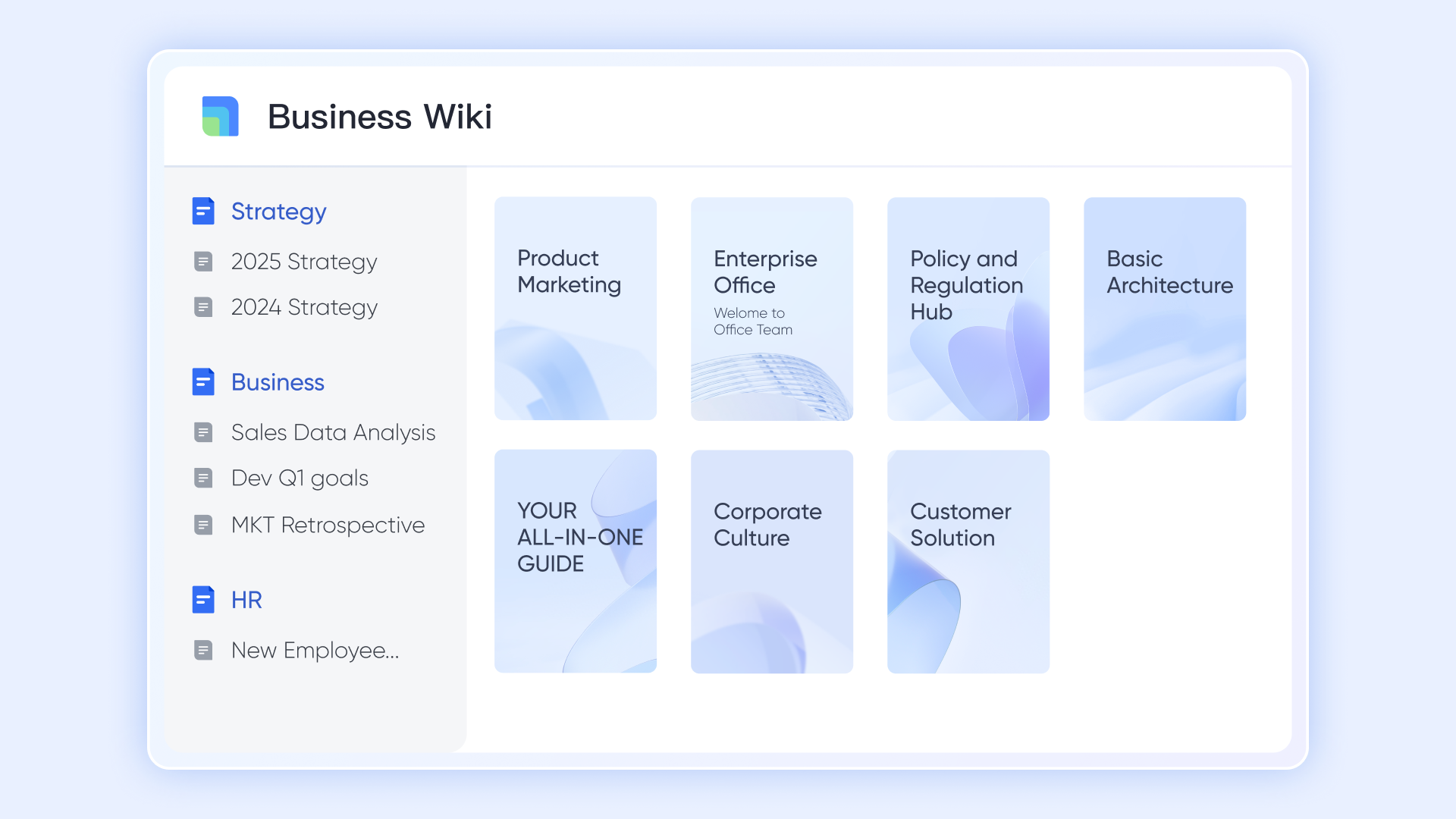
Documentation is vital. Your persona definitions should not be static files. They should live in . This ensures that both sales and marketing teams are referencing a single source of truth. As you learn more about your ideal customers, you can update the Wiki, keeping your demand generation strategy aligned with market reality.
Crafting differentiated positioning and messaging
In a crowded B2B landscape, generic messaging kills demand generation . To generate buzz, you need a unique point of view. Your messaging must clearly articulate why your solution is different and how it solves the specific pain points of your target audience.
This messaging must be consistent across every touchpoint, from your video ads to your website copy. Targeted messaging is the key to cutting through the noise. When a potential customer sees an ad that speaks directly to their specific challenge, the likelihood of engagement skyrockets.
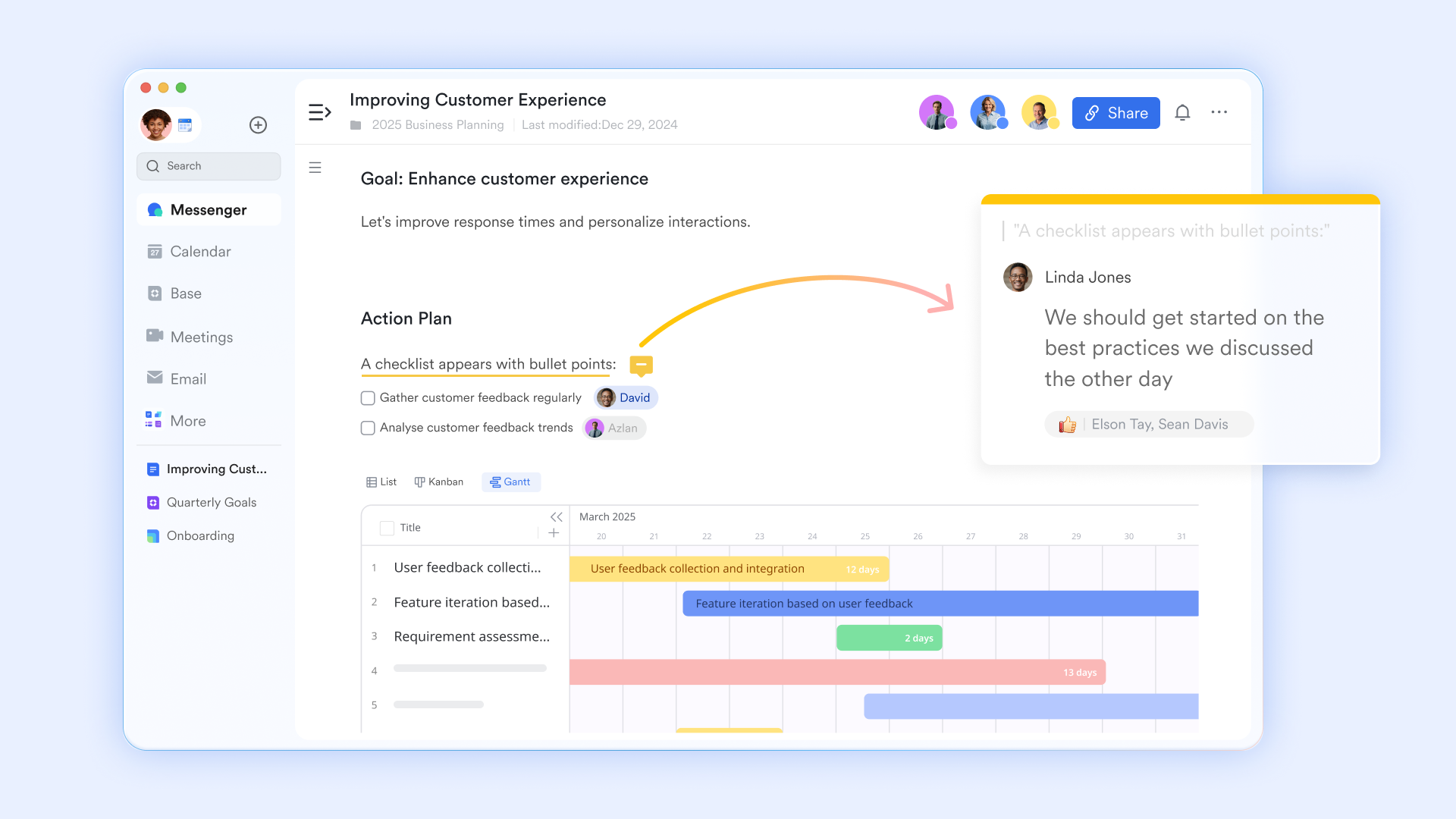
Developing this messaging requires collaboration. Marketing teams should work closely with product and sales to refine the value proposition. Using , teams can co-create messaging briefs, ensuring that everyone is aligned before a campaign launches. This collaborative approach is a hallmark of successful demand generation.
Align sales and marketing goals
Building a full-funnel demand generation strategy
With the foundation set, we must architect the strategy. A mature demand generation funnel is not linear; it is an ecosystem of touchpoints. It requires a diverse mix of marketing channels working in harmony to guide the prospect through the customer journey.
Mapping the customer journey and touchpoints
Buyers do not move in a straight line from awareness to purchase. They loop back, research competitors, and seek peer validation. However, you must still map the logical stages to ensure coverage. Demand generation best practices involve auditing your content to ensure you have assets for every stage: awareness, consideration, and decision.
For the awareness stage, you might use platforms to increase brand awareness. For consideration, you might use webinars or case studies to build trust. For the decision stage, you need ROI calculators and comparison guides.
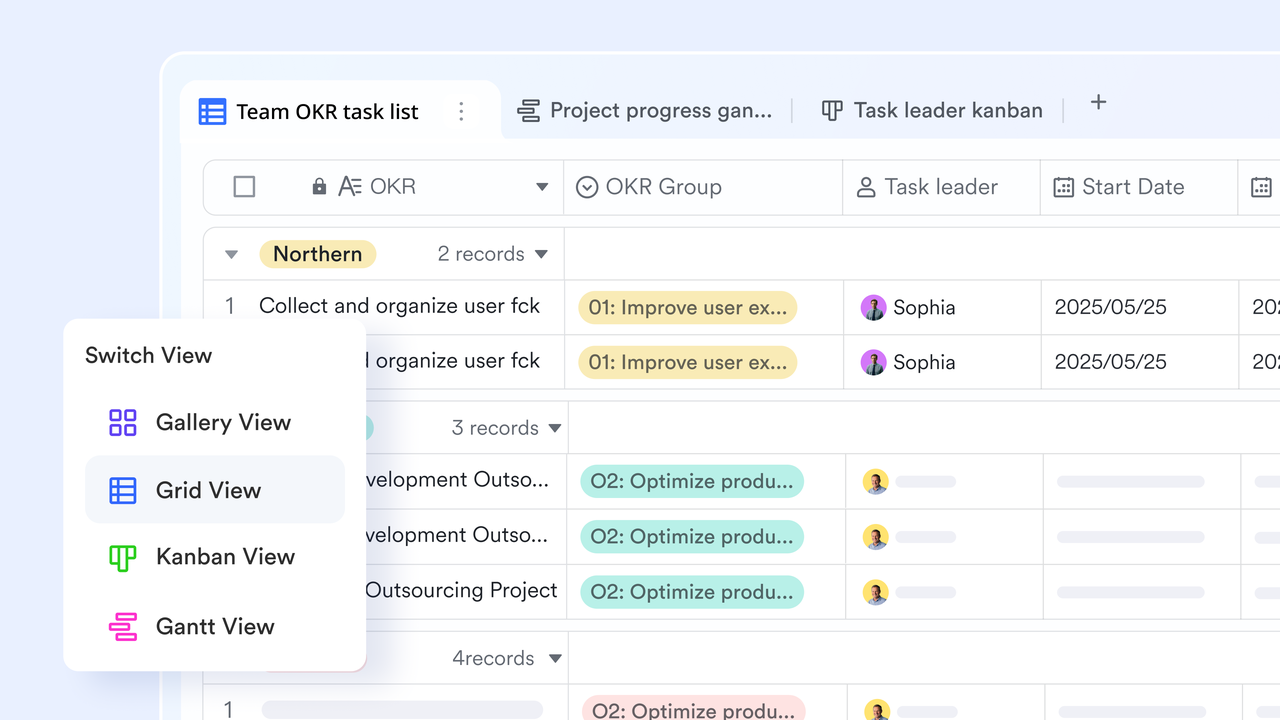
At this time, becomes a must for your team. You can create a database of all your marketing assets, tagged by funnel stage and persona. This allows you to identify gaps in your demand generation marketing and ensures you are not over-indexed on one stage while neglecting others.
Designing a balanced channel mix
There is no single "best" channel for B2B demand generation. The right mix depends on where your potential buyers spend their time. LinkedIn might be perfect for target accounts in the enterprise space, while on YouTube might work better for technical users.
To support video-led campaigns across these channels, many marketing teams rely on tools like invideo to quickly create engaging marketing videos, product explainers, and ads that help communicate their message more effectively.
A successful demand generation campaign leverages multiple channels to reinforce the message. You might use organic social media to create content visibility, paid search to capture intent, and email to nurture relationships. Ongoing optimization of this mix is essential.
Managing this complexity requires a unified view. That's why is meaningful for you. You can visualize all your marketing channels and activities in one place. This helps prevent scheduling conflicts and ensures that your demand generation efforts are paced correctly throughout the quarter.
Building always-on programs vs. campaigns
A common mistake is relying solely on sporadic bursts of activity. Demand generation best practices dictate that you must have "always-on" programs running in the background to capture demand whenever it arises. These include your SEO efforts, basic retargeting, and automated nurture flows.
These always-on programs provide a baseline of quality leads and sales pipeline contribution. Layered on top of these are your specific demand gen campaigns—time-bound initiatives like product launches or events.
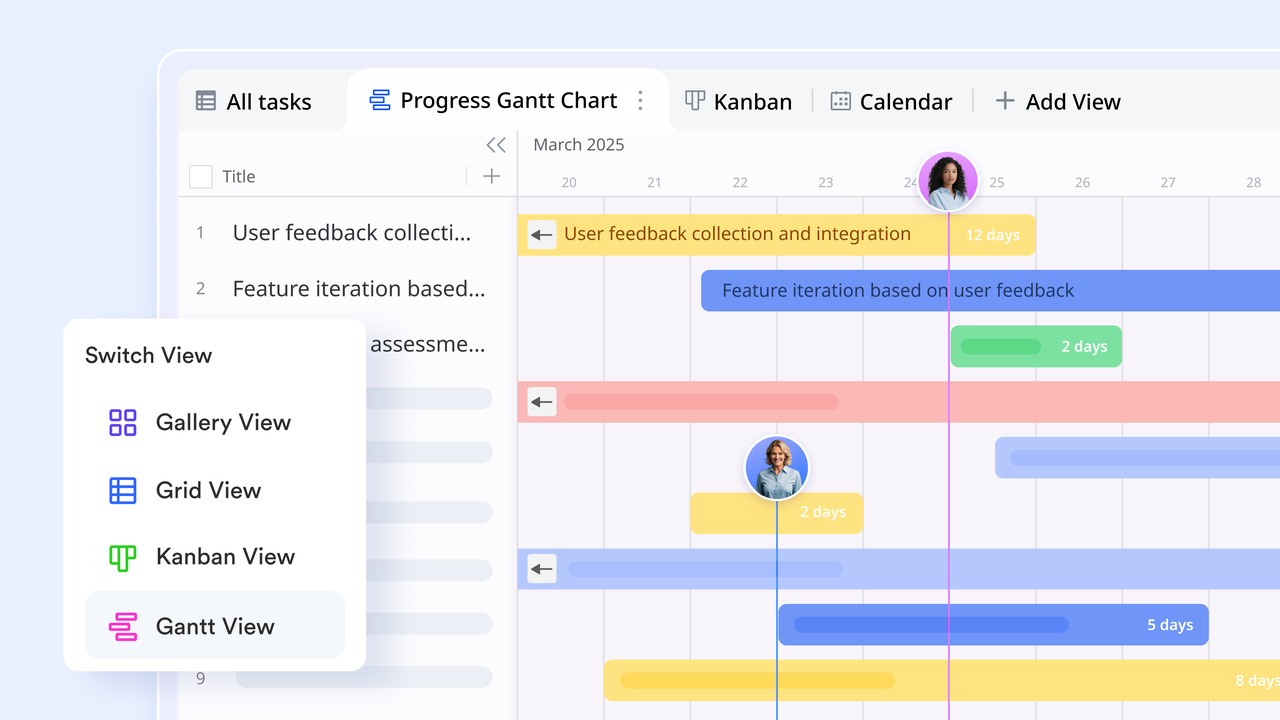
Balancing these two requires strong . If your has a gantt view, you can track the timelines of your campaigns while monitoring the health metrics of your always-on programs. This holistic view is crucial for a demand generation manager overseeing a complex portfolio.
Personalize outreach using centralized customer data
Finding an all-in-one solution for demand generation
After reading the introduction, you might be worried that running a comprehensive demand generation strategy requires a bloated, expensive tech stack. Fortunately, high-impact marketing doesn't require juggling a dozen different subscriptions. According to my evaluation and analysis, the all-in-one tool, , offers a unified workspace that consolidates your entire demand generation lifecycle into a single platform, turning potential chaos into a streamlined operation.
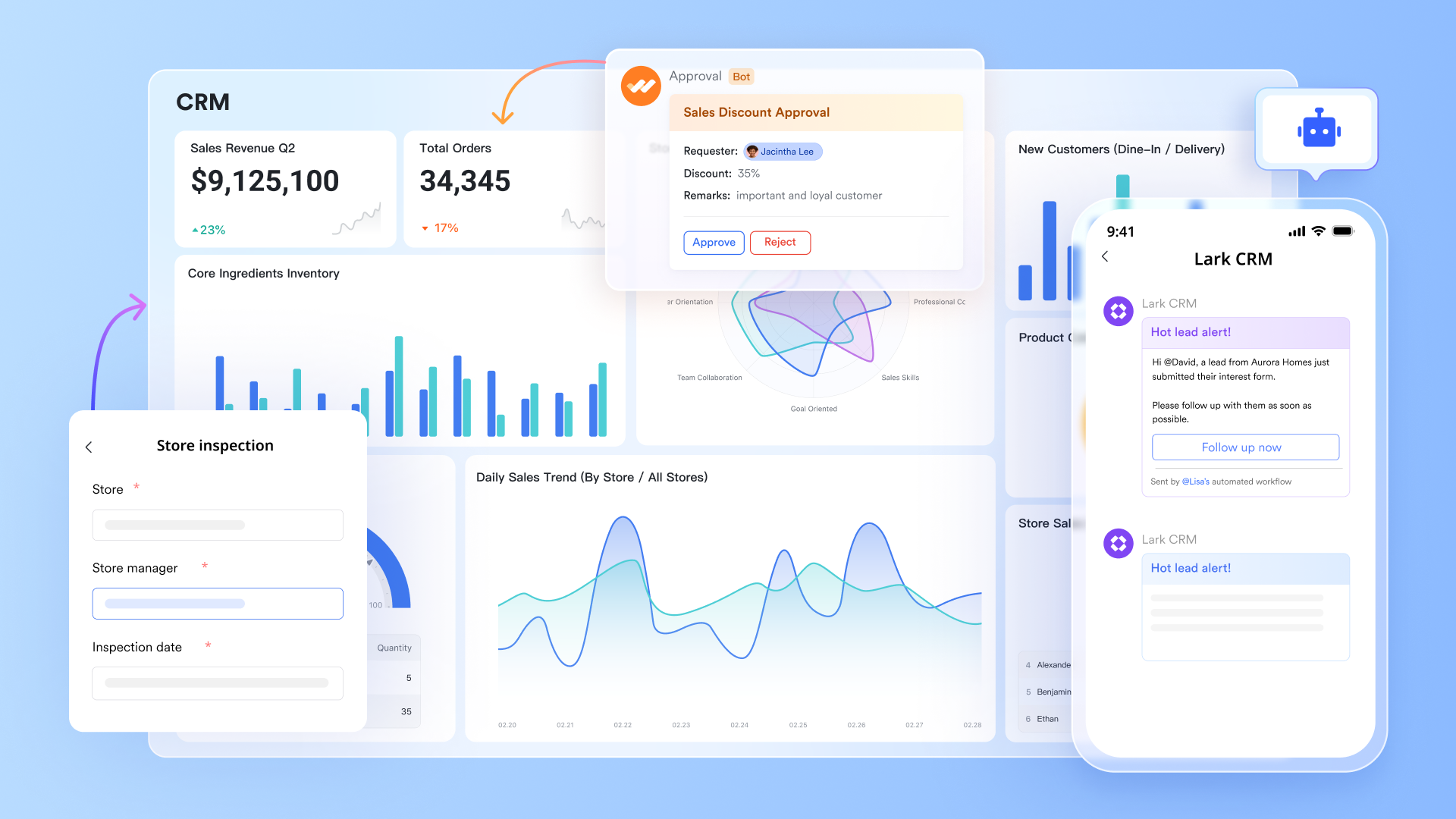
Powerful database for data clarity
Forget rigid, siloed spreadsheets. functions as a flexible and project tracker, allowing you to visualize your entire pipeline, manage lead data, and track campaign ROI in one customizable interface.
Automated workflows for speed
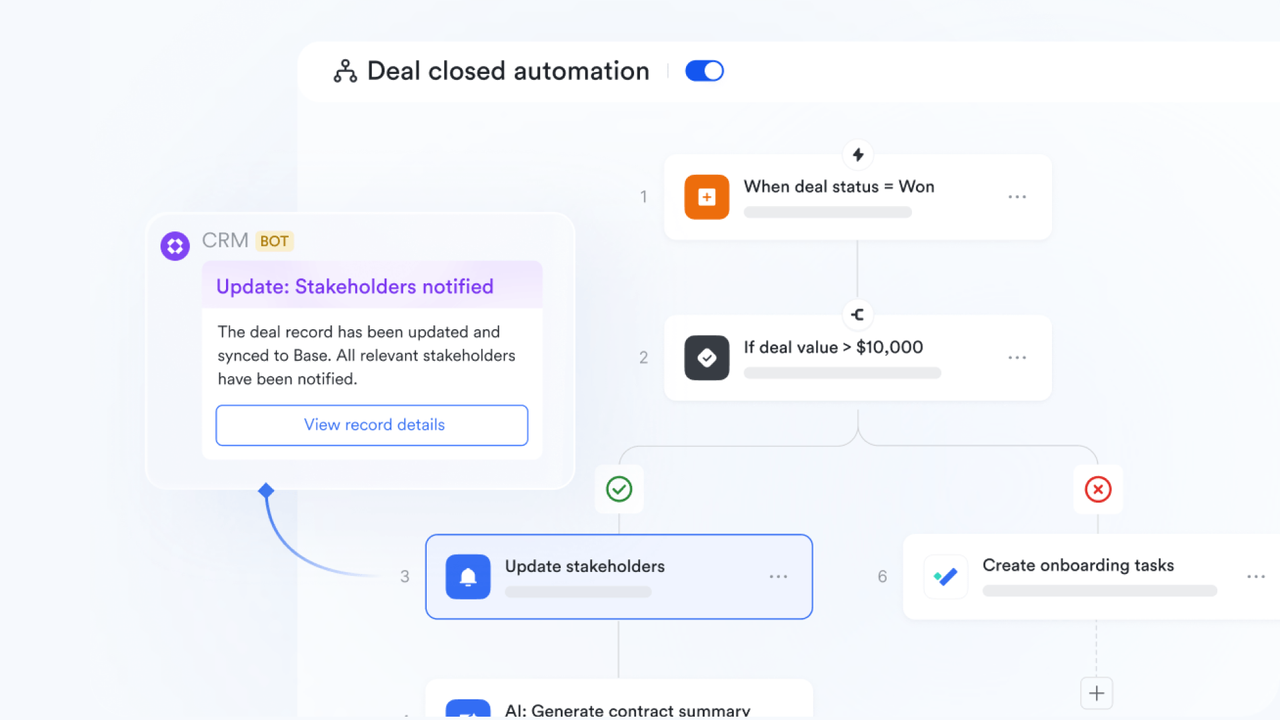
Stop wasting time on manual handoffs. Lark’s capabilities allow you to trigger instant alerts for new leads, auto-assign tasks to sales reps, and update deal statuses without lifting a finger, ensuring no opportunity is missed.
Strong document collaboration for alignment
Create, edit, and approve campaign assets in real-time with a versatile suite including Docs, Sheets, and Slides. Whether drafting content, crunching budget numbers, or designing pitch decks, marketing and sales teams can co-create seamlessly. All these resources can be organized within a centralized wiki, serving as a single source of truth to ensure messaging remains consistent across the board. 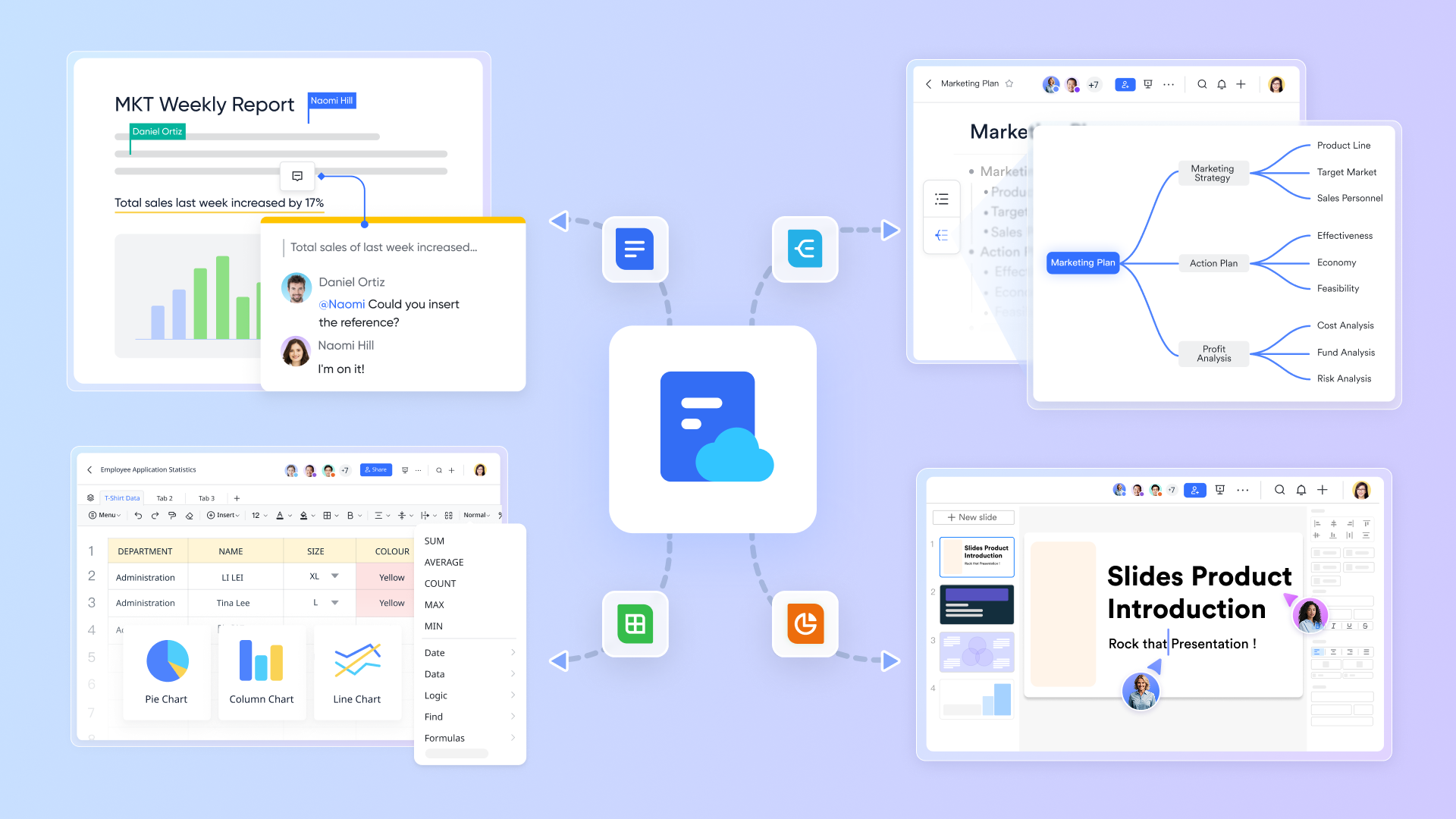
Seamless team communication
Lark delivers a robust powerhouse by combining Calendar, Meetings, Messenger, and Mail into a single interface. This all-in-one suite allows you to schedule cross-functional syncs, resolve blockers via instant video calls, and manage external correspondence without switching apps. By centralizing every interaction, Lark ensures teams stay perfectly aligned and projects move forward without friction.
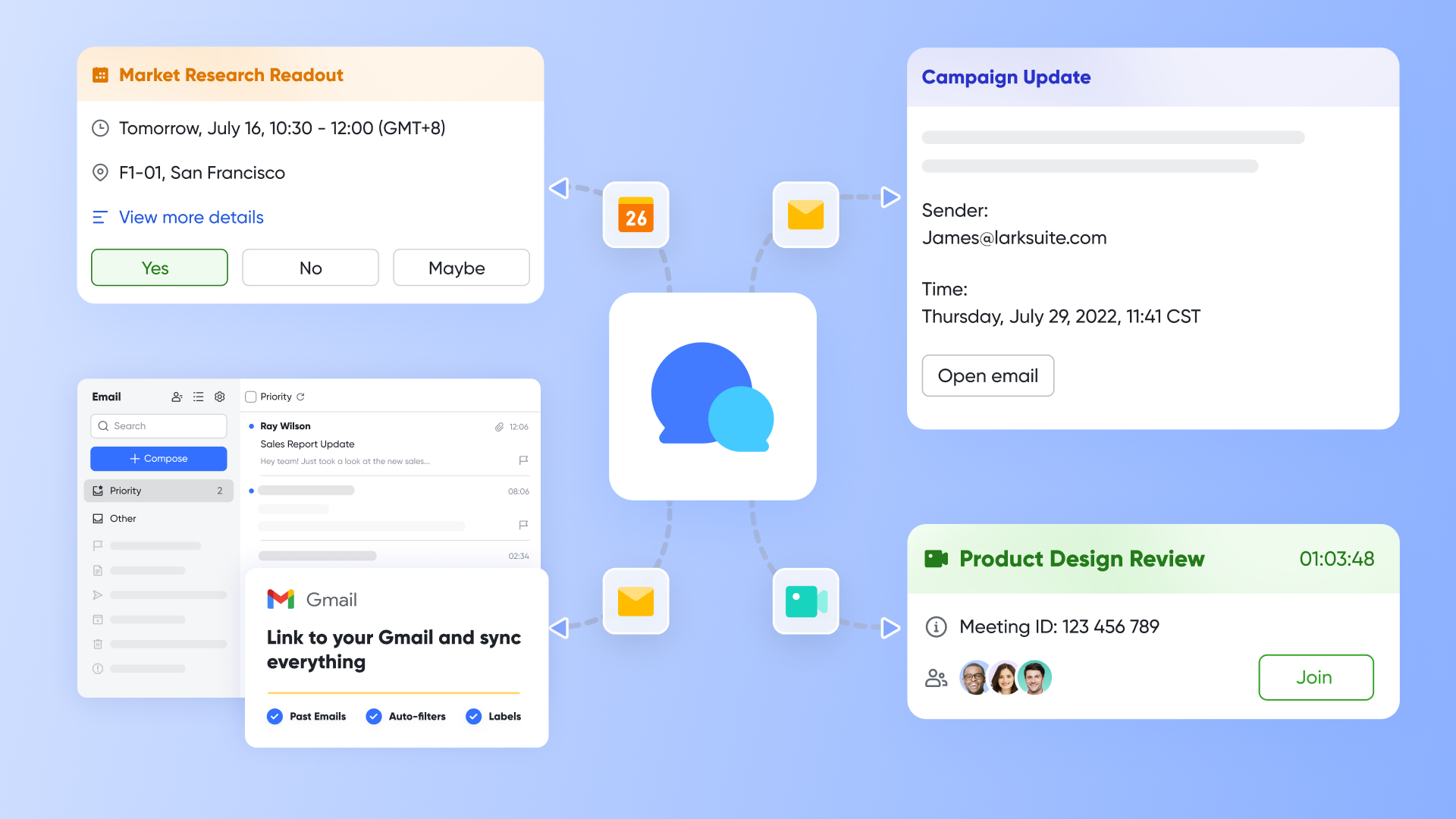
By replacing fragmented tools with one unified superapp, Lark reduces overhead and technical friction. This empowers your team to stop fighting with software and start focusing on what matters most: driving demand and growing revenue.
🌟 Learn more about :
As an all-in-one solution, Lark includes all these features below in every plan:

- Free plan: Includes 11 powerful products, supporting up to 20 users, 100 GB storage, 1,000 automation runs and unlimited AI translation in chats, docs and email.
- Pro plan: $12/user/month, supporting up to 500 users. Includes unlimited message history, 50,000 automated Base workflow executions per month.
For small teams with simple communication needs

18 months message history
1000 Base automation runs/month
2000 rows per table in Base
Most POPULAR
For companies with comprehensive collaboration and management needs
Unlimited message history
500-participant video meetings
50k Base automation runs/month
20k rows per table in Base
For large companies with advanced security and organizational management needs
Get a personalized demo and pricing
Unlimited message history
500-participant video meetings
15 TB storage + 30 GB storage/user
500k Base automation runs/month
50k Base automation runs/month
Most POPULAR
For companies with comprehensive collaboration and management needs
Unlimited message history
500-participant video meetings
50k Base automation runs/month
20k rows per table in Base
Demand generation best practices for content and campaigns
You can have the best demand generation strategies in the world. To help you integrate these strategies into your workflow, let’s explore some examples of real-world demand generation best practices.
is the engine of demand generation. Without high-quality content, you cannot educate your audience or generate interest. However, the content must be strategic, not just voluminous.
Developing a content engine that fuels demand
The concept of a "content supply chain" treats content production as a repeatable business process. It involves ideation, creation, distribution, and analysis. One of the most effective demand generation tactics is repurposing. A single research report can spawn a webinar, multiple blog posts, and dozens of social media posts.
revolutionizes this process by enabling multimedia co-creation. Besides, you can embed live data from Lark Base directly into a document, or have designers and writers work in the same space. This streamlines the creation of , allowing you to publish faster and more frequently.
Gated vs. ungated content decisions
The debate between gated and ungated content is central to demand generation strategy. Traditional l relies on gating everything to capture data. However, modern demand generation best practices lean toward ungating most educational content.
By removing barriers, you allow ideal customers to consume your content freely, building trust and authority. This helps create demand more effectively than hiding value behind a form. We recommend a hybrid approach: ungate your educational blogs and videos to generate buzz, but gate high-value assets like proprietary data reports or tools that offer specific utility.
Running webinars and events as demand drivers
Webinars remain a staple of b2b demand generation, but they must be engaging. Instead of dry presentations, focus on interactive discussions that address real pain points.
The operational lift of events is significant. provides a stable platform for hosting, but the post-event workflow is where value is captured. You can automatically transcribe the session, and use AI to extract key insights. These insights can be turned into helpful content for your blog or email newsletters, extending the life of the event.
Email nurturing and lifecycle campaigns
Email is a powerful tool for demand generation marketing when used correctly. Instead of generic blasts, use marketing automation to send personalized content based on user behavior. If a prospect reads articles about security, send them a security deep dive.
Drafting these sequences requires close collaboration. By using collaboration tools like , marketing teams can draft email copies, get approvals, and ensure that the tone aligns with the brand voice. This ensures that every touchpoint adds value to the customer journey.
Launch multi-channel campaigns from one view
Advanced demand generation tactics: ABM and intent
As your demand generation efforts mature, you can layer in sophisticated strategies like and intent data.
Account-based marketing (ABM)
Account-based marketing flips the traditional funnel by focusing resources on a curated list of high-value accounts rather than casting a wide net. This strategy demands highly personalized content and precise targeting. To succeed, marketing and sales must operate from a unified view of the customer, rigorously tracking every interaction—from the first marketing email to the final sales call—to ensure that all direct outreach is coordinated, timely, and highly relevant.
Leveraging intent data
Leveraging intent data allows you to identify potential buyers who are actively researching solutions like yours, even if they haven't visited your site. By using custom intent audiences, you can direct your video ads and content toward companies showing buying signals.
powers these advanced strategies by acting as a unified command center for your data and teams. With , you can build a to visualize high-value account interactions, ensuring the alignment required for successful ABM. Additionally, Lark’s automation capabilities allow you to pipe intent signals directly into sales workflows, instantly alerting your team to high-priority opportunities so no buying signal goes unnoticed.
🌟 Watch this video below and see how Lark transforms your CRM experience:
Conclusion
Successful demand generation is not a one-time project; it is a continuous process of learning and adapting. It requires a demand generation manager who can see the big picture and a team that executes with precision. By adopting these demand generation best practices, from creating interest with helpful content to aligning sales departments, you can build a predictable engine for revenue.
Leveraging a comprehensive marketing tool like enables this transformation. It brings your gen strategies to life, ensuring that your marketing efforts result in tangible business growth and a steady stream of paying customers. Start building your demand engine today.
Scale demand gen operations without chaos
FAQs
What are the six steps in the demand generation process?
The six essential steps typically include: 1) Goal Setting to define revenue targets, 2) Audience Definition to identify your Ideal Customer Profile (ICP), 3) Content Strategy to create high-value educational assets, 4) Distribution across balanced channels to build awareness, 5) Lead Nurturing to guide prospects through the funnel, and 6) Measurement to analyze data and optimize performance continuously.
What is the 3-3-3 rule in marketing?
The 3-3-3 rule is a framework for capturing attention in a noisy digital landscape. It suggests you have 3 seconds to hook the audience with a compelling headline or visual, 30 seconds to convey your core value proposition clearly, and 3 minutes to deepen engagement or drive a conversion. It emphasizes the need for speed, clarity, and immediate value.
What is a demand generation strategy?
A demand generation strategy is a holistic, long-term marketing approach focused on building reliable brand awareness and customer interest. Unlike simple lead generation, which prioritizes contact capture, a demand generation strategy spans the entire buyer journey. It combines creating demand through education with capturing demand through intent-based tactics, aligning sales and marketing to transform awareness into revenue pipeline.
What are the best practices for Google Demand Gen campaigns?
For Google’s specific Demand Gen campaigns, prioritize high-quality, immersive video and image assets that stand out on visual surfaces like YouTube and Discover. Best practices include testing diverse creative variations, utilizing "Lookalike segments" to reach new audiences similar to your existing customers, setting clear conversion actions, and allowing the machine learning algorithms at least two weeks to optimize campaign performance.
Related reading