In today's consistently changing construction environment, projects demand precise coordination between people, machinery, and materials. That's where construction resource management software steps in—acting as the bridge between planning and execution. It brings clarity to complex scheduling, reduces downtime, and ensures the right resources are available when needed.
For many construction teams, the shift from spreadsheets to integrated tools marks a major productivity leap. Platforms like Lark have redefined collaboration by combining communication, document sharing, and scheduling into one workspace. As construction companies—whether in the UAE or worldwide—seek scalable, cloud-based resource solutions, this new class of software has become essential for sustainable project efficiency.
Key takeaways: Top 5 construction resource management software
- Lark — best for collaborative resource management and cross-site visibility
- Procore — best for enterprise-grade construction management
- GoBridgit (Bridgit Bench) — best for workforce forecasting and resource planning
- Buildertrend — best for small and mid-size contractors
- Autodesk Construction Cloud — best for design and build integration
What is construction resource management software?
Construction resource management software is a category of digital tools designed to plan, track, and optimize the use of personnel, equipment, and materials throughout a . Unlike general , these platforms focus specifically on ensuring that the right resources are assigned to the right tasks at the right time—a critical factor in keeping construction projects on schedule and within budget. While construction management software offers broader , document management, and schedule coordination features, and construction software provides real-time insights into costs and productivity for builders, construction resource management software zeroes in on resource allocation and utilization.
At its core, this type of software consolidates several functions that used to be handled separately, helping manage resources efficiently across the entire project lifecycle:
- Labor allocation: Helping assign workers based on availability, skill set, and project phase.
- Equipment scheduling: Tracking heavy machinery and tools to avoid idle time or double booking.
- Material management: Monitoring inventory levels so materials arrive on site precisely when required.
- Cost and performance tracking: Providing real-time visibility into how resources impact overall project costs.
Modern resource management software for construction often runs on the cloud, allowing teams in different locations—such as field workers and head-office planners—to . For companies in regions like the UAE, where multi-site operations and subcontractor coordination are daily realities, such visibility ensures that both human and mechanical resources are used efficiently.
Additionally, construction project resource management software supports integration with existing systems, such as Building Information Modeling (BIM), , and scheduling apps. This interconnectedness helps contractors turn fragmented data into actionable insights, simplifying workflows that once required manual tracking.
In short, construction resource management systems do more than track logistics—they empower companies to build smarter, respond faster to change, and deliver consistent outcomes across every project stage. In a market defined by intense competition and tight margins, efficient resource management is essential for maintaining profitability and staying ahead.
Get started with smarter resource management
Why every construction company needs a resource management system
The construction industry operates on tight deadlines, and resource conflicts can cascade into costly delays. Without effective planning, even well-trained crews and modern equipment can become underutilized or misallocated. That's why resource management software for construction is no longer optional—it's a strategic necessity. Let's explore why:
- Minimizing downtime: When resources are accurately tracked and reassigned as needed, projects experience fewer periods of inactivity, ensuring the right work is .
- Reducing operational costs: Real-time data from construction project resource management software exposes inefficiencies, allowing managers to make proactive adjustments and save money through efficient resource allocation.
- Improving collaboration: enable office and field teams, as well as subcontractors, to work from the same live data set, preventing miscommunication.
- Simplifying regulatory compliance: Especially relevant for resource management software UAE construction users, centralized documentation helps ensure safety and labor compliance standards are met.
- Enhancing adaptability: With forecasting and analytics built into modern tools, companies can simulate "what-if" scenarios before making high-stakes resourcing decisions.
From a broader perspective, I've observed how organizations that adopt structured resource management systems achieve greater predictability and resilience. Project teams can accomplish more with structured resource management, collaborating efficiently and securely. They move beyond firefighting issues and focus instead on execution excellence—using insight, not intuition, to manage every piece of the construction puzzle. These systems help project teams accomplish efficiently, improving both productivity and profitability.
Achieve efficient construction resource management
Key features to look for in construction resource management software
Selecting the right construction resource management software means understanding which capabilities truly impact daily operations. The best tools go beyond scheduling—they automate routine processes to improve efficiency, manage scheduled events such as equipment dispatches and maintenance, and unify communication, transparency, and insight across multiple job sites. Based on industry standards and evolving construction practices, here are the most essential features to consider, including how centralizing data and workflows helps reduce quality issues.
Real-time resource scheduling and task tracking
A strong resource scheduling system keeps every team member and piece of equipment aligned with project timelines, while also scheduling and tracking jobs to ensure. Real-time dashboards display available crews, booked machinery, and upcoming site requirements. This is especially valuable for global or UAE construction teams managing subcontractors across multiple regions.
Centralized document and drawing management
Blueprint confusion remains one of the most common causes of project rework. A modern construction project resource management software should provide secure, version-controlled storage for design files, permits, and RFIs. Teams should be able to annotate, share, and approve files from any device with consistent access to the latest information. Labor and equipment utilization insights
Tracking performance is central to any resource management software for construction. Advanced analytics help identify underused equipment or excessive overtime early. This insight supports better cost allocation and maximizes productivity without overextending human or mechanical assets.
Comprehensive cost and budget monitoring
Budget overruns often stem from misaligned resource use. Leading platforms integrate job costing, , and material expenses into a unified financial dashboard. This enables managers to anticipate changes and make data-driven adjustments before issues escalate.
Communication and collaboration tools
Construction success depends on seamless coordination between the field and the office. Built-in messaging, , and team chat (such as tools within platforms like Lark or Basecamp) minimize miscommunication. These tools also help keep clients informed and engaged throughout the project, ensuring they are always up to date and involved in key decisions. Field engineers and project executives can share updates instantly—keeping everyone on the same schedule and page.
Integration with other systems
Modern construction projects depend on interconnected technology stacks. Therefore, top-tier solutions can integrate with ERP software, BIM tools, accounting platforms, and digital timesheet apps. These integrations prevent data duplication and ensure every decision reflects the latest resource metrics.
Mobile access and cloud-based collaboration
Whether managing sites in Dubai or remote regions, real-time mobile access is vital. Cloud deployments let supervisors monitor progress, update schedules, or approve equipment allocation via tablet or smartphone. This flexibility is part of why cloud-powered resource management software UAE construction markets have grown so rapidly.
Predictive analytics and reporting
As digital transformation expands, predictive insights are redefining construction strategy. AI-driven forecasts help managers preemptive plan for shortages, equipment maintenance, or potential schedule drift. This feature transforms reactive management into proactive leadership.
In essence, a reliable construction resource management software centralizes scheduling, documents, cost visibility, and communication while aligning every stakeholder—from to the field team. When these features work together, they eliminate uncertainty and transform scattered construction data into a structured, informed workflow capable of adapting to any project scale.
Top 10 construction resource management software tools in 2026
Nowadays, contractors and project managers rely on digital tools that offer transparency, accuracy, and collaboration. Discover the leading construction resource management software solutions that not only improve scheduling, communication, and cost efficiency, but also help companies enhance their reputation by choosing reliable and effective tools. By leveraging these solutions, businesses can stay ahead in a industry through proactive management and up-to-date . Each one fits a different scale of construction operation—from small builders to global infrastructure companies.
1. Lark — best for collaborative resource management and cross-site visibility
reimagines how construction teams coordinate by providing an that integrates chat, video meetings, scheduling, documentation, and data tracking. According to its official content, Lark eliminates the root problems behind project inefficiencies—fragmented communication and disconnected data. It serves as a single operating environment where teams can schedule shifts, manage documents, and track resource usage in real time.
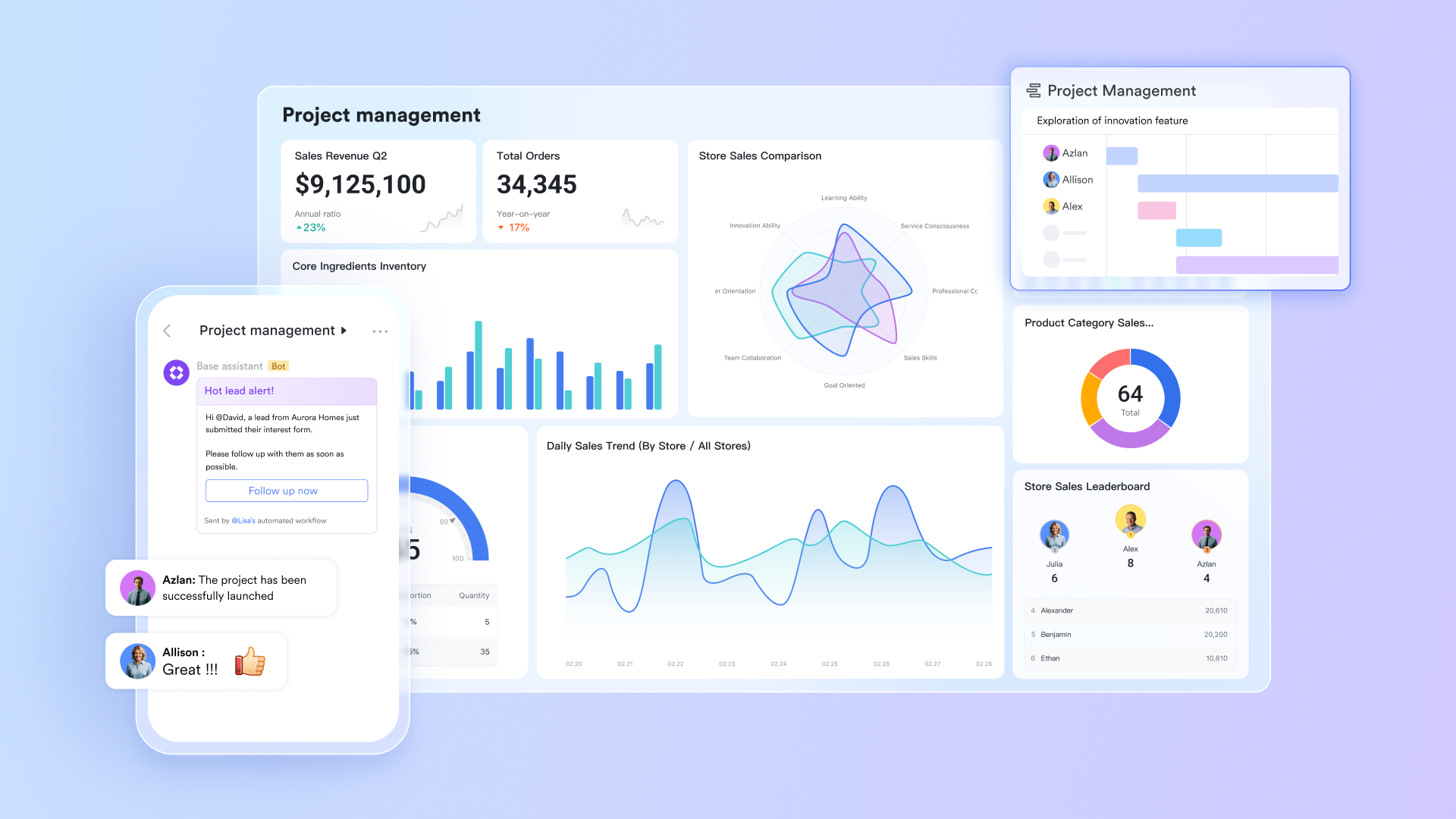
Key features
Visualized construction process
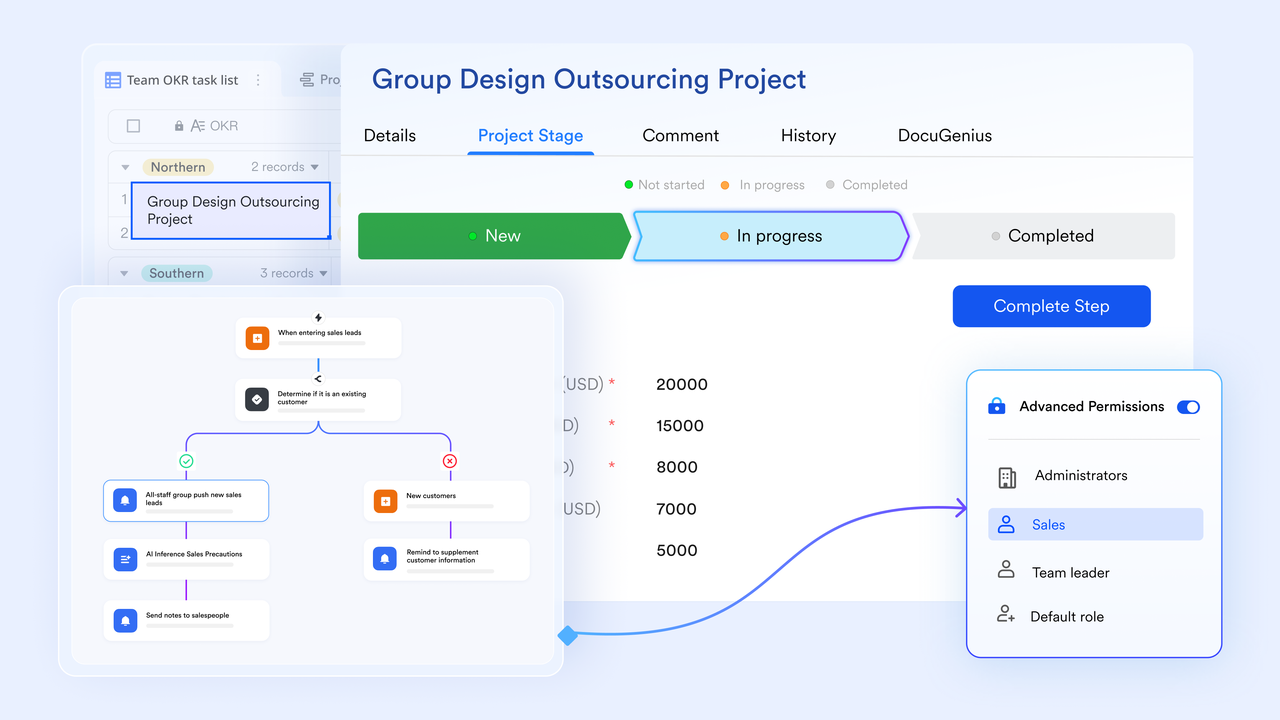
provides a customizable database that allows teams to visualize essential construction operations. Users can monitor equipment, crew activities, and material resources through various formats, including Kanban boards, Gantt charts, or table views. This flexibility ensures that project managers can quickly assess workflows, allocate resources effectively, and keep everyone aligned on project goals. 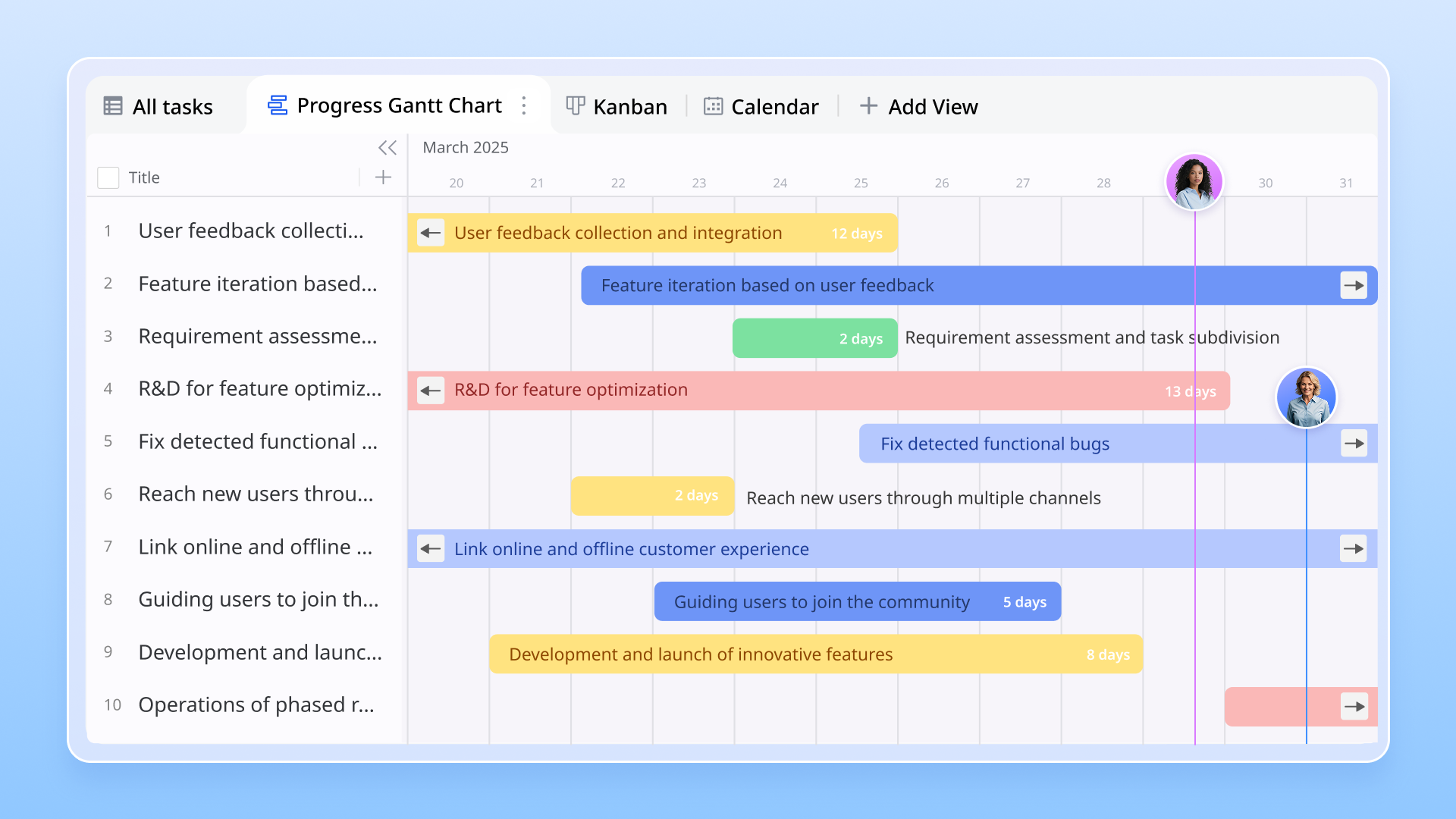
Task and resource management
Lark Tasks feature within Lark simplifies the management of construction assignments. It enables users to create, assign, and track tasks with ease, ensuring that every team member knows their responsibilities. By centralizing task management, Lark allows for clearer accountability and enhanced prioritization of project activities, helping teams remain focused and efficient. 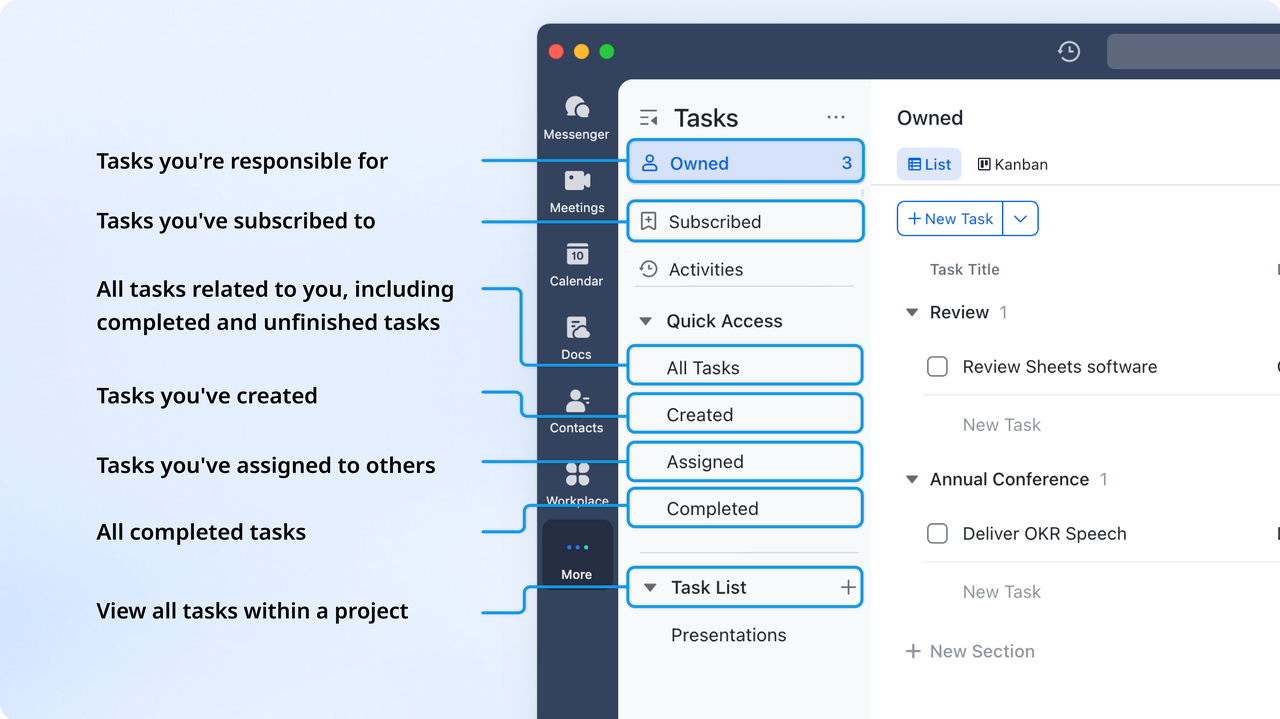
Knowledge hub for construction related materials
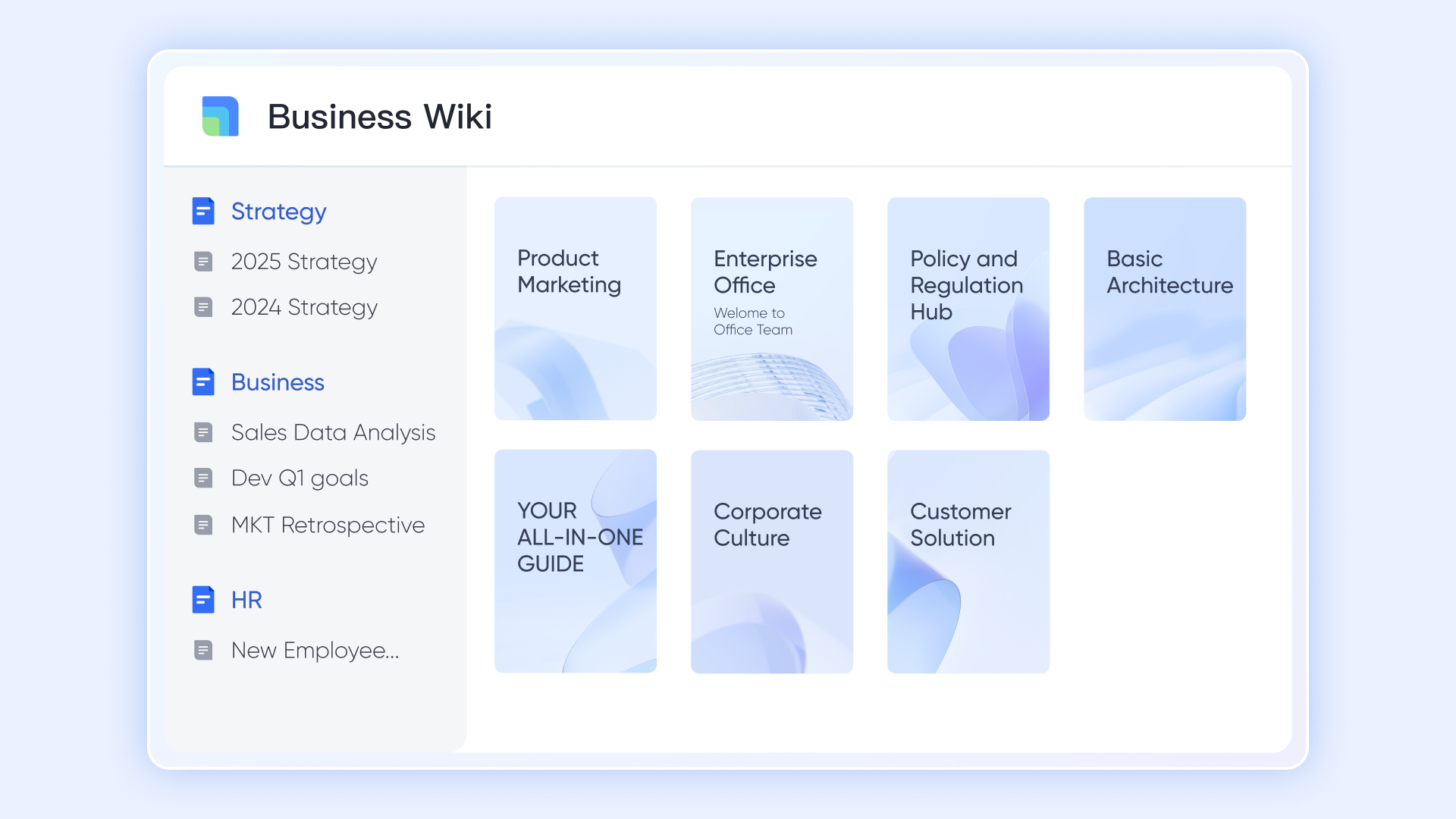
Lark's capabilities, encapsulated , provide a powerful platform for collaborative content creation. Construction teams can store and manage important documents such as reports, RFIs, and budget templates, avoiding confusion caused by too much material. In addition, Lark Wiki allows role-based permission control, ensuring data and material safety.
for streamlining process
automates routine workflows—significantly lowering administrative overhead on construction sites. Whether for project plans, change orders, or equipment usage, users can set specific criteria that trigger notifications and track progress. feature further enhances efficiency by allowing for the automated handling of approvals across various processes. This reduces delays and ensures timely decision-making within construction workflows.
Unified workspace
Lark fosters a unified workspace where built-in chat, video conferencing, and file sharing bring context to discussions. This interconnected environment enhances accountability, as all communications regarding tasks and projects remain easily accessible. Team members can effortlessly transition from discussions to actionable steps, reducing miscommunication and enabling quicker resolutions. 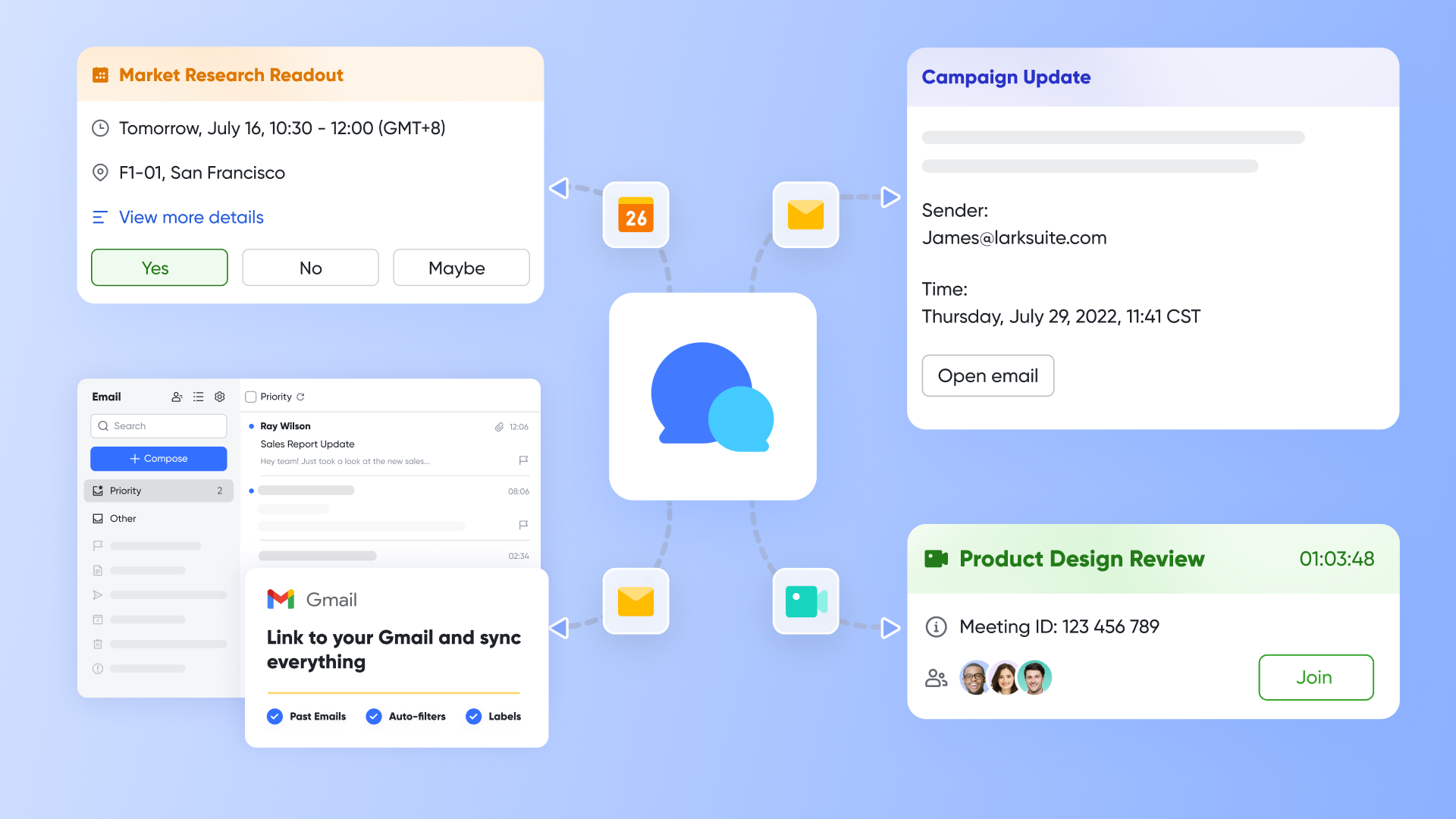
Why I recommend Lark
Lark stands out because it combines operational communication with for construction workflows—helping contractors move from fragmented systems to transparent, collaborative operations. It's an intuitive choice for firms aiming to digitize reporting, scheduling, and collaboration without juggling multiple apps. They also provide ready-to-use template for construction resource manegement.
:
- Starter plan: Free forever plan that includes 11 powerful tools for up to 20 users. It also comes with 100GB of storage, 1,000 automation runs, AI translations, and more.
- Basic plan: $6/user/month (billed annually) for up to 500 users, including everything in Starter plus 1-on-1 video meetings, 5TB of storage, 1,000 automation runs, and more. To know more about Basic plan, .
- Pro plan: $12/user/month (billed annually) for up to 500 users. It includes everything in Basic plus a group calling for up to 500 attendees, 15TB of storage, 50,000 automation runs, and more.
- Enterprise plan: for custom pricing. Supports unlimited users and includes even more automation runs and advanced security, compliance, and management features.
For small teams with simple communication needs

18 months message history
1000 Base automation runs/month
2000 rows per table in Base
Most POPULAR
For companies with comprehensive collaboration and management needs
Unlimited message history
500-participant video meetings
50k Base automation runs/month
20k rows per table in Base
For large companies with advanced security and organizational management needs
Get a personalized demo and pricing
Unlimited message history
500-participant video meetings
15 TB storage + 30 GB storage/user
500k Base automation runs/month
50k Base automation runs/month
Most POPULAR
For companies with comprehensive collaboration and management needs
Unlimited message history
500-participant video meetings
50k Base automation runs/month
20k rows per table in Base
2. Procore — best for enterprise-grade construction management
Procore is one of the most established names in construction resource management software, widely adopted by contractors, developers, and project owners worldwide. It provides an integrated suite that spans every project stage—from preconstruction planning to final handover—supporting teams with insights and automation that enhance safety, scheduling, and profitability.
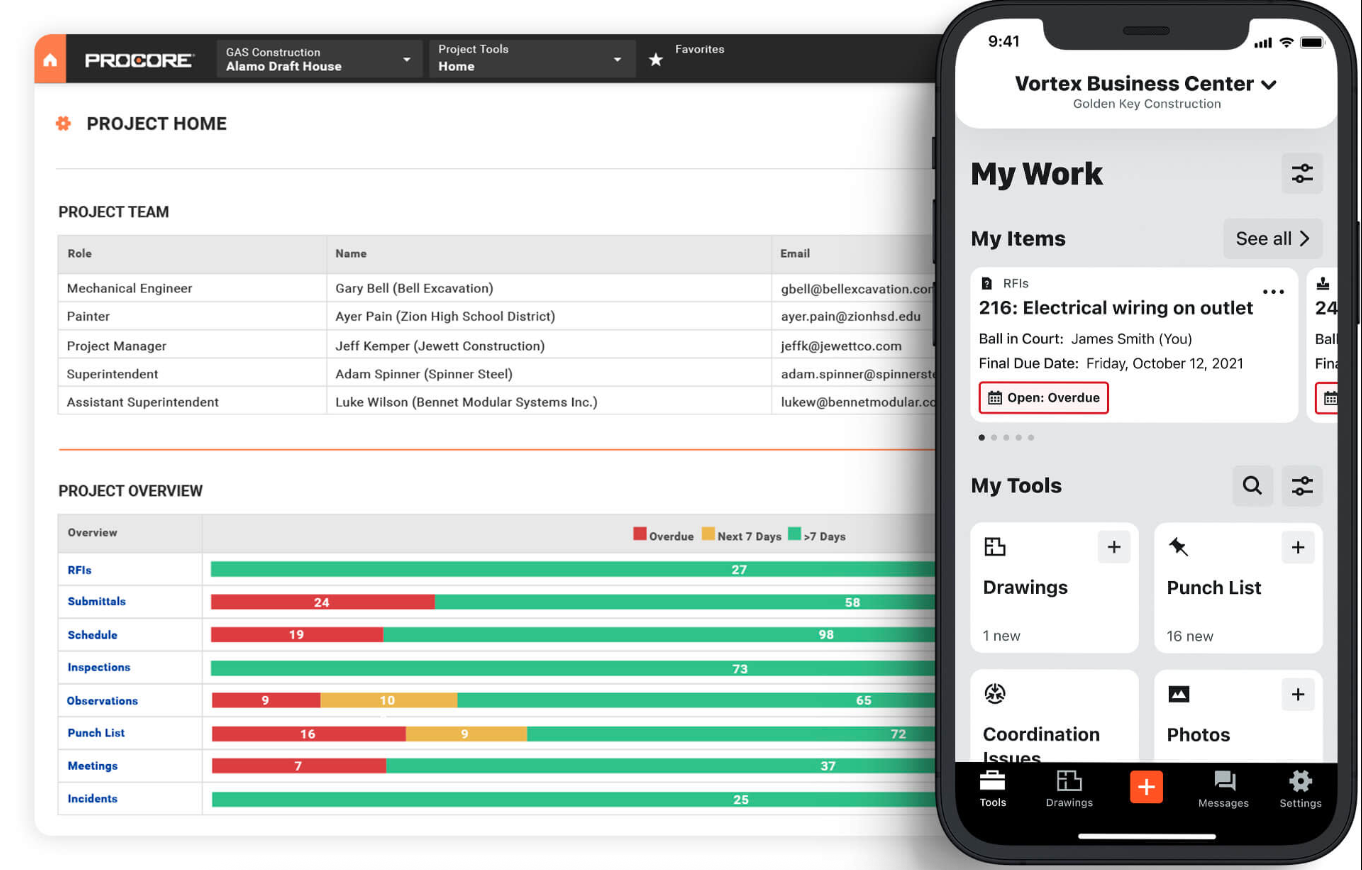
Image source: procore.com
Key features
- Comprehensive project management: A single dashboard for managing submittals, RFIs, schedules, and budgets across multiple sites.
- Real-time field updates: Mobile apps that let on-site teams capture data, upload photos, and update progress instantly.
- Resource allocation tools: Track labor, equipment, and material usage with integrated forecasting and analytics.
- Quality and safety modules: Digital checklists, inspection workflows, and incident reporting tools help maintain compliance.
- Integrations: Connects with third-party apps including ERP, accounting, and BIM software to consolidate project data.
- Performance analytics: Built-in dashboards offer executives visibility into resource utilization and cost efficiency at a glance.
Why I recommend Procore
I selected Procore because it combines enterprise-level strength with day-to-day field usability. It's powerful enough to manage complex infrastructure builds yet flexible enough for general contractors who need precise resourcing and transparent team communication. For organizations operating across regions, such as UAE construction markets, its cloud-based setup supports scalability and real-time reporting across all stakeholders.
Pricing
Procore's pricing model is typically based on project size and contract volume, rather than a flat per-user fee.
3. GoBridgit (Bridgit Bench) — best for workforce forecasting and resource planning
GoBridgit's Bridgit Bench is a leading construction resource management software solution focusing heavily on workforce intelligence. It enables construction executives to forecast capacity, manage labor assignments, and visualize human resource distribution across multiple projects. Used by many of North America's top contractors, it helps firms achieve precision and accountability in workforce planning.
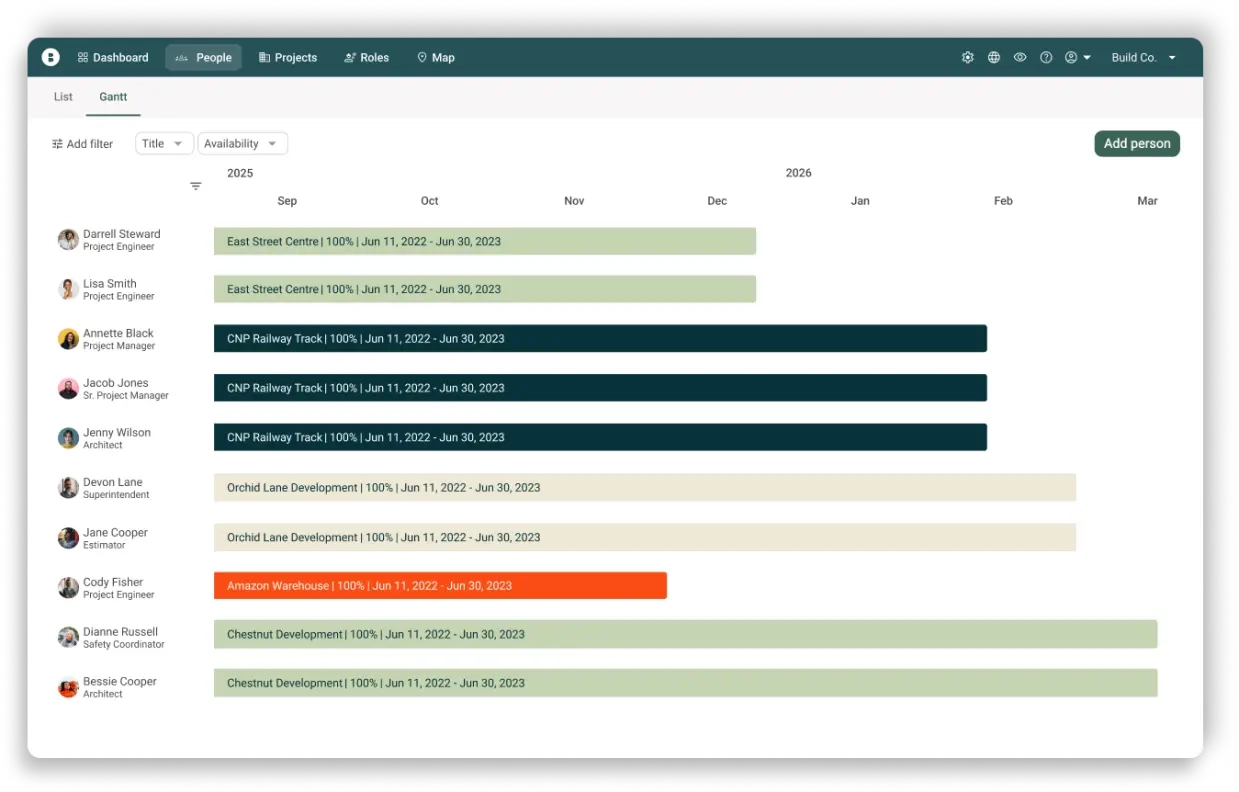
Image source: gobridgit.com
Key features
- Workforce forecasting: Real-time visibility into team availability and project timelines.
- Capacity planning: Match skill sets to project needs and ensure balanced workloads.
- Integrations: Works seamlessly with tools like Procore and Autodesk Construction Cloud to unify data flow.
- Automated updates: Keeps staffing data synchronized as projects evolve.
- User-friendly visualization: Custom dashboards for department heads and executives.
Why I recommend GoBridgit
It bridges HR and project operations, offering unmatched clarity into workforce utilization. For contractors expanding regionally or internationally—including in the UAE construction sector—it's ideal for keeping track of labor allocation across multiple active tenders.
Pricing
Custom, based on number of users and project complexity.
4. Buildertrend — best for small and mid-size contractors
Buildertrend is a comprehensive cloud-based platform specially built for home builders, remodelers, and specialty contractors. It unites scheduling, budgeting, client communication, and document management in one digital environment, helping smaller teams operate with enterprise-level organization.
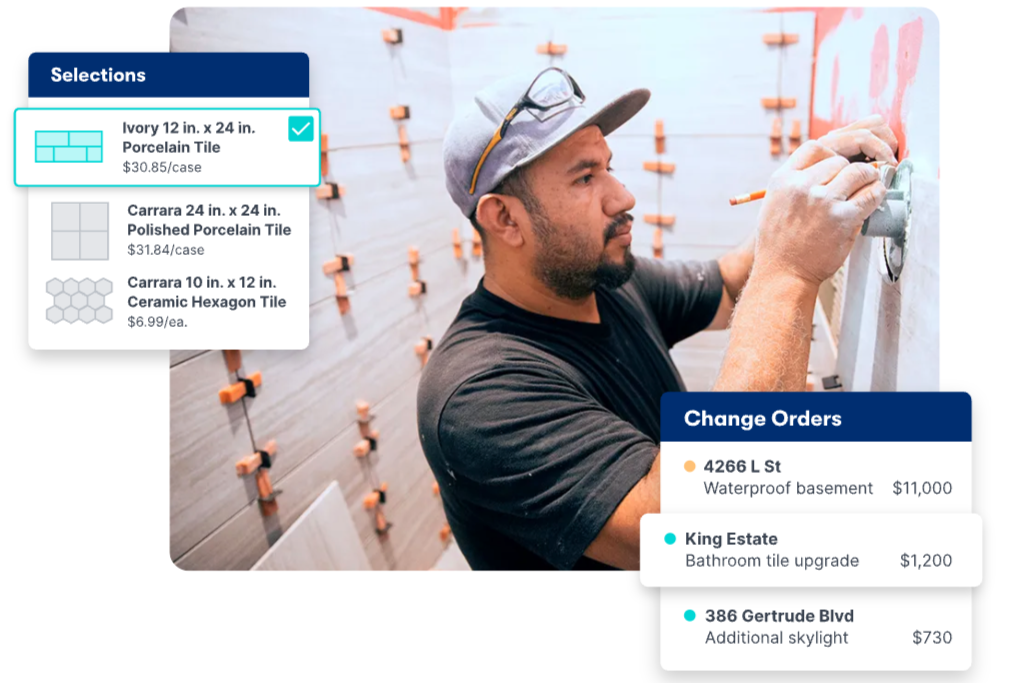
Image source: buildtrend.com
Key features
- Dashboard: Manage schedules, budgets, and progress updates seamlessly.
- Change order tracking: Instantly record field modifications and streamline approvals.
- Client portal: Share progress photos, invoices, and messages to strengthen transparency.
- Mobile access: Synchronize updates from anywhere, no need for multiple spreadsheets.
- Reporting tools: Provide visibility into project performance and cash flow.
Why I recommend Buildertrend
Buildertrend simplifies the construction process for builders without costly overhead. Its intuitive interface reduces administrative time while maintaining control over every resource and task—a major advantage for growing firms looking to scale.
Pricing
Based on company size and required features; product team offers quotes after tailored questions via their pricing portal
5. Autodesk Construction Cloud — best for design and build integration
Autodesk Construction Cloud (ACC) remains one of the most comprehensive and data-driven construction resource management software suites in 2026. It is built to connect every stakeholder—from designers and engineers to contractors and site supervisors—within a single, intelligent ecosystem. The latest 2026 update introduces refined data-sharing capabilities, improved analytics for project insight, and enhanced cross-project coordination.
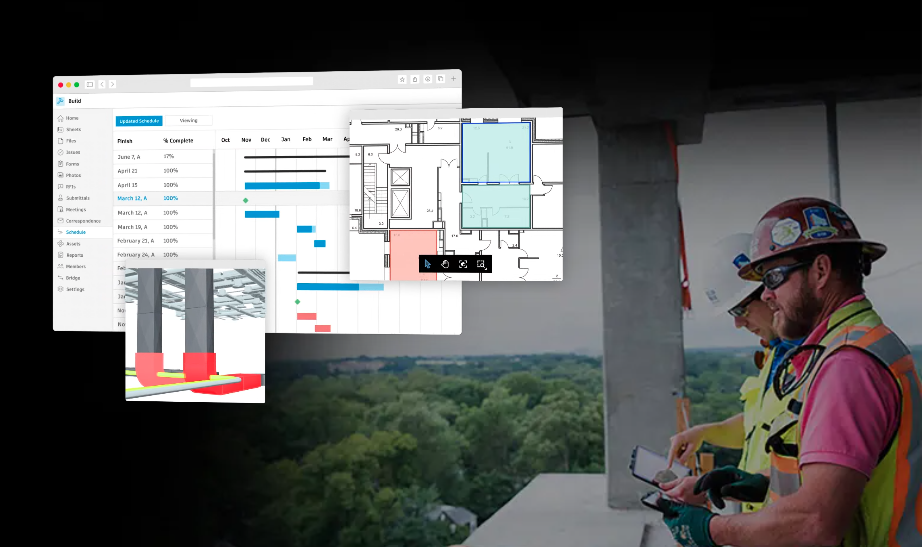
Image source: construction.autodesk.com
Key features
- Design-to-field workflow: Connects BIM designs directly to construction schedules.
- Centralized data management: Ensures every stakeholder has up-to-date project information.
- Collaboration tools: Field and office communication integrated in cloud environments.
- Quality and safety management: Maintain compliance through automated checklists.
- Insight dashboards: AI analytics for productivity and material performance tracking.
Why I recommend Autodesk Construction Cloud
ACC's integrated structure makes it indispensable for enterprise construction, design-build contractors, and firms managing multi-trade projects. By merging planning precision with resource intelligence, it simplifies workflows that once required multiple disconnected tools. For global contractors handling complex regulatory or construction project resource management software demands, its scalability and compliance readiness are unmatched.
Pricing
Tiered enterprise subscriptions available on request; tailored based on tool combinations (e.g., Build, Docs, or Takeoff).
6. Oracle Aconex — best for compliance-driven large infrastructure projects
Oracle Aconex is a trusted construction resource management software solution for large-scale and high-compliance environments, including infrastructure and commercial megaprojects. Built for structured collaboration, it ensures all documentation and project communication are securely stored and traceable.
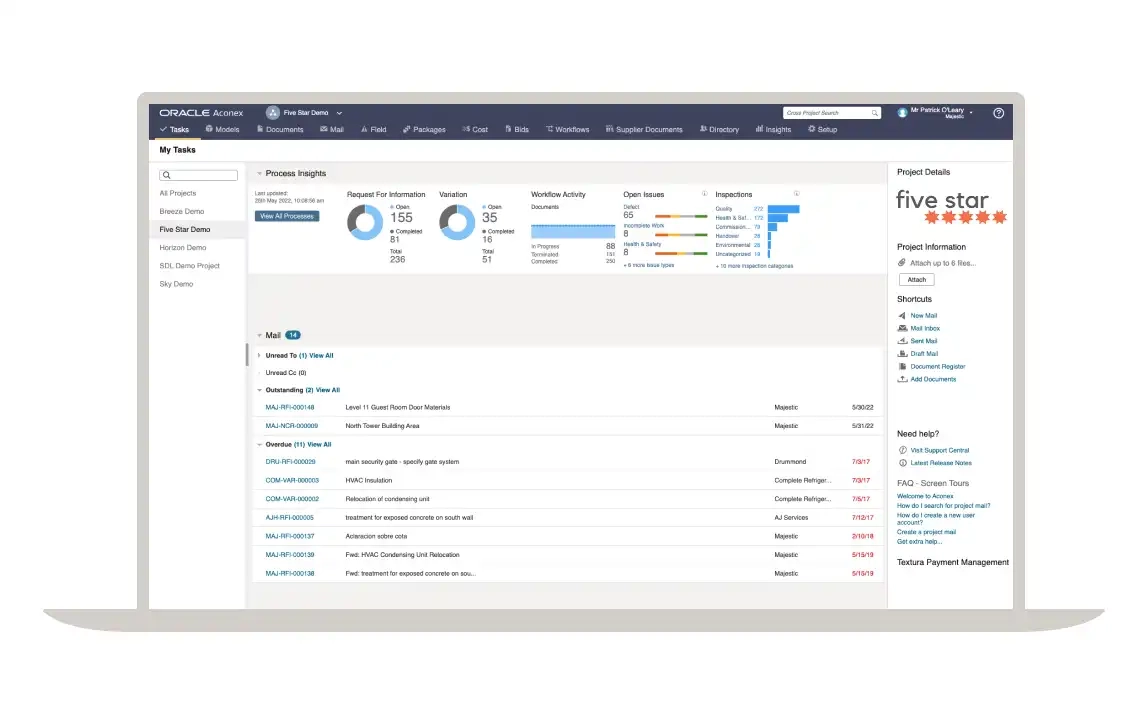
Image source: oracle.com
Key features
- Document and process control: Manage contracts, communications, and workflows with version tracking.
- Audit and compliance modules: Ideal for regulated environments with strict documentation requirements.
- Large-team coordination: Customizable user permissions and chain-of-command approvals.
- Cloud storage: Ensures secure, accessible information sharing anywhere in the world.
Why I recommend Oracle Aconex
It's the go-to choice for engineering, procurement, and construction (EPC) contractors needing enterprise stability and traceability—especially within international markets and UAE infrastructure megaprojects.
Pricing
Available on consultation basis; Oracle tailors enterprise pricing by region, user count, and compliance demands.
7. Quickbase — best for customizable construction resource workflows
Quickbase allows construction teams to create tailor-made solutions without programming knowledge. This no-code construction resource management software empowers users to design dashboards and workflows suited to their business processes—especially valuable for contractors balancing bespoke operations or region-specific compliance, such as resource management software UAE construction projects.
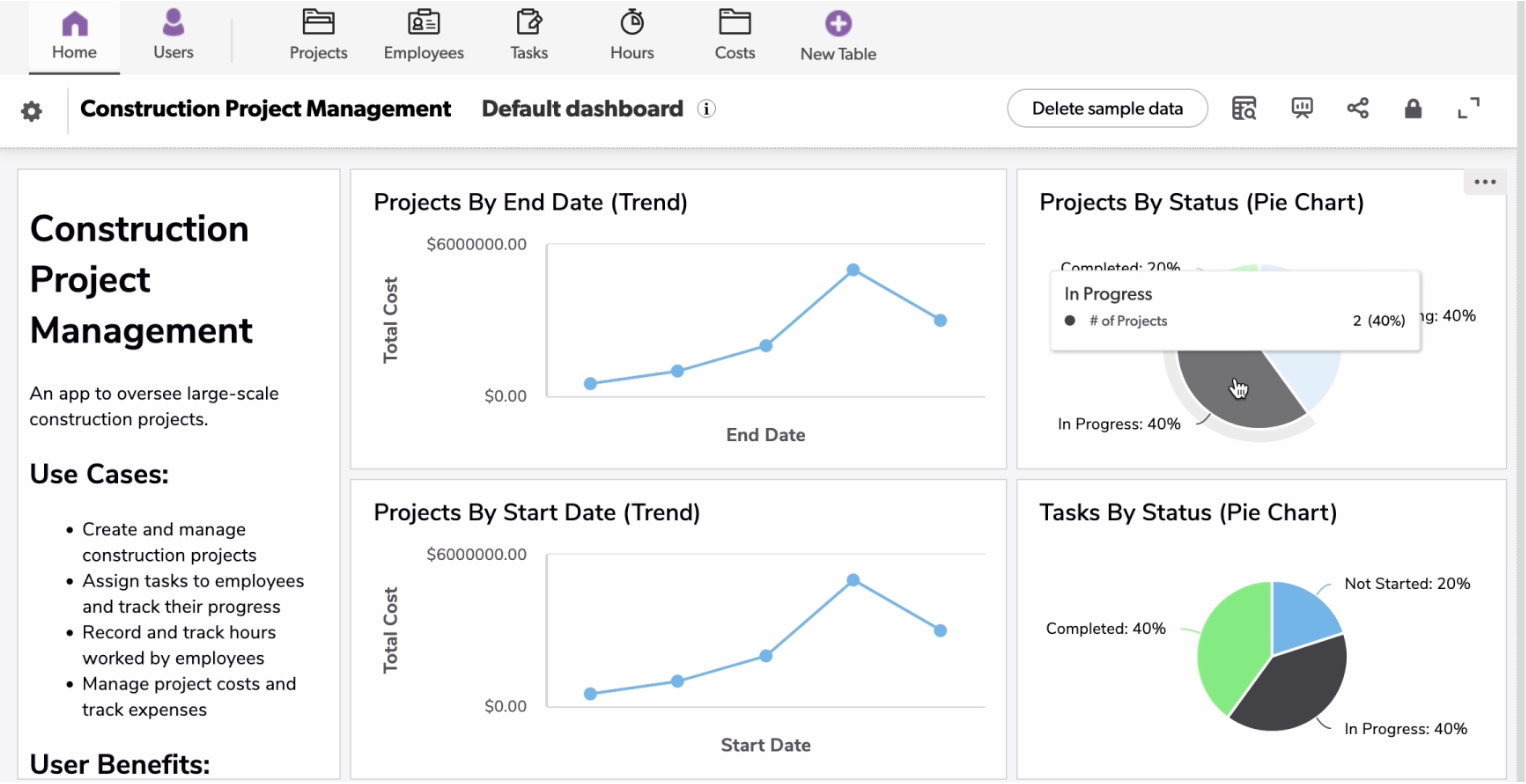
Image source: quickbase.com
Key features
- No-code builder: Easily create forms, tables, and approvals without IT dependency.
- Dynamic reporting: Track workforce utilization and project resource performance.
- Automation: Establish automated alerts and task creation for recurring workflows.
- Integration-ready: Works with popular accounting, CRM, and ERP platforms to unify financial and operational data.
- Collaboration tools: Teams share updates live, ensuring everyone works from the latest data.
Why I recommend Quickbase
Unlike rigid solutions, Quickbase gives construction managers full control over customization—without the need for coding or IT dependency. Perfect for scaling digital transformation at any pace.
Pricing
- No free plan; free trial for 30 days
- Business: $55/user/month
8. Tenna — best for fleet and heavy equipment tracking
Tenna focuses exclusively on asset and equipment resource management for construction firms with large fleets. It connects machines, tools, and vehicles through IoT sensors, GPS tracking, and a smart cloud dashboard that displays real-time data on equipment health and utilization.
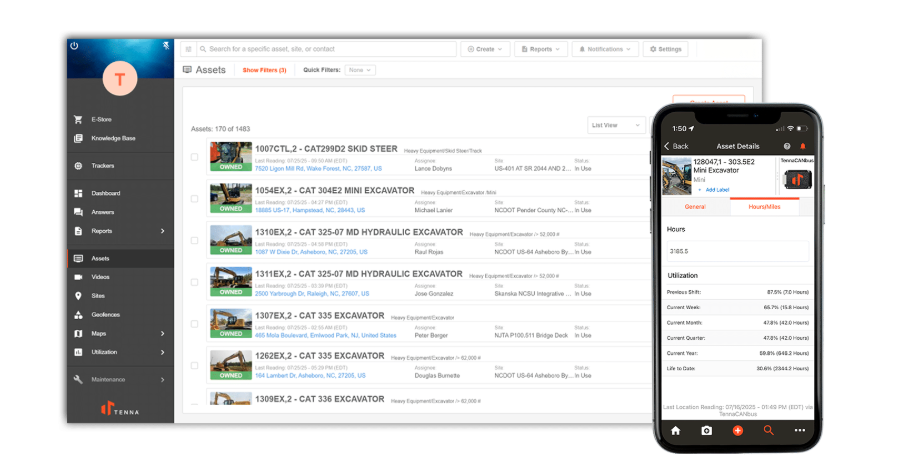
Image source: tenna.com
Key features
- GPS tracking and telematics: Monitor exact locations and usage patterns.
- Fleet analytics: Identify underutilized machines and schedule maintenance efficiently.
- Integrated sensors: Capture real-time visibility on fuel, hours, and movement data.
- Field mobility: Allow operators and mechanics to update equipment status via mobile app.
Why I recommend Tenna
Because it's uniquely designed for fleet-heavy construction environments, Tenna closes the gap between physical operations and digital oversight—helping firms reduce downtime and extend asset lifespan.
Pricing
Customized, based on fleet scale and chosen sensor technology package.
9. ServiceTitan — best for streamlining specialty trade and service operations
As a premier operating system for residential and commercial trade businesses, bridges the gap between field operations and back-office management. It provides subcontractors with a unified platform to manage the entire project lifecycle—from lead generation and scheduling to real-time job costing and final payment.

Image source: servicetitan.com
Key features
- Intelligent Dispatching: Optimizes technician schedules and routes in real-time to maximize daily billable hours.
- Custom Proposal Builder: Enables field teams to create professional, tiered bids directly on a mobile device to increase close rates.
- Dynamic Job Costing: Provides instant visibility into labor and material costs, helping managers maintain healthy project margins.
Why I recommend ServiceTitan
It is exceptionally well-suited for specialty contractors who need to balance high-volume service calls with the rigorous demands of construction projects. Its all-in-one approach eliminates data silos and streamlines team coordination.
Pricing
Customized subscription plans based on business size and selected modules; specific quotes are provided via consultation.
10. ALICE Technologies — best for AI-powered construction scheduling
ALICE Technologies integrates artificial intelligence into construction planning, enabling smarter, faster, and more adaptable scheduling decisions. It redefines construction resource management software by simulating multiple build strategies and identifying the most efficient resource allocation models.
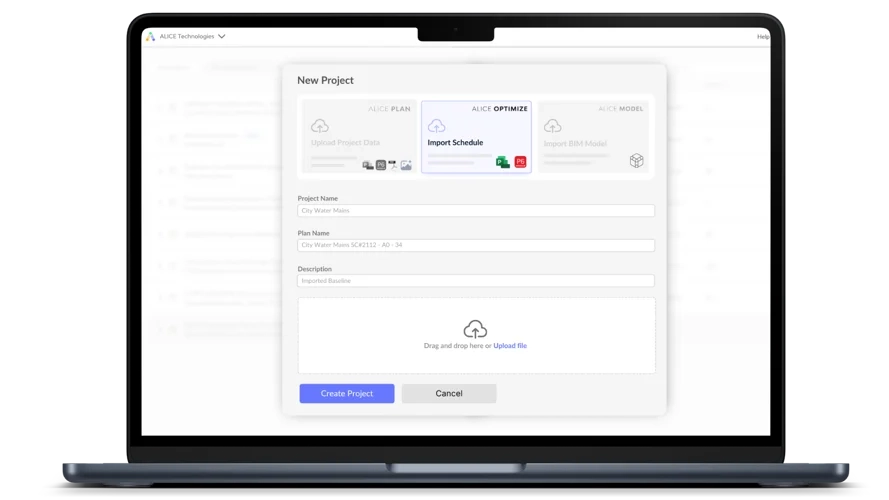
Image source: alicetechnologies.com
Key features
- AI-generated schedules: Evaluate millions of build variations instantly to find optimal paths.
- Dynamic resource modeling: Allow project leaders to forecast labor, equipment, and material needs accurately.
- Scenario simulation: Identify potential project bottlenecks before they occur.
- Integrations: Supported links with P6, Revit, and other planning systems.
- Advanced dashboards: Help teams visualize project dependencies in granular detail.
Why I recommend ALICE Technologies
This is where predictive technology meets construction efficiency. ALICE transforms scheduling from static planning into an evolving process that reacts intelligently to on-site realities, saving both time and resources.
Pricing
Enterprise-level subscriptions based on data complexity and project volume; consultation-based quotation.
Transform construction workflow with the best tool
How to choose the right software for your construction business
Choosing the best construction resource management software isn't about selecting the most feature-packed platform—it's about matching your company's unique workflows, workforce size, and project scale to the right level of functionality. Whether you're a small contractor or a multinational developer, this decision defines how efficiently your and manages resources.
Based on industry recommendations and common practices, here are the key factors every construction leader should weigh before investing in a new resource management software for construction suite.
Evaluate your project complexity and company size
Start by identifying your operational scope.
- Small to medium contractors may need straightforward scheduling, budgeting, and document tools that minimize administrative time.
- Larger enterprises running multiple sites—especially international teams or UAE construction operations—require scalable, with role-based access control and multilingual support.
Understanding the scale of your work helps narrow the software field quickly, aligning cost and capability from the beginning.
Prioritize integration and compatibility
According to multiple construction technology experts, integration with existing systems remains a top success factor. Seamless interoperability with BIM, ERP, payroll, and field productivity tools allows smooth data flow across functions.
When assessing construction software, ask:
- Does it sync with financial systems and time tracking tools?
- Can it import and export data easily?
- Does it support cloud API integration?
Smooth integration reduces confusion, prevents double data entry, and ensures every stakeholder has access to accurate real-time information.
Focus on usability and onboarding
The most powerful system fails if your team finds it complicated to use. Prioritize clear interface design, simple navigation, and robust onboarding materials. Many providers offer trial versions so teams can test the tool in real work conditions before committing.
Intuitive resource management software for construction ensures higher adoption rates, decreases resistance to digital change, and
Unlock efficient construction resource management
Assess automation and customization potential
Every construction business has different workflows—from subcontractor coordination to safety approval chains. Choose software that can adapt through or customizable modules. This flexibility supports long-term business growth instead of requiring new tools each time your processes evolve.
For global teams or resource management software UAE construction users, localized dashboards and automated reporting can simplify compliance and documentation.
Consider pricing, scalability, and long-term value
A good selection strategy balances functionality with cost. Subscription-based pricing—common in most construction project resource management software—offers flexibility as project loads shift. Look beyond the initial cost and evaluate:
- Future scalability when project volume increases.
- Ongoing support and update frequency.
- Alignment with your digital transformation roadmap.
Choose a provider with transparent pricing and the ability to grow as your business expands, rather than forcing expensive platform replacements later.
In summary, selecting the right construction resource management system means blending technology with practicality. The best tools fit naturally into your project operations, strengthen collaboration between field and office, and reduce manual errors. In a sector where and budgets are constantly under pressure, the right digital foundation can turn complexity into competitive advantage.
Emerging trends shaping construction resource management software
Nowadays, there is a major transformation in how construction teams plan, allocate, and optimize resources. With rapid digital adoption, construction resource management software is becoming smarter, faster, and more collaborative than ever. These digital tools not only but also help construction professionals achieve a better work-life balance by reducing work-related stress and freeing up more time for personal life.
AI and predictive analytics
Artificial intelligence is now at the center of resource optimization. AI tools analyze past project data and real-time inputs to forecast delays, recommend resourcing adjustments, and improve accuracy in scheduling. Predictive analytics help contractors make proactive decisions rather than react to problems after they occur.
Cloud-based and mobile-first collaboration
Cloud platforms ensure seamless teamwork across job sites, offices, and client teams. Teams can update schedules, access drawings, and track materials from any location. empowers supervisors on site to act instantly—keeping operations synchronized across regions and time zones.
Automation and workflow integration
Automation remains crucial for efficiency. Platforms are embedding smart workflows that automatically generate tasks, send alerts, and link data from design, finance, and project systems. This reduces manual input and connects every function into a unified digital process.
Unified data ecosystems and digital transparency
Connected ecosystems are emerging as the industry standard. By integrating BIM, ERP, and IoT data into one environment, companies create a single source of truth for cost, schedule, and resource data—improving coordination and reducing miscommunication.
In summary, AI, automation, and connected data environments are redefining how construction resources are planned and managed. The future of construction resource management software lies in intelligent, mobile, and sustainable platforms that help contractors build faster, safer, and smarter.
Experience firsthand the best tool for construction
Conclusion
As the construction industry pushes deeper into digital transformation, construction resource management software has evolved into a unified command center—combining scheduling, budgeting, communication, and analytics. Tools like , Procore, and Autodesk Construction Cloud prove that successful project execution now depends on connected data and real-time collaboration.
For businesses in the UAE construction market or other global regions, digital adoption is not only a competitive advantage—it's a necessity. Companies leveraging automation, cloud collaboration, and AI-powered forecasting gain clearer control over timelines, reduce costs, and build with consistency and transparency.
In 2026 and beyond, the future of construction management belongs to those who integrate technology seamlessly—from workforce analytics to design integration—to create smarter, faster, and greener builds.
FAQs
What is the best resource management software?
The best construction resource management software depends on your company's scale and needs:
- Lark — ideal for collaborative teams seeking real-time communication and flexible resource tracking.
- Procore — enterprise-grade management for large and multi-site projects.
- Autodesk Construction Cloud — best choice for projects requiring strong design-build integration.
- GoBridgit — great for workforce planning and labor forecasting. All four offer excellent visibility, scalability, and automation for modern construction projects.
What is construction resources management?
Construction resource management is the process of planning, allocating, and supervising essential resources—labor, equipment, materials, and budget—throughout a project's lifecycle. It ensures the right resources are available at the right time and cost, enhancing project efficiency, profitability, and sustainability.
Is CMiC an ERP system?
Yes. CMiC is a fully integrated ERP (Enterprise Resource Planning) system built specifically for construction and capital projects. It combines financials, project management, human resources, and asset tracking—allowing firms to manage business operations and project performance within one cohesive platform.
What is the best CRM for construction?
According to industry reviews in 2026, top-performing construction CRM software options include:
- Method CRM – best for QuickBooks-integrated construction firms.
- Buildertrend – an all-in-one CRM and project management solution for builders.
- HubSpot CRM – powerful for lead tracking and marketing automation.
- Pipedrive and JobNimbus – excellent for managing bids, sales pipelines, and client follow-ups.
These CRMs help contractors organize leads, manage client communication, and improve customer retention—all key to sustaining growth in a highly competitive construction market.
Related reading