














A Practical Guide on How to Manage Project Managers Effectively

Fecilia Clarke
Solutions Marketing Specialist
Sep 18, 2026
Fecilia Clarke
Sep 18, 2026

16 min read


Managing a team is always a challenge, but learning how to manage project managers presents a unique leadership paradox. You are tasked with leading the project leaders. Your success is not measured by the projects you personally deliver, but by your ability to create an environment where your project managers—and their projects—consistently thrive. Their triumphs are a direct reflection of your guidance, and their struggles can create ripple effects of missed deadlines and strained budgets, impacting the entire organization. This is a role of immense leverage, and getting it right is a true game-changer for achieving consistent project success.
Many leaders find themselves walking a difficult tightrope. The core challenge isn't a lack of effort; it's the lack of a system that enables both autonomy and strategic alignment, preventing project failure before it begins. This guide is designed to give you that system. We will move beyond the foundational theories of project management and provide you with concrete, actionable strategies for empowering your project leaders. We will explore how to foster a culture of continuous improvement, measure what truly matters, and achieve predictable, scalable success. Let's begin the shift from just managing projects to building the best project managers in the industry.
What is project management?
At its core, project management is the systematic approach to achieving specific project objectives within defined constraints. It involves the application of knowledge, skills, tools, and techniques to guide a unique endeavor—from initial concept to final delivery—through the entire project lifecycle. This discipline is essential for turning abstract ideas into concrete results, ensuring that complex tasks are completed on time, within budget, and according to required specifications to deliver project success. Without it, even the best ideas can falter under the weight of disorganization.
Modern project management extends far beyond simply tracking tasks. It encompasses a structured process that includes initiating, planning, executing, monitoring, controlling, and closing the work of a team. The primary goal is to meet the pre-determined requirements of stakeholders while managing the project scope, resources, timelines, and potential risks. A well-executed project management approach transforms vision into reality, making it a critical function in every industry for ensuring effective project execution and delivering consistent value.
For project managers, this means wearing many hats: planner, coordinator, communicator, and problem-solver. They act as the linchpin, connecting the project plan with the team's execution. Using established project management methodologies and robust project management tools, they navigate the challenges of the project lifecycle to lead their teams and stakeholders toward successful outcomes. Their role is pivotal in marshalling resources and focusing effort to turn a great plan into a great result.

The evolution of the project manager’s role
Before we can effectively lead, we must fully appreciate the complexity and strategic importance of modern project management roles. The title "project manager" can be misleading if we cling to an outdated image of a clipboard-wielding taskmaster. Today’s PMs are far more than just administrators of timelines and budgets. They are strategic partners, chief communicators, and forward-thinking problem-solvers who must navigate immense complexity to deliver tangible business value. They are the central hub through which strategy is translated into execution, making their effectiveness critical to organizational agility and the success of even the most complex projects.
This strategic position comes with a unique set of challenges that you, as their manager, ultimately inherit. Project managers often operate with high levels of accountability but without the corresponding formal authority, forcing them to lead through influence, not command, especially when working with cross-functional teams. They are masters of context-switching, constantly juggling the competing demands of different stakeholders, team members, and executives. Their daily work involves fending off scope creep, managing stakeholder expectations with diplomacy, and absorbing the immense pressure to deliver on time and on budget, all while keeping their project team motivated and focused on the right project tasks.
Your role as their leader is not to jump in and solve every problem for them. That approach simply doesn't scale and, worse, it undermines their development. Instead, your primary function is to act as an architect—to design and build an environment that removes systemic friction and empowers your project managers to solve problems effectively themselves. You provide the tools, the clarity, and the strategic support they need to navigate their challenges with confidence. What project managers need most is a leader who makes them as self-sufficient and successful as possible, which in turn amplifies your own impact.
Core strategies for how to manage project managers effectively
Great management is a practice, not a theory. It's built on a foundation of clear principles that guide your daily interactions and decisions. When managing project leaders, your approach should focus on enabling their success rather than policing their activity. This means shifting your mindset from being a director to being a coach, a strategist, and a provider of resources. We have distilled this approach into four core strategies that you can begin implementing today to elevate your team’s performance and drive more successful project management across the board.
Set the stage with crystal-clear goals and expectations
The single most powerful way to empower a project manager is to give them a clear understanding of "why." A project without a clear connection to a larger business objective is just a series of tasks, making it difficult for a PM to make smart trade-off decisions or inspire their team. Don't just assign a project; communicate its strategic purpose and the desired project outcomes. How does this initiative support a company OKR? Which business goal does it advance? This context is not a trivial detail—it is the guiding star that allows your project managers to navigate the fog of execution with purpose and clarity, ensuring all team members' contributions push the project forward.
This is where integrating your goal-setting framework directly with your project ecosystem becomes transformative. By using a tool like Lark OKR, you can create a transparent link between high-level company objectives and the project goals designed to achieve them. When a project manager can see, right within their workspace, that their project directly contributes to a key company objective, their role is immediately elevated. They are no longer just managing a timeline; they are executing a piece of the company's core strategy, which empowers them to prioritize, communicate, and lead with greater authority and conviction.
Champion autonomy while maintaining strategic visibility
One of the most common tensions in managing project managers is finding the balance between trust and oversight. The desire to "just check in" can quickly devolve into micromanagement, breeding resentment and stripping your PMs of the ownership they need to be effective. The key is to embrace the principle of "trust, but verify." You must grant your PMs the freedom to run their projects, but you also need a reliable way to maintain strategic visibility and track progress without constantly interrupting their flow. Your oversight should be strategic, not administrative, focusing on the overall project progress rather than individual task minutiae.
The solution lies not in more meetings, but in a better system. A centralized database like Lark Base allows you to perfect this balance. Imagine building a high-level portfolio dashboard that automatically pulls and consolidates key data—like project status, budget variance, and critical risks—from each individual project tracker your PMs manage. This gives you a real-time, holistic view of the entire project landscape at a glance. You can spot cross-project dependencies or identify potential bottlenecks early, allowing you to drill down and offer support only when it's truly needed. Your PMs are free to work, and you get the on-demand visibility you need to lead effectively.
Coach them on how to manage up and sideways
A project manager's success rarely depends on their efforts alone; it hinges on their ability to manage relationships in every direction. As their leader, one of your most high-leverage activities is coaching them on how to "manage up" to leadership and "manage sideways" with other department heads. An effective project manager doesn't just report status; they build alliances, negotiate for resources, and proactively manage the expectations of key stakeholders. Teaching them these power skills is a force multiplier for your entire team's effectiveness and influence, making them truly effective project managers.
Provide them with practical tools and frameworks for these conversations. Coach them on how to frame potential risks not as problems, but as business decisions with proposed solutions. Help them craft concise, data-driven updates that respect executives' time. This is another area where an integrated toolset provides a massive advantage. For example, a project manager can share a clean, filtered view of their Lark Base dashboard or a crisp one-page summary from Lark Docs with stakeholders. Armed with clear, professional, and easily digestible data, they can enter these crucial conversations with confidence, transforming them from passive reporters into influential strategic partners.
Standardize excellence, not just mindless process
When managing a team of project managers, the goal should be consistent quality, not rigid conformity. Forcing every PM to follow the exact same granular process for every type of project is brittle and stifles innovation. Instead, focus on "standardizing excellence." This means providing your team with a robust toolkit of best practices, templates, and resources that represent your organization's definition of "great," while still allowing them the flexibility to adapt their approach to the unique needs of each project, from a simple task to their efforts to deliver complex projects. You're not handing them a restrictive rulebook; you're giving them a launchpad for success.
A centralized knowledge hub is the perfect vehicle for this. You can create a comprehensive "Project Kickoff Kit" within Lark Wiki or as a shareable template. This kit is more than a simple checklist. It can include your preferred project plan format, a pre-configured risk register in Lark Base, templates for stakeholder communication plans, and links to post-mortem analyses from similar past projects. When a project manager starts their next project, they simply duplicate the kit, ensuring a high-quality, consistent approach from day one. This shifts your role from being a process enforcer to a curator of excellence, scaling your best practices across the entire team.
Moving beyond the iron triangle with advanced KPIs
For decades, project success has been judged by the "iron triangle": was it delivered on time, on budget, and within the defined project scope? While these metrics are undeniably important, they are fundamentally incomplete. A project can hit all three targets and still be a failure if the team is completely burned out, the stakeholders are unhappy, or the final product doesn't actually deliver any real business value. As a leader of project managers, your perspective must be broader. Great managers understand the need to measure what truly matters, moving beyond simple output metrics to gauge true impact, team performance, and sustainability.
Measure team health and sustainability
A project manager's ability to deliver is directly tied to the health and morale of their project team. A team that is consistently overworked, under-supported, or burning out may hit one or two deadlines through sheer heroic effort, but that pace is unsustainable. Eventually, quality will suffer, deadlines will be missed, and you will lose valuable talent. As a manager, you must have a pulse on the team dynamics and the human element of effective project execution. Are teams feeling motivated and engaged? Is the workload manageable? These are leading indicators of future successful outcomes.
To get a read on this, you don't need complex analytics. The key is to create a simple, consistent feedback loop. Using a tool like Lark Forms, you can create a short, anonymous "Team Health Check" survey to send out at key project milestones. Ask simple questions about workload, clarity of direction, and overall morale. You can even use it to solicit customer feedback if the project is external. The trends you see over time will provide invaluable insights, allowing you to provide constructive feedback and have proactive conversations with your project managers about resource allocation and team leadership before burnout becomes a critical issue.
Measure stakeholder satisfaction and engagement
A project can be technically perfect but still fail due to poor communication if key stakeholders feel ignored, misunderstood, or bulldozed. Stakeholder satisfaction is a critical measure of a project manager's communication skills and relationship-building abilities. Did they feel their input was valued? Were they kept adequately informed of progress and changes with all relevant stakeholders on the same page? Is the final result aligned with their expectations? A happy stakeholder is not just a sign of a successful project; they become an advocate for your team and a champion for future initiatives.
Tracking stakeholder sentiment shouldn't be left to guesswork. It should be a deliberate part of your process across the entire project lifecycle. After a major deliverable or at the end of a project, send a brief satisfaction survey to key stakeholders. Ask them to rate the communication, collaboration, and overall outcome. This provides your project managers with direct, actionable feedback on their soft skills—often called power skills—and gives you a powerful KPI to track their growth in this crucial competency. It helps shift their focus from just managing tasks to managing the human ecosystem around the project.
Measure the realized business value
This is the ultimate test of project success. Did the project actually achieve the business outcome it was designed to deliver? A new feature launch that no one uses or a process optimization that doesn't save money may have been delivered on time and on budget, but they failed to create value. Great managers consistently guide their project managers to think beyond the delivery date and focus on the business impact of their work. This elevates their role from executors to true business partners, a hallmark of all skilled project managers.
The key to measuring this is to create a clear through-line from goals to results. By establishing clear project objectives upfront using a framework like Lark OKR, you create a clear benchmark for success. Months after a project's completion, you and your project manager can revisit those initial objectives. Did the new onboarding flow actually improve user activation rates? Did the system migration truly reduce server costs? Having these data-driven conversations about realized value is one of the most powerful coaching opportunities you have. It trains your PMs to think like business owners, ensuring their efforts are always aimed at moving the needle.
How technology can build a high-performing project team
In the modern workplace, especially with the rise of remote work, technology is the central nervous system of project execution. However, not all technology is created equal. A fragmented toolkit, where communication happens in one app, tasks are tracked in another, and documents live in a third, creates more friction than it removes. These disparate project management tools force your project managers to spend their valuable time acting as human APIs, manually copying and pasting information. The right project management software, however, acts as a powerful enabler. It unifies workflows, improves workflow efficiency, and liberates your team to focus on the high-impact, strategic work they were hired to do.
Unify your work into a single source of truth
The most pervasive enemy of effective project management is scattered information. When critical decisions are buried in one person's email inbox, project plans are stored in a forgotten folder, and task status lives in a separate app, you have no single source of truth. This chaos leads directly to miscommunication, duplicated work, and costly mistakes. Your project managers are forced to waste precious time hunting for information instead of driving progress. To effectively manage project leaders, you must first provide them with a foundation of clarity and order by using modern collaboration tools.
This is where the concept of an all-in-one platform becomes essential. Imagine a single project workspace where every element of the project lives together, contextually linked. The Lark Messenger channel for that project contains all real-time discussions, the Lark Base tracker shows all tasks and milestones, Lark Docs hold the detailed plans and specs, and Lark Calendar visualizes the project schedule. Everything is interconnected and instantly searchable. For a project manager, this isn't just a convenience; it's a command center that provides complete context and control over their multiple projects.
Make every meeting a productive work session
Meetings are one of the most expensive activities in any organization, yet they are often the least productive. Far too many project review meetings end with ambiguous conclusions, vague commitments, and action items that are forgotten the moment everyone leaves the room. For a project manager, this is a significant source of drag and risk. A key part of your role is to equip them with the tools and processes needed to ensure that every minute spent in a meeting translates directly into forward momentum and clear, documented accountability, especially when meeting with subject matter experts.
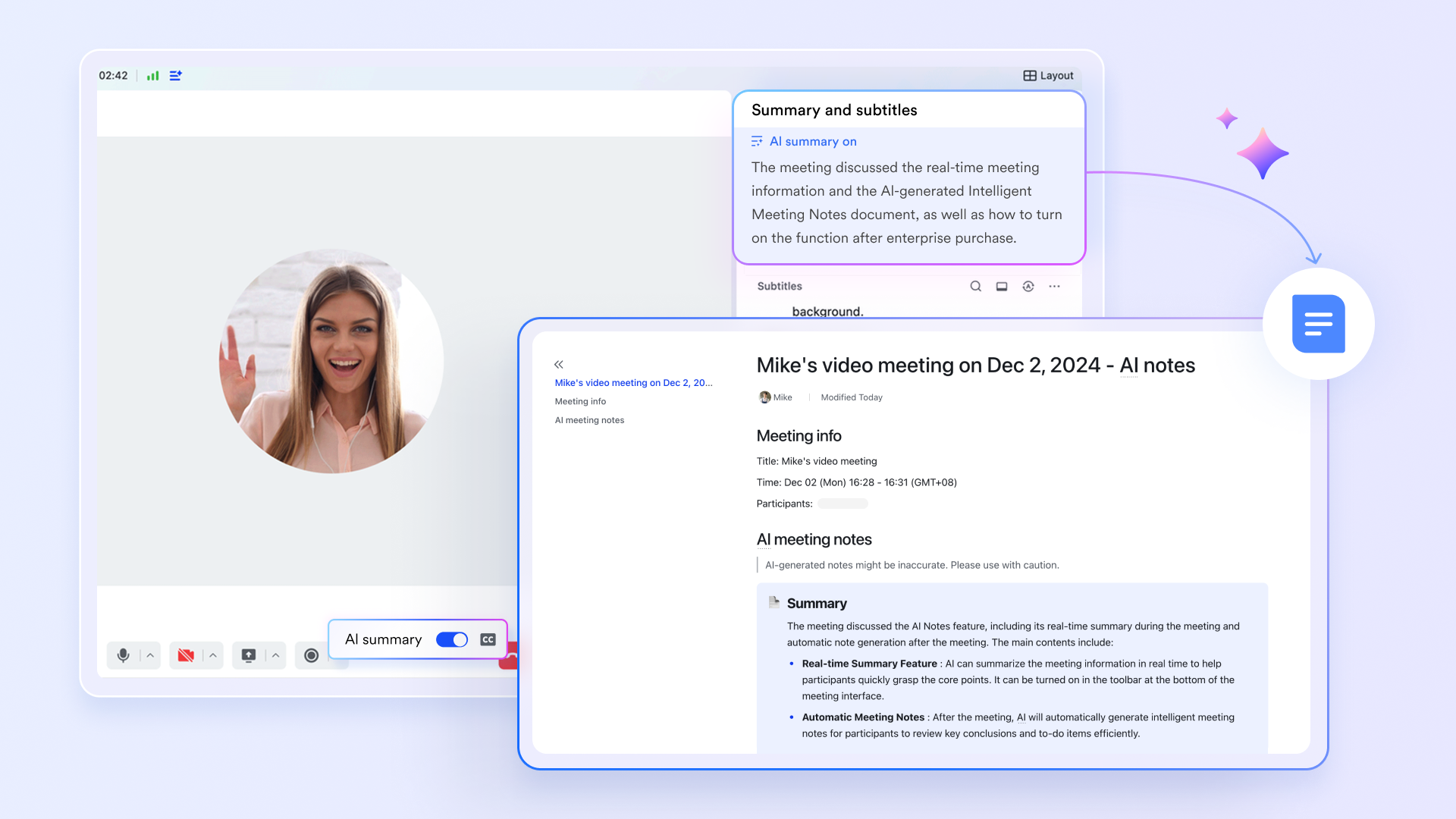
Technology can fundamentally transform the productivity of meetings. With a tool like Lark Meetings enhanced by Minutes and AI Meeting Notes, this problem is elegantly solved. The entire conversation is automatically transcribed, making it fully searchable. More importantly, the AI can generate a concise summary of key decisions and create a list of trackable action items. Directly from the meeting transcript, a project manager can perform task delegation, assigning action items to team members with deadlines. This closes the loop between discussion and action, ensuring that every meeting ends with a clear, shared understanding of who is doing what by when.
Streamline reviews and approvals to kill bottlenecks
In any complex project, progress often hinges on a series of formal approvals. Whether it's a budget increase, a change in scope, or the final sign-off on a deliverable, waiting for approvals can bring a project to a screeching halt. When approval requests are buried in emails or informal chat messages, they are easily missed, creating bottlenecks that are entirely preventable. Your project managers need a clear, reliable, and auditable way to request and receive approvals so they can maintain momentum, avoid resource conflicts, and keep their teams unblocked. This structured approach helps define the critical path for key decisions.
Implementing a structured workflow for this process is critical. With Lark Approval, you can digitize and automate your entire review process. A project manager can initiate an approval request—for example, a "Scope Change Request"—directly within Lark, attaching all the necessary supporting documents, cost analyses, and impact assessments. The request is then automatically routed to you and any other required stakeholders. You receive a formal notification, can review all the context in one place, and can approve or reject it with a single click. This creates a transparent, efficient, and fully documented trail that eliminates bottlenecks completely.
How Lark supercharges your project manager management
We've explored core strategies, advanced KPIs, and the role of technology. Now, let's bring it all together. Implementing these principles is extremely difficult with scattered tools. The true power comes from a unified platform where strategy, communication, and execution are seamlessly integrated. Lark is designed to be that platform. It provides a shared, intelligent workspace that empowers you as a leader and equips your project managers with a complete toolkit for success, whether they follow an Agile methodology or other project management methodologies.
For you: achieve true autonomy with visibility
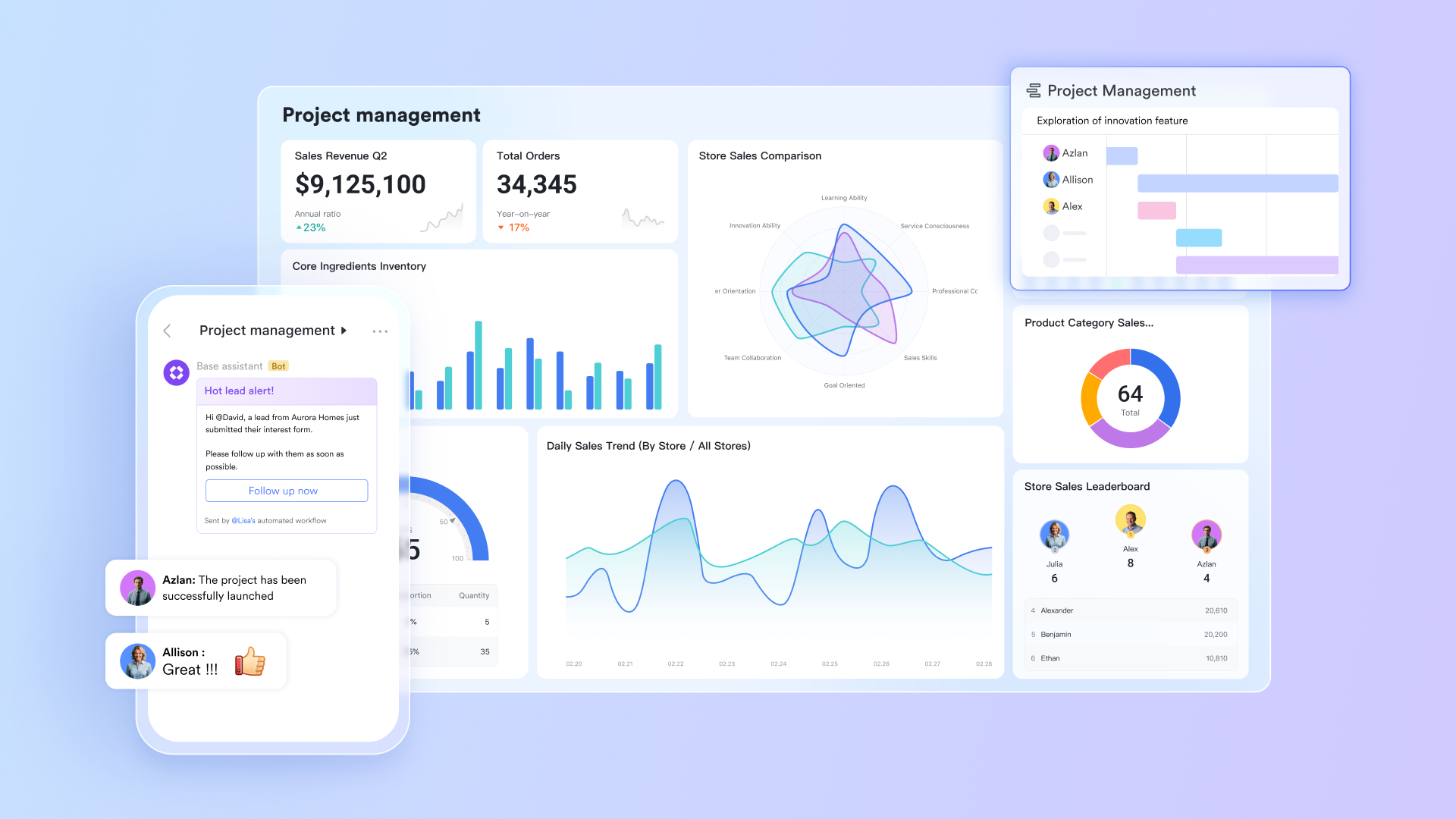
Your core challenge is to stay informed without stifling your team. You need a way to see the big picture, spot trends, and identify risks without asking "What's the status?" Lark delivers this with elegance. Using Lark Base for progress tracking, you can create a portfolio dashboard that provides real-time status from all projects. You get the oversight you need, and your PMs get the autonomy they crave. This system allows for better risk management as you can see where issues are arising across the portfolio and analyze complex situations before they derail a project.
For your project managers: a toolkit for excellence
For your project managers, switching between tools is a friction that drains energy. Lark eliminates this by providing a cohesive environment to manage the entire project lifecycle. A successful project manager needs a command center. They use Lark Docs for planning, Lark Meetings with AI for stakeholder updates, Lark Messenger for quick decisions to ensure team cohesion, and Lark Approval for sign-offs. This reduces friction and empowers them to lead effectively, using their problem-solving and critical thinking skills on what matters, not on administrative tasks to complete project tasks. It combines their technical skills with the essential skills of leadership.
For your business: align every project to strategic goals
Ultimately, the purpose of project management is to drive the business forward. Lark creates this link with its built-in Lark OKR module. When you set objectives in Lark, they can be directly associated with projects. This gives every project manager a constant reminder of the "why" behind their work. It transforms your review conversations from being about task completion to being about impact, ensuring the team is always focused on strategic priorities. This top-down alignment is a key differentiator in achieving consistent, valuable project outcomes.
👉Try Lark’s Savings Calculator: Switching to Lark’s Pro plan can lead to significant cost savings— for example, a 100-employee company using Slack, Google Workspace, and Airtable could save approximately $25,200 annually by consolidating their tools with Lark.
Conclusion
Managing project managers is one of the most leveraged leadership roles. Your focus must be on architecting a system where talented project leaders can deliver their best work. This involves fostering their growth in all essential project management skills and creating a culture of excellence. For those looking to deepen their expertise, joining professional associations like the Project Management Institute can be a valuable step. Your job is to build an ecosystem of clarity, trust, and empowerment, supported by the right tools and processes.
We have seen how these strategies, when powered by a unified platform, move from abstract ideals to a practical, daily reality. The goal is to remove friction, amplify talent, and ensure that every project is a meaningful contribution to the business's strategic goals. Your success is no longer measured by the projects you manage, but by the leaders you build and the predictable, scalable success they achieve, marked by their excellent communication skills and leadership.
Ready to empower your project managers and gain unparalleled visibility into your project portfolio? Explore how Lark unifies your team's workflow, connects strategy to execution, and drives predictable success.
FAQs
How do you manage a project manager?
Managing a project manager requires a shift from directing tasks to enabling success. Focus on setting clear strategic goals and providing them with the autonomy to execute. Act as a coach, not a micromanager. Your role is to remove organizational roadblocks, ensure they have adequate resources, and provide high-level guidance. Foster a relationship built on trust, but verify progress through high-level dashboards and periodic reviews, empowering them to lead their projects with confidence.
What are the 5 C's of project management?
The 5 C's of project management are a framework for success, commonly centered on Clarity, Communication, Control, Collaboration, and Commitment.
- Clarity: Clear objectives and scope.
- Communication: Keeping all stakeholders informed.
- Control: Managing scope, budget, and schedule.
- Collaboration: Fostering teamwork and cooperation.
- Commitment: Ensuring the team is dedicated to the project's goals.
These principles help guide a project manager in leading their team toward a successful outcome.
What is 90% of a project manager's job?
It is widely stated that 90% of a project manager's job is communication. This statistic, often cited by the Project Management Institute (PMI), highlights that the majority of their time is spent ensuring the right people have the right information at the right time. This includes communicating with team members, managing stakeholder expectations, reporting progress to leadership, and negotiating with vendors. Effective communication is the central pillar of successful project management.
What is the 15/15 rule in project management?
The 15/15 rule is a meeting management technique designed to keep status updates concise and productive. It dictates that the project manager or presenter should spend no more than 15 minutes presenting the project status, key updates, and issues. The following 15 minutes are dedicated to discussion, questions, and collaborative problem-solving with the team and stakeholders. This structure prevents meetings from becoming lengthy, one-sided reports and encourages active engagement.
Related reading
Table of contents
Start using Lark today

Manage all your work in one place
Boost team efficiency by 10x
Save up to 70% on software costs
Table of contents
Start using Lark today
Manage all your work in one place
Boost team efficiency by 10x
Save up to 70% on software costs
Keep reading








2026 Lark Technologies Pte. Ltd.
Headquartered in Singapore with offices worldwide.






Explore: