














How to Write A Case Study: Your Step-by-step Guide

Fecilia Clarke
Solutions Marketing Specialist
Sep 18, 2026
Fecilia Clarke
Sep 18, 2026

15 min read


The thought of how to write a case study can feel daunting. You have a fantastic customer success story, but turning it into a compelling narrative that builds trust, proves value, and drives action feels like a monumental task. Where do you even begin? How do you ensure it’s an engaging story and not just a dry report that no one will read? These are the hurdles that stop a great case study from ever being told. But what if there was a clear, repeatable process to transform those wins into your most powerful marketing assets?
That’s exactly what this guide is for. We believe that a good case study is one of the most authentic ways to connect with your audience. It’s clear evidence, not just a promise. In the following sections, we will demystify the entire process. We will provide a step-by-step framework that takes you from finding the perfect subject to publishing a polished, persuasive final piece. We will explore best practices for storytelling, highlight common mistakes to avoid, and reveal how using the right resources and tools can make the entire workflow not just manageable, but seamless.
What is a case study?
Before we dive into the "how," it’s crucial to understand the "what." At its core, a case study is a detailed story about a specific challenge and its resolution. It’s an in-depth analysis of a real-world example—be it a customer, a project tracked with project management tools, or a campaign—that seeks to explain how a particular solution or methodology led to a positive outcome. It’s not a hard sales pitch or a simple list of product features; it’s a narrative built on evidence, designed to demonstrate your value in action through the eyes of a person or business you’ve already helped. It allows the reader to truly understand the impact you can make.
The most effective case studies are built on a foundation of clear objectives. Before you write a single word, ask yourself: what is the primary goal of this case study analysis? Are you trying to attract potential customers in a specific industry by showing you understand their unique key problems? Is your aim to critically examine a complex methodology for internal stakeholders or academic peers? Or is the objective to showcase a clear return on investment to help your sales team close deals? Defining your purpose from the very beginning will shape every decision you make, from the data you collect to the story you tell, ensuring you address the right audience with the right message.

The complete guide: how to write a case study from start to finish
Now, let's break down the journey into five manageable steps. This structured approach will guide you from a blank page to a powerful, persuasive asset, ensuring you cover all your bases without feeling overwhelmed. Think of this as your roadmap to creating a case study that not only tells a great story but also delivers measurable results. Following this plan will make the process feel less like a chore and more like a creative endeavor.
Step 1: Research before writing your case study
The strength of your case study lies in the evidence you present. This initial phase is all about gathering the raw materials for your story: the facts, figures, and personal insights that will bring it to life. A story without proof is just an anecdote, but a story backed by solid tangible data is a powerful tool of persuasion. Rushing this step is a common mistake that leads to a weak and unconvincing narrative. Take your time to build a strong foundation of research, and the writing process will be significantly smoother. Your goal is to gather enough details to paint a full picture.
How to identify the perfect subject for your case study
The ideal subject for a case study is more than just a happy customer. Your first step is to identify a partner who has achieved remarkable, measurable results. Their story should be compelling and, ideally, relatable to the target audience you want to attract. Consider partners who are articulate and enthusiastic about their experience, as their words will add a layer of authenticity that you can’t fake. Customer quotes are the lifeblood of a good case study. A well-known brand can add credibility, but a passionate advocate with an amazing transformation story can be just as powerful. A great case study subject is a true partner in the storytelling process.
Best practices for collecting quantitative and qualitative data
To build a truly convincing narrative, you need a balanced mix of quantitative (the "what") and qualitative (the "why") data. Quantitative data includes the hard numbers: metrics, percentages, and statistics that provide clear evidence of a tangible impact. Qualitative data is the human element: direct customer quotes, testimonials, and anecdotes that explain the context behind the numbers and add emotional weight to the story. One without the other is incomplete. Numbers show the value, but stories make it memorable. This dual approach provides the support needed for a robust analysis.
To streamline this process, you can use a tool like Lark Forms. Instead of juggling messy email threads, create a structured survey to send to your customer to gather initial data and satisfaction scores. All responses are automatically organized into a central, accessible location — Lark Base — saving you from manual data entry and ensuring you have all your foundational background information in one place before you even start writing your own case study. This gives you easy access to critical details.
Step 2: How to structure a case study for maximum impact
With your research complete, it's time to build the skeleton of your story. A clear and logical structure is the key to guiding your reader from the initial problem to the final resolution without confusion. A jumbled narrative will dilute the power of your message, no matter how impressive your results are. By establishing a solid framework first, you create a roadmap that makes the writing process more efficient and ensures your final document is easy to read and understand. This plan is your blueprint for success.
The classic case study structure that always works
Nearly every successful case study follows a classic and intuitive storytelling arc, a common element across many case study formats. This proven form moves logically from one section to the next, building a compelling case as it goes. It includes an introduction to hook the reader, a detailed look at the challenge the subject was facing, a clear explanation of the solution or approach implemented, a presentation of the tangible outcome achieved, and a conclusion that summarizes the main points. This "Problem -> Solution -> Result" framework is popular for a reason: it’s the most effective way to demonstrate a cause-and-effect relationship and prove your value.
How to outline your case study with a proven template
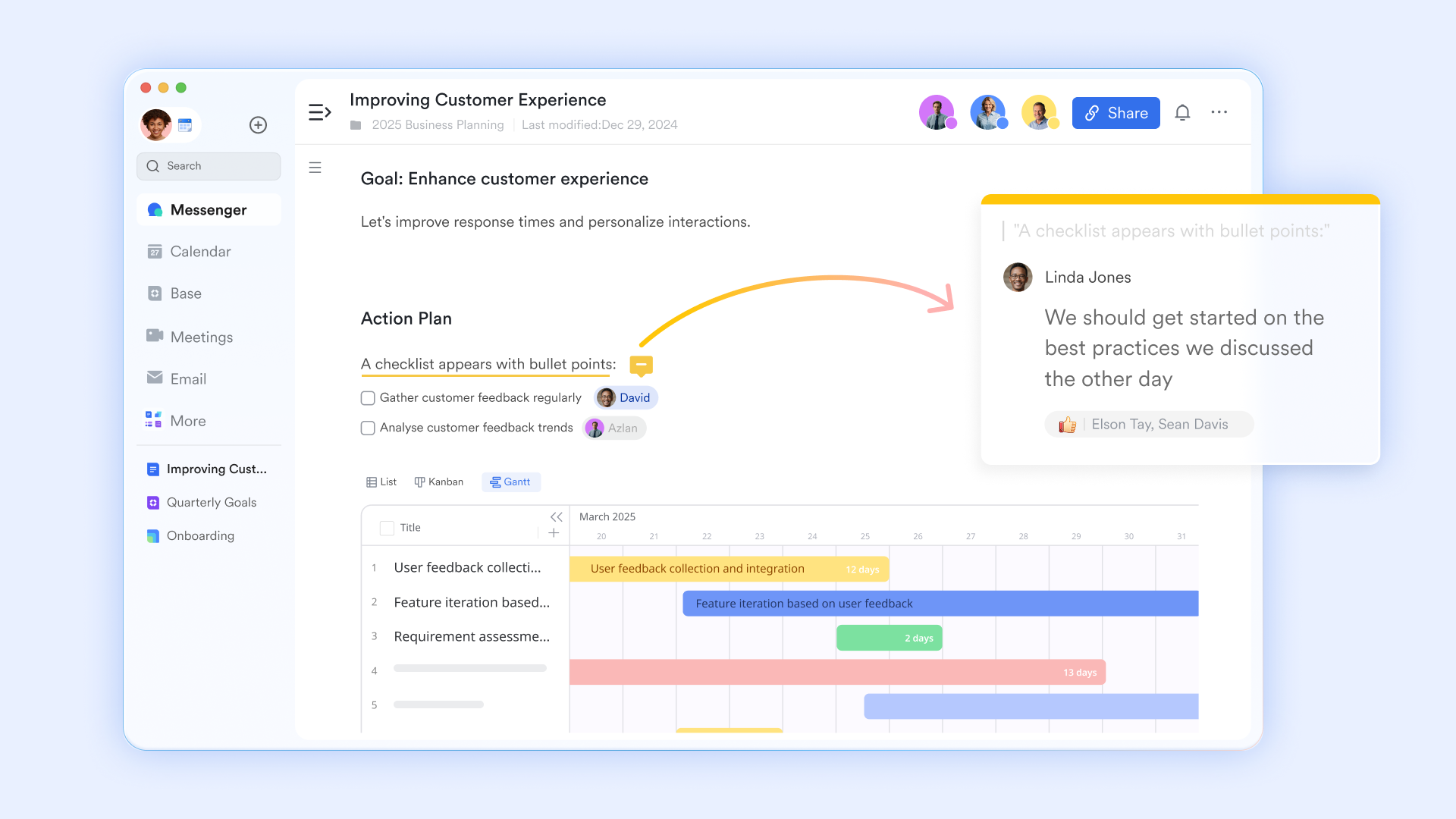
To operationalize this structure, we highly recommend starting with a template. A template ensures your approach is consistent across all your case study examples and makes sure no important information is missed. It acts as a checklist and a guide, allowing your team to focus on the quality of the content rather than worrying about the format. It also helps streamline collaboration, as everyone involved knows what information is required for each section of the case study analysis. Following established guidelines can make the process much smoother.
This is where a collaborative platform shines. You can begin your project directly in Lark Docs, using a pre-billed case study template that you can customize for your organization. This simple step ensures a consistent and professional structure for every project, keeping your entire team aligned and working efficiently from the very beginning. Everyone has access to the same outline, can see the progress in real time, and understands their role in the creation process.
Step 3: How to write a case study analysis that converts
Now, it’s time to put pen to paper (or fingers to keyboard) and flesh out your outline. In this step, your goal is to write with clarity, focusing on telling a compelling story in narrative form while ensuring every claim is supported by the evidence you've gathered. Each section has a distinct purpose, and giving each one the attention it deserves will result in a polished, professional, and persuasive final document. Each section should only be a few paragraphs long to maintain readability.
How to write a compelling introduction for your case study
Your introduction is your first and best chance to grab the reader's attention. Start with a strong hook that speaks directly to a pain point your target audience will recognize. You could lead with a startling statistic that highlights the problem, or you could introduce the customer and their challenge in a relatable way, perhaps in just one or two sentences. Briefly introduce the subject of the case study and tease the impressive outcome they achieved. Your goal is to make the reader think, "This sounds like us. I need to know how they solved this."
Presenting the problem: how to set the stage for your solution
This section sets the stage for the transformation to come. Describe the world from your customer's perspective before they implemented your solution. What specific key problems were they facing? What obstacles were holding them back? Use the qualitative data and background information you gathered to add depth and details. The more vivid and relatable you can make the challenge, the more impactful your solution will appear. This isn't about criticizing their old methods; it's about building empathy and establishing the stakes of the story.
Describing the solution: showcasing your strategies and actions
Here, you explain the "how." Detail the specific steps you or your customer took to overcome the challenges outlined in the previous section. This is where you can naturally talk about your specific product or service, but always frame it as a tool that enables the customer to be the hero of their own story. Focus on the strategy and the actions taken. For example, instead of just saying "they used our software," describe how they used it to streamline a process, collaborate more effectively, or gain a key insight, and mention if they considered alternative solutions.
Showcasing results: how to prove the value of your approach
This section is the climax of your story and the core of your case study analysis. It’s where you deliver the payoff. Present the tangible, measurable outcome that resulted from the solution. Use the quantitative data you collected—the metrics, the percentages, the ROI figures—to demonstrate the impact. Reinforce these numbers with powerful customer quotes that speak to the transformation they experienced. Visual aids like charts and graphs can make complex data more digestible and impactful, providing the clear evidence that potential customers need to see.
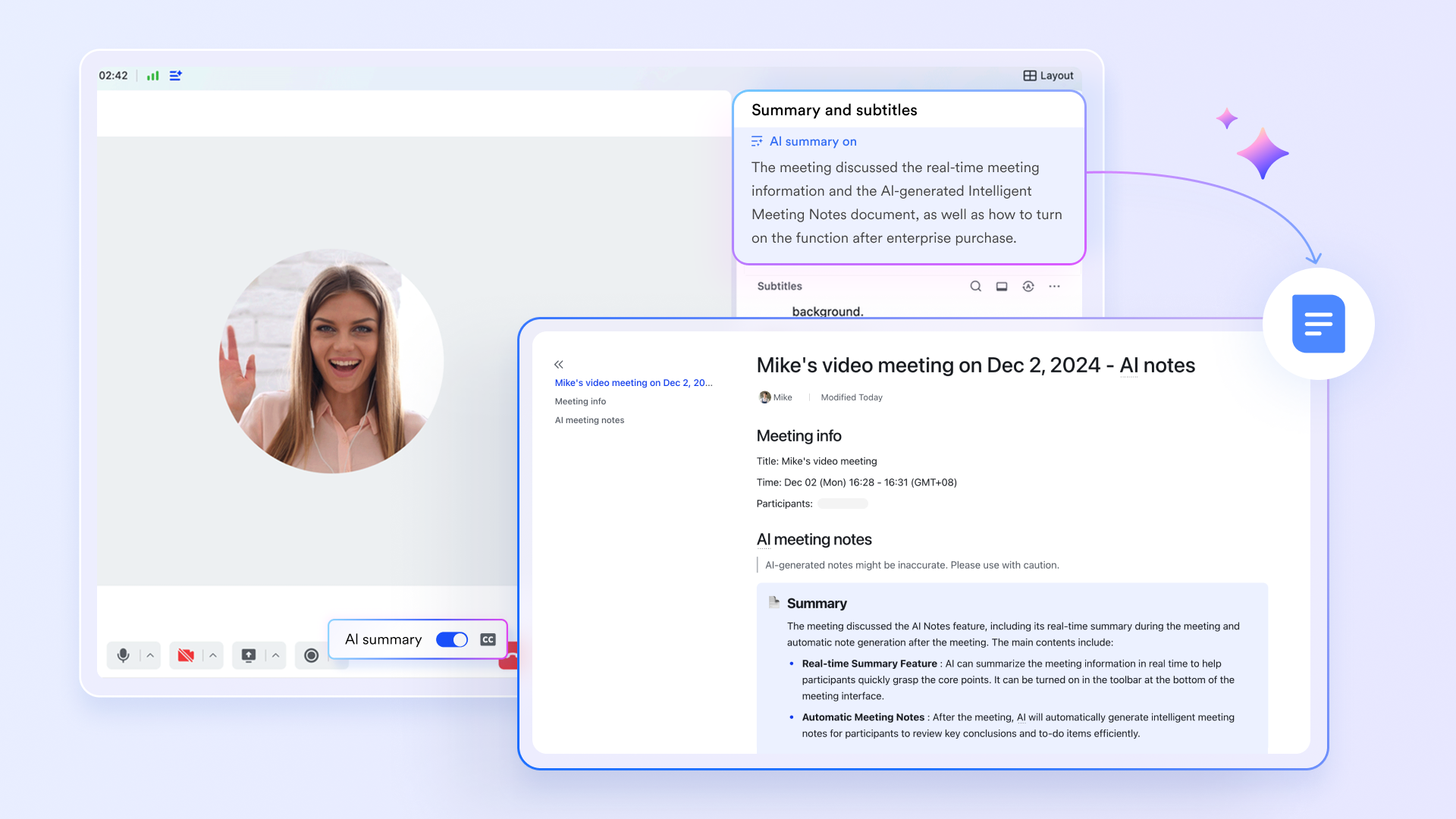
Capturing the perfect customer quote can be a challenge, but technology can make it remarkably simple. When you conduct your customer interview using Lark Meetings, you can activate the AI Meeting Notes feature. After the call, you’ll receive an automatic, accurate transcription of the entire conversation. This allows you to easily scan the text and pull the most powerful, authentic customer quotes for this section without having to manually transcribe or re-listen to hours of audio. This is a practical way to enhance your story.
Concluding your case study with a clear discussion and takeaways
Your conclusion should be a concise summary of the entire journey. Briefly reiterate the initial challenge, the solution implemented, and the impressive outcome. A good conclusion often includes a brief discussion section to examine the results more deeply. Here you can highlight the main points again and analyze why the solution was so effective. End with a strong, confident statement that ties everything together and leaves a lasting impression on the reader, making them feel informed and inspired about the value you provide.
Step 4: Case study design tips ( visuals & multimedia)
A wall of text, no matter how well-written, can be intimidating. Professional design and thoughtful use of visuals are not just decorative; they are essential for increasing readability, engagement, and comprehension. Great design guides the reader’s eye, helps to highlight important information, and makes your case study feel authoritative and trustworthy. It’s the final layer of polish that separates a good case study from a great case study, ensuring your key point is not lost.
Using multimedia to increase engagement
Multimedia elements can break up the text and convey information in a more engaging and memorable way. A professional headshot of your customer adds a human touch. Infographics can simplify complex data and make your results stand out at a glance. But one of the most powerful additions is video. A short version of a video testimonial allows the reader to hear the story directly from the customer, adding a layer of authenticity that text alone cannot match and helping you demonstrate your impact effectively.
You can easily elevate your narrative in Lark Docs by embedding multimedia directly within the document. For instance, a short video clip recorded during your Lark Meetings interview can be placed right alongside the corresponding text, allowing readers to both read and watch the testimonial for maximum impact. This is a practical way to make your tangible data more engaging.
Design principles for a readable and professional case study
You don't need to be a professional designer to create a clean and readable layout. Use ample white space to give your content room to breathe. Incorporate your brand colors in headings and visual elements for a consistent look. Break up long paragraphs into shorter, more digestible chunks of just a few hundred words. Use formatting tools like bold text to emphasize key phrases and pull quotes to highlight the most powerful customer testimonials. The goal is to create a reading experience that is effortless and enjoyable for your audience.
Step 5: Finalize and approve your case study report
The final step before publication is the review cycle. This involves getting feedback from internal stakeholders and, most importantly, receiving the final sign-off from your customer. This stage can often become a bottleneck, mired in confusing email chains, conflicting feedback, and version control issues. A streamlined and transparent approval process is essential for getting your case study across the finish line without the headache. This is a crucial part of your management plan.
How to manage stakeholder feedback without the headache
To avoid chaos, establish a central location for all feedback. Instead of sending document versions back and forth via email, use a collaborative platform where all stakeholders can leave their comments and suggestions in one place. This ensures that all feedback is contextual and visible to the entire team, preventing contradictory edits and wasted time. A formal review is a critical practice.
With Lark Docs, your team can leave comments directly on specific sentences or paragraphs, creating threaded conversations that are easy to track and resolve. When it comes time for the final customer sign-off, you can use the built-in Lark Approval feature. This allows you to create a formal, trackable request for your client to approve the final draft, sending them an automatic notification and providing a clear record of when the approval was given, all without ever leaving the Lark ecosystem.
Best practices for a case study that engages and persuades
Creating a truly effective case study goes beyond just following a structure. It requires a commitment to quality storytelling and an awareness of what resonates with a professional audience. Adhering to a few core principles—some of which are echoed by academic publishers for their rigor—will help ensure your case study not only gets read but also inspires action and builds lasting credibility for your brand among other businesses.
Writing tips: how to tell a story people want to read
Always remember that you are telling a story. Use a clear, confident, and professional yet approachable tone. Your customer is the hero of this story; your business is the trusted guide that helped them succeed. Write in the active voice to keep your sentences energetic and direct. Avoid jargon and overly technical language unless your target audience demands it. Keep your paragraphs short and focused, with each one communicating a single, clear idea. Above all, be authentic. Let your customer's voice and their genuine success shine through to provide your readers with valuable knowledge.
The untapped value: writing about challenges and failures
This may sound counterintuitive, but one of the most powerful ways to build trust is to be transparent about challenges. A story where everything goes perfectly can sometimes feel inauthentic. Briefly mentioning a hurdle that was overcome during the process—and how your team and the customer worked together to solve it—makes the narrative more relatable and the success more earned. This "lessons learned" approach shows that you are a true partner, capable of navigating complexity, which can be even more persuasive for potential customers in similar circumstances.
Streamline your workflow: A better way to write a case study with Lark
As we've seen, creating a high-quality case study involves multiple steps, diverse types of content, and collaboration between several stakeholders. Juggling all of this across disconnected tools—email for communication, a word processor for writing, spreadsheets for data, and separate apps for meetings and task management—can be inefficient and frustrating. A unified platform can transform this fragmented process into a seamless workflow, providing all the resources you need.
Your single source of truth for every case study project
Lark provides a single, central hub for your entire case study creation process. You can use Lark Base to build a comprehensive pipeline, managing all your customer stories from initial outreach to final publication. This database can link to all associated assets: the interview transcripts in Lark Docs, the data in Forms, and the project tasks. Instead of searching through folders and inboxes, your entire team has a single source of truth, ensuring everyone is aligned and has access to the latest important information at all times.
From collaborative writing to automated approvals
Lark brings every step of the process into one connected space. You can brainstorm ideas in Docs, schedule and conduct the interview in Meetings, get an instant AI-powered transcript, embed dynamic data from Base, gather feedback with contextual comments, and manage the final sign-off with Approval. This eliminates the friction of switching between apps, reduces the risk of miscommunication, and empowers your team to focus on what they do best: telling a great story.
🌟Learn more about Lark pricing:
Conclusion
Writing a case study doesn't have to be an intimidating task. By breaking it down into a structured, step-by-step process, you can move from a great customer relationship to a powerful marketing asset with clarity and confidence. It's a blend of science and art: the science of gathering concrete evidence and structuring your narrative, and the art of telling a compelling story that resonates on a human level. With the right practice and the right tools like Lark, you have everything you need to showcase your value and build unwavering trust with your audience.
FAQs
What is the format of a case study?
While the exact format of a case study can vary, a professional case study (most case studies, in fact) typically follows a clear, linear structure. It begins with an introduction to the subject, presents the core challenge they faced, and details the solution that was implemented. It then showcases the tangible outcome, supported by data and customer quotes. This narrative form is designed to logically guide the reader to understand the story from problem to resolution.
What are the 4 parts of a case study?
Generally, the four essential parts of a case study align with its core narrative structure. They are: 1) The Challenge: A detailed look at the problem the subject was facing, providing context. 2) The Solution: An explanation of the strategies, tools, or methods used to address the challenge. 3) The Results: The measurable outcome and benefits achieved, backed by clear evidence. 4) The Discussion/Conclusion: A summary of the main points and overall impact.
What is a good example of a case study?
A good example of a case study is one that tells a compelling story backed by credible evidence. For instance, a software company might detail how a client used their specific product to reduce project completion times, showcasing before-and-after metrics (tangible data). It would feature direct customer quotes about their experience and clearly tie the implemented features to the successful outcome. Great case study examples are persuasive because they focus on the customer's journey.
What are the 5 components of a case study?
The five core components of a comprehensive case study are: 1) Introduction: An executive summary that hooks the reader and introduces the subject. 2) The Problem/Challenge: A detailed background information on the issues the subject needed to solve. 3) The Approach/Solution: The specific actions, tools, and strategies that were implemented. 4) The Results: Concrete, evidence-based outcome, including quantitative data and qualitative feedback. 5) Conclusion/Discussion: A final summary that reinforces the key success story.
Related reading
Table of contents
Start using Lark today

Manage all your work in one place
Boost team efficiency by 10x
Save up to 70% on software costs
Table of contents
Start using Lark today
Manage all your work in one place
Boost team efficiency by 10x
Save up to 70% on software costs
Keep reading








2026 Lark Technologies Pte. Ltd.
Headquartered in Singapore with offices worldwide.






Explore: