














Inbound Marketing Funnel Guide for Teams

Sreya Anumolu
Content Specialist
Nov 3, 2026
Sreya Anumolu
Nov 3, 2026

14 min read
Add to preferred sources


The inbound marketing funnel is the backbone of any successful digital strategy, guiding potential customers from initial awareness to loyal advocacy. It's all about attracting, engaging, and delighting audiences through valuable content and meaningful interactions. For teams, understanding how each stage of the funnel works can make collaboration smoother and results more measurable.
With the right approach, you can turn casual visitors into long-term customers who genuinely connect with your brand. In this guide, Lark breaks down the inbound marketing funnel step-by-step to help your team create smarter, more efficient campaigns that actually drive growth.

What is an inbound marketing funnel?
An inbound marketing funnel is a framework that maps out the customer journey from discovering your brand to becoming a loyal advocate. Unlike traditional outbound tactics that push messages out, inbound marketing focuses on attracting people naturally through valuable and relevant content. The funnel typically consists of four main stages: awareness, engagement, conversion, and delight.
At the top, potential customers discover your brand through blogs, social media, or search. In the middle, they explore solutions and engage with your content to evaluate their options. At the bottom, they make a purchase or take a desired action.
The four main stages of the inbound funnel
Stage | Goal | Example tactics |
Awareness | Attract traffic and interest | SEO blogs, videos, social campaigns |
Engagement | Nurture leads with value | Webinars, guides, email sequences |
Conversion | Turn interest into purchase | Product demos, case studies, trials |
Delight | Retain and upsell customers | Support content, feedback surveys, loyalty campaigns |
Mapping funnel stages to real marketing workflows
Awareness: Attracting the right audience
The awareness stage is where the journey begins. Your goal here is to make your brand visible to people who are searching for solutions you provide. Use SEO-optimized blogs, social media posts, and helpful videos to educate and inform rather than sell. This builds trust and positions your brand as a reliable source of insight. With Lark, teams can collaborate seamlessly on content calendars and campaigns to ensure consistent messaging across all channels.
Engagement: Turning interest into connection
Once potential customers know your brand, it's time to nurture their interest. Offer lead magnets such as eBooks, webinars, or case studies to spark deeper engagement. Keep communication personalized and timely using email automation and chat tools. Lark helps teams stay aligned by centralizing conversations, approvals, and content feedback, reducing friction and speeding up execution.
Conversion: Closing with confidence
At this stage, leads are ready to make a decision. Provide detailed product comparisons, testimonials, and demos to address remaining doubts. A well-structured inbound marketing funnel ensures that every touchpoint encourages trust and makes the buying process simple. Lark's automated workflows make it easier for marketing and sales teams to share insights, track lead status, and close deals efficiently.
Delight: Turning customers into advocates
The funnel doesn't end at conversion. The delight stage focuses on retaining customers and encouraging them to share their positive experiences. Offer ongoing support, loyalty programs, and personalized follow-ups to show appreciation. Using Lark, teams can track feedback, manage customer communication, and plan retention strategies collaboratively—ensuring that happy customers become enthusiastic advocates for your brand.
Practice the theory: Use Lark to build and manage your inbound funnel
Turn inbound marketing concepts into action with Lark. From capturing leads to nurturing engagement and tracking conversions, Lark helps you design, manage, and optimize your funnel in one connected workspace. Collaborate in real time, automate repetitive tasks, and visualize each stage of your customer journey to turn theory into measurable results.
Key features
Lark Base: Funnel data at your fingertips
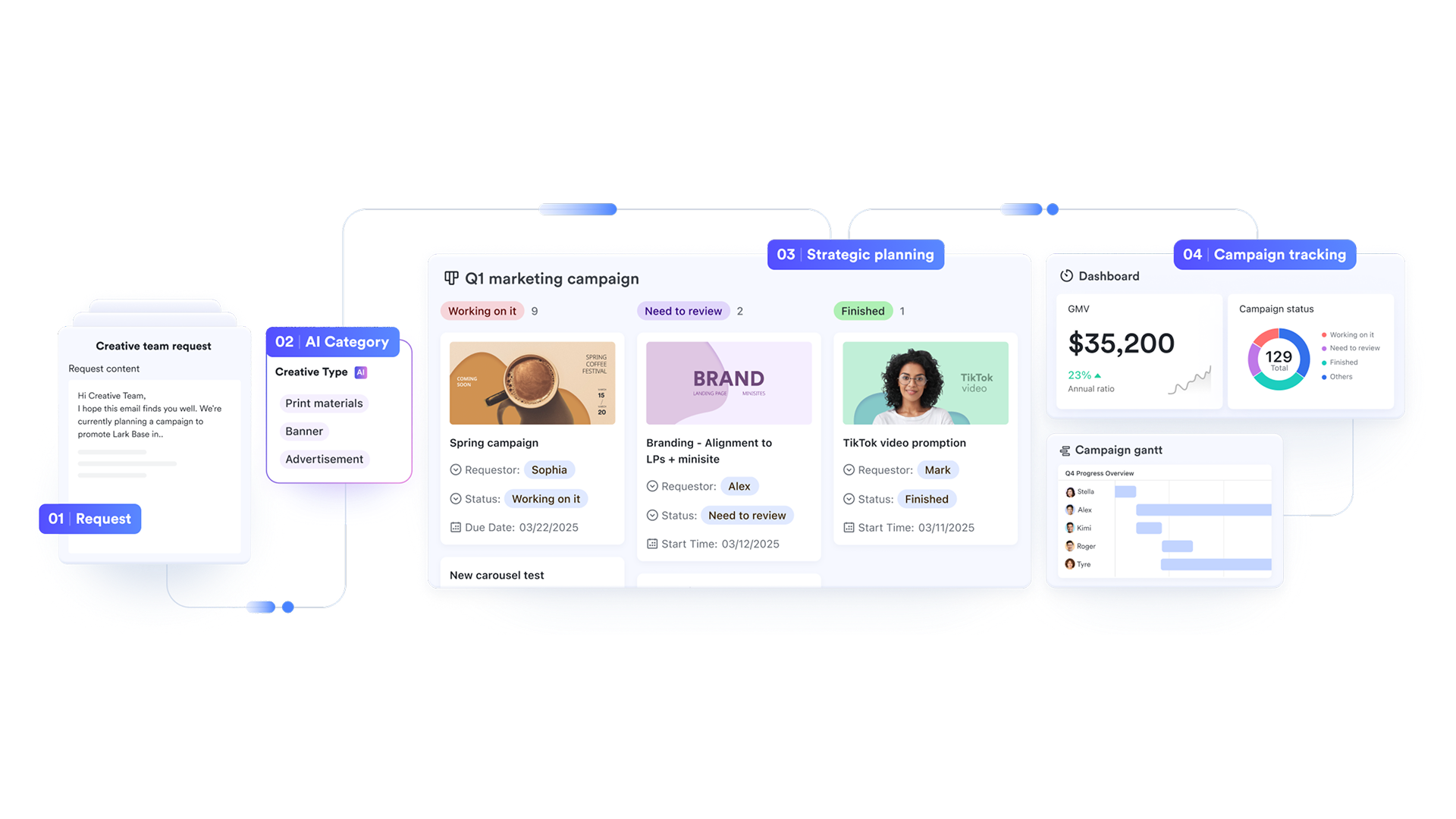
Lark Base is a versatile database platform that allows you to create tables for various business needs, such as tracking campaigns, leads, offers, and customers. Create tables for campaigns, leads, offers, and customers, then add fields like funnel stage, lead source, engagement score, lifecycle owner, MQL/SAL dates, and next action. Use Kanban to visualize movement from Awareness to Delight, switch to Timeline for launch calendars, and add rules for automated workflow—for example:
- If engagement score ≥ threshold → set stage to Engaged, assign Lifecycle Owner, and notify sales.
- If no activity for 7 days → create a revive task and ping the channel.
Why it matters: Base becomes the single source of truth that prevents leaks between marketing and sales and keeps every record stage-accurate in real time.
Example: A B2B team filters all Engaged leads and auto-routes them to sales when the score crosses 40, logging the handoff and time-to-follow-up.
Lark Sheets: Track campaign performance and ROI
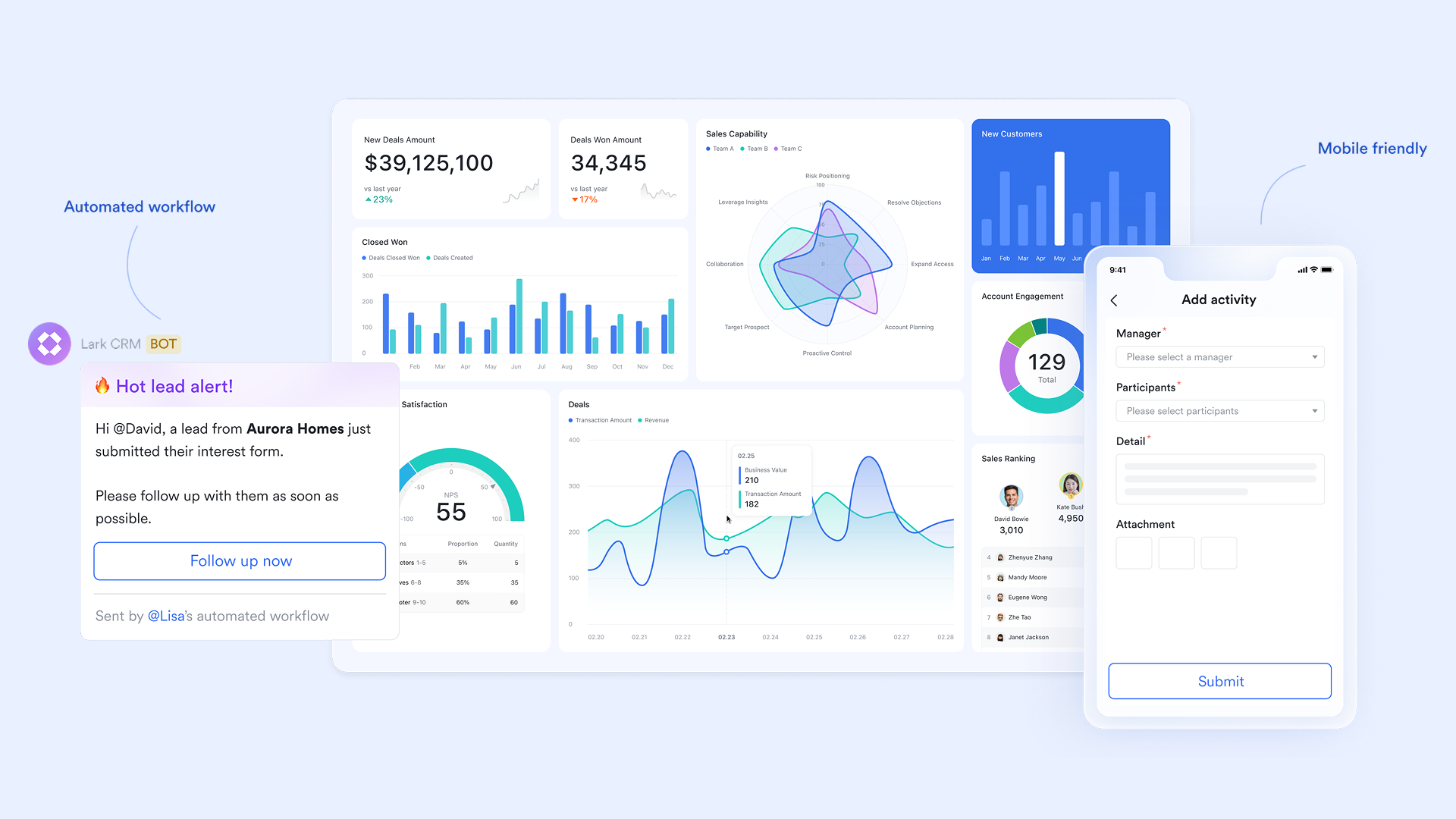
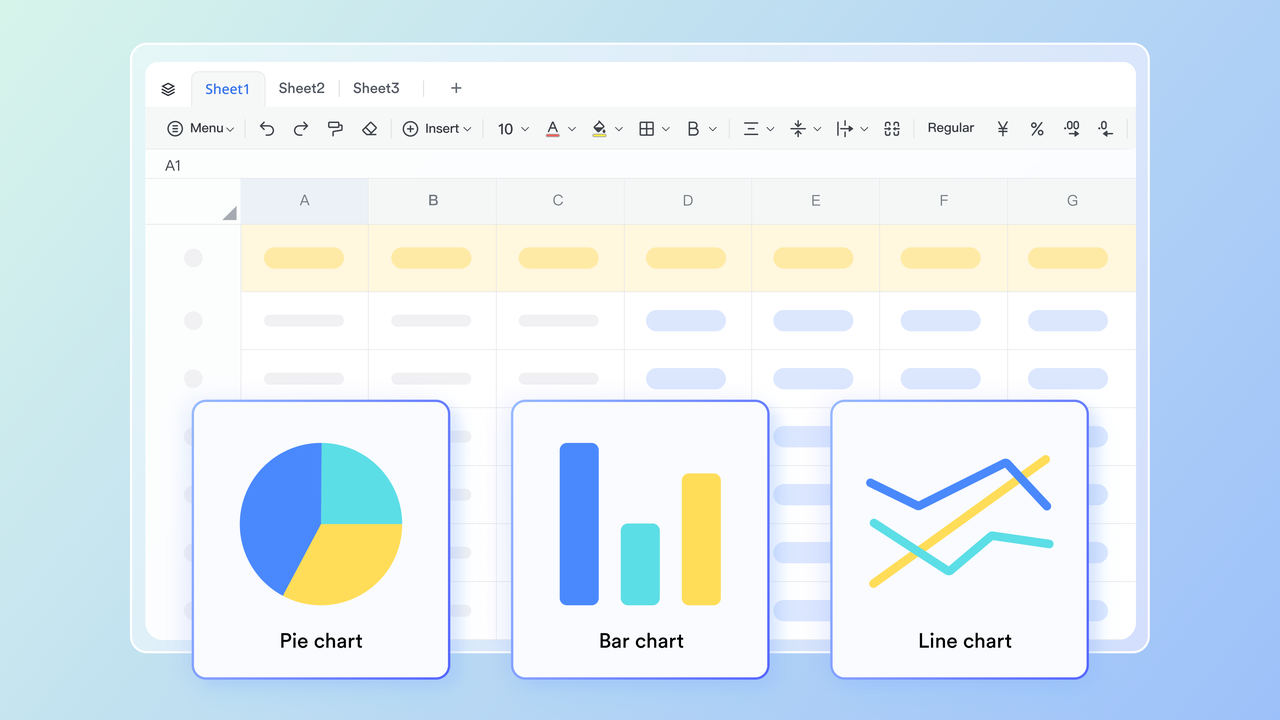
Lark Sheets turns live Base data into spreadsheets for CPL, CAC, MQL→SQL→Closed rates, multi-touch attribution, and content-to-pipeline impact. Build pivot tables by channel, campaign, persona, or stage, and add conditional flags for anomalies (e.g., "CPL up 20% week-over-week"). Additionally, data from Sheets can be automatically synced to Base, enabling you to utilize Base's features, including dashboards, views, and automation.
Why it matters: Instead of static reports, you get a command center that shows which awareness assets pull quality traffic, which engagement programs advance stage, and what actually converts.
Example: Managers compare engagement across blog clusters, see that product comparison posts drive the highest MQL→SQL lift, and immediately double down.
Lark Docs: Collaborative content planning and strategy
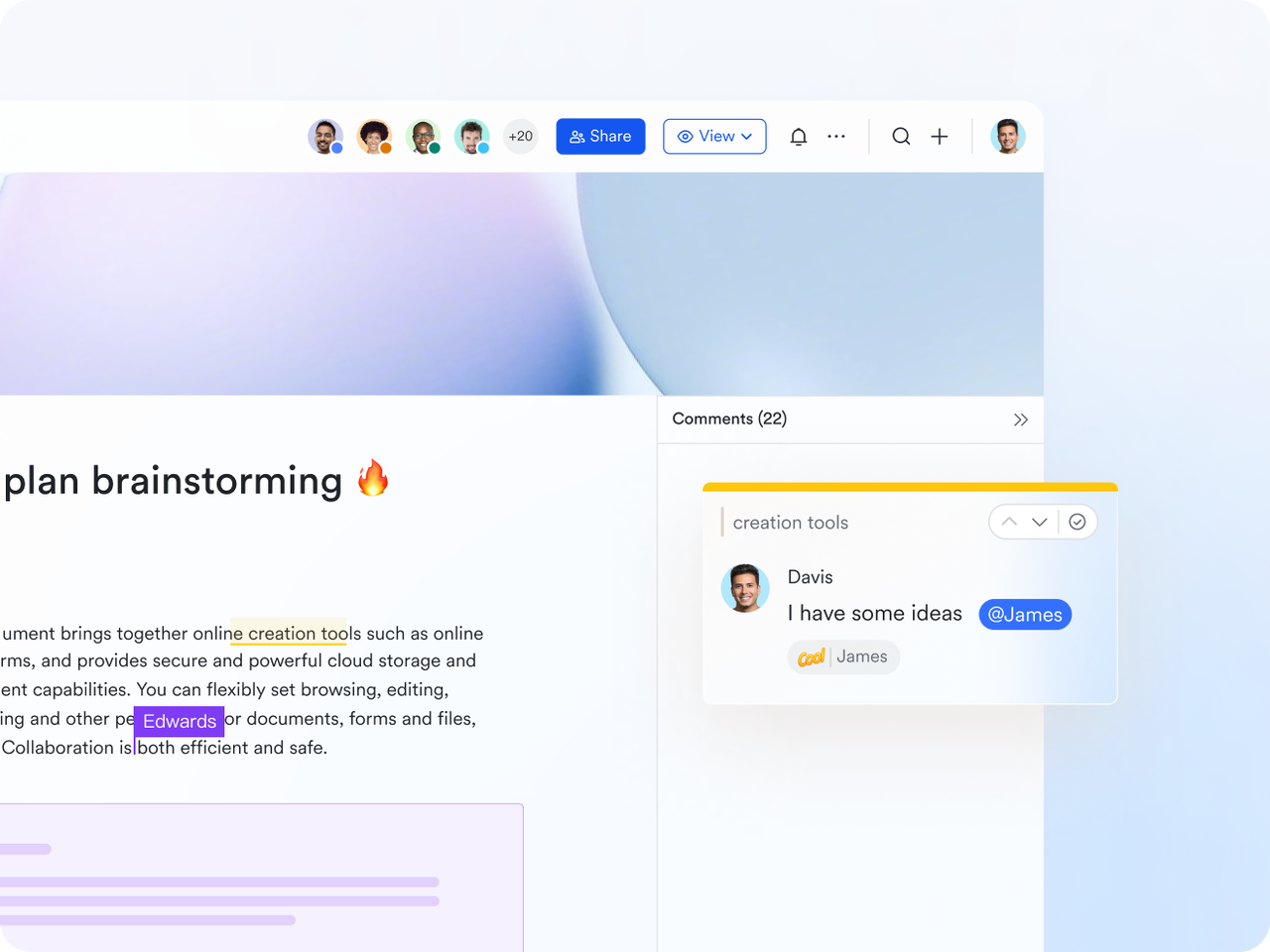
Lark Docs is where funnel strategy turns into publish-ready assets. Build editorial briefs, landing pages, webinar outlines, and case study frameworks in one shared Doc. Use comments for SEO notes, assign owners inline, and embed Base tables (content backlog, status, due dates) plus sheet clips (KPIs). Link each asset to its target funnel stage, so everyone sees the "why" behind the content.
Why it matters: Your Awareness and Engagement content lives next to the plan, the pipeline impact, and the deadlines—so execution stays tight.
Example: A copywriter drafts an Awareness blog while the SEO lead comments keyword guidance; the brief auto-pulls the due date and owner from the Base "Content Calendar."
Lark Messenger: Keep funnel discussions contextual
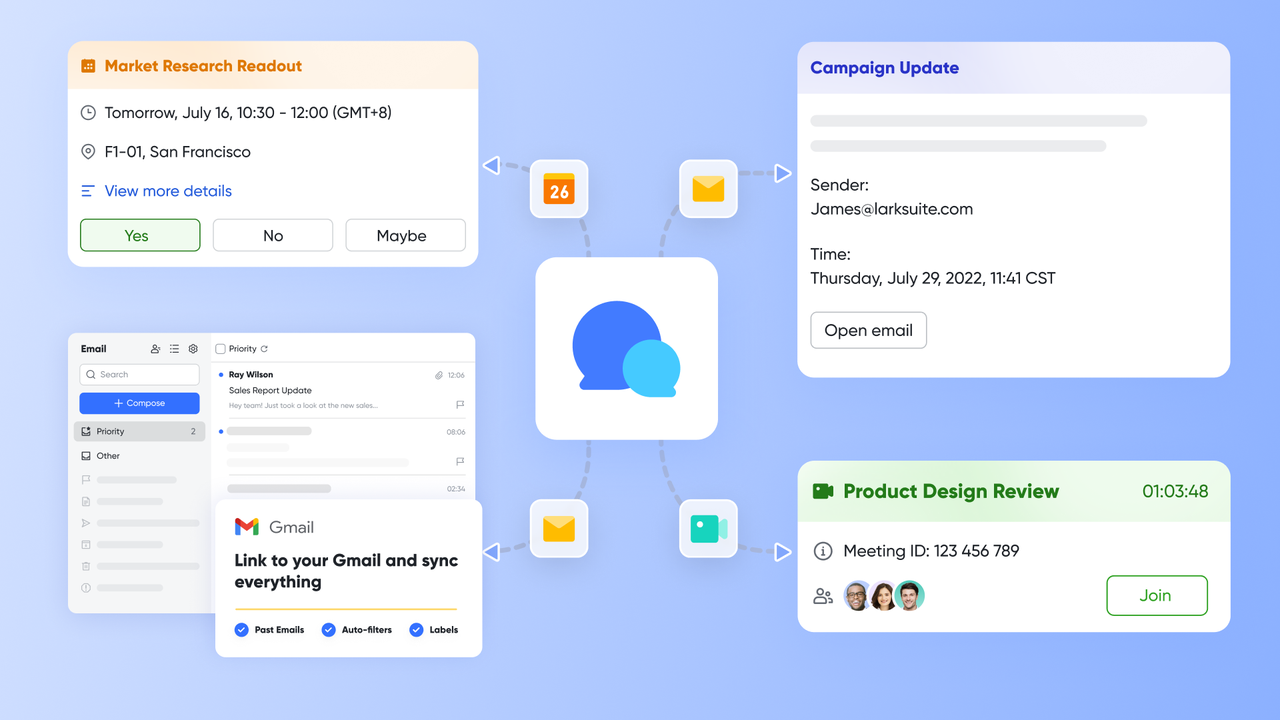
Lark Messenger serves as the communication backbone of the workspace, enabling real-time messaging, file sharing, and instant notifications across teams. It enables procurement, warehouse, and finance teams to stay aligned through instant communication and file sharing on a single group chat.
Why it matters: Instead of chatting in a vacuum, every discussion is tied to the exact lead list, asset, or KPI that needs action—speeding handoffs and reducing rework.
Example: An ad set beats target CPL; the performance chart is shared in Lark Messenger, the team agrees to scale budget, and the owner updates the Base campaign record on the spot.
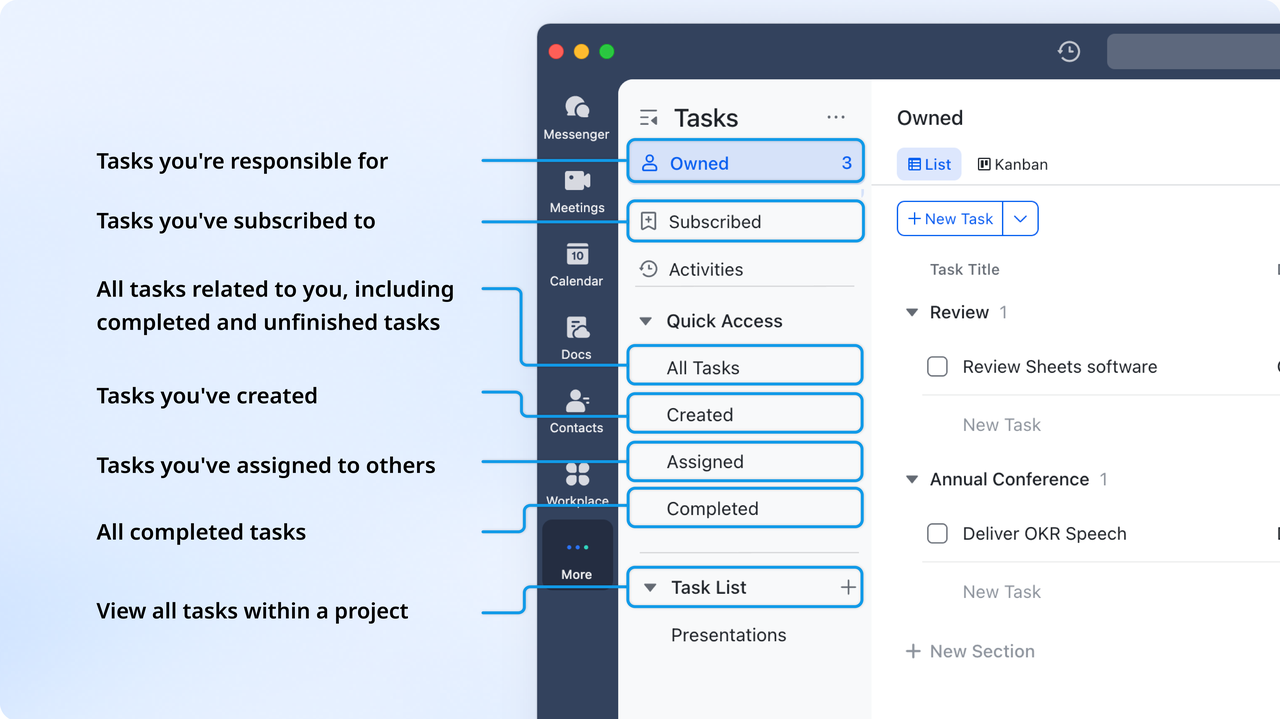
Lark Tasks: Assign and track inbound activities
Turn insights into owned work the moment you see them. From a file to a message, create Lark Tasks for new asset creation, nurture sequence updates, landing-page tests, or sales follow-ups—with with assignees, due dates, checklists, and links back to the relevant Base record and Sheets chart. Use templates like "MQL Handoff," "Offer Launch," or "Churn-save Play."
Why it matters: Every movement in the funnel results in clear, trackable next steps, so nothing stalls between teams.
Example: When a lead flips to Convert, a Task auto-assigns the AE to schedule a demo within 24 hours, adds a checklist (invite, agenda, deck), and logs completion back to the lead's record.
- Starter plan: Free forever plan that includes 11 powerful tools for up to 20 users. It also comes with 100GB of storage, 1000 automation runs, AI translations, and more.
- Pro plan: $12/user/month (billed annually) for up to 500 users. It includes everything in Starter plus group calling for up to 500 attendees, 15TB of storage, 50,000 automation runs, and more.
- Enterprise plan: Contact sales for custom pricing. Supports unlimited users and includes even more automation runs and advanced security, compliance, and management features.
Ready-to-use inbound marketing templates
Inventory inbound & outbound management
Effective inventory management is essential for every retail operation. It encompasses monitoring the products that enter (inbound) and exit (outbound) your store or warehouse. This template aims to enhance this process by offering real-time oversight of your inventory movements. It features dedicated sections for product information, quantities, dates, and additional details, ensuring that every critical piece of task or information is organized and easily accessible.
Marketing campaign management
The marketing campaign management template is an all-inclusive tool designed to assist you in planning, implementing, and monitoring your marketing campaigns. It offers a structured layout to organize all the vital details of your campaign, such as project initiation, guest invites, event pre-launch preparations, promotional assets, event location, and post-event follow-up. Additionally, it enables you to delegate tasks to specific team members, monitor the status of those tasks, and establish due dates.
Content calendar
In the realm of content creation, maintaining organization is essential. With numerous campaigns, events, and formats to oversee, it can be challenging to maintain an overall perspective. This is precisely where our Content Calendar template proves beneficial. It enables you to manage all your content in a single location, featuring fields for campaign titles, content formats, progress status, and related events. Additionally, it encompasses a Gantt chart for visualizing your content schedule and a Kanban board for monitoring progress.
Sales tracker—lead analysis and follow-up
The sales tracker—lead analysis and follow-up template is an all-in-one resource created to assist you in managing your sales prospects. It features a dashboard for lead stages, a table for customer transaction records, and a form for transaction details. This template enables you to log and monitor every aspect of your transactions, including the salesperson responsible, the type of service provided, any discounts given, unit price, quantity sold, total transaction amount, payment method, and the date of payment.
Customer retention
Grasping customer retention rates is essential for any company aiming to enhance customer satisfaction and loyalty. This template enables you to evaluate customer information, including the original subscription date, last check date, subscription status at both the beginning and conclusion, retention duration, and reasons for departure. By representing this data visually, you can uncover trends, patterns, and possible areas for advancement in your customer retention tactics.
Common pitfalls in managing inbound funnels
Managing an inbound marketing funnel can be challenging, especially when common mistakes slow down results. One frequent issue is relying solely on top-funnel metrics, like website traffic, without tracking conversions. High traffic is great, but if it doesn't lead to leads or sales, the funnel isn't working effectively.
Poor collaboration between marketing and sales teams can also create gaps, with leads falling through the cracks or inconsistent messaging damaging the customer experience. Similarly, using siloed tools often leads to data inconsistencies, making it difficult to get a clear picture of funnel performance.
Another common problem is neglecting post-conversion nurturing. Without workflows that engage customers after purchase, opportunities for retention and advocacy are lost. Finally, manual updates slow visibility across teams, making it harder to act quickly on insights. Avoiding these pitfalls ensures your funnel runs smoothly and drives real growth.
Best practices for optimizing your inbound funnel
Optimizing an inbound marketing funnel requires a strategic approach and consistent monitoring. Start by keeping content aligned with the specific goal of each funnel stage. Awareness content should educate, engagement content should build trust, and conversion content should guide decisions. Supporting this framework with fast-loading pages and AEO-aligned content ensures users find what they need quickly and stay engaged throughout the funnel.
Regularly review conversion metrics using live dashboards to identify bottlenecks and opportunities for improvement. Automated rules can help update lead stages automatically, reducing manual work and ensuring accurate tracking.
Holding joint marketing and sales reviews using Lark Meetings strengthens collaboration and ensures everyone is aligned on priorities and next steps. Finally, continuously document insights and learnings in Lark Wiki. This knowledge base becomes invaluable for refining campaigns, scaling successful strategies, and avoiding repeated mistakes. Following these best practices helps teams run a more efficient, measurable, and growth-focused inbound marketing funnel.
Conclusion
An inbound marketing funnel is more than just a framework—it's a roadmap for attracting, engaging, and converting prospects into loyal customers. By understanding each stage, aligning content with audience needs, and fostering collaboration between marketing and sales teams, businesses can create a seamless and effective customer journey.
Tools like Lark make it easier to centralize workflows, track performance, and document insights, ensuring teams stay coordinated and data-driven. Implementing best practices and avoiding common pitfalls allows your funnel or pipeline to not only generate leads but also build lasting relationships. With the right approach, your inbound marketing funnel becomes a powerful engine for growth, efficiency, and customer satisfaction.
FAQs
How is an inbound marketing funnel different from a sales funnel?
An inbound marketing funnel focuses on attracting, engaging, and nurturing leads through valuable content, guiding them naturally toward a purchase. A sales funnel typically starts when a lead enters the sales process and focuses on closing deals. The inbound funnel is broader and more content-driven, while the sales funnel is deal-focused.
What tools can I use to automate my inbound funnel in Lark?
Lark offers automation through Lark Workflows, Sheets, and Forms. You can set rules to update lead stages, trigger notifications, and manage follow-ups, reducing manual tasks and keeping your funnel efficient.
How do I track conversion rates in Lark Base or Sheets?
Use Lark Sheets to log lead activity and create dashboards that calculate conversion rates at each stage. Combining Sheets with Base allows teams to visualize performance, spot bottlenecks, and make data-driven decisions in real time.
Can Lark be used alongside HubSpot or Salesforce for inbound campaigns?
Yes. Lark integrates with tools like HubSpot and Salesforce via API or Zapier. This allows teams to synchronize leads, track funnel activity, and maintain consistent workflows across platforms.
What inbound funnel templates does Lark provide for free?
Lark offers pre-built templates for lead tracking, campaign planning, content calendars, and customer journey mapping. These templates help teams quickly set up structured inbound marketing funnels without starting from scratch.
Related reading
Table of contents
Start using Lark today

Manage all your work in one place
Boost team efficiency by 10x
Save up to 70% on software costs
Table of contents
Start using Lark today
Manage all your work in one place
Boost team efficiency by 10x
Save up to 70% on software costs
Keep reading








2026 Lark Technologies Pte. Ltd.
Headquartered in Singapore with offices worldwide.






Explore: