














Lead Source: Understanding, Tracking, and Optimizing for Better Conversions

Ryan Tanner
Product Marketing Specialist
Sep 8, 2026
Ryan Tanner
Sep 8, 2026

18 min read


Businesses operate across many marketing channels—from search engines and paid ads to referrals, events, webinars, and outbound prospecting. Each touchpoint offers an opportunity to engage potential customers, but it also raises an important question: where do your most valuable leads actually come from? Understanding your lead source helps teams allocate marketing budgets effectively, improve sales prioritization, and refine customer acquisition strategies.
However, many organizations track leads across multiple tools and spreadsheets, leading to fragmented data and inconsistent reporting. This guide explains what a lead source is, why lead source tracking matters, how to categorize and manage sources, and how a connected workspace like Lark can support more accurate and unified tracking.

What is a lead source?
A lead source refers to the specific origin through which a potential customer first discovers or engages with your business. It identifies where the initial interest came from, whether through organic search, paid ads, social media, referrals, events, or outbound outreach. In CRM systems, a CRM lead source or Salesforce lead source field is used to categorize and standardize these origins for reporting and pipeline analysis. Platforms like lead source HubSpot also use structured labels to ensure consistent attribution.
Lead sources vary across industries. For example, one source of lead on some job sites is signage or referrals from subcontractors—which reflects what is a potential source of lead on job sites. A clear lead source list and well-defined lead source examples help teams compare channel performance. Accurate lead source tracking supports better budgeting, lead qualification, and conversion forecasting, ensuring that marketing and sales focus on the most effective acquisition channels.
Common types of lead sources
Understanding common lead sources helps teams build a clear lead source list and compare performance across acquisition channels. Different sources contribute varying levels of intent, volume, and conversion potential. Establishing consistent source labels in systems such as a CRM lead source field or a Salesforce lead source dropdown supports accurate reporting. These categories also align with lead source tracking frameworks used in platforms like lead source HubSpot to maintain data consistency across marketing and sales workflows.
- Organic search: Leads come from users finding your business through unpaid search engine results. Strong SEO helps attract prospects already searching for relevant solutions. Running a regular site audit can further uncover technical issues and opportunities to improve visibility. This source often brings high-intent traffic and sustainable long-term conversions.
- Paid advertising (Google Ads, Meta Ads): These leads originate from paid campaigns targeting specific audience segments. Paid acquisition allows scalable traffic generation and quick testing of messaging or offers. Performance depends on targeting accuracy, budget, and relevance.
- Social media (LinkedIn, Instagram, etc.): Social channels generate leads through posts, ads, influencer content, or direct outreach. LinkedIn is especially common for B2B prospecting and relationship-building. Success relies on engagement and consistent brand presence.
- Email marketing campaigns: Leads emerge from newsletters, nurture sequences, and targeted outreach lists. This source helps reconnect previous visitors or contacts with interest over time. It works best with segmentation and personalized messaging.
- Referrals and partnerships: Leads come from customers, partners, vendors, or professional networks. These typically carry high trust and stronger conversion likelihood. In certain fields, one source of lead on some job sites is personal referrals from subcontractors or suppliers.
- Events and webinars: These leads originate from participants who attend virtual or in-person sessions. Events help establish credibility and allow direct interaction with prospects. Timely post-event follow-up is essential to maintain interest.
- Website chat or contact forms: Leads appear when visitors directly request information through site forms or chat. This often signals strong purchase intent because the prospect is actively evaluating options. Fast response times improve conversion outcomes.
- Cold outreach or prospecting lists: These leads come from outbound email sequences, call campaigns, or purchased contact databases. They usually need more nurturing to reach qualification. Lead scoring helps determine which contacts should be prioritized.
- Marketplace listings or directories: Industry marketplaces, review platforms, or vendor directories can generate steady inbound leads. This is common in SaaS, professional services, and ecommerce. Visibility, listing quality, and social proof influence performance.
- Content marketing (blogs, whitepapers, eBooks): Leads originate from educational resources designed to address industry questions or challenges. This approach builds trust and long-term authority. It is central to inbound marketing and supports ongoing organic pipeline growth.
Lead source examples across industries
Lead sources vary across industries depending on customer behavior, sales cycles, and buying intent. By reviewing lead source examples, teams can identify which acquisition methods align best with their target markets. Documenting these in a CRM lead source or Salesforce lead source field ensures consistent tracking and clean reporting. Tools like lead source HubSpot also use structured categories to help standardize attribution across campaigns and workflows.
- SaaS: Software companies often generate leads through free trial sign-ups and demo request forms. Comparison platforms and LinkedIn outreach are also common sources due to targeted audience relevance. These channels support qualification through product interest and intent signals.
- Retail: Retail brands rely heavily on visibility and community engagement. Social ads and loyalty programs help attract and retain customers, while influencer campaigns expand reach. Lead source tracking here focuses on repeat buyers and campaign-driven spikes.
- Professional services: Service-based businesses often depend on trust-based referrals and educational webinars. Networking events introduce new prospects through relationship-building. One source of lead on some job sites in this sector may even include professional partner introductions.
- E-commerce: Online stores generate leads when shoppers discover products through organic search or comparison shopping ads. Additionally, choosing the right Influencer & Affiliate Marketing Platform enables brands to tap into massive creator networks, driving targeted referral traffic that converts much higher than cold ads. Affiliate partnerships drive targeted referral traffic that is easier to attribute. This category benefits from strong product data optimization.
- B2B: Business-to-business sales teams often combine outbound prospecting with partnership-driven leads. Trade shows and conferences provide opportunities for high-value in-person interactions. CRM lead source tracking is essential to measure conversion quality over longer sales cycles.
Challenges in managing multiple lead sources
Managing multiple lead sources can become complex as businesses scale. Different acquisition channels, campaign tracking methods, and CRM data entry formats can create inconsistencies. Teams often rely on tools such as an email header analyzer to verify email routing, diagnose authentication issues, and maintain accurate communication tracking across campaigns. Without standardized lead source fields, attribution and reporting become difficult. Clear documentation and unified tracking workflows are essential to maintain accuracy and performance insights.
- Data fragmentation across systems (ads, forms, CRM): Leads often originate from different platforms that don't automatically sync. This causes gaps between advertising dashboards, website forms, and CRM lead records. Unified integrations help centralize data for consistent lead source reporting.
- Duplicate entries and inconsistent naming conventions: When naming is not standardized, similar sources appear as separate entries. This inflates lead counts and complicates campaign performance analysis. Establishing a lead source taxonomy reduces duplication.
- Difficulty attributing conversions accurately: Leads may interact with multiple channels before converting. Without multi-touch attribution software, credit may be assigned incorrectly, making it harder to understand which channels contribute to conversions. Accurate attribution models improve marketing ROI evaluation.
- Lack of visibility on lead quality or source ROI: Some sources may drive traffic but fail to convert into customers. Measuring conversion quality and lifetime value helps prioritize high-performing channels. This ensures better resource allocation.
- Manual tracking prone to errors and slow updates: Manually updating spreadsheets or CRM fields increases data entry mistakes. Delays in updating sources lead to outdated reports and unclear insights. Automation ensures consistency and real-time visibility.
To overcome these challenges, businesses need a connected workspace where data collection, source tracking, and analysis happen automatically—keeping marketing and sales teams perfectly aligned. That's the reason we lead Lark into your sight now. Let's check this magic platform and make difference today.
Lark: A connected workspace for unified lead source tracking
Lark provides a connected workspace that centralizes how teams capture, track, and manage leads across multiple sources. Using tools like Lark Base, Approval, and Dashboards, businesses can streamline data collection, automate updates, and gain full visibility into every stage of their sales pipeline—from acquisition to conversion.
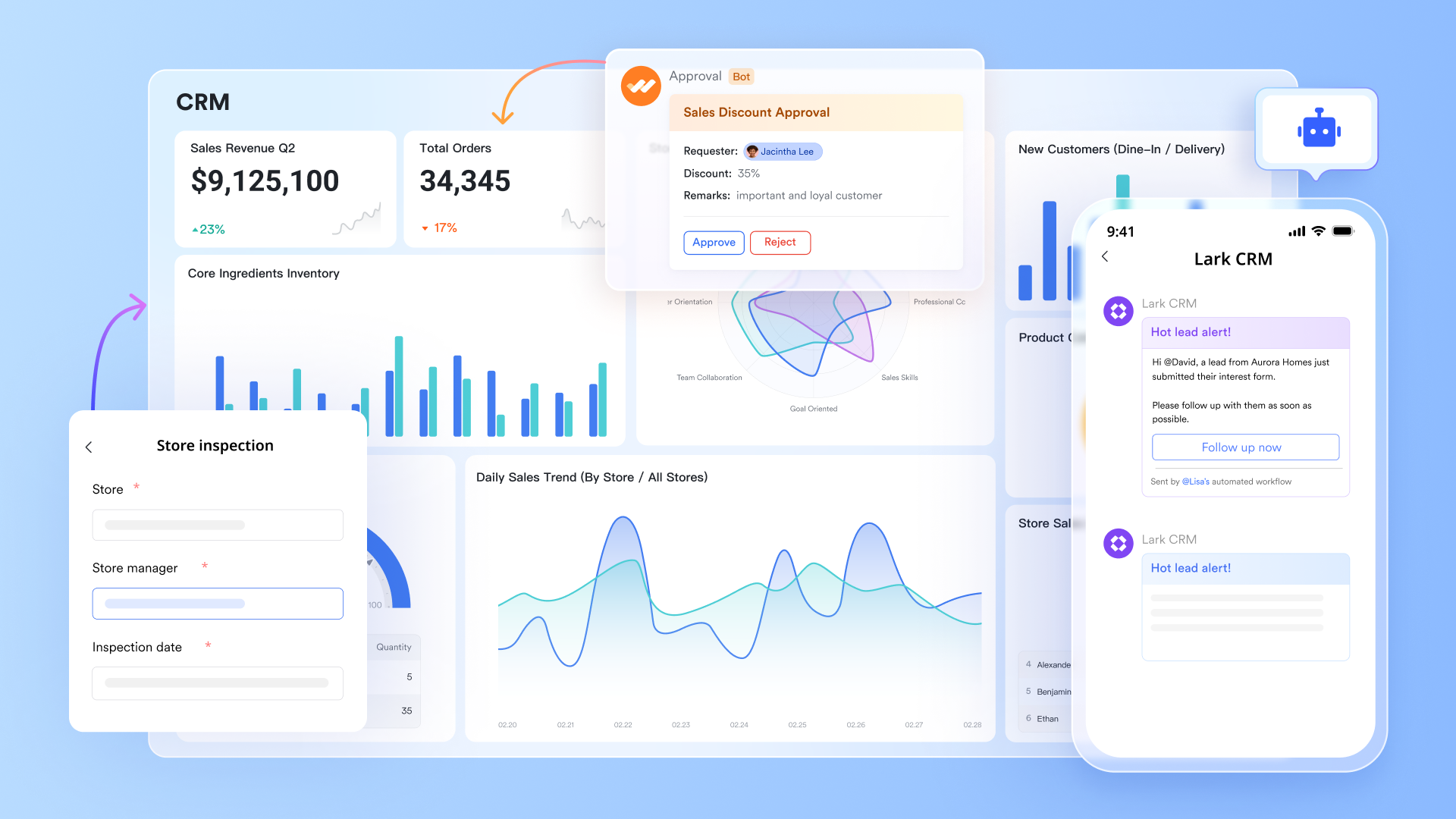
Create a unified client database in Lark Base
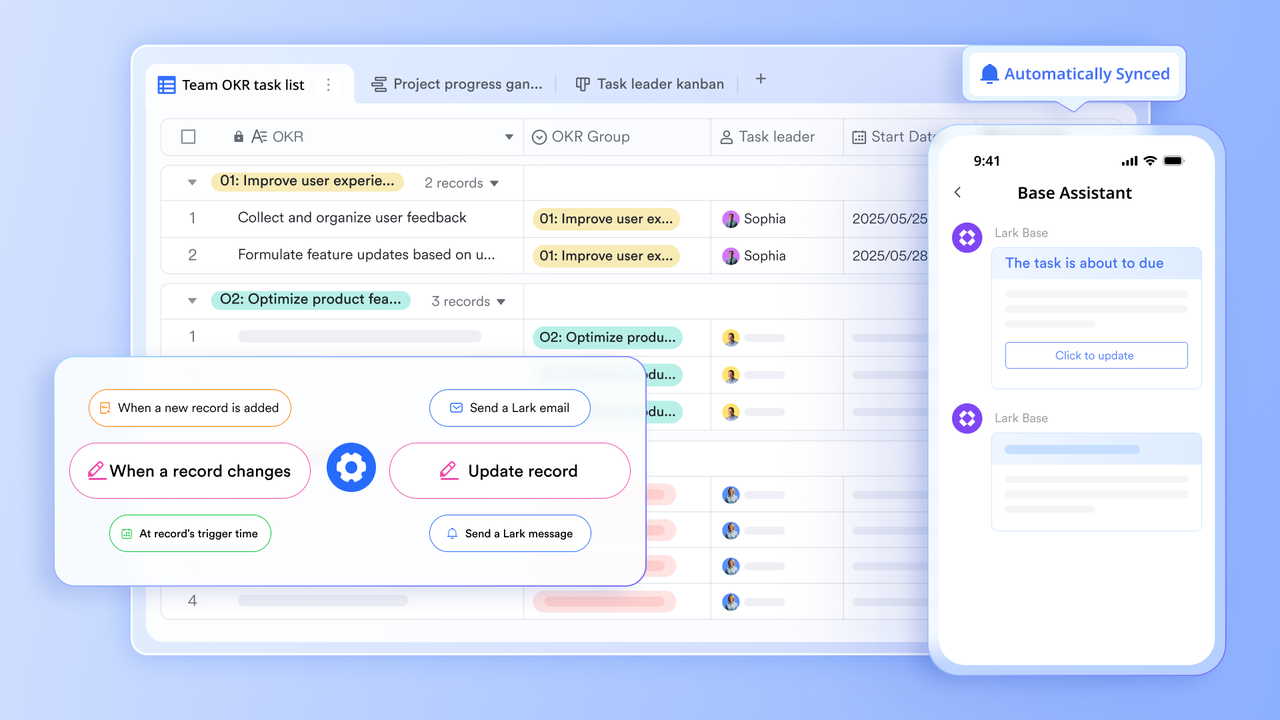
Lark Base serves as a powerful foundation for managing lead sources and customer relationships. Teams can build structured client databases that record essential information such as company details, contact history, source type, and qualification status. Grid and Kanban views help visualize where each prospect stands—whether they're newly acquired, in negotiation, or ready to close. This organized layout enables clear ownership and ensures that all departments—sales, marketing, and finance—operate from the same, real-time dataset.
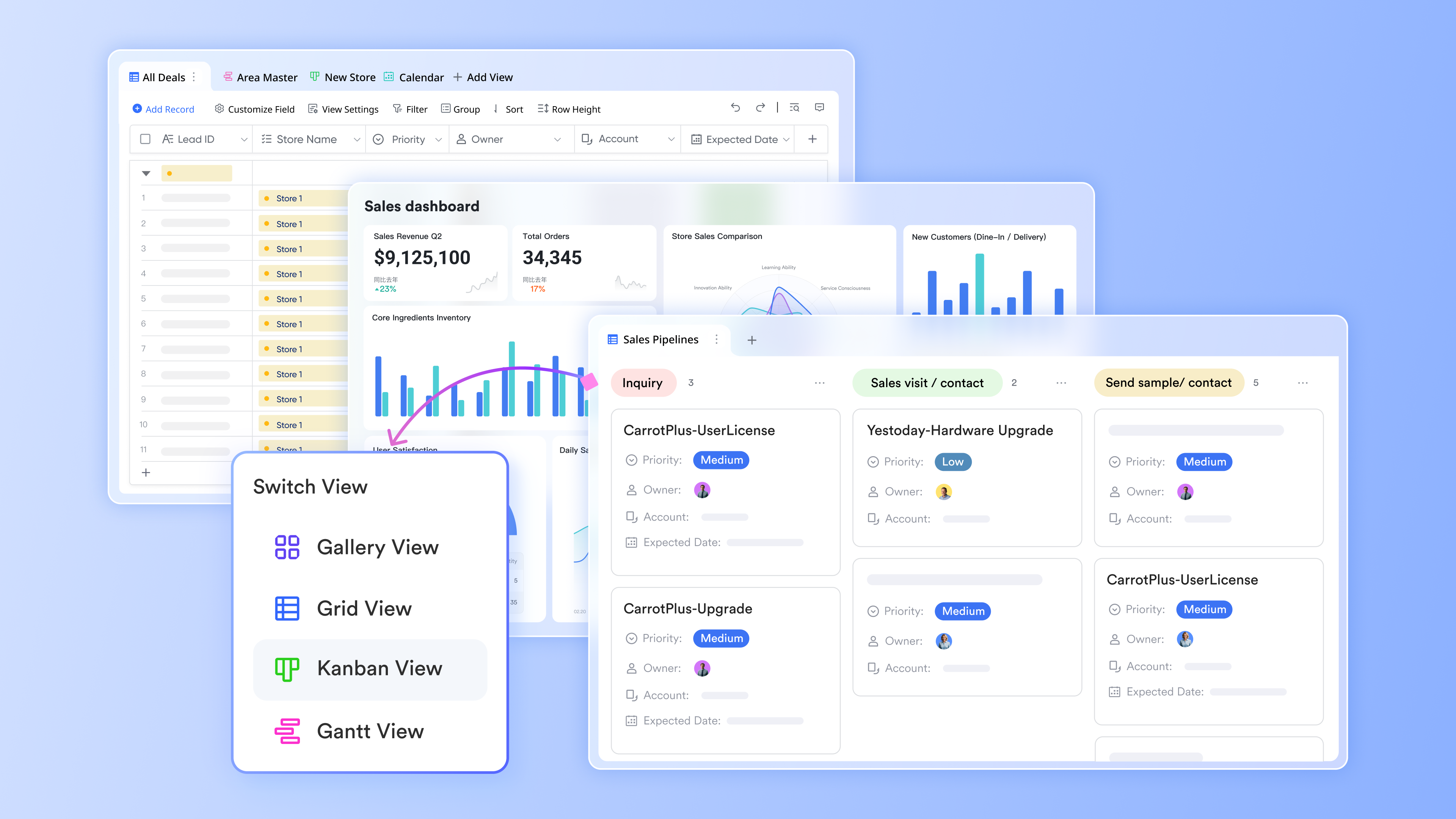
Streamline lead progress and notifications with automations
With automations in Lark Base, teams can set up rules that update lead progress and notify members whenever key actions occur—such as moving a deal to the next stage or tagging a lead as qualified. These automations minimize manual input, maintain data accuracy, and make sure no opportunity is overlooked. Notifications appear instantly in Lark Messenger, so account executives, managers, and cross-functional partners stay informed without needing to check multiple systems.
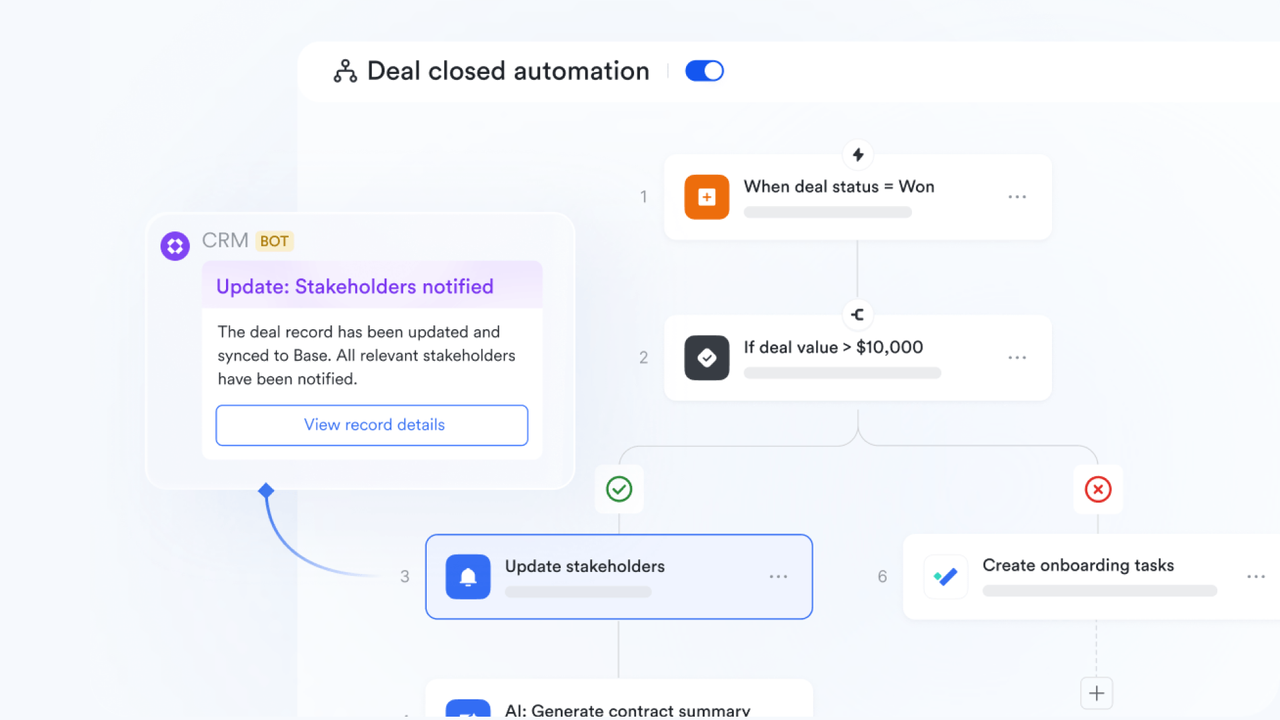
Visualize lead performance with dashboards
Dashboards in Lark Base enable teams to monitor lead source performance through real-time analytics. Using metric blocks, ranking blocks, and comparative charts, teams can track which lead sources deliver the most conversions or the highest revenue impact. Dashboards can combine multiple data sources, helping managers evaluate performance by region, campaign, or sales representative. These insights empower smarter decision-making and continuous optimization of marketing efforts.
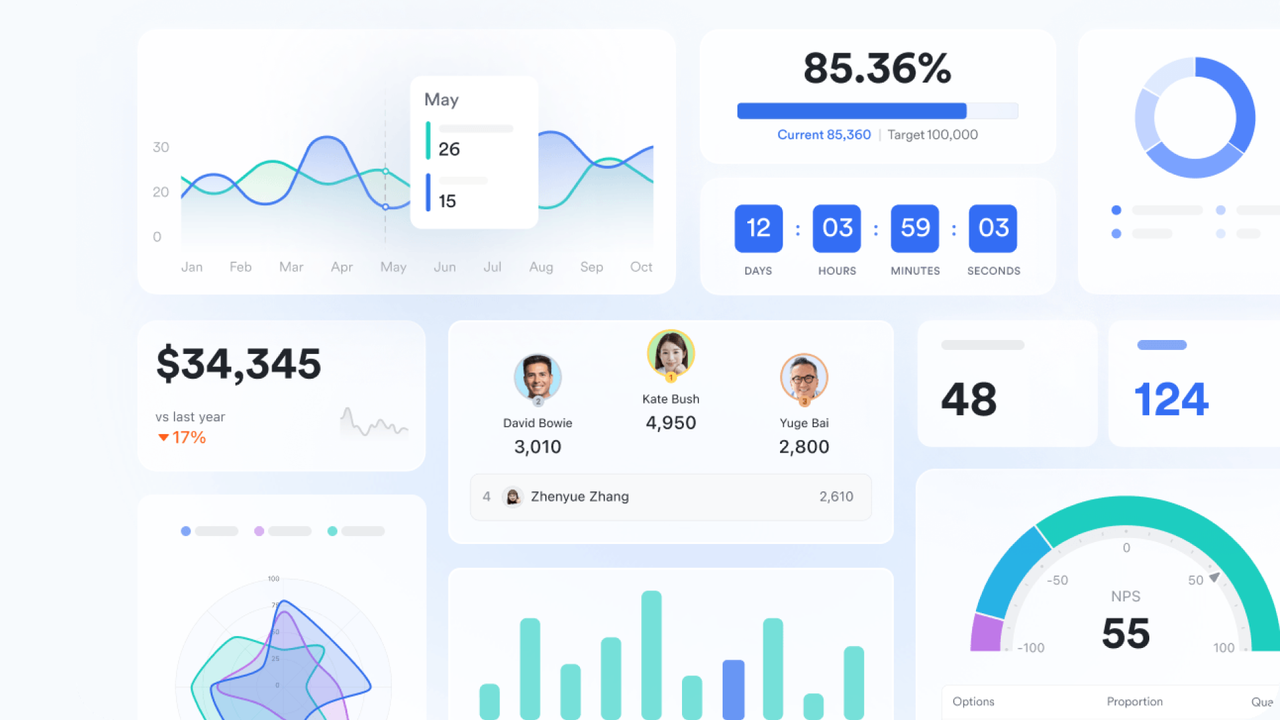
Enhance data accuracy with flow fields and linked tables
Flow fields allow teams to define required steps and fields for customer follow-up, ensuring that every lead is processed consistently. Two-way links and option fields make it easy to connect related records across tables—for example, matching leads with their source campaigns or assigned sales reps. This interconnected data structure improves traceability, enriches reporting, and ensures that every customer interaction is accounted for.
Automate approval and contract management with Lark Approval
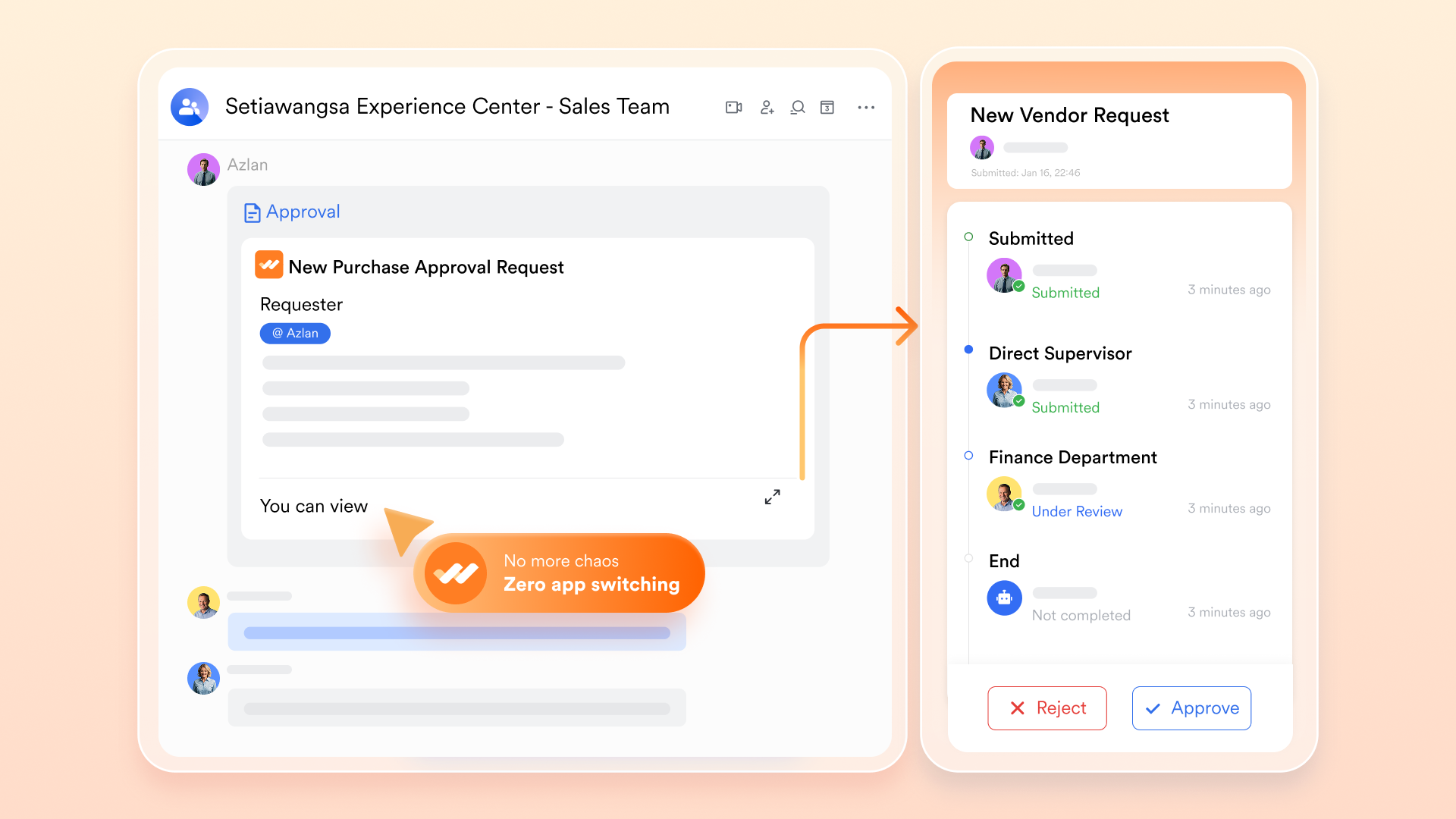
Lark Approval bridges the gap between CRM systems and internal sales processes. Teams can sync approval requests—such as lead qualification forms, discount requests, or contract sign-offs—directly into Lark for streamlined processing. Once approved, data such as contract details, customer information, and pricing automatically updates in Base or your connected CRM. This keeps all records aligned across departments, supporting faster deal cycles and audit-ready documentation.
Enable cross-department collaboration in real time
Every tool in Lark—from Lark Base to Lark Messenger to Lark Docs—is designed for real-time collaboration. Sales, marketing, and finance teams can comment directly on records, attach documents, or share updates without switching platforms. This connected approach eliminates silos and accelerates decision-making, creating a truly unified lead source management environment.

- Starter plan: Free forever plan that includes 11 powerful tools for up to 20 users. It also comes with 100GB of storage, 1000 automation runs, AI translations, and more.
- Pro plan: $12/user/month (billed annually) for up to 500 users. It includes everything in Starter plus group calling for up to 500 attendees, 15TB of storage, 50,000 automation runs, and more.
- Enterprise plan: Contact sales for custom pricing. Supports unlimited users and includes even more automation runs and advanced security, compliance, and management features.
Lead source templates to get started faster
Lead source templates help teams organize and categorize where leads originate without starting from scratch. They provide predefined categories, naming structures, and fields that reduce manual guesswork. Using templates ensures consistency across marketing, sales, and analytics workflows. This makes tracking performance and comparing channels more accurate and efficient.
Sales lead management
A sales lead management template provides a structured way to capture, organize, and monitor leads as they move through the sales pipeline. It typically includes fields for lead source, contact details, status, priority level, and next action steps. By standardizing this information, teams avoid gaps in follow-up and ensure no potential opportunity is missed. It also helps sales managers analyze performance trends and adjust outreach strategies effectively.
Lead generation form for sales leads managers
A lead generation form for sales lead managers is designed to capture essential prospect information at the moment of inquiry. It typically collects name, company, contact details, lead source, and the reason for reaching out. By standardizing these fields, teams ensure consistent data entry across campaigns and channels. This makes follow-up faster, supports accurate lead scoring, and improves overall sales pipeline visibility.
Lead generation effectiveness
A lead generation effectiveness template provides a structured way to evaluate how well different channels and campaigns are performing. It typically includes fields for lead volume, conversion rate, cost per lead, and revenue contribution. By comparing these metrics across sources, teams can see which efforts produce the highest impact. This makes it easier to adjust strategies and maintain consistent performance tracking.
Lead generation sales qualification
A lead generation sales qualification template helps determine whether a new lead is a good fit before investing significant time in outreach. It usually includes criteria such as budget, decision-making authority, needs, and timeline. By applying the same qualification questions to every lead, teams can prioritize those most likely to convert. This leads to more efficient pipeline management and stronger sales outcomes.
Marketing lead scoring system
A marketing lead scoring system template helps teams assign a numeric value to each lead based on interest level, engagement, and fit. It generally includes scoring criteria such as website activity, email interactions, demographic match, and buying intent signals. By applying consistent scores, marketing can determine which leads are ready for sales and which need nurturing. This improves prioritization and aligns both teams with lead quality expectations.
Real estate lead tracker
A real estate lead tracker template helps agents and teams organize prospects from multiple channels such as property inquiries, open houses, referrals, and online listings. It typically includes fields for contact information, property interests, budget range, lead source, follow-up status, and next scheduled interaction. By centralizing this information, agents avoid missed opportunities and maintain consistent communication. The structure also supports better forecasting and helps prioritize high-potential buyers or sellers.
Why lead source tracking matters
Lead source tracking helps organizations understand which acquisition channels drive the highest-value leads and conversions. Without clear tracking, teams may invest heavily in campaigns that generate volume but not quality. By identifying where leads originate, companies can make informed budgeting decisions and streamline sales processes. Accurate attribution supports better forecasting, targeted outreach, and more efficient resource allocation.
- Improved marketing ROI: Tracking lead sources makes it easier to identify which campaigns and channels bring in qualified leads instead of just traffic. This allows marketing teams to shift spending toward the highest-performing areas. Over time, this leads to more efficient use of the budget and stronger overall returns.
- Better sales alignment: Lead source data helps sales teams prioritize leads that historically convert at higher rates. This improves pipeline quality and ensures reps focus their time where it matters most. Alignment reduces friction between marketing and sales efforts.
- Enhanced reporting: Consistent tracking provides accurate insights across campaigns, channels, and time periods. This helps teams understand trends and evaluate strategy effectiveness. Reliable reporting supports clearer decision-making at every level.
- Automated lead routing: Different lead sources signal different intent levels. Automated routing assigns inbound leads to appropriate follow-up workflows and outbound leads to nurturing sequences. This reduces manual sorting and prevents missed opportunities.
- Customer insight: Lead source patterns reveal which channels attract your strongest buyer profiles. This informs audience targeting, message positioning, and campaign planning. Over time, it leads to more precise and effective acquisition strategies.
Best practices for optimizing lead source performance
Optimizing lead source performance requires consistent tracking frameworks and clear data governance. When teams use standardized terminology and shared dashboards, it becomes easier to compare channels and spot trends. Structured follow-up workflows ensure that high-value leads are prioritized quickly. A disciplined approach to reviewing and cleaning source data supports better forecasting and long-term growth.
- Standardize naming conventions for all lead sources: Consistent naming prevents duplicate source entries and confusion. A standardized taxonomy makes reporting clearer and easier to analyze. This also ensures every tool references the same lead source structure.
- Review source performance monthly using dashboards: Regular analysis highlights which channels are improving or declining. Monthly reviews help identify patterns across campaigns or seasons. Dashboards make insights more visible across teams.
- Set up automated follow-ups based on high-performing sources: Leads from strong channels should receive faster or more personalized outreach. Automated routing ensures these leads reach the right reps quickly. This improves conversion velocity and lead engagement consistency.
- Use consistent UTM tracking for ads and campaigns: UTM parameters help track which campaigns or creatives drive conversions. Consistency ensures that analytics tools categorize traffic accurately. This strengthens attribution and ROI measurement.
- Encourage cross-department visibility between marketing and sales: Shared access to lead data reduces misalignment and assumptions. Both teams can better understand source performance and lead behavior. This supports smoother handoffs and revenue impact.
- Archive outdated or low-value lead sources to maintain clean data: Removing unused or irrelevant sources prevents reporting clutter. It also keeps analytics dashboards focused on meaningful performance. Clean data enhances accuracy and decision-making.
Conclusion
Effective lead source tracking is essential for understanding where your most valuable opportunities originate and how to allocate resources wisely. By standardizing naming conventions, maintaining clean data, and reviewing performance regularly, organizations can improve clarity and decision-making across marketing and sales. Templates and structured workflows also help ensure consistent lead management, faster follow-ups, and more accurate reporting. When teams share visibility into source performance, they can better prioritize outreach and refine acquisition strategies over time. A unified system that connects communications, data entry, and analytics reduces manual work and the risk of misalignment.
A platform like Lark, which combines collaboration tools with integrated data systems and workflow automation, can support this end-to-end approach. With clear tracking in place, businesses are better equipped to evaluate ROI, nurture leads effectively, and scale growth with confidence.
FAQs
What is the difference between a lead source and a lead channel?
Lark defines a lead source as the specific origin where a prospect first enters your pipeline, such as a webinar registration page or a referral link. A lead channel is the broader category the source belongs to, like events or word-of-mouth marketing. In practice, channels group multiple sources together for easier reporting. Tracking both helps teams understand overall performance trends and granular touchpoint effectiveness.
How can I track multiple lead sources in one place?
Centralizing lead sources requires using a single system of record for data input. This could be a CRM, marketing automation platform, or integrated workspace. Ensuring all forms, campaigns, and outreach efforts send data to the same hub maintains consistency. Standard naming and templates further support clarity across teams.
What's the best way to analyze lead source ROI?
Comparing the cost of acquisition against conversion outcomes helps determine ROI. This includes analyzing volume, lead quality, deal size, and time to close. Visual dashboards make performance differences easier to interpret. Reviewing results regularly informs which sources should be expanded or reduced.
How does Lark automate lead source tracking?
Lark supports automated lead routing, form data capture, and workflow triggers that assign sources and update records in real time. Connected dashboards allow teams to monitor channel performance without manual data entry. Embedded collaboration features also help marketing and sales align on follow-up processes. This reduces errors and improves efficiency.
Can I connect existing CRM data to Lark Base?
Yes, existing CRM data can be synced or imported using integrations or CSV uploads. Mapping fields ensures lead source values remain accurate and consistent. Once connected, teams can manage, analyze, and update lead data collaboratively. This enables more unified reporting and workflow automation.
Related reading
Table of contents
Start using Lark today

Manage all your work in one place
Boost team efficiency by 10x
Save up to 70% on software costs
Table of contents
Start using Lark today
Manage all your work in one place
Boost team efficiency by 10x
Save up to 70% on software costs
Keep reading









2026 Lark Technologies Pte. Ltd.
Headquartered in Singapore with offices worldwide.






Explore: