














Marketing Campaign Planner: Strategy, Steps, KPIs & Templates

Ryan Tanner
Product Marketing Specialist
Sep 18, 2026
Ryan Tanner
Sep 18, 2026

11 min read


A marketing campaign planner helps teams organize goals, channels, timelines, and responsibilities into one structured plan. It gives marketers a clear path from idea to execution so campaigns stay aligned with audience insights and performance metrics. Many teams begin with simple spreadsheets or basic documents before shifting into more collaborative planning tools as campaigns become more complex. Tools like Lark support teamwork, content workflows, and reporting in a single workspace without disrupting existing processes.

What is a marketing campaign planner?
A marketing campaign planner is a structured framework that outlines how a campaign will run from research to execution and reporting. It centralizes your audience insights, goals, tactics, timelines, and KPIs in one easy-to-manage system. This makes it simpler to coordinate tasks and keep teams aligned as the campaign progresses. A strong planning approach reduces errors, prevents miscommunication, and improves your chances of achieving performance targets.
A planner also creates consistency across different types of campaigns. Whether you are planning promotions, content launches, or ongoing email sequences, the same structured approach helps maintain clarity. Using a dedicated marketing campaign planner template ensures standardization, especially across large teams. This helps future campaigns benefit from previous work and makes optimization easier.
Types of marketing campaigns to plan
This section highlights common campaign types that can be tracked using a marketing campaign planner. Each campaign has its own goals, audience triggers, and timing requirements. Using a structured planner helps maintain consistency and prevents teams from overlooking critical steps. A solid workflow also improves reporting accuracy and supports clearer resource allocation.
- Product launch campaigns introduce a new product or feature to the market with messaging designed to generate awareness and early interest. Teams use a marketing campaign planner template to align launch steps like teasers, demos, landing pages, and announcements. Clear timelines help coordinate content, design, and paid activations. A structured plan also ensures all stakeholder approvals are completed before launch.
- Seasonal promotions focus on time-limited offers tied to holidays, events, or buying cycles. These campaigns require tight scheduling and coordination across channels. Using a marketing campaign planner keeps deadlines visible and ensures creatives are ready before the promotional window. Teams can track discount logic, distribution channels, and expected volume peaks.
- Brand awareness campaigns aim to increase visibility rather than target short-term conversions. A planner helps define the target audience, messaging pillars, channel mix, and content frequency. Marketers often track reach, engagement, and sentiment as success indicators. This structure helps teams execute consistently over longer timelines.
- Lead generation campaigns collect high-intent contacts through forms, landing pages, ads, or content offers. Using a marketing campaign planner template ensures alignment between targeting, creative assets, nurture steps, and conversion goals. It also helps teams track cost per lead and optimize channels based on performance.
- Email drip campaigns use automated sequences to nurture leads over time. An email marketing campaign planner organizes content flow, timing intervals, segmentation rules, and call-to-action placement. It also helps identify which emails require design support or testing. This setup keeps the sequence consistent and prevents gaps in messaging.
- User onboarding campaigns support new customers by introducing features, guiding setup, and encouraging early engagement. A planner helps map the onboarding flow, channel mix, and educational content. Teams track milestones such as activation rate and time to first value. This structured approach helps improve long-term retention.
How to build a marketing campaign planner step-by-step
This section walks through the steps required to create a complete and actionable marketing campaign planner. Each step adds structure and clarity so teams can move from strategy to execution smoothly. Following these steps ensures that campaigns are grounded in audience insights and measurable goals. It also standardizes processes for all future campaigns.
Step 1: Research your audience and competitors
Audience and competitor research sets the foundation for your campaign strategy. It helps identify user motivations, pain points, and new opportunities in the market. A marketing campaign planner template usually includes fields for personas, insights, and competitive messaging. This ensures campaigns are grounded in data rather than assumptions. Teams can use surveys, analytics, and interviews to refine research inputs.
Step 2: Define SMART campaign goals
SMART goals create clarity and reduce ambiguity around success metrics. Specific and measurable goals help align teams across creative, paid media, and content efforts. A marketing campaign planner keeps these goals visible throughout execution. The structure also supports post-campaign evaluation because performance can be compared to clearly defined benchmarks. This helps maintain accountability across teams.
Step 3: Choose channels and campaign tactics
Selecting the right mix of channels shapes how your campaign reaches the audience. Tactics may include paid ads, content marketing, influencers, social campaigns, email flows, or offline promotions. A planner helps map these channels to core goals and budgets. It also helps teams identify which creative assets are required and when they must be delivered. This prevents last-minute rushes or mismatched messaging across platforms.
Step 4: Set tracking parameters
Tracking parameters ensure your reporting is accurate and actionable. These include UTM tags, conversion events, funnel steps, and source attribution rules. A marketing campaign planner template typically includes a dedicated tracking section to avoid inconsistencies, often supported by project management tools like a free link shortener to manage and standardize tracked URLs. Teams benefit from centralizing tracking instructions so analytics remain clean. This allows more reliable comparisons across campaigns.
Step 5: Design messages and offers
Campaign messaging shapes how your audience understands your value proposition. A planner provides space for message variations, tone, creative themes, and offers. This helps creative teams maintain consistency across different channels. The structure also allows multiple versions to be tested and refined. A clear message map prevents fragmentation when many contributors are involved.
Step 6: Create an execution calendar
The execution calendar outlines when each asset, channel, and task will go live. A planner helps visualize dependencies across internal teams and external partners. It also keeps production realistic by assigning clear deadlines. Campaign calendars help managers spot bottlenecks before they impact launch timelines. This improves coordination and prevents missed opportunities.
Step 7: Assign responsibilities
Assigning roles ensures every step has an accountable owner. A marketing campaign planner simplifies this by listing contributors, deadlines, and expected deliverables. This eliminates confusion and reduces back-and-forth communication. It also helps managers track progress without relying on separate status meetings. Teams stay aligned throughout the campaign lifecycle.
Step 8: Establish reporting and review frequency
Reporting frequency helps maintain visibility while a campaign is running. A planner may include weekly, monthly, or phase-based check-ins. Structured reporting encourages ongoing optimization rather than waiting for final results. It also centralizes insights so future campaigns can learn from past performance. This creates a continuous improvement cycle for the marketing team.
Action time: Use Lark for streamlined marketing campaign planning
Lark provides a truly complete platform for marketing, starting with Lark Base for visual campaign roadmapping using Gantt timelines and calendar views. Core planning is handled in Lark Docs, enabling real-time marketing strategy creation. Success is measured rigorously using Lark OKR to enforce KPI-driven goal-setting and tracking. Finally, execution and ideation are streamlined through Lark Meetings and Lark Tasks for clear assignment and transparent progress management.
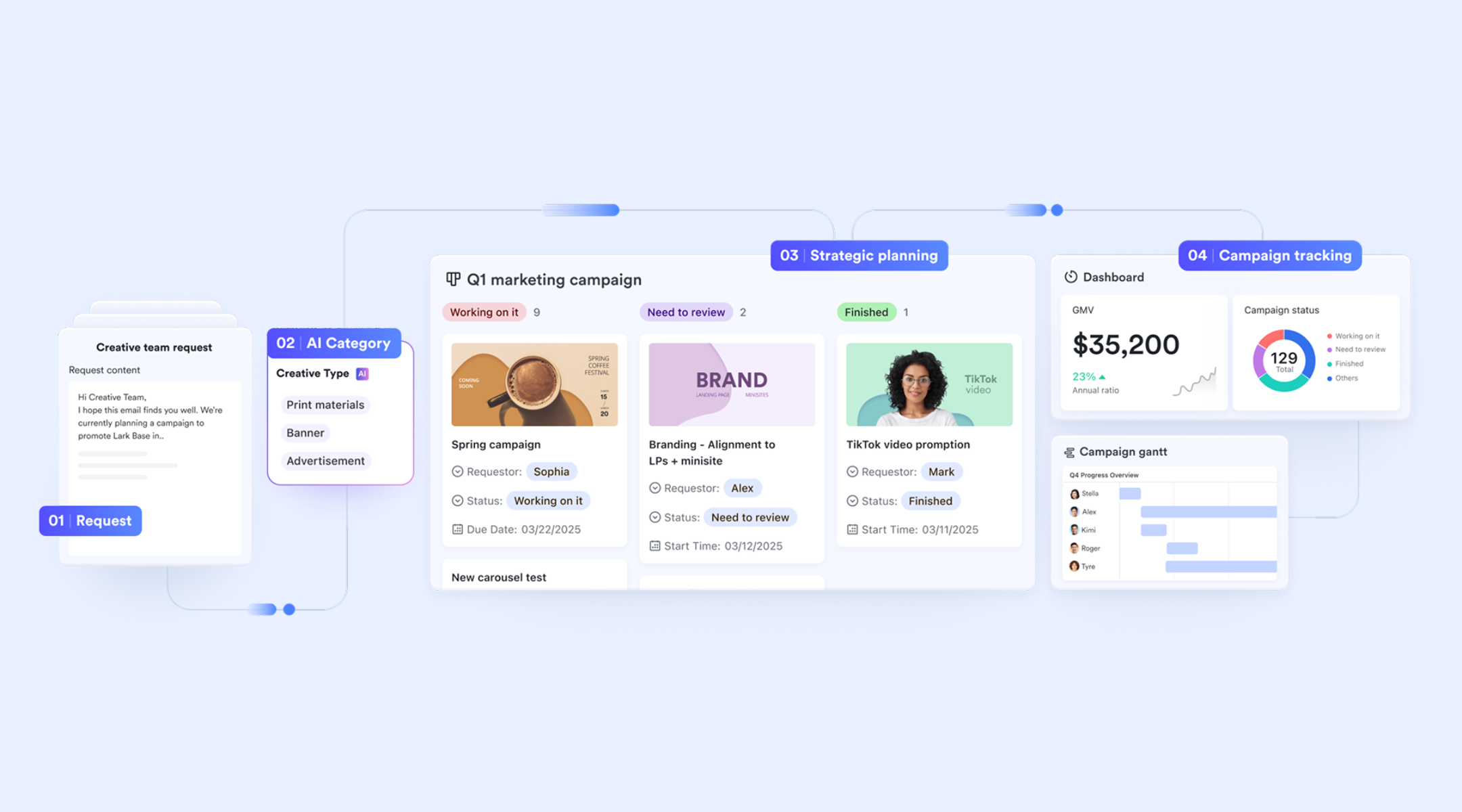
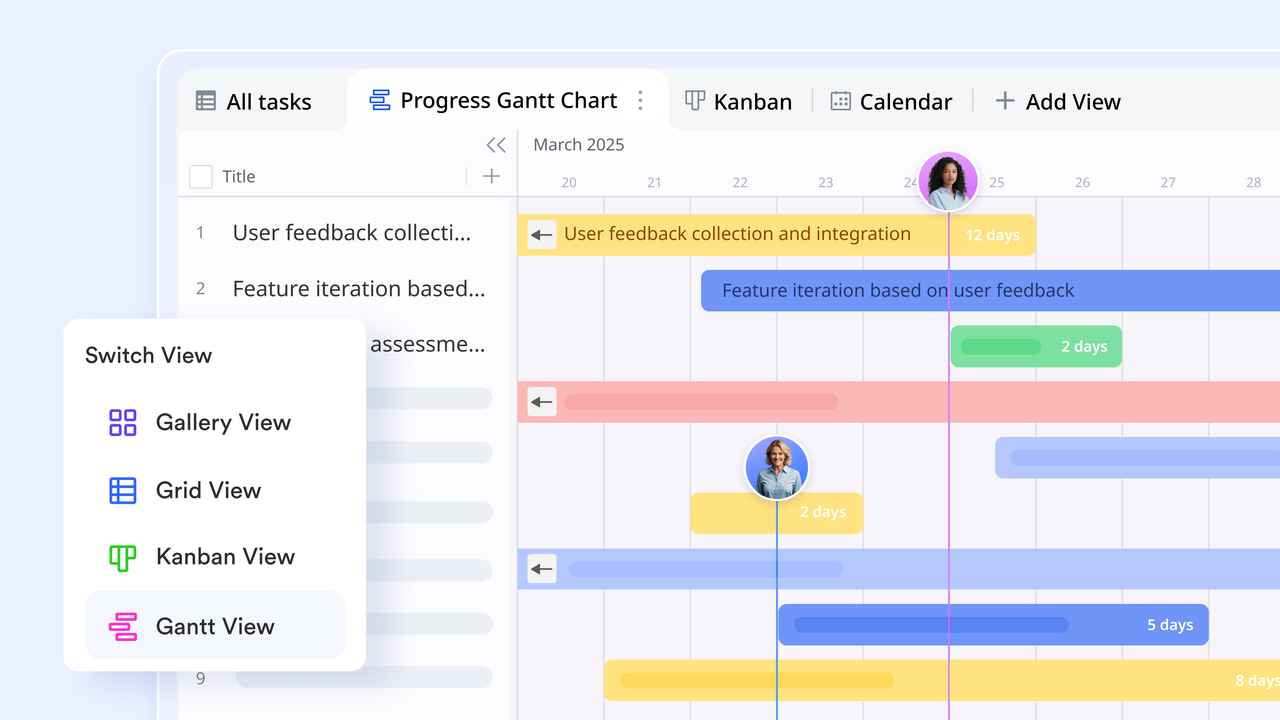
A structured campaign hub with timeline/roadmap view
As the centralised data hub, Lark Base provides a highly visual, dynamic environment for marketing teams to manage complex campaigns and roadmaps. The Gantt view serves as the core timeline tool, automatically generating time bars from start and end dates to visualize the entire schedule and task progression, enabling easy, color-coded tracking and quick schedule adjustments. Complementing this is the calendar view, which offers flexible day, week, and month scheduling for content calendars and events, enabling marketers to manage deadlines, schedule topics, and coordinate event planning at a glance.
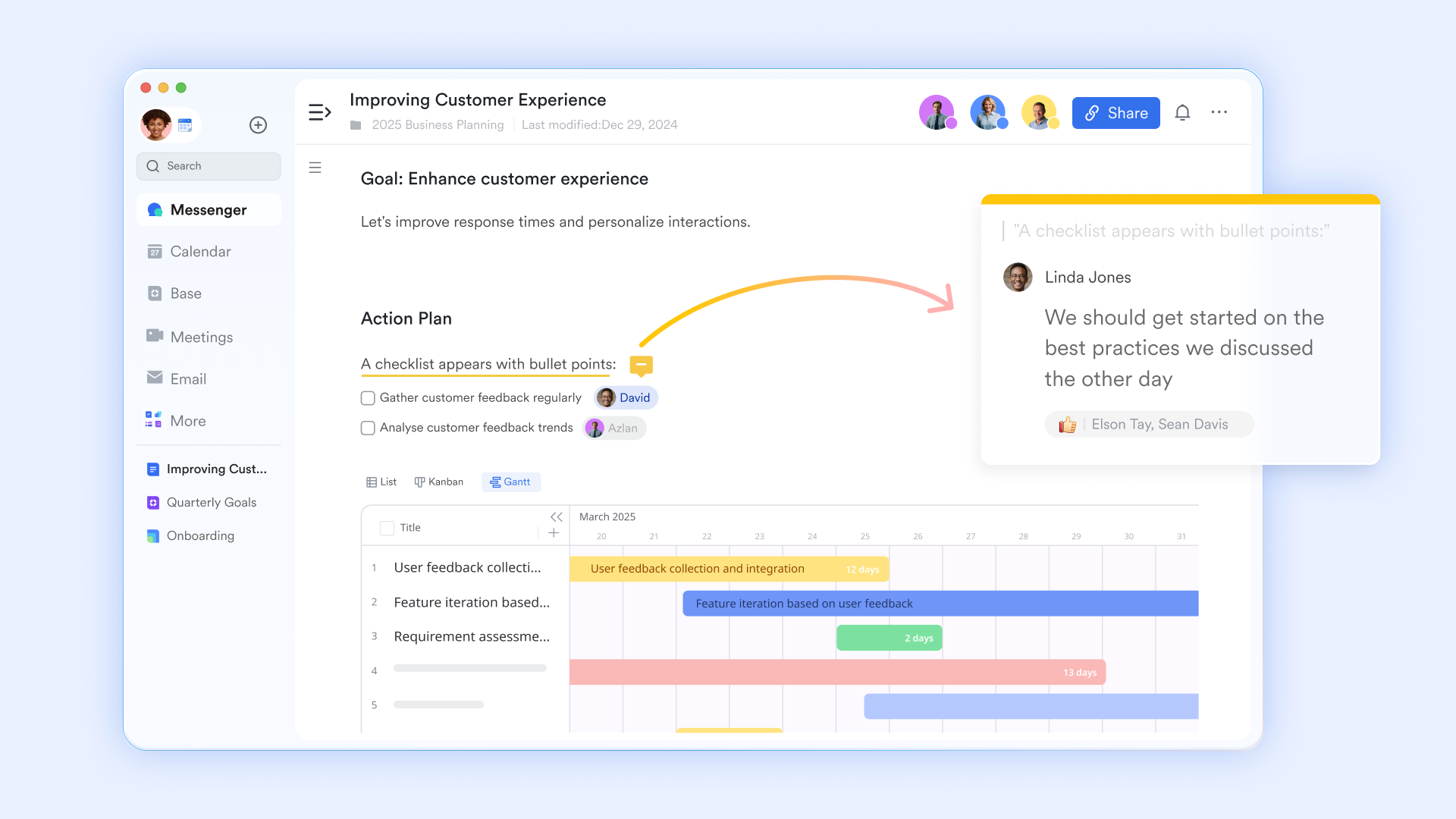
Collaborative editing document platform for marketing planning
Lark Docs enables teams to co-create campaign strategies, content outlines, creative briefs, and messaging frameworks in shared documents. Real-time editing, comments, and mentions keep discussions directly linked to the documents. Teams can attach files, reference data, and track revisions as campaigns evolve. This removes version confusion and streamlines collaboration between marketing, design, copy, and management teams.
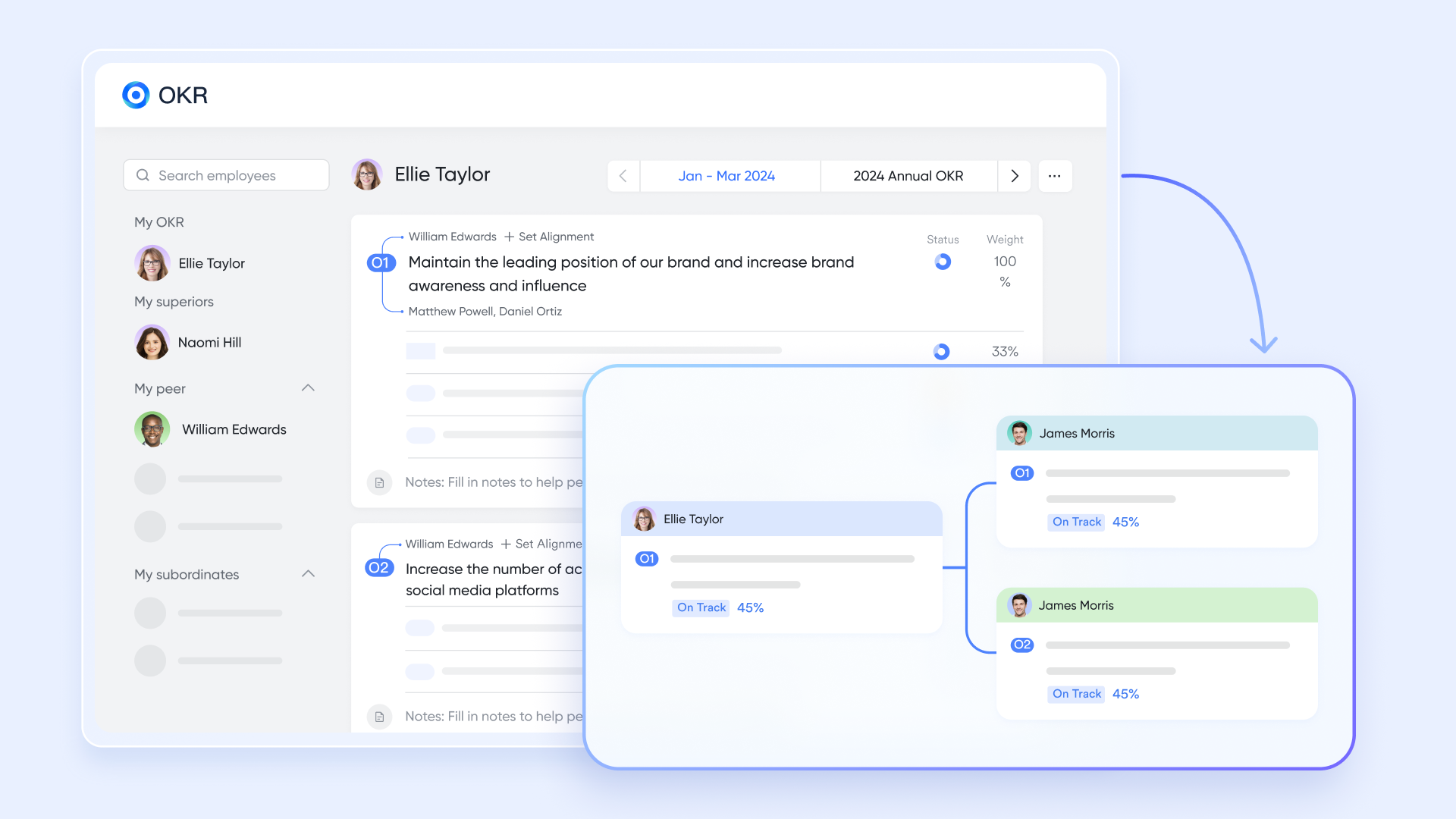
Clear goal-setting and KPI tracking
Lark OKR is fundamental to marketing campaign planning by rigidly focusing on goal-setting and KPI definition. Marketing teams use it to establish clear, company-aligned objectives (goals) that cascade down to the campaign level. Crucially, each objective is supported by quantifiable key results (KPIs) that define precisely what success looks like (e.g., specific traffic increases, MQL counts, or conversion rates). By tracking KPIs, Lark ensures that every campaign metric directly contributes to organizational strategy.
Seamless communication hub for campaign brainstorming
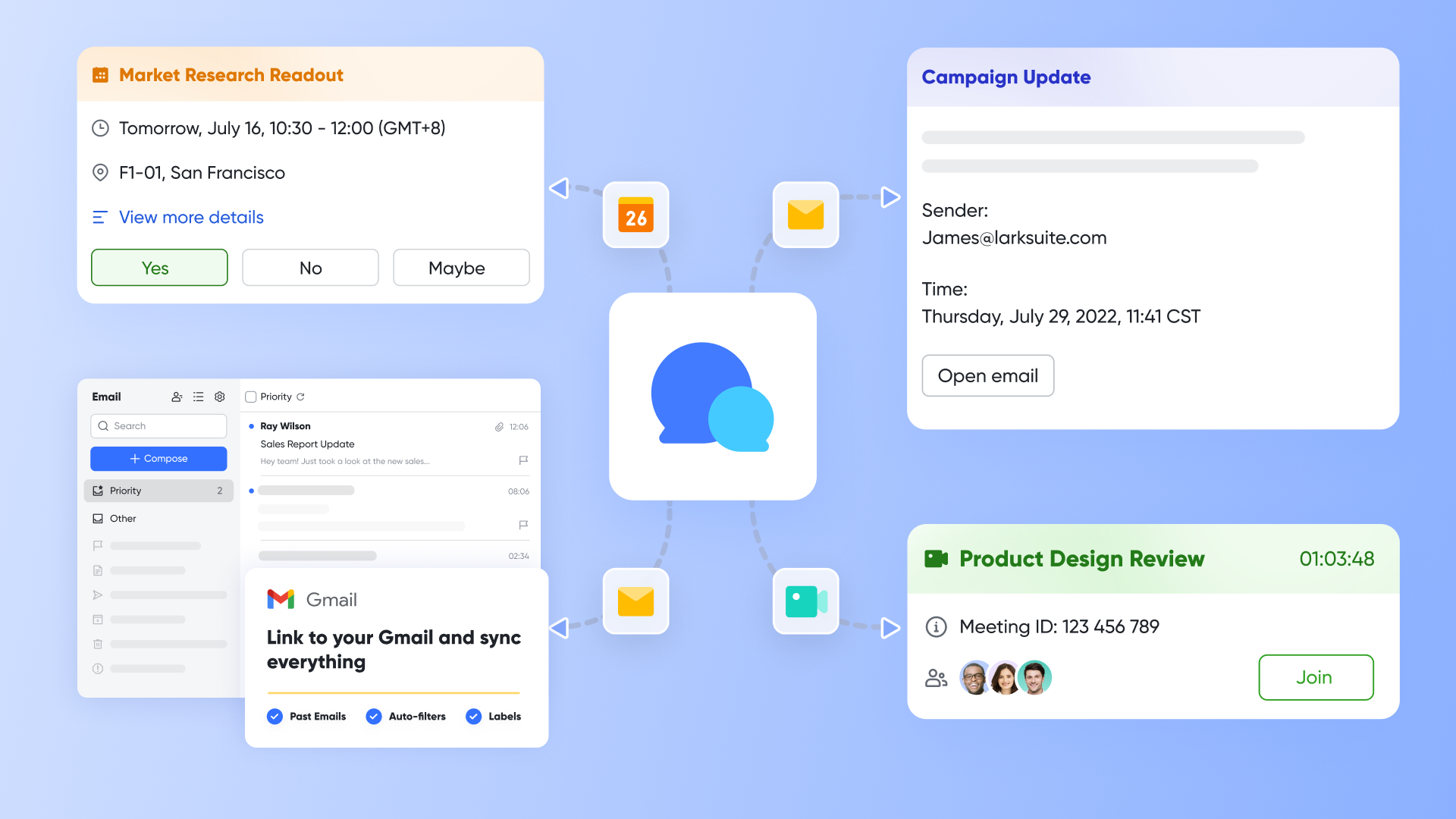
During a brainstorming session, Lark Meetings supports collaboration with features such as screen sharing, a virtual whiteboard for live ideation, and the ability to conduct instant polls. Most critically, the meetings feature automatically generated AI Meeting Notes and Minutes (transcriptions), which capture every idea discussed. Post-meeting, Lark Messenger allows teams to instantly share these meeting notes and related documents for rapid feedback and decision-making, ensuring a seamless flow from idea generation to an actionable plan.
Task execution management with Lark Tasks
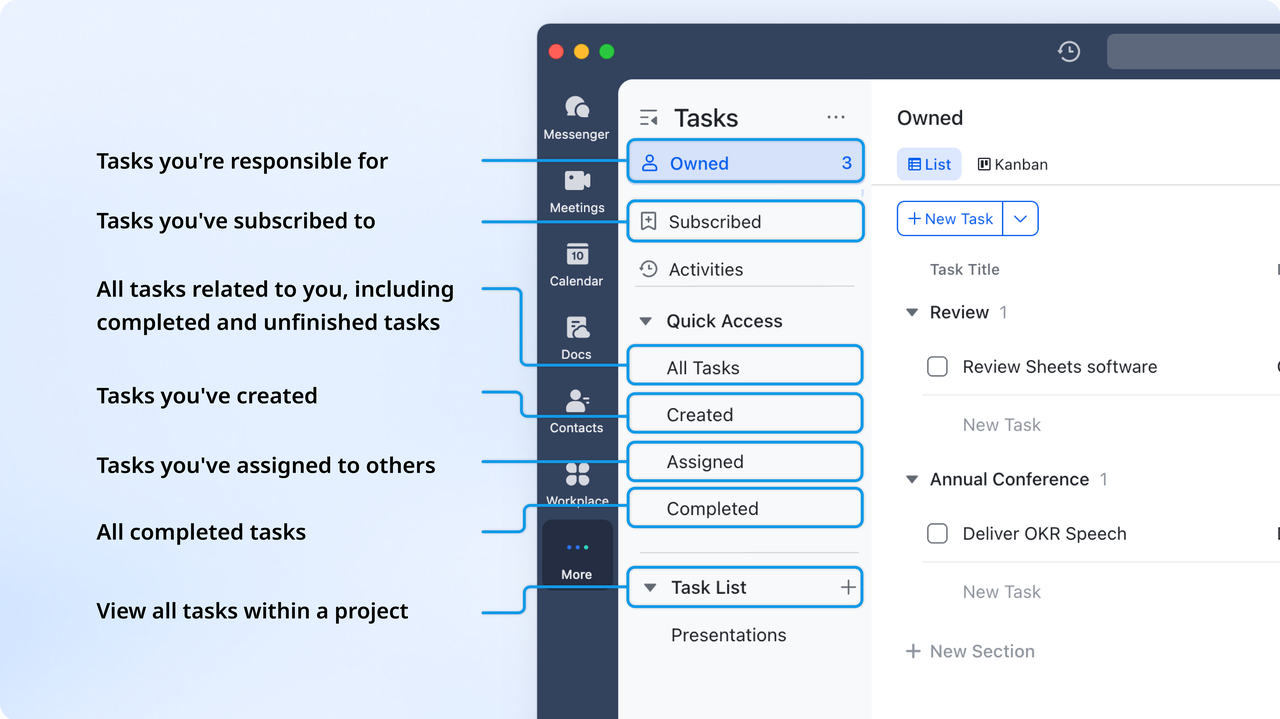
Lark Tasks transforms campaign plans into actionable work assignments with clear ownership and deadlines. Team members receive priority levels, progress checklists, and dependencies that map each deliverable to the campaign timeline. Task status updates keep managers informed without extra meetings or reports. This structured task tracking ensures deliverables move on schedule and accountability remains transparent throughout campaign execution.
Bonus: Ready-to-use marketing campaign planner templates
This section highlights a collection of templates that help teams plan campaigns with greater structure and consistency. Each template supports different marketing needs such as project scheduling, campaign rollout, or content planning. Using a strong marketing campaign planner template reduces manual setup time and keeps processes organized. These options work well for teams building repeatable campaign workflows.
Marketing campaign management template
This template provides a centralized space for campaign goals, timelines, tasks, and deliverables. It suits teams managing multiple campaigns at once and needing clarity on resource planning. The structure helps track approvals, creative progress, and channel activation dates. It offers a strong starting point for teams moving from spreadsheets to a more collaborative workspace.
Marketing plan template
This template helps teams organize annual or quarterly marketing strategies into structured sections. It includes fields for objectives, audience segments, messaging, tactics, and KPI targets. The marketing campaign planner template format ensures campaigns stay aligned with the overall plan. It works well for leadership teams managing multiple channels and long-term campaigns.
Marketing campaign template
This template supports end-to-end planning from strategy and ideation to execution and reporting. Marketers can document goals, research inputs, channel choices, timelines, and creative assets. It suits teams looking for a clean structure that aligns cross-functional contributors. Using this helps avoid scattered files and supports smoother collaboration.
Annual marketing plan template
This template outlines a long-term plan that organizes campaigns across multiple seasons, launches, and promotional cycles. It helps teams visualize workload, budget spread, and expected performance milestones throughout the year. This reduces surprises when planning large-scale marketing operations. It is suitable for marketing leaders building structured strategies.
How to measure campaign success
This section explains the methods marketers use to measure effectiveness across channels and tactics. A strong measurement plan ensures campaigns stay aligned with business goals. Clear KPIs and consistent reporting routines help identify what works and what needs adjustment. Using a marketing campaign planner ensures these details stay visible throughout execution.
- Standard KPI examples help teams track traffic, leads, conversions, reach, engagement, and revenue. These metrics indicate whether a campaign is progressing as expected. Different channels use unique KPIs, so planners help unify tracking. Clear definitions prevent confusion during reporting discussions.
- Attribution basics outline which channels influenced conversions and in what sequence. This helps teams understand whether social, search, email, or other touchpoints contributed to results. A marketing campaign planner template often includes attribution notes to help analysts interpret results more accurately. Attribution guides future budget decisions.
- Reporting frequency determines how often campaign performance is reviewed. Weekly or biweekly reviews help identify issues early while campaigns are still running. Consistent check-ins support optimization rather than waiting until the final evaluation. This improves long-term campaign success rates.
- Post campaign evaluation helps teams review goals, execution, results, and challenges. It supports long-term learning by documenting insights in a structured format. Without this step, teams may repeat past mistakes. Having a planner improves evaluation quality.
- Creating a learn and improve loop ensures every campaign builds on previous insights. This habit strengthens strategy, messaging, and channel selection over time. A structured planner centralizes documentation so learning remains accessible. This supports continuous growth across the marketing team.
Key mistakes to avoid when designing marketing campaigns
This section highlights common pitfalls that reduce campaign effectiveness. Avoiding these mistakes helps teams use resources more efficiently and build higher performing campaigns. A marketing campaign planner helps prevent these issues by creating structure and alignment across contributors.
- Planning without data increases the risk of misaligned messages and wasted budget. Teams often rely on assumptions instead of insights when research is skipped. A planner prompts marketers to document audience data early. This ensures decisions are grounded in real behavior patterns.
- Ignoring audience segments leads to generic messaging and poor engagement. Strong segmentation improves relevance and conversion. A marketing campaign planner template helps teams outline segments clearly. This allows tailored content for each group.
- Lack of channel diversification reduces reach and limits campaign potential. Over-reliance on one channel may cause unstable results. A planner encourages balanced testing across paid, organic, and owned channels. This helps teams identify which mix performs best.
- No testing strategy prevents teams from optimizing creative or targeting choices. Even small adjustments can improve outcomes. A planner includes space for test ideas and hypotheses. It also helps teams track results consistently.
- Poor communication between teams results in duplicated work or missing assets. A structured planner centralizes information and roles. This reduces confusion and improves cross-team coordination. Clear documentation strengthens execution quality.
Conclusion
A marketing campaign planner gives teams a clear structure for managing goals, timelines, assets, and reporting. It simplifies alignment across marketing, design, product, and leadership groups by ensuring everyone works from the same source of truth. As campaigns grow more complex, having a predictable planning system reduces risk and strengthens workflow stability. This helps organizations deliver more consistent and high performing campaigns over time.
Lark supports this evolution by offering a connected workspace where teams can plan, execute, and analyze campaigns without switching tools. Its docs, tasks, sheets, calendar, and dashboards work together to remove friction across stages of the campaign lifecycle. This gradual shift into a collaborative environment helps teams scale operations smoothly. The result is a more dependable and efficient campaign planning process from start to finish.
FAQs
What is the difference between a campaign planner and a marketing strategy?
A marketing strategy defines long-term positioning, target audiences, and high-level direction, while a campaign planner organizes the specific steps to execute that strategy. A planner translates goals into tasks, assets, timelines, and performance metrics. It acts as a practical tool for day-to-day coordination. Both work together to maintain consistency across marketing efforts.
How early should you start planning a marketing campaign?
Marketers typically begin planning several weeks before launch, depending on campaign size and asset requirements. Early planning allows time for research, creative development, channel setup, and approvals. A marketing campaign planner template helps outline these timelines clearly. Starting early also reduces last-minute issues that can compromise campaign quality. Planning ahead strengthens execution flow.
Can small businesses use the same campaign format as big brands?
Yes, small businesses can adapt the same structure with simplified steps. A marketing campaign planner helps maintain clarity regardless of team size. Smaller teams benefit from organized workflows because they reduce confusion and prevent resource waste. The framework can be scaled up or down depending on available budget and channels. Structure is useful at every business stage.
What tools are useful for tracking campaign performance?
Common tools include analytics platforms, ad dashboards, CRM systems, and spreadsheets. Marketers use these to track traffic, conversions, engagement, and ROI. Lark Sheets can consolidate performance data into one review space for reporting. Choosing tools depends on your channel mix and data sources. The goal is to maintain accurate and consistent reporting.
Do you need separate planners for email, social, and paid campaigns?
Some teams prefer separate planners for complex channels, especially when running multiple variations. Others use a unified marketing campaign planner template to keep everything centralized. The choice depends on workflow complexity and team size. Consolidated planners help maintain alignment across channels. Separate planners offer more focus for specialized teams.
Related reading
Table of contents
Start using Lark today

Manage all your work in one place
Boost team efficiency by 10x
Save up to 70% on software costs
Table of contents
Start using Lark today
Manage all your work in one place
Boost team efficiency by 10x
Save up to 70% on software costs
Keep reading








2026 Lark Technologies Pte. Ltd.
Headquartered in Singapore with offices worldwide.






Explore: