A project can fail long before the first task is executed—often at the moment it begins, without clarity. A project charter helps prevent this by addressing common failure points such as unclear objectives, fuzzy authority, misaligned stakeholders, and undefined success criteria. Without a clear charter, teams may move fast but in different directions, creating confusion and rework later.
A project charter is more than just a document. It forms the formal foundation of a project by clearly stating why the project exists, what success looks like, who owns key decisions, and where boundaries are set. Whether for a large enterprise initiative or a small internal project, a well-written charter aligns everyone from the start. Teams often use collaborative tools like Lark to draft, review, and manage project charters more effectively.
Project charter definition
A project charter is a formal document that authorizes a project and provides a clear foundation for its execution. It defines why the project is being undertaken, what it aims to achieve, and how success will be measured. The project charter also identifies key stakeholders, outlines the project's high-level scope, and clarifies roles and authority, particularly the project manager's responsibilities.
Created at the start of the , the charter acts as a shared agreement between sponsors, leadership, and the project team. It helps align expectations, reduce ambiguity, and prevent misunderstandings about goals, priorities, and constraints such as budget or timelines. Unlike a detailed project plan, the project charter stays high-level and strategic. Once approved, it becomes a reference point throughout the project, guiding decisions, managing scope changes, and ensuring the project remains aligned with its original purpose.
Why a project charter is critical for project success
A project charter plays a crucial role in setting projects up for success by creating clarity before work begins. It ensures alignment, accountability, and decision-making structure from day one, reducing the risk of confusion later.
- Establishing authority and ownership: The project charter formally authorizes the project and , typically naming the project manager and sponsor. This clarity prevents decision delays and confusion over who has the final say.
- Aligning stakeholders early: By documenting shared objectives and expectations, the charter puts stakeholders on the same page from the outset. Early alignment reduces resistance, conflicting priorities, and late-stage disagreements.
- Reducing ambiguity around goals, scope, and constraints: , scope boundaries, assumptions, and limitations minimize misunderstandings. This helps teams avoid scope creep and make consistent decisions throughout execution.
- Supporting governance and executive decision-making: The charter provides leadership with a concise reference for approvals, oversight, and progress reviews. It enables informed decision-making without requiring constant operational involvement.
Learn how to create a clear project charter
Who creates and approves the project charter
The project charter is but approved through apparent authority. Defining who contributes and who authorizes the charter ensures accountability and prevents confusion at the start of the project.
- Role of the project sponsor: The project sponsor is the primary owner of the charter and is responsible for defining the business need and strategic justification. They formally approve the charter and authorize resources and funding.
- Role of the project manager: The project manager typically drafts the charter by translating business goals into clear objectives, scope, and milestones. They ensure the document is realistic, measurable, and aligned with organizational constraints.
- Typical approval workflows in modern organizations: Approval often involves sponsor sign-offs, followed by reviews from finance, governance, or leadership committees. In mature organizations, , traceable, and tied to defined decision thresholds.
Key elements of a project charter
A strong project charter brings together essential information that defines the project at a strategic level. These elements ensure clarity, alignment, and a shared understanding before detailed planning begins.
- Project purpose and justification: This explains why the project exists and the problem or opportunity it addresses. It links the project to business goals, strategy, or regulatory needs.
- Measurable objectives and success criteria: Clear, measurable objectives define what success looks like and how it will be evaluated. These criteria guide decision-making and throughout the project.
- High-level scope and boundaries: The charter outlines what is included in the project and what is explicitly excluded. This helps prevent scope creep and sets realistic expectations.
- Key stakeholders and roles: Identifying stakeholders and their roles clarifies responsibilities and . It ensures accountability and timely involvement of decision-makers.
- Assumptions, constraints, and risks: Documenting assumptions and constraints highlights factors that may affect delivery. Key risks are noted early to support proactive planning and mitigation.
- Milestones and high-level timeline: Major milestones provide a high-level view of progress checkpoints. They help stakeholders track momentum without diving into .
- Budget summary and resource overview: This section summarizes estimated costs and required resources. It ensures financial alignment and confirms feasibility before execution begins.
Common mistakes teams make with project charters
Even well-intentioned teams undermine by misusing or neglecting the project charter. These common mistakes reduce clarity and weaken the charter's value as a guiding document.
- Treating the charter as a formality: When teams view the charter as a checkbox exercise, it becomes a mere formality. This often leads to misalignment and unresolved conflicts during execution.
- Writing vague objectives: Broad or unclear objectives make success hard to measure. Vague goals create confusion and allow differing interpretations among stakeholders.
- Skipping stakeholder validation: Failing to review the charter with key stakeholders can result in missed expectations. This oversight often causes resistance or late-stage changes.
- Not revisiting the charter after approval: , but charters are often left untouched. Not updating the charter weakens governance and disconnects execution from original intent.
As projects grow in complexity, teams need more than static documents to keep their project charters relevant and actionable. Charters must evolve alongside scope changes, approvals, and execution realities. This is where connected, become important. Platforms like Lark help teams move from one-time charter creation to ongoing alignment and visibility throughout the project lifecycle.
Start with a proven project charter structure
Using Lark to create and manage project charters
Creating a project charter is only the first step; managing it effectively is what drives real value. Teams need a way to keep charter information accessible, up to date, and connected to day-to-day execution. provides a unified workspace where documents, data, and collaboration come together. This allows project charters to move beyond static files and become active reference points. With shared visibility and structured workflows, teams can maintain alignment as projects evolve.
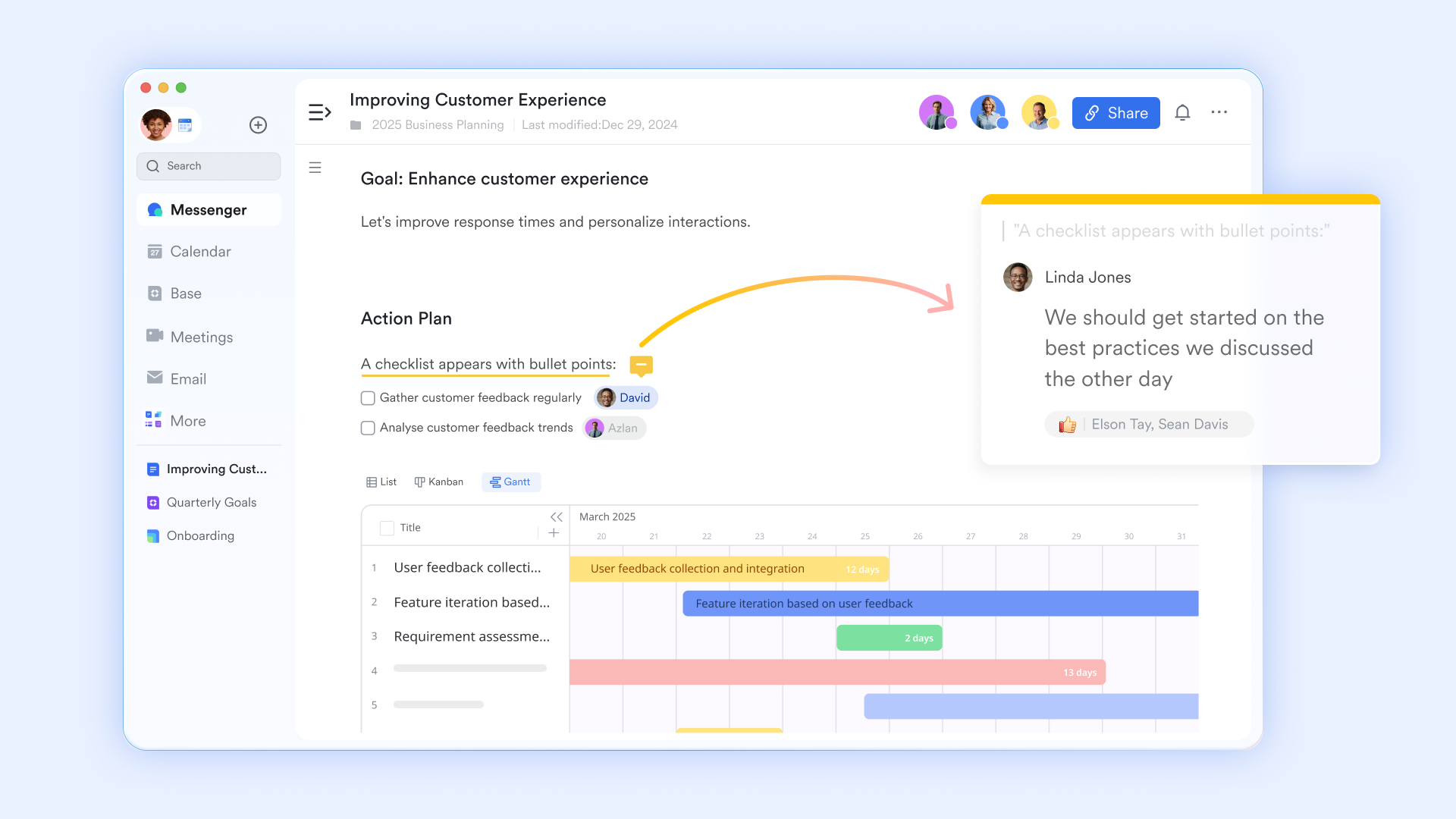
Action-ready charter narratives and collaborative editing
turns a project charter into a straightforward, collaborative narrative. You can draft the charter text, then enrich it with synced blocks such as tasks with owners and due dates, embedded tables for scope and milestones, synced Base views, checklists for acceptance criteria, and diagrams for decision paths. and @mentions keep discussions tied to the exact section of the charter, eliminating version confusion.
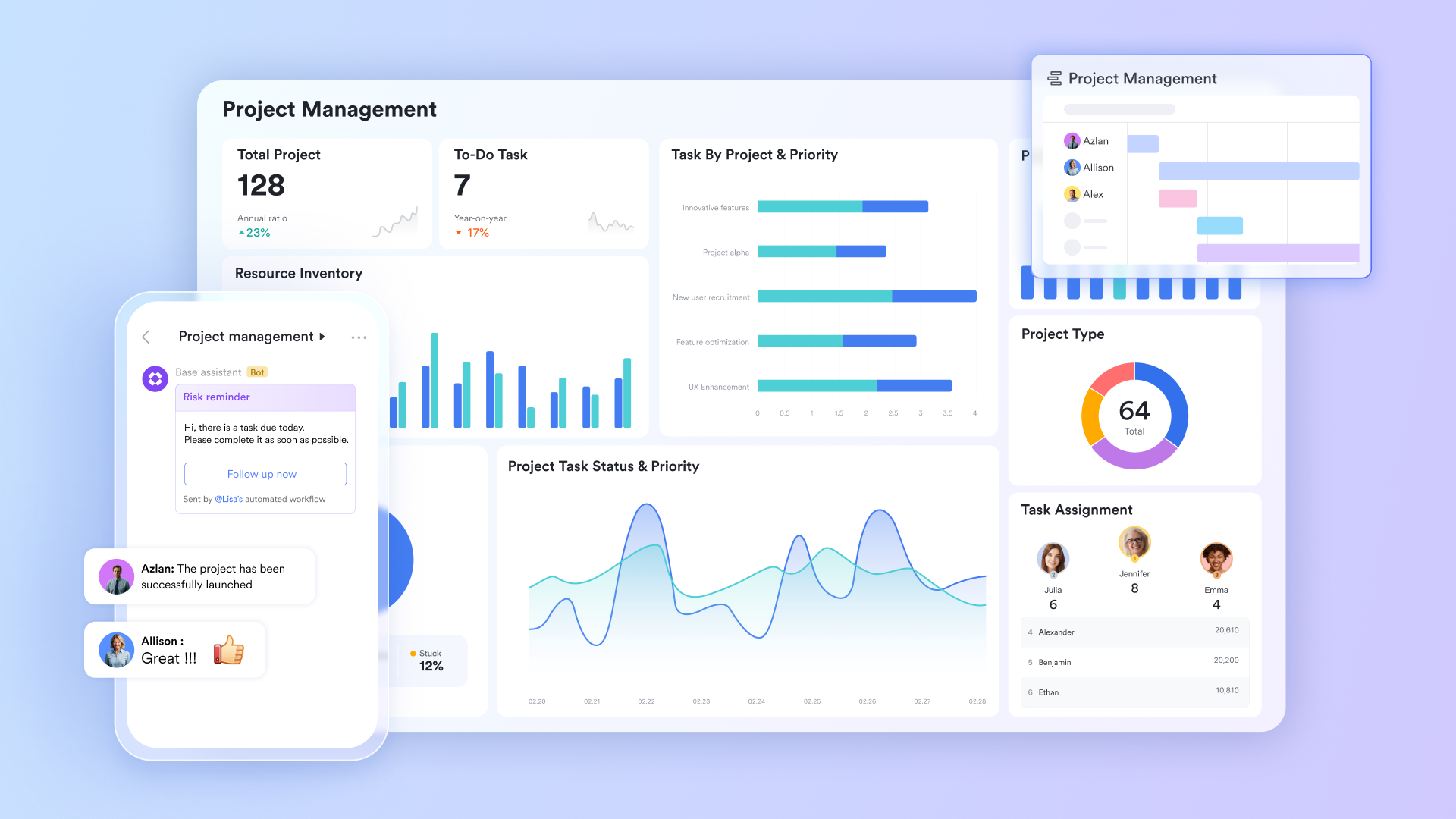
Turn static project charters into living project workflows
lets you transform any project charter template into an operational system—without code. You can import your project charter template Excel into structured tables with objectives, scope, milestones, risks, and owners. Once imported, you can instantly pivot this data into , such as Gantt charts for timeline tracking and Kanban boards for task management, ensuring that every milestone remains visible. With advanced permissions, you can ensure that strategic project details are shared only with relevant stakeholders, maintaining granular data security.
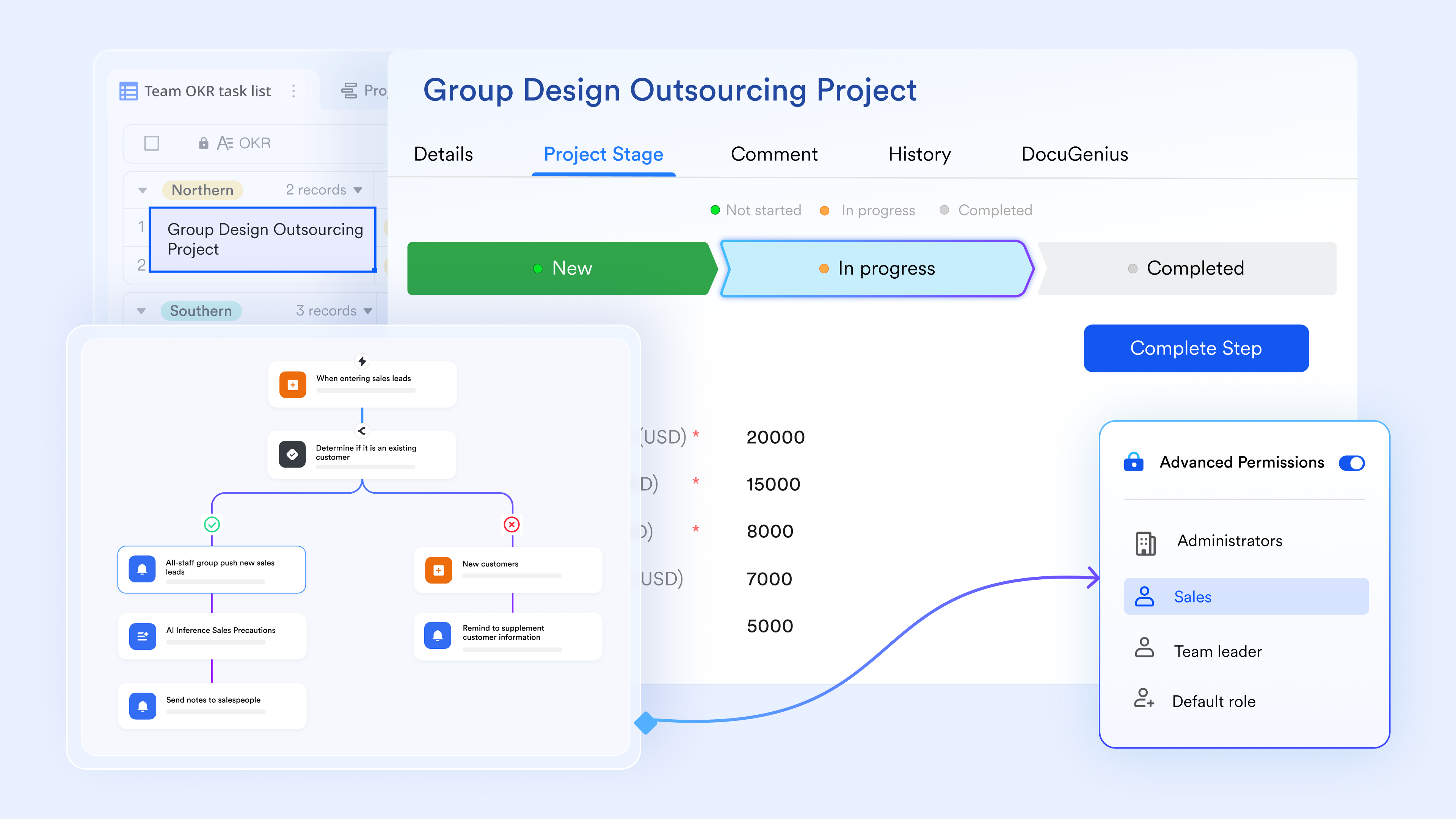
No-code automated workflows that keep charters moving
With , you can build logic in just a few clicks. Trigger actions such as assigning owners, updating status fields, posting Messenger cards, routing approvals, sending reminders, or generating new tasks. This makes every project charter template actionable from day one, without scripts or technical setup, and ensures scope, timeline, and budget changes are always tracked.
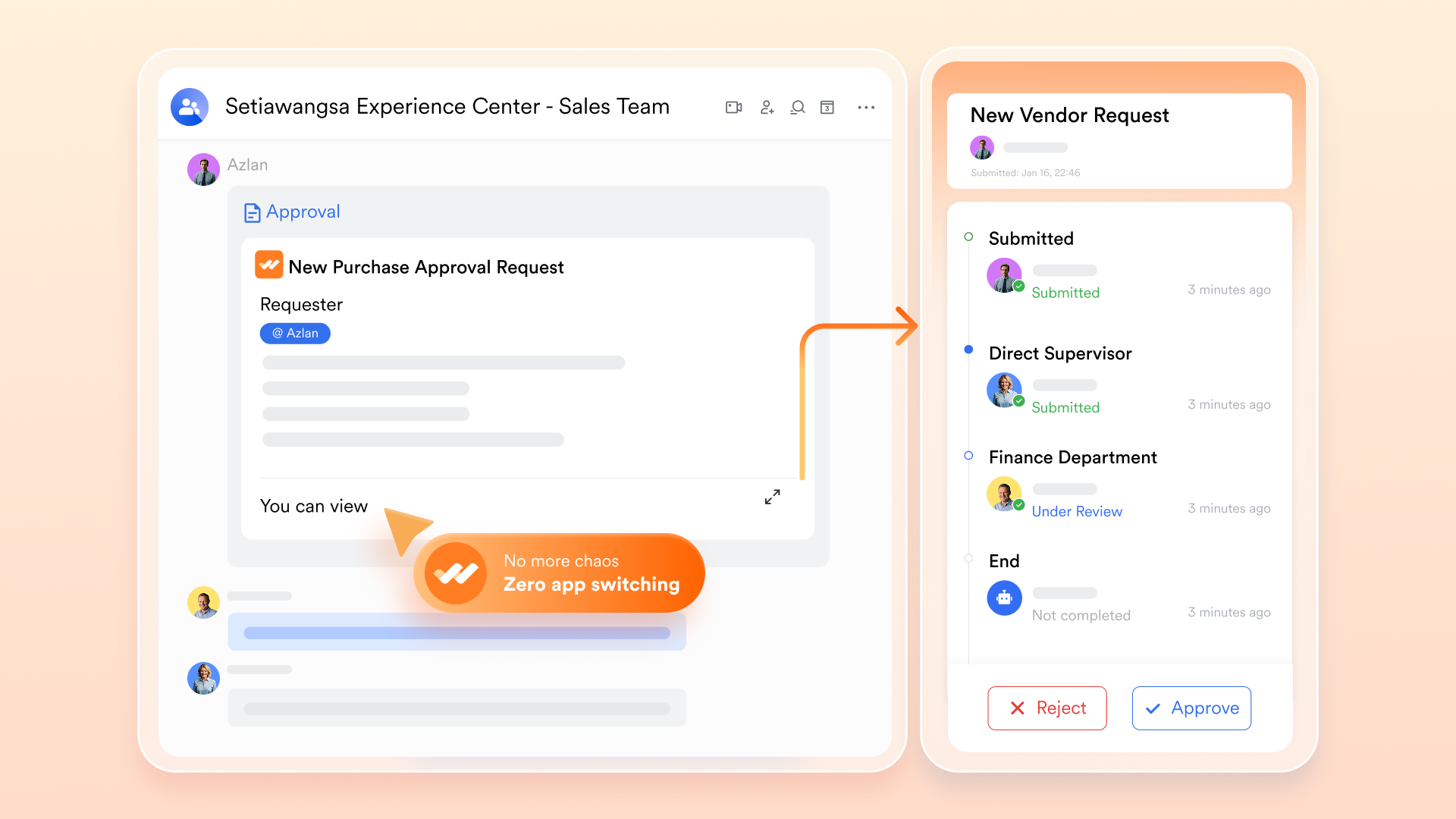
Fast, auditable approvals with built-in accountability
connects charter decisions directly to the related Doc and Base record, making approvals fast, traceable, and transparent. You can route approvals for scope changes, budget updates, or milestone sign-off, set reminders and escalations, and capture outcomes automatically. By centralizing these workflows, every decision remains documented and easy to audit—whether you launched your project using a free project charter template or built a custom workflow from scratch.
:
- Starter plan: Free forever plan that includes 11 powerful tools for up to 20 users. IT also comes with 100GB of storage, 1000 automation runs, AI translations, and more.
- Pro plan: $12/user/month (billed annually) for up to 500 users. IT includes everything in Starter plus group calling for up to 500 attendees, 15TB of storage, 50,000 automation runs, and more.
- Enterprise plan: for custom pricing. Supports unlimited users and includes even more automation runs and advanced security, compliance, and management features.
For small teams with simple communication needs

18 months message history
1000 Base automation runs/month
2000 rows per table in Base
Most POPULAR
For companies with comprehensive collaboration and management needs
Unlimited message history
500-participant video meetings
50k Base automation runs/month
20k rows per table in Base
For large companies with advanced security and organizational management needs
Get a personalized demo and pricing
Unlimited message history
500-participant video meetings
15 TB storage + 30 GB storage/user
500k Base automation runs/month
50k Base automation runs/month
Most POPULAR
For companies with comprehensive collaboration and management needs
Unlimited message history
500-participant video meetings
50k Base automation runs/month
20k rows per table in Base
Ready-to-use project charter templates
Starting a project charter from scratch can be time-consuming and inconsistent across teams. Ready-to-use templates provide a structured foundation while allowing flexibility for different project types. With predefined sections for objectives, scope, stakeholders, and milestones, templates help teams maintain clarity and consistency. They also make it easier to adapt charts for software rollouts, marketing initiatives, or without reinventing the format each time.
Software rollout plan
A software rollout plan template helps , scope, timelines, and responsibilities before deployment begins. It ensures technical, operational, and stakeholder considerations are aligned early. This structure reduces implementation risks and supports smoother adoption across users and systems.
Project charter
A project charter template provides a clear, for formally authorizing a project. It helps define purpose, objectives, scope, stakeholders, and success criteria in one place. Using a consistent charter format ensures alignment and accountability before execution begins.
Roadmap
A roadmap template gives a high-level , milestones, and timelines. It helps stakeholders understand priorities, dependencies, and progress at a glance. Roadmaps support alignment by showing how strategic goals translate into planned delivery over time.
Content marketing management
A management template helps teams plan, track, and coordinate content activities across channels. It organizes goals, calendars, owners, and performance metrics in one view. This structure improves consistency, visibility, and execution across campaigns.
When a project charter needs to be revised
A project charter should not remain static when significant changes occur. Revising it at the right time helps maintain alignment, authority, and clarity .
- Primary scope or strategy changes: When objectives or deliverables shift significantly, the charter must be updated to reflect the new direction. Reviewing project charter examples can help teams realign scope and expectations correctly.
- Sponsor or leadership changes: A change in sponsor or leadership alters decision authority and accountability. Revisiting the project charter definition ensures roles and governance remain clear and formally documented.
- Budget or timeline resets: Significant cost increases or deadline changes require charter updates to reset expectations. A sample project charter can guide teams in clearly documenting revised constraints.
- How to handle re-approval cleanly: Re-approval should follow the original approval path, with of what changed and why. This preserves governance while minimizing disruption to execution.
Conclusion
A project charter sets the direction, authority, and boundaries that every successful project depends on. By clearly defining purpose, objectives, scope, stakeholders, and constraints, it reduces uncertainty and creates alignment before execution begins. When treated as a living reference rather than a one-time document, the charter supports better decision-making, stronger governance, and . Revisiting and updating it as projects evolve ensures teams stay aligned with changing priorities, leadership, and constraints.
To manage project charters effectively, teams benefit from that connect documentation, collaboration, and execution in one place. enables teams to create, review, approve, and update project charters with shared visibility and accountability, helping them stay aligned from initiation through delivery. Whether you're launching a new initiative or refining an existing one, Lark provides a structured yet flexible environment to keep your project charters clear, current, and actionable.
Make an effective project charter with Lark
FAQs
What is in a project charter?
A project charter serves as the formal "birth certificate" of a project, providing the high-level authorization required to begin work and commit resources. It contains the business case or justification, clearly stating why the project is necessary and what strategic problem it intends to solve. Additionally, it outlines the overarching goals, high-level requirements, and the specific authority levels granted to the project manager to lead the initiative.
What are the 5 elements of a project charter?
An effective project charter typically focuses on five core pillars: Results, which define the measurable success criteria and KPIs; Roles, which identify the project manager and key sponsors; Responsibilities, outlining who is accountable for major deliverables; Relationships, describing how stakeholders will interact and communicate; and Rules, which establish the ground rules for decision-making and change management. By centering on these elements, the charter ensures that everyone is aligned on the "who, what, and why" before any technical planning begins.
What is a project charter vs. a project plan?
The project charter and project plan differ primarily in their timing, detail, and purpose: the charter is a static, high-level document created during initiation to gain executive "buy-in" and formal approval. In contrast, the project plan is a dynamic, living document developed after the charter is signed, providing a granular, step-by-step roadmap for execution. While the charter defines the project's boundaries and goals, the project plan dives deep into specific task lists, resource leveling, and detailed schedules.
Can a project charter be created after a project has already started?
Yes, a charter can still be created to bring structure and clarity to an ongoing project. It helps formalize objectives, roles, and decision authority going forward. Teams often use Lark to document and align this late-stage charter efficiently.
How detailed should a project charter be for agile projects?
For agile teams, the charter should stay lightweight and flexible. It focuses on vision, outcomes, constraints, and roles rather than detailed plans. An example of a for agile work can be collaboratively maintained in Lark as priorities evolve.
Related reading