Are you struggling to keep up with the relentless demands of content creation? Does it feel like you're constantly chasing deadlines, juggling multiple projects, and struggling to maintain brand voice consistency? If so, you're not alone. Many content marketers face these challenges daily. That's where a well-defined content marketing workflow comes in.
A robust content marketing workflow is no longer a luxury – it's a necessity. It's the backbone of any successful content marketing strategy, providing structure, clarity, and accountability to the entire content process, ensuring that your content plan is executed effectively. In this guide, I'll walk you through the key elements of a successful content marketing workflow and show you how to optimize it for maximum efficiency, enabling you to consistently create high quality content that resonates with your target audience and drives business results like lead generation.
What are the essential steps in a content marketing workflow?
A content marketing workflow is more than just a series of tasks; it's a carefully orchestrated process designed to move content seamlessly from ideation to publishing content and beyond. Understanding each stage is crucial for that optimizes efficiency and delivers exceptional results. Your content team needs a clear understanding of the process. Let's break down the essential steps in the content creation workflow:
- Idea generation: This is where the magic begins. It involves for potential blog post topics, conducting thorough keyword research to understand what your audience is searching for, and identifying emerging trends and content formats and content types opportunities. Consider tapping into your customer support team's knowledge of common questions and pain points to fuel your future content. The goal is to find new content ideas that resonate.
- Planning & Strategy phase: With a bank of ideas in hand, it's time to develop a strategic plan as part of your overarching content strategy. Define your target audience with clarity, outlining their demographics, interests, and online behavior. Set clear, measurable goals for your content, such as increasing brand awareness, driving website traffic, or generating . Develop an editorial calendar that maps out your planned content formats, and publishing schedule. A well-defined content plan helps ensure consistency and focus.
- Creation & Production process: The heart of the , this stage involves transforming your ideas into tangible content assets. This includes content writing for blog posts, articles, website content, and social media posts, as well as such as images, infographics, and videos. For video content, an can help speed up video creation while maintaining consistency across your content. In fact, invideo Agent lets you , giving your footage a sharper, more polished finish before publishing. can significantly streamline your workflow. When a topic needs to become a slide deck, an can turn an outline or source document into a structured, on-brand presentation, so decks join the list of assets your team can produce without starting from a blank slide. Make sure to use your creative brief. Ensure you have a style guide and content briefs readily available to maintain consistency in your brand voice. Remember to optimize for search engine optimization to ensure visibility.
- Review & Editing: Before anything goes live, a rigorous review and editing process is essential to ensure content quality. A handles the first pass on grammar, spelling, and clarity, leaving the editor free to focus on accuracy and brand voice. An can provide an additional review of AI-assisted content before the final version is approved, helping content teams maintain quality and originality. If AI assists with drafting, run the final version through an to confirm originality before approval. Ensure the content aligns with your brand voice and messaging and adheres to search engine optimization best practices. The marketing team or a designated editor can perform this review. A fresh pair of eyes can often catch mistakes or suggest improvements. This stage helps in maintaining consistency.
- Publication & Promotion: With the polished and approved, it's time to share it with the world. Publish content on relevant channels, such as your blog, website content, social media platforms, and email marketing campaigns. Promote your content through targeted advertising, influencer outreach, and social media engagement using compelling social posts. Ensure that you include relevant meta data.
- Analysis & Measurement: The final step is to track key metrics and analyze content performance using tools like Google Analytics. Monitor website content traffic, social media engagement, lead generation, and conversion rates. Identify what's working well and what's not, and use these insights to inform your future content strategy. This allows you to make data driven decisions.
Each stage is vital, and contributes significantly to the overall success of the workflow, and the entire content marketing plan.
Improve your content strategy with data insights
Why do you need a content marketing workflow?
Having a marketing content operation workflow is essential for businesses seeking to maximize their marketing efforts and engage effectively with their audience. Here are several compelling reasons why adopting a structured content marketing workflow is crucial:
- Enhanced efficiency: A well-defined content streamlines the entire process of content creation, from initial brainstorming to final publication. By clearly outlining each step and the responsibilities assigned to team members, you can eliminate confusion and reduce the time spent on managing tasks, allowing your team to focus on creating compelling content.
- Improved quality control: By implementing a step-by-step workflow that includes thorough review and editing stages, you can ensure that every piece of content meets quality standards before it goes live. This rigorous process helps maintain brand voice, consistency, and accuracy, resulting in higher-quality content that resonates with your audience and enhances your brand reputation.
- Better collaboration: A content marketing workflow fosters among team members by clearly defining roles and responsibilities. When everyone knows their tasks and deadlines, it encourages teamwork and communication, which is essential for producing cohesive content that aligns with overall marketing objectives.
- Increased agility: In a dynamic market, the ability to respond quickly to trends and changes is vital. A content marketing workflow allows your team to adapt and pivot strategies easily, ensuring that your content remains relevant and timely. With a flexible workflow, you can quickly incorporate new ideas or feedback into the content production process.
- Data-driven decisions: Having a workflow that integrates analytics and enables content teams to make informed decisions. By analyzing key metrics like engagement, conversion rates, and audience feedback, you can refine your content strategy continuously, ensuring that your efforts are aligned with the needs and preferences of your target audience.
- Consistent brand messaging: Maintaining a consistent voice and messaging across all content is crucial for brand recognition. A content workflow helps ensure that all team members adhere to established guidelines and standards, resulting in a cohesive representation of your brand across various platforms and formats.
- Streamlined approval processes: Managing content approvals can often be a bottleneck in the workflow. By incorporating an organized approval process into your content marketing workflow, you can reduce delays and frustration. This allows for swift feedback and quick publication, enabling your team to stay on schedule and capitalize on time-sensitive opportunities.
Elevate your brand voice through consistency
How to streamline content marketing workflow
Now that we understand the core components and the benefits, let's explore how to build a workflow that works for your team.
Building a marketing content workflow isn't about following a rigid content marketing workflow template; it's about creating a customized system that aligns with your specific goals, resources, and content marketing team dynamics. Here's a step-by-step guide to help you create a workflow that empowers your content teams to produce exceptional content, consistently:
Step 1 : Define your goals and target audience
Start by clarifying what you want to achieve with your content marketing efforts as part of your . Are you aiming to increase brand awareness, generate lead generation, drive website content traffic, or improve customer engagement? Specific, measurable, achievable, relevant, and time-bound (SMART) goals will provide direction and focus for your workflow. Consider how each piece of written content will contribute.
Develop detailed buyer personas that represent your ideal customers, outlining their demographics, interests, pain points, and online behavior. Understanding audience preferences will help you tailor content that resonates with their needs and preferences. Make sure everyone on the content marketing team understands the audience segments.
Step 2 : Design an editorial calendar and assign roles
A content calendar provides a roadmap for your content production, ensuring a steady stream of relevant and engaging content. Plan your content topics, content formats (blog posts, videos, infographics, etc.), and publishing schedule in advance. Consider using a spreadsheet, project management tools, or dedicated content calendar software. This helps in maintaining consistency.
Clearly define who is responsible for each stage of the workflow. This includes content writers, editors, designers, specialists, social media managers, and content manager. Ensure everyone understands their roles and responsibilities and has the necessary skills and resources to perform their tasks effectively as content marketing team members.
Step 3 : Choose your project management tools and technologies
Select the project management tools and technologies that will support your workflow and streamline your content creation process. This might include content management systems (CMS), project management tools, collaboration tools (Google Docs), search engine optimization analysis tools, and social media management platforms, and content creation tools like those that convert . Different marketing teams have different needs, so choose wisely. Consider cloud-based different tools. All-in-one content marketing workflow platforms like can be helpful if you’re building a custom workflow for the first time, especially for those startups.
For more Google Workspace's information, you can refer to and .
Step 4 : Document your workflow and optimize it
Create a clear and concise document outlining each step of the process, including roles, responsibilities, timelines, and guidelines. This document will serve as a reference point for your team and ensure everyone is on the same page. As part of the quality-control guidelines, teams can also include an to review AI-assisted content before publication. Make sure it's easily accessible and regularly updated. This can be especially helpful for defining status based workflows and task based workflows.
Put your workflow into practice and . Monitor key metrics such as content production time, content quality, and content engagement. Identify any bottlenecks or inefficiencies in the process and make adjustments as needed.
Continuously analyze your results and make data driven decisions adjustments to your workflow. Use analytics tools to track content performance, identify areas for improvement, and optimize your content strategy accordingly. Regularly review your workflow and adapt it to changing market conditions and audience preferences. Review google analytics.
Track content performance metrics effortlessly
Supercharge your content strategy: How Lark transforms your workflow
Lark is more than just a collaboration platform; it's a comprehensive suite of tools designed to streamline every aspect of your content marketing workflow. From ideation and planning to content distribution, Lark empowers your content marketing team to team work smarter, faster, and more effectively. This includes improving the content production process. Let's explore how can optimize each stage of your content marketing workflow:
Idea generation & Planning
Lark Messenger provides a dedicated space for and discussing content strategy. Create channels for specific projects or topics, allowing content marketing team members to share inspiration, research findings, and insights in real-time.

Use to gather feedback from customers, conduct surveys, and collect market research data, informing your content strategy with valuable insights. For example, you could create a form asking your sales team for the most common questions they receive from prospects and turn those into blog post topics.
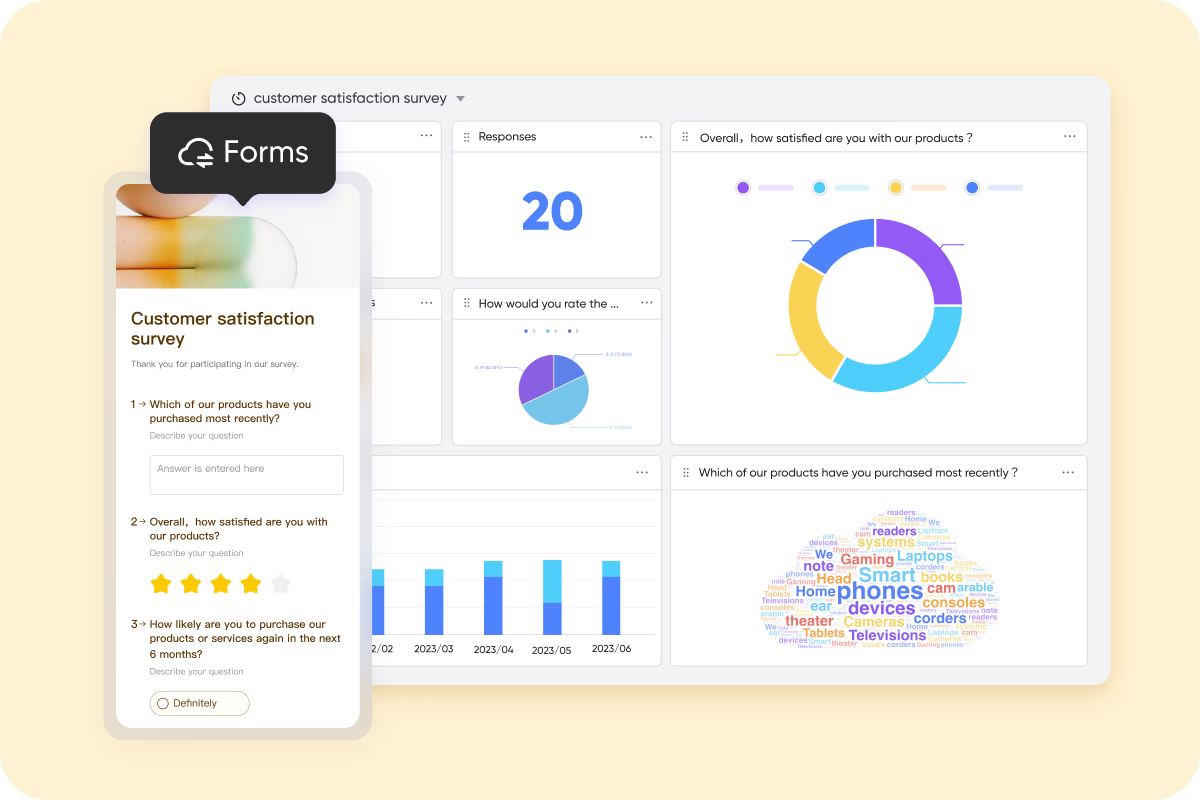
Content creation & Collaboration
truly shines when it comes to content creation and collaboration. Multiple team members can co-author documents simultaneously, making real-time edits and providing instant feedback. Version control ensures that all changes are tracked, and you can easily revert to previous versions if needed. Commenting features allow for , streamlining the review process and ensuring everyone is on the same page. Imagine a content team of writers, editors, and designers all working on a single blog post in real-time, with seamless communication and instant feedback. This is particularly useful in crafting compelling social media posts. 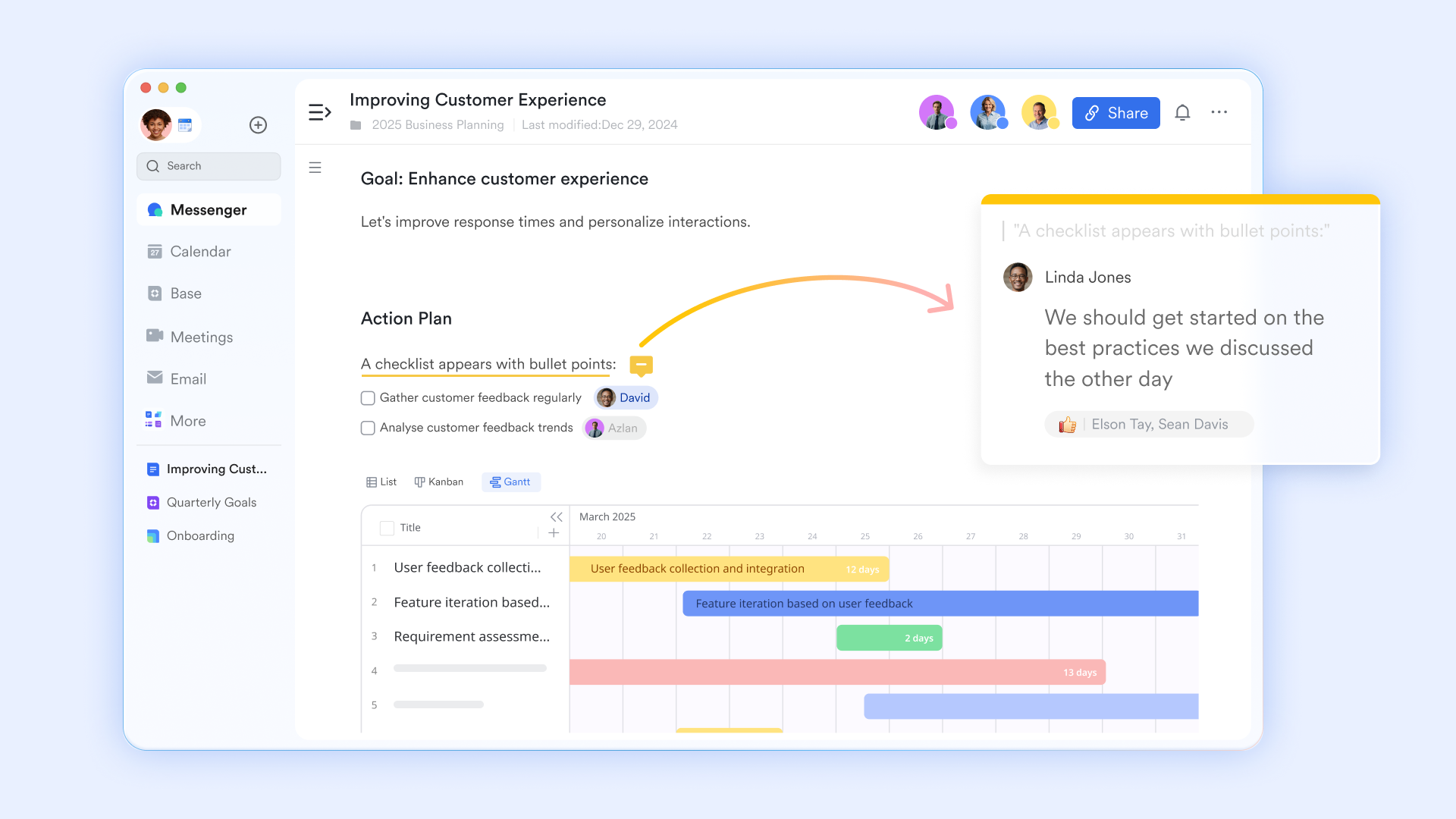
Task management & Workflow automation
provides a powerful platform for managing tasks, assigning ownership, and tracking progress. Combined with Lark Tasks, you can easily assign the tasks and track the process. Create custom status-based to automate repetitive tasks and streamline your content production process. Visualize your workflow with Kanban boards, Gantt charts, or calendars, providing a clear overview of project status and deadlines. For example, you could create a workflow that automatically assigns a task to the editor once a writer completes a draft, enabling efficient workflow automation.
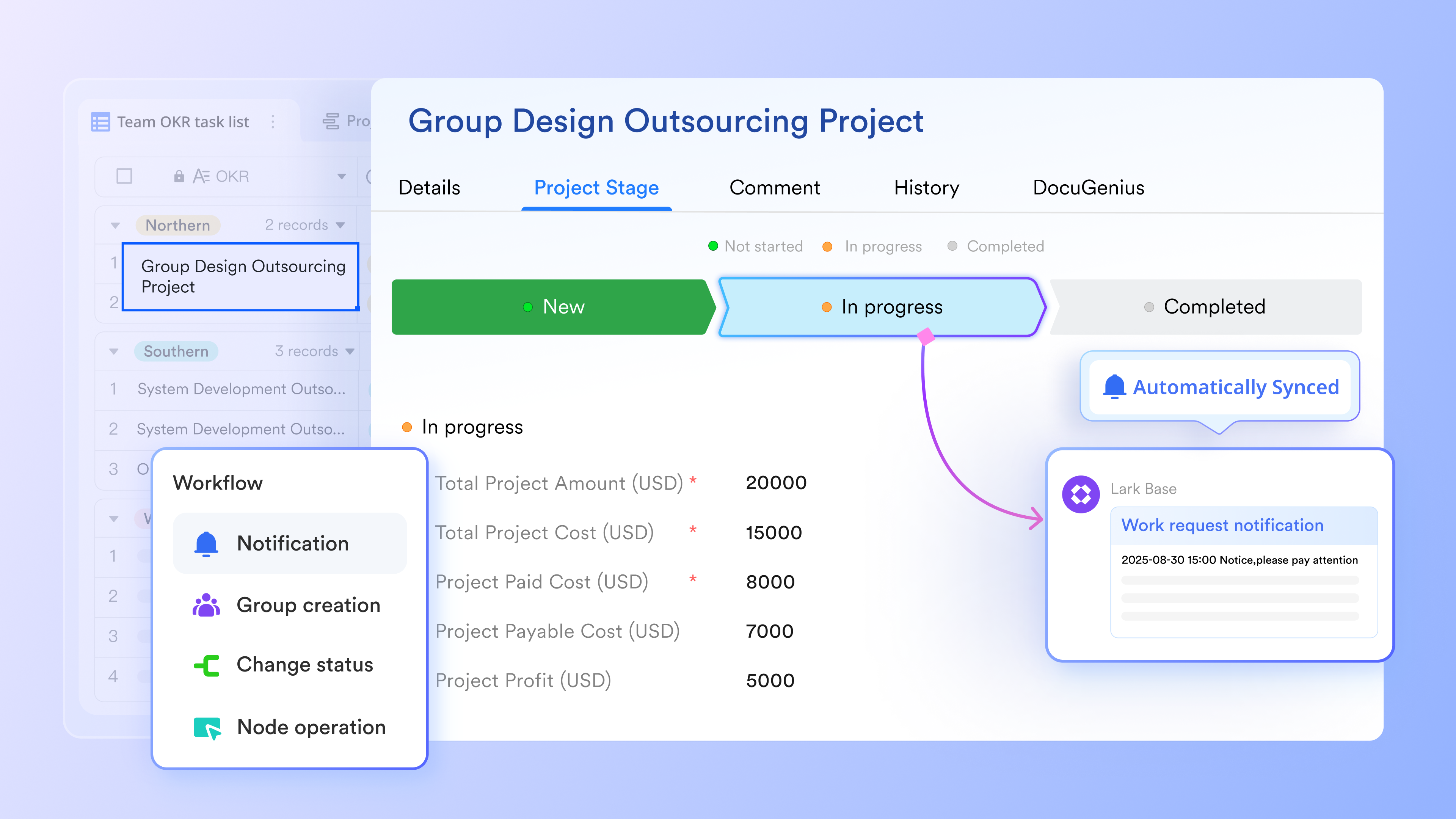
Review & Approval
Lark Base also automates the content review process, ensuring that all content meets content quality standards and brand voice guidelines before publication. Create custom workflows based on your team's specific needs and requirements. Route documents to the for review and approval with just a few clicks. Track the status of approvals in real-time and receive notifications when approvals are completed. This minimizes bottlenecks and ensures content is published on time. Besides, Lark offers powerful , which keeps all the decisions in one workplace and provides a clear audit trail of comments.

Knowledge management
serves as a central repository for all your content guidelines, brand voice standards, and search engine optimization best practices. Create that empowers your team to create consistent, high quality content. Organize your Wiki with categories, tags, and search functionality, making it easy for content marketing team members to find the information they need.
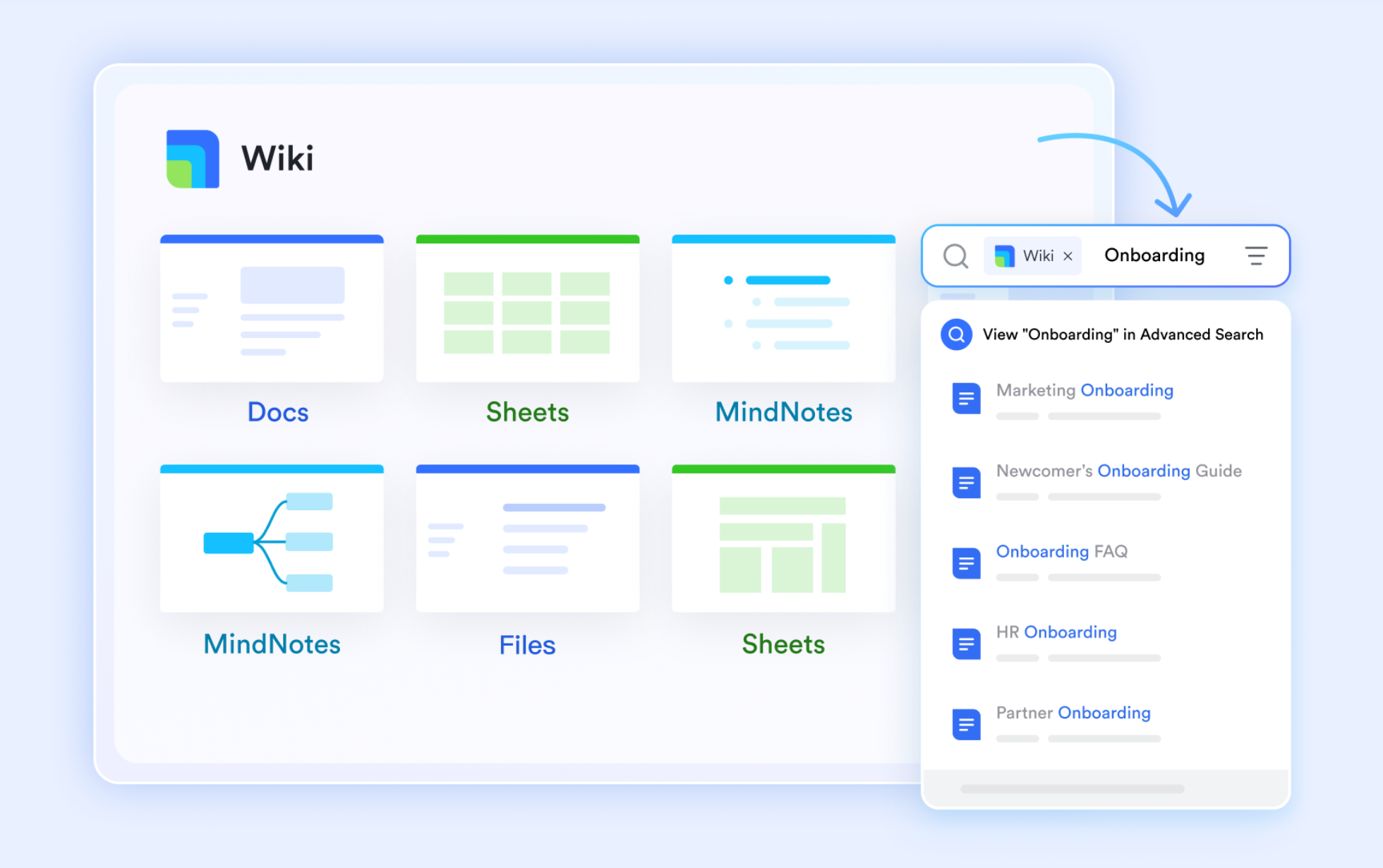
Brainstorming for content marketing
And, don't forget features like and for enhanced productivity. These can automatically summarize brainstorming ideas sessions or content planning meetings, saving time and ensuring everyone remembers key decisions. Consider utilizing ai tools to optimize certain aspects of your content project.
🌟 Learn more about :
As an all-in-one solution, Lark includes all these features below in every plan:

- Free plan: Includes 11 powerful products, supporting up to 20 users, 100 GB storage, 1,000 automation runs and unlimited AI translation in chats, docs and email.
- Pro plan: $12/user/month, supporting up to 500 users. Includes unlimited message history, 50,000 automated Base workflow executions per month.
For small teams with simple communication needs

18 months message history
1000 Base automation runs/month
2000 rows per table in Base
Most POPULAR
For companies with comprehensive collaboration and management needs
Unlimited message history
500-participant video meetings
50k Base automation runs/month
20k rows per table in Base
For large companies with advanced security and organizational management needs
Get a personalized demo and pricing
Unlimited message history
500-participant video meetings
15 TB storage + 30 GB storage/user
500k Base automation runs/month
50k Base automation runs/month
Most POPULAR
For companies with comprehensive collaboration and management needs
Unlimited message history
500-participant video meetings
50k Base automation runs/month
20k rows per table in Base
Content creation roadblocks: Avoiding common workflow pitfalls
Even with a well defined workflow and the right tools, it's easy to fall into common traps that can derail your efforts. Recognizing these pitfalls and taking steps to avoid them is essential for maintaining a smooth and efficient content creation process. Let's explore some of the most common mistakes:
- Lack of clear goals and objectives: Without clearly defined goals, your content marketing efforts will lack direction and focus. Ensure you have specific, measurable, achievable, relevant, and time-bound () goals that align with your overall business objectives. Regularly review your goals and adjust your content strategy as needed.
- Poor communication and collaboration: Communication breakdowns can lead to misunderstandings, delays, and ultimately, lower content quality. Foster a culture of open communication and collaboration within your team. Use tools like to facilitate real-time communication and feedback, ensuring everyone remains on the same page. This requires all content marketing team members to be engaged.
- Inadequate planning and organization: Failing to plan and organize your content effectively can lead to chaos and missed deadlines. Develop a detailed content calendar, assign roles and responsibilities clearly, and use project management tools to track progress. Regularly review your plan and adjust it as needed to accommodate changing priorities.
- Failure to track and measure results: If you're not tracking your results, you won't know what's working and what's not. Use analytics tools to monitor key metrics such as website content traffic, social media engagement, , and conversion rates. Regularly analyze your data and use it to inform your content strategy, enabling you to make data driven decisions.
- Ignoring feedback and failing to adapt: Feedback is essential for continuous improvement. Encourage team members to provide input on each other's work and be open to making changes based on that feedback. Regularly review your content workflow and adapt it to changing market conditions, audience preferences, and business priorities. It's about ensuring team work smarter.
Conclusion
A well defined workflow is the cornerstone of any successful content marketing strategy. It provides structure, clarity, and accountability to the entire content process, enabling you to produce high quality content consistently and efficiently. By understanding the core components of a workflow, building a customized system that aligns with your specific goals, and avoiding common pitfalls, you can unlock a wealth of benefits for your team and your organization.
Remember, a streamlined content marketing workflow unlocks increased productivity, improved content quality, and better alignment with business goals. Remember too, the importance of using the right different tools and technologies to optimize the workflow, considering both human creativity and the potential of an AI tool. Platforms like can revolutionize your content project and make it easy to create engaging social media posts. Start streamlining your content marketing workflow today!
Create high-quality content with structured workflows
FAQs
What is the content workflow process?
The content workflow process is a structured system for managing content creation, from ideation to publication and analysis. Key stages include idea generation, planning, creation, review, publication, and measurement. A well-defined workflow ensures consistency, quality, and efficiency, enabling teams to produce engaging content that resonates with their target audience and achieves specific business goals. Utilizing project management tools is essential.
What are the 4 C's of content marketing?
The 4 C's of content marketing represent key principles for success. They are: Customer (understanding your audience), Content (creating valuable and relevant material), Context (delivering content at the right time and place), and Conversation (engaging with your audience and fostering interaction). Focusing on these elements helps build strong relationships and drive meaningful results. Ignore these, and you risk lower engagement.
What are the 7 steps of content creation?
The 7 steps of content creation involve: planning (defining goals and audience), researching (gathering information), outlining (structuring the content), writing (crafting the message), editing (polishing the text), designing (creating visuals), and publishing (sharing the content). Following these steps ensures a well-structured, engaging, and effective piece of content that resonates with the target audience and drives desired actions. Don't skip the editing phase!
What are the 5 C's of content creation?
The 5 C's of content creation are: Clear (easily understandable message), Concise (avoiding unnecessary words), Compelling (engaging and interesting), Credible (accurate and trustworthy), and Consistent (maintaining brand voice and style). These principles ensure content is effective, builds trust with the audience, and supports overall marketing goals. Apply these to all content efforts.
Related reading