Every project needs a champion who bridges the gap between high-level strategy and day-to-day execution. While project managers focus on delivery, project sponsors provide the direction, legitimacy, and business backing that make delivery possible. Without a clearly defined project sponsor, even well-planned initiatives struggle to maintain momentum and alignment.
As organizations take on larger, cross-functional initiatives, the role of the project sponsor becomes increasingly critical. This article explores the definition of a project sponsor, explains the role of the project sponsor in project management, clarifies their responsibilities, compares sponsors with project managers, and examines how sponsors can remain effective throughout the project lifecycle.
What is a project sponsor?
A project sponsor is a senior leader who provides strategic ownership and executive support for a project. The sponsor ensures that the initiative aligns with organizational goals and has the authority to secure resources, approve decisions, and resolve escalations. This definition of project sponsor places accountability at the business level rather than the execution level.
When teams define project sponsor responsibilities clearly, they reduce confusion about decision rights and accountability. The sponsor is not responsible for day-to-day but is ultimately accountable for whether the its intended business value. Understanding the project sponsor definition early helps set realistic expectations for everyone involved.
The project sponsor in project management explained
In project sponsorship in contexts, the sponsor acts as the bridge between leadership and delivery teams. They translate strategic objectives into clear priorities and ensure that the project remains justified from a business perspective. The role of a project sponsor becomes especially important when tradeoffs must be made.
A sponsor provides legitimacy to the project, enabling it to compete for attention and resources alongside other initiatives. When obstacles arise, the sponsor has the authority to remove barriers that a project manager cannot. This explains why the role of project sponsor is central to governance and .
The role of project sponsor vs common misconceptions
Many organizations misunderstand the role of a project sponsor, assuming it is symbolic or limited to approving budgets. In reality, the sponsor plays an active leadership role throughout the project lifecycle. Clarifying this misconception helps teams engage sponsors more effectively.
A common mistake is treating the sponsor as a passive stakeholder rather than an accountable owner. Another misconception is expecting the sponsor to details. Defining the responsibility of the project sponsor accurately prevents overreach while ensuring meaningful involvement.
Bring clarity to decision-making
Project sponsor responsibilities across the project lifecycle
Project sponsor responsibilities evolve as the , but they remain anchored in accountability and alignment. Each phase of the lifecycle requires specific actions from the sponsor to maintain momentum and clarity.
- Initiation and business case approval: During initiation, the sponsor validates the project's purpose and approves the business case. They ensure that the problem being solved is worth investment and aligns with organizational strategy. This early involvement helps prevent weak initiatives from consuming resources. The sponsor also champions the project with other leaders, building initial support. By clearly defining success criteria early, the sponsor sets the foundation for accountability throughout the project.
- Resource commitment and prioritization: A critical responsibility of the project sponsor is securing resources, including budget, people, and leadership attention. Sponsors help prioritize the project among competing initiatives, ensuring it is not starved of support. When priorities shift, the sponsor reassesses commitments. This ensures that execution teams are not forced to make tradeoffs without guidance.
- Decision-making and escalation support: Sponsors serve as escalation points when decisions exceed the authority of the project manager. They evaluate risks, resolve conflicts, and make timely calls that keep the project moving forward. By responding quickly to escalations, sponsors prevent delays and uncertainty. This responsibility of the project sponsor protects teams from decision paralysis and organizational friction.
- Benefits realization and closure: At closure, the sponsor ensures that promised benefits are realized and measured. They confirm that outcomes align with the original business case and that lessons are captured. This final responsibility reinforces accountability beyond delivery. A strong sponsor ensures the organization learns from the project and applies those insights to future initiatives.
Project sponsor vs project manager: Key differences
Understanding project sponsor vs project manager distinctions helps effectively. While the roles are complementary, they serve different purposes within project governance.
- Strategic ownership vs execution leadership: The project sponsor provides strategic ownership, focusing on why the project exists and what value it delivers. The project manager provides execution leadership, focusing on how work gets done. This separation ensures that strategy and delivery both receive appropriate attention. When these roles blur, accountability often suffers.
- Decision authority vs delivery accountability: The sponsor holds decision authority for major tradeoffs and escalations. The project manager holds accountability for delivering scope, schedule, and quality. This difference clarifies who decides and who executes. It reduces friction and speeds up resolution when challenges arise.
- How the two roles work best together: Effective collaboration depends on trust and clarity. Sponsors set direction and remove obstacles, while project managers provide transparency and execution insight. When communication flows regularly, the sponsor and project manager reinforce each other. This partnership is central to effective project sponsor roles.
Project sponsor roles in different types of projects
Project sponsor roles vary depending on the nature of the initiative. While core responsibilities remain consistent, emphasis shifts based on context.
- IT and digital transformation projects: In , sponsors focus on business alignment and change adoption. They ensure technology investments support real outcomes rather than technical novelty. Sponsors also help manage organizational resistance. Their authority is essential for driving adoption and securing cross-functional cooperation.
- Construction and operations initiatives: In operational projects, sponsors emphasize , compliance, and timeline discipline. They coordinate across vendors, regulators, and internal teams. Their role of project sponsor includes protecting the organization from cost overruns and safety risks through timely decisions.
- Product launches and change programs: For product and change initiatives, sponsors champion vision and communication. They align teams around customer impact and strategic differentiation. Their involvement ensures that execution remains focused on value delivery rather than internal convenience.
Start with a reliable tool: How Lark helps project sponsors stay effective
Project sponsors need visibility, clarity, and strategic alignment without being pulled into daily execution details. As projects grow more complex, relying on fragmented reports and disconnected makes it harder to fulfill the responsibility of a project sponsor effectively. Sponsors need a clear line of sight into progress, risks, and outcomes while maintaining focus on business value.
This is where supports sponsors by bringing execution data, documentation, and strategic goals into one connected workspace. By enabling real-time visibility, clear ownership, and faster escalation, Lark helps project sponsors stay informed, decisive, and aligned throughout the .
Clear ownership via field-level arrangement
Accountability is frequently lost in large teams, but Lark restores it through field-level arrangement in Base. In Base, fields are the table's columns, which capture a record's details and determine the type of data that can be added. It has various kinds. For example, every project risk, task, or milestone is tied to a specific person field that links directly to a person's digital profile. For a sponsor, this means total transparency. Or use flow fields to maintain high-level oversight by tracking a project's journey from proposal to rollout with visual status indicators. 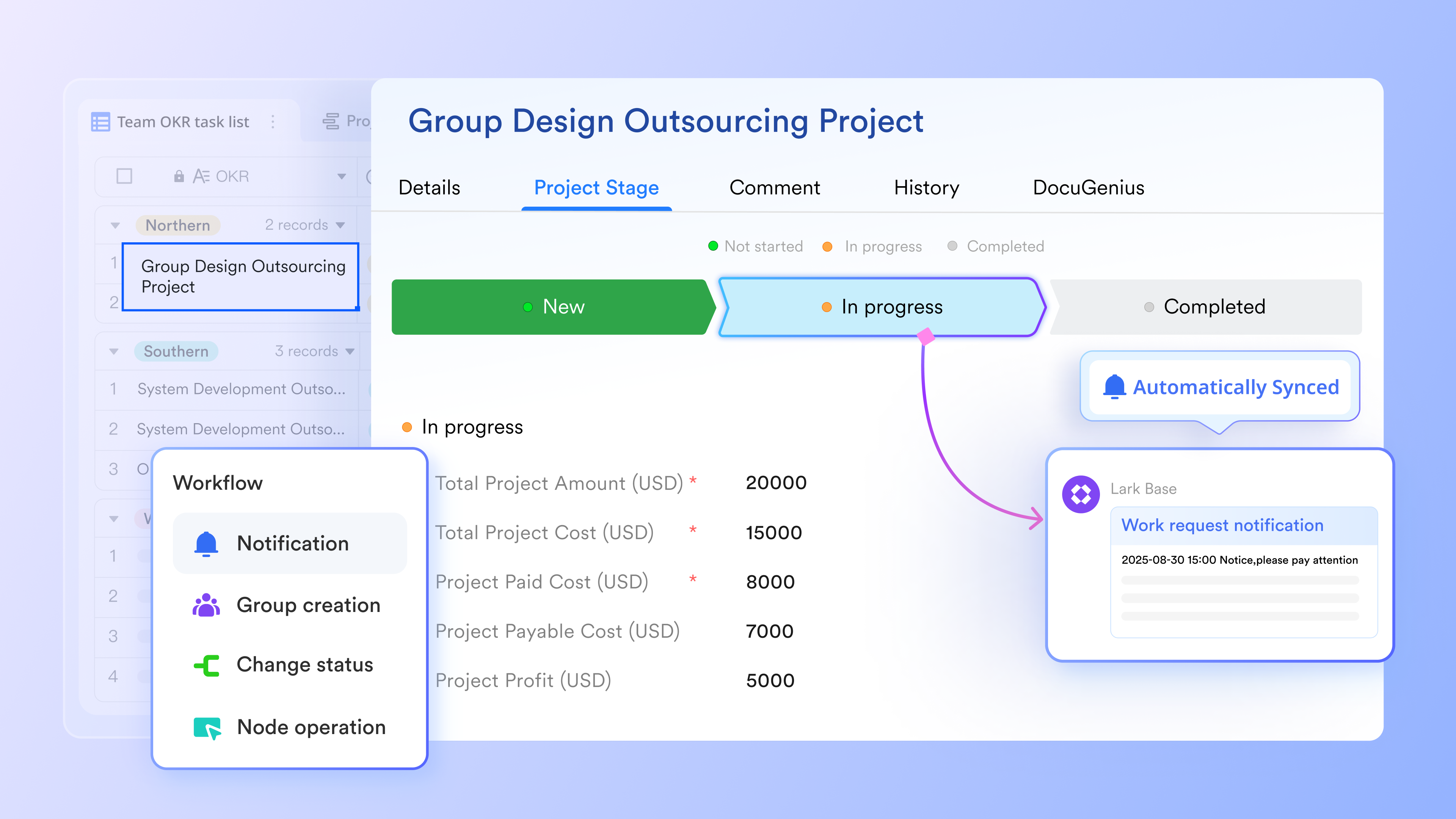
Real-time visibility with multi-block dashboards
Project sponsors often struggle with outdated status reports. provides its dashboards to solve this. It serves as a live visual command center, with 36 blocks displaying data from all project workstreams. Instead of asking for an update, a sponsor can view real-time charts showing budget burn, milestone completion percentages, and resource allocation. This function enables sponsors to identify project health at a glance, moving the focus of meetings from "what happened" to "how we move forward." By using dashboards in Base, you can transform raw data into actionable insights. You can also filter data in dashboards to focus on specific workstreams or share dashboards directly with stakeholders for maximum transparency. 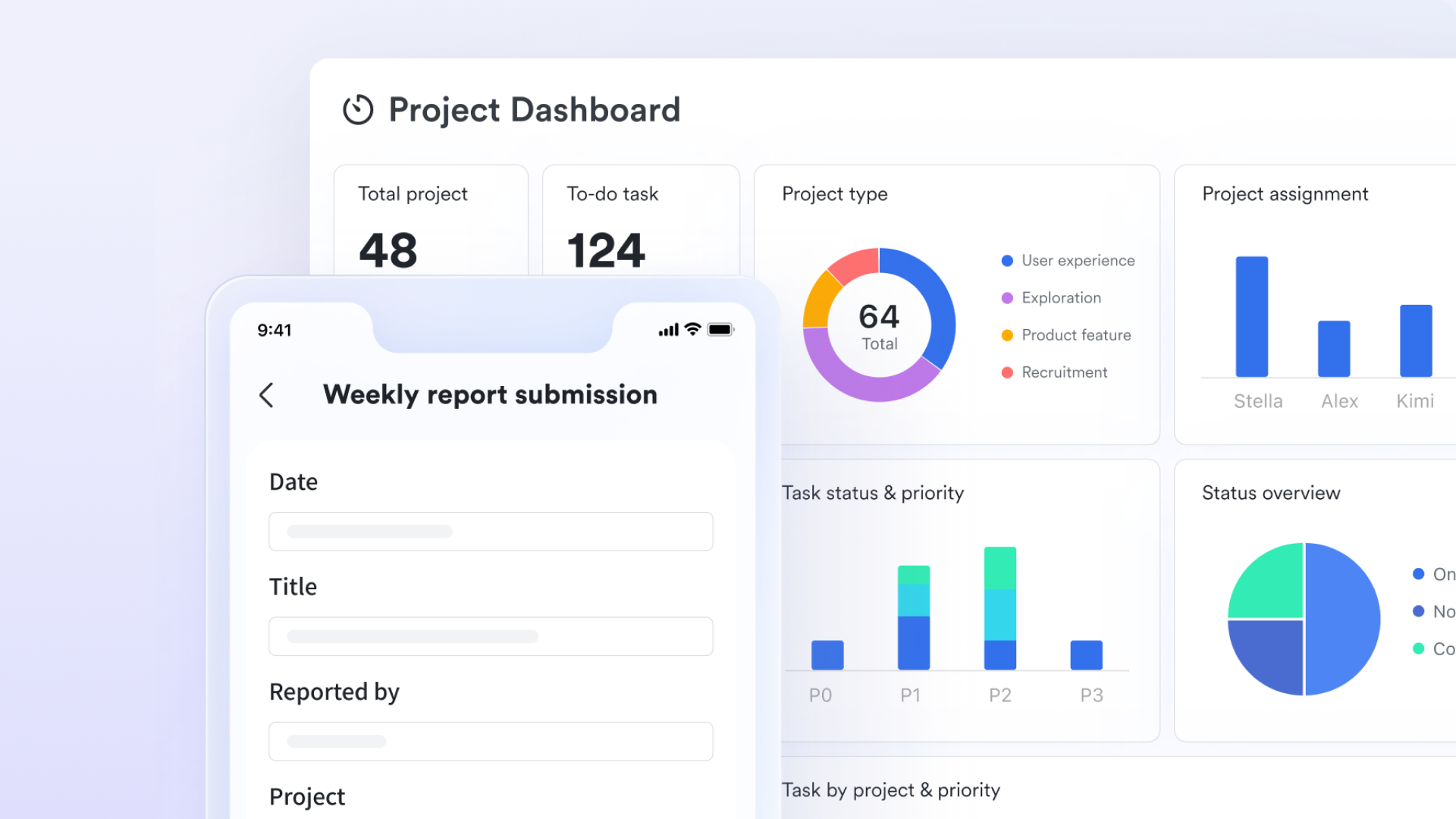
Structured documentation within one knowledge hub
To prevent "decision amnesia," Lark uses the as a permanent, searchable repository for all governance documents. Project charters, strategy shifts, and meeting outcomes are organized into a hierarchical structure that is easily accessible to the sponsor. This function ensures that the original project intent and every major approval are preserved in one place. By organizing content in a Wiki, you allow a sponsor to quickly review the "Single Source of Truth." Furthermore, you can manage permissions to ensure that sensitive governance documents are accessible only to authorized stakeholders, maintaining a secure and professional . 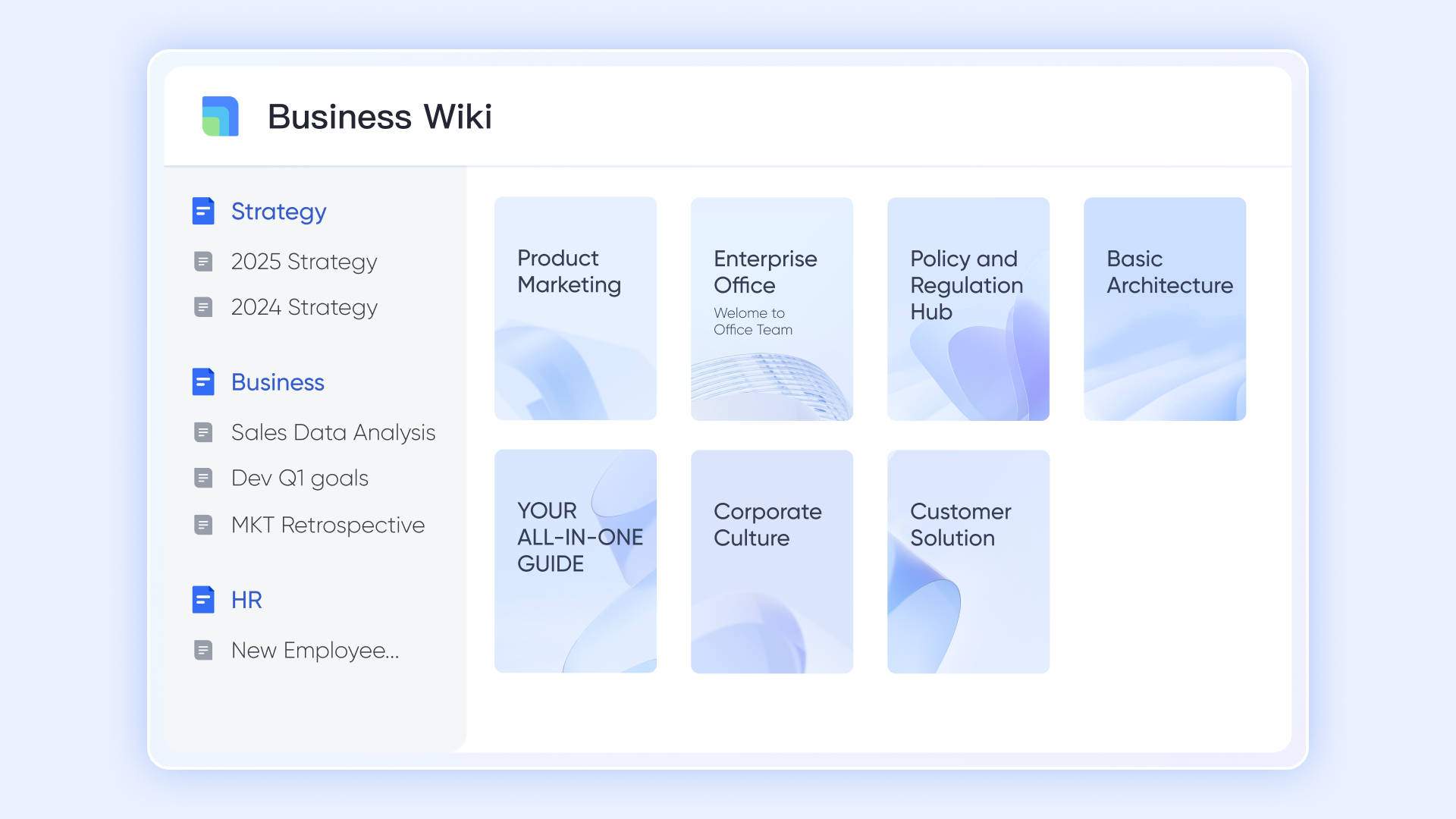
Faster escalation through the "Buzz" feature
Critical issues often fail to reach sponsors in time because they get buried in standard communication channels. provides a dedicated Buzz function that allows execution teams to send high-priority alerts directly to the sponsor's device. When a blocker is "Buzzed," it bypasses standard notifications to ensure the sponsor sees it immediately. This function links the alert directly to the relevant task or document, giving the sponsor the necessary context to make a rapid call. By using the Buzz feature, you ensure that never gets lost in noise, facilitating faster resolution of project bottlenecks. 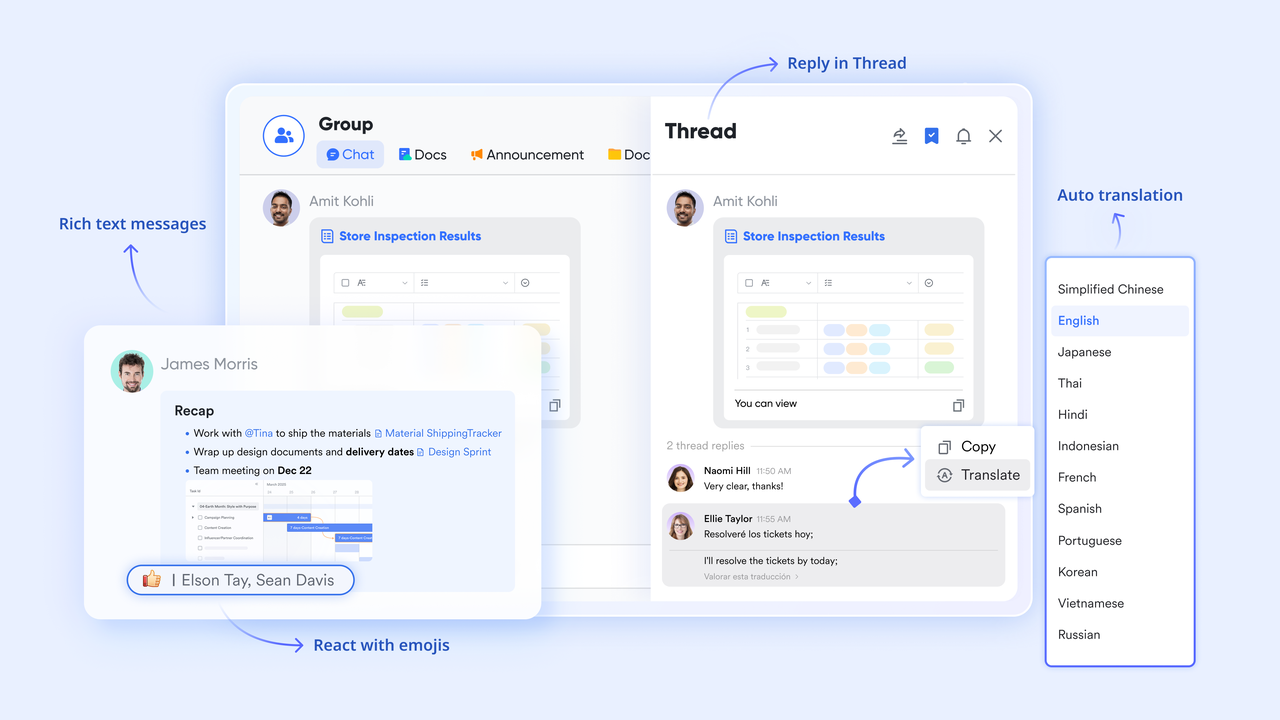
Strategic alignment with clear OKRs
Lark helps sponsors ensure that project work remains connected to organizational strategy through the tool. Sponsors can set high-level business objectives and link them directly to the project's key results. This function allows the sponsor to see how every minor milestone contributes to the company's bottom line. If a project starts to drift into "scope creep," the sponsor can use the OKR view to realign the team. By linking OKRs to tasks, you ensure that resources are only spent on work that drives a measurable strategic impact. 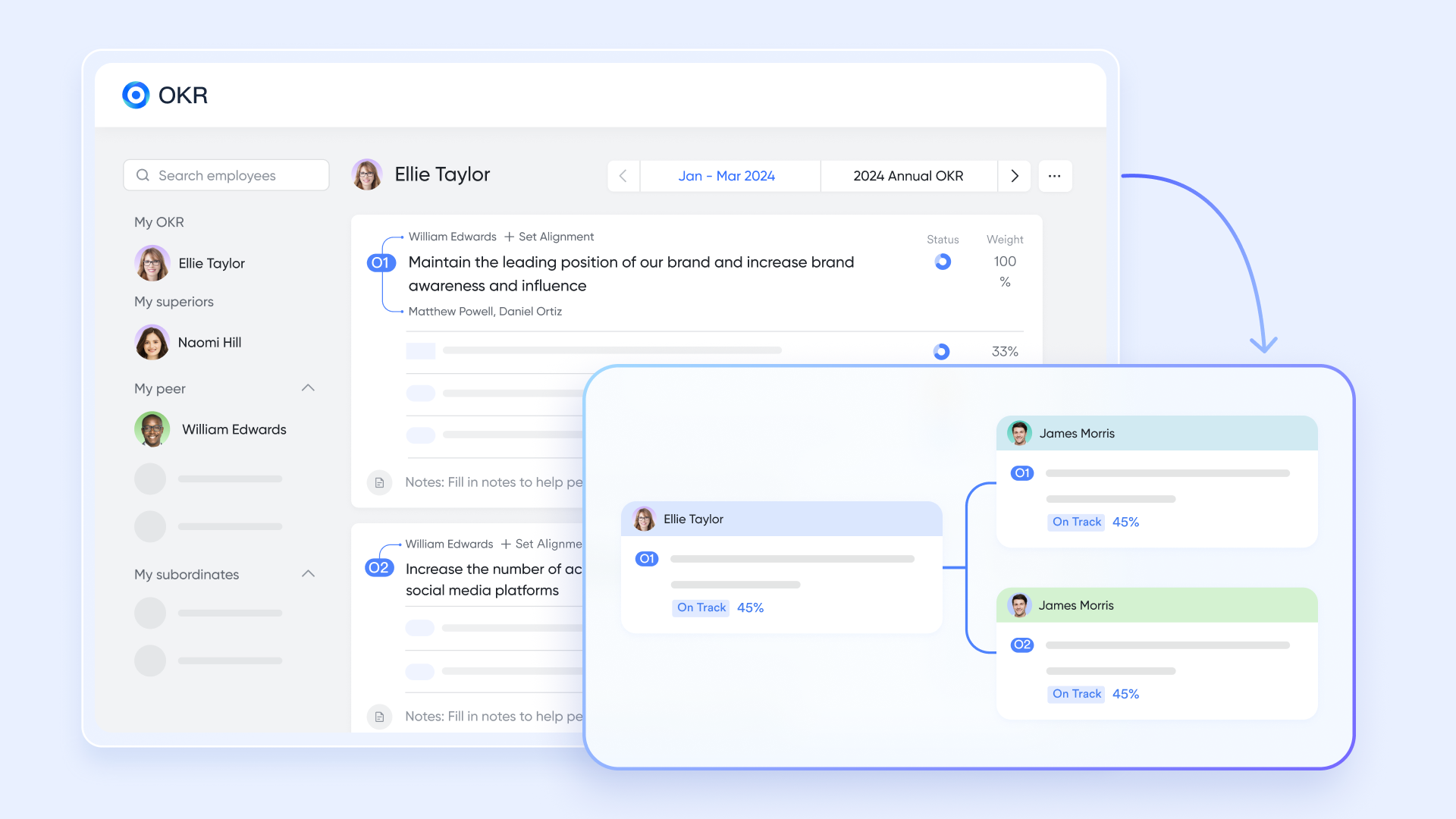
:
- Starter plan: Free forever plan that includes 11 powerful tools for up to 20 users. It also comes with 100GB of storage, 1000 automation runs, AI translations, and more.
- Pro plan: $12/user/month (billed annually) for up to 500 users. It includes everything in Starter plus group calling for up to 500 attendees, 15TB of storage, 50,000 automation runs, and more.
- Enterprise plan: for custom pricing. Supports unlimited users and includes even more automation runs and advanced security, compliance, and management features.
For small teams with simple communication needs

18 months message history
1000 Base automation runs/month
2000 rows per table in Base
Most POPULAR
For companies with comprehensive collaboration and management needs
Unlimited message history
500-participant video meetings
50k Base automation runs/month
20k rows per table in Base
For large companies with advanced security and organizational management needs
Get a personalized demo and pricing
Unlimited message history
500-participant video meetings
15 TB storage + 30 GB storage/user
500k Base automation runs/month
50k Base automation runs/month
Most POPULAR
For companies with comprehensive collaboration and management needs
Unlimited message history
500-participant video meetings
50k Base automation runs/month
20k rows per table in Base
Common challenges project sponsors face
Even experienced leaders can struggle in the project sponsor role when organizational complexity increases. As projects span multiple teams, timelines, and priorities, sponsors often face structural and challenges that limit their effectiveness. Understanding these challenges is essential to fulfilling the responsibility of project sponsor and ensuring projects remain aligned with strategic goals rather than drifting during execution.
- Lack of visibility into execution: One of the most common challenges for sponsors is limited insight into what is actually happening on the ground. When progress updates are delayed, filtered, or overly summarized, sponsors are forced to make decisions with incomplete information. This lack of transparency weakens the responsibility of the project sponsor, as effective oversight depends on timely awareness of risks, dependencies, and performance trends.
- Late involvement or disengagement: Project sponsors are sometimes involved only during approval stages or when major issues arise. This intermittent engagement reduces their ability to guide direction early and support teams proactively. When sponsors disengage after kickoff, the responsibility of the project sponsor shifts unfairly onto the project managers, increasing the risk of misalignment and delayed escalations.
- Unclear decision boundaries: When it is not clear which decisions belong to the sponsor versus the project manager, confusion and hesitation follow. Teams may delay action while waiting for approvals, or sponsors may unintentionally step into execution details. Clear decision boundaries are central to the responsibility of the project sponsor, enabling confident leadership without micromanagement.
- Misalignment with project managers: Effective projects depend on strong alignment between the sponsor and the project manager. When expectations, communication styles, or priorities differ, tension can emerge. This misalignment weakens the responsibility of the project sponsor by disrupting trust and slowing decision-making, ultimately affecting project momentum and outcomes. To bridge this gap, teams must move away from fragmented tools and adopt practices that prioritize transparency.
Achieve better oversight and track accountability easily
Best practices for being an effective project sponsor
Being an effective project sponsor requires more than authority or seniority. It demands consistent engagement, clear judgment, and the ability to guide teams without slowing them down. When sponsors apply the right practices, they strengthen the responsibility of project sponsors and create an environment where teams can execute with confidence and alignment.
- Stay engaged without micromanaging: An effective sponsor remains visible and accessible throughout the while avoiding involvement in day-to-day execution. This balance allows teams to feel supported without feeling controlled. Staying engaged through regular check-ins and milestone reviews reinforces the responsibility of the project sponsor while preserving the project manager's authority over delivery.
- Focus on outcomes, not activities: Project sponsors add the most value when they concentrate on results rather than individual tasks. By focusing on outcomes, sponsors help teams make better tradeoffs and adapt execution methods when conditions change. This approach ensures the responsibility of the project sponsor remains centered on business value rather than operational detail.
- Support teams during uncertainty and change: Periods of uncertainty, change, or are when sponsors are most needed. An effective sponsor provides clarity, reassurance, and timely decisions when teams face ambiguity. By stepping in at the right moments, the responsibility of the project sponsor is fulfilled through leadership that stabilizes direction and maintains momentum.
- Reinforce accountability and learning: Strong sponsors promote accountability by ensuring commitments are honored and outcomes are reviewed honestly. They also encourage learning by supporting post-project reflection and improvement. Reinforcing accountability and learning strengthens the responsibility of the project sponsor and helps organizations perform better with each successive initiative.
Conclusion
The project sponsor plays a decisive role in transforming strategic intent into measurable outcomes. By providing ownership, authority, and alignment, sponsors ensure that projects deliver real business value rather than isolated outputs. When the role of project sponsor is clearly defined, teams operate with greater confidence, speed, and accountability.
As projects grow more complex, sponsors increasingly rely on connected workspaces to stay effective without becoming overloaded. Platforms like demonstrate how visibility, documentation, and strategic alignment can coexist. When sponsors are supported by the right tools, guides, and move from approval to impact with far greater consistency.
Improve alignment across complex initiatives
FAQs
How to get a sponsor for a project?
To secure a project sponsor, clearly articulate the business problem, expected benefits, and strategic alignment of the initiative. Senior leaders are more likely to sponsor projects that directly support organizational goals. A concise business case with visible outcomes helps build confidence. As projects scale, platforms like Lark can help present this context clearly by consolidating goals, scope, and impact in one place.
Can one sponsor oversee multiple projects effectively?
Yes, a sponsor can oversee multiple projects if priorities and decision boundaries are clearly defined. The main challenge is maintaining visibility without becoming overloaded. Centralized views of progress and risks make this possible. Tools such as Lark gradually support this by giving sponsors a single place to track multiple initiatives without constant manual updates.
What skills make a project sponsor successful?
Successful sponsors combine strategic thinking, sound judgment, and strong communication. They can balance authority with trust and guide teams without . Over time, having access to shared data and documented decisions becomes just as important as leadership skills. This is where collaborative platforms like Lark quietly reinforce sponsor effectiveness.
How should sponsors handle conflicting priorities?
Sponsors should resolve conflicts by assessing business impact, risk, and alignment with strategic objectives. decision-making helps teams understand tradeoffs and stay aligned. Having clear visibility into project data makes these decisions easier and faster. Solutions like Lark support this process by keeping priorities, progress, and dependencies visible in context.
When should a project sponsor step in or step back?
A sponsor should step in when risks escalate or decisions exceed the project manager's authority and step back during routine execution. Maintaining this balance protects team while ensuring strategic oversight. Shared visibility and real-time context make this judgment easier. Over time, tools like Lark help sponsors sense when engagement is needed without constant intervention.
Related reading