In project management, a robust project communications plan is essential for success. It serves as a roadmap for how information will flow between stakeholders, team members, and clients throughout the project lifecycle. Without an effective communications plan, teams can face numerous challenges, such as misunderstandings, missed deadlines, and a lack of collaboration. These issues can lead to project delays and cost overruns, which are detrimental to both the project's success and the organization's reputation. A well-structured communications plan not only facilitates smoother collaboration but also enhances transparency, fosters stakeholder engagement, and ultimately leads to successful project outcomes. Tools like Lark can support this process, providing real-time communication and document sharing to help teams stay aligned and informed.
What is a project communications plan?
A project communications plan is a formal document that outlines how information related to a project will be communicated throughout its lifecycle. Essentially, it defines the communication strategies that will be utilized to keep everyone involved, informed, and engaged. This plan is an integral part of the overall communications management plan in project management, serving as a blueprint for how various aspects of the project will be conveyed to stakeholders.
Purpose and significance in project management
The primary purpose of a project communications plan is to ensure that all stakeholders receive the right information at the right time. is not just about sharing updates; it involves ensuring that messages are clear, concise, and appropriate for the audience. This plan is significant because it helps to:
- Prevent misunderstandings: By clearly outlining who communicates what information and when, projects can avoid confusion and misinterpretation that can derail progress.
- : Effective communication fosters a collaborative environment where teams are encouraged to share ideas, feedback, and concerns, leading to innovative solutions.
- Keep stakeholders engaged: Regular updates and clear communication channels maintain stakeholder interest and investment in the project, which is crucial for gaining their support and input.
Components of a project communications plan
A comprehensive project communications plan typically includes several key components:
- Stakeholder analysis: Identifying all project stakeholders and understanding their communication needs.
- : Detailing how information will be shared (e.g., email, meetings, reports).
- Frequency: Establishing how often updates and communications will occur.
- Roles and responsibilities: Defining who will be responsible for communicating specific information to different stakeholders.
These components ensure that the project communications plan template serves its purpose effectively, providing clarity and direction throughout the project.
Importance of communication in project management
Communication is often described as the cornerstone of successful project delivery. Without effective communication, even the most meticulously planned projects can fail. Informal discussions, feedback loops, and formal updates are critical for keeping everyone on the same page, which ultimately affects project outcomes.
Successful projects and effective communication
Many studies illustrate that projects succeed because of effective communication strategies. When teams prioritize clear and continuous communication, they tend to have better alignment on goals and responsibilities. Successful projects often have mechanisms in place to facilitate ongoing discussions and encourage team feedback.
For example, regular check-ins can enhance team cohesion, allowing team members to voice potential concerns and share updates on their progress. Similarly, streamlined communication channels help ensure that critical information reaches the right people promptly, averting potential bottlenecks.
Effects of poor communication on project outcomes
Conversely, the lack of a well-defined communication strategy can lead to significant project challenges. Poor communication can result in:
- Increased confusion and mistakes: Team members may misinterpret their roles or deadlines when communication is unclear, leading to errors that can compromise project quality.
- Frustration among stakeholders: When stakeholders are not kept in the loop, they may become disengaged or frustrated, complicating relationships and straining collaborations.
- Delayed decision-making: Ineffective communication often results in slower responses to issues, as team members may not be fully informed about the status of tasks or concerns.
A communications plan project management framework tackles these challenges directly by providing structure and clarity to all communication efforts and ensuring that all stakeholders are informed and engaged.
See how a smart tool delivers this importance
Key components of a project communications plan
A successful project communications plan is built upon several essential components. Each of these components serves a specific purpose and contributes to the overall effectiveness of the plan.
Stakeholder identification and analysis
Identifying and is a crucial first step in developing an effective project communications plan. Understanding who your stakeholders are and what their communication preferences entail allows you to tailor your messaging accordingly.
- Importance of knowing your audience: Knowing your audience means you can create a communication strategy that resonates with them. This tailored approach allows you to address their specific needs and expectations, which is vital to maintaining their interest and support.
- Methods for identifying stakeholders: Stakeholders can typically be categorized into several groups, such as internal team members, project sponsors, clients, and other relevant parties. Engaging in a stakeholder analysis can help pinpoint not only who should be communicated with but also how they prefer to receive information. Methods for identifying stakeholders can include stakeholder mapping, interviews, and surveys.
Communication methods
relies on selecting the appropriate methods for delivering messages to different audiences. Different projects may benefit from various methods depending on their nature and the stakeholders involved.
Various communication methods: Common communication methods include:
- : Widely used for status updates, sharing documents, and formal communications.
- Meetings: Useful for in-depth discussions, brainstorming sessions, and decision-making processes.
- Reports: Ideal for providing comprehensive updates and insights on project progress.
Pros and cons of each method:
- Email: This method allows for easy distribution but may lead to information overload if not carefully managed.
- Meetings: While they encourage collaboration, they can be time-consuming and may lead to unproductive discussions without a clear agenda.
- : These can provide a thorough overview of project performance but may become outdated quickly if not regularly updated.
Each method has its strengths and weaknesses, and it's essential to choose the right mix to suit your project's communication needs.
Frequency of communication
Establishing a regular communication schedule is vital for keeping all stakeholders informed and engaged throughout the project.
Establishing a communication schedule: Schedule can vary based on project phases and stakeholder needs. For instance, during critical phases, more frequent updates may be necessary, while updates may be less frequent during other times.
Examples of different frequencies:
- Daily: Suitable for fast-paced projects requiring immediate updates (e.g., agile projects).
- Weekly: Common for ongoing progress checks and team meetings.
- Monthly: Helps align stakeholders on broader objectives and milestones.
By clearly outlining when and how often communication will occur, you can create anticipatory expectations among stakeholders, reducing anxiety and enhancing overall satisfaction.
Roles and responsibilities
Defining roles and responsibilities within the communications plan fosters accountability among team members.
- Defining who communicates what: Each team member should have clear expectations about their communication responsibilities. This may include who prepares updates, who attends meetings, and who disseminates information to external stakeholders.
- Ensuring accountability in communication processes: Accountability in communication strengthens team dynamics. When everyone understands their role, it minimizes gaps and overlaps in information flow, allowing teams to operate more efficiently.
In developing a project communications plan, these key components lay the foundation for successful information exchange. By addressing stakeholder identification, communication methods, frequency, and roles, teams can create a where information flows smoothly, contributing to overall project success. This also sets the stage for understanding how like Lark can enhance these processes even further.
Steps to create an effective project communications plan
Creating an effective project communications plan involves several steps, ensuring that you address the specific needs of your project and its stakeholders. Here's a step-by-step process to guide you through developing a comprehensive communication plan.
Assessing communication needs
The first step in creating a project communications plan is to assess the communication needs of your project and stakeholders. Understanding these needs is pivotal for developing tailored strategies that allow for effective information flow.
- Understanding the specific needs: Begin by identifying all stakeholders involved in the project, including clients, team members, sponsors, and other relevant parties. Each stakeholder group has unique communication requirements, preferences, and levels of engagement that must be considered. For example, senior executives may require high-level status reports, while team members might need detailed updates on tasks and deadlines.
- Gathering input: Conduct interviews or surveys with stakeholders to gather their preferences for communication methods, frequency, and formats. This information will help inform your communication strategies and ensure that the plan addresses the needs of all parties involved.
- Analyzing communication gaps: Reflect on past projects to identify any recurring communication issues. What worked well? What could have been improved? This retrospective analysis can provide valuable insight into the specific communication needs that your new project might share.
Documentation of communication strategies
Once you have assessed the communication needs, the next step is to document your communication strategies clearly. This documentation serves as a reference point for all stakeholders, ensuring everyone is on the same page.
Creating the communication plan document: Start by developing a communications that includes sections dedicated to stakeholder analysis, communication methods, frequency, and roles. Document each aspect in detail to provide clarity and guidance. Here's an outline of what to include:
- Introduction: A brief overview of the project and its objectives.
- Stakeholder analysis: A list of identified stakeholders, their roles, and preferred communication methods.
- Communication methods: Specify how information will be communicated (e.g., email, meetings, reports).
- Frequency of communication: Detail how often communications will occur for different stakeholder groups.
Ensuring clarity and consistency: Use clear and simple language to avoid any confusion. Consistency in terminology and formatting throughout the document will make it easier for all stakeholders to understand their communication responsibilities.
Utilizing a sample project communications plan: If you lack a starting point, consider using a sample project communications plan that aligns with your project's needs. This sample can help you visualize how to structure your own plan and ensure you're not missing any crucial elements.
Implementation and monitoring
Implementing the communication plan is where the real work begins. This step involves deploying the strategies and ensuring stakeholders engage as planned.
- Methods for implementing the plan: Share the finalized communication plan with all stakeholders, ensuring they understand its contents and their respective responsibilities. Conduct a kickoff meeting to review the plan and address any questions or concerns. This initial engagement sets the tone for effective communication throughout the project.
- Establishing communication channels: Decide on the platforms and tools that will facilitate communication. Whether it's email, , or platforms like Lark for , clearly define which tools will be used and train team members accordingly.
- Importance of monitoring and adjusting the communication plan over time: Regularly review the effectiveness of your communication strategies. Gather feedback from stakeholders on their experiences and any challenges they face. Adapt the plan as necessary to address changing needs or to enhance efficiency. For instance, if a particular communication method proves ineffective, be willing to pivot and try new approaches.
Follow these steps in an all-in-one platform
Enhancing project communication: Challenges and solutions
Even with a well-crafted project communications plan, teams often encounter challenges that can hinder effective communication. Identifying these obstacles early allows teams to proactively address them, ensuring smoother project execution.
Challenge 1: scenarios
The shift toward remote work has introduced new communication barriers, such as time zone differences and feelings of isolation among team members. This can lead to missed updates and diminished connectivity, negatively affecting collaboration.
Solution 1: Leverage effective communication tools
To counter these challenges, utilizing effective communication tools is essential. and integrated video conferencing functionalities can facilitate swift interactions and clarifications, helping remote teams stay connected and informed despite physical distances. This ensures that team members can engage in meaningful conversations and maintain a sense of camaraderie.
Challenge 2: Information overload
With multiple communication channels available, stakeholders can quickly feel overwhelmed by excessive information. Important messages may get lost or overlooked amid the noise, negatively impacting and decision-making.
Solution 2: Set clear communication boundaries
Establishing guidelines for communication can effectively reduce information overload. Clearly define which channels are appropriate for different types of messages—reserving emails for formal updates while using instant messaging for quick questions or status checks. This categorization streamlines communication and helps team members focus on what matters most.
Challenge 3: Clarity in messaging
When communication lacks clarity, team members may struggle to grasp key points, leading to misunderstandings and mistakes.
Solution 3: Prioritize concise messaging
Encouraging team members to deliver clear and concise messages is crucial. Training on the use of bullet points and summaries can help highlight essential information and make it easier to digest. Clear messaging ensures that everyone is on the same page, enhancing overall project efficiency.
By proactively addressing these challenges with strategic solutions, teams can foster an environment where effective communication thrives, leading to improved project outcomes and strengthened team dynamics.
Ready-to-use templates for a project communication plan
One effective way to initiate your project communications plan development process is by utilizing . These templates serve as valuable tools that can save time and ensure you include all the necessary components.
Although creating a customized communications plan template specific to your project is essential, leveraging existing templates can provide a solid foundation. Various online resources offer communications plan template and project management documents that can be adapted to suit your project's specific needs.
Communication plan template
The communications plan template is a structured tool designed to streamline and strategies within an organization. Effective communication is crucial for aligning team members with organizational goals and ensuring that everyone is informed and engaged. This template enables organizations to efficiently manage their communication strategies by helping users set clear objectives, identify target audiences, plan messages, choose appropriate channels, and establish timing and frequency for communications. Additionally, it allows teams to assign responsibilities and track the status of each communication effort.
This template is ideal for any organization, regardless of size or industry, and is particularly beneficial for:
- : Ensure project-related communications are timely and effective.
- : Plan internal communications, such as policy updates and training programs.
- : Strategize customer engagement initiatives like product launches and social media campaigns.
By utilizing this template, organizations can streamline communication, improve efficiency, enhance collaboration, and foster transparency, ultimately leading to better decision-making and successful project outcomes.
Communication matrix report template
The communication matrix report template is a structured tool designed to enhance communication within projects by ensuring that all stakeholders are informed, engaged, and aware of their roles. Effective communication is crucial for project success as it helps align team members and clarify expectations. This template allows for the organization of all project communication in a single location, featuring essential fields such as stakeholder names, roles, communication goals, types of communication, frequency, custom status updates, and review dates. By using this template, project managers can efficiently track communications and ensure that critical information reaches the right people at the right time.
This template is an invaluable resource for project managers, team leaders, and anyone responsible for coordinating communication within a project. It is especially useful for those managing small teams or large, multi-departmental projects who want to keep all stakeholders in the loop without risking important information being overlooked. Additionally, it is beneficial for remote teams, facilitating clear and structured communication across various locations and time zones. By providing a comprehensive view of communication needs and status, this template fosters efficiency and accountability, ultimately contributing to smoother and improved outcomes.
Here are other resources where you can find effective communication plan templates:
- Project Management Institute (PMI): The PMI website offers a collection of project management resources that often include communication plan templates tailored for different project types.
- : This platform provides downloadable templates that are user-friendly and designed for customizing according to your project requirements.
- : TeamGantt's resources include templates specifically designed to guide project managers in crafting effective communication strategies.
By using these templates, you can quickly organize your communication plan and ensure that it meets the expectations of all stakeholders involved.
Lark's solution to enhance project communication
Effective communication is essential for overcoming common project challenges, such as misunderstandings and delayed feedback. Many teams struggle with fragmented communication across multiple tools, leading to information silos and decreased productivity. addresses these issues by offering a collaborative platform with features that significantly enhance project communications, ensuring that teams stay aligned and informed throughout the project lifecycle.
A key component of an effective project communication plan is the ability to facilitate seamless real-time communication, and excels in this area. This powerful tool supports instant messaging, allowing teams to engage in dynamic discussions about project updates, share valuable feedback, and quickly address any concerns.

With Lark Messenger, team members can communicate in real-time, fostering a sense of connection and camaraderie that is essential for maintaining team motivation and collaboration, especially in remote or hybrid work environments. Additionally, Lark Messenger allows for efficient sharing of documents and links within chats, streamlining communication and ensuring that everyone has access to the necessary resources. This holistic approach to empowers teams to stay aligned and responsive, significantly enhancing the effectiveness of their project communications plans.
Enhancing project communications with Lark Base
is a powerful tool that complements Lark's communication features and further enhances project communications plans. It provides a centralized platform for managing project information, allowing teams to store and share crucial data, documents, and workflows in one place.
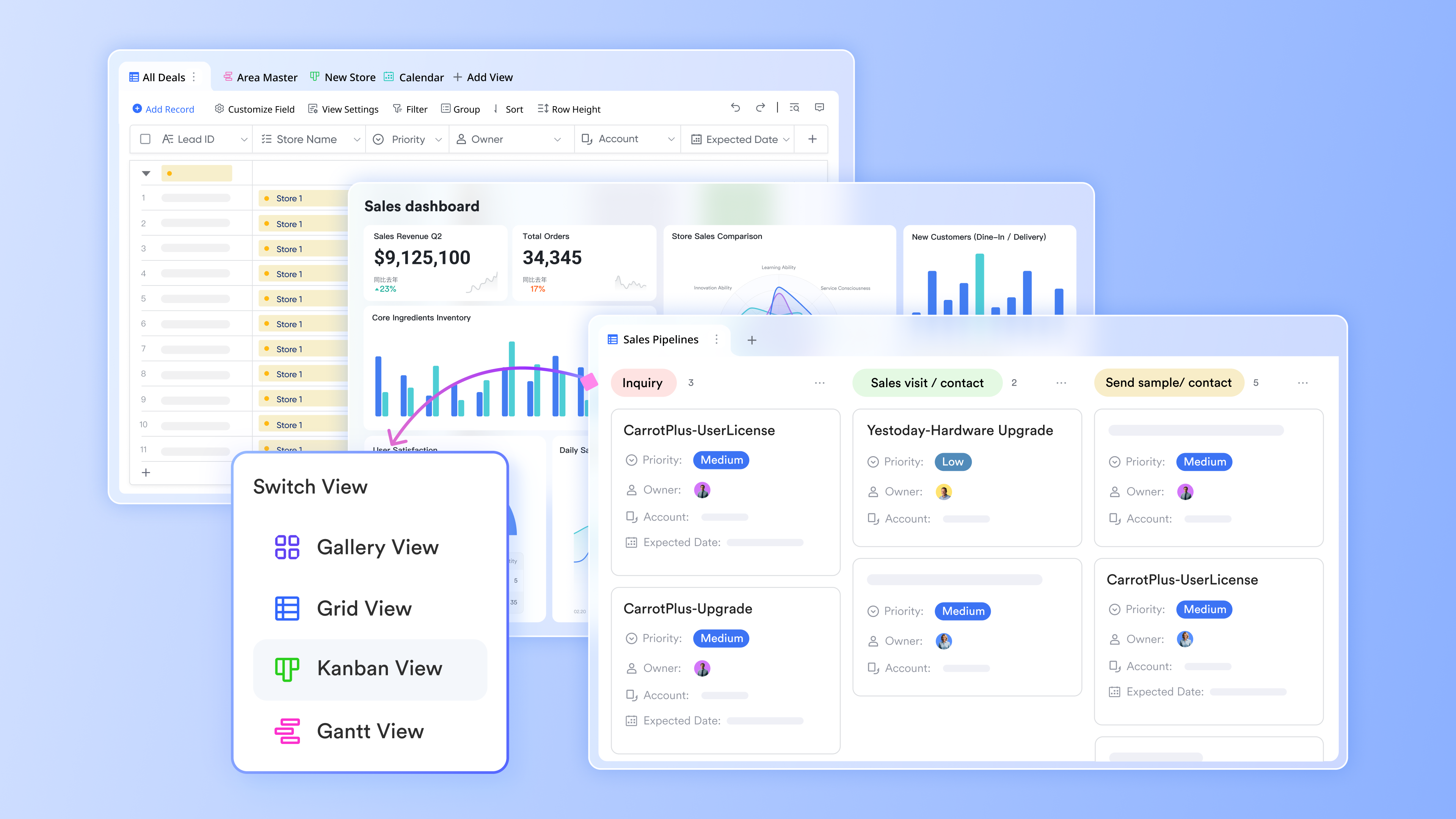
- Centralized information repository: Lark Base acts as a centralized knowledge hub where all project-related documents, files, and information can be stored and easily accessed by team members. This reduces the risk of information silos and ensures that everyone is working with the most current data, which is essential for effective communication.
- : With Lark Base, teams can create customizable databases to organize project information according to their needs. This flexibility allows for tailoring information management to fit specific project requirements, whether it be tracking , managing tasks, or keeping a record of stakeholder communications.
- Real-time collaboration and updates: Lark Base connects seamlessly with Lark Docs and Lark Messenger, enabling real-time collaboration and updates across all project documentation. Team members can collaborate on documents, propose changes, and communicate directly within the context of their projects, ensuring everyone stays aligned and informed.
Document management and sharing
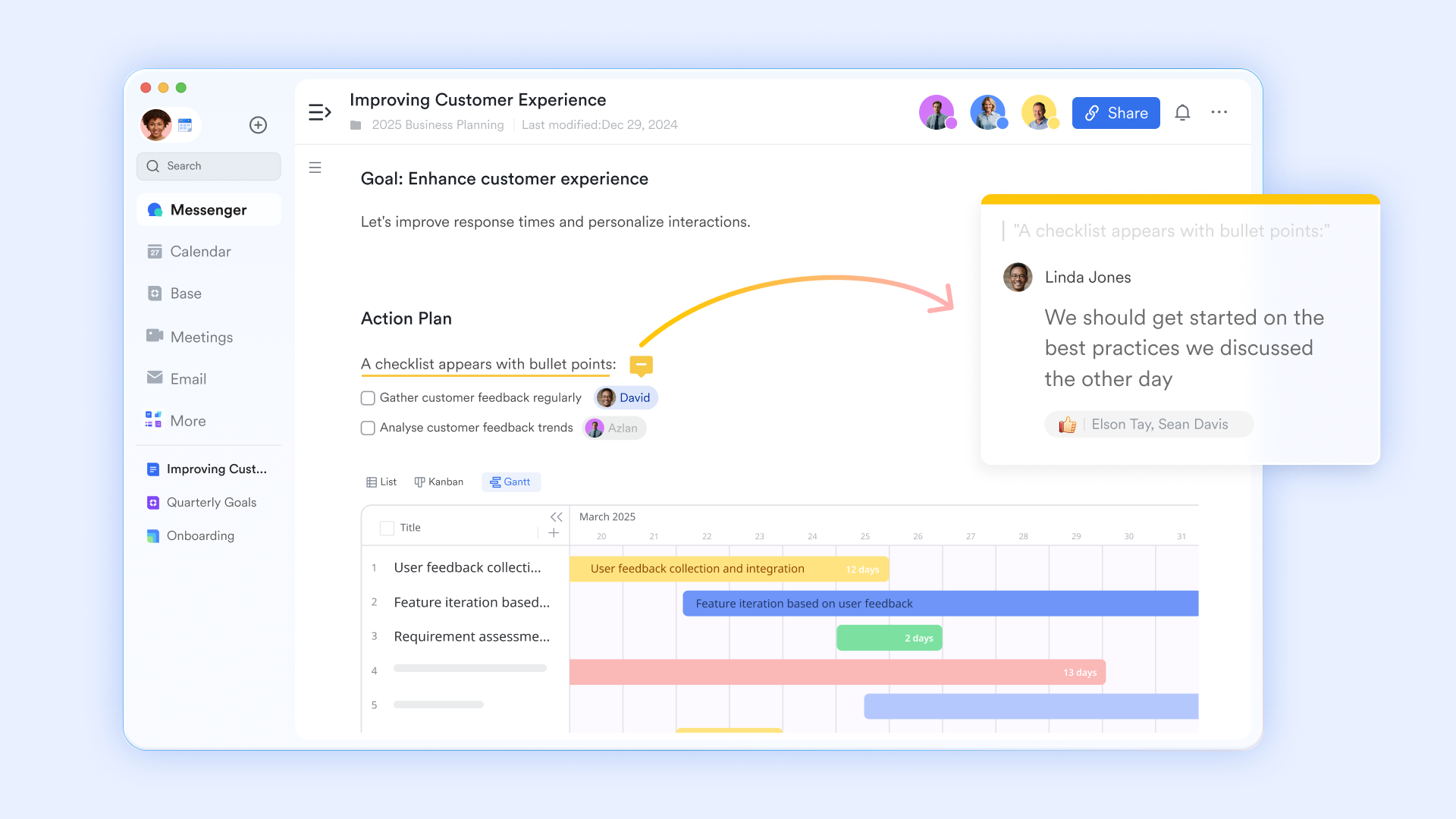
Effective is crucial for maintaining clarity in project communications. Lark simplifies this process by providing seamless document management capabilities. Through , users have easy access to shared documents with centralized storage and version control features. This organization ensures that all team members can access the latest project updates and documents, preventing confusion about which version of files is current. Lark further enhances by allowing users to make comments and suggestions directly within documents, streamlining the review process and keeping all feedback in one place.
Lark pricing plans
- Starter plan: Free forever plan with 11 powerful tools for up to 20 users, 100GB storage, 1,000 automation runs, AI translations, and more. No credit card needed.
- Pro plan: $12/user/month (billed annually) for up to 500 users. Includes everything in Starter plus group calling for up to 500 attendees, 15TB storage, 50,000 automation runs, and more.
- Enterprise plan: for custom pricing. Supports unlimited users and includes advanced automation, security, compliance, and management features.
For small teams with simple communication needs

18 months message history
1000 Base automation runs/month
2000 rows per table in Base
Most POPULAR
For companies with comprehensive collaboration and management needs
Unlimited message history
500-participant video meetings
50k Base automation runs/month
20k rows per table in Base
For large companies with advanced security and organizational management needs
Get a personalized demo and pricing
Unlimited message history
500-participant video meetings
15 TB storage + 30 GB storage/user
500k Base automation runs/month
50k Base automation runs/month
Most POPULAR
For companies with comprehensive collaboration and management needs
Unlimited message history
500-participant video meetings
50k Base automation runs/month
20k rows per table in Base
Conclusion
In summary, a well-crafted project communications plan is vital for successful project management. By developing a thorough communication strategy, assessing stakeholder needs, and utilizing appropriate templates and tools, project managers can create an environment that fosters collaboration and transparency.
I encourage you to evaluate your current communication practices and consider implementing effective strategies to improve them. Tools like can provide the necessary support to enhance your project communications, ensuring that all stakeholders remain engaged and informed throughout the project lifecycle. Embracing these best practices will not only lead to better project outcomes but also strengthen team dynamics and stakeholder relationships.
Improve your project communication plan in Lark
FAQs
What does a project communication plan include?
A project communication plan includes stakeholder analysis, communication objectives, specific communication methods, frequency of communication, roles and responsibilities, and documentation for monitoring and evaluation.
What are the 7 C's of project communication?
The 7 C's of project communication are clarity, conciseness, concreteness, correctness, consideration, completeness, and courteousness. These principles help ensure effective and professional communication.
What are the 5 C's of communication in project management?
The 5 C's of communication in project management are clarity, consistency, continuity, courtesy, and coherence. Following these principles ensures that messages are understood and appropriately received.
How do you write a communications plan?
To write a communication plan, identify stakeholders, define communication objectives, determine methods and frequency of communication, outline roles and responsibilities, and document the plan for monitoring.
Related reading