As organizations grow, the cracks in manual operations become apparent. These tasks may seem small individually, but at scale, they quietly slow execution, increase costs, and frustrate employees. This is where robotic process automation (RPA) becomes relevant—not as a futuristic concept, but as a practical way to keep operations efficient without endlessly adding headcount. For growing organizations, RPA is often the bridge between scrappy manual workflows and mature, scalable operations.
This guide explains what robotic process automation is, how it works in real businesses, where it delivers value, its limitations, and how teams can scale automation responsibly using modern platforms like Lark.
What is robotic process automation?
Robotic process automation (RPA) is a technology that uses software programs, often called bots, to perform repetitive, rule-based that humans typically do on computers. These tasks include copying data between systems, filling out forms, validating information, generating reports, and triggering routine actions across applications.
RPA works by interacting with existing software at the user interface level, just like a person would—clicking, typing, reading data, and following predefined rules. Because of this, it can be deployed without changing underlying systems or building complex integrations.
Organizations use robotic process , reduce manual errors, speed up operations, and maintain consistency at scale. RPA is especially valuable in areas such as finance, human resources, customer support, and operations, where high-volume, repeatable tasks are everyday. While RPA does not replace human judgment, it allows employees to focus on higher-value work by removing routine administrative effort.
Types of robotic process automation
Robotic process automation is not one-size-fits-all. Different types of RPA address various levels of complexity, depending on how tasks are structured and how much decision-making is involved.
- Task-based RPA: individual, repetitive actions such as data entry or file transfers. It works best for simple, high-volume tasks with clear rules and minimal variation.
- Process-based RPA: Process-based RPA connects multiple tasks into an end-to-end workflow. It is ideal for standardizing cross-system processes such as approvals, reconciliations, and multi-step operational flows.
- Intelligent RPA (AI-assisted automation): Intelligent RPA combines automation with AI to handle unstructured data and exceptions. It is useful when processes involve documents, emails, or decisions that require interpretation.
- When each type makes sense for organizations: Task-based RPA suits quick efficiency gains, while process-based RPA supports operational scale. Intelligent RPA is best adopted once core workflows are stable and well-defined.
How robotic process automation works
Robotic process automation fits into day-to-day operations by quietly handling repetitive digital work behind the scenes. Instead of changing how teams work, RPA mirrors existing processes and executes them faster, more consistently, and at scale.
- Bots, triggers, workflows, and rules explained simply: Bots act as digital workers that follow predefined instructions to complete tasks. Triggers decide when a process starts, rules define decision logic, and into a repeatable end-to-end flow.
- Attended vs unattended automation: Attended automation supports employees during tasks, running alongside human actions. Unattended automation operates independently in the background, completing entire processes without manual involvement.
- Structured vs semi-structured processes: follow clear, predictable rules and data formats, making them ideal for automation. Semi-structured processes involve some variation and often require limited human review or AI assistance.
- Common systems RPA interacts with: RPA typically works across ERP systems, , email tools, and spreadsheets. This allows automation to move data between disconnected systems without deep technical integrations.
Explore how automation can streamline operations
Key use cases of robotic process automation across industries
Robotic process automation is widely adopted across industries where routine digital work consumes time and resources. Its flexibility allows organizations to automate high-volume, rule-driven, and critical functions in daily operations.
- Finance and accounting: RPA automates , matches transactions, and reconciles accounts across systems. It also generates financial reports faster while reducing manual errors and delays.
- Human resources: Automation handles employee data entry, document verification, and payroll updates. This ensures consistency, improves compliance, and shortens onboarding and processing cycles.
- Customer support: RPA classifies and routes support tickets automatically based on rules. It also across platforms to give agents accurate, up-to-date information.
- Operations and IT service management: Automation supports service requests, system monitoring, and routine maintenance tasks. This improves response times, reduces manual intervention, and enhances operational reliability.
Benefits and limitations of robotic process automation
Robotic process automation helps organizations improve efficiency and reliability across routine operations. While the benefits are significant, successful adoption requires understanding both its strengths and constraints.
Benefits of RPA
- Operational efficiency and cost reduction: RPA robotic reduces manual effort by automating repetitive tasks across systems. This leads to lower operational costs and better use of employee time.
- Accuracy and consistency at scale: Robotic process automation software executes tasks precisely as defined, without fatigue or variation. This ensures consistent outcomes and reduces errors, even as process volumes grow.
- Faster process execution: Robotic process automation in healthcare enables a more rapid turnaround for such as claims and records processing. Bots operate continuously, accelerating time-sensitive operations.
Limitations of RPA
- System fragility and maintenance: RPA solutions can become brittle when underlying applications or interfaces change. Bots require regular monitoring, updates, and testing to remain reliable as software environments evolve.
- Complexity of change management: Organizations must manage change carefully to avoid disruptions. Unlike humans, bots cannot intuitively adapt to even minor process shifts, requiring manual re-configuration.
- Governance and scalability risks: Without proper governance, automation efforts may become fragmented or risky. are often needed to establish standards, oversight, and long-term sustainability to prevent "automation silos."
Choosing the right robotic process automation solution
Selecting an automation platform requires balancing technical capability with long-term usability and control. The right choice supports growth without adding unnecessary complexity or operational risk.
- Technical complexity vs. ease of adoption: Robotic process automation tools should align with the organization's technical maturity. Overly complex platforms can slow adoption, while intuitive design enables faster value realization.
- Security, compliance, and access control: Robotic process automation consulting helps organizations design . Proper role-based access, audit trails, and compliance controls are essential for regulated environments.
- Integration with existing business tools: A successful robotic automation process depends on smooth . Automation should work reliably across applications without requiring significant system changes.
- Total cost of ownership beyond licensing: Costs extend beyond licenses to include maintenance, scaling, and governance. Evaluating these factors early helps organizations avoid hidden expenses and long-term inefficiencies.
As organizations mature in their automation journey, the focus often shifts from isolated task automation to connected, end-to-end workflows. Teams begin to look for ways to combine automation with collaboration, visibility, and accountability. This is where modern work platforms extend traditional automation thinking. Lark represents this next step by embedding automation directly into how teams communicate and execute work.
Evaluate automation strategies for long-term scalability
Meet Lark: Take robotic process automation into real teamwork
Lark has become a favored option for robotic process automation because it approaches automation as part of everyday work, not a separate technical layer. Instead of relying on isolated bots, Lark embeds , data, and collaboration. This makes automation easier to adopt across teams, not just IT or operations specialists. By combining structured data, approvals, messaging, and visibility in one platform, Lark enables automation that scales naturally with organizational growth. The result is practical, business-led automation that stays flexible, transparent, and easy to govern.
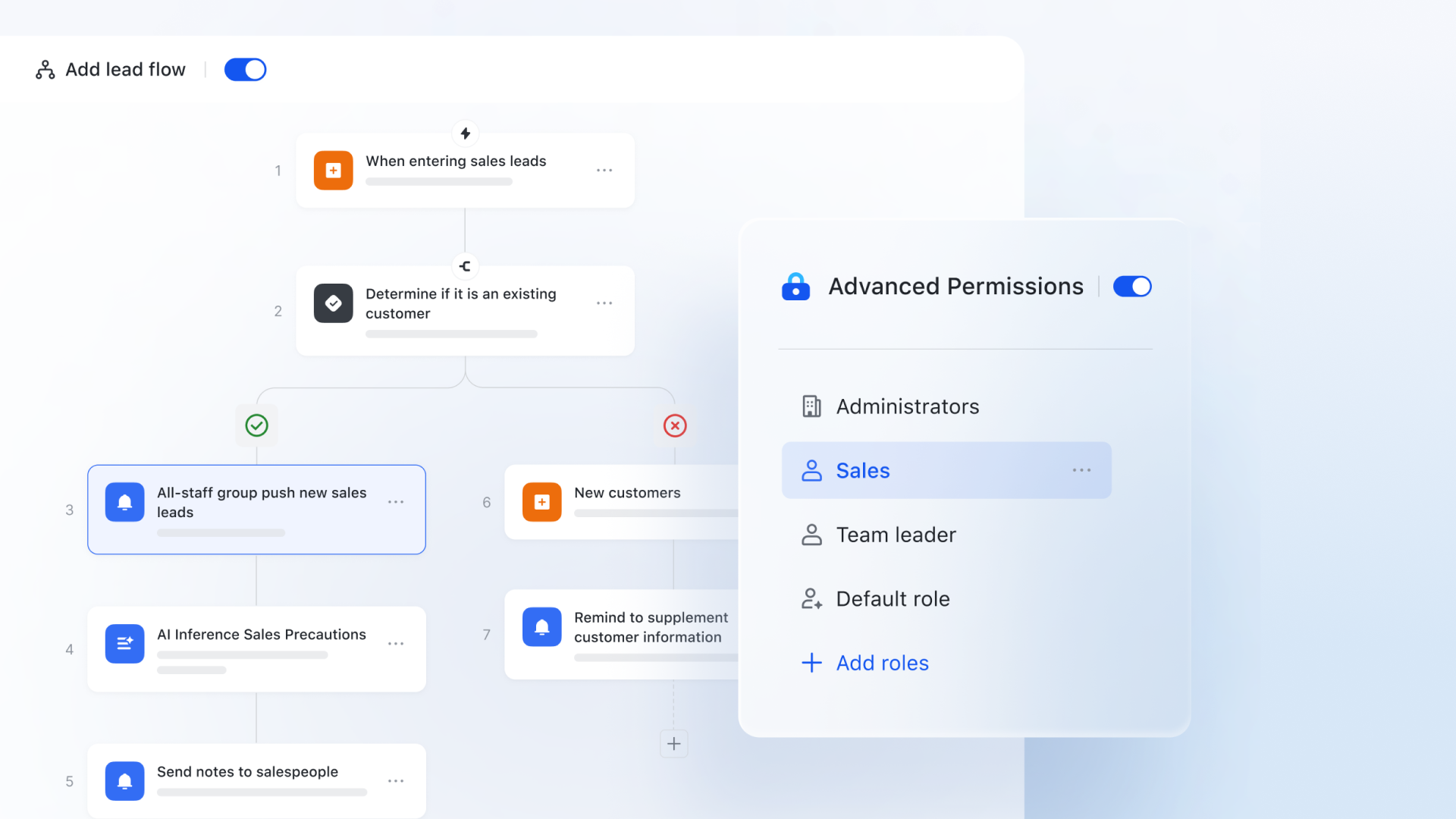
No-code workflow orchestration across teams
Unlike traditional RPA tools that focus on single-user bots, Lark enables across people, teams, and departments with a drag-and-drop interface and no-code nodes. With simple triggers and actions, business users can design multi-step processes—intake, review, , execution, and follow-up. This makes it easy to , procurement, service requests, and internal operations while keeping ownership and accountability clear at every step.
Event-driven workflow automation
provides a native workflow feature that allows teams to define triggers and actions directly on structured data. When a record changes—such as a form submission, status update, or deadline shift—Base can automatically assign tasks, update related fields, notify stakeholders, or initiate approvals. This event-driven logic mirrors many RPA use cases, replacing manual handoffs and rule-based work with reliable, repeatable automation that runs continuously without scripts. 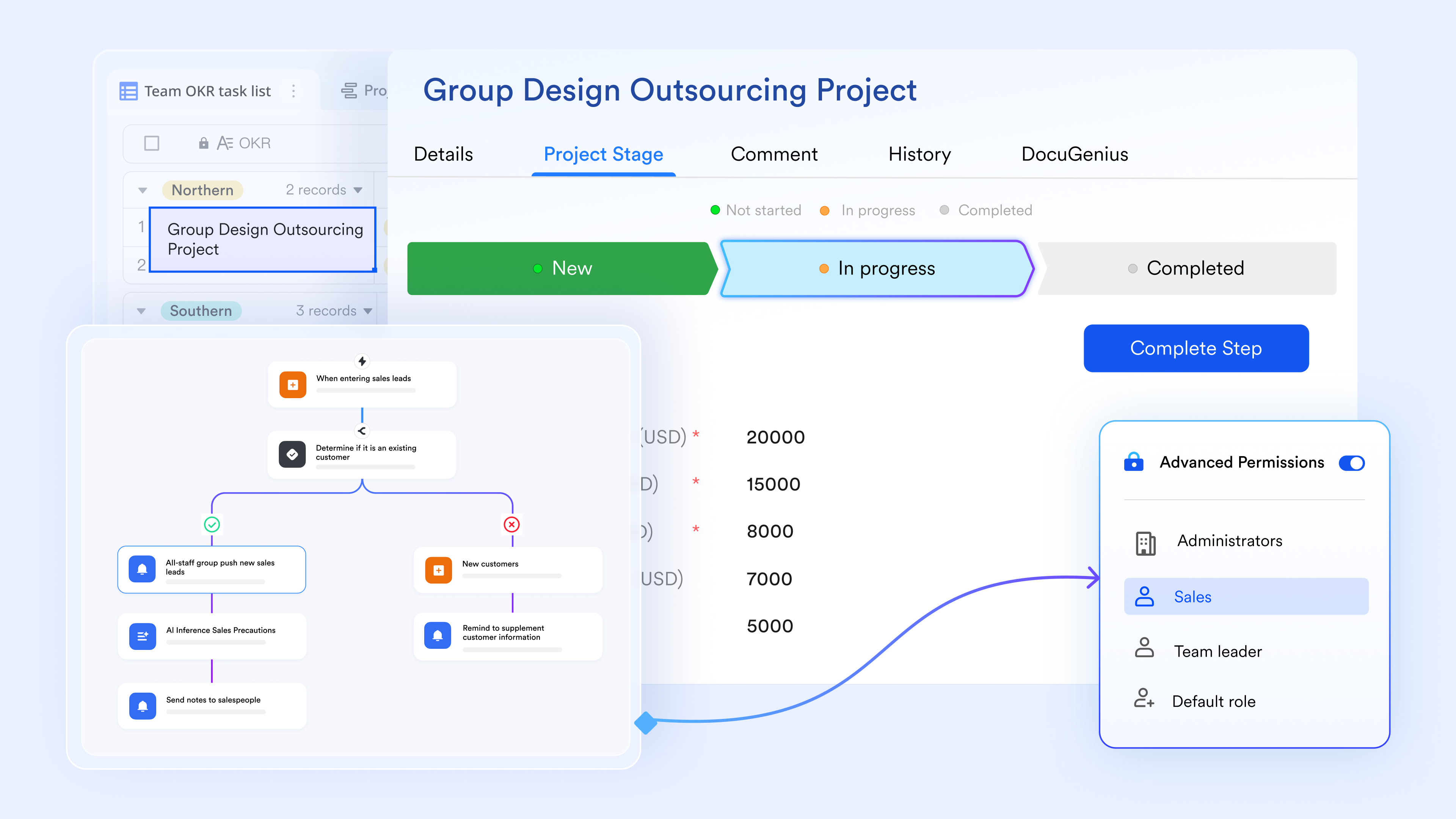
Custom record linking for automatic data entry
Lark Base workflows automate the lifecycle of records, allowing the system to create, update, and interconnect data based on real-time business triggers. By configuring one-way or two-way link fields within the workflow feature, the workflow can automatically establish relationships between parent projects and sub-tasks, ensuring data integrity without manual entry. When a record matches a specific condition—such as a deal closing or a status changing to "Completed"—the workflow can instantly generate new records or pull reference values from existing ones to maintain context. 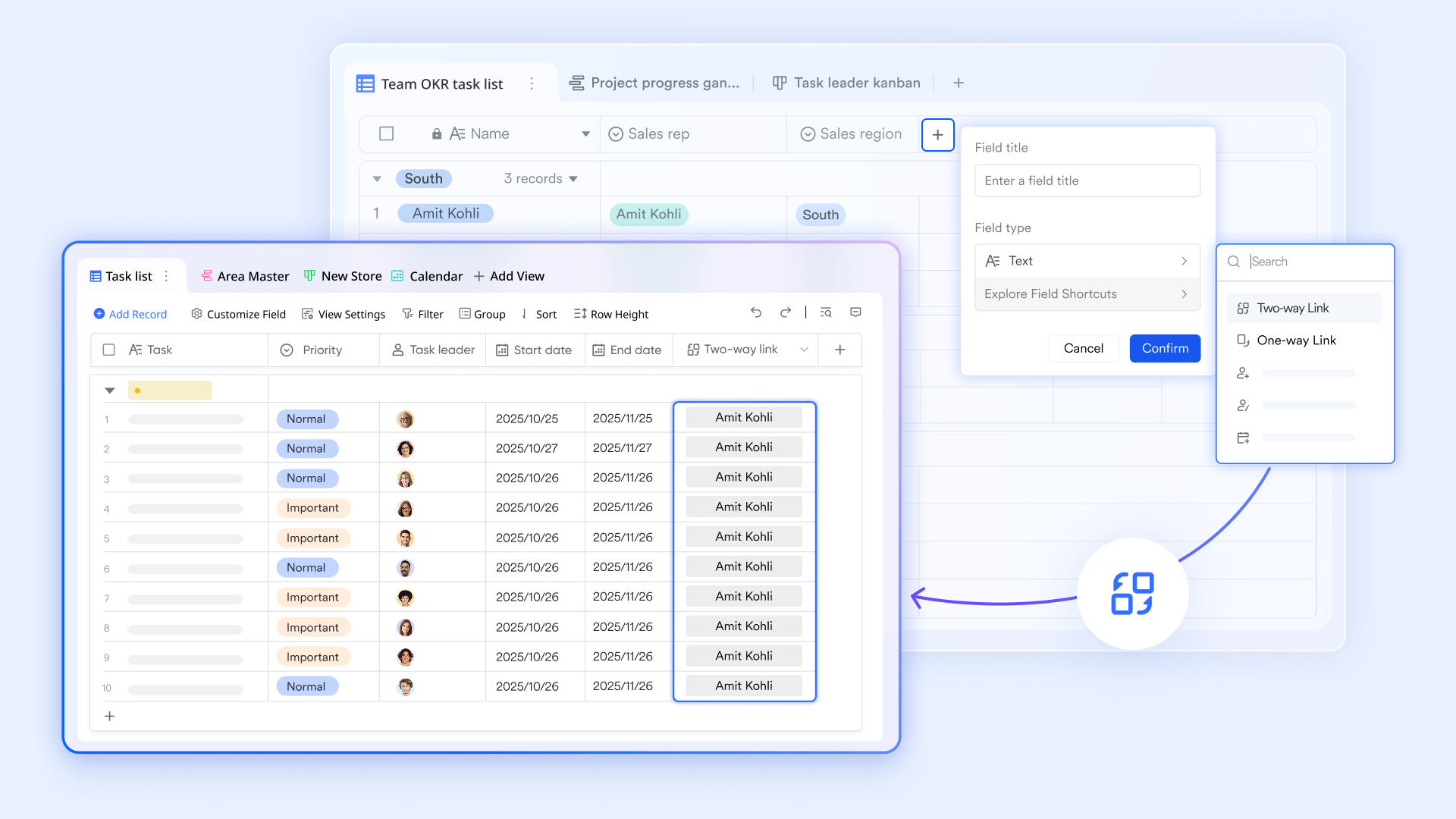
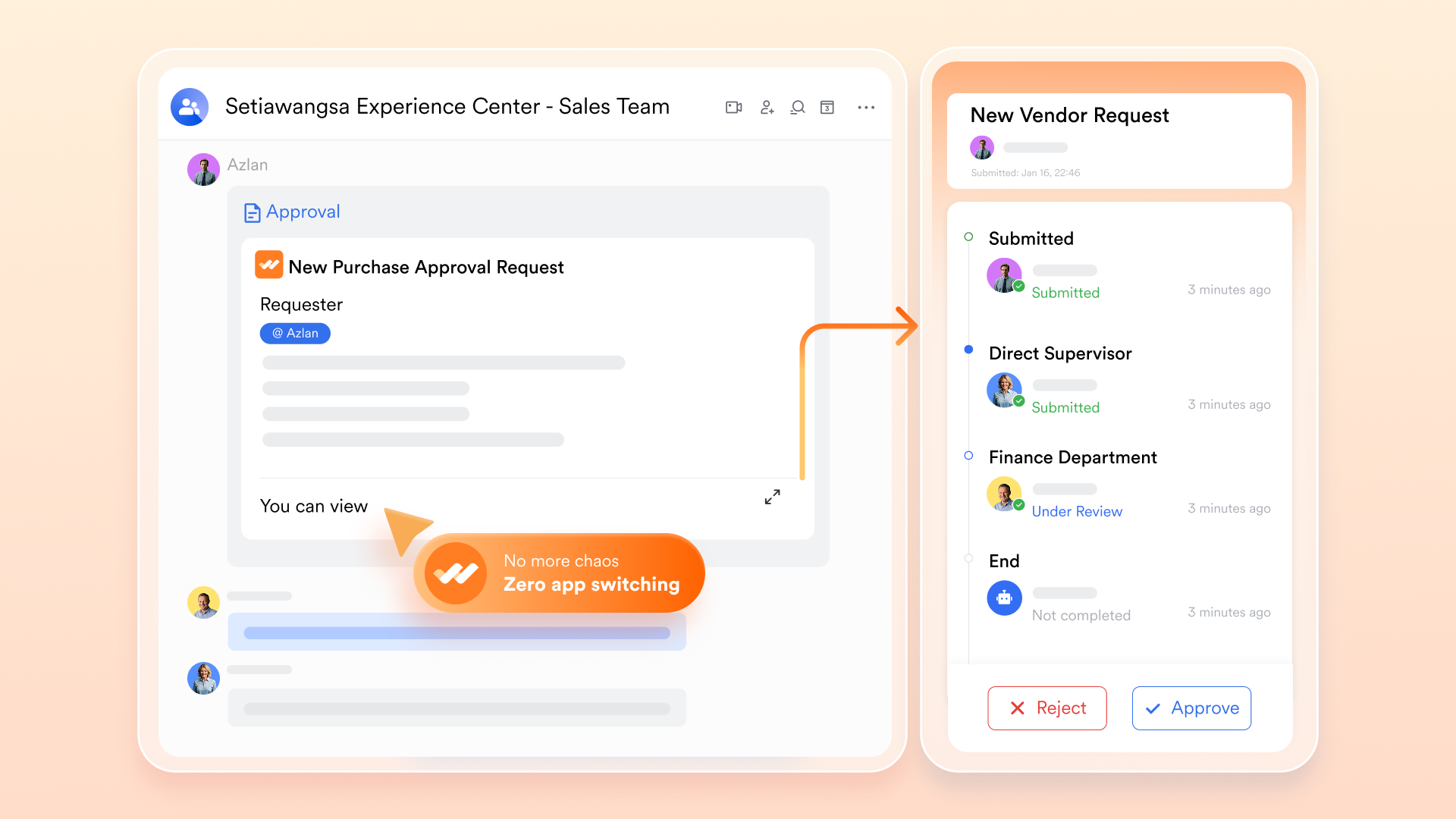
Built-in approval automation with audit readiness
provides structured, form-based automation for decision-heavy processes. Submissions are routed through , with automatic notifications, reminders, and escalations. Once a decision is made, outcomes can update Base records or trigger follow-up actions. Every approval is logged with timestamps and approver details, giving organizations the audit trail and governance often required in enterprise RPA scenarios.
:
- Starter plan: Free forever plan that includes 11 powerful tools for up to 20 users. IT also comes with 100GB of storage, 1000 automation runs, AI translations, and more.
- Pro plan: $12/user/month (billed annually) for up to 500 users. IT includes everything in Starter plus group calling for up to 500 attendees, 15TB of storage, 50,000 automation runs, and more.
- Enterprise plan: for custom pricing. Supports unlimited users and includes even more automation runs and advanced security, compliance, and management features.
For small teams with simple communication needs

18 months message history
1000 Base automation runs/month
2000 rows per table in Base
Most POPULAR
For companies with comprehensive collaboration and management needs
Unlimited message history
500-participant video meetings
50k Base automation runs/month
20k rows per table in Base
For large companies with advanced security and organizational management needs
Get a personalized demo and pricing
Unlimited message history
500-participant video meetings
15 TB storage + 30 GB storage/user
500k Base automation runs/month
50k Base automation runs/month
Most POPULAR
For companies with comprehensive collaboration and management needs
Unlimited message history
500-participant video meetings
50k Base automation runs/month
20k rows per table in Base
The future of robotic process automation
Robotic process automation is evolving beyond simple task replacement toward more innovative, more connected ways of working. As organizations mature, automation is becoming more adaptive, contextual, and embedded into daily operations.
- RPA and AI convergence: RPA is increasingly unstructured data and exceptions. This allows automation to move beyond rigid rules and support more complex decision-making.
- From task automation to end-to-end process orchestration: Organizations are shifting from automating isolated tasks to orchestrating entire workflows. This enables greater visibility, coordination, and control across multi-step processes.
- Automation embedded directly into work platforms: Instead of standalone tools, into platforms teams already use. This reduces friction, shortens adoption time, and keeps automation closer to execution.
- Why collaboration-first automation will dominate: Future automation will balance machine efficiency with human input. Collaboration-first approaches ensure exceptions, approvals, and context are handled smoothly within automated flows.
Conclusion
Robotic process automation has become a practical necessity for growing organizations that want to scale efficiently without adding unnecessary complexity. By automating repetitive, rule-based work, RPA improves speed, accuracy, and consistency across finance, HR, operations, and customer-facing functions. At the same time, its limitations—such as brittle bots and governance challenges—highlight the importance of choosing automation approaches that are flexible and easy to manage. As RPA evolves toward end-to-end process orchestration and closer integration with collaboration, the future clearly favors platforms that and human context.
This is where stands out by embedding automation directly into everyday work, rather than treating it as a separate technical layer. For teams looking to move beyond isolated bots and build scalable, collaborative workflows, Lark offers a more connected and sustainable path forward. Now is the right time to explore how automation and collaboration can grow together.
Experience effective robotic process automation now
FAQs
What is the purpose of RPA?
The primary purpose of Robotic Process Automation (RPA) is to automate repetitive, rules-based digital tasks that were previously performed by humans. By deploying "software robots" to handle high-volume administrative work, organizations can significantly increase operational speed, eliminate human error, and reduce costs.
What are examples of robotic process automation?
RPA is widely used for structured tasks such as processing customer invoices, where robots extract data from emails and input it into accounting software. In HR, it can automate onboarding by creating system accounts and generating offer letters from a standard template.
Is RPA a form of AI?
While often grouped together, RPA and AI are distinct technologies with different capabilities. RPA is essentially "doer" software that follows pre-defined, rigid rules to execute tasks, whereas AI is "thinking" software that uses pattern recognition to make judgments or handle unstructured data.
Is robotic process automation suitable for small businesses?
Yes, robotic RPA can benefit small businesses by reducing manual workload and improving efficiency early on. With platforms like Lark, teams can start small and scale automation gradually without heavy technical investment.
How long does it take to implement robotic process automation?
Implementation timelines vary based on process complexity and readiness. Many organizations work with robotic process automation service providers to deploy simple automations within weeks using structured workflows supported by Lark.
Related reading