Workforce engagement software has become essential infrastructure for organizations navigating today's complex work environments. As hybrid schedules, frontline operations, and distributed teams expand across industries, these platforms provide the connective tissue that keeps everyone aligned, informed, and motivated. The stakes are real: companies that invest in engagement see lower turnover, better customer experience, safer operations, and stronger profitability. This guide compares leading categories of tools—from workflow management software to workforce tracking software—and provides a practical buyer's checklist to help you select the right solution.
What is workforce engagement software?
Workforce engagement software is a category of digital platforms that combines communication, task execution, workforce tracking, and feedback into a single, unified experience. Unlike traditional employee engagement tools focused primarily on annual surveys and pulse checks, modern workforce engagement software serves the entire workforce—hourly, frontline, remote, gig, and knowledge workers alike.
These platforms bring together capabilities typically found in separate systems. Work task management software handles assignments and deadlines. Workflow management software automates approvals and processes. Recognition and feedback modules close the loop between work completed and outcomes achieved. The result is a digital environment where people can communicate, execute their responsibilities, and feel connected to larger organizational goals.
This differs significantly from simple survey tools or basic work order management software. Survey-only platforms capture sentiment but lack the operational context to drive action. Basic work order systems track tasks but ignore the human experience of doing the work. Workforce engagement software bridges both worlds, treating execution and engagement as two sides of the same coin.
Modern platforms typically integrate with HRIS, payroll, and collaboration suites to form a single source of truth. When an employee's schedule changes in the workforce management system, that update appears in the engagement platform. When someone completes a critical task, recognition flows naturally. This integration eliminates the friction of switching between disconnected tools and ensures that engagement data reflects what's actually happening on the ground.
Explore a smarter way to manage workforce
Core components of workforce engagement platforms
Most mature platforms contain several recurring building blocks that work together to create a cohesive experience. Understanding these components helps buyers evaluate whether a solution addresses their specific needs.
- Communication hub: like chat, announcements, and team channels keep frontline and office staff aligned on shifts, tasks, and priorities. Unlike email, these tools support real-time conversations and targeted notifications that reach people on their mobile devices during breaks or between tasks. Teams can organize discussions by project, location, or function, ensuring that relevant information reaches the right people without overwhelming everyone.
- Task and workflow engine: Underlying work management software free tiers or paid tools provide checklists, approvals, and SLA tracking. This engine transforms abstract goals into concrete action items with owners, due dates, and status updates. Whether managing store opening procedures, IT support requests, or safety inspections, the workflow engine ensures nothing falls through the cracks.
- Feedback and recognition layer: Pulse surveys, peer kudos, and manager feedback help close the loop between work done and outcomes. This layer captures employee sentiment through engagement surveys, enables colleagues to celebrate wins in real time, and provides managers with structured coaching tools. Recognition becomes part of daily work rather than an afterthought.
- Analytics and workforce tracking software features: Leaders rely on dashboards showing productivity, schedule adherence, and engagement sentiment, often powered by dedicated . These analytics connect the dots between operational metrics and human factors, helping organizations understand not just what happened but why. The best platforms present this data visually, enabling quick identification of trends and hotspots.
Why workforce engagement software matters
The business case for workforce engagement software has never been stronger. Hybrid schedules have become permanent fixtures. Labor markets remain competitive in many sectors. Organizations face pressure to do more with fewer resources while maintaining quality and safety. In this environment, disengagement isn't just a morale issue—it's an operational risk.
Disengaged employees contribute to absenteeism, safety incidents, and customer churn. They're more likely to leave, taking institutional knowledge with them. They're less likely to go above and beyond when situations demand flexibility. The cumulative effect drags down productivity and damages employer brand, making future hiring even harder.
Effective use of work management free software and paid suites helps connect daily tasks to company goals, which in turn lifts motivation. When employees understand how their work contributes to larger objectives, they find more meaning in what they do. When managers have tools to recognize effort and provide coaching, relationships strengthen. When feedback actually leads to visible changes, trust grows.
Regulators, customers, and boards are paying closer attention to employee experience. ESG reporting, powered by an , increasingly includes workforce metrics. Customer-facing industries recognize the direct link between employee engagement and service quality. Making engagement metrics part of strategic reporting isn't optional anymore—it's expected, especially when combined with structured that links workforce sentiment to measurable business outcomes.
Key features to look for in workforce engagement software
Not all platforms offer the same depth in engagement, scheduling, and automation. The right features depend on your workforce, industry, and existing tools.
The best solutions link “how work happens” with “how people feel,” creating actionable insights and a seamless employee experience.
Prioritize usability, mobile access, and integration. A simple, widely used feature beats a complex one that's ignored.
Listening, feedback, and recognition
Effective engagement starts with structured listening and ends with visible action.
- Multi-cadence surveys: Support annual, pulse, and lifecycle surveys triggered by events like onboarding or promotion. Together, they provide a full picture of employee sentiment.
- Action planning workflows: Guided templates turn survey insights into commitments with deadlines and owners, ensuring feedback drives change and transparency.
Task, workflow, and work order management
Linking execution to engagement reduces frustration and boosts focus.
- Digital work orders: Teams create, assign, and track tasks from request to completion, with real-time status updates accessible by all.
- Repeatable workflows: Templates for common processes save time and ensure consistency.
- SLA and priority handling: Automatic flags and notifications help manage overdue or high-priority tasks and reveal bottlenecks.
Workforce tracking and automation
Tracking should be ethical and outcome-focused, with clear benefits for employees.
- Scheduling and attendance: Smart shift assignment, time-off requests, and alerts balance coverage and preferences, reducing admin work, especially when paired with modern , a cloud-based , or specialized .
- Location-aware workflows: Contextual task triggers streamline routines without storing unnecessary personal data.
- Automation rules: Notifications for low engagement scores or incomplete tasks enable proactive management.
Analytics, reporting, and compliance
Leaders need simple, powerful analytics with appropriate access controls.
- Unified dashboards: Combine engagement metrics, workflow completion, and capacity indicators for holistic views, often drawing from dedicated that orchestrate processes across teams.
- Segmentation and benchmarking: Filters highlight hotspots and best practices, guiding improvement.
Find a practical solution for streamlined workforce engagement
How to evaluate and select workforce engagement software
A structured selection process significantly reduces adoption risk and prevents wasted investment, ensuring that your organization chooses a solution that truly fits its needs. To achieve this, it is essential to involve a broad range of stakeholders—including HR teams, operations leaders, IT staff, managers, and end-users—from the very beginning. Gathering diverse perspectives helps capture comprehensive needs, fosters buy-in across departments, and promotes smoother implementation.
Clarify goals and success metrics
Start by anchoring your selection process in specific business challenges and desired outcomes. Clearly defining what success looks like, along with measurable metrics, allows your organization to evaluate potential solutions objectively. For example, you might focus on improving employee engagement scores, reducing turnover rates, or enhancing productivity. Setting realistic timelines for implementation and results is equally important. Early alignment of stakeholders around these goals helps avoid delays and ensures everyone is working toward the same objectives.
Assess usability and adoption risk
The usability of workforce engagement software is a critical factor in its success. Prioritize platforms that offer mobile-first, intuitive applications designed to simplify managers' and employees' daily tasks. A user-friendly interface encourages widespread adoption, especially among frontline and hourly workers who may have limited time or technology experience. Evaluate the availability and quality of training resources, as well as pilot programs that allow you to identify potential issues early. These steps help mitigate adoption risk and ensure a smoother rollout.
Check integration, security, and compliance
Seamless integration with your existing systems is vital for maintaining data accuracy and operational efficiency. Confirm that the software integrates smoothly with your HRIS, single sign-on (SSO) solutions, payroll systems, and collaboration tools like Microsoft Teams. Additionally, verify that the vendor adheres to robust data protection measures and complies with relevant industry regulations such as GDPR or HIPAA. Comparing leading platforms—for example, reviewing analyses like —can offer useful benchmarks on security, usability, and feature depth. Assess the vendor's reliability, including their track record for uptime, support responsiveness, and commitment to ongoing security updates.
Compare pricing models and ROI
Understanding the total cost of ownership is essential. Analyze licensing structures, including per-user fees, tiered pricing, and any hidden costs such as implementation fees or premium support charges. Build a credible return on investment (ROI) story by quantifying administrative savings, reductions in employee turnover, and improvements in productivity or customer satisfaction. Model how costs will scale as your organization grows to ensure the solution remains financially viable long-term. This comprehensive approach helps justify the investment and secures leadership support.
How Lark enables modern workforce engagement
Engaging your workforce effectively is paramount for sustained success. offers a comprehensive, all-in-one platform designed to centralize communication, streamline workflows, and foster a more connected and productive team. Let's explore how Lark's integrated features empower modern workforce engagement.
Intelligent workforce data management
transforms how organizations manage their workforce data by providing a powerful zero-code data management platform. This intelligent tool supports various applications, from project management to CRM, offering flexible solutions to visualize and automate your workforce processes.
Diverse view types and templates: With options like grid, kanban, calendar, Gantt, gallery, and form views, Lark Base allows teams to visualize data in formats that best suit their unique workforce management needs. 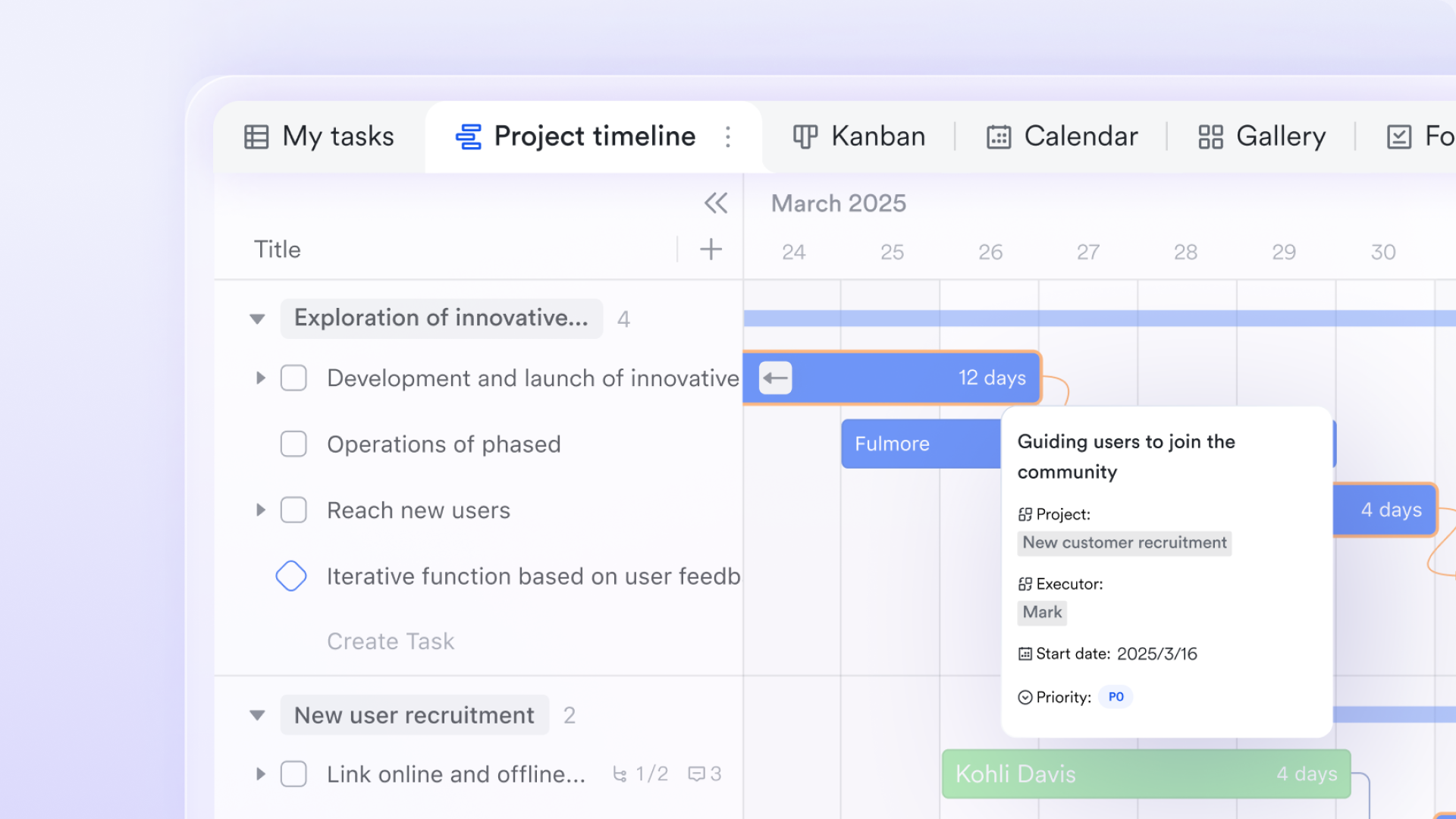
Lark also provides pre-built templates, such as the employee engagement template, which is crucial for a productive and happy workforce. This template helps engagement managers plan and track various initiatives aimed at boosting employee morale, satisfaction, and overall well-being.
Real-time insights dashboard: Lark Base features a comprehensive dashboard equipped with a variety of chart and block types for in-depth data analysis. This enables teams to monitor workforce engagement in real time, helping to identify potential issues early and ensure that deadlines are consistently met. The dashboard also utilizes AI to suggest actionable next steps, enhancing team performance and accelerating decision-making. 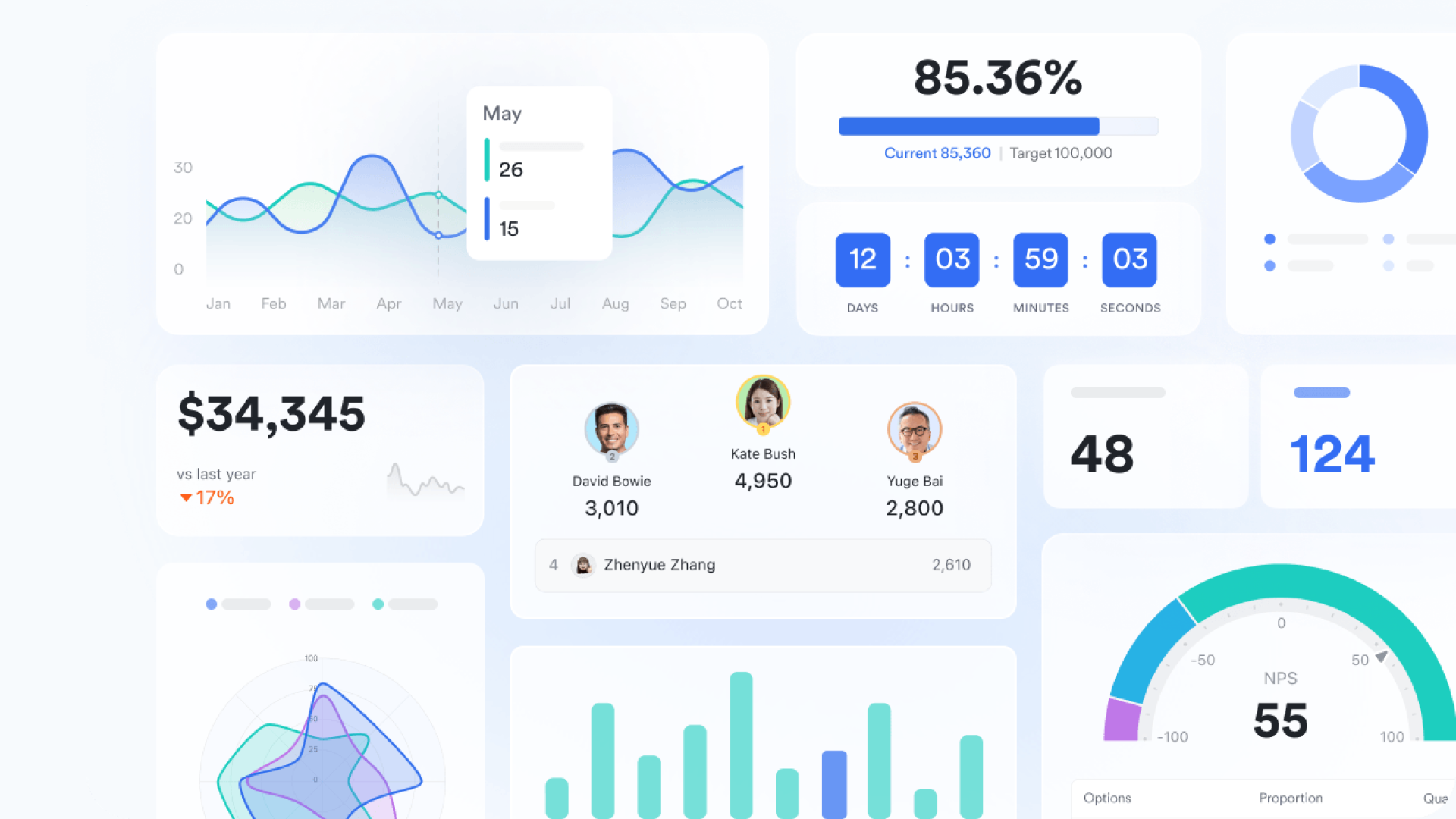
Automation to boost efficiency: Streamline your workforce management processes by automating repetitive tasks and setting up reminders through an intuitive interface. You can design advanced automations using conditional branches and looping, significantly enhancing operational efficiency and reducing manual effort. 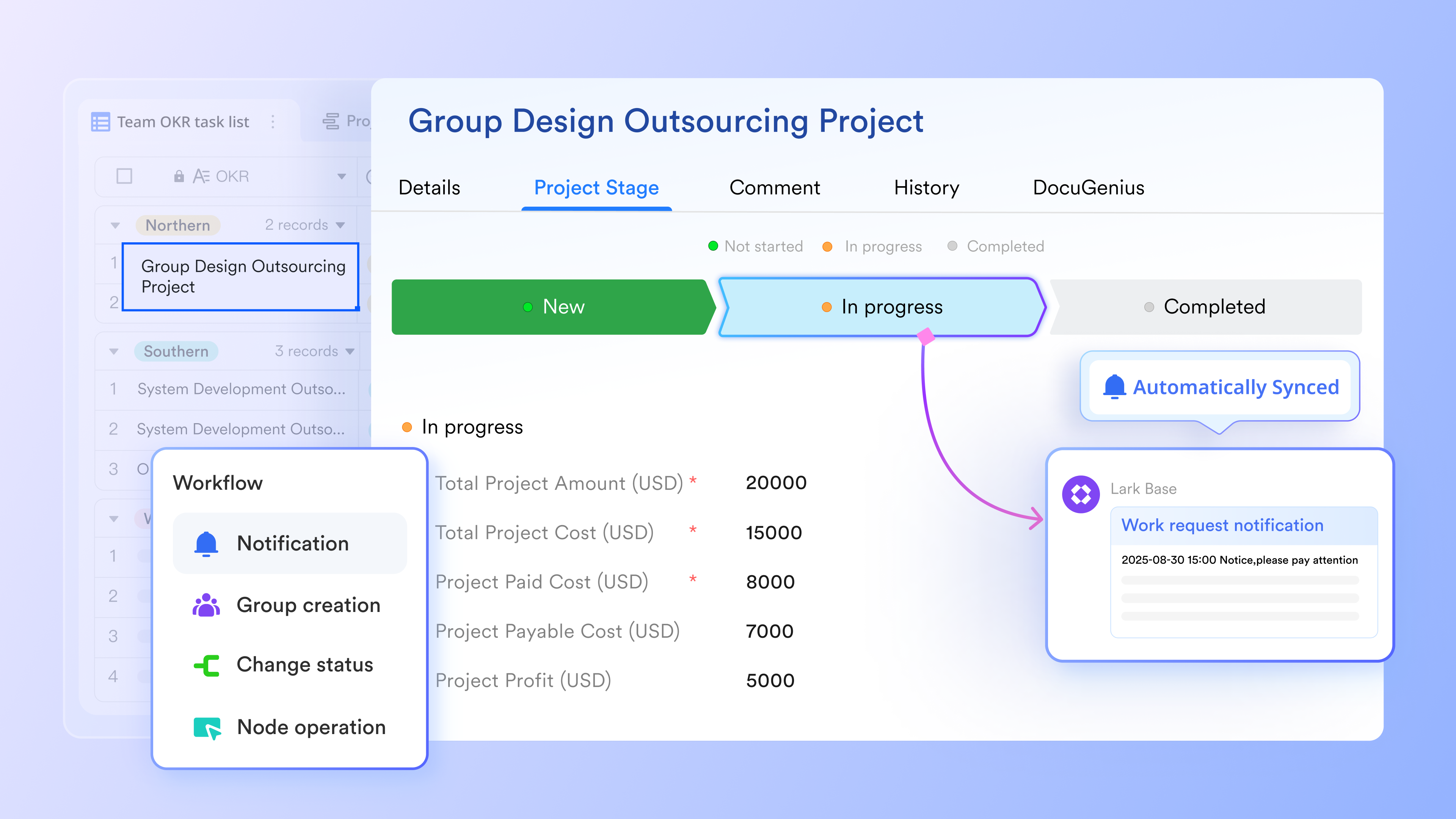
Effective work task management
Lark Tasks simplifies task management by enabling users to create and assign tasks directly from chats or documents, fostering a more organized and accountable workforce. 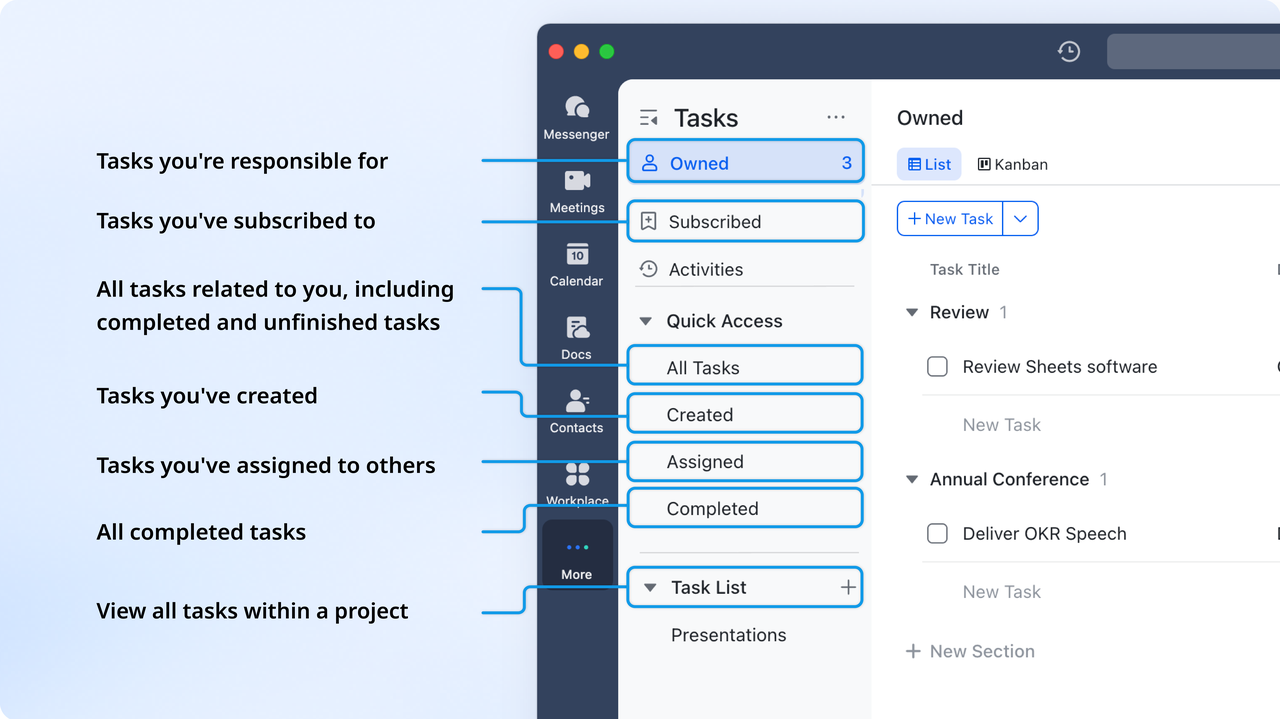
Easy task creation: Quickly assign tasks with deadlines directly from any chat or document, ensuring that action points are clearly defined and immediately actionable. Discussions in group chats can seamlessly translate into tasks, minimizing miscommunication and helping to keep projects on track. Sub-tasks for enhanced clarity: For more extensive projects, users can create sub-tasks to break down work into manageable components. This allows teams to clearly define next steps and responsibilities, enhancing accountability within workforce management strategies and ensuring every detail is covered.
Streamlined request management
provides a streamlined platform for managing approval requests, promoting transparency and efficiency across your organization.
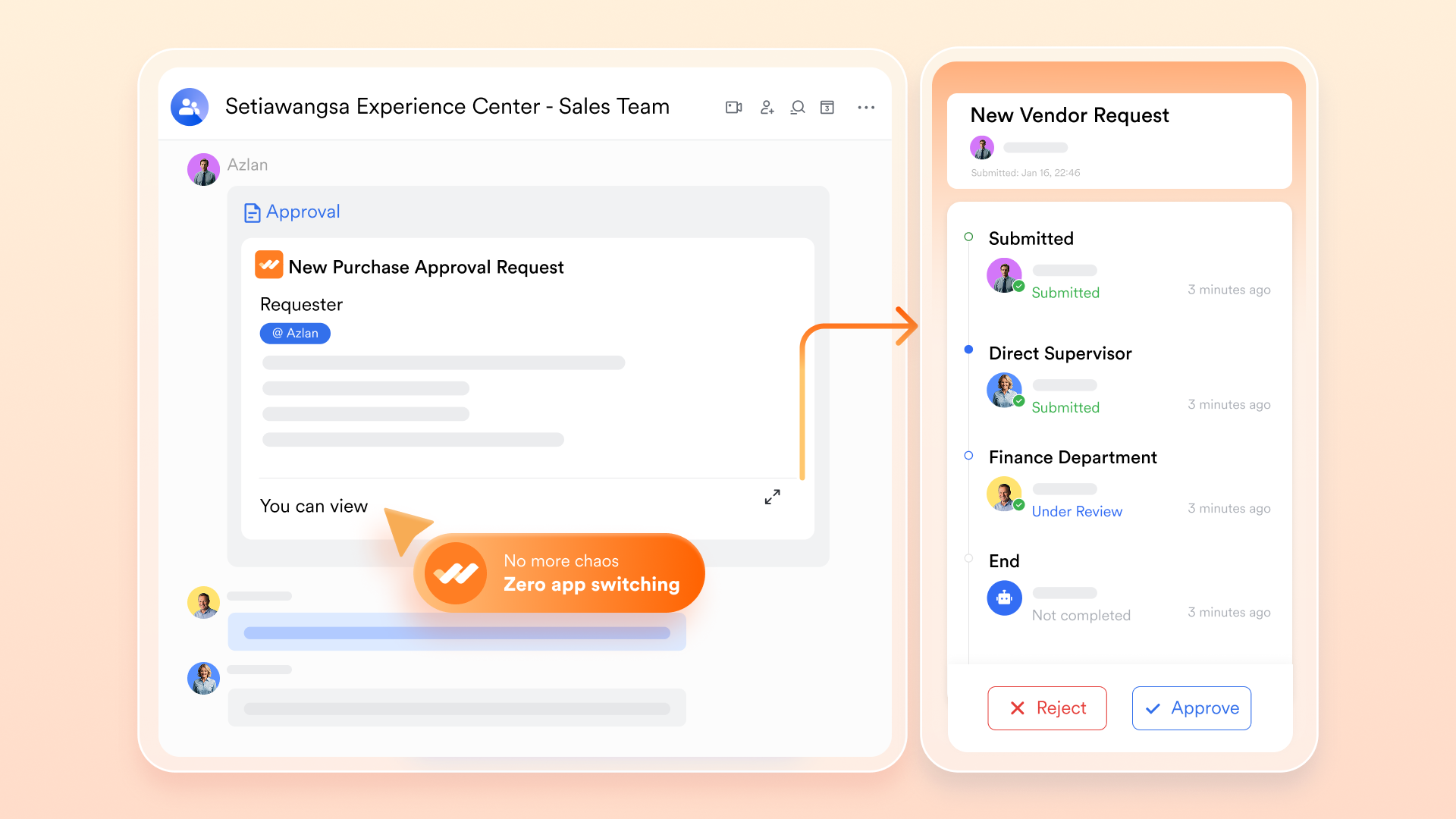
All-in-one approval hub: Manage all approval requests on a single platform, eliminating the need to switch between multiple tools. You can create bespoke approval workflows tailored to fit any team's needs or specific processes, allowing for greater flexibility and faster processing.
Seamless connection with Lark ecosystem: Approvals are thoroughly connected with Lark's Messenger, Base, and other tools. Users can instantly initiate a group chat with all approvers involved in a request, facilitating faster decision-making and clearer communication, which are crucial for effective workforce management.
Lark excels in providing a comprehensive solution that not only manages workforce tasks but also fosters collaboration, communication, and efficiency. It is an ideal choice for teams looking to centralize their workflows and enhance productivity through its integrated tools, ultimately leading to a more engaged and empowered workforce.
:
- Starter plan: Free forever plan that includes 11 powerful tools for up to 20 users. It also comes with 100GB of storage, 1000 automation runs, AI translations, and more.
- Pro plan: $12/user/month (billed annually) for up to 500 users. It includes everything in Starter plus group calling for up to 500 attendees, 15TB of storage, 50,000 automation runs, and more.
- Enterprise plan: for custom pricing. Supports unlimited users and includes even more automation runs and advanced security, compliance, and management features.
For small teams with simple communication needs

18 months message history
1000 Base automation runs/month
2000 rows per table in Base
Most POPULAR
For companies with comprehensive collaboration and management needs
Unlimited message history
500-participant video meetings
50k Base automation runs/month
20k rows per table in Base
For large companies with advanced security and organizational management needs
Get a personalized demo and pricing
Unlimited message history
500-participant video meetings
15 TB storage + 30 GB storage/user
500k Base automation runs/month
50k Base automation runs/month
Most POPULAR
For companies with comprehensive collaboration and management needs
Unlimited message history
500-participant video meetings
50k Base automation runs/month
20k rows per table in Base
Implementation best practices for workforce engagement software
Many projects fail not because of product choice but because of rushed, top-down rollouts. Organizations that treat implementation as a change program rather than a technology installation see better adoption and faster results.
A step-by-step approach balances governance with experimentation and local ownership. Central teams establish standards and provide resources while local champions adapt to specific needs. This balance avoids both chaos and rigid uniformity.
The same principles apply whether teams adopt Lark or another integrated workforce engagement platform. Building a clear, structured ensures the rollout is phased, measurable, and aligned with business goals. Success depends more on approach than on specific product features.
Design for employees, not just leaders
Frontline and operational staff should see clear personal value from day one. If the platform feels like another management tool rather than something that helps employees do their jobs, adoption will suffer.
- Co-design workshops: Running sessions where representatives from different roles map current pain points and desired improvements generates relevant requirements and builds ownership. Employees who participate in design become advocates for adoption. Their input ensures the solution addresses real needs rather than assumed ones.
- Persona-based journeys: Building sample daily journeys for roles like store manager, technician, or call center agent using the new tools reveals where the platform helps and where friction remains. These journeys guide configuration decisions and training content development.
Equip and support managers
Managers translate software capabilities into day-to-day behavior and culture. Their engagement with the platform determines how their teams experience it.
- Manager enablement training: Targeted sessions on running one-on-ones, interpreting engagement results, and using work order tools effectively help managers succeed. Training should focus on scenarios rather than features—how to handle specific situations using the platform. Role-playing and practice build confidence.
- Playbooks and templates: Providing ready-made agendas, survey templates, and recognition ideas within the platform reduces the cognitive load on managers. They don't need to start from scratch. Templates encode best practices while remaining adaptable to individual style.
Iterate with data and storytelling
Rollout should be treated as an ongoing program, not a one-time event. The initial launch creates foundation; continuous improvement builds lasting value.
- Use analytics to refine: Reviewing adoption, workflow completion rates, and survey participation each quarter reveals what's working and what needs adjustment. Analytics should drive decisions about training, configuration changes, and expansion priorities.
- Highlight success stories: Sharing concrete examples where teams improved retention, safety, or customer outcomes after using the software builds belief in the platform's value. Stories make abstract benefits tangible. Recognizing successful teams reinforces desired behaviors.
Future trends in workforce engagement software
Workforce engagement tools will continue evolving alongside AI, automation, and new work models through the late 2020s. Organizations choosing platforms today should consider how well they can adapt to emerging trends. Flexibility and vendor commitment to innovation matter for long-term value.
Responsible AI and augmentation, not surveillance
AI should help employees and managers make better decisions, not monitor every micro-action. The distinction between augmentation and surveillance determines whether AI builds trust or erodes it.
- Predictive insights: Future tools may surface likely burnout or churn risks in time for supportive conversations. Managers can reach out proactively rather than reacting after someone has already disengaged. Early intervention proves far more effective than last-minute retention attempts.
- Smart assistants: AI helpers that suggest agenda items, follow-ups, or learning resources tailored to each employee's context reduce cognitive load. Assistants handle routine preparation so humans can focus on meaningful interaction.
Convergence of engagement, learning, and performance
Silos between engagement tools, LMS platforms, and performance systems will keep shrinking. Employees experience work holistically; their tools should reflect that reality.
- Continuous development loops: Feedback will increasingly trigger learning recommendations and stretch assignments automatically. When an employee expresses interest in a topic, relevant learning content appears. When a skill gap surfaces in performance conversation, development resources activate.
- Skills-based organizations: Engagement experiences will be tailored to evolving skills profiles and career paths. As organizations shift from job-based to skills-based models, employee success platforms will adapt to support new paradigms.
More inclusive and flexible work experiences
Engagement tools will increasingly need to serve multi-generational, multi-location, and multi-contract workforces. One-size-fits-all approaches will fall short.
- Accessibility by design: Platforms should support accessibility standards, low-bandwidth modes, and simple interfaces. Employees with disabilities, limited connectivity, or older devices deserve equal access to engagement tools.
- Flexible communication norms: Asynchronous collaboration, recordings, and summaries will reduce meeting overload. Time zone diversity and shift work demand tools that don't privilege real-time interaction over other modes. Organizations that study and adopt platforms built to will be better positioned to design inclusive norms that work across geographies.
Conclusion
Workforce engagement software delivers the most value when communication, work execution, feedback, and analytics come together in one connected experience. Treating these elements as separate initiatives creates fragmentation that frustrates employees and limits organizational insight.
Successful organizations approach these platforms as ongoing programs supported by strong leadership, not just technology installations. They invest in manager enablement, iterate based on data, and communicate how employee feedback drives change. Business success follows when employees engaged with their tools become employees engaged with their work.
Rather than relying on disconnected survey tools or legacy work order systems, consider piloting a modern, integrated solution. Lark offers organizations a unified platform for collaboration, work management, and engagement that reaches every worker from headquarters to frontline. Explore how Lark can help your organization build stronger company culture, boost retention, and improve engagement by starting a trial or requesting a demo today.
Discover a new way to support workforce management
FAQs
What is workforce engagement software?
Workforce engagement software is a digital platform that unifies communication, task execution, workforce tracking, and feedback into a single experience. Unlike traditional tools focused solely on surveys, it serves all types of workers—hourly, frontline, remote, gig, and knowledge workers—to foster a connected and productive environment. It bridges the gap between operational tasks and employee sentiment.
Why is workforce engagement software important for modern businesses?
In today's complex work environments, workforce engagement software is crucial because it addresses the challenges of hybrid schedules, competitive labor markets, and the need to do more with fewer resources. Disengagement leads to turnover, safety incidents, and customer churn. This software connects daily tasks to company goals, boosts motivation, strengthens manager-employee relationships, and helps organizations adapt to evolving work models.
Most mature workforce engagement platforms typically include a communication hub for real-time alignment, a task and workflow engine for managing action items and processes, a feedback and recognition layer for gathering sentiment and celebrating achievements, and analytics and workforce tracking features for data-driven insights. These components work together to create a cohesive employee experience.
How does Lark address workforce engagement?
Lark is a unified digital workplace that combines messaging, video meetings, work management, and engagement tools within one platform. It offers features like Lark Base for intelligent data management with diverse view types and automation, Lark Tasks for effective task assignment and tracking, and Lark Approval for streamlined request management. Lark's all-in-one approach aims to reduce complexity and foster seamless teamwork and knowledge sharing for an engaged workforce.
Related reading