The landscape of sales is continually shifting, placing increasing demands on Go-to-Market (GTM) teams to operate with greater efficiency and effectiveness. Artificial intelligence (AI) sales assistant software has emerged as a transformative force, promising to revolutionize sales by automating routine tasks and delivering data-driven insights. While the individual capabilities of these AI tools are impressive, this article will explore a critical element often overlooked: the essential role of unified collaboration in truly harnessing AI's full potential within GTM teams.
What is AI sales assistant software and why your go-to-market team needs it
refers to intelligent applications designed to support sales professionals by automating repetitive administrative tasks and providing actionable guidance throughout the sales cycle. These tools leverage machine learning to analyze vast amounts of sales data, helping teams identify which prospects to engage, what messaging to use, and the optimal timing for follow-ups.
Benefits for GTM Teams
The core functionalities of AI sales assistants span several critical areas. They often include intelligent lead scoring, which prioritizes prospects based on their likelihood to convert; automated outreach, generating personalized emails and follow-up sequences; , analyzing sales calls to extract insights and track sentiment; and , offering more accurate revenue predictions by and historical data.
For GTM teams, the benefits of adopting AI sales assistant software are substantial. They lead to by automating up to 65% of administrative tasks, potentially boosting productivity by 50% and increasing win rates by 30%. This automation reduces the administrative burden on sales representatives, freeing them to focus on core selling activities and relationship-building. Moreover, with AI-driven insights, teams can make more informed decisions, refine their strategies, and allocate resources more effectively.
Addressing common sales pain points
AI sales assistants directly address common pain points faced by sales organizations. One primary issue is administrative overload, where sales professionals spend excessive time on non-selling activities like research, data entry, and email drafting, leading to burnout and diverting focus from revenue-generating tasks. Imagine a sales development representative (SDR) who previously spent two hours each morning manually researching prospects and drafting initial emails. With an AI sales assistant, that same SDR can now generate personalized email drafts for a targeted list in minutes, allowing them to dedicate more time to live conversations and strategic follow-ups. Another persistent challenge is inconsistent sales performance and coaching, which AI can mitigate by providing data-backed insights for personalized training and skill development .
Navigating the landscape: A look at top AI sales assistant software
The market for AI sales assistant software is dynamic, growing rapidly and projected to reach billions in value over the next few years. This growth is fueled by advancements in and natural language processing. It offers a diverse array of tools, each designed to . While comprehensive, these tools often fall into distinct categories based on their primary functions:
Tools for lead generation and prospecting
These AI tools are designed to help GTM teams identify, qualify, and prioritize potential customers by analyzing vast datasets and providing rich contact information. They enhance the initial pipeline by ensuring reps focus on the most promising leads.
ZoomInfo: Best for extensive B2B contact data and intelligence
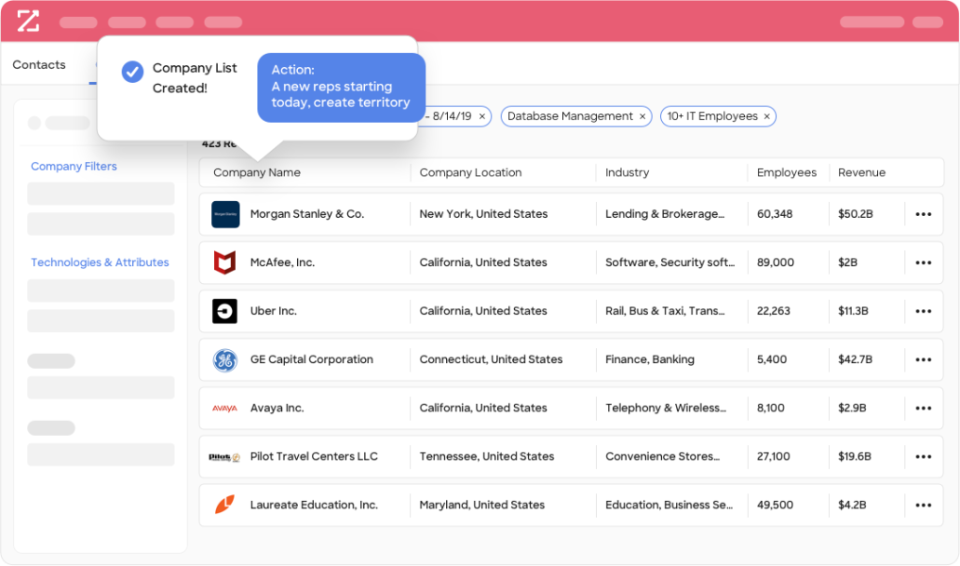
Image source: getapp.com.au
ZoomInfo is a powerhouse in the B2B data space, combining a massive database with AI to identify intent signals and ideal customer profiles (ICPs). By offering extensive B2B contact data and engagement tools, it helps GTM teams find, connect with, and prioritize the right prospects at the optimal time. It also tracks organizational charts and technographics, allowing sales reps to tailor their pitches based on the specific software stack or internal structure a prospect is already working with.
Pricing: Custom pricing based on features and user count (contact sales).
Apollo: Best all-in-one platform for lead discovery and initial engagement
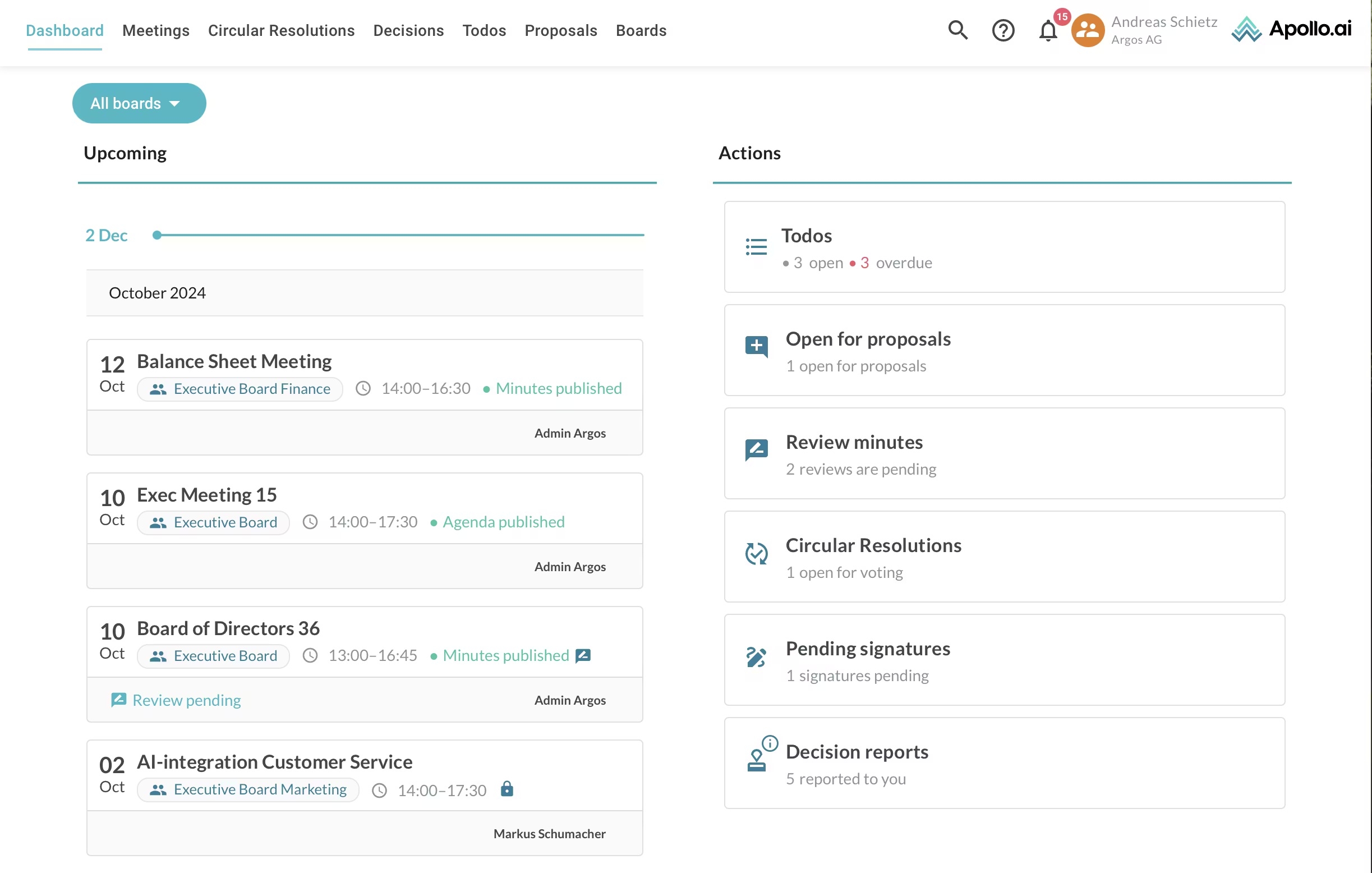
Image source: getapp.sg
Apollo combines robust prospecting and outreach functionalities into a single, comprehensive solution. It allows sales and marketing teams to discover high-quality leads from a massive B2B database, enrich their CRM data, and execute automated, personalized email and call sequences from one unified interface. Users particularly value its Chrome extension, which lets reps seamlessly capture prospect data directly from LinkedIn and immediately drop them into active, multi-step email sequences.
Pricing: Includes a free plan, with paid plans starting at around $49/user/month (billed annually).
AI for sales engagement and outreach
This category focuses on automating and optimizing communications with prospects and customers, ensuring timely, personalized, and effective interactions. These tools typically , follow-ups, and sequence .
Outreach: Best for AI orchestration across the sales lifecycle
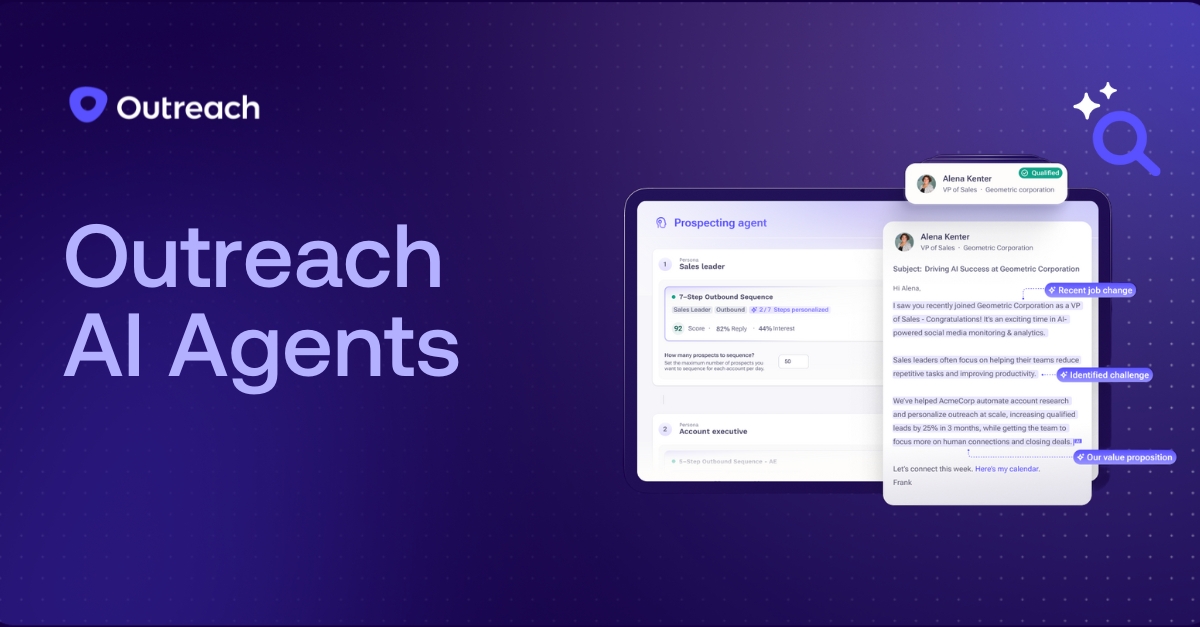
Image source: businesswire.com
Outreach focuses on maximizing reps' productivity by automating complex workflows and optimizing email and call sequences. Its AI capabilities analyze buyer sentiment and suggest the next best actions, ensuring highly personalized communications at scale and empowering teams to execute winning sales strategies. Additionally, its integrated AI assistant can surface real-time objections and battle cards during live calls, ensuring reps are always equipped with the right responses.
Pricing: Paid plans start at around $39/user/month (billed annually).
Salesloft: Best for deep revenue intelligence and sales engagement
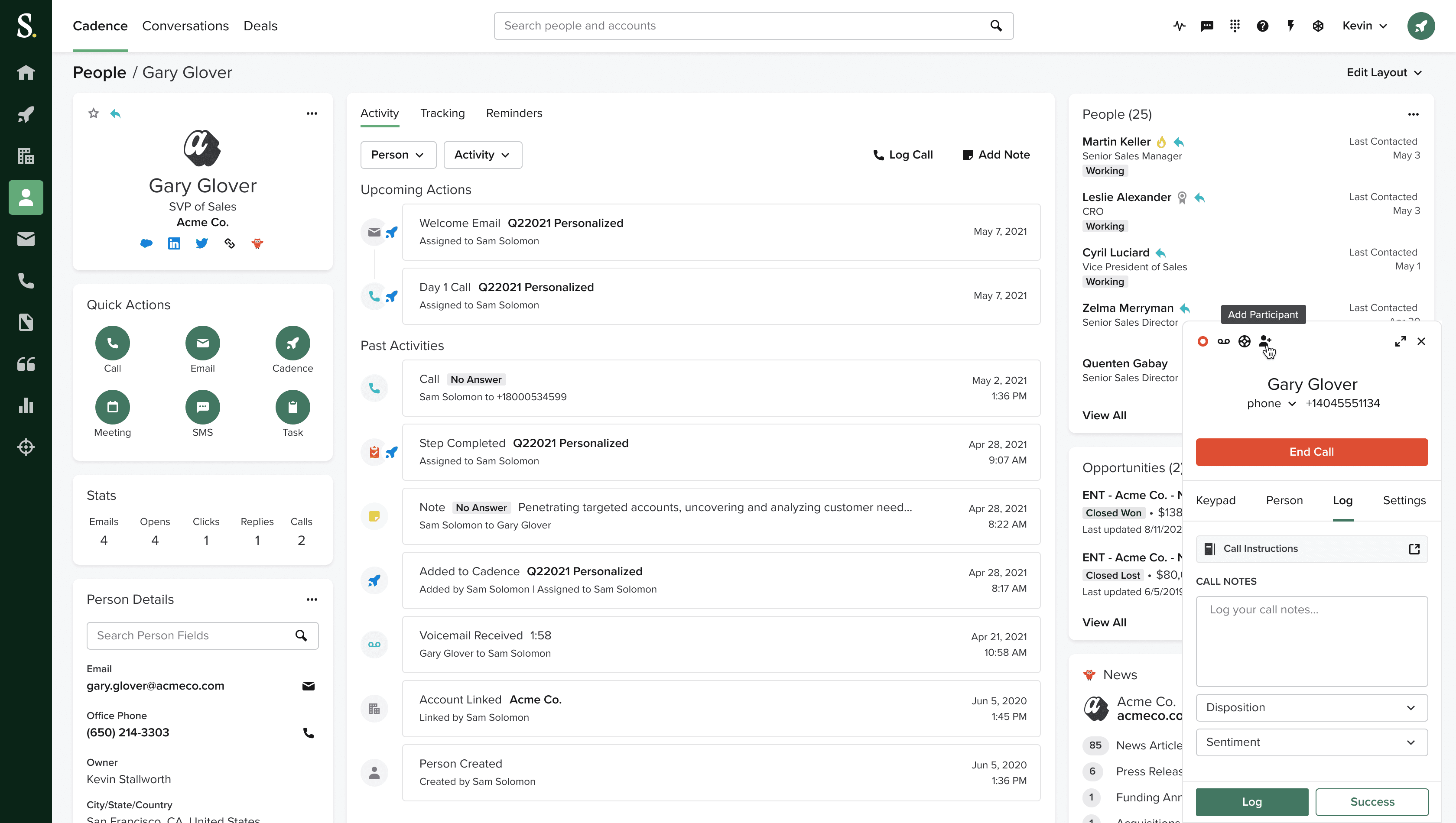
Image source: salesloft.com
Salesloft brings together workflow automation, pipeline management, and conversation intelligence. With a strong focus on enhancing sales engagement strategies, its AI engine helps sellers prioritize their daily tasks, craft personalized messaging, and manage deals more effectively to close revenue gaps. Its signature "Rhythm" feature stands out by standardizing best-practice outreach and actively prioritizing a seller's daily workflow based on real-time buyer intent signals.
Pricing: Custom pricing based on package tiers (contact sales).
Regie.ai: Best for generative AI email writing and campaign optimization
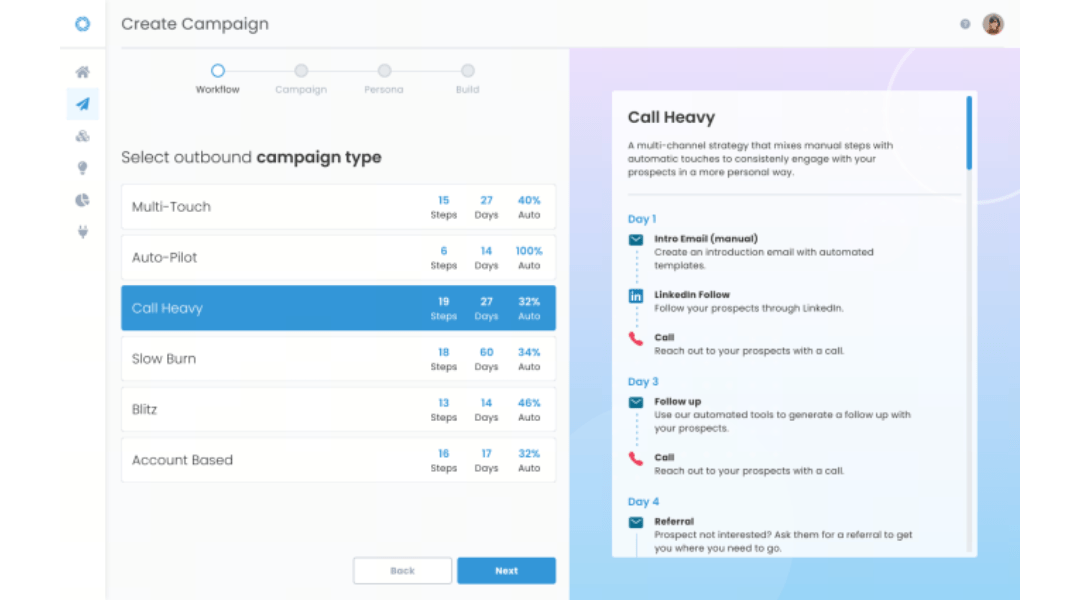
Image source: techcrunch.com
Regie.ai acts as a co-pilot for SDRs and marketing teams, known for its comprehensive outreach management. It leverages generative AI to rapidly create highly personalized email copy, sales sequences, and social messages based on best practices and targeted buyer persona data. By integrating directly with your existing sales engagement platforms, it automatically writes and syncs multi-touch campaigns in minutes, drastically reducing content creation time.
Pricing: Paid plans start at around $180/user/month (billed annually).
Conversation intelligence and coaching
These assistants analyze spoken and written interactions to extract valuable insights, improve sales performance, and facilitate targeted coaching for sales representatives. They turn raw conversation data into actionable intelligence.
Gong: Best for revenue management and AI-backed market feedback
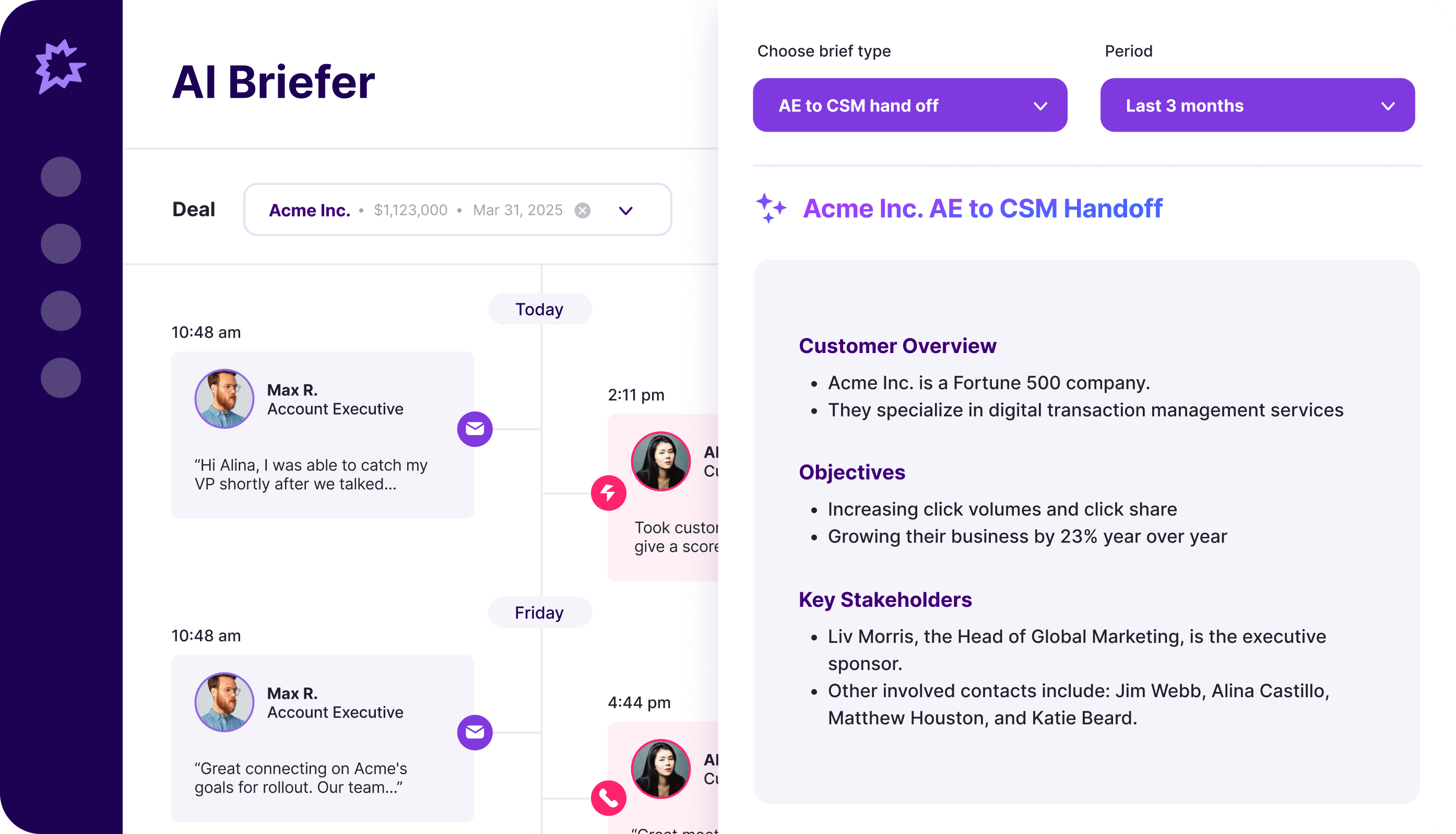
Image source: gong.io
Gong captures customer interactions across phone, email, and web conferencing to deliver deep insights via AI-driven workflows. It analyzes conversations to provide actionable coaching for reps, highlight deal risks, and capture real-time market feedback, highlighting the winning behaviors that drive revenue. Beyond just coaching, Gong aggregates this interaction data to create "Reality-Based Forecasting," giving leaders a highly accurate view of pipeline health based on actual customer conversations rather than gut feelings.
Pricing: Custom pricing based on base platform fee and per-user cost (contact sales).
Chorus: Best for targeted call analysis and rep coaching insights
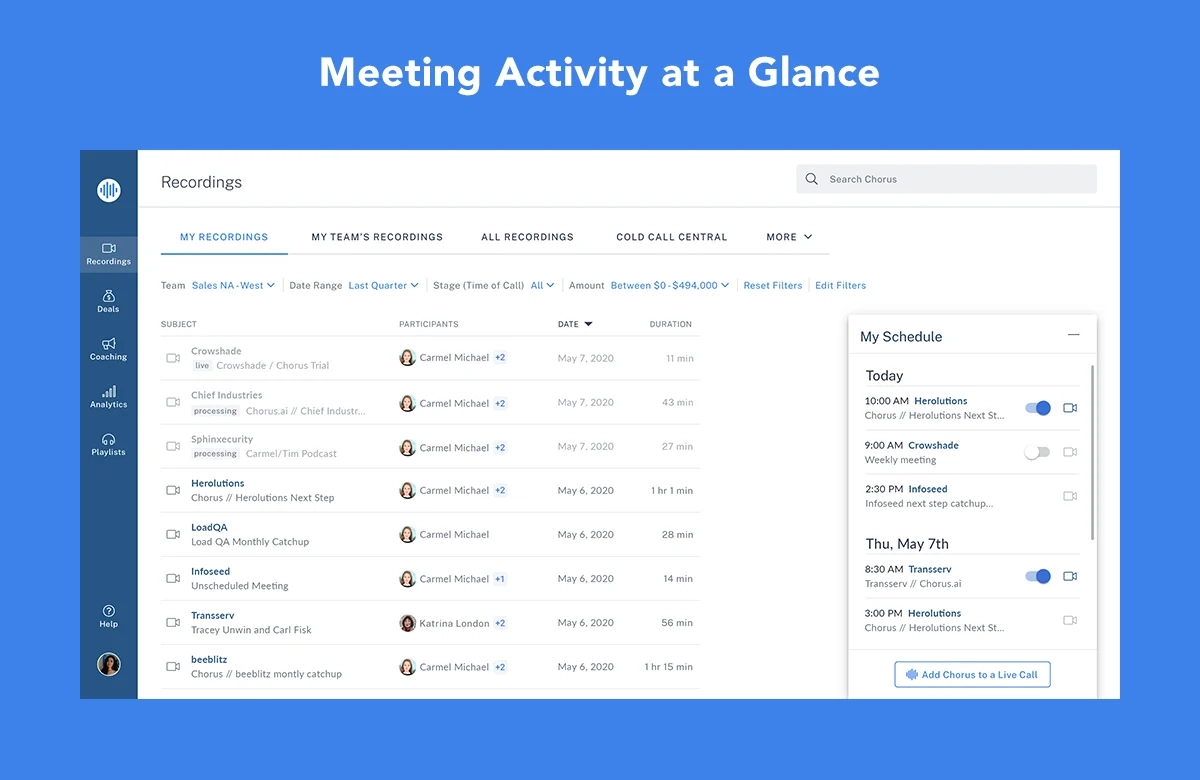
Image source: startupstash.com
Chorus (by ZoomInfo) records, transcribes, and analyzes sales calls in real-time. It identifies key moments, objections, and competitor mentions to provide specific coaching insights for sales representatives, helping managers train their teams to refine techniques and replicate the strategies of top performers. Because it is part of the ZoomInfo ecosystem, the insights generated from Chorus seamlessly feed back into prospect profiles, enriching your database with context from actual sales conversations.
Pricing: Includes free plan, paid plans start around $20/month.
Avoma: Best for AI-assisted meeting lifecycles and automated note-taking
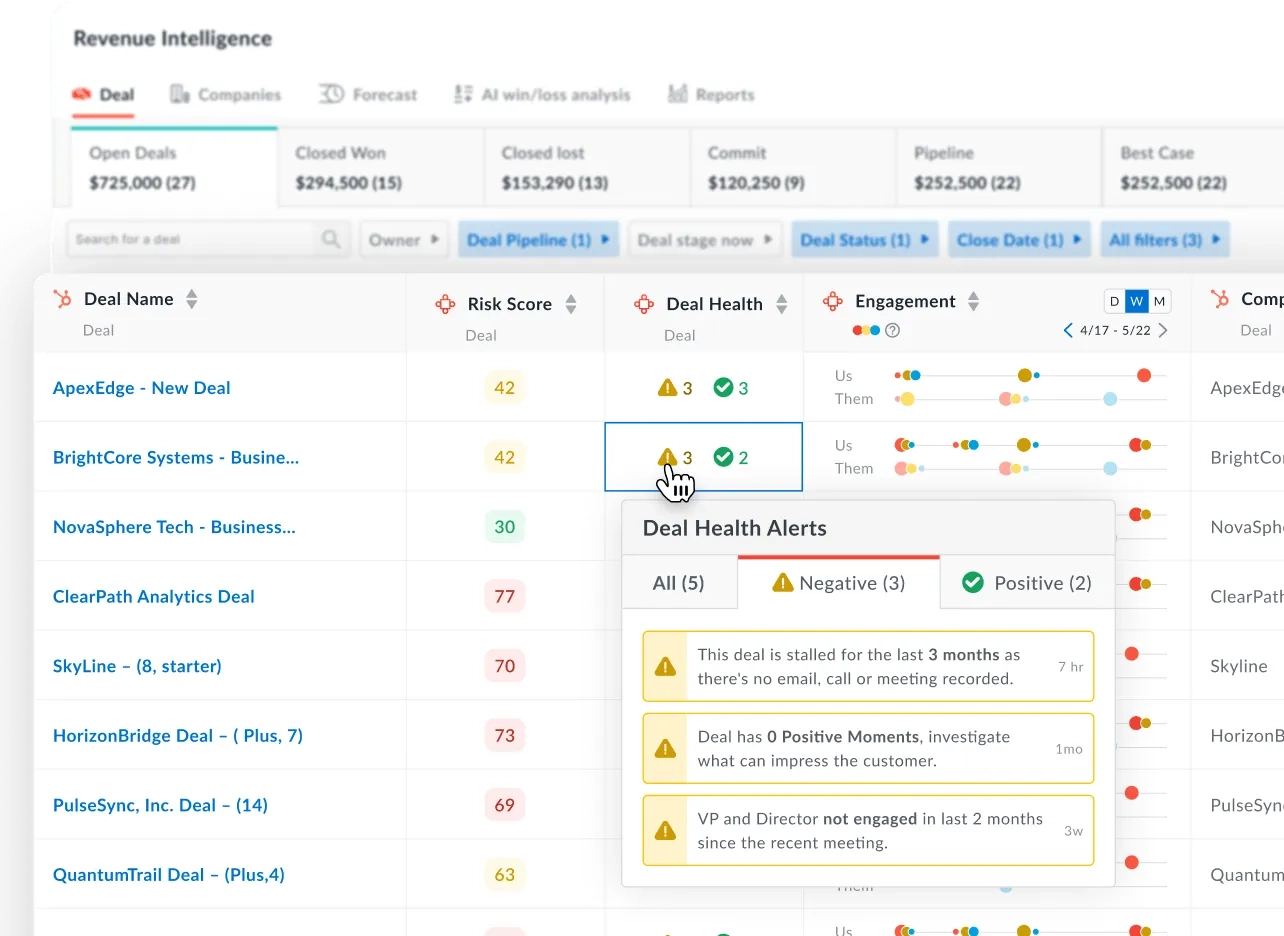
Image source: avoma.com
Avoma specializes in AI-assisted meetings, seamlessly capturing, transcribing, and summarizing conversations. It goes beyond basic transcription by automatically identifying key moments and extracting actionable items, saving reps hours of manual data entry while ensuring no crucial follow-up is missed. It also offers collaborative agenda templates before the call and automatically pushes the generated AI summaries directly to corresponding CRM records, streamlining the entire meeting lifecycle.
Pricing: Includes a free plan, with paid plans starting at $19/user/month (billed annually).
AI-powered CRM & forecasting
These tools integrate AI directly into to enhance data analysis, automate tasks within the CRM, and provide more accurate sales forecasts. They go beyond data storage to actively manage the sales process.
Salesforce Einstein: Best built-in CRM AI for the Salesforce ecosystem
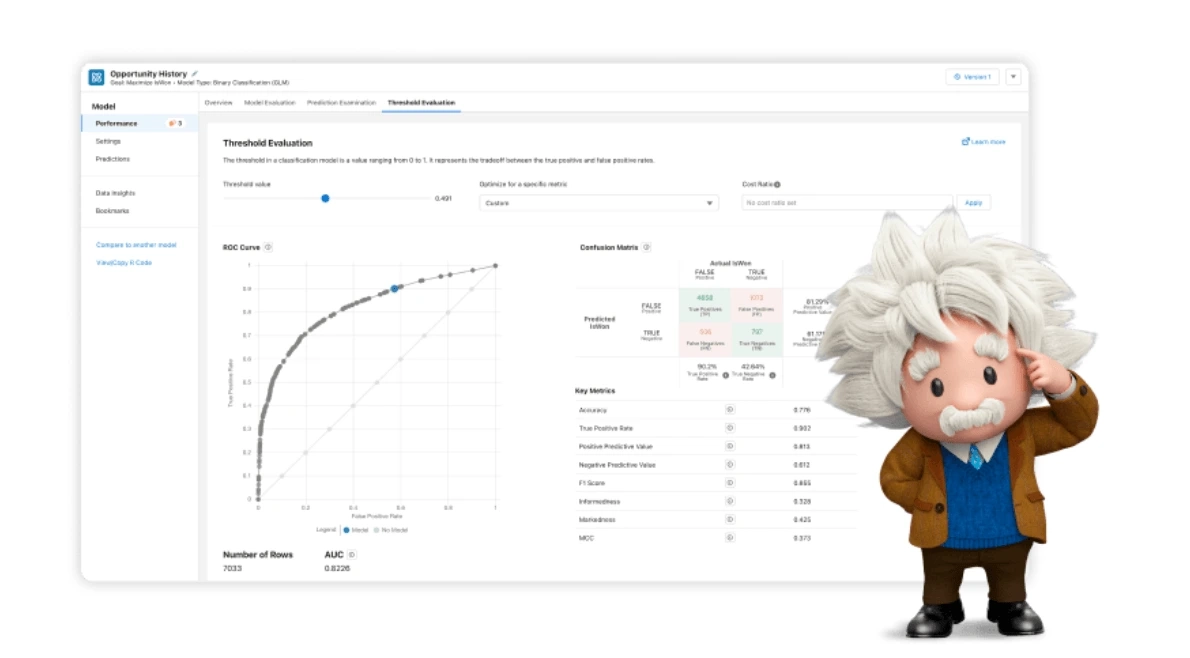
Image source: atrium.ai
Einstein is the native AI layer built directly into the Salesforce platform. It assists with predictive lead scoring, opportunity insights, and predictive analytics, helping teams forecast with greater accuracy and automate data capture without ever needing to leave their CRM environment. Features like Einstein Activity Capture automatically log emails and calendar events, while its AI models continually learn from your specific historical deal data to offer increasingly tailored recommendations.
Pricing: Often included in higher-tier Salesforce licenses; standalone add-ons vary (contact sales).
HubSpot Sales Hub: Best CRM-native AI tools for mid-market teams
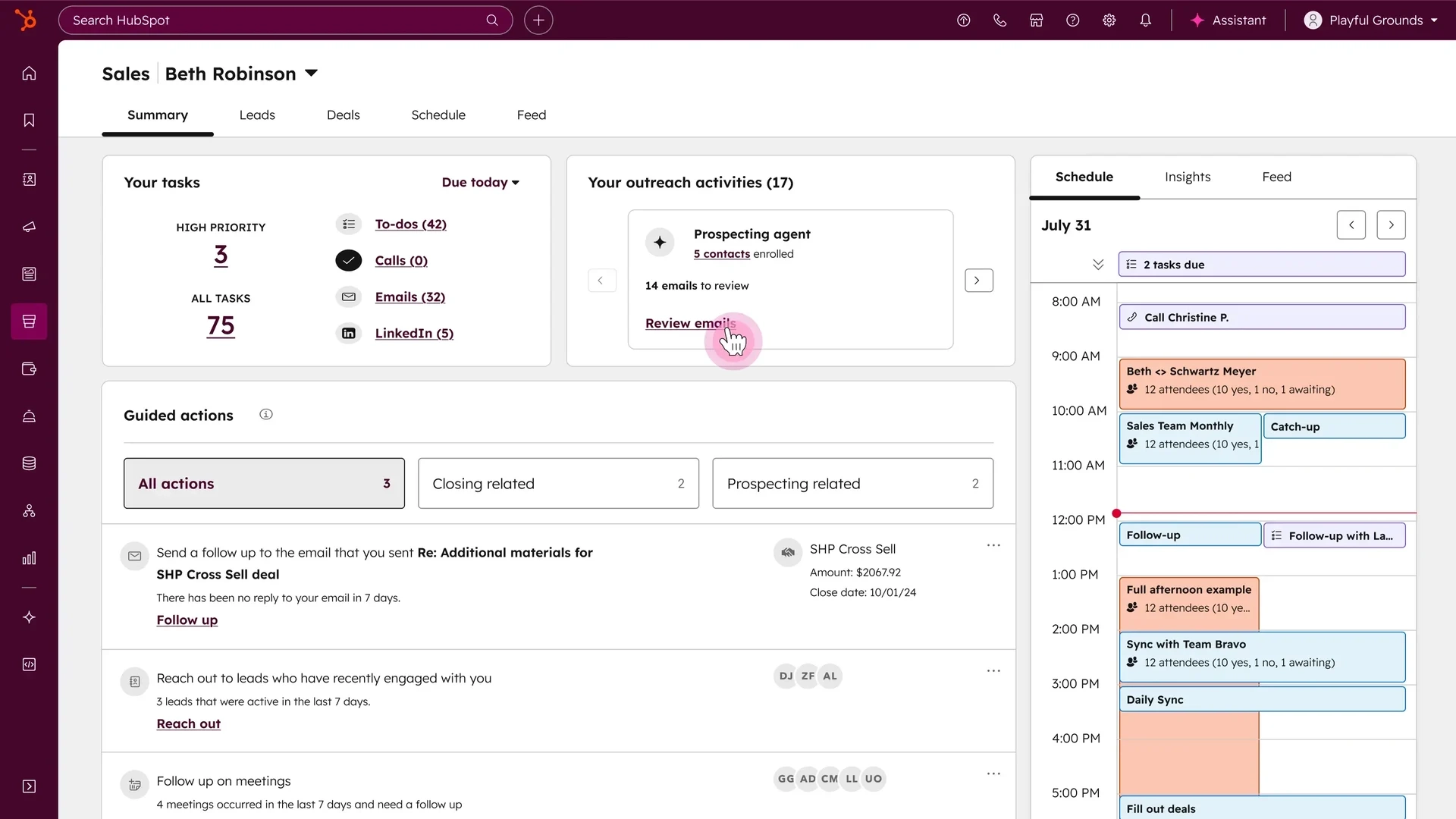
Image source: hubspot.com
HubSpot offers CRM-native tools with integrated AI specifically tailored for small to mid-market teams. It by offering features like AI email content generators, predictive lead scoring, and automated data entry in a highly user-friendly interface. With the addition of ChatSpot, a conversational AI bot, users can now ask natural language questions to instantly generate reports, draft follow-up emails, or create new CRM contacts.
Pricing: Free tools available; paid plans start at $7/seat/month.
Clari: Best for comprehensive revenue orchestration and forecasting
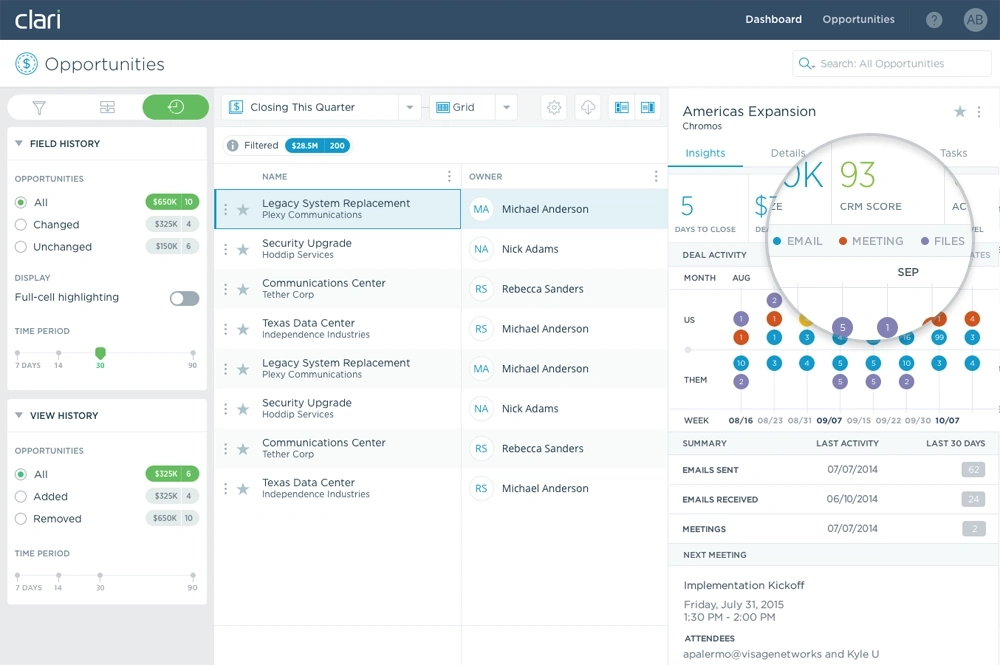
Image source: marketsandmarkets.com
Clari unifies data from CRM, email, and meetings to create a comprehensive source of truth for revenue orchestration. Using AI, it provides unmatched visibility into pipeline health, delivering highly accurate sales forecasts and actionable insights across the entire revenue process. It is particularly favored by CROs and sales leaders for its ability to identify "revenue leaks" (deals at risk of slipping) and for providing board-ready visualizations of historical win rates and future projections.
Pricing: Custom pricing (contact sales).
While each of these specialized AI sales assistants offers powerful capabilities within its niche, the sheer variety highlights a common challenge: GTM teams often find themselves managing a growing stack of disparate tools. This sets the stage for a critical question – how do we ensure these individual AI strengths contribute to a cohesive, amplified impact for the entire team?
The collaboration paradox: Why standalone AI tools miss the bigger picture for GTM teams
In our pursuit of enhanced sales efficiency, GTM teams have readily adopted a multitude of AI sales assistant tools. Each promises to solve a specific problem, from automating email outreach to providing deep conversational insights. However, this enthusiasm often leads to a significant, yet frequently overlooked, issue: these specialized tools tend to operate in isolation.
Consider a common scenario: a marketing team uses an AI tool to identify high-intent leads and generates personalized outreach messages. The sales team then uses a separate AI assistant to manage their engagement sequences and log activities in their CRM. Later, a sales manager uses a third AI tool for conversation intelligence to review calls. While each tool provides valuable insights, the fragmented nature of this approach creates what we call the "collaboration paradox."
This paradox stems from several challenges:
- Fragmented information: Insights generated by one AI tool often remain confined within that tool. A critical piece of might not easily reach the product or marketing team without manual effort.
- Communication gaps: When AI-generated data is not readily accessible or shareable across departments, it creates new communication barriers. Marketing might not understand why certain leads are converting better, and sales might not on messaging effectiveness from customer success.
- Data silos: Relying on disparate sales and communication tools inevitably leads to . This means that while individual team members might have access to AI insights, a unified, comprehensive view of the customer journey and team performance becomes difficult to achieve. The full context needed for strategic decision-making is scattered across multiple platforms.
The real problem surfaces when valuable AI-generated insights fail to translate into coordinated team action. An AI assistant might flag a "hot" lead with high buying intent, but if this information isn't immediately and clearly communicated to the relevant sales representative, along with context from marketing's previous interactions, the opportunity could be missed or mishandled. Similarly, an AI might detect a competitor mention in a sales call, but if this insight doesn't reach the product development team or competitive intelligence unit quickly and systematically, the advantage of real-time market feedback is lost.
Ultimately, the true return on investment from AI sales assistants is significantly diminished without . These powerful tools can generate unparalleled intelligence, but if that intelligence cannot be easily shared, discussed, and acted upon by the entire GTM team in a unified manner, we risk investing in technology that solves individual problems without elevating collective performance. The answer lies not in more isolated tools, but in how we bring these insights together.
Achieving synergy: How a unified workspace elevates AI sales assistant impact
The solution to the collaboration paradox lies in adopting a unified workspace. We envision this not merely as another piece of software, but as the strategic central hub for GTM teams, specifically designed to orchestrate the integration and amplification of AI-generated insights. A truly comprehensive platform centralizes communication, knowledge, and processes, ensuring that every piece of intelligence from an AI sales assistant contributes to a cohesive, collective effort.
Here's how a unified workspace elevates the impact of AI sales assistants:
Translating AI insights into collective action
AI sales assistants are exceptional at identifying patterns, predicting outcomes, and highlighting opportunities. However, these insights are only as valuable as the team's ability to act on them. A unified workspace provides the necessary infrastructure for these insights to immediately trigger collective action.
Imagine an AI sales assistant flags a high-priority lead with a strong intent to purchase, based on web activity and email engagement. In a fragmented setup, this insight might remain in a dedicated sales engagement tool. In a unified workspace, this alert can automatically trigger a notification in a . The sales representative, their manager, and even a marketing specialist can instantly see this alert. They can then quickly discuss the best approach, share relevant marketing materials stored in , and even jump into a brief video call to align on strategy – all within the same platform. This rapid, coordinated response ensures that valuable AI-driven intelligence doesn't get lost, but instead translates directly into tangible, team-driven efforts.
Streamlining AI-driven workflows
A unified workspace isn't just about communication; it's about connecting the dots between AI insights and the operational workflows of your GTM team. and within such a platform can directly respond to outputs from AI sales assistants, initiating subsequent internal processes without manual intervention.
Consider an AI conversation intelligence tool that detects a strong upsell opportunity during a customer interaction, or identifies a common objection that requires a specific follow-up from a product expert. In a unified workspace, this AI-driven observation can automatically trigger a new task in a for the account manager, assign a specialist to address the objection, or even populate a shared sheet with the new opportunity details for pipeline review. For instance, if an AI identifies a key decision-maker from a recorded call, the unified platform, like , its automation could instantly create a contact entry in a shared and . This level of integration ensures that AI-generated data not only informs but actively drives and simplifies complex sales workflows.
Empowering data-driven decision-making
When AI data from various sources is aggregated and contextualized within a unified workspace, GTM leaders gain an unprecedented ability to make more informed and agile strategic decisions. Instead of piecing together reports from different tools, a single platform offers a holistic view.
This means sales managers can analyze trends identified by AI across multiple conversations, correlating them with marketing campaign performance and customer success metrics – all within one environment. They can quickly , identify training needs for their team, or reallocate resources based on AI-backed projections. For example, if AI assistants indicate a surge in inquiries for a particular product feature, leaders can use their unified workspace to instantly communicate this to product development, adjust marketing messaging, and ensure sales teams are equipped with updated collateral. This comprehensive visibility and immediate communication capability transforms raw data into actionable intelligence that drives strategic alignment and empowers GTM teams to adapt quickly to market changes. See Lark’s unified workspace in action.
Lark's native AI features: Building productivity from within your collaboration hub
While the market offers a variety of specialized AI sales assistants, the true efficiency for GTM teams often comes when intelligence is baked directly into their daily workspace. This is precisely where a platform like distinguishes itself. Lark integrates AI features natively, enhancing productivity without requiring users to switch applications or manage separate subscriptions. As an all-in-one suite, Lark combines , , , , and into a singular ecosystem.
's inherent AI capabilities are designed to streamline routine tasks and ensure that valuable information from conversations is captured and acted upon, directly within the platform.
Here are some of Lark's native AI features that boost sales productivity:
AI-powered meeting summaries and action items:
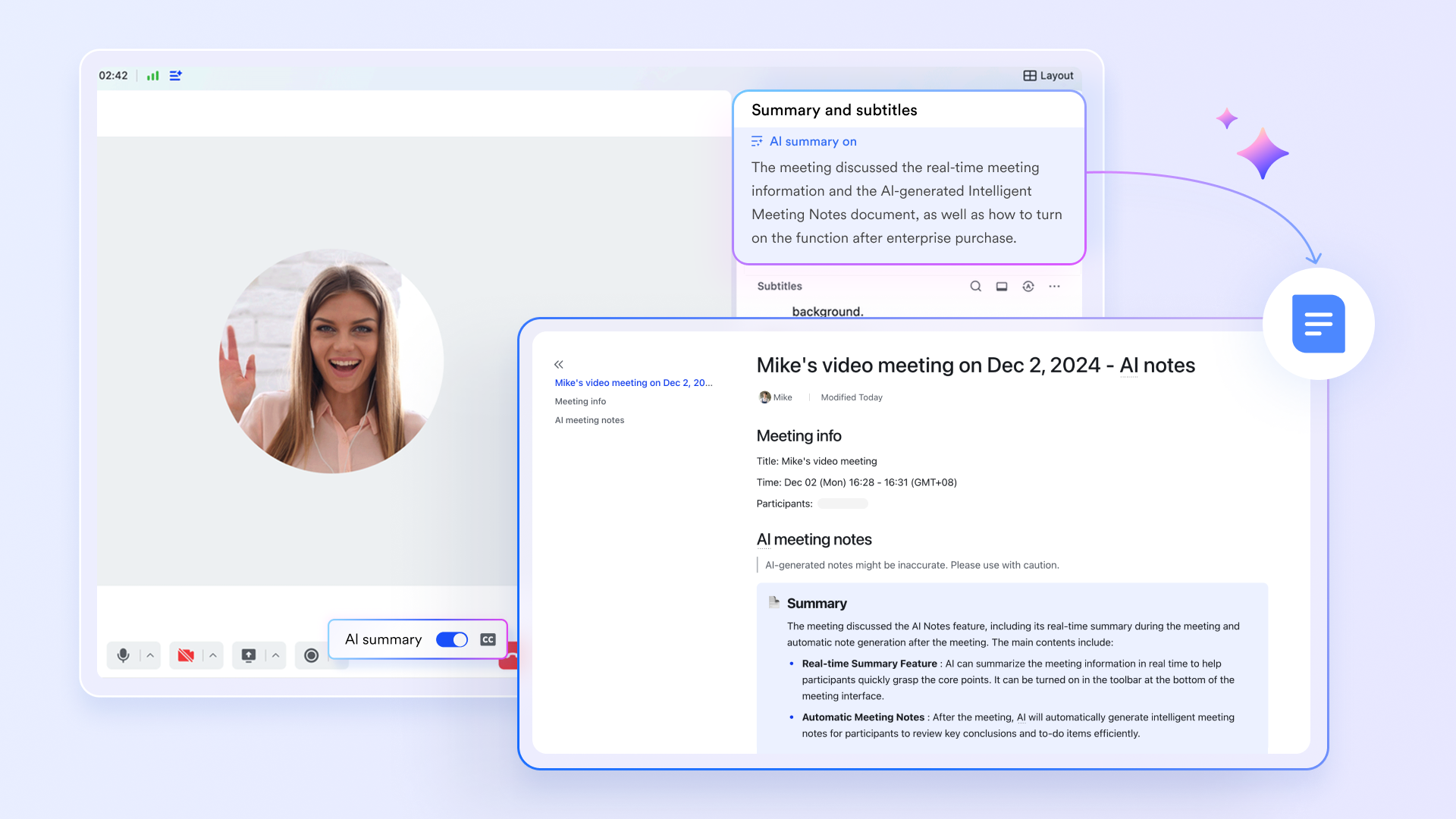
Lark's AI Companion can and identify important topics from meetings, saving significant time on note-taking.
Example: After a crucial client call, a sales manager no longer needs to manually extract key takeaways. Lark's AI provides a summary and even generates a list of actionable follow-up tasks, assigning them to relevant team members directly within the platform.
Real-time transcription and translation in video meetings:
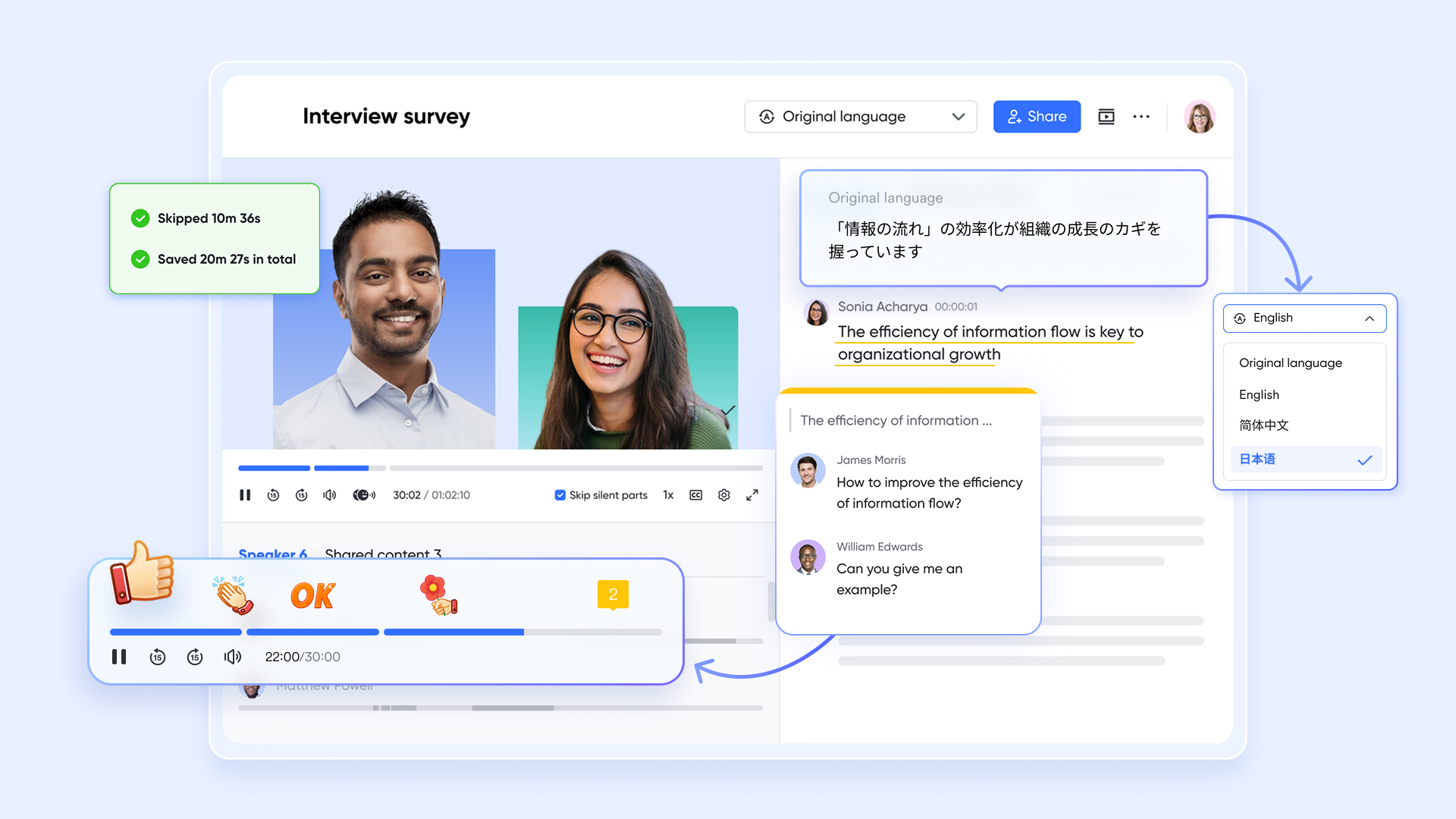
Lark's video conferencing features are enhanced with AI for . This ensures clarity and accessibility for all participants, especially in diverse GTM teams or during international calls.
Example: During a to a global prospect, the AI can provide live captions and even translate spoken dialogue, breaking down language barriers and ensuring everyone understands the discussion in real time.
Intelligent workflow automation and data extraction
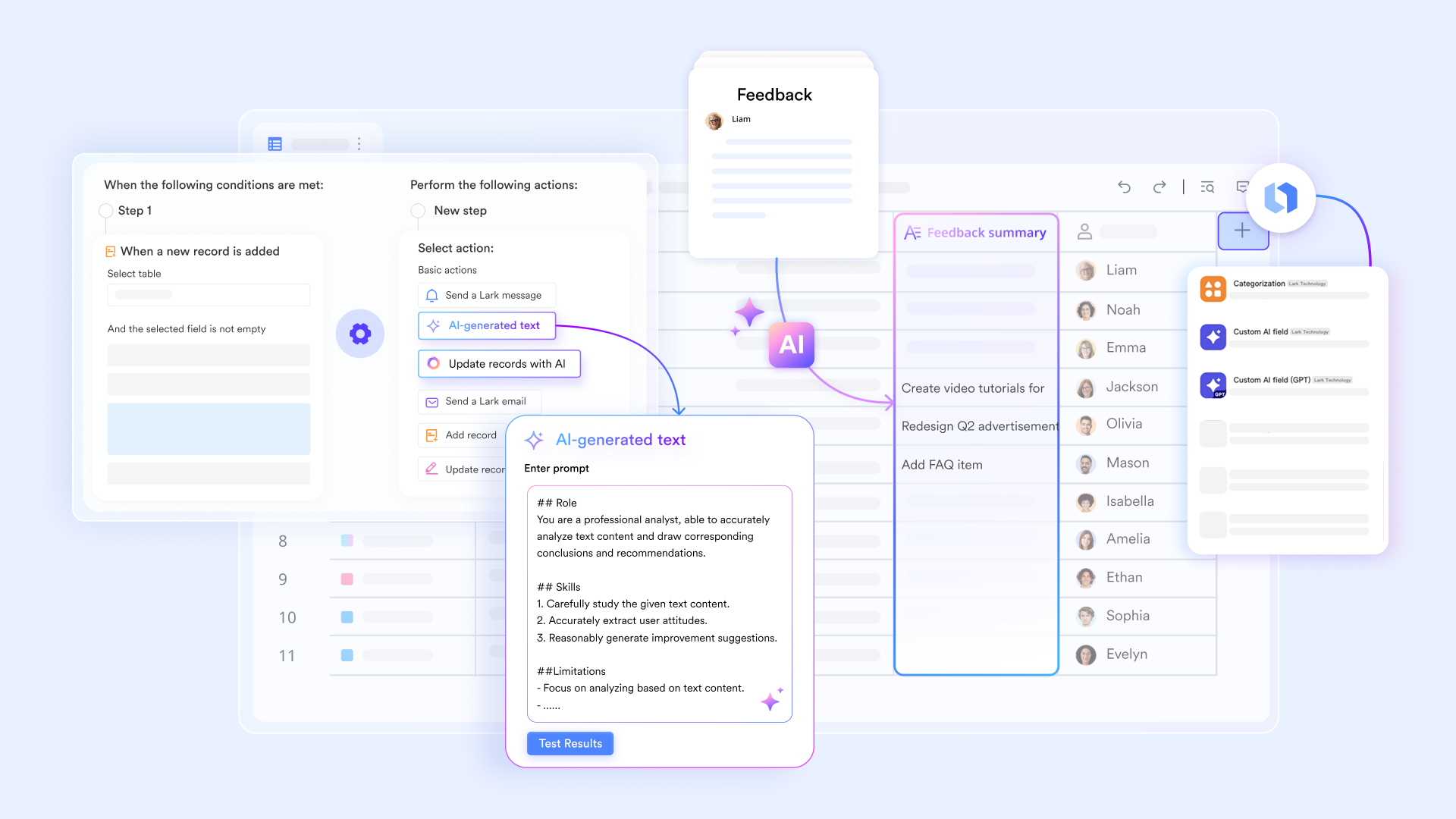
Lark leverages AI to streamline processes through intelligent automation and data handling, such as AI import for (Lark's database feature) where content can be automatically mapped to fields. This reduces manual data entry and improves data accuracy.
Example: A sales operations manager can use Lark's AI to automatically extract key information from uploaded sales reports or customer feedback documents and populate a shared dashboard, triggering approvals or updates in related project sheets without manual intervention.
AI-enhanced centralized knowledge management
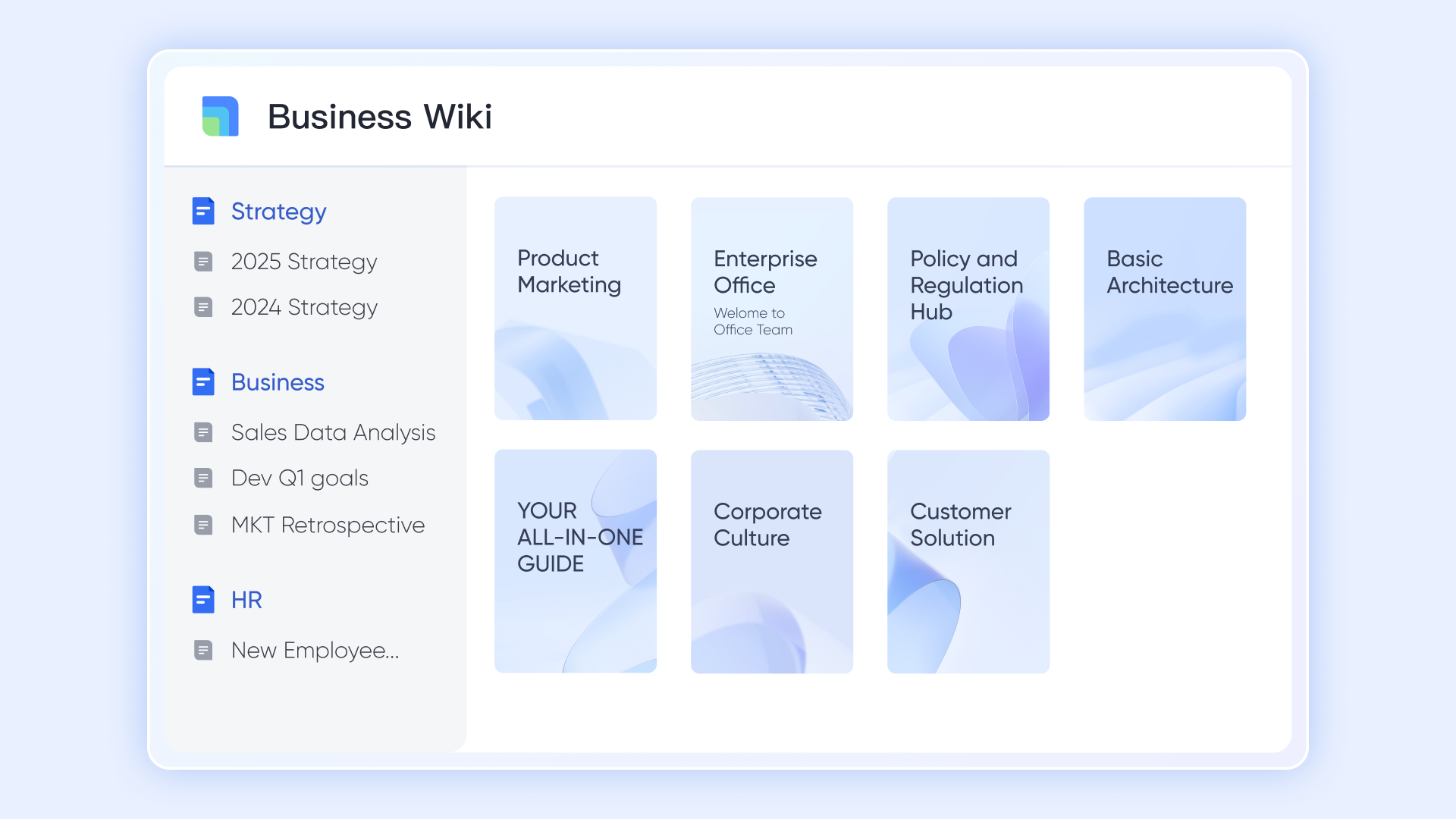
Lark’s centralized provides a , with AI features for easy search and organization. Best practices, successful sales scripts, and competitive intelligence—all potentially derived from AI analysis of winning deals—can be stored and easily accessed by the entire sales team.
Example: An AI-powered search within the Wiki allows a new sales rep to quickly find the most effective sales script for a specific industry, compiled from top performers' call analyses, ensuring continuous learning and the cultivation of a high-performing sales culture.
See how Lark's AI solves your sales challenges.
Choosing the right path: Key considerations for adopting AI sales assistant software
Adopting AI sales assistant software represents a significant investment and a strategic decision for any GTM team. To ensure this investment yields maximum returns, it's crucial to approach the selection process with careful consideration of your team's specific needs, workflows, and long-term goals. My advice is to avoid getting swept up by individual feature sets alone and instead, focus on how a solution integrates into your broader operational framework.
Here are key considerations when evaluating AI sales assistant software:
Assess specific pain points and existing workflows
- Identify which administrative tasks consume the most time within your GTM team.
- Pinpoint bottlenecks in your current sales process (e.g., lead qualification, personalized outreach, consistent follow-up).
- Prioritize AI capabilities that directly address these core challenges. For instance, if manual data entry is a significant drain, prioritize solutions with strong and automation.
Prioritize seamless integration with existing tech stack
- Recognize that most GTM teams already rely on a CRM and other essential tools.
- Choose AI solutions that offer robust APIs or native connectors to your current systems to prevent new data silos and workflow disruptions.
- Look for platforms that can centralize information from various sources, avoiding the fragmentation discussed earlier.
Emphasize user experience and adoption factors
- Evaluate ease of use. Even the most powerful AI tool is ineffective if it's too complex or cumbersome for your team.
- Prioritize solutions with a user-friendly interface and intuitive workflows to ensure high user adoption.
- Consider scalability and customization options to ensure the solution can grow with your team and adapt to evolving needs or new AI capabilities.
Actively support and enhance team collaboration
- Recognize that AI insights drive collective action, not just individual gains.
- Look for solutions that provide intelligent assistance alongside , project management, and knowledge-sharing functionalities.
Ultimately, the most effective choice for GTM teams is a platform, like , that acts as a , bringing together messaging, meetings, documents, and AI capabilities. This holistic approach is not only more comprehensive but also proves to be a more cost-effective solution in the long run, ensuring that AI investments truly translate into unified team success.
To further support GTM teams in adopting a comprehensive and cost-effective solution, Lark offers flexible pricing plans tailored to different organizational needs:
- Starter plan: Free forever plan with 11 powerful tools for up to 20 users, 100GB storage, 1,000 automation runs, AI translations, and more. No credit card needed.
- Basic plan: $6/user/month (billed annually) for up to 500 users. Includes everything in Starter plus unlimited message history, 5TB storage, 1,000 automation runs, and more. Some users may need to to purchase.
- Pro plan: $12/user/month (billed annually) for up to 500 users. Includes everything in Basic plus group calling for up to 500 attendees, 15TB storage, 50,000 automation runs, and more.
- Enterprise plan: for custom pricing. Supports unlimited users and includes advanced automation, security, compliance, and management features.
For small teams with simple communication needs

18 months message history
1000 Base automation runs/month
2000 rows per table in Base
Most POPULAR
For companies with comprehensive collaboration and management needs
Unlimited message history
500-participant video meetings
50k Base automation runs/month
20k rows per table in Base
For large companies with advanced security and organizational management needs
Get a personalized demo and pricing
Unlimited message history
500-participant video meetings
15 TB storage + 30 GB storage/user
500k Base automation runs/month
50k Base automation runs/month
Most POPULAR
For companies with comprehensive collaboration and management needs
Unlimited message history
500-participant video meetings
50k Base automation runs/month
20k rows per table in Base
Conclusion
AI sales assistant software empowers GTM teams with automation and insights. However, its full potential is unlocked when these AI insights drive cohesive team action within a unified workspace. , as an integrated platform, centralizes communication and streamlines workflows, ensuring AI investments translate into collective efficiency. This holistic approach fosters sustained productivity, informed strategies, and measurable revenue growth. Equip your GTM team with Lark's collaborative AI environment to truly succeed.
Unlock your GTM team's full potential with unified AI features.
FAQs
What is an AI sales assistant software?
AI sales assistant software refers to intelligent applications that use artificial intelligence to automate repetitive sales tasks, provide data-driven insights, and offer guidance to sales professionals throughout the sales cycle. These tools help with tasks like lead scoring, automated outreach, and conversation analysis.
How do AI sales assistants differ from traditional CRM systems?
While CRM systems primarily store and manage customer data, AI sales assistants go a step further by using AI to analyze that data and automate actions. AI sales assistants focus on intelligence and automation within the sales process, whereas CRM systems are fundamentally data management platforms, though many CRMs now integrate AI features.
Can AI sales assistants replace human sales representatives?
No, AI sales assistants are designed to augment, not replace, human sales representatives. They handle administrative burdens, provide insights, and automate routine tasks, freeing up human reps to focus on strategic thinking, complex problem-solving, relationship building, and high-value customer interactions where emotional intelligence and creativity are essential.
What are the main benefits of using AI sales assistant software?
The main benefits include increased sales productivity and efficiency, reduced administrative workload for sales teams, more accurate lead qualification and forecasting, personalized customer engagement, and improved sales coaching through conversation analysis.
How does a unified collaboration platform enhance the value of AI sales tools?
A unified collaboration platform enhances AI sales tools by centralizing communication, knowledge sharing, and workflows. This ensures that AI-generated insights are not siloed but are readily shared, discussed, and acted upon by the entire GTM team, leading to coordinated efforts, streamlined processes, and more informed collective decision-making.
What features should I look for in an AI sales assistant for CRM?
When looking for an AI sales assistant that integrates well with your CRM, consider features such as automated data entry and synchronization, intelligent lead scoring and routing, predictive analytics for pipeline health and forecasting, automated task creation based on CRM triggers, and integrated communication tools that pull context directly from CRM records.
Related reading