Many of us picture project management as a world of Gantt charts, strict deadlines, and rigid processes. It's often seen as methodical, logical, and perhaps even a bit uninspired. Yet, for any manager navigating the complexities of today’s projects, this traditional view misses a crucial element: creativity. I've seen firsthand how a thoughtful application of creativity in project management can transform a bogged-down project into a dynamic success. This article explores how embracing creativity, not as an artistic pursuit, but as a strategic problem-solving approach is not just beneficial, but essential for modern project management, leading to better outcomes and more engaged teams.
The misconception: project management as a rigid process
It's a common belief that project management thrives on strict adherence to plans, where every step is predefined and deviations are minimized. This perspective often stems from a desire for control and predictability, especially in high-stakes environments. We’re taught to identify risks, establish clear parameters, and guide our teams along a well-worn path. For many, the idea of "creativity" might even sound counterproductive, suggesting chaos or a departure from established best practices.
However, an overemphasis on rigidity can often backfire.
The pitfalls of a rigid approach
- Case study: I once oversaw a project developing a new customer service portal. The was meticulous, outlining every phase from design to testing.
- Unexpected regulatory change: An unexpected regulatory change required a complete overhaul of the data privacy section mid-project.
- Friction from strict waterfall approach: Our strictly defined waterfall approach created immense friction. The team felt boxed in, unable to quickly pivot without disrupting the entire timeline.
- Negative outcomes: We ended up with delayed approvals and a frantic scramble, simply because our rigid framework left no room for creative problem-solving when the unexpected hit.
- Stifled morale and inefficiency: This kind of inflexibility doesn't just slow things down; it can stifle morale and prevent teams from finding the most effective and efficient solutions.
Beyond the artistic: what creativity means in project management
When I talk about creativity in , I'm not suggesting that project managers suddenly need to become graphic designers or content creators. Instead, I view creativity as the ability to approach challenges with an open mind, to see connections others miss, and to devise novel, effective solutions. It's about adaptive problem-solving, strategic thinking, and imagining better ways to structure work and motivate people.
Consider a project manager tasked with streamlining a client onboarding process that had become notoriously slow and frustrating.
- A purely traditional approach might involve simply mapping the existing steps and trying to optimize each one incrementally.
- A creative project manager, however, might step back and ask: "is there a fundamentally different way we could welcome new clients? What if we redesigned the entire sequence to be more intuitive, less form-heavy, and more personalized?"
This could involve rethinking communication channels, experimenting with new interactive elements, or even using digital tools to automate mundane tasks, freeing up human time for more meaningful client engagement. It's this kind of innovative process design—thinking differently about how work flows, how teams interact, and how problems are resolved—that truly defines creativity in our field. It's about finding the "art" in the architecture of a project, even when the output isn't a masterpiece on canvas.
Discover how Lark empowers creative project management
The paradox: how structure can spark creativity
It might seem contradictory, but well-defined structures and clear frameworks can actually serve as strong drivers for creativity, rather than obstacles. Imagine a sculptor with an unlimited block of marble versus one with a carefully chosen, smaller piece. The latter, with its inherent boundaries, often leads to more focused and inventive solutions. In project management, when parameters are clear – what the problem is, what resources are available, and what is – teams have a defined space to explore and experiment. These guidelines help prevent aimless wandering and encourage ingenuity within set limits.
Creative direction from clear parameters
For example, consider a product development team working on a new mobile app feature. If they face endless possibilities, they might struggle to even begin. But if the instruction is to create a feature that improves user engagement by 15% within three months using existing design language, their creative energy suddenly has direction.
Structured creative approaches
They can then apply structured creative approaches such as:
- Design thinking: This offers a framework for understanding users, defining problems, generating ideas, prototyping, and testing.
- Agile methodologies: Short, repeated sprints with clear deliverables promote constant feedback and creative adjustments, rather than inflexible, long-term plans.
The structure provides the bedrock; creativity builds upon it, leading to fresh and effective outcomes.
Okay, here's the revised text for both sections, with all headings and bullet points following "sentence case" capitalization:
Building a creative project environment: actionable steps for managers
Creating an environment where creative thinking thrives doesn't just happen. It takes deliberate effort and thoughtful choices from managers. My experience shows that it begins with our communication and how we respond to new ideas.
Encouraging diverse perspectives
Actively support diverse perspectives and open discussions within teams. This means going beyond simply listening to opinions; it involves genuinely seeking out different viewpoints. During a team meeting, instead of only asking for solutions, I might specifically inquire, "what's an unconventional way we could approach this?" Or "if we had no limitations, what would be your most imaginative idea?" I also make a point of arranging opportunities for informal, cross-functional discussions, as many excellent ideas arise from unexpected conversations among team members from various departments.
Building psychological safety
Building psychological safety is extremely important. People will not share new ideas if they fear criticism or failure. As a manager, I make sure that experiments, even those that don't produce the desired results, are viewed as learning experiences, not mistakes. I clearly state, "there are no bad ideas at this stage; let's get every thought out." When a team member suggests something unusual, my initial reaction is never dismissive, but rather curious: "tell me more. What makes you think that could work?" This approach signals that every contribution holds value and that taking thoughtful risks is part of our process.
Structuring brainstorming for success
Organize your brainstorming sessions for success. Simply gathering people in a room and saying "be creative" rarely achieves much. Instead, I use techniques like "round-robin" ideation, where everyone shares one idea at a time, preventing a few dominant voices from controlling the discussion. Or "mind mapping," which and helps uncover hidden relationships. I also find it helpful to frame challenges as questions, rather than simple statements, which naturally encourages more imaginative responses. For instance, instead of "we need to reduce costs," try "how might we deliver the same value with half the budget?" These structured methods provide support for creativity, making it accessible and productive for everyone.
Explore Lark's tools to foster creativity
Equipping your team: tools that empower creative workflows
Even with the right mindset and environment, creative project management can only go so far without the proper tools. Modern are not just about communication; they are powerful allies in driving creativity by streamlining mundane tasks and providing accessible spaces for .
I've found that the best tools offer a unified workspace where teams can move from an initial spark of an idea to its full execution. Consider a platform that combines messaging, video calls, and cloud-native documents. This means that a quick brainstorm in a chat can directly transition into a where everyone can , regardless of location. The discussion, the initial sketches, the feedback loops – all happen within the same ecosystem. This reduces the friction that often kills creative momentum when teams have to jump between different applications.
Furthermore, these tools often offer features that directly support creative processes:
Facilitating visual brainstorming
Shared digital whiteboards allow for visual brainstorming and concept mapping, mimicking an in-person session with the added benefit of digital permanence and easy sharing.
Automating repetitive tasks
Workflow automation is another key aspect. By automating repetitive administrative tasks – like meeting scheduling, data entry, or routine report generation – project managers and their teams gain back precious time and mental energy. This reclaimed capacity can then be channeled into more complex problem-solving, inventive design, and strategic thinking. It's about freeing up human ingenuity from the burden of the routine.
How Lark helps enable creative project management
, as an unified collaboration platform, offers specific functionalities that directly empower creative project managers and their teams. Beyond just providing a unified workspace, its design inherently supports the iterative and dynamic nature of creative work:
Seamless idea capture and development
and are built for real-time co-editing, allowing diverse team members to simultaneously contribute to a shared concept, draft copy, or build out a financial model. This removes the "wait-your-turn" barrier, fostering spontaneous idea generation and rapid iteration. Furthermore, Lark's "Magic Command" (AI capabilities) can assist in brainstorming, summarizing discussions within , or even generating initial content drafts, providing a digital co-pilot for creative tasks.
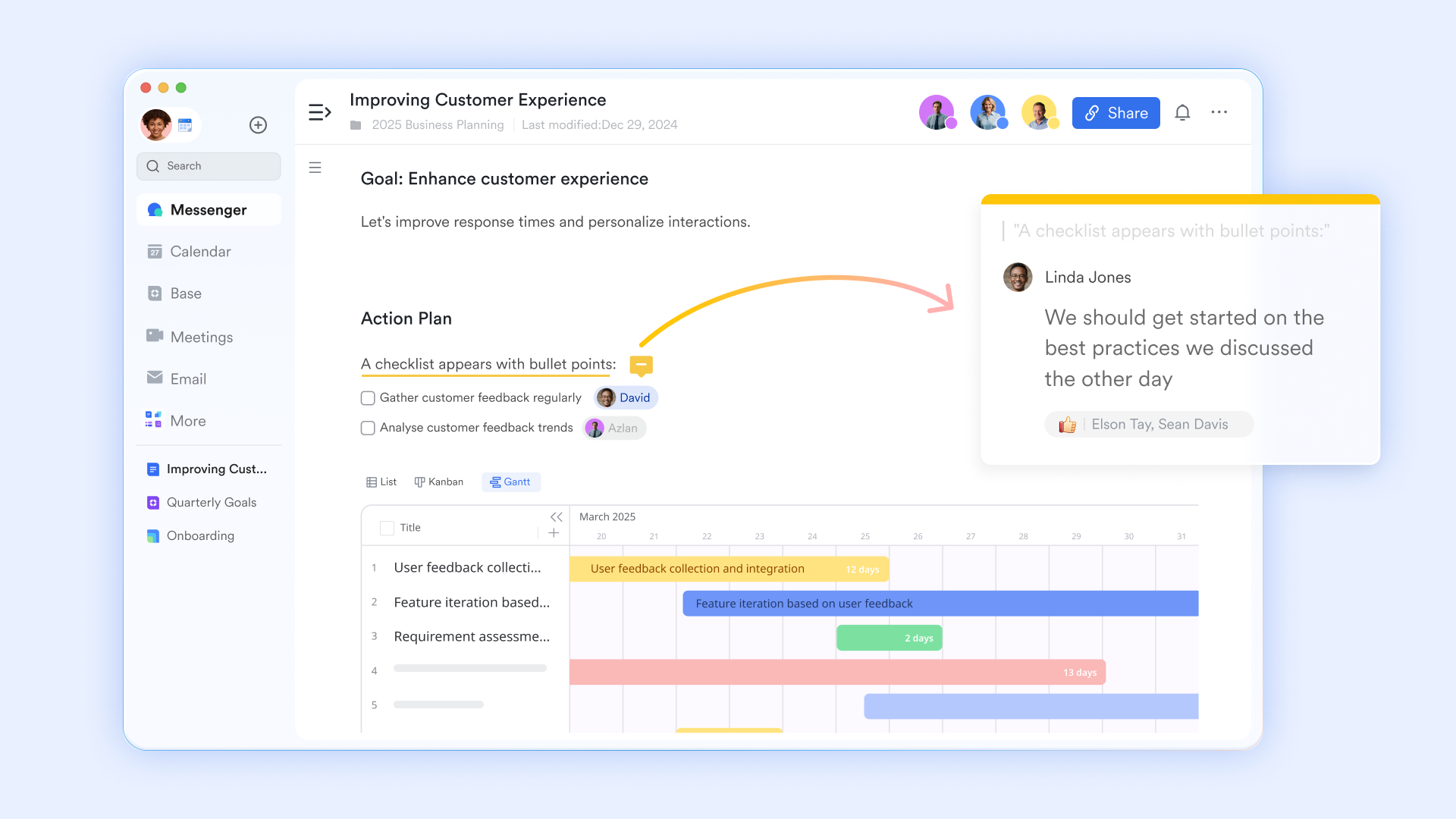
Dynamic visual brainstorming and feedback
The unified whiteboard feature in is a game-changer for visual thinkers. Teams can sketch, map ideas, and organize thoughts collectively during video calls or asynchronously. Crucially, feedback loops are shortened. Team members can annotate directly on designs, mock-ups within Lark, ensuring that creative revisions are informed, targeted, and happen without delays caused by switching platforms or tracking disparate email threads.
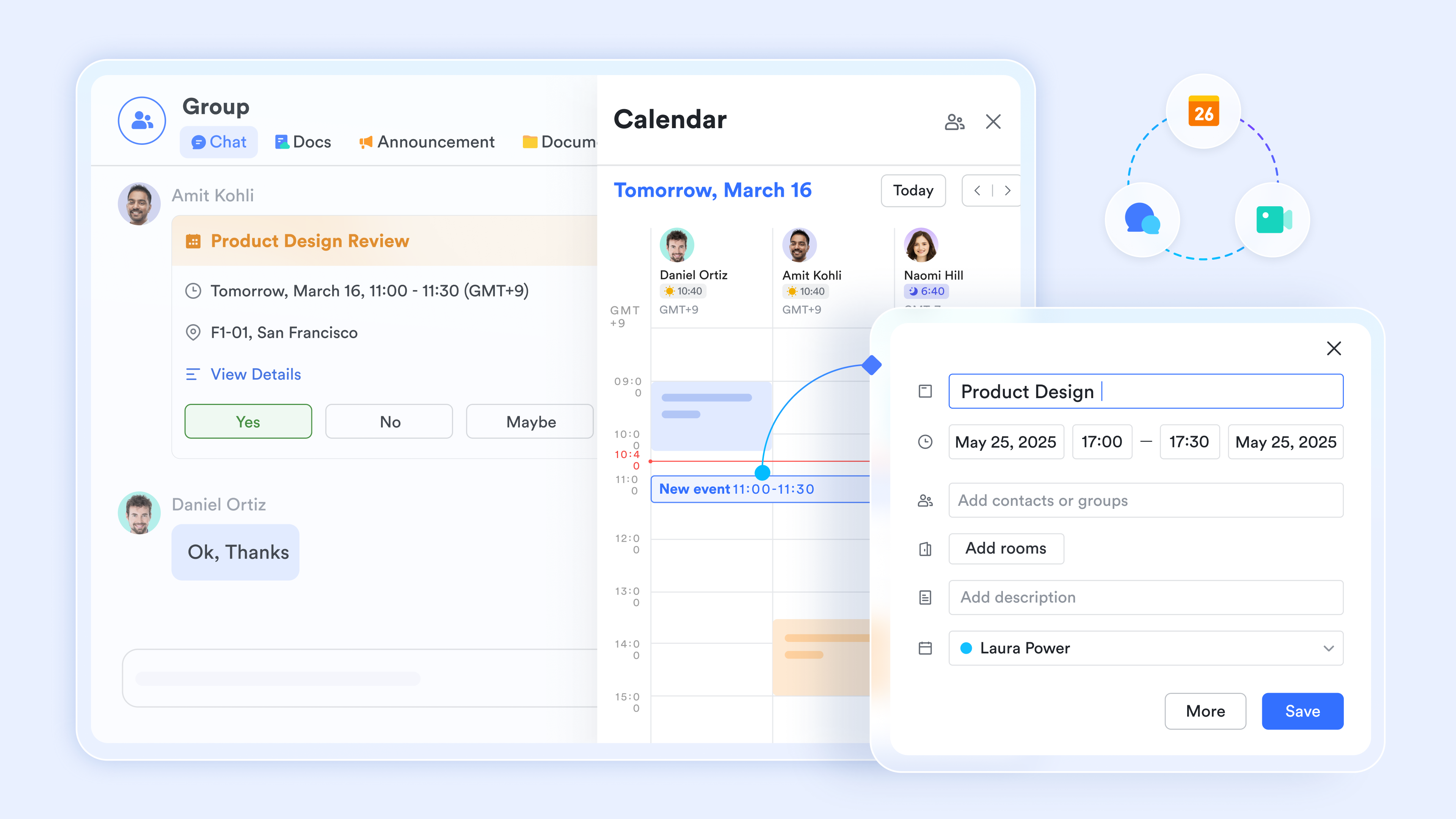
Efficient project oversight, not over-control
While fostering creativity, project managers still need visibility. Lark Tasks and allow managers to set clear parameters and track progress without micro-managing. This balance enables creative freedom within defined guardrails. Automated reminders for feedback deadlines or key milestones via or ensure that the creative process remains on track, allowing teams to focus on ideation rather than administrative burdens. 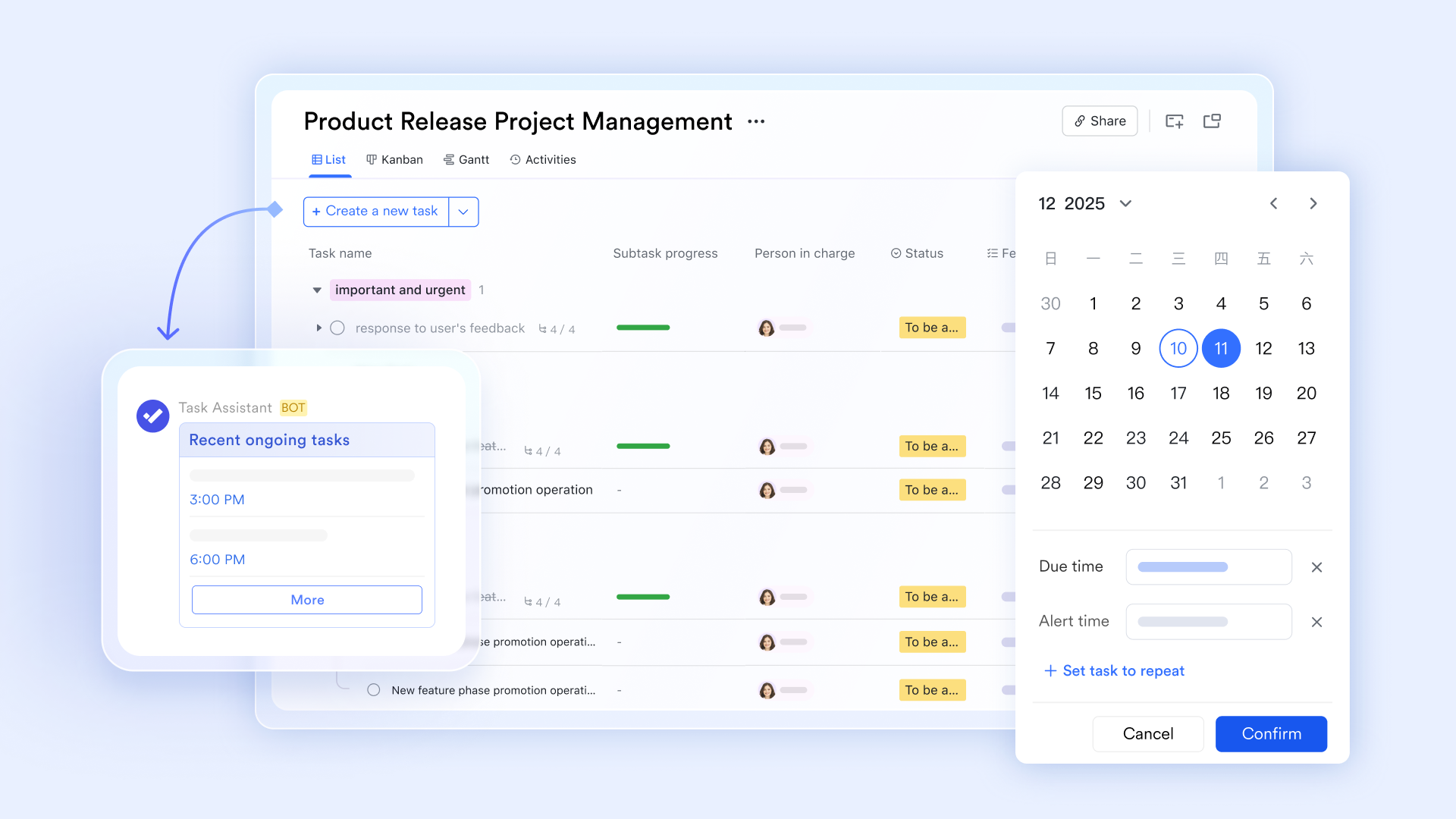
Accessibility and knowledge sharing
All project communications, creative assets, and decisions are centralized within Lark. This means new team members can quickly get up to speed on past brainstorming sessions, design iterations, and client feedback archived in & . This accessible knowledge base prevents reinventing the wheel and ensures that creative insights are preserved and built upon, fostering a continuous cycle of improvement and innovation.
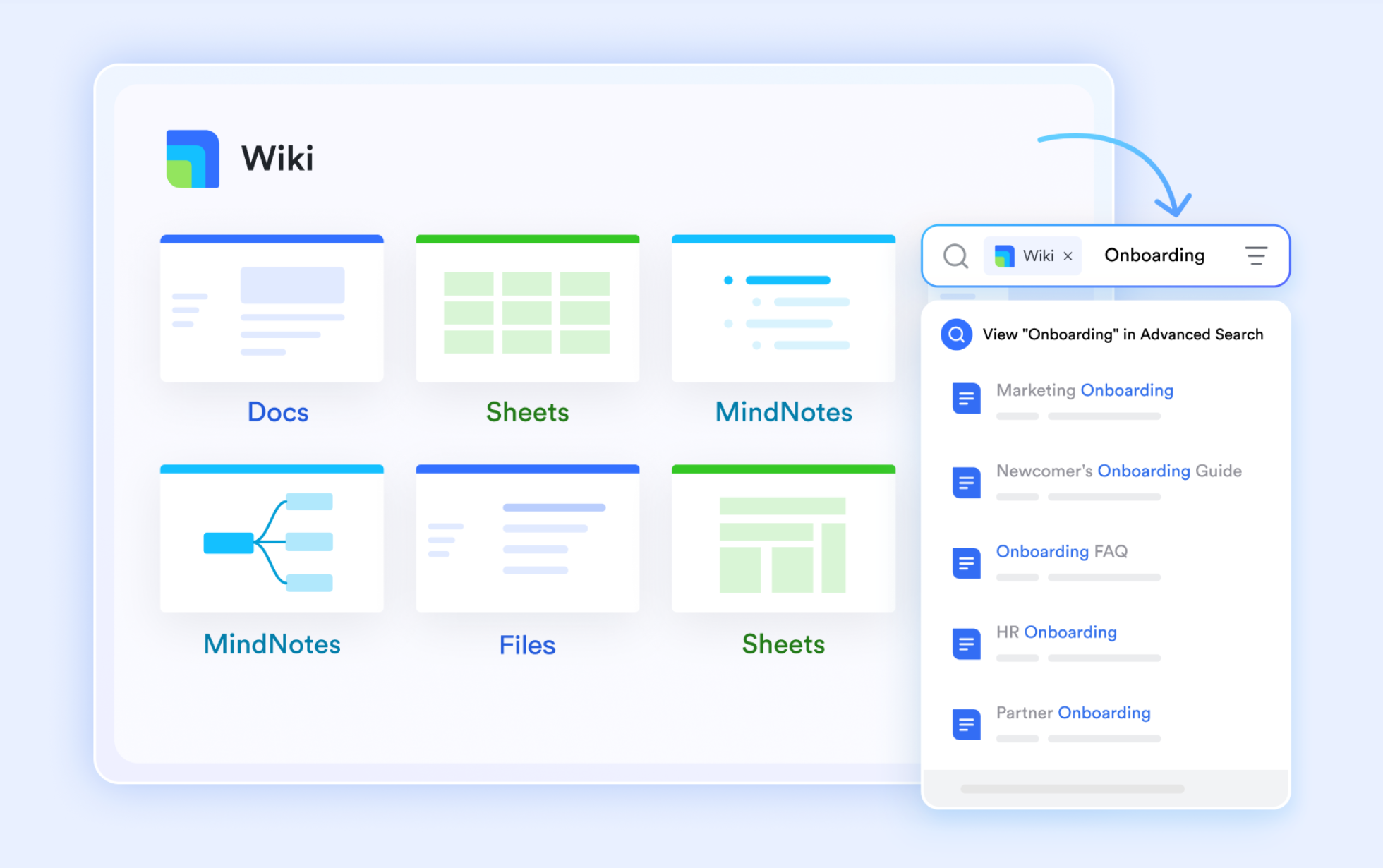
By embedding these capabilities into a single platform, Lark reduces tool-switching overhead and fosters a continuous, fluid environment where creative ideas can emerge, evolve, and be executed efficiently.
:
- Starter plan: that includes 11 powerful tools for up to 20 users. It also comes with 100GB of storage space, 1000 automation runs, AI translations, and more. No credit card needed.
- Basic plan: (billed annually) for up to 500 users. It includes everything in Starter and unlimited message history, 5TB of storage space, 1,000 automation runs, and more. Some users may need to to purchase this plan.
- Pro plan: (billed annually) for up to 500 users. It includes everything in Basic plus group calling for up to 500 attendees, 15TB of storage space, 50,000 automation runs, and more.
- Enterprise plan: for custom pricing. Supports unlimited users and includes even more automation runs and advanced security, compliance, and management features.
For small teams with simple communication needs

18 months message history
1000 Base automation runs/month
2000 rows per table in Base
Most POPULAR
For companies with comprehensive collaboration and management needs
Unlimited message history
500-participant video meetings
50k Base automation runs/month
20k rows per table in Base
For large companies with advanced security and organizational management needs
Get a personalized demo and pricing
Unlimited message history
500-participant video meetings
15 TB storage + 30 GB storage/user
500k Base automation runs/month
50k Base automation runs/month
Most POPULAR
For companies with comprehensive collaboration and management needs
Unlimited message history
500-participant video meetings
50k Base automation runs/month
20k rows per table in Base
Case study: creative solutions in action (hypothetical example)
Let me share a hypothetical scenario that illustrates how these principles can come together in practice.
The challenge: slow feedback and diluted campaigns
Imagine a mid-sized marketing agency, "Spark & Connect," tasked with launching a new, environmentally conscious product line for a client within a tight four-month deadline. The client wanted a campaign that was not only effective but also genuinely innovative, standing out in a crowded market. The initial briefing revealed a key challenge: the client's internal marketing team was siloed and slow to provide feedback, often leading to creative concepts being revised late in the cycle. The agency's project manager, Alex, recognized that a traditional, linear approach would likely result in delays and a diluted campaign.
The creative solution: dynamic collaboration and rapid iteration
Alex then proposed a more dynamic approach.
- Unified project space: Using a comprehensive collaboration platform, they created a dedicated project space for the campaign. This space housed all communications, creative assets, and .
- "Creative collision" meetings: Alex scheduled weekly "creative collision" meetings, not for formal presentations, but for rapid-fire ideation and constructive critique. During these sessions, instead of just presenting finished work, the team would share early concepts, sketches, and even half-baked ideas directly in a shared digital canvas.
- Client as active participant: The client's key stakeholders were given access to this space, not just as reviewers, but as active participants.
- Rapid problem-solving: When a crucial early-stage visual concept hit a snag due to conflicting brand guidelines, Alex didn't halt progress. Instead, they quickly launched a short, focused brainstorming session within the platform's video call feature, using a shared digital whiteboard. Within an hour, the design team, copywriters, and client representatives collaboratively sketched out three alternative visual directions, all compliant and equally compelling.
The positive outcome: on-time launch and exceeded targets
This rapid, cross-functional problem-solving, powered by real-time tools, averted a potential multi-day delay. The constant, visible flow of ideas and feedback meant that by the time formal presentations rolled around, concepts were already refined and largely approved. The campaign launched on time, exceeded engagement targets, and was celebrated by the client for its fresh perspective and seamless execution – a direct result of Alex's creative project management and the tools that supported it.
Measuring the impact: how creative projects lead to better results
The value of creativity in project management isn't just a qualitative feeling; it can be measured and demonstrated through tangible results. When project teams are encouraged to think creatively, the benefits often manifest in improved metrics across various aspects of a project and the organization.
Here's how creativity in project management delivers measurable value:
- Increased innovation rates: Creative projects naturally lead to more novel solutions, whether that's a new product feature, a more efficient process, or an inventive marketing approach. This impact can be tracked by the number of new ideas implemented or the percentage of project deliverables that introduce genuinely new elements.
- Faster problem resolution: When unexpected challenges arise, a team accustomed to creative thinking can often devise solutions more rapidly, reducing time spent in bottlenecks and keeping the . This directly translates to cost savings and adherence to schedules.
- More resilient and adaptable project plans: Creative approaches lead to plans that are less brittle and more flexible. Instead of fixed schedules, creative project managers build in adaptability, anticipating the need for adjustments and preparing their teams to pivot effectively. This adaptability becomes a competitive advantage, especially in fast-changing markets.
- Enhanced team satisfaction and engagement: When team members feel empowered to contribute ideas and see their creative input valued, morale improves, leading to higher productivity and lower turnover. These long-term benefits contribute directly to organizational growth, strengthening a company's ability to innovate and stay ahead in its industry.
Conclusion
Project management is no longer just a mechanical checklist. Today, real innovation happens when you combine solid structure with creative problem-solving. Managers need to build workspaces where teams actually feel safe to experiment and share ideas.
The right tools make this possible. By automating the busywork, all-in-one platforms like give teams the breathing room to collaborate in real time. This mix of structure and creativity leads to faster solutions, stronger plans, and highly engaged teams. Moving past rigid execution with adaptable platforms like Lark is how successful projects are delivered today.
Explore how Lark helps agencies collaborate smarter
FAQs
Can creativity be taught to project managers?
Yes, creativity in project management is less about innate artistic talent and more about developing specific skills like divergent thinking, problem reframing, and structured ideation techniques. These can certainly be learned and honed through practice and specific training.
How do you deal with resistance to creative ideas in a structured environment?
Address resistance by clearly articulating the value of creative solutions to project goals, demonstrating how new ideas can mitigate risks or improve efficiency. Start with small, low-risk experiments to build confidence, and ensure that successes are recognized and celebrated.
What's the difference between creativity and innovation in project management?
Creativity is about generating new and valuable ideas. Innovation is the successful implementation of those creative ideas into new processes, products, or services that deliver tangible value. Creativity is the seed; innovation is the fruit.
How can project managers encourage creativity without losing control?
Establish clear boundaries and objectives (the "structure") within which creative exploration can happen. Define the problem, resources, and desired outcomes, then allow the team freedom within those constraints. Regular check-ins and iterative feedback loops ensure alignment without stifling new ideas.
Are there specific industries where creativity in project management is more critical?
While beneficial everywhere, creativity is particularly critical in industries facing rapid change, high competition, or complex, ambiguous problems. This includes technology, marketing, R&D, and any sector undergoing significant digital transformation.
What are the 4 pillars of creativity?
Commonly cited pillars of creativity include:
- Fluency: the ability to generate a large number of ideas.
- Flexibility: the ability to generate a variety of different types of ideas.
- Originality: the ability to generate novel and unique ideas.
- Elaboration: the ability to develop and refine ideas in detail.
What are the 5 C's in project management?
While the "5 C's" isn't a universally standard framework, common interpretations in project management often refer to:
- Communication: effective information exchange among stakeholders.
- Collaboration: working together towards a common goal.
- Commitment: dedication from team members and stakeholders.
- Control: managing project scope, schedule, and budget.
- Customer satisfaction: meeting or exceeding client expectations.
What are the 7 C's of creativity?
The "7 C's of creativity" is not a widely recognized, standardized framework in creativity theory. Different models might use varying numbers and concepts. Often, elements like competence, confidence, courage, curiosity, creativity itself, caring, and context are informally discussed.
What are the 5 P's of creativity?
The "5 P's of creativity" is also not a single, universally accepted model. However, frameworks that address various aspects contributing to creativity often include:
- Person: the individual's creative abilities, personality, and motivation.
- Process: the cognitive and behavioral steps involved in creative thinking (e.G., Preparation, incubation, illumination, verification).
- Product: the tangible outcome of creative work (e.G., An invention, an artwork, a solution).
- Press (or environment): the social, cultural, and environmental factors that foster or hinder creativity.
- Persuasion: the ability to convince others of the value and novelty of a creative idea.
Related reading