According to industry statistics, a significant percentage of projects fail not because of poor project execution, but because of poor requirements gathering and lack of alignment at the very beginning. If you start a race facing the wrong direction, it doesn't matter how fast you run; you will not reach the finish line. To complete a project successfully, you must start it correctly.
In this guide, we will demystify the project initiation process. We will move beyond the dry academic definitions often found in the Project Management Body of Knowledge (PMBOK) and look at how modern teams use this phase to secure stakeholder buy-in, define boundaries, and set the stage for project success. Whether you are an "accidental" project manager or a seasoned professional looking for a refresher, this is your roadmap to starting right.
What is project initiation?
Project initiation is the first phase of the standard . It is the foundational stage where you define the project at a high level and, most importantly, obtain authorization to begin. It is the process of turning an abstract project idea into a tangible, sanctioned effort. Initiation is the first hurdle any potential project must clear.
During this initiation phase, the project team is not yet building the product or executing the service. Instead, the focus is on answering two fundamental questions: "Should we do this?" and "Can we do this?" It is a period of investigation and discovery. You are assessing the business value of the project against the costs and risks involved.
The ultimate goal of the project initiation phase is not to produce a detailed schedule but to produce a project charter. This document serves as the official "green light." Without a formal via a signed charter, your project is essentially a ghost: it consumes significant resources but has no official existence or authority within the organization.
Automate project sign-off with smart workflows
Project initiation vs. project planning: what is the difference?
One of the most common sources of confusion for new project managers is distinguishing between project initiation and project planning. While they are closely related and often overlap in fast-paced environments, they serve distinctly different purposes. Confusing the two is often why scope creep happens so early in the project lifecycle.
Project initiation is about the "What" and the "Why". It operates at a high altitude. In this phase, you are defining the business case, identifying the project scope, and selecting the . You are determining if the project aligns with the organizational strategy. If initiation is successful, you get permission to plan.
The planning phase, on the other hand, is about the "How". This is where you get into the weeds of the project planning phase. Planning involves creating detailed Work Breakdown Structures (WBS), defining specific tasks using task management principles, and building a day-by-day schedule.
Think of it like building a custom home. Project initiation is the process of buying the land and securing the mortgage. You need to know if the location is good (feasibility) and . Project planning is sitting down with the architect to draw the blueprints and deciding where the electrical outlets will go. You wouldn't buy electrical wire before you own the land; similarly, you shouldn't build a task list before you have a project initiation document.
The importance of project initiation phase
initiation phase of project management is a crucial first step that lays the foundation for a 's success. While there may be pressure to rush this phase to start the "real work," cutting corners during initiation can create significant challenges down the line. By taking the time to thoroughly establish the project's objectives, authorize resources, and assess risks, organizations can ensure that everyone—from the project sponsor to the team—has a clear understanding of success from the outset. Here's why this phase matters:
Ensures alignment among stakeholders
The primary value of the initiation phase is alignment. It guarantees that all , including the project sponsor, the project client, and the team members, come together to agree on what success looks like. This collective understanding helps to prevent conflicting expectations and fosters a collaborative environment. When everyone is on the same page, it reduces misunderstandings and streamlines communication throughout the project's lifecycle.
Provides authority to the project manager
In many matrix organizations, lack direct line authority over their team members. The project charter, which is created during the initiation phase, formally empowers the project manager to utilize organizational resources effectively. This document acts as an endorsement of the project manager's role, signaling to the organization that this individual is responsible for driving the initiative forward. By establishing this authority, the project manager can mobilize their team and ensure everyone is focused on shared goals.
Enables proactive risk management
Robust project initiation also equips teams with critical visibility into . Many projects face insurmountable challenges right from the start due to technological hurdles, regulatory constraints, or budget limitations. By conducting a thorough feasibility study during the initiation phase, teams can identify these flaws early. This preparedness allows organizations to "fail fast" by canceling unviable projects before they consume significant resources. Engaging in proactive risk management not only saves time and money but also strengthens the overall project strategy.
Notify stakeholders instantly when scope changes
Core steps of the project initiation process
While every organization has its own nuances, a robust project initiation process generally follows five key steps. Following this structure ensures you don't miss critical approvals or context, ultimately leading to project success.
1. Developing the business case
Every proposed project must have a reason for existing. The business case is the document that justifies the investment. It argues why the organization should spend money and time on this specific initiative rather than on something else. A strong business case links the project to the organizational goals.
For example, if a company wants to launch a new mobile app, the business case would explain the market demand, the projected revenue, and the competitive advantage. It distinguishes between "nice-to-have" ideas and "need-to-have" strategic imperatives. This is where you prove the expected benefits. You will often perform a cost benefit analysis here to ensure the financial math works out. 2. Conducting a feasibility study
Once you have established why you want to do the project, you must determine if it is actually possible. A feasibility study is an objective assessment of the project's practicality. This helps prevent the team from committing to impossible deadlines or deliverables regarding the proposed solution.
You should look at technical feasibility (do we have the technology?), operational feasibility (will this work in our current workflow?), and economic feasibility (is the budget realistic?). If the feasibility study comes back negative, the project should be shelved or significantly rescoped before moving forward. This saves key from being wasted on doomed efforts.
3. Creating the project charter
This is the most important deliverable of the entire phase. The project charter is a formal document that authorizes the existence of the project. It is the contract between the project team and the organization's leadership.
The charter doesn't need to be a 50-page novel. In modern agile environments, it can be a concise 2-3 page document. However, it must clearly state the project objectives, the high-level scope, the key stakeholders, and the authority of the project manager. Once this is signed, the project is "live."
4. Identifying stakeholders and the RACI matrix
Projects are done by people, for people. A common failure mode is realizing halfway through a project that you forgot to consult the legal team or the IT security department. During project initiation, you must map out .
This is where the RACI matrix becomes essential. For every major deliverable or decision, identify who is Responsible (does the work), Accountable (approves the work), Consulted (provides input), and Informed (needs to know the outcome). Clarity here prevents "too many cooks in the kitchen" later on and clarifies roles and responsibilities. This ensures all project stakeholders are engaged correctly.
5. The phase review and approval
The final step is the "Go/No-Go" decision. You present your Business Case, Feasibility Study, and project charter to the decision-makers (often a Steering Committee or a project sponsor). This isn't just a rubber stamp; it is a gate.
If the initiation work was done well, should be straightforward. The sponsors will review the risks and the promised ROI. If they approve, you achieve formal approval, and the budget is released. You can now transition smoothly into the project planning phase.
Finish all the steps without switching the apps
Deep dive: The essential components of a project charter
Since the project charter is the heartbeat of project initiation, it is worth breaking down exactly what should be inside. A well-written charter protects the project manager from ambiguity. It should outline the key aspects of the initiative.
Project purpose and justification: Start with a clear, one-sentence "elevator pitch" for the project. Follow this with business needs. Why are we doing this now? This clarifies the project's purpose.
Measurable objectives: Avoid vague goals like "improve customer service." You need clear and measurable objectives. Use (Specific, Measurable, Achievable, Relevant, Time-bound). For example: "Reduce customer support ticket response time by 20% within 6 months." These become your success criteria.
High-level scope: This section defines the boundaries of the entire project. Crucially, you must explicitly state what is out of scope. If you are building a website, does the scope include writing the content? Does it include hosting? Listing scope exclusions is your best defense against scope creep.
Key risks and constraints: Be honest about the challenges. Are you dependent on a third-party vendor? Is there a hard regulatory deadline that cannot move? Listing these potential risks upfront sets realistic expectations for the stakeholders.
Key components and resources: Briefly list the (budget, personnel, equipment) required. This gives the sponsor a realistic view of what the proposed project will cost.
How to modernize your project initiation with Lark
Managing the project initiation phase with disparate tools—email for approvals, Excel for stakeholders, Word for the charter—creates friction. Information gets lost in siloes, and version control becomes a nightmare. While many people look for generic project management software, a unified collaboration platform like Lark can streamline this chaotic phase into a structured workflow.
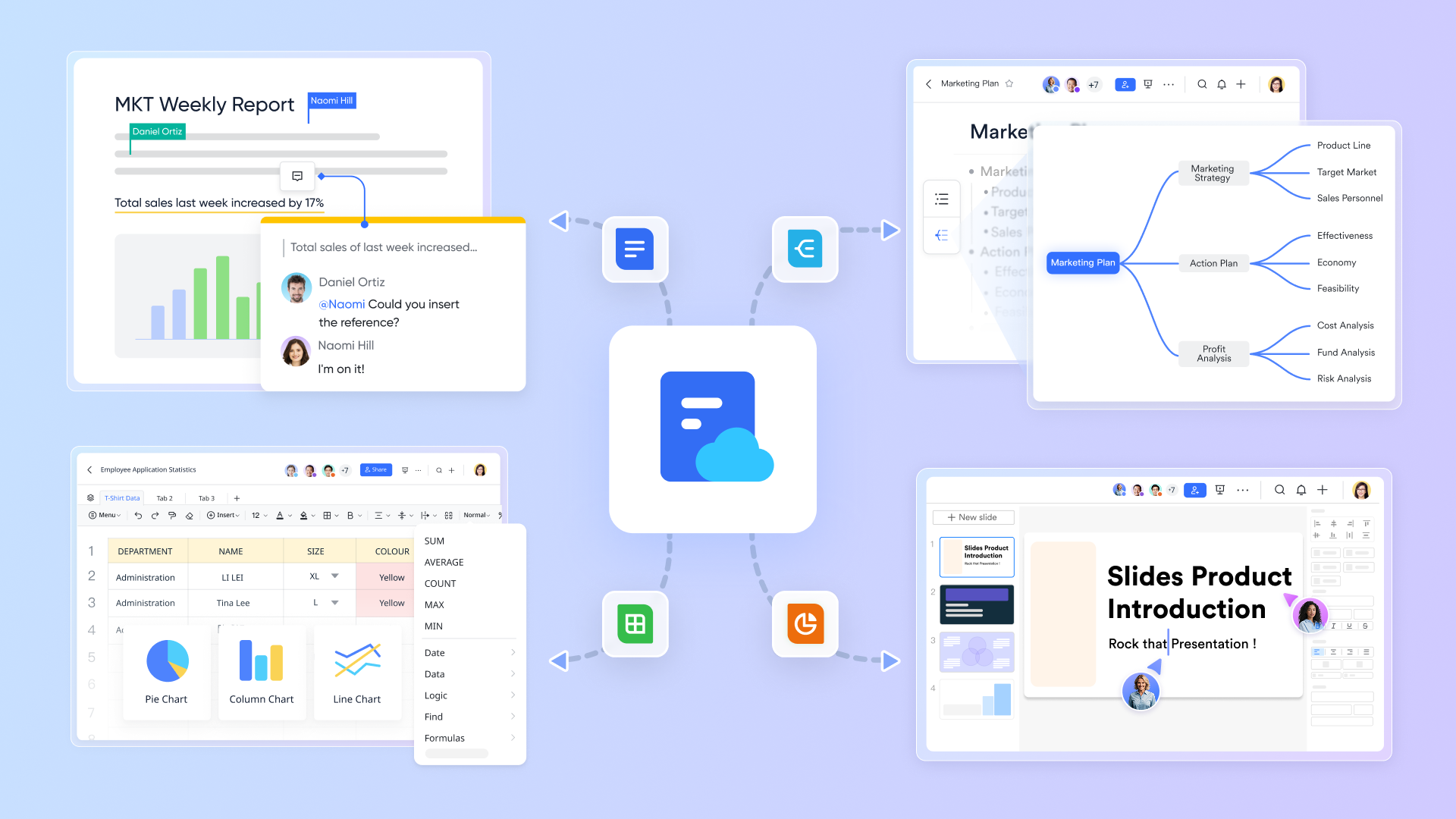
From static files to living docs
The days of emailing "Project_Charter_v3_FINAL.pdf" are over. In Lark, your project initiation document lives in . It is a dynamic, collaborative space. can comment directly on specific paragraphs regarding scope or budget. You can embed live data charts, polls, and diagrams. Because it is in the cloud, everyone is always looking at the single source of truth.
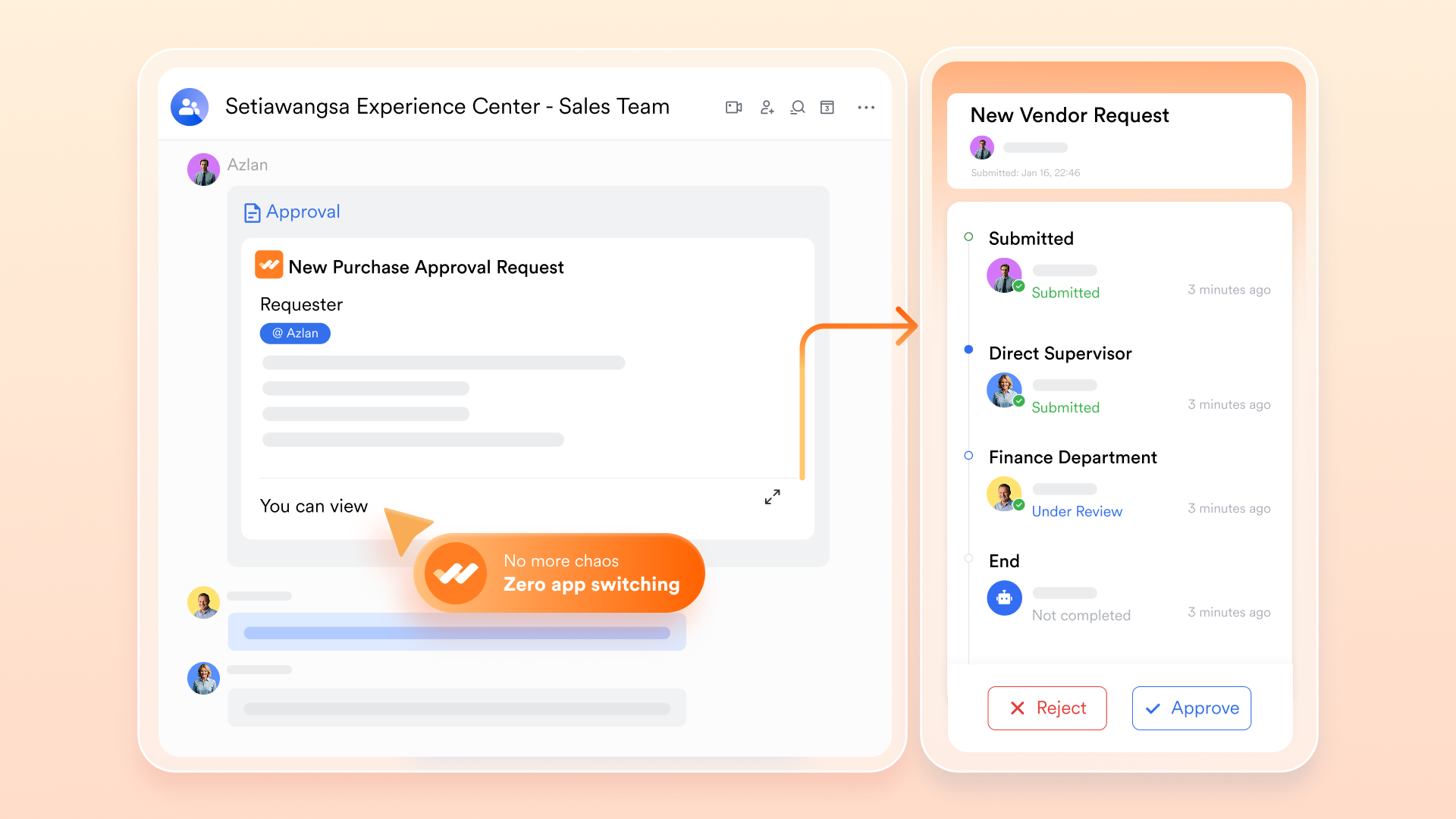
Workflow automation
Chasing executives for a signature is a waste of a Project Manager's time. With , you can build a custom workflow for project initiation. Once the charter is ready, you simply click "Submit," and the system automatically routes the document to the project sponsor, then Finance, then Legal. You can track progress of the approval in real-time, ensuring the project starts on time.
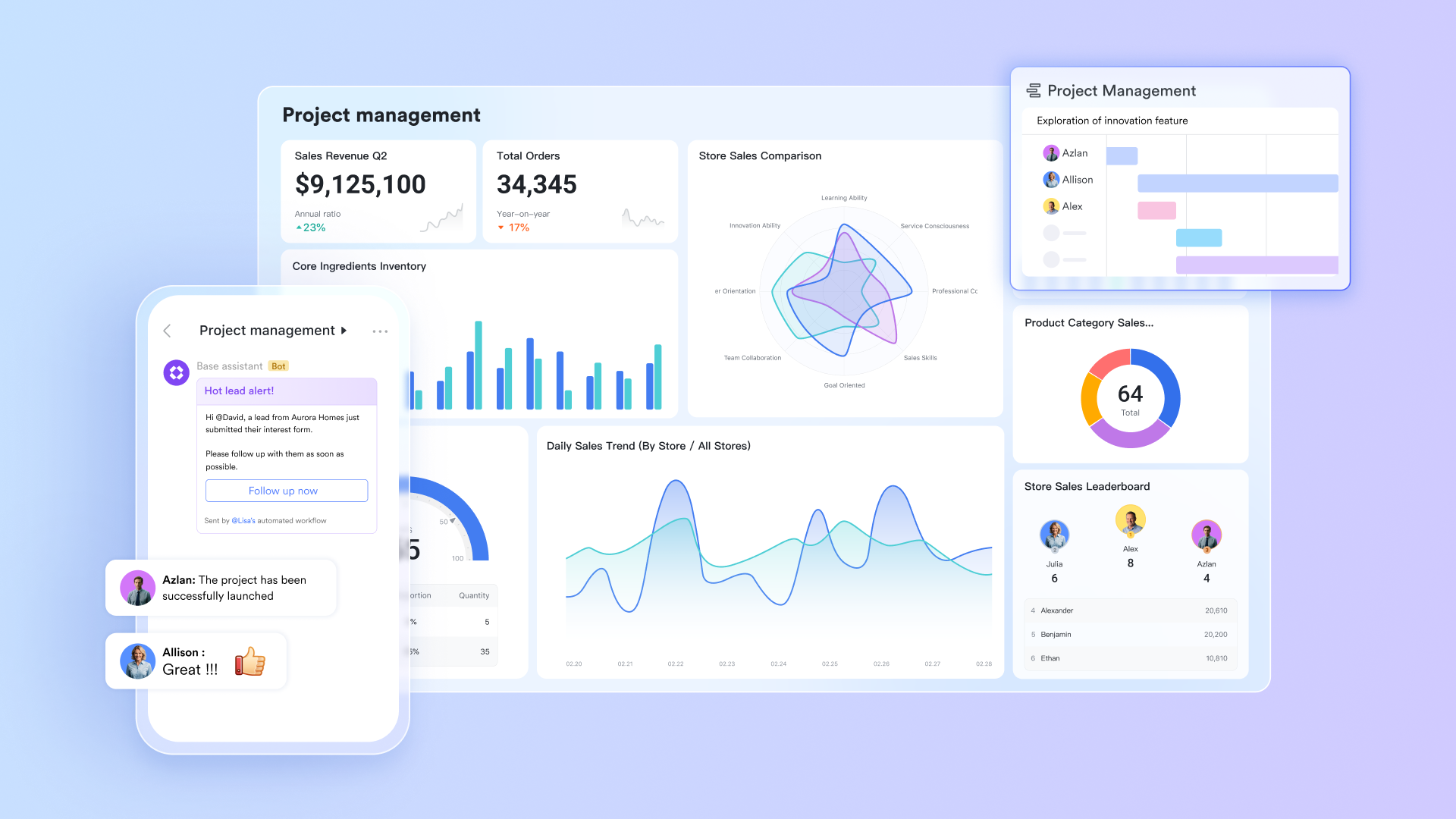
Dynamic stakeholder mapping
Instead of a static spreadsheet that everyone forgets, use to . You can categorize them by influence and interest (RACI). More importantly, you can set up automated notifications. For example, if a stakeholder is marked as "Key Approver," Lark can automatically notify them via messenger when the business case is ready for review.
The async kick-off
For teams with members spread across the world, it's difficult to organize the project kickoff meeting because of language barrier. Leverage to record the meeting and provide real-time translation of discussions into multiple languages. This ensures that everyone can follow along, regardless of their language proficiency. Additionally, automatically generates comprehensive meeting summaries, capturing all key points and decisions made during the kickoff.
With Magic Share, participants can access relevant documents during the meeting, allowing them to view and interact with project materials seamlessly. This dynamic setup transforms the kickoff from a scheduling nightmare into a cohesive and inclusive process, enabling stakeholders to revisit the presentation at their convenience and leave timestamped comments for future reference. 
🌟 Learn more about :
As an all-in-one solution, Lark includes all these features below in every plan:

- Free plan: Includes 11 powerful products, supporting up to 20 users, 100 GB storage, 1,000 automation runs and unlimited AI translation in chats, docs and email.
- Pro plan: $12/user/month, supporting up to 500 users. Includes unlimited message history, 50,000 automated Base workflow executions per month.
For small teams with simple communication needs

18 months message history
1000 Base automation runs/month
2000 rows per table in Base
Most POPULAR
For companies with comprehensive collaboration and management needs
Unlimited message history
500-participant video meetings
50k Base automation runs/month
20k rows per table in Base
For large companies with advanced security and organizational management needs
Get a personalized demo and pricing
Unlimited message history
500-participant video meetings
15 TB storage + 30 GB storage/user
500k Base automation runs/month
50k Base automation runs/month
Most POPULAR
For companies with comprehensive collaboration and management needs
Unlimited message history
500-participant video meetings
50k Base automation runs/month
20k rows per table in Base
Common pitfalls to avoid during initiation
Even with the best intentions, teams can stumble during project initiation. Being aware of these common traps can help you navigate around them and keep the project's direction true.
The "" trap: This usually happens when the "Exclusions" section of the charter is weak. If you don't explicitly state what you are not building, project stakeholders will assume everything is included. Be precise about boundaries to protect project performance.
Analysis paralysis: While planning is good, over-analyzing is fatal. Some organizations get stuck in an endless loop of feasibility studies and never actually start. Remember, initiation is about "sufficient" certainty, not "absolute" certainty. Set a hard deadline for the project phase review.
Ignoring the team: Often, the charter is written by management without consulting the people who will actually do the work. This leads to unrealistic timelines. Involve technical leads or senior creatives in the feasibility study stage to ensure the promises made are keeping with reality.
Focusing only on the "Happy Path": A good project initiation document must assume things will go wrong. If you do not document potential risks and a mitigation strategy now, you will be caught off guard during project execution.
A checklist for a successful launch
Before you move your project from "Initiation" to "Planning," run through this quick checklist to ensure you have covered your bases and secure stakeholder buy in.
- Business case: Is the problem clearly defined and the strategic alignment confirmed?
- Feasibility: Have we confirmed that the proposed project is technically and operationally possible?
- Project charter: Is the document written, agreed upon, and signed by the project sponsor?
- Stakeholders: Have all been identified and added to the RACI matrix?
- Budget: Has the funding been officially allocated and significant resources reserved?
- Team: Has the Project Manager been assigned and the core team identified?
- Kick-off: Has the official project kickoff meeting (or async equivalent) been scheduled?
- Project roadmap: Do we have a high-level view of the timeline?
Conclusion
Project initiation is more than just a phase; it is the foundation of your project's culture. A chaotic initiation usually leads to a chaotic project. A structured, transparent, and aligned initiation sets the tone for professionalism and project success.
By taking the time to define the "Why" and the "What" clearly, and by using modern like to streamline the collaboration process, you ensure that when you finally start the race, you are running towards the right finish line. The goal is to create a project that delivers real value, not just activity.
Ready to start your next project on the right foot? Move away from scattered emails and static files. Try an powerful all-in-one project management tool and turn your project initiation into a streamlined workflow.
Turn chaotic ideas into structured project plans
FAQs
What are the 7 main activities in the initiation phase?
The seven core activities typically include: 1) defining the business case to justify value; 2) conducting a feasibility study; 3) drafting the Project Charter; 4) identifying key stakeholders and their expectations; 5) appointing the project team and manager; 6) setting up the project office environment or tools; and 7) performing the final phase review to secure official sign-off.
What is the five-step process of initiating a project?
The standard five-step process involves: 1) developing a solid business case to prove ROI; 2) performing a feasibility study to assess technical and operational risks; 3) creating the Project Charter to define high-level scope; 4) identifying stakeholders using a RACI matrix; and 5) conducting the final approval meeting to "greenlight" the project for the planning phase.
What does it mean to initialize a project?
To initialize a project means to formally authorize its existence within an organization. It is the act of translating a vague concept into a structured initiative with defined goals, boundaries, and leadership. This process grants the Project Manager the official authority to utilize organizational resources and ensures the proposed work aligns with the company’s broader strategic objectives.
What happens during the initiation stage?
During the initiation stage, the project's strategic foundation is established. The organization determines "why" the project is necessary and "if" it is achievable. Key events include defining the high-level scope, securing the budget, identifying who will be involved, and producing the Project Charter. The stage concludes with a formal "Go/No-Go" decision to prevent wasting resources on unviable ideas.
Related reading