














CRM For Email Marketing: Complete Guide & Best Tools

Ryan Tanner
Product Marketing Specialist
Sep 18, 2026
Ryan Tanner
Sep 18, 2026

16 min read


Email marketing remains one of the most effective ways to connect with customers, nurture leads, and drive conversions. But on its own, it can lack the context needed to deliver truly personalized campaigns. That’s why many businesses now rely on CRM for email marketing—a combination that brings together contact management, campaign automation, and data-driven insights in a single workflow.
Today, tools like Lark, HubSpot, Zoho, and Salesforce are helping companies of all sizes align sales and marketing efforts through integrated platforms. This guide explores what CRM email marketing means, the essential features to look for, and the best solutions available, with real-world use cases for ecommerce, small businesses, and growing enterprises.
- Lark: Best all-in-one CRM + email marketing solution
- HubSpot CRM: Best for inbound marketing and sales alignment
- ActiveCampaign: Best for advanced email automation workflows
- Zoho CRM: Best for small businesses with budget-friendly plans
- Salesforce CRM: Best enterprise-level CRM with email integration
- Pipedrive: Best for sales-focused teams wanting email add-ons
- Freshsales Suite: Best for AI-driven insights with email campaigns
- EngageBay: Best all-in-one platform for startups and SMBs
- Brevo: Best for email-first teams wanting CRM features
- Insightly: Best for project and client management with email CRM

What is CRM for email marketing?
CRM for email marketing is the integration of customer relationship management with email CRM software to manage contacts, segment audiences, and track communication in one place. Unlike standalone email tools, a CRM email marketing software platform goes further by automating campaigns, personalizing outreach, and aligning sales with marketing efforts. This means a welcome email, product update, or promotional offer can be triggered automatically based on customer behavior, while the CRM logs every interaction. The result is stronger engagement and more efficient workflows than relying on separate CRM vs email marketing tools alone.
5 must-have features in CRM email marketing software
Choosing the right CRM email marketing software means looking beyond basic campaign tools. The best platforms combine customer management, automation, and analytics to make email more powerful and targeted.
- Contact & lead management: A good email CRM system centralizes customer information, including contact details, purchase history, and communication logs. This ensures every campaign reaches the right audience segment.
- Automation & workflows: With automation, emails can be triggered by actions such as sign-ups or purchases. Workflows help nurture leads efficiently, reducing manual effort and ensuring consistent engagement.
- Personalization tools: Personalization goes beyond using a name in an email. Advanced systems allow segmentation by behavior, interests, or lifecycle stage, creating highly relevant campaigns.
- Analytics & reporting: Built-in reporting tracks open rates, click-throughs, and conversions. By analyzing campaign performance, improve subject line effectiveness using an email subject line tester, and boost overall ROI with data-driven decisions.
- Scalability & integrations: As businesses grow, their CRM software must adapt. Scalable platforms support more contacts, advanced features, and seamless connections with ecommerce or sales tools.
Explore the top 10 best crm and email marketing software in 2026
1. Lark: Best all-in-one CRM + email marketing solution
Lark is more than just a communication tool—it’s an all-in-one platform that brings together CRM, collaboration, and email marketing capabilities. For procurement, supply chain, and operations teams, this means customer data, workflows, and campaigns are managed in one unified workspace. Instead of juggling multiple platforms, businesses can track contacts, plan campaigns, and monitor results in real time. Imagine a purchasing team that needs to send vendor updates, track supplier orders, and collaborate internally: Lark makes this seamless by tying every step to the same system.
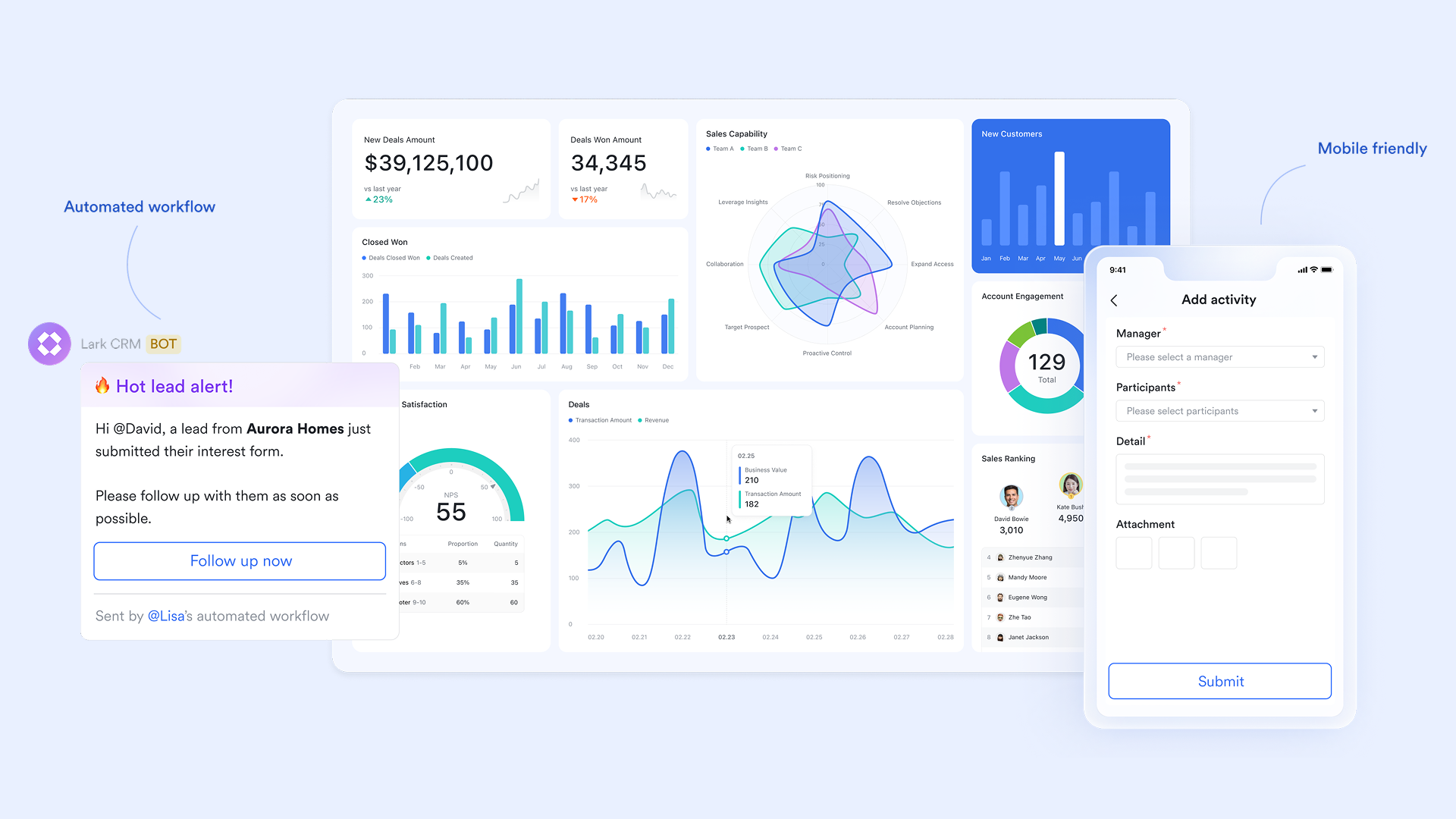
Smart database management and dashboards
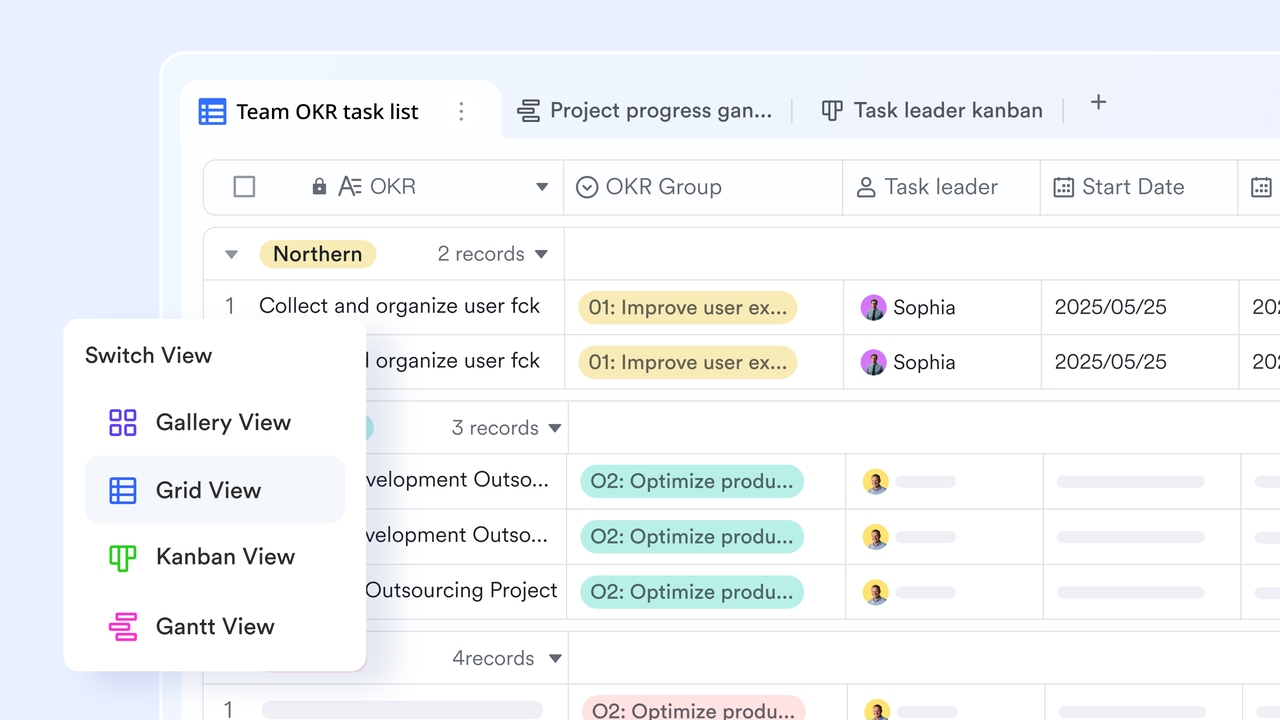
Lark Base is a customizable database designed to handle everything from customer details to supplier contracts and order tracking. Teams can build tables to log customer profiles, purchase history, and delivery status. They can switch views—such as Kanban, Grid, and Gantt—to see data from different angles. A procurement manager, for example, might use a Gantt view to track supplier delivery timelines and a Kanban view to monitor pending purchase approvals. With real-time dashboards, managers can also display KPI like "on-time delivery rate" or "refund requests pending" to spot issues before they escalate.
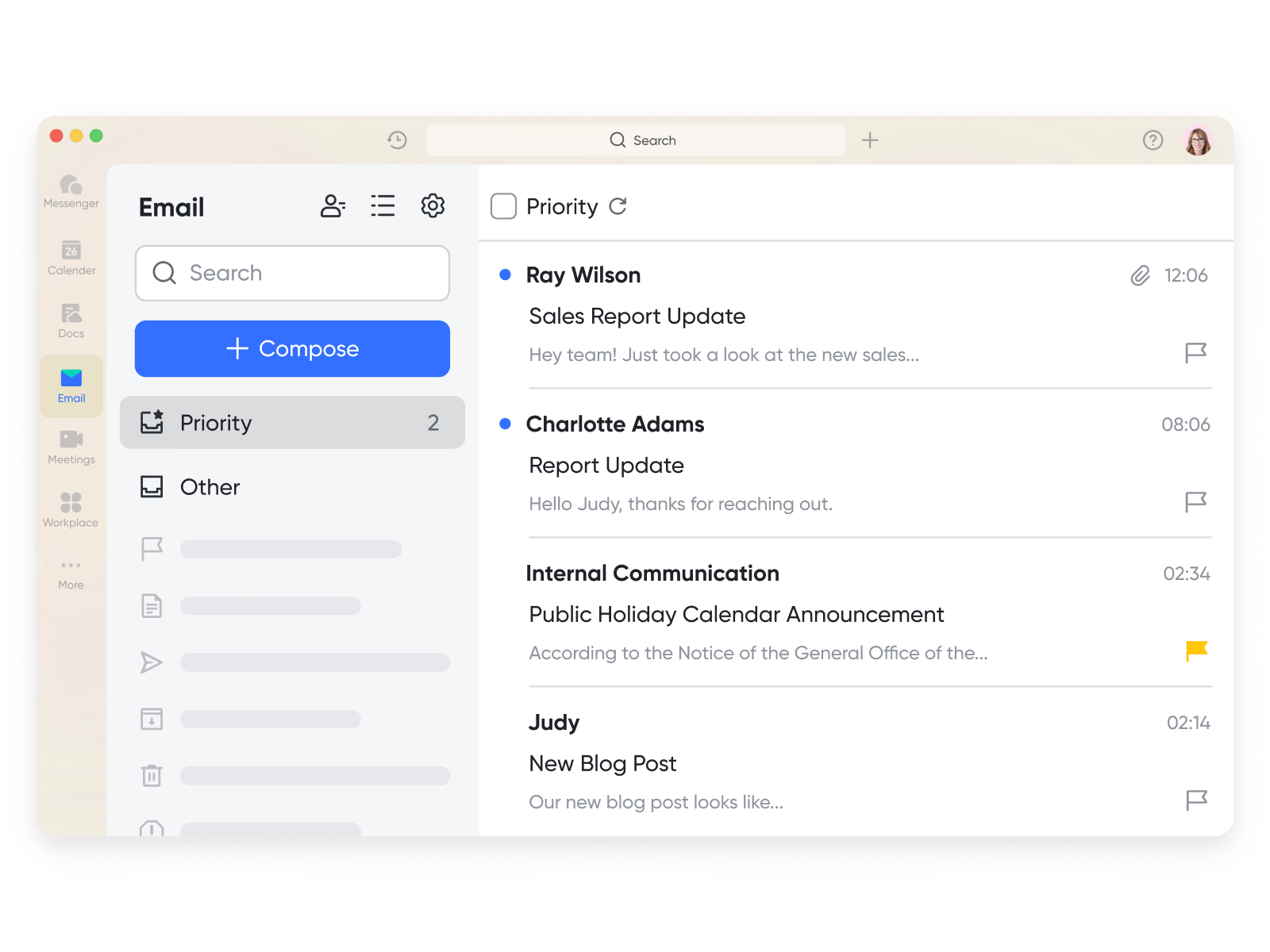
Instant & smart email marketing
Lark Mail allows teams to send and manage campaign emails directly from the same workspace. Customer and vendor information stored in Lark Base can be used to personalize emails—for example, a supplier update can automatically include shipment numbers or delivery dates pulled from Base. Marketing teams can also schedule product launch campaigns and track responses without relying on a separate system.
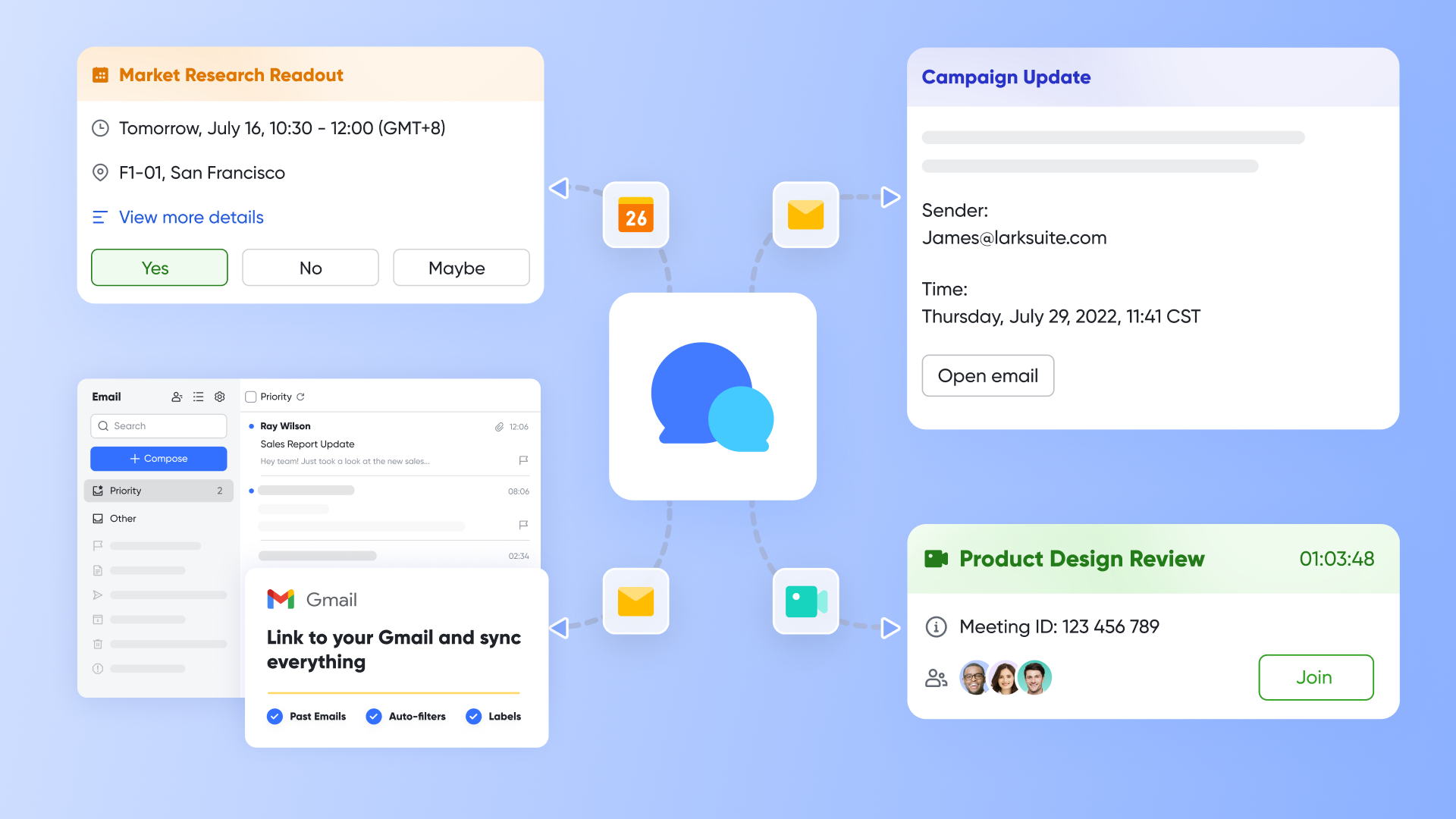
Seamless collaboration & team collaboration
Collaboration features are built into Lark. Teams can chat in Lark Messenger, run sprint reviews in Lark Meetings, and store campaign playbooks in Lark Docs or Lark Wiki. For example, when a marketing campaign ends, the retrospective notes can be saved in Wiki, making them accessible for future planning. Lark Calendar ensures campaign schedules are visible to everyone, avoiding overlaps and missed deadlines.
Transparent & automated workflows
Process-heavy work, such as refunds or procurement approvals, can be handled with Lark Tasks and Lark Approval. If a refund request comes in, Lark Tasks assigns it to a service agent, while automated approval routes the case to a manager for review. Once approved, the customer automatically receives an update via email, ensuring speed and consistency.
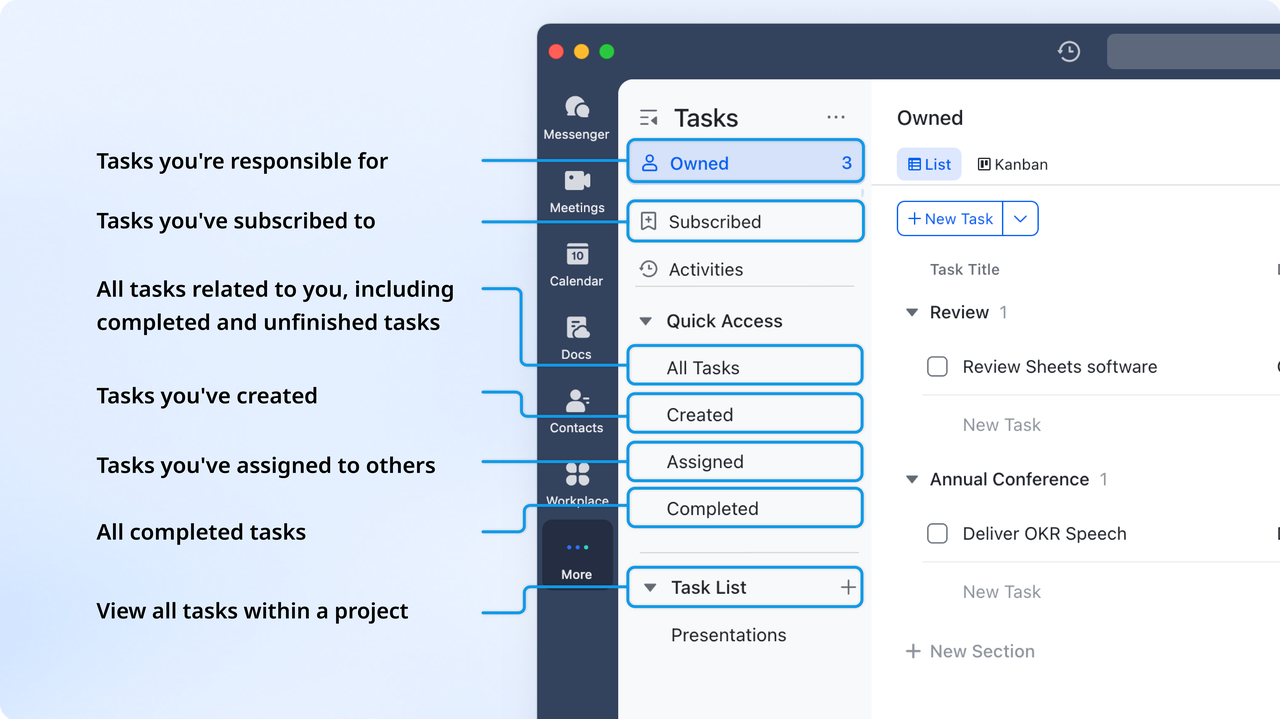
AI-powered shortcuts for effective use
AI field shortcuts offer an intelligent layer for managing data, such as quickly translating, classifying, summarizing, and extracting content, or generating new content based on existing information. This saves teams time while ensuring they are always prepared with relevant information.
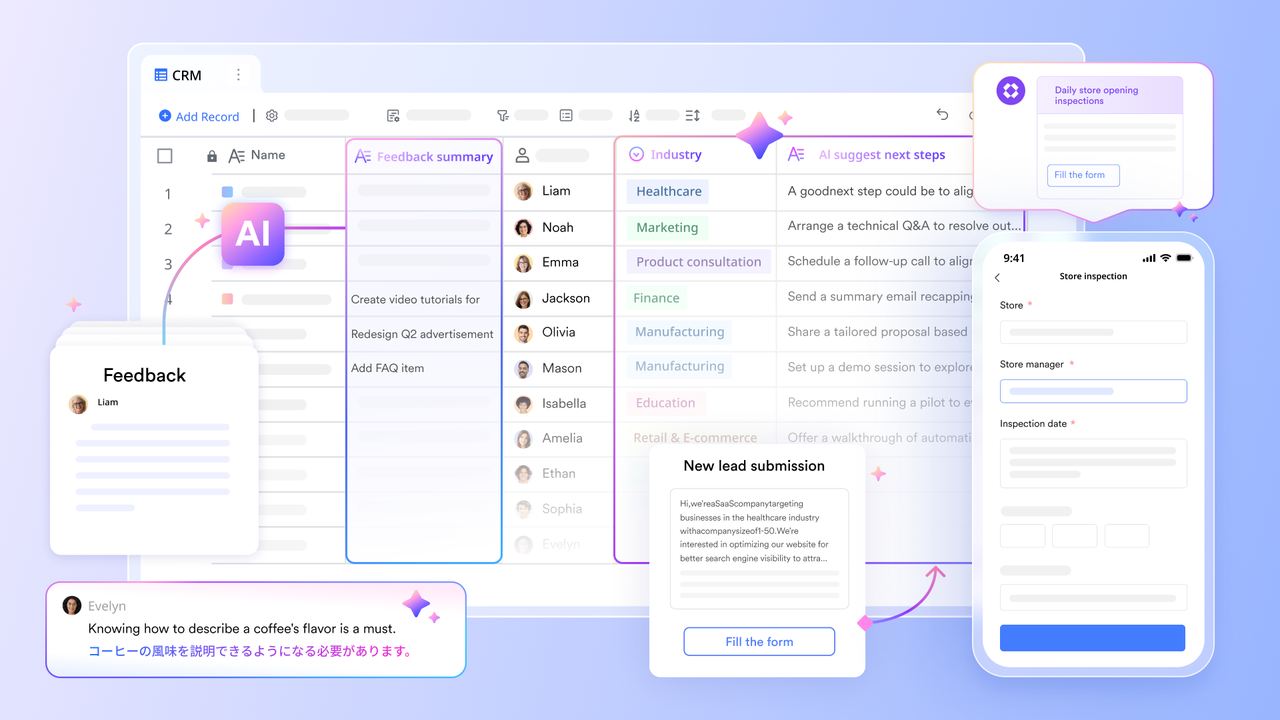
Best for: Procurement, supply chain, marketing, and operations teams that need to combine CRM and email marketing in one system.
Why it stands out: Unlike standalone CRM email marketing software, Lark connects campaigns with collaboration, dashboards, and AI-powered workflows in one platform.
- Starter plan: Free forever plan that includes 11 powerful tools for up to 20 users. It also comes with 100GB of storage, 1000 automation runs, AI translations, and more.
- Pro plan: $12/user/month (billed annually) for up to 500 users. It includes everything in Starter plus group calling for up to 500 attendees, 15TB of storage, 50,000 automation runs, and more.
- Enterprise plan: Contact sales for custom pricing. Supports unlimited users and includes even more automation runs and advanced security, compliance, and management features.
2. HubSpot CRM: Best for inbound marketing and sales alignment
HubSpot CRM is one of the most widely used platforms for businesses that rely on inbound strategies. As a CRM for email marketing, it combines contact management, email automation, and sales pipelines in an easy-to-use interface. Marketing and sales teams can align seamlessly, with campaigns tied directly to customer records and interactions. For small businesses, the free plan offers an accessible way to start managing both CRM and email in one place without heavy setup.
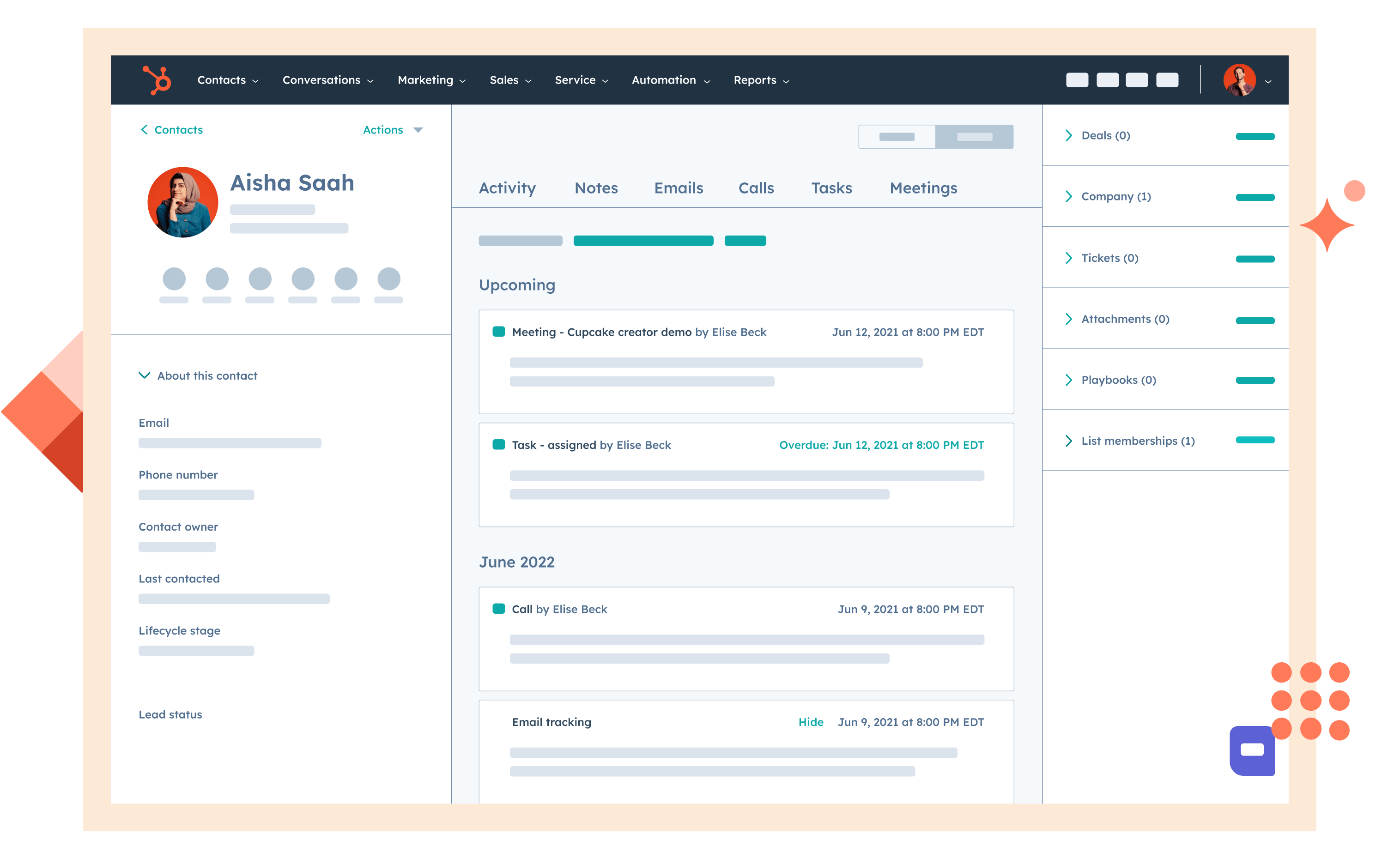
Image source: hubspot.com
Key features:
- Centralized contact database with detailed customer activity timelines.
- Built-in email marketing tools for campaigns, sequences, and newsletters.
- Deal and pipeline management for tracking sales progress.
- Marketing automation to nurture leads with triggered campaigns.
- Reporting dashboards for monitoring email performance and revenue impact.
Best for: Startups and SMBs that want to align inbound marketing campaigns with sales pipelines.
Why it stands out: HubSpot offers one of the strongest free CRM email marketing software plans, making it ideal for small teams that want email, CRM, and sales alignment in one platform.
Pricing: Free plan available; Starter plan begins at $20/user/month, with additional features in Professional and Enterprise tiers.
3. ActiveCampaign: Best for advanced email automation workflows
ActiveCampaign is a popular CRM email marketing software for businesses that want to go beyond basic campaigns. Known for its powerful automation builder, it allows teams to design complex workflows that react to customer behaviors in real time. From triggered welcome emails to multi-step nurturing campaigns, ActiveCampaign makes it easy to personalize at scale. It’s especially valuable for ecommerce and service-based businesses looking to combine CRM data with highly targeted automation sequences.
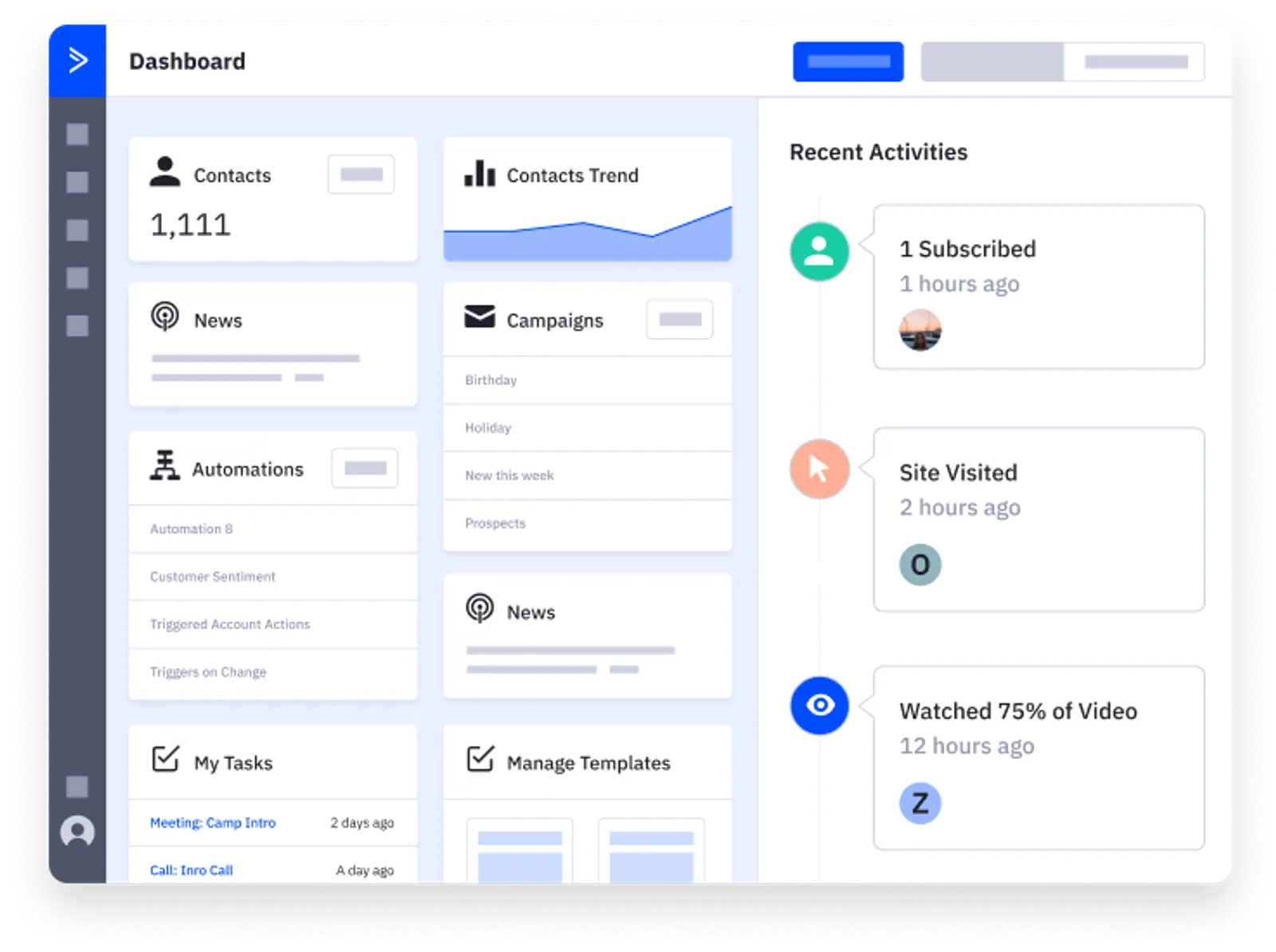
Image source: activecampaign.com
Key features:
- Visual automation builder for complex, multi-step workflows.
- Advanced segmentation tools to target customers based on behavior.
- Built-in CRM for lead scoring and deal tracking.
- Email personalization and dynamic content for tailored campaigns.
- Reporting dashboards for automation performance and ROI.
Best for: Ecommerce businesses and marketing teams that need advanced automation to manage complex customer journeys.
Why it stands out: ActiveCampaign excels at building sophisticated workflows that combine CRM data with email marketing, making it ideal for businesses with multi-stage sales or nurturing processes.
Pricing: Plans start at $29/month for email and automation; CRM features are included in higher-tier plans.
4. Zoho CRM: Best for small businesses with budget-friendly plans
Zoho CRM is a cost-effective email CRM system designed for small businesses that want flexibility without overspending. It combines CRM functions like contact management and deal tracking with built-in email marketing tools. Teams can create workflows to send automated campaigns, segment customers by behavior, and track responses—all inside a single platform. With its affordable pricing and strong customization, Zoho CRM is a go-to choice for startups and SMBs looking to scale their email campaigns while keeping costs manageable.
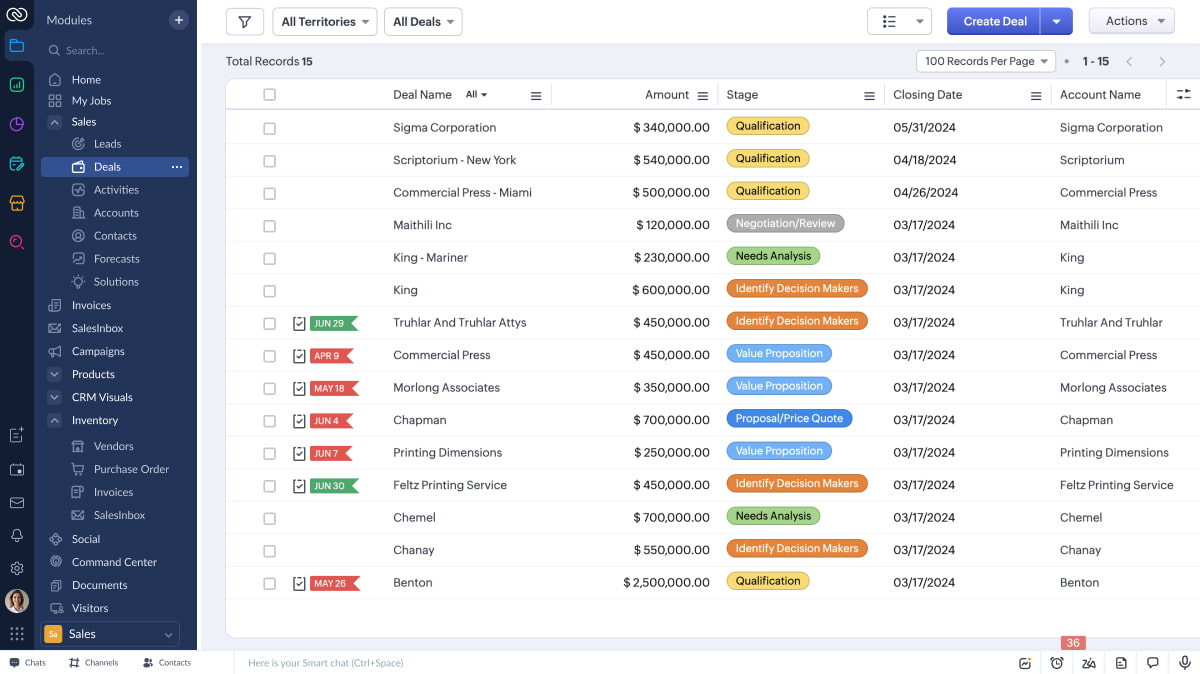
Image source: zoho.com
Key features:
- Centralized customer and lead management with detailed records.
- Email marketing tools for campaigns, follow-ups, and newsletters.
- Workflow automation to streamline repetitive tasks and email triggers.
- Customizable pipelines to manage multiple product lines or services.
- Analytics and reporting for campaign and sales performance.
Best for: Small to mid-sized businesses that need affordable CRM email marketing software with flexibility.
Why it stands out: Zoho balances affordability with functionality, offering a wide range of CRM and email features at lower price points compared to competitors.
Pricing: Free plan for up to 3 users; paid plans start at $20/user/month.
5. Salesforce CRM: Best enterprise-level CRM with email integration
Salesforce CRM is a leader in enterprise solutions, offering advanced tools for managing complex customer relationships and large-scale email campaigns. It combines deep CRM functionality with marketing features like automated journeys, segmentation, and predictive insights. For global organizations, Salesforce provides the scalability and customization needed to manage millions of contacts, deliver highly personalized emails, and unify sales with marketing. Its enterprise-grade capabilities make it a strong fit for brands that prioritize precision, analytics, and long-term customer engagement.
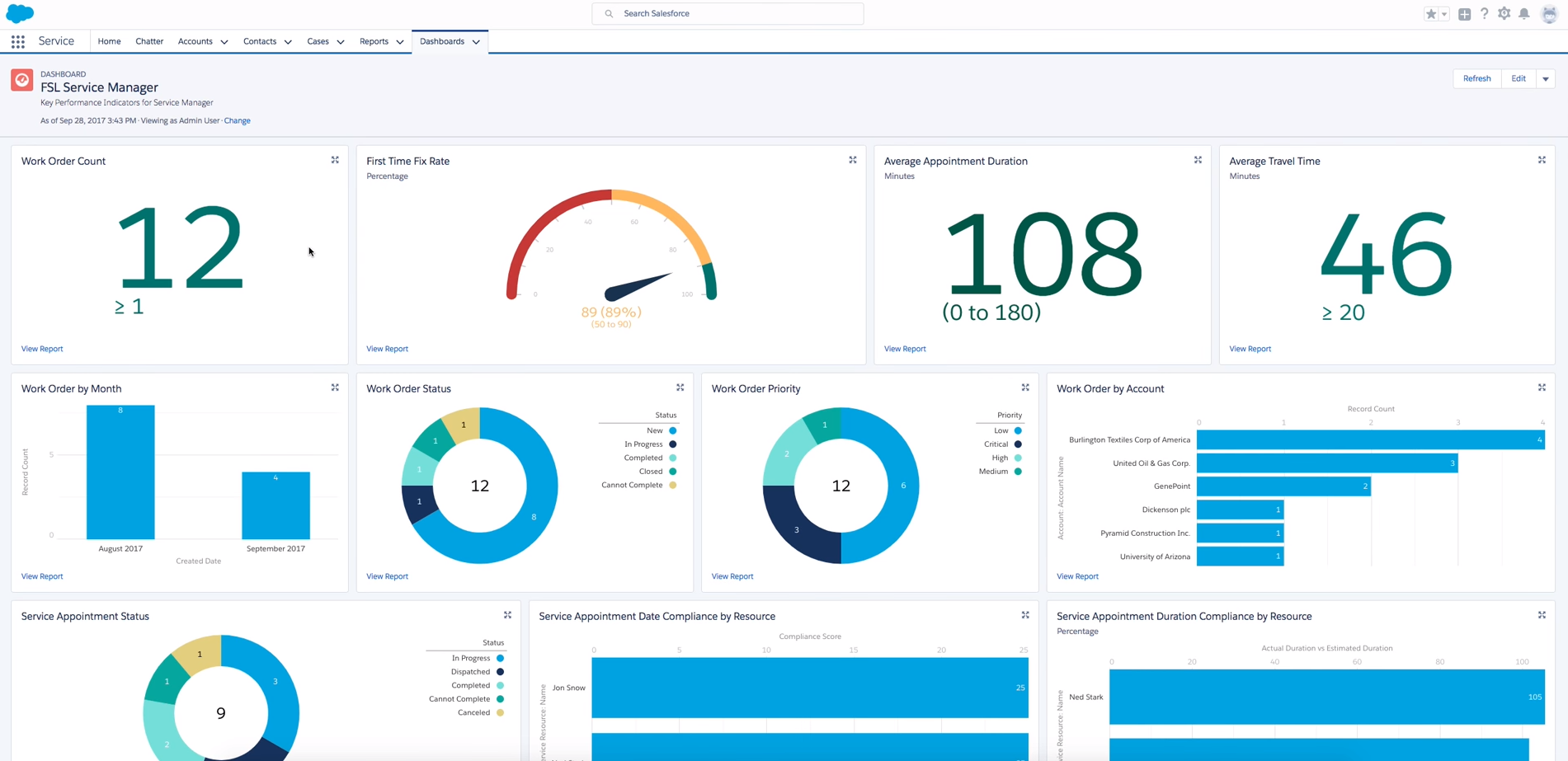
Image source: salesforce.com
Key features:
- Advanced email campaign tools with segmentation and automation.
- AI-driven insights to forecast engagement and customer behavior.
- 360° customer profiles with purchase, interaction, and campaign history.
- Customizable workflows for enterprise-level marketing operations.
- Scalable architecture to support global teams and high-volume email sends.
Best for: Enterprise businesses that need robust CRM and email marketing software capable of handling global operations.
Why it stands out: Salesforce offers unmatched depth and scalability, with advanced analytics and AI tools that empower enterprises to run highly targeted, data-driven campaigns.
Pricing: Pricing varies by edition and add-ons, starting at $25/user/month; Marketing Cloud features are priced separately.
6. Pipedrive: Best for sales-focused teams wanting email add-ons
Pipedrive is a sales-driven CRM that adds lightweight email marketing tools to its already strong pipeline management system. Designed with simplicity in mind, it helps sales teams track deals, manage leads, and send targeted email campaigns from the same platform. While it doesn’t offer the depth of automation found in dedicated email CRM platforms, it’s a practical option for teams that primarily want to boost sales visibility and add email outreach without juggling multiple tools.
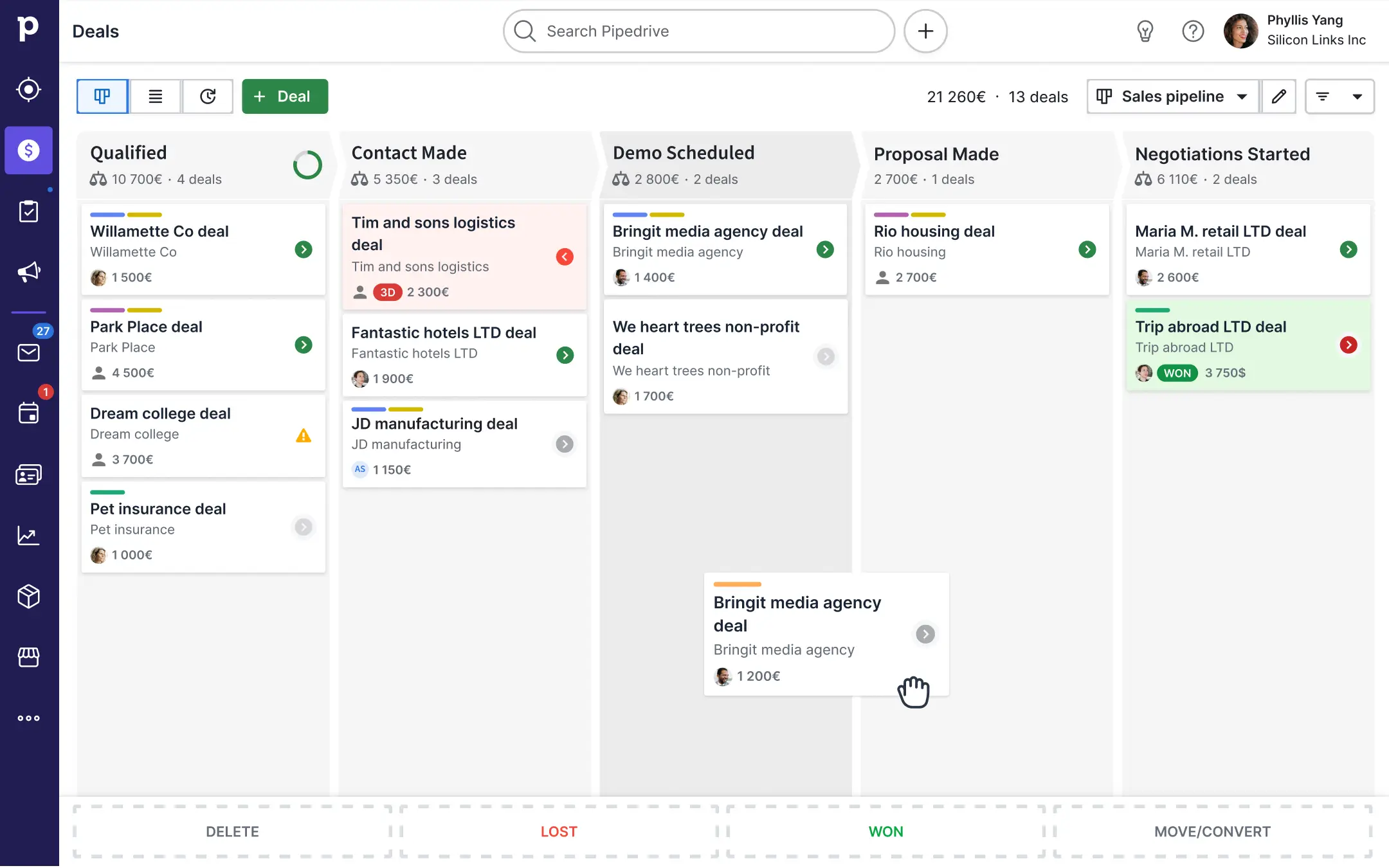
Image source: pipedrive.com
Key features:
- Visual pipelines to track leads and deals clearly.
- Email sync and templates for faster outreach.
- Workflow automation for reminders and follow-ups.
- Sales reporting dashboards to monitor performance.
- Add-ons for enhanced email marketing campaigns.
Best for: Sales-focused teams that want simple CRM email tools built into a pipeline-first platform.
Why it stands out: Pipedrive offers a straightforward CRM with optional email add-ons, making it perfect for sales teams that want to add marketing functionality without complexity.
Pricing: Plans start at $14.90/user/month, with email add-ons available in higher tiers.
7. Freshsales Suite: Best for AI-driven insights with email campaigns
Freshsales Suite by Freshworks is a modern CRM email marketing software built for small to mid-sized businesses that want to scale quickly. It combines CRM essentials like lead tracking and pipeline management with powerful email campaign tools. With AI-driven insights, sales and marketing teams can identify the best prospects, automate outreach, and personalize communication at scale. This makes it a strong choice for businesses that want to run smarter, data-backed campaigns without the heavy complexity of enterprise platforms.
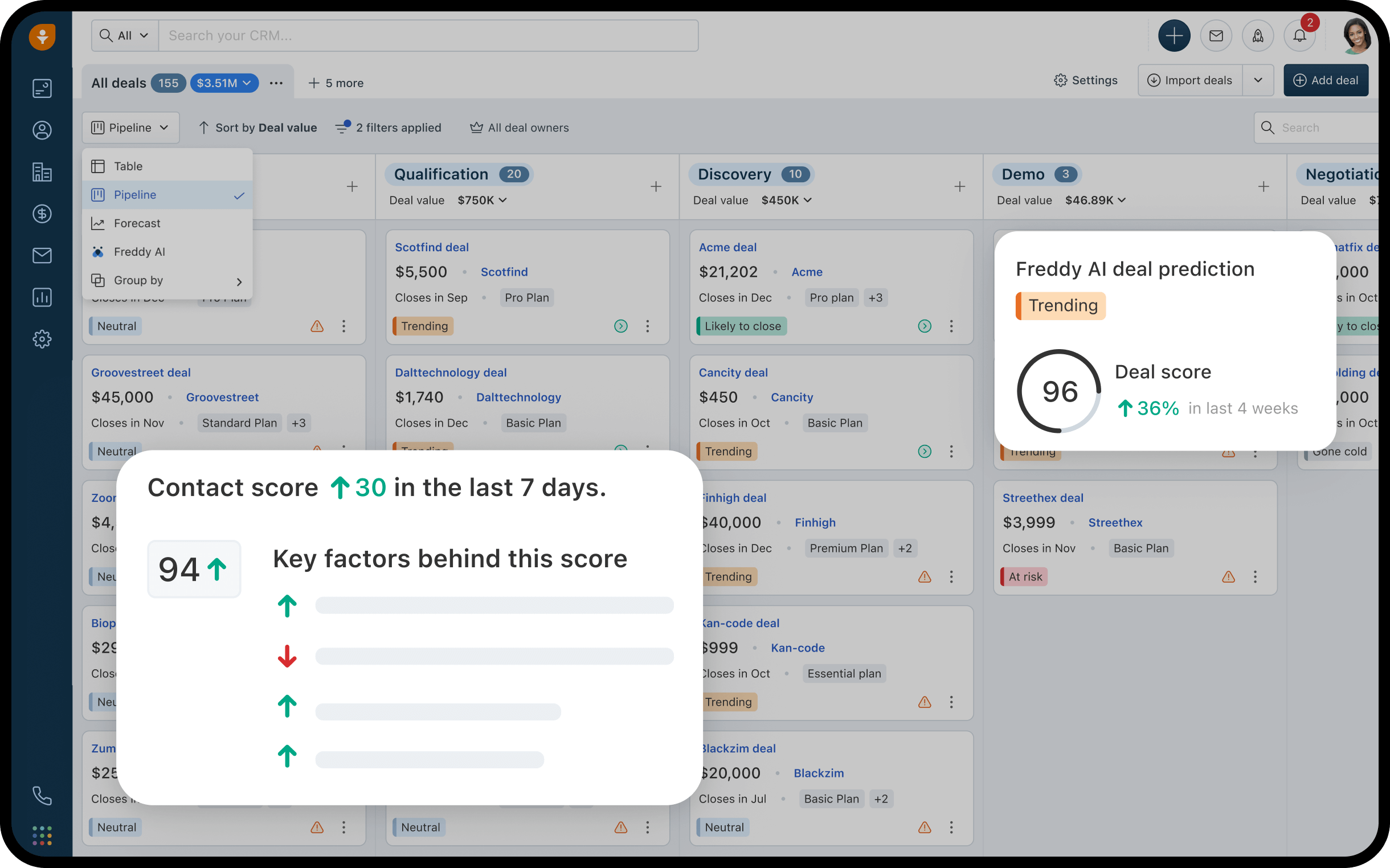
Image source: freshworks.com
Key features:
- AI-powered lead scoring to prioritize high-value contacts.
- Built-in email campaign tools for targeted outreach.
- Workflow automation to handle repetitive tasks.
- Omnichannel engagement across chat, email, and phone.
- Sales and marketing dashboards for performance insights.
Best for: SMBs looking for affordable CRM and email marketing with AI-driven intelligence.
Why it stands out: Freshsales combines ease of use with AI-powered recommendations, making it ideal for growing teams that want advanced features without enterprise pricing.
Pricing: Free plan available; paid plans start at $9/user/month.
8. EngageBay: Best all-in-one platform for startups and SMBs
EngageBay is an affordable CRM with email marketing that combines sales, marketing, and customer support in one platform. Designed with startups and SMBs in mind, it helps small teams manage customer relationships, send targeted email campaigns, and automate follow-ups without the need for multiple tools. Its all-in-one approach makes it easy to handle lead generation, email nurturing, and customer service from a single dashboard—perfect for businesses that need to stretch their budget while still running professional campaigns.
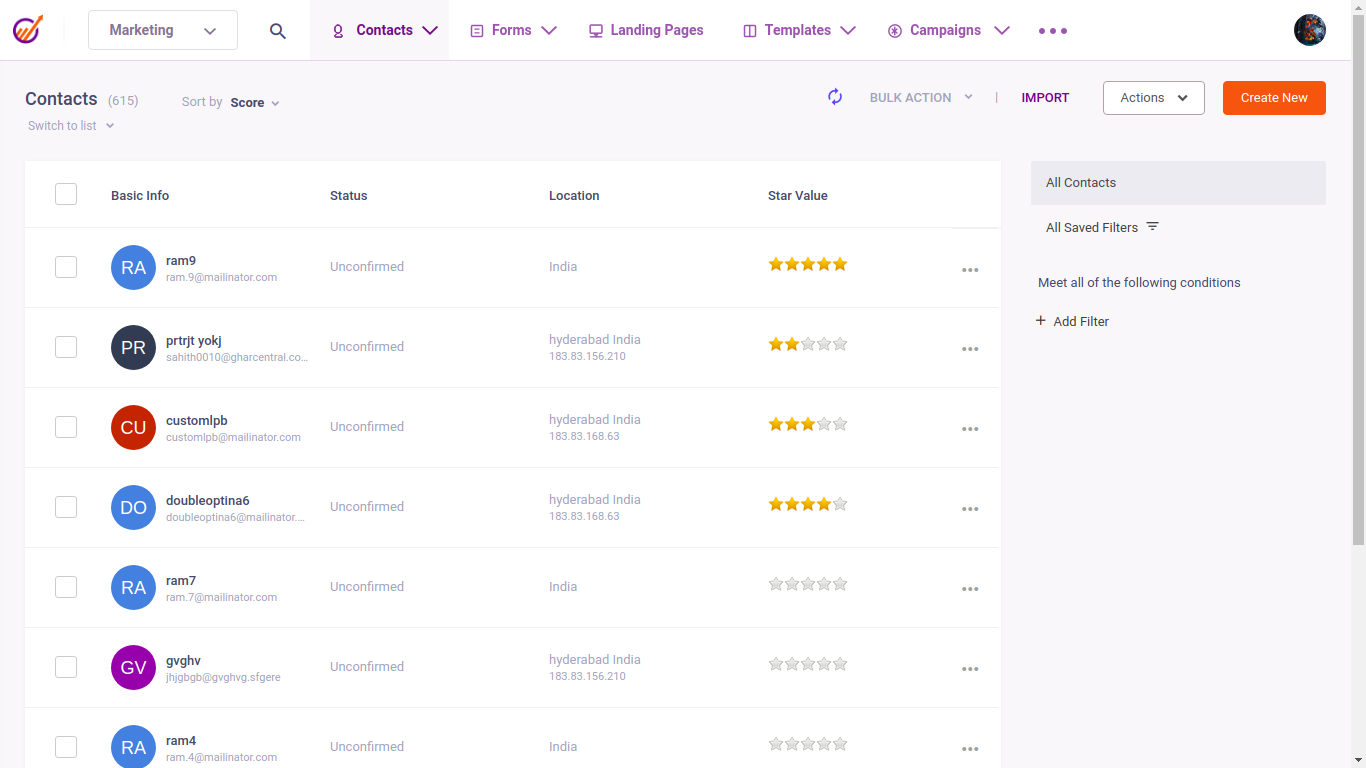
Image source: engagebay.com
Key features:
- Contact and lead management with detailed histories.
- Email marketing tools for newsletters and drip campaigns.
- Marketing automation to reduce manual tasks.
- Customer service helpdesk and ticketing built in.
- Sales pipeline tracking for deals and opportunities.
Best for: Startups and SMBs that need a cost-friendly all-in-one CRM email marketing software.
Why it stands out: EngageBay gives smaller businesses enterprise-like features—including CRM, marketing automation, and customer support—at a fraction of the cost.
Pricing: Free plan available; paid plans start at $12.99/user/month.
9. Brevo: Best for email-first teams wanting CRM features
Brevo is an email CRM platform built primarily for teams that lead with email marketing but also want basic CRM capabilities. It offers robust email campaign tools, SMS messaging, and simple contact management, making it ideal for businesses that prioritize communication but don’t need a full enterprise CRM. For small businesses, Brevo provides an easy way to run newsletters, segment audiences, and track engagement while still managing customer data in one system.
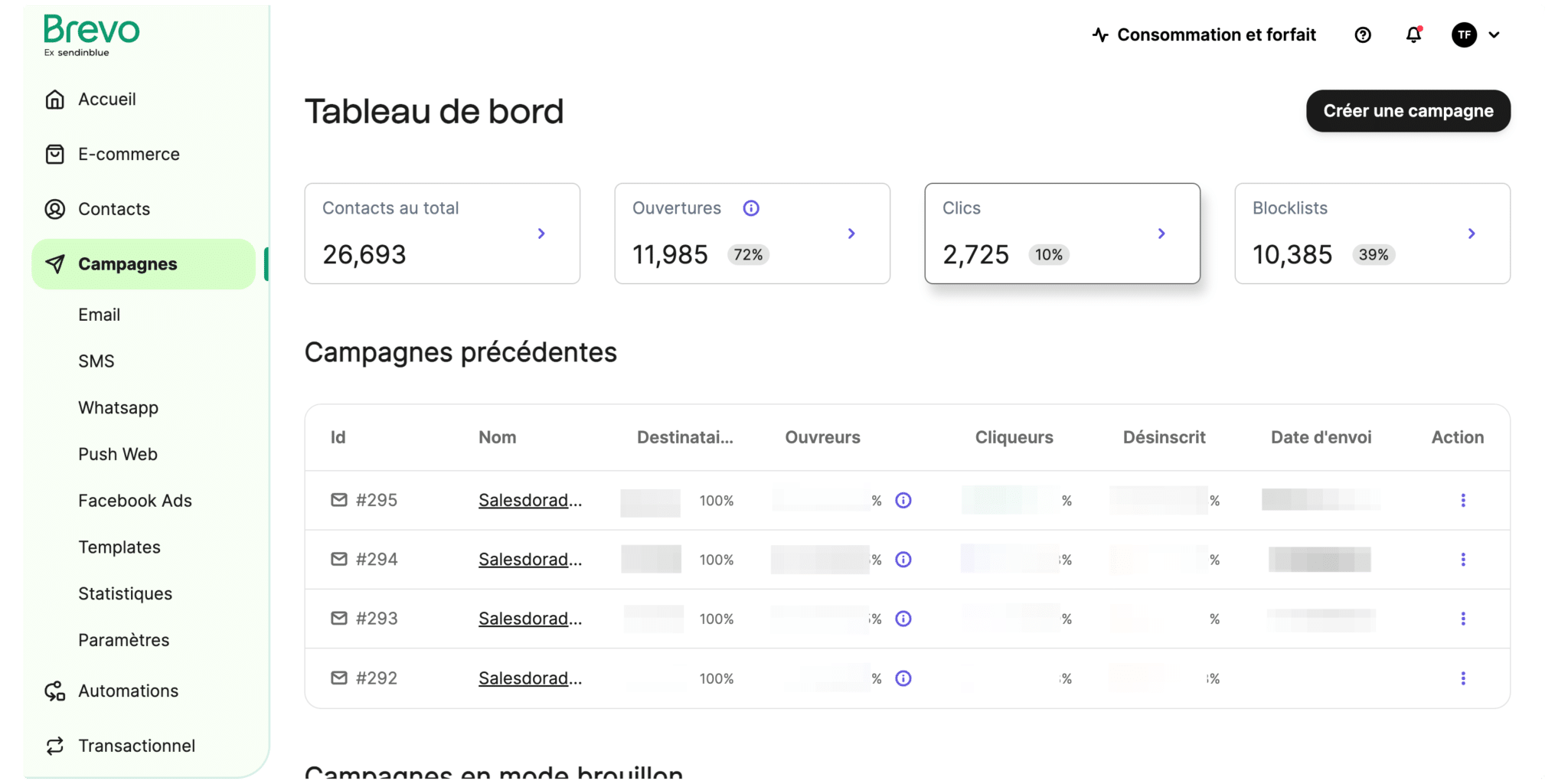
Image source: brevo.com
Key features:
- Email campaign builder with automation workflows.
- Contact and audience segmentation for targeted messaging.
- Basic CRM to store and manage customer information.
- SMS marketing for multi-channel campaigns.
- Real-time reporting on campaign performance.
Best for: Small businesses and marketing teams that focus primarily on email campaigns but still need simple CRM functionality.
Why it stands out: Brevo keeps email marketing at the core while adding lightweight CRM tools, making it accessible for teams that don’t need a full-featured CRM system.
Pricing: Free plan available with limited sends; paid plans start at $25/month, scaling with email volume.
10. Insightly: Best for project and client management with email CRM
Insightly is a versatile CRM email marketing software that combines customer relationship management with project management tools. It’s especially well-suited for agencies and service-based businesses managing multiple client accounts. With Insightly, teams can not only run targeted email campaigns but also track deliverables, assign tasks, and manage timelines—all in the same system. This makes it easier to keep sales, marketing, and project execution aligned, ensuring a smooth customer experience from first email to final delivery.
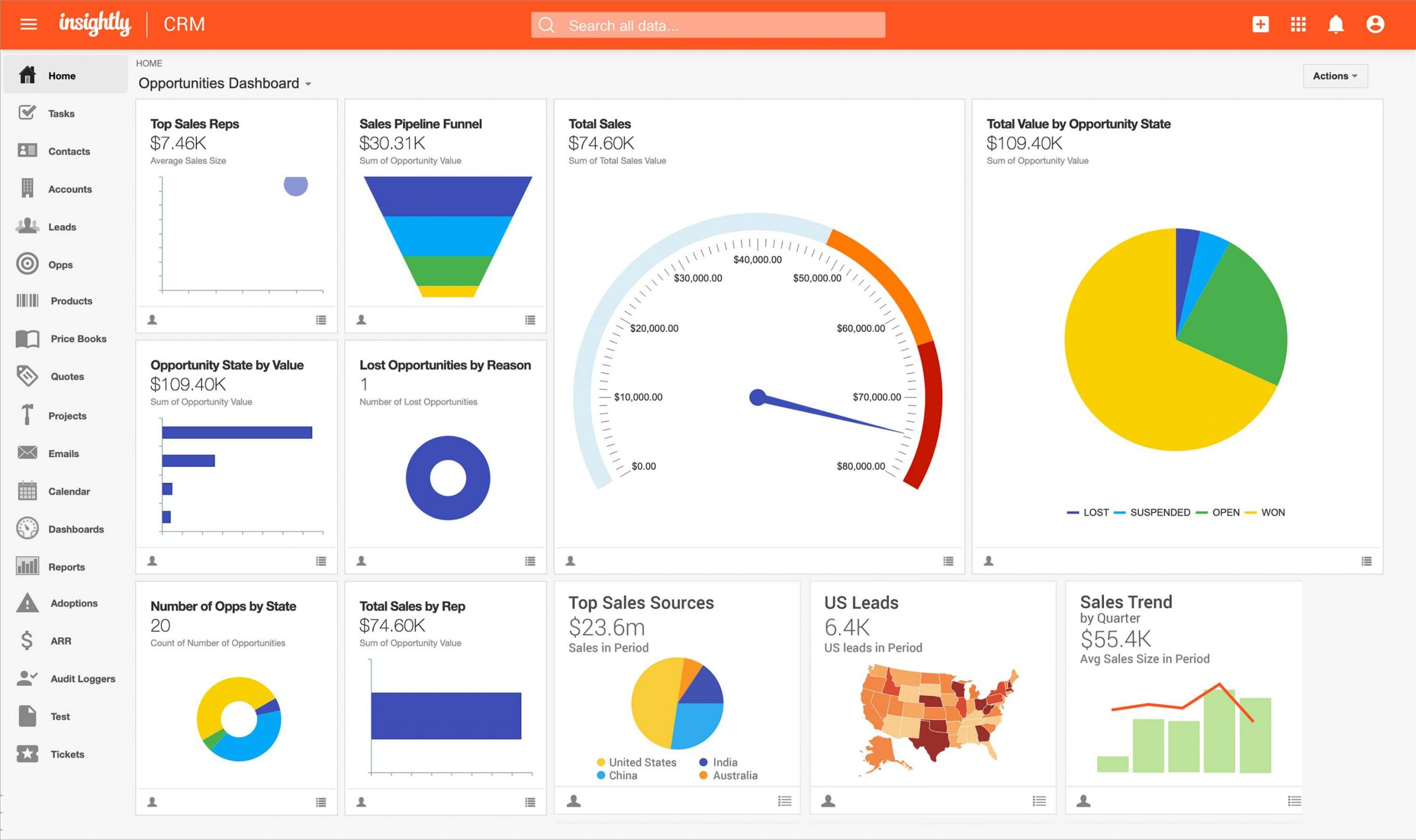
Image source: insightly.com
Key features:
- Email marketing campaigns tied to CRM contact records.
- Project and task management built into the platform.
- Workflow automation for client follow-ups and approvals.
- Sales pipelines to manage leads and opportunities.
- Integrations with G Suite, Slack, and Mailchimp.
Best for: Agencies and service providers that want to combine CRM, email marketing, and project management in one system.
Why it stands out: Insightly goes beyond typical CRM email platforms by adding project management, making it valuable for teams that manage client work alongside campaigns.
Pricing: Paid plans start at $29/user/month, with higher tiers offering more advanced features.
Why businesses need CRM email marketing integration
The combination of CRM and email marketing gives businesses more than just a way to —it creates a connected system where customer data drives communication. This approach helps teams scale campaigns while keeping every interaction relevant and measurable.
- Personalization & segmentation: With CRM email marketing software, teams can segment contacts based on purchase history, demographics, or behavior. This enables highly personalized campaigns that resonate more deeply with audiences, boosting open rates and conversions.
- Efficiency & automation: CRM email automation ensures campaigns run on time without manual effort. From welcome emails to follow-up sequences, businesses can streamline repetitive tasks and focus more on strategy.
- Unified data & communication: Instead of keeping customer details in one system and campaigns in another, an email CRM system centralizes data. This gives sales and marketing teams a single source of truth for outreach and follow-ups.
- Better analytics and ROI tracking: Combining CRM and email data makes it easier to measure performance across the funnel. Businesses can see how emails influence sales pipelines, track ROI, and refine campaigns based on real results.
- Support for small businesses/freelancers: For smaller teams, using a CRM with email automation reduces tool-switching and keeps costs manageable. Freelancers and SMBs can manage client communication and marketing in one place, saving time while staying professional.
Conclusion
Choosing the right CRM for email marketing is essential for businesses that want to move beyond generic campaigns and build lasting customer relationships. The right software not only helps manage contacts and send messages but also connects data, automation, and analytics into a seamless workflow.
While many tools focus only on the campaign side, Lark stands out by unifying CRM, email marketing, collaboration, and automation in one workspace. Teams can track contacts in Lark Base, send personalized campaigns with Lark Mail, automate approvals, and collaborate in real time—all without switching platforms.
By bringing people, processes, and communication together, Lark transforms email campaigns into measurable business results. It’s not just about sending emails—it’s about building smarter, connected workflows that grow with your business.
FAQs
What is the difference between CRM email marketing and traditional email marketing?
Traditional email marketing tools focus mainly on sending campaigns and tracking opens or clicks, while CRM email marketing connects those emails to customer data, sales pipelines, and long-term relationship tracking. This means every campaign is tied to the bigger picture of customer engagement. With Lark, teams can manage contacts in Base, send targeted messages via Lark Mail, and track responses alongside tasks and workflows—turning emails into part of a connected strategy.
How can a small business CRM with email marketing improve customer engagement?
For small businesses, combining CRM with email marketing ensures messages are not only consistent but also relevant. Teams can segment contacts, automate follow-ups, and keep communication personal at scale. Lark makes this easier with built-in tools like Base for contact records, Mail for communication, and AI features that help personalize outreach. This unified approach helps smaller teams engage customers professionally without juggling multiple tools.
What features should I look for in the best CRM email marketing software?
Key features include contact management, automation workflows, personalization, analytics, and scalability. These ensure campaigns are timely, targeted, and measurable. In Lark, you’ll find all of these built in: Base for structured data, Tasks and Approval for automation, Mail for campaigns, and dashboards for reporting. Because it combines CRM and collaboration in one place, Lark delivers more than just email—it streamlines the entire customer journey.
How does CRM email automation help streamline marketing campaigns?
CRM email automation eliminates repetitive tasks by sending emails triggered by actions like sign-ups, purchases, or inactivity. This keeps campaigns consistent and frees up teams to focus on strategy. With Lark, automation goes further: a purchase logged in Base can trigger an approval workflow, notify sales via Messenger, and send a confirmation email through Mail—all automatically. This ensures smoother campaigns and faster customer responses.
Related reading
Table of contents
Start using Lark today

Manage all your work in one place
Boost team efficiency by 10x
Save up to 70% on software costs
Table of contents
Start using Lark today
Manage all your work in one place
Boost team efficiency by 10x
Save up to 70% on software costs
Keep reading









2026 Lark Technologies Pte. Ltd.
Headquartered in Singapore with offices worldwide.






Explore: