














Lead Qualification: The Smart Process to Prioritise & Convert Leads

Ryan Tanner
Product Marketing Specialist
Sep 18, 2026
Ryan Tanner
Sep 18, 2026

22 min read


Turning leads into loyal customers isn't just about collecting contact details—it's about knowing which leads are worth your time. That's where lead qualification comes in. It's a smart, structured process that helps businesses identify prospects most likely to convert, saving time and boosting sales efficiency.
By focusing on qualified leads, teams can personalize communication, close deals faster, and strengthen customer relationships. With Lark, this process becomes seamless. From tracking interactions to automating workflows, Lark helps sales teams prioritize leads intelligently and stay organized every step of the way.
1. Lark: All-in-one inventory collaboration platform
2. HubSpot CRM: Best sales and marketing qualification
3. Salesforce: Enterprise-grade qualification and analytics
4. Pipedrive: Visual sales pipeline and qualification tracking
5. Freshsales: AI-assisted scoring for sales teams
6. Zoho: AI-driven lead scoring and multichannel tracking
7. LeadSquared: Ideal for lead-heavy sales teams
8. Close CRM: Built for fast-moving sales teams

What is lead qualification—and why it matters for modern sales teams
Lead qualification is the process of evaluating potential customers to determine how likely they are to make a purchase. It involves analyzing a lead's interest, buying intent, budget, and fit for your product or service. Instead of treating every inquiry the same, qualification helps sales teams focus on prospects who are genuinely ready to buy. This not only saves time but also ensures that resources are spent where they can make the biggest impact.
Lead qualification is more important than ever. Modern buyers expect personalized communication and quick responses. Without proper qualification, teams risk chasing unqualified leads and missing high-value opportunities. Tools like Lark simplify this process by centralizing lead data, tracking engagement, and enabling smarter decision-making. The result is a more efficient, focused, and high-performing sales team that converts leads into customers with confidence.
Image source: unsplash.com
Understanding the lead qualification process and stages
Understanding the lead qualification process helps sales teams separate casual interest from genuine intent. It involves evaluating leads through key stages—from initial contact to final evaluation—to identify who's most likely to buy. With clear qualification criteria and workflow tools like Lark, teams can streamline their workflow and focus on high-quality prospects that drive revenue.
Stage 1: Capture and centralize every lead
- Collect leads from all sources—website forms, campaigns, referrals, outbound lists.
- Store them in a single workspace (like Lark Base) so marketing and sales can access shared data instantly.
- Avoid siloed spreadsheets or disconnected CRMs that slow response time.
Stage 2: Define your qualification criteria
- Decide what makes a lead worth pursuing: company size, budget, buying role, urgency, etc.
- Create clear definitions for Marketing Qualified Leads (MQLs) and Sales Qualified Leads (SQLs).
- Keep these definitions documented in Lark Docs for team-wide alignment.
Stage 3 Assign ownership and responsibility
- Assign each lead to a rep or team member right away—no floating contacts.
- Use Lark Tasks to create automation follow-ups when a new lead enters the system.
- Add due dates or reminders to prevent delays in first contact.
Stage 4: Evaluate fit and intent
- Assess whether the lead matches your Ideal Customer Profile (ICP).
- Review engagement data (downloads, demo requests, website visits).
- Qualify through short discovery calls or automated scoring tools.
- Update lead scores directly in Lark Base to keep data visible to both teams.
Stage 5: Move through qualification stages
Most teams use a simple, universal structure:
- New Lead: Just entered the funnel.
- MQL (Marketing qualified lead): Engaged but not yet vetted by sales.
- SQL (Sales qualified lead): Reviewed, validated, and ready for outreach.
- Opportunity: Actively being pursued by sales.
- Closed/won or closed/lost: Final outcomes.
Tip: Automate status changes in Lark Base using workflow rules—for example, when a lead completes a demo, their status automatically updates to SQL.
Stage 6: Collaborate across marketing and sales
- Keep qualification transparent so both teams see what's moving and why.
- Discuss borderline leads directly in Lark Messenger, tagging the Base record for instant context.
- Use shared Lark Sheets dashboards to monitor lead volume, conversion rate, and handoff speed.
Stage 7: Review and refine continuously
- Schedule monthly or quarterly reviews of your qualification process.
- Revisit ICPs, scoring models, and messaging based on actual performance data.
- Use Lark Tasks to assign review checkpoints—ensuring the process evolves with market shifts.
Stage 8: Keep your qualification process visible, not static
- Treat qualification as a living system, not a fixed checklist.
- In Lark, everything—from definitions and lead data to performance metrics—stays connected and updated in real time.
Key frameworks for smarter lead qualification
To qualify leads effectively, sales teams often rely on proven frameworks that bring structure and consistency to the process. Here are three popular ones:
- BANT (Budget, Authority, Need, Timeline): This classic framework helps assess whether a prospect has the budget, decision-making authority, a real need for the product, and a defined purchase timeline. It's simple and works well for most sales environments.
- CHAMP (Challenges, Authority, Money, Prioritization): CHAMP shifts the focus from the seller's perspective to the buyer's. It starts by identifying the customer's challenges before considering authority and budget. This makes it ideal for teams that prioritize understanding customer pain points first.
- MEDDIC (Metrics, Economic Buyer, Decision Criteria, Decision Process, Identify Pain, Champion):
Designed for complex B2B sales management, MEDDIC digs deeper into how prospects make purchasing decisions. It helps sales teams qualify high-value opportunities by aligning with the buyer's process and identifying internal advocates.
8 Lead qualification tools that improve accuracy and alignment
Choosing the right lead qualification tools can make all the difference in sales accuracy and team alignment. These tools help capture, score, and organize leads based on real-time data, ensuring no opportunity slips through the cracks.
1. Lark: The all-in-one workspace for connected lead qualification
Lark doesn't just manage projects or oversee businesses—it connects the two. By bringing together Base, Tasks, Calendar, Docs, Approval, Sheets, OKR, and Messenger in one ecosystem, Lark ensures strategic goals translate into measurable, on-time results. It empowers leaders with visibility, equips teams with structure, and keeps communication transparent—turning vision into execution and execution into business success.
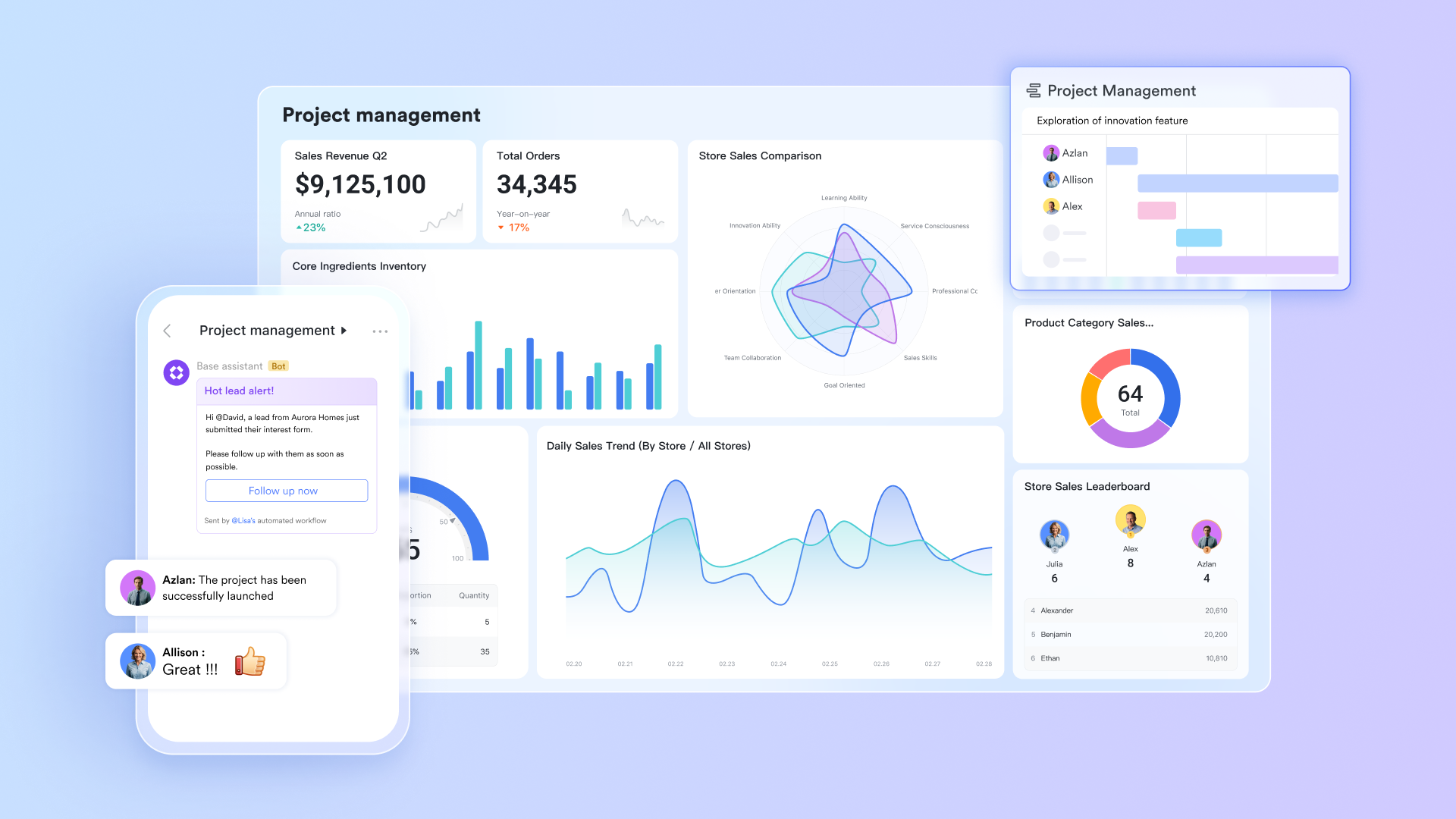
Lark Base: From strategy to structured execution
At the heart of Lark lies Lark Base, a customizable data hub where teams can plan projects and manage business operations side by side. Business leaders can create relational tables to track ongoing initiatives, resource allocations, and key performance metrics. Meanwhile, project managers can link deliverables, owners, and dependencies within the same workspace. For instance, a marketing agency can maintain one table tracking company-wide campaigns (business view) and another monitoring ad deliverables (project view). 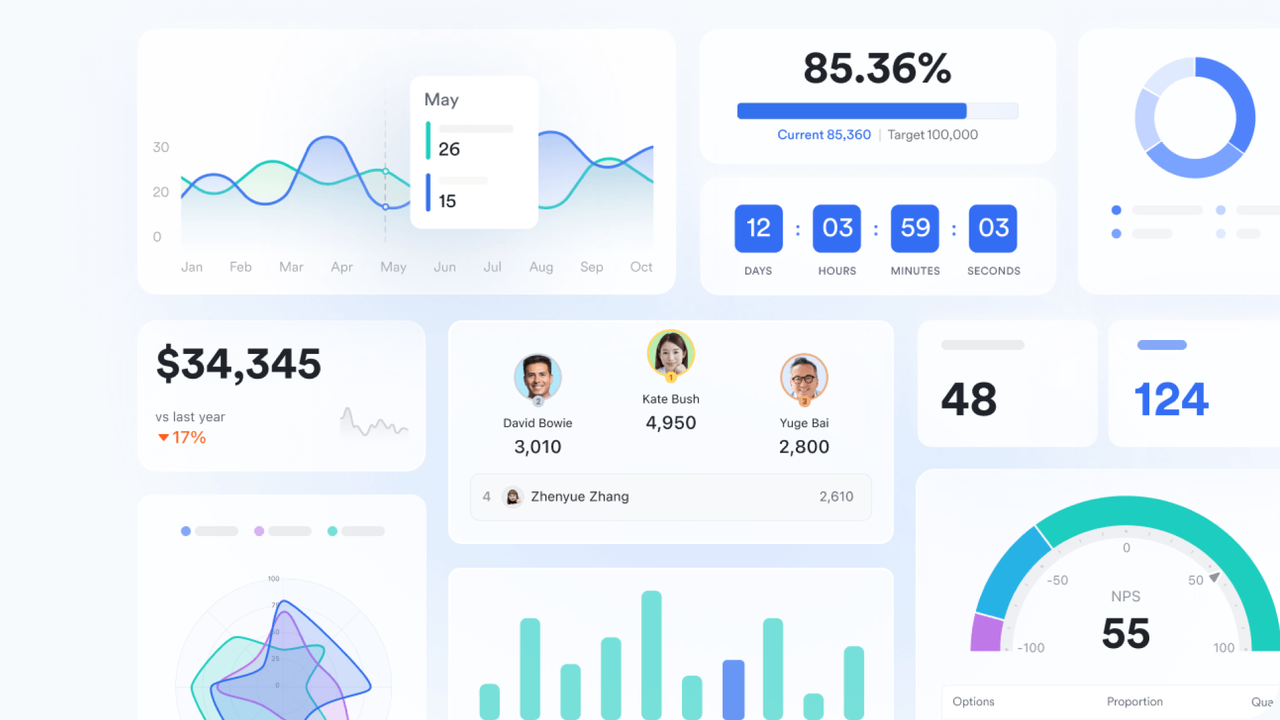
Lark Tasks: Turning business plans into actionable work
While leaders focus on strategic direction, project teams need clarity on next steps. Lark Tasks ensures business plans turn into tangible actions. Managers can assign tasks with owners, deadlines, and dependencies while tracking progress in real time. As tasks are completed, Lark syncs the record into the broader business dashboard, ensuring both managers and executives stay aligned without manual reporting.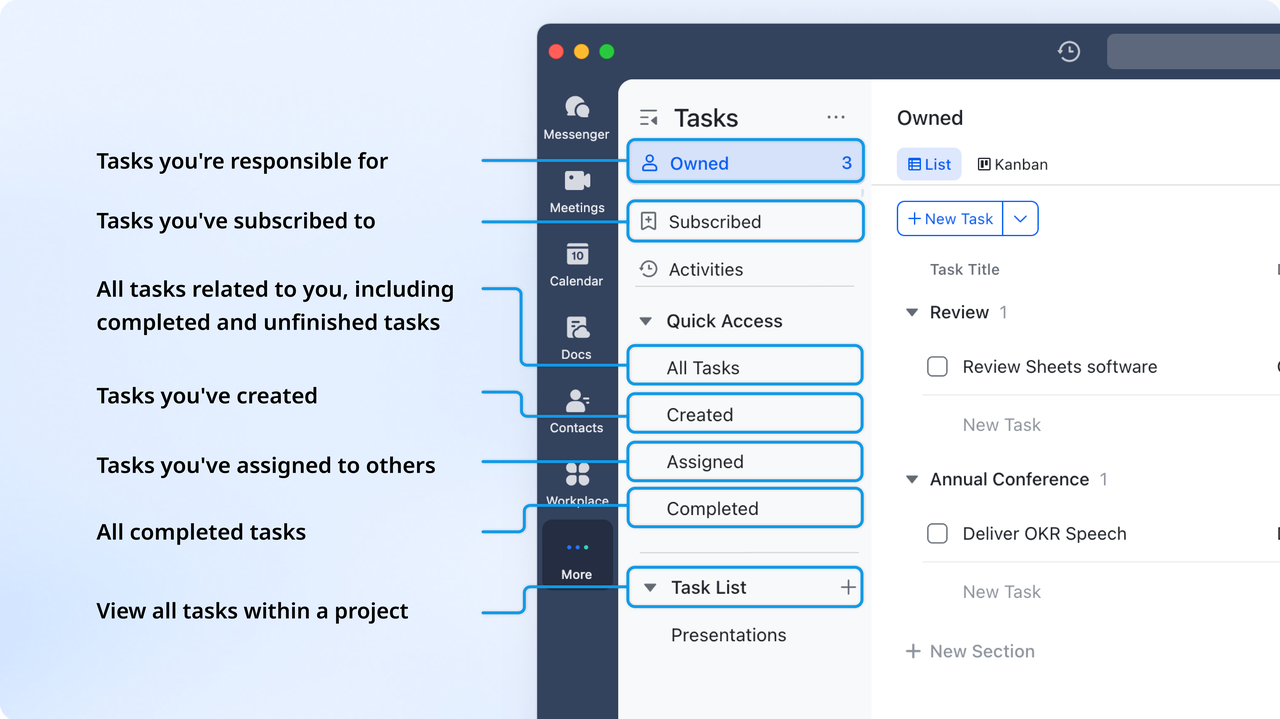
Lark Calendar: Keeping business priorities and project timelines in sync
Scheduling is often where business management meets project reality. With the Lark Calendar, organizations can align executive planning sessions, project reviews, and milestone check-ins in one shared view. When a quarterly business meeting is scheduled, it automatically syncs with the corresponding project deadlines, preventing conflicts and ensuring that key deliverables are ready for review. 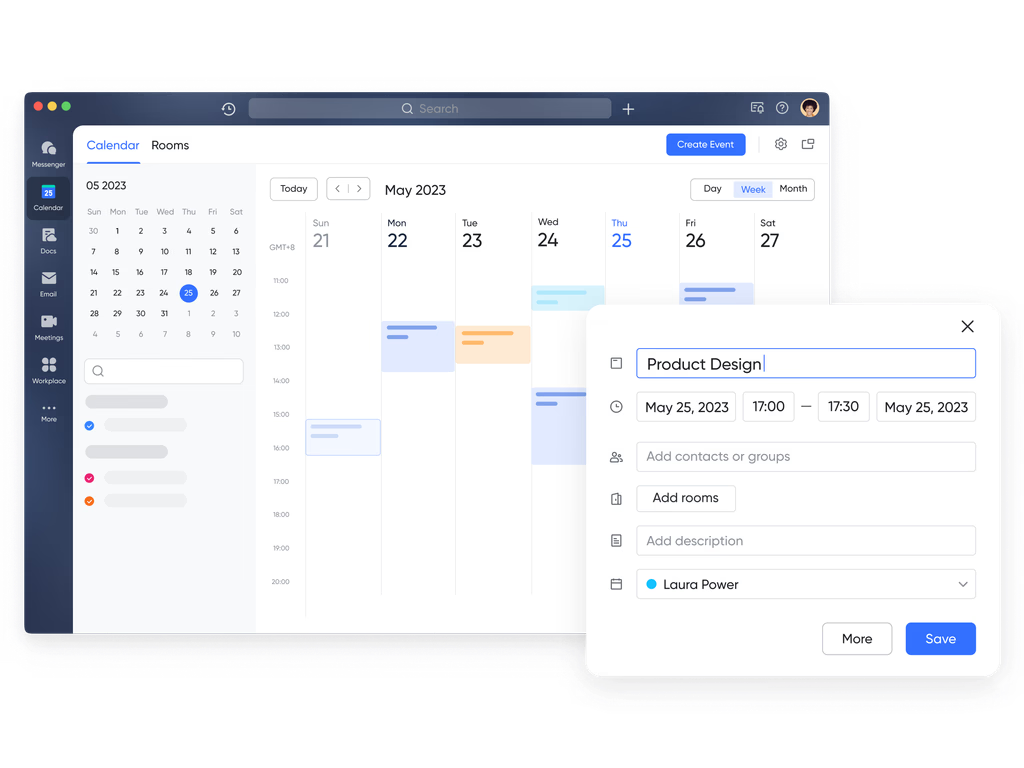
Lark Docs & Lark Wiki: Unifying strategy, knowledge, and collaboration
In most organizations, strategic plans and project documentation live in silos. Lark Docs & Wiki eliminates that gap. Executives can outline annual business objectives in Docs, while project teams can co-author execution plans or campaign briefs within the same platform. The Lark Wiki serves as a long-term repository for SOPs, templates, and best practices, ensuring business knowledge is easily accessible. For instance, a finance team might document budget approval workflows on the Wiki, while the project leads reference to those steps when submitting new funding requests.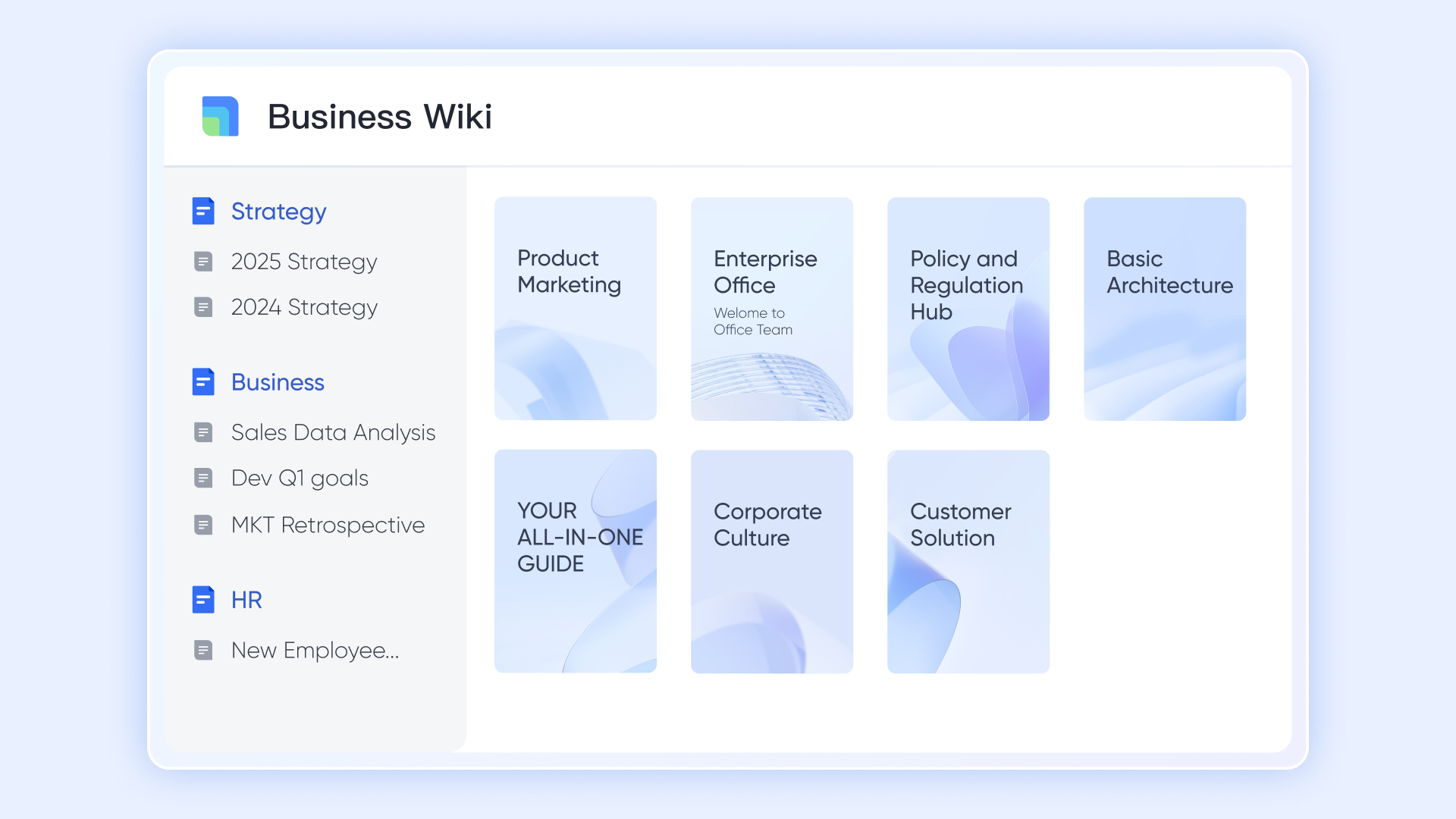
Lark Sheets: Turning project data into business insights
Lark Sheet Lark Sheets supports real-time updates, collaboration, and track performance for project management tasks, including assigning work, adding comments, and linking related Docs. It’s ideal for tracking metrics such as project costs and milestone progress, especially when calculations or formulas are required. Updates made in task lists can automatically sync to Lark Sheet every hour, with the option for manual syncing as well. Base can be integrated with sheets for broader project management.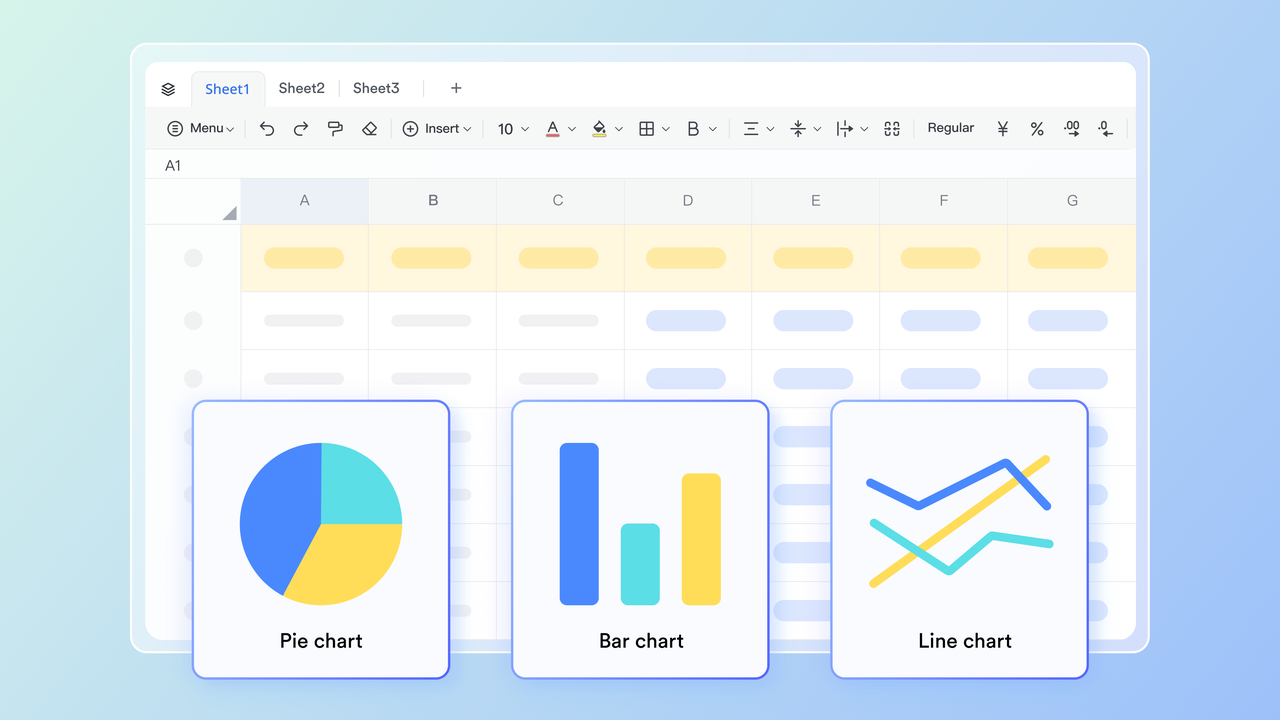
Lark Approval: Simplifying governance and accountability
Smooth execution requires structure—and that's where Lark Approval brings business governance into project management. Teams can automate approval flows for budgets, proposals, or change requests, ensuring accountability without slowing progress. A project manager can submit a scope expansion for approval, which automatically routes department heads and finances before final sign-off. Each action is logged, creating a transparent audit trail for compliance and performance tracking. This replaces scattered email approvals with a streamlined, automated workflow that keeps decisions aligned with business goals.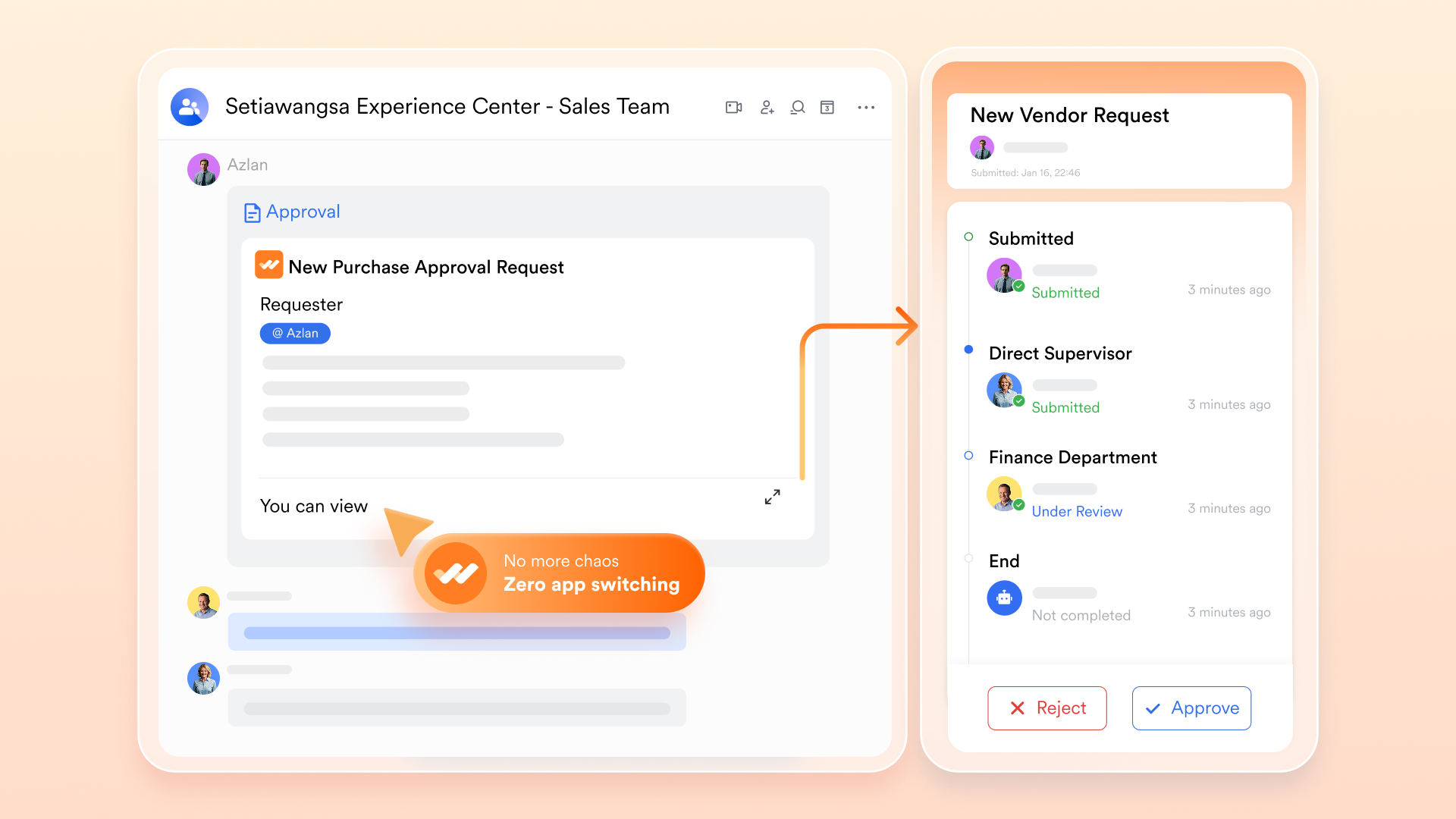
Lark OKR: Linking execution to strategic outcomes
No business strategy succeeds without clear alignment between goals and actions. Lark OKR connects company-wide objectives to project-level deliverables, ensuring everyone understands how their work contributes to broader success. For example, a company OKR to "Increase client retention by 20%" can link directly to customer success initiatives, onboarding projects, and renewal campaigns. As project teams complete their milestones, OKR progress updates automatically—giving leadership a live view of how execution supports strategy. It's a simple but powerful way to turn ambition into measurable outcomes.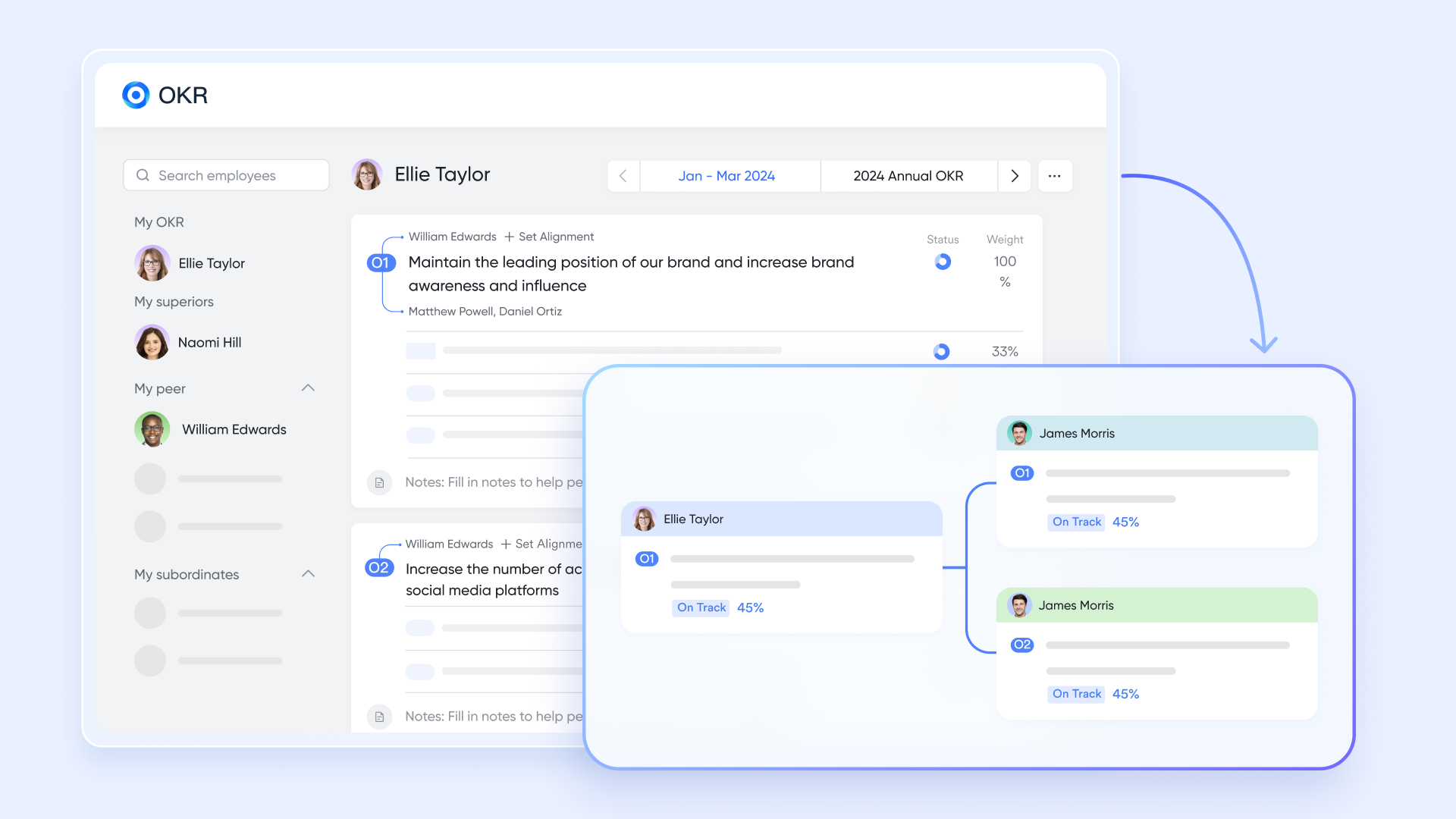
- Starter plan: Free forever plan that includes 11 powerful tools for up to 20 users. It also comes with 100GB of storage, 1000 automation runs, AI translations, and more.
- Pro plan: $12/user/month (billed annually) for up to 500 users. It includes everything in Starter plus group calling for up to 500 attendees, 15TB of storage, 50,000 automation runs, and more.
- Enterprise plan: Contact sales for custom pricing. Supports unlimited users and includes even more automation runs and advanced security, compliance, and management features.
2. HubSpot CRM: Best sales and marketing qualification
When it comes to managing and qualifying leads efficiently, HubSpot CRM stands out as a top choice for sales and marketing teams. It helps businesses capture, track, and nurture prospects while providing clear insights into which leads are most likely to convert. With its intuitive interface and robust automation, HubSpot CRM streamlines the entire qualification process.
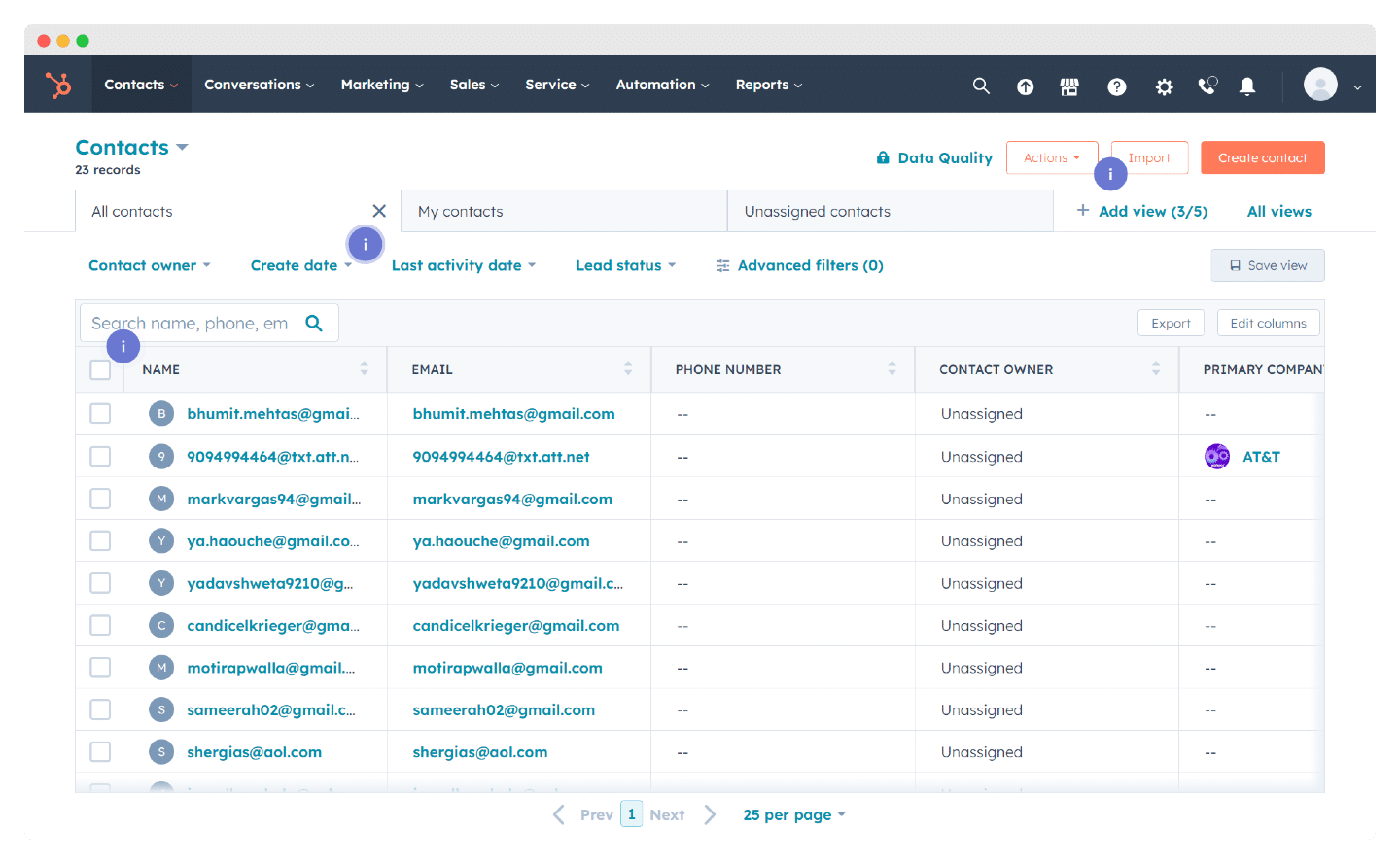
Image source: hubspot.com
Features:
- Built-in lead scoring and qualification tools
- Centralized contact and deal management
- Powerful marketing automation and email tracking
- Detailed analytics and performance dashboards
- Free version with essential CRM features for small teams
Why you'll like it:
- Combines marketing and sales data for better lead insights
- Easy-to-use interface with customizable pipelines
- Strong automation and reporting capabilities
- Excellent customer support and extensive learning resources
Why you might not:
- Advanced features are locked behind higher-tier plans
- Can feel feature-heavy for small teams with simple needs
Pricing:
- Free plan: Free
- Starter Customer Platform: ~US$15/user/month (annual)
- Enterprise: Custom
3. Salesforce Sales Cloud: Enterprise-grade qualification and analytics
For large teams and enterprise-level businesses, Salesforce Sales Cloud offers a powerful platform to manage and qualify leads efficiently. It combines advanced analytics, customizable workflows, and robust reporting to help sales teams prioritize prospects and close deals faster. Its scalability makes it ideal for organizations with complex sales processes.
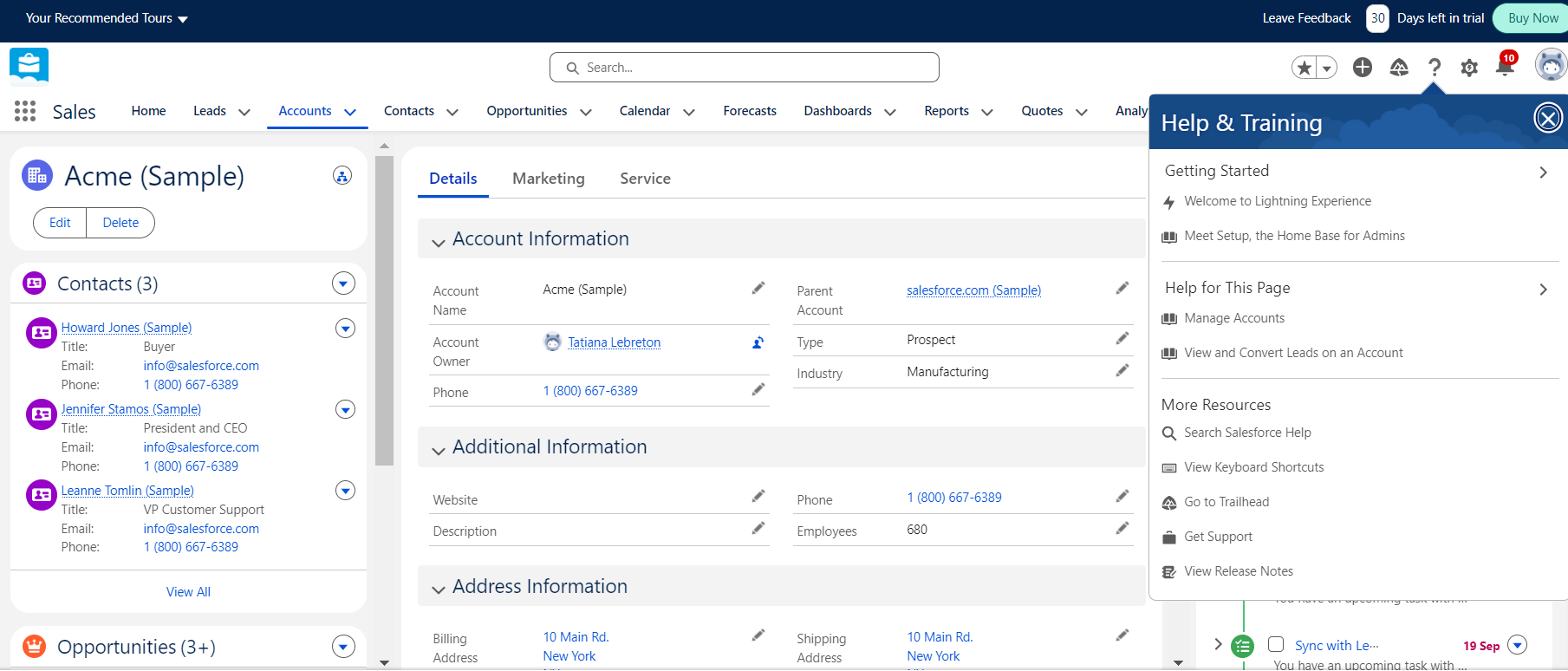
Image source: salesforce.com
Features:
- Advanced lead scoring and automated qualification workflows
- Comprehensive contact and opportunity management
- Real-time analytics and customizable dashboards
- AI-powered insights with salesforce einstein
- Mobile app for sales management on the go
Why you'll like it:
- Highly customizable to match complex sales processes
- Powerful analytics for data-driven decision-making
- Scales easily with growing teams and businesses
- Strong automation and AI-driven recommendations
Why you might not:
- Steeper learning curve for new users
- Higher pricing compared to other CRM solutions
Pricing:
- Starter Suite: ~US$25/user/month
- Enterprise: Custom
4. Pipedrive: Visual sales pipeline and qualification tracking
When your sales process needs clarity and structure, Pipedrive stands out. It offers a highly visual sales pipeline that makes it easy to see exactly where each lead is, what stage it's in, and what needs to happen next.
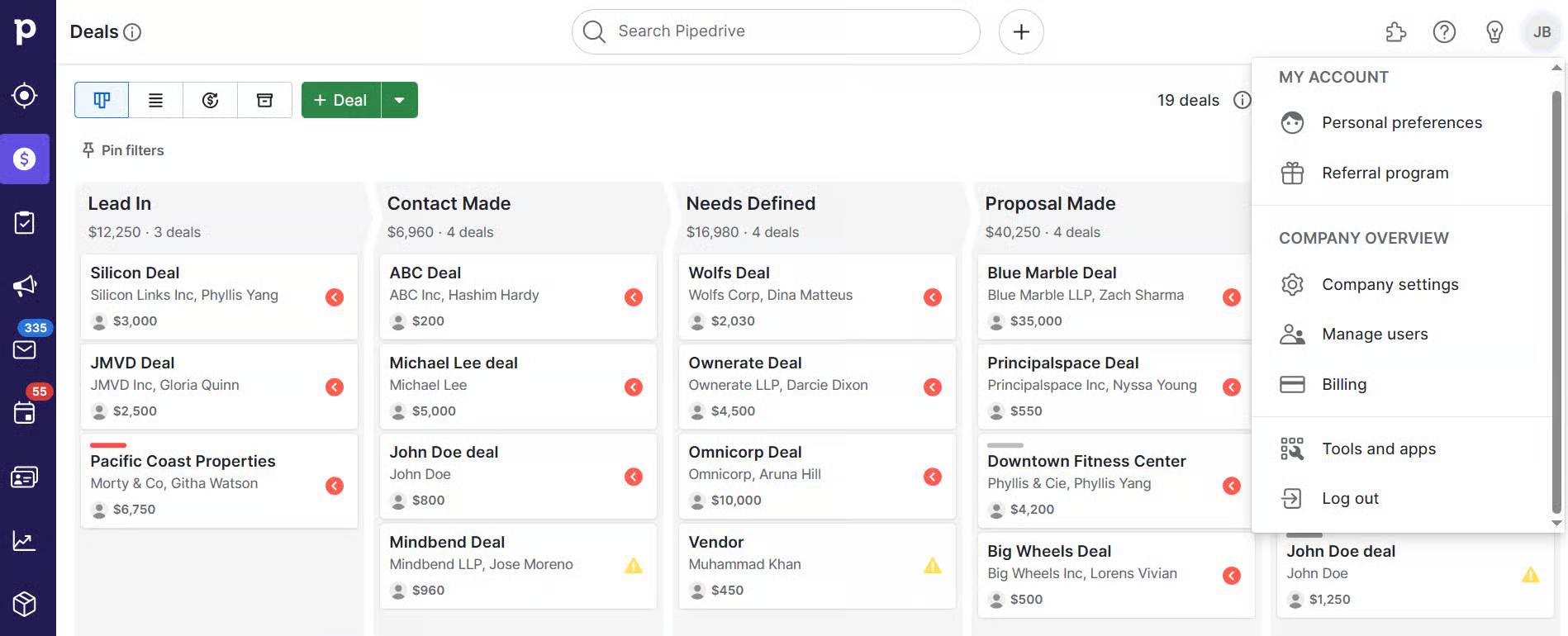
Image source: pipedrive.com
Features:
- Drag‑and‑drop pipeline view to manage leads from contact to close.
- Customisable deal stages, fields, and multiple pipelines for different products or verticals.
- Workflow automation to reduce manual tasks and ensure follow‑ups.
- Email integration with tracking of opens & clicks.
- Lead‑generation add‑ons, contact enrichment, and a wide range of integrations.
Why you'll like it:
- The visual layout helps sales reps and managers get quick clarity on pipeline status.
- It's relatively easy to get started, so teams can hit the ground running.
- Customisation means it can adapt to your qualification criteria and sales stages.
- A good ecosystem of integration helps align it with other tools you may already use.
Why you might not:
- Some features are only available in higher‑tier plans or via add‑ons.
- If your process is very simple or you're a very small team, it might feel like more than you need.
Pricing:
- Essential plan: ~US$14/user/month (billed annually)
- Free plan: Not available
5. Freshsales by Freshworks: AI-assisted scoring for sales teams
When your sales team wants a smarter way to handle leads, Freshsales CRM delivers. It uses built‑in AI to help you identify which prospects are worth your time, track their journey and act at the right moment. Ideal for teams that want more insight and less guess‑work.
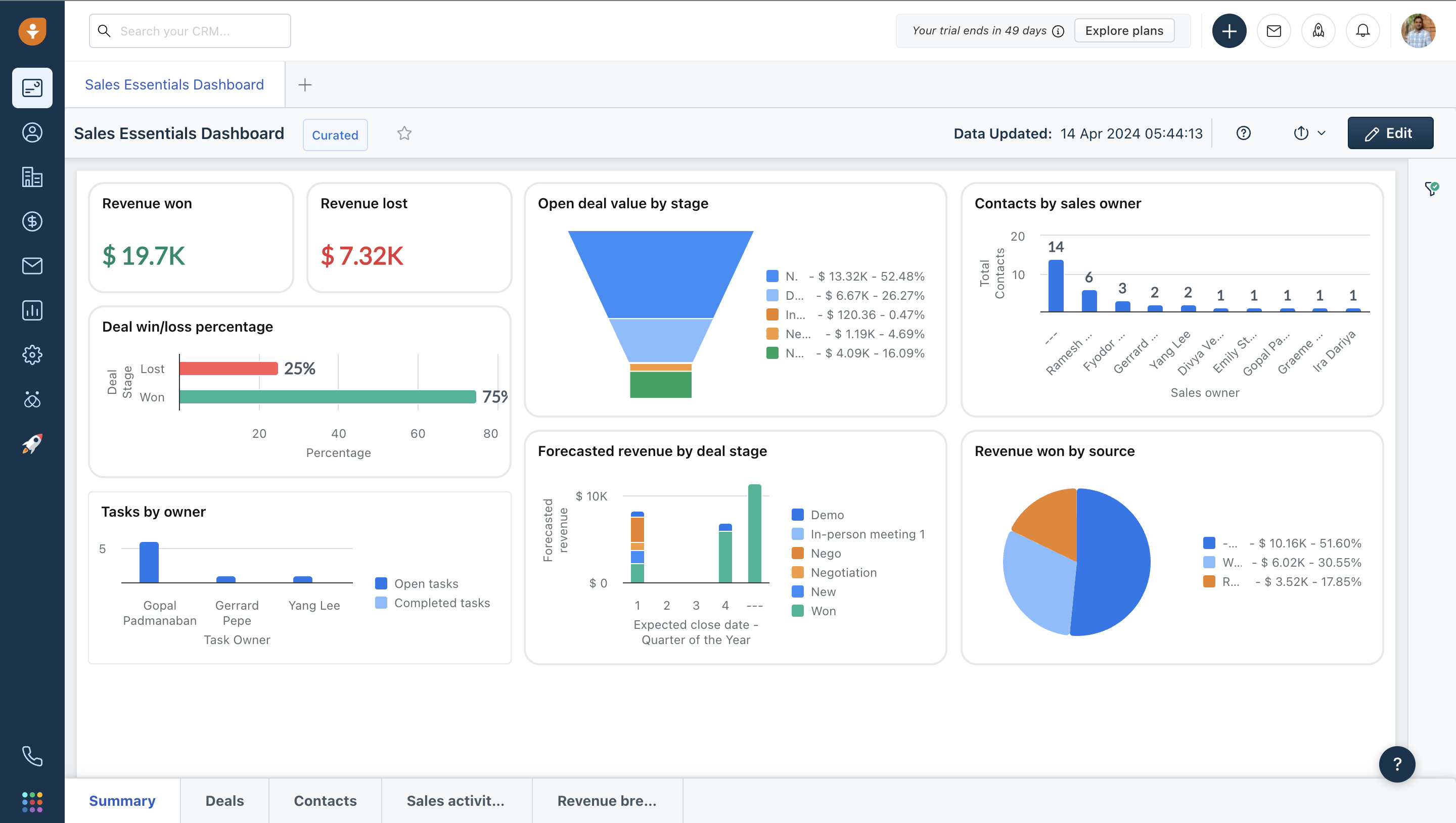
Image source: freshworks.com
Features:
- AI lead‑scoring and deal‑insights—identifies high‑potential leads and suggests next steps.
- Unified contact, deal and activity management with a full 360° view of each prospect.
- Multichannel engagement and automatic tracking of interactions.
- Customizable pipelines, workflows and automation rules to reflect your sales process.
- Integrations with other tools and apps via Freshworks marketplace and APIs.
Why you'll like it:
- The AI scoring helps prioritize leads with real‑data
- Easy to see where each deal stands and what to do next
- One platform to manage leads, contacts and communications
- Flexible enough for growing teams
Why you might not:
- As your needs grow, the cost and setup may go up.
- Some third‑party integrations may not be as extensive as larger CRMs.
Pricing:
- Free plan: Free (up to 3 users)
- Growth plan: US$9/user/month (annual)
- Pro/Enterprise: Higher tiers
6. Zoho CRM: AI-Driven Lead Scoring and Multichannel Tracking
For growing teams looking for an affordable yet capable CRM, Zoho CRM is a strong choice. It offers AI-powered lead scoring through "Zia," along with customizable workflows and detailed multichannel tracking. Whether you're managing inbound leads or complex sales pipelines, Zoho helps organize and qualify prospects efficiently.
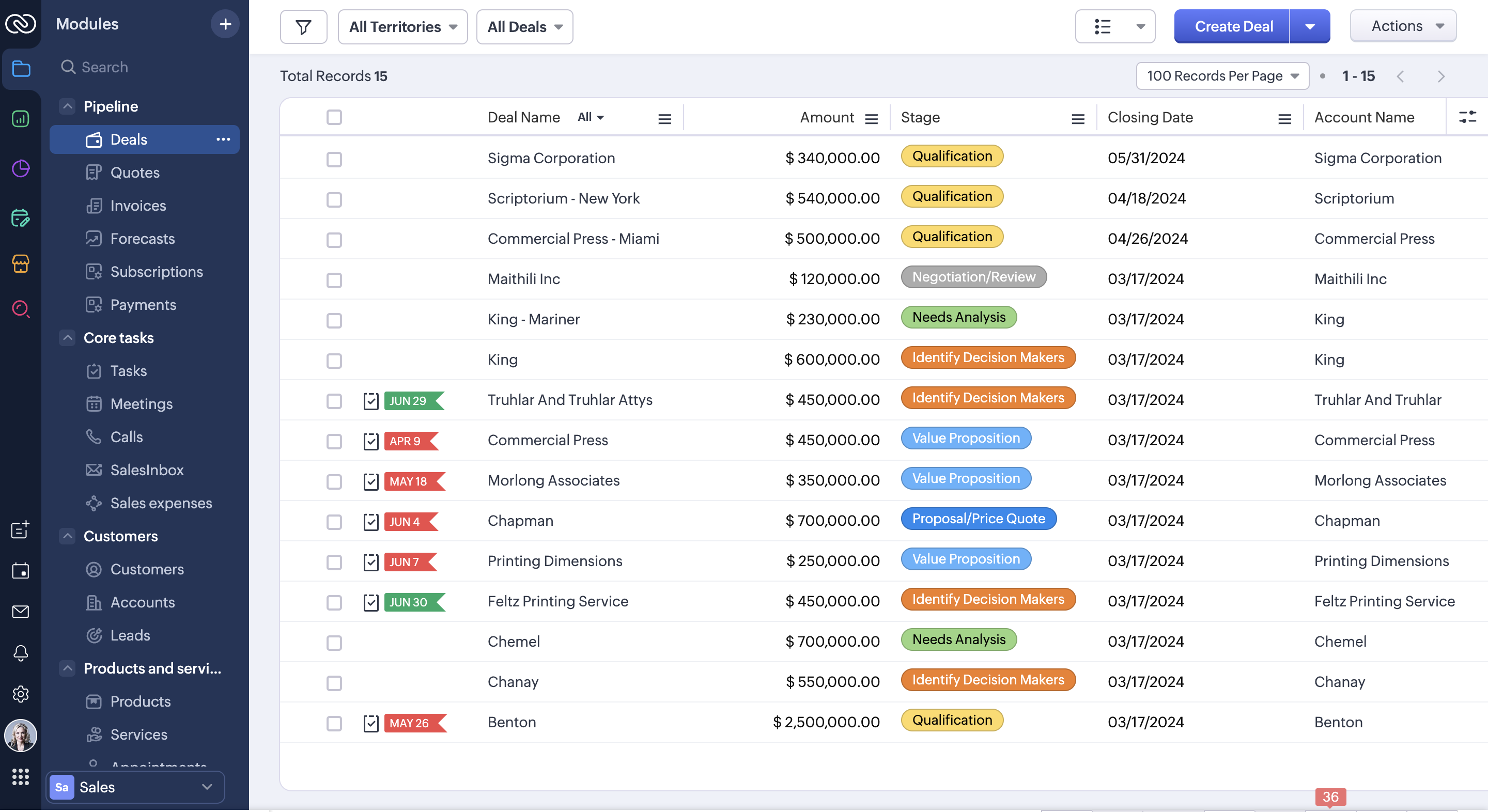
Image source: zoho.com
Features:
- AI-driven insights and lead scoring powered by Zia
- Customizable workflows and automation rules
- Multichannel communication (email, phone, social, live chat)
- Comprehensive sales analytics and forecasting tools
- Mobile CRM for on-the-go lead and deal management
Why you'll like it:
- Affordable and scalable for small to mid-sized teams
- Offers deep customization for unique sales processes
- Strong automation features for smarter lead nurturing
- Reliable support and continuous feature updates
Why you might not:
- The interface can feel a bit dated compared to newer CRMs
- Some advanced integrations and analytics require higher-tier plans
Pricing:
- Free Edition: Free (up to 3 users)
- Standard plan: ~US$14/user/month (annual)
- Professional/Enterprise: Higher tiers
7. LeadSquared: Ideal for lead-heavy sales teams
When your business needs to capture, qualify and act on a high volume of leads—especially from multiple channels—LeadSquared delivers. It's built to help sales and marketing teams track leads from first click through to conversion, with automation and analytics baked in for speed and scale.
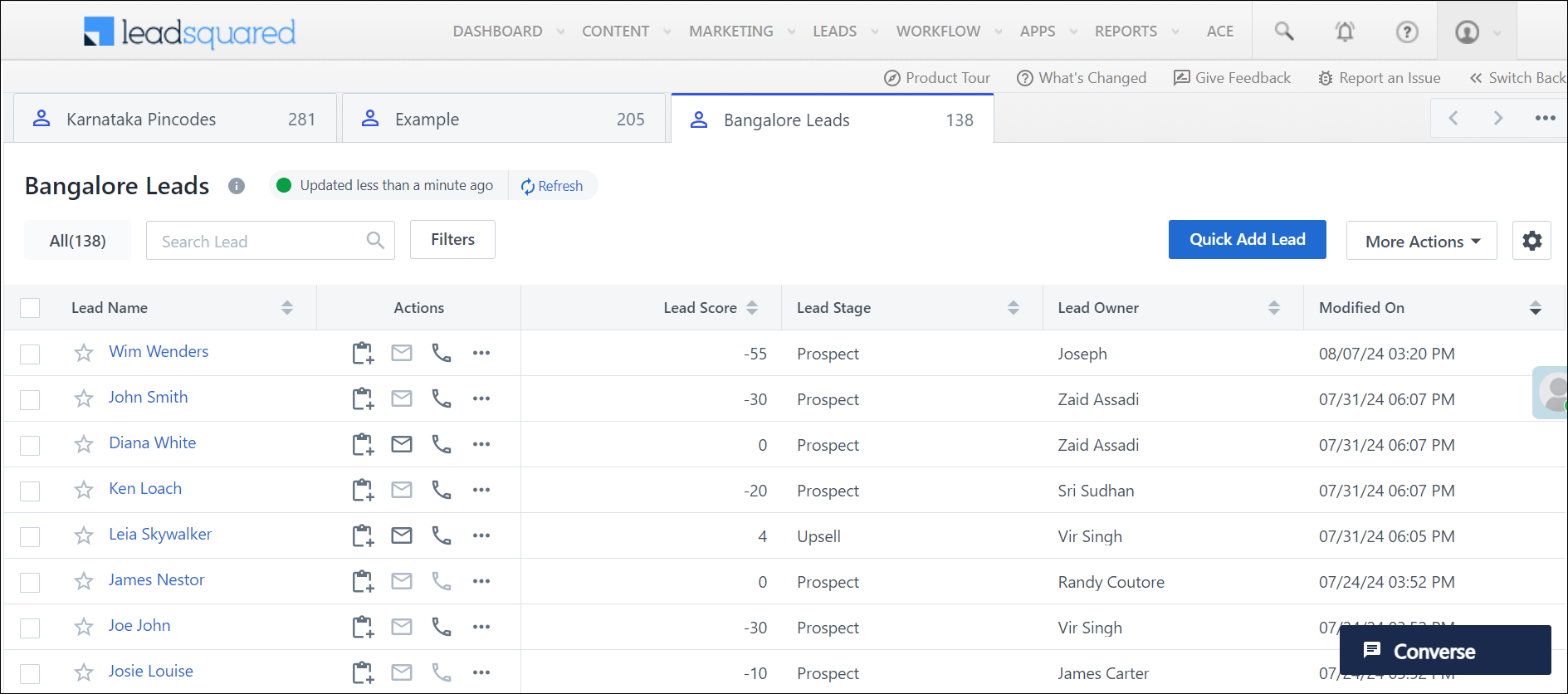
Image source: leadsquared.com
Features:
- Automated lead capture from online/offline sources
- Lead scoring, grouping and prioritization
- No-code workflow automation
- Mobile CRM app for field teams
- Rich reporting and dashboards
Why you'll like it:
- Designed for high-velocity lead flows
- Strong automation means your team spends less time on logistics
- Field-sales support is well catered
- Flexible enough to grow with you
Why you might not:
- Initial setup and customization may feel a bit heavy if your needs are very basic.
- Some users mention the interface could be more polished
Pricing:
- Lite plan: US$25/user/month
- Higher tiers: US$50+/user/month
- Free plan: Not available
8. Close CRM: Built for fast-moving sales teams
If your sales team is focused on outreach, follow-up and closing deals quickly, Close CRM is a strong contender. It combines calling, emailing, texting, and deal-management into one platform—so reps spend less time switching tools and more time engaging prospects.
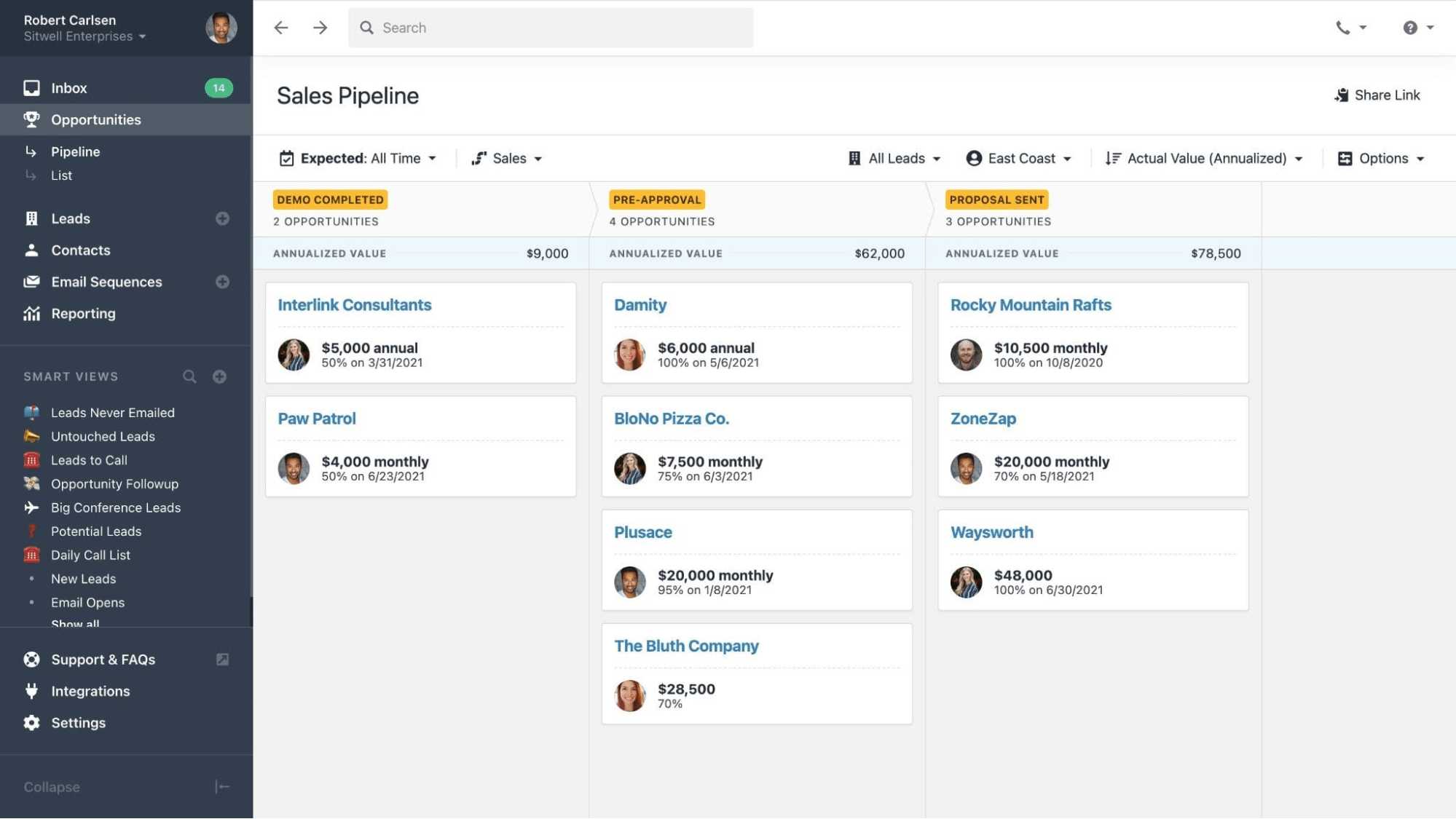
Image source: close.com
Features:
- Built-in calling, SMS and email all logged automatically against leads.
- Visual sales pipeline and customizable workflows to keep your process aligned.
- Workflows that trigger tasks, emails or SMS when certain criteria are met.
- Detailed analytics and reporting showing rep activity and conversion trends.
- Call/meeting transcription, email summarization, enrichment of lead data.
Why you'll like it:
- It's designed with salespeople in mind
- The automation and built-in communications make it much easier
- Visual and intuitive pipeline views let you clearly see what stage each deal
- Especially good if your team does a lot of outbound calls or SMS outreach
Why you might not:
- Some features may be more than you need—and could raise the cost..
- Some users report occasional UI quirks when dealing with large volumes or older leads.
Pricing:
- Solo plan: US$9/user/month (annual billing)
- Monthly option: US$19/user/month
- Free plan: Not available (trial available
How to measure and improve your lead qualification performance
Consistent tracking and analysis help you refine your lead qualification process. By focusing on the right metrics, you can identify bottlenecks, boost efficiency, and convert more leads into paying customers.
- Track lead-to-close conversion rate: This metric shows how many leads turn into closed deals. A low rate may signal issues in qualification criteria or handoff between sales and marketing. Regular monitoring helps identify where leads drop off and where process adjustments are needed.
- Monitor SQL-to-opportunity ratio: Your SQL-to-opportunity ratio reflects how effectively your team moves qualified leads into the pipeline. If this number is low, revisit your definition of an SQL or ensure the sales team follows up promptly and consistently.
- Measure response and handoff time: Speed matters in lead management. Tracking how long it takes to respond to new leads or transfer them to sales helps identify delays that can cost opportunities and affect customer experience. A quick response shows professionalism and builds trust early in the relationship.
- Analyze lead source performance: Not all leads are equal. Reviewing performance by source (ads, referrals, organic, etc.) helps you identify which channels bring in high-quality prospects and which ones need improvement. This insight allows you to allocate budget and effort more effectively.
- Review qualification accuracy regularly: Regularly evaluate whether your qualification criteria still match your ideal customer profile. Over time, customer needs, market conditions, and buying patterns can shift, making old benchmarks less effective. Using real conversion data to refine your criteria ensures your sales team focuses on leads.
- Set up live dashboards for ongoing visibility: Live dashboards centralize your key metrics, giving teams instant visibility into performance trends. This helps teams make time and maintain transparency across marketing and sales. Everyone can see real-time performance, spot trends early, and take quick action to address issues before they impact conversion rates.
- Automate reminders and reviews: Automation ensures that reviews and follow-ups don't get overlooked. Setting up automated alerts for delayed responses or missed follow-ups keeps the process running smoothly and prevents potential leads from slipping through the cracks.
Conclusion
Effective lead qualification isn't just about sorting prospects—it's about building a smarter, more focused sales process. By understanding frameworks, using the right tools, and aligning teams around qualified opportunities, businesses can close deals faster and improve ROI. With Lark, you can bring your entire lead qualification process together—streamline collaboration, track performance, and convert more leads into loyal customers.
FAQs
Which frameworks are best for lead qualification?
Popular frameworks include BANT, CHAMP, and MEDDIC—each designed to assess key factors like budget, authority, need, and decision-making processes.
How can tools like Lark support lead qualification?
Lark streamlines communication and data sharing across teams, helping track leads, automate workflows, and ensure everyone stays aligned on sales priorities.
What's the difference between a qualified lead and an unqualified lead?
A qualified lead meets predefined criteria showing strong purchase intent, while an unqualified lead may lack interest, budget, or decision authority.
How does lead scoring relate to lead qualification?
Lead scoring is a key part of qualification. It assigns a numerical value to each lead based on factors like engagement, behavior, and demographics. This helps sales teams quickly identify which leads are most likely to convert.
How often should businesses review their lead qualification process?
It's best to review and refine the lead qualification process regularly—at least every few months. As markets, buyer behavior, and product offerings evolve, updating your criteria ensures your sales team stays effective and aligned with business goals.
Related reading
Table of contents
Start using Lark today

Manage all your work in one place
Boost team efficiency by 10x
Save up to 70% on software costs
Table of contents
Start using Lark today
Manage all your work in one place
Boost team efficiency by 10x
Save up to 70% on software costs
Keep reading









2026 Lark Technologies Pte. Ltd.
Headquartered in Singapore with offices worldwide.






Explore: