














Project Management Objectives: What is it and How to Achieve it

Ryan Tanner
Product Marketing Specialist
Sep 18, 2026
Ryan Tanner
Sep 18, 2026

14 min read


In any organization, projects drive results, innovation, and business growth. However, even well-planned initiatives can stall without clearly defined project management objectives. These objectives set measurable outcomes, guide teams toward a shared vision, and provide benchmarks to evaluate progress. While goals describe the broader project vision, objectives break them into specific, actionable, and quantifiable milestones. Clear objectives help teams prioritize tasks, allocate resources efficiently, and identify risks early. Let's dive into this guide and access success step by step.

What are project management objectives?
Project management objectives are specific, measurable outcomes that guide the direction and performance of a project. Unlike broad project goals, which define the overall vision or desired end state, objectives break that vision into actionable milestones that can be tracked and evaluated.
Clear objectives help set expectations for teams, ensure alignment across stakeholders, and provide a benchmark to measure progress and success. They allow project managers to prioritize tasks, allocate resources efficiently, and identify potential risks before they escalate. By focusing on measurable outcomes rather than abstract goals, teams can maintain clarity, accountability, and motivation throughout the project lifecycle.
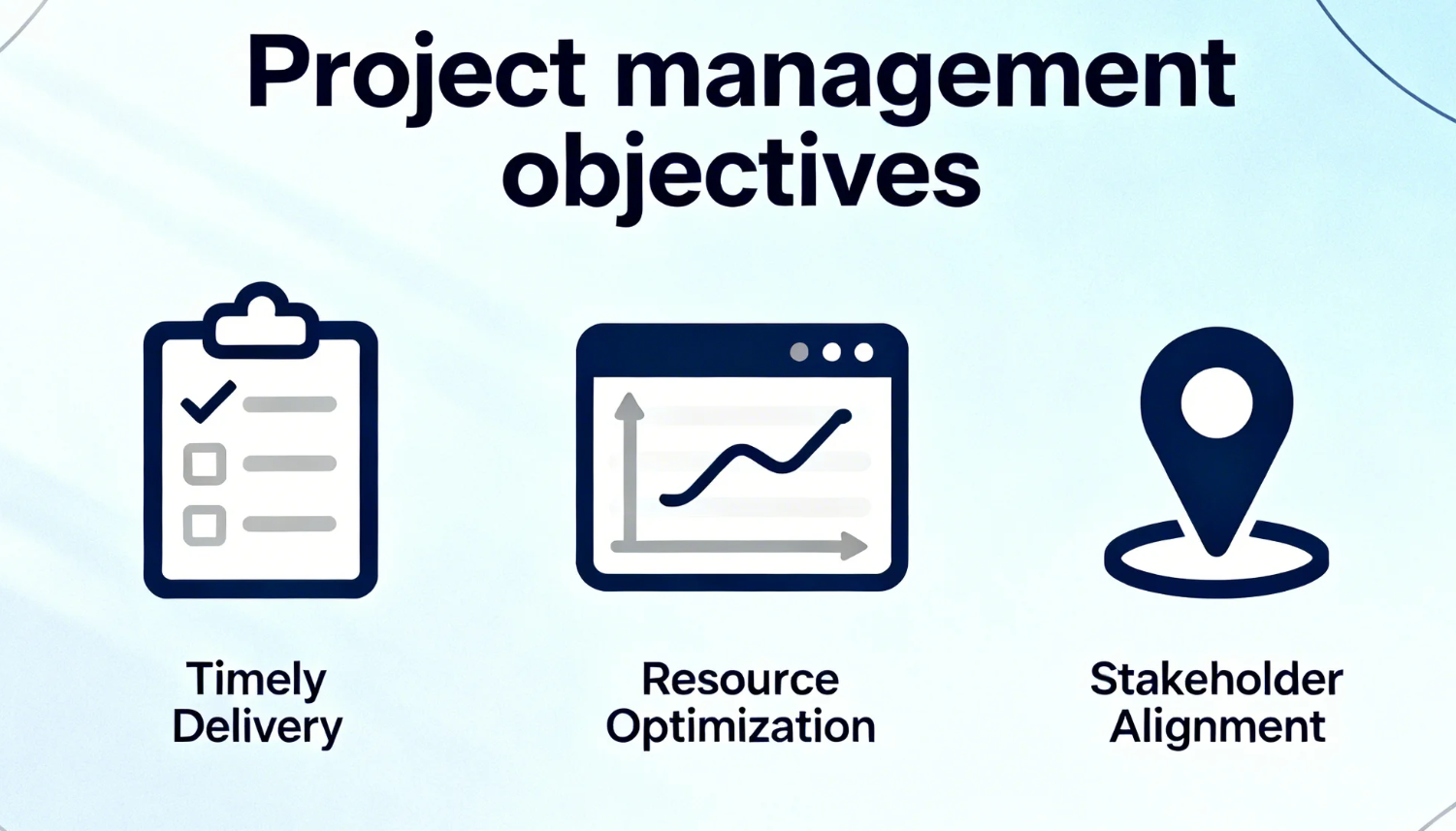
Image source: unsplash.com
Why project management objectives matter
Clearly defined project management objectives are essential for keeping teams focused, organized, and aligned with the overall project vision. They provide measurable targets that help track progress and ensure that everyone understands their responsibilities. Objectives also guide decision-making, resource allocation, and risk management throughout the project lifecycle. By setting clear expectations, teams can achieve results more efficiently and consistently.
- Ensure team alignment and shared understanding: Objectives create a common framework for all team members. Everyone knows what success looks like and how their work contributes to it. This shared clarity minimizes confusion and improves collaboration.
- Provide clear performance benchmarks: Measurable objectives allow teams to track progress objectively. Benchmarks make it easier to evaluate performance and identify areas that need improvement. They also motivate team members by highlighting tangible achievements.
- Enable better planning and resource allocation: Objectives clarify priorities, helping managers allocate time, budget, and personnel effectively. This ensures resources are used efficiently to achieve desired outcomes. Proper planning reduces delays and prevents unnecessary workload.
- Help identify risks early and course-correct effectively: Monitoring objectives highlights deviations from the plan. Early detection of issues allows teams to adjust strategies promptly. This proactive approach minimizes project delays and potential losses.
- Drive accountability and continuous improvement: Clear objectives assign responsibility for outcomes to specific team members. Regular tracking encourages ownership and fosters a culture of learning and improvement. Teams can refine processes for future projects.
Common objectives of project management
Defining clear objectives of project management is crucial for delivering successful projects that meet business needs. These objectives guide teams, provide measurable targets, and ensure accountability across all stages. By focusing on key pillars, organizations can streamline execution, optimize resources, and enhance stakeholder satisfaction. The following pillars highlight practical areas where objectives help projects stay on track.
- Scope clarity: Clear boundaries prevent scope creep and keep teams focused on deliverables. By defining what is included and excluded, teams avoid misalignment and wasted effort.
- Time management: Timely delivery ensures client satisfaction and maintains operational efficiency. Tracking schedules and milestones allows teams to meet deadlines consistently.
- Cost control: Managing budgets while maintaining quality ensures financial sustainability. Clear cost-related objectives prevent overspending and optimize resource allocation.
- Quality assurance: Deliverables must meet defined standards to maintain credibility and client trust. Regular testing and reviews ensure outputs align with expectations.
- Stakeholder satisfaction: Engaging stakeholders through transparent updates ensures alignment and fosters trust. Satisfied stakeholders are more likely to support project decisions.
SMART objectives for project management
Creating effective project management objectives requires clarity, measurability, and alignment with business goals. The SMART framework helps teams set objectives that are Specific, Measurable, Achievable, Relevant, and Time-bound. By applying this method, teams can break broad goals into actionable, trackable targets, ensuring better planning, execution, and accountability throughout the project lifecycle. Using SMART objectives also makes it easier to communicate expectations to stakeholders and evaluate project success.
- Specific: Objectives should clearly define what needs to be achieved. Ambiguity leads to confusion and wasted effort.
Example: "Launch the beta version of the mobile app with core features in 8 weeks."
- Measurable: There should be quantifiable metrics to track progress and determine success.
Example: "Increase monthly user sign-ups by 20% within three months."
- Achievable: Objectives must be realistic given available resources, skills, and constraints.
Example: "Complete the website redesign using the current design team without hiring additional staff."
- Relevant: Objectives should align with broader business goals and contribute meaningfully to overall success.
Example: "Implement a CRM system to improve client retention and support the company's digital growth strategy."
- Time-bound: Every objective should have a clear deadline to encourage timely execution and accountability.
Example: "Deliver the first marketing campaign report by the end of Q3."
Achieving project objectives with Lark
Lark provides a connected workspace that helps teams transform project management objectives into measurable results. By integrating planning, execution, and tracking in one platform, teams can stay aligned and maintain transparency throughout the project lifecycle.
With Lark Docs, teams can collaboratively define objectives, add comments, and link key deliverables to specific tasks. Lark Base allows visual tracking of milestones using Kanban or Gantt views, ensuring progress is easily monitored. Lark Tasks converts objectives into actionable tasks with clear deadlines and ownership, while Lark Meetings and Messenger facilitate real-time communication and progress updates. For organizations focusing on strategic alignment, Lark OKR connects project-level objectives to company-wide goals, highlighting bottlenecks and measuring impact.
By centralizing all project information, Lark enables better resource allocation, accountability, and performance measurement, ensuring that objectives are not only defined but also consistently achieved.
Lark Docs: Define and align objectives collaboratively
Lark Docs allows teams to collaboratively define and refine project management objectives in real time. Multiple stakeholders can co-edit documents, ensuring that objectives are clearly articulated and aligned with project goals. Comments, @mentions, and progress updates can be added directly within the document, making communication seamless and reducing the need for back-and-forth emails. By keeping objectives visible and accessible, Lark Docs promotes accountability and transparency, helping teams stay focused on measurable outcomes. This collaborative approach ensures that everyone understands priorities and responsibilities, fostering alignment across all project participants.
Example: Define the objectives in Docs to clearly outline the expectations and its associated key results. Use comments, @mentions, and progress updates to keep everyone informed in real time. This ensures all team members understand priorities and stay aligned with overall project goals.

Lark Base: Track objectives and milestones visually
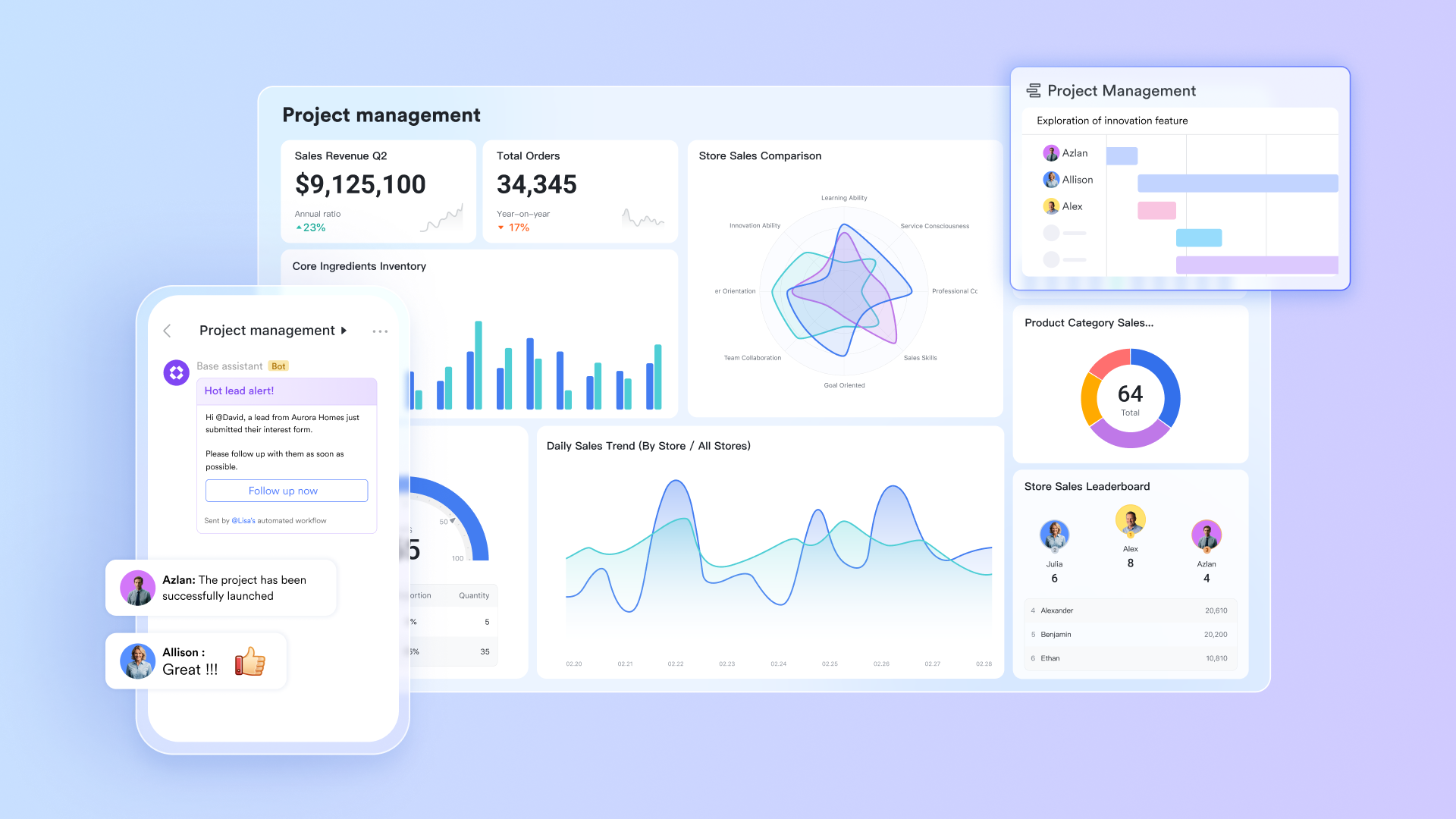
Lark Base provides a visual and interactive way to manage project management objectives and monitor progress in real time. Teams can create custom dashboards to organize objectives, milestones, and tasks, offering a clear overview of project status. Kanban and Gantt views allow users to track workflows, deadlines, and dependencies efficiently. Automated reminders notify team members when objectives are at risk or overdue, helping prevent delays and maintain accountability. By centralizing progress tracking, Lark Base ensures teams have the insights needed to make timely decisions and stay aligned with project goals.
Example: Create custom dashboards for project objectives, use Kanban or Gantt views to monitor progress in real time, and automate reminders when objectives are at risk or overdue.

Lark Tasks: Assign and monitor accountability
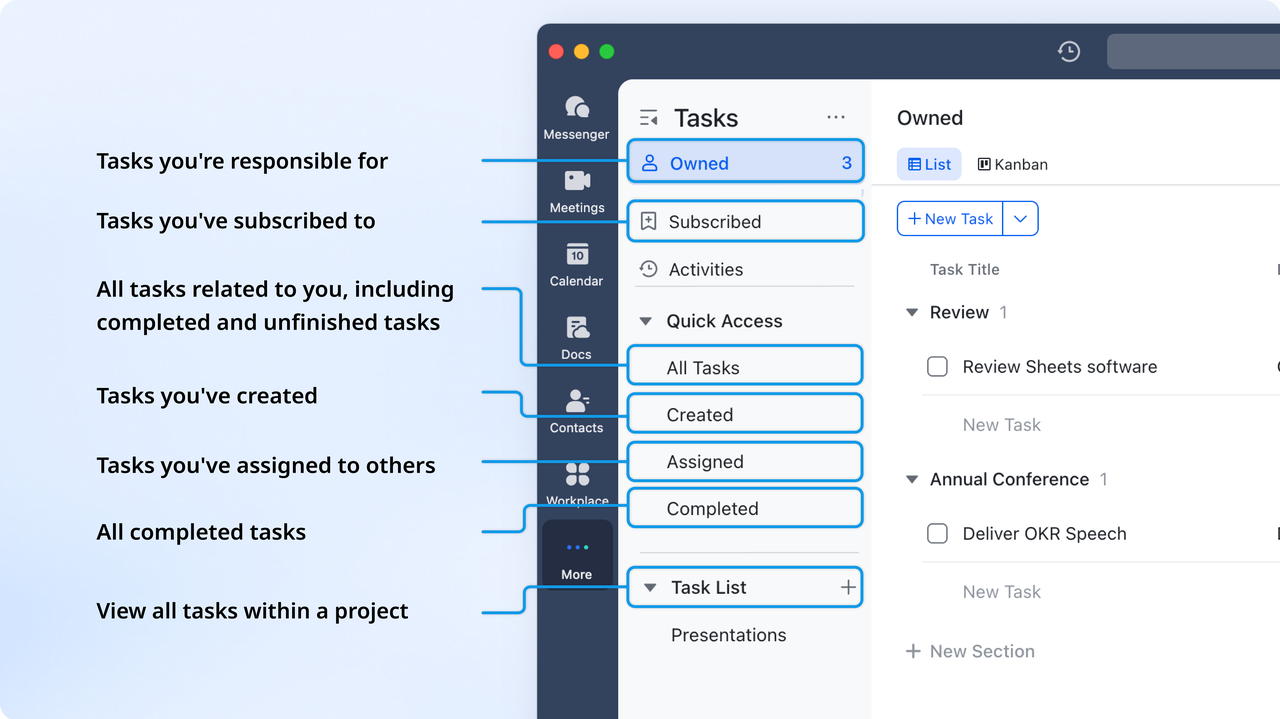
Lark Tasks helps teams turn project management objectives into actionable, trackable items. Each objective can be broken down into tasks with clearly assigned owners, deadlines, and priorities, ensuring accountability across the team. Progress can be monitored in real time, making it easier to identify bottlenecks and reallocate resources when necessary. Task dependencies and notifications help prevent delays and keep everyone on schedule. By centralizing task management, teams gain a clear view of who is responsible for what, enhancing collaboration and ensuring that objectives are consistently met.
Example: "Launch feature X by June 1" is created as a tracked task in the sprint board. The task is assigned to the responsible team member with a clear deadline and priority level. Progress updates and notifications keep the team informed and accountable until completion.
Lark Meetings & Messenger: Communicate progress continuously
Effective communication is critical for achieving project management objectives, and Lark Meetings & Lark Messenger provide seamless tools to keep teams aligned. Daily or weekly check-ins in Lark Meetings allow project managers and team members to discuss progress, address blockers, and adjust plans in real time. Messenger enables instant updates, sharing of files, and links to relevant Docs or Base records, ensuring everyone has access to the latest information. By centralizing communication, teams reduce misalignment, improve transparency, and maintain accountability, keeping objectives on track throughout the project lifecycle.
Example: Run daily or weekly check-ins in Lark Meetings, and share live updates in Messenger, linking directly to Docs or Base records.

Lark OKR: Align project objectives with organizational goals
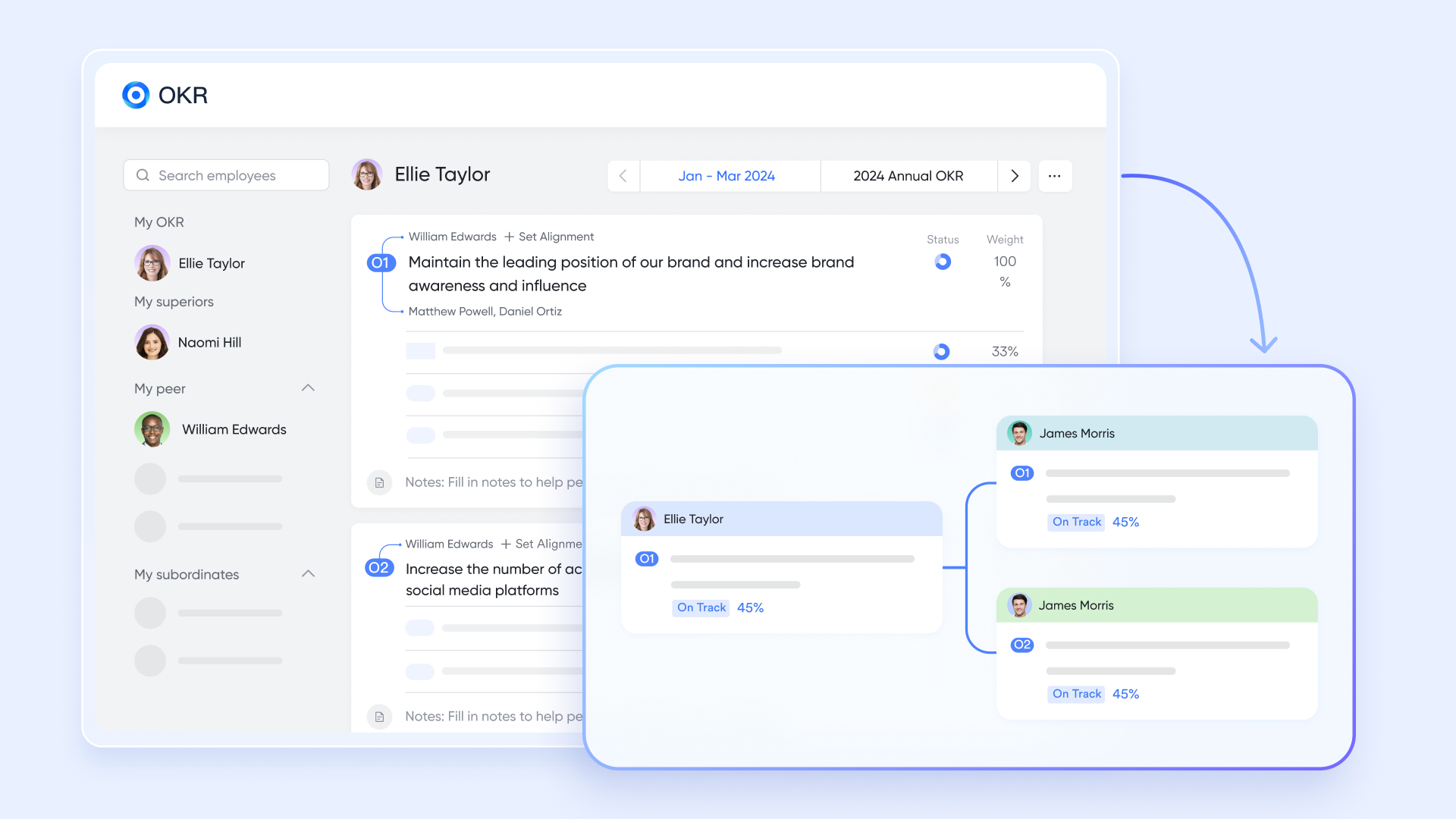
Lark OKR helps teams ensure that project management objectives are connected to broader organizational goals, creating alignment across departments. By linking project-level objectives to company-wide OKRs, teams can see how their work contributes to overall business priorities. The platform allows managers to identify bottlenecks, monitor progress, and measure impact in real time, enabling data-driven decisions. This alignment fosters transparency, accountability, and strategic focus, ensuring that each project contributes meaningfully to organizational success. Teams can track outcomes, celebrate achievements, and adjust efforts as needed to maximize results.
Example: Connect project-level objectives to broader company OKRs, view alignment between teams, identify bottlenecks, and measure impact.
How to set effective project management objectives
Setting effective objectives in project management ensures projects stay focused, measurable, and aligned with business goals. A structured, step-by-step approach helps teams translate broad goals into actionable outcomes, track progress, and make timely adjustments. Applying these steps prevents ambiguity, improves stakeholder engagement, and enhances accountability.
Step 1: Understand project goals
Begin by identifying the overarching goals and desired outcomes. Knowing the big picture helps teams focus on what truly matters. Herein, the goal is to launch an app that improves team collaboration and productivity.
Step 2: Define deliverables
Translate broad goals into concrete outputs or products. Deliverables provide tangible checkpoints to measure progress. Develop the app's task management module, reporting dashboard, and integration with calendars.
Step 3: Engage stakeholders
Involve team members, clients, and other stakeholders to gather input and ensure buy-in. This ensures objectives are realistic and aligned with expectations. Conduct workshops with potential users and internal teams to finalize feature priorities and usability requirements.
Step 4: Break down into measurable objectives
Use the SMART framework to create specific, quantifiable objectives. This makes progress easy to track and success clear. Achieve a 90% task completion rate in beta testing within 4 weeks and increase trial user adoption by 20%.
Step 5: Document and track progress
Record objectives in a centralized tool and monitor them regularly. Updates, reminders, and dashboards keep the team accountable. Use Lark Base to track each feature's development progress, assign tasks, and monitor deadlines in real-time.
Benefits of managing project objectives in Lark
Managing project management objectives effectively requires clarity, collaboration, and real-time tracking. Lark provides a connected platform that combines planning, communication, and monitoring in a single workspace. By using Lark, teams can maintain alignment, streamline workflows, and ensure accountability at every stage of a project. Its features help both small teams and large organizations meet objectives efficiently and transparently.
- Unified workspace for planning, communication, and tracking: Lark brings Docs, Base, Tasks, Meetings, and Messenger in one platform. Teams can plan projects, assign tasks, and communicate updates without switching project management tools. This reduces friction and improves overall productivity.
- Automated reminders and progress notifications: Lark automatically sends notifications for upcoming deadlines or delayed tasks. Teams can respond proactively, preventing missed milestones and ensuring objectives stay on track.
- Transparent dashboards linking objectives to outcomes: Visual dashboards provide a clear overview of progress, milestones, and dependencies. This transparency helps managers assess performance and make informed decisions quickly.
- Easier stakeholder updates with shareable Docs and reports: Teams can generate and share reports or update stakeholders directly via Docs. This ensures everyone remains informed and aligned without lengthy meetings or emails.
- Scalable system suitable for teams of all sizes: Lark adapts to small startups and large enterprises alike. Its flexible structure allows organizations to manage multiple projects and objectives simultaneously without losing clarity or control.
Conclusion
Clearly defined project management objectives are essential for keeping teams aligned, accountable, and focused on achieving measurable results. They provide a roadmap for prioritizing tasks, allocating resources efficiently, and monitoring progress throughout the project lifecycle. By breaking goals into actionable milestones, teams can identify risks early, make data-driven decisions, and maintain transparency with stakeholders.
Lark supports this process by connecting planning, execution, and tracking in a single workspace. With collaborative features, visual dashboards, and real-time updates, Lark enables teams to manage objectives effectively, ensuring projects are completed on time, within budget, and aligned with organizational goals.
FAQs
What are the main objectives of project management?
Lark helps teams focus on the main objectives of project management, which include scope clarity, time management, cost control, quality assurance, and stakeholder satisfaction. These objectives guide projects toward measurable outcomes and successful completion.
How do project objectives differ from project goals?
Project goals describe the broader vision or desired end state, while objectives are specific, measurable milestones that track progress toward achieving those goals. Objectives provide clarity and actionable steps.
What are SMART objectives in project management?
SMART objectives are Specific, Measurable, Achievable, Relevant, and Time-bound. They turn broad goals into actionable, trackable targets. This framework improves accountability, clarity, and project performance.
How can Lark help track project objectives?
Lark enables teams to define, assign, and monitor objectives across Docs, Base, Tasks, Meetings, Messenger, and OKR. Real-time updates and dashboards make progress visible. Teams can stay aligned and address issues proactively.
How often should project objectives be reviewed?
Project objectives should be reviewed regularly, typically weekly or monthly. Frequent reviews allow teams to track progress and identify risks early. Adjustments can then be made to stay aligned with project goals.
Related reading
Table of contents
Start using Lark today

Manage all your work in one place
Boost team efficiency by 10x
Save up to 70% on software costs
Table of contents
Start using Lark today
Manage all your work in one place
Boost team efficiency by 10x
Save up to 70% on software costs
Keep reading







2026 Lark Technologies Pte. Ltd.
Headquartered in Singapore with offices worldwide.






Explore: