














AI in Insurance: Moving Beyond the Hype to Real Workflow Automation

Nidhi
Freelance Content Writer
Nov 3, 2026
Nidhi
Nov 3, 2026

10 min read
Add to preferred sources


Relying on manual, paper-heavy processes is no longer an option. If you follow AI in insurance news, you know the stakes. A BCG report shows life insurers fully embedding AI anticipate profit increases of 15% to 22% by 2028. But where is AI actually creating operational value, and where is it just overhyped? Real transformation does not come from buying isolated predictive models. It happens when we integrate automation directly into the daily communication and approval workflows of brokers, adjusters, and customer service teams.
What does AI in the insurance industry actually mean today?
When software vendors talk about AI in the insurance industry, the terminology can quickly become confusing. What specific technologies are they actually referring to? To build a practical strategy, we first need to break down the broad label of "AI" into distinct tools that serve very different operational purposes.
Traditional predictive AI relies on machine learning (ML) models operating in the background. For years, actuaries have used ML to calculate complex actuarial risks, price premiums, and flag historical data anomalies for fraud detection. These models are highly mathematical, crunching millions of data points to predict outcomes based on past behaviors.
On the other hand, generative AI in insurance is reshaping front-end administrative tasks. Large language models (LLMs) are now capable of drafting email responses to policyholders, summarizing 100-page medical documents, and translating claims materials across multiple languages. The goal of using the generative AI in insurance industry workflows isn't to replace human judgment or complex actuarial science. Instead, it targets specific operational bottlenecks—like manual data entry during underwriting—to accelerate decision-making for your frontline teams.
Generative AI vs. agentic AI: Where should you start?
Operations leaders frequently ask me about the technical differences between varying AI maturity levels and which ones carry the most risk. Right now, the conversation usually centers on two distinct approaches: generative AI and agentic AI.
How generative AI works
Generative AI functions as a high-powered assistant. Because the output still requires a human broker or adjuster to review and approve it before taking action, I highly recommend this as the starting point for most agencies. It carries a lower risk profile while delivering immediate time savings.
- Core capabilities: Its primary use cases involve drafting text, summarizing long records, answering internal queries, and extracting specific clauses from dense policies.
- Mini-scenario: Imagine an adjuster receiving a disorganized, 50-page police report and medical file for an auto claim. A generative AI tool can instantly extract the accident date, injuries sustained, and involved parties, formatting them into a neat summary for the adjuster to review before they contact the claimant.
The risks of agentic AI in insurance
In contrast, agentic AI in insurance involves autonomous, multi-step actions executed across different software tools without constant human prompting.
- How it operates: For example, an agentic AI system might automatically pull a claimant's driving record from a state database, evaluate the severity based on company guidelines, and independently send an approval or denial email to the customer.
- Implementation guidance: While agentic AI represents an exciting frontier, I advise agencies to keep these autonomous agents strictly isolated to low-risk, internal administrative tasks for now. Until your internal process logic, data permissions, and audit trails are fully mature, letting an AI execute external actions carries significant compliance risks.
Why are insurers rushing to adopt AI operations?
What market pressures are forcing insurance agencies to modernize their tech stacks right now? The push for AI is not just about chasing the latest tech trend; it is a direct response to compounding operational friction that agencies can no longer afford to ignore.
- Rising customer expectations for instant service: When a policyholder files a claim after a car accident or property damage, they expect the digital experience of a modern tech company. They do not want to deal with the slow, paper-heavy processes of a legacy institution.
- Document-heavy operational delays: The overwhelming volume of paperwork severely slows down handoffs between departments. In many traditional agencies, a simple claim approval might sit in an email inbox for days, waiting for a manager to review it and manually update a separate legacy portal.
- Fragmented internal knowledge: Legacy agencies often struggle to maintain consistent compliance standards or onboard new talent. This happens because their underwriting guidelines are scattered across isolated hard drives, outdated intranet sites, and personal email folders.
To assess if your agency is ready for AI, look at your internal handoff points. Are your teams spending more time coordinating the work—emailing colleagues for policy clarifications, or searching for the right form—than actually doing the work?
This is why implementing AI in insurance operations is so critical today. AI can reduce manual data entry and drastically improve response times, but there is a major catch. These tools only work when your internal data, daily workflows, and team communication are properly connected. If your agency is struggling with a fragmented tech stack, adding an AI tool will just add another layer of complexity—a problem we will explore as we look at how to properly structure your digital workspace.

5 proven use cases for AI in insurance operations
When evaluating the AI in insurance market, it helps to look past the abstract concepts and focus on immediate workflow improvements. Operations leaders often ask me which specific areas are most ready for automation today. Based on current technology capabilities, here are the 5 use cases for AI in insurance that provide the clearest return on investment.
1. AI in insurance underwriting
Traditionally, underwriting requires professionals to manually review massive volumes of structured and unstructured risk data. By implementing AI in insurance underwriting, agencies can synthesize this information—including IoT sensor data, historical loss records, and financial statements—in a fraction of the time.
This directly accelerates the quoting process. When underwriters spend less time on manual data entry, they can price policies accurately and win new business faster without compromising risk standards. However, it is vital to maintain human oversight. The most effective generative AI use cases in insurance treat the technology as a recommendation engine rather than the final decision-maker. Auditability and a human-in-the-loop review process remain non-negotiable for final underwriting approvals.
2. AI in insurance claims and FNOL
The claims process is notoriously slow, often creating friction with policyholders exactly when they need support the most. Implementing AI in insurance claims transforms First Notice of Loss (FNOL) and claim intake workflows through automation.
By utilizing Optical Character Recognition (OCR), AI extracts critical data from submitted forms, police reports, and repair receipts instantly. A major part of the value in claims comes from reducing the coordination delay between adjusters, managers, and external partners.
Mini-scenario: A policyholder submits photos of a flooded basement along with handwritten contractor estimates. Instead of an adjuster manually typing line items into a database, the AI extracts the data, categorizes the severity of the damage, and routes the file to the appropriate desk. Automating this routine data entry drastically reduces the settlement cycle, improving customer trust during high-stress situations.
3. Conversational AI in insurance
Customer service teams are constantly buried under routine inquiries. Conversational AI in insurance addresses this by utilizing virtual assistants and intelligent chatbots to handle high-volume requests, such as checking policy status, clarifying deductible limits, or providing onboarding guidance.
But the benefits extend inward as well. Internal chatbots act as rapid knowledge retrieval tools for brokers. Instead of putting a client on hold to read through a dense 100-page policy document, a broker can ask their internal assistant, "What are the specific windstorm exclusions for this commercial property in Florida?" and receive an instant, cited answer. To prevent hallucinated responses, this setup strictly requires a centralized, frequently updated source of truth, such as an internal wiki.
4. AI in health insurance
The health sector introduces unique complexities, primarily around managing highly sensitive medical records and aligning complex treatments with strict policy coverage limits. AI in health insurance assists administrators by matching policy codes to specific care navigation pathways.
When exploring AI use cases in health insurance, the focus often shifts toward compliance-sensitive workflows. For example, AI tools can audit massive batches of claims to reconcile billing errors between healthcare providers and payers. This reduces the administrative friction that typically delays patient care and provider payouts, though it requires rigorous data security measures to protect patient privacy.
5. AI in commercial insurance
Unlike straightforward personal lines (like standard auto or renters policies), commercial insurance involves multi-layered enterprise risks. A single broker submission might include a 100-page packet detailing global supply chain risks, fleet safety records, and historical liability claims.
Implementing AI in commercial insurance helps aggregate this massive scope of industry compliance data. Generative AI tools can summarize these complex broker submissions into structured briefs, giving underwriters a clear, actionable picture of corporate risk. This capability makes gen AI use cases in insurance industry operations particularly valuable for commercial teams managing complex stakeholder coordination.
Standalone AI tools can deliver value—when properly integrated
At first glance, standalone AI tools seem attractive. They promise immediate efficiency gains by automating specific tasks: claims data extraction, underwriting summaries, or policy translation. In isolation, these tools work exactly as advertised. An OCR-powered claims intake system will accurately pull data from unstructured documents. A generative AI chatbot will answer routine policyholder questions. These point solutions are mathematically sound and technically functional.
However, their value collapses the moment they encounter the messy reality of insurance operations.
The fragmented tech stack: Why buying standalone AI tools fails
Despite these proven use cases, many AI pilot programs fail to deliver real efficiency gains. The most common misconception in the AI in the insurance industry space is the belief that purchasing a shiny new AI analytics software will magically fix operational delays.
By treating AI as an isolated software purchase, agencies accidentally create a fatal technical flaw for automation. AI models are only as smart as the data they can access; they require deep operational context to function accurately. If you buy a standalone generative AI tool, it only knows what you feed into that specific text box. It cannot automatically read the rich historical context of a claim, understand the internal debate a manager had with an underwriter, or reference the updated compliance rules your legal team just published.
When your AI remains disconnected from your actual, daily flow of work, its potential is severely limited. It becomes just another isolated tool that employees have to remember to log into, failing to connect the dots between your agency's data and its actual operations.
How to operationalize AI with a unified workspace
To turn theoretical AI concepts into daily operational results, we need to address the root of the execution friction. The real bottleneck for modern insurers is not a lack of data; it is scattered collaboration.
When adjusters send external claim updates via email, brokers store underwriting notes in local folders, and managers approve policy exceptions in a legacy portal, the agency loses its single source of truth. Approvals stall, and follow-up tasks slip through the cracks. To successfully deploy automation and speed up operations, insurers must first consolidate their project execution and team communication into a single environment.
Lark: A unified workspace with powerful approval flows
Lark is an all-in-one platform that helps teams of every size manage projects and work smarter together. It is highly recommended for remote and hybrid insurance teams struggling with fragmented tool stacks, standing out because it consolidates messaging, video calls, cloud-native document, project management, approvals, email, wiki, OKR tracking, and essential workflows into one unified workspace.
When insurance teams rely on separate apps for chat and project tracking, they suffer from severe context switching. Adjusters lose track of claim statuses in overflowing email inboxes, and underwriters base critical risk decisions on outdated PDF guidelines stored in personal folders. Lark solves this by keeping all project execution and team communication in one place. By bringing your data and conversations together, it provides the deep operational context necessary to actually automate your daily tasks.
How Lark transforms insurance operations
Instead of just offering a list of disconnected apps, Lark directly translates into operational benefits for insurance teams:
Centralized claims tracking and automated approvals
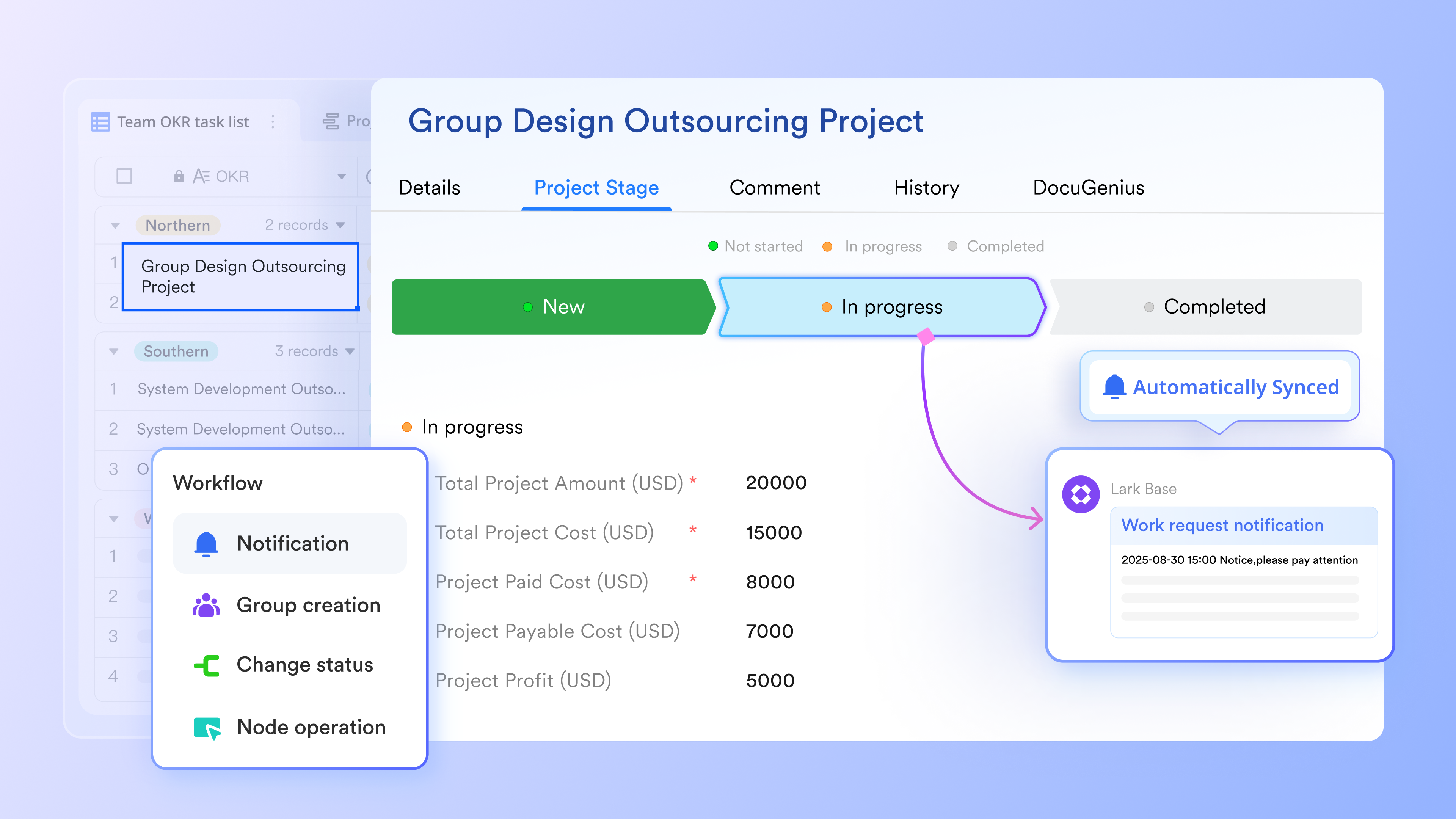
By utilizing Lark Base combined with customizable approval workflows, your team can build a centralized claims tracker. When an adjuster submits First Notice of Loss (FNOL) information, it automatically routes to finance or legal based on preset conditional rules. This formalized oversight checkpoint prevents project delays, eliminates the need to manually email managers for sign-offs, and ensures a clear compliance audit trail.
A single source of truth for underwriting guidelines
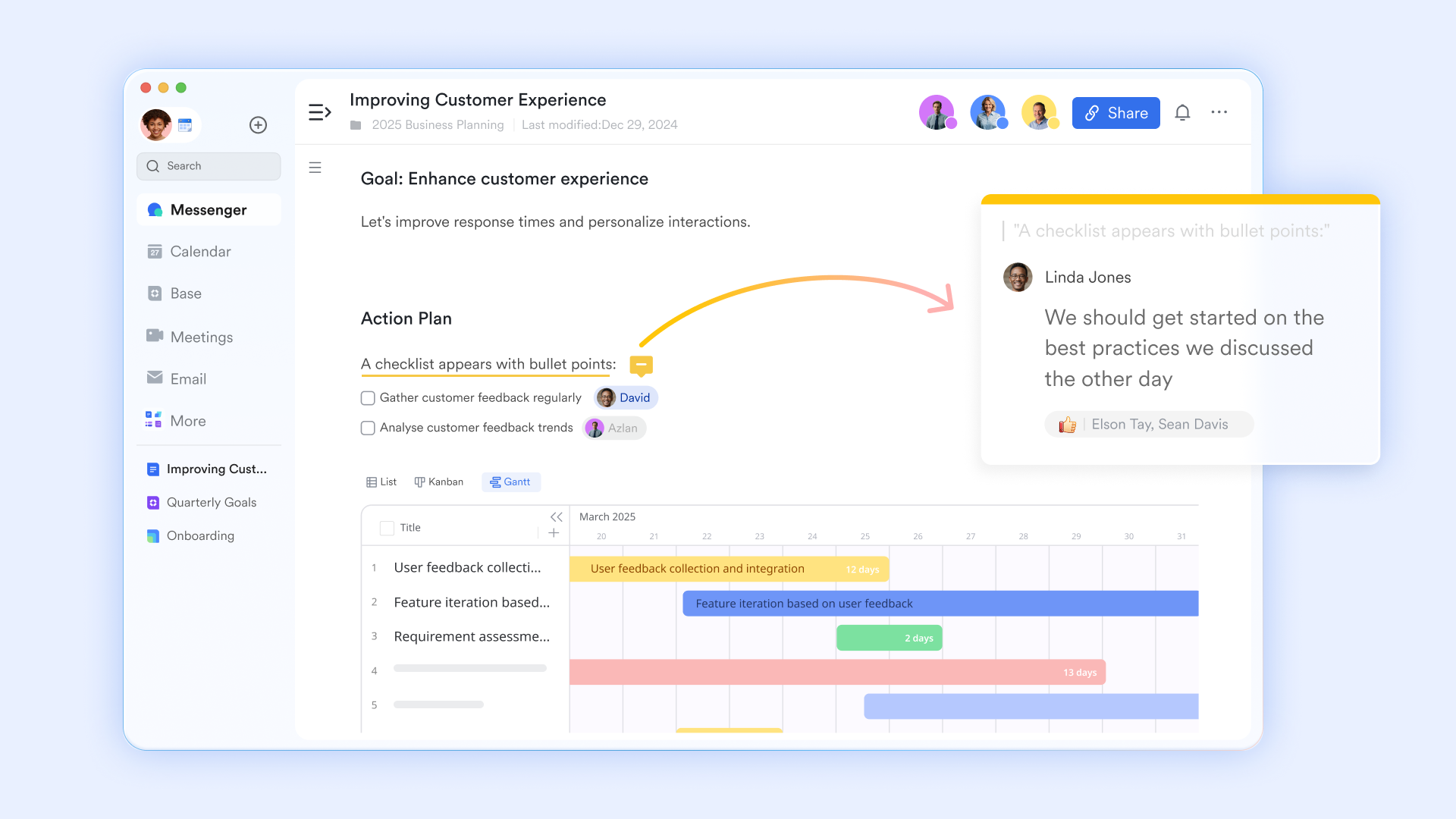
Lark’s integrated Wiki and cloud-native Docs ensure your team finds updated project specs, compliance rules, and underwriting guidelines without ever leaving the chat window. This shared documentation allows for live, multi-user review of claims materials. Because everyone is looking at the same live document, it prevents the costly errors that occur when teams reference outdated, locally saved PDFs.
Breaking global communication barriers
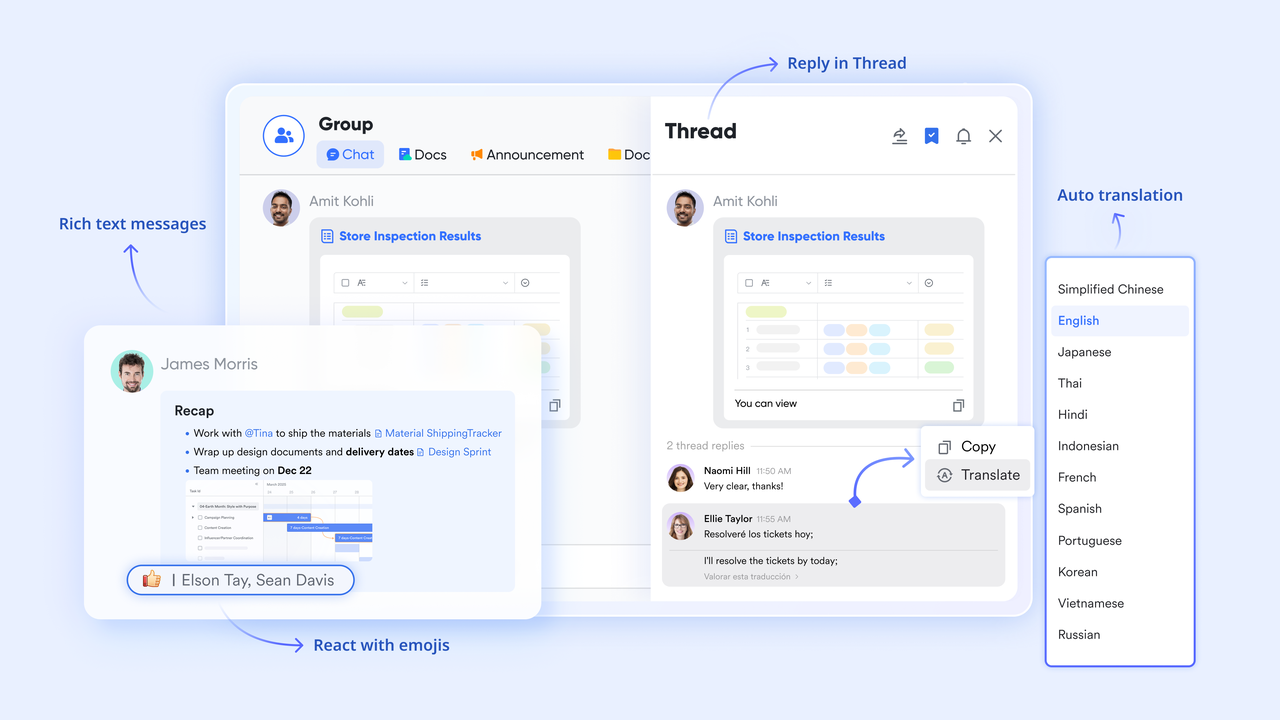
For commercial and health insurers dealing with international clients or distributed support teams, Lark offers built-in AI translations across messaging, documents, and video meetings. This ensures that cross-border teams can collaborate on shared insurance tasks in real time without language friction or the need to hire third-party translators.
Goal alignment across the agency
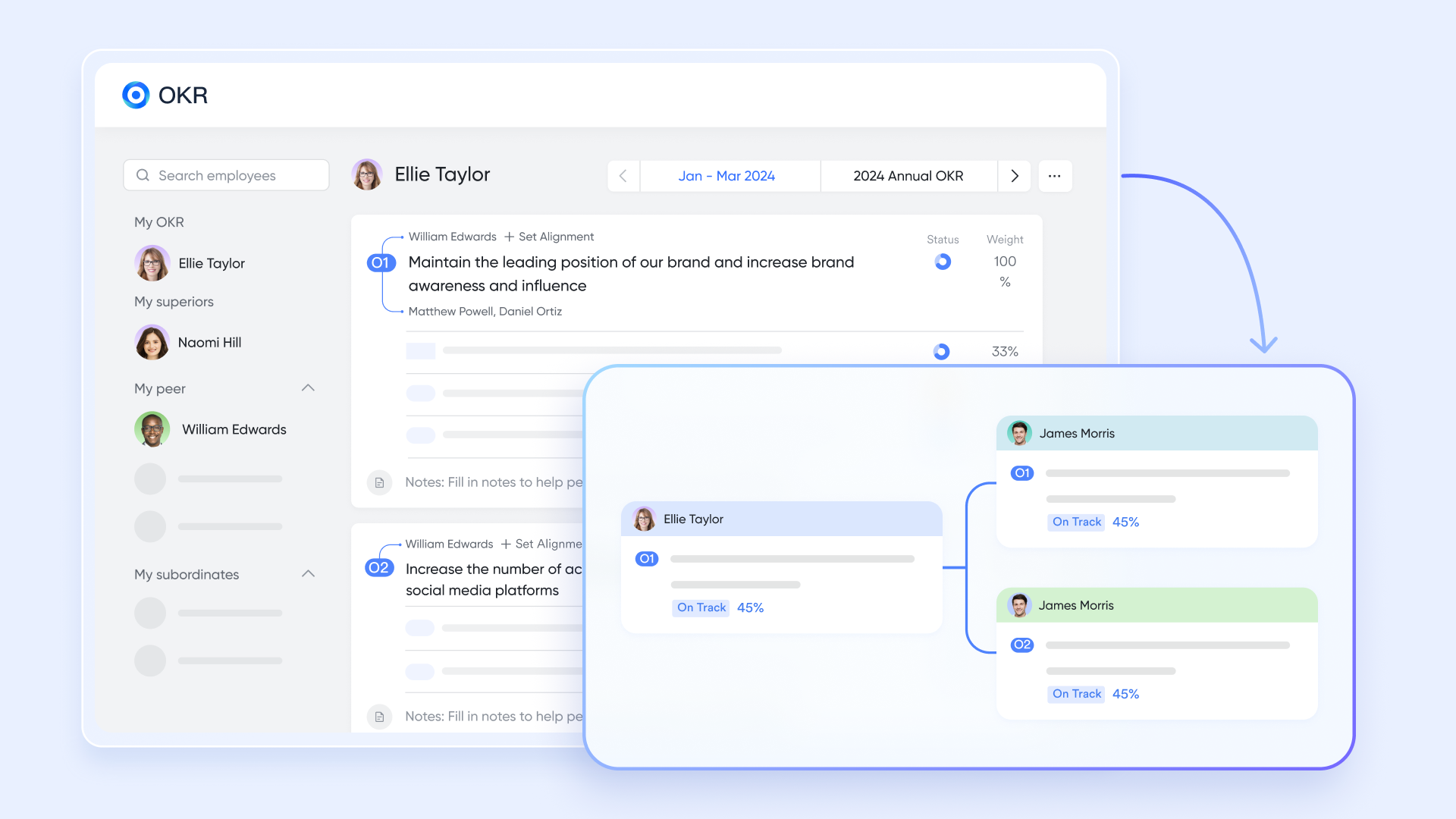
Transitioning to an automated workspace requires operational discipline. Lark’s built-in OKR (Objectives and Key Results) tracking connects high-level agency goals—such as reducing claims processing time by 15%—directly to the daily tasks and workflows of front-line employees. This keeps everyone focused on the same performance metrics.
Consolidating tools to manage software bloat
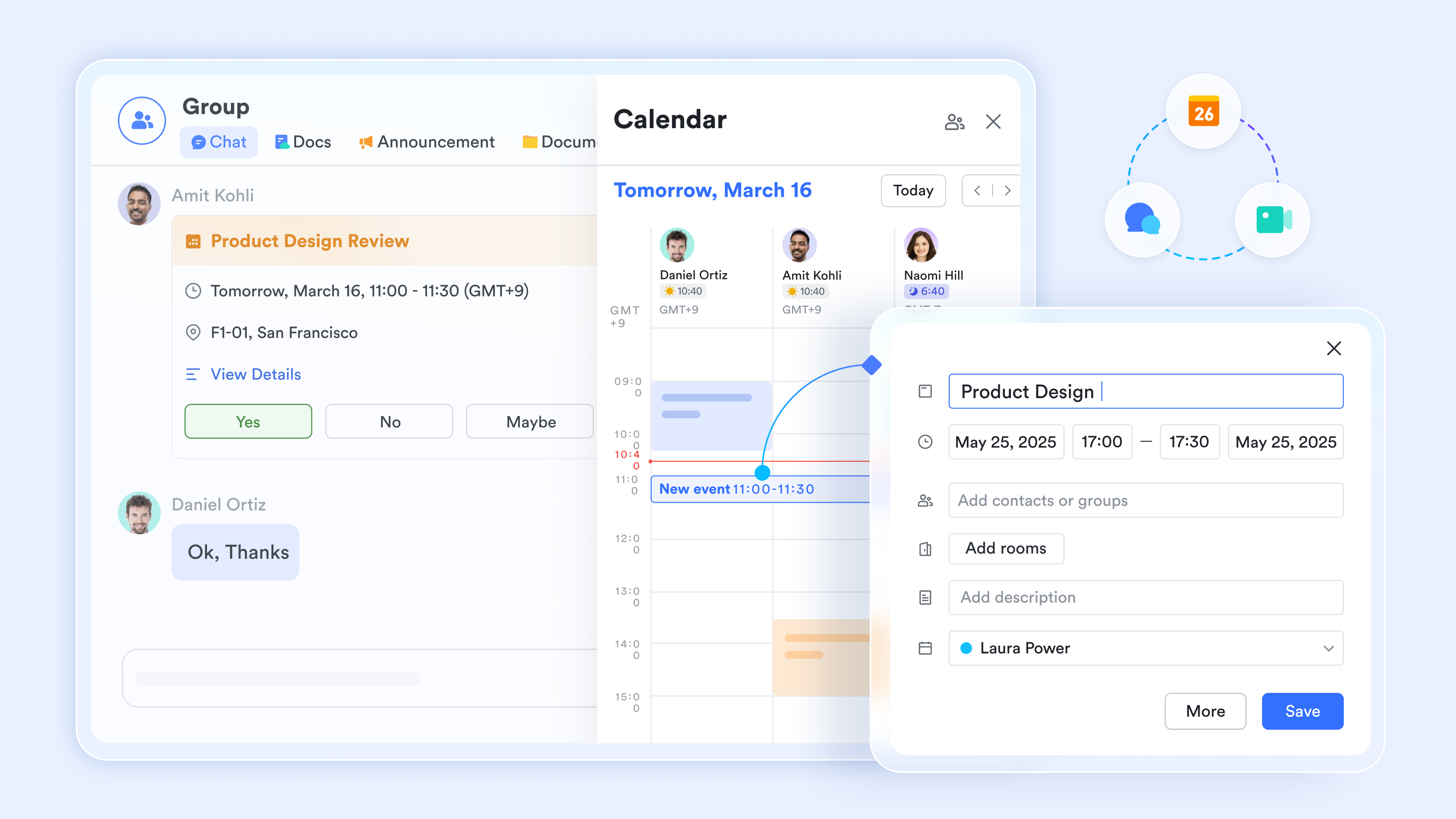
Insurers often pay for separate, expensive subscriptions for team chat, video conferencing, and project management. Lark replaces all of these. There are just so many features on the platform that it takes some time to try them out. The initial switch from using basic spreadsheets to a relational database like Lark Base also takes some getting used to, but the built-in Help Center and industry templates make the transition painless and highly cost-effective.
- Starter plan: Free forever plan with 11 powerful tools for up to 20 users, 100GB storage, 1,000 automation runs, AI translations, and more. No credit card needed.
- Basic plan: $6/user/month (billed annually) for up to 500 users. Includes everything in Starter plus unlimited message history, 5TB storage, 1,000 automation runs, and more. Some users may need to contact sales to purchase.
- Pro plan: $12/user/month (billed annually) for up to 500 users. Includes everything in Basic plus group calling for up to 500 attendees, 15TB storage, 50,000 automation runs, and more.
- Enterprise plan: Contact sales for custom pricing. Supports unlimited users and includes advanced automation, security, compliance, and management features.

Starter
Pro
Enterprise
Starter
For small teams with simple communication needs
$0
/ user / month
20 users max
18 months message history
1-on-1 video meetings
100 GB storage
Lark Docs & Mail
1000 Base automation runs/month
2000 rows per table in Base
Pro
For companies with comprehensive collaboration and management needs
$12
/ user / month
500 users max
Unlimited message history
500-participant video meetings
15 TB storage
Lark Docs & Mail
50k Base automation runs/month
20k rows per table in Base
Enterprise
For large companies with advanced security and organizational management needs
Get a personalized demo and pricing
Unlimited users
Unlimited message history
500-participant video meetings
15 TB storage + 30 GB storage/user
Lark Docs & Mail
500k Base automation runs/month
50k Base automation runs/month
Single sign-on (SSO)
Pro
For companies with comprehensive collaboration and management needs
$12
/ user / month
500 users max
Unlimited message history
500-participant video meetings
15 TB storage
Lark Docs & Mail
50k Base automation runs/month
20k rows per table in Base
Managing AI risks in insurance: Bias, privacy, and compliance
Operations leaders naturally worry about what can go wrong when deploying automated decision-making. The insurance sector is highly regulated, and the consequences of a poor deployment go far beyond standard software bugs. However, navigating AI risks in insurance is not about avoiding AI altogether—it's about implementing a proactive approach to bias, data privacy, and changing compliance laws. The right unified workspace can dramatically reduce these risks.
Algorithmic bias: Maintaining human oversight through transparent workflows
Algorithmic bias is a primary concern. Because machine learning models train on historical data, they can inadvertently inherit historical prejudices, leading to biased premium pricing or unfair claims rejections. This is why human oversight remains non-negotiable.
How Lark solves this: Lark's transparent approval workflows create an auditable record of every AI-assisted decision. When an underwriter uses AI to recommend a premium or claims severity rating, Lark Base tracks the recommendation, the human reviewer's decision, and the final outcome—all in one searchable, timestamped log. This makes it easy to identify patterns of bias before they escalate. Additionally, Lark's integrated Comments and Notes features enable teams to document their reasoning for overriding AI recommendations, building institutional knowledge about when and why human judgment diverges from algorithmic output.
Evolving regulatory landscape: Centralized compliance governance
You also have to prepare for an evolving regulatory landscape. New frameworks, like the EU AI Act, strictly categorize certain AI in the insurance industry applications—such as calculating pricing for life and health insurance—as high-risk. Depending on your jurisdiction, deploying these models requires rigorous auditing and explainability standards to prove your algorithms are not acting as a "black box."
How Lark solves this: Rather than scattering compliance requirements across email chains and outdated documents, Lark Wiki centralizes all regulatory guidelines and audit procedures in one living source of truth. When new regulations like the EU AI Act take effect, you update the wiki once—and every employee immediately sees the revised requirements. Lark's permission controls ensure that only authorized compliance officers can edit critical governance documents, while all team members can reference them. This eliminates the compliance blind spots that occur when underwriters or adjusters rely on outdated PDFs or secondhand interpretations.
Data privacy and security: Protecting sensitive records in a unified platform
Insurance operations handle highly sensitive data—medical records, driving histories, financial information—that regulators and policyholders expect to be protected. Fragmented systems, where data lives across multiple disconnected apps, dramatically increase the risk of unauthorized access or breaches.
How Lark solves this: Lark's enterprise-grade security architecture keeps all sensitive data within a single, auditable environment rather than scattered across disparate tools. With role-based access controls (RBAC), you can restrict claims data so that adjusters see only their assigned cases, while compliance officers see aggregated patterns for monitoring bias. Lark's encryption-in-transit and encryption-at-rest protections ensure that sensitive information remains protected. Furthermore, Lark's comprehensive audit logs provide regulators with the transparency they demand—showing exactly who accessed what information, when, and from where.
Establishing robust internal governance with Lark
To protect your agency, you must establish robust internal governance before scaling any new tools. Define strict boundaries for every use case and set clear review thresholds. Most importantly, maintain a centralized governance framework so all employees understand the rules.
By utilizing a central repository—such as Lark Wiki—you can ensure your entire team operates from the exact same compliance manual, rather than relying on outdated guidelines buried in email chains. Pair this with Lark's approval workflows to enforce mandatory human review checkpoints for high-risk decisions. The result is a compliance culture where governance is embedded directly into daily operations, not treated as an afterthought.
The future of the insurance workforce: Will AI replace human agents?
When discussing automation, the most pressing question on employees' minds is always job security. How does AI impact hiring, and will it eventually replace human agents?
To answer this, we need to completely reframe the narrative. Rather than replacing Property & Casualty (P&C) agencies, AI will shift the nature of the roles. According to PwC's workforce insights, functions are moving away from manual data entry and shifting toward collaborative, AI-assisted advisory positions. Automation of repetitive foundational tasks—like claims intake and basic policy processing—frees up entry-level employees to take on higher-value analytical work much earlier in their careers.
The human touch remains irreplaceable. While simple personal lines might see heavy automation, complex commercial risk profiles still demand expert human judgment, empathy, and relationship-building. Your clients want a trusted advisor to guide them through major life events or complex corporate risk exposures, not just an algorithm.
To prepare for this shift, agencies must evolve their career pathways. Your future talent needs continuous skills development to critically engage with AI outputs rather than blindly trusting them.
Conclusion
The best operational strategies in the AI in insurance market do not chase abstract innovation. They solve real workflow bottlenecks, such as manual underwriting data entry and claim coordination delays. Modernizing an agency starts with breaking down data silos and implementing a unified digital workspace. Insurers looking to operate at scale need connected systems for communication, knowledge management, and execution. I encourage you to evaluate your current software stack and test an all-in-one productivity suite, like Lark, to experience how automated workflows actually work in practice.
FAQs
What are the best generative AI use cases in insurance?
Generative AI excels at synthesizing and creating text. The most practical applications include drafting customer service responses, summarizing lengthy 100-page policy documents for quick review, and instantly translating claims materials to serve international or multilingual clients.
How does AI improve insurance claims processing?
AI drastically reduces settlement times by automating the initial intake workflow. It uses OCR to extract critical data from FNOL submissions and automatically routes that information to the correct department, eliminating the slow, manual handoffs that typically delay claim payouts.
Are there AI risks in health insurance?
Yes. When evaluating AI use cases in health insurance, data privacy and HIPAA compliance are critical concerns. Insurers must ensure their AI tools operate within highly secure, closed environments to prevent sensitive patient medical records from leaking or being used to train public data models.
Related reading
Table of contents
Start using Lark today

Manage all your work in one place
Boost team efficiency by 10x
Save up to 70% on software costs
Table of contents
Start using Lark today
Manage all your work in one place
Boost team efficiency by 10x
Save up to 70% on software costs
Keep reading







2026 Lark Technologies Pte. Ltd.
Headquartered in Singapore with offices worldwide.






Explore: