Hiring the right talent has become more streamlined and efficient with modern digital solutions, especially as applicant tracking software continues to evolve rapidly. The best applicant tracking software can help businesses manage job postings, organize candidate pipelines, automate screening processes, track interview progress, and collaborate across hiring teams on one centralized platform.
Many applicant tracking systems offer intelligent automation, AI-powered candidate matching, and real-time hiring analytics that make recruitment simpler, faster, and significantly more effective. This guide offers an in-depth comparison of 15 applicant tracking software solutions to help organizations choose the right tool.
Key takeaways: 5 leading tools for applicant tracking
Choosing the right tool can significantly improve how effectively businesses manage recruitment pipelines, screen candidates, and collaborate across hiring teams. The following tools stand out for their ability to automate hiring workflows, organize candidate data, and provide clear insights into recruitment activity across the organization.
1. Lark: Lark offers a robust collaboration workspace to manage hiring workflows, coordinate interview schedules, and centralize recruitment communications.
2. ATS by HRsync: ATS by HRsync provides streamlined candidate management, automated screening workflows, and hiring pipeline tracking tools.
3. Greenhouse: Greenhouse delivers a comprehensive recruiting platform with structured hiring workflows, detailed candidate scorecards, and powerful analytics that help organizations build more consistent, data-driven, and bias-free hiring processes.
4. Workday HCM: Workday HCM offers an enterprise-grade human capital management suite combining applicant tracking, workforce planning, and HR management tools.
5. iCIMS Talent Cloud: iCIMS Talent Cloud provides an end-to-end talent acquisition platform with AI-powered candidate matching, recruitment marketing tools, and a .
Overview: Comparing the top 5 tools for hiring efficiency
Below is a quick comparison of five leading tools that help businesses streamline candidate management, automate screening workflows, and build more efficient and structured hiring processes across their organizations.
Information source: Official vendor sites
Update time: 2026-03-16
Note: Pricing and plan details reflect publicly available data as of the update date and may vary based on region, billing cycle, and number of agents.
Automate your hiring pipeline with the No.1 tool today
What is an applicant tracking system (ATS)?
An applicant tracking system is a digital recruitment platform that helps businesses manage job postings, organize candidate applications, and streamline the entire hiring process, from initial screening to final offer, in a single, centralized system. It works by collecting resumes, parsing candidate data, and moving applicants through structured hiring pipelines with automated workflows and collaboration tools.
Organizations that also rely on can integrate ATS platforms to create seamless transitions from hiring to onboarding and workforce scheduling. For project-driven businesses, combining applicant tracking with tools ensures new hires are strategically aligned with organizational capacity, resource planning, and long-term project delivery goals from day one.
How to select the right ATS for your business
Selecting the right applicant tracking system can significantly impact how efficiently your organization attracts, screens, and hires top talent. With so many platforms available, it is important to evaluate options carefully based on your specific recruitment needs, team size, and long-term hiring goals. Here are five key tips to help you choose the best ATS for your business.
- Define your hiring volume and workflow complexity: Before evaluating any platform, clearly identify how many positions your organization fills annually and how complex your hiring workflows are. Small businesses with straightforward hiring needs require simpler, more affordable solutions, while enterprises managing high-volume recruitment across multiple departments need platforms with advanced automation and customization capabilities.
- Prioritize ease of use and team adoption: The best ATS is one your hiring team will actually use consistently. Look for platforms with intuitive interfaces, clear candidate pipeline views, and minimal learning curves. A tool that is difficult to navigate will slow down recruitment processes and reduce overall hiring efficiency regardless of its feature set.
- Check integration with existing HR and scheduling tools: A strong ATS should connect seamlessly with your existing HR technology stack. Platforms that integrate with ensure smooth transitions from candidate hiring through to employee onboarding, scheduling, and workforce management without creating disconnected data across departments.
- Evaluate candidate experience and communication tools: Many businesses focus heavily on internal hiring features while overlooking how the platform affects candidate experience. Look for systems that offer automated status updates, branded career pages, and clear communication tools that keep applicants engaged and informed throughout the entire recruitment process.
- Align ATS capabilities with broader organizational planning: Recruitment does not happen in isolation from wider business goals. Choosing an ATS that connects with and resource planning tools ensures that new hires are brought on board in alignment with project timelines, operational capacity, and strategic workforce planning needs across the organization.
Simplify hiring and manage candidate data with Lark
Top 15 hiring tools compared for teams and businesses
1. Lark: Best for unified workplace communication and ATS
is an all-in-one collaborative workspace designed to help HR and recruiting teams centralize candidate communications, streamline interview scheduling, and manage hiring workflows within a single connected platform. With integrated messaging, automated approval routing, and real-time document collaboration, gives recruitment teams a more organized and transparent way to coordinate the entire hiring process without switching between multiple disconnected tools.
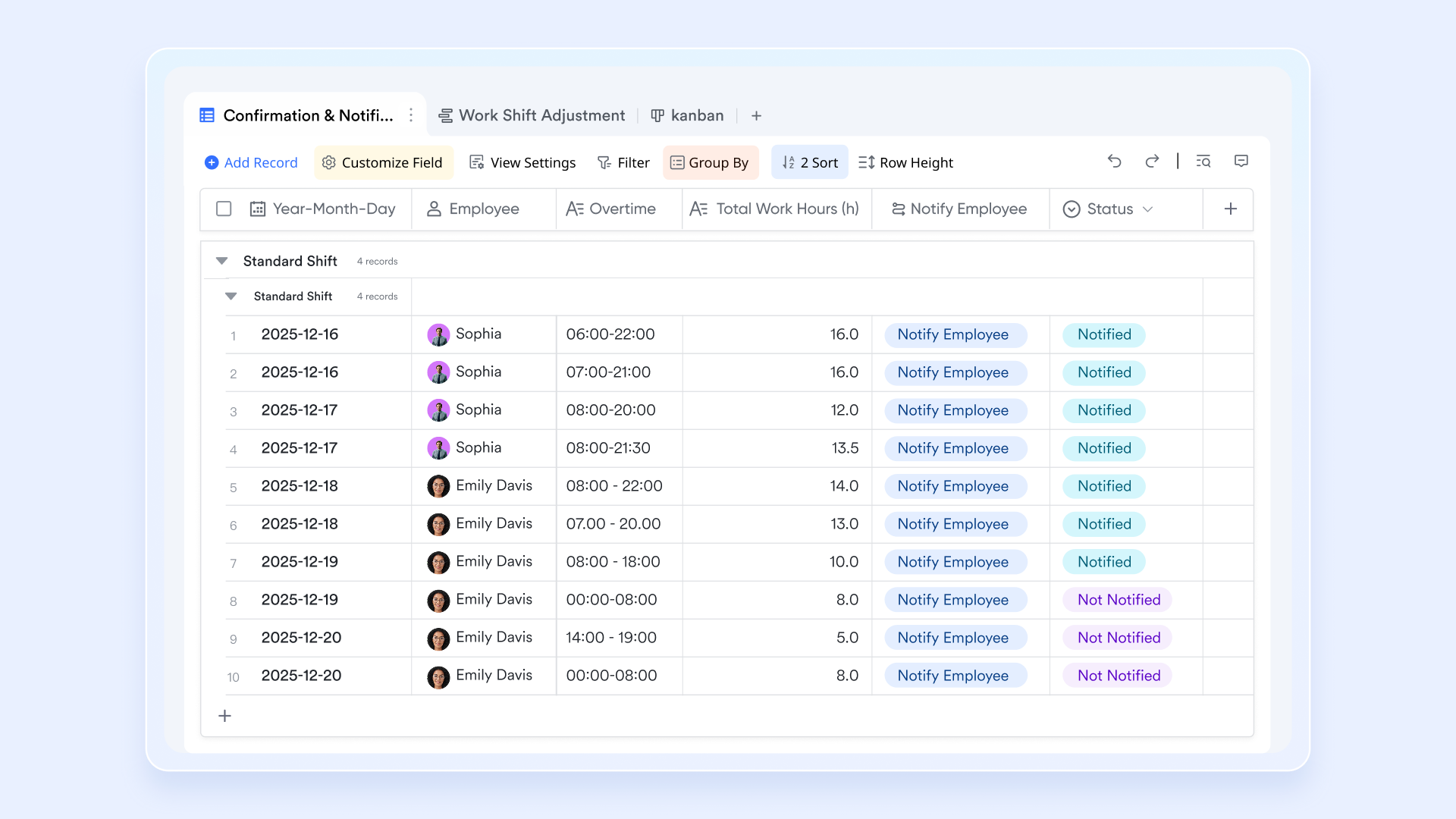
Multichannel candidate sourcing
allows recruitment teams to create centralized talent pools by importing resumes from various job boards, LinkedIn, or referral programs into a single, structured . You can use the form view to create public-facing job application pages that map candidate responses directly into your internal pipeline. This ensures that every applicant can be captured with standardized data points like "Years of Experience," "Expected Salary," and "Technical Skills."
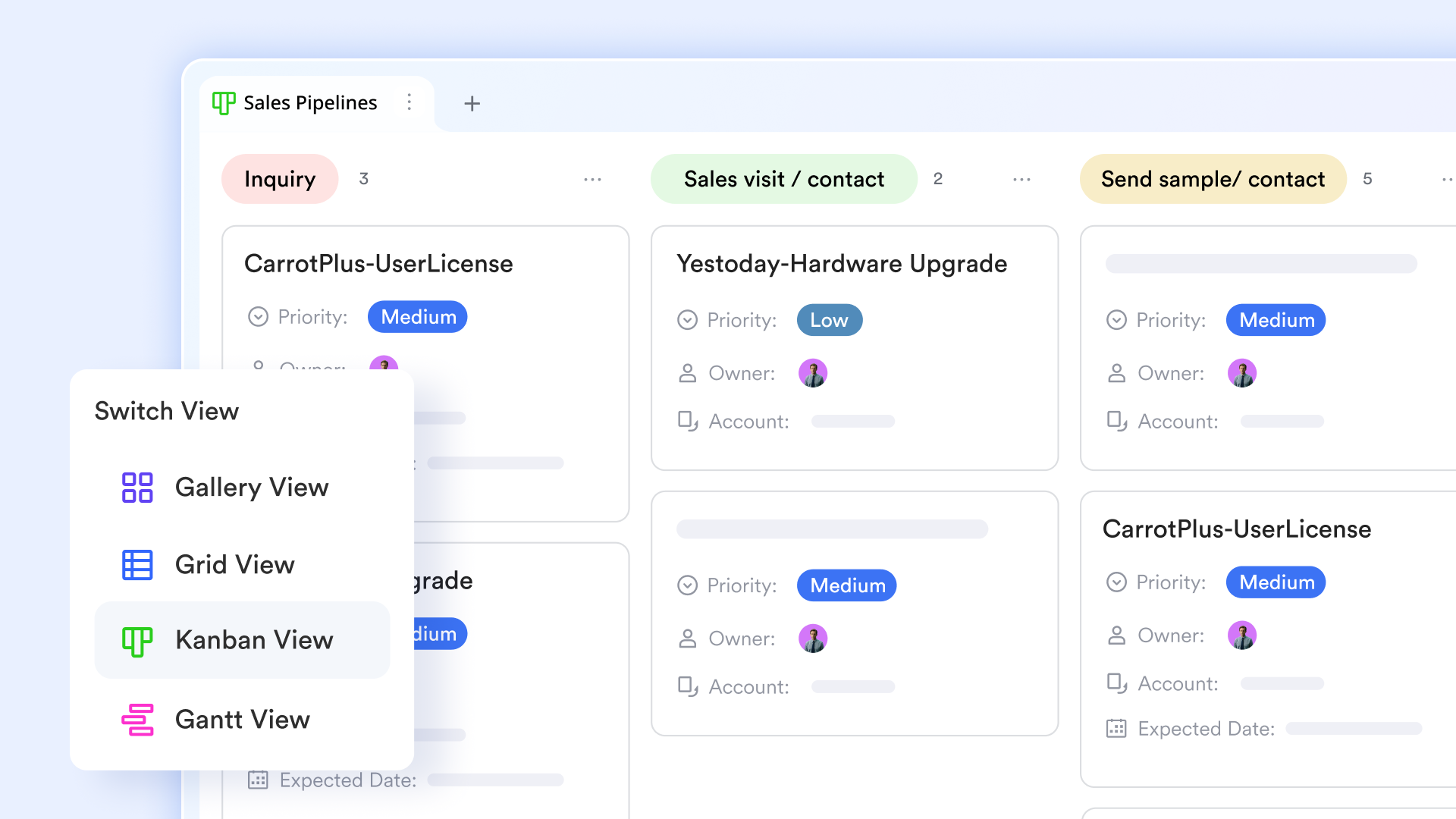
Visual pipeline management & analytics
Using the in Lark Base, teams can visualize their entire recruitment funnel, dragging and dropping candidate cards from "Applied" to "Technical Test" to "Hired." For data-driven insights, the Dashboard feature generates real-time charts of key recruitment metrics, including "Average Days in Stage," "Source Efficiency," and "Diversity Ratios." This allows leadership to identify bottlenecks in the hiring process and reallocate resources to the most effective sourcing channels.
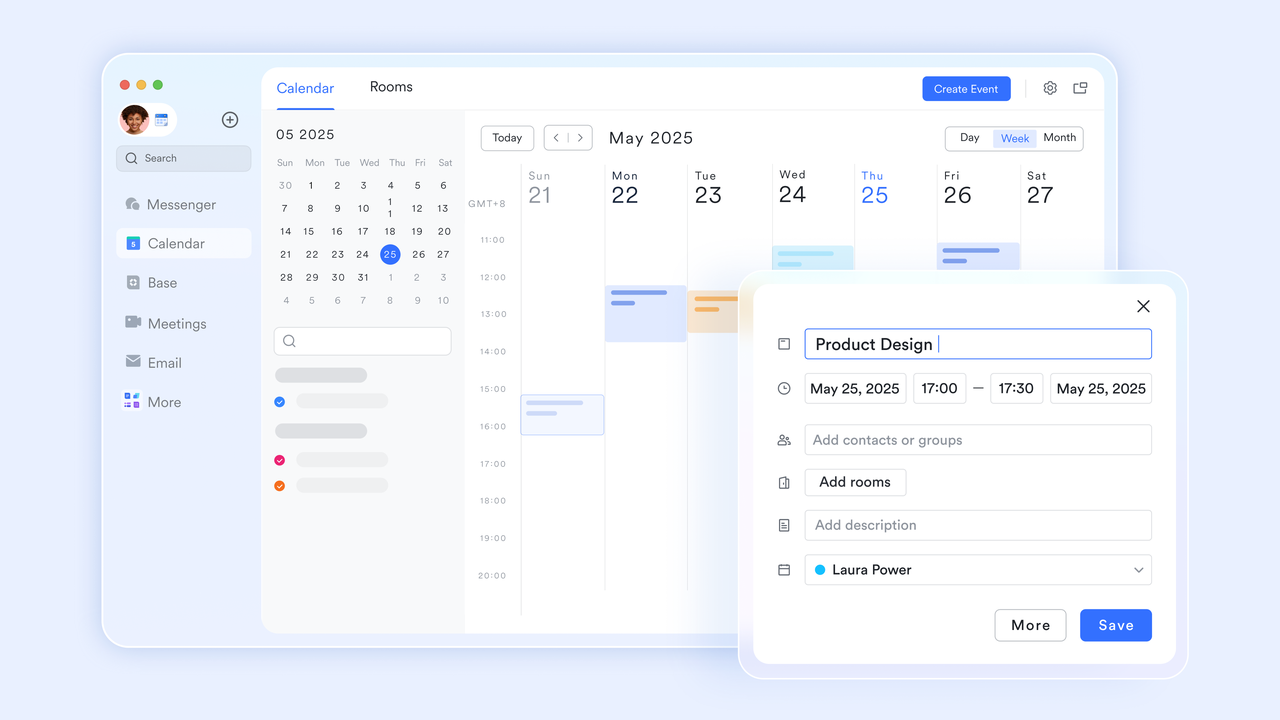
Automated interview scheduling & calendar sync
Lark eliminates the back-and-forth of scheduling by syncing the directly with the recruitment pipeline. Once a candidate moves to the "Interview" stage, recruiters can view the real-time availability of the hiring panel and send meeting invites that automatically include a Lark video meeting link. Candidates can also be sent a "" to select their own time slots based on the team's collective availability, reducing time-to-hire.
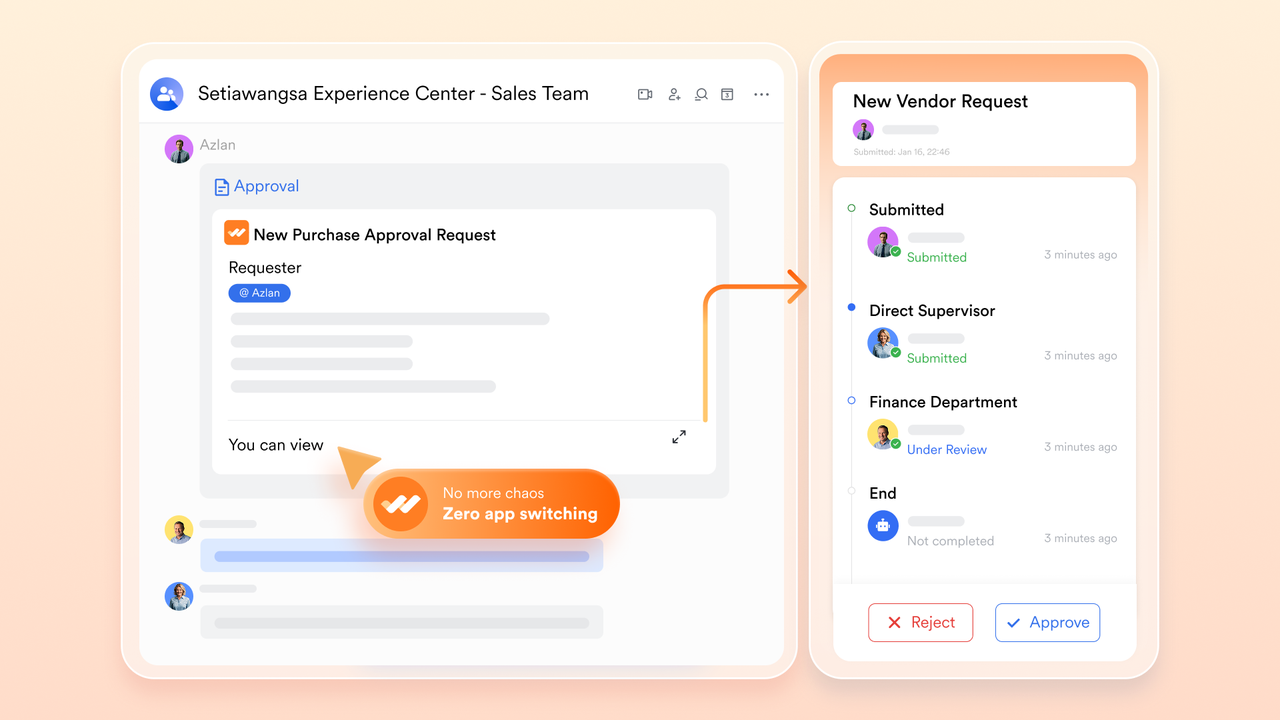
Conditional offer approval workflows
The engine streamlines the final stages of hiring by automating the offer letter sign-off process. Recruiters can trigger an approval flow that routes the proposed salary and benefits package through Finance and Department Heads based on predefined budget thresholds. Approvers can review the candidate's full interview history and scorecards within the approval interface, providing the context needed to make a quick decision from any device.
Pros:
- Centralized candidate communication and hiring workflows
- Automated interview scheduling and team notifications
- Real-time collaboration across recruiting and HR teams
- Unified platform combining recruitment tracking, chat, and workflows
Cons:
- Setup may require initial onboarding, though guides are available in the Lark Help Center.
:
- Starter plan: Free forever plan that includes 11 powerful tools for up to 20 users. It also comes with 100GB of storage, 1000 automation runs, AI translations, and more.
- Basic plan: $6/user/month (billed annually) for up to 500 users. It includes everything in Starter plus group calling for up to 500 attendees, 5TB of storage, 1000 automation runs, and more. For more details, please .
- Pro plan: $12/user/month (billed annually) for up to 500 users. It includes everything in Basic plus group calling for up to 500 attendees, 15TB of storage, 50,000 automation runs, and more.
- Enterprise plan: for custom pricing. Supports unlimited users and includes even more automation runs and advanced security, compliance, and management features.
For small teams with simple communication needs

18 months message history
1000 Base automation runs/month
2000 rows per table in Base
Most POPULAR
For companies with comprehensive collaboration and management needs
Unlimited message history
500-participant video meetings
50k Base automation runs/month
20k rows per table in Base
For large companies with advanced security and organizational management needs
Get a personalized demo and pricing
Unlimited message history
500-participant video meetings
15 TB storage + 30 GB storage/user
500k Base automation runs/month
50k Base automation runs/month
Most POPULAR
For companies with comprehensive collaboration and management needs
Unlimited message history
500-participant video meetings
50k Base automation runs/month
20k rows per table in Base
2. ATS by HRsync: Best for secure enterprise hiring
ATS by HRsync is an enterprise-focused applicant tracking platform designed to help large organizations manage recruitment pipelines, automate candidate screening, and maintain data security throughout the entire hiring process. With compliance-ready workflows, role-based access controls, and centralized candidate management tools, ATS by HRsync gives enterprise HR teams a secure and structured way to handle high-volume hiring without compromising data integrity.
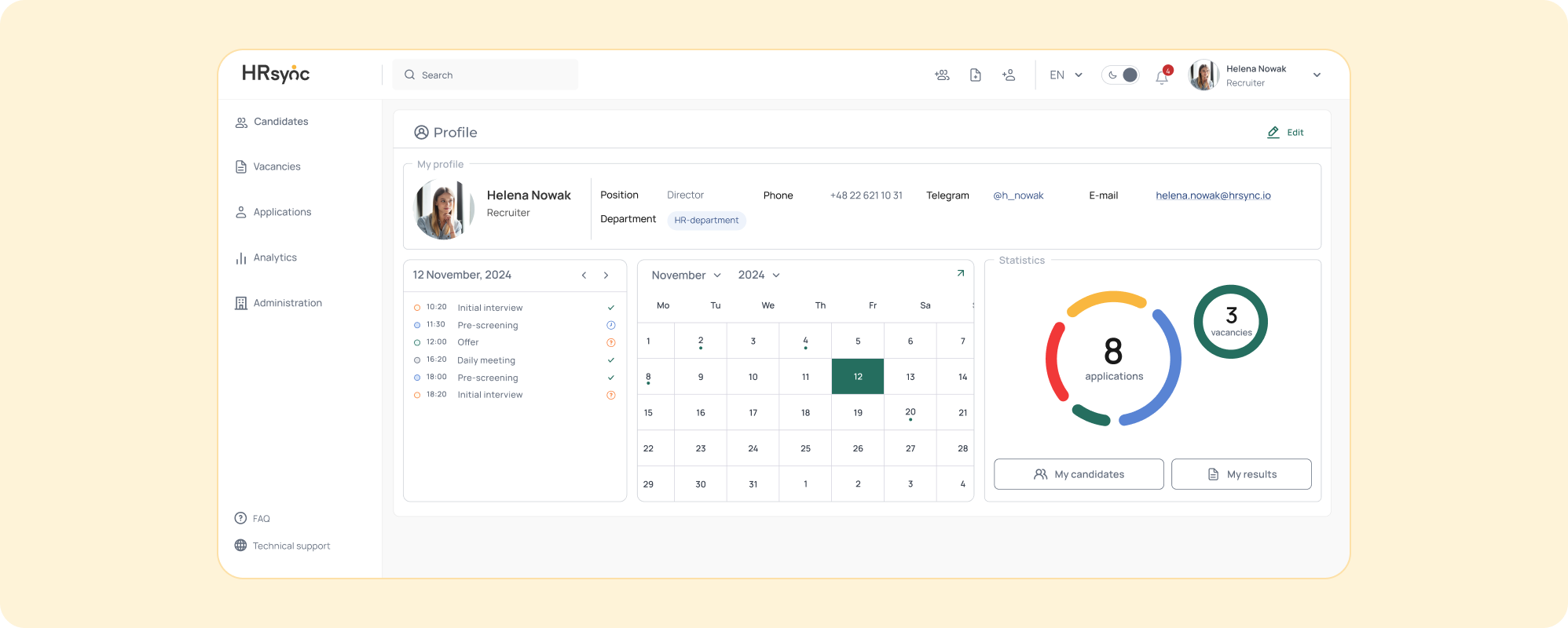
Image source: hrsync.com
Key features:
- Secure candidate data management and access controls
- Automated screening and recruitment workflows
- Compliance-ready hiring pipeline management
- Centralized candidate tracking and reporting
Pros:
- Strong enterprise-grade data security features
- Reliable compliance and access control tools
- Good high-volume recruitment management
- Structured and organized hiring workflows
Cons:
- Limited flexibility for smaller hiring teams
- Basic interface compared to modern ATS platforms
- Fewer third-party integration options
Pricing:
3. Greenhouse: Best for structured hiring and analytics
Greenhouse is a comprehensive recruiting platform designed to help businesses build consistent, data-driven hiring processes through structured interview workflows, detailed candidate scorecards, and powerful recruitment analytics. With customizable hiring pipelines, collaboration tools, and deep integrations, Greenhouse gives HR teams and hiring managers a reliable and bias-reducing way to evaluate candidates and make more confident hiring decisions at scale.
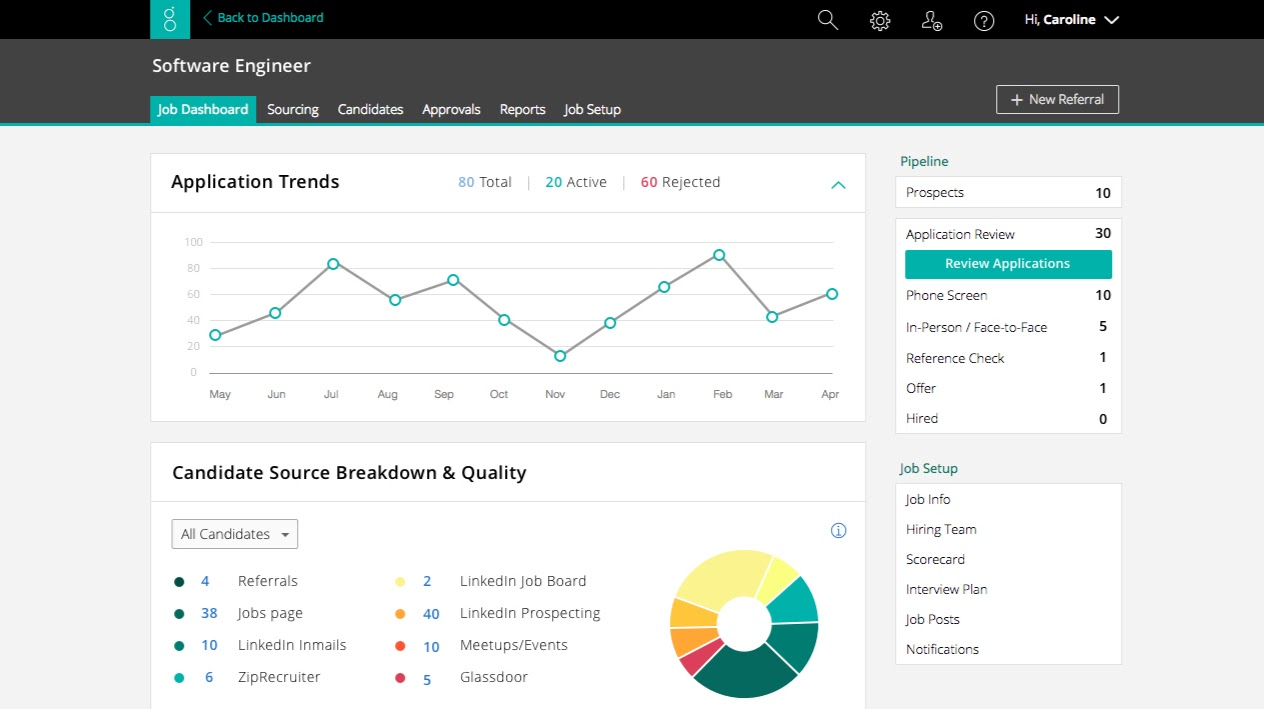
Image source: greenhouse.com
Key features:
- Structured interview workflows and scorecards
- Detailed recruitment analytics and reporting
- Customizable hiring pipeline management
- Wide range of HR and job board integrations
Pros:
- Excellent structured hiring and evaluation tools
- Strong data-driven recruitment analytics
- Highly customizable hiring workflows
- Good collaboration tools for hiring teams
Cons:
- Higher pricing than mid-market ATS platforms
- Complex setup for smaller organizations
- Steeper learning curve for new users
Pricing:
4. Workday HCM: Best for global enterprise HR and ATS
Workday HCM is an enterprise-grade human capital management platform designed to help large organizations manage the entire employee lifecycle, from applicant tracking and onboarding through to workforce planning, payroll, and performance management. With AI-powered talent matching, global compliance tools, and deep HR integrations, Workday HCM gives multinational enterprises a unified and scalable solution for managing recruitment and workforce operations across multiple regions and departments.
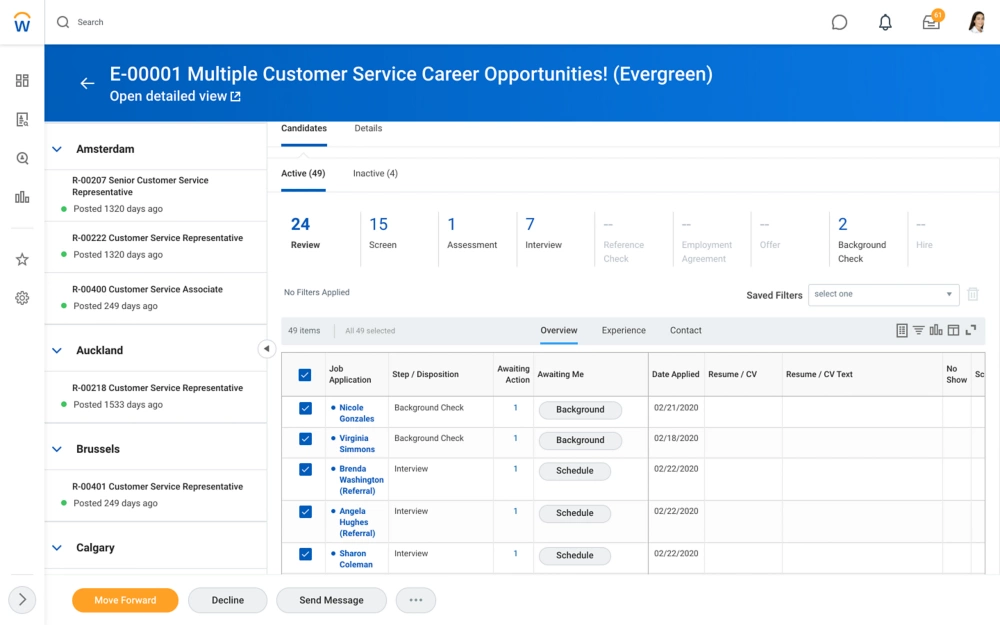
Image source: workday.com
Key features:
- End-to-end applicant tracking and onboarding
- AI-powered talent matching and recommendations
- Global compliance and workforce planning tools
- Comprehensive HR and payroll integrations
Pros:
- Powerful end-to-end HR and ATS capabilities
- Strong global compliance and localization tools
- Excellent AI-powered talent acquisition features
- Highly scalable for large enterprise operations
Cons:
- Very complex implementation and onboarding process
- High pricing unsuitable for smaller businesses
- Requires dedicated HR admin for ongoing management
Pricing:
5. iCIMS Talent Cloud: Best for scalable talent engagement
iCIMS Talent Cloud is a comprehensive talent acquisition platform designed to help businesses attract, engage, and hire top candidates at scale through AI-powered recruitment marketing, automated workflows, and end-to-end candidate relationship management. With a unified talent cloud ecosystem, robust job board integrations, and detailed hiring analytics, iCIMS gives growing organizations a powerful and flexible way to build strong candidate pipelines and improve overall recruitment efficiency.
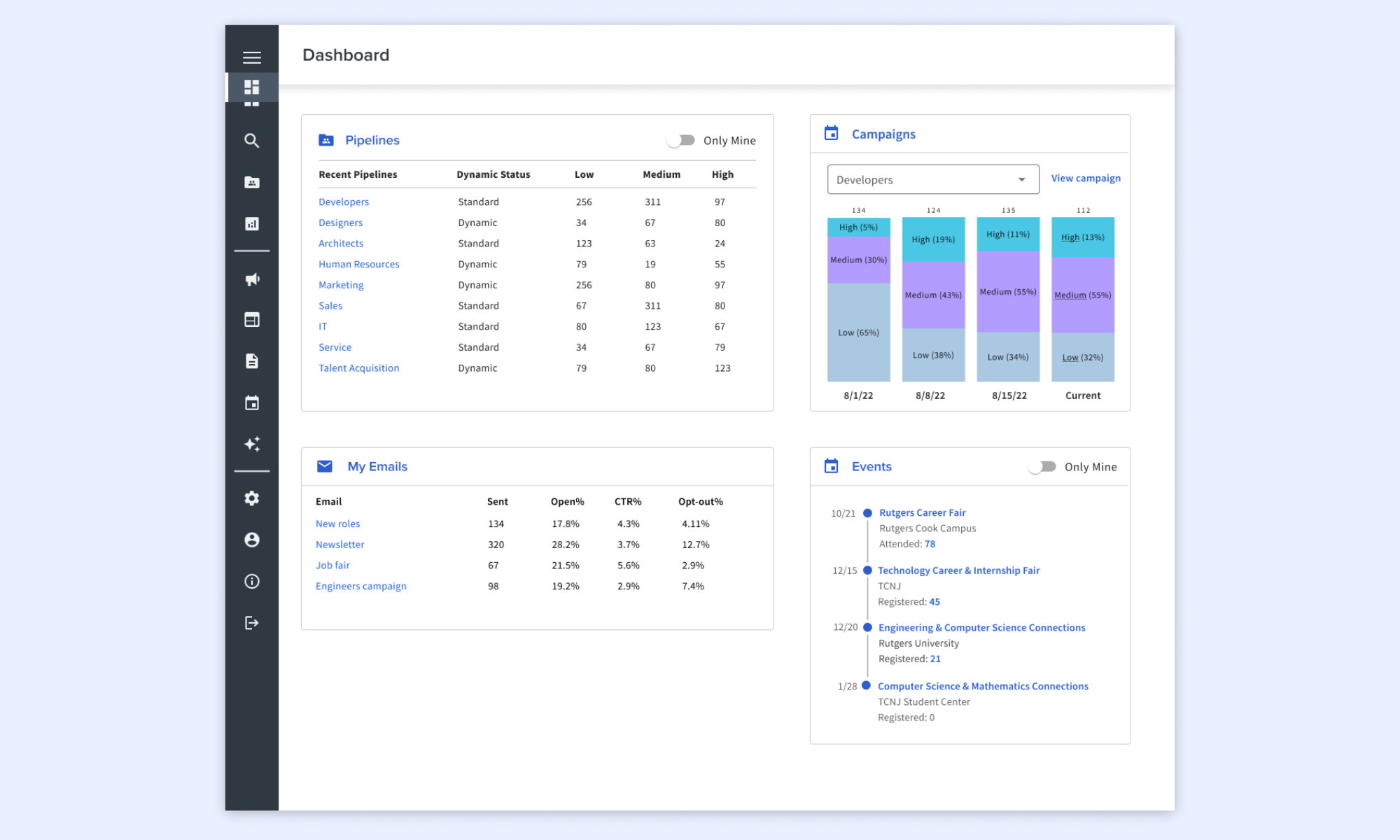
Image source: icims.com
Key features:
- AI-powered candidate matching and engagement
- Recruitment marketing and career site management
- Automated hiring workflows and pipeline tracking
- Detailed talent acquisition analytics and reporting
Pros:
- Strong AI-powered candidate engagement tools
- Excellent recruitment marketing capabilities
- Scalable for high-volume hiring operations
- Robust job boards and HR integrations
Cons:
- Complex configuration for smaller HR teams
- Higher pricing than mid-market ATS solutions
- Steeper learning curve for advanced features
Pricing:
6. BambooHR: Best for HRIS and small business recruiting
BambooHR is an all-in-one HR software platform designed to help small and mid-sized businesses manage applicant tracking, employee records, onboarding, and HR workflows within a single connected system. With an intuitive interface, customizable hiring pipelines, and seamless HRIS integrations, BambooHR gives growing businesses an affordable and easy-to-use solution for managing recruitment and people operations without the complexity of enterprise-grade platforms.
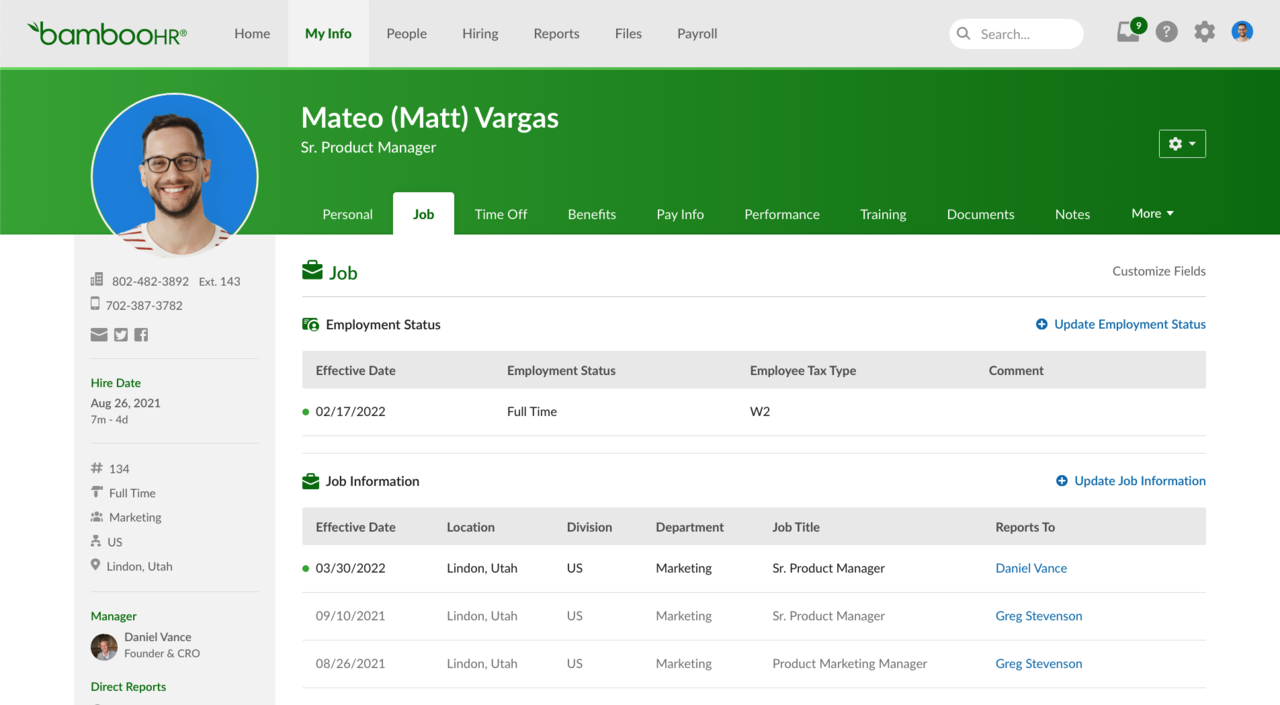
Image source: bamboohr.com
Key features:
- Applicant tracking and hiring pipeline management
- Employee records and HRIS management tools
- Automated onboarding and offboarding workflows
- Reporting and HR analytics dashboards
Pros:
- Intuitive and easy-to-navigate interface
- Strong HRIS and ATS combination on one platform
- Good automated onboarding capabilities
- Affordable for small and mid-sized businesses
Cons:
- Limited advanced recruiting features for enterprises
- Basic reporting compared to dedicated ATS platforms
- Fewer third-party recruitment integrations
Pricing:
7. Zoho Recruit: Best for customizable SMB ATS
Zoho Recruit is a flexible and affordable applicant tracking platform designed to help small and mid-sized businesses customize recruitment workflows, manage candidate pipelines, and streamline hiring processes within a highly configurable system. With AI-powered candidate matching, job board integrations, and seamless connectivity with the broader Zoho ecosystem, Zoho Recruit gives growing businesses a scalable and cost-effective way to manage recruitment without outgrowing their ATS.
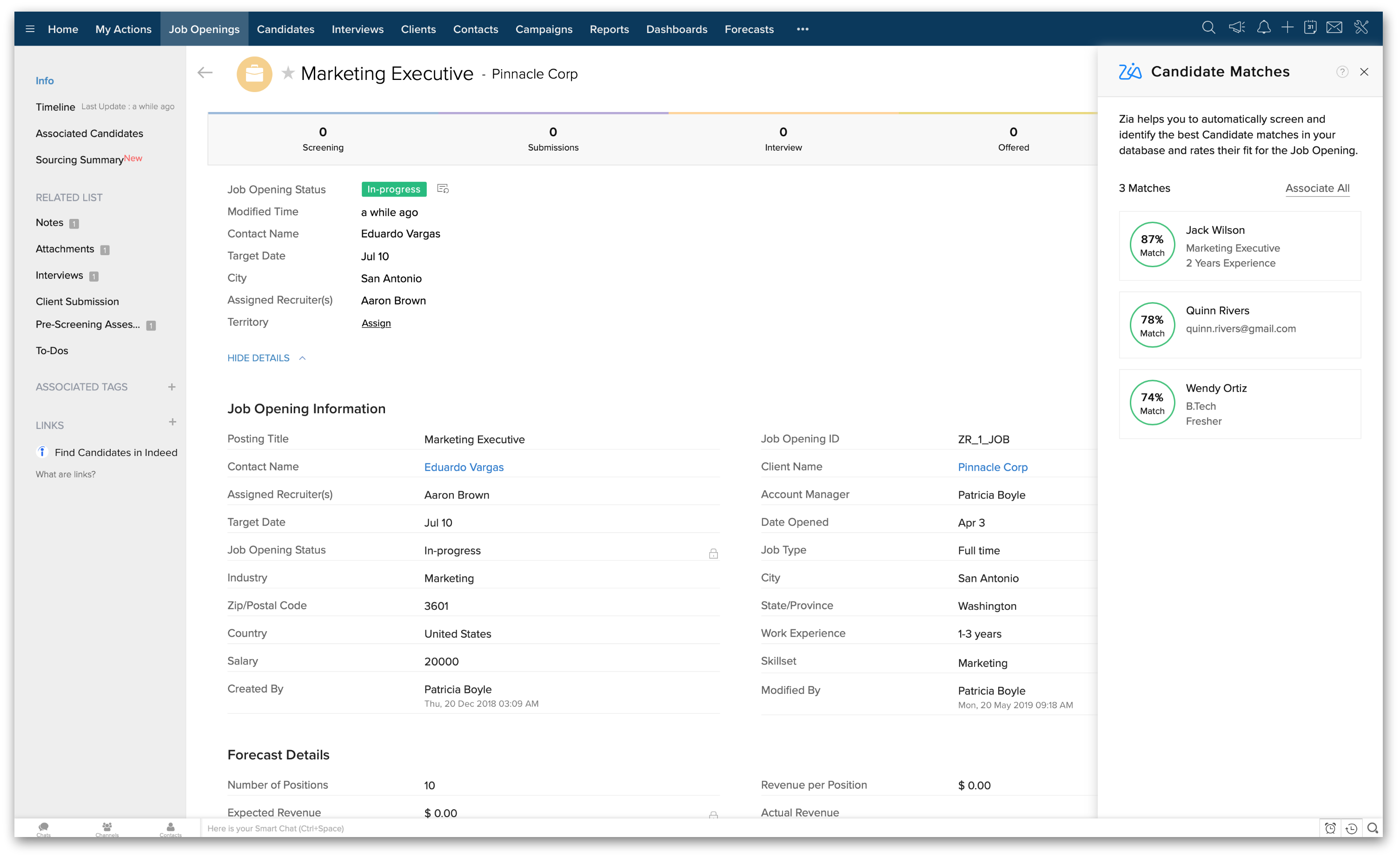
Image source: zoho.com
Key features:
- Customizable recruitment workflows and pipelines
- AI-powered candidate matching and sourcing
- Job board posting and integration management
- Seamless Zoho ecosystem and third-party integrations
Pros:
- Highly customizable workflows and pipelines
- Strong Zoho ecosystem connectivity
- Affordable pricing for small and mid-sized teams
- Good AI-powered candidate sourcing tools
Cons:
- Limited advanced enterprise recruiting features
- The interface can feel cluttered for new users
- Support quality can be inconsistent
Pricing:
- Standard: $25 per user/month (billed annually)
- Professional: $50 per user/month (billed annually)
- Enterprise: $75 per user/month (billed annually)
8. Lever: Best for ATS and CRM candidate relations
Lever is a combined applicant tracking and candidate relationship management platform designed to help businesses build stronger talent pipelines, nurture passive candidates, and manage recruitment workflows within one unified system. With integrated CRM capabilities, collaborative hiring tools, and detailed recruitment analytics, Lever gives talent acquisition teams a more proactive and relationship-driven approach to finding and engaging top candidates before positions even open.
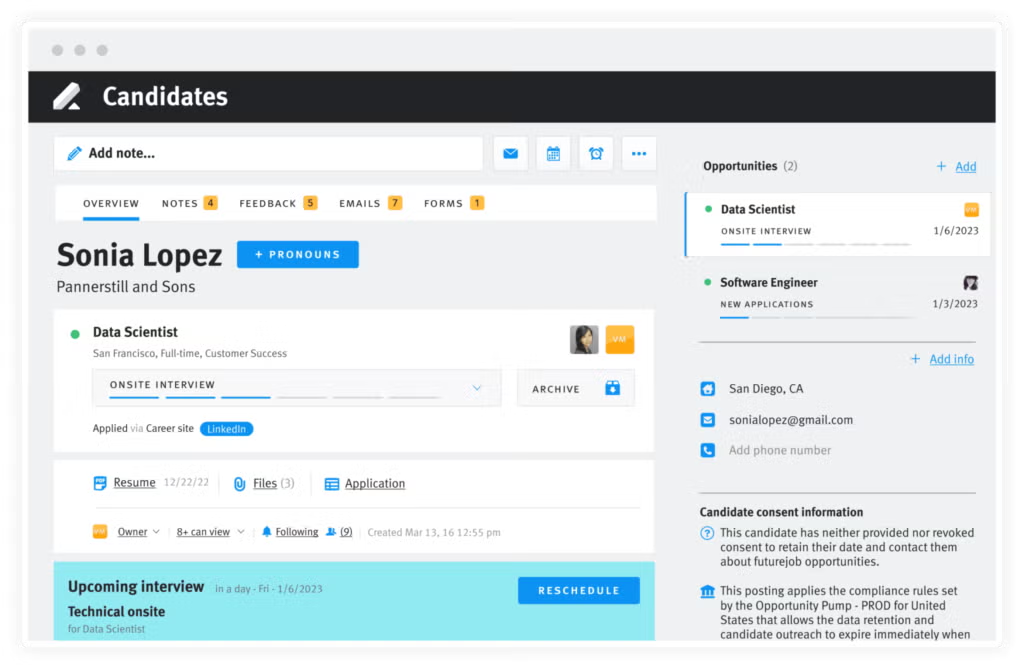
Image source: lever.com
Key features:
- Combined ATS and candidate relationship management
- Talent pipeline nurturing and tracking tools
- Collaborative hiring workflows and scorecards
- Detailed recruitment analytics and reporting
Pros:
- Strong combined ATS and CRM capabilities
- Excellent passive candidate nurturing tools
- Good team collaboration and evaluation features
- Clean and intuitive user interface
Cons:
- Higher pricing than basic ATS platforms
- Limited advanced enterprise scalability
- Fewer HR and payroll integrations
Pricing:
9. Workable: Best for fast job posting and hiring
Workable is a streamlined recruiting platform designed to help businesses post jobs quickly, source candidates efficiently, and move applicants through structured hiring pipelines with minimal setup time. With one-click job board posting, AI-powered candidate sourcing, and built-in interview scheduling tools, Workable gives hiring teams a fast and practical way to fill open positions without the complexity of larger enterprise recruiting systems.
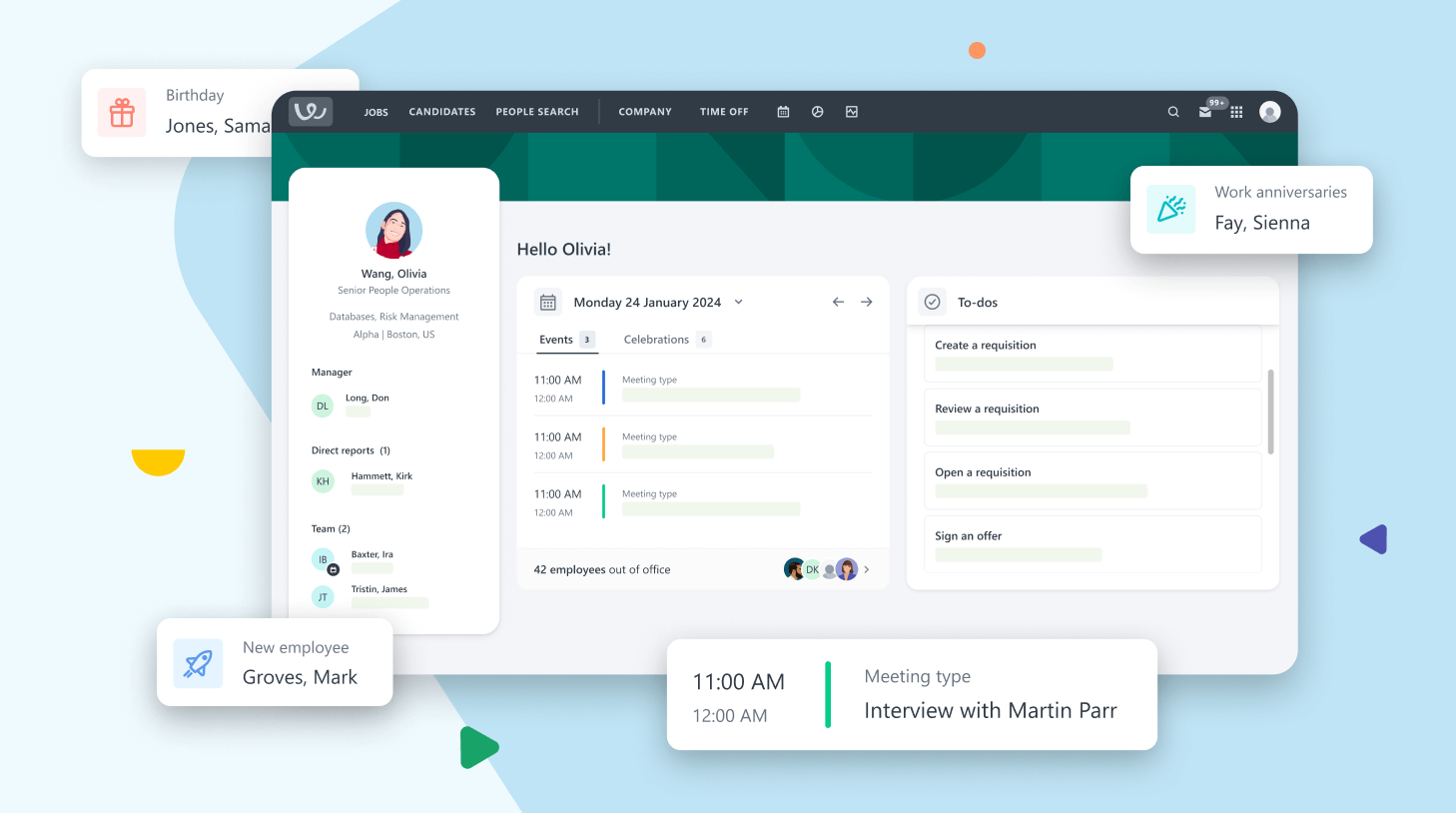
Image source: workable.com
Key features:
- One-click multi-job board posting
- AI-powered candidate sourcing and recommendations
- Built-in interview scheduling and collaboration tools
- Hiring pipeline tracking and reporting
Pros:
- Fast and easy job posting across multiple boards
- Strong AI-powered candidate sourcing tools
- Quick setup and straightforward onboarding
- Good built-in interview scheduling features
Cons:
- Limited advanced customization for complex workflows
- Basic reporting compared to enterprise ATS platforms
- Less suited for high-volume enterprise hiring
Pricing:
- Standard: $299 per month
- Enterprise: $719 per month
10. JazzHR: Best for affordable small business hiring
JazzHR is a cost-effective applicant tracking platform designed to help small businesses streamline recruitment workflows, manage candidate pipelines, and collaborate across hiring teams without the high price tag of enterprise-level solutions. With customizable job postings, automated screening tools, and straightforward pipeline management, JazzHR gives small business owners and HR teams an accessible and practical way to hire great talent efficiently and affordably.
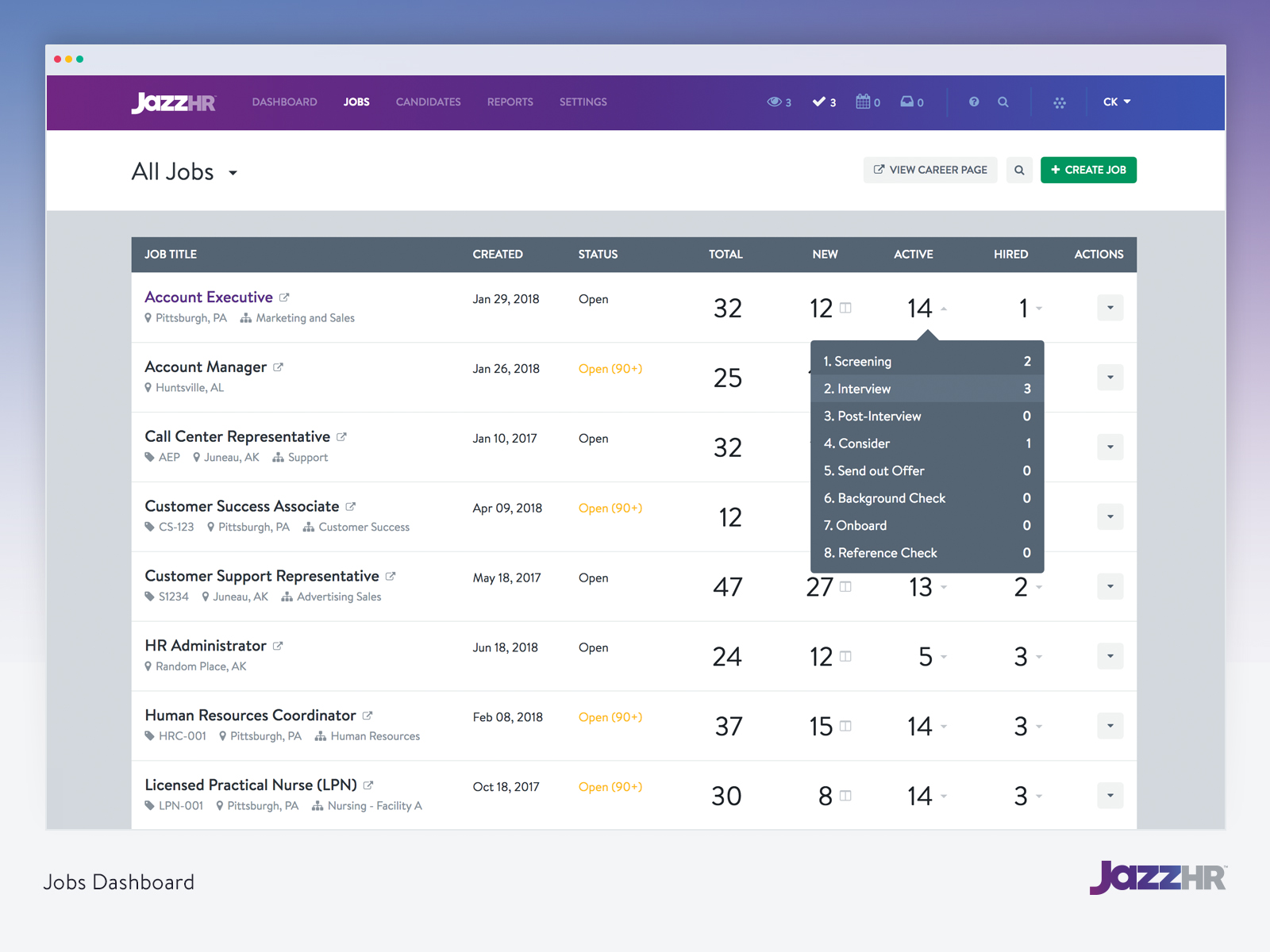
Image source: jazzhr.com
Key features:
- Customizable job postings and career pages
- Automated candidate screening and workflows
- Collaborative hiring pipeline management
- Reporting and recruitment analytics tools
Pros:
- Very affordable pricing for small businesses
- Simple and easy-to-use interface
- Good automated screening capabilities
- Straightforward hiring pipeline management
Cons:
- Limited features for growing enterprise teams
- Basic reporting and analytics capabilities
- Fewer advanced integrations than larger platforms
Pricing:
- Hero: ~$75 per month (billed annually)
- Plus: ~$269 per month (billed annually)
11. Bullhorn ATS: Best for high-volume staffing agencies
Bullhorn ATS is a purpose-built recruitment platform designed to help staffing agencies manage high-volume candidate pipelines, automate placement workflows, and maintain strong client and candidate relationships within one centralized system. With CRM integration, automated data entry, and powerful reporting tools, Bullhorn gives staffing professionals a fast and scalable way to efficiently match candidates to roles and grow their placement volumes without sacrificing quality or accuracy.
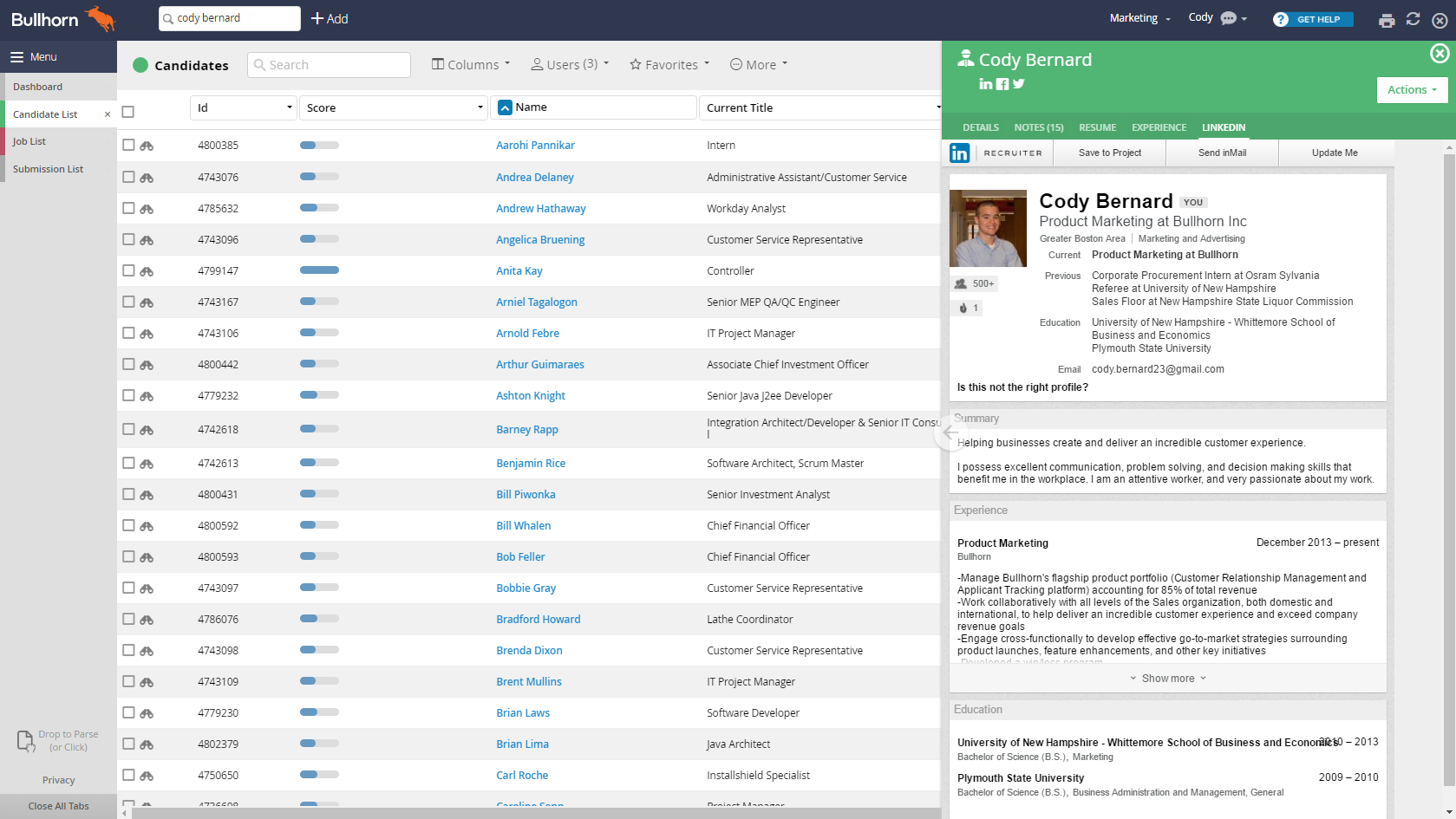
Image source: bullhorn.com
Key features:
- High-volume candidate pipeline management
- Integrated CRM and client relationship tools
- Automated data entry and workflow management
- Detailed placement and recruitment reporting
Pros:
- Purpose-built for staffing agency workflows
- Strong CRM and client management capabilities
- Excellent high-volume recruitment handling
- Good automation of repetitive data entry tasks
Cons:
- Complex setup and lengthy onboarding process
- Higher pricing for smaller staffing agencies
- Steeper learning curve for new users
Pricing:
12. Lindy: Best for AI-driven hiring automation
Lindy is an AI-powered hiring automation platform designed to help businesses streamline recruitment workflows, automate candidate screening, and reduce manual hiring tasks through intelligent AI agents that handle repetitive recruitment processes end-to-end. With automated interview scheduling, AI-driven candidate evaluation, and smart workflow builders, Lindy gives HR teams a faster and more efficient way to manage high-volume hiring without sacrificing candidate quality or experience.
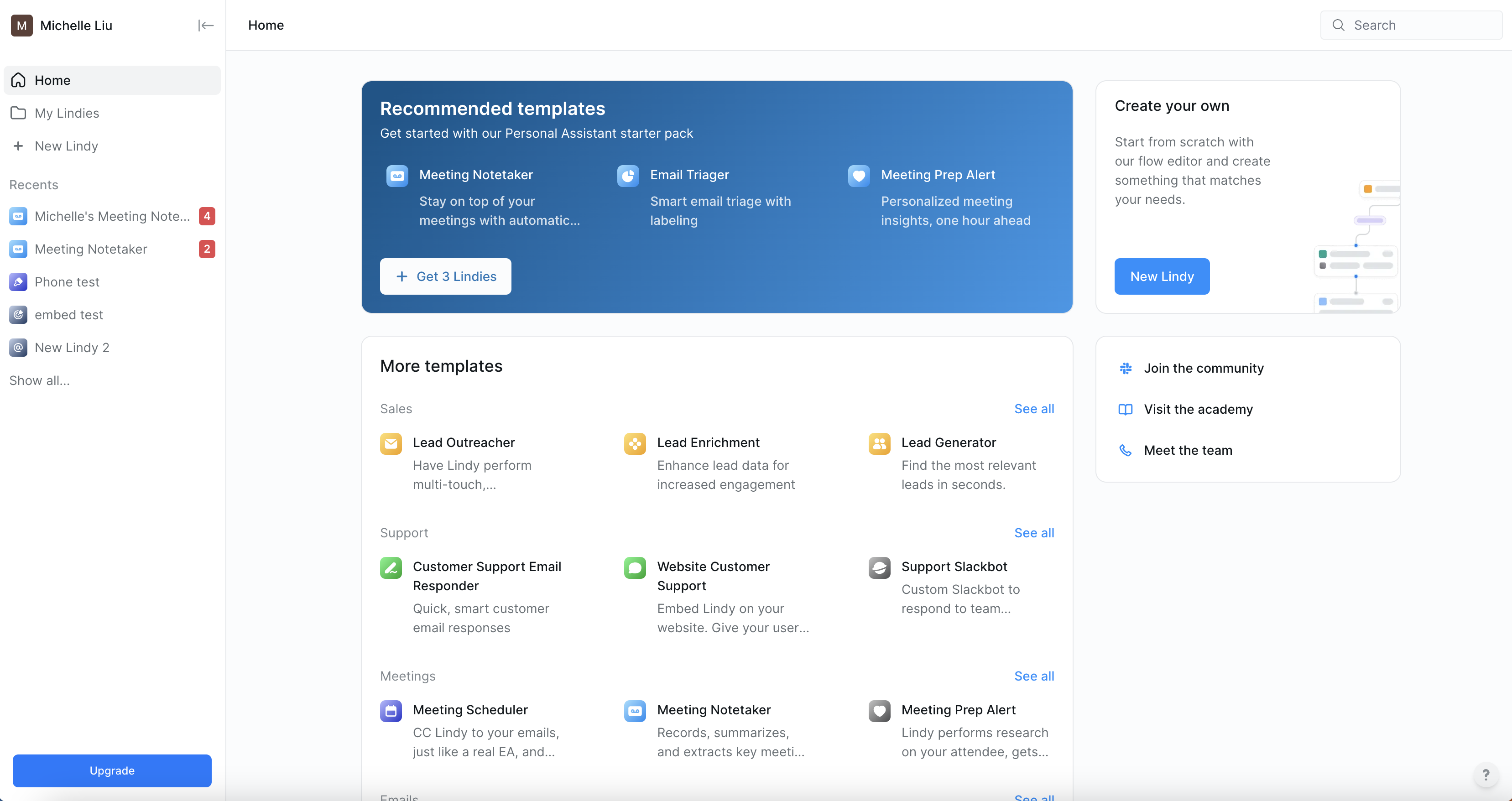
Image source: lindy.com
Key features:
- AI-powered candidate screening and evaluation
- Automated interview scheduling and coordination
- Smart recruitment workflow automation tools
- AI agent-driven hiring task management
Pros:
- Highly intelligent AI-driven automation capabilities
- Significantly reduces manual recruitment workload
- Fast and efficient candidate screening process
- Flexible and customizable AI workflow builders
Cons:
- Less suited for teams preferring manual hiring control
- Limited reporting and analytics features
- Newer platform with fewer third-party integrations
Pricing:
- Business: $199.99 per month
- Enterprise: Custom pricing
13. Zappyhire: Best for enterprise recruiting automation
Zappyhire is an AI-powered enterprise recruiting automation platform designed to help large organizations streamline end-to-end hiring workflows, reduce time-to-hire, and improve candidate quality through intelligent screening, automated assessments, and data-driven recruitment insights. With conversational AI, predictive hiring analytics, and seamless HR integrations, Zappyhire gives enterprise talent acquisition teams a smarter and more scalable way to manage high-volume recruitment without compromising on hiring standards.
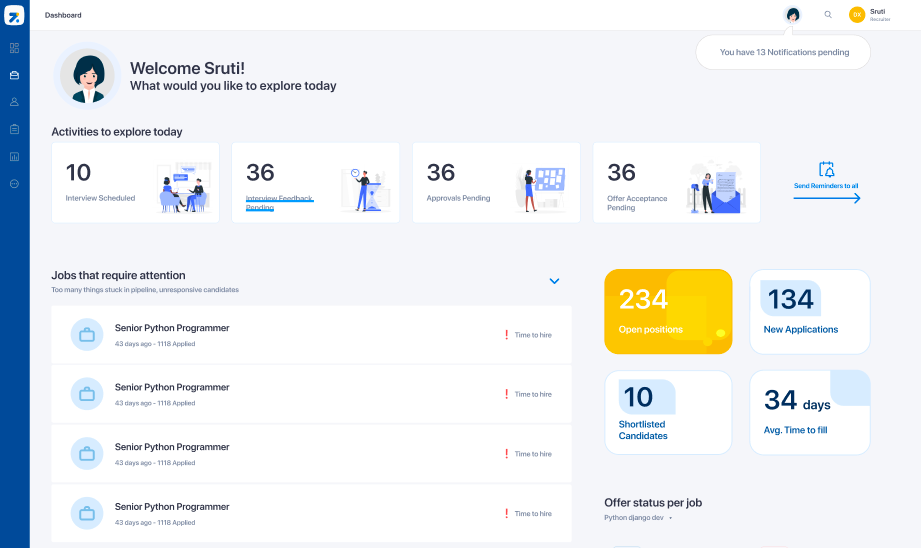
Image source: zappyhire.com
Key features:
- AI-powered candidate screening and assessments
- Conversational AI for candidate engagement
- Predictive hiring analytics and insights
- Seamless HR and enterprise system integrations
Pros:
- Strong AI-powered recruitment automation tools
- Excellent predictive hiring analytics capabilities
- Good conversational AI candidate engagement
- Scales well for large enterprise hiring volumes
Cons:
- Limited suitability for small business hiring needs
- Complex initial setup and configuration process
- Fewer third-party integrations than larger platforms
Pricing:
14. Eightfold: Best for talent intelligence and skills mapping
Eightfold is an AI-powered talent intelligence platform designed to help enterprises match candidates to roles based on skills, potential, and career trajectories rather than traditional resume keywords alone. With deep learning algorithms, workforce planning tools, and diverse hiring capabilities, Eightfold gives large organizations a more intelligent and equitable way to identify, attract, and retain the right talent across the entire employee lifecycle.
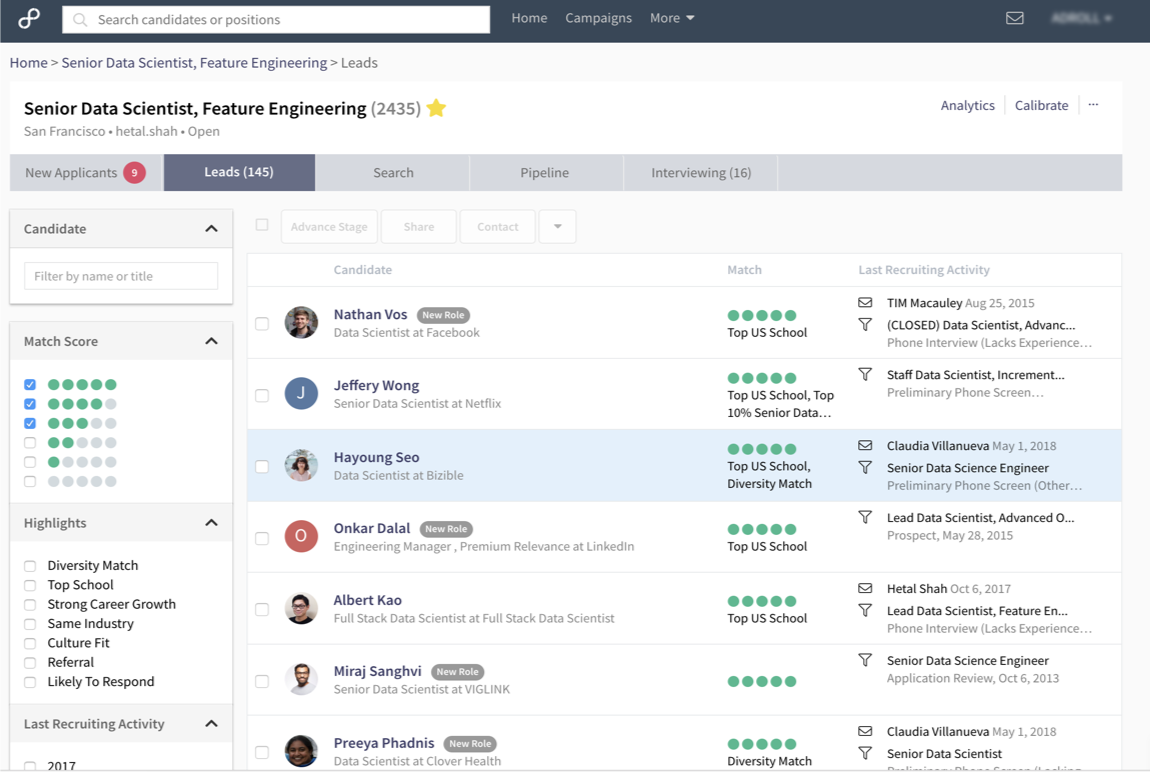
Image source: eightfold.com
Key features:
- AI-powered skills matching and talent intelligence
- Career pathing and workforce planning tools
- Diversity and inclusion hiring capabilities
- Candidate and employee lifecycle management
Pros:
- Highly intelligent AI-driven skills matching
- Strong diversity and inclusion hiring tools
- Excellent workforce planning capabilities
- Goes beyond resumes to assess true candidate potential
Cons:
- Complex implementation for smaller organizations
- High pricing unsuitable for mid-market businesses
- Requires significant data input for optimal AI performance
Pricing:
15. hireEZ: Best for AI sourcing and candidate engagement
hireEZ is an AI-powered outbound recruiting platform designed to help talent acquisition teams source hard-to-find candidates, automate personalized outreach, and build strong talent pipelines across multiple sourcing channels. With intelligent candidate discovery, automated engagement sequences, and detailed sourcing analytics, hireEZ gives recruiters a proactive and data-driven way to reach passive candidates and fill roles faster without relying solely on inbound applications.
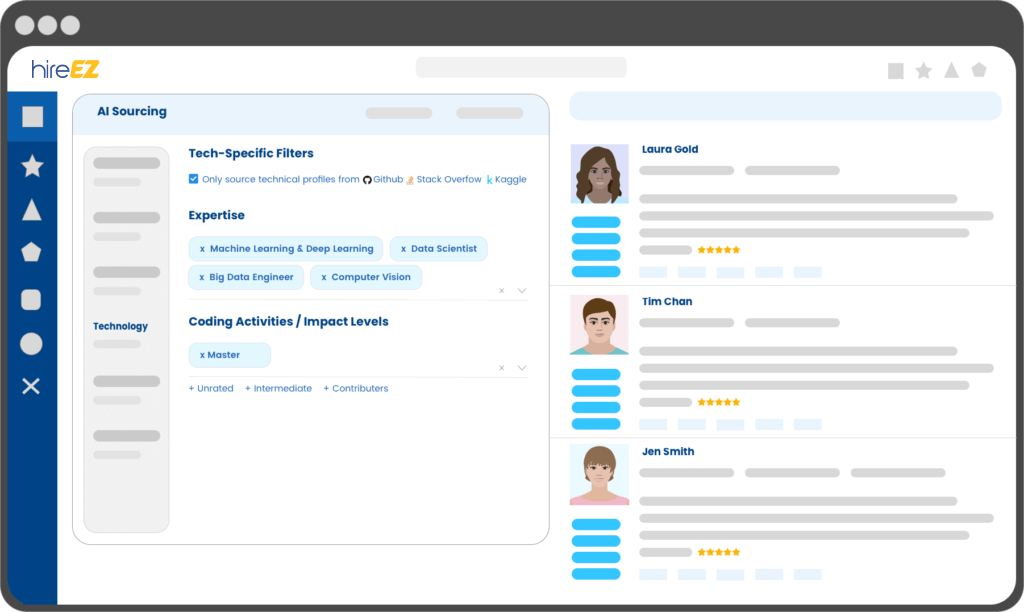
Image source: hireez.com
Key features:
- AI-powered candidate sourcing and discovery
- Automated personalized outreach and engagement
- Multi-channel sourcing and pipeline management
- Detailed sourcing analytics and reporting tools
Pros:
- Excellent AI-powered passive candidate sourcing
- Strong automated outreach and engagement tools
- Good multi-channel sourcing capabilities
- Detailed and actionable sourcing analytics
Cons:
- Less suited for inbound recruitment management
- Limited HRIS and payroll integrations
- Higher pricing for smaller recruiting teams
Pricing:
Free vs paid applicant tracking software: What to choose?
Choosing between free and paid applicant tracking software depends on hiring volume, team size, and recruitment complexity. Free platforms work well for small businesses with basic hiring needs, while paid solutions deliver the advanced automation and analytics that growing organizations require. For businesses also managing and resource planning alongside recruitment, a paid ATS ensures seamless workforce alignment from hiring through to deployment.
Free tools like Zoho Recruit suit occasional hiring needs, but organizations requiring advanced compliance, automation, and capabilities will find paid platforms deliver significantly stronger hiring outcomes and long-term recruitment efficiency.
Scale your talent acquisition on low budgets
Emerging trends in applicant tracking software to watch
Applicant tracking software is evolving rapidly beyond simple resume parsing into intelligent, data-driven systems that support strategic workforce decisions across the entire organization. These trends define where ATS platforms are genuinely headed in the coming years.
- AI-powered skills-based hiring: AI is shifting recruitment focus from resume keywords to greater skills mapping and candidate potential assessment. Future platforms will evaluate candidates based on demonstrated capabilities, helping organizations build more diverse and high-performing teams while reducing unconscious hiring bias.
- Predictive hiring analytics: Predictive analytics is becoming a core ATS feature, enabling HR teams to forecast hiring needs and reduce time-to-hire. Organizations combining ATS insights with data can better align recruitment timelines with project deadlines and workforce capacity planning needs.
- Seamless workforce management integration: ATS platforms are connecting with broader HR ecosystems to create end-to-end talent management workflows. Solutions that integrate with give organizations a unified view of workforce productivity from hiring through onboarding and day-to-day performance management.
- Stronger candidate experience focus: Modern platforms are prioritizing branded career pages, automated communications, and mobile-friendly applications. Organizations that deliver positive candidate experiences through their ATS consistently attract higher quality applicants and build stronger employer brand reputations.
- Remote and global hiring capabilities: ATS platforms are expanding with multi-language support, international compliance tools, and remote interview integrations, making it easier for organizations to source and onboard talent from anywhere in the world without geographical barriers slowing recruitment.
Conclusion
Applicant tracking software has become an essential part of building efficient, competitive, and data-driven hiring operations in today's fast-moving talent landscape. These platforms help organizations streamline candidate pipelines, automate screening workflows, and make more informed recruitment decisions backed by real-time analytics. With AI-powered matching, predictive insights, and seamless HR integrations, the right ATS makes it significantly easier to attract top talent and reduce time-to-hire consistently.
Tools like demonstrate how integrated collaboration platforms can support recruitment coordination and team communication within a single unified workspace, keeping hiring teams aligned without switching between multiple tools. By combining ATS capabilities with reliable solutions, organizations can build a seamless end-to-end talent management system that supports employees from application right through to long-term performance and growth.
Move from application to offer faster with Lark today
FAQs
What applicant tracking system is the best?
The best ATS depends on business size and hiring complexity. Greenhouse suits mid-sized and enterprise teams with structured hiring needs, while Workday HCM works best for large global organizations. Zoho Recruit and BambooHR offer strong value for smaller teams. Organizations needing collaboration alongside recruitment will find Lark an effective unified workspace that keeps hiring teams organized and aligned.
What is the most commonly used ATS?
Greenhouse and Workday HCM are among the most widely used enterprise recruiting solutions. BambooHR remains popular for small and mid-sized businesses combining HRIS and ATS in one platform. Bullhorn is the preferred choice for staffing agencies managing high-volume placements, while iCIMS Talent Cloud is frequently adopted by large organizations focused on scalable talent engagement and recruitment marketing.
What is the best brand of ATS?
Several brands consistently lead the ATS market. Greenhouse is recognized for structured hiring and powerful analytics. iCIMS is highly regarded for enterprise talent acquisition and recruitment marketing. Workday is trusted by global enterprises for combining ATS within a broader HCM ecosystem. For AI-driven talent intelligence and skills-based hiring, Eightfold stands out as one of the most innovative platforms available in 2026.
Which ATS is best for hiring?
The best ATS for hiring depends on your recruitment priorities. Workable suits businesses needing fast multi-board job posting. Lever works well for teams focused on nurturing passive candidate relationships. Lindy and Zappyhire offer strong AI-driven automation for faster screening. For simplicity and affordability, JazzHR and BambooHR remain practical and easy-to-implement solutions for everyday small business hiring needs.
Related reading