For many businesses, the complexities of tracking stock, managing orders, and optimizing supply chains can be overwhelming, and effective inventory management is crucial for success. This is where an Enterprise Resource Planning (ERP) inventory system comes into play. Join me as I explore how an ERP inventory system can transform your operations, enhance efficiency, and ultimately boost your bottom line.
What is an ERP inventory system?
Understanding the foundational elements of modern business management is key, and it starts with enterprise resource planning. When complex concepts are broken down, they become much more approachable and actionable for your business.
Defining enterprise resource planning (ERP)
Let's start by . An ERP system is an integrated software solution designed to be the central nervous system of a company. It manages and integrates a company's core business processes, including finance, human resources, sales, and operations, all within one unified platform. This powerful system provides a centralized database for all business functions, fostering seamless data flow and collaboration across departments. Imagine all your critical business data living in one intelligent place, accessible and understandable to everyone who needs it. That's the essence of ERP.
The role of inventory management in ERP
Next, the discussion turns to a critical component within this powerful framework: . When an ERP inventory system is mentioned, the focus is specifically on how this integrated solution meticulously oversees a company's inventory levels, manages incoming and outgoing orders, and tracks deliveries. It's far more than just counting what's on shelves; it's about strategically managing the entire lifecycle of products, from the moment raw materials arrive to when finished goods are dispatched to customers. This holistic approach ensures that every item is accounted for and optimized throughout its journey.
Key components of an ERP inventory system
A robust ERP inventory system is built upon several fundamental pillars that work in concert to provide comprehensive control and visibility. Understanding these components is key to appreciating the full power of such a system.
- : At its heart, an inventory ERP system operates with a centralized database. This means all inventory-related data – from product specifications and stock levels to supplier information and historical sales – resides in one single source of truth. This eliminates data silos, reduces discrepancies, and ensures everyone within your organization is working with accurate, up-to-the-minute information.
- Real-time tracking: One of the most transformative features is . An effective ERP system for inventory control provides up-to-the-minute visibility into stock levels across all locations. Whether items are in a main warehouse, a retail store, or in transit, businesses know exactly where they are and how many they have, enabling swift and informed decisions.
- : An ERP and inventory management system can automate tedious, manual processes. This includes the automatic generation of purchase orders when stock hits reorder points, streamlined order processing from customer inquiry to fulfillment, and automated data entry that significantly reduces human error. This automation not only saves time but also boosts efficiency.
- Integration with other modules: A truly comprehensive ERP inventory management system doesn't operate in a vacuum. It seamlessly connects with other essential ERP functionalities. For instance, it integrates with procurement to automate purchasing decisions, links with sales to ensure product availability, and feeds into accounting for accurate financial reporting. This interconnectedness is what makes the entire ERP ecosystem so powerful.
Get all the components you need faster
Why your business needs an ERP inventory system: Key benefits
Many business leaders often inquire about the tangible returns of investing in an advanced system like this. The truth is, an ERP system for inventory management brings a multitude of advantages that can profoundly impact a business's trajectory. Let's explore some of the key benefits that can be realized.
Enhancing efficiency and productivity
One of the most immediate and impactful benefits businesses experience with an ERP inventory management system is a dramatic increase in . By automating manual tasks – like data entry, order processing, and stock reconciliation – the system frees teams from repetitive chores. This not only reduces human errors but also allows valuable employees to focus on more strategic initiatives that drive innovation and growth. Imagine the time saved and the potential for a team to engage in more meaningful work!
Achieving optimal inventory levels
Maintaining the right balance of stock is a constant challenge for businesses, but an online inventory management system ERP solutions makes it much more achievable. This system empowers businesses to prevent both costly overstocking, which ties up capital and leads to obsolescence, and damaging stockouts, which result in lost sales and frustrated customers. Through advanced demand forecasting capabilities, reorder point optimization, and precise safety stock calculations, businesses can ensure they have just enough inventory to meet customer needs without excessive carrying costs. It's about finding that sweet spot for maximum profitability.
Reducing costs and maximizing profitability
For any business, the bottom line is crucial, and this is where an ERP system for inventory control truly shines. By optimizing inventory levels, businesses inherently reduce carrying costs associated with storage, insurance, and potential obsolescence. Furthermore, minimizing waste from expired or damaged goods and improving cash flow through efficient inventory turnover directly contributes to increased profitability. With accurate data, businesses also gain better negotiation power with suppliers, securing more favorable terms due to precise demand planning. It's a win-win scenario for financial health.
Improving data accuracy and visibility
In the modern business landscape, informed decision-making is paramount, and it hinges on accurate, real-time data. An inventory ERP system provides unparalleled and visibility across the entire operation. Businesses gain comprehensive insights into inventory performance, sales trends, and even supplier reliability, all from a centralized source. This means no more guessing games or relying on outdated spreadsheets; instead, there is a crystal-clear view of inventory health, enabling strategic choices with confidence.
Boosting customer satisfaction
An efficient ERP inventory management system translates directly into happier customers, which is a cornerstone of any thriving business. With optimized stock levels and streamlined order processing, businesses can achieve faster order fulfillment and significantly reduce the likelihood of backorders. When products are consistently available and delivered promptly, customer experience improves dramatically, leading to increased loyalty, positive word-of-mouth, and repeat business. It's about building trust and reliability with every interaction.
Facilitating scalability and growth
As businesses evolve, the ability to adapt and grow is essential. A well-implemented ERP system for inventory management is designed to support this expansion seamlessly. Whether new product lines are being introduced, additional locations opened, or new sales channels explored, the system can scale with needs without compromising efficiency. It provides the robust infrastructure required to manage increased complexity, ensuring operations remain agile and effective as the business flourishes.
Define, align, and deliver your inventory system effortlessly
Core features of a comprehensive ERP inventory system
When considering the power of an ERP inventory system, it's helpful to delve into a suite of sophisticated features designed to give unparalleled control and insight. From the moment products enter an ecosystem until they reach customers, these functionalities work in harmony to optimize every step.
Inventory control and tracking
At the heart of any effective ERP system for inventory control lies robust inventory control and tracking. This is where the granular management of physical goods takes place, ensuring businesses know exactly what they have, where it is, and its status.
- Barcode and RFID scanning: Modern inventory ERP systems leverage advanced technologies like barcode and RFID scanning for accurate and incredibly fast inventory tracking. This eliminates manual data entry errors and speeds up processes like receiving, picking, and shipping, providing real-time updates on every item's location.
- Multi-location and : For businesses operating with more than one storage facility, this feature is indispensable. It allows seamless handling of inventory across various storage sites, whether they are main warehouses, satellite stores, or third-party logistics centers. Businesses get a unified view of stock levels across their entire network.
- Batch and lot tracking: This is essential for managing products that have specific expiry dates, quality control requirements, or require traceability for regulatory compliance. Batch and lot tracking within an ERP inventory management system ensures specific groups of items can be tracked from their origin through to the customer, which is critical for recalls or quality assurance.
- Cycle counting and physical inventory: To maintain the highest level of inventory accuracy, an inventory ERP system supports both cycle counting and full physical inventory processes. These tools help to regularly reconcile physical stock with system records, identifying discrepancies quickly and minimizing disruptions to operations.
Order management
Seamless is crucial for keeping the supply chain flowing smoothly, and an ERP system for inventory management provides comprehensive tools to streamline every stage.
- Purchase order (PO) management: This feature is vital for streamlining the procurement process. It allows businesses to create, send, and track purchase orders efficiently, ensuring that the right goods are received, from the right suppliers, at the right time, all while maintaining good vendor relationships.
- Sales order management: From the moment a customer places an order, the system efficiently processes it. This includes verifying product availability, reserving stock, generating invoices, and tracking the order's journey until fulfillment. This ensures customer orders are handled with precision and speed.
- Returns management (RMA): Handling product returns effectively is a key part of customer service. An ERP inventory management system provides tools for managing Return Merchandise Authorizations (RMAs), making the process of receiving, inspecting, and crediting returned items smooth and transparent for both the business and its customers.
Demand forecasting and planning
Predicting future demand with accuracy is a superpower for inventory management, and an ERP and inventory management system equips businesses with sophisticated tools for this.
- Historical data analysis: The system leverages past sales data to identify patterns and trends, providing a solid foundation for predicting future demand. This analytical capability is invaluable for strategic inventory planning.
- Seasonal and trend analysis: Beyond just historical data, an ERP inventory management system can account for seasonal fluctuations and long-term market trends. This helps to anticipate peaks and troughs in demand, allowing businesses to adjust inventory levels accordingly and avoid being caught off guard.
- Material requirements planning (MRP): For manufacturers, MRP is a critical feature that ensures raw materials and components are available precisely when needed for production. This prevents delays in manufacturing and ensures the production schedule remains on track.
Warehouse management (WMS) integration
For businesses with , integration with a Warehouse Management System (WMS) through an inventory ERP system is transformative.
- Picking, packing, and shipping optimization: This integration streamlines the entire warehouse fulfillment process. It guides warehouse staff through optimized picking routes, ensures accurate packing, and facilitates efficient shipping, all contributing to faster order fulfillment and reduced labor costs.
- Storage location management: The system helps to efficiently organize warehouse space. It can suggest optimal storage locations for products based on factors like frequency of access, size, and shelf life, maximizing space utilization and improving retrieval times.
Reporting and analytics
Knowledge is power, and an ERP system for inventory control provides an abundance of actionable knowledge through its reporting and analytics capabilities.
- : These dashboards provide key metrics and performance indicators at a glance, tailored to the specific needs of different users or departments. Businesses can quickly see their inventory turnover, order fulfillment rates, and other vital statistics.
- Performance reports: The system generates detailed performance reports that allow analysis of critical inventory metrics. This includes deep dives into inventory turnover ratios, stock-to-sales figures, and carrying costs, providing the insights needed to refine strategies.
- Supplier performance tracking: Beyond a business's own inventory, an ERP inventory management system helps to evaluate the reliability and cost-effectiveness of suppliers. Businesses can track their delivery times, order accuracy, and pricing, empowering them to build stronger, more efficient supply chain partnerships.
Integration capabilities
A truly comprehensive online inventory management system ERP solutions thrives on its ability to integrate seamlessly with other essential business tools, creating a unified ecosystem.
- : Connecting an inventory system with a Customer Relationship Management (CRM) system links product availability directly to customer interactions. This allows sales teams to provide accurate stock information, manage customer expectations, and avoid promising products that aren't available.
- Accounting and financial integration: This integration automates the financial postings related to inventory, such as cost of goods sold, inventory valuations, and accounts payable/receivable. This ensures accurate financial records and streamlines accounting processes, reducing manual effort and errors.
- E-commerce platform integration: For businesses with an online presence, this integration is non-negotiable. It seamlessly links online sales with inventory, automatically updating stock levels in real-time as orders are placed. This prevents overselling and ensures an online store reflects accurate product availability.
Implementing an ERP inventory system: Best practices for success
Embarking on the journey of implementing an ERP system for inventory management is a significant strategic move, and like any major undertaking, it benefits immensely from careful planning and adherence to best practices. Guidance will be provided through the process, ensuring a setup for success from the very beginning.
Assessing your business needs
Before even beginning to look at different ERP inventory management systems, the importance of cannot be overstated. This initial step involves identifying current inventory management pain points, understanding unique operational workflows, and clearly defining future requirements and goals. What challenges is the business trying to solve? What efficiencies are hoped to be gained? A clear understanding of these questions will serve as a compass throughout the selection and implementation process.
Choosing the right ERP solution
With needs clearly defined, the next critical step is selecting the inventory ERP system that truly aligns with the business. This section will guide businesses through the myriad of options available. It is recommended to consider factors such as industry-specific functionalities – does the system cater to the nuances of a particular sector? Evaluate its scalability to ensure it can grow with the business, assess the vendor's reputation and support services, and, of course, align with the budget. It's about finding a partner, not just a product.
Developing a detailed implementation plan
A successful rollout of an ERP system for inventory control hinges on a meticulously developed implementation plan. This blueprint should outline critical steps, including defining the , setting realistic timelines with clear milestones, allocating necessary resources (both human and financial), and establishing clear roles and responsibilities for everyone involved. A well-structured plan helps to anticipate potential roadblocks and ensures a smooth, organized transition.
Data migration and integration strategy
One of the most technically challenging aspects of adopting a new ERP and is data migration and ensuring seamless integration with existing applications. Discussions will cover best practices for migrating historical inventory data accurately and efficiently from old systems to the new one. Furthermore, strategies for integrating the new ERP system with other essential business applications, such as CRM, accounting, and e-commerce platforms, will be explored to create a truly unified and operational ecosystem.
Training and user adoption
Even the most advanced online inventory management system ERP solutions will fall short without enthusiastic user adoption. Therefore, the critical importance of comprehensive training programs for all end-users is emphasized. Beyond technical training, it's crucial to implement effective change management strategies to help teams embrace the new system. When employees understand the benefits and feel confident using the system, it significantly increases the return on investment and ensures its long-term success.
Continuous monitoring and optimization
Implementing an ERP system for inventory management is not a one-time event; it's an ongoing process. The need for , performance evaluation, and regular adjustments will be highlighted. As a business evolves and market conditions shift, it's vital to ensure the ERP system continues to meet evolving needs. Regularly review its performance, gather user feedback, and make necessary optimizations to ensure it remains a powerful tool for the business for years to come.
Challenges and considerations of ERP inventory systems
While the benefits of an ERP inventory system are substantial, it's equally important to approach its adoption with a clear understanding of potential challenges. Acknowledging these considerations upfront can help businesses and ensure a smoother journey.
High initial investment and ongoing costs
One of the primary considerations for any business evaluating an inventory ERP system is the financial commitment. These systems represent a significant investment, encompassing not only the initial software licenses but also substantial costs associated with implementation, customization, , and comprehensive training for staff. Furthermore, ongoing expenses for maintenance, support, and potential upgrades must be factored into the long-term budget. It's crucial for businesses to conduct a thorough cost-benefit analysis to ensure the investment aligns with their financial capacity and expected returns.
Complexity and implementation risks
Implementing an ERP system for inventory management is a complex undertaking, and this complexity introduces various implementation risks. Businesses may encounter challenges such as difficulties in data migration from legacy systems, unexpected integration issues with existing software, and the potential for during customization. Perhaps most importantly, there can be resistance to change from employees who are accustomed to older processes. Effective project management, clear communication, and strong leadership are essential to navigate these complexities successfully.
Customization vs. standardization
A critical decision point for businesses involves balancing the need for customization with the advantages of standardization. While tailoring an ERP inventory system to perfectly match unique business processes might seem ideal, extensive customization can lead to higher costs, prolonged implementation times, and increased complexity in future upgrades and maintenance. Conversely, adopting more standardized processes can simplify implementation and reduce long-term costs, but it may require businesses to adapt their workflows. Finding the right balance that meets specific needs without excessive complexity is key.
Vendor lock-in
When selecting an online inventory management system ERP solutions provider, businesses must also consider the potential for . This occurs when a business becomes heavily reliant on a specific vendor's technology or services, making it difficult and costly to switch to another provider in the future. Carefully evaluating vendor contracts, understanding the terms of data portability, and ensuring flexibility for future changes or integrations are crucial steps to maintain strategic independence and avoid being overly tied to a single solution.
Lark and your inventory: Streamlining management with our ERP solutions
Having explored the intricacies of ERP inventory systems, it's clear that efficient management isn't just about sophisticated software; it also deeply relies on seamless communication and collaboration within your teams. This is where comes in, offering a unique approach to integrate and streamline your inventory management processes within a holistic platform.
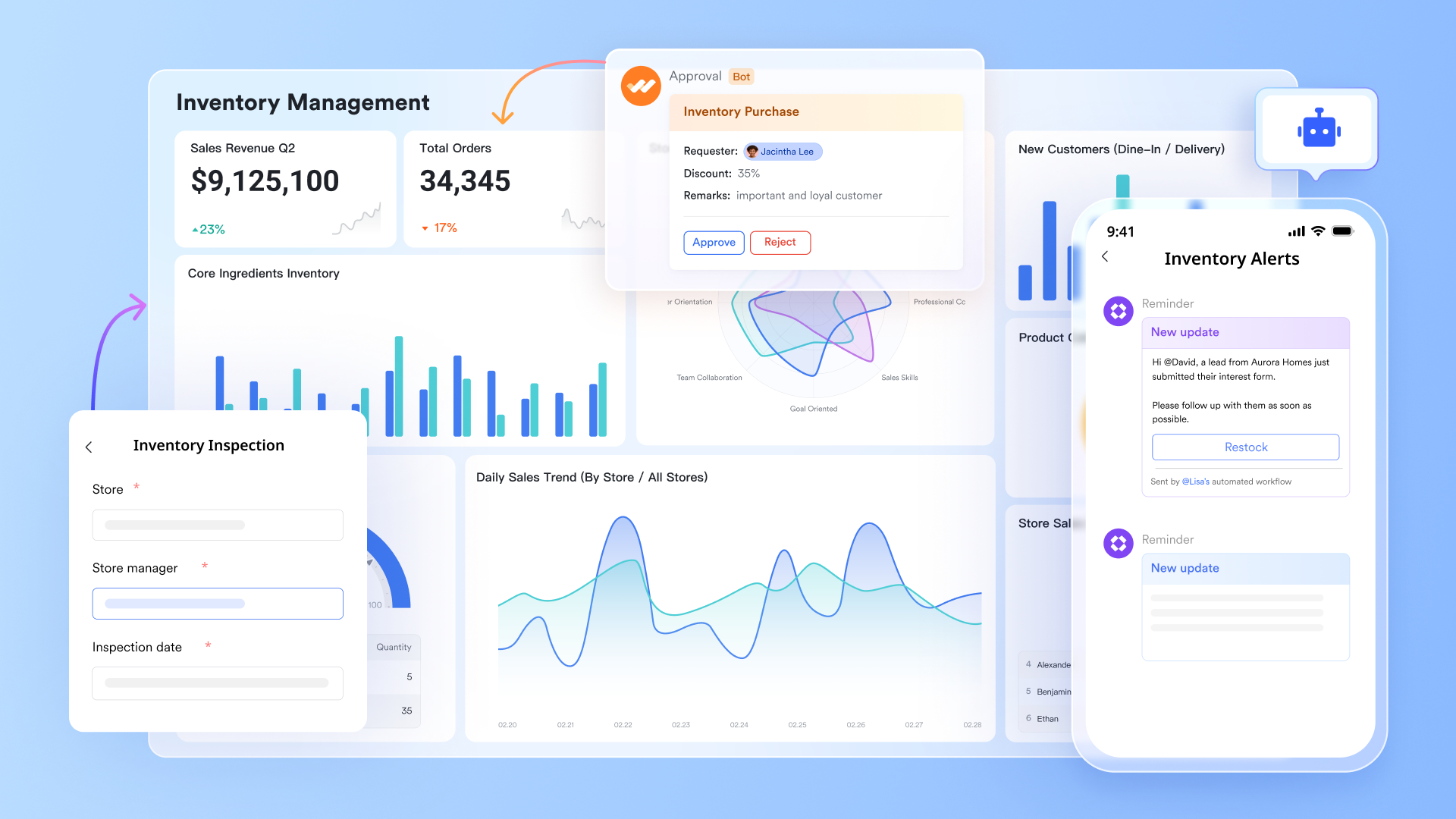
Centralized inventory data and operations with Lark Base
At the core of an effective ERP inventory management system lies a single, reliable source of truth for all data. Lark addresses this crucial need with , a highly flexible database that acts as a centralized information hub for your inventory operations.
Structured data management: With Lark Base, businesses can create custom tables to meticulously track all inventory-related data. This includes stock levels, product details, supplier information, , sales orders, and delivery statuses. This structured approach ensures that every piece of inventory data is organized and easily accessible, forming the backbone of a highly functional inventory ERP system.
Real-time tracking workflows: Lark Base enables of your inventory. Businesses can configure automated workflows to trigger low-stock alerts, manage expiry dates, and track goods movement across different locations. This proactive management helps prevent stockouts and minimizes waste, vital for efficient ERP system for inventory control.
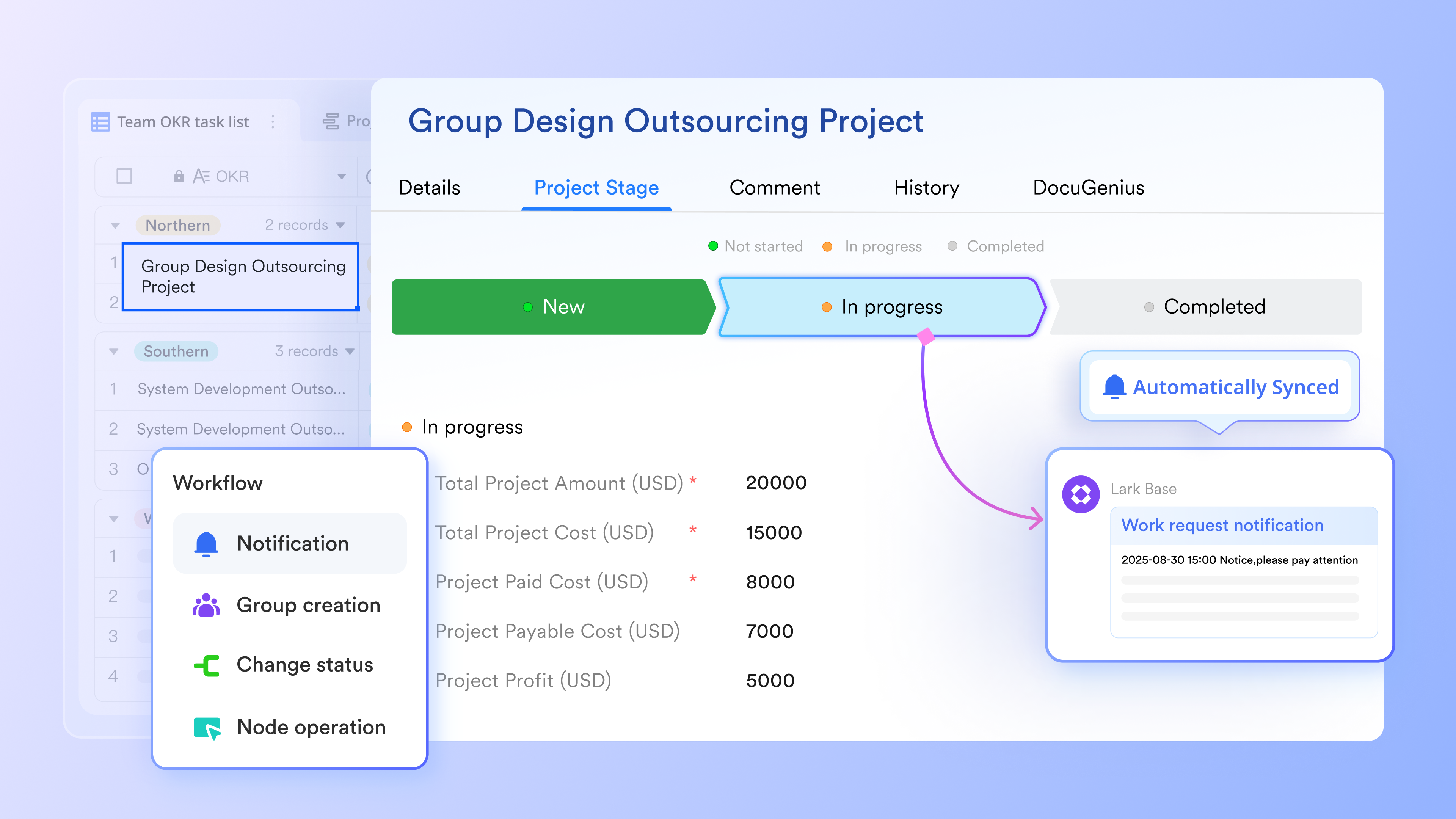
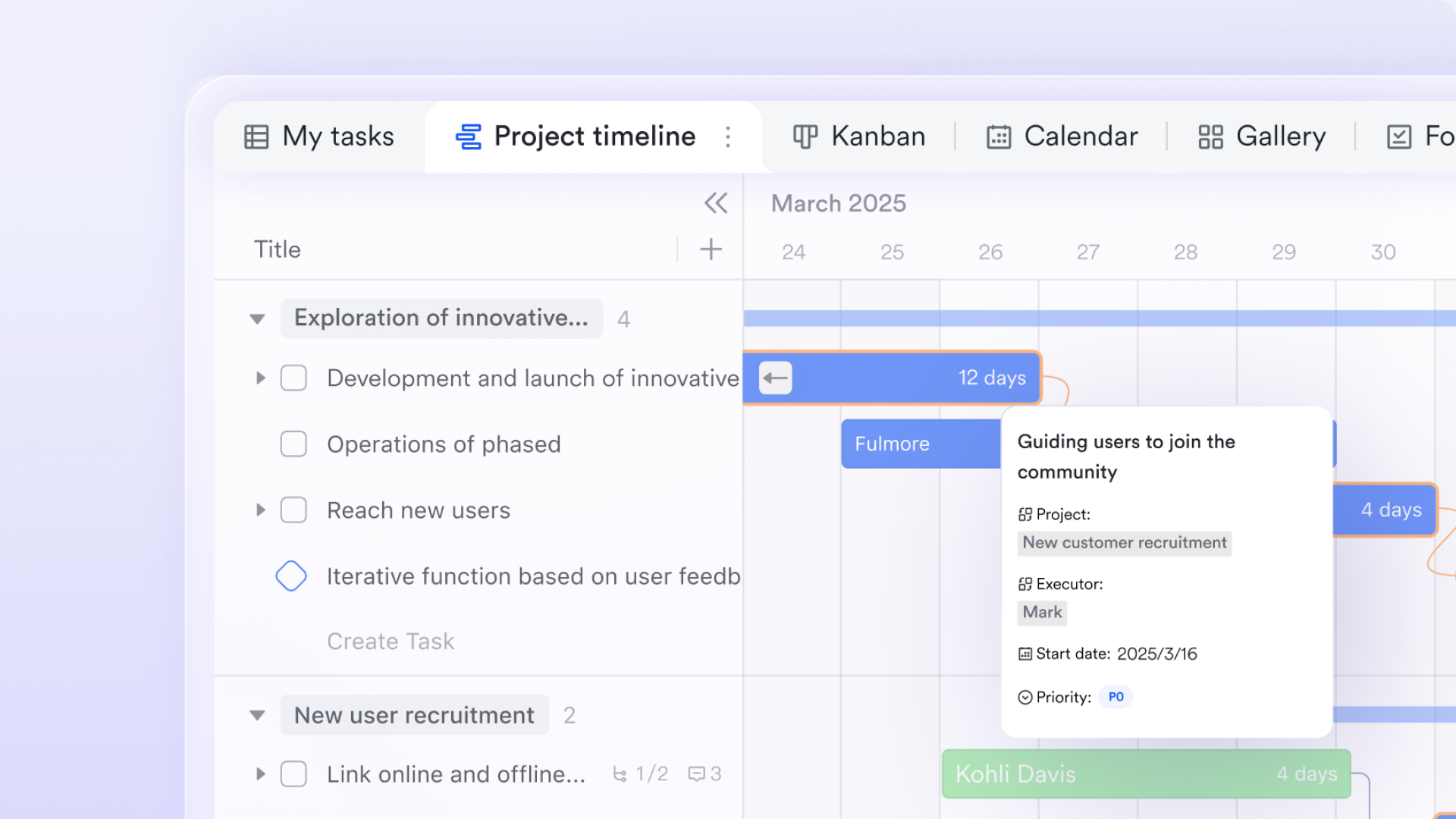
Customizable views and dashboards: Teams can create personalized views within to focus on specific inventory aspects relevant to their roles, such as a "Shipping Queue" for warehouse staff or a "Reorder List" for procurement. Combined with Magic Card dashboards, key inventory metrics and performance indicators are presented at a glance, facilitating quick decision-making.
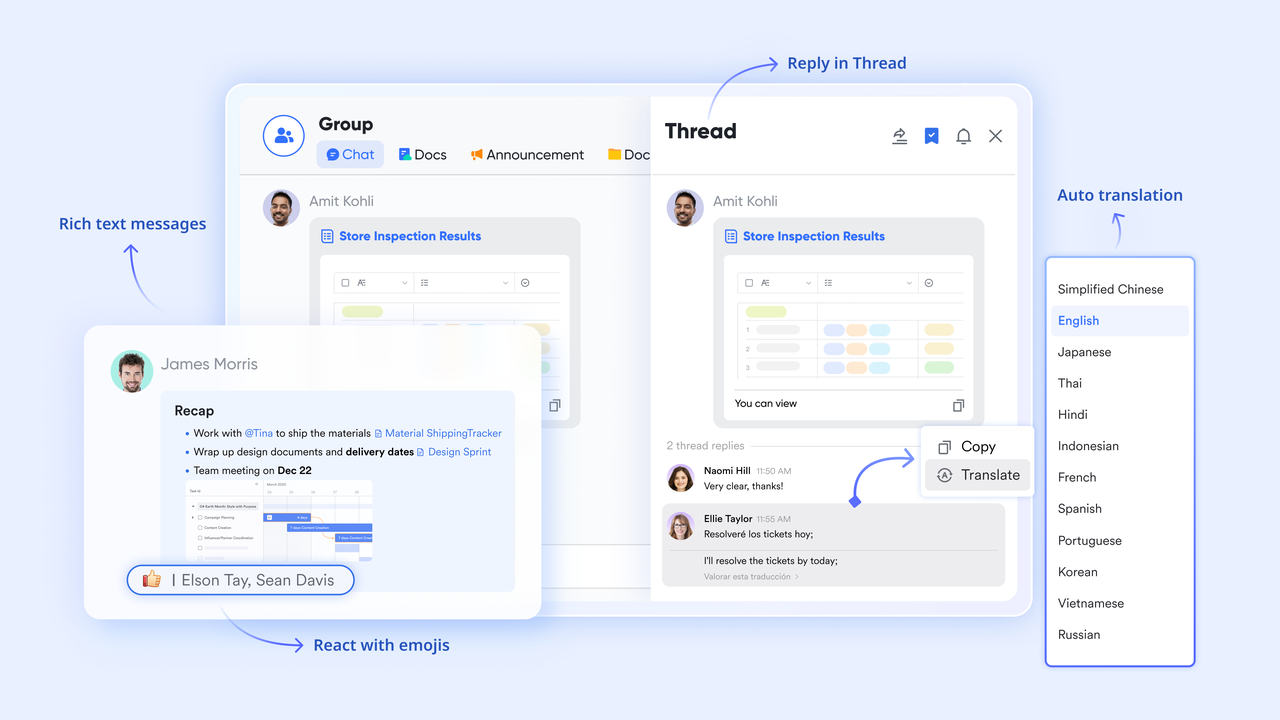
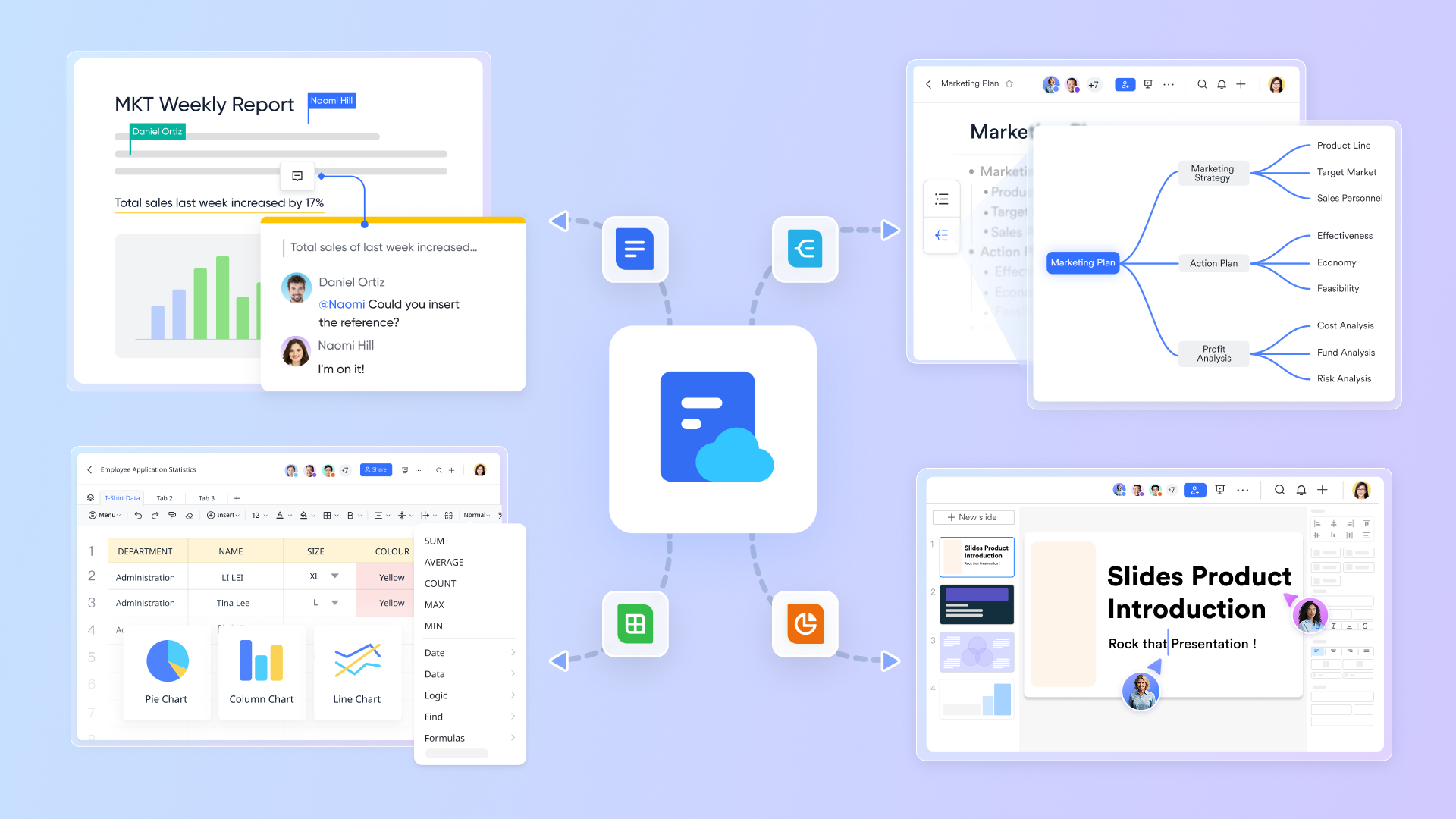
Seamless communication and collaboration with Lark Messenger & Lark Docs
Efficient inventory management demands smooth communication across the entire supply chain, both internally and externally. Lark's integrated communication tools ensure that all stakeholders are connected and informed. Instant team communication (): Lark Messenger provides dedicated groups for immediate discussions related to inventory, such as coordinating deliveries, clarifying product specifications, or resolving discrepancies. Teams can share details, attach files (from Lark Base or Lark Docs), and resolve queries in real-time, ensuring everyone works with the latest information to speed up decision-making and prevent errors in your ERP and inventory management system.
Collaborative documentation (): For detailed inventory policies, standard operating procedures, supplier contracts, or demand forecasts, Lark Docs offers a collaborative workspace. Teams can co-edit documents, leave comments, and ensure all relevant information is stored centrally and accessible to authorized personnel, supporting transparent and auditable inventory practices.
Automated workflows and integrations with Lark AnyCross
To maximize efficiency and eliminate manual effort, Lark provides powerful automation and integration capabilities, making it a truly robust component of your online inventory management system ERP solutions.
Automated tasks and approvals: Beyond simple alerts, Lark can automate complex inventory workflows, such as automatic purchase order generation based on reorder points in Lark Base, or multi-step approval processes for large orders. This reduces manual intervention and speeds up operational cycles within your ERP inventory management system.
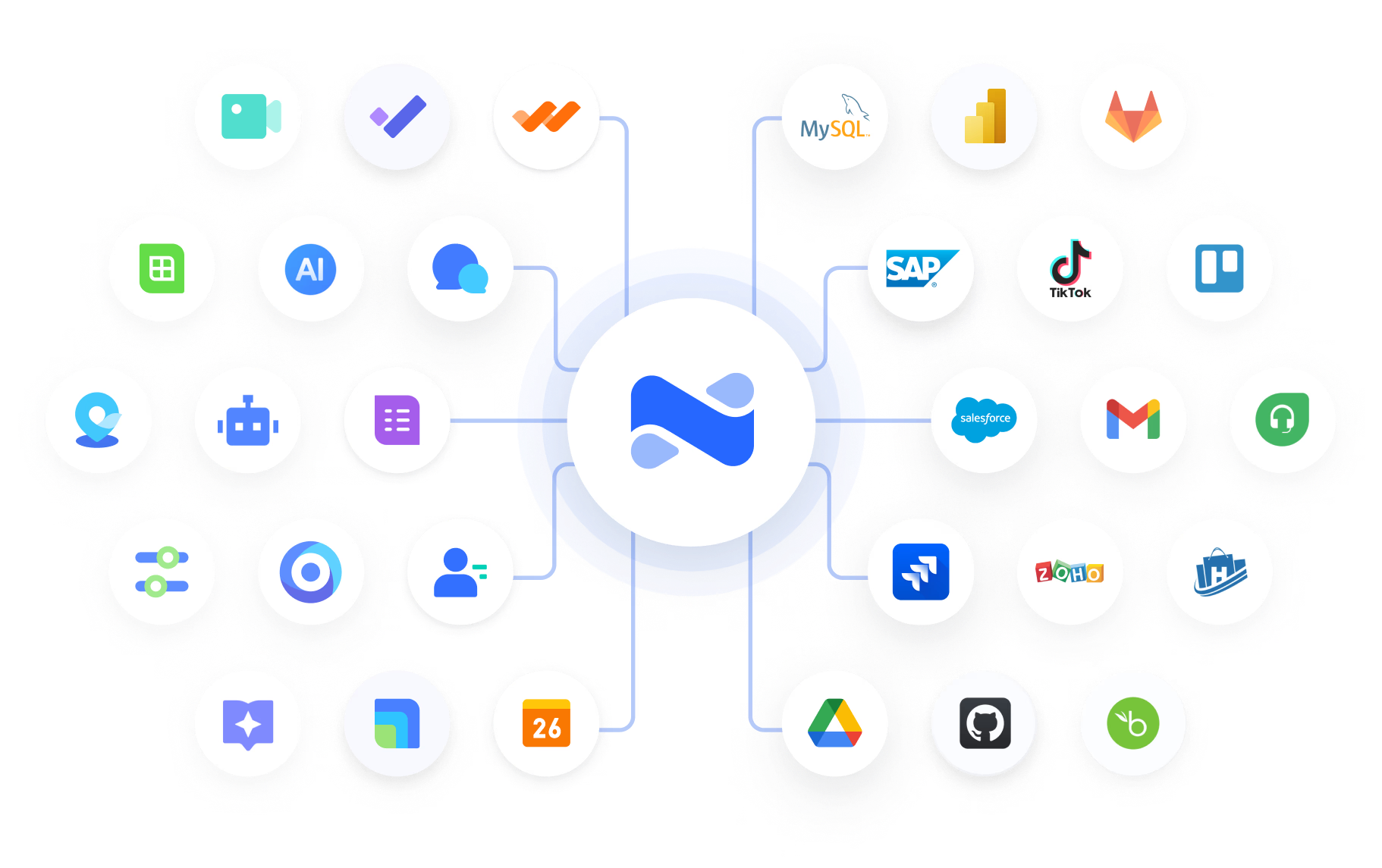
Bridging systems with Lark AnyCross: extends Lark's value by enabling seamless integration with other essential business applications. This allows for the smooth exchange of information between Lark and specialized tools like accounting software, CRM systems, or e-commerce platforms. This crucial capability prevents data silos, streamlines overall operations, and ensures your ERP solution is fully connected, enhancing your entire ERP system for inventory management.
:
- Starter plan: Free forever plan that includes 11 powerful tools for up to 20 users. It also comes with 100GB of storage, 1000 automation runs, AI translations, and more.
- Pro plan: $12/user/month (billed annually) for up to 500 users. It includes everything in Starter plus group calling for up to 500 attendees, 15TB of storage, 50,000 automation runs, and more.
- Enterprise plan: for custom pricing. Supports unlimited users and includes even more automation runs and advanced security, compliance, and management features.
For small teams with simple communication needs

18 months message history
1000 Base automation runs/month
2000 rows per table in Base
Most POPULAR
For companies with comprehensive collaboration and management needs
Unlimited message history
500-participant video meetings
50k Base automation runs/month
20k rows per table in Base
For large companies with advanced security and organizational management needs
Get a personalized demo and pricing
Unlimited message history
500-participant video meetings
15 TB storage + 30 GB storage/user
500k Base automation runs/month
50k Base automation runs/month
Most POPULAR
For companies with comprehensive collaboration and management needs
Unlimited message history
500-participant video meetings
50k Base automation runs/month
20k rows per table in Base
Our commitment to your inventory success
At Lark, the commitment is to helping businesses achieve superior online inventory management system ERP solutions through an intuitive, integrated, and collaborative platform. Our goal is to transform your inventory challenges into opportunities for growth and efficiency.
The future of ERP inventory systems
The landscape of ERP inventory management systems is continuously evolving, driven by technological advancements and changing business needs. Looking ahead, several key trends are shaping the future of how businesses will manage their inventory, promising even greater efficiency and predictive capabilities.
Artificial intelligence (AI) and machine learning (ML)
The growing role of AI and ML is set to revolutionize inventory ERP systems. These technologies will enable even more sophisticated predictive analytics for demand forecasting, moving beyond historical data to anticipate future trends with greater accuracy. They can also facilitate personalized inventory recommendations based on customer behavior and automate complex decision-making processes, leading to more intelligent and proactive inventory management strategies.
Internet of things (IoT) integration
The integration of Internet of Things (IoT) devices holds immense potential for enhancing ERP system for . IoT sensors can provide real-time data on asset location, condition, and usage. Imagine smart shelves that automatically reorder items, or sensors tracking environmental conditions for perishable goods. This level of granular, real-time data further enhances inventory visibility and control, leading to more dynamic and responsive supply chains.
Blockchain for supply chain transparency
Blockchain technology offers a compelling solution for increasing transparency and security across the supply chain, a significant benefit for ERP and inventory management systems. Its decentralized and immutable ledger can create secure and transparent records of inventory movement from origin to destination. This can significantly improve traceability, reduce fraud, and build greater trust among all participants in the supply chain, especially for businesses with complex global networks. Cloud-based ERP solutions
The trend towards cloud-based ERP solutions continues to accelerate. Cloud ERP offers enhanced accessibility, allowing businesses to manage their inventory from anywhere, at any time. It also provides greater scalability, enabling companies to easily adjust their system resources as their needs grow or shrink. Furthermore, typically offer a more cost-effective model, reducing the need for significant upfront hardware investments and shifting to a subscription-based operational expense.
Explore the smart ERP inventory system
Conclusion
An ERP inventory system is vital for modern businesses, streamlining operations, optimizing stock levels, and boosting customer satisfaction. It integrates crucial data, automates tasks, and provides real-time insights, leading to increased efficiency and profitability. Looking ahead, AI, IoT, and blockchain will further enhance these systems.
Ready to revolutionize your inventory management? Discover how Lark's platform, with its robust features for centralized data, seamless collaboration, and for automation, can transform your challenges into growth opportunities. Start for free today and experience the future of ERP inventory solutions!
FAQs
What is an ERP inventory system?
An ERP (Enterprise Resource Planning) inventory system is a software platform designed to centralize and manage all business operations, including inventory, finance, logistics, and production. It provides real-time data to enhance supply chain efficiency and minimize manual errors. This system allows businesses to automate tracking, optimize stock levels, and streamline the ordering process, integrating various departments to ensure a cohesive and efficient operation.
What are examples of ERP systems?
Common examples of ERP systems that offer robust inventory management modules include SAP, Oracle NetSuite, Microsoft Dynamics 365, Fishbowl Inventory, and Odoo. These systems are widely used across various industries to manage and integrate different aspects of business operations, providing comprehensive solutions for inventory control and broader enterprise resource planning.
What are the 4 types of inventory management system?
The provided text categorizes ERP systems by their hosting models, not by types of inventory management systems. The four types of ERP deployment models mentioned are: Cloud-based ERP (hosted on vendor's servers, accessed via internet), On-premises ERP (installed on a company's own servers), Hybrid ERP (a combination of cloud and on-premises), and Two-Tier ERP (using a large corporate ERP for headquarters and a smaller ERP for subsidiaries).
Is Excel an ERP tool?
No, Microsoft Excel is not considered an ERP tool. While it can be used for tracking data, Excel is a manual spreadsheet program and not an integrated system. It lacks the core functionality of an ERP system, which is to provide real-time updates across different business departments, such as automatically connecting sales orders to inventory and finance.
Related reading