














Project Closure: The Comprehensive Guide to Ending Well

Fecilia Clarke
Solutions Marketing Specialist
Sep 18, 2026
Fecilia Clarke
Sep 18, 2026

11 min read


There is a specific feeling that every project manager knows well. It is that moment when the code is finally shipped, the marketing campaign is live, or the physical construction is finished. You breathe a sigh of relief. You might think the hard work is done. However, experienced professionals know that "finishing the work" is not the same thing as "closing the project."
Far too often, a project team sprints across the finish line only to stumble during the cool-down lap. They leave loose ends that come back to haunt them. Contracts remain open, project documents are scattered across local drives, and vital lessons learned are discussed in a hallway and immediately forgotten.
This is where project closure becomes the most critical differentiator between chaotic organizations and mature ones. In this comprehensive guide, we will dismantle the project closure process. We will explore how to document project activities, how to ensure project success, and how modern tools like Lark can transform this often-tedious project phase into a strategic advantage.
What is project closure and why do we confuse it with completion?
To master this phase, we must first agree on what it actually is. In the standard project life cycle—often aligned with the Project Management Institute (PMI) standards—project closure is the fifth and final phase. It is the formal process of finalizing all activities across all project management process groups to officially dissolve the project structure.
Many organizations confuse project completion with project closure, but the distinction is vital. Project completion is operational. It means the bridge is built, or the software development project has deployed code. Project closure is administrative and legal. It means the client has accepted the bridge, the software warranty has started, and the project sponsor has signed off on the result.
Without the project closure phase, a project is simply a set of final deliverables that have been handed over, but the entire project remains an open loop. This open loop creates liability. Until administrative closure occurs, the project manager is technically still responsible for the outcome, the project finances are still active, and the project scope is still susceptible to change.
It is also important to recognize that not all projects end the same way. While we aim for a "Normal Closure" where project objectives are met, you may also encounter scenarios where you must close a cancelled project. In these cases, the closure process is even more important, as you must document exactly why it ended to assist with future initiatives.

Why the project closure phase is the most critical step
If the project deliverables are done, why spend time on bureaucracy? This is a common question from project stakeholders who are eager to move project resources to the next revenue-generating activity. However, neglecting the project closure stage can have long-term detrimental effects on an organization’s efficiency.
Avoiding future requests for changes
The first major benefit is the prevention of "scope creep from the grave." We have all experienced a client reaching out months after a launch, asking for "just one small tweak." Without a formal sign-off document that marks the specific end date of the project work, you have no leverage. Project closure ensures you can draw a hard line in the sand: anything requested after this date is a new request, not a continuation.
Protecting your budget from unplanned expenses
Effective project closing is essential for financial hygiene. Projects often involve a complex web of purchase orders and contractor agreements. If these are not formally closed out, auto-renewals can drain budgets silently. We have seen companies paying for licenses for projects successfully completed years ago, simply because no one went through a project closure checklist to shut them off.
Ensuring team wellbeing and motivation
Finally, and perhaps most importantly, is the human element. Team members need a clean break. If a project simply "fizzles out," teams are denied the psychological satisfaction of successful project delivery. A formal last phase, complete with recognition, allows the brain to reset. This ensures that when they start new projects, they are refreshed rather than burned out.
The 7 key steps to effective project closure
While every industry has its nuances, a robust project closure workflow generally follows a seven-step framework. Skipping any of these steps leaves your organization vulnerable to risks and lost knowledge, affecting overall project success.
1. Verify deliverables against the scope
Before you approach a client for a signature, you must be certain that the project tasks are actually done. This involves going back to your initial project plans. You need to verify that every requirement listed has been met and that the acceptance criteria have been satisfied.
In this stage, you will almost certainly encounter a "punch list" of minor items. These are small loose ends that don't prevent the product from working but must be fixed. The danger here is allowing these small items to delay the project closeout.
A strong project manager knows how to negotiate here. If the items are minor, you might agree to move them to a maintenance agreement so that the main project closure can proceed. The goal is to verify that the substantive value has been delivered so the administrative clock can stop.
2. Obtain formal stakeholder sign-off
This is the step that many dread, but it is the single most important action for project success. You must obtain formal acceptance from the project sponsor or client. Verbal agreements are not sufficient.
You need a document (often called a project acceptance form) that states clearly: "The project deliverables are accepted." This document transfers ownership. Once signed, the product no longer belongs to the project team; it belongs to operations.
If the product breaks the day after the sign-off, it is an operational issue, not a project failure. This distinction is crucial for protecting your team’s time and allowing them to focus on upcoming projects.
3. Financial reconciliation and contract closure
Once the sign-off is secured, you must turn your attention to project finances. Leaving financial records open is a recipe for disaster. You need to ensure that all invoices from vendors have been received and approved.
You must also check for any open Purchase Orders. If you committed funds that were not spent, you need to formally close the PO to release those funds back to the company. This is also the time to analyze project performance against the budget baseline.
If you were over or under budget, you must document why. Was it a change in project scope? Was it poor estimation? This financial data is the fuel for better estimation in other projects.
4. Conduct the project post-mortem
The project closeout meeting, often called a retrospective, is where an organization learns. Unfortunately, in many companies, this meeting is skipped. To conduct a successful review, you must create a safe space for team members.
The objective is not to find out who failed, but what process failed. This is essential for continuous improvement. You should categorize feedback into: Start, Stop, and Continue. What should we start doing in the next project? What should we stop doing?
It is critical to document lessons learned. A conversation is fleeting, but a project closure report containing these insights is an asset. This collective memory is what separates mature project management practices from chaotic ones.
5. Archive documentation and data
There is a difference between hoarding files and true knowledge transfer. Simply dragging every email into a folder is not archiving. Effective archiving means organizing project related documents so they are retrievable for future reference.
You should index your files. Separate the final deliverables from the drafts. Ensure that legal contracts are stored securely. When you treat project files as a library, you increase the velocity of future endeavors.
By archiving project documentation correctly, you prevent "brain drain." If a key engineer leaves, their knowledge remains with the company, accessible for multiple projects down the road.
6. Release project resources
Projects are temporary, which means the project team is a temporary organization. Part of project closure is the formal disbanding of this structure. You need to release resources—both human and technical.
This involves notifying functional managers that your staff are available for new projects. It also involves the logistical side of offboarding. You need to revoke access rights to project management tools or servers.
If you hire freelancers, their access should be terminated immediately upon contract completion. Failing to release resources and access rights properly is a major cybersecurity risk.
7. Celebrate and recognize the team
The final step is often the first to be cut, but it is vital. You must celebrate completed successfully the projects. The team has worked hard. If they finish project activities and are immediately tossed into the next one, resentment builds.
Celebration provides closure to the human beings doing the work. By publicly recognizing their contribution to overall project success, you reinforce a culture of excellence. This ensures they approach team's projects in the future with energy.
Modernizing the process: How all-in-one solutions enhance project closure
The challenges we've discussed—chasing signatures, losing knowledge, and disconnected teams—are often symptoms of using outdated tools. When your project management processes occur in silos, friction is inevitable. An all-in-one collaboration solution like Lark can fundamentally transform how you handle project closure.
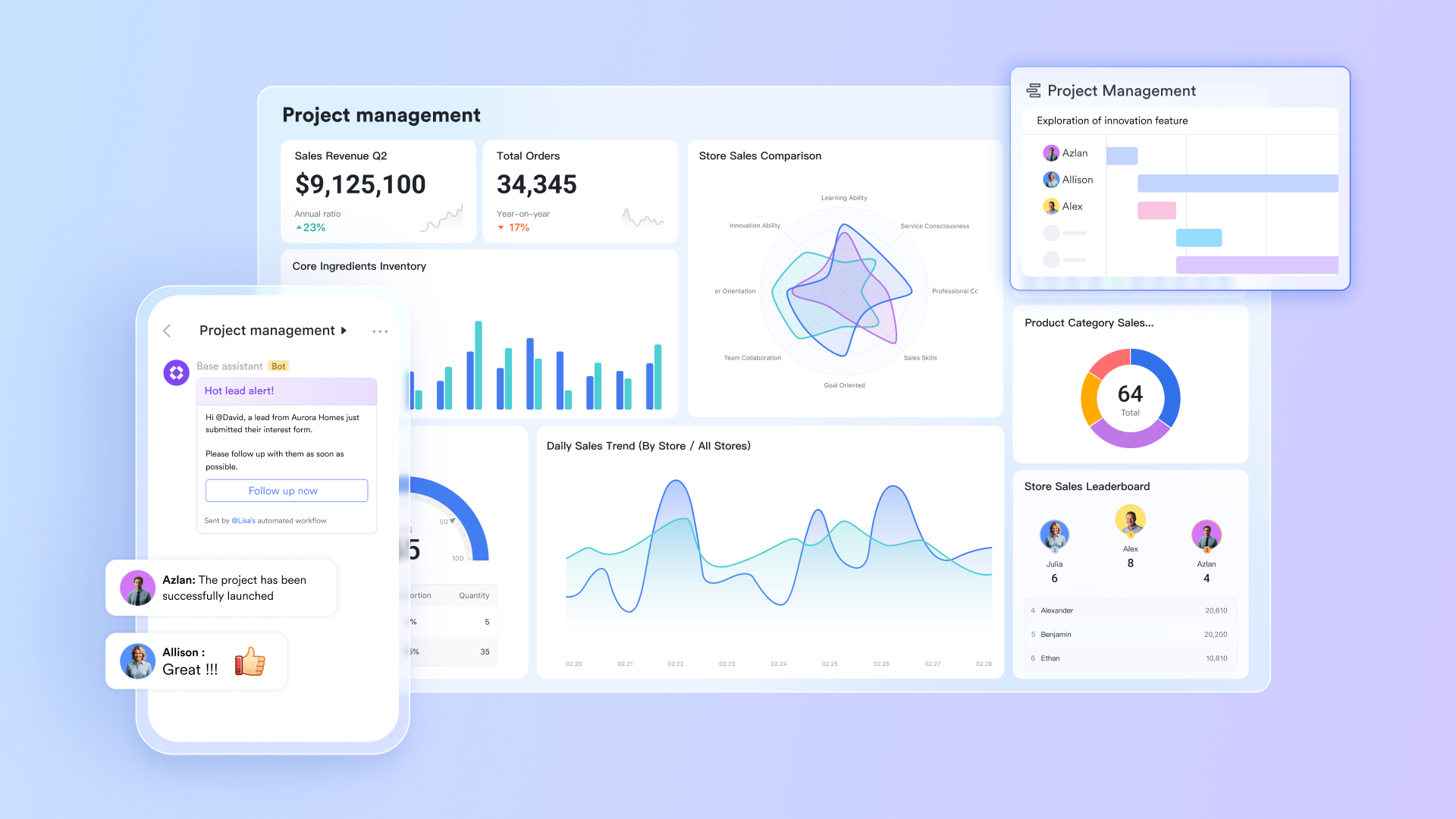
Organizing project data with powerful database
Lark Base simplifies project data organization by allowing users to create custom dashboards that consolidate critical project information in one place. You can easily track key metrics and progress through visual representations, making it easier to report outcomes at the end of each project. Additionally, Lark’s automation capabilities enable you to set workflows that guide users through closure processes, ensuring that no steps are overlooked.
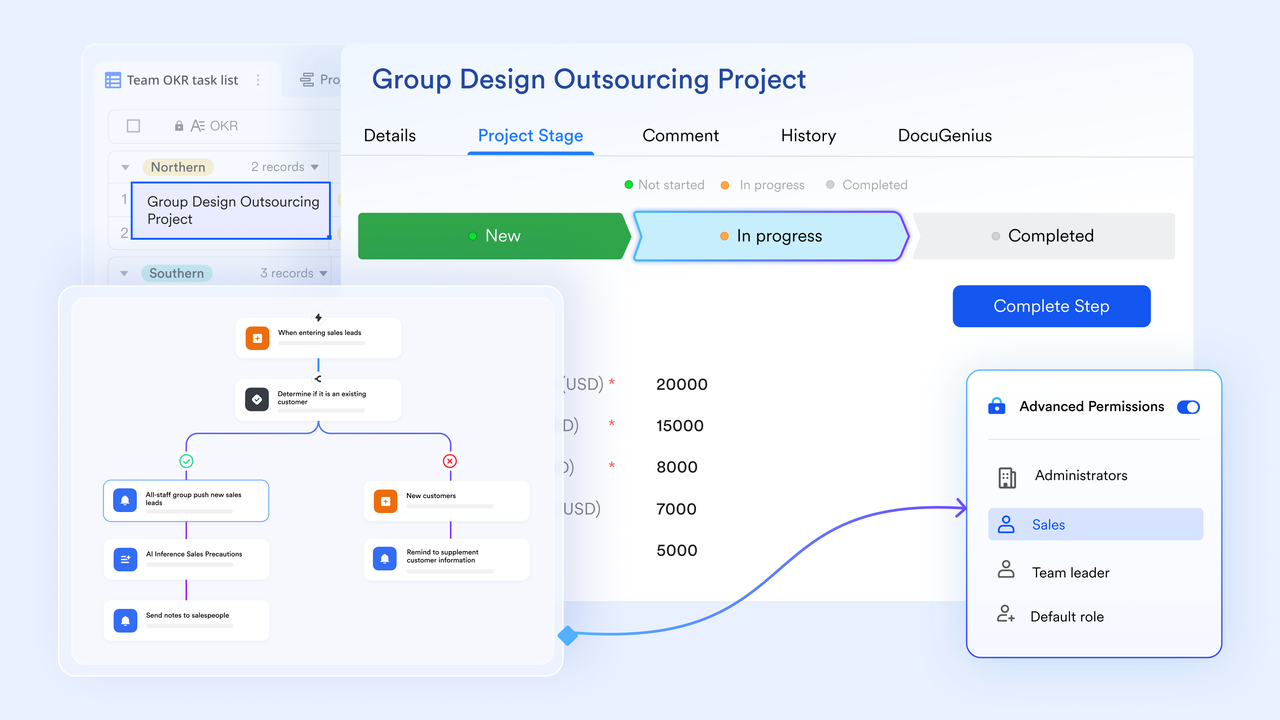
Streamlining team communication
Effective closure relies heavily on clear communication. Lark facilitates seamless team interaction through Lark Messenger, where project teams can engage in real-time discussions about project outcomes. You can create dedicated channels for project wrap-ups, ensuring that everyone stays informed and engaged. This fosters a sense of unity and transparency, even when teams are remote or distributed.
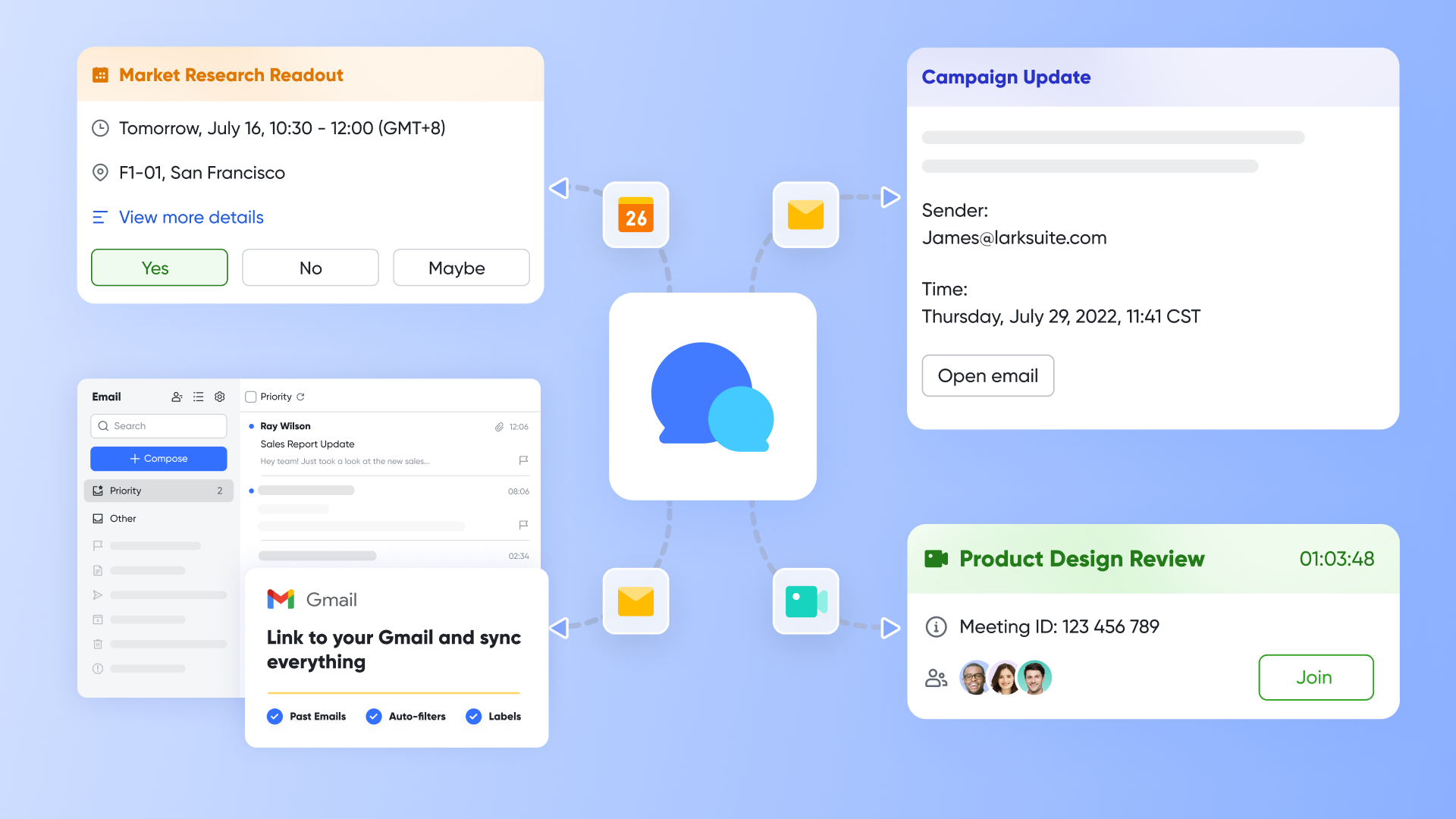
Collaborative document management
Lark also enhances document collaboration, allowing team members to co-edit project documents in real-time. During the closure phase, you can gather input from various stakeholders to finalize closure reports and lessons learned. This collaborative approach minimizes the risk of miscommunication and ensures that all insights are accurately captured and documented.
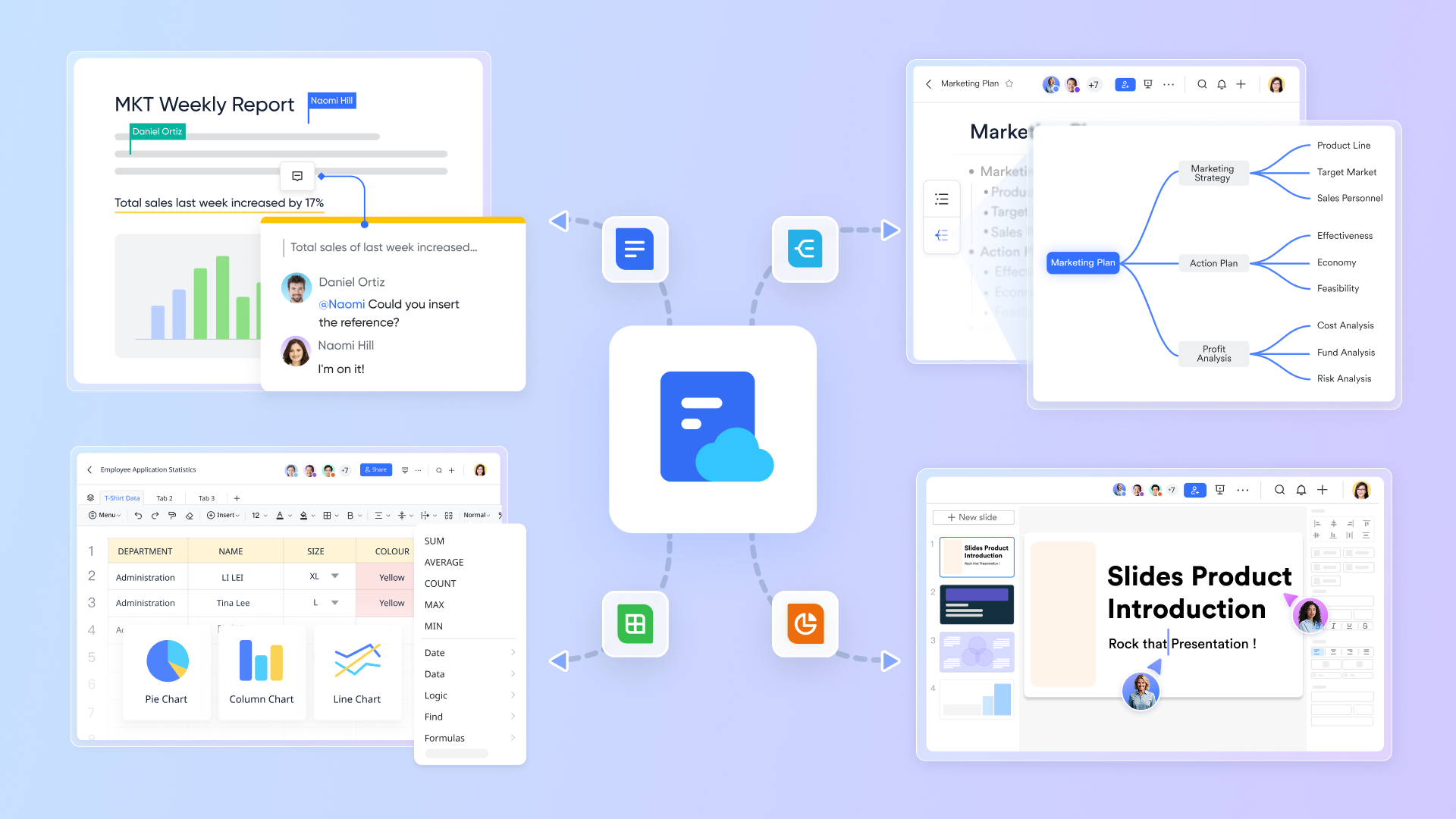
AI-powered insights and retrospectives
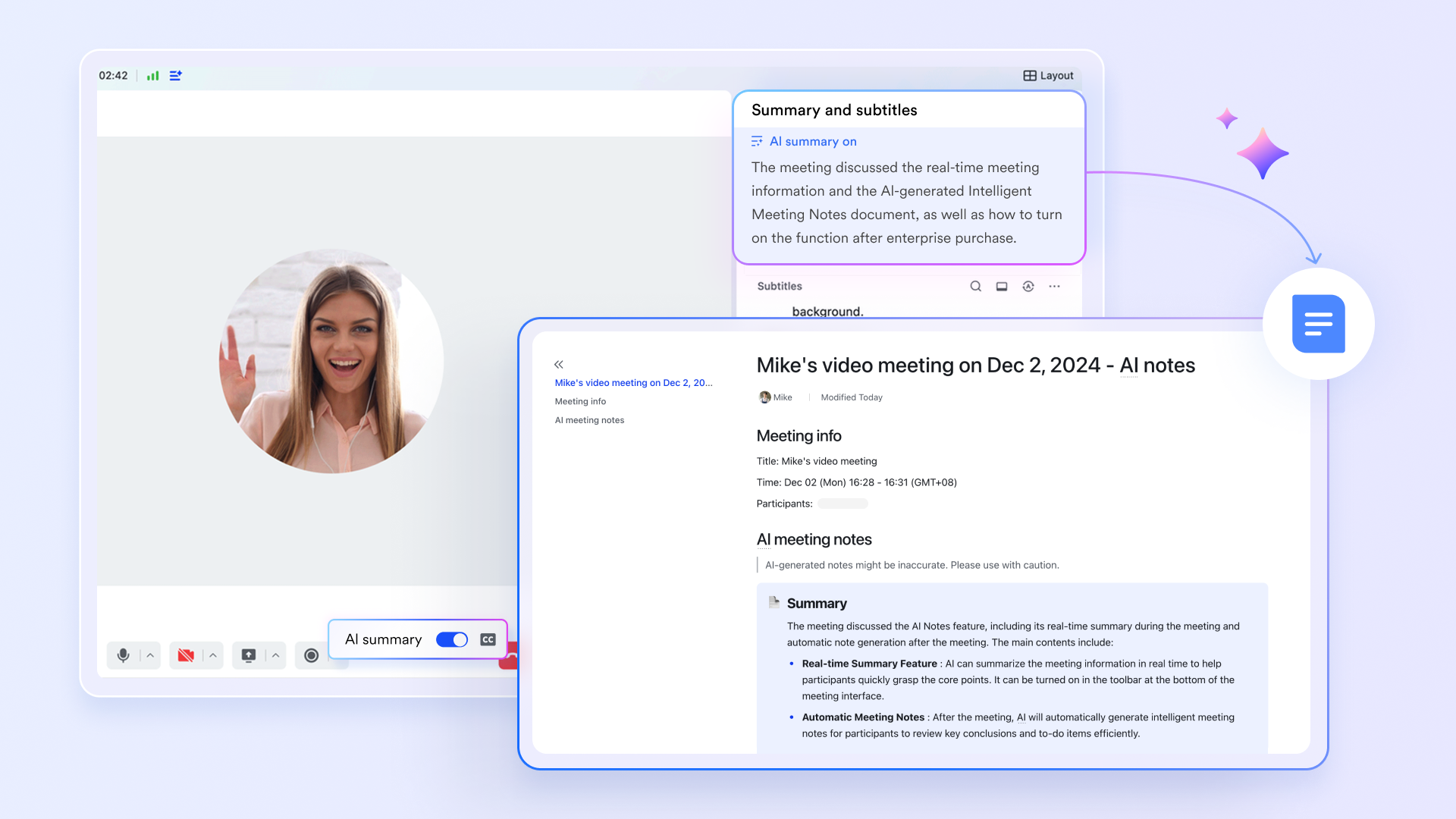
The project closeout meeting is where valuable insights are often found, but facilitating discussions and taking notes simultaneously can be challenging. Lark AI Meeting Notes addresses this issue by automatically recording meetings and generating transcripts. With AI capabilities, it can summarize discussions and highlight key action items, ensuring that lessons learned are documented accurately and objectively. This valuable resource can be referenced by future teams, continuously improving project practices.
Developing your project closure checklist
To ensure consistency, every project manager should operate from a standardized project closure checklist. While every project life cycle is unique, the core elements remain constant.
Deliverables and scope:
- Final deliverables verified against the plan.
- Project objectives met and confirmed.
- Project review completed with the client.
- Formal acceptance signed.
Financial and legal:
- All vendor contracts finalized.
- Financial records reconciled.
- Project finances frozen.
- Final invoices paid.
Administrative:
- Archive documentation in the central repository.
- Capture lessons learned in the registry.
- Project closure report finalized.
- Project related documents indexed.
People:
- Project stakeholders notified of closure.
- Team members released and reallocated.
- Success celebration held.
- Smooth transition to operations confirmed.
How to write a project closure report
The project closure report is the final artifact you will produce. It serves as the official history of the project performance. A well-written report should be concise.
Start with an executive summary. State clearly if the project success criteria were met. Executives should be able to read this section and know the outcome immediately.
Next, include a section on project performance. Use data. Show the baseline schedule versus the actual schedule. If there were deviations, explain them. This is not about making excuses, but about providing context for future projects.
Finally, highlight the lessons learned. Which risks materialized? How did you handle them? By sharing this, you help other project managers avoid the same mistakes. Utilizing a consistent project closure report template ensures that this data is comparable across the organization.
Overcoming common challenges in the closing phase
Even with a checklist, the project closure process is rarely smooth. One common challenge is the "ghosting" stakeholder. You send the formal sign off document, and the client goes silent.
To combat this, set expectations early. List sign-off as a specific milestone in your project plans. If they delay, remind them that without sign-off, the warranty period cannot start.
Another challenge is the "knowledge silo." This happens when document lessons learned processes are followed, but the PDF is stored where no one can find it. Knowledge is lost. This is where the choice of tools becomes critical. Project documentation must be stored in a centralized, searchable place.
We also face the challenge of emotional attachment. In long-running project management initiatives, teams can become possessive. They may resist the smooth transition to operations. You must manage this change carefully, ensuring knowledge transfer happens over time, not all at once.
Useful project closure templates
Effective project closure can significantly enhance your team's efficiency and accountability, and utilizing the right templates can simplify this process.
Multi-project tracker template
One valuable resource is the multi-project tracker template, which provides a structured way to oversee multiple projects, featuring a gantt chart for visualizing progress and customizable fields for unique requirements.
Project roadmap gantt chart template
Another essential tool is the project roadmap gantt chart template. It helps you visualize the project timeline, assigning responsibilities while tracking task completion.
Project problem checklist template
Lastly, the project problem checklist template is crucial for managing issues that arise during projects. It offers a systematic approach to documenting problems, ensuring timely resolution and smoother project execution. Together, these templates contribute to a more organized and efficient project closure process.
Conclusion
It is often said that how you end is just as important as how you begin. A chaotic ending can taint the reputation of an otherwise successful initiative. It can leave your team burned out, your project sponsor confused, and your organization liable for loose ends.
Conversely, a strong, disciplined project closure elevates your status as a professional. Project closure helps you protect the company’s bottom line, build a reusable library of wisdom, and protect your team’s well-being.
Do not let your projects fade away. Take control of the closing phase. Build your checklist, insist on formal sign off, and use modern tools like Lark to automate the drudgery. Your future self, and your future projects, will thank you for the discipline you apply today. Start your project properly, but more importantly, end it well.
FAQs
What do you mean by project closure?
Project closure refers to the final phase in the project management lifecycle where all activities are completed and formally concluded. It ensures that all deliverables are accepted, financials are reconciled, and lessons learned are documented. This phase is essential for recognizing team efforts, transferring ownership, and freeing up resources for future projects.
What are the 7 steps to closing a project?
The seven steps to closing a project include: 1) verifying deliverables against scope, 2) obtaining formal stakeholder sign-off, 3) reconciling project finances and closing contracts, 4) conducting a post-mortem review, 5) archiving documentation, 6) releasing project resources, and 7) celebrating team successes to recognize their contributions.
Is a project closing or closure?
The correct term is "project closure." It refers to the formal process of completing all project activities and dissolving the project structure. "Project closing" is a less commonly used term but may refer to the actions taken during the closure phase. Therefore, project closure better captures the entire process of finalizing the project.
What are the reasons for project closure?
Project closure occurs for various reasons, including the successful completion of project objectives, changes in business priorities, budget constraints, or unforeseen challenges leading to project cancellation. Proper closure is essential to formally acknowledge the completion, assess performance, document lessons learned, and transition resources effectively for future initiatives.
Related reading
Table of contents
Start using Lark today

Manage all your work in one place
Boost team efficiency by 10x
Save up to 70% on software costs
Table of contents
Start using Lark today
Manage all your work in one place
Boost team efficiency by 10x
Save up to 70% on software costs
Keep reading








2026 Lark Technologies Pte. Ltd.
Headquartered in Singapore with offices worldwide.






Explore: