Projects fail far more often because of unclear beginnings than poor execution. Teams jump into tasks, timelines, and tools without aligning with what the project actually is, what it is meant to achieve, and where its boundaries lie. This is where a strong project definition becomes critical.
A well-defined project sets expectations, aligns stakeholders, and creates a shared understanding of success before work begins. In this guide, we'll break down the project definition in practical terms, explain how it differs from broader project management concepts, explore real examples, and show how modern teams keep project definitions clear, current, and actionable throughout execution.
Basic notion: Project definition
At its simplest, a project is a formal document or clear statement that outlines the goals, objectives, and constraints of a specific initiative. It answers the fundamental questions: What are we doing? Why are we doing it? And how will we know when we are done?
A project is defined by being temporary (it has a beginning and an end) and unique (it is not a routine operation). For example, a historical Manhattan Project definition describes a massive, time-bound scientific effort with a specific, singular goal. While most aren't as large in scale, they follow the same principle: a focused effort to create a unique product, service, or result.
Differences between: Project management definition vs project definition
The project management definition refers to the discipline of planning, executing, monitoring, and closing projects using structured methods and tools. Project management focuses on , resources, budgets, risks, and delivery processes.
A project definition, on the other hand, comes earlier. It provides the foundation on which project management operates.
Think of it this way:
- Project definition establishes intent and boundaries
- Project management governs execution and control
When teams confuse the two, they often over-optimize planning tools while under-investing in clarity. No , agile, waterfall, or hybrid, can compensate for a poorly defined project.
Be ready to transform your project management
Key elements that make up a complete project definition
A strong project definition is concise but comprehensive. It doesn't try to document everything; it clarifies what matters most.
- Objective and purpose: Every project must have a clearly stated objective. This goes beyond vague goals like "improve efficiency" and instead defines a measurable outcome, such as reducing onboarding time by 20% or launching a feature by a specific date.
- Deliverables and outcomes: Deliverables describe what the project will produce. These could be tangible outputs like software features, reports, or infrastructure, or intangible outcomes like process changes or capability improvements.
- Project scope definition: The outlines what work is included and, just as importantly, what is excluded. A clear scope prevents misunderstandings and protects teams from uncontrolled expansion later.
- Constraints and assumptions: Time, budget, regulatory requirements, and resource limits shape what is possible. Stating assumptions early, such as dependency on or data availability, reduces surprises during execution.
- Ownership and accountability: A project definition should identify the project manager clearly: who is responsible for delivery, decisions, and escalation. Ambiguous ownership is one of the most common causes of stalled projects.
Different types of projects
Projects come in many shapes and sizes, and the way you define them will change based on their nature:
- : These follow a strict, linear path where each phase must be completed before the next one begins. Because the goals are set in stone at the start, they are ideal for projects with fixed requirements and predictable outcomes.
- : This approach prioritizes flexibility by breaking the work into small, iterative cycles that allow for frequent adjustments. It is the preferred method for software development and creative work where the final product evolves based on continuous feedback.
- Research projects: Unlike standard commercial ventures, these are centered on discovery and testing a hypothesis rather than delivering a predefined product. They require a broad project definition that allows scientists or analysts to pivot as they uncover new data or theoretical breakthroughs.
- Capital projects: These involve massive physical investments in infrastructure, such as building a new factory or developing a city's transportation network. They demand a high level of upfront planning and strict adherence to a project scope definition due to the high costs and safety regulations involved.
Project examples from real scenarios
Example 1: Product feature launch
- Objective: Launch a new reporting dashboard for enterprise users that improves visibility into key metrics.
- Scope: User research validation, UI and UX design, backend and frontend development, QA testing, documentation, and staged release.
- Out of scope: Advanced predictive analytics, custom reports, and third-party data integrations.
- Success criteria: Adoption by at least 30 percent of the target enterprise user base within three months of launch, along with stable performance metrics.
A clearly written project definition keeps feature requests from expanding mid-cycle. Engineering teams focus on delivery quality, design teams align on usability goals, and marketing teams prepare messaging around a fixed feature set rather than shifting expectations.
Example 2: Internal system migration
- Objective: Migrate all existing CRM data from the legacy system to a new platform without data loss.
- Scope: Data mapping, secure data transfer, validation checks, user acceptance testing, and basic user training sessions.
- Constraints: Fixed deadline driven by the expiration of the current CRM contract, limited migration window, and minimal downtime for sales teams.
- Owner: IT project manager responsible for coordination,, and final sign-off.
The project scope definition protects the team from being pulled into unrelated system enhancements during migration. It ensures focus stays on data accuracy, continuity, and user readiness rather than broader platform optimization.
Example 3: Client delivery project
- Objective: Deliver a customized onboarding process tailored to a key client's workflows and requirements.
- Deliverables: , live and recorded training sessions, configured system environments, and initial support coverage.
- Success metric: Formal client signs off and confirmation of go-live readiness within the agreed timeline.
Client projects rely heavily on explicit definitions to manage expectations. Clear objectives and deliverables reduce approval delays, prevent scope disputes, and create a shared understanding of what completion looks like for both the delivery team and the client.
Common mistakes teams make when defining projects
Even experienced teams stumble during the definition phase. Here are the most common pitfalls:
- Starting execution before agreement: Teams are often so eager to "do the work" that they skip defining a . Without a signed charter, the project manager has no formal authority, and the team may find their resources pulled away for other tasks.
- Over-documenting instead of clarifying: A 50-page project definition is useless if no one reads it. The goal is clarity, not volume. Use visual and bullet points to make the definition accessible.
- Ignoring dependencies and constraints: If your project depends on another team's output, that must be in the definition. Ignoring these "roadblocks" early on leads to inevitable delays.
- Treating definition as a one-time step: A project definition should be a "living" document. While the core mission shouldn't change, the scope might need to be adjusted as new data comes in.
While knowing the theory behind these pitfalls is helpful, the most successful teams use a platform that prevents these errors from occurring in the first place. By moving your project definition out of isolated documents and into a , you ensure that every stakeholder stays aligned from day one.
Experience clear project execution today
From definition to action: Streamline your projects with precision in Lark
To move a project definition from a stagnant document into a high-velocity operation, teams need more than just digital paper; they need an all-in-one platform driven by robust engines. replaces the fragmented "app-switching" experience with a unified environment. In its ecosystem, strategy and execution go hand in hand, ensuring the remains healthy and transparent.
Centralize the vision with Lark Docs
Rather than a static PDF that becomes obsolete the moment it's saved, acts as a living document collaboration platform for your project charter. By supporting multiple content insertions, Lark Docs lets you embed project tracker tables, , interactive polls, and project data sheets directly in the document. This ensures that when a project record updates, the change is reflected instantly across the entire documentation. It eliminates "version hell," providing every stakeholder with a single, unshakeable source of truth. 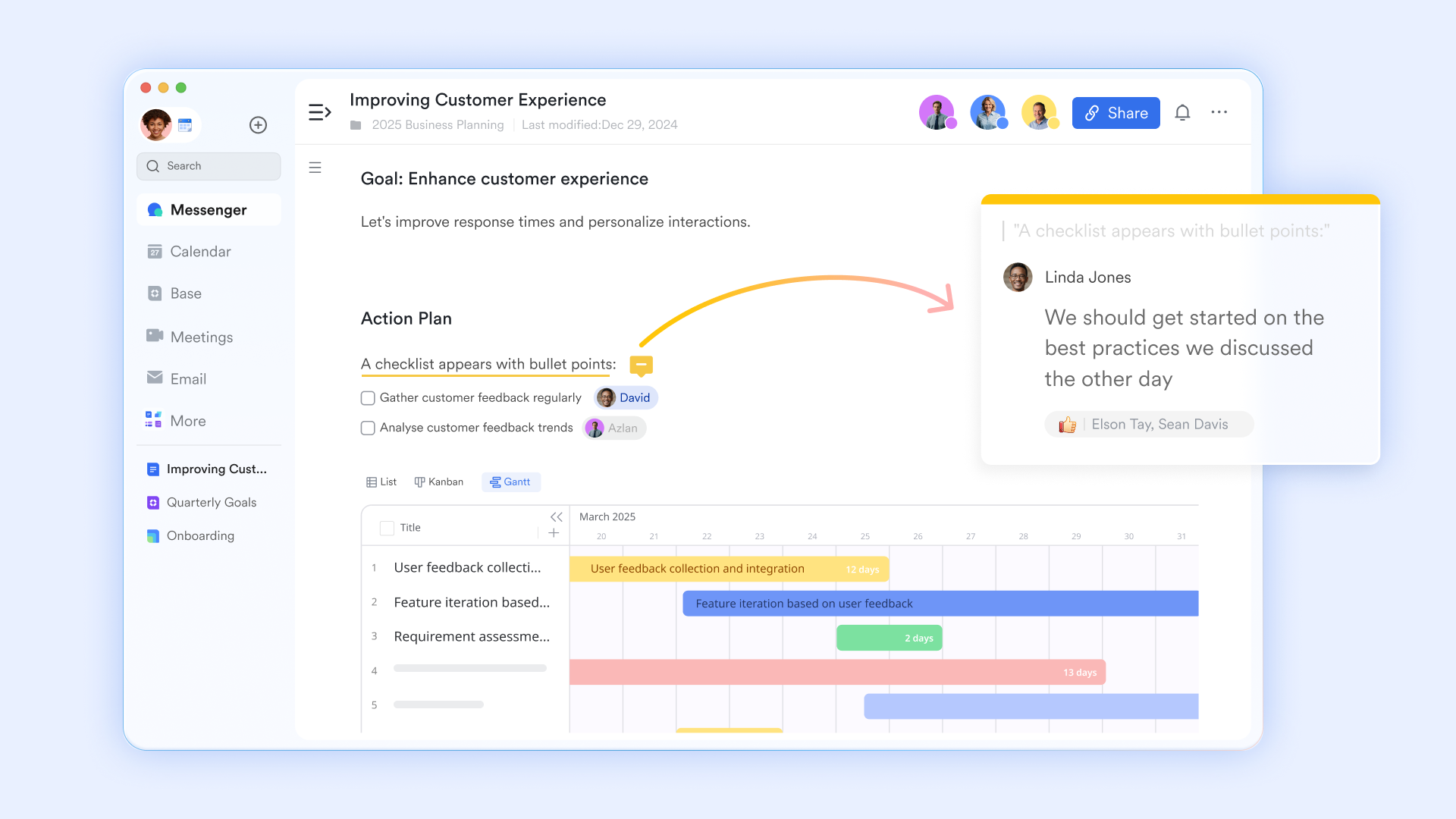
Map complex logic with relational Lark Base
functions as a relational database that understands the connections between your data points. It turns static entries into actionable data: Person fields to assign instant accountability and Status fields to trigger automated workflows. By utilizing Formula and Date fields. With two-way link fields, you can link a "Budget Item" to a "Risk Factor" or a "Deliverable," ensuring that an update in one area automatically propagates throughout the system. With multiple views, you can toggle between for timelines and Kanban boards for task flow. The team can visualize the project scope from multiple perspectives without duplicating a single row of data. 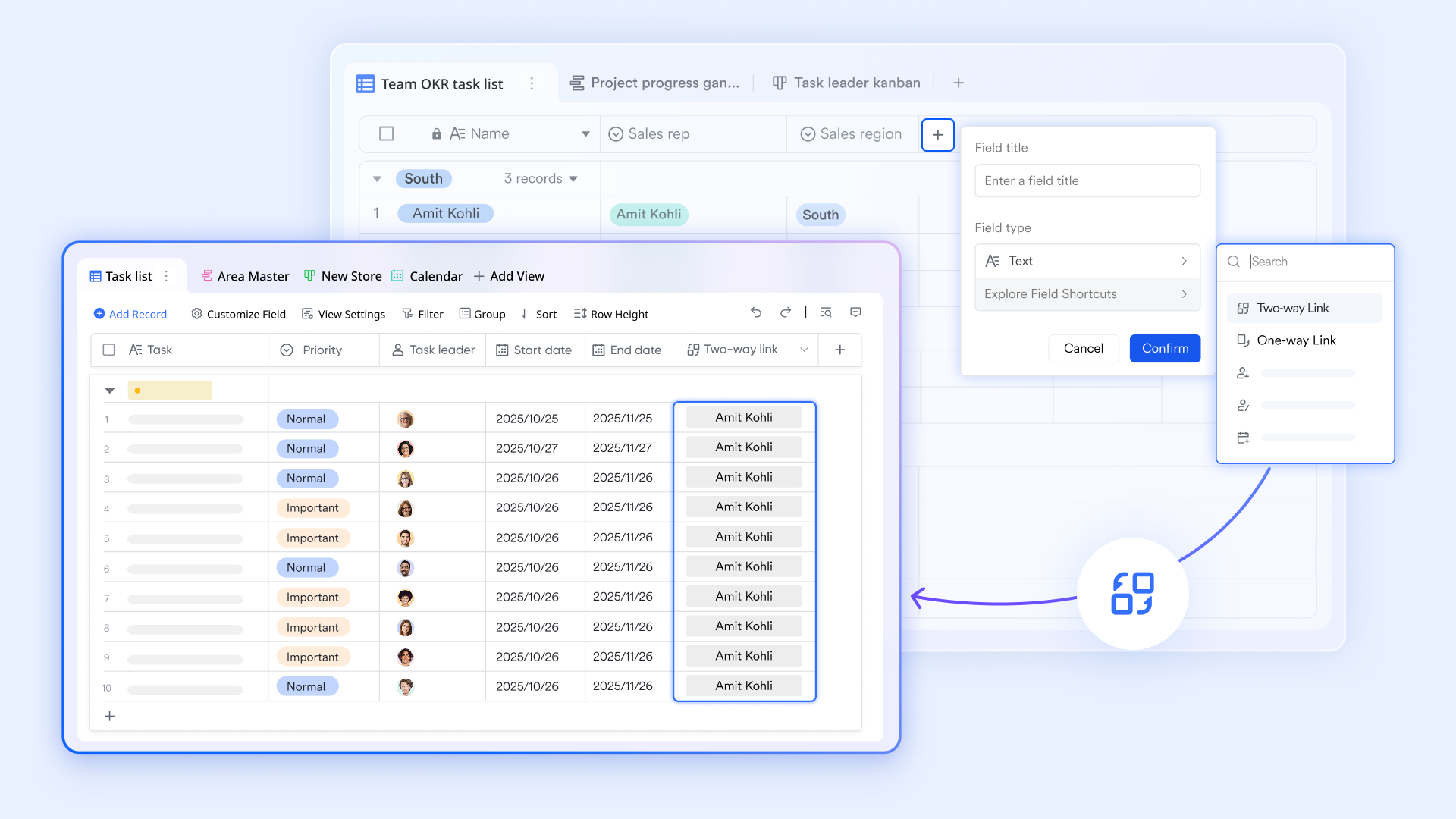
Automate the hand-off with Lark Base workflows
The Lark Base workflow engine turns the "Decision Diamonds" of your process diagram into executable code without requiring a single line of script. By setting up "If/Then" conditional triggers, the system takes over the administrative burden of manual follow-ups and status updates. For example, if a task's priority is escalated to "Critical," the workflow can automatically trigger a sequence that notifies the project sponsor, creates an emergency meeting invite, and updates the project status. This ensures that the constraints identified in your project definition are actively monitored by the platform 24/7. 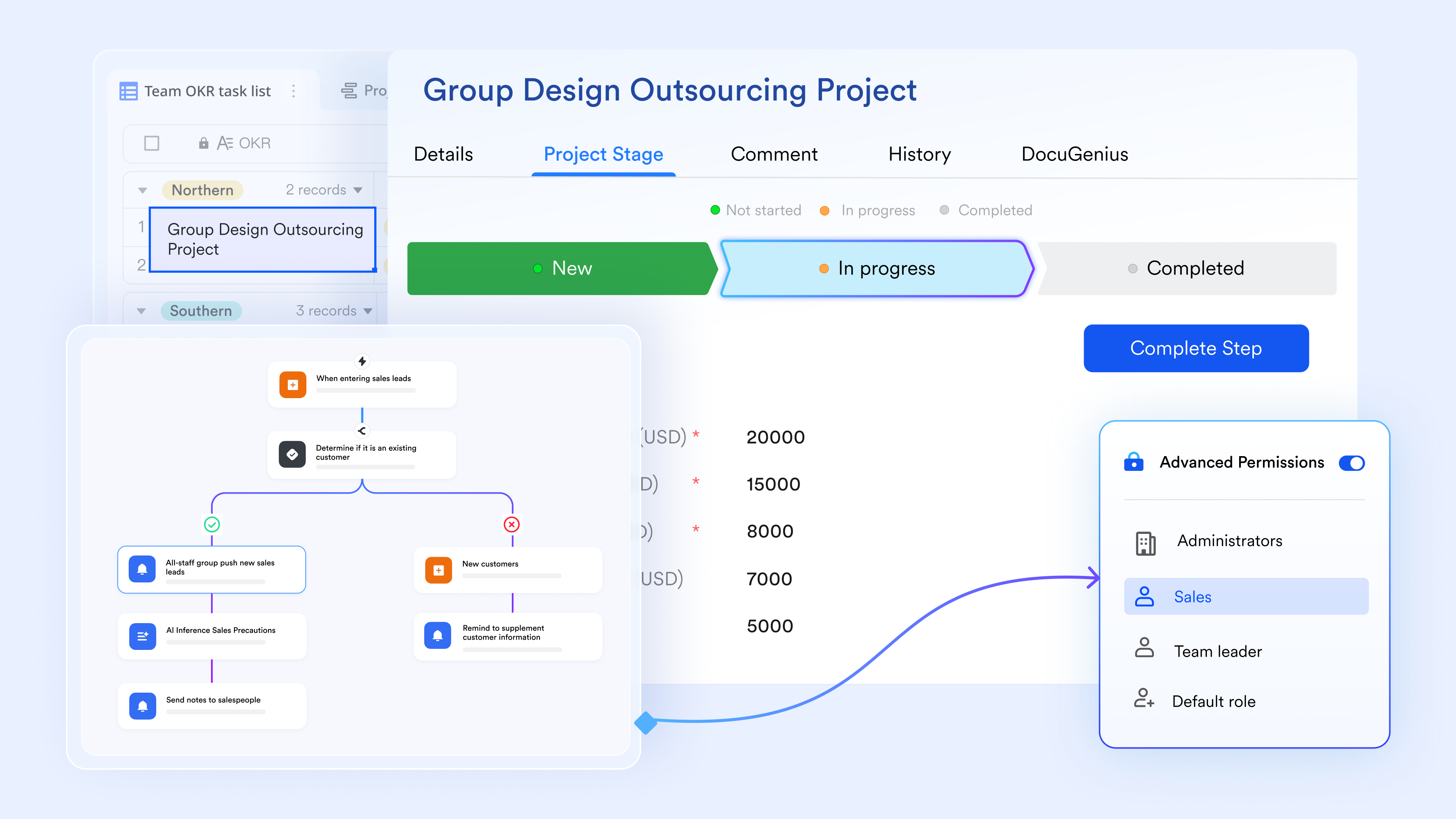
Close the context gap with unified messenger
Traditional project management often fails because the "discussion" (in Slack or Email) is separated from the "work" (in Excel). Lark bridges this gap by connecting communication directly to a single Base record. When a team member has a question about a specific item in the project scope definition, they can start a comment, @ colleagues as a reminder, and share the record link in the for deeper discussion. This keeps the conversation tied to the data, creating a permanent, searchable audit trail that gives every team member the full context of why decisions were made. 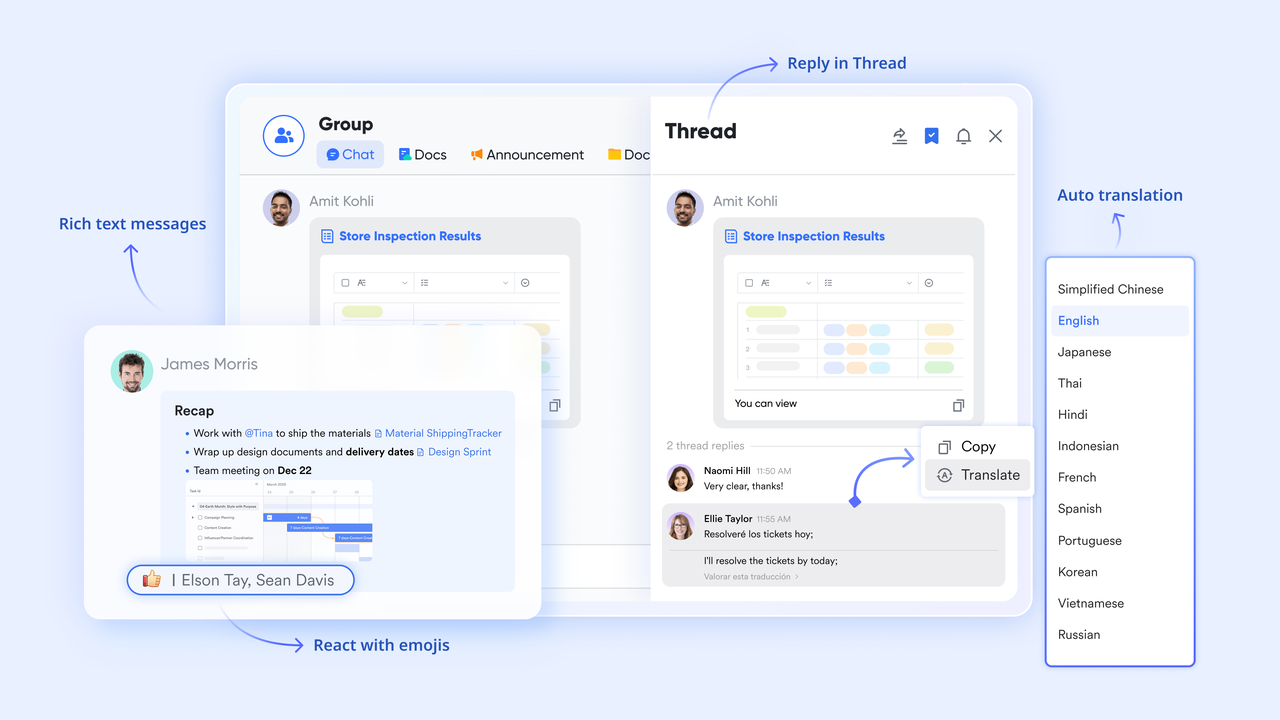
Enforce governance with multi-tier approvals
To prevent the common mistake of starting work before resources are officially committed, provides a formalized governance layer. Before a project charter definition is moved from "Draft" to "Active," you can design multi-tier approval nodes to customize the flow or simply try a template to designate the approver. This ensures that every project has the necessary authority and budget backing it, providing a clear "Green Light" that protects the team from shifting priorities or unallocated workloads. 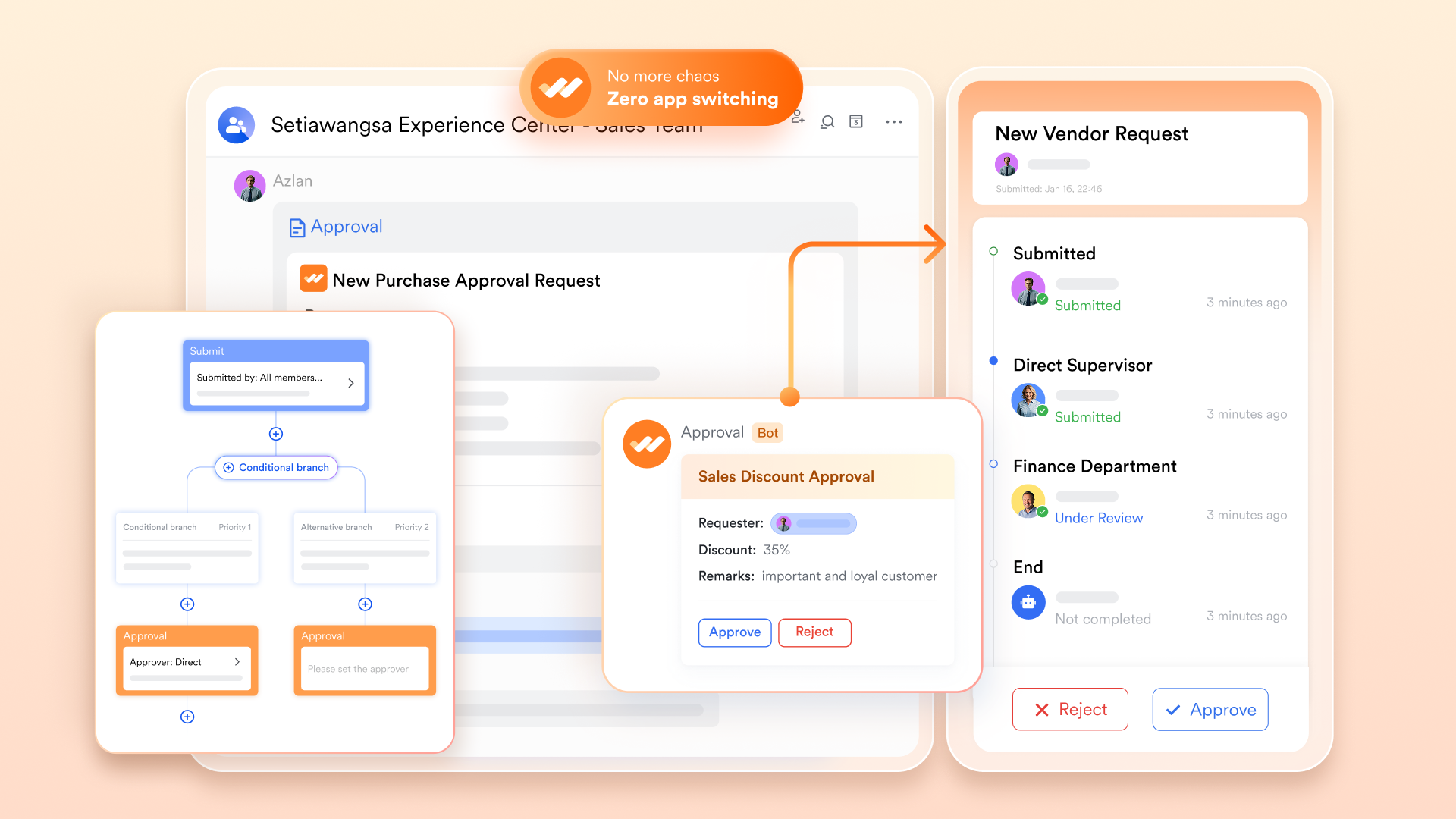
:
- Starter plan: Free forever plan that includes 11 powerful tools for up to 20 users. It also comes with 100GB of storage, 1000 automation runs, AI translations, and more.
- Pro plan: $12/user/month (billed annually) for up to 500 users. It includes everything in Starter plus group calling for up to 500 attendees, 15TB of storage, 50,000 automation runs, and more.
- Enterprise plan: for custom pricing. Supports unlimited users and includes even more automation runs and advanced security, compliance, and management features.
For small teams with simple communication needs

18 months message history
1000 Base automation runs/month
2000 rows per table in Base
Most POPULAR
For companies with comprehensive collaboration and management needs
Unlimited message history
500-participant video meetings
50k Base automation runs/month
20k rows per table in Base
For large companies with advanced security and organizational management needs
Get a personalized demo and pricing
Unlimited message history
500-participant video meetings
15 TB storage + 30 GB storage/user
500k Base automation runs/month
50k Base automation runs/month
Most POPULAR
For companies with comprehensive collaboration and management needs
Unlimited message history
500-participant video meetings
50k Base automation runs/month
20k rows per table in Base
Conclusion
A strong project definition is not bureaucracy; it's clarity. It aligns teams, reduces risk, and creates conditions for effective execution. Whether you're launching a product, , or delivering client work, defining the project properly is one of the highest-leverage steps you can take.
Teams that treat project definitions as living assets, reviewed, refined, and connected to execution, are better positioned to deliver results consistently. With a connected workspace like , project definitions stay visible, collaborative, and tied directly to tasks, milestones, and decisions, turning them from forgotten documents into active guides for successful delivery.
Make project definitions work in practice
FAQs
What are the two different meanings of project?
In a business context, a "project" can refer to the physical or digital output being created, such as a new software application or a building. Alternatively, it refers to the structured process and temporary organization of people and resources dedicated to achieving that specific goal. While the first meaning focuses on the "what" (the result), the second focuses on the "how" (the management and execution) within a defined timeframe.
What is an example of a project?
A classic example of a project is the development of a new product, such as launching a seasonal marketing campaign or building a mobile app. Unlike ongoing operations like payroll or customer support, these activities have a distinct beginning and end, a specific budget, and a unique set of deliverables. Once the campaign is live or the app is launched, the project concludes, and the work often transitions into a maintenance phase.
How do you describe a project?
You describe a project by outlining its scope, objectives, and constraints, such as the budget and the deadline for completion. It is defined by the specific problem it intends to solve and the value it will deliver to the organization once finished. A comprehensive description also identifies the key stakeholders involved and the primary milestones that must be met to ensure the project stays on track and achieves its intended purpose.
How often should a project definition be revisited?
At a minimum, the should be reviewed at the end of every major phase or sprint. This helps confirm that scope, priorities, and success criteria still reflect current business goals. Teams often surface small misalignments during execution that need clarification. Using Lark Docs makes it easy to update the definition without version confusion. Lark comments also help teams agree on changes quickly.
How do distributed teams agree on a project definition?
Distributed teams benefit from combining real-time discussion with clear written alignment. Teams often use Lark Meetings to talk through objectives, scope, and risks together. After discussion, the agreed definition is documented in Lark Docs for reference. Comments and suggestions help resolve open questions asynchronously. This approach reduces misunderstandings across .
Related reading





























